
Paying attention to your body and symptoms can help keep cancer at bay #SootinClaimon.Com

#SootinClaimon.Com : ขอบคุณแหล่งข้อมูล : หนังสือพิมพ์ The Nation.

https://www.nationthailand.com/business/40006755


Samitivej Hospital has partnered with Japan’s Sano Hospital, which is recognised for its expertise in the removal of large polyps in the colon at an early stage using gastrointestinal endoscopy techniques.

By Vinita Oranrap, M.D. Gastroenterologist, Samitivej Sukhumvit Hospital

Diseases are affecting humans more than expected, and one of them is cancer, especially colon cancer which was ranked the third most common disease found among Thais. This disease poses a high risk of death because most patients acknowledge it when it’s too late.

The good news is that the death rate has declined thanks to modern technologies that help doctors detect and treat patients effectively.

What causes colon cancer?

Colon cancer is caused by a polyp generated from an abnormality in the colon and rectum. This polyp may not affect patients initially but may turn cancerous if left untreated and spread to other parts of the body.

Factors that cause colon cancer

• Age 45 years or above

• Excessive drinking, smoking, not drinking enough water, preferring to consume meat instead of fruits and vegetables, not exercising enough

Symptoms

• Chronic stomachache, especially in the lower abdomen

• Alternating between constipation and diarrhea

• Chronic diarrhea

• Black or blackish-red stools

• Reduction in stool size

• Feeling of incomplete defecation or pain in the anus

• Fatigue due to anaemia and iron deficiency

• Unexpected weight loss
Paying attention to your body and symptoms can help keep cancer at bayPaying attention to your body and symptoms can help keep cancer at bay

ADVERTISEMENT

The risk of developing colon cancer can be reduced by screening for the polyp before it turns into a cancer cell. Apart from reducing the risk of death, it also enables doctors to treat patients effectively. The severity of disease can be classified as follows:

High-risk group

• Aged 45 and above

• Have inflammatory bowel disease

ADVERTISEMENT

• A family history of inflammatory bowel disease or diagnosed with polyp (considered a risk due to genetic disorder)

Moderate-risk group

• Aged 45 and above

• No symptoms

• Inappropriate behaviour such as excessive drinking, smoking, drinking less water, preferring meat over fruits and vegetables, skipping exercise

ADVERTISEMENT

Screening for colon cancer

Those in the high-risk group can go for the endoscopy method as it can detect and remove small polyps immediately. A study found that 90 per cent of colon cancer start as a polyp and can take five to 10 years before turning into a cancer cell.

Those in the moderate-risk group can opt for different screening methods, such as faecal immunochemical test, barium enema, CT scan or colonoscopy.

High-tech screening methods

Samitivej Hospital has partnered with Japan’s Sano Hospital, which is recognised for its expertise in the removal of large polyps in the colon at an early stage using gastrointestinal endoscopy techniques.

The medical team of Samitivej Hospital travelled to Japan to learn about the technique and hone their laparoscopic and surgical skills. Since 2015, doctors from Japan have been coming to Samitivej every year to share their knowledge and conduct case studies.

The Narrow Band Image (NBI) technique directs radiation to the intestinal wall where substances are absorbed, to see the image of the blood vessels on the surface of the gastrointestinal mucosa clearly. With this technique, the appearance of the epithelium is changed. The NBI technique also allows the detection of flat polyps that resemble the surface of the intestines.

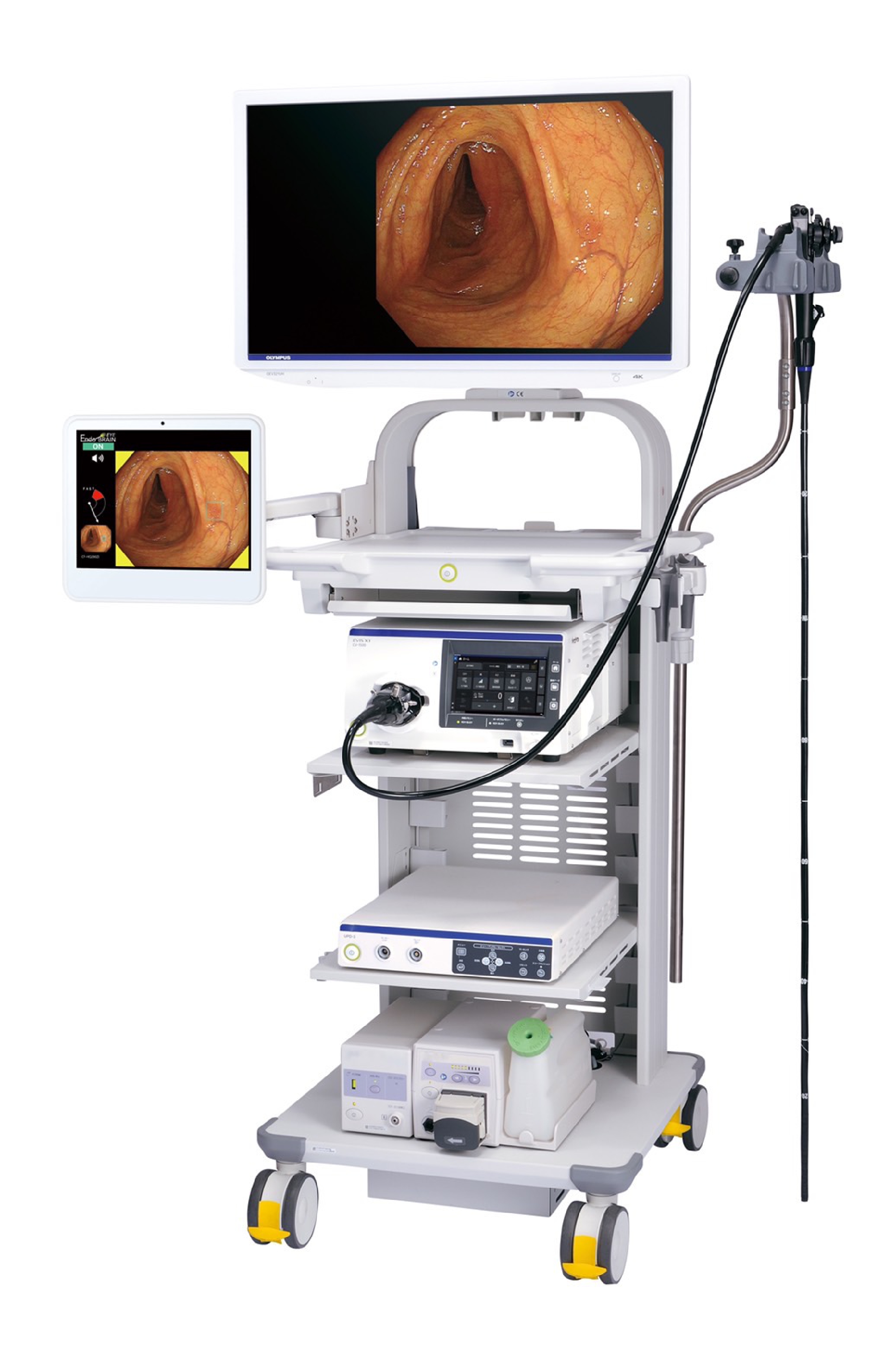
Samitivej Hospital has applied the NBI technique together with AI-assisted colonoscopy technology, which helps improve the quality of lesions detection in gastrointestinal endoscopy. This technique, called ENDOBRAIN, makes the polyp 1.5 times more visible than conventional techniques.

The ENDOBRAIN technique is a real-time endoscopic capture, which enhances the visibility of small polyps or polyps that are difficult to spot. Once the polyps are spotted, doctors can cut them off immediately, which helps patients avoid pain and unnecessary surgery.

Colon cancer treatment

• Surgery can be performed at any stage of the disease. The doctor may consider surgery along with radiation and chemotherapy.

• Chemotherapy can be administered orally or via intravenous or intramuscular injections, so the drug can be absorbed into the bloodstream and inhibit the proliferation or destruction of cancer cells. It can be used before or after surgery in combination with radiation. Chemotherapy can have side effects on normal cells and the functioning of other organs in the body, resulting in nausea, vomiting, loss of appetite, and hair loss.

• Radiation with high energy waves can destroy or inhibit the growth of cancer cells and reduce the recurrence of the disease. This can be done in conjunction with chemotherapy to make the treatment more effective.

• Targeted therapy can be used for targeted treatment that kills cancer cells without damaging neighbouring cells, so there are few side effects. Most often it is used in conjunction with chemotherapy. It was found that this therapy can prolong the patient’s life span.

• Immunotherapy drugs stimulate the patient’s immune system to detect and kill cancer cells better, which increase the chance to live longer. It is most often used in groups with diffuse cancer and requires a thorough biopsy for effective results.

Care after treatment

Though colon cancer can be cured, there is a chance that it can return. Therefore, periodic monitoring of the disease is necessary. During the first two years, the doctor may schedule follow-up visits every two months, with colonoscopy every six months and abdominal X-rays every three to six months. If the cancer is not detected the doctor may switch to an annual cancer screening appointment within three years.

Which in addition to attending the screening, patients should also reduce risk factors, such as limiting the intake of red meat and high-fat foods and boosting the consumption of vegetables, fruits and fibre-rich foods to normalise excretion. Regular exercise and getting enough sleep are also required, including an annual health check-up.

Published : September 30, 2021

ThaiBev still strong despite Covid-19 crisis, says CEO #SootinClaimon.Com

#SootinClaimon.Com : ขอบคุณแหล่งข้อมูล : หนังสือพิมพ์ The Nation.

https://www.nationthailand.com/business/40006907


Thai Beverage (ThaiBev) said it has remained strong despite the Covid-19 crisis and aims to become a leader in Southeast Asia’s food and beverage sector by 2025.

Thapana Sirivadhanabhakdi, ThaiBev chief executive officer, told the press this week that his company went from strength to strength during the pandemic, even though many of its peers in the industry were affected.

“ThaiBev has been growing despite the obstruction of the government’s Covid-19 preventive measures like lockdowns, which forced our sales channels to remain closed. Despite this, our earnings before interest, tax, depreciation and amortisation for this year have risen by 11.5 per cent against last year. ThaiBev is still the largest food and beverage company in Asean and among the biggest in Asia in terms of earnings and market value,” he said.

ADVERTISEMENT

He added that ThaiBev has adjusted its strategies in line with the current situation to ensure it remains sustainable and a market leader in Asean.

ThaiBev still strong despite Covid-19 crisis, says CEOThaiBev still strong despite Covid-19 crisis, says CEO

Thapana said the company has set up a special “Covid-19 situation room” to monitor the pandemic in Thailand as well as study the demand for ThaiBev products during this time. The situation room also keeps track of ThaiBev’s staff and their welfare.

The company has so far donated more than 1.4 million litres of alcohol-based sanitiser, 9.3 million surgical masks and 274,000 Covid-19 insurance policies to medical personnel nationwide, he said.

Thapana Sirivadhanabhakdi, ThaiBev chief executive officerThapana Sirivadhanabhakdi, ThaiBev chief executive officer

Published : October 01, 2021

SET down for the second day amid worries over QE tapering #SootinClaimon.Com

#SootinClaimon.Com : ขอบคุณแหล่งข้อมูล : หนังสือพิมพ์ The Nation.

https://www.nationthailand.com/business/40006911


The Stock Exchange of Thailand (SET) Index closed at 1,605.17 on Friday, down 0.51 points or 0.03 per cent. Transactions totalled 75.66 billion baht with an index high of 1,609.48 and a low of 1,593.32.

The index fell for the second day running after dropping by 0.70 per cent on Thursday.

In the morning session, Krungsri Securities predicted the day’s index would fall to between 1,600 and 1,590 points due to uncertainty over the US Federal Reserve signalling it would taper its quantitative easing and raise the interest rate sooner than expected, plus the conflict in US Congress debt ceiling and corporate income tax hike.

ADVERTISEMENT

However, the rising oil price and mass buy-up of stocks enjoying specific positive sentiment would help boost the index, Krungsri Securities said.

The 10 stocks with the highest trade value today were BANPU, GULF, KBANK, SCB, GUNKUL, RCL, PTT, SCGP, BBL and TRUE.

Related stories:

Other Asian indices were down:

Japan’s Nikkei Index closed at 28,771.07, down 681.59 points or 2.31 per cent.
South Korea’s KOSPI Index closed at 3,019.18, down 49.64 points or 1.62 per cent.
Taiwan’s TAIEX Index closed at 16,570.89, down 363.88 points or 2.15 per cent.

China and Hong Kong Indices were closed for National Day.

Published : October 01, 2021

Baht strengthens shortly amid risk factors #SootinClaimon.Com

#SootinClaimon.Com : ขอบคุณแหล่งข้อมูล : หนังสือพิมพ์ The Nation.

https://www.nationthailand.com/business/40006886


The baht opened at 33.65 to the US dollar on Friday, strengthening from Thursday’s closing rate of 33.82.

The Thai currency is likely to move between 33.60 and 33.80 during the day, Krungthai Bank market strategist Poon Panichpibool predicted.

Poon said that the baht might strengthen on Thursday after the Bank of Thailand signalled the worry about the baht volatility. The baht is also supported by the gold price increasing which causes investors to sell.

ADVERTISEMENT

However, the baht will not strengthen clearly soon until risk factors are solved especially debt ceiling negotiation in the US. Risk factors also include floods and the new Covid-19 wave, Poon added.

He felt the key resistance level would be 34.00 to the dollar. The Thai currency could reach its next resistance level of 34.25 if it weakens, he maintained.

The key support level for the baht would be at 33.60 per dollar, Poon added.

Related News

Baht not expected to strengthen in short term amid risk factors

Baht sees weakest opening in four years

Bahts weakening trend expected to continue in short term

Published : October 01, 2021

The price of gold peaked by THB250 in morning trade on Friday #SootinClaimon.Com

#SootinClaimon.Com : ขอบคุณแหล่งข้อมูล : หนังสือพิมพ์ The Nation.

https://www.nationthailand.com/business/40006885


A Gold Traders Association report at 9.25am said the buying price of a gold bar was THB27,900 per baht weight and selling price THB28,000, while the buying and selling price of gold ornaments is THB27,394.12 and THB28,500, respectively.

At close on Thursday, the buying price of a gold bar was THB27,650 per baht weight and selling price THB27,750, while gold ornaments were THB27,151.56 and THB28,250, respectively.

The spot gold price on Friday morning hovered around US$1,755 (THB59,213) per ounce after Comex gold at close on Thursday surged by $34.1 to $1,757 per ounce. The price of gold rose nearly two per cent due to support from the depreciation of the US dollar, including buying gold as a safe-haven asset after the US released sluggish labour data.

Related news:

Published : October 01, 2021

Worries of QE tapering pressure SET Index #SootinClaimon.Com

#SootinClaimon.Com : ขอบคุณแหล่งข้อมูล : หนังสือพิมพ์ The Nation.

https://www.nationthailand.com/business/40006884


The Stock Exchange of Thailand (SET) Index fell by 5.74 points or 0.36 per cent to 1,599.94 on Friday morning, witnessing a high of 1,605.20 and a low of 1,599.80 in opening trade.

Krungsri Securities predicted the day’s index would fall to between 1,600 and 1,590 points due to uncertainty over the US Federal Reserve signalling it would taper its quantitative easing and raise the interest rate sooner than expected, plus the conflict in US Congress debt ceiling and corporate income tax hike.

However, the rising oil price and mass buy-up of stocks enjoying specific positive sentiment would help boost the index, Krungsri Securities said.

ADVERTISEMENT

It also recommended buying of the following companies’ shares as an investment strategy:

▪︎ Banpu, Lanna, DCC, Cotto and Tasco, which gained its specific positive sentiment.

▪︎ PTT, PTTEP, TOP, PTTGC, SPRC and IVL, which benefit from rising oil price.

▪︎ Hana, KCE, TU, CPF, GFPT, Asian, NER, Sun and APure, which benefit from weakening baht.

Related stories:

The SET Index closed at 1,605.68 on Thursday, down 11.30 points or 0.70 per cent. Transactions totalled 90.65 billion baht with an index high of 1,621.15 and a low of 1,601.79.

Published : October 01, 2021

What Japans middle-of-the-road new leader means for markets #SootinClaimon.Com

#SootinClaimon.Com : ขอบคุณแหล่งข้อมูล : หนังสือพิมพ์ The Nation.

https://www.nationthailand.com/business/40006872


After a monthlong, surprisingly competitive race for Japans new leader, the contest ended predictably: Fumio Kishida, the most experienced, most middle-of-the-road candidate, is set to become Japans 100th prime minister.

For good or ill, Kishida is seen by investors as a continuity choice — stable, but unlikely to energize markets much. Early in the race, foreign investors and retail traders were intrigued by the potential of a Taro Kono victory, attracted by his fluent English, reformist leanings and social-media savvy.

“Kishida is likely to generate the weakest equity market moves” of the candidates, Goldman Sachs economist Naohiko Baba wrote in a report, “particularly since his reformist views appear somewhat weak and his stance on fiscal discipline is cautious.”

ADVERTISEMENT

Stock market reaction to Kishida’s victory was muted on Thursday, with the Topix falling 0.4%.

Delivering a fresh stimulus package that won’t disappoint investors will be Kishida’s next challenge. He has pledged to be nimble about spending as the economy heals from the pandemic, and after Wednesday’s victory he repeated his promise to compile a package worth “tens of trillions” of yen before the end of the year.

Kishida’s support for lifting virus restrictions and restarting the popular “Go To Travel” discount program may get equity investors to take another look at train operators and airlines, just as the country’s latest state of emergency is set to end this week.

Kishida’s win is not “the end of a catalyst, but the setup for several more positive drivers,” wrote Mark Haefele, the chief investment officer at UBS Global Wealth Management in a Sept. 30 note. “As general election campaigning kicks off, Kishida will likely focus on more specific spending pledges, revealing potential sector beneficiaries.”

Longer term, Kishida will need to signal when Japan should shift its focus back to balancing the budget. Kishida has sounded hawkish on the government’s debt in the past, even broaching the idea that another hike in the sales tax might eventually be needed to generate revenue, although he’s said it wouldn’t be this decade.

While investors might not be overly excited by a continuity administration, in an election year, stability might be a good thing. Japan’s stocks lagged other markets for much of this year amid concern that the unpopularity of outgoing prime minister Yoshihide Suga might cause the LDP to lose seats in this autumn’s general election.

Kishida’s leadership should ensure a solid victory, said John Vail, the chief global strategist at Nikko Asset Management Co.

“This should lead to hopes for the cabinet’s longevity, which consumers, corporations and investors should view positively,” Vail wrote in a note Wednesday.

Kishida, however, is not Abenomics 2.0. He’s said Japan needs to narrow the wealth gap that widened under the market-friendly policies of former Prime Minister Shinzo Abe, where wage gains lagged rising asset prices.

He has dangled the idea of a “new type of Japanese capitalism,” favoring redistribution and wage increases, but has been vague on details of how he’ll get it done.

Still, economists don’t see Kishida pressuring the Bank of Japan to change tack anytime soon, as he’s been vocal in his support of the bank’s aggressive easing and its 2% inflation target.

One key decision Kishida faces is whether to replace long-serving finance minister Taro Aso, who’s held the powerful post in the nearly nine years of the Abe and Suga administrations. Kishida said Wednesday he wanted his Cabinet to skew younger than Suga’s did, while Aso turned 81 earlier this month.

Should he last longer than Suga, an equally big decision looms with Haruhiko Kuroda’s term as BOJ governor set to expire in early 2023.

Published : October 01, 2021

U.S. initial jobless claims unexpectedly rise for a third week #SootinClaimon.Com

#SootinClaimon.Com : ขอบคุณแหล่งข้อมูล : หนังสือพิมพ์ The Nation.

https://www.nationthailand.com/business/40006871


Applications for U.S. state unemployment benefits unexpectedly rose for a third straight week, potentially a sign of worsening labor-market conditions as well as choppiness in weekly data.

Initial unemployment claims in regular state programs rose to 362,000 in the week ended Sept. 25, led by another surge in California, Labor Department data showed Thursday. The median estimate in a Bloomberg survey of economists called for a decrease to 330,000 new applications.

Continuing claims for state benefits fell to 2.8 million in the week ended Sept. 18.

ADVERTISEMENT

The increase likely underscores swings in weekly data as employers are desperate to hire more workers and hang onto the ones they still have. Claims are also still hovering near pandemic lows.

That said, the last time there were three consecutive weeks of rising unemployment claims was April 2020, though those increases were significantly larger.

Published : October 01, 2021

Treasury Secretary Yellen says debt ceiling should be permanently abolished #SootinClaimon.Com

#SootinClaimon.Com : ขอบคุณแหล่งข้อมูล : หนังสือพิมพ์ The Nation.

https://www.nationthailand.com/business/40006869


WASHINGTON – Treasury Secretary Janet Yellen on Thursday said lawmakers should abolish the legal limit on how much treasury can borrow to meet the federal governments payment obligations, pushing lawmakers to eliminate the potential threat of a U.S. default.

Treasury Secretary Yellen says debt ceiling should be permanently abolished

Speaking to the House Financial Services Committee, Yellen said the current debt ceiling law can prove “very destructive” by creating a legal debt limit that has to be raised separate from what Congress has already ordered the federal government to spend. Treasury is currently running out of “emergency measures” to pay its obligations after the most recent suspension of the debt ceiling lapsed in August.

Congressional Republicans have refused to help Democrats raise or suspend the borrowing limit even though they supported lifting the borrowing cap during the Trump administration.

ADVERTISEMENT

“When Congress legislates expenditures and puts in place tax policy that determines taxes, those are the crucial decisions Congress is making,” Yellen told Rep. Sean Casten, D-Ill. “If to finance those spending and tax decisions, it’s necessary to issue additional debt, I believe it’s very destructive to put the president and myself – the treasury secretary – in a situation where we might not be able to pay the bills that result from those past decisions.”

Yellen’s new statements about abolishing the debt limit come as Treasury officials have instructed federal agencies to review their spending estimates for October, two administration officials familiar with the matter said, as the U.S. government is increasingly at risk of running out of cash to meet its payment obligations. Officials in Treasury’s Bureau of the Fiscal Service have told federal agencies to scrutinize their estimates for outgoing expenditures and incoming revenue to ensure they are as precise as possible for October, the officials said. Should Congress fail to raise or suspend the debt ceiling, Yellen has said that the U.S. will by Oct. 18 run out of flexibility to ensure it meets all of its payments.

The request from treasury officials underscores the administration’s concerns about the debt ceiling cliff, as congressional Republicans have refused to help Democrats avoid a likely national or international financial calamity.

Yellen and treasury officials have stressed that it is highly difficult to estimate the precise “X Date” at which point Treasury will have exhausted its “emergency measures” and no longer be able to guarantee it can cover payments. Breaching the debt ceiling could lead to a cessation or reduction of critical government payments – like Social Security for millions of U.S. seniors – or a default on U.S. debt. Treasury officials want to have the best possible sense of how much money they are expecting the U.S. agencies to take in and spend in the following weeks, given that a miscalculation of no consequence in normal budget times could throw off their cash balance estimates at this critical juncture.

“It’s more important than ever that this is right,” said one senior administration official, who like the other spoke on the condition of anonymity to discuss internal processes.

A Treasury spokesman said in a statement that it is standard for the department to be in close communication with agencies, including when Congress is debating how to handle the debt limit.

“As this process moves forward, the Treasury Department will continue to engage with agencies to ensure we have the most up to date information on expenditures and cash balances,” the statement said.

Congress is now planning a vote on Thursday with just hours to spare to avert was a shutdown of the federal government. But the measure to suspend the debt ceiling standoff removed has been from that legislation. Congressional Republicans have been adamant that Democrats approve the debt ceiling increase with no GOP votes. Democrats have criticized that approach, given that 97% of U.S. debt was accrued before President Joe Biden took office.

Published : October 01, 2021

Bitcoin rises as technicians probe whether rally is sustainable #SootinClaimon.Com

#SootinClaimon.Com : ขอบคุณแหล่งข้อมูล : หนังสือพิมพ์ The Nation.

https://www.nationthailand.com/business/40006868


Bitcoin is ending the third quarter on a high note, staging its first rally in four days, and technicians are scouring the charts to see if it can sustain the nascent advance.

Bitcoin rises as technicians probe whether rally is sustainable

Bitcoin’s Thursday gain saw it bouncing off its 100-day moving average line and the coin looks to be forming a base around $40,000. Those are two developments that many chartists would consider positives. Its next test is the 50-day line, which currently sits around $46,500. Meanwhile, Federal Reserve Chair Jerome Powell said in a Congressional hearing Thursday that he had “no intention” on banning cryptocurrencies. He did, however, add that stablecoins might be appropriate for regulation.

In addition, the MACD signal — or the moving average convergence divergence gauge — looks to have stabilized and is now curling upward, which suggest its recent negative trend is in the process of deteriorating.

ADVERTISEMENT

“When you get something that’s been down several days in a row, it doesn’t take much to give it a little bit of a relief rally, and that’s I think what we’re getting,” said Matt Maley, chief market strategist for Miller Tabak + Co.

Thursday saw Bitcoin gain as much as 6.6%, with the coin touching $43,826. Other digital assets also advanced, with the Bloomberg Galaxy Crypto Index adding 7.2% at one point.

Still, Bitcoin is down about 8% in September, which has historically been a tough month for the digital asset. Over the last decade, September is the only month when Bitcoin has failed to deliver positive returns. The coin fell during the calendar month in six of the previous 10 years, losing more than 6% on average, data compiled by Bloomberg show.

Bitcoin was hit on multiple fronts during the month, including a botched roll-out of the coin as legal tender in El Salvador and tightening of regulatory oversights in the U.S. and China.

The crackdowns in China and the U.S. “caused a decrease in AUM for digital asset investment products,” said a CryptoCompare report. But “a rise in volumes in September coupled with positive weekly inflows for the first time in 3 months suggests there could be upside going into the last quarter of 2021.”

The digital asset is up 25% for the quarter, compared with a drop of 41% in the prior three months.

Published : October 01, 2021