SET up for 8th successive day as trade volume soars
The Stock Exchange of Thailand (SET) Index closed at 1,638.75 on Tuesday, up 4.98 points or 0.30 per cent. Transactions totalled THB117.90 billion with an index high of 1,643.76 and a low of 1,628.12 as the SET rose for an eighth successive day.
In the morning session, Krungsri Securities expected the index on Tuesday to rise to between 1,640 and 1,645 before falling back. It cited positive sentiment from the US Federal Reserve signalling it would not rush to raise the interest rate despite expected tapering of quantitative easing.
Market sentiment was also buoyed by the government’s move to ease lockdown measures as domestic infections decline, it added.
However, the SET would face downward pressure from the MSCI rebalance to cut the weight of emerging-market shares by 0.03 per cent (around $112 million), said Krungsri Securities.
The 10 stocks with the highest trade value today were BBL, GULF, KBANK, PTT, INTUCH, ADVANC, CPALL, KCE, GPSC and RPC.
Other Asian indices were up with one exception:
Japan’s Nikkei Index closed at 28,089.54, up 300.25 points or 1.08 per cent.
China’s Shanghai SE Composite Index closed at 3,543.94, up 15.79 points or 0.45 per cent, while the Shenzhen SE Component Index closed at 14,328.38, down -94.98 points or 0.66 per cent.
Hong Kong’s Hang Seng Index closed at 25,878.99, up 339.45 points or 1.33 per cent.
South Korea’s KOSPI Index closed at 3,199.27, up 55.08 points or 1.75 per cent.
Taiwan’s TAIEX Index closed at 17,490.29, up 93.77 points or 0.54 per cent.
The price of gold dropped by THB50 in morning trade on Tuesday.
AGold Traders Association report at 9.25am said the buying price of a gold bar was THB27,750 per baht weight and selling price THB27,850, while gold ornaments cost THB27,257.68 and THB28,350, respectively.
At close on Monday, the buying price of a gold bar was THB27,800 per baht weight and selling price THB27,900, while gold ornaments cost THB27,303.16 and THB28,400, respectively.
Seven-day rising streak to continue for SET as lockdown eased
The Stock Exchange of Thailand (SET) Index dropped by 1.12 points, or 0.07 per cent, to 1,632.65 on Tuesday morning.
The SET Index closed at 1,633.77 on Monday, up 22.57 points or 1.40 per cent. Transactions totalled THB117.38 billion with an index high of 1,634.92 and a low of 1,621.42 as the SET rose for a seventh successive day.
Krungsri Securities expected the index on Tuesday to rise to between 1,640 and 1,645 before alternating to weaken, as there is support for the market conditions after the US Federal Reserve signalled it would not rush to raise the interest rate, despite the reduction of the quantitative easing measure in 2021.
Krungsri Securities added that the index also gained positive sentiment from the government’s move to ease lockdown measures as domestic infections are declining.
“However, there is an expectation of late-sell pressure from MSCI Rebalance reducing the weight of the emerging markets group by 0.03 per cent (around $112 million), which will pressure the index to weaken,” Krungsri Securities said.
It recommended selective buying as an investment strategy:
AOT, KBANK, BBL, CPN, CRC, HMPRO, AAV, BA, MINT, AMATA and WHA, which would benefit from the country’s reopening.
PSL, TTA and RCL, which would benefit from a rise in the freight rate.
CKP, BANPU, GPSC, BCH and CHG, which would benefit from the growth in the third quarter.
Ngern Tid Lor PCL is IFC’s First Investment in a Non-Banking Financial Institution in Thailand
IFC combines investment and advisory to foster sustainable economic growth in Thailand’s private sector. As of June 2021, IFC’s committed portfolio in Thailand is $875 million.
Small businesses will have improved access to finance with IFC’s first investment in a non-banking financial institution (NBFI) in Thailand, Ngern Tid Lor Public Company Limited (TIDLOR). The latest investment from IFC aims to support a resilient recovery by promoting business growth, creating jobs, and fostering financial inclusion.
IFC’s financing package of up to $100 million (about 3,000 million Thai baht) loan will allow TIDLOR to increase its lending to micro, small, and medium enterprises (MSMEs in the country). IFC will also mobilize international investors to help TIDLOR access diversified funding and support the company to improve its credit risk management framework.
Ngern Tid Lor PCL is IFC’s First Investment in a Non-Banking Financial Institution in Thailand
MSMEs represent 86 percent of Thailand’s labor force and account for 45 percent of the nation’s gross domestic product (GDP). Yet, even before COVID-19, MSMEs in Thailand had an estimated financing gap of $41 billion, accounting for 10.3 percent of the country’s GDP. With the pandemic, they face several challenges including order cancellation, reduced sales, disrupted supply chains, and shortage of working capital. Also, MSME lending by banks has been tighter due to higher non-performing loan (NPL) ratios.
“In the face of an ongoing crisis, IFC’s investment will allow TIDLOR—an affiliate of Bank of Ayudhya Public Company Limited (BAY)—to strengthen our balance sheet as we execute on our strategy to promote financial inclusion with a digital- and data-driven approach, ” said Piyasak Ukritnukun, Managing Director of Ngern Tid Lor Public Company Limited.
NBFIs that are focused on lending remain small in scale, accounting for less than five percent of the total assets of Thailand’s financial system. This is primarily because NBFIs do not accept deposits, lack diversified funding sources, and target informal workers, individual entrepreneurs, and MSMEs that have no fixed asset collateral and are perceived as high risk.
“In line with IFC’s strategic priorities in Thailand, IFC’s investment will help increase accessible, convenient, and affordable financial services for MSMEs, which is critical to promote employment and sustainable development,” said Jane Yuan Xu, IFC Country Manager for Thailand and Myanmar. “IFC’s support will also inspire confidence among potential international investors while having a catalytic effect on competitors, accelerating economic recovery in Thailand,” Xu added.
IFC combines investment and advisory to foster sustainable economic growth in Thailand’s private sector. As of June 2021, IFC’s committed portfolio in Thailand is $875 million.
Easing of lockdown expected to strengthen baht though worries on Covid remain
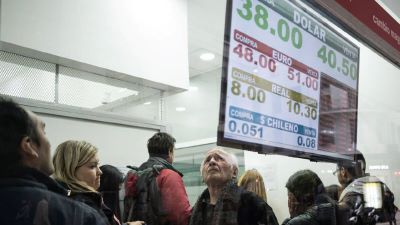
The baht opened at 32.44 to the US dollar on Tuesday, unchanged from Monday’s closing rate.
The Thai currency is likely to move between 32.35 and 32.50 during the day, Krungthai Bank market strategist Poon Panichpibool said.
The baht was likely to strengthen due to economic recovery from the easing of the lockdown, which prompted foreign investors to invest in Thai assets last week.
Poon was concerned about the Covid-19 situation in Thailand, as he was not sure if the spread of the virus had been contained because enough proactive testing was not being done. The positive rate in Thailand was higher than 20 per cent, while the World Health Organization recommends it should be lower than 5 per cent.
He added that the baht was likely to fluctuate and weaken as the situation did not clearly point to improvement. He suggested keeping an eye on the virus situation 3-4 weeks after the first week of the lockdown easing.
The support level of the baht would be from 32.30 to 32.40, which is the price range importers are waiting for to buy dollars.
The Bank of Thailand might help the baht avoid volatility and ensure it moves within its range in the short term.
Gasoline jumps, oil falls as Ida landfall seen sparing rigs
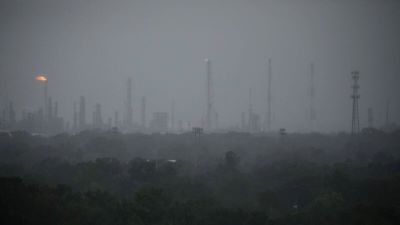
U.S. gasoline futures jumped after Hurricane Ida barreled ashore in Louisiana, disrupting processing facilities. Oil reversed early gains as local rigs may have escaped significant damage and the OPEC+ producers cartel is expected on Wednesday to endorse a supply increase.
Gasoline for October spiked more than 4% in New York before paring its advance, while West Texas Intermediate crude fell around 1%. Last week, WTI rallied 10% as investors wagered global demand would recover from the setback posed by the spread of the delta coronavirus variant.
Both crude oil and gasoline have been hit by volatile trading this month as investors weighed the challenge to consumption posed by the resurgence of the pandemic in parts of Asia, the U.S. and Europe. This week, traders will focus on the fallout from Ida, as well as the likelihood that the Organization of Petroleum Exporting Countries and its allies will go ahead with an increase in output when they meet.
“The market will be looking at the product stocks and the risks of onshore damage from Ida,” said Matt Stanley, a senior broker at Star Fuels in Dubai. “Now that the storm has made landfall it looks like the worst is past for the offshore platforms and over the next couple of days operators can look at getting those back up.”
Gulf of Mexico producers shut in more than 1.7 million barrels a day of crude output — about 15% of the total for the U.S. — ahead of the storm. The focus for crude markets is now shifting back to the virus and OPEC+, Stanley said.
Refiners including Valero Energy Corp. shut about 12% of U.S. oil-processing capacity as a precaution ahead of the Category 4 storm, which has stronger winds than Katrina in 2005. Colonial Pipeline Co., the operator of the largest fuel-distribution system from the refining centers in Texas and Louisiana to customers across the eastern U.S., idled its main network.
Gasoline prices in the southeast U.S. could climb heading into the end of summer if refineries suffer extensive damage or can’t get power and are forced to stay shut for an extended period, adding to the price inflation hitting Americans. Traders in Europe have already been preparing to fill any gap in supplies at New York Harbor, provisionally chartering tankers. Still, those would take as much as two weeks to cross the Atlantic.
“For a Category 4, you could be looking at four to six weeks or more of downtime for the refineries,” said Andy Lipow, president of Lipow Oil Associates LLC in Houston.
Ida, which came ashore about 60 miles (97 kilometers) south of New Orleans, drove up ocean levels as much as 16 feet (4.9 meters). The hurricane’s 150-mph winds tie Louisiana’s record set by Laura in 2020 and a 19th-century storm.
Best emerging currencies lose steam as rate-hike bets wane
Some of this years best-performing emerging-market currencies are falling out of favor as traders trim back bets on further interest-rate hikes.
The Brazilian real and the Russian ruble, which outpaced most of their peers in the first half amid policy tightening, have now gone into reverse. The real has slumped about 4.5% since the end of June, more than any other major currency tracked by Bloomberg.
The tightening cycle was in full force in emerging markets long before the Federal Reserve started laying out a timeline for scaling back its bond-buying program, which Chair Jerome Powell said on Friday could begin as soon as this year. The early hikes in Russia and Brazil have helped stem flows from emerging markets, though policymakers are still balancing the need to battle inflation with the desire to support economies battered by covid-19.
Poland and Colombia may be next to lift rates. That offers some upside potential for lagging currencies such as the Polish zloty, protecting their relative yield advantage against accelerating prices and the prospect of rising U.S. rates.
“Early hikers, where the speed of tightening has been in line with or in some cases faster than historical hiking cycles, are likely to slow the pace of hikes or pause in the months ahead,” Goldman Sachs Group Inc. strategists led by London-based Kamakshya Trivedi wrote in a note this month. “The second half of the emerging-market hiking cycle is likely to be even broader, with more central banks commencing some form of normalization.”
Brazil’s central bank has already increased its key rate by 325 basis points this year, more than most peers, and forward-market bets are pricing in slowing rate hikes after September’s meeting. In Russia, traders predict the central bank will increase its benchmark by about 50 basis points over the next three months, down from more than 130 points in early July.
This evolving rate environment presents a crucial opportunity for traders to take advantage of variations in the next phase of the emerging-market tightening cycle, according to Goldman Sachs.
South Korea became the first major Asian country to raise interest rates this year Thursday, with more hikes in the pipeline as the focus pivoted from propping up the economy to curbing a debt-driven asset bubble.
The won rose before relinquishing its gains after Korea’s central bank governor remained ambiguous on the timing of the next move. The currency should strengthen on a hawkish “Bank of Korea, economic resilience and a technically oversold won,” said Mitul Kotecha, chief emerging markets Asia & Europe strategist at TD Securities in Singapore.
“Markets will likely continue to chase yield, meaning those countries, with relatively aggressive monetary stances and higher real yields will benefit most,” he said.
It’s a delicate balancing act for policymakers who have to battle rising prices without stifling growth as the threat of covid-19 variants continues to loom over the global economy. Poland for one has signaled it wants to keep monetary policy loose until the economic rebound is well underway despite surging inflation.
Still, the eastern European country may be the next in line after the economy expanded at its fastest-ever annual pace in the second quarter, with Deutsche Bank AG predicting hikes in October and November. The zloty this year has underperformed the currencies of Hungary and the Czech Republic, which have embarked on aggressive monetary-tightening campaigns to keep inflation under control.
Poland stands out as an emerging market that has been “behind the curve when it comes to raising rates,” said Oliver Harvey, a London-based strategist at Deutsche Bank. Its dovish policy stance has weighed on the currency, which the bank says is about 10% undervalued based on its models. If the central bank were to turn more hawkish later this year, the zloty could be a catch-up trade, he said.
Fresh hawkish sentiment is also emerging in Colombia, where the central bank has signaled it may soon join the regional trend for higher interest rates as inflation quickens. Policymakers see the economy expanding at 7.5% this year. Economists see policymakers increasing the key rate by 75 basis points this year, from a record low of 1.75%.
“We expect policymakers in Asia and Eastern Europe to tighten very gradually, with timing of hikes dependent on decisions by the Fed” and European Central Bank, said Lewis Jones, an emerging-market debt portfolio manager at William Blair Investment Management LLC in New York. “Central Banks in Latin America and among the higher-yielding countries elsewhere are acting more aggressively to stave off medium-term inflation outlook concerns, while the overall hiking cycle is likely to be relatively short.”
In the coming week, investors will also watch rate decisions from Chile and Zambia.
Confidence in euro-area economy drops on supply squeeze, virus
Confidence in the euro-area economy slipped for the first time this year, suggesting that supply disruptions and the resurgent pandemic risk damping the recovery.
Sentiment eased in services, industry and among consumers, with a European Commission gauge falling to 117.5 in August from an all-time high the previous month. At the same time, an increase in selling-price expectations suggests inflation pressures are building across the bloc.
The region’s economic outlook has clouded in recent weeks. A shortage of raw materials, quickly climbing costs and transportation bottlenecks are disrupting manufacturing, while quickly rising coronavirus infections threaten new restrictions on services, which took over as a growth driver this month.
Industry order books deteriorated in August, according to the survey, and services managers were less positive on future demand. Consumers expressed concerns about the general economic situation and were less willing to make major purchases.
The Bundesbank, Germany’s central bank, has already warned that economic growth this year may be somewhat lower than the 3.7% it had forecast in June, and companies are worried that the recovery will stall before it really took off.
Volkswagen AG restarted its Wolfsburg plant, the world’s biggest employing some 60,000 people, with only one shift this month. Audi, the group’s biggest profit contributor, was forced to extend its summer break by one week at two factories in Germany amid “volatile and tense” semiconductor supply.
The European Central Bank is optimistic that its projections will hold after tourism-reliant economies such as Italy and Spain saw strong rebounds in the second quarter. Chief economist Philip Lane said in a recent interview the region is “broadly not too far away” from the 4.6% expansion it currently predicts for the year.
A gauge of employment expectations climbed in August to highest level in nearly three years.
E-commerce plan to boost online trade by THB1.3 trillion in 2022
The Cabinet has approved a plan to boost e-commerce trade to 5.35 trillion baht in 2022, the Commerce Ministry announced on Monday.
The ministry’s National Electronic Commerce Development Action Plan aims to lift the value of online trade from 4.03 trillion baht in 2019 to 5.35 trillion baht next year – an increase of 1.32 trillion baht.
The plan, which was drawn up by the Electronic Commerce Committee of government and private sector representatives, will increase both domestic and international marketing channels for Thai entrepreneurs, including farmers. It also aims to boost efficiency of doing business by reducing costs and offering access to low-interest funding sources.
Phase 1 of the plan (2021-2022) consists of four strategies: e-Marketplace enhancement and promotion, ecosystem and enabling factors, trust and sustainability, and competency building amid the new normal.
More than 10,000 businesses are expected to register under the plan with the Department of Business Development. Meanwhile, at least 10 government projects will stimulate the e-commerce ecosystem.
The Stock Exchange of Thailand (SET) Index closed at 1,633.77 on Monday, up 22.57 points or 1.40 per cent. Transactions totalled THB117.38 billion with an index high of 1,634.92 and a low of 1,621.42 as the SET rose for a seventh successive day.
In the morning session, Krungsri Securities expected the index on Monday to rise to between 1,620 and 1,625 on hopes of foreign inflows after the US Federal Reserve signalled it was not in a hurry to raise its interest rate.
Positive sentiment was also generated by the government’s move to ease lockdown measures as domestic infections fall, it added.
However, investors should beware of mass sell-offs due to ongoing domestic political tension, as well as sell-offs of shares affected by floods at Bangpoo Industrial Estate in Samut Prakan province, Krungsri Securities said.
The 10 stocks with the highest trade value today were KBANK, GULF, PTT, CPALL, BBL, AOT, PTTEP, PTTGC, TOP and GPSC.
Other Asian indices were up with one exception:
Japan’s Nikkei Index closed at 27,789.29, up 148.15 points or 0.54 per cent.
China’s Shanghai SE Composite Index closed at 3,528.15, up 5.99 points or 0.17 per cent, while the Shenzhen SE Component Index closed at 14,423.37, down 13.53 points or 0.094 per cent.
Hong Kong’s Hang Seng Index closed at 25,539.54, up 131.65 points or 0.52 per cent.
South Korea’s KOSPI Index closed at 3,144.19, up 10.29 points or 0.33 per cent.
Taiwan’s TAIEX Index closed at 17,396.52, up 186.59 points or 1.08 per cent.




 Ngern Tid Lor PCL is IFC’s First Investment in a Non-Banking Financial Institution in Thailand