PTT expects energy prices to fall next year, easing pressure on economy
TUESDAY, OCTOBER 04, 2022
THE NATION
National energy conglomerate PTT expects oil prices to fall next year, boosting Thailand’s economic recovery.
PTT president and CEO Auttapol Rerkpiboon forecast that the price of a barrel of oil would fall from US$90-$100 this year to $85-$100 in 2023, easing pressure on the economy.
He also expects the LNG price to drop from early next year as demand declines after winter in Europe. A falling LNG price would cut electricity generation costs, as natural gas is used to fuel power stations.
Auttapol told the “Thailand Economic Outlook 2023” seminar held by Krungthep Turakij, that PTT must strike a fine balance between ensuring sufficient oil and gas to meet demand, minimising environmental impacts, and keeping prices as low as possible. He added that PTT is focusing on maximising refinery and transport efficiency and using carbon capture storage technology to reduce environmental impacts.
The energy giant is also switching its focus to cleaner energy such as natural gas as oil consumption is expected to drop over the next decade, he said.
However, PTT will diversify investment to avoid dependence on a narrow range of energy sources.
“We must not bet on a single horse. We have changed our vision from ‘Thai premier league multinational energy company’ to ‘powering life with future energy and beyond”, Auttapol said, highlighting the English terms in quotes.
As part of the change in direction, PTT would focus on future energies such as hydrogen.
The CEO said the conglomerate was focusing on future energies by dividing its investment into six areas:
– New energy
– Life science
– Mobility and lifestyle
– High value and businesses
– Logistics and infrastructure
– AI & Robotics Digitalisation.
Auttapol added that all companies under the PTT Group were committed to achieving net-zero carbon emissions by 2050, 15 years ahead of Thailand’s national goal. As such, PTT would increase its solar electric generating capacity to 12,000 megawatts and double its tree-planting mission to two million by 2050.
Despite recovery trajectory, Thailand’s economy expected to face challenges next year, experts tell seminar
TUESDAY, OCTOBER 04, 2022
Nongluck Ajanapanya
Economists, high-ranking officials and business leaders together shared their perspectives on the best practical strategies and solutions for Thailand’s economy to survive and thrive.
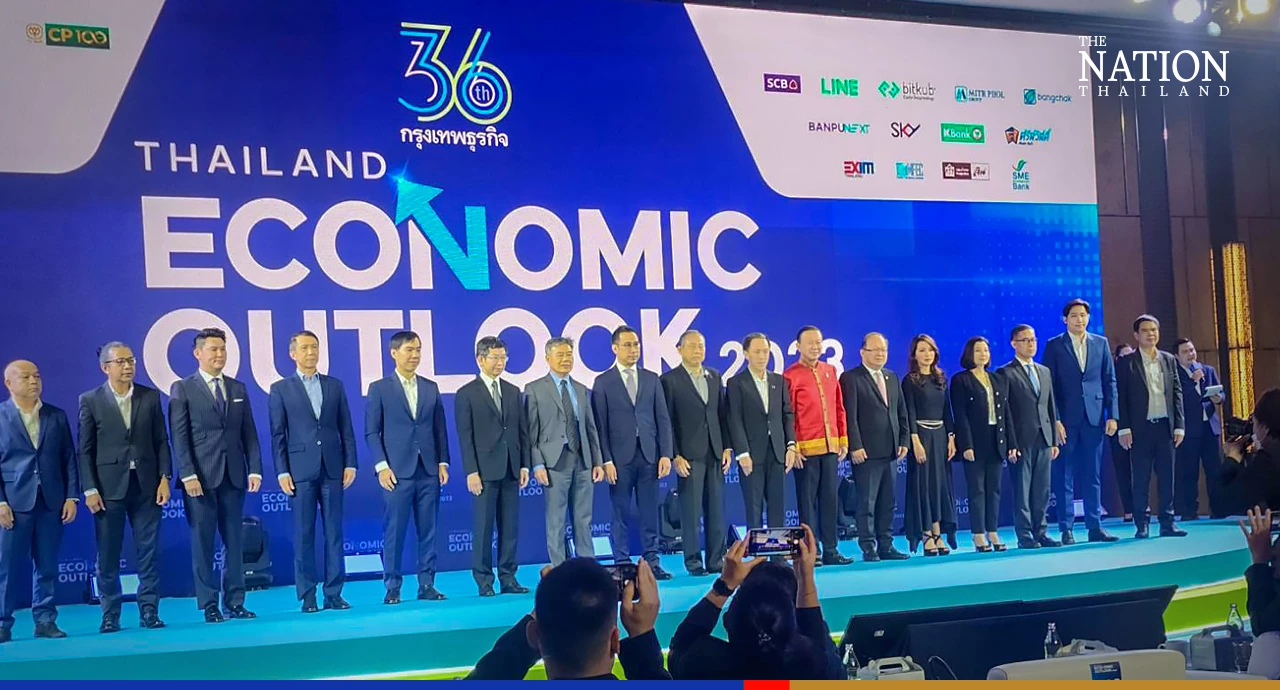
They expressed their opinions during the “Thailand Economic Outlook 2023” event hosted by Krungthep Turakij newspaper on Tuesday in Bankgok to commemorate its 36th anniversary.
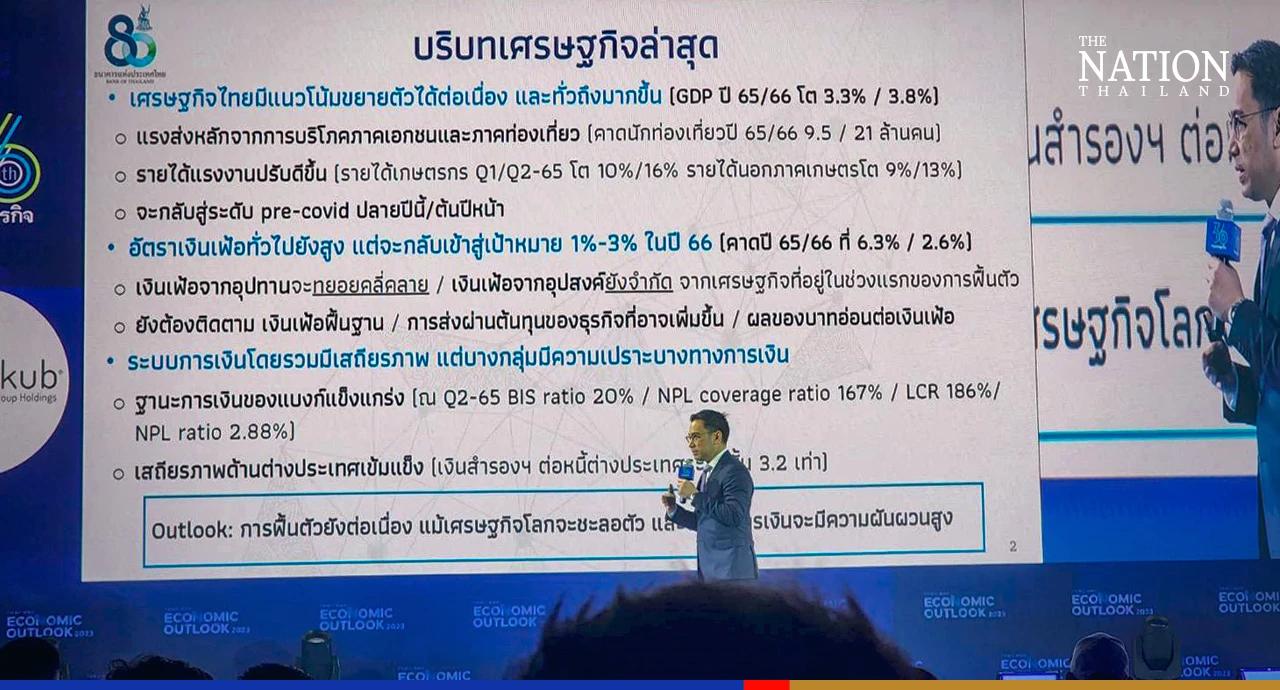
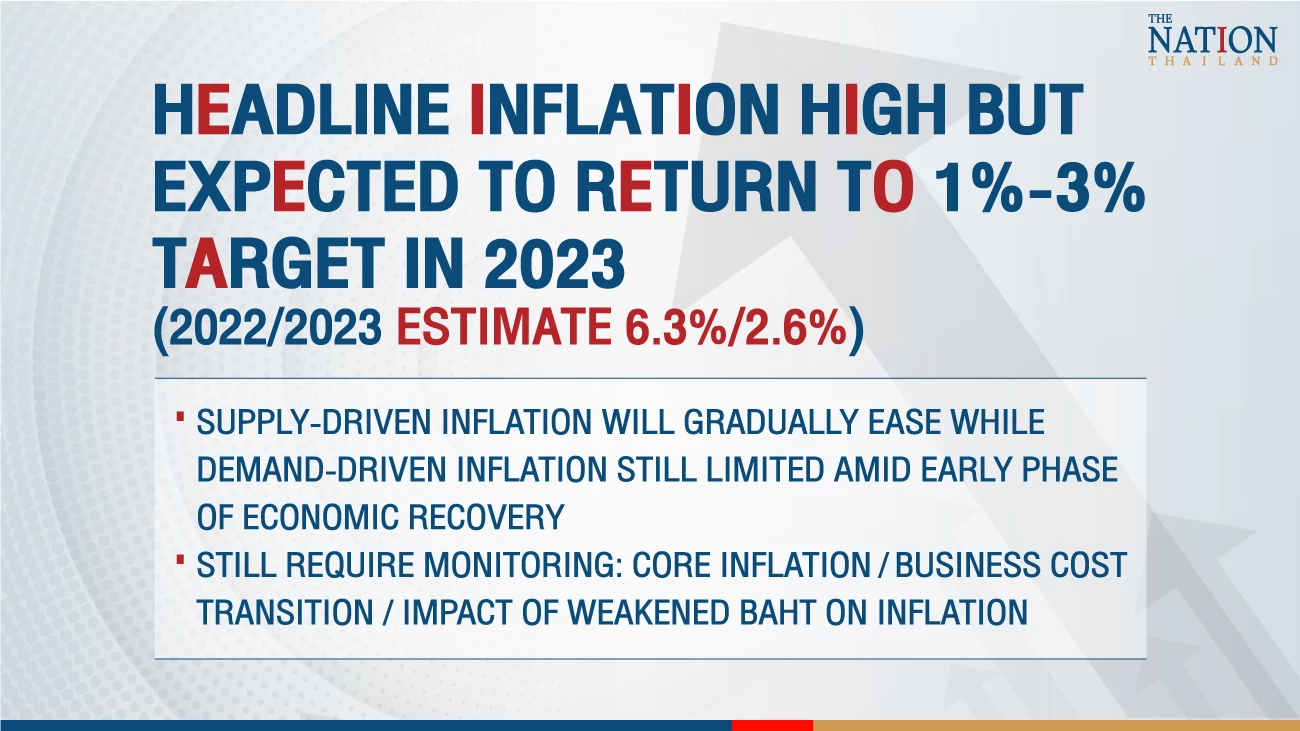
The dialogue began with a keynote speech from Bank of Thailand (BOT) Governor Sethaput Suthiwartnarueput, who stated that despite the global economic slowdown and high volatility in the financial market, Thailand’s economy is gradually recovering due to a strong rebound in the tourism industry and domestic consumption.
However, he noted that high inflation and the US central bank’s monetary policy were still factors that Thailand needed to monitor closely.
He also defended the BOT’s monetary policy, claiming that it is on the right track because Thai economic conditions differ from those of other countries, hence Thailand did not need to adopt the same measures.
“Thailand’s economy requires a smooth takeoff rather than a smooth landing,” said Settaput.
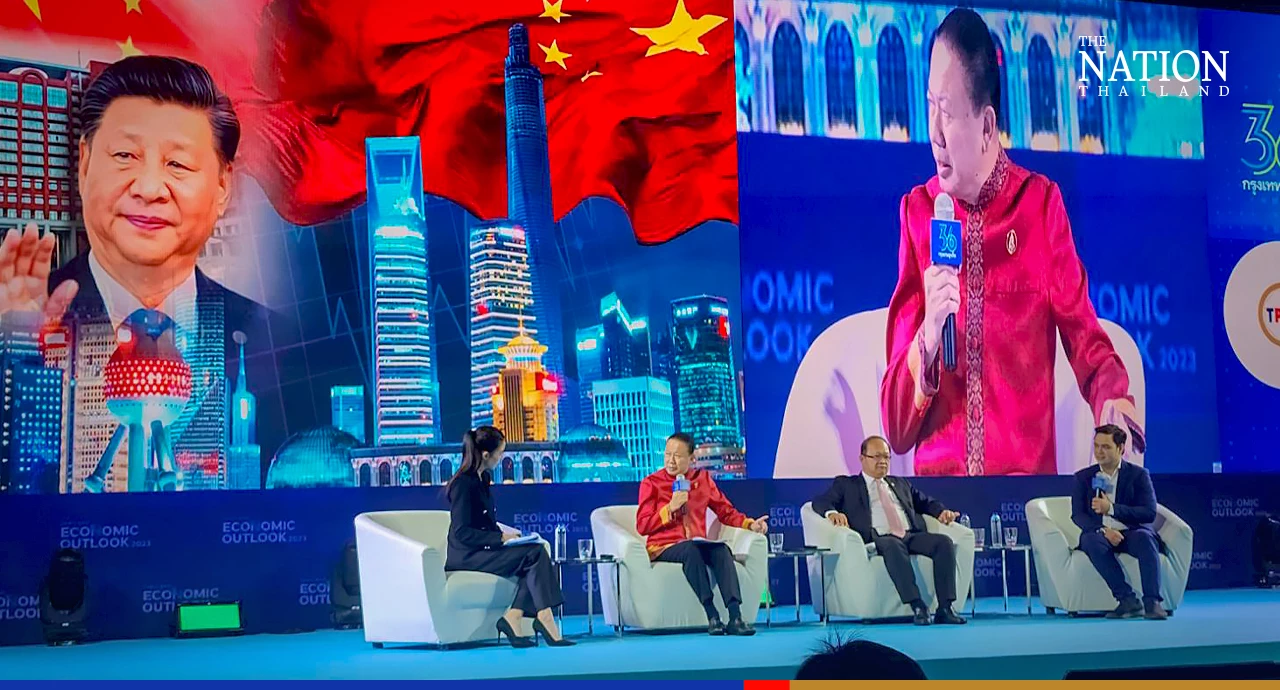
Jon Penrice, president Asia Pacific of Dow Chemical Company, pointed out the possible strategies for the new world order in the coming year and beyond.
He predicted that volatility and uncertainty would become a normal part of doing business, so companies and agencies must be much more alert and resilient in the short term while still focusing on their long-term vision.
“None of the events are predictable,” he explained. “In this new world order, companies should focus on four key strategies: customer centricity, resilience and agility, a disciplined financial approach, and diversification.”
He warned businesses to brace themselves for several headwinds in 2023, such as the European energy crisis, the ongoing war in Ukraine, China’s slowdown, rising global inflation, and currency depreciation.
He advised businesses to invest in people and Environment, Social, and Governance (ESG) in order to sustain their growth because these two factors will help businesses reduce risk and costs in the long run.
Overall, Thailand’s economy will face more severe challenges in the coming year, particularly for monetary and fiscal policy, three economists from major banks and financial institutions said.
They attributed the situation to the US Federal Reserve’s commitment to bring down high inflation regardless of the risk of a hard recession.
Supavud Saicheua, economist and adviser at Kiatnakin Phatra financial group, pointed out that although the country’s economy is showing positive signs of growth, Thailand needs to improve its foundation and infrastructure, including embracing rapid changes in innovation and technology and caring more for the environment, in order to thrive in the long run.
Meanwhile, Bangkok Bank economist Kobsak Pootrakool is concerned about the country’s reserves, which needed to be increased to improve efficiency but not so much that the country cannot move forward. He urged both the public and private sectors to become more competitive.
Kiatipong Ariyapruchya, the World Bank’s senior economist for Thailand, added that the government should relax some finance and investment regulations.
Thailand has one of the toughest investment laws in the Southeast Asian region, he added, urging the government to amend the law, which would aid in unlocking Thailand’s manufacturing and services potential.
He also suggested that the Thai government develop a strategic plan to address the effects of extreme weather conditions, specifically water management and drought.
Despite the country’s difficult circumstances, two private-sector representatives were optimistic that Thailand’s economy will be able to handle and survive because Thailand’s private sector is capable and strong.
Sanan Angubolkul, chairman of the Thai Chamber of Commerce, said that what is needed now is to find new business models — other than export and tourism — to drive Thailand’s economy.
Kriengkrai Thiennukul, chairman of the Federation of Thai Industries, said that their federation focuses on seven new S-curve industries, including Bio Circular Green economy and climate change.
He insisted that S-curve will open up new opportunities for Thai businesses and help attract foreign investment in the coming years.
Sanan and Kriengkrai also had a message for the next government. They assured that regardless of which party forms the new government, the private sector is always willing to collaborate and work with them. They urged the next government to pay close attention to what businesses need, to change some outdated regulations, and to be consistent.
The fierce competition between Thailand and Vietnam was a frequent topic of discussion in today’s debate. While most speakers lauded Vietnam’s rapid growth, Jareeporn Jarukornsakul, chairman and group CEO of WHA Corporation, stated that Thailand is still in a better position than Vietnam.
Thailand, she claimed, had the most advanced infrastructure in the region. Many foreign investors continue to prioritise Thailand. Hence, the country must continue to invest and develop, particularly in mega-trends such as electric vehicles, renewable energy, and green economy.
Siam Piwat Group chief executive officer Chadatip Chutrakul revealed the company’s 63-year secret to achieving exponential growth and surviving every crisis to become the country’s No. 1 retailer and real estate developer.
The tactic, she explained, is simply to be mindful and sincere with customers, employees and business partners. Besides, she suggested that thinking outside the box, creating new possible business paths, and expanding network and connections would be useful strategies in this new business context.
FTI identifies 7 risks and offers 6 solutions for Thailand’s economic recovery
TUESDAY, OCTOBER 04, 2022
THE NATION
The Federation of Thai Industries (FTI) pinpointed seven risk factors for economic development in 2023 and offered six solutions to ensure recovery in the post-Covid era.
Speaking at the “Thailand Economic Outlook 2023” seminar hosted by Krungthep Turakij newspaper on Tuesday, FTI president Kriangkrai Thianukul said the Thai economy would face several risks next year due to the uncertain global situation, fluctuating finances and digital disruption.
“In 2023, Thailand’s industrial sector will be facing a ‘perfect storm’ fuelled by these seven risk factors, most of which are consequences of the Russia-Ukraine conflict,” he said.
The seven risk factors are:
• Inflation: Expected to continue rising next year. Thailand’s highest inflation in 17 years was recorded in August 2022 at 7.86 per cent
• Raw material shortage: Supply of products like microchips, animal feed, fertilisers, chemicals, etc, expected to drop.
• Rising energy cost: Cost of electricity rose 17 per cent this year, while the price of fuel hit a new high in eight years and the price of LPG rose 28 per cent year on year.
• Rising daily minimum wage: Daily minimum wage was raised by an average of 5 to 8 per cent nationwide.
• Weaker currency: The baht fell to its lowest in 16 years at 38 to 39 baht to the US dollar.
• Rising interest rate: The rate has been increased to 1 per cent with a tendency to rise further.
• Rising transport cost: 45 per cent hike in freight fees.
“These challenges could hinder the efficiency of our industrial sector. Meanwhile, our neighbour Vietnam has lower industrial costs and can be viewed by corporations as a better investment destination,” Kriangkrai said.
However, he said, industrial and private sectors could embrace these six solutions to gain a competitive edge globally. They are:
• Use BCG (bio, circular, green) economy as a framework for development
• Pre-empt implementation of new technology and innovation to avoid disruption.
• Enhance supply chain security to ensure uninterrupted production.
• Use renewable energy across all operations to reduce the cost of energy.
• Develop necessary skills among employees.
• Tackle climate change issues.
“The private sector may find it difficult to survive even after applying the six solutions without continued support from the government in driving economic growth in key areas,” Kriangkrai said. “We urge the authorities to ensure the continuity of economic policy implementation during the transition of power after the general election, which is scheduled in May next year. The survival of the industrial sector depends mainly on how well the public and private sectors work together for mutual goals.”
BOT governor reaffirms Thailand taking ‘gradual and measured approach’ to economic recovery
TUESDAY, OCTOBER 04, 2022
Bank of Thailand Governor Sethaput Suthiwartnarueput said on Tuesday that unlike many other countries, Thailand is taking a gradual and measured approach to the economy.
Speaking at the “Economic Outlook 2022” event held by Krungthep Turakij in Bangkok, the BOT governor said the Thai economy is in continuous recovery and the country’s monetary policy is on the right track.
He said Thai economic conditions differed from those in other countries, so Thailand did not need to adopt the same measures.
Sethaput also dismissed concerns that the BOT was raising the interest rate too slowly to rein in inflation, insisting “we are not behind the curve”.
He added that while Thailand has yet to recover to pre-pandemic levels, certain other countries had already met their economic targets.
Kobsak Pootrakool, chairman of the Federation of Thai Capital Market Organisations, said he was worried about the country’s exports.
Sanan Angubolkul, president of the Thai Chamber of Commerce, said China’s economic recovery next year would have a positive impact on Thailand apart from the return of Chinese tourists. He said Chinese tourists would definitely return as more than 90 per cent of China’s population has been vaccinated against Covid. Although the number of foreign tourists has not reached the pre-Covid level, revenues at shopping malls of the Siam Piwat Group have exceeded 2019 numbers, group CEO Chadatip Jutrakul said. Jareeporn Jarukornsakul, president and CEO of WHA Industrial Development, said Thailand still has plenty of investment opportunities although political changes could happen in the general election next year.
The other speakers are Jon Penrice Dow’s Asia-Pacific president, Kriengkrai Thiennukul Chairman of The Federation of Thai Industries, Arthid Nanthawithaya Chief Executive Officer SCBXNapat Jatusripitak, co-founder and CEO of ViaLink and managing director of Siametrics Consulting Co Ltd, Korawad Chearavanont, CEO and Founder of Amity Co Ltd, a social cloud company, Dermphan Yoovidhya, CEO and founder of Rapid Group, Pratthana Leelapanang. Chief Consumer Business Officer at Advanced Info Services Plc, Jirayut Srupsrisopa, founder and Group CEO of Bitkub Capital Group Holdings Co Ltd, Phichet Rerkpreecha, CEO at Line Company (Thailand)
The baht opened at 37.80 to the US dollar on Tuesday, strengthening from Monday’s close of 38.08.
The Thai currency will likely move between 37.70 and 38.00 against the greenback during the day, Krungthai market strategist Poon Panichpibool predicted.
Poon said that the market is in a risk-on state, which might slow the baht’s weakening if foreign inflows rise.
Also, the baht may gain short-term support from gold sales if the price exceeds its resistance level at $1,700 per ounce, he added.
He said the baht could swing sideways or strengthen in the short term, as daily and weekly graphs show signs of bearish divergence.
He also advised watching for weak liquidity in the market that could drive baht fluctuation and sideways swings in a wide range.
Poon predicted a support level of 37.50 to 37.70, when importers would buy dollars. He expects a resistance level of 38.20 to 38.30, when exporters would sell the dollar.
He also advised investors to use hedging tools such as options to manage risks in a highly volatile currency market.
Thai economy to expand at least 3% for next 2 years but election a potential disruptor: Fetco
TUESDAY, OCTOBER 04, 2022
THE NATION
The Thai economy will defy global recession to expand at least 3 per cent both this year and next year, the Federation of Thai Capital Market Organisations (Fetco) forecast on Monday.
Thai growth will come from a recovery in tourism and foreign direct investment after the Covid-19 pandemic, Fetco chairman Kobsak Pootrakool predicted. The World Bank forecasts Thai growth of 3.1 per cent in 2022 and 4.1 per cent in 2023.
Kobsak, who is also executive vice president of Bangkok Bank, said this year’s repeated raising of policy rate by the US Federal Reserve to combat inflation is creating a global recession that could last until next year. He said this recession, the fifth in the past 50 years, would cause mass layoffs by US and European corporations as well as liquidity problems in emerging markets, which would need International Monetary Fund assistance.
“As for Thailand, exports in 2023 will not expand sharply like in the past one or two years as most of our trade partners will still be suffering from the economic downturn,” he said. “However, rising tourism and foreign direct investment will help Thailand’s economic expansion surpass 3 per cent this year and next year.”
Kobsak pointed out that Thai tourism industry is on an upward trend with around 1.5 million foreign visitors per month since August. He estimated that total foreign arrivals this year exceed 10 million and grow to 20-25 million in 2023. These visitors would generate significant circulating capital for the Thai economy.
Kobsak added that foreign investors also favour Thailand as a top choice in Asean, along with Vietnam.
“The fact that China’s electric car manufacturer BYD is establishing a plant in Rayong proves that Thailand can still attract foreign direct investment to strengthen our economy,” he said.
Possible blocks to economic expansion include political transition after the general election due in May 2023, Kobsak said. The government transition could disrupt continuity of economic policy and investor confidence, he said.
He also urged the government to provide data on the strengths and opportunities in Thailand’s economy to maintain investor confidence through the recession. This could be done via domestic and international marketing campaigns and roadshows. “The government must also make sure that mega projects such as expressways, high-speed railways, and infrastructure in the Eastern Economic Corridor and Southern Economic Corridor progress as planned to attract foreign investment in facilities,” he said.
Ramping up cross-border freight along South-east Asian roads
MONDAY, OCTOBER 03, 2022
The globalisation of trade is one of the driving forces of the world economy and has created an interconnected global trading system. Endless opportunities have been created as decision-makers can now reach new customers and secure a diverse selection of new staff, materials, and products regardless of time zones.
However, with supply chain volatility across costs and shipment times, alongside inflation concerns, many logistics players are now rethinking their strategy to mitigate the impact that the pandemic has on their networks.
The solution is no longer as simple as increasing the capacity of container ships or booking planes ahead of time, as there are obstacles that are out of one’s control. The undeniable truth is that disruptions will remain as challenges such as increased extreme weather events or closures due to COVID-19 outbreaks continue to push up logistics costs, and manufacturing prices and extend supplier delivery times.
Today, international transportation is done mainly via the ocean with 90% of trade goods carried over the water. However, cross-border freight is essential when approaching ports or for home deliveries. By having a mix of cross-border, air, and ocean freight, companies can unlock endless business opportunities and potential in Southeast Asia.
The end of the “one size fits all” era
Ocean and air freight are the go-to transport modes for international freight, with the latter often seen as the favoured mode for industries such as fast-moving consumer goods, or e-commerce sellers. However, business leaders may miscalculate the actual time needed for goods to complete their journey which could lead to higher costs in their supply chain. Similarly, relying only on ocean freight can lead to delays should there be unexpected inclement weather or a lack of vessel back-ups.
Multimodal transport provides the ability to customise routes based on the nature of the goods being shipped. For example, the transportation of car tires is not as urgent or timely as pharmaceutical products. In other words, industry leaders can look at more affordable alternatives, such as shipping the cargo via air from city to city, before leveraging land transport from city to smaller towns or districts.
By implementing cross-border freight as part of their logistics strategy, chief supply chain officers can have better control and understanding of how goods move throughout the network. Within Asia, cross-border shipping that leverages both truck and railway can become a strong viable alternative as opposed to solely relying on air or ocean shipping for international transport, mitigating the effects of global supply chain disruptions.
Those who lack the resources can rely on third-party logistics providers who are able to support end-to-end shipment management and customised route solution design and help them gain a competitive edge to stay ahead of disruptions. As logistics networks in the region evolve, new rail+truck services will provide more transport options that can help foster greater connectivity for businesses and facilitate trade across borders.
Customising logistics journey for seamless and efficient transportation
Cross-border freight faces fewer restrictions on the types of items delivered compared to shipping the freight via air or ocean. Goods transported via air are subjected to aviation safety standards, so certain items such as liquids and flammables require more paperwork, which can exacerbate any ongoing delays in the network.
Organisations should see cross-border freight as a complimentary transport mode within their intra-Asia logistics strategy, in tandem with air and ocean freight. For example, the transnational China-Laos railway continues to strengthen China’s connectivity with members of Asean and signatories of the Regional Comprehensive Economic Partnership (Rcep). With multiple weekly departures, logistics players can easily make bookings to transport goods via land if there are any blockages at ports. For customers, cross-border freight is also more affordable in terms of cost per volume, without sacrificing too much speed for the Southeast Asian lanes it is available for. Instead of dealing with containers stuck at ports or airports, goods can be redirected via land to the next nearest destination.
Achieving sustainability goals in an unpredictable industry
To meet customer demand, businesses are often offering consumers the choice to opt for faster and more convenient shipping alternatives, but this can promote unsustainable consumption. As more people seek faster delivery, the delivery lead time for logistics companies shortens, resulting in more frequent and carbon-intensive delivery trips. In fact, air cargo contributes to 2 percent of global carbon emissions and 4 percent for ocean freight.
With governments implementing tighter sustainability regulations such as the Regional Action Programme for Sustainable Transport Development in Asia and the Pacific, companies are keen to go green and logistics departments are not spared from this go-green plan.
Cross-border freight can help businesses achieve their sustainability goals. For example, railway services can reduce CO2 emissions by 25 per cent as compared to ocean shipping and emit 12 times less CO2 than air freight. Moreover, more third-party logistics providers are tapping on the China-Laos railway service to provide access to more sustainable services and wider coverage. Policy measures, like maintaining essential services at the borders, promoting multimodal transport, efficiently regulating cross-border freight, and promoting digitalisation, have allowed goods to flow across borders despite domestic lockdowns and other restrictive measures.
Cross-border freight: The key to multimodal logistics
It is too risky to keep supply chain eggs in just one basket, such as only relying on air or ocean freight. By ramping up on cross-border freight, you can implement a multimodal strategy that addresses your business goals and challenges.
Moving forward, efficient and resilient transport and logistics networks are key for economic growth, and by relying on multimodal logistics, business leaders can engage in more affordable and environmentally sustainable logistics services.
Shawn Chen, Vice President Southeast Asia, C.H. Robinson
Meet over 80 top universities from the UK, US and Australia in Bangkok at ‘Hands On Study Abroad Exhibition 2022’
MONDAY, OCTOBER 03, 2022
THE NATION
Hands On, the leading education consultants in Thailand, are proud to bring to you one of the largest study abroad exhibitions in the country: Hands On Study Abroad Exhibition 2022
Date: Saturday November 5, 2022 Time: Noon – 6pm Venue: The Westin Grande Sukhumvit, Bangkok (BTS Asoke / MRT Sukhumvit) Admission is FREE Register: https://bit.ly/3E9LAIe For more detail, click here.
Why attend?
• Top universities in the world: Over 80 universities from the UK, USA, and Australia including 12 Top 100 universities from the QS World University and Times Higher Education rankings.
• Seminar to prepare for studying abroad
UK Alumni Talk – Find out more about life and study abroad from UK alumni.
IELTS by British Council IELTS
Study in Australia by Austrade
Study at Oregon State University by INTO
Postgrad Business School and Undergrad scholarship by Kaplan
• Get direct feedback on your SoP and/or GTE, and advice on how to improve it
• Speak to an experienced counsellor about your study options and the application process
Example universities attending:
UK
Durham University King’s College London University of Birmingham University of Bristol The University of Edinburgh The University of Manchester University of Leeds University of Sheffield University of Southampton University of Warwick And many more
USA
Clark University Hult International Business School Northeastern University Shoreline Community College St. George’s University – School of Medicine
Australia
Curtin University Griffith University Macquarie University Monash University Murdoch University Swinburne University of Technology The University of Adelaide University of New England (Australia) University of Wollongong UNSW Sydney
Hands On Education Consultants – Thailand’s official representative of universities in the UK, Ireland, USA, Canada, Australia and New Zealand. Helping students from Thailand through the application process to further their studies at Bachelor’s, Master’s and Doctorate level, as well on English language courses, completely free of charge.
Experience the technology and NFT use cases on Bitkub Chain at the “Crypto Expo 2022” from Oct 6-9
MONDAY, OCTOBER 03, 2022
THE NATION
Bangkok, September 30, 2022 — Bitkub Blockchain Technology would like to invite you to experience the technology and NFT use cases on Bitkub Chain at Crypto Expo 2022. The expo will take place at Hall 5–6 of Queen Sirikit National Convention Centre from October 6 to 9, 10.00 am. – 8.00 pm.
The global adoption of blockchain technology could eventually have a significant impact on every sector of business and industry. Therefore, Crypto Expo 2022 aims to offer an in-depth understanding of blockchain technology and it is an amazing opportunity for users to explore the digital world. In the event, the users can enjoy activities and open a new experience at the Bitkub Chain booth by accomplishing the mission from the EarnKUB platform and claiming special rewards. In addition, after participating in the EarnKUB mission, the users can use their NFT(s) to vote and participate in more activities from Social DAO’s polls and earn special rewards from Bitkub Chain. The NFT airdrop called “Golden Time’’ will be distributed to the participants via QR code scanning on Bitkub NEXT wallet.
On the other part of the event, you could meet up with special speakers such as Mr. Passakorn Pannok, Chief Executive Officer of Bitkub Blockchain Technology to share useful information under the topic “The era of Technological Transformation and the Future of Blockchain”. As blockchain technology and cryptocurrency grow by leaps and bounds, several partners from Bitkub Chain will also attend this event as special guest speakers.
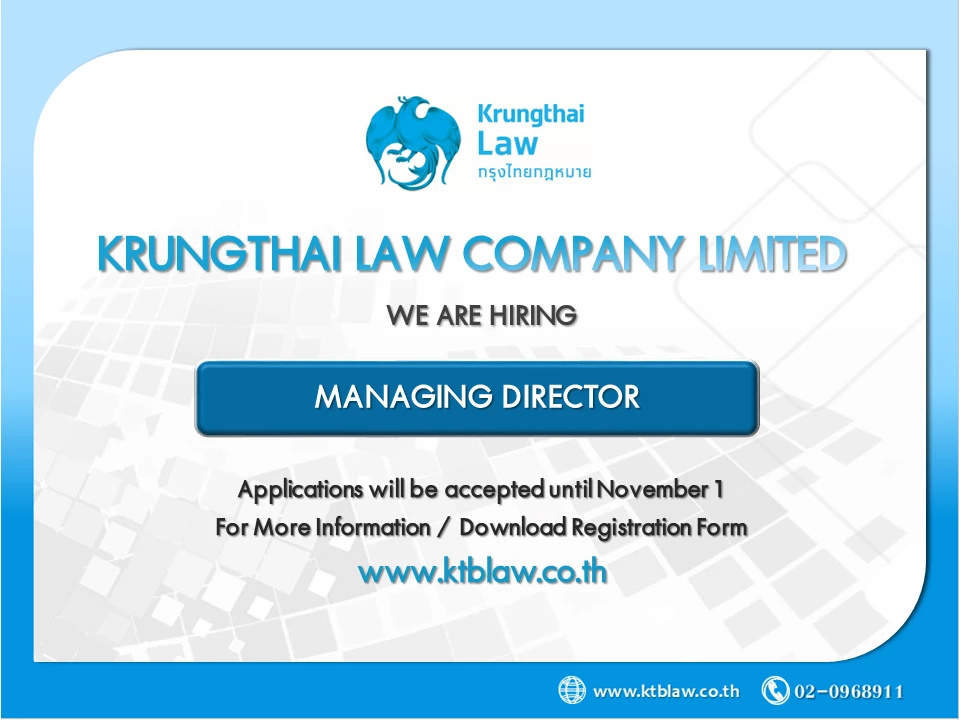
Krungthai Law Co Ltd is inviting applications from suitable candidates for the post of “MANAGING DIRECTOR” to achieve its vision of becoming the No. 1 law firm.
Applications will be accepted until November 1.
Those interested in applying for the position can view details of qualifications and documents for application, as well as download the registration form, self-declaration form and personal data consent form, at www.ktblaw.co.th and submit the aformentioned documents to: hr.center@ktblaw.co.th.
For more information, please contact 02-096-8911 Monday to Friday from 9.00am to 5.00pm



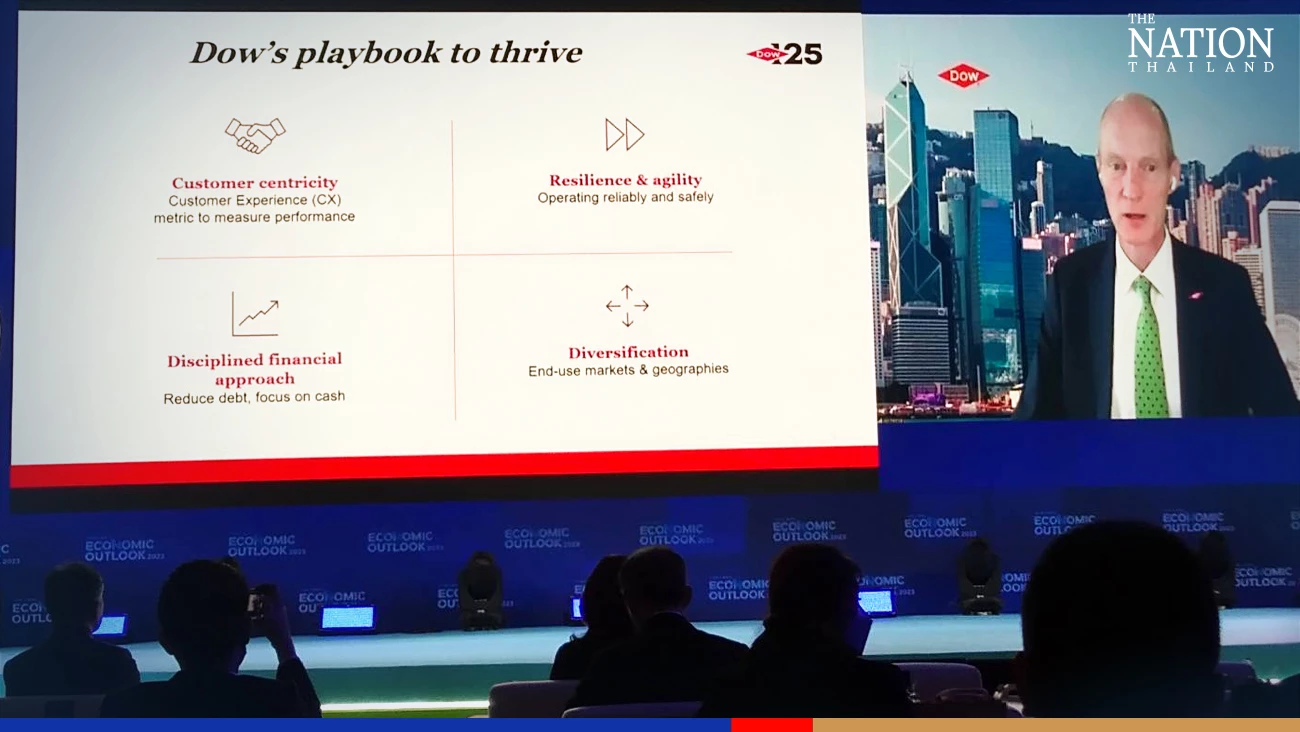 Jon Penrice, president Asia Pacific of Dow Chemical Company, pointed out the possible strategies for the new world order in the coming year and beyond.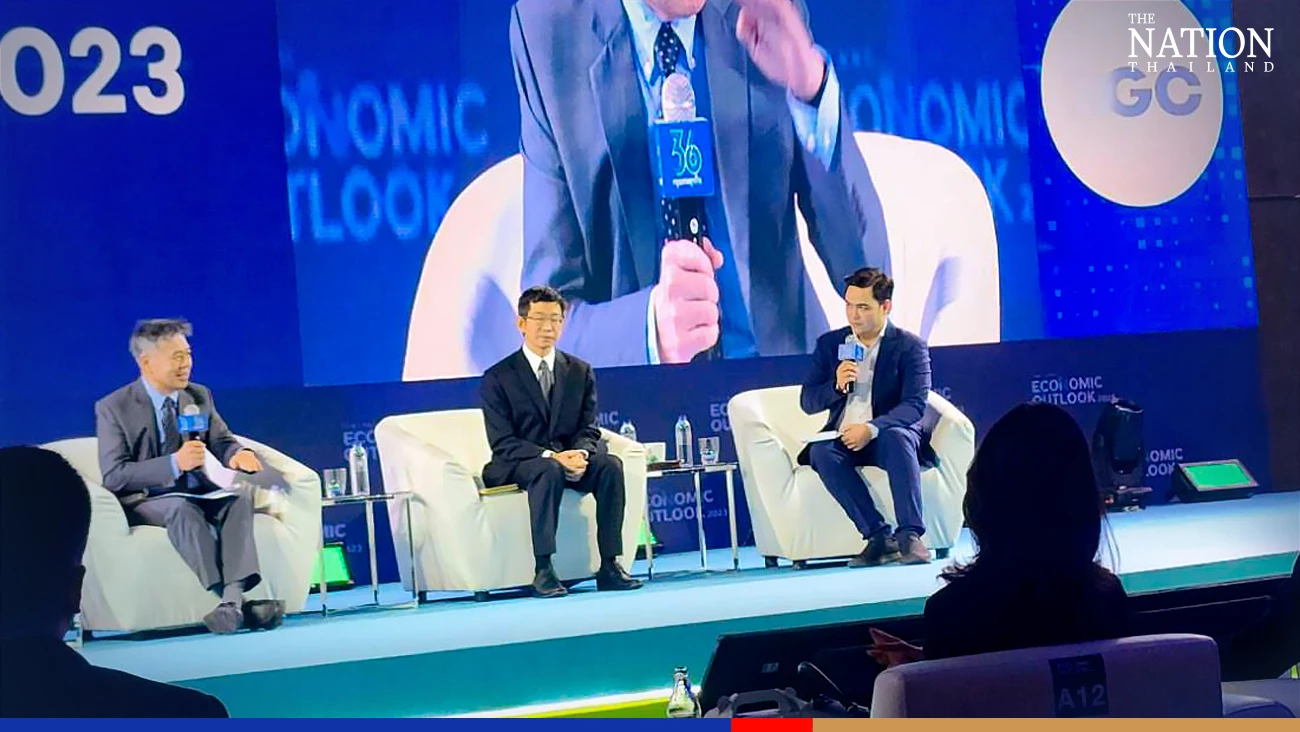
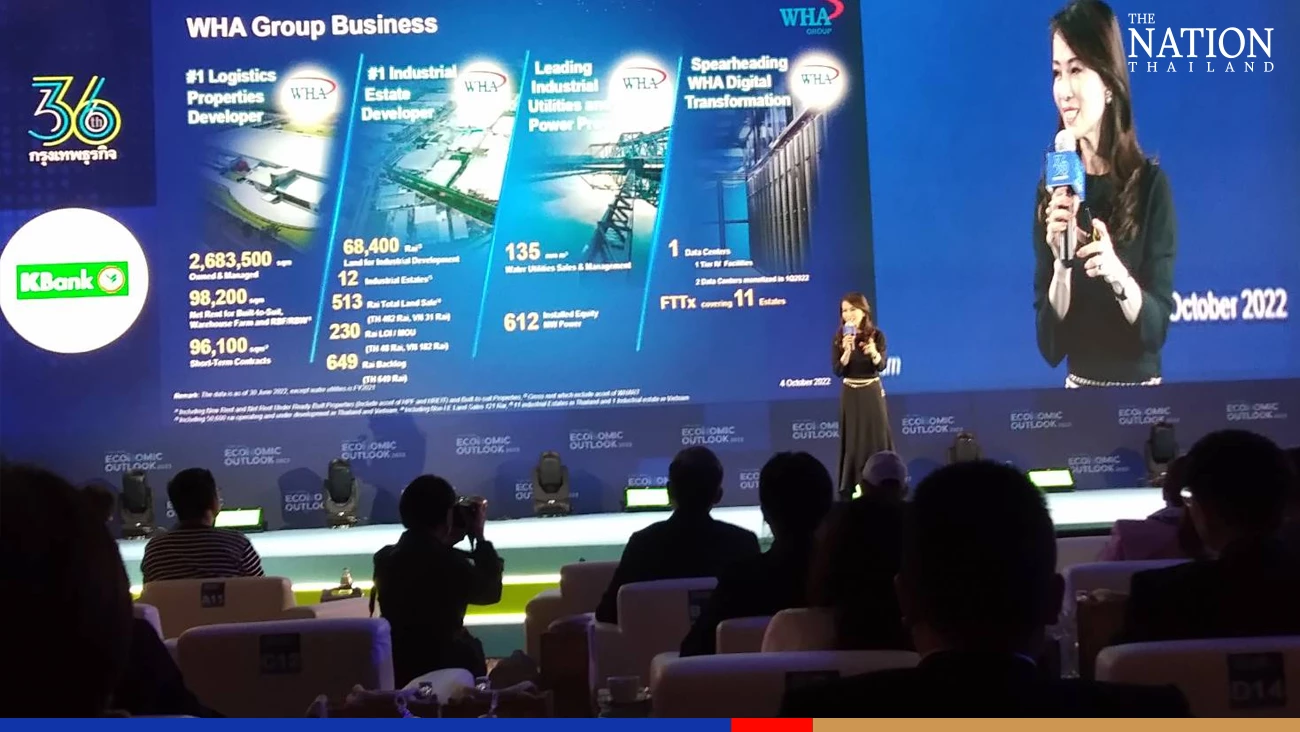 The fierce competition between Thailand and Vietnam was a frequent topic of discussion in today’s debate. While most speakers lauded Vietnam’s rapid growth, Jareeporn Jarukornsakul, chairman and group CEO of WHA Corporation, stated that Thailand is still in a better position than Vietnam.
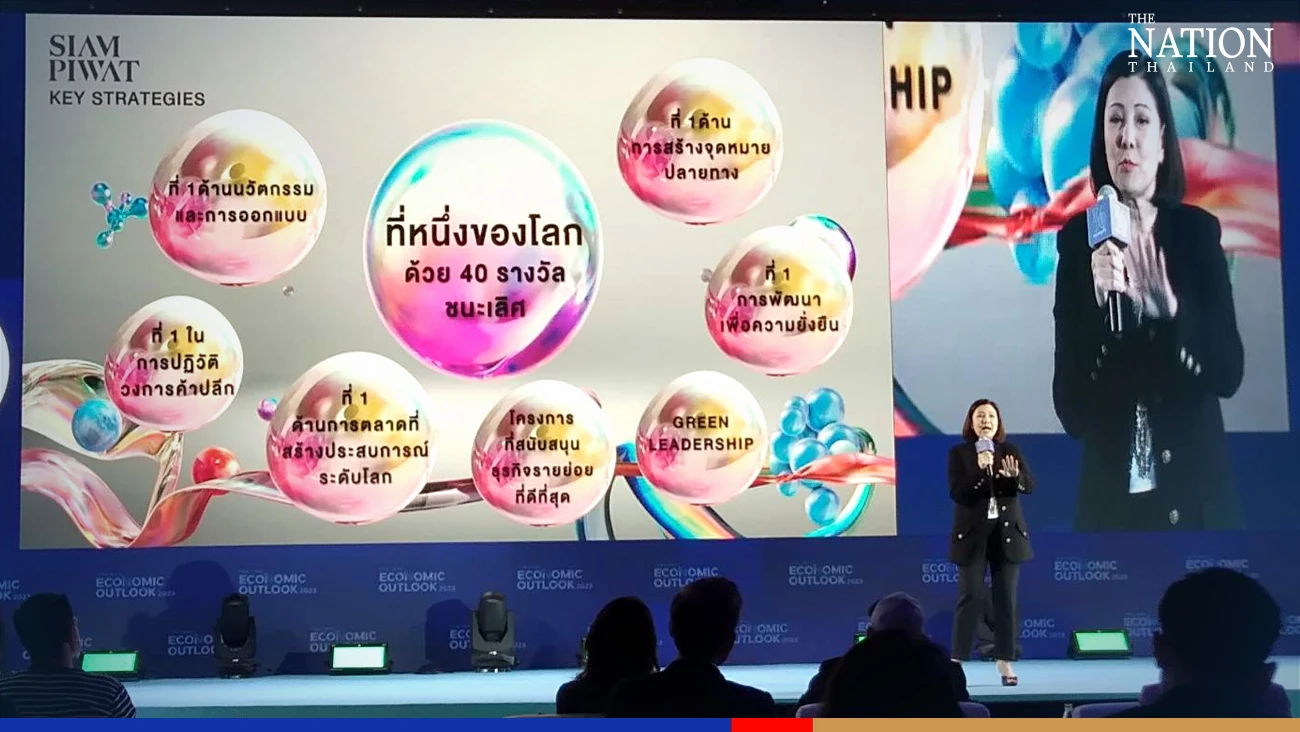 Siam Piwat Group chief executive officer Chadatip Chutrakul revealed the company’s 63-year secret to achieving exponential growth and surviving every crisis to become the country’s No. 1 retailer and real estate developer.
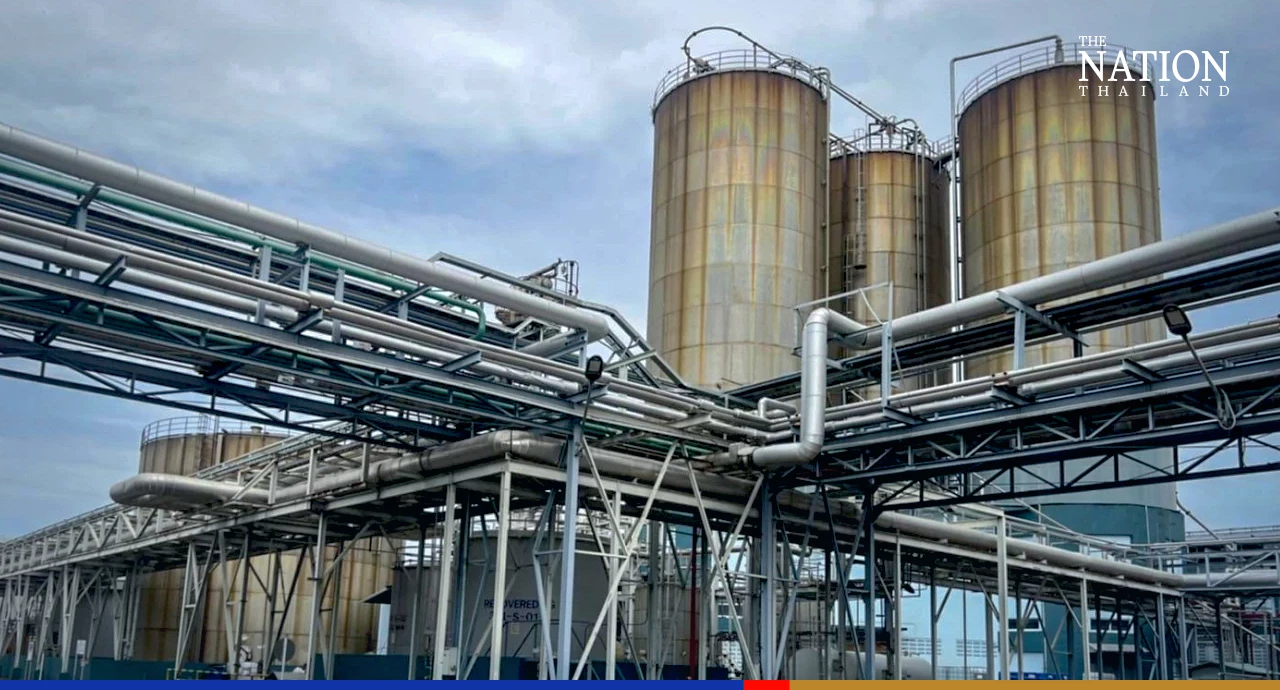





 Although the number of foreign tourists has not reached the pre-Covid level, revenues at shopping malls of the Siam Piwat Group have exceeded 2019 numbers, group CEO Chadatip Jutrakul said.
 Jareeporn Jarukornsakul, president and CEO of WHA Industrial Development, said Thailand still has plenty of investment opportunities although political changes could happen in the general election next year.