More than 10 houses were destroyed after a fire broke out in the Bon Kai community in Bangkok on Tuesday.
Traffic radio JS100 first reported at 1.12pm that a fire had broken out in the community on Rama IV Road. There were no reports of any casualties.
Firefighters and rescuers travelled to the area and found that the fire had started at a two-storey wooden house and spread to nearby houses.
After around half an hour battling the fire, the firefighters still could not control it and had to install more nozzles to control the flames from spreading.
Meanwhile, traffic in the nearby area was closed to help a bedridden patient reach King Chulalongkorn Memorial Hospital.
It was reported later that the fire had started and spread in the area of the community where people lived in wooden houses. The narrow entry path to the community made it difficult for the firefighters to fight the flames. More than 10 fire trucks and some ambulances were standing by outside.
Praram Radio Center 199 reported at around 2.20pm that the firefighters were finally able to control the fire within the area, while JS100 reported at 2.33pm that the fire had been extinguished. Officials will investigate the cause of the blaze soon.
FM91 Trafficpro reported at 3.12pm that Bangkok Governor Chadchart Sittipunt will also travel to the scene.
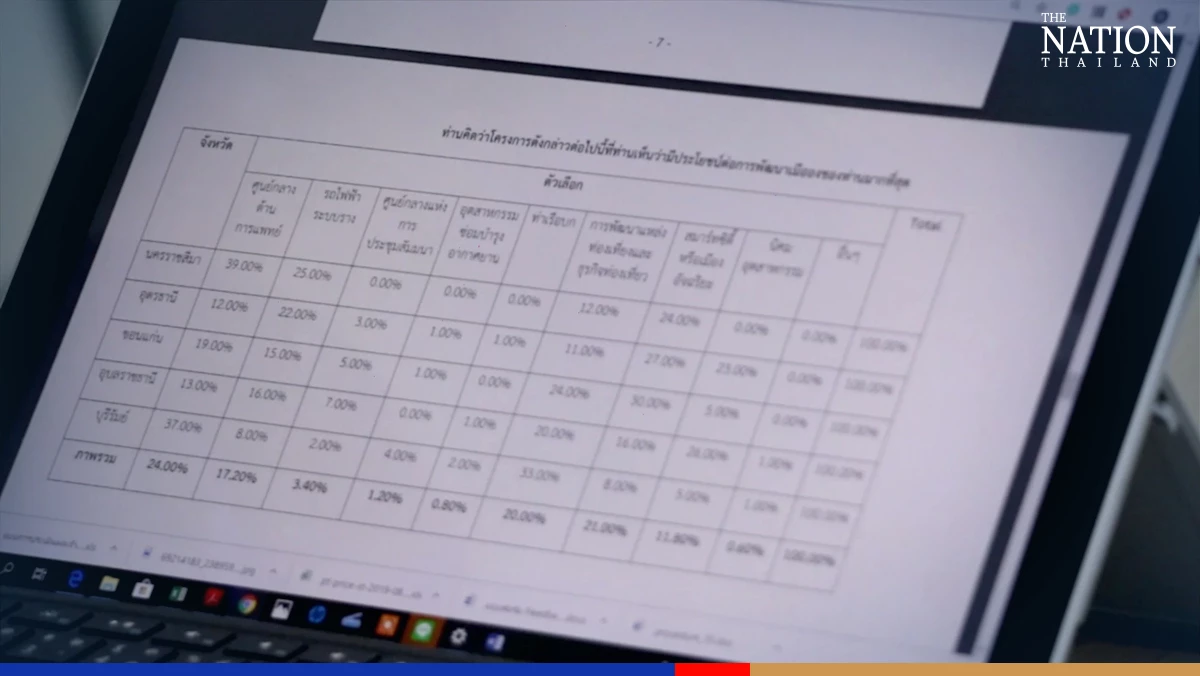
Most households in the Northeast plan to plant cannabis to eat or sell, but won’t smoke it, according to an opinion survey by Khon Kaen University.
The E-Saan Poll surveyed a random sample of 1,105 residents aged 18-plus across all 20 Northeast provinces, from June 17-19.
Asked if they plan to cultivate cannabis in their households, 51.1 per cent of respondents said yes while 46.9 per cent said no.
On whether they would eat foods containing cannabis, 73.2 per cent said yes while 26.8 per cent said no. But when asked whether they would smoke the newly legalised herb, 66.9 per cent said no while 33.1 per cent said they would smoke it, or at least try it.
The survey also asked respondents about cultivating cannabis as a cash crop.
Asked how they foresee the price of cannabis a year from now, 48.1 per cent said it would stay high enough to make cultivation profitable, while 35.2 per cent said it would drop to the level of vegetable prices and profits would be too low. Only 16.6 per cent expected the price of marijuana would support big profits from its cultivation.
Asked whether cultivating cannabis plants would reduce their poverty, 33.3 per cent said yes while 66.7 per cent said no.
On cannabis use by children, 48.6 per cent were worried it would affect their children’s studies, 33.5 per cent were moderately worried, and the rest were a little worried.
Asked whether legalisation would help reduce abuse of narcotics, especially of methamphetamine (“yaba”) and ketamine, 45.8 per cent said no, 24.5 per cent said yes, and the rest expected a surge in narcotics abuse.
More than eight out of 10 (83.3 per cent) supported the ban on cannabis in schools, hospitals, temples and government offices, while 12.5 per cent were opposed and 4.2 per cent had no comment.
Legalisation of cannabis was a campaign policy of the Bhumjaithai Party, a coalition partner in the Prayut government whose power base is in the Northeast.
Asked whether legalisation had boosted Bhumjaithai’s popularity in the Northeast, only 23.1 per cent said yes. Meanwhile 61.5 per cent said no and 15.4 per cent said its popularity had declined.
Asked which party they would vote for if an election was held now, 36 per cent of respondents said Pheu Thai, followed by Move Forward (19.5 per cent), Bhumjaithai (13.7 per cent), Palang Pracharath (13.6 per cent), Thai Sang Thai (11.1 per cent), and the Democrats (2.9 per cent).
Governor Chadchart Sittipunt unveiled the steps he will take to tackle the capital’s chronic air pollution problem at Tuesday’s online seminar titled “Bangkok Air Pollution: Policy, Civil Society and Business”.
Chadchart’s plan to tackle PM2.5 (particulate matter 2.5 micrometres of less in diameter) pollution in Bangkok includes:
• Growing trees to serve as a barrier to dust particles.
• Setting low-emission zones where Bangkokians will be urged to use public transport to reduce emissions from personal vehicles.
• Procuring protection equipment for vulnerable groups like children and the elderly.
• Setting dust-free zones in areas where risk is high, like near hospitals and schools.
• Making PM2.5 measurement more effective by setting up dust-detection sensors, creating pollution maps and making PM2.5 forecasts more efficient.
Chadchart added that Bangkok agencies will use an integrated platform to deal with the PM2.5 issue effectively.
A forensic doctor and toxicologist has called on the government to hold a referendum on whether marijuana use should be fully free or should be controlled, warning that its side-effects could be fatal.
Smith Srisont, a forensic doctor at Mahidol University’s Ramathibodi Hospital, issued the warning in a post published on his Facebook wall on Monday night.
He cited a finding by world-renowned toxicologists, Olaf H Drummer, Dimitri Gerostamoulosa, Noel W Woodforda, in a study titled “Cannabis as a cause of death: A review”, published in the “Forensic Science International” in 2019.
“I would like to issue the following warning as a forensic doctor and forensic toxicologist … Users of ganja have a chance (a chance means not often but it can happen) of dying suddenly because of cardiovascular events, such as myocardial infarction, irregular heartbeats and stroke,” Smith said in his Facebook post.
“I would like to emphasise that the deaths were not caused by allergy to marijuana or overdose but from side-effects.”
Smith said the study found that 13 people, whose ages ranged from 17 to 52 years, died of marijuana side-effects. In some cases, the patients did not have a medical record of chronic illness, no toxic substance was found and in all cases the level of marijuana use was not too high.
He said the study also found 35 patients, who were between 15 to 53 years old, had to be rushed for emergency medical care after they used marijuana. They had no co-morbidity and in some cases, they were found to suffer from myocardial infarction and irregular heartbeats.
Smith said he has learned that similar cases to the finding have also happened in Thailand.
“I was personally told by a doctor, who performed the checkup. The patient had never used marijuana earlier. He tried it once and suffered chest pain and was rushed to Police Hospital. The hospital found he suffered from myocardial infarction but he was saved in time,” Smith said.
He added that another study, whose details were not elaborated, found that the chance of myocardial infarction was 4.8 times higher after smoking marijuana. He said the study was carried out among 4,000 patients but did not give more details.
Smith also pointed out that after the United States decriminalised the use of marijuana, the rate of people suffering from myocardial infarction had increased.
The doctor said he would like the government to hold a referendum on whether the use of marijuana should be liberalised because there are both supporters and opponents of its use.
He called on the Public Health Ministry to issue warnings on the fatal side-effects of marijuana use and advised people to see doctors immediately if they experience certain conditions.
The doctor also called on the government to punish shops that use marijuana as ingredients in foods and beverages without notifying buyers.
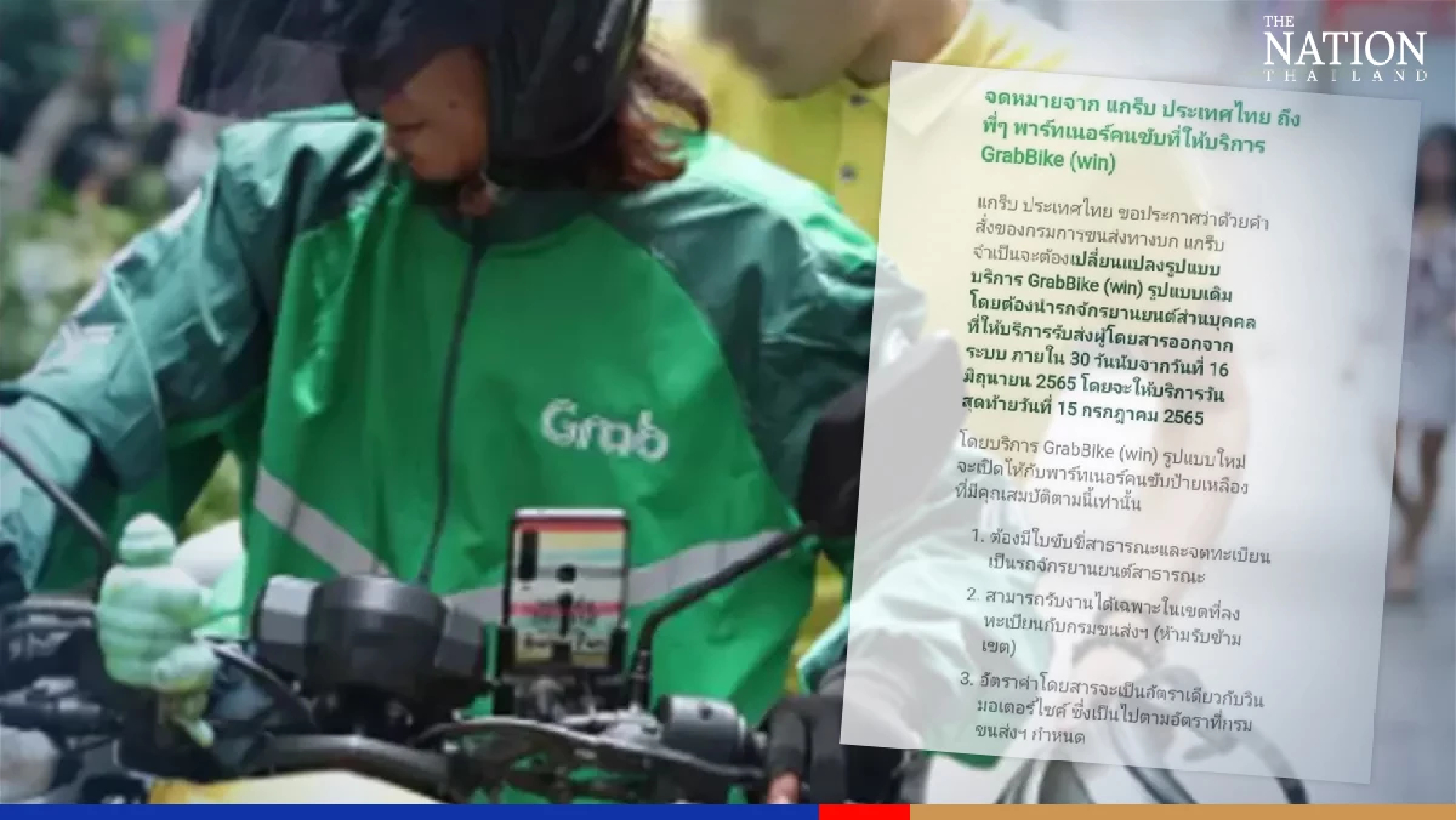
Providers of the GrabBike motorcycle taxi service have until July 15 to register their bikes as public transport vehicles, Grab Thailand announced on Monday.
This is in response to the Department of Land Transport’s order that Grab Thailand suspend the use of personal motorcycles within 30 days from June 16.
Under the new regulations, GrabBike (Win) motorcycle taxi service providers must:
• Have a driving licence and have registered their motorcycle as a public vehicle
• Can only accept jobs in the district registered with the Department of Land Transportation
• Fares collected will be the same as ordinary motorcycle taxis as specified by the department
These steps are being taken to resolve the conflict between GrabBike riders and ordinary motorcycle taxis, who have been complaining that Grab has been stealing their business. Also, the use of personal vehicles to provide public transport services is against the law.
Private bus operators will reduce services by 80 per cent from July 1 due to the high fuel price while the state-run interprovincial bus operator, Transport Company, vowed to keep operating at the same price.
Pichet Jiamburaset, president of the Thai Bus Business Association, said on Monday after a meeting of transport and bus companies that 27 operators will cut 143 bus routes from July 1.
He explained that they were forced to take the step to ensure their survival until the government approves the revised ticket fare structure that is in line with fuel costs.
He said operators could not ply as usual as fuel price had increased to 1,600 baht per trip this week, from 1,400 baht per trip last week.
Pichet added that a fare hike might affect commuters, but it is necessary as the current fare rate has been used since 2019 while the fuel price is likely to increase.
Meanwhile, Transport Co managing director Sanyalak Panwattanalikhit said the company understood and sympathised with operators that have to shoulder these burdens.
He said the company would discuss with private bus operators measures that would be in line with commuters’ demands.
He added that Transport Co will operate normally on both domestic and international routes while the price will remain the same in this period.
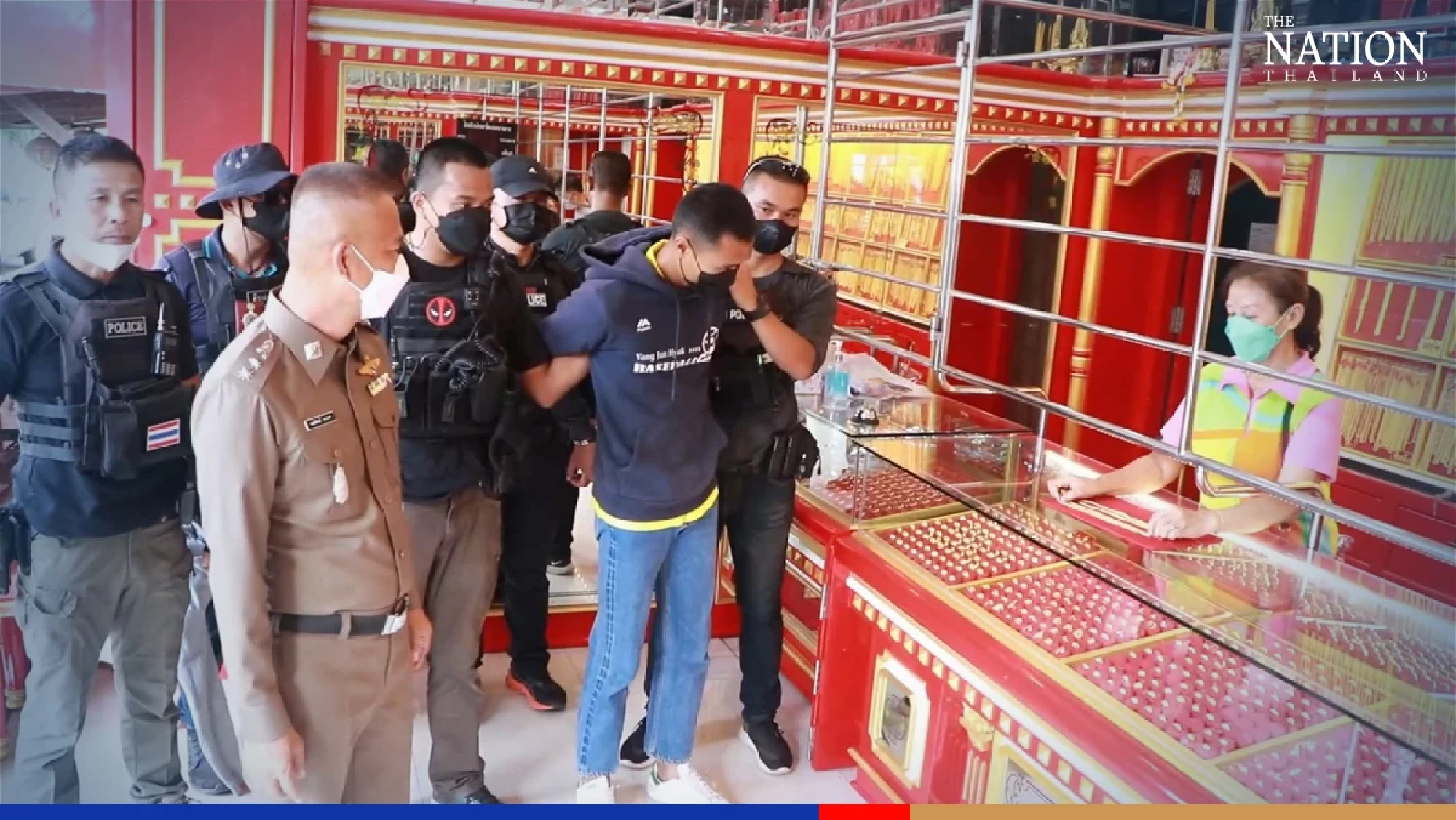
A 23-year-old soldier in Udon Thani was caught on Monday red-handed as he was trying to sell off one of the two gold necklaces worth 127,400 baht that he had allegedly snatched.
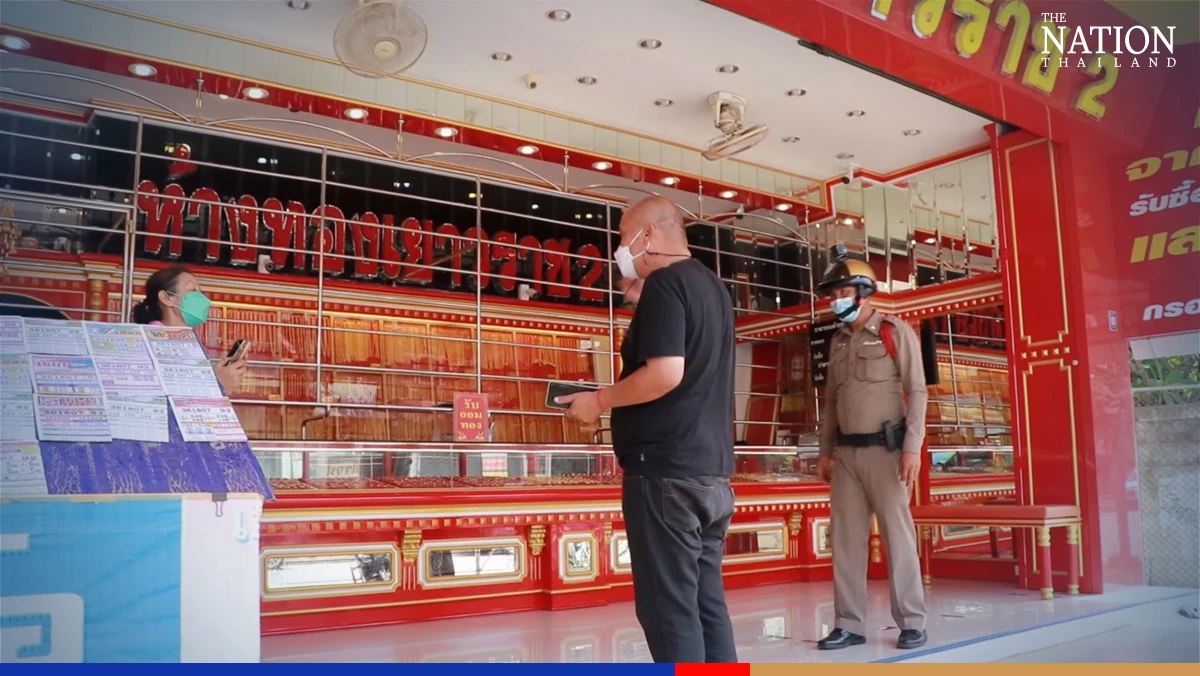
Lance Corporal Rachan Khamrat reportedly snatched two gold necklaces from the Yaowarat 2 gold shop in Kumphawapi district and was caught a few hours later at the Yaowarat gold shop in Muang district trying to sell off his loot.
The suspect pleaded guilty, saying he stole the necklaces to pay off his debts.
Mintra Thadasupaporn, owner of the Yaowarat 2 gold shop, said she called the police and informed other local gold shop owners after the suspect dashed out of her shop wearing two necklaces.
As fate would have it, the suspect landed in a shop owned by Mintra’s younger sister, Weeraya Phusopha.
The younger sister immediately called her older sister after asking her husband to keep the suspect busy, and soon the police were on their way.
Kumphawapi Police Station superintendent Pol Colonel Pongphan Nakhwa said the suspect had to be engaged by Weeraya’s husband for nearly three hours before they had enough evidence to arrest him. He added the suspect faces burglary charges.
Police have also seized the soldier’s red-black Honda motorcycle, which he used to flee from the first shop, as well as his clothes and the loot to re-enact the crime.
The price of diesel will be maintained at 34.94 baht per litre despite the surge in global oil prices, the Oil Fuel Fund’s Executive Committee said on Monday.
This move is in line with the Cabinet’s resolution to cap the retail price of diesel at 35 baht per litre.
Pornchai Jirakulpaisal, chief of the Oil Fuel Fund Office (OFFO)’s policy and strategy arm, said the fund still had enough liquidity to continue subsidising the price of oil.
However, he said, the agency will closely monitor the movement of global oil prices and the Oil Fuel Fund’s liquidity.
“We have plenty of information for the Oil Fuel Fund Executive Committee to see if any factors are causing the price of diesel to rise,” he said.
As of Sunday, the Oil Fuel Fund was 96.59 billion baht in debt –59.69 billion baht from subsidising diesel and 36.90 billion baht from subsidising LPG.
The fund is providing an 11.22 baht per litre subsidy to keep the price of diesel at 34.94 baht per litre. The actual price of diesel is 46.16 baht per litre.
The price per litre of fuel on Tuesday at different stations was as follows:
The first cat-to-human transmission of Covid-19 was documented in a Prince of Songkla University study and published in the June 6 edition of the US Centres for Disease Control and Prevention’s Emerging Infectious Diseases Journal.
The report was brought to global attention by the New York Times four days later.
The study recounted the case of a father and son in Bangkok developing symptoms and testing positive for Covid-19 on August 4, 2021. Due to a shortage of hospital beds in Bangkok, the two men were taken to a hospital in Songkhla on August 8. The father and son brought their pet cat along on the 20-hour ambulance ride to Songkhla.
After the men were admitted to the hospital, the cat was taken to a veterinary hospital for tests. Though the cat appeared healthy, the 32-year-old veterinarian collected nasal and rectal samples, which tested positive for Covid-19.
While the vet was swabbing the cat’s nose, the animal sneezed. Though she was wearing gloves and a mask during the swabbing, she did not have a face shield to protect her eyes.
On August 13, the veterinarian developed symptoms, including fever and cough, and shortly after she tested positive for Covid-19.
Genomic sequencing revealed that the cat’s owners, the cat and the veterinarian were all infected with the same version of the Delta variant, which was different from viral samples taken from other patients in Songkhla at the time.
PCR testing suggests that the cat had a high viral load at the time of its veterinary exam. None of the veterinarian’s close contacts had Covid-19 at the time, and she had no prior encounters with the pet’s owners, which supports the theory that the cat was behind the vet’s infection.
Thai researchers said this was the first documented case of cat-to-human transmission, though it is very rare as cats have a very short viral shedding period of around five days.
Meanwhile, the New York Times quoted Dr Scott Weese, an infectious diseases expert at Canada’s University of Guelph, as saying: “Cats are far more likely to catch the virus from people than to transmit it to them, scientists say. But the case is a reminder that people who are infected with the virus should take precautions around their pets — and that veterinarians and shelter workers who may come into contact with infected animals should do the same.”
After more than 20 years of trying, the Commerce Ministry finally succeeded in negotiating a free trade pact with the European Free Trade Association (EFTA).
EFTA, an intergovernmental organisation of Iceland, Liechtenstein, Norway and Switzerland, was set up in 1960 for the promotion of free trade and economic integration between members.
Commerce Minister Jurin Laksanawisit met foreign and trade ministers from the four countries for lunch on Monday at a restaurant in the Icelandic town of Borgarnes.
“Senior EFTA executives have been invited to an official meeting in Thailand from June 28-30 to further discuss free trade agreements as well as future socio-economic development projects between Thailand and EFTA members,” Jurin said. “We expect the free trade negotiations to be completed within two years.”
Thailand’s trade volume with EFTA in 2021 came in at US$7.5 billion and the Commerce Ministry expects this number to more than double once the FTA goes into effect. The pact will reduce tariffs, promote multilateral trade cooperation and establish e-commerce platforms to facilitate international trade among contract parties.
Jurin and commerce delegates have been in Iceland since Sunday to promote Thai products.



 On cannabis use by children, 48.6 per cent were worried it would affect their children’s studies, 33.5 per cent were moderately worried, and the rest were a little worried.
 Legalisation of cannabis was a campaign policy of the Bhumjaithai Party, a coalition partner in the Prayut government whose power base is in the Northeast.