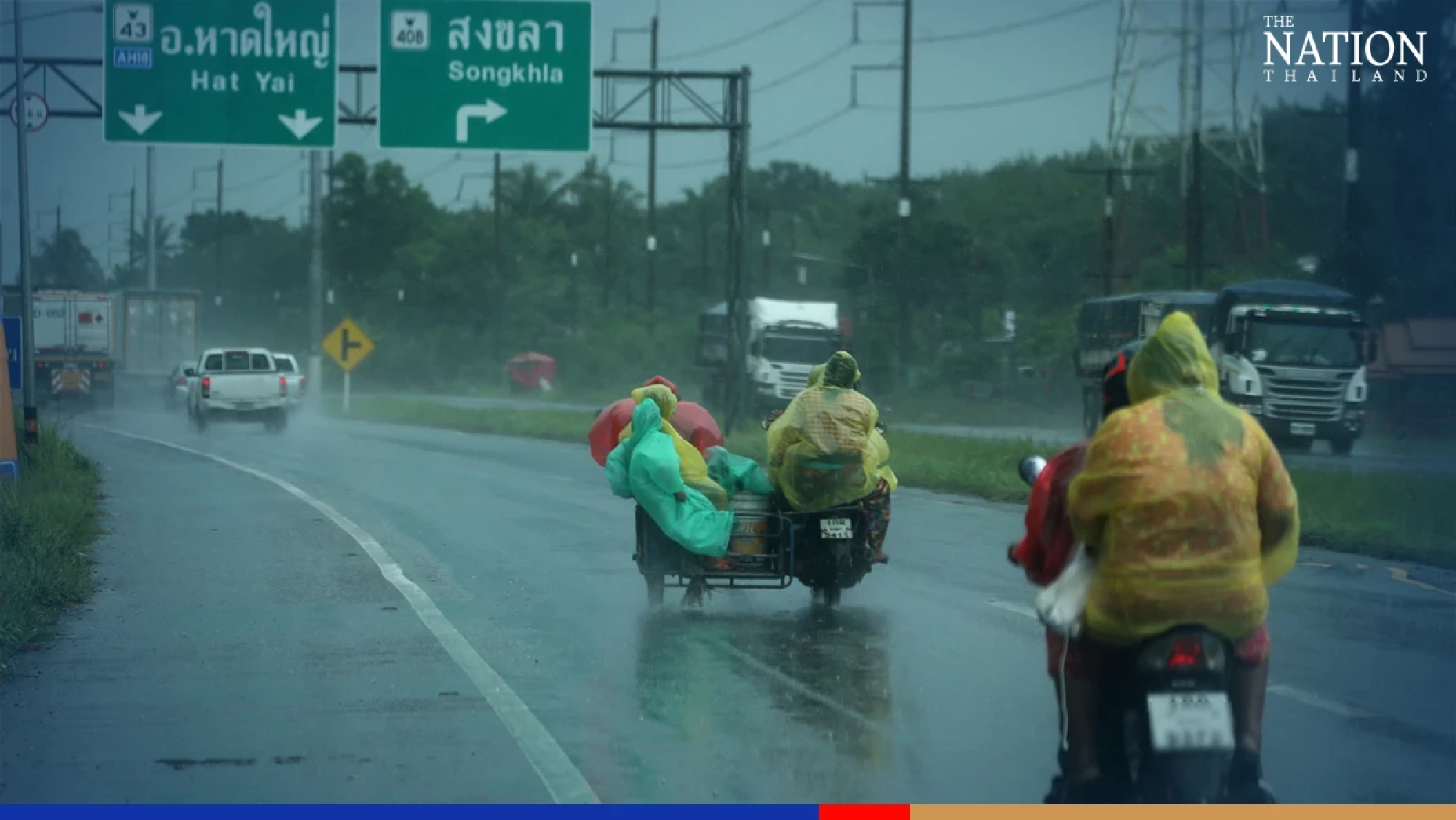
Isolated thunderstorms will hit Bangkok and surrounding provinces from today (Friday) through to Thursday next week, according to the Thai Meteorological Department.
It added that the southwest monsoon prevailing over the Andaman Sea and the Gulf will also bring heavy rain to the Northeast and South over the next seven days.
Meanwhile, winds in the Andaman Sea are weakening. Boats have been advised to proceed with caution as waves of around 2 metres will rise higher during thundershowers.
Meanwhile, waves in the upper Gulf are currently about 1-2 metres high but will rise during thundershowers.
The department advised all boats to proceed with caution and avoid thunderstorms.
About 1.7 million lottery tickets were snapped up on the first day of digital sales on Thursday, in the government’s latest effort to combat price-gouging that has plagued the lottery for years.
Atotal of 5.27 million tickets have been made available online via the Pao Tang application.
The digital ticket-selling platform opened at 6am on Thursday and by 7pm, 1.7 million tickets had been sold to about 429,000 people, said Lottery Board chairman Lavaron Sangsnit.
He expects digital sales of up to 2 million tickets per day as the platform’s operating hours last until 11pm.
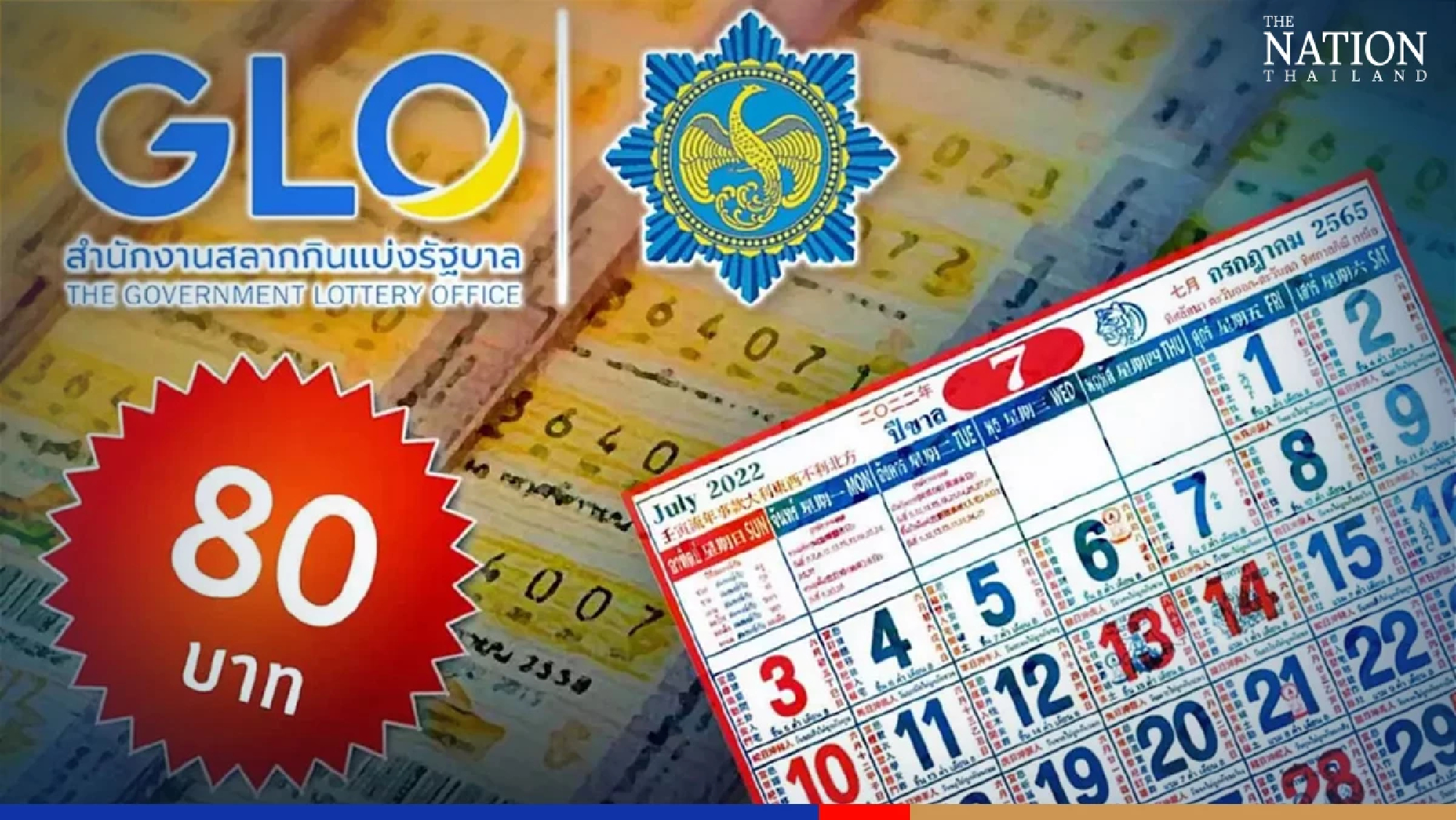
The Government Lottery Office (GLO) launched the digital platform to tackle the problem of overpricing. Tickets sold via Pao Tang are priced at 80 baht, with no limit placed on the number that can be purchased.
Sellers with quotas can sell their tickets on the platform, while the GLO will keep their real tickets.
“The tickets disappear once they are purchased, while buyers will receive a receipt in the form of an electronic bill or SMS message,” Lavaron explained. “The platform aims to boost sales channels for retailers and keep the ticket price at a maximum 80 baht.”
The GLO warned that retailers caught selling tickets on other online platforms will lose their quota immediately.
The year 2022 marks the 160th anniversary of the establishment of diplomatic relations between Thailand and Germany which began with the signing of the Treaty of Amity, Commerce and Navigation between Siam and Prussia in 1862. Since then, Thai-German ties have grown close and has developed into various co-operations including education, science and technology, and innovation.
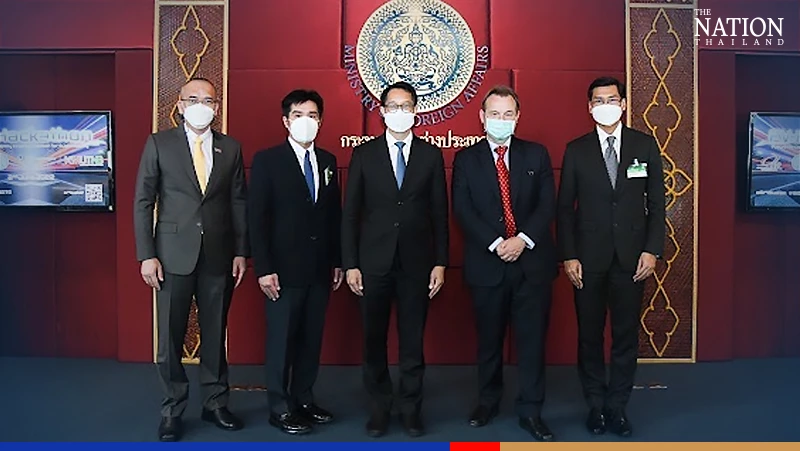
To commemorate this auspicious occasion, the Ministry of Foreign Affairs of Thailand together with King Mongkut’s University of Technology North Bangkok (KMUTNB), and the Embassy of Germany in Thailand are organizing “Future EV Mobility Creative Contest for Sustainability” or the “EV Hackathon for Sustainability #EV4Sustain” from June to August 2022. The contest aims to promote exchanges of creative ideas and knowledge of electric vehicles amongst the future generation.
The “EV Hackathon for Sustainability” is open to higher education students between 18-35 years old to participate in online workshops and submit their creative presentations. Eight selected teams of three students will then compete in the final round of 24-hour EV Hackathon during August 27-28 at KMUTNB to win cash prizes of 250,000 baht in total.
Not only is the competition in line with the theme of the 160th anniversary between Thailand and Germany – “Partners for Sustainable Growth,” Thailand can also benefit from Germany’s expertise in the electric vehicle industry in transforming Thailand into a low-carbon society under the 30/30 policy with 30% of total production to be EVs by 2030. The “EV Hackathon for Sustainability” also resonates with Thailand’s Bio-Circular-Green Economy policy and Germany’s Energy Transition and Climate Change policy.
The competition is made possible by support from concerned Thai agencies and leading private sectors in the field of electric vehicles such as the Electricity Generating Authority of Thailand, King Mongkut’s University of Technology North Bangkok Alumni Association under the Patronage of His Majesty the King, BMW (Thailand) Co Ltd, and Mercedes Benz (Thailand), Ltd.
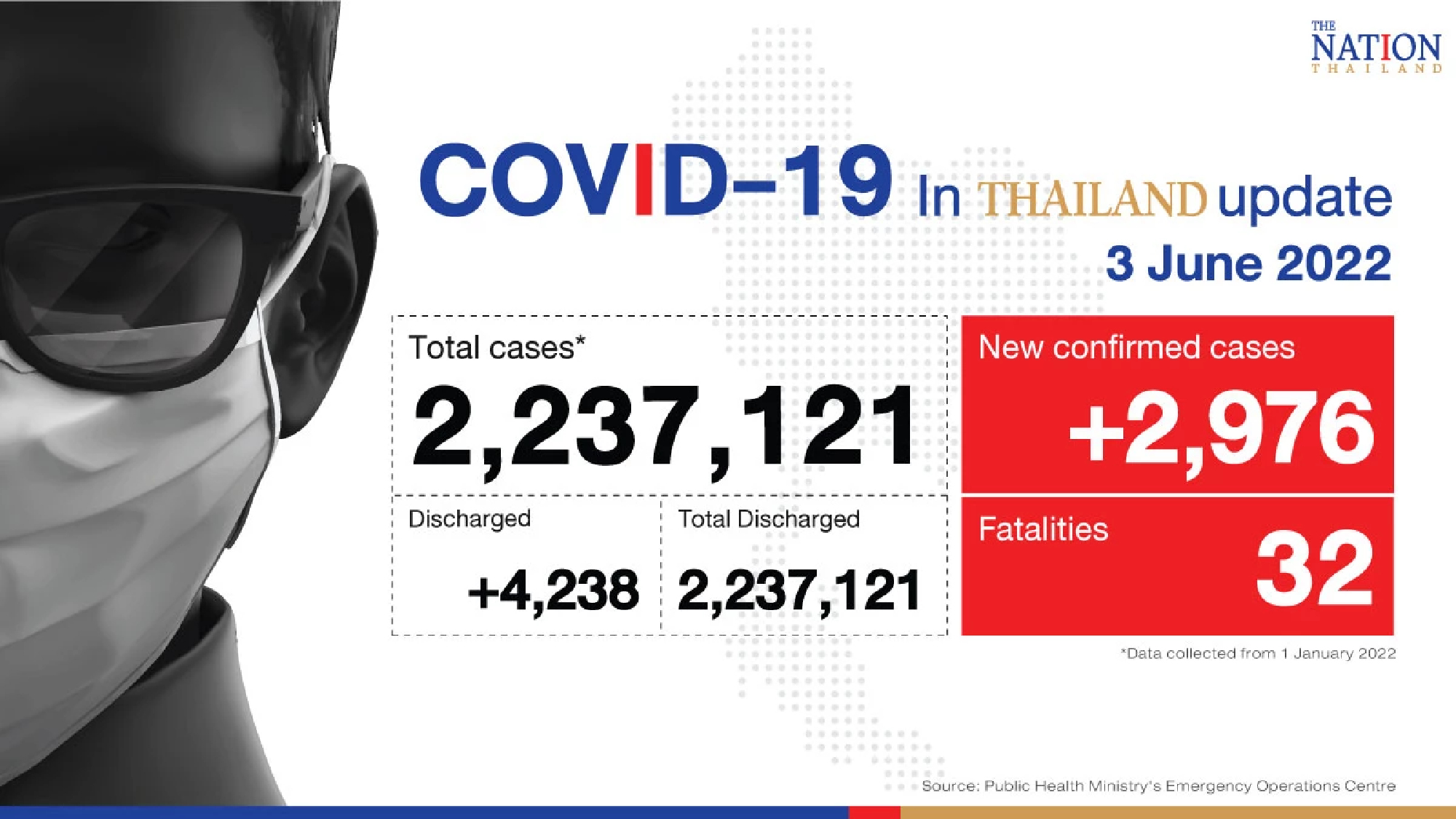
Ministry of Public Health reported on Friday (June 3) morning that in the past 24 hours there are 2,976 new patients who tested positive for Covid-19, 3 of whom have arrived in Thailand from abroad.
Death toll increased by 32, while 4,238 patients were cured and allowed to leave hospitals.
Cumulative cases in the country since January 1, 2022 are at 2,237,121.
Admission to 155 national parks across the country is free on Friday (June 3), which is Her Majesty the Queen’s birthday and a public holiday.
Department of National Parks, Wildlife and Plant Conservation director-general Ratchada Suriyakul na Ayutthaya said on Thursday that the exemption of entrance fees applies to Thai nationals and their vehicles.
Ratchada advised those keen on visiting national parks on that day to do their reservation through the QueQ mobile application.
Also, he urged park visitors to follow Covid-19 preventive measures on mask-wearing and distancing.
He said that his department, which oversees national parks across the country, expects a huge number of visitors there during the coming long weekend.
Cashless payments, online shopping and revenge travel were the three leading trends that would feature in the endemic world in Southeast Asia, according to a Visa report on “Consumer Payment Attitudes”.
The study showed that Thai consumers (89 per cent) lead Southeast Asia in their intention to use cashless payment methods more often, followed by Vietnam (83 per cent), Malaysia (78 per cent), Indonesia (78 per cent), and the Philippines (78 per cent).
The study also shows that Thai consumers have the highest confidence in digital payments. Over four in five (86 per cent) Thais perceived digital payments as safer than cash, followed by Vietnam (80 per cent), the Philippines (79 per cent), Indonesia (79 per cent), and Malaysia (75 per cent).
Serene Gay, Visa group country manager for Southeast Asia, said that during these past two years, the company had witnessed an acceleration in digital commerce as consumers sought out faster, safer and more convenient ways to pay.
“As countries across the region open their borders, it is critical for businesses to adapt and embrace the move to digital to cater to these evolving consumer preferences,” Serene said.
Meanwhile, new shopping channels have also gained traction during the pandemic, driven by store closures and movement restrictions. More than half (55 per cent) of Southeast Asian consumers have tried shopping online via applications or websites for the first time, a trend led by consumers in Indonesia (72 per cent), Vietnam (66 per cent), and Thailand (65 per cent).
Over 42 per cent of Asean shoppers also opted for phone orders from nearby stores for the first time, with Vietnam (57 per cent), Thailand (54 per cent), and the Philippines (45 per cent) the most likely to shop in this way. Many consumers turned to social media channels to shop, led by Vietnam (50 per cent), Thailand (49 per cent), and the Philippines (46 per cent).
Meanwhile, the study showed revenge travel, a phenomenon fuelled by pent-up demand to resume travelling freely, was also on the radar for consumers across Southeast Asia, especially those in Thailand. Almost half of Thai customers, or 46 per cent, are likely to travel overseas in the next year, followed by Singapore (41 per cent) and the Philippines (38 per cent).
“We hope these findings provide valuable insights to support Thai businesses in the transition towards an endemic period. Together with our strategic partners, we will continue to build and redefine the future of payments, making innovative payment experiences accessible to all,” Serene said.
Visa is a world leader in digital payments, facilitating transactions between consumers, merchants, financial institutions and government entities across more than 200 countries and territories.
Close to 20,000 people arrived in Thailand on Wednesday, the first day of the country’s “full opening”. With effect from June 1, visitors no longer need to quarantine themselves. However, a US$10,000 Covid insurance is still required for foreign visitors.
Atotal of 19,767 arrivals by air were recorded on Wednesday — 19,713 of the travellers were fully vaccinated and only 54 were not vaccinated, the Centre for Covid-19 Situation Administration (CCSA) reported on Thursday.
From June 1, Thai nationals entering the Kingdom are no longer required to register through the online Thailand Pass system. However, foreign nationals still need to register and upload their proof of Covid-19 insurance covering at least $10,000 along with their passport.
Foreign travellers are required to show their vaccination certificate while those who are unvaccinated need to produce the result of their PCR testing taken at least 72 hours before entering Thailand.
Meanwhile, all the 3,522 entertainment places applying for the Thai Stop Covid 2 Plus certification were approved, said Sumanee Wacharasint, director of the Department of Disease Control (DDC)’s Risk Communication and Health Behavioural Development Bureau.
Sumanee, in her capacity as a CCSA assistant spokesperson, told a press conference at Government House that those venues represent 94 per cent of all 3,761 registered entertainment places across the country.
Of those venues, 3,196 are in the green and blue provinces where alcohol drinking is allowed until midnight from June 1.
However, the DDC will work with the Interior Ministry in checking those bars, pubs and karaoke lounges from time to time, to check if they are strictly abiding by the standard requirements, the spokesperson said.
She added that those failing to follow the requirements would get a warning, and repeated failure would lead to suspension of business.
The Covid-19 situation in Thailand has been improving substantially, with a constant decline in new cases and deaths, according to the spokesperson. However, with the relaxed restrictions, the number of new cases could increase, so personal preventive measures and booster shots are advised.
Sumanee pointed out that 53 per cent of the 34 Covid deaths on Wednesday were unvaccinated patients. All of them were aged over 60 or had chronic diseases.
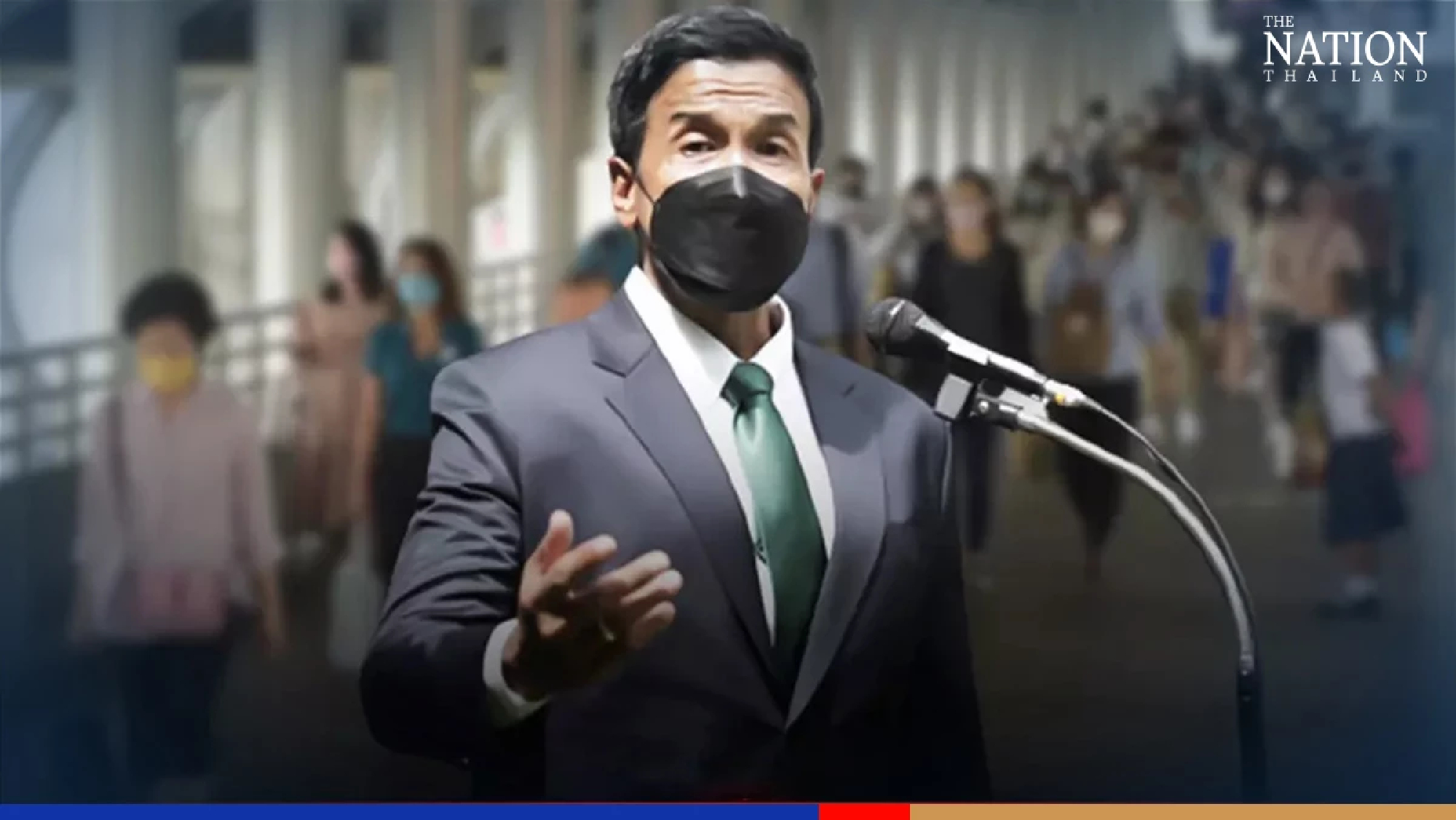
Bangkok Governor Chadchart Sittipunt said on Thursday that he would seek further relaxation of Covid rules for the capital, including ending the mandatory wearing of mask and extending the closing hour for night places.
Chadchart said he would consult experts at the Bangkok Metropolitan Administration’s Health Department on whether wearing of masks in public places could be voluntary instead of being mandatory.
He said Phuket has lifted the mandatory mask requirement and Bangkok is in a similar situation as the southern province.
“The measure is interesting and the situation in Bangkok and Phuket are not different,” Chadchart said.
“Bangkok must move on, so I’m planning to ease the restriction as soon as possible.”
He added that the proposal from night entertainment place operators and their patrons to extend the closing hour from midnight to 2am is also interesting.
He said he would urgently consult the concerned government agencies about the proposal.
He said the closing hour should be extended not only for pubs and bars but all other nightlife places and public parks.
He was speaking to reporters at the BMA head office.
Asked whether he had arrived at the BMA head office at 4am, Chadchart smiled and confirmed it.
He said he had arrived so early to exercise by running around the Giant Swing ground and then he took a shower and changed into clothes to work at the BMA without returning home first to save time.
He said he planned to run around Wat Phra Kaew soon to observe the atmosphere in the early hours and he would soon check pubs and bars in line with his “midnight governor” policy.
Chadchart also led reporters to observe the work in the CCTV monitoring room. He said the capital’s CCTV cameras have been connected to a platform to allow city residents from all districts to file complaints about city woes in real time. They could inform the BMA of traffic snarls, floods, blockades of sidewalks, for example, and the officials would use available CCTVs to monitor the issues to try to tackle them as fast as possible.
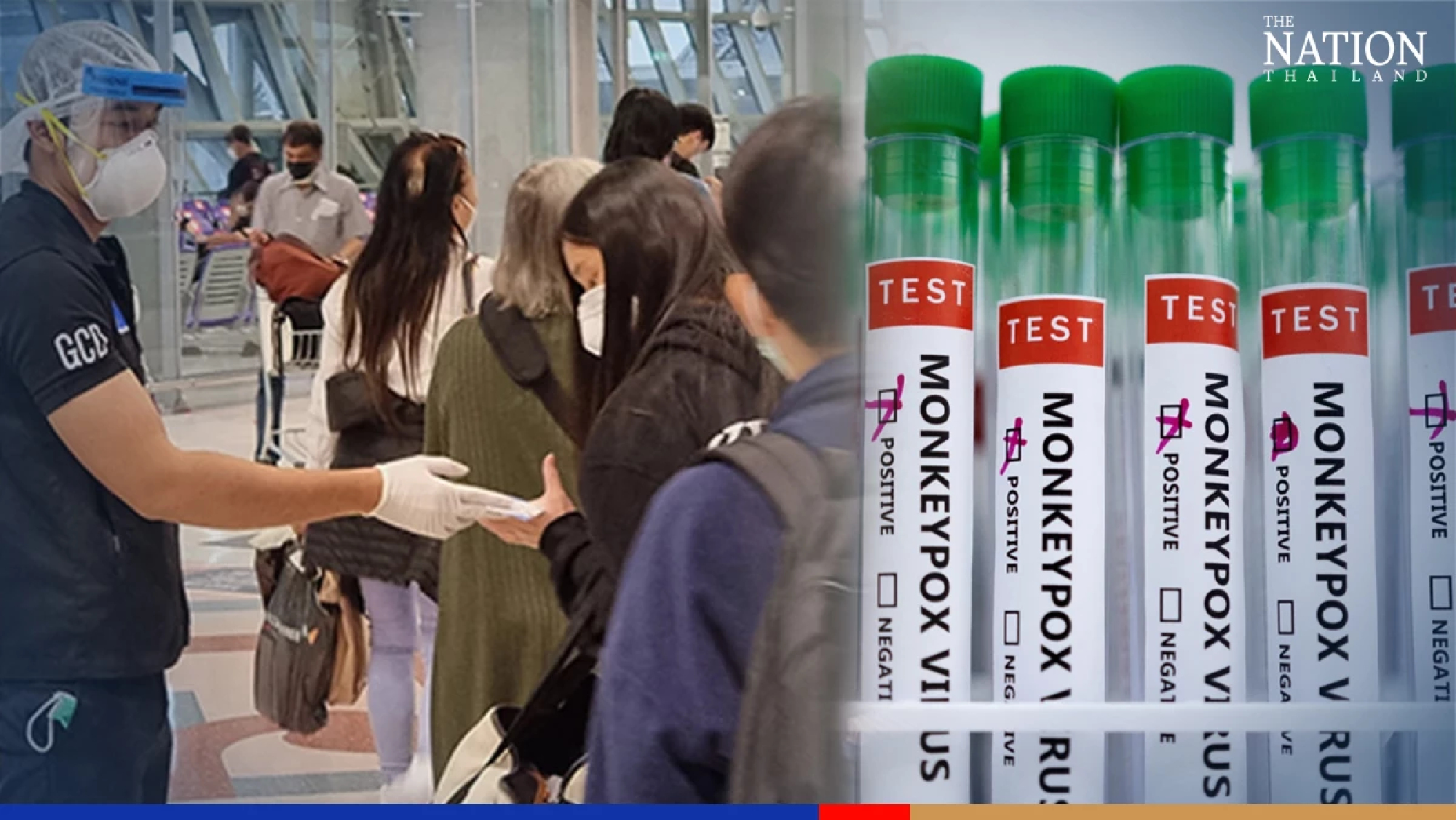
The Disease Control Department (DCD) on Thursday expressed concern that the first cases of monkeypox in Thailand may emerge next week when a lot of foreign LGBT members attend the Pride parade in Bangkok.
The concerns were aired by Jakkarat Pitthayawonganon, director of the epidemiology division of the DCD.
The Pride parade is scheduled for June 5 to celebrate sexual diversity while raising issues of gay marriage, social justice and gender inequality.
The procession is scheduled to start at 4pm at Maha Uma Devi Temple, or Wat Khaek, on Pan Road, ending at Silom Road.
Jakkarat said no suspected and confirmed monkeypox cases have been detected in Thailand so far.
“But during the week when there is the Pride parade in Bangkok, monkeypox cases are expected,” Jakkarat said.
He explained that the event would draw many participants from abroad so some infected people might be among them.
He said Thailand would have to keep close surveillance on arrivals on direct flights from the countries where the cases have been found, such as central African nations, the United Kingdom, Portugal, Spain and Canada. He added that the health officials would also watch arrivals from Germany.
Jakkarat said the organisers of the event did not contact the Public Health Ministry to seek cooperation on observation measures during the event.
But the Public Health Ministry will closely watch patients who may see doctors in Bangkok hospitals for possible monkeypox cases, Jakkarat added.
He said monkeypox is not a sexually transmitted disease (STD) but the ministry is seeking cooperation from the network of agencies taking care of STDs because monkeypox can be transmitted through intimate contact with infected persons.
He said the STD clinics were asked to alert the ministry if they detected any suspicious case.
Jakkarat said if participants at the parade practise universal prevention measures, it would be hard for them to get infected because the disease is transmitted only via close contact.
He also urged participants of the parade to see a doctor if they get blisters.
Jakkarat said the disease has an incubation period of 5 to 21 days, so people who are in close contact with persons suspected to have the virus should monitor themselves for at least three weeks.
“After the Pride parade, even if the participants do not have blisters, they should practice universal prevention measures and stay away from the others as much as possible,” Jakkarat said.
Twelve people who came into contact with a confirmed monkeypox patient are low-risk contacts as they have no symptoms, the Disease Control Department (DDC) said on Thursday.
The 12 are under close observation after they came into contact with a confirmed monkeypox patient who had taken a transit flight from Thailand, the Public Health Ministry said on Monday.
The passenger was in Bangkok for two hours before he caught a flight to Australia, where he was confirmed to have monkeypox.
The DDC said on Thursday that there was no confirmed case of monkeypox in Thailand so far.
Dr Chakkarat Pitayawonganon, director of the department’s epidemiology division, said that the situation is not worrying because they are low-risk contacts. He added that they will be monitored for 21 days.
He explained that monkeypox is a disease needing observation; it was not a dangerous communicable disease. People who were infected could treat themselves. However, patients should see a doctor immediately when they have symptoms.
Chakkarat said the department would monitor the situation to decide if they should distribute monkeypox vaccines to medical personnel. If the disease spreads, vaccines must be distributed to prevent more people from being infected.
However, if the disease does not spread, side-effects from vaccines might be more severe than being unvaccinated, Chakkarat said.
If vaccines need to be given, they will be made available first to risk groups, such as people who have come from foreign countries or medical personnel.
Moreover, they will have to decide which group of medical personnel should get the vaccines because there are a great number of medical personnel, he said.







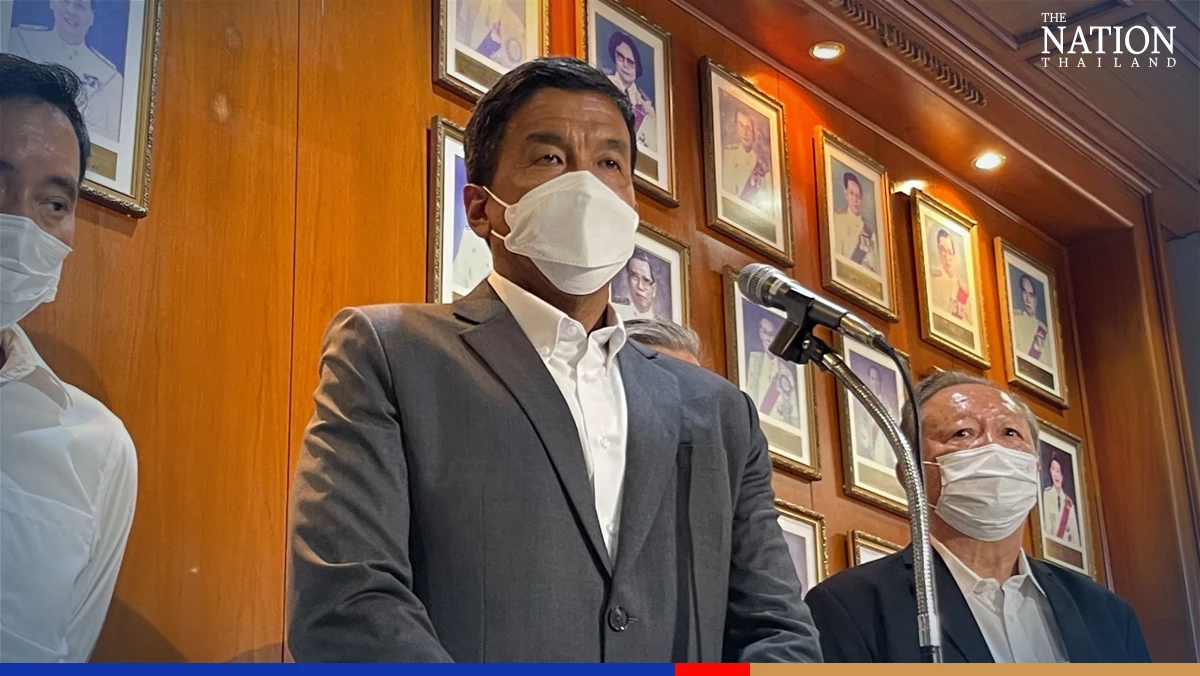 He was speaking to reporters at the BMA head office.