Thailand’s freakishly cool summer is due to strong winds brought by a high-pressure system from China, not melting icebergs, the Thai Meteorological Department (TMD) said on Sunday.
The statement came after several experts blamed the cool weather on a polar vortex caused by global warming – a claim that went viral among netizens.
Among them was Senator Weerasak Kowsurat, who in a Facebook post on Sunday called on the government to ensure people and animals are kept warm during this sudden drop in temperatures.
TMD, however, said a high-pressure system from China can sometimes hit Thailand with thundershowers, cold weather and strong winds.
“This occurred on March 25, 2019, when Thailand was hit with cool temperatures for two or three days during summer,” the department said.
TMD added that the polar vortex does not usually affect Thailand as the Himalayan mountain range redirects cold winds.
“Hence, there is no possibility of Thailand being hit by cold winds from the North Pole like the US,” the department said.
The National Health Security Office (NHSO) said on Sunday that its 1330 hotline will be able to respond to Covid-19 patients, especially those in vulnerable groups, even if there is a surge after the long Songkran holidays.
NHSO secretary-general Jadet Thammathat-Aree said the agency will ensure its hotline is effective in getting vulnerable patients hospitalised in time.
Prime Minister Prayut Chan-o-cha has instructed relevant government agencies to ensure that Covid-19 patients, especially the elderly, those suffering from chronic conditions and children below the age of five, are admitted to hospital immediately in a bid to reduce deaths.
Jadet said the 1330 hotline now has 3,000 lines and can handle some 30,000 calls daily. So far, he said, no calls had been dropped or ignored.
He added that patients from vulnerable groups should call 1330 and press 18, after which they will be registered under the home isolation system before NHSO finds them a hospital bed.
Those not in vulnerable groups can press 14 after dialling 1330, Jadet added.
Apart from the 1330 hotline, NHSO can also be reached via its official Line account (@nhso) and its Facebook page. He said about 20,000 people contacted NHSO via these two channels daily.
Jadet also advised Covid patients to check the Facebook page of the Bangkok Metropolitan Administration or their provincial administration office for phone numbers of health officials they can contact.
Covid-19 patients with mild or no symptoms can also register themselves via the Medical Services Department website.
A former treasurer of Wat Bowornniwet was arrested by the Crime Suppression Division (CSD) for allegedly siphoning 190 million baht from this temple and another satellite temple over the past four months.
ACSD source said the former treasurer, who was a close aide of late abbot Somdej Phra Wannarat, has been charged for allegedly embezzling 80 million baht from Wat Wachirathammaram and 110 million baht from Wat Bowornniwet.
The late abbot apparently oversaw the finances of both temples.
Wat Bowornniwet is one of the major Buddhist temples in Bangkok and served as the residence of the late Supreme Patriarch. It is also the final resting place of King Bhumibol Adulyadej the Great and King Vajiravudh.
After the abbot passed away on March 15, the abbot who took over the finances of Wat Wachirathammaram noticed irregularities in the temple’s bank accounts and called on CSD to investigate.
CSD concluded its investigation on March 22 and obtained an arrest warrant for the former treasurer, identified only as Mr Nor, on the following day. Mr Nor was arrested on March 25.
After the arrest, Wat Bowornniwet suspected that its assets might also be siphoned so it asked the police to check the assets of the late abbot before Wat Bowornniwet filed a formal complaint on April 1, the CSD source added.
Investigators said they learned that the alleged siphoning of funds from the temples’ bank accounts began in late November last year.
They learned that Mr Nor had allegedly duped the late abbot into signing a blank withdrawal form, which was later used to withdraw funds from the temple’s account in Kasikornbank.
CSD also found that Mr Nor had deceived the late abbot into signing another withdrawal form, but had another aide withdraw the money. The second aide then allegedly bought a cashier’s cheque with that amount, which Mr Nor later deposited in his own account.
Initial investigation showed that the late abbot had opened several personal accounts as well as accounts for Wat Wachirathammaram at a Kasikornbank branch. CSD did not elaborate.
The source said investigators had learned that Mr Nor had given details of the late abbot’s bank accounts and his ID card, as well as a new phone number to another aide. This aide then contacted the bank and changed the mobile number tied to the accounts for electronic transactions in late October last year.
Mr Nor then allegedly began siphoning money from the two bank accounts in late November last year.
The source said CSD found many assets in Mr Nor’s possession, including Mercedes Benz, Porsche, Volvo, BMW and Lexus cars, a huge amount of cash, huge deposits in his bank accounts, luxury handbags, land title deeds and gold amulets.
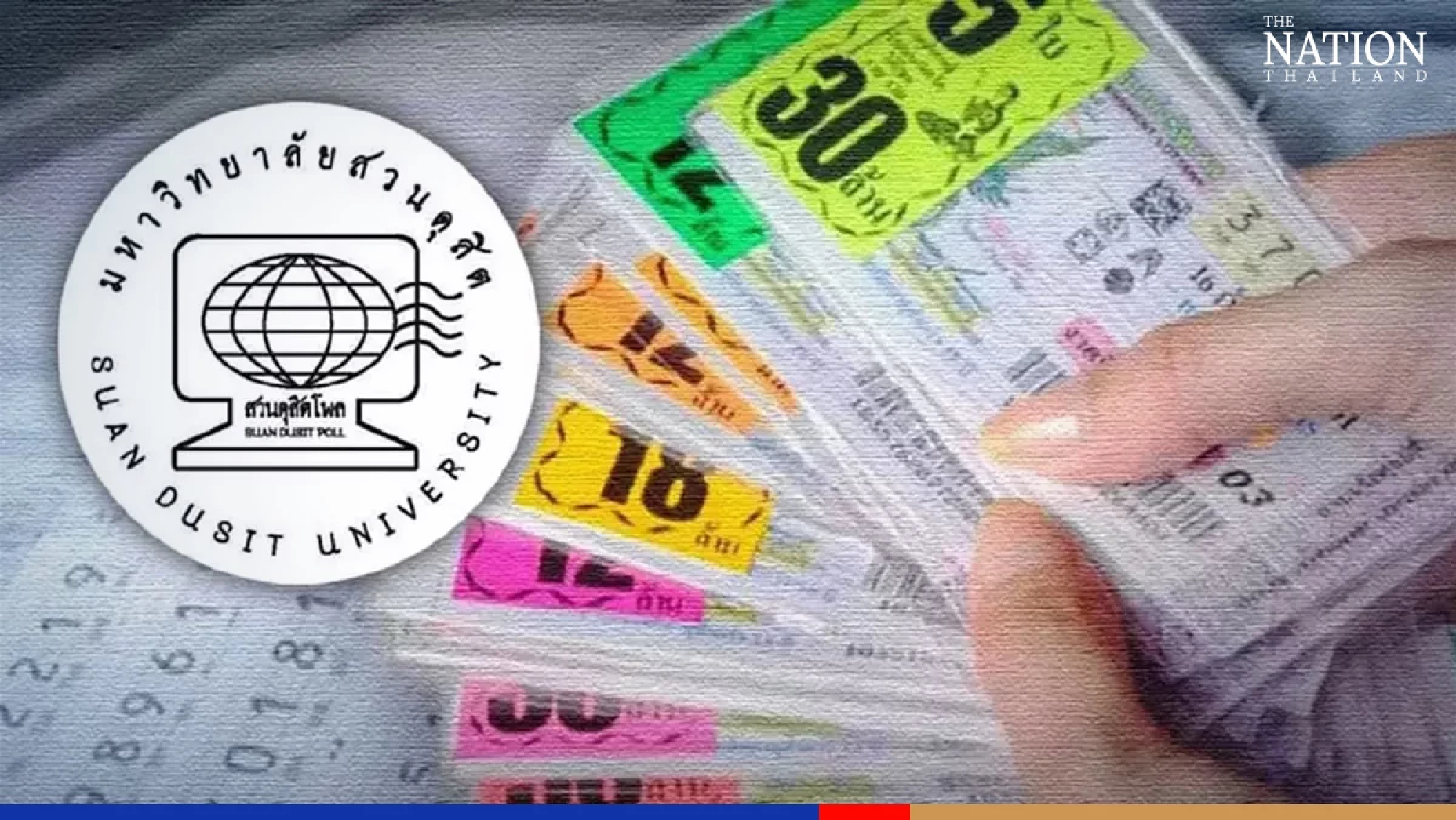
A recent opinion survey learned that most Thais buy the lottery and hope the government can tackle the problem of tickets being unfairly overpriced.
The survey, conducted by Suan Dusit University from March 29 to 31, covered 1,081 respondents from across the country. The results were announced on Sunday by chief researcher Pornprom Buathong and Asst Prof Nisarat Issaramanorot, deputy dean of the university’s Faculty of Education.
When asked if they love buying lotteries, 61.78 per cent said “Yes”, 6.96 per cent said “No”, while the rest did not care either way.
As many as 66.08 per cent said they do not believe the government will be able to stop lottery prices from rising beyond the 80-baht face value, 12.88 per cent believe the government can control the price, while 21.04 said they were not certain.
The survey also learned that 52.05 per cent of the respondents bought the government lottery, 31.44 per cent bought the underground lottery, 11.61 per cent bought the lottery online, while 2.9 per cent bought other lotteries.
When asked how often they bought lotteries, 28.49 per cent said they bought tickets every two weeks for biweekly draws, 25.46 per cent bought lotteries occasionally, while 23.87 per cent said they bought lotteries for nearly every draw.
As for why they bought lotteries, 54.60 per cent said they wanted to get rich quick, 48.65 per cent love the thrill of betting, while 32.59 per cent said they bought tickets because they had dreamt of lucky numbers. Respondents were allowed more than one choice for this question.
As for the problems they encounter when buying lottery tickets, 87.38 per cent cited high prices, 49.91 per cent complained they could not choose the numbers they wanted, while 37.38 per cent said they were forced to buy entire sets of the same number. The respondents were given more than one choice for this question.
The survey also found that 64.07 per cent agreed with the idea of the Government Lottery Office selling tickets via the Pao Tang app, 18.94 per cent disagree, while 16.99 per cent said they were not sure. The government launched the Pao Tang app to provide subsidies to help people cope with the rising cost of living.
When asked how the government can control the price of lotteries, 64 per cent said it should get rid of middlemen, 60.09 per cent want severe punishment for ticket sellers who unfairly push up the price, while 54.51 per cent want the authorities to look in on lottery stalls to prevent overpricing.
Nisarat said the survey proves that most Thais want to get rich quick, especially since the Thai economy is suffering a slump from the Covid-19 crisis fallout.
Thailand has recorded its first case of Omicron XE, Public Health Commission vice-chairman Chalermchai Boonyaleephan said on Saturday. The case was recorded by the Centre for Medical Genomics, Ramathibodi Hospital.
The first person found with Omicron XE has already recovered after developing mild symptoms, Chalermachai said in a Blockdit post.
He forecast the new virus variant would now spread in Thailand.
He added that it was necessary to monitor XE’s severity and resistance to vaccines, and also whether it would replace Omicron BA.2 as the dominant strain.
The World Health Organisation (WHO) estimates that XE is 10 per cent more transmissible than BA.2. The severity of the new strain is still being investigated.
“If this virus spreads faster than BA.2, Thailand’s Covid-19 cases during the fourth wave will take longer to reach a peak,” he said.
Under the government’s endemic-transition plan, the number of cases is expected to peak between April and May before declining in June to allow lifting of restrictions.
Chalermachai said the WHO will name Omicron XE “Pi” and declare it a new Covid-19 variant if it displays significant changes, such as viral spread, severity and resistance to vaccines.
XE is a recombinant variant, meaning it is a hybrid of two other strains – in this case, the original BA.1 Omicron variant and BA.2.
XE was first detected in the UK on January 19 and had infected 637 patients there as of March 19, according to a WHO report on Saturday.
“According to initial estimates, Omicron XE spreads 43 per cent faster than the original variant and 10 per cent faster than BA.2 subvariant,” he said.
“Following the discovery, many countries are now monitoring the new Covid-19 variant closely as it will likely become the dominant strain.”
If so, Thailand could face a fifth wave of Covid cases.
The four waves so far began with the Alpha variant, which spread 70 per cent faster than Wuhan and became dominant in April last year. Then came Delta, spreading 60 per cent faster than Alpha and dominating from the end of last year. Omicron took over in January after spreading 4-8 times faster than Delta.
“The Omicron BA.1 subvariant became the dominant strain at the beginning of the fourth outbreak before being replaced by BA.2 which spread 30-40 per cent faster than BA.1,” Chalermchai said.
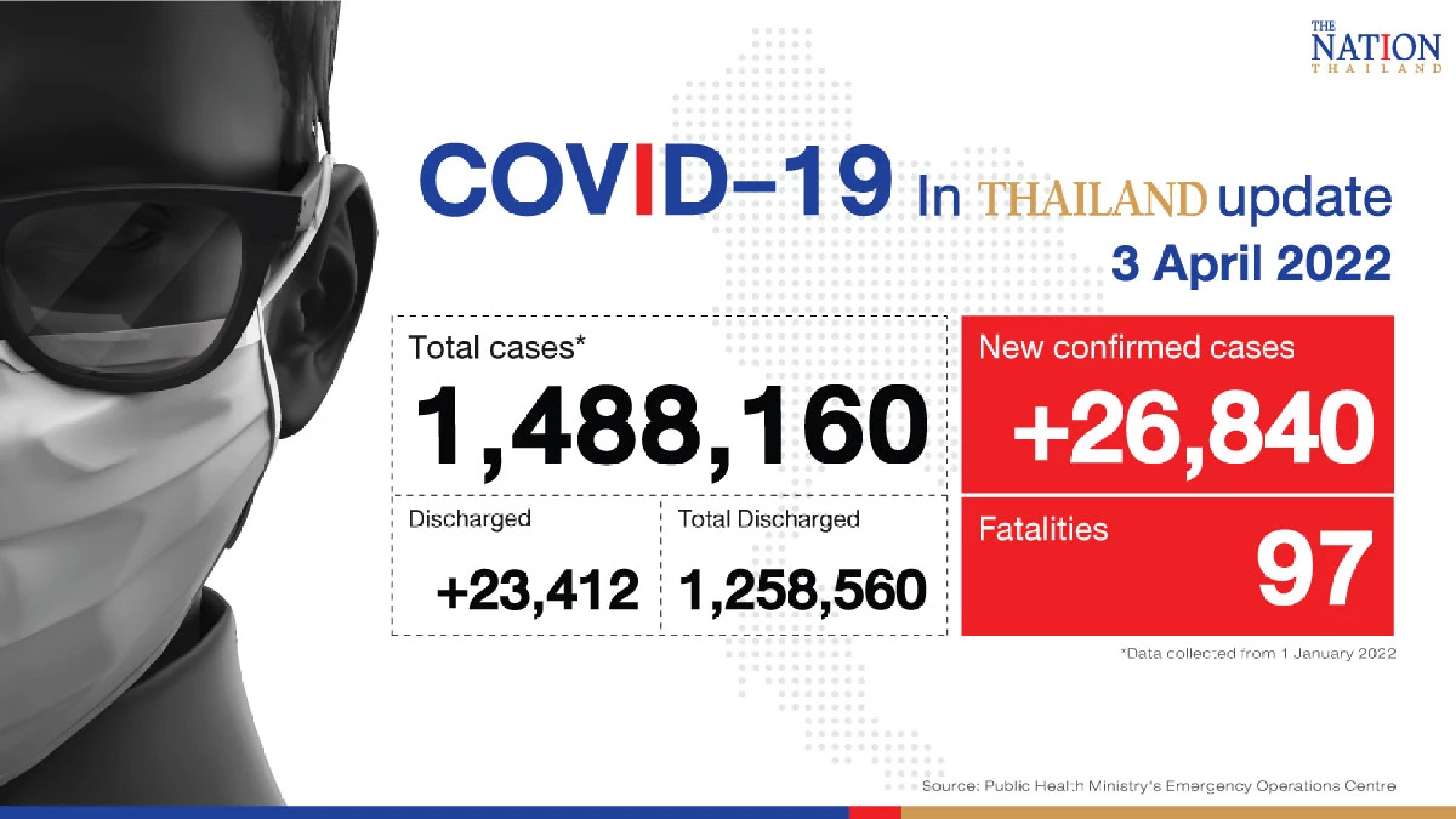
Public Health Ministry reported on Sunday (April 3) morning that in the past 24 hours there are 26,840 new patients who tested positive for Covid-19, 40 of whom have arrived in Thailand from abroad.
Death toll increased by 97, while 23,412 patients were cured and allowed to leave hospitals.
Cumulative cases in the country since January 1, 2022 are at 1,488,160.
The daily torrent of conflicting information in traditional and online media has made fact-checking even more vital today – although it is not easy to do it properly.
This was the message delivered by a panel of senior journalists and media experts who gathered on Saturday to debate ways of combating fake news.
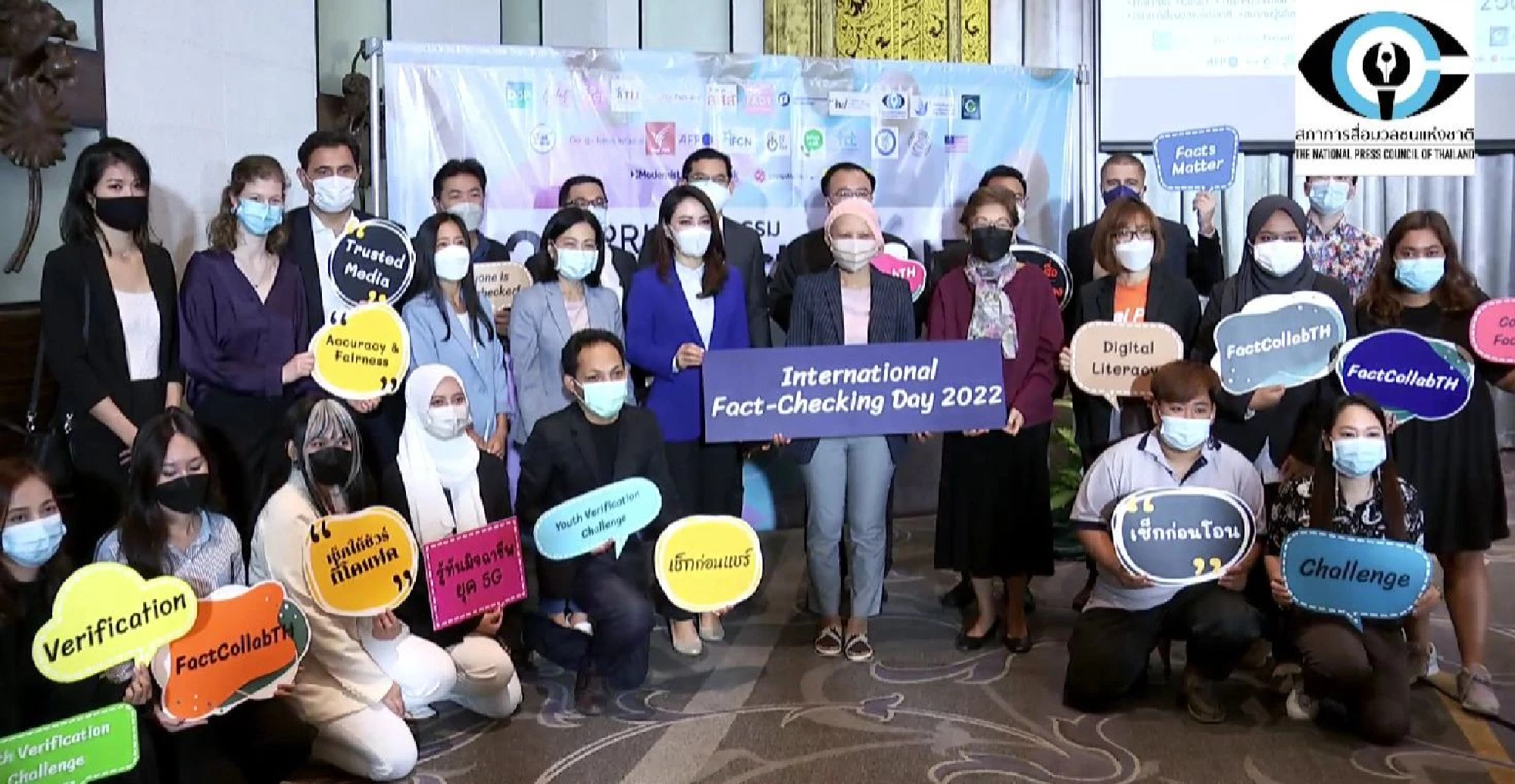
The discussion “Reviewing Barometer for Trusted Media” was held to mark the International Fact-Checking Day 2022, at the Sukosol Bangkok Hotel.
Nattha Komolvadhin, the moderator from Thai PBS, kicked off proceedings by citing an international survey showing public trust in the mainstream and also social media was declining.
Stephane Delfour, Bangkok bureau chief for Agence France-Presse, said AFP deploys a fact-checking service that helps to debunk a lot of “impactful misinformation”.
Having AFP reporters in the field also helped the news agency verify facts and avoid fake news while geolocation tools were used to authenticate photos.
However, he compared fact-checking to cleaning up a polluted river using a spoon. “But someone has to do this job. And if not journalists, then who?”
To ensure high-quality content, AFP reporters must adopt the following guideline: Be accurate, be fair and transparent, and think about your audience.
“We know that people read the first paragraph most of the time. They won’t finish the whole article. So, you must give the whole story in the first paragraph,” Delfour said.
Veteran journalist Thepchai Yong, now a senior adviser at Thai PBS, said that the constant challenge of fake news means that every day is a fact-checking day.
He also pointed to declining public trust and unprecedented frustration with the media as a big challenge for media outlets struggling to survive in the era of digital disruption.
Thepchai said the mainstream Thai media was partly to blame for the drop in public trust, given their lack of investigative reporting and focus on sensational news along with rumour, hearsay and speculation.
“A perception among many people is that the media are more concerned with serving the market than serving the public,” he said.
“Many media organisations in Thailand have thrown the principle of objectivity out of the window by supporting political positions, which has contributed to the division that threatens to tear the country apart.”
Thepchai added that both the public and media organisations have a role to play in rebuilding trust in the media.
Gemma B Mandoza, head of digital strategy at Philippines news website Rappler, said that journalists in her country were being harassed and attacked online while trying to check facts in the run-up to the presidential election next month.
There are also attempts to portray fact-checking as unpatriotic, she said.
“It’s not. It’s just ensuring that people get correct information.”
Irene Jay Liu, who leads Google News Lab in the Asia-Pacific region, pointed to Internet users’ increased scepticism towards news and information online.
She suggested traditional media and new media could collaborate on fact-checking.
Premesh Chandran, co-founder and former CEO of Malaysiakini online news portal, said a big challenge to fact-checking is social media, where misinformation outpaces attempts at verification.
He cited the problem of fake news going viral but subsequent corrections often reaching a much smaller audience.
Chandran also pointed to selective reporting of facts by mainstream outlets that take a nationalistic stance, saying this can give a partial and incomplete picture of events.
Assistant Professor Masato Kajimoto, who teaches at the University of Hong Kong’s Journalism and Media Studies Centre, sounded a note of caution about trust in the media, saying higher trust does not equate with higher quality.
He pointed out that state-controlled media tend to have a political agenda but still gain more trust among audiences than independent media.
“Trust should come as a result of reliable journalism, accurate information and independent reporting,” he said, adding that “pseudo-trust” can be generated on the Internet.
Fact-checking was vital when it came to setting the historical record straight for the future, particularly amid conflicting information on events like the Hong Kong protests in 2019-2020 and the ongoing war in Ukraine, he said.
Kajimoto, who specialises in news literacy and misinformation ecosystems in Asia, suggested that students be taught the skill of critical thinking to cultivate fact-checking. Journalists and media outlets should also learn about fact-checking techniques.
Educational institutions and media organisations could work together on this push, he said.
Additional ferry services are being laid on in Surat Thani province to meet a surge in demand for trips to Koh Samui and Koh Pha-ngan over Songkran.
Transport operator Raja Ferry Port said the April 13-17 holiday period on the two islands would bring the biggest tourist influx in more than two years.
“Currently, over 80 per cent of our trips have been booked and we expect that all trips will be booked before April 11,” said Raja Ferry Port managing director Apichart Chayopas on Friday.
“This year we expect to see the most tourists since the Covid-19 lockdown, as the three-day Songkran connects with the weekends to form a five-day-long holiday. It also coincides with the full moon, and many tourists will attend full moon parties on both islands.”
Apichart said the company will add as many boat and bus services as possible in a bid to minimise disappointment for passengers during Songkran. Ferries and buses would be disinfected after every trip while passengers must be fully vaccinated against Covid-19.
“We urge all passengers to wear face masks at all times, maintain social distancing and present their vaccine certificates before boarding,” he added. “Please also book your trip in advance via Line @rajaferryport to reduce crowding at ticket booths in the ports.”
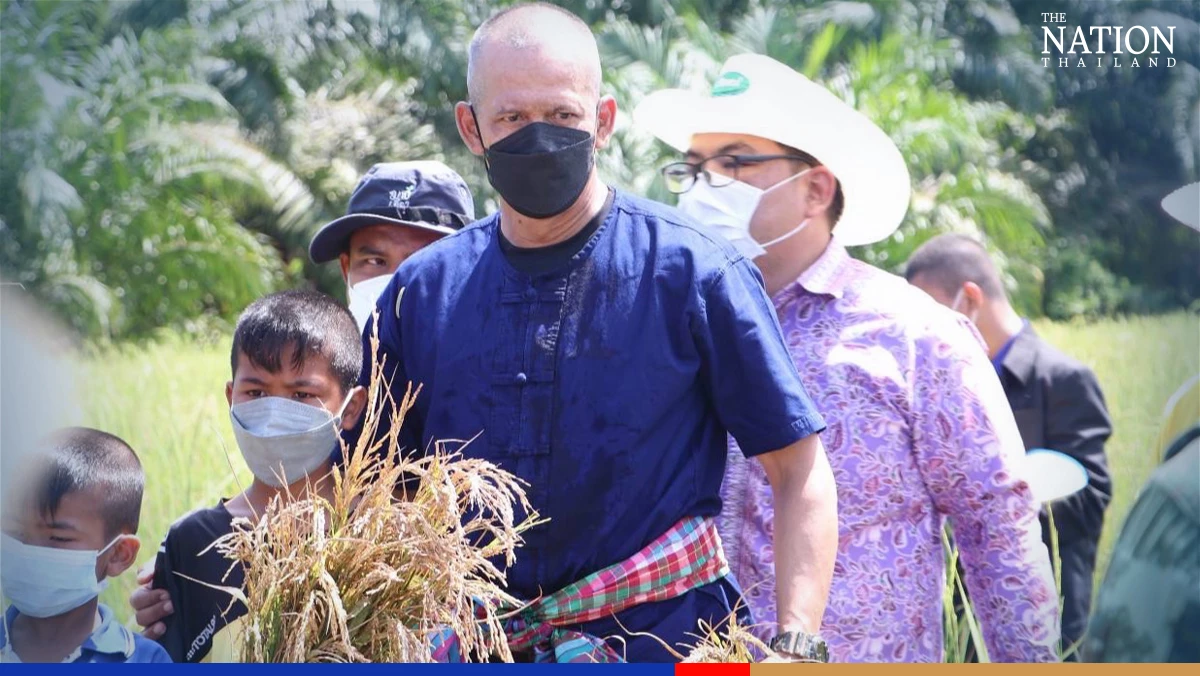
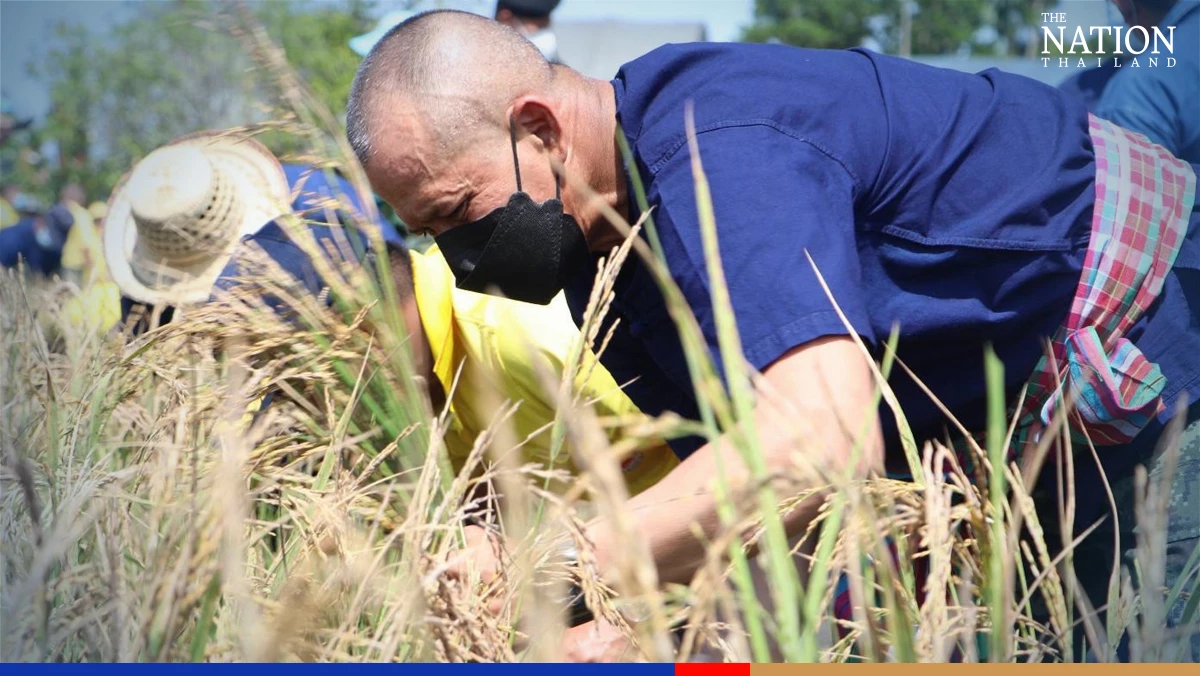
Maj-General Chalermpol Khamkaew, chief of the 15th Infantry Division, leads a rice-harvesting event in Narathiwat’s Tak Bai district on Friday.
The aim of the event, which included farmers, police officers and government officials, was to share local knowledge as well as the application of the sufficiency economy philosophy.
Also present was Narathiwat governor Sanan Pong-aksorn, who ensured the event was held under strict Covid-19 measures.
The government lost 35 billion baht in revenue after giving a 90-per-cent discount on land and building taxes in 2020 and 2021 as a reprieve to people struggling under the fallout of the Covid-19 crisis.
“This lost revenue is a heavy burden and can affect the budget for urban and rural development, including the building of new roads, managing wastewater and improving the environment,” Finance Minister Arkhom Termpittayapaisith said on Friday.
“Since the economy has started recovering from the crisis, investment in the property sector has picked up in big cities like Bangkok, Samut Prakan and Chonburi, which consequently needs funds in urban development to support those investments,” Arkhom said. “This is why the government has decided not to offer the tax discount this year.”