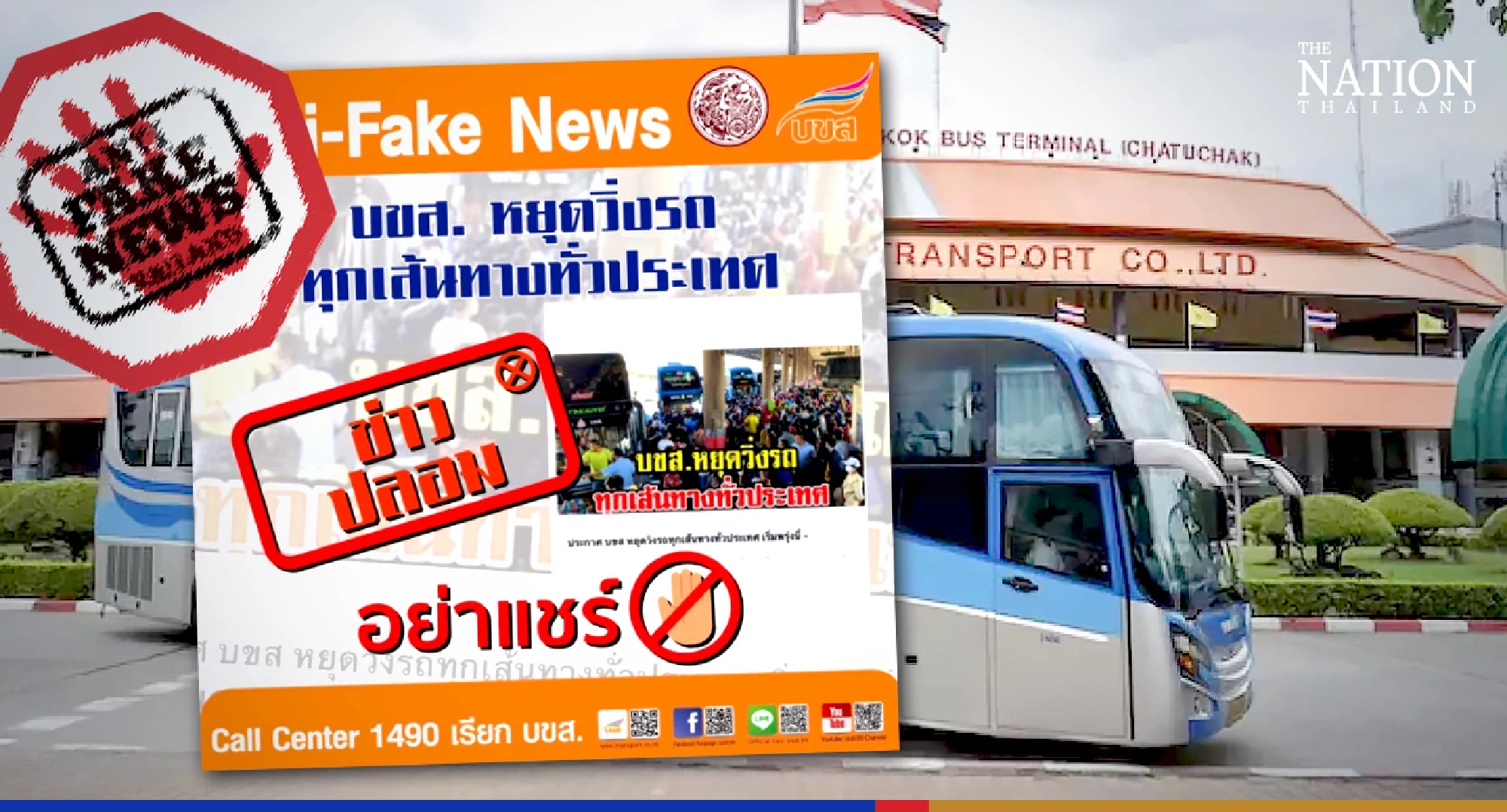
The Bangkok Mass Transit Authority (BMTA) has warned people to stop believing rumours that it will stop providing bus services from Friday onwards.
BMTA’s managing director Sanyalak Panwattanalikhit said people should stop sharing such fake news, adding that tickets can still be booked via http://www.transport.co.th, across the counter and via BMTA agents.
He added that BMTA is setting up a schedule for interprovincial buses during the Songkran festival and will meet with other relevant agencies on March 29.
The Public Health Ministry rejected rumours that it will ask the Centre for Covid-19 Situation Administration (CCSA) to let people remove their facemasks in public parks.
“This is a misunderstanding stemming from the National Communicable Disease Committee [NCDC]’s policy to adjust Covid-19 preventive measures for when the disease is declared endemic,” Public Health permanent secretary Dr Kiattiphum Wongrajit said on Thursday.
“The ministry has not approved this policy yet,” he said, adding that NCDC is designing measures for the transition period before Covid-19 is declared endemic in July.
“Once the number of daily infections slows down, people in non-risky groups will be allowed to remove their facemask when visiting certain public areas such as public parks,” he said. “However, this is only if there are no new mutated variants that can cause severe symptoms.”
Kiattiphum said on Friday, the ministry will encourage the CCSA to consider cancelling the requirement of a negative RT-PCR test result for new arrivals into the country under the Test & Go scheme and reduce the Covid-19 insurance coverage to US$10,000.
Under the new proposed rule, tourists can take an RT-PCR test upon arrival with no test required before departure. However, they will need to take a rapid ATK test on their fifth day in Thailand. Also, the mandatory Covid-19 insurance coverage for foreign arrivals will be reduced from $50,000 to $10,000 to reflect the current cost of treating Covid-19 patients in Thailand, which has dropped from about 1 million baht per person to about 20,000 baht per person.
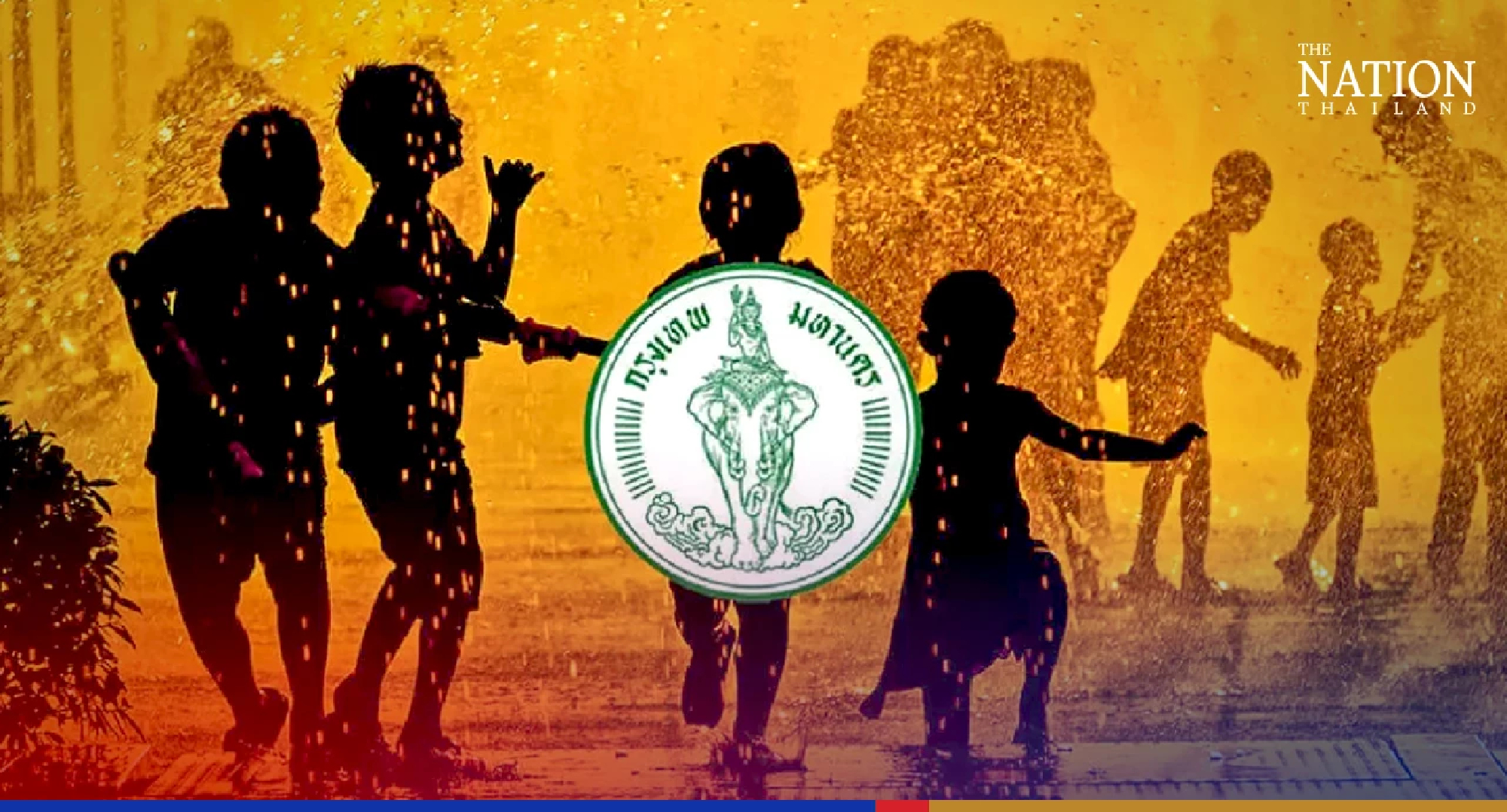
The Bangkok Metropolitan Administration (BMA) will hold Songkran festivities from April 12 to 14 in the CentralWorld shopping centre’s plaza at the Ratchaprasong intersection.
The event will feature performances, art exhibitions and street food stalls.
“The activities will still be conducted under the ‘new normal’ standards to prevent the spread of Covid-19,” BMA’s deputy permanent secretary Chaloemphol Chotinuchit said on Thursday. “No splashing of water will be allowed at the event, while all participants must adhere to disease-control measures announced by the Public Health Ministry, including the wearing of facemasks at all times.”
Chaloemphol added that all entrances will be equipped with thermal scanners, and every visitor will be required to register via the ThaiChana platform as well as provide a vaccine certificate of at least three shots and a negative ATK test result. Antigen test kits will be available at checkpoints for those who have not taken a test at home.
Only 800 people will be admitted at any given time and people will be required to maintain social distancing. Hand-sanitising gel will also be widely available.
The BMA advises visitors to shower, wash their hair and change their clothes upon returning home and if possible, isolate for at least 10 days before interacting with others.
The Royal Gazette website on Thursday (March 17) published a Ministry of Interior’s announcement that 36 foreign women have been granted Thai nationality under the Nationality Act of 1965 after they had filed for marriage certificate with Thai national men.
Of the 36 women, 13 are Chinese, 8 are Myanmar, 4 are Indian, 3 are Cambodian, 3 are Vietnamese, 2 are Laotian, and one is Malaysian. Two women are of Tai Leu and Tai Yai ethnic groups.
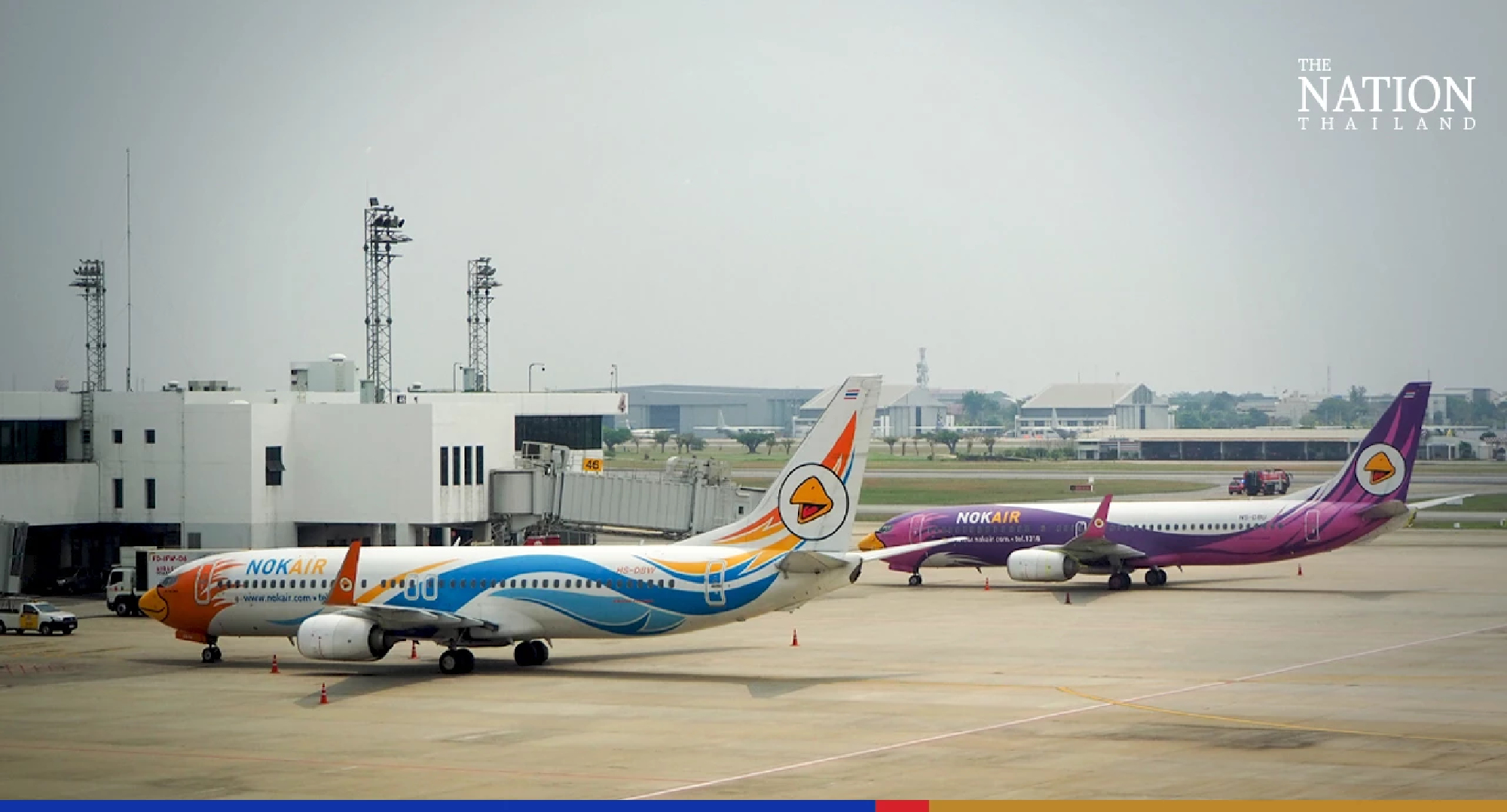
Nok Air executives met the Senate’s Transport Committee on Thursday to explain why the airline cancelled flights to Yala’s new Betong International Airport just one day after inauguration.
The airline cancelled the flights on Wednesday, just one day after Prime Minister Prayut Chan-o-cha and his Cabinet flew in to officially open the new airport.
The airline reportedly told General Yodyuth Boonyathikarn, the committee’s chairman, that continuing the Don Mueang-Betong flights would not be cost-effective as there are very few passengers. The airline also asked for financial support from the government, especially in the form of reduced fees for the airport, parking, air navigation and office, as well as a reduction in excise tax for aircraft fuel.
Nok Air was initially scheduled to fly into Betong from Don Mueang on Mondays, Wednesdays and Fridays.
“The committee has accepted the proposals for fee and tax reduction and will forward them to relevant agencies to design suitable aid measures,” Yodyuth said. “However, the airline’s request to have the government issue a 75 per cent revenue guarantee for flying to Betong will have to be approved by the Cabinet.”
Nok Air’s chief operating officer Suthee Chulajata reportedly said the 75 per cent revenue guarantee would be a deciding factor on whether or not the airline will continue operating the Don Muang-Betong flights.
“We need to secure enough customers to ensure the flights are cost-effective. However, due to the energy crisis and the Covid-19 situation, the airline will need more time to adjust its marketing plans,” he said. “We insist we will try to restart flights to Betong, as the airport has high potential, especially in terms of connections to neighbouring countries.”
Nok Air is reportedly flying a group of “influencers”, namely YouTubers, social-media publicists and tour operators, to Betong on Friday to promote the airline in the South.
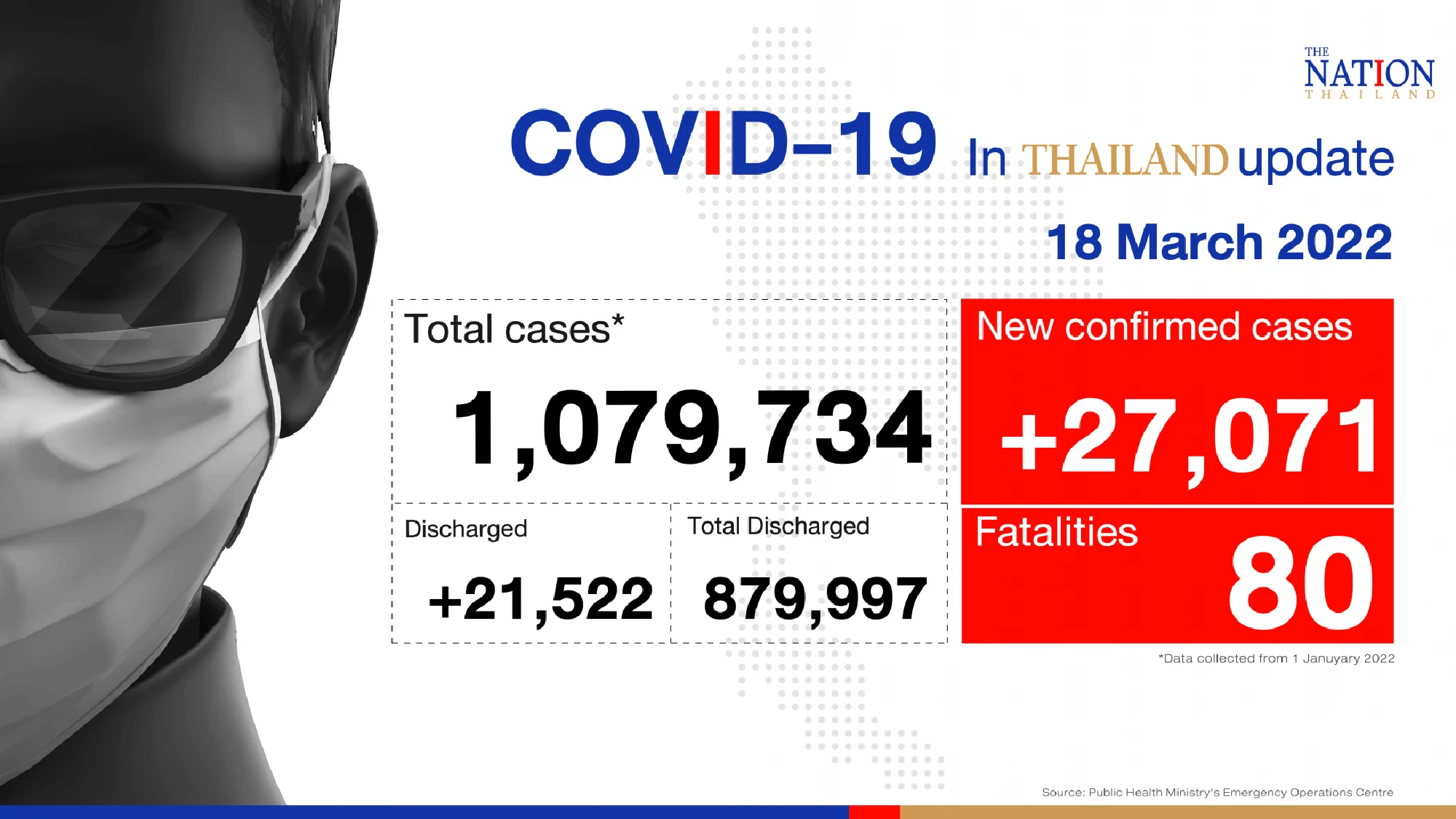
Ministry of Public Health reported on Friday (March 18) morning that in the past 24 hours there are 27,071 new patients who tested positive for Covid-19, 49 of whom have arrived in Thailand from abroad.
Death toll increased by 80, while 21,522 patients were cured and allowed to leave hospitals.
Cumulative cases in the country since January 1, 2022 are at 1,079,734.
As much as 10 billion baht can be generated as soon as the longstanding ban on the sale of alcohol for three hours in the afternoon is lifted, a campaigner said on Thursday.
Thanakorn Kuptajit, former president of the Thai Alcohol Beverage Business Association (TABBA), said he expected the Centre for Covid-19 Situation Administration (CCSA) to consider lifting the 2pm to 5pm ban as part of the relaxation of preventive measures aimed at stimulating the economy.
TABBA and 15 other groups representing retailers, hotels, restaurants and bars recently called on the Council of State, which serves as the government’s legal advisory agency, to review the three-hour ban.
The group described the ban, which has been in force since 1972, as “outdated”. The sale of alcohol is permitted from 11am to 2pm and from 5pm to midnight.
“The service sector has been very badly affected by the Covid crisis. If the government allows alcohol to be sold during that period, businesses will become more active and more money can be circulated. This is a way to boost the economy during this inflation crisis,” Thanakorn said.
He added that if the CCSA and the Cabinet agree with the lifting of the ban, the Prime Minister’s Office could issue a decree for immediate effect.
“If the ban is lifted within April, at least 10 billion baht can be generated,” Thanakorn said.
At its meeting on Friday, the CCSA is expected to consider proposals from relevant agencies to ease preventive measures as part of Thailand’s plan to declare Covid-19 endemic by July 1.
Among the proposals are scrapping the requirement for pre-departure Covid testing before entering Thailand under the Test & Go scheme, allowing no masks in open-air areas such as public parks and reopening of entertainment venues.
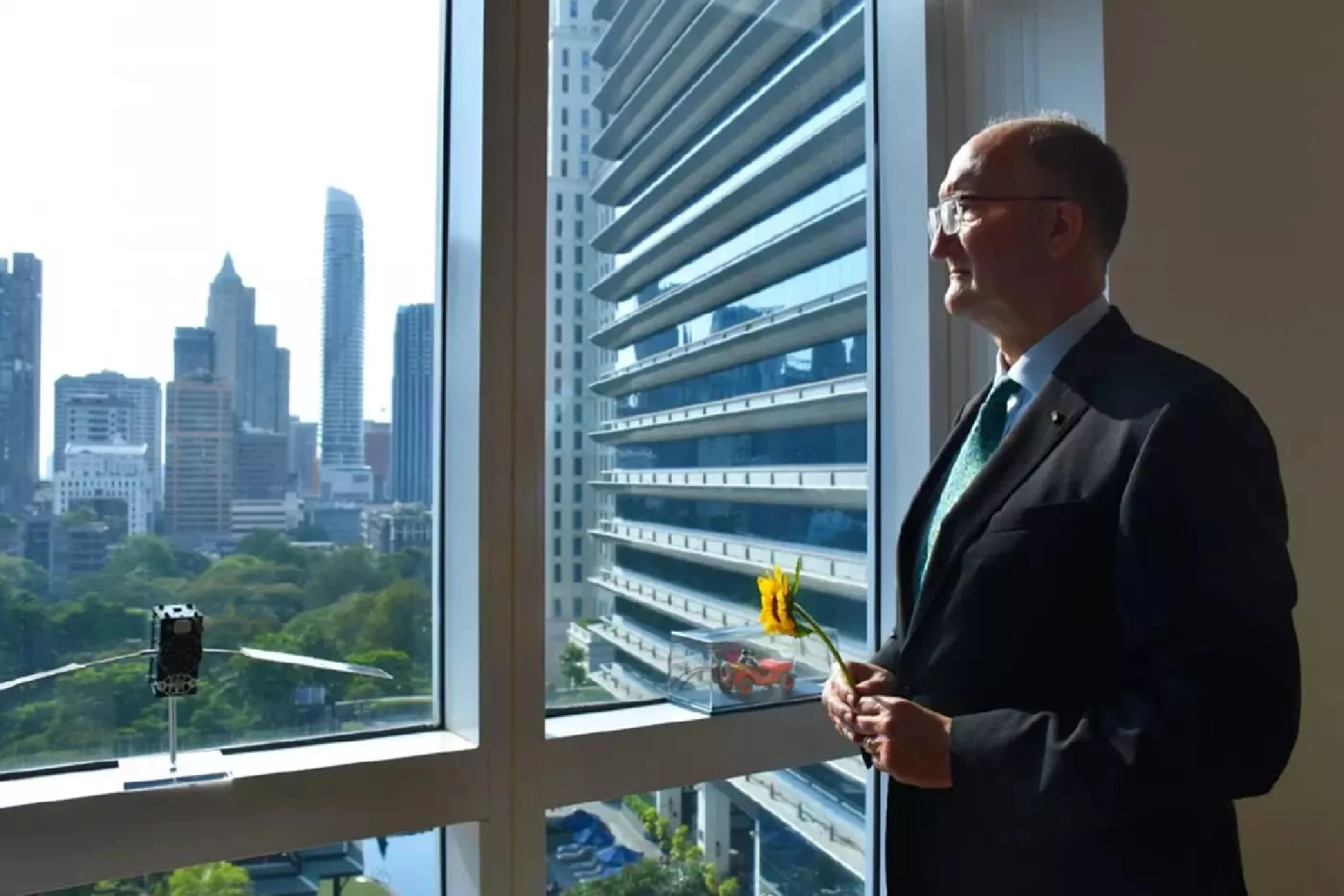
European Union (EU) embassies in Thailand launched an online campaign on Thursday, asking Thais to post their photos with a sunflower in support of Ukraine, which has been involved in a war with Russia.
As part of the “Sunflower for Solidarity” campaign, David Daly, the EU’s ambassador extraordinary and plenipotentiary to Thailand, and the ambassadors and diplomats of 19 member countries, including Austria, Belgium, Denmark, Finland, France, Germany, Hungary, Luxembourg, Netherlands, Poland, Portugal, Sweden and Spain, posted photos holding a sunflower in their embassies’ Facebook posts with a message both in Thai and English.
The message reads: “The sunflower is Ukraine’s national flower. It also has a deep meaning in Thai, as resisting the sun – like what the Ukrainian people are doing right now, resisting the unprovoked aggression from Russia. We invite you to participate in our Sunflower for Solidarity campaign by posting a photograph of yourself with a sunflower on social media. We are sending a message to the world that might is not right. We #StandWithUkraine.”
Long regarded as a symbol of peace in Ukraine, the sunflower has become a way for sympathisers to show solidarity with the Ukrainian people.
Awareness of the association between sunflowers and Ukraine grew after the Russian invasion began on February 24. The news outlet Ukraine World shared a video on Twitter, showing a Ukrainian woman in the southern Kherson region giving sunflower seeds to Russian soldiers while telling them to put the seeds in their pockets so the flowers would grow where they die on Ukrainian land.
The viral video has racked up more than 8.6 million views on Twitter since it was uploaded on February 24.
UN Women, a body that supports empowerment of women, is seeking policies to support gender equality in the Thai business sector for the sustained growth of the economy and society.
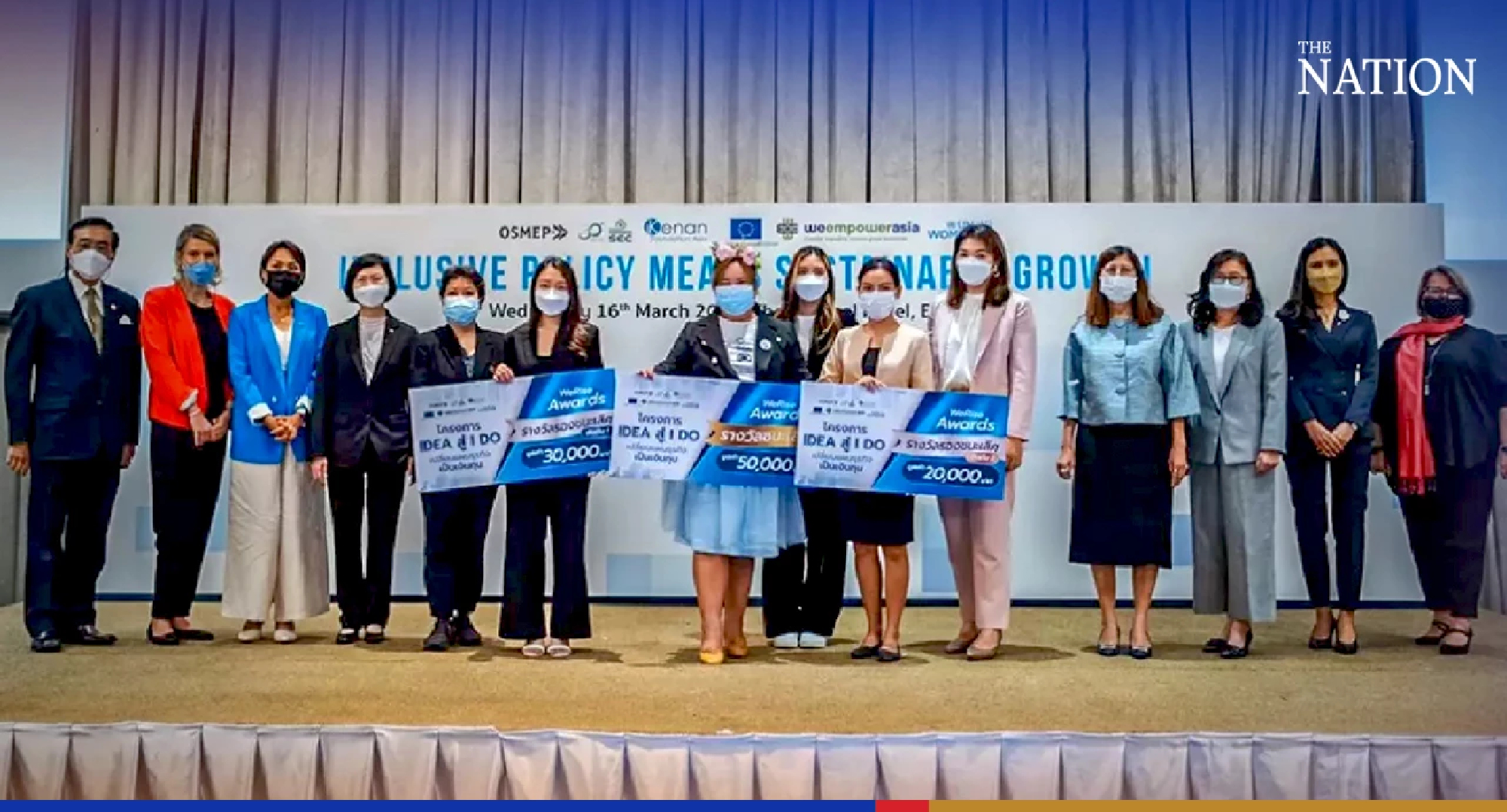
The United Nations Entity for Gender Equality and the Empowerment of Women, or UN Women, on Wednesday held a seminar on “Inclusive Policy means Sustainable Growth”.
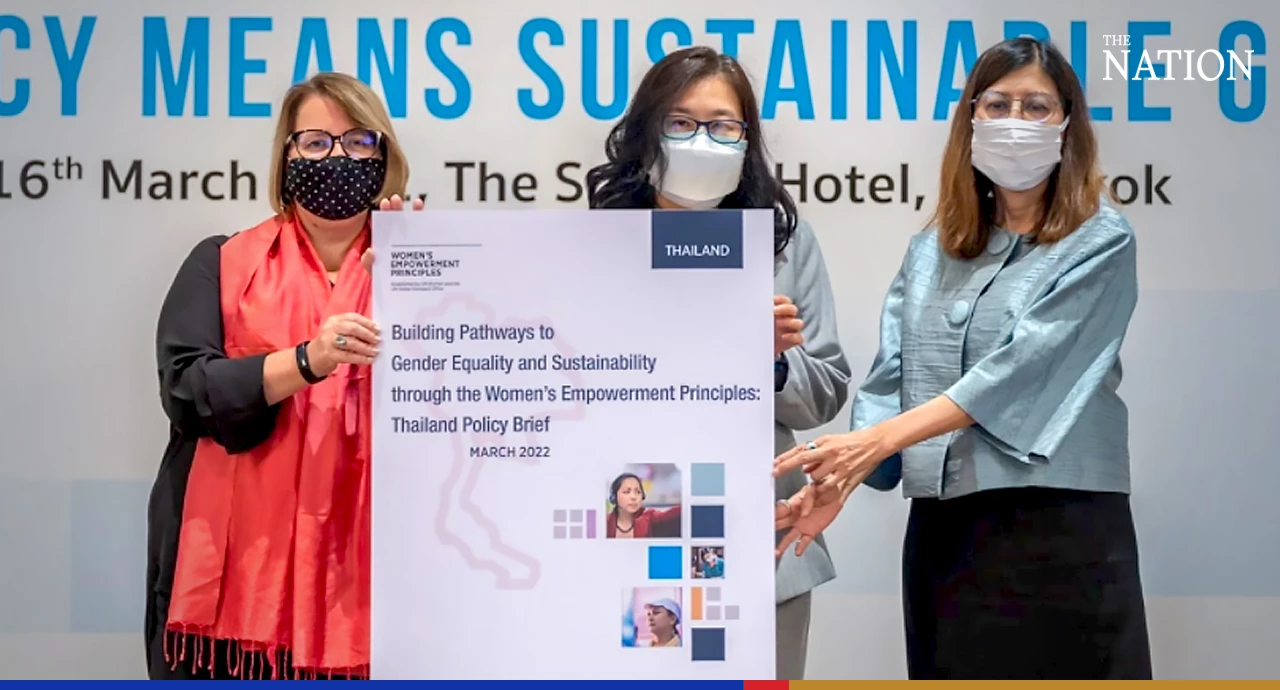
The seminar published the policy document “Building Pathways to Gender Equality and Sustainability through the Women’s Empowerment Principles: Thailand Policy Brief”, which was made by WeEmpowerAsia and supported by UN Women and the European Union.
The document presents strategies and policy guidelines for organisations to support gender equality in the business sector by revealing information related to gender equality for listed companies, empowering the role of female leaders, and creating a chance for female operators, owners, and leaders in the public and private sector in the country and the world.
The document was made in cooperation with the Securities and Exchange Commission (SEC), Office of Small and Medium Enterprises Promotion (OSMEP), and Kenan Foundation Asia.
Giuseppe Busini, deputy head of the EU Delegation to Thailand, said that the trade value between Thailand and the EU was 29 billion euros in 2020 and he sees both countries as having the capability to make a change.
Sarah Knibbs, officer-in-charge for UN Women Asia and the Pacific, hoped that government agencies would take the suggestion from this Thailand Policy Brief to regulate and create inspiration for business operators so every gender could participate in business operations.
SEC secretary-general Ruenvadee Suwanmongkol said that letting women play the role of organisation leader was one of SEC’s objectives to increase their role in the Thai capital market.
Wimonkan Kosumas, OSMEP’s deputy director-General, said that Thailand has no clear definition of women operators, so it was an obstacle to ensuring the rights of female operators.
Meanwhile, Piyabutr Cholvijarn, president of Kenan Foundation Asia, said that the organisation would hold an activity “IDEA to I Do”, to support female business operators in business presentation.
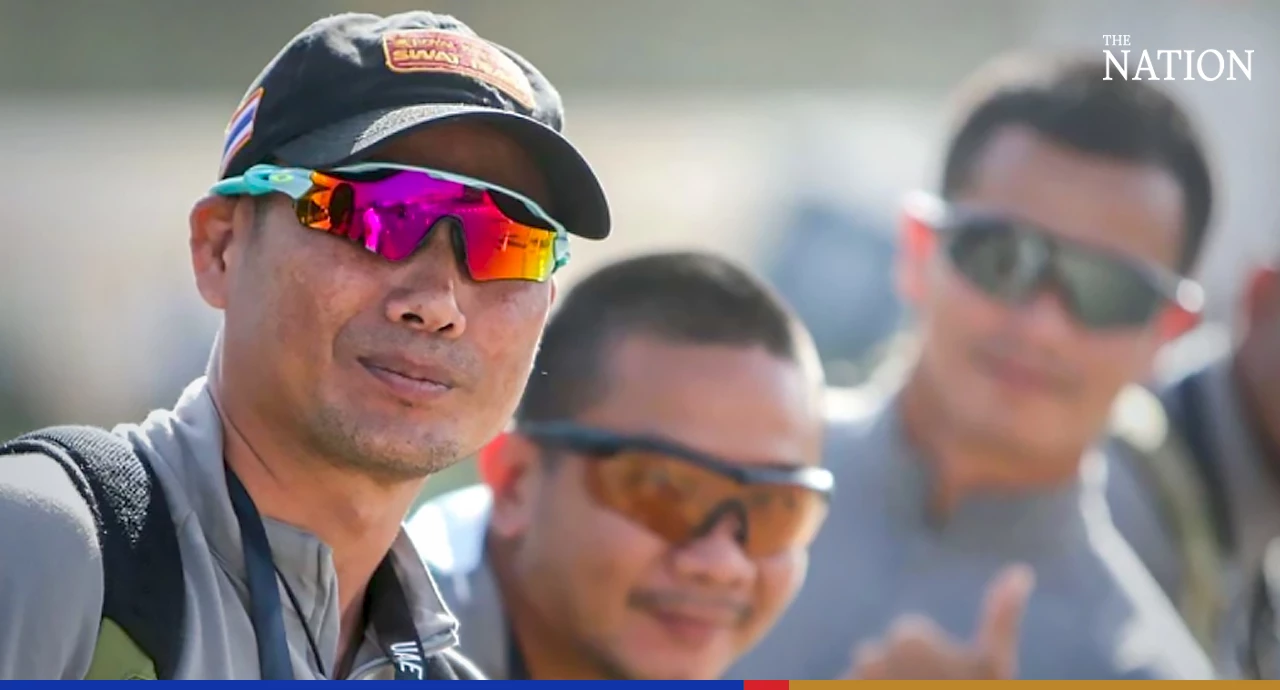
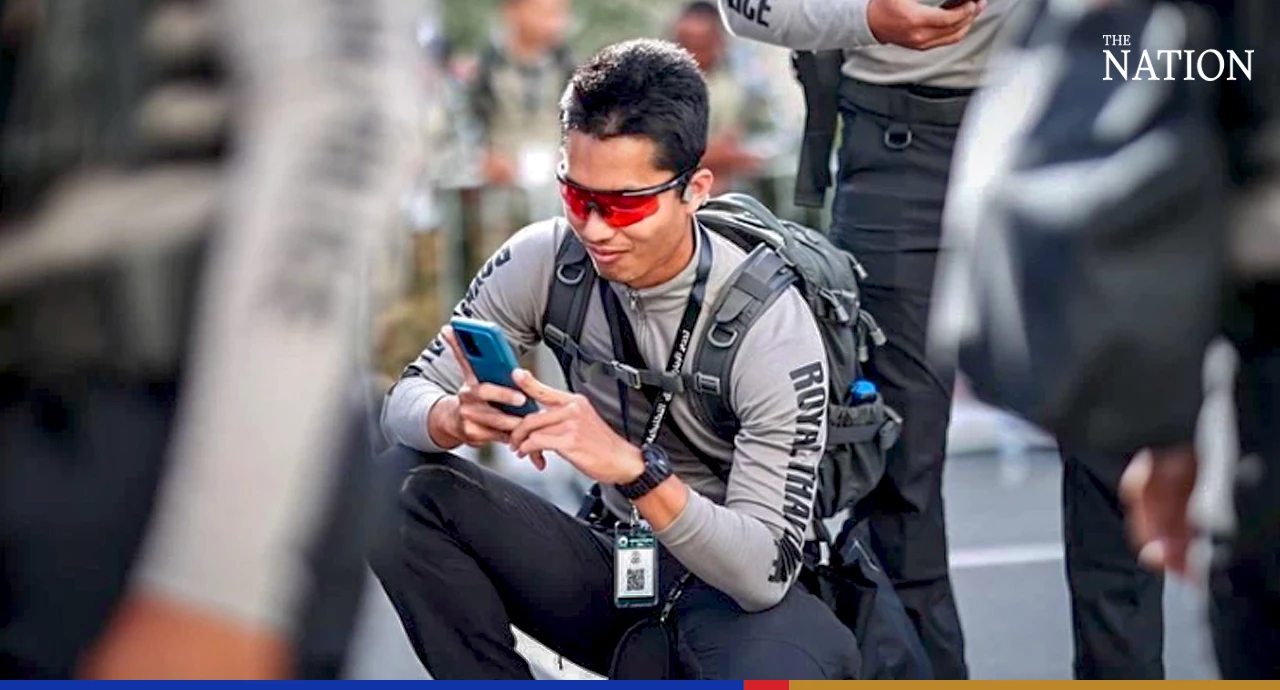
A Royal Thai Police team made it to the envious top 10 at the UAE SWAT Challenge 2022 in Dubai, United Arab Emirates, on Thursday.
After four stages comprising five challenges, the Thai special weapons and tactics (SWAT) team was placed 9th among 25 police teams from across the world.
The annual contest is held between March 13 and 17 as part of the World Police Summit, which is also taking place in Dubai.
The UAE SWAT Challenge is designed to encourage cooperation between SWAT teams on a global level and for members to participate in fact-based scenarios in a bid to create best practices in a friendly environment, according to its official website.
It said the international teams took part in five challenges aimed at testing tactical and weaponry professionals to encourage the exchange of techniques and promote tactical skills, mental focus and physical endurance.
The five challenges were tactics, assault, rescue, towers and obstacles, which contestants needed to overcome in the least time possible and without violating any contest rules.
Each team comprises no more than nine members and only five can take part in each challenge.
The first-prize winners receive US$5,000 (165,000 baht), the first runners-up $3,000, and the second runners-up $2,000.
In the last event held in 2019, the Thai SWAT team ranked 23rd out of 49 participating teams. Dubai came first in the 2019 contest, followed by Belarus and the United States.