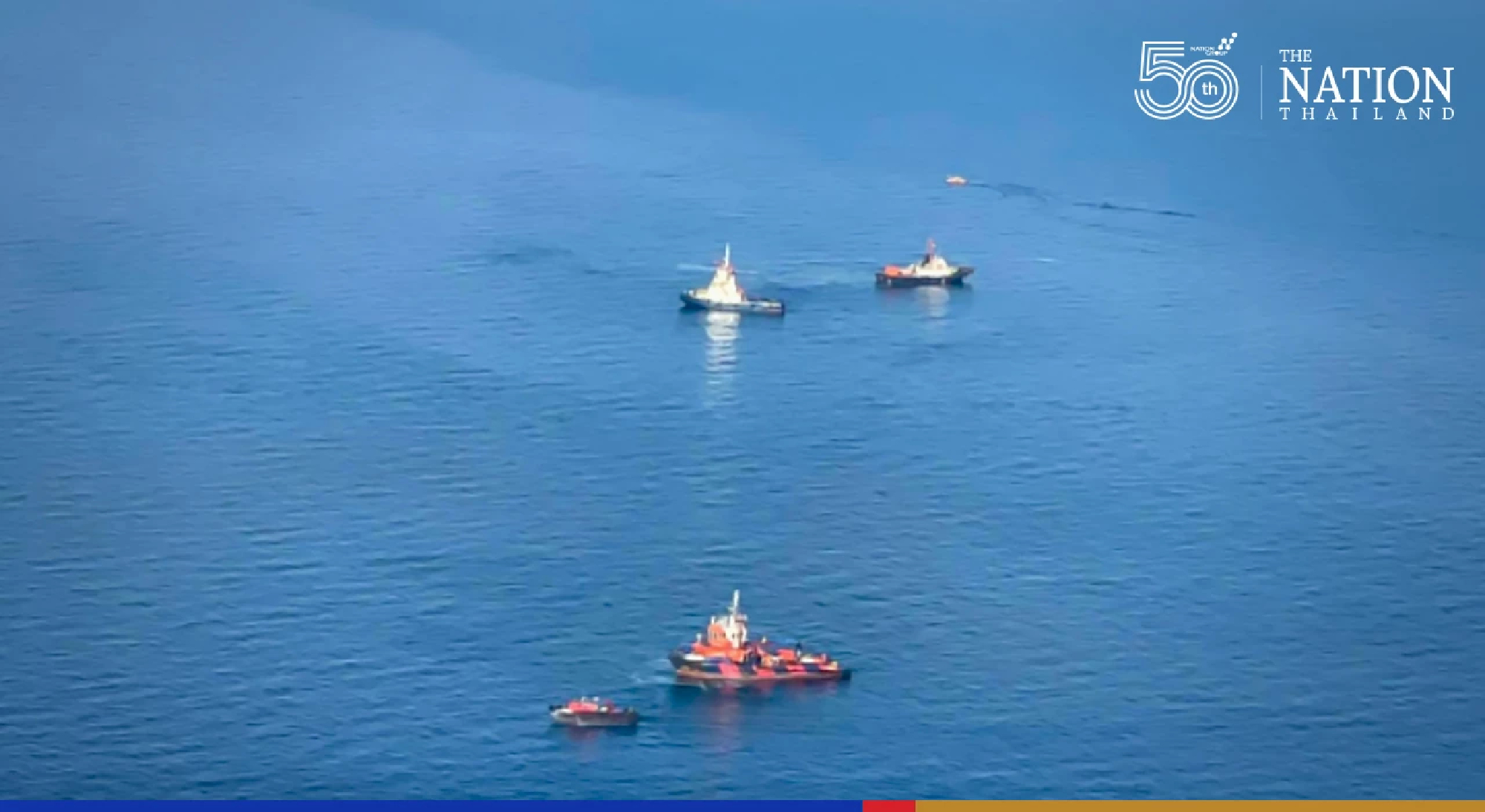
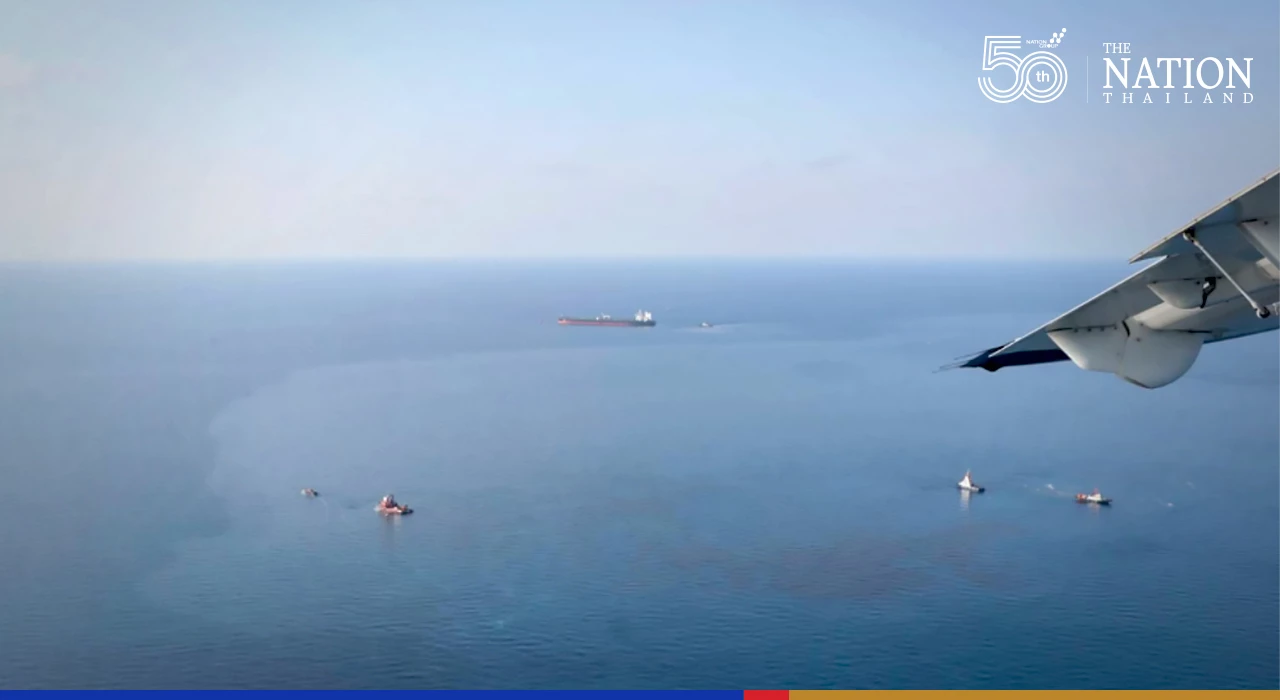
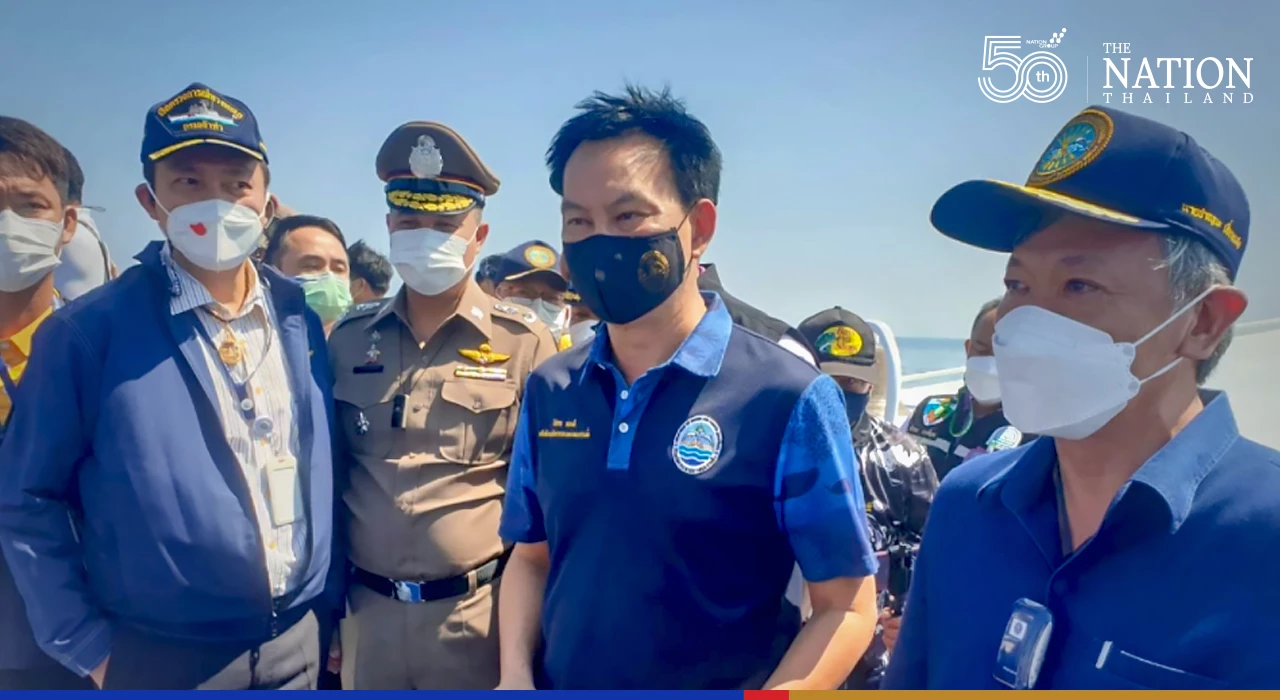
The massive oil spill off Map Ta Phut Industrial Estate in Rayong came from 160,000 litres that leaked from a floating jetty, not 400,000 as reported earlier, Department of Marine and Coastal Resources director-general Sophon Thongdee said on Wednesday, citing a report from Star Petroleum Refining, operator of the offshore facility.
He said 80 per cent of the oil spill has been “eliminated” with dispersant, confirming the spill will not wash up on shore.
“The oil spill has not affected marine and coastal resources,” Sophon said. “However, we will bring in academics to assess the environmental impact, both short term and long term.”
Sophon said the department would demand compensation from Star Petroleum Refining in a bid to prevent a similar occurrence.
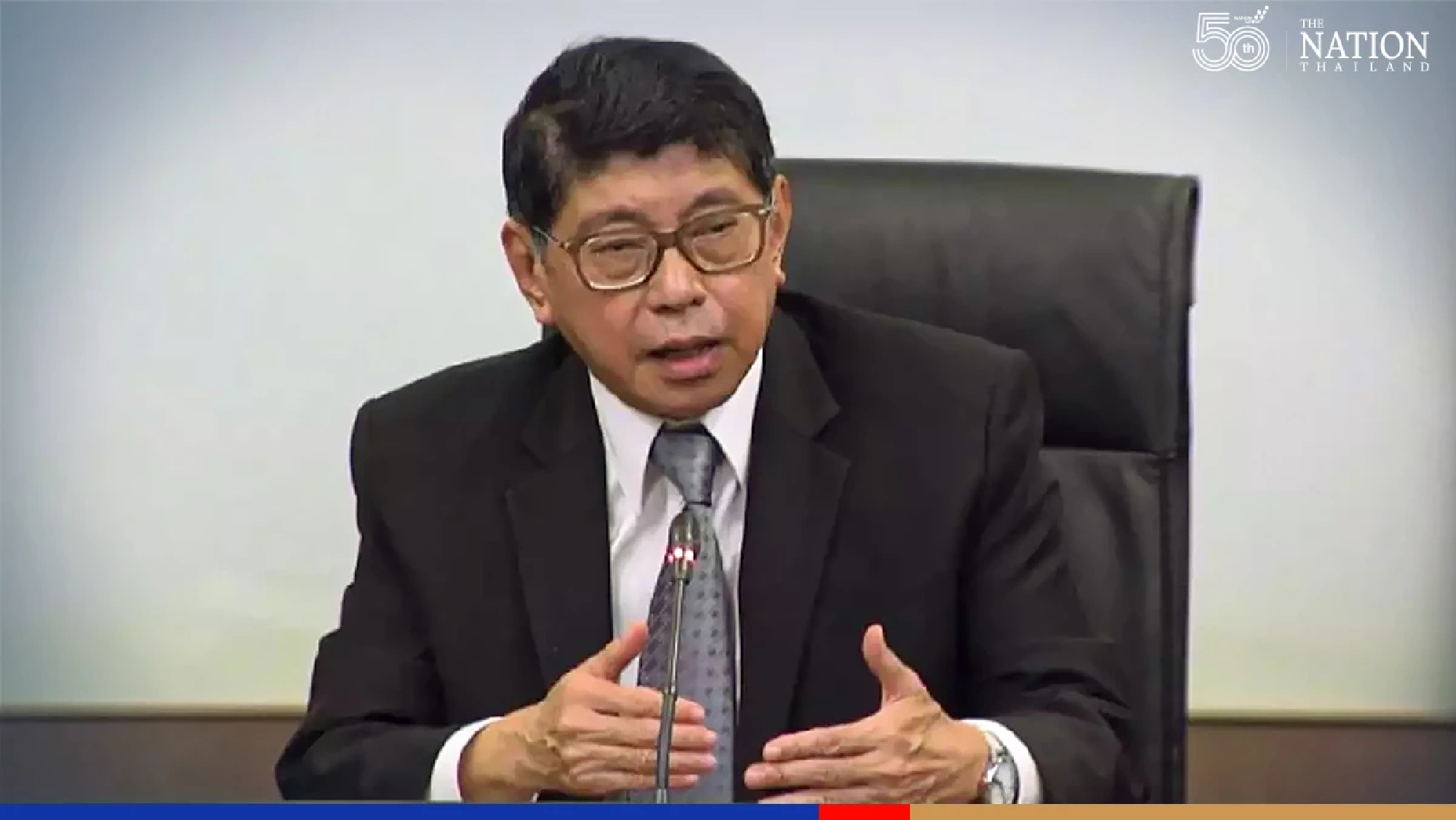
Thai-Chinese people are buying a large amount of fresh food as offering for Chinese New Year, leading to increasing demand, Department of Internal Trade (DIT) director-general Wattanasak Sur-iam said on Wednesday.
According to him, the prices of most products are either stable or have increased “slightly”, except for pork.
The DIT has urged pig sellers to keep prices “stable”, between 100 and 110 baht per kilogramme during the festival. Pigs currently go for 104 baht per kg.
The department has placed a limit on the price of retail pork – 205-210 baht per kilogramme. It has also put a cap on the price of chicken.
The DIT has asked malls to cooperate in keeping prices down.
Wattanasak said market pork prices are stable and even decreasing after the DIT held discussions with the Swine Raisers Association of Thailand, slaughterhouses, and malls. He asked people who come across “ridiculous” pork prices to inform the department via hotline 1569.
Wattanasak said Commerce Minister Jurin Laksanawisit had ordered 55 patrol units to carry out a price survey in Bangkok and nearby provinces.
He warned that sellers who do not put price tags on products or those who increase prices “too much” will be charged.
He also said stores that increase prices unfairly will be removed from the Thong Fah (Blue Flag) scheme.
In provinces, governors will set up patrol units with related organisations to monitor food prices and quantity.
Wattanasak admitted that the price of bottled palm oil has increased this year because the palm price rose to 11 baht per kilogramme. However, the Office of Agricultural Economics expects production to increase and more palm oil to come on the market, leading to a better situation in February or March.
He said he was monitoring the situation and asked manufacturers and malls to cooperate so the price won’t soar.
Wattanasak also asked manufacturers of soybean oil to cap the price at 55 baht per bottle.
The State Railway of Thailand (SRT) said on Wednesday that the train route from Bang Sue to Bang Bamru stations will remain closed as maintenance being carried out on Rama VI Bridge is not yet complete.
SRT Public Relations Centre director Ekkarat Sriarayanpong explained that the temporary closure came after the structure on Rama VI Bridge collapsed on January 24, making the rail line there impassable for trains.
He said the ITD-ARC joint venture, which is responsible for strengthening the bridge, has been urged to inspect the overall structure to ensure the safety of trains and passengers.
“The reopening date will be announced later,” Ekkarat said.
He said the following train routes have been changed to bypass Rama VI Bridge during the maintenance:
• Express Train No 43 (Bangkok-Surat Thani), changed to Bang Bamru-Surat Thani
• Normal Train No 261 (Bangkok-Hua Hin), changed to Thonburi-Hua Hin
• Express Train No 31 (Bangkok-Hat Yai), changed to Bang Bamru-Hat Yai
• Urban Train No 355 (Bangkok-Nong Pla Duk), changed to Bang Bamru-Nong Pla Duk
• Express Train No 83 (Bangkok-Trang), changed to Bang Bamru-Trang
• Express Train No 85 (Bangkok-Nakhon Si Thammarat), changed to Bang Bamru-Nakhon Si Thammarat
• Express Train No 39 (Bangkok-Surat Thani), changed to Bang Bamru-Surat Thani
• Urban Train No 356 (Nong Pla Duk-Bangkok), changed to Nong Pla Duk-Bang Bamru
• Express Train No 40 (Surat Thani-Bangkok), changed to Surat Thani-Bang Bamru
• Speed Train No172 (Sungai Kolok-Bangkok), changed to Sungai Kolok-Bang Bamru
• Normal Train No 262 (Hua Hin-Bangkok), changed to Hua Hin-Thonburi
• Express Train No 86 (Nakhon Si Thammarat-Bangkok), changed to Nakhon Si Thammarat-Bang Bamru
• Express Train No 84 (Trang-Bangkok), changed to Trang-Bang Bamru
• Express Train No 32 (Hat Yai-Bangkok), changed to Hat Yai-Bang Bamru
• Express Train No 44 (Surat Thani-Bangkok), changed to Surat Thani-Bang Bamru.
Ekkarat said passengers at Bangkok and Samsen stations will be transported to Bang Bamru by car, while passengers at Bang Sue station can take the SRT Red Line train to Bang Bamru station without any extra charge.
He said delivery on the southern route of goods, luggage and motorcycles at Bangkok, Samsen, Bang Sue and Bang Bamru stations was temporarily suspended.
“Passengers who have reserved tickets in advance can request a full refund,” he added.
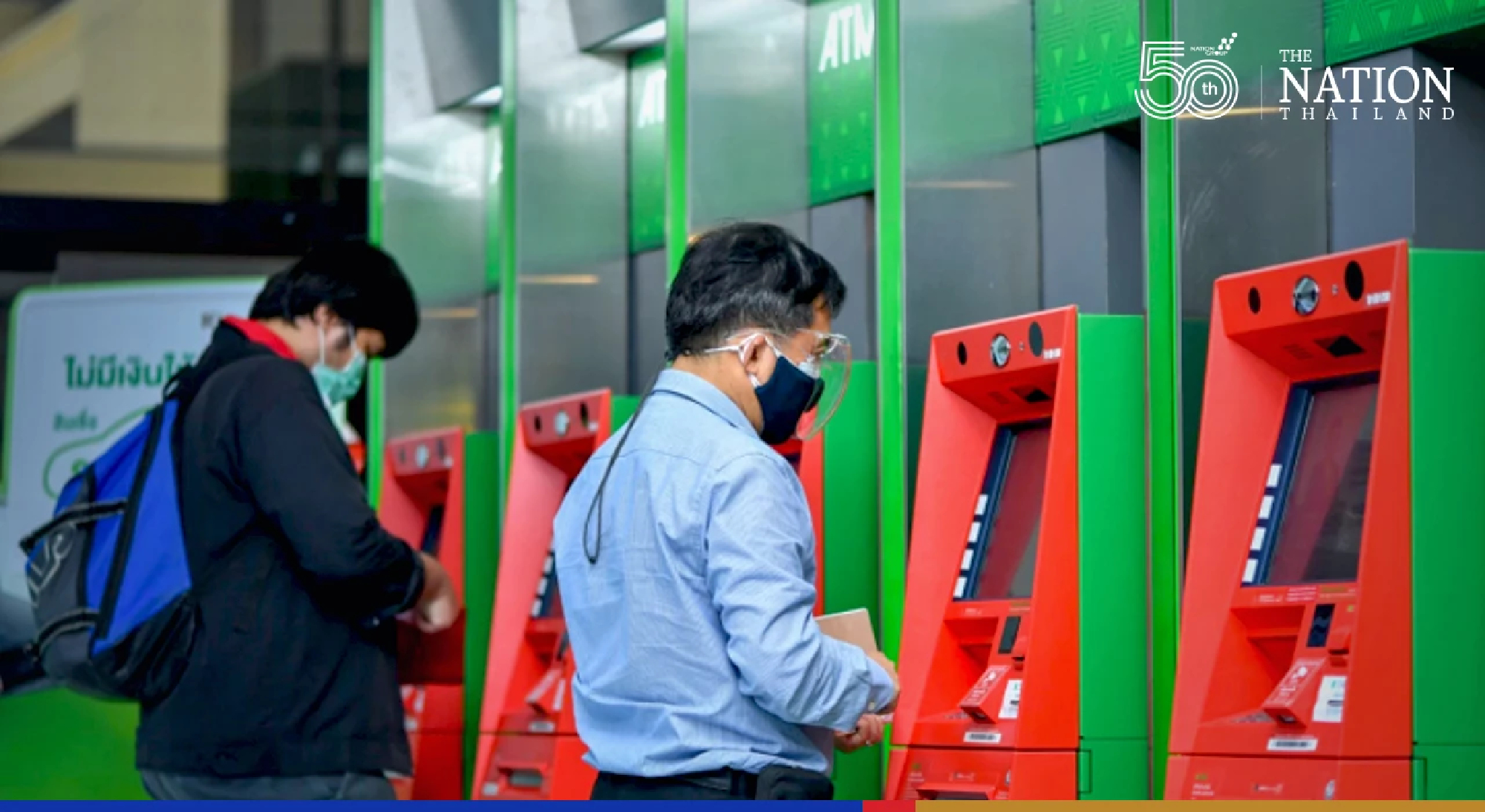
The Bank of Thailand (BOT) has prepared billions of extra baht for the upcoming Chinese New Year festival, said Somboon Chitphentom, assistant governor of BOT’s Banknote Management Group.
He expected the public to spend 27 billion baht for the festival – 3 per cent lower than the previous year.
Bangkok Bank has arranged around 40 billion baht in branches and 10,000 ATMs across the country for the festival. The bank has also reserved notes for the traditional practice of handing out “ang pao” (red envelopes).
Customers can use the service at 15,000 counter spots in 7-Eleven stores, Lotus’s, or ThailandPost’s Bank@Post. There is also an “e-ang pao” service for this new normal situation.
Siam Commercial Bank has 50 billion baht at ready – nearly the same as last year. Some 23 billion has been reserved for customers in Bangkok while the remaining 27 billion is for customers in other provinces. The bank’s ATMs will hold 26 billion baht while bank branches have prepared 24 billion for the occasion, with 5 billion being new banknotes.
Meanwhile, Kasikorn Bank has arranged 41.8 billion baht for the festival from January 29 to February 1. Of this 19.8 billion baht will be reserved for 551 bank branches across the country, 11.7 billion baht exclusively for branches in Bangkok. The remaining 22 billion will go for 8,900 ATMs – 10 billion alone for Bangkok.
The Thai Credit Retail Bank meanwhile said it had come out with new ang pao envelopes featuring an illustration of a tiger and the Chinese blessing “Fu Gui Ji Xiang” (Be wealthy and have good fortune”).
The first batch of orange-cap Pfizer vaccines for children aged 5-11 years was delivered to Thailand on Wednesday morning, Department of Disease Control director-general Dr Opas Karnkawinpong said on Thursday.
He said the department would dispatch vaccine-related documents to the Department of Medical Sciences for a check before distributing the doses nationwide.
He explained that each bottle of Pfizer vaccine can be administered to ten children, adding that the vaccine must be kept at a temperature of 2-8 degrees Celsius for ten weeks.
“From January 31, children with chronic disease can receive their jab at hospitals, while other children can get their shots at schools,” he said. “Children who are taking online classes or study outside the education system can receive their jabs at hospitals.”
Opas said the interval between the first and the second jabs for children aged 5-11 years is 3-12 weeks depending on efficiency, safety and the Covid-19 situation.
He said Thailand is the second Asian country after Singapore to receive Pfizer vaccines for children aged 5-11.
“The side effects found after administering the vaccine were mild symptoms that could be cured in 1-2 days, such as fever, cold, fatigue or pain where the jab was given, so medical staff will monitor children’s symptoms for 30 minutes after they receive the vaccine,” Opas said.
“According to global data, side effects in young children are less than in older children due to the lower dosage,” he said.
Opas also said children aged 12-18 will receive the purple-cap Pfizer vaccine similar to adults.
Meanwhile, Queen Sirikit National Institute of Child Health director Dr Adisai Pattatang said there were about 900,000 children with chronic diseases, while parents must give permission for their children to receive the jab.
He said medical staff would delay the vaccination of the young ones who have fever, fatigue and unstable symptoms.
He advised parents to prevent their children from playing or carrying out strenuous exercise after receiving the jab.
Adisai went on to say that he was concerned about heart muscle inflammation as US data showed that eight children got it after receiving the Pfizer vaccine.
“We would like to advise any children who feel chest pain, breathe rapidly or tire easily 2-7 days after the vaccination to see a doctor immediately,” he said.
“Meanwhile, parents should take their children to hospital immediately if they have fever, headache, vomiting, are unable to eat or are unconscious,” he cautioned.
He added that general hospitals that are unable to treat children should send them to medical centres, child health institutes or university hospitals for diagnosis and treatment.
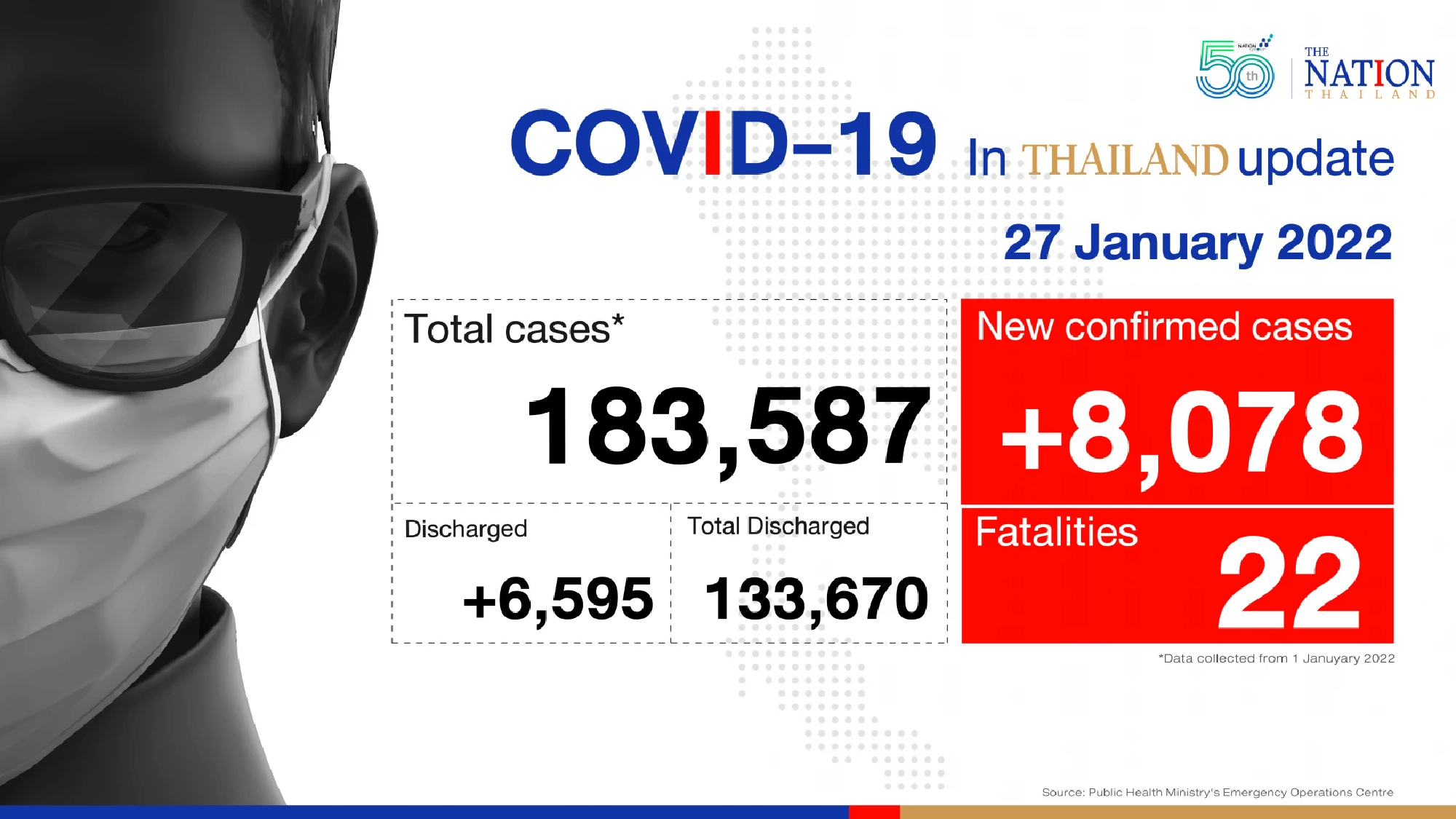
Ministry of Public Health reported on Thursday (January 27) morning that in the past 24 hours there are 8,078 new patients who tested positive for Covid-19, 225 of whom have arrived in Thailand from abroad.
Death toll increased by 22, while 6,595 patients were cured and allowed to leave hospitals.
Cumulative cases in the country since January 1, 2022 are at 183,587.
The country’s total caseload from Covid-19 stands at 2,407,022 – 2,302,164 of whom have recovered, 82,760 are still in hospitals and 22,098 have died.
Separately, another 44,412 people were given their first Covid-19 shot in the last 24 hours, 74,003 their second shot and 322,256 a booster, bringing the total number of Covid-19 vaccine doses administered nationwide to 113,622,267.
According to Worldometer, confirmed cases globally had risen to 363.27 million on Thursday, 287.73 million of whom have recovered, 69.89 million are active cases (95,965 in severe condition) and 5.65 million have died (up by 10,647).
Thailand ranks 27th in the global list of most cases, which is topped by the US with 74.18 million, followed by India with 40.37 million, Brazil with 24.55 million, France with 17.73 million and the UK with 16.15 million.
The Thailand Meteorological Department said on Thursday (January 27) that the high-pressure system covers the North and the upper Northeast of Thailand and the South China Sea while the westerly wind at high altitude brings cool to cold condition from Myanmar to the upper Thailand.
Cool to cold weather with fog in the morning are likely in the upper country. Mountaintops in the North and the Northeast are cold to very cold with minimum temperature in the range of 3-14 °C. People in the upper country should take care of their health due to variable weather. All transports should take more caution due to poor visibility.
Meanwhile, the southerly and the southeasterly winds prevail over the lower Central including Bangkok and its vicinity and the East regions, causing isolated light rains in the areas.
The Department also mentioned that the weak northeast monsoon prevails across the Gulf of Thailand and the South and brings isolated light rains to the South.
The weather forecast for the next 24 hours is as follows:
North: Cool to cold weather with fog in the morning and thick fog in some areas; temperature lows of 13-19 degrees and highs of 30-36 degrees Celsius. Temperature on hilltops is likely to drop to 3-13 degrees Celsius.
Northeast: Cool to cold weather with fog in the morning; temperature lows of 15-21 degrees and highs of 31-35 degrees Celsius. Temperature on hilltops is likely to drop to 8-14 degrees Celsius.
Central: Cool weather with fog in the morning; temperature lows of 21-22 degrees, highs of 34-36 degrees Celsius.
East: Cool weather with fog in the morning and isolated light rains; temperature lows of 22-25 degrees, highs of 31-35 degrees Celsius; waves less than a meter high and about a meter high offshore.
South (east coast): Partly cloudy with isolated light rains; temperature lows of 22-25 degrees, highs of 30-34 degrees Celsius; waves less than a meter high and about a meter high during thundershowers.
South (west coast): Partly cloudy with isolated light rains; temperature lows of 23-26 degrees, highs of 33-35 degrees Celsius; waves less than a meter high and about a meter high offshore.
Bangkok and surrounding areas: Partly cloudy with light fog in the morning and isolated light rains; temperature lows of 23-26 degrees, highs of 33-35 degrees Celsius.
The government has no objections to Kingsgate Consolidated, a parent company of Akara Resources, reopening the Chatree gold mine which straddles the border between Phetchabun and Phichit provinces, but it must be in line with new Mineral Act, Deputy Prime Minister Wissanu Kreangam said on Wednesday.
His reaction follows Kingsgate Consolidated informing the Australian Securities Exchange that the company has received four mining leases from the Thai government to reopen the Chatree gold mine, which was closed in January 2017.
Wissanu said agencies responsible for this matter can perform their duties in line with their procedures and authority, adding the agencies will report the progress to him and the Cabinet every three months.
He added that irrespective of the dispute between the Thai government and Kingsgate Consolidated, the company can reopen the Chatree gold mine, but they must follow the provisions of the new Minerals Act, including land permission, environment and community.
“The National Council for Peace and Order [formed after the 2014 coup] had ordered the temporary suspension of Kingsgate Consolidated’s business as new minerals-related laws had not been framed at that time. It is now up to agencies responsible for the matter to investigate and report to the government periodically,” he said.
He said responsible agencies have to report the progress every three months.
He added that he was not sure whether an arbitration ruling would be made at the end of this month because the previous arbitration ruling in Singapore had been postponed due to the Covid-19 crisis.
Thailand and Saudi Arabia will strengthen cooperation in labour and Riyadh is seeking foreign support in tourism management, Labour Minister Suchart Chomklin said after bilateral discussions with Ahmad bin Sulaiman Alrajhi, Saudi Minister of Human Resources.
This is an opportunity for Thai entrepreneurs, as well as skilled and semi-skilled workers to participate, Suchart said.
Saudi Arabia’s Ministry of Human Resources is aiming to hire some 8 million good, skilled workers from different countries. Thailand can participate in and would like labour cooperation to occur as soon as possible, especially for service sector workers, in hotels, health and the construction industry, he said.
As for the quality of life and welfare of foreign workers in Saudi Arabia, there will be the E-Contract Program, which is an electronic contract that aims to protect workers’ rights and reduce conflicts between employees and employers. The Labour Mobility Initiative programme will allow workers to move freely to increase flexibility, build efficiency and the ability to be active in the labour market.
As of December 2021, there were 1,345 Thai workers working in Saudi Arabia. Most of the Thai workers travelling to work are escorted by employers and have a re-entry work permit.
Positions that Thai workers travel to work include welders, technicians, mechanics, factory workers, machine operators, workers producing general products, assistant cooks, maids, etc.
The Office of the Attorney-General has expressed concern over the cocaine use charge against fugitive Vorayuth “Boss” Yoovidhya nearing the end of its statute of limitations.
The office on Wednesday released a statement on the results of the year 2021 and the direction of proactive action in 2022.
Itthiporn Kaewthip, a spokesman for the office, reported on the progress into the case case against Vorayuth, heir to an energy drink giant, who allegedly killed a police officer in a hit-and-run case dating back to 2012.
Prosecutors have charged Vorayut on two counts: rash driving causing the death of another person, whose statute of limitations expires in 2027; and the charge of cocaine use, which expires on September 3, 2022.
Dr Jumpon Phansumrit, director-general of International Affairs Department, Office of the Attorney-General, revealed that last year the parliamentary committee had called to explain the case against Vorayut. He investigated and found that the matter had not yet been referred to the office for extradition.
“We are still waiting for the extradition process. Several laws and treaties state that we must provide a possible address as one of the three key conditions for extradition. We have all facts, legal and statutes, except possible addresses,” said Jumpon.
Prayut Petchkhun, the deputy spokesman for the office, said that finding out the residence of the accused abroad was not within the prosecutor’s purview.
“We admit we are worried because the statue of limitations on the cocaine charge is about to expire on September 3, 2022. As long as the accused has not been identified, we will not be able to file a lawsuit against Vorayuth in the court,” said Prayut.
“We have only heard from the press that Vorayuth lives in England or Austria. What the police sent the prosecutor was a copy of the court’s arrest warrant, but the extradition warrant had not yet been issued. If you know the address of the accused in a foreign country, our prosecutors are ready to take any action to request extradition,” he said.