PM outlines governments efforts to help people amid the pandemic in Labour Day address
Prime Minister General Prayut Chan-o-cha said his government was working hard to control the pandemic, stimulate the economy and help people in vulnerable groups affected by the pandemic.
In a statement on National Labour Day on Saturday, the PM sent his best regards to all labourers who he said contributed to the country’s economic and social development.
“Due to the ongoing outbreak of Covid-19, the government has to cancel all labour day activities for another year for the safety of all labourers and the general public,” he said.
“The ‘Rao Mai Ting Kan’ [We Don’t Leave Anyone Behind], ‘Kon La Khreung’ [Let’s Go Halves], ‘Rao Chana’ [We Win] and ‘Mor33 Rao Rak Kan’ [Section33 We Love Each Other] were all schemes implemented to help labourers in all groups,” Prayut added.
“We have also reduced social security contribution, utility bills and interest rates of several loan programmes to make sure that everyone can stay strong and overcome this crisis together.”
Prayut added that the government would continue to promote labour protection and benefits to be at the same level as international standards, as well as provide necessary training and development programmes to improve labour skills in accordance with market demands when the Covid-19 situation improves.
“I would like to urge every labourer to take care of their health in the new normal by wearing face masks, maintaining social distancing, washing your hands regularly, eating freshly cooked foods and avoiding going to crowded spaces,” said Prayut.
“Lastly, I wish everyone a healthy body and strong spirit to help drive the country forward steadily into the future.”
MDES joins hands with Huawei strengthening in Thailand’s public health sector
(MDES) joins hands with Huawei Technologies (Thailand) Co., Ltd in supporting field hospital with leading communication innovations, helping medical personnel better tackle COVID-19
The Ministry of Digital Economy and Society (MDES) joins hands with Huawei Technologies (Thailand) Co., Ltd in strengthening Thailand’s public health sector, especially for the field hospitals, required to accommodate the increasing number of COVID-19 patients. The cooperation covers the provision of technologies for medical use, aiming to boost safety for the medical staff and patients and reducing the risk of infection transmission within the Bang Khun Thien field hospital in Bangkok. In alignment with Huawei’s commitment to providing continuous support to the Thai society, the AI-assisted diagnose solution, 5G telemedicine, InPatient area Intelligent Management, and eLTE broadband trunking, all managed from the IdeaHub control centre, and worth more than 6 million THB, will enhance the handling of the pandemic and support the hi-speed and convenient communication network for the staff working onsite.
With the increasing number of COVID-19 patients in Thailand, and many hospitals almost exceeding capacity, the medical personnel are working tirelessly to offer their patients the best medical care. In this direction, the government and public health sector have been cooperatively setting up several field hospitals, including the 1,000-bed Bang Khun Thien Hospital in Bangkok, to cope with the spread of COVID-19 nationwide with urgency. Additionally, in order to help doctors and nurses better cope with the influx of cases, an important mission for the Ministry of Digital Economy and Society has been to integrate/adapt digital technology within the Thai public health sector. The aim has been to help tackle the medical equipment, medical personnel, and hospitals deficiency challenges, by bringing technologies from a world-class company like Huawei to handle and prevent the ongoing spread of COVID-19.
Mr. Chaiwut Thanakhamanusorn, Digital Economy and Society Minister (2nd left); and Abel Deng, CEO of Huawei Technologies (Thailand) Co., Ltd, with the communication system managed from the IdeaHub control centre
Mr. Chaiwut Thanakhamanusorn, Digital Economy and Society Minister, spoke about the cooperation with Huawei Technologies Thailand: “The government encourages the integration of technology into the country’s administration which includes COVID-19 management, in line with the urgent policy as approved by the Cabinet. The Ministry has put significant focus on the safety of its citizens and the management of the ongoing spread of COVID-19.
Apart from the communication system provided to Bang Khun Thien field hospital by the Ministry and
the National Telecom Public Company Limited, the Ministry has also recognized the capabilities and benefits of Huawei’s world-leading technologies for providing efficient world-class medical solutions as well as experts, to enhance and support Thai doctors and medical personnel’s efficiency and convenience. These technologies will help reduce the workload of the on-site staff, manage the patients with immediacy and provide remote health services to COVID-19 patients by medical experts and reduce the risk of infection for medical personnel. We would like to extend our gratitude towards Huawei Thailand for their full cooperation and a very quick installation of all the technologies within only two days.”
Dr. Suparach Suwattanaphim, the director of Bang Khun Thien field hospital, has also made some remarks regarding the technology implementation at the field hospital, “We would like to thank the Ministry of Digital Economy and Society and Huawei Technologies Thailand who have brought 5G, AI, and communication network to help prevent the spread of COVID-19. The 1,000-bed Bang Khun Thien field hospital is the largest in Bangkok and the patient management system is much-needed. Obtaining technology from Huawei to manage these issues will greatly help the medical personnel’s workload as well as reduce the risk of infection. I am positive that the cooperation from every sector and the implementation of medical technology will quickly help improve the situation.”
Demonstration of the communication system managed from the IdeaHub control centre
Mr. Abel Deng, CEO of Huawei Technologies (Thailand) Co., Ltd, stated that “Amidst the ongoing spread of COVID-19, digital technology has become essential assistance for the public health sector in tackling the deficiency of medical equipment, medical personnel, and hospitals. With 5G technology, Cloud and AI can respond to multiple types of challenges that the public health sector is encountering at the moment. With the AI-assisted diagnosis solution, the medical personnel can analyze CT quantification results of cases of infection with high accuracy. The 5G Telemedicine allows medical experts across Thailand to coordinate with doctors and on-site personnel in providing online consultation to patients, monitoring patient’s conditions via smart devices from anywhere, which helps reduce the infection risk to medical personnel. The InPatient area intelligent Management is based upon AI technology installed in the screening camera at the entrance, and helps monitor the density of the high-risk area, measure the body temperature as well as support the eLTE broadband trunking (eLTE). The eLTE can be quickly deployed with a mobile broadband standalone system or private network, can provide group communication between medical staff, and can be used for multimedia services for remote disease control and treatment without using a public network. Furthermore, it also accommodates organizing internal staff meetings, hotline communication between medical personnel and security officers including the transfer of video or media for remote treatment. The aforementioned solution can also be effectively utilized on 5G network.
The eLTE broadband trunking (eLTE) increases communication efficiency and stability between personnel at the field hospital.
“As a leading technology company, Huawei Technologies (Thailand) Co., Ltd is also a trusted ICT partner in Thailand and a proactive digital transformation enabler who continuously strives to contribute with social value. Huawei is pleased to provide support to the government, hospitals, and medical personnel in handling the COVID-19 pandemic. To improve the current situation, we have gathered our experts to complete the installation of all the technologies and solutions for Bang Khun Thien field hospital within only two days. We strongly believe that these technologies will help lessen the workload of the personnel, deliver convenience to doctors and reduce exposure to infection for everyone working at the field hospital.” Mr. Abel Deng added.
This latest cooperation between Huawei and the Thai government to tackle the spread of COVID-19 follows previous collaborations in 2020, with Huawei providing leading innovations to reinforce its commitment – to deliver continuous support to the Thai society. In 2020, Huawei delivered 7 sets of Huawei Telemedicine Video Conferencing Solution, worth 10 million Thai baht to the Department of Disease Control and hospitals in Thailand to minimize the infection risk for medical staff. Additionally, Huawei also provided an AI-assisted solution to Ramathibodi Hospital and Siriraj Hospital, attempting to reduce the workload of Thai medical personnel at that time. The solution operates based on Huawei CLOUD and 5G, helping doctors analyze
Record 21 deaths as over 1,800 new Covid-19 cases reported
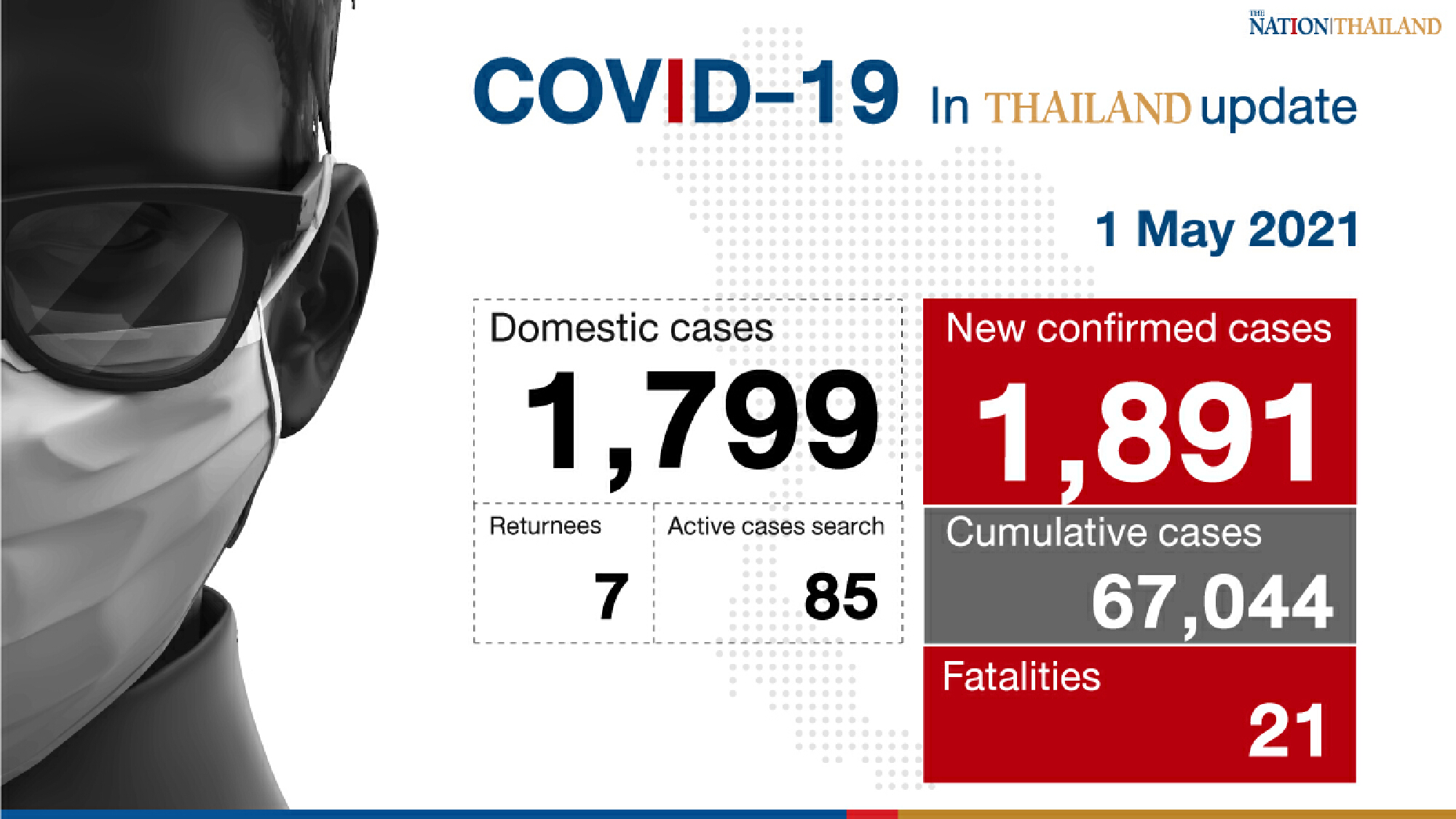
The Centre for Covid-19 Situation Administration on Saturday reported 1,891 new cases and a record 21 deaths over a 24-hour period.
The fatalities included 10 in Bangkok, two each in Chonburi and Samut Prakan and one each in Ubon Ratchathani, Kalasin, Nakhon Si Thammarat, Chiang Mai, Chiang Rai, Pathum Thani and Phetchaburi provinces.
The ages of those who succumbed to the virus ranged from 39 to 90. All of them reportedly suffered from chronic conditions.
Bangkok again led the list of most cases with 739, followed by 142 in Samut Prakan and 126 in Chonburi.
Of the seven overseas travellers found positive in quarantine, five were Thais who had returned from India, Singapore, Qatar, Denmark and Italy. An Indian and a Pakistani coming from their respective countries also tested positive.
Meanwhile, 1,821 patients have recovered and been discharged in the last 24 hours.
As of Saturday, the number of confirmed cases in Thailand had risen to 67,044. Of these, 63,729 had been contracted locally, including 22,172 who were found via proactive testing, while 3,315 were returnees.
So far, 38,075 have recovered and been discharged, 28,745 patients are still in hospitals, and 224 have died.
Since April 1, 130 people have succumbed to the virus. Thailand’s third wave of Covid-19 infections was sparked by some cluster cases in mid-March.
According to Worldometer, as of 11am on Saturday, the number of confirmed cases globally had risen to 152 million (up by 871,598), 129.27 million of whom have recovered, 19.43 million are active cases (111,365 in severe condition) and 3.19 million have died (up by 14,266).
Thailand ranks 104th on the global list of most cases, which is topped by the US with 33.1 million, followed by India 19.15 million, Brazil 14.66 million, France 5.61 million, and Turkey 4.82 million.
Meanwhile, another 19,474 people were given their first Covid-19 shot in the last 24 hours, while 45,990 people were given their second shot, bringing the total number of Covid-19 vaccine doses administered in Thailand to 1,477,078.
National football team players test negative for Covid-19
Players of the national football team tested negative for Covid-19 after a Football Association of Thailand (FAT) staff was found infected with the virus. The FAT added that other support staff of the national team also were not infected.
The infected staffer was separated from the others, and was waiting for treatment under the Ministry of Public Health guidelines.
The association said that players and staff would be tested again to make sure no one was infected.
Steady progress in construction of new airport terminals in provinces
The Department of Airports on Friday reported the progress of development projects at airports under its administration as of the end of April.
The construction of a new passenger terminal at Khon Kaen Airport is now 77 per cent complete. The terminal is expected to double the airport’s capacity in receiving passengers from 1,000 to 2,000 people per hour, or approximately 5 million visitors per year.
The construction of the third passenger terminal and renovation of the first and second terminals at Krabi International Airport is now 51 per cent complete. The project aims to double the airport’s capacity from 1,500 to 3,000 passengers per hour or approximately 8 million visitors per year.
The construction of a new passenger terminal at Nakhon Si Thammarat Airport is now 41 per cent complete. The terminal is expected to more than treble the airport’s capacity from 450 to 1,600 people per hour, or approximately 4 million people per year.
The construction of a new passenger terminal at Trang Airport is now 13 per cent complete. The terminal is expected to double the airport’s capacity from 600 to 1,200 people per hour, or approximately 3.4 million visitors per year.
The Department of Airports said that despite the Covid-19 situation that has affected the number of airport users, it would continue to improve the capacity and efficiency of all 28 airports under its administration nationwide to provide better service to the passengers.
SRT to invite private sector bids for managing commercial areas
The State Railway of Thailand (SRT) will invite bids from private contractors to manage the commercial areas at the Bang Sue Grand Station as well as along the Red Line suburban railway system in June this year, Transport Minister Saksayam Chidchob said this week.
“The project will cover a total area of 52,375 square metres, including food courts, shops and parking lots,” he said.
“The SRT will also seek contractors to operate limousine or shuttle bus services for commuters under a 15-20-year contract.”
Saksayam added that a detailed survey revealed the Bang Sue Grand Station has total commercial area of 4,626 square metres and advertising area of 2,407sqm.
“We plan to let private companies use these areas under a three-year contract. The bidding should start in June, the contract signing in August, and the station would open for the public at the end of 2021.”
Saksayam has also ordered the SRT to study suitable fares for the Red Line urban train based on operational cost, number of passengers and frequency of trains.
“The ministry also has been working with Krungthai Bank Plc to implement the EMV [Europay Mastercard and Visa] system throughout the train route to increase convenience for commuters, and estimated that it would be ready by the time the station opens,” he said.
The 139km Red Line suburban railway system will consist of two lines, one (also referred to as Dark Red Line) running from Thammasat University’s Rangsit campus to Maha Chai in Samut Sakhon province, and the other (Light Red Line) running from Salaya in Nakhon Pathom province to Hua Mark in Bangkok, with both passing through Bang Sue Grand Station, which will act as a connecting hub to the MRT system.
Government restores 14-day quarantine for overseas arrivals, even for vaccinated people
Foreigners wishing to enter Thailand from May 6 onwards will need to undergo 14 days quarantine no matter when their COEs (Certificates of Entry) were issued, the Thai Foreign Ministry said on Friday.
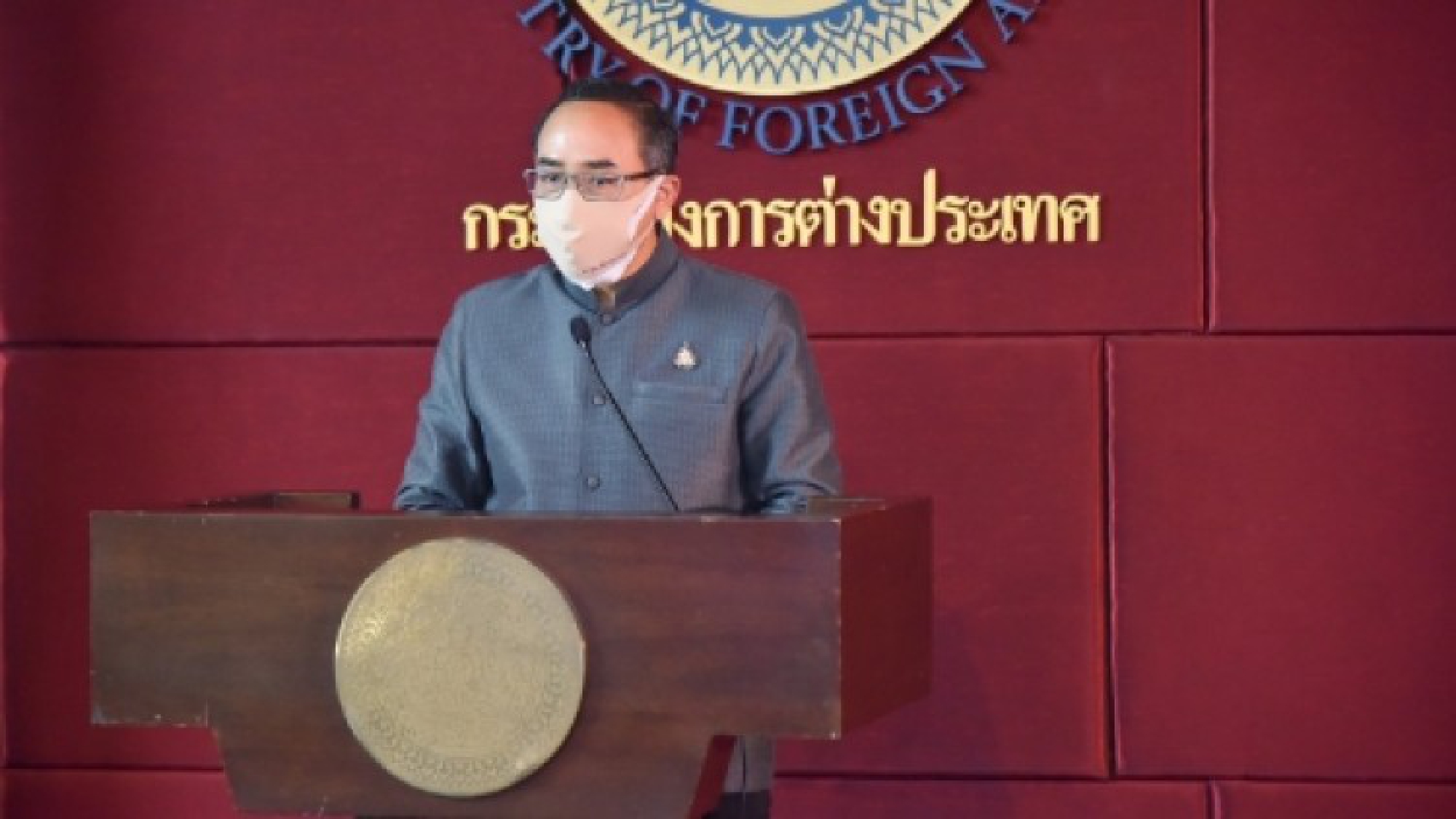
“The measure was approved by the Centre for Covid-19 Situation Administration in order to curb the spread of the virus,” Foreign Ministry spokesperson Thani Saengrat said.
“During the quarantine period, they will not be allowed to leave their rooms except for testing for Covid-19, which is scheduled three times during quarantine, or for other medical emergencies.”
Thani added that those whose COEs were issued before May 1 and who arrive in Thailand during May 1-5 will be quarantined according to the measures announced in April, which are:
– Those who have been vaccinated will be quarantined for seven days.
– People arriving from countries that have no reports of mutated strains of Covid-19 will be quarantined for 10 days.
– Those from countries that have reports of mutated strains of Covid-19 will be quarantined for 14 days.
“Meanwhile, those whose COEs were issued after May 1 will need to undergo 14 days quarantine even if they have been vaccinated against Covid-19,” he added.
Donations by revered monks followers boost central banks reserves
The followers of highly revered Buddhist monk, Phra Thamma Wisutthimongkhol, also known as Luangta Maha Bua, on Friday donated 10 kilograms of gold to the Bank of Thailand (BOT) to boost the central banks gold reserves.
The followers were led by Suchin Paripunno, abbot of Thammasathit Temple in Rayong province, while the gold was received by BOT Governor Setthaput Suthiwart-Narueput.
The gold was gathered from donations made by participants of a merit-making activity that the followers had organised on April 12 to continue realising the late monk’s intention to safeguard the country’s reserves to ensure economic stability.
As of Friday, the group had made donations 26 times, with total donated gold amounting to 13,060 kilograms and US$10.45 million in foreign currency.
Bangkok vaccination to launch in June at 14 venues
Bangkok will vaccinate 70 per cent of residents at 14 locations by the end of the year, governor Aswin Kwanmuang announced on Friday. People aged 60 and older will be inoculated at hospitals under the Bangkok Metropolitan Administration (BMA), while those aged 18 to 59 will get jabs at private buildings.
Bangkok’s inoculation programme will run from June to December.
People are required to register for their jab at the @MorPhrom Line account from May 1.
Those who do not have access to the Line app can book their jab via a public hospital.
Pro-democracy leader Parit hospitalised after 46 days of hunger strike over bail denial
Detained pro-democracy activist Parit “Penguin” Chiwarak, who has been on a protest fast for over a month over being denied bail, was admitted to hospital on Friday evening, the corrections department said.
Parit was taken to Ramathibodi Hospital for treatment after he told authorities that he had passed blood in his stool earlier in the day, the Thai Lawyers for Human Rights group tweeted on Friday.
The protest leader began a hunger strike on March 15 after he and other pro-democracy activists accused of insulting the monarchy were repeatedly denied bail.
Since going on hunger strike, he has been having only water and electrolytes.
“Since he began his hunger strike, Parit’s weight has been going down from 107 kilograms to 94.5kg,” Thawatchai Chaiwat, deputy director-general and spokesman of the Department of Corrections, said on Friday. “Although there are no indications that he is in a critical condition, we decided to take him to hospital as he had reduced his consumption of electrolytes and was at risk of shock.”
Thawatchai added that after his condition improves, he would be transported back to the Medical Correctional Institution for further treatment.
Pro-democracy leader Parit hospitalised after 46 days of hunger strike over bail denial
Meanwhile, after rejecting his ninth plea for bail on Thursday, the court has set another bail hearing for May 6. Parit’s lawyer Krisadang Nutcharat saw that as a positive sign as the court in the past did not set hearing dates, according to reports.
The other anti-government protest group detainees with Parit are: Panusaya “Rung” Sithijirawattanakul, who is also on a hunger strike, Panupong Jadnok, Chaiamorn Wibulkaew, Arnon Nampa, Chukiat Saengwong and Parinya Cheewinkulpahtom.


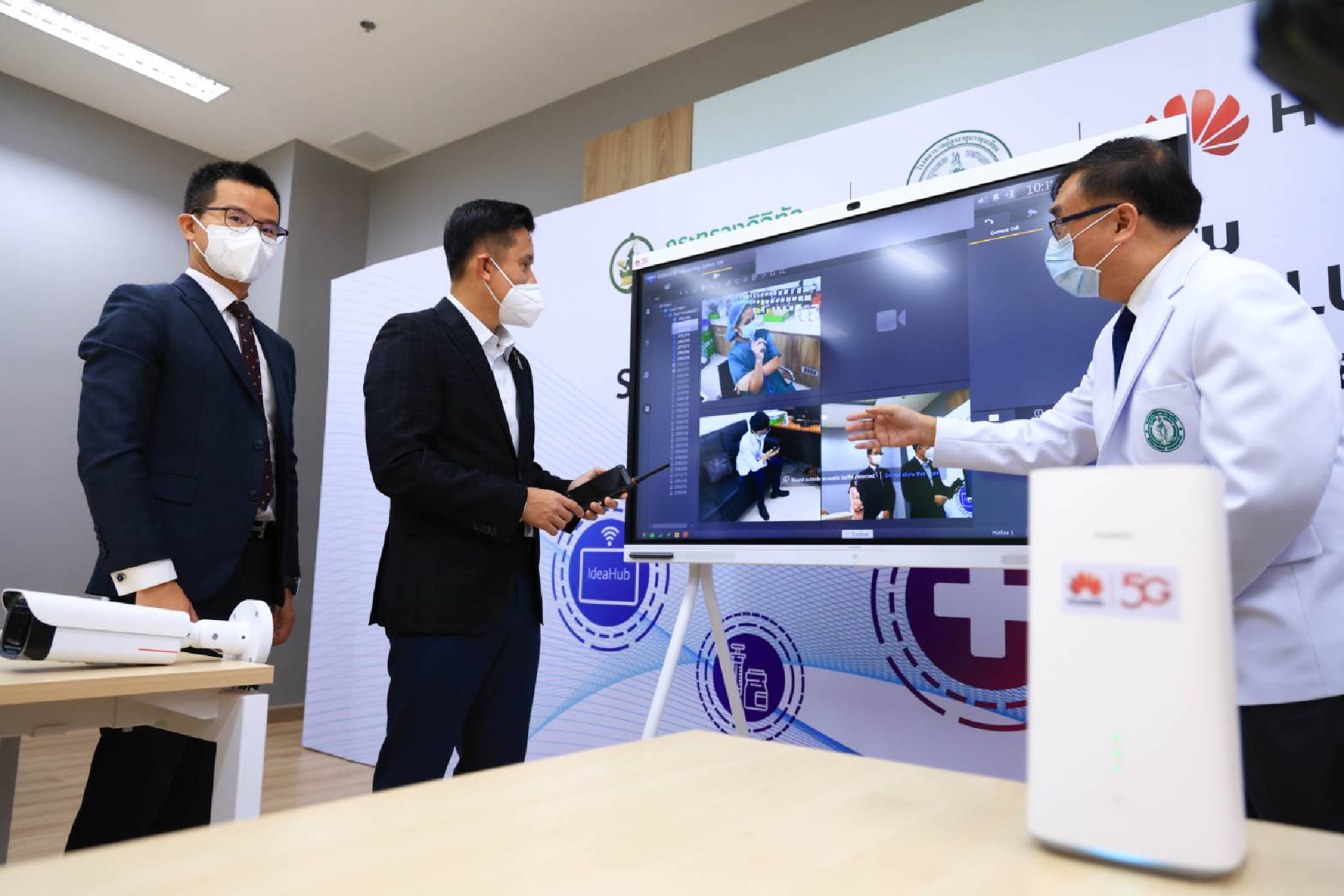 Mr. Chaiwut Thanakhamanusorn, Digital Economy and Society Minister (2nd left); and Abel Deng, CEO of Huawei Technologies (Thailand) Co., Ltd, with the communication system managed from the IdeaHub control centre
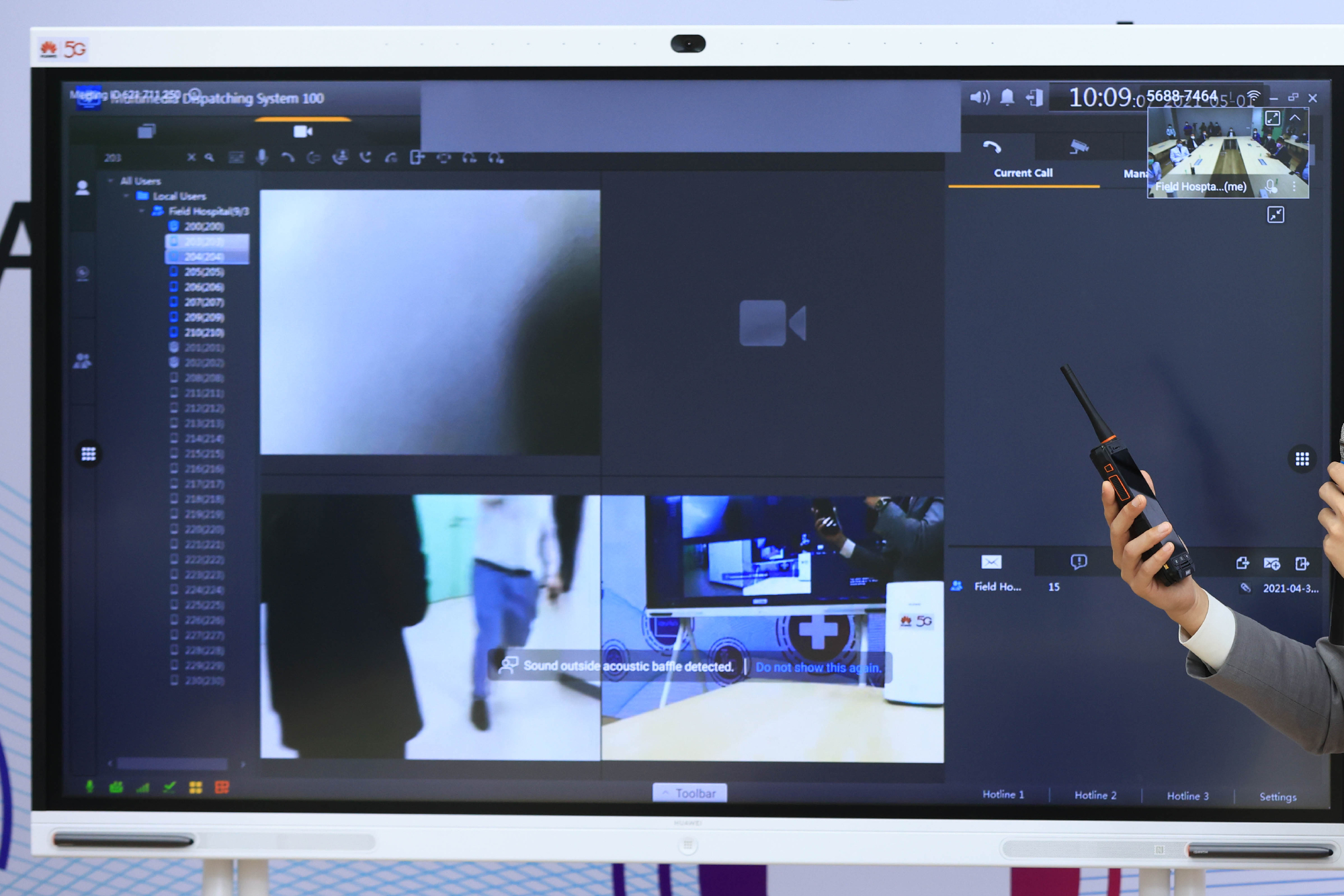 Demonstration of the communication system managed from the IdeaHub control centre
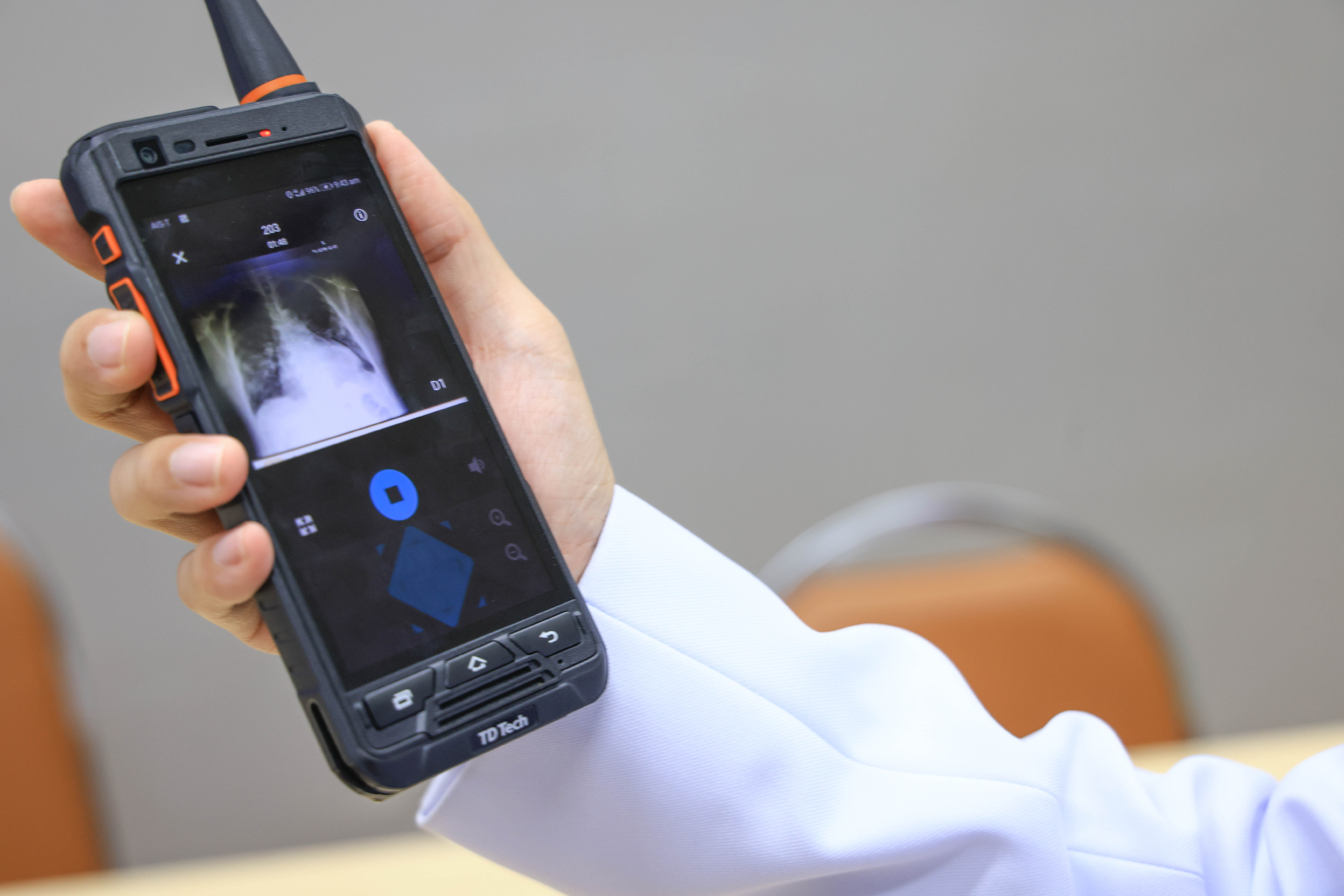 The eLTE broadband trunking (eLTE) increases communication efficiency and stability between personnel at the field hospital.




 Pro-democracy leader Parit hospitalised after 46 days of hunger strike over bail denial

