The Cabinet on Tuesday extended the identity-verification period for people registering for “Mor33 Rao Rak Kan” relief payments, from March 15 to May 31.
Deputy government spokeswoman Rachada Dhanadirek said the payment scheme will be divided into three stages:
Registrants who authenticate themselves between March 15 and 21 will be given Bt1,000 per week for four weeks (March 22, March 29, April 5 and April 12).
Registrants who authenticate themselves between March 22 and April 11 will be given Bt2,000 on March 29 and then Bt1,000 per week, capped at Bt4,000.
Registrants who authenticate themselves between April 12 and May 31 will be given the whole Bt4,000 payment immediately.
The scheme will cost the government an estimated Bt40 billion.
The Songkran holiday will be extended to six days this year, after the Cabinet on Tuesday approved a special holiday on April 12. The Songkran festival break will now run from April 10 to April 15 (Saturday-Thursday).
However, the Cabinet will decide next Tuesday whether Songkran water splashing activities can go ahead this year under Covid-19 restrictions.
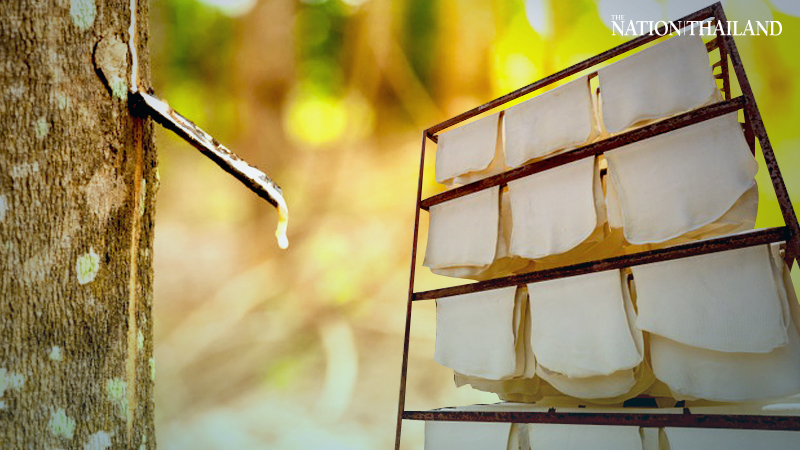
SET-listed rubber producer Sri Trang Agro-Industry estimates global demand for natural rubber will rebound to 13.4 million tonnes this year, a rise of 7 per cent from last year.
Veerasith Sinchareonkul, Sri Trang executive director, said demand for natural rubber in 2021 is likely to recover strongly as the Covid-19 pandemic recedes.
The price of block rubber in February 2021 rose to more than 160 US cents per kilogram, 22 per cent up on the 2020 average of 131 cents per kilo.
“Factors boosting the price of natural rubber are the overall economy and the automotive industry in China, which has returned to good growth. China is one of the world’s largest rubber consumers,” Veerasith said.
Demand for tyre production and rubber gloves after the Covid-19 outbreak were driving up the price of rubber, he added.
STA expects to sell more than 1.2 million tonnes of natural rubber this year, or an average of 300,000 tonnes per quarter, up about 16 per cent from 1.03 million tons last year.
Meanwhile, the price of natural rubber in the first quarter this year remains strong. Average rubber prices are expected to rise by 5-10 per cent from 148 cents per kilo in the fourth quarter of 2020. STA expects to see demand rise steadily during the second quarter of this year.
NationalMar 09. 2021Industry Minister Suriya Juangroongruangkit
By The Nation
All Thai factories should have Green Industry certification by 2025, according to a deadline set by Industry Minister Suriya Juangroongruangkit on Tuesday.
Suriya ordered the Department of Industrial Works (DIW) to push all 71,130 industrial plants across the country to achieve Green Industry standards developed by the United Nations Industrial Development Organisation (Unido).
The UN agency came up with the Green Industry initiatives to help developing countries maintain resource-efficient low-carbon growth while creating new jobs and protecting the environment.
The 2025 deadline is part of the government’s action plan to promote and develop enterprises in green industry (2021-2037).
The DIW said that since 2011, about 20,000 Thai factories have received Green Industry certificates along with 110 Green Industry labels indicating their products are manufactured in an environmentally friendly manner.
A Grade 12 student confessed to strangling his girlfriend out of fear she would leave him, and burning her body to conceal his crime, Phitsanulok police said on Tuesday.
Forensic officials are investigating the charred remains of what is thought to be Chularat (surname not revealed), 19, found among three burned tyres.
Police said her 18-year-old boyfriend Maew, a Grade 12 student at a school in Phitsanulok’s Wang Thong district, had surrendered at nearby Kaeng Sopha Police Station on Monday.
Chularat’s mother, Sawee Kunna, said Maew had picked up her daughter from her home on February 26, claiming he was accompanying her to see a doctor.
When Chularat failed to return from the trip, her family contacted the police.
Investigators said Maew strangled Chularat after she revealed her plan to leave and work in Phitsanulok city.
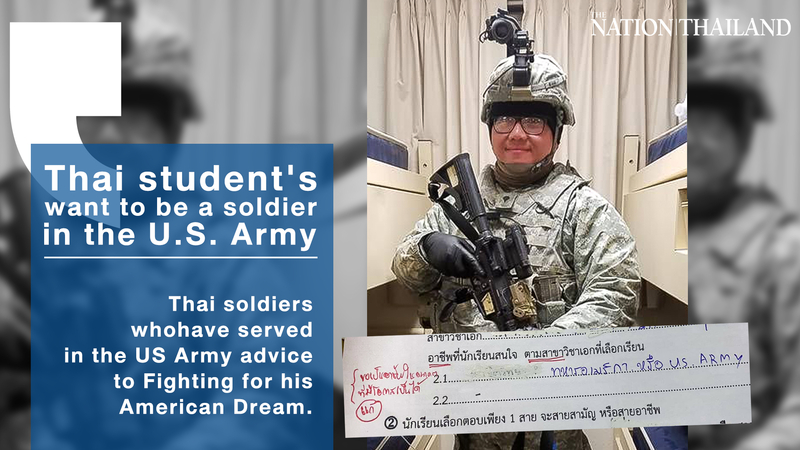
Told his ambition to join the US Army was unrealistic, a Thai boy gets new hope from a Thai veteran of the American military
After his dream of joining the world’s most powerful fighting force was shot down by his teacher, a Thai student has been handed new hope of realising his big ambition.
The student’s written answer to the question of what he wanted to be when he grows up was posted recently on social media, where it spread quickly. The student had answered, “a soldier in the US Army”. Unsurprisingly, his teacher told him his dream was impossible to fulfil.
The post drew plenty of comments and advice from social media users – including Thai soldiers who have served in the US Army. Among them was a Facebook user identified as former US soldier Pattara Niyomchat.
He recounted that, as a boy raised upcountry, he started learning English in Grade 4 class.
After performing well in a language test, he visited the US on an exchange programme at the age of 17. Pattara said it took him four months before he was comfortable speaking in English.
After graduating high school, he followed his dream by returning to the US and joining the army. He, too, had dreamed of joining the US military when he was a child.
When his contract with the US expired, he returned to live in his hometown of Nakhon Si Thammarat, he added.
Pattara encouraged the young student to follow his dream, but also be prepared for hardship if he wanted to achieve it.
Currently, there are over 50 Thais in the US Army.
The criteria for joining the US military are as follows:
1. Must be US citizen or hold a Green Card.
2. Must be aged between 17 and 35.
3. Must have high school degree, whether from the US or other countries.
4. Must have no chronic/congenital disease.
5. Must pass military pre-test and test.
A soldier’s contract with the US Army lasts between 2 and 8 years.
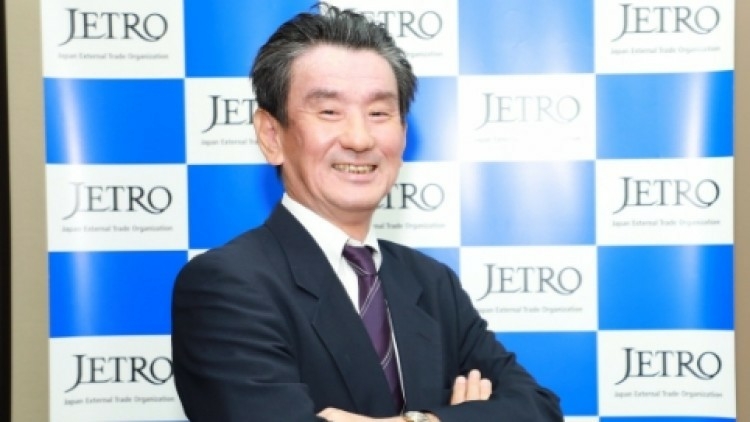
The Ministry of Energy is working with Japan External Trade Organisation (Jetro) to promote the use of renewable energy to over 30 per cent of total consumption within 20 years.
“The ministry and Jetro have been developing a BHD [bio-hydrogenated diesel] as an alternative to fossil fuel as part of Thailand’s power development plan that runs from 2017-2022,” said Kulit Sombatsiri, Ministry of Energy permanent secretary.
“The BHD is a biodiesel with quality at the same level as regular diesel but can significantly reduce the emission of carbon dioxide.
“We also aim to promote the use of electric motorcycles at over 1 million units in big cities such as Bangkok and Chiang Mai, as well as the use of electric vehicles at government agencies nationwide,” he added.
Kulit added that the ultimate goal of working with Jetro was to promote the use of renewable energy at over 30 per cent of total power usage within the next 20 years.
“To achieve this, we will employ AI technology in powering the smart grid to receive renewable energy produced by the private sector into the national power grid,” he said.
“The smart grid will also support the buying of hydroelectricity from Laos and selling it to neighbouring countries in the Asean community.”
Atsushi Taketani, president of Jetro Bangkok, said that Japan has announced a policy to become a low-carbon society in 2050.
“On the road towards that goal, the Japanese Ministry of Economy, Trade and Industry has set an action plan with focus on establishing cooperation in green initiatives with other countries, and we aim to work with Thailand on several tangible projects in the future,” he added.
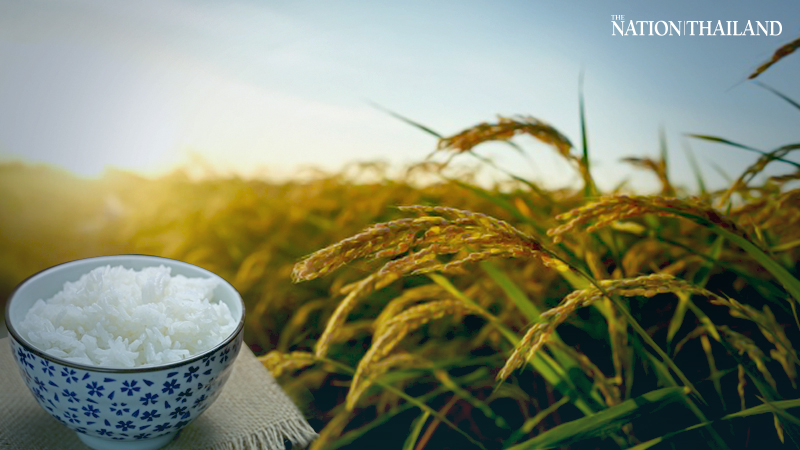
Thai rice exports for January totalled 421,477 tonnes, dropping 23.2 per cent from the same period last year, the Thai Rice Exporters Association reported on Tuesday.
The total export value for January was Bt7.82 billion, down 16.2 per cent year on year.
“Thai rice exports for the whole of 2020 totalled 5.72 million tonnes, a decrease of 24.5 per cent year on year. The export total value for 2020 was Bt115.9 billion, down 11.2 per cent year on year,” said the association. “This makes Thailand the fourth largest rice exporter after India, Vietnam and Pakistan.”
In 2019, Thailand was the world’s second-largest rice exporter behind India.
Major factors hindering rice exports last year were the shipping container shortage and rising ocean freight charges, said the association. “Furthermore, Thai rice prices are higher than those of competitors, prompting customers to buy cheaper alternatives,” it added.
Meanwhile, white rice exports in January dropped 6.9 per cent from December, while export of steamed rice rose 2.8 per cent, and export of jasmine rice plummeted 32.8 per cent.
“We estimate that Thai rice exports in February will total 400,000 to 500,000 tonnes, mostly from ongoing contracts with clients in Africa, Asia and America,” said the association. “We do not expect to see many new orders in the coming months, as the baht is still showing a tendency to strengthen.”
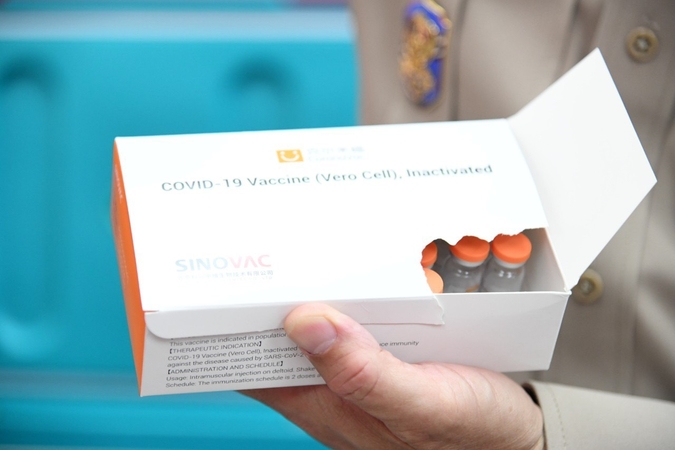
Another 800,000 doses of Sinovac vaccine for Covid-19 will soon arrive in Thailand, Deputy Prime Minister and Minister of Public Health Anutin Charnvirakul said on Tuesday.
The chargé d’affaires at China’s embassy in Thailand, Yang Xin, had informed him that Chinese authorities have approved and coordinated with the manufacturing company. The vaccine is expected to arrive on March 25.
In addition, China has also proposed to Thailand to consider inoculating Chinese nationals living in Thailand.
Thailand will continue to issue a letter of intent to seek support for the vaccine from China as a friend. If the vaccine is given, it may state the condition to take care of the Chinese nationals in Thailand, said Anutin.
There is also a request to consider the establishment of a China Immunization Centre for Overseas Chinese in Asean and a vaccine passport agreement between the two countries to facilitate bubble travel, Anutin said







 Industry Minister Suriya Juangroongruangkit