#ศาสตร์เกษตรดินปุ๋ย : ขอบคุณแหล่งข้อมูล : หนังสือพิมพ์ The Nation
https://www.nationthailand.com/news/30379900?utm_source=category&utm_medium=internal_referral
Colleges are turning students’ phones into surveillance machines, tracking the locations of hundreds
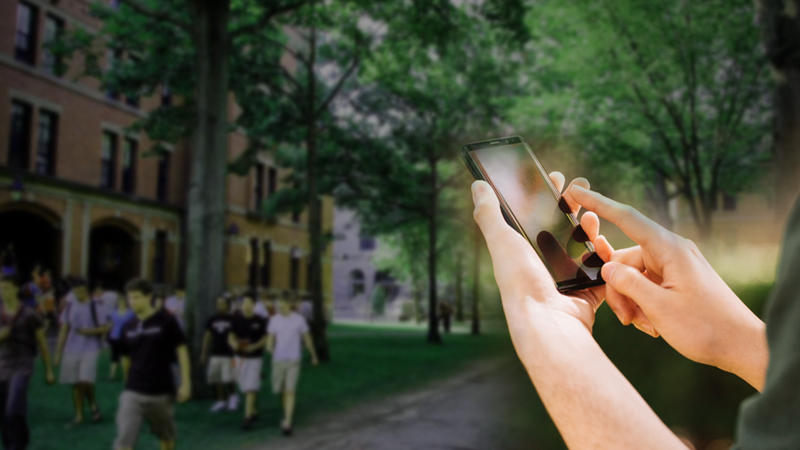
And when they skip class? The SpotterEDU app sees that, too, logging their absence into a campus database that tracks them over time and can sink their grade. It also alerts Rubin, who later contacts students to ask where they’ve been. His 340-person lecture has never been so full.
“They want those points,” he said. “They know I’m watching and acting on it. So, behaviorally, they change.”
Short-range phone sensors and campuswide WiFi networks are empowering colleges across the United States to track hundreds of thousands of students more precisely than ever before. Dozens of schools now use such technology to monitor students’ academic performance, analyze their conduct or assess their mental health.
But some professors and education advocates argue that the systems represent a new low in intrusive technology, breaching students’ privacy on a massive scale. The tracking systems, they worry, will infantilize students in the very place where they’re expected to grow into adults, further training them to see surveillance as a normal part of living, whether they like it or not.
“We’re adults. Do we really need to be tracked?” said Robby Pfeifer, a sophomore at Virginia Commonwealth University in Richmond, which recently began logging the attendance of students connected to the campus’ WiFi network. “Why is this necessary? How does this benefit us? . . . And is it just going to keep progressing until we’re micromanaged every second of the day?”
This style of surveillance has become just another fact of life for many Americans. A flood of cameras, sensors and microphones, wired to an online backbone, now can measure people’s activity and whereabouts with striking precision, reducing the mess of everyday living into trend lines that companies promise to help optimize.
Americans say in surveys they accept the technology’s encroachment because it often feels like something else: a trade-off of future worries for the immediacy of convenience, comfort and ease. If a tracking system can make students be better, one college adviser said, isn’t that a good thing?
But the perils of increasingly intimate supervision – and the subtle way it can mold how people act – has also led some to worry whether anyone will truly know when all this surveillance has gone too far. “Graduates will be well prepared . . . to embrace 24/7 government tracking and social credit systems,” one commenter on the Slashdot message board said. “Building technology was a lot more fun before it went all 1984.”
Instead of GPS coordinates, the schools rely on networks of Bluetooth transmitters and wireless access points to piece together students’ movements from dorm to desk. One company that uses school WiFi networks to monitor movements says it gathers 6,000 location data points per student every day.
School and company officials call location monitoring a powerful booster for student success: If they know more about where students are going, they argue, they can intervene before problems arise. But some schools go even further, using systems that calculate personalized “risk scores” based on factors such as whether the student is going to the library enough.
The dream of some administrators is a university where every student is a model student, adhering to disciplined patterns of behavior that are intimately quantified, surveilled and analyzed.
But some educators say this move toward heightened educational vigilance threatens to undermine students’ independence and prevents them from pursuing interests beyond the classroom because they feel they might be watched.
“These administrators have made a justification for surveilling a student population because it serves their interests, in terms of the scholarships that come out of their budget, the reputation of their programs, the statistics for the school,” said Kyle M. L. Jones, an Indiana University assistant professor who researches student privacy.
“What’s to say that the institution doesn’t change their eye of surveillance and start focusing on minority populations, or anyone else?” he added. Students “should have all the rights, responsibilities and privileges that an adult has. So why do we treat them so differently?”
Students disagree on whether the campus-tracking systems are a breach of privacy, and some argue they have nothing to hide. But one feeling is almost universally shared, according to interviews with more than a dozen students and faculty members: that the technology is becoming ubiquitous, and that the people being monitored – their peers, and themselves – can’t really do anything about it.
“It embodies a very cynical view of education – that it’s something we need to enforce on students, almost against their will,” said Erin Rose Glass, a digital scholarship librarian at the University of California San Diego. “We’re reinforcing this sense of powerlessness . . . when we could be asking harder questions, like: Why are we creating institutions where students don’t want to show up?”
SpotterEDU chief Rick Carter, a former college basketball coach, said he founded the app in 2015 as a way to watch over student athletes: Many schools already pay “class checkers” to make sure athletes remain eligible to play.
The company now works with nearly 40 schools, he said, including such universities as Auburn, Central Florida, Columbia, Indiana and Missouri, as well as several smaller colleges and a public high school. More than 1.5 million student check-ins have been logged this year nationwide, including in graduate seminars and chapel services.
SpotterEDU uses Bluetooth beacons roughly the size of a deck of cards to signal to a student’s smartphone once a student steps within range. Installers stick them on walls and ceilings – the less visible, Carter said, the better. He declined to allow The Washington Post to photograph beacons in classrooms, saying “currently students do not know what they look like.”
School officials give SpotterEDU the students’ full schedules, and the system can email a professor or adviser automatically if a student skips class or walks in more than two minutes late. The app records a full timeline of the students’ presence so advisers can see whether they left early or stepped out for a break.
“Students today have so many distractions,” said Tami Chievous, an associate athletic director at the University of Missouri, where advisers text some freshmen athletes if they don’t show up within five minutes of class. “We have to make sure they’re doing the right thing.”
The Chicago-based company has experimented with ways to make the surveillance fun, gamifying students’ schedules with colorful Bitmoji or digital multiday streaks. But the real value may be for school officials, who Carter said can split students into groups, such as “students of color” or “out-of-state students,” for further review. When asked why an official would want to segregate out data on students of color, Carter said many colleges already do so, looking for patterns in academic retention and performance, adding that it “can provide important data for retention. Even the first few months of recorded data on class attendance and performance can help predict how likely a group of students is to” stay enrolled.
Students’ attendance and tardiness are scored into a point system that some professors use for grading, Carter said, and schools can use the data to “take action” against truant students, such as grabbing back scholarship funds.
The system’s national rollout could be made more complicated by Carter’s history. He agreed earlier this year to stay more than 2,500 feet from the athletic offices of DePaul University, where he was the associate head basketball coach from 2015 to 2017, following an order of protection filed against him and allegations that he had threatened the school’s athletic director and head basketball coach. The order, Carter said, is related to NCAA violations at the program during his time there and has nothing to do with SpotterEDU.
Rubin, the Syracuse professor, said once-thin classes now boast more than 90% attendance. But the tracking has not been without its pitfalls: Earlier versions of the app, he said, included a button allowing students to instantly share their exact GPS coordinates, leading some to inadvertently send him their location while out at night. The feature has since been removed.
For even more data, schools can turn to the Austin, Texas-based start-up Degree Analytics, which uses WiFi check-ins to track the movements of roughly 200,000 students across 19 state universities, private colleges and other schools.
Launched by the data scientist Aaron Benz in 2017, the company says in promotional materials that every student can graduate with “a proper environment and perhaps a few nudges along the way.”
Benz tells school administrators that his system can solve “a real lack of understanding about the student experience”: By analyzing campus WiFi data, he said, 98% of their students can be measured and analyzed.
But the company also claims to see much more than just attendance. By logging the time a student spends in different parts of the campus, Benz said, his team has found a way to identify signs of personal anguish: A student avoiding the cafeteria might suffer from food insecurity or an eating disorder; a student skipping class might be grievously depressed. The data isn’t conclusive, Benz said, but it can “shine a light on where people can investigate, so students don’t slip through the cracks.”
To help find these students, he said, his team designed algorithms to look for patterns in a student’s “behavioral state” and automatically flag when their habits change. He calls it scaffolding – a temporary support used to build up a student, removed when they can stand on their own.
At a Silicon Valley summit in April, Benz outlined a recent real-life case: that of Student ID 106033, a depressed and “extremely isolated” student he called Sasha whom the system had flagged as “highly at-risk” because she only left her dorm to eat. “At every school, there are lots of Sashas,” he said. “And the bigger you are, the more Sashas that you have.”
A classifier algorithm divides the student body into peer groups – “full-time freshmen,” say, or “commuter students” – and the system then compares each student to “normal” behavior, as defined by their peers. It also generates a “risk score” for students based around factors such as how much time they spent in community centers or at the gym.
The students who deviate from those day-to-day campus rhythms are flagged for anomalies, and the company then alerts school officials in case they want to pursue real-world intervention. (In Sasha’s case, Benz said, the university sent an adviser to knock on her door.)
Some administrators love the avalanche of data these kinds of WiFi-based systems bring. “Forget that old ominous line, ‘We know where you live.’ These days, it’s, ‘We know where you are,’ ” Purdue University president Mitch Daniels wrote last year about his school’s location-tracking software. “Isn’t technology wonderful?”
But technical experts said they doubted the advertised capabilities of such systems, which are mostly untested and unproven in their abilities to pinpoint student harm. Some students said most of their classmates also didn’t realize how much data was being gathered on their movements. They worried about anyone knowing intimate details of their daily walking patterns and whereabouts.
Several students said they didn’t mind a system designed to keep them honest. But one of them, a freshman athlete at Temple University who asked to speak anonymously to avoid team punishment, said the SpotterEDU app has become a nightmare, marking him absent when he’s sitting in class and marking him late when he’s on time.
He said he squandered several of his early lectures trying to convince the app he was present, toggling his settings in desperation as professors needled him to put the phone away. He then had to defend himself to campus staff members, who believed the data more than him.
His teammates, he said, have suffered through their own technical headaches, but they’ve all been told they’ll get in trouble if they delete the app from their phones.
“We can face repercussions with our coaches and academic advisers if we don’t show 100% attendance,” he said. But “it takes away from my learning because I’m literally freaking out, tapping everything to try to get it to work.”
Campus staff, Carter said, can override data errors on a case-by-case basis, and Rubin said a teaching assistant works with students after class to triage glitches and correct points. SpotterEDU’s terms of use say its data is not guaranteed to be “accurate, complete, correct, adequate, useful, timely, reliable or otherwise.”
Carter said he doesn’t like to say the students are being “tracked,” because of its potentially negative connotations; he prefers the term “monitored” instead. “It’s about building that relationship,” he said, so students “know you care about them.”
But college leaders have framed the technology in exactly those terms. In emails this year between officials at the University of North Carolina, made available through public-records requests, a senior associate athletic director said SpotterEDU would “improve our ability to track more team members, in more places, more accurately.”
The emails also revealed the challenge for a college attempting to roll out student-tracking systems en masse. In August, near the start of the fall semester, nearly 150 SpotterEDU beacons were installed in a blitz across the UNC campus, from Chapman Hall to the Woollen Gym. The launch was so sudden that some students were alarmed to see an unknown man enter their classroom, stick a small device near their desks, and walk away.
Unclear what was happening, the dean of UNC’s journalism school, Susan King, had someone yank a beacon off the wall after learning of a commotion spreading on Facebook. She told The Post she faulted “stupidity and a lack of communication” for the panic.
Carter said the frenzy was due to the school’s need for a quick turnaround and that most installations happen when students aren’t in class. (In an email to UNC staff, Carter later apologized for the mass installation’s “confusion and chaos.”)
A UNC spokeswoman declined to make anyone available for an interview, saying only in a statement that the university was evaluating “streamlined attendance tracking” for a “small group of student-athletes.”
But campuswide monitoring appears to be on its way, the emails show. The school is planning to shift to a check-in system designed by a UNC professor, and an IT director said in an email that the school could install beacons across all general-purpose classrooms in time for the spring semester. “Since students have to download the app, that is considered notification and opting-in,” one UNC official wrote.
Chris Gilliard, a professor at Macomb Community College in Michigan who testified before Congress last month on privacy and digital rights, said he worries about the expanding reach of “surveillance creep”: If these systems work so well in college, administrators might argue, why not high school or anywhere else?
The systems, he added, are isolating for students who don’t own smartphones, coercive for students who do and unnecessary for professors, who can accomplish the task with the same pop quizzes and random checks they’ve used for decades. “You’re forcing students into a position,” he said: “Be tracked or be left out.”
Some parents, however, wish their children faced even closer supervision. Wes Grandstaff, who said his son, Austin, transformed from a struggling student to college graduate with SpotterEDU’s help, said the added surveillance was worth it: “When you’re a college athlete, they basically own you, so it didn’t matter what he felt: You’re going to get watched and babysat whether you like it or not.”
He now says he wishes schools would share the data with parents, too. “I just cut you a $30,000 check,” he said, “and I can’t find out if my kid’s going to class or not?”
Students using Degree Analytics’ WiFi system can opt-out by clicking “no” on a window that asks whether they want to help “support student success, operations and security.” But Benz, the company’s chief, said very few do.
That is, until last month at VCU, which recently launched a pilot program to monitor a set of courses required of all freshmen. Students said they were frustrated to first learn of the system in a short email about a “new attendance tool” and were given only two weeks before the opt-out deadline passed.
Students quickly scattered the opt-out link across social media, and the independent student newspaper, the Commonwealth Times, sowed doubts about the program’s secrecy and stated mission, writing, “Student success my ass.” The university declined to make an official available for an interview.
One student who opted out, VCU senior Jacie Dannhardt, said she was furious that the college had launched first-year students into a tracking program none of them had ever heard of. “We’re all still adults. Have a basic respect for our privacy,” she said. “We don’t need hall passes anymore.”
The opt-out rate at VCU, Benz said, climbed to roughly half of all eligible students. But he blamed the exodus on misunderstanding and a “reactionary ‘cancel culture’ thing.” “We could have done a much better job communicating, and the great majority of those students who could opt out probably wouldn’t have,” he said.
Joanna Grama, an information-security consultant and higher-education specialist who has advised the Department of Homeland Security on data privacy, said she doubted most students knew they were signing up for long-term monitoring when they clicked to connect to the campus WiFi.
She said she worries about school-performance data being used as part of a “cradle-to-grave profile” trailing students as they graduate and pursue their careers. She also questions how all this digital nudging can affect students’ daily lives.
“At what point in time do we start crippling a whole generation of adults, human beings, who have been so tracked and told what to do all the time that they don’t know how to fend for themselves?” she said. “Is that cruel? Or is that kind?”