Months of tumult preceded Boeing CEO’s firing #ศาสตร์เกษตรดินปุ๋ย

#ศาสตร์เกษตรดินปุ๋ย : ขอบคุณแหล่งข้อมูล : หนังสือพิมพ์ The Nation

https://www.nationthailand.com/business/30379788?utm_source=category&utm_medium=internal_referral

Months of tumult preceded Boeing CEO’s firing

Dec 24. 2019
File Photo:Boeing Suspends 737 MAX

BRUSSELS, BELGIUM - DECEMBER 18: 4 Boeing 737 MAX from TUI fly Belgium are docked in Brussels on December 18, 2019. On December 16, 2019, Boeing announced: 'Safely returning the 737 MAX to service is our top priority. We know that the process of approving the 737 MAX's return to service, and of determining appropriate training requirements, must be extraordinarily thorough and robust, to ensure that our regulators, customers, and the flying public have confidence in the 737 MAX updates. As we have previously said, the FAA and global regulatory authorities determine the timeline for certification and return to service. We remain fully committed to supporting this process. It is our duty to ensure that every requirement is fulfilled, and every question from our regulators answered. Throughout the grounding of the 737 MAX, Boeing has continued to build new airplanes and there are now approximately 400 airplanes in storage. We have previously stated that we would continually evaluate our production plans should the MAX grounding continue longer than we expected. As a result of this ongoing evaluation, we have decided to prioritize the delivery of stored aircraft and temporarily suspend production on the 737 program beginning next month.' Created in 2004 under the name of TUI Airlines Belgium, it took over, after the bankruptcy of Sobelair, which until then had been the main airline of the tour operator Jetair, to transport Belgian tourists to their destination. On October 19, 2016, Jetairfly and the other companies in the TUI group were renamed TUI Airlines to bring together the different brands of the group under the same name. (Photo by Thierry Monasse/Getty Images)

File Photo:Boeing Suspends 737 MAX BRUSSELS, BELGIUM – DECEMBER 18: 4 Boeing 737 MAX from TUI fly Belgium are docked in Brussels on December 18, 2019. On December 16, 2019, Boeing announced: ‘Safely returning the 737 MAX to service is our top priority. We know that the process of approving the 737 MAX’s return to service, and of determining appropriate training requirements, must be extraordinarily thorough and robust, to ensure that our regulators, customers, and the flying public have confidence in the 737 MAX updates. As we have previously said, the FAA and global regulatory authorities determine the timeline for certification and return to service. We remain fully committed to supporting this process. It is our duty to ensure that every requirement is fulfilled, and every question from our regulators answered. Throughout the grounding of the 737 MAX, Boeing has continued to build new airplanes and there are now approximately 400 airplanes in storage. We have previously stated that we would continually evaluate our production plans should the MAX grounding continue longer than we expected. As a result of this ongoing evaluation, we have decided to prioritize the delivery of stored aircraft and temporarily suspend production on the 737 program beginning next month.’ Created in 2004 under the name of TUI Airlines Belgium, it took over, after the bankruptcy of Sobelair, which until then had been the main airline of the tour operator Jetair, to transport Belgian tourists to their destination. On October 19, 2016, Jetairfly and the other companies in the TUI group were renamed TUI Airlines to bring together the different brands of the group under the same name. (Photo by Thierry Monasse/Getty Images)
By The Washington Post · Rachel Siegel 

1,323 Viewed

Dennis Muilenberg’s firing Monday came after more than a year of controversy over the 737 Max, which had become Boeing’s biggest seller, largely on promises that it required no retraining of pilots already proficient in flying earlier 737 designs.

That, however, turned out to be, at best, an exaggeration when two crashes led to the discovery that a software program intended to help fly the planes actually made them difficult to control under certain conditions. Some pilots weren’t even aware that the software had been installed on the planes.

Families of the more than 300 people who died in the two crashes have charged that Boeing should have known that its planes were vulnerable to crashes and that regulators in the United States were lax in allowing Boeing essentially to self-certify that the planes were safe.

Here’s a timeline of how that controversy unfolded.

– – –

Oct. 29, 2018

A 737 Max jet operated by Indonesia’s Lion Air crashes into the Java Sea after takeoff, killing 189 people. Suspicion immediately falls on control problems that the pilots had reported to the control tower after takeoff. A preliminary accident report released Nov. 28, 2018, suggests that a malfunction of a software system known as MCAS, or the Maneuvering Characteristics Augmentation System, played a role in the crash. Boeing defended the MCAS, noting that a manual instructed pilots how to turn the system off if it malfunctioned.

– – –

March 10, 2019

Another Max 8 crashes in Ethiopia, killing 157 people. As in the previous crash, investigators found that bad information from an external sensor caused the MCAS to automatically push the plane’s nose down repeatedly.

– – –

March 11, 2019

Ethiopia grounds all Max 8 aircraft, saying that while it has not yet determined the cause of the crash, grounding was an extra safety precaution. China also announces that its airlines are suspending flights of the aircraft.

– – –

March 12, 2019

Amid growing pressure to ground the planes throughout the world, Muilenburg calls President Donald Trump and says the planes are safe. The Federal Aviation Administration asserts that the planes are airworthy.

– – –

March 13, 2019

The FAA changes course after Canadian authorities announce that they would ground the aircraft. Trump tweets the news himself: “Any plane currently in the air will go to its destination and thereafter be grounded until further notice,” he says. “The safety of the American people, and all people, is our paramount concern.”

– – –

March 27, 2019

Boeing announces that it will issue fixes to the MCAS software but that it still believes pilots will require minimal training to operate the system.

– – –

April 4, 2019

Boeing announces that it has found a second software flaw in the 737 Max design, unrelated to MCAS. It says it is working to fix that flaw, which involves flaps that control the plane’s movement. The same day, a preliminary report on the Ethiopian crash says that the pilots performed all the procedures Boeing had recommended to disable the MCAS software, but that the plane had crashed anyway.

– – –

Oct. 14, 2019

Muilenberg, who has served as both the company’s chief executive and its chairman, is stripped of his chairman title in a move the board says would help him focus on fixing the 737 Max problem.

– – –

Oct. 25, 2019

Indonesia’s National Transportation Safety Committee issues its final report on the Lion Air crash, blaming the MCAS software system for the crash and saying that Boeing had been incorrect in its assumptions about how pilots would react if the system malfunctioned.

– – –

Oct. 29, 2019

Muilenberg appears before the Senate Commerce Committee but declines to back legislation that would give the FAA a stronger role in certifying that aircraft are safe to fly.

– – –

Nov. 11, 2019

Boeing announces that it intends to resume delivering 737 Max aircraft to customers in December and that it believes airlines would be able to resume flying the planes in January.

– – –

Dec. 11, 2019

FAA Administrator Stephen Dickson says that he won’t clear the plane to fly before 2020 and that the agency is investigating 737 production issues in Boeing’s factory in Renton, Washington. Approval is not likely until at least February and could be delayed until March, U.S. officials tell Reuters.

– – –

Dec. 12, 2019

Muilenberg meets with Dickson. Boeing subsequently announces that it will not seek early FAA approval to begin shipping 737 Max aircraft to customers.

– – –

Dec. 16, 2019

Boeing announces that it will temporarily suspend 737 Max production in January. The next day, Southwest Airlines, Boeing’s largest 737 Max customer, announces that it has pulled the aircraft from its flight schedules through April.

– – –

Dec. 23, 2019

Boeing’s board of directors announces that it has fired Muilenberg, effective immediately, and that he will be replaced by Chairman David Calhoun, starting Jan. 13.

Uber knows more about its rape problem than anyone else. What should it do with that data? #ศาสตร์เกษตรดินปุ๋ย

#ศาสตร์เกษตรดินปุ๋ย : ขอบคุณแหล่งข้อมูล : หนังสือพิมพ์ The Nation

https://www.nationthailand.com/business/30379767?utm_source=category&utm_medium=internal_referral

Uber knows more about its rape problem than anyone else. What should it do with that data?

Dec 24. 2019
By The Washington Post · Faiz Siddiqui

2,055 Viewed

SAN FRANCISCO – For the first time in its history, Uber this month reported data on the dangers of sexual assault on its app. Now it’s facing calls to action, requiring the ride-hailing giant to make tough decisions on how to balance victims’ wishes with demands to report dangerous riders and passengers to local regulators or law enforcement – or both.

The dilemma: Does Uber have an obligation to tell authorities what it knows about potentially dangerous users of its app – or do more to ensure victims come forward?

Uber doesn’t automatically go to police with the reports, which include potential felonies. Instead, it says it has adopted victim-centric policies aimed at leaving the decision to report up to the complaining party.

That means law enforcement was involved in only 37 percent of reported rape cases, Uber said in its safety report. Uber disclosed that roughly 6,000 reports of sexual assault and 464 allegations of rape took place in its rides over the course of 2017 and 2018.

It’s a complicated matter. Some institutions including universities and transit authorities encourage reporting to law enforcement as a way to nab potential repeat offenders and protect public safety at large. But many advocacy groups say the decision should be left entirely up to the victim, citing the additional trauma of facing the perpetrator, the pain of being forced to testify and the relatively low likelihood of a conviction.

Those conflicting viewpoints have led to soul-searching at the ride-hailing giant.

“I think our responsibility is great; it is enormous. But I wouldn’t for a second pretend to make these decisions on a stand-alone basis,” Uber CEO Dara Khosrowshahi said in an interview with The Post earlier this month, referring to the more than 200 advocacy groups Uber consulted with on the issue. “We run a platform, but it’s ultimately taking input from the advocates and understanding what the best survivor-centric responses are. And their advice is this: The survivor should decide.”

Uber spokeswoman Brooke Anderson said the company is working on developing best practices for victims who do want to report, and it’s developing a policy that would enable two-way information sharing on deactivated drivers with rival Lyft and others. Uber currently directs victims to RAINN, the Rape, Abuse & Incest National Network, for support services and for assistance going to police, should they choose that route.

The report, an 84-page summation of Uber’s safety problems such as sexual assault, violent crime and road deaths, laid bare the platform’s problems in the wake of its meteoric growth over the past decade. In part because Uber and Lyft have so quickly changed the transportation landscape – pushing aside taxis and pulling riders from traditional transit options – government agencies were caught flat-footed in their efforts to regulate them. Uber alone shuttles passengers on more than a billion U.S. rides per year, using public roads and infrastructure to conduct its business.

In the wake of the report, presidential candidates slammed Uber for what they said was its role in creating a climate of sexual assault.

“Uber’s safety investigators are reportedly more concerned about protecting their company from liability than protecting passengers and drivers,” said Sen. Elizabeth Warren, D-Mass., a Democratic presidential candidate, in a tweet responding to Uber’s report.

Uber disputed the allegation by investigators that protecting the company came first, following a Washington Post report in September that said its safety investigators were coached to act in the company’s interest first.

Lawmakers have had some success in exerting pressure to institute thorough background checks and better safety measures, but Uber and Lyft didn’t appear before a House Transportation subcommittee hearing called in October.

In large part, the companies are navigating new territory, legal and regulatory experts say, and there aren’t established guidelines for how private companies collecting information about sexual assault on their platforms should act.

Uber has taken a different tactic in London, after officials there cracked down on what they saw as “a lack of corporate responsibility in relation to a number of safety issues,” according to the transportation authority Transport for London, including Uber’s “approach to reporting serious criminal offences.”

In response, Uber adopted a framework to share information with police when serious cases arose. “Our new approach will pass directly to the police information about any serious incident reported to us by riders,” the company says of the London policy on its website.

That’s in direct contradiction to its policy in the U.S.

“Cities formulate their own rules and regulations,” Uber’s Anderson said. “Our survivor-centric policy stands globally and we continue to work with law enforcement to support survivors and investigations.”

Police departments and transit authorities generally encourage reporting in an effort to ensure those who allegedly commit sex crimes – many of whom are likely repeat offenders – are known to authorities.

In the year after a campaign called “Report It to Stop It” launched, Transport for London said, “reports of unwanted sexual behaviour on public transport increased by 33% compared to the previous year and arrests increased by 36%.”

New York’s Metropolitan Transportation Authority has taken a similar position, urging reporting from victims and witnesses.

Some legal experts who think Uber should report its findings to law enforcement in the United States compared the company’s role to that of a college administrator bound by Title IX, the civil rights law and accompanying set of federal university guidelines on sexual assault.

“It’s not unlike what happens at the college level,” said Andrew Miltenberg, a Title IX attorney at Nesenoff & Miltenberg LLP who has represented students accused of sexual assault. “They both gather information, they both are willing to provide services, they both have a mechanism by which to make some determination to speak to witnesses, and yet they have ultimately no real authority to turn in someone or make a local complaint with law enforcement.”

Many advocates for victims of sexual assault, however, argue victims should have full control over whether to report – a position Uber has used to argue it shouldn’t refer individual cases to law enforcement for investigation unless the victim wants to file a complaint. For victims, the legal process can be a lengthy ordeal with little possibility for justice – less than 1 percent of incidences of rape resulted in a felony conviction, according to an analysis from RAINN, a nonprofit that provides victim support services. Victims pay the highest cost, advocates say, reliving their trauma over and over, in many cases feeling that they aren’t fully believed or supported by the justice system.

Even though a study by researchers found that women who were encouraged to report by friends or family were the most likely to, Heidi M. Zinzow, a Clemson University associate professor of psychology who was among those who conducted the study, said the mere presence of a positive association between encouraging and reporting does not suggest entities should advise rape victims to go to the authorities. Zinzow said institutions should help people understand what options are available to them, whether it might involve a loss of anonymity, whether there were advocates who could help them and what the available resources might be.

“The focus should be on helping victims to make an informed decision about whether to file a report,” she said. “As a society, of course we want the perpetrators to be reported so we can assign punitive consequences to them, but we also have to take into account the impact on the victims.”

Uber’s decision was made with the help of advocacy groups, including RAINN, who was contracted as an outside expert to provide services including specialized training for safety agents and institute a dedicated hotline for victims, according to Anderson. Uber did not say how much RAINN was paid.

But by not reporting the assaults, critics note, Uber may also help shield itself from legal liability.

Miltenberg, the Title IX attorney, said Uber has saddled itself with a “moral quagmire” by serving as a witness to potential crimes that it has no obligation to share with anyone else in real time. The problem could only become more prominent as Uber takes increasing measures, such as piloting audio recording for safety, that could capture evidence of potential crimes on a massive scale.

“How much of a responsibility does John Q. Public have when they see something that seems like a violation of the law, whether it’s violence or not?” he asked.

Now that the information is out there, some advocacy groups said, it is incumbent on Uber to use it proactively.

“Taking steps to protect safety based on the information that they do have about individuals either as riders or as drivers is one obvious responsibility I would feel that they have,” said Daniele Staple, executive director of the Las Vegas-based Rape Crisis Center, a group that provides support services for victims of rape and sexual assault, and encourages reporting to law enforcement on its website. “And then to . . . look at that data and try to create policies that use that data to make the experience safer.”

At a local level, some community advocates are pressing Uber for information on the scale of the problem happening in their neighborhoods – without identifying details for victims.

Denise Rucker Krepp, a neighborhood commissioner in Washington and former chief counsel for a U.S. Transportation Department agency under the Obama administration, said Uber should hand over localized data because it is a service operating in the public domain.

In a letter drafted by Krepp this month, 13 local neighborhood commissions wrote Uber’s CEO asking how many DC drivers and riders were sexually assaulted. They also asked for information on how many financial settlements the company had entered into relating to riders’ and drivers’ reports of sexual assault in the District.

“If they’re able to come up with numbers, then they know where the incidents are occurring,” she said. “They have this information, they need to share it.”

Five things to watch in European luxury-goods stocks in 2020 #ศาสตร์เกษตรดินปุ๋ย

#ศาสตร์เกษตรดินปุ๋ย : ขอบคุณแหล่งข้อมูล : หนังสือพิมพ์ The Nation

https://www.nationthailand.com/business/30379766?utm_source=category&utm_medium=internal_referral

Five things to watch in European luxury-goods stocks in 2020

Dec 24. 2019
By Syndication Washington Post, Bloomberg · Albertina Torsoli 

1,209 Viewed

For the owners of red-hot luxury brands such as LVMH’s Louis Vuitton and Kering SA’s Gucci, 2019 turned out to be a spectacular year in the stock market, confounding the dire predictions from some analysts. It may be hard to replicate that feat in 2020.

Kering and Hermes International have each surged 37% this year, while juggernaut LVMH has jumped 56%, adding 73.7 billion euros ($82 billion) to its market value. Handbags, dresses and bottles of Champagne flew off the shelves even as social unrest in Hong Kong, protests in France and a U.S.-China trade war dented consumer demand.

The end of the year saw easing trade tensions and signs of more solid economic growth, but with a lot of good news already reflected in the luxury giants’ share prices, it remains to be seen how much further they can rally.

Below are five things investors in luxury stocks should look out for in 2020:

– China slowdown?

While analysts predicted a drop in demand from affluent Chinese clients for 2019, some are saying that slowdown could really take place in 2020. China’s economy grew in the third quarter at the slowest rate in decades, and forecasters see it slowing further next year.

For now, though, mainland China, where spending is beating all expectations, and Europe, thanks to its weaker currency, look like “shopping hot spots” in 2020, says Deborah Aitken of Bloomberg Intelligence.

The trend in mainland China also is enabling the companies with the strongest Asian networks, such as LVMH, Kering and Moncler SpA, to widen their lead over “out-of-favor” U.S. prestige brands like Tapestry Inc.’s Coach and Capri Holding Ltd.’s Michael Kors, Aitken said.

– Takeover targets

After LVMH’s $16.2 billion deal for Tiffany & Co. and talks between Kering and Moncler, more mergers and acquisitions are sure to follow. Switzerland’s Richemont, a laggard among the luxury conglomerates, remains the ideal target for companies such as Kering, says Sanford C. Bernstein’s Luca Solca.

Speaking of laggards, attention may finally turn to smaller companies that have struggled to boost sales, such as Salvatore Ferragamo SpA and Tod’s SpA. Other potential Italian targets include Prada SpA and Brunello Cucinelli SpA, as well as closely held companies Giorgio Armani SpA, Valentino SpA, Missoni SpA and Sergio Rossi SpA. One wild card: Closely held Chanel could tie up with Richemont, or sell shares in an initial public offering, Solca said.

– Social unrest

Hong Kong upheaval will continue affecting luxury-goods companies from Swatch Group AG to Prada. An end to the protests in the former British colony would bolster sentiment on watchmakers, among the most hit by the disruption, says Morningstar Inc. analyst Jelena Sokolova. For now, there are no signs of an end.

And it’s not only Hong Kong. France’s yellow vest protests are over, but now the epicenter of the luxury industry is being hit by a prolonged strike, and there’s been social unrest in parts of Latin America and the Middle East.

– Turnaround stories

There are plenty of “under-managed” companies that are likely to be in the spotlight in 2020, said Bernstein’s Solca. Swatch, which refuses to cut production and didn’t anticipate the “massive” competition from smartwatches, is one example, he says, as is Richemont, stuck with a slower-than-expected integration of e-commerce platform Yoox Net-a-Porter. Representatives of Swatch and Richemont declined to comment.

Meanwhile, other brands are seen as making progress on their turnaround. Burberry Group Plc, which is being reinvigorated by star designer Riccardo Tisci, and Kering’s Bottega Veneta are showing “encouraging signs” and are the brands to keep an eye out for in 2020, said Morningstar’s Sokolova.

– Sustainability divide

Sustainability is becoming an ever-more-important theme for clients splashing out on pricey handbags and designer clothes, says Anne Le Borgne, who runs luxury-stock funds for Amundi SA’s CPR Asset Management.

“Customers want to know what product they’re buying, where it comes from and what materials it’s made of,” she says. “Investors also are on the hunt for investments that don’t hurt the planet. It wasn’t a topic, really, a year ago.”

Growing at twice the pace of global luxury goods, the second-hand market could reach $27 billion in 2020, says BI’s Aitken, damping demand for new products. The sustainability push means investments that hadn’t been previously earmarked, further widening the gap between luxury leaders and laggards, says Le Borgne, and could lead to further M&A, as companies that don’t get it right end up gobbled up by rivals.

Guidelines set for solving EXAT-BEM disputes #ศาสตร์เกษตรดินปุ๋ย

#ศาสตร์เกษตรดินปุ๋ย : ขอบคุณแหล่งข้อมูล : หนังสือพิมพ์ The Nation

https://www.nationthailand.com/business/30379768?utm_source=category&utm_medium=internal_referral

Guidelines set for solving EXAT-BEM disputes

Dec 23. 2019
By THE NATION

1,031 Viewed

The Transport Ministry will submit to the Cabinet tomorrow (December 24) details of the guidelines for settling the legal disputes between Expressway Authority of Thailand (EXAT) and Bangkok Expressway And Metro Plc (BEM).

The ministry’s permanent-secretary Chaiwat Thongkamkoon has said that after more than eight rounds of negotiations to settle the issues, a conclusion was reached that EXAT would extend the concession terms for three expressway contracts for BEM in order to end the 17 disputes between them worth a total of Bt58.873 billion.

If the guidelines are approved by the Cabinet, the ministry will assign EXAT to hold talks with BEM on the details.

If accepted by BEM, a contract will be drawn up, to be examined by the Office of the Attorney General and the ministry. The ministry will then submit the final contract to the Cabinet.

As part of the settlement, EXAT will extend the BEM concession term of operation of Part II Expressways (A, B, and C sections) by 15 years and 8 months from the original concession expiration date of February 29, 2020.

It will extend the concession term of Part II Expressways (D section) by another eight years and six months from the original expiry date of April 22, 2027.

The concession of the Bang Pa-in – Pakkred Expressway (C+ section) will be extended by another nine years and one month from the original ending of September 27, 2026.

He added that these processes should be completed in Janauray .

Both will also have to withdraw all 17 legal disputes before February 29, 2020. Of the total, 15 are complaints by BEM against EXAT.

King Power to be granted Don Mueang duty-free concession #ศาสตร์เกษตรดินปุ๋ย

#ศาสตร์เกษตรดินปุ๋ย : ขอบคุณแหล่งข้อมูล : หนังสือพิมพ์ The Nation

https://www.nationthailand.com/business/30379760?utm_source=category&utm_medium=internal_referral

King Power to be granted Don Mueang duty-free concession

Dec 23. 2019
By THE NATION

2,847 Viewed

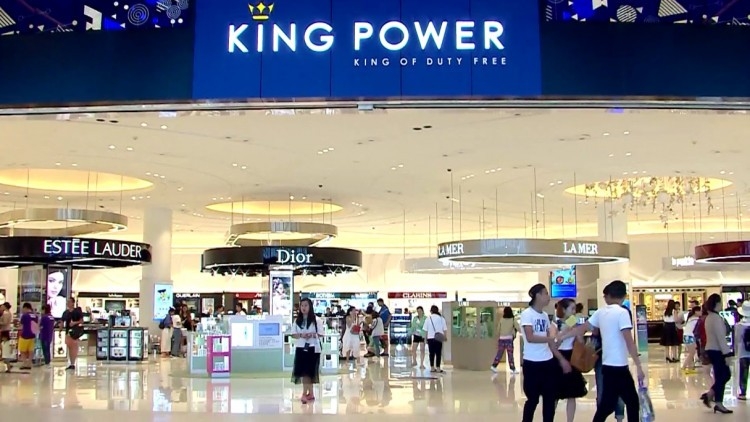
The Airports of Thailand board agreed on Monday (December 23) to grant King Power Duty Free Co a duty-free concession at Don Mueang International Airport, AOT president Nitinai Sirismatthakarn said.

The concession would last for 10 years and six months beginning on October 1, 2022, Nitinai said.

He added thatKing Power offers a minimum guarantee in the first year of more than Bt1.5 billion (excluding VAT), which is higher than the amount AOT had expected to gain in the last year of the concession.

Both are expected sign a contract next month.

FWD acquires Siam City Insurance, upbeat on goal in Thailand #ศาสตร์เกษตรดินปุ๋ย

#ศาสตร์เกษตรดินปุ๋ย : ขอบคุณแหล่งข้อมูล : หนังสือพิมพ์ The Nation

https://www.nationthailand.com/business/30379758?utm_source=category&utm_medium=internal_referral

FWD acquires Siam City Insurance, upbeat on goal in Thailand

Dec 23. 2019
Rob Schimek, Managing Director and Group Chief Operating Office of FWD Group

Rob Schimek, Managing Director and Group Chief Operating Office of FWD Group
By THE NATION

1,905 Viewed

FWD Group (FWD) has completed the acquisition of Siam City Insurance (SCI), according to a FWD statement on Monday (December 23), which also reassured SCI customers that they will not be affected in any way by the change of ownership and will continue to receive their protection, benefits and client services in accordance with the terms of their policies.

All existing SCI policies will be honoured by FWD, it added.

The acquisition is part of FWD group’s growing general insurance proposition in Thailand and the region.

Rob Schimek, Managing Director and Group Chief Operating Office of FWD Group, commented: “We welcome the SCI team into the FWD family, and look forward to grow our general insurance offerings in Thailand. SCI will play an important role in realising our ambition to capture Thailand’s tremendous digital growth opportunity as we endeavour to change the way people feel about insurance”.

Kulvat Janvatanavit, Director of SCI, said: “This is an exciting new chapter for our customers, teams and partners. FWD will extend its best-in-class insurance platform and extensive experience to SCI, enabling us to enhance our operational capabilities and better serve the evolving needs of customers in Thailand”.

FWD also took over Siam Commercial Bank Life in September 2019, and as of the end of the third quarter this year, it had three million customers and group members and more than 2,300 employees in Thailand.

FWD Group activities span Hong Kong , Macau, Thailand, Indonesia, the Philippines, Singapore, Vietnam, Japan and Malaysia, offering life and medical insurance, general insurance, employee benefits, Shariah and family takaful products across a number of its markets.

Established in Asia in 2013, FWD is the insurance arm of investment group, Pacific Century Group.

Red flag raised on Chinese products in Thai e-commerce #ศาสตร์เกษตรดินปุ๋ย

#ศาสตร์เกษตรดินปุ๋ย : ขอบคุณแหล่งข้อมูล : หนังสือพิมพ์ The Nation

https://www.nationthailand.com/business/30379814?utm_source=category&utm_medium=internal_referral

Red flag raised on Chinese products in Thai e-commerce

Dec 25. 2019
By The Nation313 Viewed

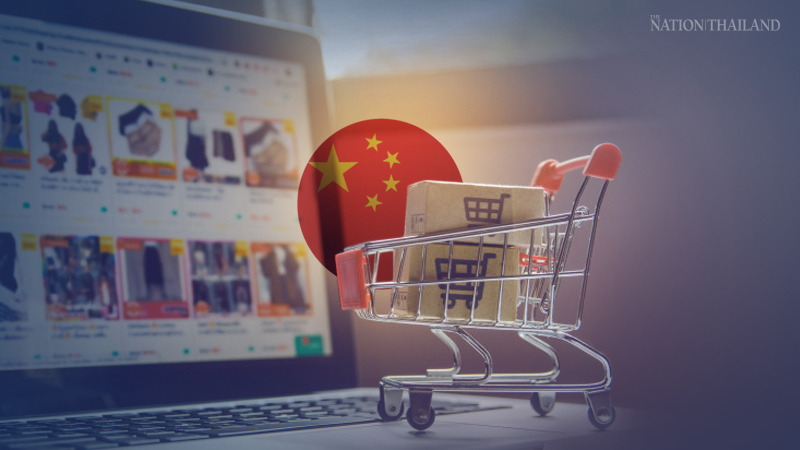
E-commerce accounted for only 3 per cent of Thailand’s total trade, but the country is one of the main markets of Chinese e-commerce giants as Thai consumers are more likely to shop online while Chinese products are popular in the country.

One of the reasons Chinese products keep flowing into Thailand, aside from their cheap prices, is the government’s policies such as the Eastern Economic Corridor project (EEC) and tax privileges. The government wants to attract capital from foreign countries, it also allows foreign products, especially from China, to enter the country easily.

Government measures sought

Pawoot Pongvitayapanu of the Thai e-Commerce Association, who has been in the e-Commerce business for years, said Chinese e-commerce investors, especially those in the ECC are now allowed to invest in infrastructure. Previously, foreign companies set up factories and hired local operators while Chinese investors rented space in Thailand to stock export products under the Free Trade Zone agreement for distribution in country and other Asean nations.

Pawoot said he recently had a talk with Kanit Sangsubhan, secretary-general of the EEC Office, and was told that the EEC office is planning to send more Thai products to the Chinese market which will benefit Thai manufacturers.

He said the Revenue Department is adjusting the tax structure on foreign products sold in Thailand. They will be taxed from the first baht. The prices of goods ordered from abroad will be collected 7 per cent VAT from the first baht. If Thailand doesn’t have any protective measure against the invasion of foreign goods online, the country will see a trade deficit with China, affecting a wide range of retail businesses nationwide including the production sector

Chinese products top market

Chinese products account for 60 to 70 per cent of sales on Thai e-commerce platforms and 20-30 per cent in total sales to foreign countries.

“I collected data from Lazada website on October 11, divided by category and origin of the product, and found that there were 41.77 trillion products on Lazada, comprising 21.99 trillion of domestic products or 52.65 per cent, and 18.65 trillion of Chinese products or 44.65 per cent, which was a significant share while not many products from other countries were available,” said Pawoot.

Some categories have a large numbers of Chinese products such as shoes, watches, luggage, sports equipment. There are 60-70 per cent of Chinese products in the infant, smart device and toy categories. Among IT products or gadgets, especially on Lazada, products from China account for over half of the total.

After the opening of ECC, these products will be distributed more quickly.

However, consumers will pay less. What will be missing is the middleman who buys Chinese products for sale. The first batch of products to be affected are gadgets manufactured in China which carry cheaper prices since they come directly from the factory. There is also a dark side as fake items have been found among cosmetic products.

Thailand may lose Bt50 billion

“When China has a direct delivery channel and dumps millions of products into Thai hands in just a few days. I personally predicted that this year, Thais will order products through Lazada worth over Bt1 billion. By 2020, it is expected to be over Bt10 billion, or with an average growth rate of 30 per cent per year, and within 5 years, Thais will buy Chinese products through Lazada up to Bt50 billion,” Pawoott said.

For Thai traders, the chance of competition is rather small. Entrepreneurs must try to look for other products and create their own brand in order to compete with these Chinese products.

Entrepreneurs should adapt

At the same time, Thai businessmean should not rely on any platform but balancing ports and analysing for positive channels. They also need to self-collect customer information and start marketing with those customers without going through anyone, be it marketplace or social media. The merchant should own channels which he can manage hinself.

Thai e-commerce is currently growing although E-Market Place in Thailand has died since nobody can fight Lazada or Shopee. However, there is still another segment that still has potential, living on the side of social commerce – Merchants who sell and interact with customers on Facebook and LINE. Looking deeper into certain categories such as supplements, consumer products, or beauty products, Chinese products have not penetrated the market yet because of certian problems with the FDA

Research found that Thailand is the leader of the social e-commerce market, with a 40 per cent growth rate a year, outpacing all nations in the world.

Thanawat Malabuppha, president of the Thai E-Commerce Association, said the Thai online market grew 30 per cent a year, with an annual value of Bt200 billion.

According to Priceza, a shopping search engine, SMEs and start-up business should penetrate into the online market which are social media 40 per cent, E Market Place 35 per cent, and E-Tailers or Brands website 25 per cent, with the most popular products being maternal and child products, health, beauty, fashion, clothing and electronic products, among others.

Borderless online commerce will begin to play a major role which could be seen from the number of Chinese products. According to data from three marketplaces in Thailand, this year the number of products has increased by 174 million per cent, with 77 per cent in Chinese products.

Control on Chinese products

Online traders need to know that at present, 80 per cent of the competitors of the same product are not based in the country, so there must be a direct way to sell products to customers while the Customer Lifetime Value (CLV) market is still developing. Currently, the Indonesian market is as attractive as Vietnam since it is a big market but a local partner is needed.

Startups that invest in new products will find it difficult to compete amid the invasion of Chinese product. They must have a clear strategy for certain group. At the same time, the government should have measures to prevent Chinese goods from spilling in including encouraging startup investments, such as exempting tax for small traders.

“The e-commerce market has grown a lot since it’s easy to access and fast. The most popular products are fashion, beauty, electronics devices, and smartphones. The only concern is the overflow of products from China. The government must take action and protect entrepreneurs before drowning in Chinese products” Pawoot said.


U.S. stocks slip, treasuries rise as holiday begins #ศาสตร์เกษตรดินปุ๋ย

#ศาสตร์เกษตรดินปุ๋ย : ขอบคุณแหล่งข้อมูล : หนังสือพิมพ์ The Nation

https://www.nationthailand.com/business/30379813?utm_source=category&utm_medium=internal_referral

U.S. stocks slip, treasuries rise as holiday begins

Dec 25. 2019
The S&P 500 Index slipped but held onto a 28% gain for the year.

The S&P 500 Index slipped but held onto a 28% gain for the year.
By Syndication Washington Post, Bloomberg · Vildana Hajric, Jeremy Herron

348 Viewed

U.S. stocks ended a meandering session slightly lower and Treasuries edged higher in thin Christmas Eve trading. Oil and gold rose.

The S&P 500 Index slipped but held onto a 28% gain for the year. Trading volume was almost 40% below the 30-day average, with equities trading ending at 1 p.m. in New York. Boeing Co. dropped 1.4% after rallying Monday, when the troubled planemaker announced a leadership change. Shares were little changed in London, Paris and Madrid. Markets in Germany and Italy were closed, anticipating Wednesday’s holiday that will shutter exchanges on both sides of the Atlantic.

A gauge of emerging-market shares fell. The 10-year Treasury yield hit 1.95% before falling back to 1.90%. West Texas oil climbed toward $61 a barrel. Precious metal futures were mostly higher.

“What’s going on this week is capitulation and by capitulation I mean money is coming into the market,” Andrew Slimmon, senior portfolio manager at Morgan Stanley Investment Management, said by phone. “Markets have had an incredible run, you have to start to wonder if it’s getting very overbought and what could cause a pause or reversal in the market, which is not to say the run is over.”

Along with the holiday calm, several asset classes are holding on the extraordinary advances they’ve notched in 2019. The $45 trillion MSCI World Index is maintaining a 25% year-to-date surge that augurs its top performance in a decade. Gold advanced, on track for its best year since 2010, as mixed U.S. data Monday kept hopes of interest-rate cuts alive.

Elsewhere, the dollar pared earlier gains against its major peers and headed for a monthly decline. The pound reversed earlier declines.

In Asia trading, equities ended little changed in Tokyo on thin volume, while they dipped in Seoul. Shanghai recovered some of Monday’s slide that came after a sell-off in tech companies.

Here are some events to watch for this week:

– Many nations’ stock markets are closed Wednesday for Christmas. Australia, Canada, Germany and U.K. markets also shut on Dec. 26.

– U.S. jobless claims on Thursday.

– Japan retail sales and industrial production are scheduled for Friday.

These are the main moves in markets:

Stocks

– The S&P 500 Index fell less than 0.1% as of 1:00 p.m. New York time.

– The Dow Jones Industrial Average fell 0.1%.

– The MSCI Asia Pacific Index dipped 0.1%.

– The MSCI World Index was little changed.

Currencies

– The Bloomberg Dollar Spot Index was little changed.

– The British pound rose 0.1% to $1.2952.

– The euro declined 0.1% to $1.1081.

– The Japanese yen was little changed at 109.39 per dollar.

Bonds

– The yield on 10-year Treasuries fell three basis points to 1.90%.

– Germany’s 10-year yield gained one basis point to -0.24%.

– Italy’s 10-year yield rose two basis points to 1.43%.

Commodities

– West Texas Intermediate crude increased 0.8% to $60.99 a barrel.

– Gold futures climbed 1.1% to $1,504.30 an ounce.

– Silver rose 0.8% to $17.59 per ounce.

Spending for New Year season to hit almost Bt138 billion #ศาสตร์เกษตรดินปุ๋ย

#ศาสตร์เกษตรดินปุ๋ย : ขอบคุณแหล่งข้อมูล : หนังสือพิมพ์ The Nation

https://www.nationthailand.com/business/30379803?utm_source=category&utm_medium=internal_referral

Spending for New Year season to hit almost Bt138 billion

Dec 25. 2019
By THE NATION765 Viewed

Thais are expected to spend around Bt137.8 billion this New Year season, up 1.9 per cent, according to a University of Thai Chamber of Commerce (UTCC) survey.

The expansion is the lowest in 14 years, UTCC president Sauwanee Thairungroj said on Tuesday (December 24).

The university conducted the survey on 1,223 respondents.

Bt11 billion is expected to be spent on parties, Bt9.61 billion on merit making, Bt17.43 billion purchasing consumer products, Bt1.16 billion on luxury products, Bt60.44 billion on domestic travel and Bt35.84 billion on overseas trips.

The low expansion reflects Thais’ cautious spending due to their concern over a softening economy, said Thanawan Polvichai, director of the UTCC Centre for Business and Economic Forecasting.

Online fraud: Five ways to protect yourself as you shop #ศาสตร์เกษตรดินปุ๋ย

#ศาสตร์เกษตรดินปุ๋ย : ขอบคุณแหล่งข้อมูล : หนังสือพิมพ์ The Nation

https://www.nationthailand.com/business/30379809?utm_source=category&utm_medium=internal_referral

Online fraud: Five ways to protect yourself as you shop

Dec 25. 2019
By The Washington Post · Abha Bhattarai
916 Viewed

Americans spend hundreds of billions of dollars online each year, which creates a lot of openings for people intent on cheating them.

“The Internet was never designed to be secure,” said Alan Brill, managing director of the cyber risk practice at Kroll, a New York-based consulting firm. But retailers and law enforcement experts say there are certain things you can do to protect yourself – and your bank account. Here are five suggestions.

1. Triple-check the URL

First things first: Look at the address at the top of the page, says Craig Williams, outreach director of Cisco Talos, which is Cisco’s security arm. Today’s consumers are increasingly finding products through social media posts and ads, which means you’ve got to be vigilant to ensure you’re on an authentic site.

Keep an eye out for websites that may be posing as mainstream sites. “We’re seeing more domains of varying legitimacy,” Williams said. “Maybe there’s a typo in the name, or a number instead of a letter, or a vowel missing here or there.” All of those, he said, are red flags.

And although shoppers are more comfortable buying from new and unheard-of sites, experts say a completely nonsensical URL may be a sign that a retailer isn’t exactly what it says it is.

2. Read the reviews and run an image search

Phony merchants are increasingly populating their sites with high-quality images they’ve lifted from upscale websites or fashion magazines. That means the leather jacket being advertised for $25 could easily cost 100 times as much.

So do your homework: Read the reviews (but keep in mind that they, too, can be doctored or deleted). Do a quick online search for the seller or URL, too, to check whether there have been complaints about fraud or counterfeits.

A reverse image search on an engine like Google can help turn up the original source of a photograph, says Gabriel Openshaw, vice president of e-commerce for Overland Sheepskin, who says the technique has helped the family-run business identify hundreds of websites that are using its copyrighted images. And although fraudulent sites have become more sophisticated in how they repurpose stolen photos – by altering the background, perhaps, or replacing a model’s face with someone else’s – he says it’s worth a try.

3. Use a credit card or PayPal

“The most dangerous thing you can do is use a debit card, which opens up your entire bank account to the bad guys,” Brill said.

Instead, he says, pay for online purchases with credit cards or services like PayPal, Apple Pay or Samsung Pay, which offer an extra layer of protection.

But if you do end up falling victim, Williams recommends contacting the merchant for a refund. If that doesn’t work, he says, it’s time to call your credit card company.

“Get the charge removed, and ask for a new card,” he said. “That second step is very important. You don’t know who you’ve given your personal information to.”

4. When in doubt, use a unique credit card number

More credit cards, including those issued by Apple, Bank of America and Capital One, now offer temporary numbers that can be set to expire once a purchase is complete. These unique numbers are a good way to prevent fraudsters from charging unauthorized purchases to your card, according to Williams.

“If you’re dead set on giving your personal information to a site you don’t know, this is the way to do it,” he said.

5. If a deal seems too good to be true . . .

The holiday shopping season is full of never-ending deals and deep discounts. But Williams says you should remain vigilant: “Even on Black Friday or Cyber Monday, you’re not going to get a $2,000 purse for $20,” he said.

Consumers can protect themselves, he and others said, by comparing prices with those on other websites. And, when all else fails, they said: Use common sense.

“The Internet may be a lot of things, but it is not the home of miracles,” Brill said. “If you’re looking for a toy that’s sold out at all major retailers and suddenly this site you’ve never heard of says it has it – that’s something to worry about.”