Saudis, Kuwait agree to resume oil output at shared fields #ศาสตร์เกษตรดินปุ๋ย

#ศาสตร์เกษตรดินปุ๋ย : ขอบคุณแหล่งข้อมูล : หนังสือพิมพ์ The Nation

https://www.nationthailand.com/business/30379807?utm_source=category&utm_medium=internal_referral

Saudis, Kuwait agree to resume oil output at shared fields

Dec 25. 2019
By Syndication Washington Post, Bloomberg · Salma El Wardany, Fiona MacDonald 

661 Viewed

Saudi Arabia and Kuwait agreed to resume oil production in a shared border region more than four years after halting output.

Their agreement allows for “the resumption of oil production from the joint fields,” the Saudi energy ministry said on Twitter. The oil fields in the so-called neutral zone can produce as much as 500,000 barrels a day — more than each of OPEC’s three smallest members pumped last month.

Chevron Corp., which operates the area’s Wafra field together with Kuwait Gulf Oil Co., expects full production there to be restored within 12 months, it said Tuesday in a statement. Wafra has been shut down since May 2015.

A resumption is unlikely to add oil to the market because Saudi Arabia and Kuwait both adhere to production limits that the Organization of Petroleum Exporting Countries extended into March. Even so, the agreement to re-start the fields could weigh on market sentiment amid concerns about faltering growth in world demand and rising supply from the U.S. and other producers.

The neutral zone, spanning more than 2,200 square miles (5,700 square kilometers), was created by a 1922 treaty between Kuwait and the fledgling Kingdom of Saudi Arabia. In the 1970s, the two Gulf Arab monarchies agreed to divide the area and incorporate each half into their respective territory while still sharing and jointly managing the zone’s petroleum wealth. The region contains two main oil fields: the onshore Wafra and offshore Khafji.

The area hasn’t produced anything since 2014, when Khafji was shut down after a spat between the neighbors. The disagreement escalated over the Wafra field, when Saudi Arabia extended the original 60-year concession of the field, giving California-based Chevron, through its subsidiary Saudi Arabian Chevron Inc., rights there until 2039. Kuwait was furious over the announcement and claims Riyadh never consulted it about the extension.

Saudi Arabia and Kuwait have held a number of private meetings since 2015, at one point coming close to signing an agreement before pulling back at the last minute over wording in the final documents regarding contentious sovereignty issues. They entered a fresh phase of talks earlier this year.

The fields are particularly important because U.S. sanctions on Iran and Venezuela have tightened the supply of heavy, high-sulfur crude — precisely the kind of oil that the neutral zone produces. U.S. diplomats had been pressing both sides to reach an agreement.

Govt targets economic growth over 3 per cent in next five years #ศาสตร์เกษตรดินปุ๋ย

#ศาสตร์เกษตรดินปุ๋ย : ขอบคุณแหล่งข้อมูล : หนังสือพิมพ์ The Nation

https://www.nationthailand.com/business/30379805?utm_source=category&utm_medium=internal_referral

Govt targets economic growth over 3 per cent in next five years

Dec 25. 2019
Finance Minister Uttama Savanayana

Finance Minister Uttama Savanayana
By Wichit Chaitrong
The Nation

915 Viewed

The Cabinet on Tuesday (December 24) approved inflation target in the range of 1-3 per cent for next year.  The target was determined jointly by Bank of Thailand (BOT) Governor Veerathai Santipraphob and Finance Minister Uttama Savanayana. The two said headline inflation remained at a low level, largely because of the decreasing prices of food and energy.

The Cabinet also approved the four-year fiscal plan for fiscal years 2021 to 2024 proposed by the Finance Ministry, Government Spokesperson Narumon Pinyosinwat said.

Under the plan, the Finance Ministry projects economic growth rate at 3.1 to 4.1 per cent in 2021, or 3.6 per cent boosted by domestic demand.

The headline inflation rate is expected to be in the low range of 0.7 to 1.7 per cent.

The government has forecast that the economy will expand by 3.4 to 4.3 per cent between 2022 and 2024, or growth could accelerate to 4 per cent between 2023 and 2024. The growth recovery is based on assumptions of accelerating private investment, expansion of exports and progress of government investment in infrastructure projects.

Private consumption is expected to expand due to rise in income and recovery of the global economy in 2021. Due to the economic recovery, it would pull inflation up to about 1.4 per cent in 2022, then 1.5 per cent in 2023 and 1.7 per cent in 2024.

The movement will continue to run fiscal deficits but the gap between revenue and spending is expected to narrow between 2021 and 2024.

New sources of income are expected from rising taxes on consumer products harmful to health, environmental impact, e-commerce, bond transactions, transfer pricing, and revision of tax exemption for individuals.

The government has vowed to adopt a conservative approach to public debt management. As of the end of August, public debt totalled Bt6.9 trillion, equivalent to 41.2 per cent of GDP.

The government, however, has not determined when it can achieve a balanced budget. The central bank has forecast the economy to expand 2.5 per cent this year and 2.8 per cent next year, the slower growth affected largely by the global slowdown.

Meanwhile, BOT deputy governor Mathee Supapongse said that Thai inflation was on a declining trend — it was 2.5 per cent between 2000-2007, 2.7 per cent during 2007-2013 and 0.6 per cent from 2014-2019.

The BOT and the Finance Ministry have adopted an inflation target in the range of 1-3 per cent for next year, shifting from the annual target of 2.5 per cent, and minus or plus 1.5 per cent that had been adopted since 2015. The range target will provide flexibility to implement monetary policy and if inflation diverges from the target range, the central bank’s Monetary Policy Committee will report the situation to Finance Minister.

“Adopting a new approach on inflation targeting does not mean the central bank will change the direction of monetary policy. The central bank will continue its easing of monetary policy for a while in order to accommodate economic growth,” he assured.

Govt launching measure to tame wild baht #ศาสตร์เกษตรดินปุ๋ย

#ศาสตร์เกษตรดินปุ๋ย : ขอบคุณแหล่งข้อมูล : หนังสือพิมพ์ The Nation

https://www.nationthailand.com/business/30379804?utm_source=category&utm_medium=internal_referral

Govt launching measure to tame wild baht

Dec 24. 2019
By THE NATION

2,104 Viewed

Prime Minister Prayut Chan-o-cha said on Tuesday (December 24) that all related state agencies convened yesterday to seek ways to tame the strengthening baht.

Baht to remain strong: Kasikorn Research Centre

He said the measure is expected to be launched soon.

The government has expected the economy to improve in the first quarter next year after its launch of short-term, medium-term and long-term stimulus packages.

Prayut added that the government has prepared a host of measures to cope with employee layoffs at some companies and shutdowns at others.

NBTC board nods to auction of four spectrum bands #ศาสตร์เกษตรดินปุ๋ย

#ศาสตร์เกษตรดินปุ๋ย : ขอบคุณแหล่งข้อมูล : หนังสือพิมพ์ The Nation

https://www.nationthailand.com/business/30379799?utm_source=category&utm_medium=internal_referral

NBTC board nods to auction of four spectrum bands

Dec 24. 2019
NBTC secretary-general Takorn Tantasith, right

NBTC secretary-general Takorn Tantasith, right
By THE NATION

1,404 Viewed

The board of National Broadcasting and Telecommunications Commission (NBTC) today (December 24) approved the auctions of four spectrum bands (700 MHz, 1800 MHz, 2600 MHz and 26 GHz) for 5G service. The NBTC will auction a single band at a time on February 16 next year.

NBTC secretary-general Takorn Tantasith said, afterthe auctions, licences will be awarded to the bid winners in late February and network installation can start in March.

If things go as planned, they will be able to get the service off the ground in the Eastern Economic Corridor (EEC) in June or July next year.

Private sector propose 33 Quick win community-based power plant projects #ศาสตร์เกษตรดินปุ๋ย

#ศาสตร์เกษตรดินปุ๋ย : ขอบคุณแหล่งข้อมูล : หนังสือพิมพ์ The Nation

https://www.nationthailand.com/business/30379797?utm_source=category&utm_medium=internal_referral

Private sector propose 33 Quick win community-based power plant projects

Dec 24. 2019
By The Nation

988 Viewed

The “Energy for All” policy of Energy Minister Sontirat Sontijirawong is starting to take shape after the Energy Policy and Planning Office (EPPO), chaired by Prime Minister Prayat Chan-o-cha, approved the Feed-in Tariff (FiT) mechanism in renewable power investment and price rate for Very Small Power Producers (VSPP) on December 16.

Under the programme, the party proposing the project, either private or public, can hold 60 to 90 per cent of ownership while the community, which must have more than 200 households, holds the other 10-40 per cent (10 per cent preferred stock and up to 40 per cent in additional stock).

The approval was well received by communities and private companies interested in the project. The ministry will accept applications early next year.It will also announce details of financial support for the setup of power plants in remote area.

Community-based power plants will use a Feed-in Tariff (FiT) mechanism in renewable power investment for Very Small Power Producers (VSPP), with 10 MW for non-firm power plant. Next year, the government will start buying 700 MW from private producers and has scheduled the commercial operation dates for two types of projects: Quick win project in 2020, followed by the general project the year after. The investment is estimated at Bt70-84 billion or Bt100-120 million per megawatt.

Pajon Sriboonruang, president of the Thai Biogas Trade Association (TBTA), said:” The association has proposed 33 Quick win projects, with a total capacity of 80 MW driven by energy crops such as Napier grass, involving both completed plants and the more than 50 projects, totalling 100 MW in generating capacity, halted in 2014 after a change in policy by the previous government.

“If the Ministry of Energy allow the resumption of investment in the halted projects and their distribution into the system next year, it will result in increased income for the communities,” said Pajon.

The Quick win community power plant that uses biomass has not been proposed.

A source from the Ministry of Energy revealed that the community-based power plant policy for the glass-root economy will be divided into 3 parts, spanning 2020-2024, for a total of a thousand projects.

In 2020, there will be 20 community electricity business projects not exceeding 350 kilowatts in total, operating in remote community areas or at the end of the transmission line or outside the service area. In 2021, 100 new projects will start operation, followed by 300 in 2022 and another 300 within 2023-2024.

SET shows slight rise before bourses close for the holidays #ศาสตร์เกษตรดินปุ๋ย

#ศาสตร์เกษตรดินปุ๋ย : ขอบคุณแหล่งข้อมูล : หนังสือพิมพ์ The Nation

https://www.nationthailand.com/business/30379791?utm_source=category&utm_medium=internal_referral

SET shows slight rise before bourses close for the holidays

Dec 24. 2019
Market summary of SET’s Monday trade

Market summary of SET’s Monday trade
By The Nation

1,070 Viewed

The easing of the trade war is positive for the SET though the long holiday will result in the market becoming quiet, say analysts.

Easing of trade tension between the United States and China as well as rising crude oil prices have improved sentiment on Thai stocks, according to Tisco Market Insight report.

The Stock Exchange of Thailand Index rose slightly by 0.65 point to close at 1,573.57 on Monday (December 23).

The SET Index will hover around the 1,580-90 barrier but find it hard to pass over it, Tisco analysts said today (December24).

They suggest fundamental stocks such as BBL which is expected to make profits worth of Bt 4 billion in the final quarter of this year.

Stocks benefitting l from trade tension and rebound of oil prices include HANA, PTTEP, PTTGC, SCC and IRPC. High liquidity stocks targeted by Long-term Equity Fund (LTF) and Retirement Mutual Fund (RMF) are AOT, BDMS, BJC, CPALL,PTT, KBANK, SCB and VGI. They also suggested to look for investment opportunities in ADVANC, INTUCH, AP, QH, LH, BBL, KKP, SCB, MAJOR, SCC, TTW, TVO, as these stock prices could rise in the first quarter of next year.

U.S. stocks face 50% odds of correction in 2020, Vanguard’s Davis says #ศาสตร์เกษตรดินปุ๋ย

#ศาสตร์เกษตรดินปุ๋ย : ขอบคุณแหล่งข้อมูล : หนังสือพิมพ์ The Nation

https://www.nationthailand.com/business/30379790?utm_source=category&utm_medium=internal_referral

U.S. stocks face 50% odds of correction in 2020, Vanguard’s Davis says

Dec 24. 2019
By Syndication Washington Post, Bloomberg · Joanna Ossinger 

871 Viewed

U.S. stocks face a greater-than-usual risk of a sell-off next year, with investors overconfident in an economic resurgence, according to Vanguard Group’s investment-strategy chief.

“Financial markets run the risk of getting ahead of themselves,” Joseph Davis, who also serves as Vanguard’s chief economist, said in an interview Friday. He sees 50% odds on a correction in 2020, against what he terms a more typical figure of about 30%.

A correction is often defined as a 10% drop, and the S&P 500 Index hasn’t seen one since December 2018, when it came a hair’s breadth from entering a bear market — that is, recording a decline of 20% from the peak.

While this year investors were too pessimistic about recession odds, next year they’ll be too optimistic on reflation, Davis said. He also sees a pick-up in U.S. equity volatility from “unsustainably low” levels

“Across the board, expected returns for most strategies are below trailing three-year returns,” said Davis. The investment chief for the $5.6 trillion asset manager — known more for its passive, index-tracking offerings — estimates that risk assets are pricing in close to 3% U.S. economic growth, an outcome he sees as unlikely.

Vanguard isn’t alone in expressing caution, as hedge funds and some others wonder if there’s now too much optimism priced into assets. Others see another year of gains in equities, if not on the order of this year’s 28.5% advance through Dec. 20.

Davis said U.S. equities have broken out onto the expensive side of fair value on their price-to-earnings ratio, a measure Vanguard prefers rather than identifying target levels on indexes.

Davis said he’d consider value stocks if he were putting active money to work now, and also sees mortgages looking “a little more attractive than they have for some time.” But it might be better to keep the powder dry for now, heading into 2020, as “there will be better entry points,” he said.

Banks stock up on cash #ศาสตร์เกษตรดินปุ๋ย

#ศาสตร์เกษตรดินปุ๋ย : ขอบคุณแหล่งข้อมูล : หนังสือพิมพ์ The Nation

https://www.nationthailand.com/business/30379787?utm_source=category&utm_medium=internal_referral

Banks stock up on cash

Dec 24. 2019
By THE NATION

1,401 Viewed

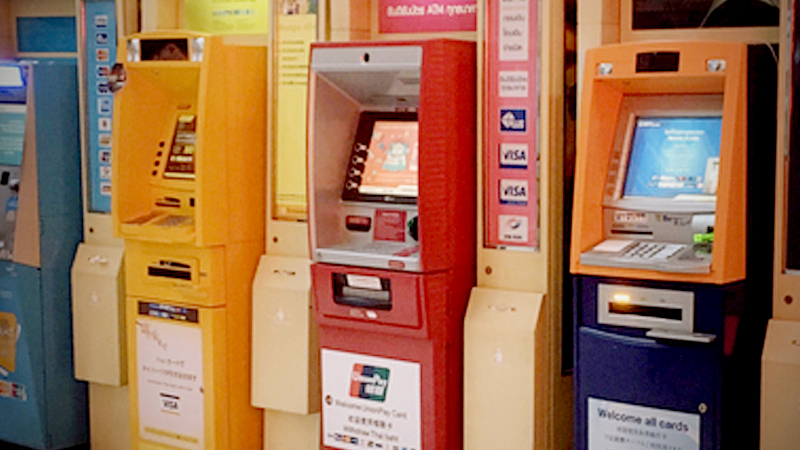
Bangkok Bank today (December 24) said it has prepared more than Bt30 billion in cash reserves at 10,000 ATMs nationwide to serve customers during the New Year holiday.

Digital and online services such as Bualuang Phone 1333 and 0-2645-5555, Bualuang iBanking, Bualuang mBanking and QR Code payment would also be fully operational and the bank’s 300 micro branches in shopping malls will be open for business every day during the holiday.

The bank will be open on Monday December 30 and resume normal operations on Thursday January 2.

CIMB Thai Bank has prepared cash reserves of Bt250 million at its ATMs and branches.

Kasikonrbank plans to allocate cash reserves worth Bt45.8 billion for KBank branches and K-ATMs during the holidays. Of that total, Bt11.8 billion is for branches nationwide, including Bt4.5 billion for branches in Bangkok and the remaining Bt7.3 billion for those in other provinces. Currently, KBank has a total of 900 branches nationwide. A total of Bt34.0 billion is reserved for over 8,200 K-ATMs across the country, Bt15.0 billion of which for K-ATMs in Bangkok and the remaining Bt19.0 billion for K-ATMs in other provinces.

Siam Commercial Bank (SCB) has earmarked a cash reserve of Bt63 billion of which Bt42 billion is for ATMs and Bt21 billion for branches. As of November this year SCB had 698 branches and 9,373 ATMs nationwide.

U.S. stocks advance, treasuries fall in light volumes #ศาสตร์เกษตรดินปุ๋ย

#ศาสตร์เกษตรดินปุ๋ย : ขอบคุณแหล่งข้อมูล : หนังสือพิมพ์ The Nation

https://www.nationthailand.com/business/30379778?utm_source=category&utm_medium=internal_referral

U.S. stocks advance, treasuries fall in light volumes

Dec 24. 2019
File Photo/ Getty Images

File Photo/ Getty Images
By Syndication Washington Post, Bloomberg · Randall Jensen, Vildana Hajric 

1,015 Viewed

U.S. stocks edged to fresh record highs in light trading as investors chased gains that have added more than $5 trillion to valuations this year. Treasuries declined.

The S&P 500 gained for the eighth time in nine sessions, notching another all-time high after China said it cut tariffs on a wide range of goods. The holiday week took a toll on the benchmark’s volume, which was more than 20% below its 100-day average for most of the day. The Dow Jones Industrial Average paced indexes as Boeing Co. surged after the company ousted Chief Executive Officer Dennis Muilenburg.

Ten-year Treasury yields rose to around 1.93%, 16 basis points higher than where it started the month. The dollar headed for only its fourth monthly decline of the year, while the pound padded its worst week in more than two years amid Brexit fears.

“It’s a combination of low volume but also the fact that you’ve seen some progress with China, and it’s really causing the bulls to jump in here,” Dunkin Allison, director of portfolio management at Delegate Advisors, said by phone. “We don’t see a lot of selling pressure today.”

Major asset classes are collectively on track for the best returns in a decade in 2019 after central banks around the world eased monetary policy. Trade tensions have also eased ahead of the year-end, calming investors’ nerves. The signing of the first-phase of the U.S.-China trade deal is set for January.

Meanwhile, Chinese shares dropped after a state-backed fund said it would pare its stakes in some tech companies.

Here are some events to watch for this week:

–Chinese Premier Li Keqiang hosts a summit with Japanese Prime Minister Shinzo Abe and South Korean President Moon Jae-in Tuesday in Chengdu, focused on trade.

–Most stock markets close Wednesday for Christmas. Australia, Canada, Germany and U.K. markets also shut on Dec. 26.

–U.S. jobless claims on Thursday.

–Japan retail sales and industrial production are scheduled for Friday.

–China industrial profits also on Friday.

These are the main moves in markets:

Stocks

–The S&P 500 index gained 0.1% as of 4 p.m. in New York.

–The Stoxx Europe 600 index was little changed.

–The U.K.’s FTSE 100 index advanced 0.5%.

–The MSCI Emerging Market index increased 0.3%.

Currencies

–The Bloomberg Dollar Spot index was little changed.

–The euro increased 0.1% to $1.1092.

–The British pound declined 0.4% to $1.2944.

–The Japanese yen rose 0.1% to 109.36 per dollar.

Bonds

–The yield on 10-year Treasuries rose one basis point to 1.93%.

–Germany’s 10-year yield gained less than one basis point to -0.24%.

–Britain’s 10-year yield sank one basis point to 0.771%.

Commodities

–West Texas Intermediate crude rose 0.5% at $60.73 a barrel.

–Gold added 0.6% to $1,489.30 an ounce.

Decrease in November exports, but some products witness increased sales #ศาสตร์เกษตรดินปุ๋ย

#ศาสตร์เกษตรดินปุ๋ย : ขอบคุณแหล่งข้อมูล : หนังสือพิมพ์ The Nation

https://www.nationthailand.com/business/30379773?utm_source=category&utm_medium=internal_referral

Decrease in November exports, but some products witness increased sales

Dec 24. 2019
By The Nation

2,365 Viewed

Thailand’s November exports witnessed a drop of 7.39 per cent compared to the same period last year, with the trade value being US$19.7 billion (Bt593.5 billion) while exports in the first 11 months of this year totalled $227.09 billion. The value of imports was $218.08 billion, with a surplus balance of trade being $9 billion.

Exports still maintained a higher value compared to other countries in the region, including South Korea, Indonesia and Singapore.

One temporary factor that led to decreased exports of oil and related products came from oil refinery maintenance at the end of the year, causing a reduction by 27 per cent in exports of oil, plastic beads and chemical products. Oil refineries under maintenance will resume production at the beginning of 2020.

Oil-related products saw a decrease in exports to China, Malaysia, Vietnam, Cambodia and Indonesia, but expanded in Pakistan.

The impact of the US-China trade war on Thailand’s exports has stabilised and this can be seen from the fact that the kingdom exports many products to the US and Chinese markets.

The value of exports of agricultural products declined by 3.6 per cent compared to the same period last year. Major agricultural products that have seen higher sales are sugar, which grew 105.3 per cent, expanding in markets such as Indonesia, Sudan, China, Cambodia and Vietnam.

Frozen, processed and fresh chicken grew by 10.4 per cent, with increased sales to Japan, the United Kingdom, China, South Korea and Malaysia. Meanwhile, exports of fresh, chilled, frozen, canned and processed fruits and vegetables grew by 7 per cent in the Chinese, US, Hong Kong, Indonesian and Australian markets.

Beverages witnessed 3.8 per cent growth, with increased sales to Cambodia, Myanmar, China, Indonesia and Japan.

However, cassava products decreased by 37.3 per cent, shrinking in the Chinese, Japanese, Indonesian, Taiwan and US markets but expanding well in Vietnam and the Netherlands.

Rice, too, went down by 31.4 per cent, with reduced sales to China, South Africa, Hong Kong, Japan and Singapore, but exports to the US, Cameroon and Angola increased.

Rubber dropped by 18.4 per cent, seeing decreased exports to China, Japan, South Korea, India and Brazil, but expanding in Malaysia, the US and Turkey.

Frozen shrimp and processed shrimp also dropped – by 9.1 per cent – witnessing reduced exports to the US, Japan, Australia, Canada and South Korea, but saw increased sales to China, Malaysia and Myanmar.

Additionally, the export value of industrial products dropped by 6.4 per cent. Major products which performed well were furniture and related parts, which grew 26.4 per cent, expanding in the Chinese, US, Malaysian, Vietnamese and Philippines markets.

Cars, equipment and parts saw a reduction of 15.6 per cent, dropping in the Australian, Philippine, Japanese, Indonesian and Malaysian markets but expanding well in Vietnam, China and Saudi Arabia.

Gold decreased by 8.5 per cent, seeing reduced exports to Cambodia, Singapore, Taiwan, Bangladesh, and Italy but expanding in Switzerland, Myanmar and South Korea.

Exports to the US decreased by 2.6 per cent. Major products that saw a reduction in exports included iron and steel products and electrical circuits, while high-growth export products included semiconductors, furniture, and rubber products

The EU market (15 countries) saw a decline by 8.2 per cent. Major products that went down were automobiles and parts.

Exports to Japan fell by 10.9 per cent. Major products that declined were telephones and accessories, plastic beads, cars and components, televisions and components, and machinery, while air conditioners witnessed high growth.

Exports to the Chinese market grew by 2.3 per cent. Automobiles and related components, fresh, frozen and dried fruit, combustion engines and sugar saw increased sales.

The Asean market of five countries went down by 11.1 per cent. Refined oil, computers, automobiles and related parts, machinery and plastic beads witnessed slowing sales, while exports of gems and jewellery increased.

The Indian market also saw a reduction of 14.1 per cent. Chemical products, televisions and components, cars and parts, and copper saw lower sales, while the high-growth products included gems and jewellery.