Vietnam poised for record trade surplus in 2019

#ศาสตร์เกษตรดินปุ๋ย : ขอบคุณแหล่งข้อมูล : หนังสือพิมพ์ The Nation

https://www.nationthailand.com/ann/30379594?utm_source=category&utm_medium=internal_referral

Vietnam poised for record trade surplus in 2019

Dec 18. 2019

An assembly line at Hyundai Thanh Cong Automobile Factory in northern Ninh Binh Province. Photo: VNA/VNS/ANN

An assembly line at Hyundai Thanh Cong Automobile Factory in northern Ninh Binh Province. Photo: VNA/VNS/ANN

By Viet Nam News
Asia News Network
Hanoi

574 Viewed

Vietnam’s trade value this year is estimated to touch US$500 billion, bucking the trend of a global economic slowdown and sluggish exports.

Vietnam hit the US$400 billion threshold two years ago, a new milestone for the country that has been striving to improve its business climate and enhance international integration.

This was a very impressive result in the context that many countries were seeing a slowdown in trade, reflecting the sustainable growth of international trade in Vietnam’s economic structure, Minister of Industry and Trade Tran Tuan Anh said in an interview with congthuong.vn online newspaper.

Tuan Anh also said that with an average increase of 13 per cent per year in recent years, Vietnam was among the world’s top 30 countries in terms of trade growth.

Latest updates of Vietnam Customs showed that the country also posted a record trade surplus of nearly $11 billion in the January- November period, a record high.

The country had been running a trade surplus since 2016, well ahead of the government’s plan to achieve trade balance in 2020.

He said the government’s efforts in improving the business climate created an impetus to increase the development of businesses, especially private firms, and attract foreign investment, which helped leverage the country’s production capacity and participate in the global production chain.

Firms also knew better how to grasp opportunities provided by free trade agreements (FTAs), he said, adding that in recent years, Vietnam had negotiated and signed 16 FTAs, 12 of which have already come into force.

The ministry’s statistics showed that the trade revenue which used FTAs’ preferential certificate of origins accounted for 38 per cent of the country’s total exports to FTA partner countries.

Besides advantages, there were challenges, Anh said. The trade disputes between big economies posed uncertainties to global trade.

Priority would be given to enhance production and integration capacity of the economy, he said. Reforms would continue to be hastened following commitments to FTAs to create firms ground for the country’s growth, he added.

Deputy Minister of Industry and Trade Do Thang Hai said that a close watch would be kept on the developments of the US-China trade war to raise measures to boost exports.

He said the prevention of trade fraud related to the origin of goods must also be enhanced, adding that improving product quality would also be important to meet the requirements of import markets.

In addition, forecasts and warnings on trade remedies applied to Vietnam’s export products would be a focus, he said.

Customs statistics showed that Vietnam had exported goods worth $241.65 billion in January-November, while it imported $230.71 billion in the period.

The country’s trade revenue reached $480.17 billion in 2018.

Amid 737 Max crisis, Boeing faces a key test of its spacecraft designed to fly NASA’s astronauts

#ศาสตร์เกษตรดินปุ๋ย : ขอบคุณแหล่งข้อมูล : หนังสือพิมพ์ The Nation

https://www.nationthailand.com/business/30379627?utm_source=category&utm_medium=internal_referral

Amid 737 Max crisis, Boeing faces a key test of its spacecraft designed to fly NASA’s astronauts

Dec 19. 2019
Chris Ferguson, Boeing's director of Starliner crew and mission systems and a former NASA astronaut, fist bumps NASA commercial crew astronaut Suni Williams as astronauts Nicole Mann and Bob Behnken look on. The spacecraft that will one day carry them into space undergoes a critical test on Friday. MUST CREDIT: Washington Post photo by Jonathan Newton

Chris Ferguson, Boeing’s director of Starliner crew and mission systems and a former NASA astronaut, fist bumps NASA commercial crew astronaut Suni Williams as astronauts Nicole Mann and Bob Behnken look on. The spacecraft that will one day carry them into space undergoes a critical test on Friday. MUST CREDIT: Washington Post photo by Jonathan Newton
By The Washington Post · Christian Davenport 

177 Viewed

CAPE CANAVERAL, Fla. – Boeing has been under siege for months after two of its 737 Max aircraft plummeted from the sky killing 346 people. Members of Congress are accusing the industry stalwart of putting profits over safety. A whistleblower testified that schedule pressure created a “factory in chaos.”

Even Jim Chilton’s part of the company – the space division – was the subject of a searing watchdog report last month that found it had received hundreds of millions of dollars in “unnecessary” payments stemming from an unusually cozy relationship with NASA. For Boeing, the timing of the report couldn’t have been worse, coming as it was preparing to fly a key test of its Starliner space capsule, designed to fly NASA’s astronauts to the International Space Station.

That launch is now scheduled for 6:36 a.m. Friday from Cape Canaveral, and while no astronauts will be on board, the first launch of its new spacecraft has taken on a far greater importance for Boeing than just a test. It’s a shot at a bit of redemption.

A successful launch would be a moment of triumph amid the tumult that has dogged the company the past year and the news this week that it will halt production on its troubled 737 Max airplane in January, a decision that could not only harm Boeing’s bottom line but send shock waves through the economy.

Friday’s launch also comes as Boeing, long one of the major dominant players in space, now faces increased competition from a growing space industry, including from rivals such as Elon Musk’s SpaceX and Jeff Bezos’ Blue origin. (Bezos owns The Washington Post.)

So in the face of the critical report from NASA’s Inspector General last month, Chilton, a soft-spoken engineer who has risen through the ranks during a 35-year career at Boeing, fired off an email to his staff.

He reminded the team that it was building on a heritage that stretched to the dawn of the Space Age: “We have been part of every NASA human spaceflight from – from Mercury, Gemini and Apollo to the space shuttle and [the International Space Station] – and we’re proud to continue that unwavering partnership.”

And he issued an emotional call to arms, both defending the company and its workforce while also pushing back against critics and competitors. The email, a copy of which was obtained by The Post, is part of a broader strategy inside Boeing to fight back aggressively that includes a radio ad playing in Washington touting the flight, saying it “is paving the way for the new age of space exploration.”

“Let’s not allow this inaccurate report or the critical media coverage it’s generating to become a distraction,” Chilton wrote. “Our Starliner teammates have put their hearts and souls into developing a spacecraft that we can all be proud of, and they need all the support they can get from our broader space and launch team in the countdown to first flight.”

If successful, the flight would be a critical step toward helping NASA restore human spaceflight from United States soil. Since the space shuttle was retired in 2011, NASA has been unable to fly people to space. Instead, it has had to pay Russia as much as $84 million a seat to take its astronauts to the space station about 240 miles above Earth.

In 2014, NASA embarked on a risky experiment, awarding contracts to Boeing and SpaceX to develop spacecraft capable of human spaceflight. As part of what’s called the “commercial crew program,” NASA awarded Boeing $4.2 billion and SpaceX $2.6 billion to build capsules capable of flying at least four NASA astronauts.

The first flights with people on board were originally scheduled for 2017. But both companies have suffered delays and setbacks. In March, SpaceX successfully launched its Dragon capsule to the space station and returned it successfully. But weeks later the spacecraft exploded during a test of its emergency abort engines, a problem the company says is now fixed.

Boeing also has had a host of problems – from a propellant leak last year to a problem with its parachute system during a test of its abort engine last month.

But now it says it is on track, and now NASA hopes the launches with humans will happen sometime next year.

“I’m happy to announce we’re go for launch,” NASA Deputy Administrator Jim Morhard told reporters last week.

At a press briefing on Tuesday, John Mulholland, Boeing’s commercial crew program manager, said “the spacecraft is in really good shape” and that the company was “looking forward to a short and successful mission.”

If all goes well Friday, the first flight with people, scheduled for sometime next year, will carry into space two NASA astronauts, Nicole Mann and Mike Fincke, as well as Chris Ferguson, a former NASA astronaut who now works for Boeing.

“We consider this a dress rehearsal for the first flights with crew members on board,” said Pat Forrester, the chief of NASA’s astronaut office. “I don’t think there’s anybody in the office, as they’ve gone about their work, who hasn’t thought about about Chris and Nicole and Mike.”

Mercedes reaches $20 million settlement with federal auto safety agency

#ศาสตร์เกษตรดินปุ๋ย : ขอบคุณแหล่งข้อมูล : หนังสือพิมพ์ The Nation

https://www.nationthailand.com/business/30379612?utm_source=category&utm_medium=internal_referral

Mercedes reaches $20 million settlement with federal auto safety agency

Dec 19. 2019
By The Washington Post · Ian Duncan 

580 Viewed

Mercedes-Benz has agreed to pay $13 million to the nation’s top highway safety regulator to resolve an investigation into how the luxury German automaker handled recalls on defective cars.

The company also faces $7 million in additional penalties if it doesn’t meet the terms of a settlement with the government.

The U.S. National Highway Traffic Safety Administration began the investigation that led to the settlement last year. The agency concluded that Mercedes missed deadlines in the recall process on multiple occasions.

It’s the first penalty the agency has issued to an automaker under the Trump administration.

“The agency’s reporting requirements help ensure that consumers are protected and given important information about how to get recalls repaired,” said James Owens, the NHTSA’s acting administrator.

“These laws are critical to ensure NHTSA’s ability to provide oversight, and we expect manufacturers to follow their legal obligations to the agency and to consumers in carrying out safety recalls,” he said.

Robert Moran, a spokesman for the company’s U.S. operation, MBUSA, said Mercedes did not believe it had done anything deliberately wrong.

“But unfortunately we missed some deadlines in informing the agency of the measures we had taken in fulfilling their requirements,” Moran said in an email. “We agreed to resolve this matter in an effort to answer NHTSA’s questions and move forward. In all cases, however, MBUSA had announced the recalls, provided consumers with information and launched the recalls as soon as possible.”

NHTSA investigators looked at how Mercedes handled recalls between 2016 and 2018, in which time it reported 101 safety-related defects or problems complying with federal rules.

In six of those cases, the agency found that Mercedes did not mail notices to customers within 60 days, a deadline set by federal rules – overshooting by 20 days in one case. It found dozens of other paperwork problems and questioned how well a Mercedes vehicle lookup tool worked.

The settlement requires Mercedes to have quarterly oversight meetings with the NHTSA. The settlement will remain in force for at least a year.

The agency considered investments Mercedes had made in an automated recall tool, new staff members it hired, and training it conducted in determining the size of the penalty, according to the settlement agreement.

Jason Levine, director of the Center for Auto Safety, said that he was glad to see the settlement and that NHTSA ought to be doing more to routinely monitor recall programs.

“One can only hope that this is the beginning of a renewed effort by the government to remember that its job is to ensure compliance with the law by car manufacturers and to use all of the enforcement tools at its disposal to do so,” he said.

Last year, the Transportation Department’s internal watchdog faulted the NHTSA’s oversight of the recall process. The watchdog issued six recommendations that it now lists as having been closed.

The settlement with Mercedes is the largest the NHTSA has issued since a $40 million agreement with BMW in 2015. In that case, BMW had to pay $10 million up front and commit to spending $10 million to come into compliance with auto safety rules.

That same year, Fiat Chrysler was issued a pair of penalties totaling $175 million, and Takata, whose air bags are believed to have caused multiple deaths, was penalized $200 million – the largest penalty the agency had ever issued.

The problems at Takata affected tens of millions of air bags, which the auto industry is still working to resolve. NHTSA data shows that Mercedes has the lowest recall completion rate of any automaker, at 33%.

“Mercedes-Benz USA, like most U.S. auto companies, is replacing Takata air bags on a schedule that is coordinated with NHTSA,” Moran said. “While we are not aware of any customers who have experienced the Takata inflater malfunction in any of our vehicles anywhere in the world, we are following NHTSA’s protocol in replacing these inflaters.”

Pot stock short-sellers net almost $1 billion in 2019

#ศาสตร์เกษตรดินปุ๋ย : ขอบคุณแหล่งข้อมูล : หนังสือพิมพ์ The Nation

https://www.nationthailand.com/business/30379610?utm_source=category&utm_medium=internal_referral

Pot stock short-sellers net almost $1 billion in 2019

Dec 19. 2019
By Syndication Washington Post, Bloomberg · Kristine Owram
403 Viewed

Short-sellers are winning big this year with expensive bets against pot stocks.

Cannabis bears have cleared $993 million in mark-to-market gains so far in 2019, even after losing $132 million this month as stocks bounced off their lows, according to data from financial analytics firm S3 Partners.

Short exposure to the sector grew by $843 million or 35% in 2019, with most of that concentrated in 20 companies, S3 said in a report Wednesday.

The investor frenzy that had characterized the cannabis industry in 2018 quickly faded this year as companies missed earnings expectations and the regulatory landscape proved to be more difficult than expected. Since March, pot stocks are down by about two-thirds, and capital markets have largely frozen for all but the strongest names.

Pot stocks are now among the most expensive to short, with an average borrow fee of 31% for the 20 that are most shorted. Despite that, “the sector has surprisingly been immune to short squeezes,” wrote Ihor Dusaniwsky, managing director of predictive analytics at S3.

“A prolonged cannabis sector rally will be bolstered with a flurry of short covering as the high cost of short financing (stock borrows) coupled with mark-to-market losses will result in multi-security short squeezes,” he said.

Uber to pay $4.4 million to victims of alleged gender discrimination

#ศาสตร์เกษตรดินปุ๋ย : ขอบคุณแหล่งข้อมูล : หนังสือพิมพ์ The Nation

https://www.nationthailand.com/business/30379609?utm_source=category&utm_medium=internal_referral

Uber to pay $4.4 million to victims of alleged gender discrimination

Dec 19. 2019
By The Washington Post · Faiz Siddiqui 

501 Viewed

Uber will pay $4.4 million to victims of alleged gender discrimination and strengthen its defenses against sexual harassment, government officials announced Wednesday.

The settlement addresses claims arising from a probe opened by the U.S. Equal Employment Opportunity Commission in 2017 into Uber’s workplace culture. The EEOC found reasonable cause to believe “Uber permitted a culture of sexual harassment and retaliation against individuals who complained about such harassment,” according to the agency.

Uber voluntarily agreed to settle the claims with independent monitoring over its workplace culture and the establishment of a victims’ compensation fund.

“We’ve worked hard to ensure that all employees can thrive at Uber by putting fairness and accountability at the heart of who we are and what we do,” Uber’s Chief Legal Officer Tony West said in a statement. “I am extremely pleased that we were able to work jointly with the EEOC in continuing to strengthen these efforts.”

The investigation was initiated after public attention turned to Uber’s workplace culture amid a series of scandals in 2017, including a viral blog post from then-employee Susan Fowler that alleged a culture of sexual harassment and discrimination. Some of those allegations helped result in the ouster of then-chief executive Travis Kalanick.

“This agreement holds Uber accountable, and, going forward, positions the company to innovate and transform the tech industry by modeling effective measures against sexual harassment and retaliation,” EEOC Commissioner Victoria Lipnic said in a statement.

As part of the agreement, Uber agreed to let an outside official monitor its workplace. It will also establish a fund of $4.4 million to issue payouts to those who the EEOC finds experienced sexual harassment, retaliation or both with the company over a period beginning in 2014.

The EEOC said Uber had agreed to establish a mechanism for identifying workers who have been subject to multiple harassment complaints and for managers who did not respond to such complaints in a timely manner. It is also updating workplace policies in an effort to prevent gender discrimination, and focusing special attention on issues of sexual harassment and retaliation in forums such as exit interviews.

The EEOC said that women who worked at Uber from 2014 through June 30 will be informed of the agreement, and that those with claims can submit a report from which the agency will determine whether they’re eligible for compensation.

Uber pointed to numerous workplace changes it has instituted since 2017 under the helm of its new CEO, Dara Khosrowshahi.

The company said it established a new leadership team, eliminated a mandatory arbitration requirement for claims of sexual harassment and assault, and worked to institute a new culture guided by a mantra: “We do the right thing. Period.”

Separately, Uber this month released its first transparency report detailing the scope of its sexual harassment and assault problem on the app, pledging improvements to the platform. The report found that there were 464 reports of alleged rape between 2017 and 2018 and nearly 6,000 reports of sexual assault.

The company has been dogged by allegations that it turned a blind eye to riders’ safety problems and has been scolded for its treatment of drivers, especially in the wake of its May initial public offering.

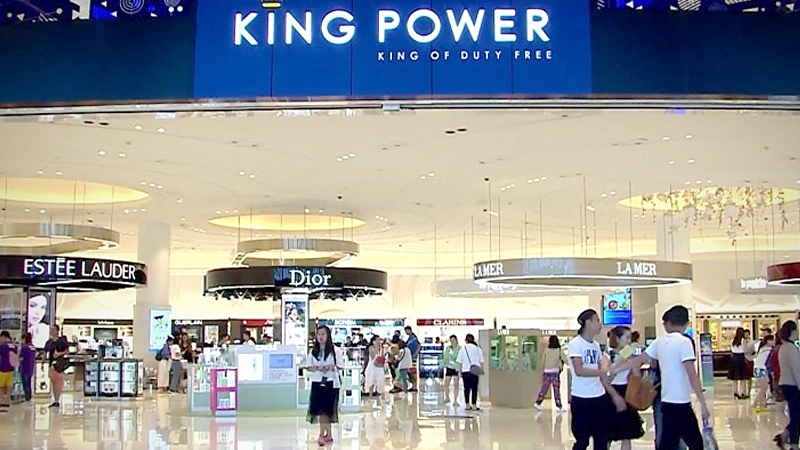
AOT panel gives nod for King Power’s Don Mueang duty-free bid

#ศาสตร์เกษตรดินปุ๋ย : ขอบคุณแหล่งข้อมูล : หนังสือพิมพ์ The Nation

https://www.nationthailand.com/business/30379598?utm_source=category&utm_medium=internal_referral

AOT panel gives nod for King Power’s Don Mueang duty-free bid

Dec 19. 2019
By THE NATION

861 Viewed

The revenue committee of Airports of Thailand on Wednesday (December 18) approved the bid of King Power group for the duty-free concession at Don Mueang International Airport, an AOT senior official said.

AOT president Nitinai Sirismatthakarn said the committee will present the result to the AOT board on December 23.

The detail of the company’s proposal cannot be disclosed, pending the board’s approval of the proposal, he added.

King Power is the lone bidder for this concession, which will be valid from October 1, 2022 to March 31, 2033.

In a related matter, the AOT board has resolved to open anew the bidding for a concession to run a duty free pick-up counter service at Don Mueang International Airport, as King Power Development is the only company to have picked up the tender document.

Stocks stumble amid impeachment

#ศาสตร์เกษตรดินปุ๋ย : ขอบคุณแหล่งข้อมูล : หนังสือพิมพ์ The Nation

Stocks stumble amid impeachment

Dec 19. 2019
File Photo /GettyImages

File Photo /GettyImages
By Syndication Washington Post, Bloomberg · Claire Ballentine, Vildana Hajric

574 Viewed

U.S. stocks receded just before the closing bell as investors digested a flurry of corporate news and Congress debated the impeachment of Donald Trump. Treasuries slipped and the British pound weakened.

The S&P 500 index fell Wednesday — after spending most of the day higher — snapping a five-session streak of gains. Tech shares stumbled toward the end of regular trading as Apple Inc. slid from the day’s highs. FedEx Corp. plunged after a forecast cut. With few big economic headlines imminent, and much of the U.S. focused on the impeachment vote, investors may take a wait-and-see stance as the holidays near.

“We think it’s largely going to be a non-event,” Candice Bangsund, a vice president and portfolio manager at Fiera Capital, said of the impeachment. “It’s going to be the story likely for the next two to three weeks and then it will be ancient history and we’ll be moving on to the elections, to trade negotiations.”

With global stocks close to all-time highs and the U.S.-China trade accord announced Friday yet to be signed, traders are finding few reasons to bid prices higher. The outlook for America’s monetary policy remains steady — two Federal Reserve policy makers reiterated that interest rates are on hold — yet the miserable results from FedEx were a reminder of the headwinds to growth.

The Stoxx Europe 600 index closed lower as national benchmarks traded mixed, with Germany’s gauge underperforming even as data showed business expectations improved for a third month.

PSA Group rose and Fiat Chrysler Automobiles NV was steady as they agreed to combine in a deal to create the world’s fourth-biggest auto manufacturer. Bang & Olufsen A/S plunged after the luxury TV and stereo maker issued its fourth profit warning in a year. The pound extended its losses after tumbling Tuesday on renewed concern that a no-deal Brexit is possible. The dollar strengthened against most of its G-10 peers.

Earlier in Asia, equities were mixed, with shares falling in Tokyo but rising in Hong Kong and India. The yuan was steady offshore after China’s central bank injected liquidity into the financial system.

Meanwhile, West Texas crude rebounded, and energy shares rose, after a bullish U.S. inventory report.

Here are some key events to watch for this week:

–Policy decisions are due Thursday from the Bank of Japan and the Bank of England.

–Revised U.S. GDP data are due Friday.

–Friday also brings quadruple witching in the U.S., the simultaneous expiration date of stock index futures, stock index options, stock options and single stock futures. Expect elevated trading volume, particularly in the last hour of trading.

These are the main moves in markets:

Stocks

-The S&P 500 index was little changed at 3,191.14 as of 4:05 p.m. New York time, the first retreat in more than a week and the largest fall in a week.

-The Stoxx Europe 600 index declined 0.1% to 414.38.

-The U.K.’s FTSE 100 index advanced 0.2% to 7,540.75, hitting the highest in almost 20 weeks with its sixth consecutive advance.

-Germany’s DAX index decreased 0.5% to 13,222.16.

-The MSCI Emerging Market index jumped 0.6% to 1,108.81, hitting the highest in 18 months with its sixth consecutive advance.

Currencies

-The Bloomberg Dollar Spot index gained 0.1% to 1,195.87, the highest in a week.

-The euro declined 0.3% to $1.1118, the weakest in a week on the largest drop in more than a week.

-The British pound decreased 0.3% to $1.3086, the weakest in two weeks.

-The Japanese yen depreciated 0.1% to 109.57 per dollar, the weakest in almost seven months.

Bonds

-The yield on 10-year Treasuries gained four basis points to 1.92%, the highest in five weeks.

-Germany’s 10-year yield advanced five basis points to -0.25%, the highest in five weeks.

-Britain’s 10-year yield increased one basis point to 0.775%.

Commodities

-West Texas Intermediate crude gained 0.1% to $60.97 a barrel, hitting the highest in three months with its fifth consecutive advance.

-Gold weakened 0.1% to $1,475.54 an ounce.

Manhattan leads America’s surging information economy

#ศาสตร์เกษตรดินปุ๋ย : ขอบคุณแหล่งข้อมูล : หนังสือพิมพ์ The Nation

https://www.nationthailand.com/business/30379604?utm_source=category&utm_medium=internal_referral

Manhattan leads America’s surging information economy

Dec 19. 2019
File Photo

File Photo
By Syndication Washington Post, Bloomberg · Alex Tanzi, Wei Lu 

880 Viewed

Manhattan leads the way among U.S. counties in the surging American information economy, propelled by traditional industries such as publishing along with newer technology fields.

That mix helped generate about $108 billion for the economy of Manhattan’s New York County in 2018 — and topped outposts such as Silicon Valley and Seattle that are known for their digital prowess, according to a new report from the Bureau of Economic Analysis.

Los Angeles County — with its large movie industry and a growing number of tech firms contributing $102 billion last year — holds the No. 2 spot in the U.S. information economy.

Information includes old-line media publishing, broadcasting and movie production as well as newer services such as data processing and hosting services. Broadcasting remains by far the largest segment — accounting for more than 40% of the total output — but data processing is growing much faster.

In the No. 3 position, Silicon Valley’s Santa Clara County — home of numerous tech giants including Apple Inc. and Alphabet Inc. — added $81 billion to its economy last year from the information sector. Washington’s King County, where Microsoft Corp. and Amazon.com Inc. are headquartered, added $65 billion, making that county the fourth largest in the information sector.

Georgia’s Fulton County — the Atlanta area that includes Tyler Perry’s film studio as well as numerous fintech companies — rounds out the top five; it added $32 billion to its economy last year from information businesses.

Average weekly wages for information workers as of the second quarter of this year were led by the California counties of San Mateo ($6,113) and Santa Clara ($5,983).

German business outlook improves as weak year draws to close

#ศาสตร์เกษตรดินปุ๋ย : ขอบคุณแหล่งข้อมูล : หนังสือพิมพ์ The Nation

https://www.nationthailand.com/business/30379603?utm_source=category&utm_medium=internal_referral

German business outlook improves as weak year draws to close

Dec 19. 2019
File Photo

File Photo
By Syndication Washington Post, Bloomberg · Carolynn Look 

791 Viewed

German business expectations improved for a third month in December, a sign manufacturers are starting to see a way out of a yearlong downturn that’s left Europe’s largest economy deeply scarred.

It’s the first piece of encouraging news after a gauge of factory activity pointed to an unexpected worsening at the end of 2019, and the Bundesbank predicted growth will remain sluggish at least through 2020 as the impact of trade tensions, weaker global growth and political uncertainty only slowly wears off.

The Ifo Institute’s gauge rose the most since mid-2018 to 93.8, exceeding most estimates in a Bloomberg survey. The measure of the current situation rose, as did the overall business climate indicator.

Fledgling optimism among the 9,000 firms surveyed adds to assertions by the Economy Ministry as well as private investors that — despite remaining risks — Germany’s outlook is gradually getting brighter.

The increase in sentiment, partly on the back of the U.S.-China trade agreement, is just the first step, and it may be some time before hard data follow. Both industrial production and factory orders dropped at the start of the fourth quarter.

The trade deal is “good news and probably one of the reasons companies become more optimistic,” Clemens Fuest, president of the Ifo Institute, said on Bloomberg Television,. “At the same time, many companies are still cautious, because we know U.S. commercial policy is very volatile.”

Last week, the European Central Bank lowered its projection for growth in the wider euro area next year. At the same time, President Christine Lagarde pointed to signs of stabilization and argued downside risks had become “somewhat less pronounced.”

Negative factors drag down GDP growth of farm sector

#ศาสตร์เกษตรดินปุ๋ย : ขอบคุณแหล่งข้อมูล : หนังสือพิมพ์ The Nation

https://www.nationthailand.com/business/30379601?utm_source=category&utm_medium=internal_referral

Negative factors drag down GDP growth of farm sector

Dec 19. 2019
By The Nation1,078 Viewed

GDP of the agriculture sector is expected to grow a mere 0.5 per cent this year and forecast to expand by 2 to 3 per cent next year, said the Office of Agricultural Economics which also expressed concerns on the strength of the Thai currency.

“The growth rate is much lower than the previous projection of 3 to 4 per cent, mainly due to the damages from drought and floods this year,” said Rapibhat Chandarasrivongs, secretary general.

Drought has impacted the production of rice, sugarcane and pineapples, he said, while the North and Northeast regions were affected by flooding in   August and September.

Thai farm sector has been hit by the global economic slowdown. However, cool weather in the last quarter is conducive to production of Durian, mangosteen and rambutan.

Livestock farming is faring better with efficient disease-prevention measures as African swine flu spread in neighbouring countries.

He said GDP of the farm sector is expected to grow 2 to 3 per cent next year,  in view of government policy and better global economic conditions.

The biggest threat to the farm sector lies in the Thai currency surging through the Bt30 per dollar threshold, making Thai produce more expensive than its competitors’.

The department is worked closely with the Bank of Thailand to ensure exchange rate of baht would not rise over Bt30 per dollar, he said.

Thailand will continue to suffer from drought next year with lower water supply.

Horticulture is forecast to expand 0.7 per cent next year with higher production of fruits, palm oil and rubber sheet. Cassava production will also increase as plantation areas expand.

Rice production is expected to drop due to drought while maize production will be hampered by worms. Sugarcane production will decrease while pineapple farmers are expected to reduce plantings due to falling price.

Livestock will grow 0.8 per cent, due to higher exports to China and South Korea where swine farmers are reeling from the epidemic of African swine flu. Production of pork is expected to decrease amid falling prices. Egg production will also fall due to lower import of chicken breeders.

The fishery sector is expected to contract by 1.3 per cent. Agri-related services are forecast to expand 2.7 per cent as farmers employ more machinery to replace labour.

Production of wood is expected to grow by 2 per cent as demand for Eucalyptus wood rises.