Palace: US senators ‘misled’ in passing resolution backing De Lima, Ressa

#ศาสตร์เกษตรดินปุ๋ย : ขอบคุณแหล่งข้อมูล : หนังสือพิมพ์ The Nation

https://www.nationthailand.com/news/30379432?utm_source=category&utm_medium=internal_referral

Palace: US senators ‘misled’ in passing resolution backing De Lima, Ressa

Dec 14. 2019
Salvador Panelo - - Photo: YANCY LIM/PREIDENTIAL PHOTOS

Salvador Panelo – – Photo: YANCY LIM/PREIDENTIAL PHOTOS
By Philippine Daily Inquirer/Asia News Network

297 Viewed

MANILA, Philippines — United States senators were “misled” by members of the opposition and the media, Malacañang said Friday after a US Senate panel approved a resolution urging the Philippine government to free detained Senator Leila de Lima and drop all charges against Rappler CEO Maria Ressa.

“Apparently they have been misled by the reports coming from the opposition, as well as media outlets who had been biased against the administration,” presidential spokesman Salvador Panelo said in an interview over CNN Philippines.

“What I can’t understand is they appear not to understand the judicial process of this country,” he added.

The resolution, which was approved by the US Senate committee on foreign relations, called on the Philippine government to “drop all charges” against Ressa and De Lima, and allow the opposition senator to fully discharge her legislative mandate.

It also called on US President Donald Trump to “impose sanctions” against security forces and officials responsible for De Lima’s arrest, which include revoking their US visas and freezing their assets.

Panelo, who is also President Duterte’s chief legal counsel, insisted the charges against De Lima and Ressa passed through the country’s administrative and judicial processes before their respective warrants of arrest have been issued by courts.

The Palace official advised the US lawmakers to “study” De Lima’s case and not to be swayed by false reports they are receiving.

“Siguro dapat mag-aral sila (They should study it),” he said. “Pag-aralan nila kung ano ang prosesong dinadaanan natin, para hindi sila nagkakamali at hindi sila dapat nakikinig sa mga sabi-sabi, iyong mga nababasa nila sa diyaryo, iyong mga natatanggap nilang mga liham kung saan-saan galing  at nagsasabing si Senator De Lima ay pini-persecute – hindi totoo iyon.”

(They should study our judicial process that we are going through, so they could avoid mistakes and that they should not listen to the rumors, those you read in the newspapers, the reports you received saying that Senator De Lima is were persecuted — that’s not true.)

De Lima, a staunch critic of President Duterte, has been in detention at the Philippine National Police Custodial Center since Feb. 24, 2017 on charges that she was involved in the illegal drug trade.

She has denied the charges, saying they were fabricated in retaliation for her fierce criticism of Duterte’s brutal war on drugs and monitoring of his human rights record since the time she headed the Commission on Human Rights in 2008.

Meanwhile, Ressa and Rappler, known for its critical reportage on the Duterte administration, are facing several cases including libel and tax-related charges.
Gov’t film defending Duterte drug war eyes int’l viewers

#ศาสตร์เกษตรดินปุ๋ย : ขอบคุณแหล่งข้อมูล : หนังสือพิมพ์ The Nation

https://www.nationthailand.com/news/30379431?utm_source=category&utm_medium=internal_referral

Gov’t film defending Duterte drug war eyes int’l viewers

Dec 14. 2019
By Philippine Daily Inquirer/Asia News Network

238 Viewed

Barely two months after the movie “On the President’s Orders” made the rounds of European and US cinemas to present what its award-winning filmmakers described as a “cinematic investigation” of the country’s bloody war on drugs, the Philippine government is coming up with an onscreen rebuttal.

A documentary titled “Gramo” will show a “balanced picture” of President Duterte’s anti-narcotics campaign and inform the global community and the international media about his administration’s efforts to “save” the future of the nation, Communications Secretary Martin Andanar said on Thursday.

“By showing all the facts in this documentary, we are hoping for an appreciation of what is really happening on the ground,” Andanar said of the 50-minute film.

Gramo, which will have an English-dubbed version, “will be submitted to our Permanent Mission to the United Nations in Geneva and New York, and it’s up to them to give it to the UN,” Andanar said in an interview on state-run Radyo Pilipinas.

“We are hoping that we’d reach different sectors on the international stage,” he added.

There may also be a film screening for diplomats based in the Philippines, the Palace official said.

For PUV passengers, too

The Presidential Communications and Operations Office (PCOO) is also coordinating with the Department of Transportation to also allow the viewing of documentary on TV-equipped public utility vehicles.

On Wednesday, the PCOO announced the future screening of the documentary, along with the publication of a magazine, in a bid to present an “accurate narrative of the (drug) campaign involving those who pursue the operations.”

In a separate interview, Andanar maintained that the government was not condoning extrajudicial killings and that impressions to the contrary were just the result of “misinformation and fact-twisting by oppositionists and other interest groups.”

“[It’s] never been a policy of the national government,” he said.

Next three years

Gramo, which premiered on government channel PTV 4 on Thursday, features the stories of persons who had killed family members while under the influence of drugs. It also showcases the story of a police officer killed in the line of duty, and that of a drug user undergoing rehabilitation.

Meanwhile, the newly released magazine titled “Saving the Future of the Nation; Countering Hard Drugs,” also chronicles the anti-narcotics campaign from the government’s point of view.

“It’s very important for us to tell the stories of the war on hard drugs, the challenges we are facing, the achievements we’ve had for the last three years, and where the war on hard drugs is headed in the next three years,” Andanar said.

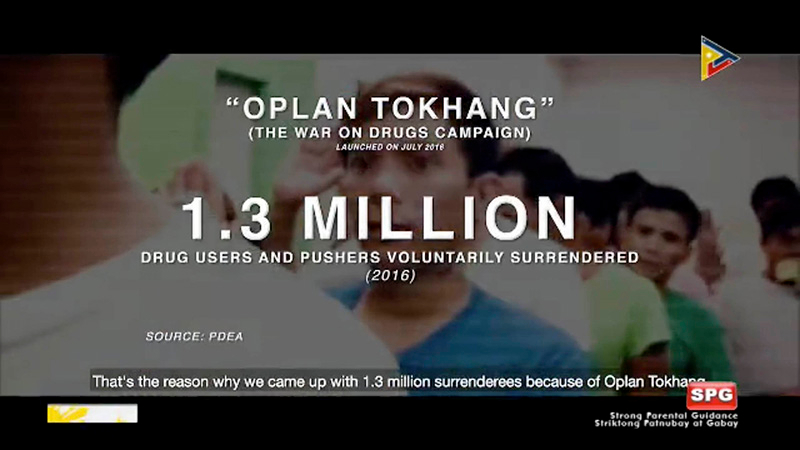
Gramo also highlights the number of drug dependents who had surrendered and had been admitted to rehabilitation programs, as well as that of children rescued from drug-related activities.

Requested by ICC

“On the President’s Orders,” on the other hand, grabbed headlines in October when it became the subject of a request from the International Criminal Court (ICC), which had been asked to conduct a preliminary examination into alleged extrajudicial killings in connection with Mr. Duterte’s war on drugs.

The ICC said it wanted to review footage from the documentary, which was shown in New York City on Oct. 4 and in Los Angeles on Oct. 18. Co-director James Jones confirmed that the ICC had requested a copy of the film.

On The President’s Orders was included in the official selections for the 2019 Sheffield DocFest in the United Kingdom; the 2019 HotDocs Film Festival in Toronto, Canada; the 2019 Human Rights Watch Film Festival in New York; and the 2019 CPH:DOX in Copenhagen, Denmark.

For the documentary, the Emmy-winning directors Jones and OIivier Sarbil spent time with a police chief and his officers in Caloocan City, as well as with the families who lost members to the drug war.

The film had its US premiere at the Human Rights Watch Film Festival in New York in June, after which Human Rights Watch arranged for its screening in Geneva during the 41st session of the United Nations Human Rights Council (UNHRC).

Iceland initiative

In the UNHRC session, Iceland formally introduced a resolution requesting, among other things, that the UN Office of the High Commissioner for Human Rights prepare a report on the human rights situation in the Philippines.

The resolution was later approved by the council amid strong objections and threats of retaliation from the Philippine government.

Prior to its recent screening in Metro Manila to a limited audience, the film was condemned as a piece of “black propaganda” by Palace officials, who said that it “reeks of malice”.

Its filmmakers, however, received letters applauding for the project and thanking them for presenting the realities on the ground.

Citizenship law ‘discriminatory’

#ศาสตร์เกษตรดินปุ๋ย : ขอบคุณแหล่งข้อมูล : หนังสือพิมพ์ The Nation

https://www.nationthailand.com/news/30379430?utm_source=category&utm_medium=internal_referral

Citizenship law ‘discriminatory’

Dec 14. 2019
By The Daily Star/Asia News Network

268 Viewed

Says UN, calls on India to review it; Japan PM’s visit postponed as protests spread outside northeast; CMs of 5 states vow to prevent implementation of the act

The United Nations human rights office yesterday voiced concern that India’s new citizenship law is “fundamentally discriminatory in nature” and called for it to be reviewed.

The call came as violent protests, which paralysed India’s northeast states for days, spread outside the region, prompting Japanese Prime Minister Shinzo Abe to postpone a visit to India.

Thousands of protesters in northeast staged fresh demonstrations yesterday following several days of running battles with riot police that have left the streets of the region littered with burnt-out vehicles, rocks and other debris.

On Thursday two people were killed and around 20 were being treated in hospital after police fired live and blank rounds, medical staff said.

However protests there were more peaceful yesterday, reported our New Delhi correspondent. Curfew was relaxed in Assam’s Dibrugarh and Meghalaya capital Shillong. Despite the relative calm, more army and paramilitary forces were deployed yesterday in Assam to restore normalcy in the epicenter of protests.

But protests seemed to gain momentum across the country.

While police used batons and tear gas shells to quell an unruly mob at Shillong, protesters set fire to a railway station complex in West Bengal’s Murshidabad district. Even the national capital New Delhi witnessed violent protests, with students of the Jamia Millia Islamia University clashing with the police. At least fifty students were detained following the clashes.

Other smaller demonstrations took place elsewhere including in Prime Minister Narendra Modi’s home state of Gujarat, in Maharashtra in central India, in Kerala and Karnataka in the south and northern Punjab, reported AFP.

Modi and his Abe had reportedly been due to meet in Guwahati, the main city in the state of Assam and the epicentre of the protests, from tomorrow.

Without saying why, India said that both sides had “decided to defer the visit”, while Tokyo said the move followed “a report from the Indian side about the situation there.”

The postponement of Abe’s visit came a day after Bangladesh Foreign Minister A K Abdul Momen and Home Minister Asaduzzaman Khan called off their visits to India in the midst of the agitations in the northeast.

West Bengal Mamata Banerjee told reporters in Kolkata that the cancellation of visits by the Japanese PM and two Bangladesh ministers’ does not add to India’s image, reported our correspondent.

Many people in India’s far-flung northeast, long a seething melting pot of different ethnic groups and religions, fear that the new legislation will grant citizenship to large numbers of non-Muslim “immigrants” from neighboring nations.

“We are concerned that India’s new Citizenship (Amendment) Act 2019 is fundamentally discriminatory in nature,” UN human rights spokesman Jeremy Laurence told a Geneva news briefing.

The new law does not extend the same protection to Muslim migrants as to six other religious minorities fleeing persecution, thereby undermining India’s commitment to equality before the law, enshrined in its constitution, he said.

“We understand the new law will be reviewed by the Supreme Court of India and hope it will consider carefully the compatibility of the law with India’s international human rights obligations,” Laurence said.

He also called on India “to respect the right to peaceful assembly, and to abide by international norms and standards on the use of force when responding to protests.”

The passage of the law sparked angry scenes in both houses of parliament this week, with one lawmaker likening it to anti-Jewish legislation by the Nazis in 1930s Germany.

The chief ministers of at least five Indian states have said they will not implement the law, including Mamata who has called for major protests in Kolkata on Monday.

CMs of Kerala, Punjab, Madhya Pradesh and Chhattisgarh, terming the law as discriminatory and unconstitutional, declared that they would not implement the law in their respective states.

The internet has been cut in parts of Guwahati — activists say India is already the world’s leading country when it comes to snapping online access — and many areas have been put under curfew.

The Meghalaya state government has also cut off mobile internet, with parts of the capital Shillong under curfew since Thursday evening.

Security was increased at the Bangladeshi consulate in Guwahati after a vehicle in the consul’s convoy was attacked Wednesday by mobs, the foreign ministry in Dhaka said.

The Citizenship Amendment Bill (CAB) — approved this week — allows for the fast-tracking of applications from religious minorities from Pakistan, Afghanistan and Bangladesh, but not Muslims.

For Islamic groups, the opposition and rights organisations, it is part of Modi’s Hindu nationalist agenda to marginalise India’s 200 million Muslims. He denies this.

The US State Department on Thursday urged India to “protect the rights of its religious minorities”, according to Bloomberg.

Explainer: What does India’s new citizenship law mean?

#ศาสตร์เกษตรดินปุ๋ย : ขอบคุณแหล่งข้อมูล : หนังสือพิมพ์ The Nation

https://www.nationthailand.com/news/30379428?utm_source=category&utm_medium=internal_referral

Explainer: What does India’s new citizenship law mean?

Dec 14. 2019
By Dawn/Asia News Network

185 Viewed

Rights groups say Modi-supporting lawmakers have cleared the bill to justify the deportation of thousands of Muslims.

A new Indian law that grants citizenship to persecuted Hindus, Sikhs, Buddhists, Jains, Parsis and Christians who fled Muslim-majority Pakistan, Bangladesh and Afghanistan prior to 2015 has led to violent demonstrations.

Indian President Ram Nath Kovind gave his assent to the citizenship bill late on Thursday, signing it into law, an official statement said.

Clearance of the Citizenship (Amendment) Bill triggered widespread protests in eastern state of Assam, as protesters said it would convert thousands of illegal immigrants into legal residents.

Muslims also protested against the law as it does not give them the same rights to citizenship as members of other faiths, a move critics say undermines the secular constitution.

Passage of the bill was a key election promise of Prime Minister Narendra Modi, re-energising his nationalist, Hindu support base.

How did the bill secure parliament’s support?

Modi had promised that his party would grant citizenship to the six communities who according to the government have historically faced persecution on grounds of religion in the three Muslim-dominated countries. Lawmakers belonging to his party voted in favour of the bill.

Examine: India’s Citizenship Bill has only one aim: protect non-Muslims, harass Muslims

What do critics say?

They accuse Modi’s government of drafting rules to favour its hardline Hindu agenda aimed at disturbing permanent settlements belonging to Muslims.

Who does the law leave out?

Opposition parties say the law is discriminatory as it singles out Muslims, who make up nearly 15 per cent of the population. The government says that Pakistan, Afghanistan and Bangladesh are Muslim-majority countries, so Muslims cannot be treated as persecuted minorities.

Who could suffer?

Rights organisations say Modi-supporting lawmakers have cleared the bill to justify the deportation of thousands of Muslims living in the northeastern state of Assam and unable to provide documents to prove Indian citizenship.

What are the discrepancies?

The law does not clarify why minority migrants from Bangladesh, Pakistan and Afghanistan are favoured over those fleeing Sri Lanka and Myanmar from where minority Muslims have sought refuge in India.

What’s next?

The law has been challenged in India’s Supreme Court by a Muslim political party, lawyers and rights groups on the grounds that it violates the secular constitution.

More than 500 eminent Indian jurists, lawyers, academics and actors have signed a statement condemning the legislation.

Thanathorn sets the stage for ‘real rally against dictatorship’

#ศาสตร์เกษตรดินปุ๋ย : ขอบคุณแหล่งข้อมูล : หนังสือพิมพ์ The Nation

https://www.nationthailand.com/news/30379455?utm_source=category&utm_medium=internal_referral

Thanathorn sets the stage for ‘real rally against dictatorship’

Dec 14. 2019
By THE NATION

2,424 Viewed

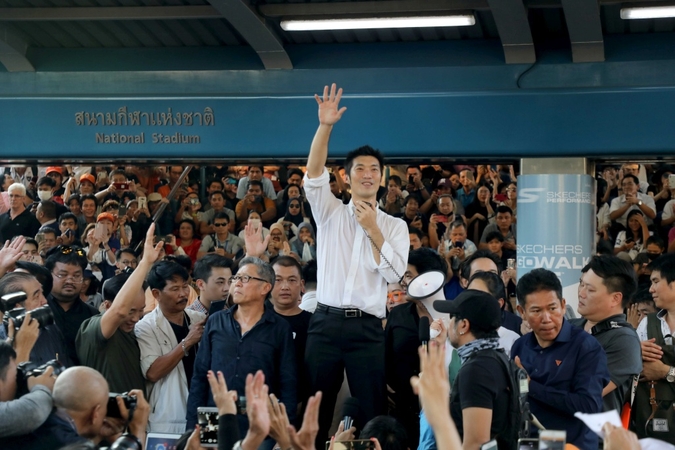
Future Forward Party (FWP) leader Thanathorn Juangroongruangkit on Saturday (December 14) said that the gathering of his supporters on Saturday was just a precursor to the “real rally” next month.

+++

He was addressing his supporters on the skywalk of the Pathumwan intersection on Rama I Road in Bangkok.

On Friday, in a live video broadcast via his Facebook page, he had invited people to a gathering at 5pm to join him in expressing their opposition to the current political situation. He said he was fed up with the current state of Thai society and wanted to start a change.

He told the gathering his aim was not to stir unrest in the country but to show that people would not surrender to dictatorship.

He said Saturday’s gatheringwas just a dress rehearsal and would last only an hour.

Seven opposition parties launch campaign for charter change

#ศาสตร์เกษตรดินปุ๋ย : ขอบคุณแหล่งข้อมูล : หนังสือพิมพ์ The Nation

https://www.nationthailand.com/news/30379454?utm_source=category&utm_medium=internal_referral

Seven opposition parties launch campaign for charter change

Dec 14. 2019
By The Nation

1,612 Viewed

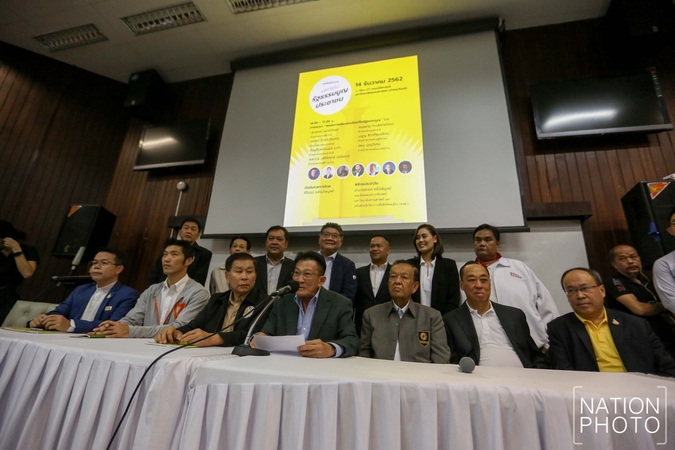
A group of opposition parties has come together to call for amendments to the 2017 Constitution and the drafting of a new charter.

The Committee of Opposition Parties and Public Participation organised a meeting at the Faculty of Law of Thammasat University, Tha Prachan Campus, in Bangkok on Saturday (December 14) to campaign for the constitution change.

The committee included: Sompong Amornwiwat of Pheu Thai Party, Thanathorn Juangroongruangkit of Future Forward Party, Pol General Seripisut Temiyavet of Seri Ruam Thai Party, Wan Muhammad Noor Matha of Prachachart Party, Manoon Sivapiromrat of New Economics Party, Songkhram Kitlerdpairoj of Puea Chat Party, and Nikhom Bunwiset of Thai People Power Party. The group demanded amendments to the existing constitution and the drafting of a new one as a constitution of the people.

EU envoy discusses human rights with Somsak

#ศาสตร์เกษตรดินปุ๋ย : ขอบคุณแหล่งข้อมูล : หนังสือพิมพ์ The Nation

https://www.nationthailand.com/news/30379451?utm_source=category&utm_medium=internal_referral

EU envoy discusses human rights with Somsak

Dec 14. 2019
Pirrka Tapiola (Left) and Somsak Thepsutin (Right)

Pirrka Tapiola (Left) and Somsak Thepsutin (Right)
By The Nation

1,341 Viewed

The European Union’s ambassador to Thailand met Justice Minister Somsak Thepsutin on Friday (December 13) to discuss human rights.

The Justice Minister and EU Ambassador Pirrka Tapiola discussed many issues, such as cooperation in human rights activities, implementing the National Action Plan on Business and Human Rights, and promoting drafts of the Spouse Registration Act and Prevention and Suppression of Torture and Enforced Disappearances Act.

Tapiola praised Thailand for being the first country in Asia to push the National Action Plan on Business and Human Rights until success was achieved. He also congratulated the country on successfully forming a government after elections.

“The Council of the European Union on Foreign Affairs has already acknowledged Thailand’s political development, and we have confidence that the Justice Ministry will play an important role in promoting and protecting people’s rights and liberties, as well as developing the country,” he said.

Meanwhile, Somsak told the ambassador that his ministry will prioritise developing and promoting bills in accordance with human rights, while he also expressed gratitude to the EU for their trust in the country’s potential and cooperation in human rights.

“This visit reflects the close relationship between Thailand and the EU in business, politics and human rights for sustainable development of both countries and regions,” he said.

[Gallery] FWP rally is underway at Pathumwan skywalk

#ศาสตร์เกษตรดินปุ๋ย : ขอบคุณแหล่งข้อมูล : หนังสือพิมพ์ The Nation

https://www.nationthailand.com/news/30379450?utm_source=category&utm_medium=internal_referral

[Gallery] FWP rally is underway at Pathumwan skywalk

Dec 14. 2019
By THE NATION

2,841 Viewed

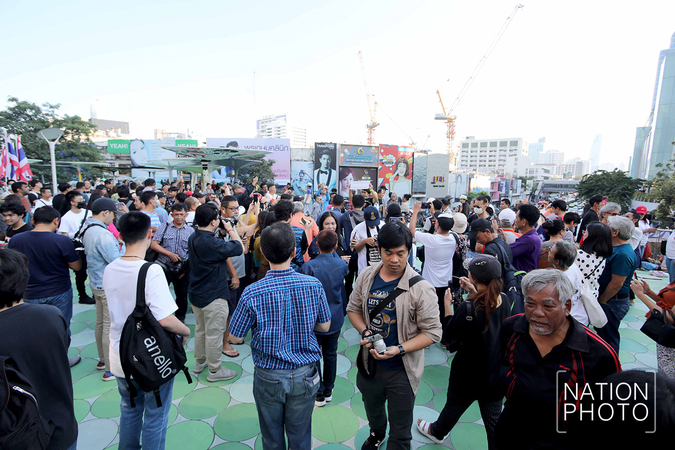
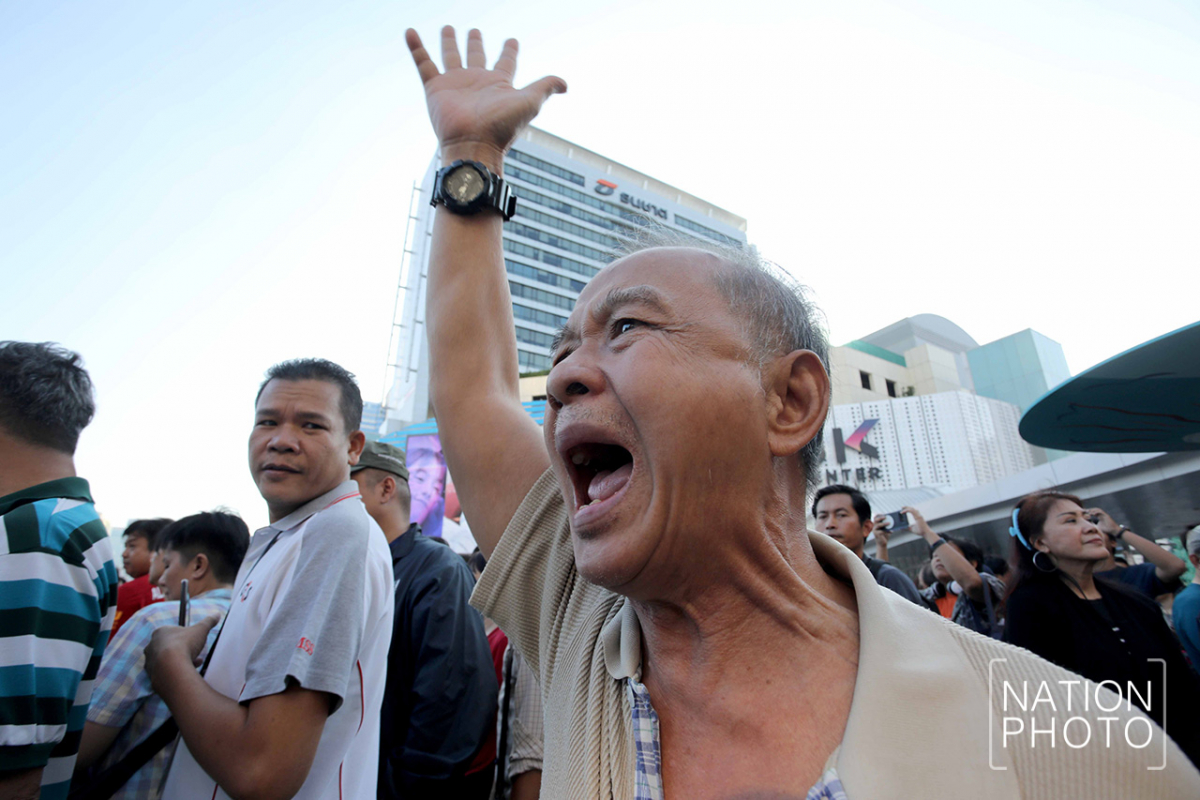
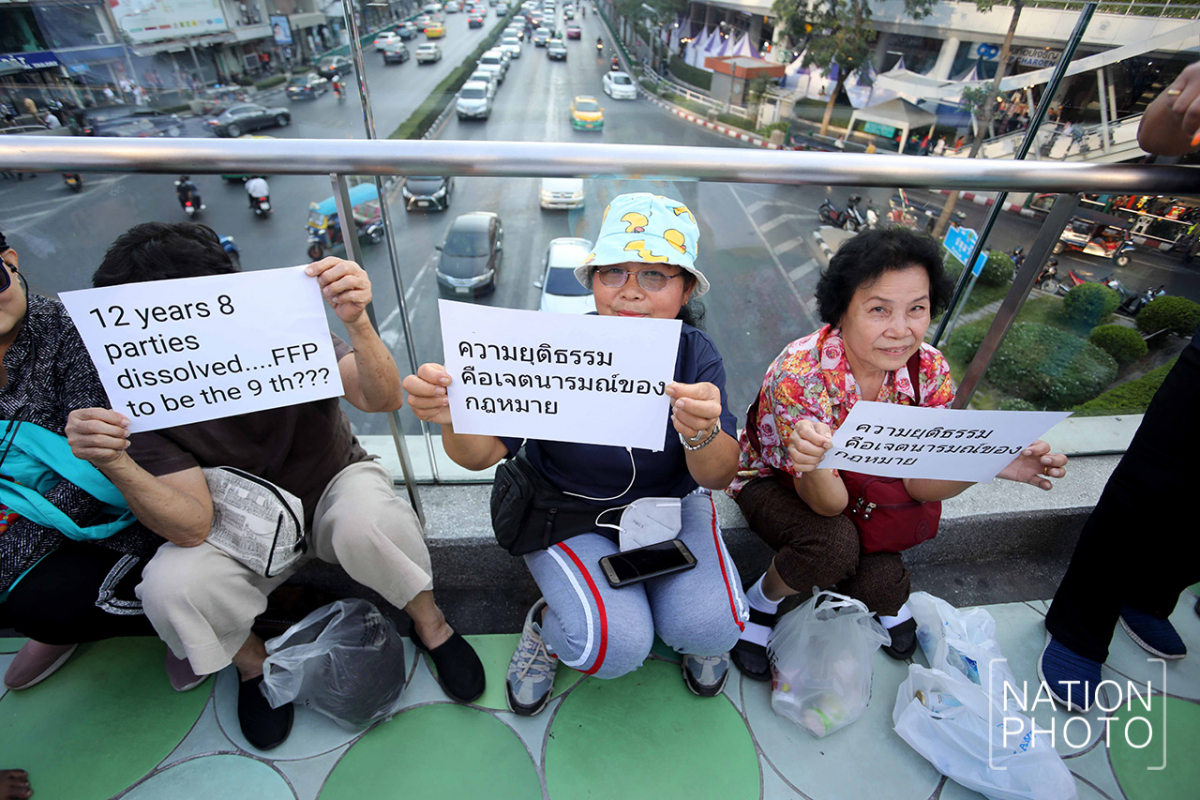
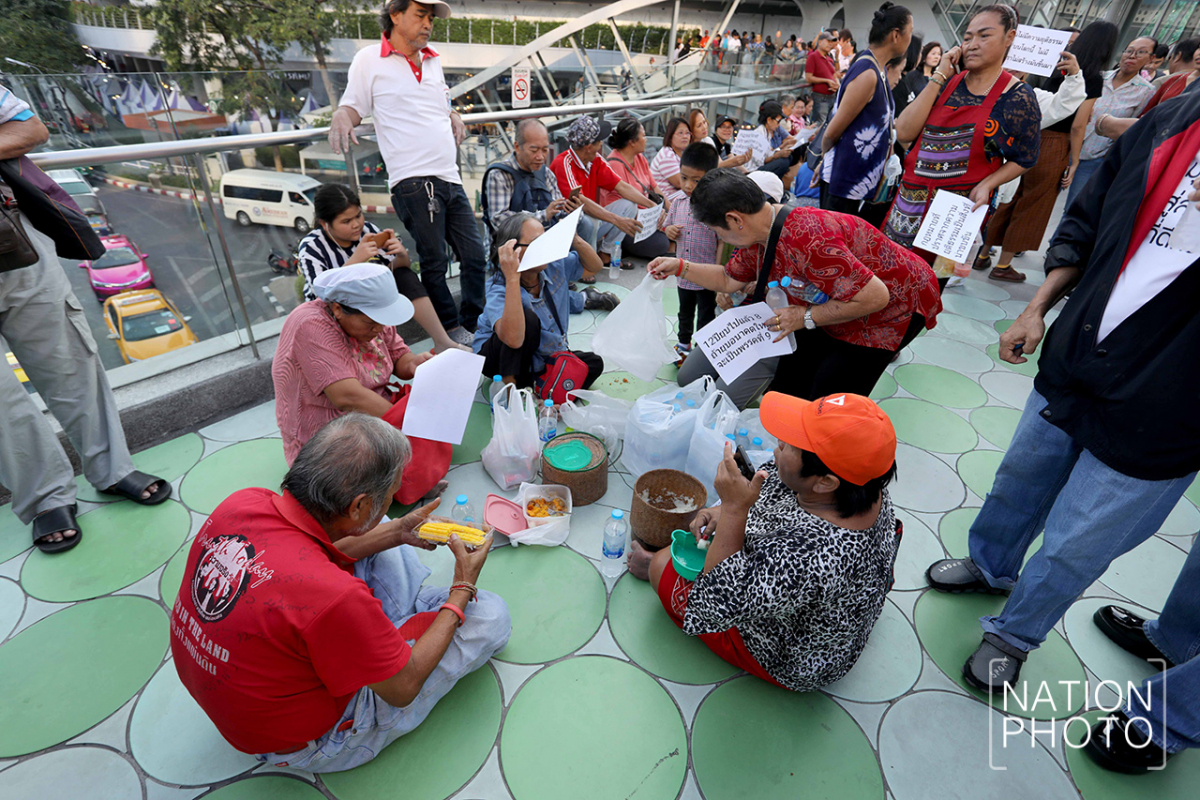
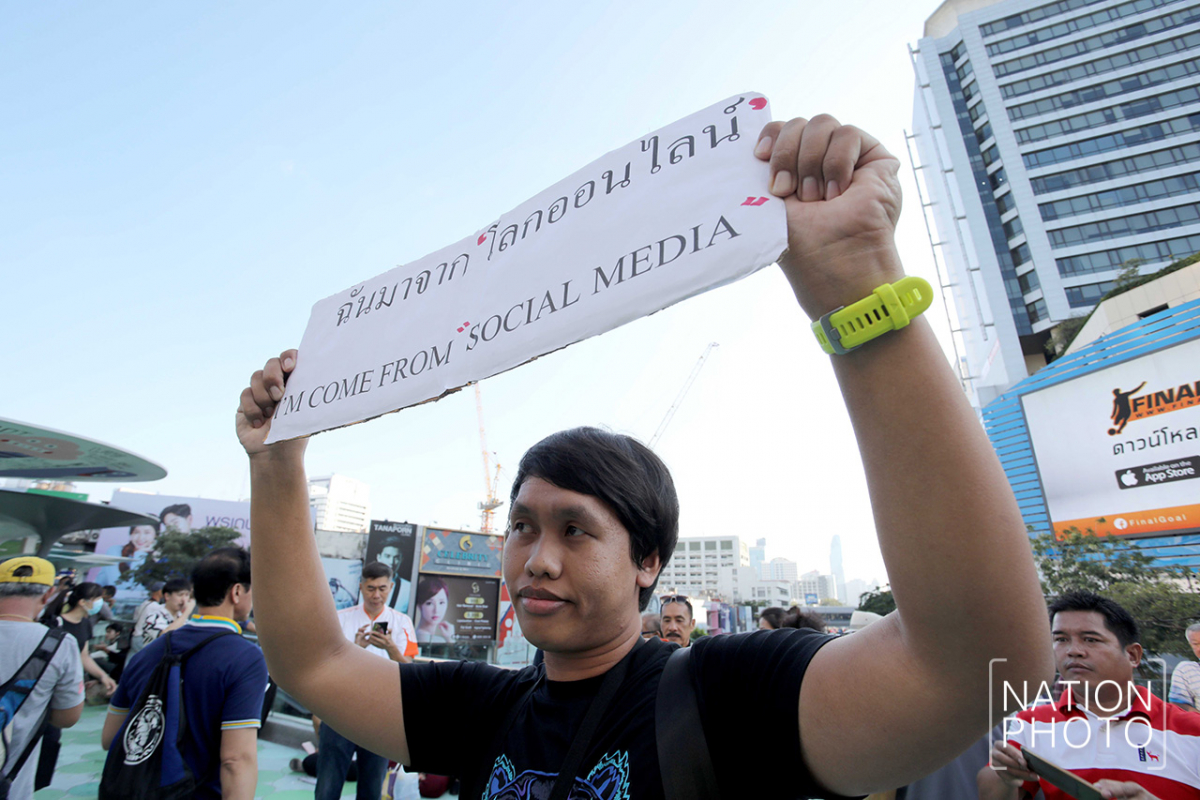
Supporters of Future Forward Party (FWP) were gathering on the skywalk of Pathumwan intersection at 5pm today (December 14) for a rally, called by FWP leader Thanathorn Juangroongruangkit, to express his opposition to the current political situation.

FWP spokesperson Pannika Wanich made an appearance at the venue to greet her party’s supporters, but Thanathorn had yet to show up as of 5pm as he was still wrapping up a meeting about constitution amendment with opposition parties’ leaders at Thammasart University.

Top court grants bail to Premchai, accomplices at Bt1 million each

#ศาสตร์เกษตรดินปุ๋ย : ขอบคุณแหล่งข้อมูล : หนังสือพิมพ์ The Nation

https://www.nationthailand.com/news/30379448?utm_source=category&utm_medium=internal_referral

Top court grants bail to Premchai, accomplices at Bt1 million each

Dec 14. 2019
By THE NATION

2,074 Viewed

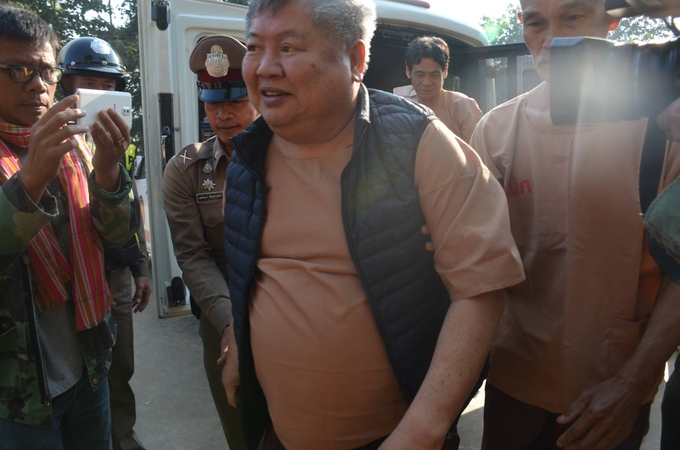
The Supreme Court has granted bail to Italian-Thai Development president Premchai Karnasuta and his three accomplices, the Thong Pha Phum Provincial Court in Kanchanaburi province announced at 4.30pm on Friday (December 13).

Premchai and his accomplices, Yong Dodkreu, Nathee Riamsaen and Thanee Thummas, were found guilty on several charges involving trespassing and poaching in Thung Yai Naresuan Wildlife Sanctuary on February 4-6, 2018. The Appeal Court sentenced them on Thursday (December 12) to jail terms ranging from 1-3 years as well as Bt2 million compensation to the Department of National Parks, Wildlife and Plant Conservation.

The Supreme Court ordered the bailees to deposit Bt1 million each in cash and wear electronic monitoring anklets and not leave the Kingdom.

Construction tycoon Premchai and his gang were caught redhanded with carcasses of protected animals and firearms, stirring widespread public criticism for over a year.

Premchai and his accomplices spent Thursday night in holding cells at Thong Pha Phum prison before being brought to court on Friday to listen to the Supreme Court’s ruling on their bail pleas. After being granted the bails, they travelled back to the prison to fill out their release papers. They declined to speak to the media.


Related Story: Construction tycoon gets 2 years 14 months jail for poaching

Winter revives Bangkok’s air pollution problem

#ศาสตร์เกษตรดินปุ๋ย : ขอบคุณแหล่งข้อมูล : หนังสือพิมพ์ The Nation

https://www.nationthailand.com/news/30379429?utm_source=category&utm_medium=internal_referral

Winter revives Bangkok’s air pollution problem

Dec 14. 2019
By THE NATION

2,873 Viewed

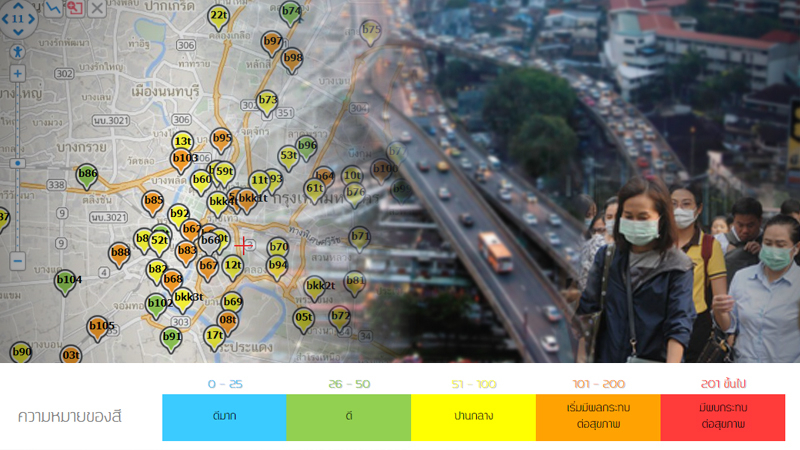
The stagnant winter air has resulted in the re-emergence of PM2.5 dust particles in Bangkok, the city’s administration reported.

Bangkok Metropolitan Administration (BMA) permanent secretary Silapasuay Raweesaengsoon said on Saturday (December 14) that the BMA’s Office of Environment is monitoring the air pollution situation.

“The BMA has ordered district offices that have PM2.5 (particles less than 2.5 micrometres in diameter) exceeding the standard of 50 micrograms per cubic metre to increase the frequency of cleaning roads and sidewalks,” she said. “Furthermore, we have dispatched water trucks to spray mist during traffic rush hours to suppress dust particles.”

The permanent secretary added that the city also has ordered its agencies to check the condition of service vehicles regularly to make sure they do not emit black smoke, which is the main cause of air pollution in Bangkok.

“We have also urged our garbage pickup staff to finish their rounds on main and secondary roads before 4am every day to reduce traffic congestion in rush hours, and ordered them to turn off their engine every time they make a stop,” she added.

The BMA’s Office of Environment reported that Bangkok’s PM2.5 level on Saturday (December 14) averaged 53 micrograms per cubic metre, which is slightly above safety standards.

Eleven districts had PM2.5 levels that were expected to rise to a level where they could affect people’s health. They are: Pathumwan, Bang Kho Laem, Bang Kapi, Klongsan, Bankok Noi, Phasi Jaroen, Bang Khen, Bang Phlat, Khlong Toei, Bang Sue and Lak Si.