International Team maintains lead as Asians endure tough day at Presidents Cup

#ศาสตร์เกษตรดินปุ๋ย : ขอบคุณแหล่งข้อมูล : หนังสือพิมพ์ The Nation

https://www.nationthailand.com/sport/30379425?utm_source=category&utm_medium=internal_referral

International Team maintains lead as Asians endure tough day at Presidents Cup

Dec 14. 2019

Byeong Hun An with captain Ernie Els

Byeong Hun An with captain Ernie Els
By THE NATION
250 Viewed

Melbourne –  Korean duo Byeong Hun An, Sungjae Im and Japan’s Hideki Matsuyama endured last-hole frustrations as the United States Team produced a gallant fightback in the Foursomes to trail the International Team by three points in the Presidents Cup on Friday.

After a commanding 4-1 lead in the opening Four-Ball session on Thursday, Ernie Els’ International Team threatened to pull further ahead midway through the second day’s play with the Asian trio in strong positions in their respective matches. The International Team will enter the third day with a 6.5-3.5 lead.

The An-Matsuyama combination fought gallantly against U.S. Team playing captain Tiger Woods and Justin Thomas, exchanging leads through 12 holes. With the match tied going to the 18th hole, Thomas drained a 17-foot birdie putt to pull off a dramatic 1-up win, earning the second point with Woods this week.

Im, the 2019 PGA TOUR Rookie of the Year, and partner Cameron Smith led 2-up with three to play against Rickie Fowler and Gary Woodland but the Americans brilliantly birdied 16 and 17 to tie the match and then shared the point as both teams parred the 18th hole.

Wins by Adam Scott-Louis Oosthuizen over Dustin Johnson-Matt Kuchar and Abraham Ancer-Marc Leishman over Patrick Reed-Webb Simpson ensured the International Team will take the lead for the first time into the weekend since 2005.

The 21-year-old Im was disappointed they let Fowler and Woodland off the hook. “I feel like both Cameron and I were hitting the ball really well, and he was putting great too. He made some amazing putts on the first few holes, but it’s a bit unfortunate to end the way we did, but we’re looking forward to tomorrow. The last few holes, we had a couple putts to win it, and captain Ernie and Cameron told me to look a little bit more but I went with my gut and it unfortunately didn’t go in. But we’re happy with our results.”

An and Matsuyama exchanged leads with Woods and Thomas several times throughout their match before losing to a birdie by Thomas which sparked wild celebrations from the U.S. team members around the green.

“We’ve got the strongest pairings on their team, so I knew it was going to be hard. They played amazing golf, and so did we I think,” said An, a Presidents Cup debutant.

“We played some good golf. We got a lot of birdies starting on, and they had some birdies starting on. I knew it was going to be tough. It’s hard to get a win. You know, we’re not going to be too disappointes. I know we lost but we’re still leading the tournament. We’re in a great spot compared to the last couple years. Our confidence is high, and this definitely is not going to let us down, that’s for sure. This (lead) is massive. We know how much we wanted this, and I think we’re in a great position. I know they are going to fight back tomorrow but keep our foot on the pedal and just keep making birdies and sticking to the game plan and win our matches.”

Els, captaining the International Team for the first time, was satisfied to share the five points available on Friday. “Yeah, it’s perspective, isn’t it? I’ve got to look at where we are. It’s easy to just look at where we could have been, because it was looking really unbelievable. But we’re in a very good position. Sometimes it bites you. Put a spear in it and bite back,” said Els.

Haotong Li, the first mainland Chinese golfer to qualify for the International Team, will see action for the first time on Saturday morning where he will team up with local hero Leishman in the opening Four-Ball session. After being rested on Friday, Chinese Taipei’s C.T. Pan will go out with Matsuyama where they will be looking to secure their second win together.

Els is counting on Li to deliver alongside Leishman after sitting out the first two days. “I expect him to play unbelievable golf,” said Els. “He’s been looking forward to this for two days. He’s been chomping at the bit and kicking my ass trying to get out there and I’ve been holding him back. He’s going to be like a racehorse coming out of a store,” he said.

Vietnam promises to create optimal conditions for US enterprises

#ศาสตร์เกษตรดินปุ๋ย : ขอบคุณแหล่งข้อมูล : หนังสือพิมพ์ The Nation

https://www.nationthailand.com/ann/30379412?utm_source=category&utm_medium=internal_referral

Vietnam promises to create optimal conditions for US enterprises

Dec 13. 2019
Vietnam's Prime Minister Nguyen Xuan Phuc, centre, first role, with delegates from the US-Asean Business Council in Hanoii on Thursday. Photo: VNA/VNS Photo Thong Nhat

Vietnam’s Prime Minister Nguyen Xuan Phuc, centre, first role, with delegates from the US-Asean Business Council in Hanoii on Thursday. Photo: VNA/VNS Photo Thong Nhat
By Viet Nam News
Asia News Network
Hanoi

540 Viewed

Vietnam has affirmed the government’s determination to reform the country’s business environment and provide all possible support to foreign enterprises, including those from the US, to do business in Vietnam.

During a reception in Hanoi on Friday, for a delegation from the US-Asean Business Council (USABC) led by its chairman Keith Williams, Vietnam Prime Minister Nguyen Xuan Phuc said he himself and ministers had always paid attention to approving and accelerating the implementation of major US projects in Vietnam.

Mentioning Vietnam’s goal of achieving a balanced trade with the US, the PM suggested the USABC should play a greater role in promoting bilateral ties and the flow of US investment into Vietnam.

He asked the USABC to continue serving as an important bridge between the two governments to strengthen the comprehensive partnership, with economic-trade ties being a foundation.

The government leader also urged US firms to continue paying attention to the Vietnamese market, directly and indirectly invest in fields of Vietnam’s demand such as infrastructure, aviation and finance-banking.

He wished that the USABC would continue helping major US enterprises to make business trips next year when Vietnam will assume the role of Asean chair, thus further bolstering US-Asean trade and investment ties.

Williams expressed optimism about Vietnam’s gross domestic product growth and exports, and hoped the USABC would partner with Vietnam in increasing exports.

The guest said the USABC highly valued Vietnam’s successes in foreign direct investment attraction and wanted to boosting a balanced trade between the two nations.

The USABC members said the US is ready to assist Vietnam in fulfilling the role of Asean chair next year. They expressed support for the US to intensify ties with Asean member states, including Vietnam.

The USABC agreed to assist Asean in workforce, digital transformation and capacity improvement for Asean small and medium-sized enterprises, they said.

Takeover in Indonesia ‘to boost BBL’s growth’

#ศาสตร์เกษตรดินปุ๋ย : ขอบคุณแหล่งข้อมูล : หนังสือพิมพ์ The Nation

https://www.nationthailand.com/business/30379416?utm_source=category&utm_medium=internal_referral

Takeover in Indonesia ‘to boost BBL’s growth’

Dec 14. 2019
By THE NATION

805 Viewed

The chairman of Bangkok Bank’s board of executive directors, Deja Tulananda, said on Friday (December 13) that he is confident the bank’s decision to take over Indonesian bank PT Bank Permata Tbk (Permata) would be a profitable investment.

He added thatthe deal, which was announced on December 12, will help expand BBL’s growth in the long-term.

BBL share price on Friday plunged 6.19 per cent to close at Bt151.50, given that some stock investors are doubtful the deal can create seamless synergy between the two banks to boost BBL growth, especially in the digital banking domain.

He added that when the stock investors gain more and more information of the deal, they will see its long-term benefit and gain more confidence in the deal.

He reiterated that the price BBL will pay for Pertama’s shares is not too high and there is still ample room for growth in Indonesia.

BBL announced on December 12 its entry into a conditional share purchase agreement with Standard Chartered Bank (Standard Chartered) and PT Astra International Tbk (Astra) to acquire their aggregate 89.12 per cent shareholding in Permata.

BBL said that the acquisition of Permata underlines its commitment to Indonesia, having been present here since 1968, and will further strengthen its position as a regional player with strong positioning in Thailand and Indonesia, the two largest markets in Asean.

Nok Air sets its sights on capital increase

#ศาสตร์เกษตรดินปุ๋ย : ขอบคุณแหล่งข้อมูล : หนังสือพิมพ์ The Nation

https://www.nationthailand.com/business/30379397?utm_source=category&utm_medium=internal_referral

Nok Air sets its sights on capital increase

Dec 13. 2019
By THE NATION

1,173 Viewed

Nok Air is planning to raise around Bt2.22 billion to reinforce its operation and capital.

According to its filingto the Stock Exchange of Thailand on December 13, the board of directors on December 12 resolved to propose for the Extraordinary General Meeting of shareholders’ consideration approval of a decrease of registered capital from the existing Bt3.408 billion to more Bt3.309 billion by decreasing the number of ordinary shares, which have not been sold. These amount to 99,030,527 shares at the par value of Bt1 per share.

It also resolved to propose consideration of an increase in registered capital of slightly more than Bt888 million from the existing registered capital of Bt3.309 billion to more than Bt4.197 billion at the par value of Bt1 per share.

This will be done by issuing 888,147,358 ordinary shares at the par value of Bt1 per share.

Other items to be proposed for the consideration of the Extraordinary General Meeting of Shareholders including approving the allocation of the newly issued ordinary shares to the existing shareholders proportionate to their respective shareholdings (Rights offering) with the allocation ratio of 3.5 existing shares to 1 newly issued ordinary share, at the offering price at Bt2.50 per share. Total value would not exceed Bt2.220 billion and the offer period would run from February 3 to 7.

The Extraordinary General Meeting of Shareholders will be held on January 14.

The company plans to utilize proceeds received from the capital increase for working capital, reducing indebtedness, improving its fleet, as well as expanding air routes and aviation network to make it more competitive.

Thai Union adds to its stake in Thammachart Seafood Retail

#ศาสตร์เกษตรดินปุ๋ย : ขอบคุณแหล่งข้อมูล : หนังสือพิมพ์ The Nation

https://www.nationthailand.com/business/30379396?utm_source=category&utm_medium=internal_referral

Thai Union adds to its stake in Thammachart Seafood Retail

Dec 13. 2019
By THE NATION

1,641 Viewed

Thai Union Group has expanded its footprint in Thailand’s domestic seafood retail business, increasing its stake in Thammachart Seafood Retail to 65 per cent.

Thai Union’s acquisition of a 39.9-per-cent share in Thammachart Seafood follows on from its purchase of a 25.1-per-cent stake in 2018.

Rittirong Boonmechote, President – Global Frozen Unit, Thai Union Group said Thai Union decided to invest in Thammachart Seafood Retail in recognition of the good synergy of the two companies.

While Thai Union has strength in frozen seafood and food service, Thammachart Seafood is strong in branding and marketing with formidable executives and a team with more than 10 years of experience and expertise in retail and premium seafood brands.

This will fulfill Thai Union’s goal of expanding further into the Thai domestic market and other markets including Laos, Cambodia and China.

Besides managing its own operations, Thammachart Seafood will bring its expertise in branding and marketing to Thai Union’s Qfresh branded products which will allow it to expand into both B2B and B2C segments.

“Thammachart Seafood provides professional management services to leading Thai retailers for their seafood counters, handling fresh and frozen products at 190 locations throughout Thailand. This includes four food and beverage concepts at 18 locations, The Dock Seafood Bar, The Lobster Lab, Seafood Mahanakorn as well as management of the Ocean Bar. We opened our third business unit earlier this year, the seafood-focused food service business, and this currently supplies top-end hotels and restaurants including several Michelin-star restaurants in Bangkok,” said Julian G Davies, Thammachart Seafood Retail’s chief executive.

“Moreover, to assist our vision of providing seafood solutions to our customers, we also opened a purpose-built warehouse that has a centralized kitchen, chef’s table, production facility and storage. Having Thai Union on board will help us realise our mission to be the customers’ first choice in seafood.”

U.S. crops pare gains as doubts persist on Chinese Purchases

#ศาสตร์เกษตรดินปุ๋ย : ขอบคุณแหล่งข้อมูล : หนังสือพิมพ์ The Nation

https://www.nationthailand.com/business/30379422?utm_source=category&utm_medium=internal_referral

U.S. crops pare gains as doubts persist on Chinese Purchases

Dec 14. 2019
File Photo: Iowa: First Battleground State In The Presidential Election

RIPPEY, IOWA - OCTOBER 14: An aerial view from a drone shows a combine being used to harvest the soybeans in a field at the Bardole & Son's Ltd farm on October 14, 2019 in Rippey, Iowa. The 2020 Iowa Democratic caucuses will take place on February 3, 2020, making it the first nominating contest in the Democratic Party presidential primaries. (Photo by Joe Raedle/Getty Images)

File Photo: Iowa: First Battleground State In The Presidential Election RIPPEY, IOWA – OCTOBER 14: An aerial view from a drone shows a combine being used to harvest the soybeans in a field at the Bardole & Son’s Ltd farm on October 14, 2019 in Rippey, Iowa. The 2020 Iowa Democratic caucuses will take place on February 3, 2020, making it the first nominating contest in the Democratic Party presidential primaries. (Photo by Joe Raedle/Getty Images)
By Syndication Washington Post, Bloomberg · Michael Hirtzer, Isis Almeida

814 Viewed

Doubts over how much agricultural goods China will buy as part of a preliminary trade pact with the U.S. dampened crop market optimism about the deal.

Prices for soybeans and hogs initially surged as Beijing held a Friday night press conference to announce a phase-one agreement that averts a new wave of tariffs on Dec. 15. But prices retreated from earlier highs after officials failed to specify volume targets for purchases, though they pledged to increase imports of U.S. agriculture goods by a “notable margin.”

“Initially the market liked it, then the last 30 minutes we have given up all of the gains,” Joe Davis, a director at brokerage Futures International in Chicago, said in a message. “Still waiting on details.”

While Chinese officials didn’t specify volume targets, they mentioned agriculture goods including soybeans, pork and poultry. They said wheat, corn and rice purchases will take place within quotas. Imports from the U.S. won’t hurt the local farm industry, they said.

On Thursday, U.S. Agriculture Secretary Sonny Perdue said that while Chinese officials indicated they would buy $40 billion to $50 billion in American farm goods, they were reluctant to commit to contracts. On Friday, the officials didn’t answer questions on the size of American purchases.

“The big takeaway from me is that China refused multiple times to give a value of U.S. ags they would buy as a part of this agreement,” Niko Anderson, a grain broker at SCB Group in Chicago, said.

China stressed it has increased purchases based on market conditions and following WTO rules, adding it will be importing agriculture products from the U.S. and other countries.

“The other countries part is what worries me,” said P.J. Quaid, a corn options broker on the Chicago pit. “South America will be able to take care of their bean needs soon. Lots of optimism this morning and that has all disappeared.”

Soybeans, a bellwether of U.S.-China trade-deal sentiment, were up 0.6% at $9.1825 a bushel, after earlier rising by 2.1%. U.S. traders were pining on a potential rise in soy shipments to China, before top producer Brazil harvests what’s forecast to be a record haul of the oilseed early in 2020.

Agriculture markets have been whipsawed this year as officials worked to hash out a deal. With the U.S. among the world’s leading crop and meat shippers and China a major buyer, the more than yearlong trade spat between the two nations has weighed on commodity prices and upended global trade flows.

U.S. shippers sold about 900,000 tons earlier this week after China granted waivers on as much as 2 million tons to private processors, according to people familiar with the matter. China accounts for almost a third of global soy demand and American sales to China still remain well below levels before the trade dispute.

“This agreement is positive for de-escalating the relationship between the United States and China,” Arlan Suderman, chief commodities economist at INTL FCStone said. “That alone is good, as it should allow for economic growth in China, the United States and the rest of the world. It does not resolve the larger issues between two super powers that are destined to clash once again.”

China, U.S. confirm trade deal, but lack of details leave markets confused

#ศาสตร์เกษตรดินปุ๋ย : ขอบคุณแหล่งข้อมูล : หนังสือพิมพ์ The Nation

https://www.nationthailand.com/business/30379421?utm_source=category&utm_medium=internal_referral

China, U.S. confirm trade deal, but lack of details leave markets confused

Dec 14. 2019
File Photo /GettyImages

File Photo /GettyImages
By The Washington Post · David J. Lynch, Anna Fifield 

827 Viewed

BEIJING – China confirmed Friday it had agreed to a partial trade deal with the United States, but neither government released a text, leaving investors confused about the agreement’s significance.

One day after President Donald Trump approved the so-called “phase one” accord, the only official word from the White House was a presidential tweet that was long on salesmanship and short on details.

“We have agreed to a very large Phase One Deal with China. They have agreed to many structural changes and massive purchases of Agricultural Product, Energy, and Manufactured Goods, plus much more. The 25% Tariffs will remain as is, with 7 1/2% put on much of the remainder …,” the president wrote. “…..The Penalty Tariffs set for December 15th will not be charged because of the fact that we made the deal. We will begin negotiations on the Phase Two Deal immediately, rather than waiting until after the 2020 Election. This is an amazing deal for all. Thank you!

An official statement from the office of the U.S. Trade Representative did little to dispel the confusion, offering no specific figures on the agreed Chinese purchases of U.S. farm goods and other products or what structural changes China would make in its economic system.

Trump has canceled a scheduled tariff increase that would have hit about $160 billion in Chinese goods on Sunday and has agreed to halve the 15% tariff on about $120 billion in Chinese products that took effect in September, according to USTR. A 25% tariff on an additional $250 billion in imports will remain in place as negotiations begin on a second deal.

Financial markets were unimpressed. The Dow Jones industrial average rose about 130 points before quickly surrendering those gains and dipping into the red just before 11 a.m., after the official statements were released.

“This trade negotiation is turning into a 3-ring circus that looks a lot like a game show or reality TV series only the victims are American investors. It won’t be a Record Stock Market & Jobs! for long if the Trump administration doesn’t come clean and show markets their cards. So far we’ve got nothing. Absolutely nothing,” Chris Rupkey, chief financial economist at MUFG Union Bank, wrote in a client note early Friday morning.

The text includes nine chapters, including ones on intellectual property rights, technology transfer, food and farm products, financial services, exchange rates, and dispute resolution, Wang Shouwen said at the 11 p.m. news conference at the State Council Information Office in Beijing.

The Chinese and the American delegations will now carry out a legal review and check the translation as soon as possible, Wang told reporters. They will then make the arrangements for the formal signing of the agreement, he said.

Liao Min, vice finance minister, said that China will consider not imposing the tariffs it had threatened to slap on 3,300 American products Sunday, including auto parts and chemicals.

“China will take corresponding measures by not implementing the new tariffs planned for Dec 15,” Liao said. “This is the consensus reached by both sides in the phase one deal.”

The agreement still, however, seemed tenuous.

The Chinese side did not make any mention of the dollar amount for the farm products that Beijing will buy from the United States in return. The Trump administration had previously suggested that China would buy $50 billion in agricultural goods like soybeans and pork.

Bai Ming, an expert linked to China’s commerce ministry, said the U.S. tariff rollback was “a goodwill gesture.”

“It is an improvement but not enough. China will mean what it says, and the U.S. should not go back on its promise,” the nationalist Global Times quoted Bai as saying.

The deal appeared to be “win-win,” said Su Qingyi, Deputy Director of Department of International Trade at the Chinese Academy of Social Sciences.

Reaching an agreement and lowering tariffs would boost China’s exports and therefor its employment rate and economic growth, Su said before the Friday night news conference.

“Secondly, resuming purchases of U.S. farm products is in our own interests,” he said. “We need some of their agricultural products. And if the deal includes opening financial service sector, that’s good for us.”

Google culture war escalates as era of transparency wanes

#ศาสตร์เกษตรดินปุ๋ย : ขอบคุณแหล่งข้อมูล : หนังสือพิมพ์ The Nation

https://www.nationthailand.com/business/30379420?utm_source=category&utm_medium=internal_referral

Google culture war escalates as era of transparency wanes

Dec 14. 2019
Sundar Pichai MUST CREDIT: Bloomberg photo by Simon Dawson

Sundar Pichai MUST CREDIT: Bloomberg photo by Simon Dawson
By Syndication Washington Post, Bloomberg · Ryan Gallagher, Mark Bergen

924 Viewed

Each morning, workers at Google get an internal newsletter called the “Daily Insider.” Kent Walker, Google’s top lawyer, set off a firestorm when he argued in the Nov. 14 edition that the 21-year old company had outgrown its policy of allowing workers to access nearly any internal document.
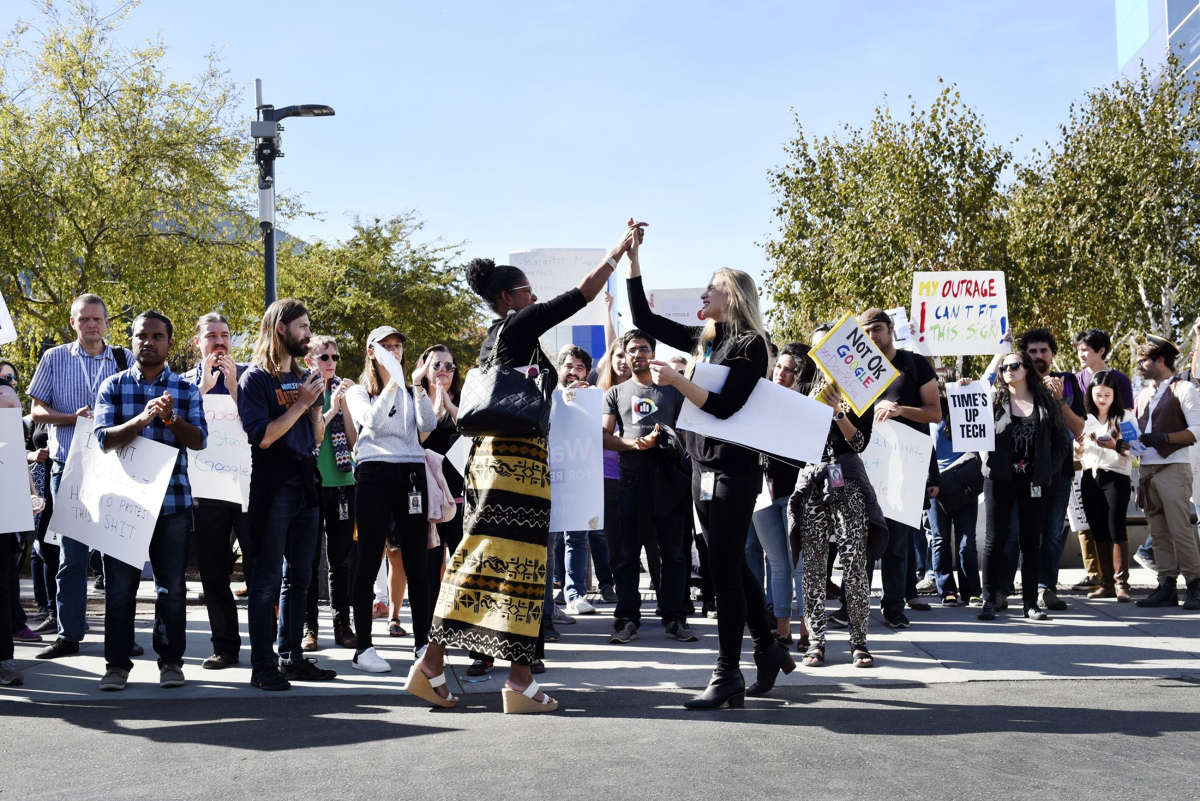
Two women high-five as Google employees hold signs during walkout in protest at Google's offices in Mountain View, Calif., on Nov. 1, 2018. MUST CREDIT: Bloomberg photo by Michael Short

Two women high-five as Google employees hold signs during walkout in protest at Google’s offices in Mountain View, Calif., on Nov. 1, 2018. MUST CREDIT: Bloomberg photo by Michael Short

“When we were smaller, we all worked as one team, on one product, and everyone understood how business decisions were made,” Walker wrote. “It’s harder to give a company of over 100,000 people the full context on everything.”

Many large companies have policies restricting access to sensitive information to a “need-to-know” basis. But in some segments of Google’s workforce, the reaction to Walker’s argument was immediate and harsh. On an internal messaging forum, one employee described the data policy as “a total collapse of Google culture.”

An engineering manager posted a lengthy attack on Walker’s note, which he called “arrogant and infantilizing.” The need-to-know policy “denies us a form of trust and respect that is again an important part of the intrinsic motivation to work here,” the manager wrote.

The complaining also spilled into direct action. A group of Google programmers created a tool that allowed employees to choose to alert Walker with an automated email every time they opened any document at all, according to two people with knowledge of the matter. The deluge of notifications was meant as a protest to what they saw as Walker’s insistence on controlling the minutiae of their professional lives.

“When it comes to data security policies, we’ve never intended to prevent employees from sharing technical learnings and information and we are not limiting anyone’s ability to raise concerns or debate the company’s activities,” said a Google spokeswoman in an email. “We have a responsibility to safeguard our user, business and customer information and these activities need to be done in line with our policies on data security.”

The actions are just the latest chapter in an internal conflict that has been going on for almost two years. About 20,000 employees walked out last fall over the company’s generous treatment of executives accused of sexual harassment, and a handful quit over Google’s work on products for the U.S. military and a censored search engine for the Chinese market. Earlier this year, Google hired IRI Consultants, a firm that advises employers on how to combat labor organizing, and it recently fired four employees for violating its policies on accessing sensitive data.

The extent of Google’s employee rebellion is hard to measure-the company has tried to portray it as the work of a handful of malcontents from the company’s junior ranks. Nor are the company’s message boards unilaterally supportive of revolt. “We want to focus on our jobs when we come into the workplace rather than deal with a new cycle of outrage every few days or vote on petitions for or against Google’s latest project,” wrote one employee on an internal message board viewed by Bloomberg News.

Still, the company seems stuck in a cycle of escalation. Walker’s internal critics say his Nov. 14 email is part of a broader erosion of one of Google’s most distinctive traits-its extreme internal transparency. The fight also illustrates the lack of trust between Google’s leadership and some of its employees, according to interviews with over a dozen current and former employees, as well as internal messages shared with Bloomberg News on the condition it not publish the names of employees who participated.

The conflict comes as Google is changing in other ways, too. On Dec. 3, Sundar Pichai, who took over as Google’s chief executive office in 2015, became the head of Alphabet, its parent company. His elevation marks the end of the active involvement of Sergey Brin and Larry Page, who established Google’s distinctive culture when they founded the company as Stanford graduate students.

Pichai has at times supported internal activism. He spoke at an employee protest against the Trump administration’s immigration policies and apologized to employees for Google’s track record on sexual harassment. His executives met repeatedly with critics of the company’s military work. Some Google managers began signaling that they’re losing patience with internal activism even before the firings, according to one person who worked with them. Executives have not met with dissenting staff leadership in many weeks, according to one of the employees.

While Walker wrote in the “Daily Insider” that organizations have to change as they grow, he simultaneously argued that the policies he described had always existed. “It was that way since the early days of Google, and it’s that way now,” he wrote. This particularly offended several long-time Googlers, who said on internal message boards that Walker’s comments didn’t square with their own memories. For some of them, the incident illustrated a broader breakdown in their trust of leadership.

“I want to believe that executive management is saying everything – disclosing the truth, the whole truth and nothing but the truth,” said Bruce Hahne, a Google technical project manager. “I don’t think we are currently under those conditions.”

Hahne, 51, doesn’t meet the Google management’s profile of internal protestors. He joined the company in 2005, a year after Pichai, partly because he was attracted to its mission to organize the world’s information. His disillusionment crept in gradually during the company’s myriad controversies. In an online essay, Hahne compared Google to a “rogue machine” that was “originally created for good but whose psyche has turned corrupt and destructive,” much like Hal 9000 from the movie 2001: A Space Odyssey. “You don’t treat a rogue machine like family,” wrote Hahne, “instead you come up with a plan, you disable or dismantle the dysfunctional parts of the machine, and you seek to reprogram the machine to serve its original purpose.”

When it was founded two decades ago, Google established an unusual corporate practice. Nearly all of its internal documents were widely available for workers to review. A programmer working on Google search could for instance, dip into the software scaffolding of Google Maps to crib some elegant block of code to fix a bug or replicate a feature. Employees also had access to notes taken during brainstorming sessions, candid project evaluations, computer design documents, and strategic business plans. (The openness doesn’t apply to sensitive data such as user information.)

The idea came from open-source software development, where the broader programming community collaborates to create code by making it freely available to anyone with ideas to alter and improve it. The philosophy came with technical advantages. “That interconnected way of working is an integral part of what got Google to where it is now,” said John Spong, a software engineer who worked at Google until this July.

Google has flaunted its openness as a recruiting tool and public relations tactic as recently as 2015. “As for transparency, it’s part of everything we do,” Laszlo Bock, then the head of Google human relations, said in an interview that year. He cited the immediate access staff have to software documentation, and said employees “have an obligation to make their voices heard.”

Google’s open systems also proved valuable for activists within the company, who have examined its systems for evidence of controversial product developments and then circulated their findings among colleagues. Such investigations have been integral to campaigns against the projects for the Pentagon and China. Some people involved in this research refer to it as “internal journalism.”

Management would describe it differently. In November, Google fired four engineers who it said had been carrying out “systematic searches for other employees’ materials and work. This includes searching for, accessing, and distributing business information outside the scope of their jobs.” The engineers said they were active in an internal campaign against Google’s work with the U.S. Customs and Border Protection, and denied violating the company’s data security policies.

Rebecca Rivers, one of the fired employees, said she initially logged into Google’s intranet, a web portal open to all staff, and typed the terms: “CBP” and “GCP,” for Google Cloud Platform. “That’s how simple it was,” she said. “Anyone could have stumbled onto it easily,” she said.

In an internal email describing the firings, Google accused one employee of tracking a colleague’s calendar without permission, gathering information about both personal and professional appointments in a way that made the targeted employee feel uncomfortable.

Laurence Berland, one of the employees who was fired recently, acknowledged he had accessed internal calendars, but said they were not private. He used them to confirm his suspicions that the company was “coordinating to spy on” activist employees. Berland, who first joined Google in 2005, added that the company has enforced its rules arbitrarily.

Google declined to identify the four employees it fired, but a company spokeswoman said the person who tracked calendars accessed unauthorized information.

Other employees say they are now afraid to click on certain documents from other teams or departments because they are worried they could later be disciplined for doing so, a fear the company says is unfounded. Some workers have interpreted the policies as an attempt to stifle criticism of particular projects, which they allege amounts to a violation of the company’s code of conduct. These employees point to a clause in the code that actively encourages dissent: “Don’t be evil, and if you see something that you think isn’t right -speak up!”

Workers are “trying to report internally on problematic situations, and in some cases are not being allowed to make that information useful and accessible,” said Hahne. There is now a “climate of fear” inside Google offices, he said.

Google’s permissive workplace culture became the prime example of Silicon Valley’s brand of employment. But transparency is hardly universal. Apple Inc. and Amazon.com Inc. demand that workers operate in rigid silos to keep the details of sensitive projects from leaking to competitors. Engineers building a phone’s camera may have no idea what the people building its operating system are doing, and vice versa. Similar restrictions are common at government contractors and other companies working with clients who demand discretion.

The specifics of Google’s business operations traditionally haven’t required this level of secrecy, but that is changing. Google’s cloud business in particular requires it to convince business clients it can handle sensitive data and work on discrete projects. This has brought it more in line with its secrecy-minded competitors. The protests themselves have also inspired new restrictions, as executives have looked to cut off the tools of the activists it argues are operating in bad faith.

Google’s leaders have acknowledged the delicacy of adjusting a culture that has entrenched itself over two decades. “Employees today are much, much more active in the governance in the company,” Eric Schmidt, Google’s former CEO and chair, said at an event at Stanford University in October.

Amy Edmonson, a professor of leadership and management at Harvard Business School, said that Google’s idealistic history increases the burden on its executives to bring along reluctant employees as it adopts more conventional corporate practices. “It’s just really important that if you’re going to do something that is perceived as change that you’re going to explain it,” she said.

Bock, the company’s former HR director who is now CEO of Humu, a workplace software startup, suggested that Google hasn’t succeeded here. “Maybe Alphabet is just a different company than it used to be,” he wrote in an email to Bloomberg News. “But not everyone’s gotten the memo.”

U.S. retail sales miss forecasts as restaurants decline

#ศาสตร์เกษตรดินปุ๋ย : ขอบคุณแหล่งข้อมูล : หนังสือพิมพ์ The Nation

https://www.nationthailand.com/business/30379419?utm_source=category&utm_medium=internal_referral

U.S. retail sales miss forecasts as restaurants decline

Dec 14. 2019
Crowds gather in the electronics section at a Target in the New York borough of Queens on Nov. 28, 2019. MUST CREDIT: Bloomberg photo by Bess Adler.

Crowds gather in the electronics section at a Target in the New York borough of Queens on Nov. 28, 2019. MUST CREDIT: Bloomberg photo by Bess Adler.
By Syndication Washington Post, Bloomberg · Katia Dmitrieva 

809 Viewed

U.S. retail sales missed forecasts calling for an acceleration in November as clothing stores and restaurants posted declines, signaling the economy’s main engine may cool in the fourth quarter by more than previously thought.

The value of overall sales climbed 0.2% after an upwardly revised 0.4% increase the prior month, Commerce Department figures showed Friday. The median estimate in a Bloomberg survey called for a 0.5% increase.

Sales in the “control group” subset increased a below-forecast 0.1% following a 0.3% gain. The measure excludes food services, car dealers, building-materials stores and gasoline stations, providing a reading considered more reflective of underlying consumer demand.

The data suggest a slowdown in business investment and weakness in manufacturing is weighing more broadly on Americans’ willingness to spend, which could mean a soft holiday-shopping season despite a relatively strong labor market, improved wage gains and record stock prices. At the same time, consumers likely still have enough wherewithal to support the expansion, and an easing of U.S.-China trade tensions should aid the economy in 2020.

Bloomberg News reported Thursday that President Donald Trump signed off on a phase-one trade deal with China, averting the Dec. 15 introduction of a new wave of U.S. tariffs on about $160 billion of consumer goods from the Asian nation, according to people familiar with the matter. U.S. stock futures fluctuated Friday morning after a CNBC report saying China still has concerns about targets for agricultural purchases.

Other early indications for the holiday shopping season were more optimistic, with BofA Global Research reporting retailers had the highest sales gains for the period up to Black Friday since 2013.

Online sales were a strong element of Friday’s report. Sales at nonstore retailers, which includes e-commerce, rose 0.8% from the prior month, the biggest gain since August. They’re up 11.5% from a year earlier, though that’s down from October’s increase.

A Bloomberg survey this month showed growth in consumer spending was expected to ease to a 2.1% pace in the fourth quarter, from 2.9% in the prior three months. Control-group sales have increased a paltry annualized 1.3% over the latest three months, down from 3.4% in the three months through October.

Even so, the weakness in consumer spending — which accounts for two-thirds of the economy — is likely not dire enough to spur the Federal Reserve to resume cutting interest rates.

Fed Chairman Jerome Powell noted in a press conference this week that consumer confidence remains elevated and that spending is healthy, with policy makers expecting to hold interest rates steady through the end of 2020. Last week’s jobs report for November showed payroll gains topped all economist estimates.

The retail sales report showed eight of 13 major categories increased, with solid gains in autos and electronics and appliance stores.

Among declines, sales at health and personal care stores dropped by the most in almost a year, while receipts at apparel and sporting goods and hobby stores also fell. Restaurants posted a 0.3% drop, also the largest in almost a year.

Filling-station receipts increased 0.7%, the report showed. The retail figures aren’t adjusted for price changes, so sales could reflect changes in gasoline costs, sales, or both. Separate data on the consumer price index this week showed that gasoline prices rose 1.1% in the month, which could have boosted these figures.

Excluding automobiles and gasoline, retail sales were little changed, following a 0.2% gain the previous month.

The sales data don’t capture all household purchases and tend to be volatile from month to month. Personal-spending figures will offer a fuller picture of U.S. consumption in data due Dec. 20.

A separate Labor Department report Friday added to signs of muted inflation pressures in the economy. The U.S. import price index rose 0.2% in November from the prior month, matching forecasts, and fell 1.3% from a year earlier. Excluding petroleum, the index was also up 0.2% from the prior month.

China confirms trade deal with the U.S., averting new tariffs ahead of Sunday deadline

#ศาสตร์เกษตรดินปุ๋ย : ขอบคุณแหล่งข้อมูล : หนังสือพิมพ์ The Nation

https://www.nationthailand.com/business/30379418?utm_source=category&utm_medium=internal_referral

China confirms trade deal with the U.S., averting new tariffs ahead of Sunday deadline

Dec 13. 2019
By  The Washington Post · Anna Fifield 

541 Viewed

BEIJING – China and the United States have reached agreement on the text of a “phase one” trade deal, China’s vice commerce minister said in a late-night press conference Friday, a day after President Donald Trump signed off on the deal.

The text includes nine chapters, including ones on intellectual property rights, technology transfer, food and farm products, financial services, exchange rates, and dispute resolution, Wang Shouwen said at the 11 p.m. press conference at the State Council Information Office in Beijing.

The Chinese and the American delegations will now carry out a legal review and check the translation as soon as possible, Wang told reporters. They will then make the arrangements for the formal signing of the agreement, he said.