Vietnam-Laos trade hits US$940 million in ten months

#ศาสตร์เกษตรดินปุ๋ย : ขอบคุณแหล่งข้อมูล : หนังสือพิมพ์ The Nation

https://www.nationthailand.com/business/30379237?utm_source=category&utm_medium=internal_referral

Vietnam-Laos trade hits US$940 million in ten months

Dec 09. 2019
PM Nguyen Xuan Phuc chairs the meeting. — VNA/VNS Photo

PM Nguyen Xuan Phuc chairs the meeting. — VNA/VNS Photo
By Viet Nam News

1,345 Viewed

Hanoi — Trade co-operation was the highlight of Vietnam-Laos relations in the first ten months of the year, with revenue reaching US$940 million.

The figure was unveiled at a meeting of permanent cabinet members in Hanoi on Saturday under the chair of Prime Minister Nguyen Xuan Phuc.

Two-way trade is projected to hit $1.1-1.2 billion in 2019, up 12.6 per cent year-on-year, surpassing the targets of $1 billion and 10 per cent respectively set by the Government.

Vietnam has become the third biggest investor in Laos with 413 projects valued at $4.22 billion, with joint ventures involving Viettel, the Vietnam Rubber Group, Muong Thanh Hotel, Crown Plaza, LaoViet Bank and the Xekaman 1 Hydropower Plant.

Vietnam has committed to providing VNĐ3.25 trillion ($139.8 million) in non-refundable aid for Laos from 2016-20, including VNĐ707 billion in the 2019 fiscal year, up 18.4 per cent against the previous year, aiming to help the neighbouring country implement infrastructure projects in transport, energy, personnel training and social welfare.

In early 2019, Vietnam provided 300 tonnes of seeds for Laos to support locals hit by natural disasters.

Over 1,000 scholarships have been granted to Lao students, and Vietnam has also dispatched teachers to Laos and financed Vietnamese language teaching courses in the country.

This year, five Vietnamese-funded projects have been completed in Laos and two others have been launched.

At the meeting, cabinet members also pointed out slow capital disbursement of these projects, along with bottlenecks in procedures.

The PM and cabinet members called for efforts to remove these difficulties to speed up the implementation of the work and prepare for the meeting of the Vietnam-Laos Inter-Governmental Committee slated for January 2020.

Ethnic work boosted

The same day, a Vietnam – Lao conference was held in the central province of Nghe An to seeks ways to continue nurturing the bilateral relations and friendship and to share experiences in the ethnic work between the two countries.

With the participation of more than 300 delegates from Vietnam – Laos bordering provinces, the event is a chance for them to analyse deeply and comprehensively the issues on the role of the political systems and ethnic minority communities along the border line in nurturing the tradition of the great relations between the two neighbouring countries.

Speaking at the function, Politburo member and Permanent Deputy Prime Minister Truong Hoa Binh stressed that the conference is another chance for the two countries to further strengthen the ties between them as well as the closeness between the ethnic groups living along the sides of the Trường Sơn mountain range.

For his part, Politburo member and President of the Central Committee of the Lao Front for National Construction Saysomphone Phomvihane held that the traditional and long-lasting solidarity and friendship between the two countries have become an exemplary and rare model in the international relations in the current context of the changing world.

Presentations at the conference touched upon the poverty easing and sustainable development in mountainous and ethnic minority areas, lessons on preservation and bringing into full play traditional cultural values of the ethnic minority communities along the Vietnam – Laos border line, and experiences in the building of the unity among those communities in the context of international integration.

Earlier, the Lao delegation offered incense at the Vietnam – Laos international cemetery in Nghe An Province for over 11,000 Vietnamese voluntary soldiers and military experts who laid down their lives in Laos. — VNS

Moody’s negative on Asia-Pacific banking industry

#ศาสตร์เกษตรดินปุ๋ย : ขอบคุณแหล่งข้อมูล : หนังสือพิมพ์ The Nation

https://www.nationthailand.com/business/30379231?utm_source=category&utm_medium=internal_referral

Moody’s negative on Asia-Pacific banking industry

Dec 09. 2019
By THE NATION

1,695 Viewed

Moody’s Investors Service says its outlook for the Asia-Pacific banking industry is negative over the next 12 months as the US-China trade dispute will weaken economic and trade activity in the region and erode investor confidence.

“Weaker economic and trade conditions will lead to moderate increases in problem loans for APAC banks,” said Moody’s vice president and senior credit officer Eugene Tarzimanov.

“Meanwhile, the profitability of banks will fall because they are raising credit provisions while central banks are cutting interest rates to support economic growth,” he added.

Nevertheless, Moody’s said APAC banks have generally maintained good capital and liquidity buffers and the probability of government support for these banks will stay high, except for banks in Hong Kong, because the territory is the only jurisdiction in APAC with an “operational resolution regime”.

Moody’s conclusions are contained in its just published 2020 outlook for the 17 banking systems in the Asia Pacific, namely in Thailand, Australia, Bangladesh, China, Hong Kong, India, Indonesia, Japan, Korea, Malaysia, Mongolia, New Zealand, the Philippines, Singapore, Sri Lanka, Taiwan and Vietnam.

Moody’s pointed out that while high private sector leverage poses a risk to many APAC economies, the buildup in leverage is generally moderating.

Most APAC banking systems have passed Moody’s stress test on capital, except for banks in India, Mongolia, Sri Lanka and Vietnam, “because banks in these jurisdictions have lower starting capital ratios and higher starting problem loan ratios”.

Moody’s report also said that environmental, social and governance risks will increasingly affect the creditworthiness of APAC banks.

Thai GDP growth forecast for 2019 slashed further

#ศาสตร์เกษตรดินปุ๋ย : ขอบคุณแหล่งข้อมูล : หนังสือพิมพ์ The Nation

https://www.nationthailand.com/business/30379227?utm_source=category&utm_medium=internal_referral

Thai GDP growth forecast for 2019 slashed further

Dec 09. 2019
By THE NATION

2,573 Viewed

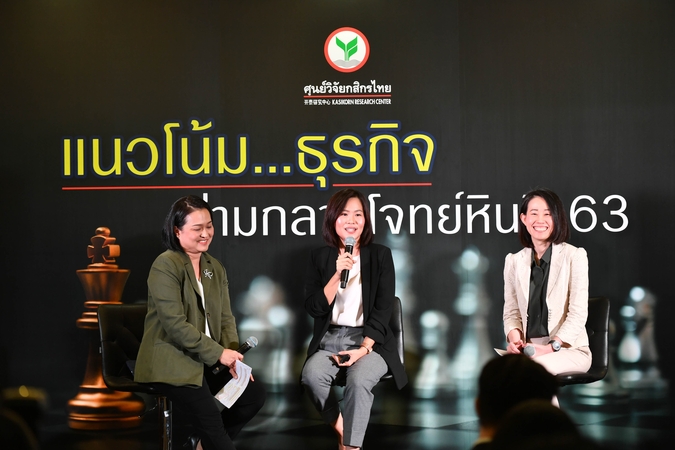
Kasikorn Research Centre has revised downward its gross domestic product (GDP) forecast for 2019 to 2.5 per cent and projected that the Thai economy may grow 2.7 per cent in 2020.

The centre revealed the forecast at its seminar on “Business Outlook amid Numerous Challenges in 2020” on Monday (December 9).

Meanwhile, Thai businesses may face numerous downside risks including the baht’s appreciation, drought and minimum wage hike, it added.

Nattaporn Triratanasirikul, KResearch assistant managing director, said that KResearch’s downward economic growth revision for 2019 to 2.5 per cent from 2.8 per cent can be attributed to lacklustre export performance which has been caused by the protracted trade war and the stronger baht, less-than-expected overall investment and delay in the enactment of the budget expenditure bill for FY2020.

“For 2020, GDP is projected to grow 2.7 per cent (within a projected range of 2.5-3.0 per cent). We hope that the economy will be mainly driven by the push for the draft bill on budget expenditure for FY2020 and disbursement acceleration.”

However, as the political uncertainty at home may prompt a delay in the injection of a new budget into the economic system, which will affect private sector confidence, GDP may see growth of 2.5 per cent or less, which is at the lower end of KResearch’s projection range.

Meanwhile, exports may continue to shrink due to deceleration in Thailand’s major export markets, the US-China trade war which is unlikely to be resolved anytime soon as well as the baht’s relentless rise, especially amid the expectation of another rate cut by the Fed next year which will put greater pressure on the US dollar.

Thai commercial banks are expected to brace for four challenges, especially limited loan growth in line with the overall economic sentiment.

The loan growth next year is expected to stay unchanged at 3.5 per cent. Non-performing loans may increase from 2019, while the banks’ fees are likely to grow no more than 1-2 per cent and there may be additional impacts from the government’s policies.

Additionally, downward trend of the interest rates and the government’s signals to commercial banks to help their customers will affect an adjustment of lending and deposit interest rates, which will in turn pressure net interest margin (NIM).

Kevalin Wangpichayasuk, assistant managing director, KResearch, said other business sectors would face tough questions as well.

First of all, the expected stronger baht in 2020, when compared to the 2019 average, will not only affect the export sector but also lead to a shrinkage or reduction of the manufacturing output and possible job losses. Based on preliminary estimations, over 30,000 jobs in the manufacturing sector will be affected after almost 100,000 jobs disappeared in 2019.

Meanwhile, the drought in 2020 is forecast to be more severe than in 2019 as the water levels in various dams in Thailand have dropped drastically since the beginning of this year.

The drought may result in a contraction in the gross domestic product of the agricultural sector and farmers’ income. It remains to be seen whether the drought next year will record another historically severe condition as seen in 2015-16. The outlook should be clearer in the first 3-4 months of 2020 when it will become known whether Thailand will experience a long dry season next year.

Regarding the latest daily minimum wage rise, although its impact on 2020 inflation will likely be limited, it may present a challenge to the business sector.

An average increase in the daily minimum wage of approximately Bt5 will cause average labour cost to rise by another 0.3 per cent while the agricultural business will be adversely affected by the stronger baht, drought and rising labour costs.

This may force the government to introduce specific policies to aid this sector.

Meanwhile, the property sector has not recovered yet because there are around 200,000 accumulated unsold residential units in the market, which is too high for property developers to clear within a short period of time.

Among the businesses that continue to thrive is tourism. Although international tourist arrivals to Thailand are projected to grow at a slower pace of approximately 2-3 per cent in 2020, declining from a prior estimate of about 4 per cent in 2019, some inbound tourism markets, including China, Asean and India, as well as domestic tourism will likely help create travel-related business opportunities in Thailand.

The government may continue to promote or introduce tourism stimulus measures as one of the tools to boost the Thai economy in 2020 because tourism accounts for as much as 18 per cent of GDP.

NCPO reveals names of 10 members of panel that recruited senators

#ศาสตร์เกษตรดินปุ๋ย : ขอบคุณแหล่งข้อมูล : หนังสือพิมพ์ The Nation

https://www.nationthailand.com/news/30379238?utm_source=category&utm_medium=internal_referral

NCPO reveals names of 10 members of panel that recruited senators

Dec 09. 2019
By The Nation

1,194 Viewed

The National Council for Peace and Order (NCPO) filed documents with the official Facebook page of iLaw (Internet Law Reform Dialogue), a Thai human rights NGO, revealing the 10 members of a committee that recruited senators.

iLaw had requested the information seven months ago, but the Office of the Army Secretary had not disclosed the names of the committee which had recruited the senators until November 7, when iLaw received the 63-page statement.

The documents stated that the NCPO appointed Prawit Wongsuwan, Pornpetch Wichitcholchai, Thanasak Patimaprakorn, Narong Pipatanasai, Adul Saengsingkaew, Prajin Juntong, Somkid Jatusripitak, Wissanu Krea-ngam, Chatchai Sarikulya and Anupong Paochinda as members of the committee that recruited the senators.

Most members have worked with Prime Minister Prayuth Chan-o-cha’s cabinet or are members of the NCPO. Wissanu, who is currently deputy prime minister, was the head of the committee.

The information has led to the question of nepotism as the prime minister’s brother, Preecha Chan-o-cha, Somkid’s brother Som Jatusripitak and Wissanu’s brother Chalermchai Krea-ngam were previously recruited as senators.

According to the documents, the committee was established to facilitate the process of senator recruitment, but the NCPO did not disclose the list of nominees to the public.

Finland is about to get the world’s youngest prime minister

#ศาสตร์เกษตรดินปุ๋ย : ขอบคุณแหล่งข้อมูล : หนังสือพิมพ์ The Nation

https://www.nationthailand.com/news/30379254?utm_source=category&utm_medium=internal_referral

Finland is about to get the world’s youngest prime minister

Dec 10. 2019
File Photo: EU Transport Ministers Meeting

BRUSSELS, BELGIUM - SEPTEMBER 20, 2019: Finish Minister of Transport and Communications, President of the Council Sanna Mirella Marin is waiting prior an EU transport Ministers meeting in the Europa, the EU Council headquarter on September 20, 2019 in Brussels, Belgium. The Council will hold an extensive policy debate on transport aspects of the EU's long-term strategic vision for reducing greenhouse gas emissions and meeting its climate commitments under the Paris Agreement. The discussion will be organised in three rounds: land transport (road,rail and inland navigation), aviation and shipping. (Photo by Thierry Monasse/Getty Images)

File Photo: EU Transport Ministers Meeting BRUSSELS, BELGIUM – SEPTEMBER 20, 2019: Finish Minister of Transport and Communications, President of the Council Sanna Mirella Marin is waiting prior an EU transport Ministers meeting in the Europa, the EU Council headquarter on September 20, 2019 in Brussels, Belgium. The Council will hold an extensive policy debate on transport aspects of the EU’s long-term strategic vision for reducing greenhouse gas emissions and meeting its climate commitments under the Paris Agreement. The discussion will be organised in three rounds: land transport (road,rail and inland navigation), aviation and shipping. (Photo by Thierry Monasse/Getty Images)
By Syndication Washington Post, Bloomberg · Kati Pohjanpalo, Leo Laikola 

551 Viewed

At just 34 years old, Sanna Marin is about to make history as she becomes the world’s youngest serving prime minister.

The Finnish Social Democrat won her party’s backing over the weekend, and is set to be confirmed on Tuesday. Marin will need to govern a five-party coalition that just ousted her predecessor, Antti Rinne, after he stumbled on a number of key issues. In the end, he was toppled in a dispute centering on pay at the state postal company.

Marin will lead a government at a younger age even than New Zealand’s Premier Jacinda Ardern, who was 37 at the time of her appointment. North Korea’s Kim Jong Un was under 30 years old when he became Supreme Leader in 2011. In Austria, former Chancellor Sebastian Kurz was 31 when he assumed office in 2017. Going further back in history, William Pitt the Younger stands out, becoming Britain’s prime minister at just 24 in 1783.

Finland’s new leader — the third woman to hold the position — will take over after the ruling coalition on Sunday agreed to keep working together to advance its existing policy program. But she faces a tough start after Rinne’s ouster just six months into his first term left rifts across the government.

Marin had a chance to demonstrate her leadership skills earlier this year, when she stood in for Rinne while he was recovering from a serious illness.

The peculiarities of Finland’s parliamentary system led to about 60 Social Democrats being in a position to pick the country’s next premier. Snap elections are a distant possibility and not automatically triggered by the government’s resignation. What’s more, parties have considerable leeway in selecting their own ministers.

The Center Party on Monday announced a partial reshuffle, with its leader Katri Kulmuni becoming finance minister in a swap with Mika Lintila, who takes on the economy minister’s role.

Among the Social Democrats, Europe Minister Tytti Tuppurainen will also supervise government shareholdings, and Sirpa Paatero resumes oversight of local government. Timo Harakka takes over from Marin as minister for transport and communications, and Tuula Haatainen becomes employment minister.

Marin says her first task will be to rebuild confidence across party lines within her coalition.

“There’s a lot of work to be done to rebuild trust,” she told reporters after the party vote. “We are still committed to a common policy program, and that’s the glue that unifies us as the government.”

Meanwhile, the cabinet is losing support in the polls. Almost a quarter of Finns would now vote for the opposition anti-immigration Finns Party, making it the country’s most popular. The Social Democrats and its main government ally the Center Party were each backed by just over 10% of the population in the latest survey by YLE.

The Social Democrats are particularly hampered by the country’s aging population, with pensioners making up a huge chunk of its backing. With public finances under pressure as the number of working-age people drops, the party’s traditional platform — a generous welfare society — is increasingly under threat.

The government hopes to create at least 60,000 jobs to underpin its fiscal policy. But that pledge coincides with a cooling down in Finland’s economy. Further headwinds loom as trade unions demand pay increases, which risks undermining the competitiveness of Finnish exports.

“The government’s road won’t be easy,” Marin said. “That’s OK. I’ve proven my abilities.”

Beijing pushes for removal of foreign tech in more state offices

#ศาสตร์เกษตรดินปุ๋ย : ขอบคุณแหล่งข้อมูล : หนังสือพิมพ์ The Nation

https://www.nationthailand.com/news/30379253?utm_source=category&utm_medium=internal_referral

Beijing pushes for removal of foreign tech in more state offices

Dec 10. 2019
By Syndication Washington Post, Bloomberg615 Viewed

The Chinese government is taking further steps to remove foreign technology from state agencies and other organizations, a clear sign of determination for more independence amid escalating tensions with the U.S.

Beijing will likely replace as many as 20 million computers at government agencies with domestic products over the next three years, according to research from China Securities. More than 100 trial projects for domestic products were completed in July, the brokerage firm said. The Financial Times newspaper said the Communist Party’s Central Office earlier this year ordered state offices and public institutions to shift away from foreign hardware and software.

The government under President Xi Jinping has been trying for years to replace technologies from abroad, and particularly from the U.S. Bloomberg News reported in 2014 that Beijing was aiming to purge most foreign technology from its banks, the military, government agencies and state-owned enterprises by 2020. The country’s Made in China 2025 plan also set out specific goals for technology independence, although the policy has been de-emphasized after contributing to trade war tensions.

President Donald Trump’s aggressive policies against China and its leading companies have given the effort renewed urgency. His administration banned U.S. companies from doing business with Huawei Technologies Co. this year and blacklisted other Chinese firms.

“The trade war has exposed various areas of Chinese economic weakness, which Beijing seems determined to rectify,” said Brock Silvers, managing director of Adamas Asset Management. “If the decision pushes Trump to finally come down hard with a more forceful ban of Chinese tech, however, China may one day regret having gone so public with its policy so soon.”

While the current push is narrow in scope, it is designed as part of the broad, long-standing effort to decrease China’s reliance on foreign technologies and boost its domestic industry. The goal is to substitute 30% of hardware in state agencies next year, 50% in 2021 and 20% in 2022, China Securities estimated, based on government requests and clients’ budgets.

The research, from September, detailed Beijing’s goals. The FT reported the number of computers to be replaced could reach 30 million, attributing the figures to China Securities. The newspaper said the goal is to use “secure and controllable” technology as part of the country’s Cyber Security Law passed in 2017.

Starting next year, key industries such as finance, energy and telecom will test more domestic products in trials that may last years, the firm said. Chinese banks are supposed to shift from International Business Machines Corp. and Oracle Corp. to more diversified X86 architecture suppliers and then eventually to fully made-in-China hardware. China has decided to adopt ARM architecture for its domestic hardware, China Securities said.

“The China-U.S. trade war could also help to breed a new market for home-made products,” China Securities analyst Shi Zerui wrote.

Still, Beijing’s push has proven difficult because its domestic industry hasn’t yet shown itself capable of matching foreign technologies in certain sectors. Particularly hard to replace, for example, are semiconductors from suppliers like Intel Corp. and Nvidia Corp., as well as software from Microsoft Corp. and Apple Inc.

“While large suppliers such as Microsoft and IBM are undoubtedly worried, many high-end components, like chipsets, can’t be easily replaced,” Silvers said.

Russia banned from 2020 Tokyo Olympics

#ศาสตร์เกษตรดินปุ๋ย : ขอบคุณแหล่งข้อมูล : หนังสือพิมพ์ The Nation

https://www.nationthailand.com/news/30379249?utm_source=category&utm_medium=internal_referral

Russia banned from 2020 Tokyo Olympics

Dec 09. 2019
By The Washington Post · Rick Maese

684 Viewed

The World Anti-Doping Agency executive committee voted Monday to bar Russia from competing at the next two Olympic Games.

The decision means Russia will have no formal presence at next year’s Summer Games or the 2022 Winter Games in Beijing. Similar to the 2018 Winter Olympics in PyeongChang, Russians who have not been implicated in the country’s state-sponsored doping scheme will be allowed to compete in Tokyo as unaffiliated athletes. In PyeongChang, 168 Russians competed as “Olympic Athletes from Russia.”

After being banned from the 2018 Games, the country and its Russian Anti-Doping Agency were conditionally reinstated in September 2018, but Russian officials were caught earlier this year manipulating data from its Moscow anti-doping laboratory and misleading WADA investigators, prompting a new chapter in a years-long doping scheme that continues to roil the international sports community.

WADA’s executive committee met Monday in Lausanne, Switzerland, where it considered recommendations from WADA’s Compliance Review Committee. The committee voted to give the Russian Anti-Doping Agency formal notice of its noncompliance with the World Anti-Doping Code, and the Russian agency has 21 days to respond. If it disagrees with the WADA ruling, it can protest the matter to the Court of Arbitration for Sport, which would have final say.

Russian Olympic officials had been bracing themselves for Monday’s decision. Yuri Ganus, the head of the Russian Anti-Doping Agency, told the Associated Press last week the sanctions “were to be expected, and they’re justified.”

Thomas Bach, the president of the International Olympic Committee, has said the Olympic governing body must abide by WADA’s decision. The IOC recently called Russia’s actions “an attack on the credibility of sport itself and is an insult to the sporting movement worldwide.” The organization – and Bach specifically – has been steadfast in its support of including Russian athletes “where they are able to demonstrate that they are not implicated in any way by the noncompliance.”

Not everyone agrees. Travis Tygart, the chief executive of the U.S. Anti-Doping Agency, has argued that WADA needed to take a tougher approach and bar all Russian athletes, contending that Russia’s Olympic and anti-doping officials have not heeded previous warnings.

“WADA must get tougher and impose the full restriction on Russian athlete participation in the Olympics that the rules allow,” Tygart said last week. “Only such a resolute response has a chance of getting Russia’s attention, changing behavior, and protecting today’s clean athletes who will compete in Tokyo, as well as future generations of athletes in Russia who deserve better than a cynical, weak response to the world’s repeated calls for Russia to clean up its act.”

The recent data manipulation is the latest act by Russian officials to flaunt anti-doping rules and international norms. As part of its 2018 reinstatement, Russia was required to turn over data from its Moscow laboratory. WADA investigators received that data in January but noticed it didn’t align with information that was shared by a whistleblower in October 2017. WADA launched a “formal compliance procedure” in September over concerns that the data had been tampered with or altered, and Russian officials were given three weeks to answer questions about the suspect data.

The Compliance Review Committee ruled last month that the “Moscow data are neither complete nor fully authentic,” and there were “hundreds of presumptive adverse analytical findings” shared by the whistleblower that weren’t included in Russia’s 2019 submission. The investigators found “the related underlying raw data and PDF files have been deleted or altered” after RUSADA had been reinstated and ordered to turn over the data.

Furthermore, the investigators found that someone attempted to implicate whistleblower Grigory Rodchenkov, the former director of the Moscow lab, by planting fabricated evidence in the data that he was involved in a scheme to extort money from athletes.

“Dr. Rodchenkov foresaw that Russia would manipulate laboratory data before disclosing it to authorities,” Rodchenkov’s lawyers Jim Walden and Avni Patel said in a statement last week. “The Russian gangster state continues to deploy a predictable and deplorable policy of deception, evidence-tampering and lying to cover up its crimes. The Kremlin must think the people of the world are idiots to believe this shameless and transparent stunt.”

Russia’s limited presence in Tokyo promises to be a major story line at next year’s Olympics. It’s not known how many Russian athletes might be competing, but Russia is traditionally a regular visitor to the medals podium. At the 2016 Summer Games in Rio de Janeiro, the country’s track and field athletes were barred from competing because of doping concerns, but they still sent 282 athletes and brought home 56 medals, the fourth-most of any nation. At the 2012 Games, the Russian contingent included 436 athletes, the third-largest Olympic team in London, and won 68 medals.

In addition to the ban on international competition – which also includes Youth Olympic Games, Paralympics, world championships and other major sporting events subject to WADA Code – the committee also recommended that Russian officials be barred from sitting on boards and committees related to international sports governance. Russia also will not be permitted to host any major sporting event or even apply for hosting duties, and the Russian flag would not be allowed to fly at any major event.

Giuliani carves influencer, shadow adviser roles

#ศาสตร์เกษตรดินปุ๋ย : ขอบคุณแหล่งข้อมูล : หนังสือพิมพ์ The Nation

https://www.nationthailand.com/news/30379248?utm_source=category&utm_medium=internal_referral

Giuliani carves influencer, shadow adviser roles

Dec 09. 2019
President-elect Donald Trump talks with Rudy Giuliani after a November 2016 meeting at Trump National Golf Club Bedminster in Bedminster Township, New Jersey. MUST CREDIT: Washington Post photo by Jabin Botsford

President-elect Donald Trump talks with Rudy Giuliani after a November 2016 meeting at Trump National Golf Club Bedminster in Bedminster Township, New Jersey. MUST CREDIT: Washington Post photo by Jabin Botsford
By The Washington Post · Josh Dawsey, Rosalind S. Helderman, Tom Hamburger, Devlin Barrett ·

674 Viewed

WASHINGTON – The president’s personal attorney Rudy Giuliani was on the phone in late 2018, pressing administration officials about his latest agenda item.

President Donald Trump had nominated a career Foreign Service officer to become the U.S. ambassador to Qatar, a key post in a Middle Eastern country with tricky regional relationships, an important U.S. military installation and vast oil reserves.

Giuliani, who has said he had held a cybersecurity contract with Qatar in 2017 and early 2018, proposed replacing her with someone he said would be a better fit – Scott Taylor, a Trump-supporting former congressman from Virginia defeated in his reelection bid in November 2018, according to people familiar with his outreach.

Giuliani’s previously unreported attempts to shape the pick for the U.S. envoy to Qatar is part of an unorthodox foreign policy portfolio he has carved out for himself while also working as a power-broker-for-hire with direct access to the president and top administration officials.

The dual roles he has embraced is part of what longtime colleagues say has been a transformation of the once-iconic New York mayor into a multimillionaire consultant to powerful figures overseas.

In the three years since Trump took office, Giuliani has expanded his lucrative foreign consulting and legal practice, taking on clients that span the globe, from Turkey to Venezuela to Romania to Ukraine.

Along the way, he also has used his singular perch to try to influence U.S. policy and criminal investigations – at times pushing the interests of foreign figures who could benefit him financially.

In 2017, Giuliani tried to get Trump and top Cabinet members to make moves sought by Turkey while working as a lawyer for a gold trader from that country with ties to top government officials. This spring, he successfully helped oust U.S. ambassador to Ukraine Marie Yovanovitch, a top target of a Ukrainian prosecutor whom he considered representing in a six-figure contract. In September, he urged Justice Department officials not to pursue a case against a wealthy Venezuelan energy executive who had hired him as a private attorney.

Giuliani has said he separates his private business from the work he does for the president for free. He has said the kind of services he provides his foreign clients does not require registering with the U.S. government as a foreign lobbyist.

But since the start of the administration, his actions have caused persistent alarm among Trump’s advisers, who worry that it is often not clear who Giuliani is representing – the president, his private clients or his own foreign policy views – in his meetings at the White House and in foreign cities, according to people familiar with the concerns who spoke on the condition of anonymity to describe internal discussions.

Those worries have become acute since Giuliani emerged as a central figure in the Ukraine pressure campaign that is the subject of the House impeachment inquiry – and the arrests of two of his associates, Lev Parnas and Igor Fruman, who assisted him in that effort.

Federal prosecutors in New York are scrutinizing Giuliani’s business ties to the men and his consulting business as part of a broad probe, according to people familiar with the investigation.

In several conversations in recent months, Attorney General William Barr has counseled Trump in general terms that Giuliani has become a liability and a problem for the administration, according to multiple people familiar with the conversations. In one discussion, the attorney general warned the president that he was not being well-served by his lawyer, one person with knowledge of the episode said.

The Justice Department and the White House declined to comment. Giuliani did not respond to calls and messages seeking his comment. His lawyer declined to comment.

Giuliani has assured the president that he is not in legal trouble, according to White House aides. And Trump has so far resisted entreaties to distance himself from the former New York mayor, telling others that he appreciates Giuliani’s combative media appearances on his behalf, according to White House officials and Trump advisers.

“He’s a good man, and he’s an honorable guy and he’s a great crime fighter, corruption fighter,” the president said in an interview with Bill O’Reilly last month.

Last week, even as the House began drafting articles of impeachment, Giuliani kept up his work abroad on the president’s behalf, swooping into Kyiv to meet with Ukrainian prosecutors who he claims have damaging information about Democrats.

But the federal probe – being run out of the U.S. attorney’s office in New York City that Giuliani once led – appears to be delving into his foreign entanglements.

In recent weeks, prosecutors subpoenaed a consulting firm founded by former FBI director Louis Freeh, which hired Giuliani to write an August 2018 letter to Romanian officials calling for an amnesty for people prosecuted for corruption, a policy change that would have benefited a Freeh client, according to people familiar with the move. The subpoena has not been previously reported.

Freeh’s firm declined to comment, as did a spokesman for the U.S. attorney’s office in Manhattan.

This examination of Giuliani’s activities is based on interviews with more than 25 of his associates, current and former administration officials and other people familiar with his work, many of whom spoke on the condition of anonymity because of the ongoing criminal investigation.

In recent interviews, Giuliani told The Washington Post that questions about his foreign clients are “diversions by Democrats hoping to shoot the messenger” and an effort to distract from information he is uncovering about the president’s political opponents, such as former vice president Joe Biden.

“The Swamp Media is going back 20 years to find anything I could have done which they can paint as ‘wrong,’ ” he wrote in a tweet this fall.

– – –

Giuliani first came to prominence as the mob-fighting U.S. attorney in Manhattan in the 1980s, a position that helped propel him into the New York mayor’s office in 1994. His calm, take-charge leadership during the Sept. 11, 2001, terrorist attacks brought him international acclaim.

After leaving office, he parlayed that fame into a new role as a paid speaker around the world. The money that suddenly began flowing his way was a revelation, according to people who knew him.

One longtime friend recalled that during his travels for speeches abroad, Giuliani learned he could get paid $1 million or more as a consultant to foreign interests. He was stunned – and enticed, said the friend, who spoke on the condition of anonymity to describe private conversations.

Soon, Giuliani began living a much more affluent lifestyle, enjoying a house in the Hamptons, premium cigars, fine scotch, first-class travel and a luxury residence in New York. In 2003, he married his third wife, Judith Nathan, in an elaborate ceremony on the lawn of Gracie Mansion attended by 400 guests, including Trump. (The couple are now in the midst of a bitter divorce.)

By the time Giuliani ran for president in 2008 – a bid that started strong but fizzled – his financial disclosure showed he had made $9.2 million for speeches alone between 2006 and mid-2007, many from domestic companies but also from foreign sponsors and think tanks. He made additional millions through his consulting company and his law firm, Bracewell & Giuliani, the disclosure showed.

But Giuliani’s failed presidential bid left the onetime hero “cast off into the political wilderness again,” said Andrew Kirtzman, a journalist who covered his political rise and wrote a 2001 biography of the former mayor.

He redoubled his efforts to make money, friends and associates noted.

“His values seemed to change,” Kirtzman said. “He was the least materialistic figure I’d ever covered back in his prosecutorial and mayoral days. His interest was always in power, not money. Then he became a man who was very interested in money.”

In the process, the former prosecutor began to drift away from colleagues he had known for decades, some of whom now express bewilderment at his transformation.

“There was a time when he wouldn’t take dirty money or questionable money or money of dubious origin,” said Ken Frydman, who served as the press secretary for Giuliani’s 1993 mayoral campaign, noting that Giuliani was known then for vetting donors especially aggressively. “Today, it seems he’ll take money from anyone.”

Like Trump, Giuliani has always had a stubborn refusal to admit mistakes, Frydman said.

“Don’t back down. Don’t apologize,” Frydman said of Giuliani’s philosophy. But he said there is “an intensity” to Giuliani now that goes beyond what he remembers: “He’s turned on the afterburners. He’s Rudy on steroids.”

Giuliani was soon moving in the same social circles as Trump, whom he had known for years in New York, emerging as one of the developer’s most vocal surrogates in the 2016 campaign.

After Trump’s surprise victory, Giuliani made clear that he wanted to be named secretary of state, according to current and former administration officials. But a team of lawyers vetting potential administration appointees raised red flags about possible conflicts of interest arising from his work overseas, according to the officials.

A few weeks after Trump’s election, Giuliani announced that he had taken himself out of the running for the job. On Fox News, he said he planned to pursue his private legal and consulting business “with even more enthusiasm” than before Trump’s election.

– – –

The former New York mayor had robust work overseas before Trump took office. His companies, Giuliani Partners and Giuliani Security & Safety, provided security and emergency management consulting to governments in Peru, Chile, Argentina and Ukraine, among others. He gave paid speeches around the world, including to Mujahideen-e-Khalq, or MEK, an Iranian resistance group operating in exile that was listed as a terrorist group by the State Department as recently as 2012.

But Trump’s election provided Giuliani with a substantially bigger platform – and newfound access to the top levels of U.S. decision-making.

He became a mainstay at the Trump International Hotel down the street from the White House, where he has spent long evenings meeting friends and potential business partners. When he needs to privately discuss deals, he convenes meetings at some of his favorite cigar bars, including Shelly’s Back Room in Washington and New York’s Grand Havana Room, according to people familiar with the sessions.

Giuliani has bragged to other Trump allies that he has made millions of dollars since the president took office, according to people familiar with his comments.

He also has regularly boasted about his access to Trump and the closeness of their friendship, said a senior U.S. official who interacted with Giuliani.

In one meeting with a prominent Ukrainian political figure in early 2018, Giuliani was explicit that hiring him would provide a route to the president, according to a person in attendance.

“It was just so clear what he was peddling. He was pushing for business, and his pitch was, ‘I’m close to the White House, I’m close to Trump. If you want to get in there, I’m your guy,’ ” the person said. In that case, the Ukrainian did not hire Giuliani.

Giuliani used his access to Trump in 2017 to push for two controversial issues sought by Turkish President Recep Tayyip Erdogan, as The Post has previously reported.

Early that year, he was hired by the legal team of a Turkish-Iranian gold trader, Reza Zarrab, who was charged in New York with violating U.S. sanctions against Iran. The matter was of keen interest to Erdogan, who said Zarrab was a political “hostage” of American law enforcement. Giuliani met with the Turkish president on a visit to Istanbul in February 2017 to discuss a possible “state-to-state resolution in this case,” according to court filings in the Zarrab case.

In fall 2017, Giuliani attended an Oval Office meeting in which Trump urged then-Secretary of State Rex Tillerson to consult with Giuliani and craft a diplomatic deal that would involve dropping charges against Giuliani’s client in exchange for concessions from Turkey, such as the release of an American pastor in Turkish custody.

People familiar with the incident have said Tillerson was shocked at what he viewed as an inappropriate request to intervene in a criminal matter. Tillerson has declined to comment.

Giuliani told The Post he sought a prisoner exchange but declined to comment on any private discussions on the topic. He said he did not need to register as a foreign agent for his Turkish advocacy because his only goal was to assist the legal case of his client, Zarrab. Defense attorneys are not required to register as foreign lobbyists when they assist clients in criminal or civil matters.

In late 2017, Zarrab pleaded guilty to orchestrating a multibillion-dollar conspiracy to evade U.S. sanctions against Iran by disguising money transfers so they would appear to be legitimate gold trades. He testified in federal court that the scheme was approved by Erdogan. Turkish officials denied any wrongdoing.

That year, Giuliani also persistently pushed Trump on another top concern of the Turkish president: extraditing exiled Turkish cleric Fethullah Gulen back to his home country to face prosecution. State Department and National Security Council officials have argued against such a move, but Trump appeared receptive to the idea, pressing his advisers about Gulen’s status, as The Post previously reported.

Giuliani declined to discuss whether he advocated for Gulen’s extradition, writing in a text message earlier this year: “can’t comment on it that would be complete attorney client privilege but sounds wacky.”

“I don’t represent foreign government in front of the U.S. government,” he told The Post earlier this year. “I’ve never registered to lobby.”

But inside the White House, officials were so disturbed by how he was promoting Turkey’s causes with Trump that then-Chief of Staff Reince Priebus pulled Giuliani aside in the West Wing in 2017 and warned him against lobbying for the country, officials said.

– – –

In April 2018, Giuliani formally joined Trump’s legal team to help him deal with special counsel Robert Mueller’s investigation, a position that required him to talk frequently with the president.

White House aides fear Giuliani has used his role as the president’s lawyer to promote the interests of private clients, fretting that they do not know whom he represents, officials said. His conversations with Trump are protected by attorney-client privilege, meaning even Trump’s closest aides are not briefed on what they discuss.

Priebus’s successor, John Kelly, tried to limit Giuliani’s reach, scheduling his meetings with Trump at the White House residence, so he would not interact with other White House staffers, former administration officials said. Kelly also told others he did not want to be part of calls or meetings with Giuliani, the people said.

Giuliani has insisted that he keeps his role as the president’s lawyer separate from the work he does for foreign interests.

“I’ve never lobbied him on anything,” Giuliani told The Post earlier this year, referring to Trump.

But he has continued to take on foreign clients, and, behind the scenes, his advocacy on foreign policy issues has not ceased, according to people familiar with his activities.

In the months after Giuliani joined Trump’s legal team, he began discussions with a group interested in influencing U.S. policy in Venezuela.

In summer 2018, over cigars and whiskey at New York’s Grand Havana Room, Giuliani met with Parnas and two American business executives with investments in the country seeking his advice on how to open a back channel of communication between Trump and Venezuela’s socialist leader, Nicolás Maduro, according to people familiar with the gathering.

As part of the previously unreported talks, Giuliani agreed to help find a way to negotiate with Maduro and a diplomatic solution to the political chaos and economic collapse overtaking the country, they said.

Weeks later, he told the group that he had met with John Bolton, the president’s national security adviser, to discuss the idea.

Charles Cooper, an attorney for Bolton, declined to comment.

Bolton’s distaste for Giuliani’s foreign policy freelancing has emerged during the impeachment inquiry. Former national security official Fiona Hill testified that Bolton warned her not to interact with the president’s lawyer, calling him “a hand grenade that is going to blow everybody up.”

After a contested election in January, Bolton urged Trump to formally recognize legislative leader Juan Guaidó as the country’s leader instead. Maduro has refused to abdicate, and the United States imposed stiffer sanctions in response.

By this summer, Giuliani had picked up an important Venezuelan client: energy executive Alejandro Betancourt López, who hired Giuliani to help him contend with a Justice Department investigation of alleged money laundering and bribery, according to people familiar with the situation.

Giuliani stayed at Betancourt’s historic estate outside Madrid in August, when he met with a top aide to Ukrainian President Volodymyr Zelensky and urged him to open investigations into the 2016 election and Biden’s son Hunter’s work for a Ukrainian gas company, as The Post previously reported.

On Aug. 13, days after returning from Madrid, Giuliani was back at Grand Havana Room, meeting with another potential client: the National Bank of Ukraine, which had taken over a bank once owned by Ukrainian businessman Ihor Kolomoisky, according to a person familiar with the meeting.

He suggested that lawyers with the law firm Quinn Emanuel, which represents the Ukrainian state-owned bank, hire him to wage a public campaign against Kolomoisky, with whom the bank is engaged in a complicated legal battle. Kolomoisky is also considered a political supporter of Zelensky.

Giuliani told Bloomberg, which first reported the meeting, that he was approached by the lawyers for the bank to see whether he could help them with a civil suit. He said the timing was not right.

“Since representing Trump I have considered and turned down all deals in Ukraine, even those not presenting a conflict,” Giuliani tweeted last week.

A spokesman for Quinn Emanuel declined to comment.

– – –

Giuliani’s interest in U.S. foreign policy has often tracked with countries where he has had a financial interest.

That was the case with his efforts to shape the pick for ambassador to Qatar, where he did security consulting work in 2017 and 2018 related to a hacking incident, Giuliani told The Post earlier this year.

He declined to describe the specific work he did but said his contract concluded before he was named Trump’s attorney in April 2018. He said he did not register as a foreign lobbyist because he never lobbied U.S. officials on behalf of Qatar.

The Qatari Embassy in Washington declined to comment.

In November 2018, Trump nominated Mary Catherine Phee to fill the post of ambassador to Qatar, a key diplomatic job that had been vacant since June 2017. Phee had served as a career diplomat since 1991, including a stint as ambassador to Sudan.

She is known as “an old school, talented diplomat” whose “strong point is the nitty-gritty of bilateral relations,” according to a former senior administration official involved in Middle East policy.

Scott Taylor, who wrote a 2015 book called “Trust Betrayed: Barack Obama, Hillary Clinton, and the Selling Out of America’s National Security,” had experience in the region and with energy policy. He served as a security contractor for Hunt Oil in Yemen from 2008 to 2010, Taylor told The Virginian-Pilot before his 2016 election. While in Congress, Taylor worked to build ties with Qatar, visiting the country in 2017 and speaking at a Qatari event in Washington in 2018.

Giuliani offered to promote Taylor as candidate for the post and help guide him through the process, according to a person familiar with his outreach.

During a night at a cigar bar in Washington in December and a lunch meeting the following day at the Trump hotel, Giuliani described a plan to promote Taylor for the job, the person said.

During the conversations, Giuliani told Taylor that he had done work in Qatar, but it was unclear why he was interested in shaping the ambassador pick.

In subsequent calls to administration officials, Giuliani argued that Taylor would be a better choice than Phee because he would be more supportive of Trump’s agenda, according to people familiar with the conversations.

As the process progressed, Giuliani also told Taylor he had discussed the idea with the president, who had seemed enthusiastic, one person said.

When asked about his advocacy for Taylor in a November interview, Giuliani laughed and ended the call.

Reached by phone, Taylor – who this summer launched a campaign to unseat Sen. Mark Warner, D-Va. – declined to comment on Giuliani’s effort to get him the appointment, saying only, “I had a lot of advocates on that.”

The State Department declined to comment.

Phee’s nomination expired when Congress adjourned last year, and Trump has not renominated her. He also did not name Taylor, leaving the key job vacant.

– – –

The scope of the ongoing investigation by federal prosecutors in Manhattan is unclear, but the recent subpoena to Freeh’s firm indicates that investigators appear to be drilling into Giuliani’s work abroad.

In August 2018, Giuliani sent a letter to the Romanian president, expressing his concern that “excesses” by the nation’s anti-corruption agency were resulting in the prosecution of innocent people. Giuliani called for an amnesty for people convicted under the system.

Giuliani told The Post at the time that he was hired to send the letter by Freeh’s firm. He declined to say on whose behalf Freeh’s firm was working or how much he was paid.

But Freeh has said he was hired in July 2016 to conduct a review of the conviction of Gabriel “Puiu” Popoviciu, a Romanian real estate executive sentenced to seven years in prison for fraud.

Popoviciu originally hired Freeh at the recommendation of Hunter Biden, who had been retained by the Romanian, an attorney for the former vice president’s son, George Mesires, confirmed. The New York Times first reported Hunter Biden’s role. A Biden campaign official said Hunter Biden never discussed his Romania work with his father, who actively supported anti-corruption initiatives in the country.

Giuliani’s letter to the Romanian president, written on the letterhead of his firm Giuliani Partners, did not mention his relationship to Trump. But it caused an immediate stir in Bucharest, where news organizations highlighted Giuliani’s role as the president’s attorney and questioned whether the letter indicated a shift in U.S. support for the anti-corruption agency.

The State Department tried to distance itself from him. “Rudy Giuliani does not speak for the U.S. government on foreign policy,” an official told The Post at the time.

Giuliani has repeatedly dismissed questions about the propriety of his foreign work.

“5 different organizations are looking at 8 different cases trying to find something wrong. why if I’m not part of a Left Wung [sic] Witchunt for nailing Biden,” he wrote in a recent text message.

But people familiar with the current investigation have said federal prosecutors are exploring a wide range of potential crimes – including wire fraud and failure to register as a foreign agent – as they examine Giuliani’s relationship with his two associates, Parnas and Fruman.

The two men were charged in October with campaign finance violations. The allegations do not implicate Giuliani, and both have pleaded not guilty.

Parnas and Fruman were key intermediaries who helped connect Giuliani early this year with Ukrainian officials such as Ukraine’s then-top prosecutor, Yuri Lutsenko, who was offering damaging information about Trump’s political opponents, Giuliani and Parnas have said.

Giuliani’s efforts in Ukraine soon merged with official U.S. policy. He pushed White House and State Department officials to issue a visa to a former Ukrainian prosecutor who was blocked from traveling to the United States because of corruption allegations, according to testimony from U.S. officials during the impeachment hearings.

And he lobbied Secretary of State Mike Pompeo to dismiss the U.S. ambassador, speaking with Pompeo twice by phone and then sending him a packet of material advocating her removal, documents show.

Yovanovitch was removed from her post in May, the same month Trump directed top U.S. officials working on Ukraine policy to coordinate with his private attorney. By July, Trump was personally involved in the effort, pressing Zelensky by phone to work with Giuliani to open the investigations.

Giuliani has insisted he was not paid for the work he did for Trump. But he has acknowledged that in January he considered representing Lutsenko and the Ukrainian Ministry of Justice, writing a draft contract to formalize the deal in which he would have been paid $500,000.

He told The Wall Street Journal that he quickly decided against the arrangement, fearing it could pose a conflict with his representation of the president.

Last week, Giuliani traveled to Budapest, where he met with Lutsenko, then traveled to Kyiv, where he met with two members of Ukraine’s parliament who have called for a joint U.S.-Ukrainian parliamentary investigation into the gas company that hired Hunter Biden.

During the trip, Giuliani indicated that he was speaking for the United States, writing on Twitter that until Ukraine investigates the “criminal conduct” of Biden, it “will be a major obstacle to the U.S. assisting Ukraine with its anti-corruption efforts.”

The president appeared pleased with his efforts, telling reporters Saturday that Giuliani was going to “make a report” to the attorney general and Congress.

“He says he has a lot of good information,” Trump said, adding: “I hear he has found plenty.”

South African mental health advocate crowned Miss Universe

#ศาสตร์เกษตรดินปุ๋ย : ขอบคุณแหล่งข้อมูล : หนังสือพิมพ์ The Nation

https://www.nationthailand.com/news/30379230?utm_source=category&utm_medium=internal_referral

South African mental health advocate crowned Miss Universe

Dec 09. 2019
By The Nation

487 Viewed

Zozibini Tunzi of South Africa was named Miss Universe 2019 at the beauty pageant finale on Sunday at Tyler Perry Studios in Atlanta, Georgia, while Thailand’s Paweensuda Drouin finished among the top 5.

Her official portrait

Her official portrait

Tunzi succeeds 2018 winner Catriona Gray of the Philippines.

Asked during the finale what is the most important thing young girls should be taught today, the 26-year-old mental health advocate answered:

“It is very important to teach young girls today the importance of their true value. We see so many perfections on social media – perfect lives, perfect bodies, perfect faces, perfect relationships. Nothing is that real. We have to teach them that they are already amazing, already worth it, because who they really are is not about their looks but what they feel, how they act and the way they react to the world. I believe a girl’s worth comes from what she offers to the world, which is way more than the way she looks.”

Tunzi oozed confidence during her closing statement at the pageant, saying: “I grew up in a world where a woman who looks like me, with my skin colour and my kind of hair, is not considered beautiful. That stops today. I want children to look at my face and see their own looking back at them.”

Tunzi is also an activist who fights against gender-based violence.

Madison Anderson of Puerto Rico was named first runner-up, while Sofía Aragón of Mexico finished in third place.

HCM City hospital introduces a nurse robot to help patients

#ศาสตร์เกษตรดินปุ๋ย : ขอบคุณแหล่งข้อมูล : หนังสือพิมพ์ The Nation

https://www.nationthailand.com/news/30379224?utm_source=category&utm_medium=internal_referral

HCM City hospital introduces a nurse robot to help patients

Dec 09. 2019
Võ Hồng Quân, director of the Centre of Information and Technology under the Eastern People Military Hospital in HCM City (left), introduces the nurse robot named Tấm. — VNA/VNS Photo Xuân Khu

Võ Hồng Quân, director of the Centre of Information and Technology under the Eastern People Military Hospital in HCM City (left), introduces the nurse robot named Tấm. — VNA/VNS Photo Xuân Khu
By Viet Nam News

360 Viewed

HCM CITY — Tấm’s role as a nurse at the Eastern People Military Hospital in HCM City is crucial to the health and well being of patients.

And despite plenty of hard work on a daily basis, you will not find her complaining about being tired – although you may have to charge the nurse from time to time.

Tấm is the first ‘robot’ nurse to help clinical staff perform routine work.

She has the appearance of a nurse, complete with tradition clothing worn by other medical staff at the hospital.

Tấm is designed to be able to move around, have face recognition system, remember certain tasks such as remembering patients’ name and giving patients directions.

And the robotic medic can also have conversation with patients about medical issues, nutrition diets, and measures to prevent popular illnesses.

An electronic board is designed to help patients look up the list of hospital fees and allow medical appointments to be made by specialists.

The nurse robot has turned the hospital into a highlight of HCM City’s medical industry in applying information technology to build a smart healthcare system for patients.

Colonel Trương Hoàng Việt, director of the Eastern People Military Hospital, said the robot was the result of application of intelligent technology, which was built on the basis of the universal connectivity technology.

The robot had the ability to identify faces and also break down language barriers.

But if that’s not enough, Tấm also can identify and stop careless actions or behaviours such as smoking in the hospital campus or littering.

The nurse robot is among sixteen initiatives in which the hospital has applied information technology to improve medical examinations and treatment quality.

Patients can access medical support from high-technology equipment. Four smart registration kiosks have been installed to help people quickly carry out registration procedures without requiring the guidance of medical staff.

By simply inserting a medical insurance card or a flashcard supplied by the hospital to the infrared eye for identification, all patient information will be recorded.

After patients choose the content of examination, the screen will immediately display the clinic they need to go for check-up and treatment.

These kiosks can check the validity of a health insurance card, capture patients’ image with the front camera, and work closely with the hospital’s overall management software to receive patients’ feedback on service quality.

The hospital has also implemented a range of other IT applications such as Room Access Control System, Disabled Robot Arm, and smart medical record cabinets.

Lê Thị Mến, a 72-year-old patient living in District 9’s Long Bình Ward, said she was surprised by the changes in the hospital over the years.

“I am very interested in the machines that the hospital has been equipped with from the lobby to the toilet. Auto technology products are everywhere to give us instructions,” she said.

Explaining about the information technology development at the hospital, Colonel Việt said the hospital was the first to be given financial autonomy in the country, so it faced various difficulties.

Old and degraded facilities as well as a shortage of medical staff has reduced the quality of medical examination and treatment. Therefore, the number of patients coming to seek medical treatment was very few.

“We were concerned about how to improve the hospital’s quality while maintaining the cost of treatment and the number of staff,” Việt said.

“There was only one way – application of information technology to solve the problem.”

That’s when the Information Technology Centre was founded.

The hospital’s Board of Directors had constantly developed creative ideas to improve the medical examination and treatment process based on the actual operational needs of the hospital.

A series of innovative ideas have been nominated by hospital staff and the centre helped turning them into high technology products.

Colonel Trịnh Ngọc Chí, deputy director of the hospital, said thanks to high-technology products, more people came to the hospital, rising from 700-800 patients in recent years to 1,800 patients at the peak per day.

The hospital’s management has also been easier. Chí said the board of directors would know what toilets needed to be cleaned and what areas were overloaded with patients via smart medical monitoring system.

Chí said the hospital would continue promoting the application of information technology in hospital management and operation, especially artificial intelligence to give the best services to patients. — VNS