Strong winds disrupt racing schedule of 33rd Phuket King’s Cup Regatta

#ศาสตร์เกษตรดินปุ๋ย : ขอบคุณแหล่งข้อมูล : หนังสือพิมพ์ The Nation

https://www.nationthailand.com/sport/30379168?utm_source=category&utm_medium=internal_referral

Strong winds disrupt racing schedule of 33rd Phuket King’s Cup Regatta

Dec 07. 2019
Boats in action at the Phuket King's Cup Regatta// Photo by Guy Nowell

Boats in action at the Phuket King’s Cup Regatta// Photo by Guy Nowell
By THE NATION

348 Viewed

Unlike previous years, the winds were too strong for many of the boats contesting the 33rd Phuket King’s Cup Regatta on Friday morning (December 6).

Only five of the nine classes were able to do any racing. The winds gusted from 30 to 35 knots in the morning off the southern end of the resort island, before easing slightly to allow for one race to be held late in the afternoon.

“We had winds gusting from 30 to 35 knots during the morning. Safety is the number one issue, so we had to cancel some of the racing,” said Race Officer Simon James.

When racing did eventually start in the afternoon, defending champion Australian Ray Roberts on Team Hollywood had a narrow win for the overall lead in the top flight IRC Zero class. He edged out Thailand’s former world Optimist champion and two-time Asian Games gold medalist Noppakao Poonpaton, who was at the helm of the Thai-registered boat THA 72.

With one day of racing to go, little separates these two speedy 52-foot racing boats.

The Hong Kong-registered WindSikher of Nick Burns and Sarab Singh finished third overall.

Russia’s Alexey Mashkin extended his overall lead in the IRC 1 class with a second place on his boat MegaZip, followed by Japan’s Kazuki Kihara on Char Chan, which won Friday’s race. In third place overall was another Japanese skipper, Nanamori Yasuo, on Emagine.

The IRC 2 class overall leader was Neil Semple and Morten Jakobsen on Over Here, closely followed by China’s Shen Sheng on Bigboys Sailing Team. Minzhi Feng, another Chinese sailor, was third overall on Highlead Encoragers.

The overall lead in the Premier class was held by Peter Cremers from Australia on Shahtoosh. Fellow Aussie Geoff Hill was second overall on Antipodes, followed by Thailand’s Ithinai Yingsiri on Pine-Pacific.

Only two boats contested the Firefly 850 Racing class on Friday, the last of the classes racing, and despite a second-place finish, Great Britain’s John Newnham’s Twin Sharks still has a narrow overall lead. Hot on his heels is Hans Rahmann on Voodoo.

The strong winds also caused some problems for the International Dinghy Fleet sailing off Kata Beach, with the Royal Thai Navy’s inflatable boats as well as some of the boats from the main fleet coming to lend a hand and towing some dinghies to shore. However, in the afternoon the wind dropped and racing resumed.

At the end of a windy day, experienced sailor M.L. Weka Bhanubandh led the boys’ Optimist class, with Thorfun Boonak in front in the girls’ Optimists.

Thanawan Aiam-mi had the overall lead in the 420 class, Suchakree Detthotsapol extended his lead in the Laser R class and Jarupong Meeusamsen cemented his lead in the Laser Standard class. Paliga Poonpat also kept her lead in the Laser 4.7 class after some close racing in difficult conditions.

The testing conditions were also noted by the large contingent of Chinese media, most of whom were drenched as they made their way across the windy, choppy sea on small inflatable boats to the Royal Thai Navy battleship anchored offshore, which is the media center. Friday’s racing was sponsored by the Belt and Road Regatta, which will be held in Beihai, China, on December 13.

It will be the first regatta in China named after the Belt and Road Initiative, China’s global infrastructure project, aimed at enhancing friendship and communications between China and Southeast Asian countries via sailing.

In the IOM class for radio-controlled boats, Thailand’s Vanaran Yusananda shot to the overall lead after four races held off southern Phuket. Vanaran is one of 14 Thais testing his skills as a radio sailor and jumped from fourth place on Thursday to the lead on Friday.

Maintaining his second place on Friday was China’s Yan Jiangiun, who held the same position after Thursday’s races. Australian Tim Brown was also consistent and kept his third position on Friday. A total of 24 radio sailors are racing, the first time the class was included in the Phuket King’s Cup Regatta.

The Phuket King’s Cup Regatta is organised by the Phuket King’s Cup Regatta Organizing Committee under the auspices of the Royal Varuna Yacht Club, in conjunction with the Yacht Racing Association of Thailand, the RTN 3 and the Province of Phuket.

There are five days of racing for the keelboats and multihulls, with a rest day on Thursday, December 5. For the International Dinghy Classes and IOM, four consecutive days of racing were scheduled from Wednesday (December 4) .


MBS got his world-beating Aramco IPO. Now the hard work begins.

#ศาสตร์เกษตรดินปุ๋ย : ขอบคุณแหล่งข้อมูล : หนังสือพิมพ์ The Nation

https://www.nationthailand.com/business/30379156?utm_source=category&utm_medium=internal_referral

MBS got his world-beating Aramco IPO. Now the hard work begins.

Dec 06. 2019
By Syndication Washington Post, Bloomberg · Alaa Shahine, Matthew Martin883 Viewed

Saudi Aramco’s world-beating initial public offering is a watershed moment for a business that’s bankrolled the kingdom and its rulers for decades. The world’s largest public company will now trade in Riyadh and not New York.

Less clear is how far it will help overhaul the economy of the world’s biggest oil exporter.

First floated by Crown Prince Mohammed bin Salman in 2016 with an ambition to raise as much as $100 billion, the share sale was touted as part of a blueprint for life after oil. Saudi Arabia would raise funds off its biggest asset, and use them to develop new industries.

But after global investors balked at hopes to value the company at $2 trillion, the final deal was not quite what the prince had envisaged. Aramco offered just 1.5% of its shares and opted for a local listing, relying almost entirely on Saudi and regional investors.

And while proceeds of $25.6 billion exceed the 2014 IPO of Chinese internet giant Alibaba Group Holding, it’s unlikely to be a game-changer for the $780 billion economy.

“It’s difficult to see how this level of subscription can be repeated to raise the sort of revenue required by Vision 2030,” said Bill Farren-Price, a consultant at RS Energy Group. “And Saudi economic diversification will need a lot more of that.”

The sale is the first major disposal of state assets under a plan to empower the private sector and attract foreign direct investment, which has tumbled since oil prices crashed in 2014.

“It does provide ammunition to support investments as they move into the main construction phase, but by itself it’s not enough,” said Monica Malik, chief economist at Abu Dhabi Commercial Bank and a longtime Saudi watcher. “The quality of spending remains critical — how much will be spent domestically, how effectively it will be deployed.”

The proceeds will be transferred to the Public Investment Fund, which has made a number of bold investments, plowing $45 billion into SoftBank Group Corp.’s Vision Fund, taking a $3.5 billion stake in Uber Technologies Inc.

At home, the sovereign wealth fund is financing mega projects to develop tourist hubs along the Red Sea and elsewhere.

But the fund has also been criticized for elbowing out private businesses in smaller projects. Plans for a $500 billion futuristic city announced in 2017 have raised concerns that the prince may end up sinking more cash into vanity ventures.

Funds from the IPO “should be invested, in domestic projects, with a large local content, while avoiding white elephants,” according to Ziad Daoud, chief Middle East economist at Bloomberg Economics.

“The government’s recent spending pattern has failed to live up to these criteria. It has cut investment, increased current spending and shown a continued penchant for mega-projects,” he wrote last month.

Still, pulling off the deal can help the prince get his ambitious plan for the economy back on track after setbacks at home, including the backlash against his purge of the elite, and abroad by the outrage over the murder of columnist Jamal Khashoggi and the war in Yemen.

The kingdom’s richest families, some of whom had members detained in Riyadh’s Ritz-Carlton hotel during a so-called corruption crackdown in 2017, are expected to have made significant contributions.

The state-owned oil giant set the final price of its shares at 32 riyals ($8.53), valuing the world’s most profitable company at $1.7 trillion. It received total bids of $119 billion.

Aramco will become the world’s most valuable publicly traded company once it starts trading, overtaking Microsoft and Apple.

The deal opens up one of the world’s most secretive companies that, until this year, had never published financial statements or borrowed in international debt markets.

It will also mean the company now has shareholders other than the Saudi government for the first time since it was fully nationalized in 1980.

Saudi Arabia pulled out all the stops to ensure the IPO got done. It cut the tax rate for Aramco three times, promised the world’s largest dividend and offered bonus shares for retail investors who keep hold of the stock.

Goldman Sachs, acting as share stabilizing manager, has the right to exercise a so-called greenshoe option of 450 million shares. The purchase option can be executed in whole or in part at any time on or before 30 calendar days after the trading debut. It could raise the IPO proceeds to $29.4 billion.

Vietjet launches four new international routes

#ศาสตร์เกษตรดินปุ๋ย : ขอบคุณแหล่งข้อมูล : หนังสือพิมพ์ The Nation

https://www.nationthailand.com/business/30379142?utm_source=category&utm_medium=internal_referral

Vietjet launches four new international routes

Dec 06. 2019
By THE NATION

1,462 Viewed

To meet the rising travel demand in the year-end festive season, Vietjet will launch four more direct international services linking Vietnam’s Central Highlands City of Da lat and the hub of Vietnam’s southwest city Can Tho to Seoul, Can Tho to Taipei and Hanoi to Bali.

These new routes aim to expand the airline’s international flight network while offering more travel opportunities for people from the North to the South of Vietnam and creating more convenient connections for travellers to visit Vietnam’s famous destinations.

In celebration of the new routes, millions of promotional tickets priced only from zero dollar (excluding taxes and fees) are up for grabs during the three golden days from December 10 to 12, between the golden hours noon to 2pm (GMT+7).

The promotional tickets are applied to all Vietjet’s international routes between Vietnam and Japan, South Korea, Taiwan, Hong Kong, India, Indonesia, Thailand, Singapore, Malaysia, Myanmar and Cambodia as well as all routes operated by Thai Vietjet.

The promotional tickets for all flights between Vietnam and Japan can be snapped at any time during the three golden days.

The promotional tickets are valid from January 3, 2020 to October 24, 2020 (excluding public holidays).

The Da Lat-Seoul (Incheon) route will operate four return flights per week, starting from January 15, 2020. The flight departs from Da Lat at 5.10pm and arrives in Seoul (Incheon) at 11.55pm. The return flight takes off from Seoul (Incheon) at 2.30am and lands in Da Lat at 5.50am (all in local times).

The Can Tho-Seoul (Incheon) route will operate three return flights per week starting from January 16, 2020.

The flight departs from Can Tho at 4.50pm and arrives in Seoul (Incheon) at 11.55pm. The return flight takes off from Seoul (Incheon) at 2.30am and lands in Can Tho at 6.20am (all in local times).

With the two new routes, Vietjet now has 11 routes, operating the most flights connecting Vietnam and South Korea, including Hanoi/Ho Chi Minh City/Hai Phong/Da Nang/ Nha Trang/Phu Quoc/Can Tho/Da Lat – Seoul, Hanoi/Nha Trang – Busan and Da Nang-Daegu.

The Can Tho-Taipei route will operate four return flights per week, starting from January 10, 2020. The flight departs from Can Tho at 12.40pm and arrives in Taipei at 5.10pm.

The return flight takes off from Taipei at 6.10pm and lands in Can Tho at 8.55pm (all in local times). After five years of operation in Taiwan, Vietjet operates the most routes between Vietnam and Taiwan with nine routes, including Hanoi/Ho Chi Minh City/Da Nang/Can Tho – Taipei, Ho Chi Minh City/Hanoi – Taichung/ Kaohsiung and Ho Chi Minh City-Tainan.

The Hanoi-Bali route will operate daily return flights, starting from January 26, 2020.

The flight departs from Hanoi at 10am and arrives in Bali at 4.25pm. The return flight takes off from Bali at 5.30pm and lands in Hanoi at 9.55pm (all in local times). Vietjet is the first and only carrier to operate direct flights from Hanoi to Bali. This is the second route of Vietjet to Bali following the Ho Chi Minh City-Bali route operated since May 2019.

Thai Union takes stake in cod-liver producer in Iceland

#ศาสตร์เกษตรดินปุ๋ย : ขอบคุณแหล่งข้อมูล : หนังสือพิมพ์ The Nation

https://www.nationthailand.com/business/30379137?utm_source=category&utm_medium=internal_referral

Thai Union takes stake in cod-liver producer in Iceland

Dec 06. 2019
 Thai Union CEO Thiraphong Chansiri 

Thai Union CEO Thiraphong Chansiri
By THE NATION

1,852 Viewed

The world’s seafood leader, Thai Union Group, has made a strategic investment in Aegir Seafood Company, one of the leading producers of cod liver in Iceland.

The investment in Aegir will support the growth of the cod liver business for Thai Union’s King Oscar brand, a Norwegian-based manufacturer of cod liver, sardines and mackerel.

“Aegir has built a reputation over almost 25 years for manufacturing some of the most premium cod liver in the market today,” said Thai Union CEO Thiraphong Chansiri.

“The strategic investment in Aegir will strengthen King Oscar’s capacity and market position through the addition of the plant in Iceland, while also providing improved sourcing of cod liver for the brand.”

Aegir sources all of its cod from Icelandic Responsible Fisheries, while its products are also certified by the Marine Stewardship Council (MSC). MSC certification is widely recognised by global experts as the best mark of seafood sustainability.

The investment will play an important role in King Oscar’s strategy to create growth and help it take a leading position in the canned cod liver segment.

King Oscar has a strong brand heritage of more than 140 years and is one of the leading canned fish suppliers in Norway, the US, Poland, Belgium and Australia. King Oscar was acquired by Thai Union in 2014.

Committees, panel set up to regulate airport link project, power plants

#ศาสตร์เกษตรดินปุ๋ย : ขอบคุณแหล่งข้อมูล : หนังสือพิมพ์ The Nation

https://www.nationthailand.com/business/30379151?utm_source=category&utm_medium=internal_referral

Committees, panel set up to regulate airport link project, power plants

Dec 07. 2019
Credit : EEC Office

Credit : EEC Office
By THE NATION

943 Viewed

The Eastern Economic Corridor Policy Committee on Friday (December 6) gave the nod to the establishment of a committee to regulate the high-speed train project linking three international airports.

A second new committee will also be set up to manage the contract for this project, Kanit Sangsubhan, the committee’s secretary general, said, adding that this was in line with the proposals of the EEC management panel chaired by Finance Minister Uttama Savanayana.

On October 24, the State Railway of Thailand (SRT) and Eastern High-Speed Rail Linking Three Airports Co., Ltd, led by Charoen Pokphand Holding and strategic alliances, signed a Public Private Partnership (PPP) deal to develop the high-speed rail linking Don Mueang, Suvarnabhumi and U-Tapao airports.

The EEC committee also appointed a panel to study and draw up the plan to establish the waste-driven power plants in the EEC and the power purchase plan. The panel consists of representatives from the Interior Ministry, Energy Ministry, PTT Global Power Synergy (GPSC). It will have to submit the progress of the study within next three months.

The plants are expected to be completely set up in next few years.

Rise in minimum daily wage deemed acceptable

#ศาสตร์เกษตรดินปุ๋ย : ขอบคุณแหล่งข้อมูล : หนังสือพิมพ์ The Nation

https://www.nationthailand.com/business/30379154?utm_source=category&utm_medium=internal_referral

Rise in minimum daily wage deemed acceptable

Dec 07. 2019
Thanawat Pholwichai, director of the Centre for Economic and Business Forecasting of the University of the Thai Chamber of Commerce

Thanawat Pholwichai, director of the Centre for Economic and Business Forecasting of the University of the Thai Chamber of Commerce
By THE NATION

867 Viewed

The rise in daily minimum wage announced yesterday (December 6) was set at an appropriate rate, said Thanawat Pholwichai, director of the Centre for Economic and Business Forecasting of the University of the Thai Chamber of Commerce.

He estimated that the hikewould see business operators paying an additional Bt30 billion in wages a year to labourers.

From this point of view, the rate is acceptable and not too high, he said, adding that it was speculated earlier that the daily minimum wage would increase by between Bt10 and Bt15.

The National Wage Committee announced today (December 6) that it will raise the minimum wage by Bt6 in nine provinces and Bt5 for others.

The committee will propose the new wage for Cabinet approval as soon as possible as it intended the increase to take effect on January 1, 2020. Supant Mongkolsuthree, chairman of the Federation of Thai Industries (FTI), said he believes the industrial sector could cope with the new rate in spite of the ongoing economic deceleration.

The hike, he said, would mostly affect SMEs and the farm sector as they are labour-intensive sectors while major industrial firms could adapt by deploying automation/robotics system.

Germany boosts electric-car incentives to stimulate demand

#ศาสตร์เกษตรดินปุ๋ย : ขอบคุณแหล่งข้อมูล : หนังสือพิมพ์ The Nation

https://www.nationthailand.com/business/30379164?utm_source=category&utm_medium=internal_referral

Germany boosts electric-car incentives to stimulate demand

Dec 07. 2019
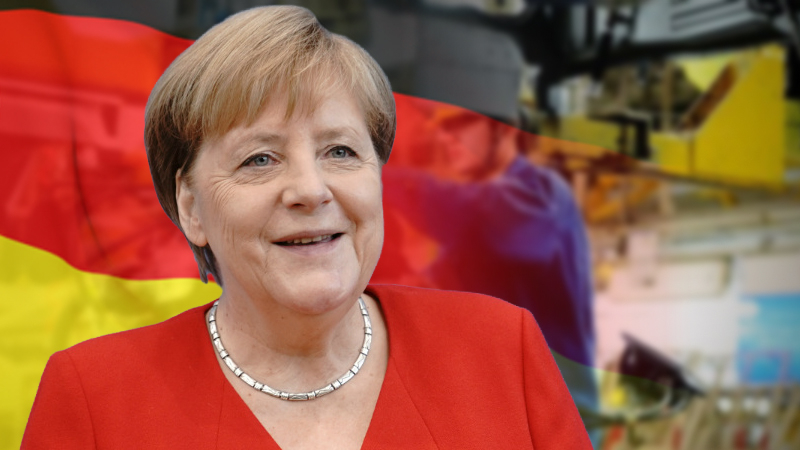
Angela Merkel visits the VW ID.3 electric car factory in Zwickau, Germany MUST CREDIT: Bloomberg photo by Krisztian Bocsi

Angela Merkel visits the VW ID.3 electric car factory in Zwickau, Germany MUST CREDIT: Bloomberg photo by Krisztian Bocsi
By Syndication Washington Post, Bloomberg · Iain Rogers, Arne Delfs

911 Viewed

Chancellor Angela Merkel’s government and German automakers agreed to increase cash incentives for electric cars, intensifying an effort to move away from the combustion engine and reduce harmful emissions.

A so-called environment bonus will jump by 50% to as much as 6,000 euros ($6,680) per electric vehicle and the auto industry will continue to cover half the cost, Merkel’s chief spokesman, Steffen Seibert, said in a statement. The changes will take effect this month and run through 2025, according to Bernhard Mattes, president of Germany’s VDA auto lobby.

“It will therefore be possible to provide support for another 650,000 to 700,000 electric vehicles,” Seibert said. The measures were agreed Monday evening in Berlin between Merkel and officials from automakers, parts suppliers and labor unions, including the chief executives of Volkswagen AG, BMW AG and Daimler AG.

The accord came a day after Merkel visited a revamped VW electric-car plant in Zwickau, eastern Germany. The chancellor has come under fire for failing to make more progress in curbing greenhouse-gas emissions, while VW — the world’s biggest carmaker — has invested billions in the shift to electric vehicles.

Merkel’s Climate Protection Program 2030, unveiled in September, targets as many as 10 million electric cars on German roads by that year, a goal that most automotive experts say is unrealistic even with generous subsidies. As of the start of the year, there were about 420,000 electric and hybrid-electric vehicles in a national fleet of 47 million, according to the the University of Duisburg-Essen’s Center for Automotive Research.

Merkel called the challenges facing the industry “a paradigm shift in mobility that has never been realized in automotive history.”

Germany is closing in on Norway for European leadership with sales of almost 53,000 all-electric cars this year, according to the KBA, or federal motor transport authority. Per-capita it remains far behind the smaller country, and it’s still unclear how many German customers will ultimately switch to electric cars in a country with a rich automotive heritage centered on combustion engines.

Subsidies make a difference because higher costs for development and batteries drive up the price of an electric car. VW’s ID.3, for example, will start at just under 30,000 euros ($33,200 U.S.), while the least-expensive version of the new combustion-powered Golf will be sold for less than 20,000 euros.

The government’s push to promote electric cars includes boosting the number of public charging stations to 50,000 within two years, Seibert said. Automakers will help fund 15,000 of the stations by 2022. BMW has said it will install 4,100 charging points at its German locations by 2021, with about half being open to the public.

“I see this as an absolute chance to now increase demand, which will be good for us,” Klaus Rosenfeld, chief executive officer of German automotive supplier Schaeffler AG, said in an interview Tuesday.

“Anything that helps to achieve this mobility transformation, to increase consumer demand, is good for us, so in that sense we welcome the decision made today,” he added.

Merkel said in a podcast Sunday that the government’s focus is on promoting electric vehicles, but that it’s also open to hydrogen technology. It wants 1 million charging stations to be in place by 2030, she said.

Merkel’s $60 billion climate package failed to restore her reputation as a champion of the environment. Critics branded the measures, such as extra taxes on flights, as insufficient for a “climate emergency,” while economists criticized carbon price proposals as too shy an approach to spur emissions cuts.

Big industry and some union leaders slammed Germany’s go-it-alone approach, saying it would harm jobs and businesses.

Ferdinand Dudenhoeffer, the director of Center for Automotive Research, estimates a tally of about 5 million all-electric and hybrid car registrations by 2030. Reaching that level would be an achievement, he said in September.

Germany gets glimmer of hope as firms say worst may be over

#ศาสตร์เกษตรดินปุ๋ย : ขอบคุณแหล่งข้อมูล : หนังสือพิมพ์ The Nation

https://www.nationthailand.com/business/30379163?utm_source=category&utm_medium=internal_referral

Germany gets glimmer of hope as firms say worst may be over

Dec 06. 2019
By Syndication Washington Post, Bloomberg · Yuko Takeo878 Viewed

German business expectations improved in October from a decade low, a cautious sign that Europe’s largest economy may have stopped deteriorating at the start of the fourth quarter.

The figures from the Ifo Institute offer a glimmer of hope a day after a survey showed manufacturing still stuck in a slump and industry employment falling at the fastest pace in almost 10 years. Germany’s economy is forecast to have slipped into a technical recession in the third quarter, though economists see a return to modest growth at the end of the year.

Ifo said Friday its business climate indicator was unchanged in October, and the expectations measure rose more than economists forecast to a three-month high.

The euro rose 0.1% to $1.1117. German 10-year bond yields, which have been pushed far below zero this year on concern about the economy, climbed 2 basis points to minus 0.38%.

The report is a rare piece of encouraging news for the export-reliant economy, which is taking hits on multiple fronts, from a global slowdown amid trade tensions to upheaval in its key auto industry. Purchasing Managers’ Indexes show manufacturing mired in a deep slump, though the latest figures also showed that a decline in demand has eased somewhat.

The country’s struggles are also weighing on the euro zone, where the European Central Bank stepped up monetary stimulus last month by cutting interest rates further below zero and reviving asset purchases. In his final press conference on Thursday, President Mario Draghi highlighted how the euro-area services sector is now showing signs of negative contagion.

While the downturn has amplified calls for governments to add fiscal stimulus, in Germany imminent action appears unlikely.

Chancellor Angela Merkel has said the problem isn’t a shortage of money for investment, and there are sufficient projects in the pipeline. A government spokeswoman said Friday that Germany is sticking to its balanced-budget policy and sees no need for a spending program to boost the economy — a worrying sign for Christine Lagarde, who takes over the ECB presidency following Draghi’s exit this month.

Labor market remained strong in November as U.S. economy added 266,000 jobs and jobless rate fell to

#ศาสตร์เกษตรดินปุ๋ย : ขอบคุณแหล่งข้อมูล : หนังสือพิมพ์ The Nation

https://www.nationthailand.com/business/30379155?utm_source=category&utm_medium=internal_referral

Labor market remained strong in November as U.S. economy added 266,000 jobs and jobless rate fell to

Dec 06. 2019
File Photo

File Photo
By The Washington Post · Rachel Siegel ·

988 Viewed

The United States added 266,000 jobs in November as the jobless rate decreased to 3.5%, the latest snapshot of an economy that appears to have slowed but stabilized in recent months.

The data, released by the Bureau of Labor Statistics, beat expectations. Analysts had forecast roughly 180,000 new jobs for the month.

The tally was impacted by thousands of General Motors workers who returned to their jobs in late October after a lengthy strike.

The labor market has remained one of the brightest spots in the economy, and combined with the high stock market has contributed to high levels of consumer spending and a relatively rosy consumer sentiment.

Many employers are still struggling to find qualified workers to fill jobs, but other companies have had to cut jobs because of a recent pullback in manufacturing demand.

The labor market’s health could have big implications for the 2020 elections.

Concerns about a looming recession have waned, but the economy has still shown signs of cooling. Economists have warned the mounting toll of President Donald Trump’s protracted trade war has strained global trade growth and slowed the creation of American jobs. Federal Reserve Chair Jerome Powell has said Trump’s tariffs have wrought so much uncertainty that companies are delaying investments and slowing the economy.

But major parts of the economy continue to show resilience, buoyed in part by consumer spending and the low unemployment rate.

Uncertainty remains an issue. Just this week, Trump said he could wait to strike a deal with China until after the 2020 election, sending stocks plunging. The volatility followed Trump’s announcement he was reimposing tariffs on steel and aluminum coming from Brazil and Argentina, though the timeline for this action is uncertain.

Diane Swonk, chief economist at accounting firm Grant Thornton, expected November’s numbers to rise significantly from the month before as GM workers returned to work. Roughly 48,000 strikers, and 12,000 workers who suffered layoffs during the strike, are expected to have returned to the payrolls, Swonk said.

Still, Swonk projected some drag on employment thanks to the loss of 12,000 temporary workers who wrapped up their jobs for the 2020 census. Holiday hires were expected to stay muted so long as retail stores continued closing their doors.

Seasonal retail hiring is also down. Compounding store closures is a shift among retailers to focus on their websites and distribution centers to meet customer demand, rather than stocking physical stores with employees, said Julia Pollak, an economist at ZipRecruiter, a popular job site.

Mark Hamrick, senior economic analyst at Bankrate.com, expected November to bring solid job growth. But he said that monthly average job growth for the year is running 26% below the pace seen this time last year. Hamrick said a “major development of some kind” would be needed to change course.

“Employers continue to counter challenges associated with trade disputes and tariffs,” Hamrick wrote in comments Thursday. “The general election, now less than one year away, will add another layer of uncertainty for business leaders trying to make decisions on hiring and investment.”

Additionally, private payroll growth in November grew by just 67,000, according to a Wednesday estimate from ADP and Moody’s Analytics. That number came in far behind estimates of 150,000, marking the slowest growth since May. Mark Zandi, chief economist for Moody’s, said in a statement that the “job market is losing its shine,” adding that manufacturers, commodity producers and retailers were shedding jobs and that openings were declining.

“If job growth slows any further unemployment will increase,” Zandi said earlier this week.

The country added a better-than-expected 128,000 jobs in October when the jobless rate rose slightly to 3.6%. Those numbers were affected by the General Motors strike, in which workers shut down production for six weeks at the automaker. The strike spurred layoffs from Canada to Mexico in related industries and caused a rise in unemployment claims in states like Michigan.

Vietnam to reduce 75 per cent ocean plastic waste by 2030

#ศาสตร์เกษตรดินปุ๋ย : ขอบคุณแหล่งข้อมูล : หนังสือพิมพ์ The Nation

https://www.nationthailand.com/news/30379171?utm_source=category&utm_medium=internal_referral

Vietnam to reduce 75 per cent ocean plastic waste by 2030

Dec 07. 2019
Workers collect ocean plastic waste in Quy Nhơn Port, coastal south-central province of Quy Nhơn.—VNA/VNS Photo

Workers collect ocean plastic waste in Quy Nhơn Port, coastal south-central province of Quy Nhơn.—VNA/VNS Photo
By Viet Nam News/Asia News Network

82 Viewed

HÀ NỘI — Việt Nam aims to reduce plastic waste discharged into the sea and ocean by 75 per cent.

The country also wants to totally end the usage of disposable plastic products in coastal tourist attractions and resorts as well as the disposal of fishing gear into the sea by 2030.

The targets follow the National Action Plan on Ocean Plastic Waste Management by 2030, approved by Prime Minister Nguyễn Xuân Phúc on Wednesday.

The plan’s overall objective was to effectively implement commitments of Việt Nam to address plastic-waste issues, especially ocean plastic waste, and ensure the prevention of plastic waste discharge into the ocean, Phúc said.

Based on that, it would make Việt Nam become the pioneer in the region to reduce ocean plastic waste, he said.

The plan is also expected to contribute to the successful implementation of the National Strategy on Solid Waste Management by 2025, with a vision to 2050, also approved by Phúc under the decision No 491/QĐ-Ttg in May, 2018 as well as raise public awareness of the harmful effects of using disposable plastic products to the environment.

To do that, the national action plan has pointed out five major tasks.

The tasks include raising public awareness to change behaviour with plastic products and ocean plastic waste; collecting, sorting out, transporting and treating ocean plastic waste; controlling plastic waste at source; taking international co-operation to transfer technologies of treating ocean plastic waste; and conducting research and building a mechanisim to effectively manage ocean plastic waste.

Under the action plan, ministries and relevant agencies will monitor annually and every five years to assess the implementation of regulations on collecting and treating plastic waste in 12 island districts nationwide.

Việt Nam is one of the five countries dumping the most plastic waste into oceans, according to international organisations. The Ministry of Natural Resources and Environment estimated about 80 tonnes of plastic waste and bags are thrown away every day in the two cities of Hà Nội and HCM City.—VNS