Thailand looks to become LNG hub

#ศาสตร์เกษตรดินปุ๋ย : ขอบคุณแหล่งข้อมูล : หนังสือพิมพ์ The Nation

https://www.nationthailand.com/business/30379076?utm_source=category&utm_medium=internal_referral

Thailand looks to become LNG hub

Dec 04. 2019
Energy Minister Sontirat Songtijirawong

Energy Minister Sontirat Songtijirawong
By THE NATION

1,065 Viewed

The Energy Policy Administration Committee today (December 4) acknowledged the guidelines for turning Thailand into the regional trading hub of liquefied natural gas (LNG).

The guidelines came about from a study assigned by the government-appointed energy reform committee to PTT.

Energy Minister Sontirat Songtijirawong said that the move was estimated to generate Bt165 billion for Thailand’s economy between 2020 and 2030.

The country is expected to start full commercial trading late next year or early in 2021.

Thailand has potential to become the regional hub due to its high demand of LNG and its geographical location as the centre of countries with high LNG demand, namely China, India, Japan, Cambodia, and Vietnam.

Moreover, Thailand has a supportive infrastructure to serve regional LNG trading.

Thailand is expected to provide services related to regional LNG trading in the first quarter of next year on a trial basis. The trial will also cover an LNG reload system and filling of LNG-fuelled vessels.

It will also revise the relevant rules and create intra-regional cooperation on the LNG trading.

Rubber sector plan approved

#ศาสตร์เกษตรดินปุ๋ย : ขอบคุณแหล่งข้อมูล : หนังสือพิมพ์ The Nation

https://www.nationthailand.com/business/30379067?utm_source=category&utm_medium=internal_referral

Rubber sector plan approved

Dec 04. 2019
The government’s deputy spokeswoman Rachada Dhnadirek

The government’s deputy spokeswoman Rachada Dhnadirek
By THE NATION

1,365 Viewed

The cabinet yesterday (December 3) approved the 20-year rubber sector strategy (2016-2036), which is designed to boost both the farmers’ incomes and the yield per rai.

The strategy was proposed by the Rubber Authority of Thailand.

The five goals the strategy aims to achieve by 2036 include the reduction of the area used for rubber plantations nationwide area to 18.4 million rai from 23.3 million rai in 2016.

The yield per rai will be boosted to 360 kg/rai from an average of 224 kg/rai in 2016, while farmers’ income should go up to Bt19,800 per rai from Bt11,984 per rai in 2016.

The rubber export value will increase to Bt800 billion per year from Bt250 billion per year in 2016.

The fifth goal is to raise the local use of rubber to 35 per cent from 13.6 per cent in 2016.

The government’s deputy spokeswoman Rachada Dhnadirek said that in the past four months the Deputy Prime Minister and Commerce Minister Jurin Laksanawisit had witnessed the signing of sales of Thai rubber to foreign buyers worth Bt34 billion as part of the international roadshow.

Thailand leads progress in software legalisation campaign

#ศาสตร์เกษตรดินปุ๋ย : ขอบคุณแหล่งข้อมูล : หนังสือพิมพ์ The Nation

https://www.nationthailand.com/business/30379062?utm_source=category&utm_medium=internal_referral

Thailand leads progress in software legalisation campaign

Dec 04. 2019
Tarun Sawney, senior director at BSA

Tarun Sawney, senior director at BSA
By THE NATION

2,003 Viewed

BSA – The Software Alliance (BSA) reports that Thailand is leading the region in a recent campaign aiming to clean up corporate use of illegal software.

Midway through the campaign, Thailand’s results for software legalisation were better than those of the Philippines, Vietnam and Indonesia – thanks in large part to support from the Thai government and good levels of cooperation among Thai business leaders.

BSA reports that nearly 400 corporations in 11 provinces cooperated in software legalisation. Provinces with the highest levels of software legalisation include Bangkok, Samut Prakan, Nonthaburi and Chon Buri.

The campaign will end in February, and at this time BSA will issue performance reports for each participating Asean country. Most of the companies to legalise are manufacturing, engineering and industrial design firms.

“This campaign is working in Thailand because corporations understand the need to legalise, and that it’s much better to do it proactively today than to wait for a cyber crisis or legal issue,” said Tarun Sawney, senior director at BSA.

“The Thai police play an important role in holding corporations accountable. We also believe that CEOs in Thailand are highly aware of their responsibility to use legal software, and they are much more proactive than in some other countries.”

The BSA Legalise and Protect initiative was launched to educate CEOs about the variety of risks linked to use of illegal software, including cyber security risks.

In September, BSA launched a Clean Up to the Countdown campaign to persuade CEOs to ensure their corporations are compliant by the 2020 New Year. The campaign was launched in four large Southeast Asian nations: Indonesia, the Philippines, Thailand and Vietnam.

Thus far, more than 1,000 corporations made software purchases with the goal of legalising their software assets and reducing their risk.

Asean CEOs have approved purchases for software for approximately 6,000 PCs since September.

BSA reports that corporations in Vietnam and Indonesia continue to lag behind the other countries in the race to legalise software assets.

However, Indonesia did provide one highlight in the campaign when one Indonesian conglomerate legalised software for several thousand PCs. But otherwise corporations in Indonesia performed poorly in response to the campaigns and continue to risk the use of illegal software.

BSA anticipates growing levels of software legalisation over the coming months.

To protect themselves from future crises, companies can implement proven software asset management (SAM) best practices to get more out of their technology.

Full software legalisation also helps corporations prevent debilitating cyber security damages, improve productivity, reduce downtime, centralize license management, and even reduces costs due the flexibility of the modern subscription model.

“We like the progress we are seeing this year, but some CEOs will only clean up their companies when they face very significant pressure from government enforcement officials, and so we will work with our partners in government to bring legal action against CEOs whose corporations refuse to comply,” Sawney said.

Xiaomi follows Alibaba and Tencent with internet finance services in India

#ศาสตร์เกษตรดินปุ๋ย : ขอบคุณแหล่งข้อมูล : หนังสือพิมพ์ The Nation

https://www.nationthailand.com/news/30379099?utm_source=category&utm_medium=internal_referral

Xiaomi follows Alibaba and Tencent with internet finance services in India

Dec 05. 2019
Pedestrians walk past a Mi home mobile store in Kolkata, India. [Photo provided to China Daily]

Pedestrians walk past a Mi home mobile store in Kolkata, India. [Photo provided to China Daily]
By Ma Si
China Daily

114 Viewed

Xiaomi Corp has launched a personal loan service in India aimed at young professionals and millennials, as the Chinese smartphone vendor looks to consolidate its presence in the country’s fast-growing internet finance market.

Xiaomi’s move comes after Chinese tech peers like Alibaba Group Holding Ltd and Tencent Holdings Ltd have already established a beachhead in the India internet finance sector via investments.

It is also the latest push by Xiaomi, which has been the top smartphone vendor in India for nine consecutive quarters, to leverage its sizable local user base to offer more internet services.

Xiaomi said it is launching Mi Credit, a marketplace for digital lending, which offers users credit between 5,000 Indian rupees ($70) and 100,000 Indian rupees at low interest rates.

It has partnered with a number of local startups, such as Bengaluru-based ZestMoney, CreditVidya, Money View, Aditya Birla Finance Ltd and EarlySalary, to determine who should get credit and then finance it, according to a report by tech news website Tech-Crunch.

Xiaomi said earlier that it has shipped more than 100 million smartphones in India. Xiaomi has been operating its lending business in its home turf for some time. In mid-2018, its financial services’ lending business stood at a loan book of $8 billion with $2 billion in outstanding balances.

Xiaomi is not the first Chinese company that is eyeing the Indian internet finance market. Ant Financial, the finance arm of Alibaba, has invested in Paytm, the largest mobile payment platform in India. Tencent has also reportedly bought a minority stake in Policybazaar.com, an Indian online insurance aggregator.

The rising enthusiasm in India came amid the rapid penetration of smartphones in India, serving as a sound digital foundation to support a booming internet finance market. The digital lending sector alone in India is expected to be worth about $1 trillion by 2023, according to market research company Boston Consulting Group.

Li Chao, an analyst at Beijing-based research firm iResearch Consulting Group, said Xiaomi can pre-install internet finance apps on its smartphones, which is the biggest advantage of the company.

The millions of current users of its handsets are also a large potential consumer group for its lending business. But it still faces mounting competition, Li said.

Xiaomi’s adjusted net profit grew 20.3 percent year-on-year in the third quarter of this year, to 3.5 billion yuan, while total revenue rose 5.5 percent year-on-year to 53.7 billion yuan ($7.6 billion). Its overseas business has continued to grow rapidly, with revenue rising 17.2 percent year-on-year to 26.1 billion yuan and accounting for 48.7 percent of the total revenue.

Pyongyang to hold party meeting ahead of year-end deadline

#ศาสตร์เกษตรดินปุ๋ย : ขอบคุณแหล่งข้อมูล : หนังสือพิมพ์ The Nation

https://www.nationthailand.com/news/30379095?utm_source=category&utm_medium=internal_referral

Pyongyang to hold party meeting ahead of year-end deadline

Dec 05. 2019
By The Korea Herald/Asia News Network

146 Viewed

Kim Jong-un rides up Paektusan again, highlights self-reliance and revolutionary spirit.

North Korea will hold a plenary meeting around the end of December to decide on “crucial issues,” its state-run news agency said Wednesday.

On the same day, the Korean Central News Agency reported that North Korean leader Kim Jong-un rode up Paektusan on a white horse accompanied by military commanders, raising speculation that the communist regime may take more provocative military actions as the year-end deadline it set for denuclearization talks with the US quickly approaches.

North Korea’s Workers’ Party of Korea announced Tuesday that the 5th Plenary Meeting of the 7th Central Committee of the WPK would convene around the end of December, Korea Central News Agency reported, “in order to discuss and decide on crucial issues in line with the needs of the development of the Korean revolution and the changed situation at home and abroad.”

The last plenary meeting was held in April, where the North Korean leader urged the US to come up with a new proposal for denuclearization negotiations and set a year-end deadline. Kim also warned that he would take a “new way” if Washington fails to offer an acceptable proposal.

The announcement of the meeting comes as the North Korean leader was reported to have ridden up Paektusan on a white horse.

Accompanied by commanding officers, Kim recollected the “bloody history of guerrillas who recorded dignity on the first page of the history of the Korean revolution by shedding their blood in the vast plain of Mt. Paektu,” the KCNA said.

Choe Ryong-hae, the president of the Presidium of the Supreme People’s Assembly and Pyongyang’s second in command, and Gen. Park Jong-chon, the chief of the Korean People’s Army, were among Kim’s retinue, according to the KCNA.

Kim’s visit to Paektusan marks the second time this year. On Oct. 16, the North Korean leader was photographed riding a white horse on the mountain, where he reportedly stressed the importance of self-reliance against outside forces, including the US. The mountain holds symbolic importance for the regime, which claims it as the birthplace of the late former leader Kim Jong-il, the father of Kim Jong-un, as part of the mythology surrounding the Kim regime.

The Unification Ministry said it is not unusual for Pyongyang to convene the meeting.

“North Korea’s regulation stipulates it hold the plenary meeting at least once in a year,” Unification Ministry Spokesperson Lee Sang-min said at Wednesday’s regular briefing.

“And Pyongyang has been seen holding the meeting twice a year, or even four times in a year in the past. So I don’t think convening the meeting is unusual.”

As the meeting is held just before the New Year’s speech by Kim Jong-un, Lee said the ministry will closely watch the situation.


As the year-end deadline approaches, both Washington and Pyongyang are seen to ramp up pressure against each other. US President Donald Trump hinted that the US can use military force against the North as necessary, though he reiterated that his personal relationship with the North Korean leader remains good.

“Now we have the most powerful military we’ve ever had and we’re by far the most powerful country in the world,” Trump told reporters in London, where he is attending a meeting of North Atlantic Treaty Organization leaders.

“And, hopefully, we don’t have to use it, but if we do, we’ll use it. If we have to, we’ll do it,” he said.

Earlier on the same day, the North’s Vice Foreign Minister Ri Thae-song issued a statement warning the US against using their denuclearization negotiations to influence domestic politics. He also said it is entirely up to the US to select what “Christmas gift” it will get.

Kim Dong-yub, a professor at Kyungnam University’s North Korean Studies School, said North Korea may possibly break away from the negotiations with the US and choose a “new way.”

“The North Korean party’s plenary meeting is a very important event for the regime. In the New Year’s speech, I believe Pyongyang will reconfirm its status as a nuclear power and highlight reinforcing its self-defense capabilities,” Kim said.

“Domestically, Kim will announce a new strategy encouraging self-rehabilitation for economic development. Externally, North Korea will break away from negotiating with the US and seek for a new way of cooperating with China and Russia,” Kim said.

Taiwan expresses concern over new Thai visa rules

#ศาสตร์เกษตรดินปุ๋ย : ขอบคุณแหล่งข้อมูล : หนังสือพิมพ์ The Nation

https://www.nationthailand.com/news/30379094?utm_source=category&utm_medium=internal_referral

Taiwan expresses concern over new Thai visa rules

Dec 05. 2019
The government has expressed concern over new Thailand visa application rules for Taiwanese tourists that include evidence of the applicant's finances. (NOWnews)

The government has expressed concern over new Thailand visa application rules for Taiwanese tourists that include evidence of the applicant’s finances. (NOWnews)
By Emerson Lim
China Post/Asia News Network

330 Viewed

TAIPEI (CNA) — The government has expressed concern over new Thailand visa application rules for Taiwanese tourists that include evidence of the applicant’s finances.

The Thailand Trade and Economic Office (TTEO) in Taipei implemented the new visa application scheme Nov. 30, with individual travelers holding Republic of China (Taiwan) passports required to apply for their visa online and schedule an appointment to submit their passport in person at the Thai representative office.

Previously, individual Taiwanese travelers could go directly to the TTEO at any time to apply for a tourist visa without having to fill out an online form and make a prior appointment.

Opposition Kuomintang (KMT) legislators on Monday demanded that MOFA file a protest over what they described as a tightening of the visa application process.

Tseng Ming-ching (曾銘宗), KMT caucus whip, pointed out at a press conference that while the Taiwan government grants visa-free privileges to Thai visitors, the Thai government does not reciprocate.

Regarding the complaints, MOFA said in a statement late Monday that it understands the sentiment of the general public and has already conveyed dissatisfaction to the Thai government.

“We have asked the Thai side to clarify the new process and will continue to urge it to improve the convenience of visa applications for Taiwanese,” the statement said.

MOFA also defended Taiwan’s visa-free privileges for visitors from Thailand, arguing that the policy has resulted in a growth in the number of Thai tourists, as well as educational and business exchanges between the two sides. It did not provide statistics.

Meanwhile, the Thai representative office issued a public notice on Monday clarifying that the new e-visa scheme is not directed only at Taiwan but also to visa applicants from other countries, such as the United Kingdom and France.

Although tourists from these countries enjoy visa-free entry privileges for tourism purpose, they still need to go through the same e-visa application process when they apply for student, business or marriage visas, a TTEO official told CNA.

The new e-visa scheme also requires applicants to submit bank details for the last three months as proof that they can cover their travel expenses, a measure that has angered some Taiwanese people.

KMT Legislator Apollo Chen (陳學聖) said the requirement is tantamount to treating Taiwan as a third-world country.

OPEC+ sends mixed signals about deeper oil-output cuts

#ศาสตร์เกษตรดินปุ๋ย : ขอบคุณแหล่งข้อมูล : หนังสือพิมพ์ The Nation

https://www.nationthailand.com/news/30379088?utm_source=category&utm_medium=internal_referral

OPEC+ sends mixed signals about deeper oil-output cuts

Dec 04. 2019
By Syndication Washington Post, Bloomberg · Grant Smith, Salma El Wardany, Nayla Razzouk, Golnar Motevalli ·

474 Viewed

OPEC and its allies sent mixed signals about whether they were considering deeper production cuts, fanning oil-market speculation before crucial talks in Vienna this week.

Iraq, which has the worst record among major producers of implementing the group’s current supply deal, pushed for steeper cutbacks. Oil Minister Thamir Ghadhban said the group should remove another 400,000 barrels a day from the market, taking the total reduction to 1.6 million. Upon arrival in the Austrian capital late on Tuesday, he told reporters that he believed Saudi Arabia, OPEC’s defacto leader, also supported the move.

However, an earlier meeting of the group’s Joint Technical Committee, which advises ministers but doesn’t make final decisions, didn’t discuss steeper cutbacks, said delegates, who asked not to be named because the talks were private. The group’s main aim is to agree an extension of the existing deal beyond March, for which there is a consensus among the Gulf Arab members, Oman’s Oil Minister Mohammed Al Rumhi told reporters in Dubai on Wednesday.

Ministers from other nations including Saudi Arabia and Kuwait are scheduled to arrive in Vienna later on Wednesday.

“Iraq is the main OPEC country missing its compliance target,” Olivier Jakob, managing director of consultant Petromatrix GmbH, said in a note to clients. “Yet it is continuously repeating that OPEC could consider an increase in the size of the cut.”

An alliance between the Organization of Petroleum Exporting Countries and several non-members including Russia and Kazakhstan has been restraining output since the start of 2017 in order to eliminate a surplus and bolster crude prices. The agreement expires at the end of March and ministers must decide what to do next. The vast majority of analysts and traders surveyed by Bloomberg considered an extension to be the most likely outcome of ministerial talks on Dec. 5 to 6.

In 2020 the group faces slowing demand growth and another huge expansion in rival production, which together could create another oversupply that drives international prices back down toward $50 a barrel.

“It has been calculated that the 1.2 million has proved not enough so an additional cut is required” because demand growth is slowing, Ghadhban said. “This is not yet final, it’s very much subject to the member countries.”

In reality, OPEC+ has gone deeper than the pledged 1.2 million cut due to a combination of voluntary and involuntary measures. The JTC concluded that the group exceeded that target by about 40% in October, meaning the additional cuts Iraq is proposing are already in place, albeit unofficially.

Saudi Arabia, wishing to lead by example, has pumped well below its quota for the duration of the agreement. Other nations including Angola, Venezuela and Mexico have simply been unable to sustain their production due to industry mismanagement or years of under-investment.

“Saudi Arabia could easily reduce its official production allowance by 300,000 barrels a day without affecting its actual production,” said Jakob of Petromatrix, which is based in Zug, Switzerland. “A cosmetic cut might feed some automated buying on headlines but that would be a rally hard to sustain.”

The kingdom’s extra efforts have offset lax implementation of output reductions by several other nations. On average this year, Russia has implemented just 72% of its pledged cuts, while Nigeria and Iraq have actually increased output, according to data from the International Energy Agency.

Ghadhban said Iraq is striving to fulfill its part of the OPEC+ agreement and emphasized that every country should share the burden. Yet the production figure he gave for his country of 4.6 million barrels a day showed that 11 months into the deal he’s implemented barely a third of his agreed cuts.

There are signs that this week’s meeting could deliver a showdown between Saudi Arabia and these laggards, because the kingdom is no longer willing to bear the extra burden.

Russian Energy Minister Alexander Novak appeared to preempt this debate, saying he would ask to discuss a rule change that would exclude his country’s production of a light oil called condensate from its target. Russia has exceeded its quota in all but three months of 2019, but that accounting change would bring output in line with its target.

BTS ready to take on BMA debt burden

#ศาสตร์เกษตรดินปุ๋ย : ขอบคุณแหล่งข้อมูล : หนังสือพิมพ์ The Nation

https://www.nationthailand.com/news/30379096?utm_source=category&utm_medium=internal_referral

BTS ready to take on BMA debt burden

Dec 05. 2019
By THE NATION

244 Viewed

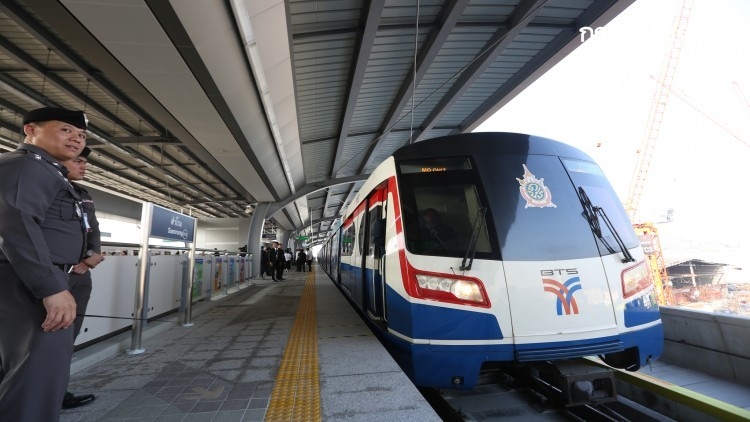
Surapong Laoha-Unya, executive director of BTS Group Holdings, said this week that the company is planning to extend the concession contract for BTS skytrain green line for another 30 years.

“The process is pending the Interior Ministry presenting it to the Cabinet, which should be finalised soon,” he said. “Moreover, the Bangkok Metropolitan Administration (BMA) has presented the idea of setting a single rate for the BTS green line of Bt65 and we are looking at this.”

Addressing BMA’s debt burden of Bt110 billion including interest, which came from the investment in construction and system administration of BTS’s extended lines, Surapong says the company is financially ready to take responsible for the burden as per the contract. “BTS financial status is solid and should be able to take care of the debt with no problem,” he said.

BTS is now testing the operation of 4 new stations from Ha Yaek Lat Phrao to Kasetsart University stations and offering free service until January 2 at peak periods of the day: 7-9am and 4.30-8pm. The company estimates that the 4 stations will have at 100,000 passengers per day, and when the terminal Ku Kot station is open by the end of 2020 there will be at least 200,000 passengers travelling daily along the green line.

The BTS green line extension starts from Mo Chit station and will end at Ku Kot station in Pathumthani province. It is a part of the government’s 20-year mass transit development strategy (2018-2037). The line is 19 kilometers long and comprises a train maintenance center and two park-and-ride buildings with combined capacity for more than 1,700 cars.

Authorities ensure compliance of New Year gift baskets with laws

#ศาสตร์เกษตรดินปุ๋ย : ขอบคุณแหล่งข้อมูล : หนังสือพิมพ์ The Nation

https://www.nationthailand.com/news/30379069?utm_source=category&utm_medium=internal_referral

Authorities ensure compliance of New Year gift baskets with laws

Dec 05. 2019
By THE NATION

307 Viewed

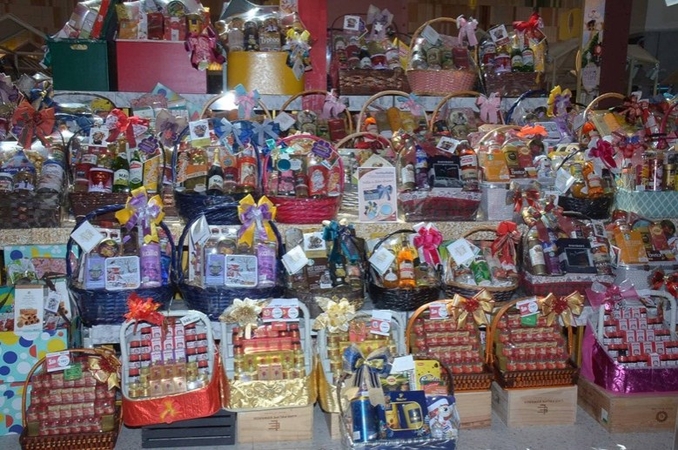
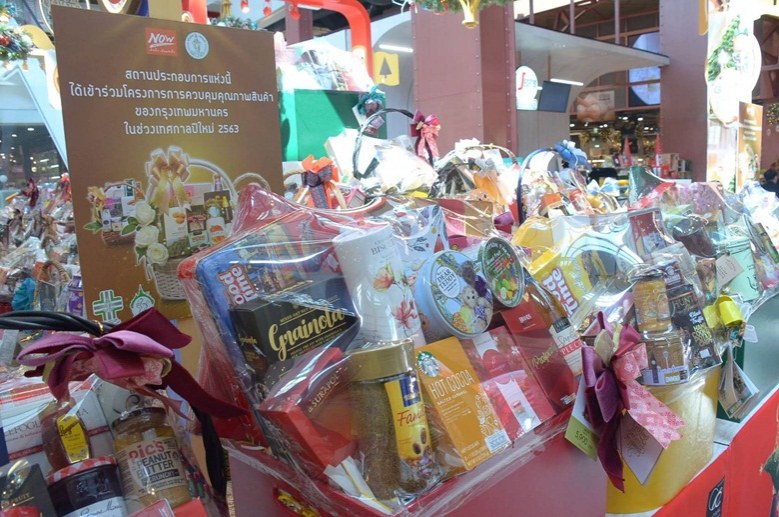
Deputy Bangkok Governor Pol Lt Gen Sophon Pisuthiwong and officials from Department of Health, Ministry of Public Health on Tuesday (December 3) inspected retail shops at various venues in Bangkok that sell New Year gift baskets to make sure that they are in compliance with the law.

“The Bangkok Metropolitan Administration is committed to protecting consumers against low quality or expired products that some retailers may try to bundle in the gift baskets,” he said. “Retailers are also required to display the list of each item in the basket along with their prices to let customers know what they are buying and that each of them are priced correctly.”

BMA is also cooperating with 32 department stores and retailers to organise a campaign that focuses on controlling the quality and price of New Year gift baskets, as well as promoting the use of eco-friendly materials in making gift baskets, for example. using leaves and paper instead of plastic and foam.

“According to Food Act BE 2522, packages of all food products must display expiration or best before date, or manufacturers will be fined a maximum of Bt30,000,” he said. “To apply this law to gift baskets, we require the sellers to put only products that expire after January 31 in the baskets, and must allow consumers to return the products until February 29 in case they are not satisfied with product’s quality.”

“As for fruit and vegetable baskets, we advise retailers to prepare the baskets not more than 3 days in advance of the selling date to ensure freshness of the produce,” he added.

Gift baskets that contain alcoholic beverages cannot be displayed in the store or on brochures, as this is in violation of Article 30 (5) of Alcoholic Beverage Control Act B.E. 2561, with punishment of up to 6 years in prison or a Bt11,000 fine, or both, said Sophon.

Yaowarat decks up to welcome Their Majesties

#ศาสตร์เกษตรดินปุ๋ย : ขอบคุณแหล่งข้อมูล : หนังสือพิมพ์ The Nation

https://www.nationthailand.com/news/30379084?utm_source=category&utm_medium=internal_referral

Yaowarat decks up to welcome Their Majesties

Dec 04. 2019
By The Nation

1,094 Viewed

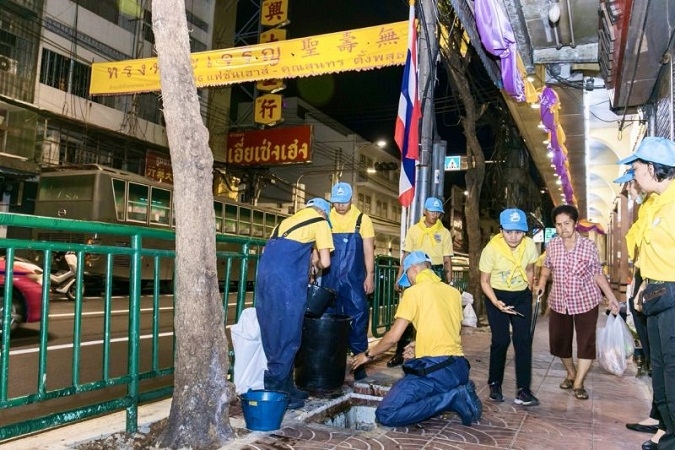
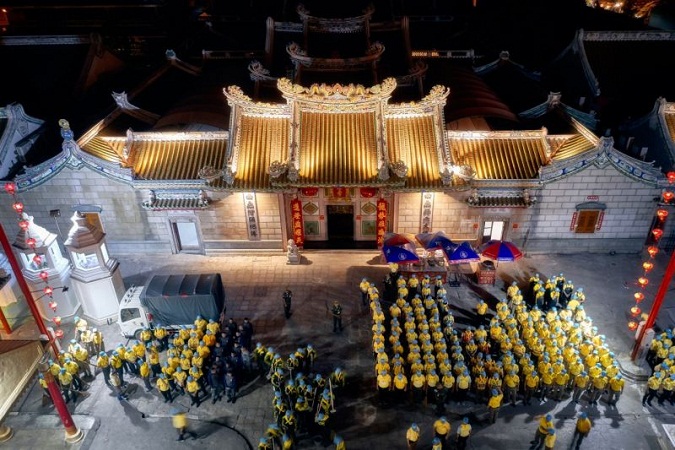
Volunteers have spruced up the Yaowarat area in Bangkok’s Chinatown to welcome His Majesty King Rama X and Her Majesty Queen Suthida, who are scheduled to preside over a royal exhibition titled “Under the Graciousness of Chakri Dynasty” on December 6.

Their majesties will also meet Thai-Chinese people in the area.

The historical landmarks that underwent cleaning included Wat Leng Noei Yi, Wat Traimit Witthayaram, Odeon Circle, Kuan Yim Shrine at Thian Fa Foundation, the community at the Mor Mee intersection and 22 shrines in the China Town area.

Volunteers began the cleaning-up activity on November 29 and will conclude them on Thursday (December 5). They will remain in the area to provide help and welcome the King and Queen from December 6 to 8. A Big Cleaning Day activity has been planned for December 9 after the exhibition ends.

The royal exhibition will feature the royal biographies and duties of Chakri dynasty kings through virtual projection on an LED tunnel display, a parade showing Thai-Chinese art and culture, and Yaowarat Street Food, which will bring together 200 well-known food stores in Chinatown and nationwide.

In addition, members of Thai-Chinese organisations will join as volunteers in the area throughout the exhibition, which will take place from December 6 to 8 this year, covering the area from Odeon Circle to the Chalerm Buri intersection. Some 100,000 people are expected to visit the exhibition.

Related Stories:

Their Majesties to preside over royal exhibition