Dow sinks after Trump resurrects steel, aluminum tariffs, renewing global trade worries

#ศาสตร์เกษตรดินปุ๋ย : ขอบคุณแหล่งข้อมูล : หนังสือพิมพ์ The Nation

https://www.nationthailand.com/business/30379006?utm_source=category&utm_medium=internal_referral

Dow sinks after Trump resurrects steel, aluminum tariffs, renewing global trade worries

Dec 02. 2019
By The Washington Post · Taylor Telford

859 Viewed

U.S. markets got a rocky start to December, with the Dow Jones industrial average down more than 170 points amid poor manufacturing data and renewed global trade tensions that threaten to fizzle out recent record-breaking runs.

November was a blockbuster month for Wall Street, as strong earnings and trade hopes yielded 10 record-breaking closes for U.S. indexes. The Standard & Poor’s 500 is now up 25% for the year heading into a period that’s typically high-performing for stocks. December could also bring progress on the trade front, as the terms of an agreement by the United States, Mexico and Canada could be finalized, while resolution on the first phase of a trade deal with China continues to flit in and out of reach.

The trade picture darkened Monday after President Donald Trump announced on Twitter that he would reinstate steel and aluminum tariffs on Brazil and Argentina. He accused the two nations of weakening their currencies to gain competitive advantage against the U.S., an oft-repeated rebuke that he’s cited in his ongoing push for lower or even negative interest rates from the Federal Reserve.

“Brazil and Argentina have been presiding over a massive devaluation of their currencies. which is not good for our farmers,” Trump said in Monday morning tweet. He then pivoted to the Federal Reserve, saying the central bank should “act so that countries, of which there are many, no longer take advantage of our strong dollar by further devaluing their currencies. This makes it very hard for our [manufacturers] & farmers to fairly export their goods. Lower Rates & Loosen – Fed!”

Stock futures had been trending up before Trump’s early morning announcement. By midmorning, the Dow Jones industrial average had shed more than 200 points, or 0.7%. The Standard & Poor’s 500 index was down 0.9% and the tech-heavy Nasdaq was down 1.4%.

“The President’s tweets slapping import tariffs back on steel from Argentina and Brazil gave markets the jitters however as it is a reminder that the trade war will not be solved overnight,” said Chris Rupkey, chief financial economist of MUFG Union Bank, in a note. “The stock market’s early gains in the futures markets melted away after the President’s early morning tweet. The President reminded us yet again he is a “Tariff Man” and this long trade battle with America’s trading partners isn’t over yet.”

Futures markets had swung higher on trade optimism and signs of recovery in global manufacturing. Two surveys over the weekend showed that China’s manufacturing sector rallied to an eight-month high in November, and European manufacturing data showed a better-than-expected easing in the sector’s contraction. The strong data suggested that China’s economy could be stabilizing after months of a brutal slowdown, quieting some fears about the trade war’s toll on one of the world’s most powerful economic engines.

Meanwhile, U.S. manufacturing disappointed in November, according to Monday’s report from the Institute for Supply Management. Its manufacturing index dropped to 48.1% in November from 48.3% in October, coming in well below analyst expectations. Readings below 50% indicate business conditions are getting worse.

“Global trade remains the most significant cross-industry issue,” Timothy Fiore, chair of the ISM’s manufacturing business survey committee, said in the report.

Last week, Trump said that negotiators were in “the final throes” of sorting out a trade deal with China that would bring the first phase of resolution in the 16-month conflict. But over the weekend, China’s state-run newspaper, the Global Times, reported that negotiators are optimistic about a deal before the Lunar New Year in January, but that rollbacks of tariffs are essential if a deal is to be reached,

On Friday, a top Mexican trade negotiator said that terms of a replacement for the North American Free Trade Agreement – one of the Trump administration’s key goals – could be cemented early this week, fueling hopes that Congress could approve it before the end of 2019. The Trump administration reached an agreement with the governments in Canada and Mexico last year, but it must be approved by the House and the Senate before the changes can become official.

Trump’s renewed tariffs on steel and aluminum dealt a surprise blow to one of Brazil’s most crucial industries in a vulnerable moment for the economy, as unemployment hovers above 10% and growth continues to slow. Brazilian steel exports to the U.S. accounted for roughly $2.6 billion last year – making the U.S. one of Brazil’s biggest markets for steel – and analysts expected the tariffs to be painful.

The flurry of potential trade activity is coalescing during what is typically a period of low volatility and high advances for stocks, said Sam Stovall, president of CFRA Research.

“Seasonal optimism typically gathers additional steam in the final month of the year as investors look to earnings projections for the coming year. Indeed, since 1945, the S&P 500 posted its best average return in December, along with the highest frequency of advance and lowest level of volatility,” Stovall wrote in a note to investors Monday. “Trade relations, earnings estimates and valuations will likely influence trading this month, while the angle of ascent for U.S. economic growth, along with the presidential primaries, will garner additional attention as the new year progresses.”

Ad-hoc panel for EVs on the cards

#ศาสตร์เกษตรดินปุ๋ย : ขอบคุณแหล่งข้อมูล : หนังสือพิมพ์ The Nation

https://www.nationthailand.com/business/30379004?utm_source=category&utm_medium=internal_referral

Ad-hoc panel for EVs on the cards

Dec 02. 2019
Industry Minister Suriya Juangroongruangkit

Industry Minister Suriya Juangroongruangkit
By THE NATION

1,085 Viewed

Industry Minister Suriya Juangroongruangkit will propose to Deputy Prime Minister Somkid Jatusripitak the establishment of a national electric vehicle policy committee to steer development of the EV segment.

The minister expects the panel to get off the ground in the next three months.

It followed the suggestion of Thailand’s Potential Development Network that the government hasten transition of the Thai auto industry to the EV era.

The network proposed that the government set up an agency to draw up an EV master plan and serve as the centre of coordination.

Prayut to private sector: Accelerate investment

#ศาสตร์เกษตรดินปุ๋ย : ขอบคุณแหล่งข้อมูล : หนังสือพิมพ์ The Nation

https://www.nationthailand.com/business/30379002?utm_source=category&utm_medium=internal_referral

Prayut to private sector: Accelerate investment

Dec 02. 2019
Prime Minister Prayut Chan-o-cha (Photo credit:  Royal Thai Government's website)

Prime Minister Prayut Chan-o-cha (Photo credit: Royal Thai Government’s website)
By THE NATION

1,247 Viewed

Prime Minister Prayut Chan-o-cha urged the private sector on Monday (December 2) to accelerate investment in December in order to lift a softening economy from the fourth quarter this year throughout next year.

Prayut made the remark as he presided over the launch of the Thailand Responsible Network.

He said that if the sector spends more every quarter, this would boost economic growth and people’s confidence.

The government has already sped up state investment in infrastructure projects via a public-private partnership.

Office of the National Economic and Social Development Council secretary-general Thosaporn Sirisumphand said the country’s economic fundamentals remained sound, despite the impacts from trade wars.

The economy had expanded on average 4 per cent per year over the past decade, he added.

Markets marginally up in Asia, trading slow on Thailand exchange

#ศาสตร์เกษตรดินปุ๋ย : ขอบคุณแหล่งข้อมูล : หนังสือพิมพ์ The Nation

https://www.nationthailand.com/business/30378984?utm_source=category&utm_medium=internal_referral

Markets marginally up in Asia, trading slow on Thailand exchange

Dec 02. 2019
Investors are still concerned about the impactz of the Sino-US trade war as negotiations drag on.

Investors are still concerned about the impactz of the Sino-US trade war as negotiations drag on.
By The Nation

1,140 Viewed

China’s PMI rebound is likely to have a limited positive effect on Thai and Asian stocks, says Tisco Market Insight.

Market unease shouldn’t scare off investors, says wealth manager

Major Asian markets rallied today after China reported its MPI on Sunday; Japan’s Nikkei 225 was up almost 1 per cent to 23,523.16 at 2.10pm Japan time and Hong Kong’s Hang Seng, South Korea’s Kospi and China’s Shanghai composite index also rose. China’s purchasing managers index(PMI) for the manufacturing sector bounced back to 50.2 in November from October’s 49.3, according to the National Bureau of Statistics. The growth beat many analysts’ expectation for a below-50 reading.

A reading above 50 indicates expansion, while a reading below reflects contraction.

It is the first expansion in the past eight months, but it is ony likely to boost stock markets in the short-term, said Tisco Market Insight of Tisco Financial Group.

Investors are still concerned about the impactz of the Sino-US trade war as negotiations drag on.

Tisco predicted downside risks for the Stock Exchange of Thailand Index today. It expects the index would move down to 1,585 or 1580 while the barrier level is estimated to be 1,600. The index was down 1 per cent in the morning session to 1,573.46.

Tisco suggested investors not to enter the market for short-term speculation but instead wait and see until the SET index moves up above the 1,600 level.

Investors are advised to take selective buys, choosing fundamental and high-dividend paid stocks. Interesting stocks includes PTG, PTT, BBL, KBank, SCB, AMATA, SCC, ROJNA, WHA, EASTW, BGRIM and BDMS, according to Tisco Market Insight.

China, Russia launch gas pipeline

#ศาสตร์เกษตรดินปุ๋ย : ขอบคุณแหล่งข้อมูล : หนังสือพิมพ์ The Nation

https://www.nationthailand.com/news/30379014?utm_source=category&utm_medium=internal_referral

China, Russia launch gas pipeline

Dec 03. 2019
President Xi Jinping and his Russian counterpart Vladimir Putin witness the opening ceremony for the China-Russia east-route natural gas pipeline in a video conference on Monday. FENG YONGBIN / CHINA DAILY

President Xi Jinping and his Russian counterpart Vladimir Putin witness the opening ceremony for the China-Russia east-route natural gas pipeline in a video conference on Monday. FENG YONGBIN / CHINA DAILY
By AN BAIJIE and REN QI
China Daily/Asia News Network

141 Viewed

Xi, Putin witness opening of massive energy project, hailing significance of cooperation

President Xi Jinping and his Russian counterpart Vladimir Putin witnessed via video link on Monday the opening ceremony of the China-Russia east-route natural gas pipeline, a landmark project that will transport natural gas from eastern Siberia through Northeast China to Shanghai.

The two presidents, Xi in Beijing and Putin in Sochi, Russia, greeted each other, and Xi expressed gratitude toward the workers building the pipeline.

Hailing it as a flagship project for China-Russia energy cooperation, Xi called the pipeline a model for China-Russia integrated communication and win-win cooperation.

Xi mentioned that he and Putin witnessed the signing of the document on the pipeline project in 2014. The construction workers overcame difficulties in freezing weather in the past five years to complete the project, which shows the fine technologies of workers in major countries and the fruitful outcomes of China-Russia cooperation, Xi said.

The project’s completion is not only an outcome but also a new starting point for cooperation, Xi said, adding that the two nations should work together to build a safe, green, developing and friendly pipeline, make all efforts to ensure its safe construction and operation and promote the sustainable economic and social development of regions along the route.

Noting that this year marks the 70th anniversary of China-Russia diplomatic relations, Xi said the two countries should make further efforts to build more projects like the pipeline to bring more benefits to the people of both sides.

Putin said that the opening of the pipeline has great significance at a time when the two countries are celebrating the 70th anniversary of diplomatic relations.

In the next 30 years, Russia will supply 1 trillion cubic meters of natural gas to China, which will be helpful in implementing the two presidents’ consensus of advancing Russia-China trade volume to $200 billion in 2024, Putin said.

Russia would like to make joint efforts with China to ensure the smooth implementation of the flagship project, he added.

Under a 30-year agreement between Russian company Gazprom and China National Petroleum Corp signed in May 2014, the China-Russia east-route pipeline project is expected to pump some 38 billion cubic meters of natural gas from Russia to China annually.

That is equal to about 13.6 percent of China’s gas consumption in 2018 of 280.3 billion cubic meters, according to the National Development and Reform Commission.

The pipeline stretches 5,111 kilometers in China and 3,000 km in Russia. Its Chinese section covers six provinces, one autonomous region and two municipalities from Heilongjiang province to Shanghai.

Yana Leksyutina, a professor at the Russian Academy of Sciences, said China has been the largest trade partner for Russia since 2010, and Sino-Russian trade and economic ties have maintained good momentum.

Their cooperation is mainly focused on energy, Leksyutina said, saying some Russian energy megaprojects are being implemented, or are to be launched with Chinese investments, including the Yamal LNG and Arctic LNG 2 liquefied natural gas projects.

She said the first ever Russian-Chinese gas pipeline has tremendous meaning for both countries, as the volume of Russian energy exports to China is expected to grow rapidly. Russia has high hopes for extending cooperation to other fields, such as agriculture, Arctic development, cross-border e-commerce and currency settlements.

China announces sanctions against U.S.-based nonprofits in response to Congress’s Hong Kong legislat

#ศาสตร์เกษตรดินปุ๋ย : ขอบคุณแหล่งข้อมูล : หนังสือพิมพ์ The Nation

https://www.nationthailand.com/news/30379012?utm_source=category&utm_medium=internal_referral

China announces sanctions against U.S.-based nonprofits in response to Congress’s Hong Kong legislat

Dec 03. 2019
File Photo: Hong Kong's protesters

File Photo: Hong Kong’s protesters
By The Washington Post · Gerry Shih

240 Viewed

BEIJING – China said Monday that it would sanction U.S.-based nonprofit organizations, including the National Endowment for Democracy and Human Rights Watch, in retaliation for new U.S. legislation that supports Hong Kong’s protesters.

Foreign Ministry spokeswoman Hua Chunying did not give details about the sanctions or articulate how the nonprofit groups’ operations will be affected in the semiautonomous city, where many maintain regional offices to conduct China-related work.

China also will suspend rest-and-recuperation visits to Hong Kong by U.S. military ships and aircraft, Hua said, adding that further moves are possible.

The comments were a stark warning to organizations that China sees as aligned with Washington – and the first salvo in what Beijing has promised will be “forceful” retaliation against the United States for the Hong Kong Human Rights and Democracy Act, which was passed by Congress and signed into law by President Donald Trump last week.

The move could further elevate Hong Kong as a flash point between Beijing and Washington. The Chinese government has viewed the five-month protests in Hong Kong as an American attempt to foment a “color revolution” rather than an outpouring of genuine anger over police conduct and declining political freedoms in the territory.

The NED, Human Rights Watch, Freedom House, the National Democratic Institute for International Affairs, and the International Republican Institute are among the institutions that will be sanctioned for their “odious behavior” in Hong Kong, where they have “strongly instigated extremely violent criminal activities,” Hua told reporters in Beijing.

“They bear great responsibility for the current chaos in Hong Kong,” she said. “These organizations deserve to be sanctioned, and they must pay the price for it.”

China, echoing governments including Venezuela and Egypt, has previously taken aim at the NED, a group established in 1983 and funded by Congress to promote democracy worldwide. The Foreign Ministry in August distributed a lengthy report that named the NED as a U.S. intelligence front and listed its history of funding political groups in Hong Kong going back 20 years.

It is not immediately clear how the sanctions would affect foundations or corporations that donate to the blacklisted nonprofit organizations. Few of the groups have staff on China’s mainland.

Human Rights Watch Executive Director Kenneth Roth said his organization does not receive funding from any government and “regrets” China’s announcement of unspecified sanctions.

Human Rights Watch has called on all sides of the protests to refrain from violence, he said. “Rather than target an organization that seeks to defend the rights of the people of Hong Kong, the Chinese government should respect those rights,” Roth said.

Freedom House said the threat of sanctions strengthened its resolve to oppose the Chinese government’s efforts to undermine human rights. “We do not look to the Chinese Communist Party for permission to support such legitimate goals,” Michael Abramowitz, president of Freedom House, said in a statement.

Foreign nonprofit workers inside China have long faced suspicion and a degree of vulnerability. Michael Kovrig, a former Canadian diplomat working for the International Crisis Group nongovernmental organization, has been detained for the past year on national security grounds. He was seized in the midst of a diplomatic dispute between Beijing and Ottawa.

Peter Dahlin, a Swede, was detained in 2016 for his involvement in providing legal aid to a network of Chinese activists that the Communist Party considered subversive.

China has elevated scrutiny of foreign nonprofit organizations since the passage of an NGO law in 2016 that gave security officials broad supervision powers.

Last week, Chinese officials disclosed for the first time a police investigation conducted under the NGO law. The New York-based nonprofit Asia Catalyst, which worked on HIV-related public health projects in southern China, was investigated by Beijing police and fined, the Foreign Ministry announced.

Thousands return to Hong Kong streets in fresh round of protests

#ศาสตร์เกษตรดินปุ๋ย : ขอบคุณแหล่งข้อมูล : หนังสือพิมพ์ The Nation

https://www.nationthailand.com/news/30379011?utm_source=category&utm_medium=internal_referral

Thousands return to Hong Kong streets in fresh round of protests

Dec 03. 2019
By The Straits Times/Asia News Network

257 Viewed

Police fire tear gas at those outside of approved route.

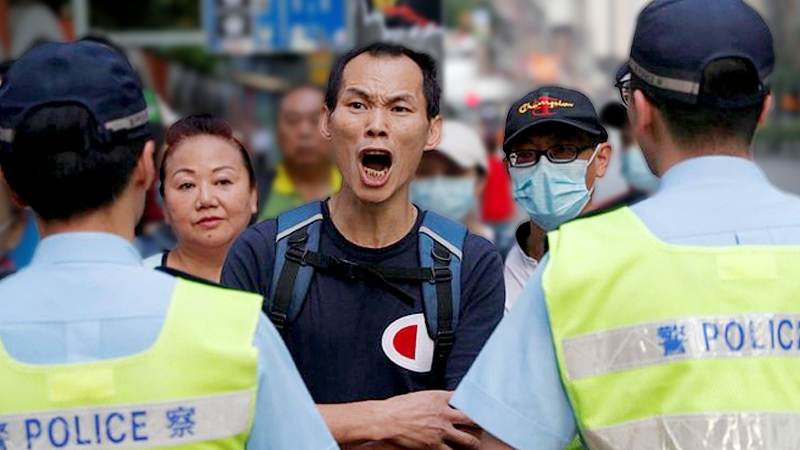
After a week of relative calm, thousands of anti-government protesters took to the streets of Hong Kong on Sunday (Dec 1) chanting slogans such as “revolution of our time” and “liberate Hong Kong”.

The protest, which took place in the bustling shopping district of Tsim Tsa Tsui, came after hundreds of people marched to the United States consulate earlier in the day to show “gratitude” for US support for the demonstrations that have roiled the China-ruled financial hub for nearly six months.

Waving posters that read “Never forget why you started” and black flags with the logo “Revolution now”, protesters marched past the city’s Kowloon waterfront, home to luxury hotels and shopping malls.

Police in riot gear were out in force for the Tsim Sha Tsui march – the third one of the day. The approved march was from the Clock Tower in Tsim Sha Tsui to the Hong Kong Coliseum in Hung Hom via Salisbury Road.

Around 4.45pm, police fired tear gas on Salisbury Road, as some protesters had hurled bricks at officers and others deviated from the approved march route by occupying all lanes of Salisbury Road.

Earlier, police had fired pepper spray and pepper balls to force protesters back onto the approved route but to no avail.

The organiser of the march then announced that the rally would end at 5pm, one hour earlier than the permitted 6pm. Thereafter, police started clearing people from the protest route, telling them that the event had ended and that any continued gathering would be illegal.

Sunday’s protests came as the Hong Kong government is looking into setting up an independent committee to review the handling of the crisis, Chief Secretary Matthew Cheung told reporters when asked about an independent review committee. Some critics on social media, however, have said that such a committee would fall short of the independent investigation they have been demanding.

There has been relative calm in Hong Kong for the past week since local elections last Sunday delivered an overwhelming victory to pro-democracy candidates. However, activists have pledged to maintain the momentum of the movement with three marches on Sunday.

“I just want to remind everyone that despite the small victory in district council election, we must not forget why we started all this and we must return to our main theme – reclaim Hong Kong, revolution of our time; five demands, not one less,” an organiser of the Tsim Sha Tsui rally wrote on the Reddit-like LIHKG forum.

Police have issued permits called “letters of no objection” for all three events – including the march to the US consulate and a separate morning protest against police use of tear gas – and the post on LIHKG urged people to remain peaceful.

“I want to beg everyone to remain highly restrained during the hours covered by the letter of no objection. Otherwise I could be charged with inciting riots,” the organiser wrote in the anonymously penned post.

Anti-government protests have rocked the city since June, at times forcing government offices, businesses, schools and even the international airport to shut.

“We had demonstrations, peaceful protests, lobbying inside the council, a lot of things we have done but they all failed,” said a 25-year-old university graduate who wanted to be known only as Felix. “There are still five demands,” he said, referring to protesters’ calls that include an independent inquiry into police behaviour and the implementation of universal suffrage.

Earlier in the day, hundreds of people marched to the US consulate to show “gratitude” for US support of the anti-government protests that have roiled the financial hub for nearly six months.


Waving American flags, with some donning Donald Trump logo hats and t-shirts, protesters unfurled a banner depicting the US president standing astride a tank with a US flag behind him. Another banner read “President Trump, please liberate Hong Kong”.

President Trump this week signed into law congressional legislation that supported protesters in the China-ruled city, despite angry objections from Beijing.

Besides the march to the US consulate, a peaceful morning rally took place on Sunday morning where hundreds of people protested against police use of tear gas.

About 200 people marched against police use of tear gas. Carrying yellow balloons and waving banners that read “No tear gas, save our children”, the protesters streamed through the city’s central business district towards government headquarters on the main Hong Kong island.

Holding umbrellas to shield themselves from the sun, many people were seen pushing their children in strollers, while one man with a balloon festooned to his wheelchair also joined the procession.

“We want the police to stop using tear gas,” said a woman surnamed Wong, who was marching with her husband and five-year-old son. “It’s not a good way to solve the problem. The government needs to listen to the people. It is ridiculous.”

Hong Kong’s months-long protests started over a now-withdrawn extradition Bill that would send suspects to mainland China for trials but have since evolved into other demands including an independent inquiry into police behaviour during clashes with protesters as well as universal suffrage.

Protesters are also angry at what they see as Chinese meddling in the freedoms promised to the former British colony when it returned to Chinese rule in 1997. China denies interfering and says it is committed to the “one country, two systems” framework put in place at that time and has blamed foreign forces for fomenting unrest.

Last Friday, more than 1,000 police officers in the southern Chinese city of Zhuhai, located across the border from Hong Kong, conducted anti-terror drills, state media reported, adding that netizens in the mainland said the exercises served as a warning to “rioters”.

Meanwhile, China has accused the United Nations high commissioner for human rights of emboldening “radical violence” in Hong Kong by suggesting that the city’s leader conduct an investigation into reports of excessive use of force by police.

The UN commissioner, Ms Michelle Bachelet, wrote in an opinion piece on Saturday in the South China Morning Post that Hong Kong Chief Executive Carrie Lam’s government must prioritise “meaningful, inclusive” dialogue to resolve the crisis.

She urged Mrs Lam to hold an “independent and impartial judge-led investigation” into police conduct during protests. It has been one of key demands of pro-democracy demonstrations that have roiled the territory since June.

China’s UN mission in Geneva says Ms Bachelet’s article exerts pressure on the government and will “only embolden the rioters to conduct more severe radical violence”.


OVERNIGHT CLASHES

On Saturday night, police fired three rounds of tear gas for the first time since the local elections on Nov 24, after protesters blocked roads in the Mong Kok neighbourhood.


A video that emerged online also showed a protester brutally assaulting a man as he attempted to clear a barricade.

The commentator mocks the man, who stumbles and then slumps over after being hit across the head with a heavy metal object, blood trickling from a wound.

In a radio interview on Sunday morning, police chief Chris Tang said an attack took place in Mong Kok. “It could have killed him,” he said.

A police source confirmed that the incident seen in the video occurred in Mong Kok on Saturday night and that it was under investigation.

The condition of the man was not immediately clear. But the Hospital Authority said three people were brought in on Saturday night with protest-related injuries, one of whom was discharged while the other two were in a stable condition.


NEED TO RETAIN TALENT

On Sunday, Chief Secretary Cheung reiterated the urgency for the city to restore order and peace as soon as possible to retain talent.

In his weekly online article, Mr Cheung urged immediate efforts to bring back peace to Hong Kong in a bid to rebuild the confidence and trust of the international community, as well as the global image of Hong Kong.

It is unavoidable that some local and international talent consider building a career elsewhere for various reasons in the current situation, Mr Cheung said. However, he stressed that there is no massive brain drain in Hong Kong, whose advantages and competitiveness are still recognised by international institutions.

The city’s No. 2 official after Mrs Lam said that fostering and attracting top talent is crucial to the development of Hong Kong, which is facing the challenge of an ageing population and a labour shortage.

He also said that the Hong Kong government will continue working on a human resource plan to make the city more competitive and help the younger generation to grasp the opportunity of development.

ADBI outlines relief programme for poor students

#ศาสตร์เกษตรดินปุ๋ย : ขอบคุณแหล่งข้อมูล : หนังสือพิมพ์ The Nation

https://www.nationthailand.com/news/30378991?utm_source=category&utm_medium=internal_referral

ADBI outlines relief programme for poor students

Dec 02. 2019
By THE NATION

281 Viewed

The Asian Development Bank Institution (ADBI) recently briefed participants at the 22nd annual meeting the goal of its Conditional Cash Transfer programme, which aims to solve cross-generation poverty, said Kraiyos Patrawart, deputy managing director of Equitable Education Fund (EEF).

The event, held in Japan on November 29-19, was attended by economic academics and experts, and over 50 bank executives in Asia.

“ABDI will publish research and innovation development under the programme in its policy report of 2020” he said. “The Conditional Cash Transfer provided funds for poor students and promoted an improvement of financial literacy skill to those students equally from hand-on practice through project such as ‘Equity Partnership’s School Network’.

The project was a cooperation between EEF, JD Central, and an international school network of 171 schools. “It aims to improve students’ financial literacy skill, entrepreneur skill and usage of financial and ecommerce technology for promoting educational equality” he said. “Also, the programme aimed to promote a sustainable solution for cross-generation poverty for families of students receiving the fund”.

ADBI will provide tools and financial skill courses for those students under EEF patronage. Several foreign academics also joined in research work of the programme. “The research will focus on families of poor students for sustainable solution to inequality” the deputy managing director added.

“ADBI believes that if poor people are taught about finance, being able to draw financial plan and manage their money effectively in spending, savings and debt caring; they will be able to step out from poverty,” he said.

Students make maps for the Philippines and Belize without leaving campus

#ศาสตร์เกษตรดินปุ๋ย : ขอบคุณแหล่งข้อมูล : หนังสือพิมพ์ The Nation

https://www.nationthailand.com/news/30378982?utm_source=category&utm_medium=internal_referral

Students make maps for the Philippines and Belize without leaving campus

Dec 02. 2019
Students at George Washington University use OpenStreetMap to create a digital map of a rural area in the Philippines on Nov. 15, 2019. MUST CREDIT: Washington Post photo by Lauren Lumpkin

Students at George Washington University use OpenStreetMap to create a digital map of a rural area in the Philippines on Nov. 15, 2019. MUST CREDIT: Washington Post photo by Lauren Lumpkin
By The Washington Post · Lauren Lumpkin ·

781 Viewed

WASHINGTON – With Queen’s “Bohemian Rhapsody” humming in the background, about two dozen students at George Washington University traced skinny lines and square-shape landmarks on a satellite image of a rural chunk of Mindanao, the second-largest island in the Philippines.

They are in the early stages of piecing together a map of the region where half of the country’s food is grown but where most people live in poverty.

The students carefully scanned the photos to scope out buildings and roads tucked between thick trees. The task is painstaking but necessary to create an up-to-date map. This corner of the Philippines – like large swaths of the planet – does not have any recent digital maps.

To complete the project, the students used a Wikipedia-meets-Google-Maps platform called OpenStreetMap. One million people worldwide are using it to create a free, editable map of the world.

And humanitarian organizations, such as the U.S. Agency for International Development, rely on the information to plan infrastructure projects, deliver aid and respond to natural disasters.

“That helps us, as an agency, understand where we should be putting our resources,” said Carrie Stokes, chief geographer and GeoCenter director at USAID. “Once you’re on a map, now your community can no longer be ignored.”

GWU has two student organizations that work on mapping projects every month. The Humanitarian Mapping Society is a school-affiliated group. YouthMappers, founded in 2015, is a network of 175 colleges and universities in 45 countries.

Computer mouse in hand, Juan Pablo Cortés, 21, president of the Humanitarian Mapping Society, outlined a building on a satellite image. People on the ground in the Philippines will eventually identify the building – be it a hospital, school or home.

“[Mapping] really helps a lot of people at once, and that’s what people really like about it,” Cortés said.

Since Cortés started attending mapping events – called mapathons – three years ago, he said he has helped build maps for 25 countries. Most of those projects started with partnerships students forged with relief organizations, including a collaboration with the Pan American Development Foundation that resulted in students creating maps for a flood relief effort in Belize.

Richard Hinton, an adjunct professor who manages the university’s Spatial Analysis Laboratory, called his students “armchair mappers.” In the past month, they mapped more than 4,200 buildings and 88 highways in Peru, Belize, Kenya, Colombia, Guatemala and the Philippines.

“We’re supporting missions that are going to be taking place very soon,” Hinton said. “We’re tracing the buildings and roads that we see and naming them the best we can. So when first-responders get there, they know where to go.”

The number of mappers on college campuses is growing. When YouthMappers was founded by USAID’s GeoCenter and geography experts at George Washington, Texas Tech and West Virginia universities, the organization had a few dozen members. Now, there are 5,000.

Graduate students Lidia Awad and Sidney Larsen started a chapter at American University this semester and held their first mapathon in November.

“The cool thing about mapping is that, with YouthMappers, we give people the skills to know how to map. Then they can do it on their own, at home watching TV,” Larsen said.

In a world where natural disasters are becoming more frequent and hundreds of millions of people live in extreme poverty, students say mapping makes them feel like they’re making a difference.

“It’s empowering,” Awad said. “It’s not just us helping other people, it’s people helping themselves.”

Grace Donovan, a junior majoring in environmental studies and geography at GWU, started mapping as a way to log volunteer hours for her service fraternity.

“It’s working together with people all over,” she said. “It’s not just us sitting in the United States and mapping.”

Donovan is a YouthMappers member and “validator.” As a more experienced mapper, she reviews projects to weed out mistakes or nefarious mappers who might purposely botch the data.

The 20-year-old toiled with the other students who munched on pizza and guzzled cans of Coke. Energy can wane after spending hours staring at satellite pictures.

“Do you think these are buildings?” one student asked another.

Esmy Vergel, 21, studies international affairs and worked on the mapping project for class credit. She hovered her mouse over a square-ish shape on her laptop screen and traced it until it glowed red.

“It can be difficult. You can’t tell if it’s a building, or a rock, or trash,” she said.

OpenStreetMap launched in 2004, and people started using it for humanitarian purposes after the earthquake that devastated Haiti in 2010. A 30-second video shows how quickly volunteers edited maps of the country’s capital, Port-au-Prince.

A few years later, USAID began using the tool to build maps, Stokes said. Then, the agency started giving schools grants to start YouthMappers chapters.

“We needed a new generation of mapping data that would be in digital form that would be accessible to us via the Internet so we can collect it, use it and share it,” Stokes said, adding that nearly half of YouthMappers are women. “It’s easy to target students who have a curiosity, who are not afraid of technology.”

Stokes said she saw YouthMappers’ impact about three years ago when USAID partnered with college students to map malaria-plagued communities in Mozambique. Relief workers needed accurate maps of the African country to know how many people were affected and where to spray insecticides. It used to be difficult to determine how much of the chemical they needed.

“We were able to provide a source of mapping data for the spray campaign they’d never had before,” Stokes said.

Bands of other mappers are spread throughout the world. Many aren’t professional cartographers, but they volunteer by contributing to the growing repository of geographic data on OpenStreetMap. Anyone with an account can do it.

Many people are used to having maps in their pockets, courtesy of their cellphone. Google and Apple are constantly updating their maps. But they haven’t been everywhere, Cortés said. Some areas in his home country, Guatemala, can’t be found on maps.

According to a 2016 estimate, there are some 440,000 unmapped places – most of them in Africa and Asia.

Young mappers want to fill in those gaps.

“That’s the beauty of this open platform,” Stokes said.

At least 19 killed as Mexican cartel battles police and army south of U.S. border

#ศาสตร์เกษตรดินปุ๋ย : ขอบคุณแหล่งข้อมูล : หนังสือพิมพ์ The Nation

https://www.nationthailand.com/news/30378979?utm_source=category&utm_medium=internal_referral

At least 19 killed as Mexican cartel battles police and army south of U.S. border

Dec 02. 2019
File Photo: President Lopez Obrador Daily Morning Press Briefing

MEXICO CITY, MEXICO - OCTOBER 07: President of Mexico Andres Manuel Lopez Obrador speaks during the daily morning press briefing at Palacio Nacional on October 7, 2019 in Mexico City, Mexico. (Photo by Pedro Gonzalez Castillo/Getty Images)

File Photo: President Lopez Obrador Daily Morning Press Briefing MEXICO CITY, MEXICO – OCTOBER 07: President of Mexico Andres Manuel Lopez Obrador speaks during the daily morning press briefing at Palacio Nacional on October 7, 2019 in Mexico City, Mexico. (Photo by Pedro Gonzalez Castillo/Getty Images)
By The Washington Post · Mary Beth Sheridan

434 Viewed

MEXICO CITY – Dozens of cartel gunmen attacked a town hall in northern Mexico, triggering a running battle with security forces that left 19 dead by Sunday in a fresh sign of the deteriorating security around the country.

The assault started about noon on Saturday, the eve of President Andrés Manuel López Obrador’s first anniversary in office. Polls show that Mexicans regard the failure to curb violence as the greatest weakness of the generally popular leftist leader.

López Obrador is also under pressure from President Donald Trump, who revealed last week that he wants to designate Mexican cartels as foreign terrorist organizations. The Mexican leader told a rally on Sunday that he had no intention of returning to the kind of “war on drugs” led by the army in past years.

“We will never repeat this absurd and deranged strategy, we will not risk the lives or prestige of the armed forces, nor use them for inhumane actions” that violate human rights, López Obrador told throngs in Mexico City who were celebrating his first year in office.

The attack in the town of Villa Union, about 40 miles southwest of Eagle Pass, Texas, highlighted how the splintering of Mexico’s top cartels has sparked more violence. It was believed to be carried out by the Cartel of the Northeast, an offshoot of the once-powerful Zetas, which is based in the border city of Nuevo Laredo. Several groups that spun off from the Gulf and Zetas cartels are fighting with one another in Tamaulipas and nearby states.

The attackers swept into Villa Union in at least 14 trucks, some of them armored and bearing the cartel’s logo, according to news reports.

The gunmen unleashed a furious battle at the town hall, peppering the facade with bullets. Terrified residents shut themselves in their homes as the pop-pop-pop of gunfire filled the air, according to local news reports and video. The attackers fled after about 90 minutes, authorities said.

Mexican police and soldiers, backed by army helicopters, chased them in an operation that stretched into Sunday morning, local authorities said. The dead included four state police officers, 13 alleged cartel members and two civilians kidnapped and killed by the attackers, according to Coahuila Gov. Miguel Riquelme. State authorities earlier had put the death toll at 21.

It was not immediately clear why the town was targeted. Coahuila was ravaged by attacks by the Zetas in the early part of this decade, but has not been among Mexico’s most violent states more recently.

The clash came as Mexico is trying to prevent Trump from carrying out his pledge to designate the country’s drug cartels as terrorist groups. Mexico fears such a move could hurt investment and tourism and open up the possibility of unilateral American action. Foreign Minister Marcelo Ebrard plans to meet this week with U.S. Attorney General William Barr to discuss the designation.

The attack in Villa Union was the latest in a series of assaults that highlighted the expanding power of organized crime. In October, Sinaloa Cartel gunmen virtually took control of the city of Culiacán to free the son of Sinaloa cartel druglord Joaquin “El Chapo” Guzman. They were successful – authorities soon released Ovidio Guzmán.

Weeks later, gunmen killed nine members of the LeBaron family who held dual U.S.-Mexican citizenship outside the town of La Mora in Sonora state. Mexican authorities say the family apparently was caught in the middle of a fight for territorial control involving offshoots of the Juárez and Sinaloa cartels.

On Sunday, the federal attorney general’s office announced that “various individuals” had been arrested in the killing of the three mothers and six children. The communique did not give details, but the Mexican daily El Universal said three suspects had been arrested in the city of Bavispe, near LaMora.

The U.S.-backed strategy of going after drug kingpins has led to a pulverization of the main cartels, with dozens of smaller groups emerging.

“That makes conflict even harder to control,” said Falko Ernst, senior Mexico analyst for the International Crisis Group.

Mexico’s homicide rate is expected to hit record levels this year.

López Obrador has tried to address the roots of violence by offering employment and scholarships to young people. He also established a 70,000-strong National Guard to improve security, but it has just gotten off the ground – and many members have been diverted to stop U.S.-bound Central American migrants, under an agreement with Trump.

López Obrador has been criticized for lacking a more integrated strategy, that would include strengthening local police and the judiciary.

Ernst said it wouldn’t be fair to blame the president for an armed conflict that had intensified under the past two administrations. “But the responsibility indubitably lies with him and his team now to take pertinent steps to reverse that trend,” he said.