October sees surge in registered capital of new firms

ศาสตร์เกษตรดินปุ๋ย : ขอบคุณแหล่งข้อมูล : หนังสือพิมพ์ The Nation

https://www.nationthailand.com/business/30378779?utm_source=category&utm_medium=internal_referral

October sees surge in registered capital of new firms

Nov 26. 2019
By THE NATION

952 Viewed

The number of newly registered companies in October stood at 5,751, down 7 per cent year on year, according to Sorada Lertharpachit, deputy director-general of Department of Business Development.

However, their total registered capital amounted to Bt98.590 billion, up 393 per cent year on year.

In terms of numbers, the top three applicants were construction firms, property developers, and restaurants.

The number of the firms dissolved in October stood at 2,116, up 2 per cent year on year with a total capital of Bt8.050 billion, down 20 per cent from the same period last year. Most of them were in the construction, real estate, and restaurant businesses.

The number of newly registered firms in the past ten months (January-October) totalled 63,359, up 1 per cent over the same period last year. Their combined  capital amounted to Bt284.618 billion, up 9 per cent.

There were 14,070 firms closed in the period, down 2 per cent year on year, with a total capital of Bt82.959 billion, up 15 per cent.

Energy Ministry prepares New Year ‘gifts’ for Thais

ศาสตร์เกษตรดินปุ๋ย : ขอบคุณแหล่งข้อมูล : หนังสือพิมพ์ The Nation

https://www.nationthailand.com/business/30378770?utm_source=category&utm_medium=internal_referral

Energy Ministry prepares New Year ‘gifts’ for Thais

Nov 26. 2019
Energy Minister Sontirat Sontijirawong

Energy Minister Sontirat Sontijirawong
By THE NATION

1,240 Viewed

Energy Minister Sontirat Sontijirawong said on Tuesday (November 26) that the ministry was preparing measures as New Year gifts for Thais.

He said the details would be forwarded to the Cabinet next week.

Sontirat said there were many ways to ease the cost of living, including capping the cooking gas price.

BoT urges banks to make service fees fairer, raise data privacy standards

ศาสตร์เกษตรดินปุ๋ย : ขอบคุณแหล่งข้อมูล : หนังสือพิมพ์ The Nation

https://www.nationthailand.com/business/30378766?utm_source=category&utm_medium=internal_referral

BoT urges banks to make service fees fairer, raise data privacy standards

Nov 26. 2019
Thanyanit Niyomkarn

Thanyanit Niyomkarn
By The Nation
Wichit Chaitrong

1,605 Viewed

Thais are receiving fairer financial services compared to three years ago, the Bank of Thailand said, urging banks to make service fees fairer, raise data privacy standards when using customer information, and curb “annoying” product offerings. Promoting fair market conduct is part of BoT’s three-year strategic plan (2017-2019), said Thanyanit Niyomkarn, assistant governor, Supervision Group 2.

“Receiving fair financial services is regarded as a basic right for all Thais. Overall, Thais are receiving fairer financial services compared to three years ago, while financial service providers pay more attention and give greater importance to fair market conduct,” she said.

“The work in the area of market conduct has progressed somewhat, particularly building a robust supervisory system, which requires conducting intensive multi-approach examinations and real punitive measures against violators, promoting proper product information disclosure to enable consumers to make informed decisions, product and service comparison to enhance competition, leading to fairer fees and better services, as well as raising public financial literacy and awareness against potential financial scams. Insurance cross-selling has also been curbed considerably,” Thanyanit said.

“Nonetheless, there are areas in need of further improvements, which will be our focus. Chief among these include making financial service fees fairer, raising the standard for using customer information, and curbing annoying product offerings. Debt restructuring is another area of focus given challenging prospects of the economy and the country’s relatively high household debt. This part of work will be driven through the Debt Clinic Programme for credit cards and unsecured personal loans. SME debt restructuring together with preventing bad debts will also be a priority area for debt restructuring,” she added.

The central bank has requested all financial service providers to raise work standards. It requires their boards of directors and senior management to place greater importance and attention on fair market conduct, product development and client segmentation, remuneration schemes, sales process, communication and training, data privacy, complaint handling, and having a business continuity plan in place.

There has been progress in various areas. For example, the practice of cross-selling insurance products bundled with housing loans decreased drastically from 67 per cent in 2017 to 7 per cent in 2018, along with the number of complaints filed with BoT. Preventing annoying sales of financial products is another area in which BoT has worked closely with its partners. As an example, a “Gun Guan” mobile application has been developed by the National Broadcasting and Telecommunications Commission, which features the functionality to block unwanted incoming calls, including those from annoying sales and illegal debt collection.

The central bank requires SPs to provide product information in a transparent and easy-to-understand manner. For example, SPs must provide a product catalogue through which clients are informed of alternatives serving their needs without selling pressure, a sales sheet displaying key terms and warnings, and product contracts containing fair terms and conditions. At the same time, invoices and receipts must clearly display details for all items.

The bank aims to use comparative information disclosure to drive fairer market conduct in the future.

As for solving card-debts, the central bank has launched a debt restructuring programme with the multiple-creditor NPL scheme and has recently extended this to include single-creditor cases. By early 2020 the programme will become broader to include cases in court.

Solving SME debts is another crucial task for the bank, given the importance of the SME sector in the economy. Besides, debt resolution in the past focused mainly on bad debts or NPLs. This time, efforts are geared towards assisting borrowers who are still servicing their loans, to prevent these from deteriorating into bad debts.

New measures out to boost economic growth

ศาสตร์เกษตรดินปุ๋ย : ขอบคุณแหล่งข้อมูล : หนังสือพิมพ์ The Nation

https://www.nationthailand.com/business/30378767?utm_source=category&utm_medium=internal_referral

New measures out to boost economic growth

Nov 26. 2019
Finance Minister Uttama Savanayana, centre

Finance Minister Uttama Savanayana, centre
By THE NATION

1,690 Viewed

The Cabinet today (November 26) approved three new stimulus packages to prop up the softening economy, said Finance Minister Uttama Savanayana, adding that the measures aim to support small farmers, SMEs and property developers.

Uttama expects the new measures to generate Bt80 billion to the economic system, which would in turn lift GDP growth to 2.6 per cent this year.

The first package targets grassroot economy under the 2020 fiscal budget.

1.1 The government will allocate Bt14.348 billion to village funds for upgrading the infrastructure of villages, town communities as well as employment promotion. The eligible village funds are graded from A to C, totalling 71,742. Each village fund will get a maximum of Bt200,000.

1.2 The Bank for Agriculture and Agricultural Cooperatives (BAAC) will provide Bt50 billion to village funds, general public, community financial institutes, agricultural co-operatives, community enterprises, and farmers for operation expenses and to be used as revolving fund.

The loan will carry 0.01 per cent interest rate per annum for the first three years. After that it will be subject to BAAC rate. The campaign will run from on December 1, 2019 to November 30, 2022.

1.3 The village funds will grant debt moratorium to members under criteria to be set by the funds respectively.

2. The second package will help farmers reduce harvesting cost and improve rice quality.

Farmers, registered with the Department of Agriculture Extension this year, will be provided with financial aid for harvesting and rice quality improvement at Bt500 per rai or not exceeding Bt10,000 per household. Lands eligible for this programme is limited to not exceeding 20 rai per household.

3. The third package “Good House with down payment” aims to reducehome-purchase costs. The government will offer a cash-back of Bt50,000 per buyer on the down payment.

To be eligible, the buyer must have a monthly salary not exceeding Bt100,000 and included in the Revenue Department’s tax database of around 100,000 individuals under this category.

The campaign will start tomorrow (November 27) and end on March 31, 2020.

Foreigners allowed to change visa status while in Vietnam: NA

ศาสตร์เกษตรดินปุ๋ย : ขอบคุณแหล่งข้อมูล : หนังสือพิมพ์ The Nation

https://www.nationthailand.com/business/30378756?utm_source=category&utm_medium=internal_referral

Foreigners allowed to change visa status while in Vietnam: NA

Nov 26. 2019
National Assembly deputies vote on amendments to the immigration law on Monday. VNA/VNS Photo

National Assembly deputies vote on amendments to the immigration law on Monday. VNA/VNS Photo
By Viet Nam News

3,437 Viewed

Hanoi— The National Assembly (NA) on Monday voted for amendments to the immigration law, for the first time allowing visitors to change their visa status and prolong their stays in Vietnam without having to fly out of the country.

The amendment was approved by an overwhelming 83.6 per cent for the Law on Entry, Exit, Transit and Residence of Foreigners.

The law will come into effect on July 1 next year, allowing visitors to apply to change their visas under a number of circumstances.

Visitors who can prove they are investors or representatives of foreign organisations that make legal investments in Vietnam will be allowed to have their purpose of visit switched during their stay in the country.

Family members of invitees will also enjoy the same advantage.

Foreign workers who receive job offers in Vietnam or enter the country on e-visas will be able to change their visa status as long as they have a work permit or confirmation they are eligible for a work permit.

These amendments mark a huge change in policy, as foreign guests currently have to fly out of the country if they want to renew their visas.

Vo Trong Viet, chairman of the NA Committee on National Defence and Security, said the amendments would make it easier for foreigners to stay in Vietnam to learn about the market, and look for jobs and investment opportunities without wasting time and money on immigration procedures.

“The regulation is open but also strict about monitoring foreigners living in Vietnam. Not all tourists that visit Vietnam can apply for a change of purpose given the particular conditions (for a visa switch),” he told the NA.

The NA on Monday also passed the Law on Amendments and Supplements to the Law on Cadres and Civil Servants and the Law on Public Employees, along with the Law on Amendments and Supplements to Article 3 of the Law on Management and Use of Weapons, Explosives and Combat Gear. — VNS

Ex-police chief appointed PM adviser

ศาสตร์เกษตรดินปุ๋ย : ขอบคุณแหล่งข้อมูล : หนังสือพิมพ์ The Nation

https://www.nationthailand.com/news/30378765?utm_source=category&utm_medium=internal_referral

Ex-police chief appointed PM adviser

Nov 26. 2019
By The Nation

1,367 Viewed

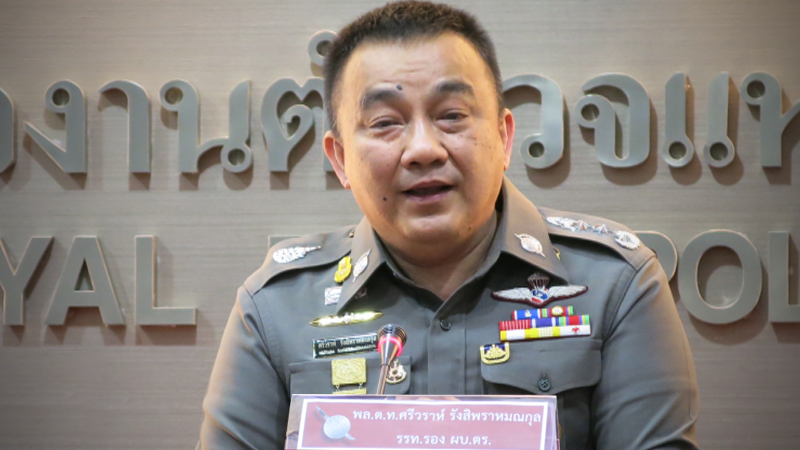
The Cabinet today (November 26) appointed former deputy Police Commissioner Pol General Srivara Ransibrahmanakul an adviser to the Prime Minister, said a government spokeswoman.

In recent years, Srivara served as a member of the National Reform Steering Assembly (NRSA) and Metropolitan Police Commissioner.

[ASEAN-Korea summit] Korea, ASEAN adopt joint vision for cooperation

ศาสตร์เกษตรดินปุ๋ย : ขอบคุณแหล่งข้อมูล : หนังสือพิมพ์ The Nation

https://www.nationthailand.com/news/30378793?utm_source=category&utm_medium=internal_referral

[ASEAN-Korea summit] Korea, ASEAN adopt joint vision for cooperation

Nov 27. 2019
(Photo: Yonhab)

(Photo: Yonhab)
By Choi He-suk
The Korea Herald/Asia News Network

137 Viewed

BUSAN – The ASEAN-ROK Commemorative Summit wrapped up Tuesday with the leaders agreeing to expand economic, political and social cooperation among the countries.

“Advancement of the ASEAN is Korea’s advancement. Cooperating over the past 30 years through friendship and trust, we have shown ‘potential of Asia,’ overcoming financial and foreign exchange crises,” President Moon Jae-in said ahead of announcing the joint press statement.

“Now, we have the confidence to propose a new answer for the future of the globe through the ‘spirit of Asia.’”

Moon went on to sum up plans agreed to by the leaders as stipulated in the joint vision statement adopted earlier in the day. During the first session of the day, which reviewed the 30 years of ASEAN-Korea relations and discussed the next 30 years, the leaders adopted a statement outlining the direction in which Korea’s relations with the Association of Southeast Asian Nations will develop.

The statement, titled ASEAN-Republic of Korea Joint Vision Statement for Peace, Prosperity and Partnership, contains “the vision for direction of future cooperation agreed to by the leaders of Korea and ASEAN.”

“First, ASEAN and Korea agreed to expand cultural and people-to-people exchange, and to build a ‘people-centered community,” Moon said.

According to Moon, the leaders agreed to seek ways to facilitate movement of people such as simplifying visa regulations and air travel regulations.

He also said that Korea will work to improve conditions for nationals of ASEAN members living in Korea, and that Seoul will cooperate with each of the ASEAN members to provide support and protection for Koreans based in the countries.

“Second, Korea and ASEAN will become an ‘innovative community of shared prosperity’ on the foundations of free trade,” Moon said, adding that the summit attendants reaffirmed the value of free trade.

“Science and technology cooperation center, and cooperation centers for standardization and industrial innovation will be established within the ASEAN, and partnership in (the field of) startups will also be strengthened,” Moon said.

Saying that connectivity among ASEAN members is key to sustainable growth of Korea and the region, Moon said that Seoul will increase cooperation in the fields of infrastructure, smart city, finance and environment as part of the efforts to execute the “Master Plan on ASEAN Connectivity 2025.”

“Third, we agreed to work even more closely for (building) ‘peaceful east Asian community.’ We the leaders shared the view that peace and stability in Northeast Asia is linked to the security of Southeast Asia, and to cooperation for building peace in the region,” Moon said.

According to Moon, the ASEAN leaders pledged to aid the process of establishing peace on the Korean Peninsula, and expressed support for his idea of transforming the Demilitarized Zone into an “international peace zone.”

The idea of turning the DMZ that separates the two Koreas into a peace zone was first proposed by Moon at a recent UN General Assembly.

In addition, Korea and ASEAN members will collaborate in dealing with new security threats such as cross-border crimes, cybersecurity, natural disasters and climate change.

ASEAN world’s fifth-largest economy: Report

ศาสตร์เกษตรดินปุ๋ย : ขอบคุณแหล่งข้อมูล : หนังสือพิมพ์ The Nation

https://www.nationthailand.com/news/30378792?utm_source=category&utm_medium=internal_referral

ASEAN world’s fifth-largest economy: Report

Nov 27. 2019
A man walks outside the ASEAN secretariat building in Jakarta shortly after its inauguration on Aug. 8, 2019. The Inauguration was held in conjunction with the 52nd anniversary of ASEAN. (JP/Seto Wardhana)

A man walks outside the ASEAN secretariat building in Jakarta shortly after its inauguration on Aug. 8, 2019. The Inauguration was held in conjunction with the 52nd anniversary of ASEAN. (JP/Seto Wardhana)
By Dian Septiari
The Jakarta Post/Asia News Network

179 Viewed

ASEAN was the fifth-largest economy in the world with a gross domestic product (GDP) of around US$3 trillion last year, according to the latest ASEAN report, a significant increase from the seventh place it had five years ago.

The 2019 ASEAN Integration Report showed that, despite growing uncertainty in the global economy, the bloc’s overall economic performance remained promising, with the region’s trade totaling $2.8 trillion in 2018, an increase of 23.9 percent from the 2015 figure of $2.3 trillion.

The region attracted $154.7 billion worth of foreign direct investment (FDI) last year — the highest in history and a 30.4 percent increase from FDI inflows of $118.7 billion in 2015.

ASEAN economic integration continued to contribute to the region’s emerging position as a global growth driver, with intra-ASEAN activity accounting for the largest share of ASEAN’s total trade and FDI in 2018 at 23 percent and 15.9 percent, respectively, the report said.

The increasingly integrated ASEAN economy follows the introduction of the ASEAN Economic Community (AEC) in 2015.

The AEC is essentially the economic integration of the 10 ASEAN members, guided by the 2025 AEC blueprint, which provides extensive directions through strategic measures between 2016 and 2025. It recognizes the free movement of skilled labor, goods, services and investment between member countries as key factors.

“It’s important for stakeholders to know where are we after four years of implementation of the blueprint,” Julia Tijaja, director for ASEAN integration monitoring at the ASEAN Secretariat, said on Tuesday.

“We note that there have been significant changes in the global political economic landscape that ASEAN is in, and this is a very different situation from when we first launched the 2025 blueprint. It is important for us to take a step back, reflect on what has been achieved so far and see what else […] we need to do while still working toward the 2025 goals.”

Fusion of human creativity: AI tech showcased at Yokohama symposium

ศาสตร์เกษตรดินปุ๋ย : ขอบคุณแหล่งข้อมูล : หนังสือพิมพ์ The Nation

https://www.nationthailand.com/news/30378791?utm_source=category&utm_medium=internal_referral

Fusion of human creativity: AI tech showcased at Yokohama symposium

Nov 27. 2019
By The Japan News/Asia News Network

169 Viewed

A symposium on benefits brought about through the coexistence of humans and artificial intelligence technology was held at Landmark Hall in Yokohama on Monday.

Organized by major research institute Riken, “Fusion of Artificial Intelligence with Human Sensibility” featured a fashion show in which models wore dresses designed by Ema Rie in “collaboration” with AI technology.

A team led by Riken researcher Jun Seita used AI technology typically utilized in healthcare and medical data analysis to analyze about 500 works designed by Ema and images of objects such as shells and roses. The AI system used the results of the analysis to output designs that Ema then used as the basis for the 12 dresses showcased at the event.

“We’ve realized that AI is now shifting stage — from a research subject to practical use in various fields of society,” Riken Yokohama Branch Director Naoki Saito said.

As AI technology becomes more widespread, views have emerged expressing “reasonless caution” on one side of the spectrum and “excessive trust and dependence” on the other, Saito said. However, he stressed the importance of exploring the possibilities of human-AI collaboration in the pursuit of a healthy and fulfilling life in the future.

The symposium also showcased possible uses of avatars. Akira Fukabori, director of ANA Holdings Inc.’s avatar division, presented one of the airline group’s initiatives aiming to connect people in the future via avatar-enabled “transportation.”

A discussion was also held, featuring such panelists as Masayasu Ishihara of publisher Gentosha Inc. and Chubu University Prof. Ichiro Tsuda, who has published a book on mathematics and the human mind.

“I was surprised when the fashion show started as I thought I was here for a symposium about AI,” said audience member Yoshiko Kikuchi, 54. “Perhaps many people here will find inspiration by linking such technologies to their businesses.”

The symposium is part of efforts funded by the Yokohama city government to promote innovations in life science. In 2016, the Yokohama city government established Life Innovation Platform Yokohama to support innovation in the health and medical fields by facilitating collaborations among people in industry, academia, and the public sector.

As of the end of October, 270 companies and institutions had participated in the initiative.

China hopes Trump will be reelected because he’s ‘easy to read’

ศาสตร์เกษตรดินปุ๋ย : ขอบคุณแหล่งข้อมูล : หนังสือพิมพ์ The Nation

https://www.nationthailand.com/news/30378781?utm_source=category&utm_medium=internal_referral

China hopes Trump will be reelected because he’s ‘easy to read’

Nov 26. 2019
President Donald Trump has called out China for unfair trading practices./ File Photo

President Donald Trump has called out China for unfair trading practices./ File Photo
By The Washington Post · Anna Fifield

676 Viewed

BEIJING – President Donald Trump has called out China for unfair trading practices, labeled the country a “threat to the world” and described leader Xi Jinping as an enemy.

Yet he recently congratulated the Communist Party on 70 years in power – which it marked with military display aimed at the United States – and said his relationship with Xi is “very amazing” despite their “little spat” over trade.

Though the U.S.-China relationship has been rocky over the past 18 months, many in China’s halls of power hope that the American leader will win a second term next year. For although he may seem unpredictable, Chinese officials are betting that Trump’s transactional approach to politics might be preferable to a more principle-driven president, whether Democrat or Republican.

“Trump is a businessman. We can just pay him money and the problems will be solved,” said a politically connected person in Beijing, speaking on the condition of anonymity to talk frankly about sensitive international issues. “As long as we have money, we can buy him. That’s the reason why we prefer him to Democrats.”

Trump’s unfiltered tweets help China in negotiations because he is “easy to read,” said Long Yongtu, a former vice minister of foreign trade and China’s point man during its accession to the World Trade Organization in 2001, at a conference in Shenzhen this month. “We want Trump to be reelected; we would be glad to see that happen.”

Another influential voice in Beijing, Tsinghua University international relations professor Yan Xuetong, wrote recently that, thanks to Trump, China was facing “the best strategic opportunity” since the Cold War.

“Trump has undermined the U.S.-led alliance system, which has improved China’s international environment,” Yan said in Southern Review.

Governments around the world, from allies such as Australia and South Korea to adversaries like Iran and North Korea, have had to adjust to Trump’s idiosyncratic style.

But the Chinese were among the most shocked by the U.S. leader’s approach. When Trump took office, Communist Party officials thought that he was only interested in a quick, tweetable victory, analysts have said. But the party underestimated Trump’s resolve to both rebalance the trading relationship and make Beijing a public enemy among U.S. voters. Chinese leaders also acknowledge underestimating the extent to which China’s behavior has become a bipartisan concern in Washington, according to people who have met with senior officials.

Almost two years into the trade war and three years into his administration, Chinese officials have learned the art of Trump’s dealmaking.

“Trump isn’t ideologically opposed to China. He doesn’t go on about human rights and Xinjiang and the South China Sea,” the Beijing insider said, referring to China’s contested maritime claims and to its northwestern region where authorities have detained a million Muslims.

A Democratic president would almost certainly take a more wide-ranging approach to China. The candidates struck a strident tone in the debate last week, with several vowing to increase pressure on China over its human rights abuses in Xinjiang and the erosion of freedoms in Hong Kong.

Trump does not seem concerned about those issues, said Elizabeth Economy, director for Asia studies at the Council on Foreign Relations.

“Taiwan, Hong Kong, Xinjiang, the free and open Indo-Pacific, all of these are issues that President Trump does not typically address,” Economy said. “If I’m correct in my assumption that he doesn’t care about these issues, because he never talks about them, then he will be more willing to just trade them out in discussions with the Chinese.”

As if to prove that point, Trump declared Friday that he would be willing to veto legislation designed to support pro-democracy protesters in Hong Kong – despite its near-unanimous support in the House and Senate – to pave the way for a trade deal with China.

None of this means that China will make the next year easy for Trump.

There has been no tangible progress on the “phase one” trade deal that the American leader had hoped to sign this month .

In October, Trump said the two sides were on the brink of “a very substantial” agreement under which China would double its annual purchases of U.S. farm goods to more than $40 billion. But he said last week that China was not “stepping up to the level that I want.”

Many analysts expect a “phase one” deal to be reached, not least because many of the provisions are in China’s interest. A virus has decimated the pig population in China, the world’s largest consumer of pork, spurring officials to look abroad and to other meats to satisfy demand. And the “phase one” deal looks a lot like the deal on the table in April – minus the parts that irritated Beijing.

Still, China’s leaders have no incentive to proceed quickly, said Paul Haenle, an Asia adviser in the administrations of George W. Bush and Barack Obama who is now at the Carnegie-Tsinghua Center for Global Policy in Beijing. “Why would we give the U.S. a comprehensive deal going into an election year?” Haenle said, posing the question Beijing officials are asking themselves. “If we give you a lot now and in 2020, then what will we have to give Trump in his second term?”

The trade dispute will become more difficult for Beijing if and when talks proceed to phases two and three. That’s when negotiators would have to discuss structural issues that have long bothered the United States, such as China’s practice of forcing foreign investors to hand over their technology, intellectual property theft, and subsidies for state-owned companies.

“So there’s a bit of a risk at this point, especially as we head into the 2020 election year, that the Trump administration will kind of settle for a superficial deal to claim a win,” said Alison Szalwinski, vice president of research at the National Bureau of Asian Research. “And that could take the wind out of the sails of talking about longer-term issues in the bilateral relationship.”

That should especially concern Congress, where there are some 25 different bills and resolutions related to China.

Congress and some parts of government, like the Defense and State departments, have had a relatively free hand to criticize China on issues such as Xinjiang and expansionism in the South China Sea, as long as they don’t conflict with Trump’s priorities, said Economy. “But if the trade negotiations progress and the president at some point decides to declare victory, the window for these types of actions will close,” she said.

For while Trump is thinking about four more years, Xi is thinking about many more than that. The 66-year-old has abolished term limits, effectively enabling him to continue leading China for the rest of his life.

That means Xi can agree to a “phase one” deal to play for time without having to offer more.

“If he retreats for eight, nine months to a year, it’s not a big deal for him, because I think he sees himself as the leader of China for the next 10 or 20 years, if not longer,” said Victor Shih, a China expert at the University of California at San Diego. “So he’s definitely playing a much longer game than the president of the United States right now.”