FDA advisers recommend Pfizer-BioNTech coronavirus vaccine; agency action expected soon #SootinClaimon.Com

#SootinClaimon.Com : ขอบคุณแหล่งข้อมูล : หนังสือพิมพ์ The Nation.

FDA advisers recommend Pfizer-BioNTech coronavirus vaccine; agency action expected soon (nationthailand.com)

FDA advisers recommend Pfizer-BioNTech coronavirus vaccine; agency action expected soon

Health & BeautyDec 11. 2020
By The Washington Post · Laurie McGinley, Carolyn Y. Johnson

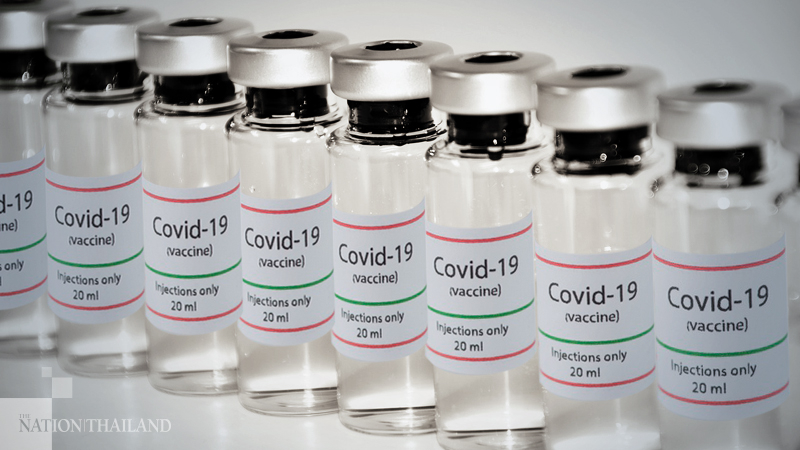
WASHINGTON – Federal advisers endorsed the Pfizer-BioNTech coronavirus vaccine on Thursday, making it all but certain the Food and Drug Administration will authorize the vaccine on an emergency basis within hours or days, kicking off an unprecedented effort to inoculate enough Americans to stop a rampaging pandemic.

https://www.washingtonpost.com/video/c/embed/d90c4512-d84e-4179-94ce-16b97b1dbf1d?ptvads=block&playthrough=false

The thumbs’ up from the FDA’s vaccine advisory committee was the culmination of an all-day meeting during which the panel heard presentations on the safety and effectiveness of the vaccine, including plans to monitor its longer-term safety.

The key moment came at the end of the meeting, just after 5:30 p.m. Eastern, when the agency asked its independent advisers: “Based on the totality of scientific evidence available, do the benefits of the Pfizer-BioNTech COVID-19 Vaccine outweigh its risks for use in individuals 16 years of age and older?”

The committee voted yes, 17 in favor, four against and one abstained. Panel members did not have an opportunity to explain their votes, but at least two dissenters objected to inclusion of 16- and 17-year-olds, given the low risk of severe disease in that age group and how few had participated.

“My ‘no’ vote was because of the inclusion of 16- 17-year-olds,” said David Kim, director of the division of Vaccines in the Office of Infectious Disease and HIV/AIDS Policy. “I would have voted ‘yes’ most enthusiastically had the language been ‘. . . 18 years of age and older.’ “

Panel member Paul Offit, a pediatrician and vaccine expert at the Children’s Hospital of Philadelphia, vehemently that argument.

“Kids in our hospital have had cardiac anomalies,” he said. “We have clear evidence of benefit, and all we have on the other side is theoretical risk.”

If as expected, the FDA follows quickly with an emergency authorization, the shots will start being moved to the states within 24 hours, according to officials at Operation Warp Speed, the Trump administration’s effort to accelerate the development and delivery of vaccines. Inoculations could begin early next week.

After the FDA authorization, an advisory committee to the Centers for Disease Control and Prevention will vote on whether to recommend the vaccine and for which groups. First in line to be inoculated are health care personnel and residents and staff of long-term care facilities, according to previous recommendations from the CDC panel. But states will have the final say on who gets the first shots and where they are administered. Those considerations are complicated by extreme logistics challenges, including the sub-Antarctic storage temperatures the vaccine requires.

Kathrin Jansen, Pfizer’s head of vaccine research and development, told the panel that “with the high efficacy and good safety profile shown for our vaccine, and the pandemic essentially out of control, vaccine introduction is an urgent need,”

During the meeting, committee members pressed the FDA on the safety of the vaccine, including raising questions about the allergic reactions that a new issue that cropped up on Wednesday when British regulators ordered hospitals to avoid giving the shots to people who have a history of “significant” allergic reactions. That directive came after two health care workers had adverse reactions after receiving the first dose of the vaccine, which British regulators authorized last week. British authorities said both workers have a history of serious allergies.

Susan Wollersheim, a medical officer in the FDA’s Office of Vaccines Research and Review, said the FDA has asked Pfizer to monitor vaccine recipients for “anaphylactic reactions” as a potential risk following the British reports.

Much remains unknown about the cases in the United Kingdom, and experts said more data was urgently needed. A specific study could be done to see if the vaccine carried risk to people with severe allergies.

“There are tens of millions of people in this country that carry EpiPens because they have peanut allergies and egg allergies. They are going to believe that they can’t get this vaccine. That is a lot of people,” Offit said.

In its review, the FDA found a slightly higher number of adverse events – “potentially representing allergic reactions” – in the group that received the vaccine, compared with those who got the placebo. There were 137 “hypersensitivity-related” reactions to the vaccine, compared with 111 such events in the placebo group. But there were no cases of anaphylactic reactions in the trial.

Pregnant women have been excluded from coronavirus vaccine trials, but FDA’s limited data doesn’t suggest a specific risk to pregnant women or a fetus. Doran Fink, deputy director of the FDA’s Division of Vaccines and Related Products Applications, said the agency is expecting later this month a developmental and reproductive toxicity study in animals that could help elucidate any risks, but will likely allow pregnant women and their doctors to decide whether or not to take the vaccine.

An authorization for Pfizer-BioNTech is the first of what health experts hope will be several vaccines to cross the finish line. Next to be considered is Moderna’s vaccine. The FDA will release its assessment of that vaccine on Tuesday. If it gets favorable evaluations are favorable, as expected, the FDA is likely to authorize that vaccine within days. Between the two vaccines, government officials project having 40 million doses by the end of the year – enough to fully vaccinate 20 million people with the two-shot regimen.

Canada’s health regulator on Wednesday approved Pfizer’s coronavirus vaccine, days ahead of possible approval in the United States. Canadian officials expect to administer them within days. Britain began vaccinations on Tuesday, after authorizing the shots last week. While some have wondered whether the FDA could have acted more quickly, Fink said the agency has been working nonstop to review the companies’ data.

“The American public demands and deserves a rigorous, comprehensive and independent review of the data,” Fink said. “That is what FDA physicians and scientists, all of us career public health servants, have been doing over days, nights, weekends and, yes, over the Thanksgiving holiday. This is in addition to months of review work already completed.”

Besides Canada and Britain, Saudi Arabia and Bahrain also have cleared the vaccine.

There was extensive debate over how to handle the difficult issue of when to give participants who received a placebo access to the vaccine. Some participants have called for it, but the FDA has expressed concerns that “unblinding” could hurt efforts to collect longer-term safety data.

Pfizer officials on Thursday proposed to FDA that participants in the placebo group be eligible to receive the vaccine when they become eligible due to age or other risk factors if they were not in the trial. Eligibility would be determined by local and national guidelines.

In preparation for the meeting, the FDA on Tuesday published a 53-page evaluation saying the vaccine appears to meet the standards it laid out in recent months for emergency authorization. The agency has said a vaccine must be at least 50% effective; its own scientists confirmed Pfizer’s assessment that the vaccine regimen was 95% effective at preventing covid-19 in a large clinical trial.

On safety, the FDA found that the vaccine has “a favorable safety profile, with no specific safety concerns identified that would preclude issuance of an [emergency authorization].” The vaccine caused several side effects, including sore arms, fatigue, headaches, muscle pain and chills, but they typically disappeared after a day or two. Pfizer provided the agency with a median of two months of follow-up on 38,000 participants in the trial.

The one surprise in the Tuesday report was that the first shot in the two-dose regimen was 52% protective against covid-19 in the three weeks between the two shots. But the FDA noted that there wasn’t enough data to draw firm conclusions about the efficacy of a single shot. Government officials have said they plan to hold back supplies for the second shots, which must be given three weeks later, to ensure sufficient supply of the shot that provides people get complete protection. But the signal of early protection from a single dose has led some to suggest that may not be the best way to use limited doses in the midst of amid surging cases.

University of Michigan epidemiologist Arnold Monto is temporary chairman of the 24-person panel, whose official name is the Vaccines and Related Biological Products Advisory Committee, which also includes a consumer representative and a nonvoting member who represents the pharmaceutical industry.

The independent panel of almost 24 members, includes experts on immunology, virology and infectious diseases. They Other Members include HIV researcher James Hildreth, dean of Nashville’s Meharry Medical College, one of the nation’s few historically black medical schools, and Paul Offit, director of the Vaccine Education Center at the Children’s Hospital of Philadelphia and co-developer of a rotavirus vaccine. The panel, whose official name is the Vaccines and Related Biological Products Advisory Committee, also includes a consumer representative and a nonvoting member who represents the pharmaceutical industry.

During the portion of the FDA’s advisory committee meeting for the general public, some people expressed concerns about the authorization of a vaccine that was so rapidly developed and reviewed. But Evan Fein told the panel he was a clinical trial participant at New York University and strongly urged quick action.

He said he is certain he got the vaccine last summer – not a placebo – because he had fatigue, fever and muscle aches after the second shot. But he said there were no longer-term side effects.

He said it would be “immoral and unethical” to not authorize the vaccine.

Relief, reluctance and reality checks with vaccine in sight #SootinClaimon.Com

#SootinClaimon.Com : ขอบคุณแหล่งข้อมูล : หนังสือพิมพ์ The Nation.

Relief, reluctance and reality checks with vaccine in sight (nationthailand.com)

Relief, reluctance and reality checks with vaccine in sight

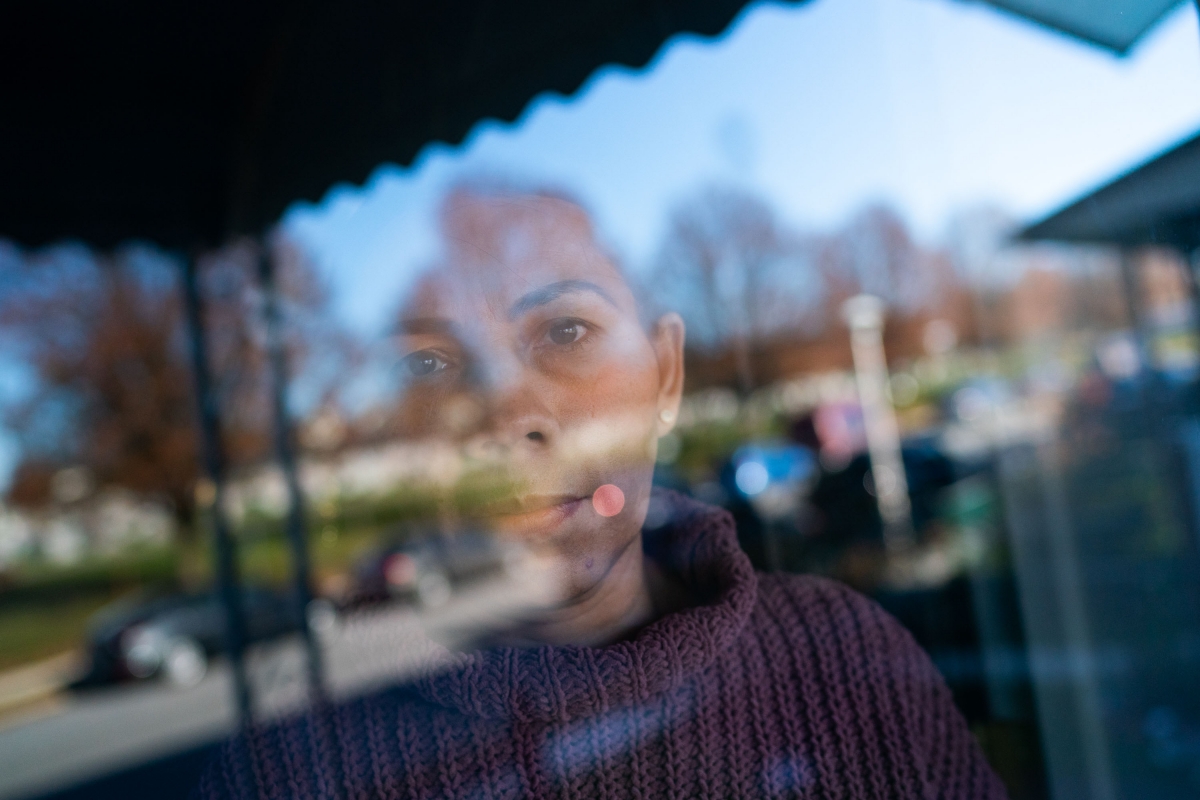
Health & BeautyDec 11. 2020Maribel Martinez, 43, outside her home this week in Baltimore. MUST CREDIT: Washington Post photo by Sarah L. Voisin.Maribel Martinez, 43, outside her home this week in Baltimore. MUST CREDIT: Washington Post photo by Sarah L. Voisin. 
By The Washington Post · Ian Duncan

Maribel Martinez has no qualms about getting the coronavirus vaccine. She watched as covid-19 attacked and weakened her husband for days during the summer before he relented and went to the hospital.

He survived, but the experience so shook Martinez that she is determined to get the vaccine as soon as it is available. She said that puts her out of step with most of her friends and neighbors in a predominantly Latino neighborhood in Baltimore where many are resistant to the idea of inoculation.

“We have a big problem,” said Martinez, 43. “The majority of the people around me are relying on what they hear from others, see on social media or their religious beliefs without knowing what it is to have the virus.”

Since the first indications that vaccine trials were successful, hope has grown that 2021 will bring an easing of the pandemic that has raged through 2020.

The three leading vaccines, developed using cutting-edge technology and being fast-tracked through the approval process, hold the promise of keeping the virus at bay in ways that counting on personal adherence to mask-wearing and social distancing have not. For many, making plans for family get-togethers and overseas travel no longer seems futile or outright dangerous.

But vaccines will not mean the immediate end of the pandemic. Emergency approval of the first vaccine, expected this week by officials at the Food and Drug Administration and the Centers for Disease Control and Prevention, will be only the first step in a rollout that presents staggering logistical challenges. Masks and social distancing will continue to be necessary. Because vaccine supplies will be limited at the outset, priority will be given to those most at risk of infection. That means it will probably be months before the average American is eligible for a shot.

And for all the enthusiasm about the vaccine – and a determination Tuesday by the FDA that it is safe and effective – there are swaths of people who, like Martinez’s neighbors, are apprehensive. For many, the speed with which the vaccines have been developed and evaluated by the Trump administration is reason to be cautious.

– – –

Iowa truck driver Candace Marley frets about bringing the coronavirus home from the road. Her boyfriend’s sister has an immune system compromised by cancer. Nevertheless, Marley is in no hurry to be vaccinated.

“They really rushed,” said Marley, 52. “Even if they make us a priority, I’ll probably wait a couple months after they start to see how everyone else is handling it.”

The resistance to vaccination is expected to be deepest in Black and Latino communities – groups that have been disproportionately affected by the virus but also subjected to racist and unethical medical practices and experiments in the past. A recent survey found that fewer than half of Black Americans and only 66% of Latinos would definitely or probably get vaccinated.

The study also found that only 14% of Black people think a vaccine will be safe and 18 percent think it will effective. The numbers for Latinos were 34% and 40%.

Liz Martin, 53, has endured a grueling nine months, moving from Georgia to South Florida for a teaching job that never materialized. She has cut herself off from almost everyone to limit her potential exposure to the virus.

Yet despite the toll the pandemic has taken on her, misinformation from the federal government about the virus has also affected her confidence in the vaccine.

“I don’t want to be anyone’s guinea pig,” said Martin, a single mother who has two children at home with her. “I have a lot to lose.”

Martin, who is Black, said she is aware of the troubled historical legacy of medical research and African Americans. But she also mentioned concern about recent reports of immigrant women in detention camps being subjected to unwanted and unnecessary medical procedures, including hysterectomies. Female detainees at a rural Georgia immigration facility have alleged “overly aggressive” gynecological procedures at a local physician’s office.

“Maybe by summer I’ll feel comfortable because I’ll see people around me who have had success with the vaccine,” she said.

The Trump administration initially pledged that its Operation Warp Speed would deliver about 300 million doses of vaccine by year’s end. The reality has fallen far short – to about 10% of that amount.

The CDC expects 35 million to 40 million doses to be available by the end of the year, enough to reach some 18 million people, because both the vaccines require two doses spread several weeks apart. Based on recommendations from a CDC advisory panel, 21 million health-care workers and 3 million nursing-home residents will be first in line. States will make the final determination on how to allocate the supply of vaccine they receive.

Maribel Martinez, 43, said many of her neighbors are wary of getting a coronavirus vaccine. MUST CREDIT: Washington Post photo by Sarah L. Voisin.

Maribel Martinez, 43, said many of her neighbors are wary of getting a coronavirus vaccine. MUST CREDIT: Washington Post photo by Sarah L. Voisin.

Residents at the Ohio Eastern Star Home in Mount Vernon, about 40 miles northeast of Columbus, have largely been spared by the coronavirus, chief executive Michele Engelbach said, knocking on wood. But she said she has watched lives fade amid the loneliness of the lockdown designed to keep the virus away.

“It’s not like they can say, ‘Well, next Christmas we can get together,’ because who knows?” Engelbach said, describing a “no win” choice between protecting residents from the virus and watching them waste away amid the feelings of isolation.

The 200 staffers and some of the 120 residents at the Eastern Star Home should be among the first people in the country to get the vaccine, solving her dilemma.

“I sure as hell hope so,” she said.

Engelbach said that some of her staffers have expressed concerns about the vaccine and that she will not mandate everyone get it, hoping instead that they can be persuaded. Residents will not be forced to get vaccinated, either, but Engelbach said they have not expressed any hesitancy.

“At that point in my mind, all the residents will be vaccinated, the majority of the staff will be vaccinated, so the only people who will be at risk are the people who choose not to get vaccinated,” she said.

Yet even as the vaccine approval nears, Engelbach said practical things, such as how it will get from the manufacturer to her facility and how it is to be administered, remain unclear, as do the implications for reopening the home to visitors.

“I know [the vaccine is] out there,” she said. “I know it’s coming. That’s about it.”

Significant questions also remain about how the vaccines will preform in the real world. The CDC says it is not clear yet how long the immunity conferred by the vaccines will last or when precautions such as mask-wearing and social distancing can safely be abandoned. There is also a chance that people who are vaccinated could still spread the virus if they subsequently become infected.

Data from the trials shows the vaccines to be generally safe, but federal officials said there will be what are known as “adverse events” as the vaccines are rolled out, and they are planning to monitor their safety.

While others ponder the risks, Bill Moore, an emergency department nurse in Boone, N.C., said he is ready to take the vaccine today, figuring it could safe his life. Though Moore, 65, should be close to the head of the line, he said he has heard nothing about when he might actually receive his first dose.

“If I knew that the vaccine was going to be here next week, I’d feel a lot better about it,” he said. “I’m working this coming weekend, and I dread it, to tell the truth.”

In the new year, the number of doses being manufactured is expected to grow, allowing additional groups of people to be vaccinated.

Whom those groups might include has not been determined, but they are likely to include older people who do not live in nursing homes and people in essential professions such as teaching and food production. Industries and unions have begun campaigning to get their workers good spots on the list.

Major fire service organizations are pushing states to prioritize firefighters, paramedics and emergency medical technicians, because many of these first responders treat coronavirus patients before they are transported to the hospital. Still, some rank-and-file firefighters are reluctant to be first in line. In a union survey of New York firefighters, more than half said they would refuse the vaccine.

Covid-19, the disease caused by the coronavirus, is the leading cause of death this year for law enforcement and corrections officers in the United States. Houston police officer Doug Griffith volunteered for one of the early vaccine trials. Hundreds of the department’s officers have tested positive for the virus. Officer Ernest Leal died of covid-19 late last month.

Griffith said he does not know whether he received the vaccine or a placebo, but he viewed participating in the trial as a way to keep his family safe.

“I’m healthy, and I think its incumbent to help out in any way I can,” said Griffith, 51. “I interact with the public every day and live close to my family. The last thing I want to do is get someone sick.”

Griffith said it makes sense for health-care workers and nursing home residents to be among the first to get the vaccine, but he would like first responders to be a close second or third.

He regularly fields questions from fellow officers about the vaccine: “Why would you do that to yourself? Did you ever feel funny? Are you afraid of it?” Griffith said he’s not trying to persuade anyone to get the vaccine, saying it’s a personal choice – but he is happy to be a “guinea pig” to help ease any doubts or concerns his colleagues might have.

– – –

Federal officials say they recognize that the hesitancy among many Americans is an important obstacle to overcome and are developing strategies to work with community organizations to build confidence in the vaccine.

Baltimore pediatrician Sarah Polk said she was stunned by the depth of the concern and mistrust in the vaccine in the largely Latino community she serves. At a meeting of a community advisory board, Polk, who is White, saw how deeply damaged the medical establishment’s reputation is among immigrants.

One of Polk’s patients works in a job that will probably require her to get vaccinated, but the girl said she would rather lose the job than get the vaccine.

Polk has no concerns about the vaccine and intends to get it – and for her family to get it when it becomes available. She intends to be open with her patients about her plans but said the message might not mean much coming from someone who looks like her.

“You need many different messengers,” she said.

Dallas construction worker Oscar Torres has taken on the job of messenger. He’s heard all the baseless conspiracy theories and falsehoods: The virus is a government-engineered plot for population control. Only old people die of it. If President Trump survived, how bad could it be?

Torres was not sure what to think until he caught the virus. He and his brother were violently ill for 10 days in early May.

“I thought it was an invention to scare people,” he said. “But in reality, when I got it, it was terrible.”

Texas construction workers, a large number of whom are estimated to be undocumented or foreign born, are five times as likely to be hospitalized with covid-19 as other workers, according to a recent study by the University of Texas at Austin.

Torres wants his colleagues to be vaccinated to lower his chances of getting covid-19 a second time. But like Polk, he said the government needs different messaging to ensure everyone realizes the importance of being vaccinated. Officials should be transparent without being alarmist, he said.

“I get it. A vaccine is the most important thing we can do to fight this pandemic,” Torres said. “But . . . there is a lot of mistrust.”

And then there are those like Julie Turner, who at 82 is tired of being stuck at home alone and ready to get back to living. She needs no convincing.

Turner said she has been extremely careful since the pandemic began. When her daughter came to visit in August, she realized she had not touched another person in months.

She splits her time between Waretown, N.J., and a home on the state’s Long Beach Island. She said her health is good, but when it comes to her age, “82 is 82.”

During the summer, going to the grocery store was a high point, but as news about the vaccine became increasingly encouraging, bigger plans took shape for 2021. She has lined up trips to Nepal, Oman and the Caucasus region and plans to be snorkeling in Indonesia’s Raja Ampat region come next December.

Spending Christmas alone is going to tough, Turner said, along with the rest of the winter. But, she said, at least there is now a light at the end of the tunnel.

“I think a lot of people just need to think that there is one,” she said.

The Game Awards hosted Zoom calls with hundreds of fans. They were surprisingly orderly. #SootinClaimon.Com

#SootinClaimon.Com : ขอบคุณแหล่งข้อมูล : หนังสือพิมพ์ The Nation.

The Game Awards hosted Zoom calls with hundreds of fans. They were surprisingly orderly. (nationthailand.com)

The Game Awards hosted Zoom calls with hundreds of fans. They were surprisingly orderly.

EntertainmentDec 11. 2020

By The Washington Post · Gene Park

The Game Awards have always been distinct from peer shows in the entertainment industry. With less formality and more announcements than any other prestige show, the video games industry has an awards show that tries to be its mirror.

Showrunner Geoff Keighley extended this philosophy this past year after the coronavirus lockdowns kicked in. He missed the in-person interactions from traveling to expos and other industry shows across the world. So instead, he used The Game Awards platform to host weekly fireside chats with industry titans like Xbox chief executive Phil Spencer, “Elder Scrolls” legend Todd Howard or the elusive Gabe Newell, co-founder of Valve and an early key figure in the creation of Microsoft Windows.

One day during the summer, Keighley tweeted to his 1.2 million followers asking who would want to show up on a Zoom call and chat about The Game Awards, what they want to see and how the show can be improved. To be selected, viewers were asked to send an email explaining why The Game Awards or gaming means so much to them. Keighley received over 2,000 emails. He invited about 150 people on the first call.

“Everyone online was telling me, ‘Oh it’s going to be a madhouse, everyone talking over each other,” Keighley said. “It was not at all like that. It was such a polite, respectful group of people, and we just really had a great conversation about games. And I’m blown away at how global it was.”

Keighley showed some of the emails to The Washington Post, where respondents raised a range of reasons for why they love The Game Awards, including the representation it showcases and the excitement it can bring – especially as trade shows like E3 lose some of their luster. They appreciate seeing the faces behind the works, especially in a medium that’s struggled to properly recognize the hundreds of people that can stand behind the creation of a single game.

The Post was invited to one of these calls, and can confirm that they were orderly, polite conversations. Viewers and listeners would often raise their hand to speak and wait their turn.

“It was inspiring because, you know, on Twitter we often see a lot of loud voices, but in the midst, there are tons of people who are really amazing, thoughtful people that love video games,” Keighley said. “I often live in a bubble where I go to PAX and E3 and see the same people, while a lot of these fans might never get a chance to talk to Todd Howard or Phil Spencer.”

Keighley said much of the feedback was affirmation for him and his team. It was a good “temperature check” on how people felt about the show, and how it could change moving forward after this tumultuous year.

Probably the most distinctive aspect of The Game Awards is that its also a vehicle for announcements. Nintendo debuted its trailer for “The Legend of Zelda: Breath of the Wild” at the 2016 show, and Microsoft made its first public unveiling of the Xbox Series X at last year’s show.

“People have crazy expectations about what’s going to be announced, and we don’t really control whether it’s going to be on the show or not,” Keighley said. “That’s always the hardest part for me, seeing games get requested that you know might not be there, but that’s not our choice.”

Keighley said the decision to run announcements or trailers largely depends on the work being done at the publisher or studio level, and this year has proven that the entire industry has struggled to meet its deadlines thanks to the pandemic.

None of these Zoom meetings are available for public viewing. Keighley said they were meant to be intimate, personal conversations, although none were really “off the record.” They were meant only as an interactive way to talk to his fans. Keighley is keen on interactivity as a core pillar of The Game Awards, and he’s worked with publishers in the past to offer free playable demos and discounts for award winners.

“I wasn’t going to turn this into a video that we were going to put up on YouTube and monetize, this was very much for the community,” Keighley said.

Despite problems relating to the pandemic ailing the world, Keighley said 2020 proved to be a banner year for gaming’s reputation.

“The wider world has really started to realize the power of this medium, whether that was the Travis Scott Fortnite concert to the new console launches,” Keighley said. “I really think the meta narrative for me is that this is a year that gaming has finally been accepted at its rightful place as the biggest form of entertainment.”

Netflix’s foreign-language shows see popularity soar in the U.S. #SootinClaimon.Com

#SootinClaimon.Com : ขอบคุณแหล่งข้อมูล : หนังสือพิมพ์ The Nation.

Netflix’s foreign-language shows see popularity soar in the U.S. (nationthailand.com)

Netflix’s foreign-language shows see popularity soar in the U.S.

EntertainmentDec 11. 2020

By Syndication Washington Post, Bloomberg · Lucas Shaw

Netflix Inc.’s investment in foreign-language shows is paying off at home, with U.S. viewership of the titles growing more than 50% this year.

Shows from Spain, Germany and France ranked among the most popular shows on Netflix, while viewership of dramas from Korea almost tripled, the company said Thursday. The fourth installment of “Money Heist,” a crime show from Spain, was one of the 10 most popular shows in 92 different countries this year.

Once reluctant to share any data on what its customers watched, Netflix has released more and more information to underscore what is working and dispel criticism that programs get lost amid the onslaught of new shows on the service.

While most U.S. media companies have historically focused on producing shows in English, Netflix has spent billions of dollars to produce shows in dozens of countries around the world. That strategy has been a major factor in the company’s success in signing up customers abroad, both over the last decade and this year in particular.

The company is on track to add the most customers in its history, and has said it will eclipse 200 million subscribers worldwide in the year’s final quarter. More than 60% of its users hail from outside the U.S., including 62 million in Europe, the Middle East and Africa, its largest region abroad.

The majority of Netflix’s most popular programs are still in English. When Netflix released a list this summer of its 10 most popular original movies, they were all in English.

The Netflix statement Thursday also revealed some viewership trends during the pandemic. Interest in home baking shows surged almost 50% in March, while searches for sad movies climbed in April. October was the year’s biggest month for comedy viewing.

Moriya hot on heels of leader Olson at US Women’s Open #SootinClaimon.Com

#SootinClaimon.Com : ขอบคุณแหล่งข้อมูล : หนังสือพิมพ์ The Nation.

Moriya hot on heels of leader Olson at US Women’s Open (nationthailand.com)

Moriya hot on heels of leader Olson at US Women’s Open

Dec 11. 2020Moriya Jutanugarn (LPGA Photo) Moriya Jutanugarn (LPGA Photo) 

Thai No 2 Moriya Jutanugarn shot an unblemished opening round 68 to chase American leader Any Olson a shot behind in the US Women’s Open at the Cypress Creek Course at Champions Golf Club in Houston, Texas. With three birdies in 10 holes, the one-time LPGA winner is placed at second alongside Hinako Shibuno of Japan and South Korean A Lim Kim after 18 holes. US-based Patty Tavatanakit, another Thai hope in the field, fired five birdies against three bogeys to start the Major with a 69 with f

With three birdies in 10 holes, the one-time LPGA winner is placed at second alongside Hinako Shibuno of Japan and South Korean A Lim Kim after 18 holes.

US-based Patty Tavatanakit, another Thai hope in the field, fired five birdies against three bogeys to start the Major with a 69 with former world No 1 Ariya Jutanugarn coming a shot behind.

For the second time in 2020, North Dakota’s Olson has got off to a hot start in a major championship. The 28-year-old from Fargo shot a four-under 67 in Thursday’s first round.

Olson highlighted her day with an ace at No. 3, while three birdies and one bogey rounded out her career-low round at the US Women’s Open. Considering Cypress Creek played a full stroke harder (74.59 to 73.46) than the Jackrabbit Course, which is co-hosting the first two rounds due to daylight concerns, Olson’s first-round success is especially hard-earned.

“I hit the ball really well off the tee. I gave myself some good chances for birdies, but I really made some putts that I definitely wasn’t necessarily thinking birdie on, and that helped,” said Olson, the USGA’s 2009 US girls’ junior champion. “Obviously, the hole-in-one was kind of the highlight of the round. I was pretty excited to be able to do that at the US Open.”

Olson has twice been close to major success. In August, Olson shot another 67 to open the AIG Women’s Open but struggled to a second-round 81 and dropped well off the pace. She also came up one hole short at the 2018 Evian Championship, making a heart-breaking double-bogey on the 72nd hole to hand the title to Angela Stanford.

Olson knows only too well that the championship is far from over, saying, “It’s not easy to win out here. You have to put four really good days together.”

Shibuno, who captured the hearts of the golf world after winning the 2019 AIG Women’s Open, carded four birdies and one bogey in the first round of her US Women’s Open debut. She played the Cypress Creek Course on Thursday and looks forward to the challenge of playing a completely different course in the second round.

“This is my first time playing two different courses, so that’s why I did a lot of practising rounds beforehand. That’s why I came in early,” said Shibuno. “By doing so, by doing more practising, I learned more, so I would like to use what I learned in the practising rounds and in the tournament.”

Moriya and Kim both opened their major weeks on the Jackrabbit Course. Moriya returned a clean scorecard with three birdies, while Kim endured an up-and-down round of five birdies and two bogeys.

Seven players are tied for fifth at -2, including 2020 AIG Women’s Open champion Sophia Popov and Gerina Piller, who had the best first-round showing of the championship’s seven Texans. US Women’s Open champion in 2019, Jeongeun Lee, opened her title defence with a two-over 73 on the Cypress Creek Course.

Former Bantamweight Champion Kevin Belingon Looking to Bounce Back in 2021 #SootinClaimon.Com

#SootinClaimon.Com : ขอบคุณแหล่งข้อมูล : หนังสือพิมพ์ The Nation.

Former Bantamweight Champion Kevin Belingon Looking to Bounce Back in 2021 (nationthailand.com)

Former Bantamweight Champion Kevin Belingon Looking to Bounce Back in 2021

Dec 11. 2020

 Team Lakay has certainly had a rough year, and that includes former ONE Bantamweight World Champion Kevin “The Silencer” Belingon.

The 33-year-old Belingon came up short in his lone appearance inside the ONE Circle this year, falling to Brazilian thunderclap John “Hands of Stone” Lineker by knockout just last November.

Yet despite all that the world has been going through, Belingon feels he’s still in a good place in his life, even with his career hitting a slight stumbling block.

“2020 for me was still a good year, despite everything that happened. I still have a good career. Most importantly, my family welcomed our beautiful baby daughter to the world. She’s the best thing that happened to me. As for my fighting career, I’m looking to get back to the top in 2021,” said Belingon.

Belingon and wife Lee welcomed Kelsey Tuesday to the world last August, and the two loving parents have been preoccupied since in raising their baby girl. Belingon says he’s even more motivated to succeed in his career now, with his family growing.

“The Silencer” has his focus still firmly on the ultimate prize, and that’s to reinsert himself into the world title mix in his division.

“I just have to stay strong and stay healthy right now. That’s one of the toughest challenges with all the different restrictions and obstacles we now face in training. There are a lot of moving parts that have been affected. I just need to stay on top of it. I’m keeping the dream in sight,” said Belingon.

Looking forward to the next 12 months, Belingon has his finger on a handful of things he wants to accomplish, both in his career and in his own personal life.

“We’ll take the time we need to review our past fights and our past performances, so we can learn the lessons we need to learn to move forward. There are still a lot of holes in my game, and I want to fix them all. I can’t wait to go back to the gym and train hard. I want to be ready for whatever challenge I will potentially face next year,” said Belingon.

“My goal in 2021 is to erase the memory of 2020. My eyes are still on the bantamweight belt. That’s what I want, and that’s what I’m after. Aside from that, I just want to raise my daughter well and take care of her.”

The 33-year-old mixed martial arts veteran plans to spend some much-needed time with his family during the holidays, but is completely determined to hit the gym hard once it’s time to get back to work.

“I am very fortunate that my family and I have been safe from COVID-19. It’s been a blessing to stay in Baguio City where we can enjoy and experience nature. It’s one of the best places in the world to start a family. I want to spend good, quality time with them in the next few weeks,” said Belingon.

“Still, fans can expect a new and improved, much better Kevin Belingon next year. In my last fight, I didn’t feel like I was myself. I want to remind everyone what I am capable of. 2021 will be the year of The Silencer.”

ONE Championship returns with ONE: BIG BANG II, a previously recorded event for global broadcast on Friday, 11 December. In the main event, former ONE Flyweight Muay Thai World Champion and current #3-ranked contender Jonathan “The General” Haggerty of the United Kingdom takes on Taiki “Silent Sniper” Naito of Japan.

Watch ONE: BIG BANG II this Friday, 11 December on ONE Super App or ONE Championship youtube at 7:30 p.m. Thailand Standard Time. Thairath TV Channel 32 will air the event on a same-day  at 9.30 p.m.

Paolo Rossi, Italian World Cup soccer hero, dies at 64 #SootinClaimon.Com

#SootinClaimon.Com : ขอบคุณแหล่งข้อมูล : หนังสือพิมพ์ The Nation.

Paolo Rossi, Italian World Cup soccer hero, dies at 64 (nationthailand.com)

Paolo Rossi, Italian World Cup soccer hero, dies at 64

Dec 11. 2020

By The Washington Post · Phil Davison

Paolo Rossi became a national hero in Italy at age 25 – and remained so all his life – when he helped the national soccer team to victory at the 1982 World Cup in Spain. The center forward, or striker, scored the first goal for the Azzurri (the Blues) in the final against West Germany as Italy triumphed, 3-1, at Santiago Bernabéu Stadium in Madrid.

The victory, Italy’s first in the World Cup since 1938, brought ecstasy to millions of Italian fans glued to their screens at home. Their country was beset by political and social unrest, but the success of their soccer team unleashed an outpouring of emotion and a badly needed feeling of joy and national unity.

That World Cup final goal, on July 11, 1982, was Rossi’s sixth of the tournament, winning him the Golden Boot as World Cup top scorer as well as the player of the tournament (equivalent of MVP).

Italian kids, even adults, rushed to buy blue Italian soccer jerseys bearing Rossi’s number 20 on the back. “Pablito,” as Italian fans nicknamed him, was also given the coveted Ballon d’Or (Golden Ball) as 1982 European player of the year, more recently dominated by the Portuguese star Cristiano Ronaldo, now of Juventus in Italy, and FC Barcelona’s Argentine wizard Lionel Messi. The respected U.K. magazine World Soccer also gave him its inaugural World Player of the Year award.

Rossi, 64, died Dec. 9 at a hospital in Siena, Italy, according to the Italian TV channel RAI Sport, where Rossi had worked as a soccer pundit. The channel cited Rossi’s family, which did not specify the cause of death.

That Rossi even got into the 1982 World Cup squad at the last minute was remarkable and fortunate – for him and, as it turned out, his country.

In 1980, he had been banned from soccer for three years after a match-fixing scandal, known as the Totonero (black-betting). He was accused of involvement but issued denials. At the time, he was one of the world’s highest-paid players, lining up for the club Perugia.

An investigation involving 13 teams in Italy’s two top leagues, Serie A and Serie B, found, among many other cases, that a match involving Perugia – a 2-2 draw with Avellino – had been fixed by a betting syndicate.

His ban was reduced to two years, by which time he had been signed by the Turin club Juventus, allowing Italy Manager Enzo Bearzot to include him in his 1982 World Cup squad.

Bearzot came under heavy criticism from the soccer-mad Italian media when Rossi looked unfit during the first three group matches. The Italian newspaper Gazzetta dello Sport described the striker as “a ghost wandering aimlessly around the field.”

Bearzot stuck with him, however, in the next round for the crucial matches against two of the world’s greats, Argentina, reigning world champions at the time, and Brazil, already three-time champions and tournament favorites in 1982.

Italy beat Argentina, 2-1, shutting down the soccer marvel Diego Maradona, but it was in the riveting game against Brazil that Rossi erased memories of the match-fixing ban.

It was July 5, 1982, in the Estadio Sarría, Barcelona. Every non-Italian lover of the “beautiful game” expected and wanted the magical Brazil side to win and go through to the semifinals. Not to be.

Rossi scored all three goals – a hat trick – as the Azzurri beat Brazil, 3-2, sending the soccer-crazy fans in the South American nation into shock and mourning. Many soccer writers have called it the greatest World Cup match ever.

Rossi later described that game, and Italy’s ultimate triumph over West Germany, as a “personal redemption” after the betting scandal.

He then scored both goals in Italy’s 2-0 win over Poland in the semifinals and, of course, another one in the final triumph against West Germany.

Paolo Rossi was born in Prato, northwest of Florence, on Sept. 23, 1956. He first came to the notice of big-team talent scouts as a prolific scorer for Vicenza, west of Venice. That earned him a move to Juventus, winning the European Cup in 1985.

Unlike most world-class players in modern times, he spent his entire club career in Italy, gaining two Serie A (the top league) titles. He also played for AC Milan and Verona.

Retiring in the late 1980s, he became a popular TV soccer pundit on Sky Sports and the Italian national broadcaster RAI.

His first marriage, to Simonetta Rizzato, ended in divorce. In 2010, he married Federica Cappelletti, a journalist. In addition to his wife, survivors include a son from Rizzato; two daughters from Cappelletti; and a brother.

Amazon’s new health band is the most invasive tech we’ve ever tested #SootinClaimon.Com

#SootinClaimon.Com : ขอบคุณแหล่งข้อมูล : หนังสือพิมพ์ The Nation.

Amazon’s new health band is the most invasive tech we’ve ever tested (nationthailand.com)

Amazon’s new health band is the most invasive tech we’ve ever tested

Dec 11. 2020Amazon calls the Halo Band design Amazon calls the Halo Band design “distraction free,” but we found the lack of a screen made it less useful for motivation. MUST CREDIT: Washington Post photo by Geoffrey A. Fowler. 
By The Washington Post · Geoffrey A. Fowler, Heather Kelly

Amazon has a new health-tracking bracelet with a microphone and an app that tells you everything that’s wrong with you.

You haven’t exercised or slept enough, reports Amazon’s $65 Halo Band. Your body has too much fat, the Halo’s app shows in a 3-D rendering of your near-naked body.

And even: Your tone of voice is “overbearing” or “irritated,” the Halo determines, after listening through its tiny microphone on your wrist.

Hope our tone is clear here: We don’t need this kind of criticism from a computer. The Halo collects the most intimate information we’ve seen from a consumer health gadget – and makes the absolute least use of it. This wearable is much better at helping Amazon gather data than at helping you get healthy and happy.

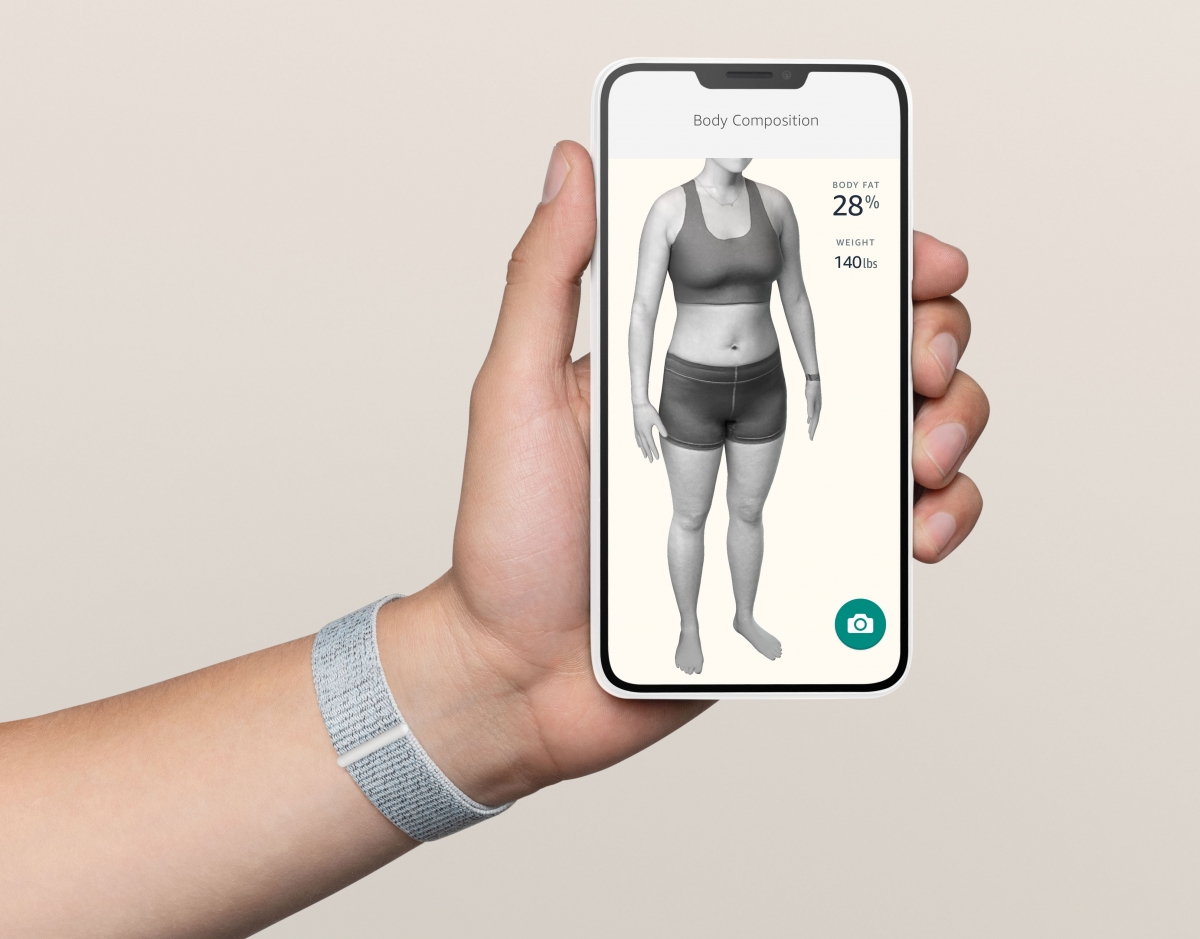
The optional body feature in the Halo app asks you to take four photos of your body in underwear or skintight clothes, and the generates an estimate of your body fat composition and a 3-D model of your body. MUST CREDIT: Amazon.

The optional body feature in the Halo app asks you to take four photos of your body in underwear or skintight clothes, and the generates an estimate of your body fat composition and a 3-D model of your body. MUST CREDIT: Amazon.

Since August, the Halo has been listed by Amazon as an “early access” product that requires an “invitation” to buy. (It will cost $100 plus a $4 monthly fee once it’s sold widely.) We’re reviewing the Halo now because Amazon’s first digital wellness product offers a glimpse of how one of tech’s most influential companies thinks about the future of health. And what better to do when we’re lonely during a pandemic than have an always-listening device point out our flaws? Amazon CEO Jeff Bezos owns The Washington Post, but we review all technology with the same critical eye.

Late to the fitness tracker market dominated by the Apple Watch and Fitbit, the fabric-covered Halo has no screen, no sounds or vibrations and no design innovation. Like its competitors, it contains sensors that monitor physical activity, heart rate, sleep and skin temperature. A companion phone app is the only place to see what it has learned.

But the Halo pushes into uncharted territory by also collecting new, unabashedly invasive kinds of personal information – including body photos and voice recordings – and then feeding it into Amazon’s software for analysis. They’re going for AI doctor, or at least life coach.

One reason we tested two Halo bands, one on each of our bodies, is to see how well the AI could account for gender and other important human differences – particularly on factors as complicated as fat composition and tone of voice. Spoiler alert: It described Geoffrey’s tone with words like “opinionated” while it was more likely to flag the tone of Heather, a mom of two, as “dismissive” and even “condescending.”

“We can bring some unique expertise in AI and machine learning,” Amazon medical officer Maulik Majumudar, told us in an interview. “There are many examples of this in the product you see, but the specific ones that could come to mind are body [fat analysis] and tone – that’s a more comprehensive and holistic view of health than just physical health alone.”

We’re also believers, in the long run, that personal data might be able to help people get healthier or even detect diseases like covid-19, the subject of a flurry of recent research. Over the last decade, wearable tech hasn’t made much of a dent in America’s growing obesity rate. Our Fitbits and Apple Watches don’t really know how to turn mountains of body data into actionable insights and behavior changes.

Amazon’s problem is, the Halo does it even worse.

On the fitness tracker basics of measuring activity and sleep, the Halo is more erratic than its competitors. In a seated, side-by-side test, the Halo’s heart rate readings are similar to an Apple Watch 6 and Fitbit Sense. But during a bike ride, the Halo reported a peak heart rate of 129 bpm, while the Apple Watch reported 171 bpm. Part of the problem is there are no buttons to tell the Halo you’re about to exercise – it just tries to figure out for itself what you’re up to using its algorithms.

You also have to trust Amazon’s AI to accurately estimate other body measures, starting with a near-nude total body scan. The health baseline used by most doctors is body mass index, or BMI, a score based on height and weight. Amazon says a better measure is body fat percentage, which it calculates by asking you to stand in front of your phone’s camera in your skivvies for a 360-degree photo shoot and then sending the shots to Amazon’s cloud for analysis.

Evaluating the accuracy of Amazon’s fat measurement is difficult without a doctor or dietitian. One home device that calculates fat by sending a light current through your feet, the Withings Body+ scale, reported Geoffrey’s body fat was five percentage points lower than Halo. Heather’s fat estimate was nearly identical on the Withings scale and Halo. (We’re not going to tell you exactly how out of shape it thinks we are.) Amazon claims its AI is more accurate than the technology in smart scales, though it has not been cleared by the Food and Drug Administration.

The Halo’s voice tone analysis is questionable on a whole other level. You train the device to recognize your voice by reading sample phrases, and then it listens out constantly for moments in conversation that go beyond your neutral tone. (There is a button you can press to temporarily turn off the microphone.) The Halo plots these moments as positive vs. negative and high vs. low energy, and then applies more nuanced descriptors to them – for example, a voice that registers as negative and low energy might be classified as “discouraged.” You can review a dozen, or more, of these per day in the Halo app.

The Halo uses Amazon AI to analyze the tone of your voice, which it categorizes here with terms such as "disgusted," "irritated," and "angry." MUST CREDIT: Washington Post photo by Geoffrey A. Fowler.
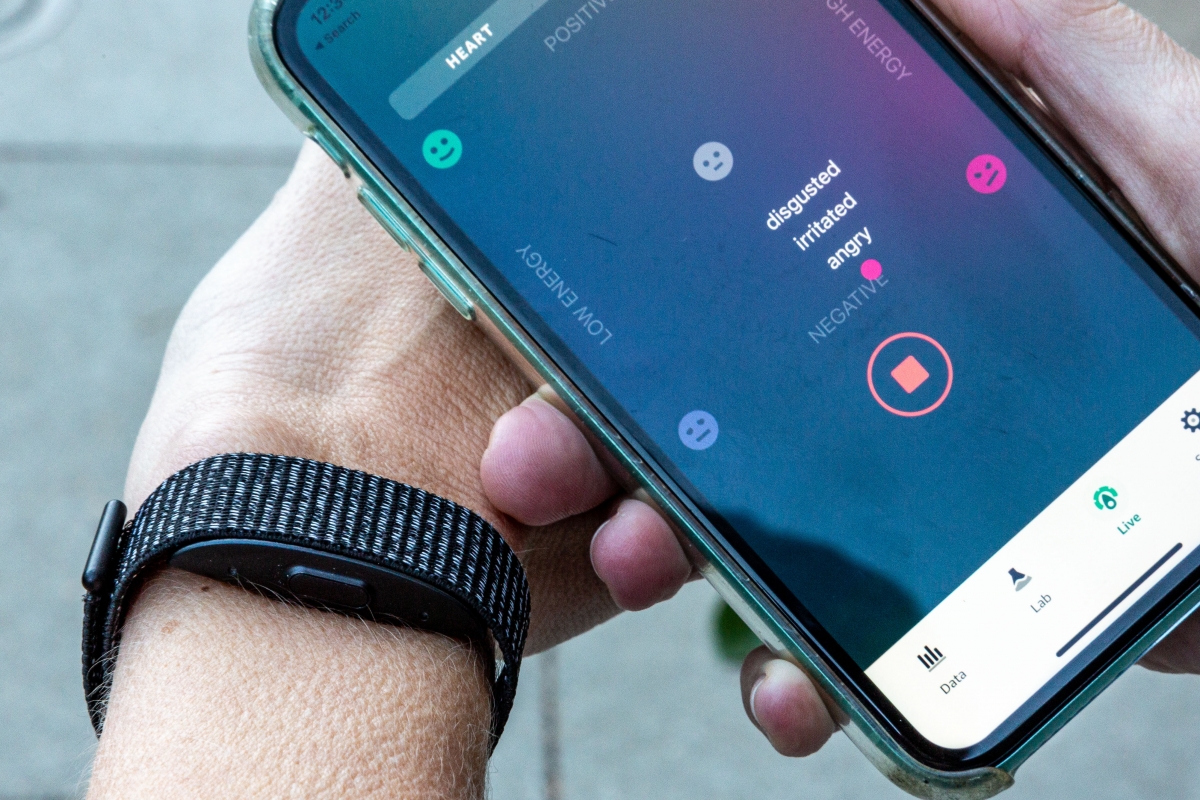
The Halo uses Amazon AI to analyze the tone of your voice, which it categorizes here with terms such as “disgusted,” “irritated,” and “angry.” MUST CREDIT: Washington Post photo by Geoffrey A. Fowler.

How could a computer possibly know you sound like a Debbie Downer? Amazon said it spent years training its tone AI by having people categorize voice recordings. The company held internal trials and says it tried to address any biases that might arise from varying ethnicity, gender, or age.

In our experience, the Halo could detect ups and downs in our voice, but seemed to misinterpret situations regularly. And some of the feedback feels, ironically, a bit tone deaf – especially when judging a woman’s voice.

Our sample size of two isn’t sufficient to conclude if Amazon’s AI has gender bias. But when we both analyzed our weeks of tone data, some patterns emerged. The three most-used terms to describe each of us were the same: “focused,” “interested,” and “knowledgeable.” The terms diverged when we filtered just for ones with negative connotations. In declining order of frequency, the Halo described Geoffrey’s tone as “sad,” “opinionated,” “stern,” and “hesitant.” Heather, on the other hand, got “dismissive,” “stubborn,” “stern” and “condescending.”

She doesn’t dispute she might have sounded like that, especially while talking to her children. But some of the terms, including “overbearing” and “opinionated,” hit Heather differently than they might a male user. The very existence of a tone-policing AI that makes judgment calls in those terms feels sexist. Amazon has created an automated system that essentially says, ‘Hey sweetie, why don’t you smile more?’

Each new generation of wearable gadget has invented new motivational scores to help you get more healthy. The Fitbit nudged you to take 10,000 daily steps – and the Apple Watch urges you to close three colorful daily rings for activity, exercise and standing. Amazon’s Halo gives you an activity score with a goal of 150 points per week. Say what?

Amazon says it’s not arbitrary: the score is based on guidelines from the American Heart Association that people should aim for 150 minutes of moderate exercise per week, though the points don’t translate exactly to time. The Halo gives more points for more-strenuous activity, and you lose points for stretches of inactivity.

It is smart to measure activity that actually exercises your heart (which taking steps might not). But putting it on a weekly scale of 150 – and burying your score in the Halo app – means it’s mostly meaningless as motivation in the moment when you have to decide to go for a jog or kick back on the couch.

It’s possible some people might be more receptive to criticism coming from an app than coming from a person. The Halo app also turns your body scans into a 3-D rendering, complete with a slider to see what you’d look like with more, or less, fat.

But we were disappointed that even with all that highly personal (somewhat nude) data, the Halo doesn’t offer any kind of a personalized plan or path forward. The app has what it called Labs, a hysterically techy term for what are mostly just videos or audio recordings from outside companies like Orangetheory and Openfit, with little reminders to watch them. The selections are the same for everyone, not tailored to your data or goals.

Even more perplexing is that Amazon thinks there might be anything motivating about its harshly worded reports about your conversational tone. “For the most part, people are relatively unaware of how they sound to others and the impact that may have on their personal and professional relationships,” said Majumudar. But he also told us Amazon is purposefully not providing any kind of diagnosis or interpretation of a person’s emotional state.

It’s hard to even match up the Halo’s daily AI tone judgments to what you actually said – you get a time stamp, but not a transcription. Was that panicked, overwhelmed moment tied to a breaking glass or just idle chit chat about coffee?

The Halo app’s Labs offers lectures from a communications expert about “conscious listening.” But there are no personalized suggestions based on your tone, like how to sound less “sad” in the middle of an isolated holiday season during a pandemic.

The Halo has invented a new personal behavior to feel self-conscious about, which we suppose is a kind of innovation.

While reviewing the Halo, we couldn’t shake the suspicion it was just another effort by Amazon to collect more data about customers’ lives.

Amazon approached some aspects of Halo data more carefully than it has other recent products. The Halo does not send Amazon recordings of your voice, like its Echo smart speakers. Instead, it sends recordings to your phone for analysis, and then deletes the recordings from both. Your body fat photos are sent to Amazon’s cloud for processing, then deleted from its systems. (You can choose to keep a copy on your phone, too.)

The Halo privacy policy says Amazon won’t sell your data, share it without your explicit permission or use it to target you with sales pitches.

But that still leaves open plenty of other ways for Amazon to profit from your information. In an anonymized way, it can data mine the heart rate, activity, sleep and tone patterns of Halo owners, using it to tailor its health algorithms and learn about human bodies. Make no mistake: disrupting medicine is the next goal for big tech.

Those ambitions are just hard to square with the half-baked product the Halo is today. But half-baked products are not totally out of character for Amazon, which has a history of tossing out weird, creepy ideas and letting customers do the testing. The first Echo smart speaker was not very useful, until devoted customers fed Amazon lots of data train its talking Alexa assistant. Amazon has also killed off other wacky products, including a camera called the Echo Look that used AI to judge fashion.

AI-powered devices like the Halo may well be the future of health. But they are not the present.

Singapore, UK ink free trade deal with eye on digital economy talks in 2021 #SootinClaimon.Com

#SootinClaimon.Com : ขอบคุณแหล่งข้อมูล : หนังสือพิมพ์ The Nation.

Singapore, UK ink free trade deal with eye on digital economy talks in 2021 (nationthailand.com)

Singapore, UK ink free trade deal with eye on digital economy talks in 2021

Dec 11. 2020The UKSFTA was signed in Singapore by Minister for Trade and Industry Chan Chun Sing (right) and UK Secretary of State for International Trade Elizabeth Truss. PHOTO: MTIThe UKSFTA was signed in Singapore by Minister for Trade and Industry Chan Chun Sing (right) and UK Secretary of State for International Trade Elizabeth Truss. PHOTO: MTI 

By Ovais Subhani
The Straits Times/ANN

SINGAPORE – Singapore signed a free trade agreement (FTA) with the United Kingdom on Thursday (Dec 10) to ensure that companies from both countries continue to enjoy the same benefits that they are receiving under the Republic’s FTA with the European Union.

The agreement will cover more than £17 billion (S$30.4 billion) of current bilateral trade in goods and services.

The two countries also agreed to assess the modules of a UK-Singapore digital economy agreement (DEA), with a view to launching negotiations on the DEA in 2021. They also committed to start talks on and conclude an investment protection agreement within two and four years respectively of the FTA’s entry into force.

The FTA was signed in Singapore by Minister for Trade and Industry Chan Chun Sing and UK Secretary of State for International Trade Elizabeth Truss.

Speaking at the event, Mr Chan noted that the UK is Singapore’s third and second-largest trading partner for goods and services respectively, as well as its top investment destination in Europe. In turn, Singapore is the UK’s largest trade and investment partner in South-east Asia.

As the first FTA between the UK and an Asean member state, it represents the UK’s deepening engagement of the region, and provides British businesses a platform to access opportunities in the region through Singapore, said Mr Chan.

“In these volatile times, the UKSFTA provides Singapore and UK businesses the certainty they need to find and access new growth opportunities,” he added.

The deal’s immediate and tangible benefits include tariff elimination for 84 per cent of all tariff lines for Singapore exports to the UK upon the UKSFTA’s entry into force, with virtually all remaining tariffs eliminated by Nov 2024 – the same timeline under Singapore’s FTA with the EU (EUSFTA), said Mr Chan.

It will also enhance market access for Asian food products made in Singapore, such as har gow (prawn dumplings) and sambal ikan bilis (spicy crispy anchovies), he added.

“We hope this will allow our UK friends to try more of our distinctive Asian food products,” said Mr Chan.

Ms Truss, in an interview with The Straits Times, said the FTA will come into force on Jan 1 next year, which is when the UK leaves the transition period for its exit (Brexit) from the EU.

“We want to secure a Canada-style deal with the EU, but if we are not able to secure that we will trade with the EU on Australian style terms. Neither of those, two arrangements will affect the deal with Singapore, the deal with Singapore is done,” she said in the interview.

A Canada-style pact will get rid of most but not all tariffs, while an Australian-style agreement is basically no trade deal at all and will fall back on World Trade Organisation terms.

The Ministry of Trade and Industry (MTI) in a statement issued after the signing of the FTA said the benefits of the UK-Singapore FTA include tariff elimination for goods trade, and increased access to respective services and government procurement markets.

The FTA will provide Singapore and UK companies with certainty and clarity in trading arrangements between both countries by reducing non-tariff barriers in at least four major sectors – electronics, motor vehicles and vehicle parts, pharmaceutical products and medical devices, and renewable energy generation.

The trade deal will also support the regional operations and supply chains of companies in the UK and Singapore.

In line with the current arrangement under the FTA with the EU, companies in UK and Singapore can continue to use materials and parts sourced from the EU-27 and Asean in their exports to each other’s markets – dubbed as Asean cumulation.

Similar to the EUSFTA, the UK-Singapore FTA requires Asean countries to provide undertakings of cooperation and compliance in order to allow for Asean cumulation.

Once the relevant cumulation arrangements are put in place, Singapore exports using Asean materials and parts can qualify for preferential tariff treatment when entering the UK.

“This will strengthen Singapore and the UK’s roles as business hubs in our respective regions,” MTI said.

As the first FTA between the UK and an Asean member, the UK-Singapore FTA will also serve as a pathfinder for the UK’s engagement of the Asean region, said MTI.

The proposed UK-Singapore DEA will also serve as such for modern rules on digital trade and financial services between Europe and South-east Asia.

“It (DEA) will facilitate more seamless digital trade and business between the UK and Singapore by promoting cross-border digital connectivity and interoperability of digital standards and systems,” MTI said.

The UK has indicated its interest in joining the Comprehensive and Progressive Agreement for Trans-Pacific Partnership (CPTPP), which Singapore supports and welcomes.

In addition to the FTA, the UK and Singapore have also committed to commence negotiations and endeavour to conclude a high standard investment protection agreement within two and four years respectively of the UK-Singapore FTA’s entry into force.

“This will ensure that bilateral investments are covered by robust and up-to-date treaty safeguards, as well as provide businesses and investors with the certainty of investment protection,” MTI said in its statement.

Singapore and the UK will now work on their respective ratification processes for the entry into force of the UK-Singapore FTA, MTI said without giving a timeline for the ratification process.

Mr Ho Meng Kit, chief executive officer of the Singapore Business Federation, said the FTA will allow businesses here to enjoy greater certainty and assurance after Britain’s exit from the EU.

“However, businesses should note that UK’s independent trade regulations may differ from that of the EU’s. They will also need to ensure that they comply with changes in UK’s domestic standards and Customs procedures,” he said.

“We look forward to working with both governments to support businesses coping with these changes, particularly those which may be using the UK as a hub to re-export to Europe or to offer services to EU customers.” 

The British Chamber of Commerce Singapore said on Thursday that having this agreement in place at this time will “provide a sense of confidence for the business community, so that they may make critical decisions, strengthen their workforces, invest for the future and continue to grow”.

Failure to provide vaccine to developing world will have major effects on Japan: Gates Foundation report #SootinClaimon.Com

#SootinClaimon.Com : ขอบคุณแหล่งข้อมูล : หนังสือพิมพ์ The Nation.

Failure to provide vaccine to developing world will have major effects on Japan: Gates Foundation report (nationthailand.com)

Failure to provide vaccine to developing world will have major effects on Japan: Gates Foundation report

Dec 11. 2020

By The Japan News/ANN

The Bill & Melinda Gates Foundation has estimated that if a novel coronavirus vaccine is not distributed to developing countries in regions such as Africa and Asia, the Japanese economy will suffer a loss of about ¥1.4 trillion over the next five years.

The report was presented during the online GZERO Summit on Wednesday. The foundation established by Microsoft Corp. founder Bill Gates and his wife Melinda commissioned the Eurasia Group, which hosts the summit, to compile the report.

The report pointed out that if the spread of COVID-19, the disease caused by the virus, does not stop in developing countries, there will be fewer tourists and students coming to Japan and fewer Japanese manufacturing exports. It also called for an equitable supply of vaccines to developing countries, saying that a pandemic cannot be overcome by a single country. The report stresses that Japan should play a leading role in international cooperation frameworks such as COVAX, through which several countries jointly purchase vaccines to provide access to them for other countries.