[Myanmar] Banking services regularly available, close supervision underway: CBM
Apr 09. 2021
By Eleven Media/ANN
Close supervisory measures are being taken for ensuring systematic banking services and they are now available on a regular basis, the Central Bank of Myanmar announced on April 7.
The CBM statement says unscrupulous persons with intent to mislead public understanding are spreading fake news that some banks will be closed and face legal action. Following such rumours, some members of the public are worryingly withdrawing their money more than necessary and suspending their cash deposit.
The Central Bank is conducting close supervision to ensure all the banks operate systematically. As they are providing their services in accord with the prescribed rules and disciplines, people can enjoy regular banking services with their trust in the banks and without any worries, the statement says.
Why Facebook and Google must pay for news everywhere
Apr 09. 2021Illustration: Star Digital Graphics
By Asif Muztaba Hassan The Daily Star/ANN
Australia’s recent attempt to make Google and Facebook pay for news content is one of many considered ways to strike a balance in wealth generation between the creative and the tech sectors. The problem statement for that policy was simple: news organisations create unique content; search and social media use the content to invite advertisers to their platforms. As a result, ads get siphoned off from TV and news media to social media — for every AU$ 100, $81 goes to Google and Facebook.
In March 2020, Australian Associated Press (AAP) announced it was going out of business — before miraculously being acquired by “philanthropists” who believed in the diversity and impact of independent journalism.
To avoid news outlets losing their business without alternatives, the Australian government wanted Facebook and Google to license news content from the agencies. Google agreed, Facebook shut down news content altogether in Australia on February 18 this year, blinding the country to any flow of information just days before rolling out its vaccination campaign, and blocking everyone from Canberra to Tasmania from sharing news articles — even articles related to Covid-19.
Whether search and social media have the right to do this is an issue for another day. The point of this article is to understand why countries, especially smaller states, can and should ask search and social media to license their content.
THE MARKET
The global advertising market is expected to rebound this year, reported Zenith — a global ROI agency — in December last year. Zenith previously predicted a 9% shrink in global ad spending due to the Covid-19 pandemic, but reported a heavy shift towards digital advertising in the latter half of 2020, updating the market shrink to 7.5%. By 2021, digital ad revenues are set to account for more than 50% of global money spent on advertising, indicating that global digital transformation is well and truly underway.
Zenith also reports that 52% of all ad spending in 2020 — worth an astounding US$ 620 billion — was led by search and social media, i.e. Google and Facebook. The Covid-19 pandemic has entirely altered consumption patterns worldwide and spearheaded the digital transformation. By 2023, 58% of global ad market cash flow will go to the digital sphere. Bangladesh, experiencing the second-fastest ad market growth, has been estimated to be worth US$ 1,311 million (Tk 11,165 crore) in 2020.
Many experts claim the figures are underreported and that there has been a large shift of SME investment in digital advertising, especially during the Covid-19 pandemic last year.
All this begs the question: What do search and social media uniquely do to gravitate the money away from news outlets?
THE METHOD
Google uses advanced, automated algorithms to aggregate news content produced by local news publishers to showcase on their digital product called Google News. Using machine-learning capacities, tech companies tag each headline and summary under specific categories to create an infinite scroll of information for its users.
For instance, if we search “sports”, we will find a round-up of sports news of the day; if we search Bangladesh-New Zealand T20, we will find a narrower search result — thanks to the SEO work done by the news publishers — providing accurate content results at the top matching our searches.
Outside of Google News, publishers compete with each other to find themselves at the top of Google search results. A combination of topnotch SEO work and a history of good, organic writing ensures excellent domain authority ranks (on a scale of 100) which the publishers peddle later on to send their content on top of Google searches.
Facebook — leveraging its superior ad-tech — tracks news consumption of users on its platform and invites companies to place “targeted” ads to reach the “right” consumers. Therefore, a tech enthusiast regularly checking Techradar will find ads regarding the latest iPhone, Samsung and OnePlus; a travel junkie will get sponsored ads regarding resorts in Bali, etc — ads that were once meant for newspaper placements.
Recent data has also shown almost half of news consumers are satisfied only reading the headline and the summary that’s provided for them on the platforms. Another study in the United States has illustrated that this change in news consumption pattern ensures readers prefer to find their news on Facebook and Google. To readers, this appears to be more convenient.
Search and social media giants, on many previous instances, refused to share data regarding news consumption patterns to the news organisations. The platforms are able to utilise news consumption data to craft better and convenient news ecosystems to retain users within their platforms. But news outlets, relying solely on page referrals and website visits, struggle to “internet” albeit creating the news content and analyses Google and Facebook are peddling mostly to their benefit.
Facebook and Google contend that they are bringing thousands of click-throughs and unprecedented levels of reach every day for news outlets. However, US Senate Committee of Commerce, Science and Transportation report has suggested that both Google and Facebook host the click-through on their portal through “Accelerated Mobile Pages” and “Instant Articles” respectively.
THE LOSER
The same Senate Commission report also finds that local newspapers in the United States have lost 40% of their ad revenue in the past two decades. Australian News Corp reported losing 50% of their ad revenue in the fourth quarter of 2020, losing USD $1.5 billion, while News UK lost 13% of their revenues throughout last year.
In 2020, at least 60% of regional newspapers in Bangladesh shut down their businesses after struggling to cope with the Covid-19 pandemic. This meant at least 1,600 employees lost their jobs immediately. Fahim Ahmed, chief news editor of Jamuna Television, stated in a 2019 interview that ads worth Tk 50,000 per minute in 2003 were now going at Tk 500 per minute. For many news publishers in the country, search and social media domination appears in the form of low and often delayed salaries, a struggling — and often absent — employee benefits scheme and layoffs.
Without any appropriate compensation made for the unique content, the often unbearable responsibility to report keeps tugging at the weight of public-interest journalism. News organisations have always cooperated for content, but behind the curtains, were the first to be unfairly compromised for profit and data.
THE MONOPOLY
Both Google and Facebook have vigorously maintained that their conduct is within “fair use”. The US Senate Committee of Commerce, Science and Transportation report identified that tech giants have weaponised “fair use”, veiling behind a self-reinforcing dynamic that retains users but refuses to help content producers. For instance, The Wall Street Journal, back in 2017, decided not to participate in a Google news programme — “first click free” — that allowed Google users to bypass the Wall Street Journal (WSJ) paywall. Subsequently, WSJ found that their online traffic from Google dropped by 44%. Chief executive of News Corp (WSJ’s parent company), Robert Thomspon, also commented that publishers either had to comply or disappear from Google search.
In another instance, when Spain decided to mandate compensation to news content creators for the use of headlines and summaries, Google responded by withholding the news-focused product in Spain altogether. Search and social media’s “legal” advantage has continuously superseded moral responsibility to protect the same groups who provided them with content, artificially brewing a market failure for public-interest journalism.
In February 2019, the Bangladesh government asked Google, Facebook, and other digital platforms to provide a report on digital ad revenues generated from the country, but got no response. From July 1 of the same year, the Bangladesh government decided to implement VAT on the advertisements made on the digital platforms by local firms. The policy mandated digital giants to either set up offices in Bangladesh or appoint agents such that the government can collect the VAT.
It was more than a year — on September 2020 — that Facebook decided to pay Tk 1.7 crore as VAT for July and August 2020. Facebook has resisted all pressure from the government to set up offices in Bangladesh, one of their largest markets.
Worldwide claims to make search and social media pay for news are all infused to save public-interest journalism, in absence of which, fake news and disinformation take over. The Guardian confirmed that the 5-day news blackout on Facebook Australia gave rise to unreliable citizen journalism, hosting a plethora of disinformation, misinformation, and fake news regarding the Covid-19 vaccination campaign, including but not limited to anti-vaccination rhetoric.
Critics for big tech can easily ask to pass the baton over to the government to pay or subsidise public-interest journalism. But if we are living in a world of “fair use” and “equitable” wealth, pursuing the true essence of capitalism, then it becomes a crucial aim to draft policies that strike a balance in payments made and payments deserved. Some critics will wag statistics to say news organisations “couldn’t be big enough.”
Reporters need salaries to survive, equipment and maintenance require money, printing the news requires money. But journalists’ call for equitable financial distribution is not being taken seriously. If news organisations don’t survive, what will search and social media disseminate to bring in digital revenue?
Apr 09. 2021This photo, captured from DM Shipping’s website, shows South Korean oil tanker MT Hankuk Chemi, which was seized by Iran on Jan. 4, 2021. (DM Shipping’s website)
By The Korea Herald/ANN
Iran released a South Korean oil tanker and its captain, Seoul’s foreign ministry said Friday, about three months after seizing them over alleged oil pollution.
The ship, with its captain and 12 other crew members aboard, left the Iranian port at around 6 a.m. (Iran time), the ministry said. The crew members have stayed on the ship for maintenance purposes.
The release came amid speculation that Seoul and Tehran might have made headway in addressing the Middle Eastern country’s call to unlock its funds of $7 billion frozen in Korea under US sanctions. (Yonhap)
Toshiba receives buyout offer from British fund CVC
Apr 08. 2021Toshiba Corp. headquarters in Minato Ward, Tokyo (Yomiuri Shimbun file photo)
By The Japan News/ANN
Toshiba Corp. has received a buyout offer from CVC Capital Partners in a proposed deal that could be worth more than ¥2 trillion, it was learned Wednesday.
The British private equity firm plans to take all of Toshiba’s shares through a tender offer with Toshiba’s consent and then take it private.
The Japanese company announced Wednesday morning: “Toshiba received an initial proposal yesterday, and will ask for further clarification and give it careful consideration. The company will make a further announcement in due course.”
Under the revised Foreign Exchange and Foreign Trade Law, which came into effect in 2020, Toshiba falls into the category of “core industry,” meaning that it is particularly important from a national security perspective. Buyouts of such companies will need to be reported to the Japanese government. Whether the buyout will pass the government screening will be a major focus.
According to sources, CVC is expected to make a formal bid soon and will invite other investment funds to join. Toshiba’s stock price stood at ¥3,830 as of Tuesday, and CVC is considering buying the shares at a higher price of more than 20% above that.
Faced with financial difficulties, including a massive loss from its nuclear power business in the United States, Toshiba increased its capital by ¥600 billion in 2017. Although its financial structure has improved significantly, the company has repeatedly clashed with foreign investors, who have become major shareholders, as well as with activist shareholder investment funds, over the appointment of directors among other matters.
At an extraordinary general shareholders’ meeting in March, the shareholders voted in favor of an independent investigation into allegations made by investment funds that last year’s ordinary general meeting was operated improperly. The vote showed a majority of shareholders saying “no” to the management, including President and Chief Executive Officer Nobuaki Kurumatani, who opposed the investigation.
Toshiba returned to the First Section of the Tokyo Stock Exchange from the Second Section in January. The CVC’s bid is seen as an attempt to improve management flexibility by delisting the company so that decisions can be made quickly, but it is also seen as an attempt to exclude activist shareholders.
CVC, founded in Britain in 1981, invested in major Japanese restaurant chain Skylark Co. and decided this year to buy Shiseido’s personal care business.
Kurumatani served as chairman of CVC Japan from 2017 to 2018 after retiring as deputy president of Sumitomo Mitsui Banking Corp.
Vietnam to attract more foreign investment in high-tech industry
Apr 08. 2021Production at the Vina Kraft Paper Co., Ltd, a Thai-invested firm in Bình Dương Province. Many foreign companies already have invested or sought investment opportunities in Việt Nam. VNA/VNS Photo Dương Giang
By Viet Nam News/ANN
HÀ NỘI – Việt Nam will lure more foreign investment in the high-tech sector by offering more incentives and amending requirements for high-tech businesses.
Việt Nam’s high-tech industry has seen a new investment wave. Last week, the northern coastal province of Quảng Ninh held a ceremony to grant a licence for Jinko Solar Technology Ltd of Hong Kong to invest in a photovoltaic cell technology project worth US$500 million.
Austrian printed circuit board manufacturer AT&S has been studying several locations in Việt Nam to build two factories worth 1.5 billion euros ($1.78 billion).
The company will make a decision on the location in mid-April and start construction at the end of this year. It expects to complete work within a year.
Đỗ Nhất Hoàng, Director of the Foreign Investment Agency (Ministry of Planning and Investment), said the new investment wave in the high-tech sector was because tech giants like Samsung, Foxconn, Luxshare, and Intel had ramped up their investment and production capacity in Việt Nam.
Hoàng said most of the global tech giants already had invested or sought investment opportunities in Việt Nam.
He said to welcome this new investment wave, the Vietnamese Government had worked out a series of important requirements. In the middle of last month, Prime Minister Nguyễn Xuân Phúc officially issued the new requirements for high-tech enterprises.
Accordingly, high-tech enterprises with a total investment capital of VNĐ6 trillion ($260 million) and a number of 3,000 employees or more must commit to spend at least 0.5 per cent of their capital for research and development (R&D). Enterprises with a total capital of VNĐ100 billion and 200 employees or more must commit to at least one per cent of their total net revenue.
An anonymous investor said under the new requirements, foreign investors would avoid the “heavy burden” of commitments for R&D activities. Under the new requirements, spending for R&D will also include depreciation of infrastructure investment, fixed assets, vocational training, recurrent expenditures and royalties.
In the past, after the High-technology Law took effect on July 1, 2009, investors increasingly complained about the high requirements for investment projects to be recognised as “high-technology projects.” Commonly cited complaints include the limited number of products that were listed as high-technology products, that high-technology enterprises must commit at least one per cent of their annual revenue towards (R&D), and that at least five per cent of total workers must be involved in R&D activities.
Hoàng said the Ministry of Planning and Investment (MPI) was collecting comments from ministries and agencies before submitting to the Government for approval on special investment policies.
Hoàng said under the new regulations, special incentives will be given to innovation hub projects, including National Innovation Centre, R&D projects, and large-scale projects.
“We have proposed four criteria to determine those eligible to enjoy special incentives or not that include technology, technology transfer, participation of Vietnamese businesses in value chains and value added in Việt Nam,” said Hoàng.
With special incentives, preparation of premises, energy, high-quality human resources, and improvements in the business climate, Việt Nam would attract more investment in high-tech projects in the future, said Hoàng. — VNS
Ruling party suffers mayoral election debacle in Seoul, Busan
Apr 08. 2021New Seoul Mayor Oh Se-hoon and Busan Mayor Park Hyung-joon (Yonhap)
By Shin Ji-hye The Korea Herald/ANN
The ruling Democratic Party of Korea suffered an election debacle Thursday in the Seoul and Busan mayoral race regarded by many as a litmus test for next year’s presidential electionon.
Oh Se-hoon, a former mayor and the sole candidate from the main opposition People Power Party, won the by-election for Seoul mayor by a landslide.
Oh of the main opposition People Power Party defeated his rival from the DP, Park Young-sun, 57.5 percent to 39 percent to claim the Seoul mayoral seat, the National Election Commission said.
The mayoral seat in Busan, the country’s second-largest city, also went to the PPP, with Park Heong-joon beating DP rival Kim Young-choon 63 percent to 34 percent.
Both Park and Kim of the ruling party admitted their defeat.
The total number of eligible voters is about 11 million, with 8.4 million in Seoul and 2.9 million in Busan.
The National Election Commission said that the turnout for Seoul and Busan stood at 55.5 percent, 4.7 percent lower than the 2018 local elections.
The turnout for the by-election was the highest in the three conservative and affluent districts of Gangnam, Seocho, and Songpa, which are the dominant regions in the opposition camp.
By district, Seocho-gu ranked first among the 25 districts in Seoul with 59.8 percent of the vote, followed by Songpa-gu with 57.2 percent and Gangnam-gu with 57 percent as of 7 p.m.
Vote counting is under way at a high school in Seoul on Wednesday night. (Yonhap)
The term for the new mayor will be about a year and three months, until June 30, 2022. The new mayors, including former Seoul mayor Oh, can serve up to three consecutive terms.
For both ruling and opposition parties, the results of the elections were critical as they can be a prelude to determining the fate of next year’s presidential election.
As Oh wins by a landslide, the People Power Party is likely to take the lead in reorganizing the opposition bloc and preparing for the presidential election.
Analysts said President Moon Jae-in may become a lame duck earlier than expected and upheavals within the party will be inevitable for a considerable time.
They attributed the ruling party’s crushing defeat to sexual harassment cases involving former mayors of Seoul and Busan amid rising housing prices.
The DP has been under fire as its two mayoral by-elections were called after the previous mayors -Park Won-soon in Seoul and Oh Ke-don in Busan quit in the face of sexual harassment allegations.
During the campaigning in Seoul, both candidates shared their opinions on easing regulations on the height of apartment buildings, but differences were revealed on real estate development.
While Park pledges to provide housing under the initiative of state-run organizations, such as the Korea Land and Housing Corporation, Oh has pledged to push for development by easing private regulations.
By Maricar Cinco, Patricia Denise M. Chiu Philippine Daily Inquirer/ANN
MANILA, Philippines — The World Health Organization (WHO) on Wednesday said the Philippines was close to crossing the “red line” in exhausting its health care capacity to handle the COVID-19 pandemic after recording the highest number of new cases and fatalities in the Western Pacific Region recently.
WHO officials said the current surge was due to multiple factors, including the emergence of “variants of concern” from the SARS-CoV-2 virus that causes the severe respiratory disease, the people’s lack of compliance to nonpharmaceutical interventions like minimum health protocols, and increased mobility.
“We are concerned about the situation in the Philippines,” said WHO Regional Director Dr. Takeshi Kasai. “We are concerned because the surge is really continuing and moving toward the so-called red line [when] the number of cases exceed or surpass the capacity of health care.”
“And we know that once we cross that red line, we put health-care workers in a very difficult situation and once health-care workers start [getting the] infection, the health-care capacity goes down,” he said at a press briefing to mark World Health Day on Wednesday.
Kasai stressed that it was “very, very important to avoid crossing this red line.”
Over 11K new cases
In its latest COVID-19 update, WHO noted that the Philippines reported 11,028 infections, the highest number of new cases recorded over a 24-hour period ending on April 5 among 37 countries in the Western Pacific.
The Philippines also has the highest number of fatalities in the region with a cumulative total of 13,245 on that day, followed by China with 4,851, it said.
The Department of Health (DOH) gave an even higher death toll of 14,059 on Wednesday after reporting 242 more had died.
It reported fewer new cases, 6,414, but said that was due to the small number of samples for testing received by laboratories.
The new infections brought the country’s total caseload to 819,164. The independent OCTA Research Group predicted it would hit 1 million by the end of the month.
The WHO said that on April 5, the country with the highest number of new cases next to the Philippines was Malaysia, but it only had 1,349, followed by Mongolia (620) and South Korea (473).
Kasai said that while vaccines, albeit limited, were now available, people should keep wearing masks, wash hands frequently and observe physical distancing.
Jabs alone not enough
He said business owners should also think of ways to operate with minimized risk of workplace transmission.
“These measures are effective even [against] the variants of concern,” he said.
Kasai said WHO was encouraging countries to improve their surveillance system, including monitoring the virus’ variants of concern, referring to three that were found to be more transmissible.
Governments also should speed up the vaccination of health-care workers, the elderly and people with existing health conditions, he said.
“But I also wanted to remind [people] that vaccine alone cannot control COVID-19,” Kasai said. “We can anticipate that there will be more of these surges [as] the virus is still circulating and we simply cannot let down our guard. Not yet.”
In addition, he said WHO also was encouraging the Philippine government to continue improving its health-care capacity, including setting up “intermediate” facilities for severe cases.
On Tuesday, the DOH opened a field hospital on the grounds of Quezon Institute in Quezon City with 110 beds for critical cases.
Strengthen contact tracing
WHO also encouraged countries “to strengthen contact tracing so that they can know where infections are occurring and they can think how effectively we can suppress those infections.”
Responding to calls by local government officials, the Department of Labor and Employment (Dole) on Wednesday said it could spend P205 million of its P18-billion cash-for-work fund this year to hire 4,000 contact tracers for three months in Metro Manila and the provinces of Bulacan, Cavite, Laguna and Rizal—the worst-hit by the current surge and now under enhanced community quarantine.
According to the Department of the Interior and Local Government, Metro Manila has 10,375, contact tracers, Bulacan has 5,590, and Calabarzon region has 30,000. Nationwide, the country of 110 million has 238,000 contact tracers.
The DOH on Tuesday reported that the national capital and the four provinces accounted for more than half of the 9,373 new cases nationwide on that day.
Metro Manila logged the highest number, 3,768, followed by Cavite (589), Rizal (459), Bulacan (378) and Laguna (325).
Karina Trayvilla, director of Dole’s Bureau of Workers with Special Concerns, said the department had initially considered using that same amount of money to hire 12,000 informal sector workers as contact tracers for 30 days.
“The mayors really want to expand the period for contact tracing. They said at least three months will be sufficient,” she said.
Trayvilla said Dole would either reduce the number of contact tracers to work for three months or stick to the original target of 12,000 for one month, she said.
She said the contact tracers would be paid the minimum wage, which is P537 in Metro Manila, P369 in Central Luzon and P400 in Calabarzon.
They would also get P400 worth of personal protective equipment and microinsurance, Trayvilla said.
Almost 160K active cases
The DOH on Wednesday reported that 163 more patients had recovered, bringing the total number of survivors to 656,404.
The deaths and recoveries left 158,701 active cases. Of the total, 1.2 percent are asymptomatic, 0.5 percent critical, 0.5 percent severe and 0.3 percent moderate.
The surge was apparent in Metro Manila’s rail lines where 522 railway personnel tested positive for the coronavirus as of Wednesday, following a mass testing ordered by Secretary Arthur Tugade of the Department of Transportation (DOTr) last week.
This total is more than a fifth of the 2,821 rail workers from Metro Rail Transit Line 3 (MRT 3), Light Rail Transit (LRT) Lines 1 and 2, and the Philippine National Railways (PNR).
According to the DOTr, 117 tested positive in LRT 1, 143 in LRT 2, 131 in MRT 3 and 131 in PNR.
On March 29, just before the rail lines’ scheduled maintenance during the Holy Week, 13 MRT 3 personnel had tested positive for COVID-19, 12 of whom were tellers at the Santolan, Ortigas and Cubao stations, and one was a cash assistant.
Assistant Transportation Secretary Goddes Hope Libiran told reporters that a review of all videos showed “no evidence of known exposure of an infected person to a passenger who was not wearing a mask, face shield or PPE.”
“Thus, no evidence of rail employee to passenger exposure so far as contact tracing investigation suggests,” she said.
MRT 3 Director Michael Capati said the 13 employees had close contact with one employee who was infected by a family member.
While the tests are continuing, MRT 3, LRT 2 and LRT 1 will be running at 30 percent of their prepandemic capacity.
In the case of MRT 3, it is carrying only 65,000 passengers daily on 12 trains compared with 400,000 daily before the pandemic.
There were no immediate comparative figures for the other rail lines.
—WITH REPORTS FROM DONA Z. PAZZIBUGAN, MARIEJO S. RAMOS AND JEANNETTE I. ANDRADE
Apr 08. 2021A worker is busy on the production line at the weaving workshop in an economy development zone in Lianyungang, Jiangsu province, on Oct 19, 2020. [Photo/Xinhua]
By ZHAO HUANXIN China Daily/ANN
The International Monetary Fund on Tuesday predicted China’s economy to grow at 8.4 percent this year, which is 0.3 percentage point stronger than in its January forecast, while global growth is expected to reach 6 percent in 2021, a higher-than-expected recovery that could face “daunting challenges” ahead.
More than a year into the COVID-19 pandemic, high uncertainty is still hovering over the path of the health and economic crisis, with recoveries diverging “dangerously” within and across countries, but a way out is “increasingly visible” thanks to vaccines and policy support, the IMF said in its latest World Economic Outlook (WEO).
“We are now projecting a stronger recovery for the global economy compared with our January forecast, with growth projected to be 6 percent in 2021 (0.5 percentage point upgrade) and 4.4 percent in 2022 (0.2 percentage point upgrade), after an estimated historic contraction of -3.3 percent in 2020,” Gita Gopinath, IMF’s economic counsellor, wrote in a blog on Tuesday when the WEO was released.
If compared with the October 2020 WEO, the projection for 2021 global growth would be 0.8 percentage point stronger, reflecting additional fiscal support in a few large economies and the anticipated vaccine-powered recovery in the second half of the year, according to the forecast.
For China, the upwardly revised estimate of 8.4 percent was also 0.2 percentage point higher than in the IMF’s forecast half a year ago. It forecast China’s growth to moderate to 5.6 percent in 2022.
The United States is projected to return to end-of-2019 activity levels in the first half of 2021 and expected to register a 6.4 percent growth rate for the year, according to the IMF forecast.
It pointed out that the Biden administration’s $1.9 trillion rescue package is expected to further boost US GDP over 2021-22, with significant spillovers to main US trading partners.
The US and China are two engines powering a “multi-speed recovery” from the pandemic crisis, well ahead of their pre-crisis GDP levels by the end of 2021, IMF Managing Director Kristalina Georgieva said last week.
However, the IMF said that global prospects remain highly uncertain, with much still depending on the race between the virus and vaccines, as greater progress with vaccinations can lift the forecast, while new virus variants that evade vaccines can lead to a sharp downgrade.
Recoveries would be uneven within and across countries, as economies with slower vaccine rollouts, more limited policy support and that are more reliant on tourism would not do as well, according to IMF’s Gopinath.
With losses in per capita GDP over 2020-24 relative to pre-pandemic forecasts projected at 5.7 percent in low-income countries and 4.7 percent in emerging markets, an additional 95 million people were expected to have entered the ranks of the extreme poor in 2020 compared with pre-pandemic projections, she noted.
For emerging market and developing economies, lockdowns and containment measures may be needed more frequently in 2021 and 2022 than in advanced economies, increasing the likelihood of medium-term scarring effects on the potential output of those countries, according to the IMF forecast.
“Considerable differentiation is expected between China — where effective containment measures, a forceful public investment response, and central bank liquidity support have facilitated a strong recovery — and others,” the WEO noted.
In her blog “Managing Divergent Recoveries”, Gopinath also wrote that while China’s economy had already returned to pre-pandemic GDP in 2020, many other countries are not expected to do so until 2023.
As to policy priorities for governments, the global lender said foremost is overcoming the immediate health crisis and returning employment to normal levels and then limiting the long-term impact of the crisis by limiting scarring, including from zombie firms, and reducing inequality — both within and across countries.
Zombie companies are often described as those that earn just enough money to operate but are too weakened to pay their debts.
Further ahead, the threat of climate change is ever more pressing, demanding bold action to limit emissions, particularly for the largest polluters, it said.
The IMF said strong international cooperation is vital for achieving those objectives and ensuring that emerging markets and low-income developing countries continue to narrow the gap between their living standards and those of high-income economies.
On the healthcare front, that means ensuring adequate worldwide vaccine production and universal distribution at affordable prices so that all countries can quickly and decisively beat back the pandemic, it said.
It noted that many pre–COVID-19 risk factors continue to be relevant. Tensions between the US and China remain elevated on numerous fronts, including international trade, intellectual property, and cybersecurity.
“Even while all eyes are on the pandemic, it is essential that progress be made on resolving trade and technology tensions,” the IMF said.
China urged the Philippines on Tuesday to stop hyping up Chinese fishing boats sheltering from the wind at Niu’e reef so as to avoid any negative effect on bilateral ties as well as to preserve peace and stability in the South China Sea.
Foreign Ministry spokesman Zhao Lijian made the comment after the Foreign Ministry of the Philippines cited the South China Sea Arbitration Award in a statement to reject China’s assertion that Niu’e reef and its waters are among its traditional fishing grounds.
The country demands that China withdraw its fishing vessels and maritime assets from the area and the vicinity of the reef.
Niu’e reef, as part of China’s Nansha Islands, as well as the part of the sea at issue, have been an important operation and shelter site for Chinese vessels, Zhao said.
“It is legitimate and justifiable for Chinese fishing boats to operate and take shelter there,” he said.
The award of the South China Sea arbitration is illegal and invalid, he said, adding that China neither accepts nor recognizes it and opposes any claim or action based on it.
China’s rights, interests and sovereignty over the South China Sea were formed over a long historical process and conform to international law, he said.
The Philippines attempted to use this null and void award to deny China’s sovereignty and rights in the waters, and it rejects the history and right of Chinese fishermen on traditional fishing grounds, which violates international law and cannot be accepted, Zhao said.
The Philippines should view the issue in an objective and proper manner, he added.
State Councilor and Foreign Minister Wang Yi held talks with his Philippine counterpart Teodoro Locsin in Fujian province on Friday. At the talks, Wang said he hopes the two countries will avoid showing a hard attitude toward differences regarding the South China Sea issue and will jointly maintain stability in the area and the momentum of bilateral relations.
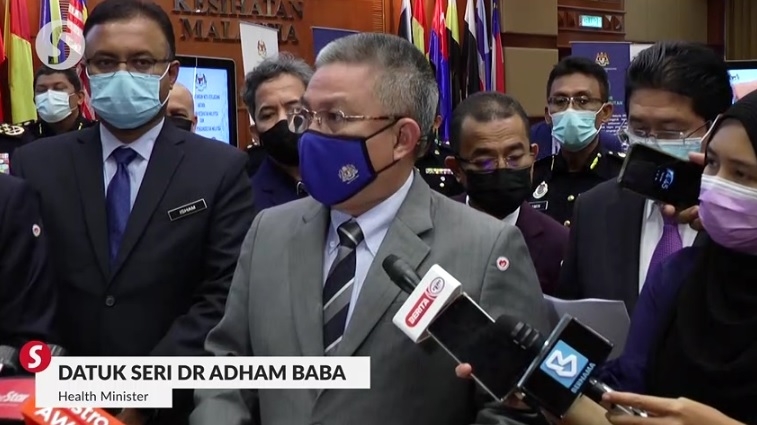
PUTRAJAYA: Malaysia will proceed with using the AstraZeneca vaccine after deciding that the benefits of the vaccine far outweigh the negatives.
Health Minister Datuk Seri Dr Adham Baba said the Special Committee on Covid-19 Vaccine Supply Access Guarantee (JKJAV) meeting yesterday had discussed the safety of the vaccine following concerns about the occurrence of blood clots in a small number of recipients.
“The JKJAV had a meeting from 11am to 2pm today and among the things we discussed was the usage of the AstraZeneca vaccine from the United Kingdom.
“We (Malaysia) will proceed with AstraZeneca. This is because the clinical data has shown that there are more benefits than negatives with this vaccine, ” Dr Adham told reporters after a memorandum of understanding (MOU) signing ceremony between the Health Ministry and the Transport Ministry here.
Dr Adham said experts at the meeting discussed several issues relating to AstraZeneca, particularly the discovery of blood clot cases among recipients of the vaccine.
The minister said although Malaysia had agreed to procure the AstraZeneca vaccine, the country had not yet received them.
“We have not received the vaccine, but we have agreed to procure them from Thailand and also from the Covax facility based in South Korea, ” said Dr Adham.
Malaysia is scheduled to receive deliveries of about 6.4 million doses of the AstraZeneca vaccine in May for the use of 3.2 million people.
Several countries in Europe had suspended the use of the vaccine after a small number of reports of blood clots among its recipients.
Earlier, Dr Adham and Transport Minister Datuk Seri Dr Wee Ka Siong witnessed the signing ceremony of an MOU between the two ministries.
The documents were signed by Health Ministry secretary-general Datuk Mohd Shafiq Abdullah and Transport Ministry secretary-general Datuk Isham Ishak.
The agreement will see both ministries collaborate to develop programmes that will produce competent ambulance drivers.
Dr Adham said the government would also enact a law based on the Emergency Management System in many developed countries which would focus on ambulance safety.
“In the past five years, there have been a total of 636 accidents without injuries involving ambulances. There have also been nine deaths.
“On average, there are 129 accidents recorded per year, ” said Dr Adham.
The minister added that there were 2,500 ambulance drivers attached to the ministry who would benefit from the driving competency and safety programmes under the new collaboration.

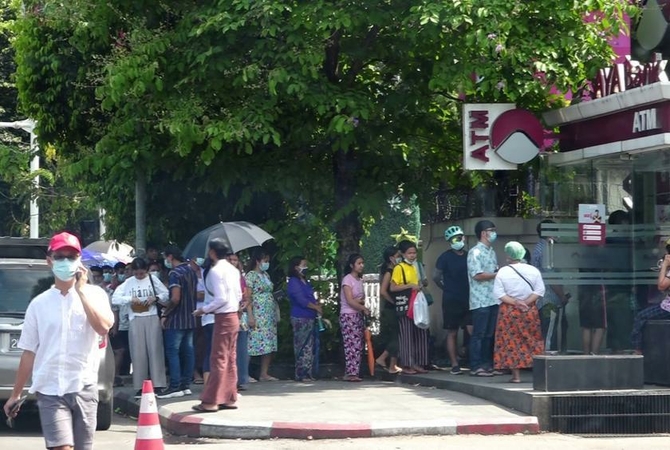
 Illustration: Star Digital Graphics
 This photo, captured from DM Shipping’s website, shows South Korean oil tanker MT Hankuk Chemi, which was seized by Iran on Jan. 4, 2021. (DM Shipping’s website)
 Toshiba Corp. headquarters in Minato Ward, Tokyo (Yomiuri Shimbun file photo)
 Production at the Vina Kraft Paper Co., Ltd, a Thai-invested firm in Bình Dương Province. Many foreign companies already have invested or sought investment opportunities in Việt Nam. VNA/VNS Photo Dương Giang
 New Seoul Mayor Oh Se-hoon and Busan Mayor Park Hyung-joon (Yonhap)
 Vote counting is under way at a high school in Seoul on Wednesday night. (Yonhap)
![A worker is busy on the production line at the weaving workshop in an economy development zone in Lianyungang, Jiangsu province, on Oct 19, 2020. [Photo/Xinhua]](https://media.nationthailand.com/images/news/2021/04/08/30404648/800_11dd0738aaf883c.jpeg?v=1617848020) A worker is busy on the production line at the weaving workshop in an economy development zone in Lianyungang, Jiangsu province, on Oct 19, 2020. [Photo/Xinhua]
A worker is busy on the production line at the weaving workshop in an economy development zone in Lianyungang, Jiangsu province, on Oct 19, 2020. [Photo/Xinhua]![Foreign Ministry spokesman Zhao Lijian. [Photo/fmprc.gov.cn]](https://media.nationthailand.com/images/news/2021/04/07/30404613/800_bf74c570cd148cc.jpeg?v=1617763042) Foreign Ministry spokesman Zhao Lijian. [Photo/fmprc.gov.cn]
Foreign Ministry spokesman Zhao Lijian. [Photo/fmprc.gov.cn]