Semiconductor shortage cuts global auto production #SootinClaimon.Com

#SootinClaimon.Com : ขอบคุณแหล่งข้อมูล : หนังสือพิมพ์ The Nation.

Semiconductor shortage cuts global auto production

Jan 16. 2021Workers are seen inside the Toyota Motor Corp.’s plant in Texas. (Courtesy of Toyota Motor Corp.)Workers are seen inside the Toyota Motor Corp.’s plant in Texas. (Courtesy of Toyota Motor Corp.)

By The Japan News/ANN

A shortage of semiconductors is forcing the world’s major automakers to cut production across the board. This is because demand for the devices mainly used in PCs and smartphones, has increased rapidly amid the novel coronavirus crisis.

The impact could last several months, putting a damper on not only the recovery of automobile production, but could also hurt business performance.

■ Cuts around the world

Honda Motor Co. has plans to cut production of five of its models, including its main sedan Accord, at its five plants in the United States and Canada beginning this week. This month, the Suzuka Factory in Mie Prefecture is also set to produce about 4,000 fewer compact cars units, such as the Fit, than planned. These measures are the result of both a shortage of semiconductors used to control the cars and an inability to procure the necessary parts.

Toyota Motor Corp. has also temporarily halted the production of some of its lines at plants in China and intends to reduce pickup truck production at its U.S. plant in Texas. Nissan Motor Co. has begun production adjustments of its Note compact car at its Oppama plant in Kanagawa Prefecture, while Subaru Corp. is considering doing the same at its plant in Gunma Prefecture.

Among European and U.S. automakers, Volkswagen AG (VW) has plans to from January to March reduce production at its bases in the U.S., Europe and China. Production cuts are expected to be on the scale of 100,000 units, an about 1% equivalent of the group’s global production volume — about 10.97 million units — in 2019. Ford Motor Co. of the U.S., Fiat Chrysler Automobiles (FCA) of the U.S. and Europe, Daimler AG of Germany, and Renault S.A. of France have also either begun reducing their production or are considering doing so in the future.

■ Fluctuating demand

Semiconductors, which control electric current and voltage, are also known as the “rice of the industry,” as they are incorporated into many different products and components. An average gasoline-powered car is equipped with about 30 of them, and they operate a wide range of components such as power steering, air conditioners, airbags, car navigation systems, and window opening mechanisms. Electric vehicles and luxury cars, which feature more complex electrical systems, require around 80 of them. No car can be produced without them.

The growing scarcity stems from a rapid fluctuation in automobile demand. According to the International Organization of Motor Vehicle Manufacturers, global production volume during the period of January-June 2020 was about 31 million units, down about 30% from the same period in 2019 because of the pandemic. It has been on a recovery track since summer 2020, when semiconductor companies had already boosted production for PCs and smartphones, which saw a rise in demand as people refrained from leaving home. Production capacities for automobiles shrank, and the shortage suddenly become apparent.

According to sources including the World Semiconductor Trade Statistics, the global semiconductor market is worth about $412.3 billion (about ¥43 trillion), of which only about 10% is for automobiles. Because of industrial structure, if demand for PCs and smartphones — which account for the majority of the market — expands, it is likely to affect automobile production trends.

■ Factory Fire

A massive fire that broke out at a plant involved in the semiconductor business in October 2020 dealt a further blow to the industry. The plant, a subsidiary of Asahi Kasei Corp., is located in Nobeoka, Miyazaki Prefecture.

According to some Japanese automakers, this could affect part inventories from March onward. Kazuhiro Sugiyama of Omdia, a British research firm, believes that “the delay in parts supply caused by the series of semiconductor shortages will continue for about six months.”

The strong sales of electric vehicles, which are equipped with a large number of semiconductors, in Europe, where strict environmental regulations are in place, are also tightening the current supply and demand situation. The automotive industry, which employs about 5.5 million people in Japan, involves many businesses, and the production cutback will have a ripple effect on not only parts manufacturers but also materials industries such as steel and chemicals. If the scale of production cutback per automaker remains at less than 10,000 units, it will have a little effect on the financial result of the company, according to an official in the industry. However, if the cutback continues for several months, the overall economy and the employment situation could also be affected.

Exporters complain as cost for containers skyrockets #SootinClaimon.Com

#SootinClaimon.Com : ขอบคุณแหล่งข้อมูล : หนังสือพิมพ์ The Nation.

Exporters complain as cost for containers skyrockets

Jan 16. 2021Containers at a southern port in Việt Nam. The cost to hire shipping containers has skyrocketed to nearly ten times its pre-pandemic level due to short supply and surge in demand. — VGP PhotoContainers at a southern port in Việt Nam. The cost to hire shipping containers has skyrocketed to nearly ten times its pre-pandemic level due to short supply and surge in demand. — VGP Photo

By Viet Nam News/ANN

HÀ NỘI — The cost to hire shipping containers has skyrocketed to nearly ten times its pre-pandemic level, according to export businesses and trade agencies. 

During the last three months, the cost to hire a 40-foot container increased to US$8,000, even to $10,000 in certain cases, from less than $1,000 at the beginning of 2020. It has sharply driven up expenses for exporters and raised concerns over a lack of transparency and inadequate price management of containers, said businesses during a meeting in Hà Nội with the Việt Nam Maritime Administration (VMA).

A wide range of businesses across all sectors have been hit by the price hike, which exporters claimed was “nonsensical” while demanding shipping companies  take steps to rein it in and be more transparent regarding their pricing.

General Secretary of the Việt Nam Plastics Association (VPA) Huỳnh Thị Mỹ said the price hike has severely hampered export activities of plastic makers, resulting in significantly lower export volume and in one instance effectively shut down an Indian plastic firm in the Việt Nam – Singapore Industrial Zone in northern Bắc Ninh Province for the whole of December last year. 

A representative from the firm said it was forced to shutter operations because of the price hike, which has brought its operational cost to an unsustainable level. Other plastic makers also reported a 50 per cent higher inventory compared to the same period last year, even after they bit the bullet and shipped orders at a loss-incurring cost. 

“We [the VPA] demanded the VMA and other trade authorities launch investigations into and conduct thorough reviews on shipping companies’ pricing policies,” said Mỹ. 

The VPA also called for a review of current regulations, pointing to a lack of a control mechanisms and transparency over the price to hire containers in Việt Nam. Measures must be taken so avoid future price hikes. 

Meanwhile, shipping companies cited difficulties caused by the pandemic, a spike in exports to the EU and US markets and longer time required to free up containers for hire. They said the situation is not likely to improve until at least March, or in worst-case scenario well into the year’s second quarter. 

Deputy head of the VMA Hoàng Hồng Giang said the administration has required shipping companies to publish their prices and organised meetings with exporters.

“The reason behind the recent price increase for container-for-rent was a matter of supply and demand. The administration, however, insisted that shipping companies must be transparent with pricing policies. We have also considered commandeering thousands of unclaimed containers in ports across the country as a solution to the shortage,” he said.

Trần Thanh Hải, deputy head of import and export from the Ministry of Trade and Industry, said the ministry is to report the matter to the Prime Minister’s Office. Meanwhile, he urged exporters to look into alternatives such as railway transport to EU markets and to renegotiate delivery dates with buyers. — VNS

Samsung’s SmartTag technology threatens to outpace Apple innovation #SootinClaimon.Com

#SootinClaimon.Com : ขอบคุณแหล่งข้อมูล : หนังสือพิมพ์ The Nation.

Samsung’s SmartTag technology threatens to outpace Apple innovation

Jan 16. 2021SmartTag (Samsung Electronics)SmartTag (Samsung Electronics)

By Lim Jeong-yeo
The Korea Herald/ANN

Bid adieu to panicky moments of lost keys or pets. Samsung Electronics‘s SmartTag technology, enabling users to locate what’s precious and dear to them, began generating buzz around the tech sphere Friday, a day after the Galaxy Unpacked 2021 event.

The SmartTag is a corporeal electronic tag that can be attached to a leash or a key chain. Powered by Samsung Electronics’ SmartThings Find technology, Galaxy users can conveniently track tagged objects.

Samsung suggests putting the SmartTag on wallets, luggage, bags, bicycles, keys and, most importantly, furry four-legged companions.

SmartThings Find as of October 2020 already had the capability to hinge each ear bud to the app, so that a missing ear bud could be found immediately.

In an extension to the offering, users can now track the SmartTag via GPS or locate the SmartTag by sound. The remote tracking service will allow users to trace the object to the nearest block or building, according to the South Korean tech giant.

For the precise location of the lost item, there is the SmartTag Plus, built with ultrawideband technology. The advanced wireless communication system inside the device makes it smarter, and gives it a directional capability, according to Samsung.

The SmartTag Plus has an augmented reality finder, which allows the user to see through a camera to pinpoint the location.

The coin-sized battery for the SmartTag lasts for about a month.

SmartTags will be available globally from Jan. 29 at $29.99. A pack of two SmartTags will cost $49.99 and a pack of four SmartTags $84.99

SmartTags Pro will launch later in the year at a proposed price of $39.99 apiece or $64.99 for two.

Apple, Samsung Electronics‘ biggest global competitor in the realm of handheld devices, has the well-established Find My iPhone technology to locate devices via Apple ID. With an Apple smartwatch, users can ping their synchronized iPhone.

Apple has yet to launch an additional tracker tool for objects other than Apple goods.

[China] Growth in Q4 forecast to hit pre-virus rate #SootinClaimon.Com

#SootinClaimon.Com : ขอบคุณแหล่งข้อมูล : หนังสือพิมพ์ The Nation.

[China] Growth in Q4 forecast to hit pre-virus rate

Jan 16. 2021

By ZHOU LANXU
China Daily/ANN

Nation likely to be only major economy to have achieved positive results in 2020.

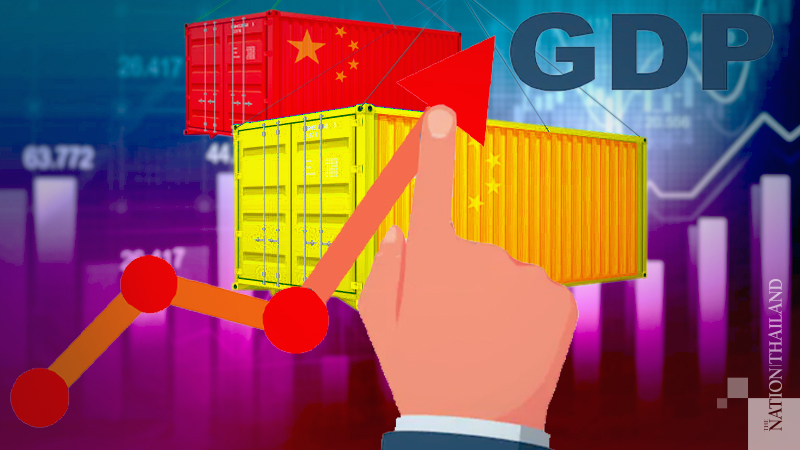
China’s economic growth is expected to equal pre-COVID-19 levels in the last quarter of 2020, and Beijing will ramp up efforts to help businesses still in distress and promote a more balanced recovery, experts said on Friday.

The Chinese economy will likely soon be confirmed as the world’s only major economy to have achieved positive growth during COVID-ravaged 2020, as the nation is scheduled to unveil GDP and other key economic data for the full year and the fourth quarter on Monday.

Experts expected the economy to grow by more than 2 percent in 2020 on the back of a rally in investment and strong exports, with full-year GDP exceeding 100 trillion yuan ($15.45 trillion) for the first time. Fourth-quarter economic growth may be about 6 percent, the level seen in the last quarter of 2019, prior to the nationwide COVID-19 outbreak.

Liu Yuanchun, vice-president of the Renmin University of China, said the country’s achievement in combating the pandemic and promoting economic recovery has demonstrated the country’s institutional advantage and economic resilience, laying a good foundation for embarking on the 14th Five-Year Plan period (2021-25).

But a GDP growth figure reaching pre-COVID-19 levels does not point to a full economic recovery, experts said, as hard-hit sectors continue to feel pressure, especially small manufacturers and services providers.

“It is too early to conclude that this is a full recovery,” said Iris Pang, chief China economist at Dutch bank ING.

External demand has not fully recovered and could restrict China’s industrial production, especially for smaller manufacturers, Pang said, adding that industries linked to international travel are still in a difficult situation.

December’s official manufacturing purchasing managers index indicated that small manufacturers saw a contraction in activity, though the overall manufacturing sector continued to expand, according to the National Bureau of Statistics.

Looking at 2021, growth figures are expected to rebound strongly from a year earlier thanks to a low comparative base for 2020, but the underlying improvement momentum may be subject to uncertainties and could leave some small businesses and employment situations remaining under pressure, experts said.

Chen Dong, senior Asia economist at Pictet Wealth Management, said December’s slowdown in long-term corporate credit growth implied that property investment may lose some momentum in the first quarter of 2021, while the peak of export growth may have passed.

Recent local resurgences of COVID-19 cases have added another layer of uncertainty, but this should be a minor factor as well-established procedures are in place to achieve quick containment, Chen said.

To promote a more balanced recovery and ensure development achievement is widely shared by the people, Beijing is expected to make stabilizing employment as the top policy priority this year and roll out more plans to help small businesses, experts said.

President Xi Jinping on Monday stressed the importance of following a people-centered philosophy. The development philosophy for building a modern socialist country is only correct when it insists that development should be for the people, rely on the people and be shared by the people, Xi said.

Xi, who is also general secretary of the Communist Party of China Central Committee and chairman of the Central Military Commission, made the remark when addressing the opening of a study session at the Party School of the CPC Central Committee, attended by provincial and ministerial-level officials.

“The government is expected to continue placing stabilizing employment in first place this year,” said Yao Jingyuan, former chief economist at the NBS and a researcher for the Counselors’ Office of the State Council.

China faces rising unemployment pressure this year-not only as the number of college graduates is expected to surpass 9 million in 2021, up more than 300,000 year-on-year-but because the number of college graduates who go abroad for further education will substantially drop due to the pandemic, Yao said.

“To stabilize employment, the government must boost the strength of policies to safeguard the development of market entities, especially small and micro businesses,” he said, calling on making those policies work more accurately as well.

Cheng Shi, chief economist at ICBC International, said the country is expected to enrich its monetary policy tool kit of lending direct support to small businesses and step up reforms of its financial system to better match small businesses’ financing needs this year.

With policy measures to address the unbalanced pattern of recovery and further revival of the consumer market, the Chinese economy is expected to achieve an 8.2 percent annual growth in 2021, said Wang Tao, chief China economist at global investment bank UBS.

This will mark a jump from an estimated 2.1 percent for the whole of 2020 and about 6 percent in the fourth quarter of 2020, according to Wang.

Ouyang Shijia contributed to this story.

Changes in policy highlight Japan’s struggles against virus #SootinClaimon.Com

#SootinClaimon.Com : ขอบคุณแหล่งข้อมูล : หนังสือพิมพ์ The Nation.

Changes in policy highlight Japan’s struggles against virus

Jan 15. 2021Yasutoshi Nishimura, the economic revitalization minister in charge of coronavirus measures, explains to the House of Councillors’ Committee on Rules and Administration in the Diet Building on Wednesday about the addition of seven prefectures to the latest state of emergency. (The Yomiuri Shimbun)Yasutoshi Nishimura, the economic revitalization minister in charge of coronavirus measures, explains to the House of Councillors’ Committee on Rules and Administration in the Diet Building on Wednesday about the addition of seven prefectures to the latest state of emergency. (The Yomiuri Shimbun)

By The Japan News/ANN

The latest declaration of a state of emergency was expanded to include seven more prefectures only six days after the declaration for the Tokyo metropolitan area was issued, highlighting the change in the central government’s policy as it struggles with measures against the novel coronavirus.

While the declaration now covers 11 prefectures, the central government also banned the entry of foreign business travelers from 11 countries and regions, including China and South Korea, which had been allowed as a special measure.

“We will do everything necessary with whatever it takes,” Prime Minister Yoshihide Suga said at a press conference on Wednesday evening.

The prefectures are Osaka, Kyoto, Hyogo in the Kansai region; Aichi and Gifu in the Chubu region; Fukuoka in Kyushu; and Tochigi in the Kanto region.

The governors of the three prefectures in the Kansai region had requested the declaration on Saturday due to a sharp increase in the number of infections in the area after the New Year’s holiday.

The central government initially did not consider the declaration necessary for Osaka Prefecture, as it evaluated that the prefecture’s requests to businesses to shorten operating hours had been successful. Suga on Sunday stopped short of taking action, saying that he “needed to see how the situation would develop over the next few days.”

On Monday, however, Suga decided to add Osaka Prefecture to the list after discussing the matter with Chief Cabinet Secretary Katsunobu Kato, among others.

Fukuoka Prefecture was added to the state of emergency without any request from the prefecture. So was Tochigi Prefecture, the infection figures of which some within the central government said were not as bad as in more urban areas.

The decisions came as the central government aims to avoid a wave of additional emergency declarations, which could be criticized as ad hoc.

“We’re going to make sure that everyone who needs to get on the boat gets on the boat,” a senior government official said.

Even in Tokyo and the surrounding three prefectures, where the declaration had already been issued, the number of people going out during daytime has not fallen as much as it did during the previous state of emergency last spring.

There are concerns that not only will the state of emergency not be lifted as scheduled Feb. 7, but also that the situation will become worse in other prefectures as well.

“It could be that more prefectures will be added to the list one after another,” a mid-ranking Liberal Democratic Party lawmaker said.

The central government also has changed its policy regarding business travel from 11 countries and regions as part of a special measure. At the end of last year, the central government suspended the entry of foreign visitors from all over the world except for those coming from the 11 economies, after infections with a new variant of the coronavirus were confirmed abroad. Countries such as China and South Korea were reportedly made exceptions because of Suga’s intention to place an emphasis on economic activities.

At a meeting of the LDP’s foreign affairs committee held on Tuesday, however, many voiced opinions that travels should be suspended across the board during the state of emergency. The central government decided the next day to suspend the special travel measure.

N. Korea displays new submarine-launched ballistic missile during parade #SootinClaimon.Com

#SootinClaimon.Com : ขอบคุณแหล่งข้อมูล : หนังสือพิมพ์ The Nation.

N. Korea displays new submarine-launched ballistic missile during parade

Jan 15. 2021This photo released by North Korea's Korean Central News Agency shows submarine-launched ballistic missiles displayed during a military parade held in Pyongyang on Friday. (KCNA-Yonhap)This photo released by North Korea’s Korean Central News Agency shows submarine-launched ballistic missiles displayed during a military parade held in Pyongyang on Friday. (KCNA-Yonhap)
By The Korea Herald/ANN

North Korea showcased yet another new submarine-launched ballistic missile (SLBM) in just three months during a recent military parade, experts said Friday.

During the parade held on Thursday night at Kim Il-sung square in Pyongyang, the North rolled out SLBMs on transporter erector launchers (TEL), which it labeled as the Pukguksong-5ㅅ, along with a new short-range ballistic missile and various other kinds of weaponry.

The Korean letter “ㅅ” appears to indicate that it is a sea-based system.

“The world’s most powerful weapon, submarine-launch ballistic missile, entered the square one after another, powerfully demonstrating the might of the revolutionary armed forces,” the North’s Korean Central Korean News Agency (KCNA) said.

The new missile looks longer than the Pukguksong-4ㅅ SLBM, which was first unveiled during a military parade in October last year.

Experts say the newest one appears to be designed to fly longer and fit for a larger-sized single warhead, while the Pukguksong-4ㅅ is to carry multiple warheads.

North Korea was known to have three types of Pukguksong missiles.

As the upgraded version of the Pukguksong-1, the Pukguksong-3 SLBM is believed to have a flight range of 2,000 kilometers or longer, and the regime last carried out a flight test of the weapon in October 2019. Pukguksong-2 is a ground-based one, not an SLBM.

The parade took place two days after the North wrapped up its eight-day congress of the ruling Workers’ Party on Tuesday, during which leader Kim Jong-un said his country is developing new weapons systems, such as a nuclear-powered submarine, advanced warheads and hypersonic weapons, pledging to bolster its nuclear arsenal.

North Korea also displayed a new short-range missile during the parade, believed to be an upgraded version of its KN-23 missile, which resembles Russia’s Iskander, according to the experts.

Compared to the original version, the new one has a conical warhead and the TEL added one more axle. Eyes are on whether it could carry nuclear warheads, as leader Kim ordered during the congress that nuclear weapons be made “small, lighter and tactical” while pushing for the production of super large nuclear warheads.

The North’s Iskander is known to have a flight range of 400 to 600 kilometers and mainly targets South Korea. Rather than following a general parabolic trajectory, the missile shows a more complicated path by doing a so-called pull-up maneuver over the course of its flight.

The KN-23 was first unveiled in 2019 and test-launched four times that year.

North Korea has released several new types of short-range solid-fuel missiles in recent years amid stalled denuclearization talks with the United States. It last conducted a major weapons test in April 2020.

South Korea’s Joint Chiefs of Staff (JCS) simply said it is analyzing military items displayed during the recent parade.

But the North stopped short of displaying intercontinental ballistic missiles (ICBMs) during the military event — in an apparent message to the United States ahead of next week’s launch of a new government in Washington.

During the October event, the North showed off a new ICBM on an 11-axle TEL, which is believed to be the largest of its kind in the world.

But it is not known yet if the new ICBM is the upgraded version of the Hwasong-15 or Hwasong-16, with military sources and experts saying the weapon looks like a mock-up and has not been tested.

According to the US Forces Korea, the regime has three types of ICBM: the Hwasong-13, which can fly as far as 5,500 km; the Hwasong-14 missile with an estimated range of 10,058 km, which is capable of reaching most of the continental US; and the Hwasong-15 with an estimated range of 8,000 miles, or 12,874 kilometers, which is capable of striking any part of the US mainland. (Yonhap)

Air route between southwest China, Bangkok resumes #SootinClaimon.Com

#SootinClaimon.Com : ขอบคุณแหล่งข้อมูล : หนังสือพิมพ์ The Nation.

Air route between southwest China, Bangkok resumes

Jan 15. 2021

By China Daily/ANN

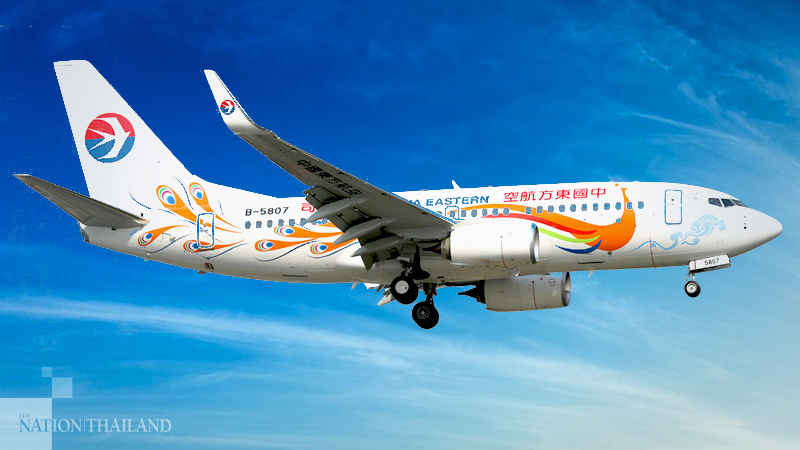
KUNMING – An air route linking Kunming, capital of southwest China’s Yunnan province, and the Thai capital of Bangkok resumed operations on Thursday, after almost a year of suspension due to the COVID-19 pandemic.

The route, operated by China Eastern Yunnan Airlines, will see one flight every Thursday using a Boeing 737 aircraft, according to the airline.

The air route was suspended in February last year due to the pandemic.

The airline said it will strengthen coordination, information communication and resource sharing to promote the resumption of more international air routes.

PM Modi to launch Pan India rollout of COVID-19 Vaccination drive on 16 January #SootinClaimon.Com

#SootinClaimon.Com : ขอบคุณแหล่งข้อมูล : หนังสือพิมพ์ The Nation.

PM Modi to launch Pan India rollout of COVID-19 Vaccination drive on 16 January

Jan 15. 2021

By The Statesman/ANN

Prime Minister Narendra Modi will launch the pan India rollout of COVID-19 vaccination drive on 16th January 2021 at 10:30 AM via video conferencing.

This will be the world’s largest vaccination program covering the entire length and breadth of the country. A total of 3006 session sites across all States and UTs will be virtually connected during the launch. Around 100 beneficiaries will be vaccinated at each session site on the inaugural day.

This vaccination programme is based on the principles of priority groups to be vaccinated and Health Care workers, both in government and private sectors including ICDS workers, will receive the vaccine during this phase.

The vaccination programme will use Co-WIN, an online digital platform developed by Union Ministry of Health and Family Welfare, which will facilitate real-time information of vaccine stocks, storage temperature and individualized tracking of beneficiaries for COVID-19 vaccine. This digital platform will assist programme managers across all levels while conducting vaccination sessions.

A dedicated 24×7 call centre – 1075 – has also been established for addressing the queries related to COVID-19 pandemic, vaccine rollout and the Co-WIN software.

Adequate doses of both COVISHIELD and COVAXIN have already been delivered across the country to all States/UTs with the active support of the Ministry of Civil Aviation. These have been further delivered by the State/UT governments to the districts.

All preparations are in place to initiate the programme on the principles of Jan Bhagidari.

Air travel recovery stalls as governments shun balanced approach to tackling Covid-19 risks #SootinClaimon.Com

#SootinClaimon.Com : ขอบคุณแหล่งข้อมูล : หนังสือพิมพ์ The Nation.

Air travel recovery stalls as governments shun balanced approach to tackling Covid-19 risks

Jan 14. 2021The numbers show that the recovery in air travel which began in late May-early June stalled by November last year. ST PHOTO: KEVIN LIMThe numbers show that the recovery in air travel which began in late May-early June stalled by November last year. ST PHOTO: KEVIN LIM

By Ven Sreenivasan
The Straits Times/ANN

SINGAPORE – Despite widespread expectations of a gradual recovery, the global air travel has stalled amid border clampdowns by governments more concerned about the spread of Covid-19 than the health of their economies.

Chief executive officer and director general of the International Air Transport Association (Iata) Alexandre de Juniac lamented that international and domestic air travel numbers have flattened out through November last year due to the absence of a balanced approach to tackling cross-border travel. And the outlook for the first quarter of this year looks dismal.

“While we still see airlines turning cash positive within the year, the near-term picture is bleak,” he said at a press conference in Geneva on Tuesday evening (Jan 12).

“Instead of a boost from the year-end holiday period, we got even more restrictions. Governments tightened borders in a knee-jerk response to a virus mutation. Canada, UK, Germany, Japan and others added testing to their Covid-19 measures without removing quarantine requirements.”

He lamented that governments had largely ignored the International Civil Aviation Organisation’s (ICAO) Council Aviation Recovery Taskforce recommendations outlining safe travel protocols.

“Airlines bring this same serious approach to safety to everything that we do – including Covid-19,” Mr de Juniac said. “And that is one of the reasons why the slow pace of progress in the crisis is so frustrating. We are working tirelessly with governments to keep flying safe and reduce the risk of Covid-19 importation via travel with the implementation of the ICAO Council Aviation Recovery Taskforce recommendations and proposals to replace quarantine with Covid-19 testing. The industry’s situation is still perilous.”

Indeed, the numbers show that the recovery in air travel which began in late May-early June stalled by November last year.

Total demand (measured in revenue passenger kilometres or RPKs) was down 70.3 per cent in November year on year, and was virtually unchanged from the 70.6 per cent year-on-year decline in October.

International passenger demand in November was 88.3 per cent down year on year, and slightly worse than the 87.6 per cent year-on-year decline in October. Recovery in domestic demand, which had been the relative bright spot, also stalled, with November traffic down 41 per cent compared to the prior year, and flat from October.

Asia-Pacific carriers fared the worst, with November traffic plunging 95 per cent from a year earlier, and flattening out from October.

Iata’s data also show weak forward bookings into the first quarter of this year, with bookings down more than 80 per cent year on year in February/March.

All this comes as Covid-19 cases around the world have soared in recent months, with Europe and the United States faring the worst. In Europe, there have been 91.6 million cases, and almost two million deaths. There are almost 23 million cases in the US, with death toll reaching almost 382,000.

Mr de Juniac blasted governments for not taking a balanced approach: “They appear to be aiming for a zero-Covid world. This is an impossible task that comes with severe consequences – the full extent of which it would be impossible to calculate.”

He said that if governments stuck to this approach, travel and tourism will not recover; jobs will continue to disappear; and the toll on mental health will continue to grow, particularly on those who are separated from loved ones.

“Science tells us that travellers will not be a significant factor in community transmission if testing is used effectively. But most governments have tunnel-vision on quarantine and are not at all focused on finding ways to safely reopen borders – or alleviate the self-imposed economic and mental health hardships of the lockdowns.”

He called for consistent, well-reasoned and scientifically supported policies to manage the risks of Covid-19 and travel.

Vietnam GDP to grow by 8 per cent: Oxford Economics #SootinClaimon.Com

#SootinClaimon.Com : ขอบคุณแหล่งข้อมูล : หนังสือพิมพ์ The Nation.

Vietnam GDP to grow by 8 per cent: Oxford Economics

Jan 14. 2021Vietnam’s GDP is expected to grow by 8 per cent this year. — VNS PhotoVietnam’s GDP is expected to grow by 8 per cent this year. — VNS Photo

By Viet Nam News/ANN

HCM CITY — Southeast Asia’s economic growth will rebound to 6.2 per cent in 2021 with Việt Nam achieving 8 per cent growth, according to the latest economic outlook report from Oxford Economics commissioned by chartered accountancy body ICAEW.

GDP across the region contract by 4.1 per cent in 2020, with countries that had been successful in controlling the pandemic like Việt Nam and Singapore leading the recovery. 

Indeed, Việt Nam was expected to be the only economy to record positive growth in 2020.

The rebound was in part due to the low-base effect of 2020, but policies were set to remain very accommodative with extensive fiscal support and low interest rates.

Prolonged lockdowns and social distancing measures in the region were forecast to cap global GDP growth in 2021, making it unlikely that a return to pre-COVID GDP and trade activity would take place before late 2021. 

In Southeast Asia, growth would likely be constrained by social distancing measures, but restrictions would continue to be eased over this year, especially in economies that would be able to roll out vaccines relatively quickly.

An economic rebound in 2021 remained contingent on the easing of lockdown restrictions, global recovery momentum and the successful roll-out of vaccines. 

Progress on vaccination would be an important barometer for growth, with services likely to catch up faster in economies better placed with regard to vaccine procurement and distribution. 

Southeast Asia experienced a three-speed recovery, with differences primarily driven by the varying success of countries’ ability to contain fresh waves of infection and implement lockdown exit strategies to safely reopen their economies and fiscal and monetary policy support. 

Mark Billington, ICAEW regional director, Greater China and South-East Asia, said: “The biggest concern for Southeast Asian economies is keeping additional waves of infection at bay while gradually bringing society and economic activities back to speed.

“The interconnectedness of the global economy means that countries will have to work collectively to strengthen their pandemic response plans and address the dual challenges of resuming business activities while keeping their people safe.” 

Despite the predictions of an economic rebound in 2021, there remain major uncertainties that could affect post-pandemic recovery, such as slow progress in the roll-out of mass vaccination programmes, a global second wave resulting in another global lockdown and a financial crisis leading to major economic damage. 

Optimistically, vaccine breakthroughs and post-election US stimulus could also speed up near-term recovery and avoid long-term damage, the report said. — VNS