Philippines in final talks with Moderna for up to 20M vaccine doses
Jan 14. 2021
By Christia Marie Ramos Inquirer.net/ANN
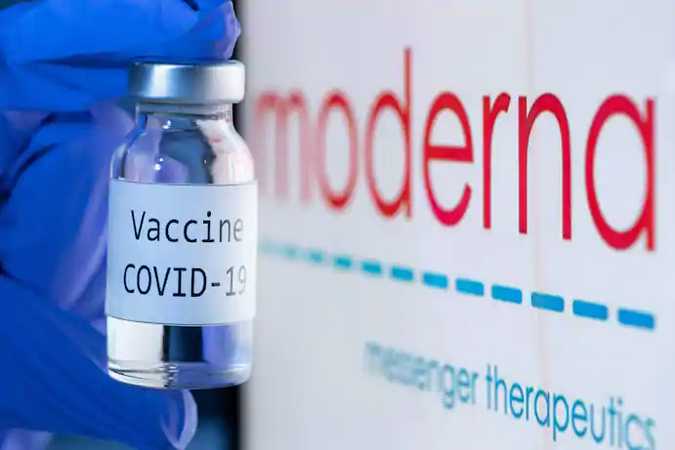
MANILA, Philippines — The Philippine government is now in the final stages of negotiation with American biotechnology company Moderna for the procurement of up to 20 million doses of its COVID-19 vaccines.
Moderna’s vaccines may be expected for delivery to the Philippines in mid-2021, according to Philippine Ambassador to the US Jose Romualdez.
“I am please to share that, following months of discussions with Moderna, the Philippines is in the final stages of negotiating for the supply of a minimum of 10 million doses of mRNA-1273, the company’s vaccines, with the option to purchase an additional 10 million doses, for delivery beginning in mid-2021,” Romualdez said in a statement posted by the embassy over Twitter on Wednesday.
Last December, Romualdez said Moderna and another company, Arcturus Therapeutics Holdings Inc., are willing to supply up to 25 million doses of COVID-19 vaccines to the Philippines in the third quarter of 2021.
“I welcome the pledge of support of the private sector led by ICTSI’s Enrique Razon in shipping and distributing the vaccines from the manufacturing facility in Spain to the Philippines at no cost to the Philippine government,” Romualdez went on.
National Task Force (NTF) Against COVID-19 chief and vaccine czar Secretary Carlito Galvez Jr. earlier said the government is eyeing to secure a total of 100 million doses of the COVID-19 vaccine within the week.
Galvez said the Philippines has so far secured 30 million doses of the Covovax coronavirus vaccine, which he said is extendible to 40 million doses.
The government has also secured 25 million vaccine doses from China’s Sinovac, 30 million doses of vaccine from British drugmaker AstraZeneca, and 25 million doses of Russia’s Gamaleya or Sputnik V vaccine.
Most Koreans adopt wait-and-see attitude toward coronavirus vaccination: poll
Jan 14. 2021Coronavirus vaccines (Yonhap)
By The Korea Herald/ANN
Nearly two-thirds of South Koreans think they will wait to see how the coronavirus vaccine is working for other people before getting the jab, a poll showed Thursday.
A survey of 1,094 adult Koreans across the nation, taken by Seoul National University, showed 67.7 percent of respondents taking a wait-and-see attitude toward COVID-19 vaccination.
Only 28.6 percent of them replied that they want to get vaccinated as soon as possible.
The findings also showed 42 percent of the surveyed predicting coronavirus vaccines to be commercialized in the middle of the year.
An additional 35.4 percent picked the end of this year as the commercialization point, with 11.2 percent saying those vaccines will be commercialized next year or thereafter.
Slightly over 32 percent of those polled said they don’t trust coronavirus vaccines.
About 80 percent also replied that they will surely or probably take COVID-19 vaccines in the future, with a mere 1.8 percent saying they will never get the jab.
The poll comes as the government is seeking to get more than 60 percent of the country’s 51-million population inoculated before fall. (Yonhap)
China slams US Indo-Pacific strategy as ‘hegemonic’
Jan 14. 2021Foreign Ministry spokesman Zhao Lijian takes questions at a regular media briefing in Beijing on Aug 14, 2020. (PHOTO / FMPRC.COM.CN)
By China Daily/ANN
BEIJING – A Chinese Foreign Ministry spokesperson said Wednesday that America’s Indo-Pacific strategy is in essence a strategy of hegemony and that the United States should abandon Cold War and zero-sum thinking.
Spokesperson Zhao Lijian made the remarks in response to a recently declassified document of America’s Indo-Pacific strategy at a regular news briefing.
The report highlights the Cold War mentality and military confrontation, which goes against the mutually-beneficial spirit of regional cooperation, runs counter to regional people’s aspiration for peace, stability and development, and threatens regional prospects of peace and development, Zhao said.
“We believe countries in the region are clear-headed and vigilant enough not to be hijacked onto the US chariot or be used as a tool to maintain US hegemony,” said Zhao, noting that the United States is keen to form cliques and factions and adopt dishonorable tactics such as provoking dissensions.
Noting that it is a serious breach of the US government’s solemn commitment on Taiwan to China, Zhao said there is only one China in the world and Taiwan is an inseparable part of China.
He added that the report maliciously distorts China’s neighborhood diplomacy and hypes up the so-called “China threat.”
“As a responsible member of the Asia-Pacific, China actively practices a neighborhood diplomacy of amity, sincerity, mutual benefit and inclusiveness, making important contributions to regional peace, stability and prosperity,” said Zhao.
The United States should respect China’s core interests and major concerns, step up communication and dialogues with China to properly manage and control differences, and help make the Asia-Pacific a stage for mutually-beneficial cooperation instead of an arena for major power rivalry, he added.
Zhao also said that the United States should abide by the one-China principle, the three China-US joint communiques, and stop all official exchanges and military ties with Taiwan.
He made the remarks when responding to a reporter’s question about the US State Department’s confirmation that a planned visit to Taiwan by the US Ambassador to the United Nations Kelly Craft had been canceled.
Zhao said that he and his colleagues had repeatedly stated China’s solemn position in recent days on the planned visit to Taiwan by Craft.
“I’d like to stress again that China is firmly opposed to any form of official exchanges between the United States and Taiwan. This position is consistent and clear,” he said.
“China will continue to take necessary measures to safeguard its sovereignty and security interests,” he added.
3 in 4 Covid-19 patients suffer from at least one symptom six months after infection: Study
Jan 13. 2021Common post-infection problems include sleep difficulties, and anxiety or depression. PHOTO: M ISHIKAWA
By Salma Khalik The Straits Times/ANN
SINGAPORE – Three out of four patients still suffered from at least one symptom six months after falling sick with Covid-19, with the most common problem being fatigue or muscle weakness, a study has found.
Some 63 per cent of respondents cited the ailment as a persisting one. Other common post-infection problems were sleep difficulties (26 per cent), and anxiety or depression (23 per cent). More women than men were affected.
These results from a study of 1,733 patients with a mean age of 57 years from Jin Yin-tan Hospital in Wuhan, China, is the largest such study carried out to date. It was published in The Lancet journal last week.
The cohort comes from the 2,469 Covid-19 patients discharged from the hospital between January and May, with the follow-up done from June to September – with 736 patients excluded because they did not attend follow-up appointments for various reasons, including dementia. There were also 33 people who had “died after discharge mainly due to exacerbation of underlying pulmonary, heart and kidney disease”.
The study found that more than half the patients had “residual chest imaging abnormalities” six months after their illness, with greater impairment in those who had been more severely sick.
About one in four was not able to walk the same distance in six minutes that they were able to before getting Covid-19. The study said a limitation to this finding is that it was self-reported.
It added that some patients had persistent problems with their kidney function. In the six months since getting infected, some developed diabetes, or had blood clots that affected their heart or brain.
It noted that some of the continuing problems reflect those suffered by patients who survived Sars, or severe acute respiratory syndrome, in 2003, which was also caused by a coronavirus.
Researchers in Canada – which had 250 Sars infections and 38 deaths – found that a third of Sars survivors complained of poorer mental health a year after infection, and 40 per cent had chronic fatigue for a mean period of 41.3 months.
A commentary in The Lancet on the China study said: “Evidence from previous coronavirus outbreaks suggests that some degree of lung damage could persist, as shown in patients who recovered from Sars, 38 per cent of whom had reduced lung diffusion capacity 15 years after infection.”
Dr Asok Kurup, who chairs the Academy of Medicine’s Chapter of Infectious Disease Physicians, said such a long “tail” following severe infection is known to occur, although it is not common.
He said: “Severe influenza, especially in those who end up with respiratory failure, can be followed by respiratory issues that can take a long time to recover.
“Some types of adenoviruses can occasionally cause both respiratory and even kidney failure, and we have seen some cases needing years to recover.”
But he added that doctors in Singapore “are seeing some patients who have recovered from Covid-19, but are having respiratory issues”.
Professor Dale Fisher, a senior infectious diseases consultant at the National University Hospital, said: “I believe that the so-called ‘long Covid’ exists but it’s hard to accredit the symptoms fully to Covid-19 specifically without more research.”
He said anxiety and depression, as well as sleep disturbance are more common today even in people without Covid-19, but “objective features such as radiological changes in the chest and a deterioration in kidney function are hard to dispute. But what they mean in the longer term is still unknown.”
He added: “I don’t know why people worry more about the vaccine compared with worrying about Covid-19 itself and the risk of long-term effects: fatigue, breathlessness, sleep disturbance, anxiety, depression, kidney impairment and scarred lungs.”
[South Korea] Dec. job loss largest in over 2 decades amid pandemic
Jan 13. 2021The file photo taken on Nov. 11, 2020, shows a citizen looking at job information at an employment arrangement center in Seoul. (Yonhap)
By The Korea Herald/ANN
South Korea reported the largest job loss in December since 1999 as a resurgence in new coronavirus cases dealt a blow to jobs in the service sector, data showed Wednesday.
For the whole of 2020, the country also shed the largest number of jobs since 1998, when the country was in the midst of the 1997-98 Asian financial crisis, according to Statistics Korea.
The number of employed people reached 26.5 million last month, 628,000 fewer than a year earlier and marking the 10th straight month of job losses, the data showed.
It marked the sharpest on-year fall since February 1999, when the country lost 658,000 jobs in the wake of the Asian financial turmoil.
The country has reported job losses every month since March, when the nation lost about 195,000 jobs, the first on-year job loss since 2009, due to the fallout of the pandemic.
Last month, the pace of the decline in job losses accelerated as the country raised social distancing guidelines amid a resurgence in COVID-19 cases. In November, the number of employed people fell 273,000 on-year.
On Dec. 8, South Korea raised its virus curbs to Level 2.5, the second highest in its five-tier scheme, in the Seoul metropolitan area, home to half of its 51.6 million population, and to Level 2 in the rest of the country.
Last year, the number of employed people came to 26.9 million, 218,000 fewer than the previous year.
It also marked the largest decline since 1998, when the country lost 1.28 million.
The data showed the local job market remains in limbo even as the Korean economy is slowly recovering on improving exports.
“For the whole year, the face-to-face service sectors suffered larger job losses, and temporary workers, young adults and those in their 30s took a beating,” Jeong Dong-myeong, a senior Statistics Korea official, said at a press briefing.
Finance Minister Hong Nam-ki voiced “deep” concerns about a slump in the job market, saying that the government will draw up additional measures to prop up the labor market, if needed.
Last month, the employment rate for those aged between 15 and 64 reached 65.3 percent, down 1.8 percentage points from a year earlier.
The country’s jobless rate rose 0.7 percentage point on-year to 4.1 percent in December.
The unemployment rate for young adults — those aged between 15 and 29 — came to 8.1 percent in December, up 0.8 percentage point from the previous year.
Job losses were pronounced in the service sector, and the manufacturing segment was also hit hard.
The service segments suffered job losses throughout last year as people refrained from visiting offline stores over concerns about virus infections.
The accommodation and food service segment reported an on-year fall of 313,000 jobs last month, and the wholesale and retail sector lost 197,000 posts.
The manufacturing sector, the backbone of the country’s economy, lost 110,000 jobs on-year in December, compared with a fall of 113,000 posts in November.
But the public administration sector gained 91,000 jobs, and the social welfare sector added 44,000 positions.
Temporary workers bore the brunt of the virus fallout. Workers with permanent jobs rose 5,000 on-year in December. But the number of temporary workers declined 351,000 on-year, and jobs for day laborers lost 170,000 positions.
For the whole of 2020, the number of unemployed people came to 1.1 million, up 45,000 from a year earlier and the largest since 2000, the statistics agency said.
In its 2021 economic policy plan, the finance ministry said the number of employed people is expected to grow by 150,000 this year, a turnaround from last year’s estimated job losses of 220,000. (Yonhap)
Jan 13. 2021Chinese State Councilor and Foreign Minister Wang Yi meets with Myanmar State Counsellor and Foreign Minister Aung San Suu Kyi in Nay Pyi Taw, Myanmar, on Monday. ZHANG DONGQIANG/XINHUA
By ZHANG YUNBI CHINA DAILY/ANN
China has decided to provide Myanmar with COVID-19 vaccines and is providing epidemic control supplies to help it fight the virus as State Councilor and Foreign Minister Wang Yi wrapped up his two-day visit to the Southeast Asian country on Tuesday.
Beijing is also willing to discuss further vaccine cooperation with the country, according to the Chinese Foreign Ministry.
On Tuesday afternoon, epidemic control supplies were handed over to Myanmar at a ceremony held by the country’s Ministry of Health and Sport.
During a meeting with Wang on Monday, Myanmar State Counsellor and Foreign Minister Aung San Suu Kyi thanked China for the vaccines, and she hailed China’s success in overcoming the impact of the virus and achieving positive economic growth.
President Xi Jinping paid a state visit to Myanmar in January last year and agreed with Myanmar President Win Myint on initiating a bilateral endeavor to build a China-Myanmar community with a shared future.
During Wang’s trip this week, both sides agreed in principle on the expected text of an action plan for translating the community into reality, and they will sign the text at an early date, the Foreign Ministry said.
Major outcomes of his trip also included the signing of documents such as a five-year plan for advancing bilateral economic and trade cooperation.
Both sides also agreed to jointly build the China-Myanmar Economic Corridor with great quality and speed up the construction of related projects.
The trip, made despite the lingering pandemic, represents China’s support for the successful operation of the new Myanmar administration as well as its efforts to seek national rejuvenation and long-term stability, Wang said.
Win Myint said Myanmar is dedicated to realizing a consensus between the leaders of both nations, bolstering friendship and achieving common development.
He expressed appreciation for China’s support for Myanmar’s national reconciliation process and China’s backing for Myanmar in the international arena.
Myanmar is the first leg of Wang’s six-day tour of the region, which will also take him to Indonesia, Brunei and the Philippines.
After finishing this New Year tour, Wang will have visited all 10 members of the Association of Southeast Asian Nations since the outbreak of the pandemic.
ASEAN replaced the European Union as China’s largest trade partner last year.
This year marks the 30th anniversary of the founding of the China-ASEAN dialogue relationship, and Myanmar will also assume the role of country coordinator of China-ASEAN relations this year.
The country will also be co-chair of the Lancang-Mekong Cooperation mechanism as well as the chair of the consultations on the Code of Conduct in the South China Sea, an expected agreement to help preserve peace and order in the region.
Myanmar is willing to play a proactive role in promoting China-ASEAN relations and Lancang-Mekong cooperation, Win Myint said.
China is ready to strengthen teamwork with Myanmar to take China-ASEAN ties to a higher level and push for the early implementation of the Regional Comprehensive Economic Partnership free trade pact, Wang said.
Japan to add Osaka, Kyoto, Hyogo to state of emergency
Jan 13. 2021Prime Minister Yoshihide Suga
By The Japan News/ANN
The government plans to add Osaka, Kyoto and Hyogo prefectures on Wednesday to the current state of emergency prompted by the spread of the novel coronavirus.
It will also consider adding the prefectures of Aichi and Gifu, which decided Tuesday to request their addition.
The state of emergency for the three prefectures in the Kansai region is expected to last through Feb. 7, the same as for Tokyo and Kanagawa, Saitama and Chiba prefectures.
Prime Minister Yoshihide Suga said at an LDP executive meeting Tuesday morning, “We want to make a decision on Osaka and other prefectures that are in a severe situation as soon as possible, based on expert opinions.”
The state of emergency is based on the law on special measures against the novel influenza. Suga will ask the expert Advisory Committee on Basic Action Policy on Wednesday whether the addition of the three Kansai prefectures is appropriate. Suga is then expected to inform the Diet of the plan, after which the governmental headquarters for measures against the coronavirus will formally issue a declaration.
The governors of the three prefectures in the Kansai region, including Osaka Gov. Hirofumi Yoshimura, requested the declaration Saturday, saying that their medical systems were expected to be in even worse straits in the future.
When Suga declared the state of emergency for Tokyo and the three prefectures in the Tokyo metropolitan area Thursday, he said, “I don’t think [the three Kansai prefectures] are in such a situation at the moment.” Suga said he was planning to monitor the infection situation for about a week.
■ Aichi, Gifu to ask
Aichi Gov. Hideaki Omura announced his intention at a regular press conference Tuesday morning to formally request on the same day that the central government add Aichi and Gifu prefectures to the list of prefectures covered by the state of emergency.
At the press conference, Omura said he had informed the government of his intention to soon make the request, after the number of infected people in Aichi Prefecture exceeded 300 for the first time on Jan. 6.
The number of infected people in Aichi Prefecture has been increasing rapidly since the beginning of this month, and a record 431 new cases were confirmed Thursday. Omura had said, “We will make a decision based on the infection situation over the three-day weekend.”
Gifu Prefecture has seen a similar increase, and the prefecture declared on Saturday its own state of emergency for the third time.
PETALING JAYA: The Emergency proclamation declared by the Yang di-Pertuan Agong is not a military coup as the civilian government will continue its functions and the country remains open to business, Tan Sri Muhyiddin Yassin has assured Malaysians.
The Prime Minister said no curfew or shutdown will be enforced.
“I would like to stress that the Emergency declared by the Yang di-Pertuan Agong is not a form of military coup.
“A curfew will not be imposed. Instead, during this Emergency period, the civilian government will continue to function.
“Again, let me assure you that the civilian government will continue to function, ” he said in his special televised live address yesterday.
Muhyiddin said the Cabinet and state executive councils will continue to function in accordance with the Federal Constitution and any ordinance proclaimed by the Yang di-Pertuan Agong.
He gave an assurance that the administrative and public service machinery of both the federal and state governments will not be disrupted by the declaration of Emergency.
Muhyiddin explained that throughout the period of the Emergency, if Al-Sultan Abdullah Ri’ayatuddin Al-Mustafa Billah Shah is satisfied that there are certain circumstances that cause the Yang di-Pertuan Agong to take immediate action, then His Majesty may declare any ordinance necessary according to the circumstances.
Several Emergency ordinances may be promulgated by the King for the purpose of curbing the spread of Covid-19, which includes matters relating to the use of private hospital assets, temporary acquisition of land, buildings or private hospital moveable assets or making requests for the use of private hospital resources for the purpose of treating Covid-19 patients, said Muhyiddin.
“The government may seek more inclusive involvement from the private sector, including private healthcare facilities to help ease the burden borne by government agencies, especially public hospitals.
“Through this ordinance, assistance to be made available by the private sector includes human resources, expertise, assets, testing laboratories and facilities, ” said Muhyiddin.
He said furthermore, the necessary powers under this ordinance during the pandemic will also be utilised to facilitate businesses and overcome any regulations that make it difficult to deliver public health services quickly, efficiently and effectively.
Muhyiddin added that an ordinance may also be promulgated to provide enforcement powers to the Malaysian Armed Forces in addition to the existing powers, in accordance with the powers accorded to the Royal Malaysia Police under the Criminal Procedure Code or any other relevant law enforcement authorities.
“The Malaysian Armed Forces will also be provided with the power to assist in performing the functions relating to public health and the functions performed by the relevant civil servants.
“In line with the Emergency proclamation, the aspect of national border controls will also be tightened by empowering military personnel as well as police and Immigration personnel to arrest illegal immigrants and anyone who encroaches on our national borders, ” he added.
Muhyidin said additionally, an ordinance may also be enacted to amend the Prevention and Control of Infectious Diseases Act 1988 to enhance the effectiveness of enforcement of this Act in combating Covid-19. This, he said, includes increasing the penalties or punishments for anyone who violates the laws and regulations relating to the control of the pandemic.
Apart from that, ordinances aimed at combating economic sabotage, monopolies and excessive increase in the prices of goods during the pandemic can also be proclaimed by the King.
“Strict enforcement actions and heavier penalties can be imposed for these purposes. All the ordinances proclaimed by His Majesty the Yang di-Pertuan Agong will be gazetted and made known to the people, ” the Prime Minister added.
During the Emergency period, Muhyiddin said, the executive authority of the Federation shall extend to any matter within the legislative authority of the country except for any matter of Islamic law or Malay customary or on any matter of law or custom in Sabah or Sarawak, religion, citizenship and language, in accordance with Clause 6A of Article 150 of the Federal Constitution.
Despite the Emergency proclamation, Muhyiddin also assured foreign investors that Malaysia is open for business and has plans to ensure economic recovery.
“To all the stakeholders keenly monitoring what’s happening in Malaysia, I emphasise that Malaysia is open for business.
“In facing these challenging times, this period of Emergency will give us the much-needed calm and stability, as well as enable us to focus on economic recovery and regeneration.
“We remain committed to good governance during these times and we have a robust and dynamic regulatory ecosystem, ” he said.
Muhyiddin said the government has a “six-stage strategy” to ensure economic recovery, which was implemented since last March and it has been incorporated in Budget 2021.
Continued stability, said Muhyiddin, will enable the country to sustain and build upon the economic trajectory that the nation has been working hard for since last year.
The Prime Minister said economic activities will continue, subject to the standard operating procedure (SOP) and movement control order that began at midnight today.
“The government will ensure that economic activities will not be halted, so that the people are able to continue working, and businesses, trade and industry can remain in operation as usual.”
At the same time, Muhyiddin said, the government is committed to ensuring that the best practices of governance will be employed during the Emergency proclamation.
“National regulatory organisations that are internationally recognised such as Bank Negara Malaysia, Securities Commission and Bursa Malaysia will continue playing their role as regulators and facilitators of companies and markets, ” he added.
Muhyiddin warned that stern action will be taken against anyone who tries to undermine the government’s efforts in addressing the Covid-19 pandemic and the economy.
“I’m issuing a stern warning here, that if anyone tries to disrupt the government’s efforts in managing the Covid-19 pandemic and the economy, strict action will be taken to ensure public harmony and national security, ” he said.
Myanmar’s first community tourism island opens in Kyunsu
Jan 12. 2021Scenic beauty of Don Nyaung Hmaing village in Kyunsu Township
By Eleven Media/ANN
(MYEIK)—The first community based tourism (CBT) situated on an island was opened at Don Nyaung Hmaing village in Kyunsu Township on January 10.
It was attended by Taninthayi Region chief minister Myint Maung and officials. At the ceremony, Taninthayi Region chief minister Myint Maung delivered an opening address.
“Taninthayi Region has initiated three community based tourisms in which locals can manage the project. In Taninthayi Region, there are three pilot projects. They are in Dawei District, Myeik District and Kawthaung District. The very first pilot project was situated in Sanhlan village in Dawei District and opened in October 2018. The second pilot project is based on an island and it is Don Nyaung Hmaing village in Kyunsu Township. This project will support poverty elimination in our country. Regional government, Ministry of Hotel and Tourism and Tourism Entrepreneurs Association will cooperate in development of Don Nyaung Hmaing village community based tourism. I hope it will be the most successful community based tourism in the entire Taninthayi Region,” said Myint Maung, , Taninthayi Region chief minister.
As there are Kayin, Bamar and Salon ethnics living in the village, visitors can observe the traditions and culture of these ethnic people. For the smooth transportation, vessels will be arranged for the circular travel of the island.
“Preparations have been taken in the village together with locals for two years before the opening ceremony. The island is full of infrastructures for a tourist destination but it is likely to cost a little travel expense. We will run shuttle vessels around the island. If so, development of the other villages around this island will also take place. Besides, we will implement marine tourism in some time,” said Nyo Aye, Director of Taninthayi Region Hotel and Tourism.
IN the past, foreign visitors couldn’t stay overnight at Kyunsu Township. Now, they can rest at night at Don Nyaung Hmaing village as CBT has already implemented.
Jan 12. 2021Samsung Electronics headquarters in southern Seoul (Yonhap)
By Shim Woo-hyun The Korea Herald/ANN
Samsung Electronics is expected to rack up strong earnings in 2021 on the back of the “semiconductor supercycle,” according to local analysts Monday.
Demand for 5G communication chips, mobile applications processors and image sensors will be strong for the next two to three years, aiding the South Korean chipmaker, they said.
Foundry
Samsung Electronics is expected to continue its strong performance in the foundry sector, backed by increasing demand from the makers of high-performance computers, gaming consoles and mobile devices.
Demand for chips used in self-driving cars will also contribute to the company’s improved performance down the road.
Samsung could also become a beneficiary of the ongoing trade tension between Washington and Beijing.
Last month, the US government slapped harsh restrictions on Chinese semiconductor foundry company Semiconductor Manufacturing International Corp.
Samsung and Taiwan’s TSMC are expected to fill the gap left by SMIC in the US chips market, local experts said.
Increasing demand for 7-nanometer chips from US fabless firms, such as Nvidia, Qualcomm and Advanced Micro Devices, will also help Samsung. Currently, Samsung and TSMC are the only companies capable of producing chips made via 7-nanometer processing.
When it comes to chips smaller than 10 nanometers, TSMC has a 60 percent market share, followed by Samsung at 40 percent.
In another favorable development for Samsung, Intel is considering outsourcing chip production after facing issues with its own manufacturing capabilities. It was recently reported that Intel is in talks with TSMC and Samsung.
Though TSMC has the upper hand in negotiations, some experts here say Samsung could emerge victorious as TSMC’s production lines are already full, according to a local analyst’s report.
In the meantime, Samsung Electronics also plans to accelerate the development of technology used in 3-nanometer processing to narrow the gap with TSMC.
TSMC controls 54 percent of the global foundry market while Samsung Electronics holds a 17 percent market share.
Non-memory chips
Samsung Electronics could increase its revenue in the non-memory chips market this year with the new mobile processor Exynos 2100.
The chip, slated to make its debut Tuesday, will compete against Qualcomm’s Snapdragon 888 chipset, which also debuted recently.
In terms of image sensors, Samsung Electronics is expected to make large investments to close the gap with Sony, the No. 1 image sensor maker in the world. Some expect Samsung could expand production lines for image sensors to respond to the increasing demand from the self-driving and augmented reality sectors, or seek mergers and acquisitions in order to take the lead in the non-memory chips market.

 Coronavirus vaccines (Yonhap)
 Foreign Ministry spokesman Zhao Lijian takes questions at a regular media briefing in Beijing on Aug 14, 2020. (PHOTO / FMPRC.COM.CN)
 Common post-infection problems include sleep difficulties, and anxiety or depression. PHOTO: M ISHIKAWA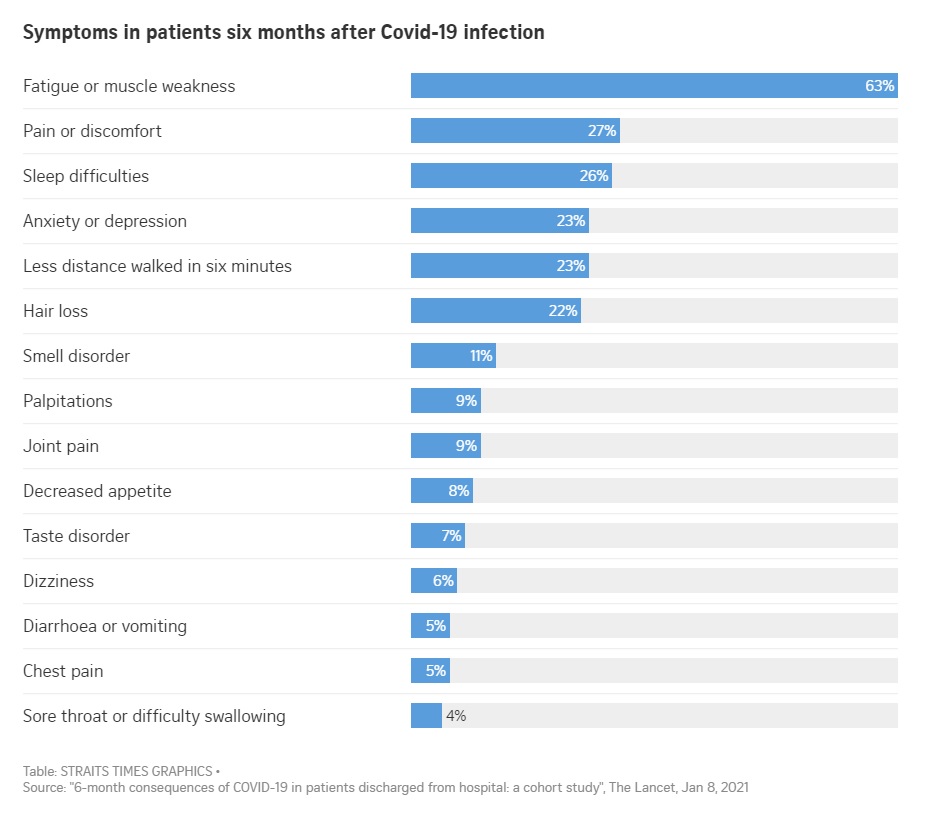
 The file photo taken on Nov. 11, 2020, shows a citizen looking at job information at an employment arrangement center in Seoul. (Yonhap)
 Chinese State Councilor and Foreign Minister Wang Yi meets with Myanmar State Counsellor and Foreign Minister Aung San Suu Kyi in Nay Pyi Taw, Myanmar, on Monday. ZHANG DONGQIANG/XINHUA
 Prime Minister Yoshihide Suga
 Scenic beauty of Don Nyaung Hmaing village in Kyunsu Township
 Samsung Electronics headquarters in southern Seoul (Yonhap)
