Singapore will likely see a Budget deficit next year: PM Lee
Nov 17. 2020PM Lee added that it may take some time for Singapore to return to “prudence and balanced budgets”. ST PHOTO: CHONG JUN LIANG
By Linette Lai The Straits Times/ANN
SINGAPORE – Singapore is unlikely to see a Budget surplus next February given the ongoing economic crisis, and even a balanced Budget will be very hard to achieve, said Prime Minister Lee Hsien Loong on Tuesday (Nov 17).
In fact, it may take some time for Singapore to return to “prudence and balanced budgets”, he added.
“You have to spend money on Covid and the economy is down. Just from a counter-cyclical point of view, you do not want to have a negative fiscal impulse,” Mr Lee said. “You must keep the economy on an even keel and people as far as possible in jobs, or if not in jobs, some help is rendered so that they are able to get past this difficult period.”
He was responding to Bloomberg News editor-in-chief John Micklethwait, who had asked if the Government will run a Budget deficit for some time, given that Singapore has drawn $52 billion from its reserves to see the country through the crisis.
“I hope that we will be able to come back to prudence and balanced budgets, but it may take a while,” Mr Lee said. The mindset that Singaporeans have to earn their keep, and that reserves are not bottomless, has to be deeply ingrained in the population, he added.
“It is not easy because the Opposition will say, ‘Well how much do you have? Let me have a look. Why not take a little bit more? We are not broke yet.'”
At present, some sectors of the economy – such as aviation, tourism and entertainment – are in suspended animation, the Prime Minister added.
“It is better for me to take care of them and keep these sectors in suspended animation, then to risk reviving them before we are ready to deal with the consequences, and then we have another major Covid outbreak.”
Singapore has to deal with the immediate and medium-term public health and economic requirements, he said.
“But one day this too will pass, and when it does, we must make sure that we can get back to the habit of balancing our budgets.”
Asked about leadership succession, Mr Lee also reiterated his pledge to see Singapore through the Covid-19 pandemic before stepping down as Prime Minister.
The country is in the middle of a crisis which, he said, is a huge challenge for Singapore and is indeed existential – both economically and from a public health point of view.
“It is my responsibility to see us through this crisis before I hand it over in good shape into good hands,” he said. “I hope that will be before too long.”
[Malaysia] Govt looking at Covid-19 screening for all foreign workers, says Ismail Sabri
Nov 17. 2020
By MAZWIN NIK ANIS The Star/ANN
PUTRAJAYA: The Human Resources Ministry has been asked to look into getting all 1.7 million foreign workers screened for Covid-19 as cases among them are on the rise, says Senior Minister Datuk Seri Ismail Sabri Yaakob.
He said the current policy is for employers hiring foreign workers in the construction sector as well as security guards to get their workers tested.
“We have discussed with the ministry to see how we can apply this policy not just to foreigners working in the two fields, but also workers in other sectors.
“There are many aspects that need to be looked into, including the cost as well as to see if our laboratories are able to cope with the high number of samples to be tested, ” he said on Monday (Nov 16).
Ismail Sabri said slightly more than one million foreign workers here are contributing to the Social Security Organisation, which can partially subsidise the cost for screening.
“But we need to determine who will bear the remaining cost and if they are not contributors, who will fork out the fees, ” he said.
Ismail Sabri said the ministry was also asked to see how movement of foreign workers can be controlled to ensure they do not spread Covid-19 to the community.
“If we impose a lockdown on the hostels that they are staying in, we also have to bear in mind that there are those who live in rented houses in residential areas and how we deal with these situations. All this needs to be ironed out, ” he said.
Dining, gathering rules to be tightened in greater Seoul under Level 1.5 distancing
Nov 17. 2020People are seen dining together at a restaurant in downtown Seoul on Monday. (Yonhap)
By The Korea Herald/ANN
South Koreans in the greater capital area will face stricter social distancing rules under the government’s Level 1.5 scheme starting Thursday, including more toughened capacity limits at restaurants and worship services and caps on large gatherings.
Under the government’s new five-tier scheme, Level 1.5 is issued in the capital area when new domestic cases average 100 or more per day in the preceding week.
The government’s announcement Tuesday of a one-notch increase from Level 1 to 1.5 in greater Seoul came after the average tally reached 99.4 as of midnight Sunday.
In addition to the mandatory wearing of masks, Level 1.5 requires tightened social distancing rules at nine types of “priority” facilities and 14 types of “regular” facilities.
The priority facilities are five types of entertainment businesses, such as nightclubs; direct sales booths; karaoke bars; indoor standing-concert halls; and restaurants and cafes.
The maximum capacity at these facilities will be reduced to one person per 4 square meters. Dancing and moving between seats will be banned at entertainment facilities, while door-to-door sales and other forms of direct sales are to be suspended from 9 p.m.
Eating at karaoke bars will be prohibited, and rooms that have been used will reopen 30 minutes later after disinfection.
Restaurants and cafes need to keep a 1-meter distance between tables, fill every other table or seat or install partitions between tables.
The 14 types of regular facilities include internet cafes, private academies, study rooms, wedding halls, funeral homes, movie theaters, concert halls, public bathhouses, hair salons and amusement parks. Limited capacity and spacing between seats are required.
Gatherings of more than 500 people are allowed if they are reported to local authorities and held in compliance with social distancing guidelines.
But rallies and demonstrations, as well as large-scale concerts, festivals and academic events, which involve “high-risk” activities such as chanting and singing, are subject to a cap of under 100 people.
Sports events can admit up to 30 percent of crowd capacity.
Worship services can also fill up to 30 percent of seats.
Workplaces are advised to increase the number of people working from home, while high-risk facilities are required to maintain distances between workers and ventilate and disinfect the sites.
Classes at schools must be limited to two-thirds capacity, a requirement that was only advisable under Level 1. (Yonhap)
[China] Major recovery seen after data signals growth
Nov 17. 2020A worker sorts boxes of goods at a logistics center in Cixi, Zhejiang province, on Nov 4. Retail sales grew by 4.3 percent in October on a yearly basis as the economy’s rebound accelerated. [Photo by Zhang Yongtao/For China Daily]
By ZHOU LANXU CHINA DAILY/ANN
Acceleration of rebound set to provide stronger support for world economy
China’s economic recovery is expected to increase its pace and offer stronger support for the world economy in the coming months, as indicated by rebounding domestic demand in October, officials and experts said on Monday.
The country’s consumer purchasing and investment both staged the biggest expansion of the year, while growth in industrial production recovered to pre-COVID-19 levels.
Retail sales, a key barometer of consumption, grew by 4.3 percent in October on a yearly basis, up from 3.3 percent in September, the National Bureau of the Statistics said on Monday.
Fixed-asset investment in the first 10 months rose by 1.8 percent, up from 0.8 percent in the January-September period.
The recovery in demand has driven up production, with industrial output rising by 6.9 percent year-on-year last month, the same as in September and faster than the 4.7 percent for the same period of last year, the bureau said.
Fu Linghui, an NBS spokesman, said the reviving consumer market has helped the economy to recover in a more balanced and sustainable manner. “Economic growth may further accelerate in the fourth quarter of the year compared with the third and second ones.”
Despite the rising risk of COVID-19 resurgence in some economies, China has proved able to contain imported cases while coordinating economic development, Fu said.
After posting 4.9 percent growth in the third quarter, China’s economy should expand by 5 to 6 percent in the fourth quarter and achieve full-year economic growth of about 2 percent, with domestic demand further recovering while exports remain robust, experts said.
With COVID-19 largely under control domestically, recovery in offline consumption and services is set to pick up, said Tang Jianwei, chief researcher at the Bank of Communications’ Financial Research Center.
“The improving employment situation is also brightening household income prospects and boosting consumption demand,” Tang added.
According to the NBS, the surveyed urban jobless rate dropped to a pre-COVID-19 level of 5.3 percent last month. Offline services activity rebounded in October, with catering revenue nationwide resuming expansion for the first time this year and up 0.8 percent year-on-year.
The resilient domestic market will help anchor the global economy clouded by the pandemic, as China has vowed to make boosting domestic demand and opening its market wider among its priorities in the coming years, experts said.
The country will step up efforts to nurture a strong domestic market and promote win-win international cooperation by virtue of its vast market in the 14th Five-Year Plan (2021-25) period, said the communique of the Fifth Plenary Session of the 19th Central Committee of the Communist Party of China.
Huang Qifan, vice-chairman of the China Center for International Economic Exchanges, said the country is expected to continuously increase imports in the period, with total imported goods likely to surpass $22 trillion over the next decade.
“Such a huge market demand will definitely provide a direct, lasting drive for global economic recovery,” he said at a forum co-hosted by ICBC International and Caixin on Sunday.
Despite the improving economic figures, the NBS said that “multiple challenges” still need to be conquered before a full recovery, as difficulties remain for some enterprises and industries like airlines and entertainment.
Wen Bin, chief researcher at China Minsheng Bank, said China should further strengthen policy supports for small businesses, manufacturers and hard-hit services enterprises, and remain vigilant against any COVID-19 resurgence domestically.
[Philippines] Cagayan still flooded; typhoon deaths now 69
Nov 16. 2020EMERGENCY Coast guards transport a dialysis patient from her home in Alcala townto Tuguegarao City, Cagayan province, for her scheduled checkup.—PHOTO COURTESY OF THE PHILIPPINE COAST GUARD
By Inquirer.net/ANN
The death toll from the deadliest typhoon to hit the Philippines this year has risen to 69, with 12 people still missing, while many areas remain submerged in Cagayan province, in the northern region worst hit by flooding in 45 years, officials said on Sunday.
President Duterte flew to Tuguegarao City on Sunday afternoon to assess the situation in Cagayan Valley, which was heavily flooded after Typhoon “Ulysses” (international name: Vamco) dumped heavy rain over swaths of Luzon, including Metro Manila, on Thursday.
He also flew to Pili, Camarines Sur province, to receive briefings from Cabinet officials on damage caused by Ulysses and the earlier Typhoon “Rolly” (Goni) in the Bicol region.
Twenty-four people were reported dead in Cagayan, 17 in Calabarzon, 10 in the Cordillera Autonomous Region, eight each in Metro Manila and Bicol, and two in Central Luzon.
2 gov’t engineers killed
Among the dead was a 3-year-old boy whose body was recovered along with those of three adults on Saturday from a house in Benguet province that was hit by a landslide at the height of Ulysses.
Two engineers, a laborer and a driver from the Department of Public Works and Highways in Ifugao province were also killed in the landslide.
Public Works Secretary Mark Villar said the four men were part of a quick-response team that was deployed to clear landslides on the Nueva Vizcaya-Ifugao-Mountain Province Road. They were sheltering in a house during heavy rain when the landslide swept away the house.
A fifth member of the team was unharmed, Villar said.
“My thoughts and prayers go out to our personnel who bravely served our country and paid the ultimate price. We will extend all efforts to look for the missing and support the families of the victims,” he said.
The National Disaster Risk Reduction and Management Council reported that 12 people were missing in Calabarzon, Bicol and Metro Manila.
Mark Timbal, spokesperson for the disaster management council, said 21 people were injured and 26,000 houses damaged.
Worst flooding in 45 years
“This is the worst flooding that we had in the last 45 years,” Cagayan Gov. Manuel Mamba said during a briefing with President Duterte. “We see that it is worsening every year.”
The accumulated effects of weather disturbances and huge volumes of water released from Magat Dam in Isabela displaced thousands of families in the province and Cagayan, some of whom had fled to rooftops to escape two-story-high floods.
Six cyclones hit the country in a span of just four weeks, including Ulysses and Rolly, the world’s most powerful this year.
Mamba also lamented about denuded forests in Cagayan, prompting President Duterte to order him to curb logging in the province.
“We always talk about illegal logging and mining but nothing has been done about it,” Mr. Duterte said.
In a message during his visit, he expressed solidarity with the residents of Cagayan and extended his condolences to the families of those who perished in the storm.
“I want to personally assure our fellowmen here that the government will continue its rescue operations until all families are saved, all casualties and mission persons have been accounted for, and all affected individuals and communities have received their needed relief and other assistance,” the President said.
“Rest assured that we are working hard to rebuild your lives after these calamities. We know your anguish and we will respond with urgency. With the bayanihan spirit of the Filipino, I am confident that together we will brave all the challenges ahead and emerge stronger as a [people],” he said.
Climate change blamed
He thanked the police, military, coast guard, local governments and private organizations for banding together to mount rescue and relief efforts.
He told local officials to work hard to restore normality in the ravaged areas, and to give priority to people who needed food and water, as well as those who still had no electricity.
The President attributed the disaster to climate change.
Relief and rescue operations continued in Cagayan. In Isabela, Magat Dam went on discharging water, two days after releasing a volume equivalent to two Olympic-size pools per second, based on government data.
The Philippine Coast Guard and the Armed Forces of the Philippines on Sunday shifted from rescue to relief operations in Cagayan and Bicol.
The Coast Guard said it sent two teams from its northern Luzon district to help the local governments of Alcala and Amulung towns in Cagayan transport relief supplies for families displaced by the flooding in the region.
Coast Guard teams were also deployed to help relief efforts in Virac, Catanduanes province, in Bicol.
Military naval and air forces also helped to transport relief goods in Bicol and Cagayan.
Various groups and individuals contributed to the relief effort for Cagayan, and the Ilocos regional police deployed officers to help in search and rescue operations.
Raul Lambino, presidential adviser for north Luzon, took a plane from the Binalonan airstrip in Pangasinan on Sunday to bring relief goods to Cagayan and Isabela.
In Pampanga, Mayor Carmelo Lazatin of Angeles City sent food for 4,000 families in Cagayan and Isabela. He called on Angeles residents to contribute to the relief effort by donating rice, groceries and money through the city’s social welfare office.
Damage estimate
Timbal of the national disaster agency initially placed damage to agriculture due to flood at P1.2 billion and to infrastructure, P470 million.
Typhoon-weary residents of Luzon can rest easy this week, with no weather disturbance seen coming in the next days, the state weather service said on Sunday.
But residents in northern Luzon, including Cagayan Valley, should be ready for rain brought by the northeast monsoon, the Philippine Atmospheric, Geophysical and Astronomical Services Administration (Pagasa) said.
Chris Perez, senior weather specialist at Pagasa, said Cagayan Valley and Cordillera Administrative Region may experience cloudy skies and rain on Monday, while Ilocos region may expect isolated light showers.
Weather forecasters, however, said the country could experience generally fairer weather this week.
NK leader presides over politburo meeting in first public appearance in 25 days
Nov 16. 2020North Korean leader Kim Jong-un speaks during a politburo meeting of the Workers’ Party in this photo disclosed by the Korean Central News Agency on Monday. (KCNA-Yonhap)
By The Korea Herald/ANN
North Korean leader Kim Jong-un presided over a politburo meeting of the Workers’ Party in his first public appearance in 25 days and discussed nationwide anti-coronavirus measures, state media said Monday.
During the enlarged politburo meeting held Sunday, Kim discussed “COVID-19 and the state anti-epidemic situation and clarified the tasks for the Party, military and economic fields to further tighten the emergency anti-epidemic front,” according to the Korean Central News Agency.
He also stressed “the need to keep a high alert, build a tight blocking wall and further intensify the anti-epidemic work, being aware of the important responsibility for the security of the state and the well-being of the people,” the KCNA added.
This marked his first reported public appearance since he was reported on Oct. 22 to have visited a cemetery in the North’s South Pyongyang Province for fallen Chinese soldiers that participated in the 1950-53 Korean War. State media usually report the leader’s activity a day after it happens.
North Korea has claimed to be coronavirus-free but has stayed on high alert since early this year, when it closed its borders and enforced antivirus measures.
Along with antivirus measures, the meeting also discussed “non-socialist practices in educational organizations and in society.”
It, in particular, sharply criticized the party committee of Pyongyang University of Medicine for committing “a serious crime,” and accused other relevant organizations, including the party’s Central Committee, for their “irresponsibility and extreme dereliction of duty.”
The KCNA did not provide more details on what the crime was.
The criticism appears aimed at tightening discipline among state organizations amid the country’s prolonged fight against the global pandemic and ongoing recovery work from summertime typhoons.
“The enlarged meeting of the Political Bureau emphasized the need to awaken the Party organizations at all levels once again and wage a fierce Party-wide struggle to root out practices against the Party,” the KCNA said.
South Korea’s unification ministry said it has no information on what the alleged wrongdoing is.
In February, state media also reported on “practices of privileges, indulgence in bureaucracy, corruption and irregularities” among senior officials of a cadre training institution of the party.
At the time, the North disbanded the party committee of the training institution and dismissed some senior officials in a related move.
Meanwhile, attending the latest party meeting were members of the Presidium and members and alternate members of the politburo of the party’s Central Committee.
Others, including provincial party committees, the minister of public security and members of the state emergency antivirus organizations joined the meeting through a videoconference system, according to the KCNA. (Yonhap)
Suga calls out maritime actions violating Japan’s sovereignty
Nov 16. 2020Prime Minister Yoshihide Suga participates in the ASEAN Plus Three’s online meeting on Saturday. (Courtesy of the Cabinet Public Relations Office)
By Yoichiro Tanaka Yomiuri Shimbun/The Japan News/ANN
HANOI — Prime Minister Yoshihide Suga expressed serious concerns during an online East Asia Summit (EAS) meeting on Saturday over issues involving the East and South China seas, where China has increased its hegemonic behavior.
“Moves that go against the rule of law and openness are occurring,” Suga said during the EAS talks, which were attended virtually by the leaders and representatives of 18 countries, including Japan, the United States, China, Russia and the 10 Association of Southeast Asian Nations (ASEAN) member states.
Apparently with China’s repeated provocations in the waters around the Senkaku Islands in Okinawa Prefecture in mind, Suga said, “In the East China Sea, activities that violate Japan’s sovereignty have continued.”
Regarding the South China Sea issue, he stressed the importance of the rule of law.
“Legitimate rights, including freedom of navigation and freedom of overflight, need to be respected,” Suga said.
The prime minister also mentioned Hong Kong, where China is tightening its control over pro-democracy politicians and activists.
“It is important that the freedom and rights of Hong Kong’s citizens and the people of other countries are respected, and that developments are made democratically and stably,” he said.
Suga also called for the full implementation of sanctions imposed by the U.N. Security Council against North Korea to completely eliminate the country’s nuclear and missile programs.
Premier Li Keqiang represented China for the EAS talks. U.S. President Donald Trump was absent for the fourth year in a row so Washington was represented by national security adviser Robert O’Brien as a special envoy.
■ Virus, climate fights
On Saturday, Suga also attended an online summit of the so-called ASEAN Plus Three that involves ASEAN, Japan, China and South Korea. He explained Japan’s contribution to measures against the novel coronavirus, such as the establishment of an ASEAN center to combat infectious diseases. He also pledged to provide support to develop the center into an organization that will protect people of ASEAN member states from the threat of infectious diseases.
During the meeting, Suga also expressed an intention to support efforts by other countries to counter climate change, while referring to his government’s goal of “reducing greenhouse gas emissions to net zero by 2050.”
Among other issues, the prime minister called for the lifting of restrictions on imports of Japanese food products in the wake of the 2011 accident at the Fukushima No. 1 nuclear power plant operated by Tokyo Electric Power Co. Holdings, Inc. He also asked for cooperation in resolving the issue of North Korea’s abduction of Japanese nationals.
The online summit was also attended by Li and South Korean President Moon Jae-in. The participants welcomed Suga for his first participation in the summit as prime minister.
“I hope that ASEAN and Japan will work together to build a peaceful and prosperous Indo-Pacific region,” Suga told reporters after the meeting. “To that end, we have agreed to advance necessary cooperation in a specific manner.”
Leaders strengthen ties between Mekong region, ROK, Japan
Nov 16. 2020
By Vientiane Times/ANN
Cooperation between the countries in the Mekong Basin and the Republic of Korea (ROK) has grown rapidly, while cooperation between the Mekong countries and Japan has also broadened.
This was the assessment of leaders from the Mekong countries, Korea and Japan when they met for virtual talks at the 2nd Mekong-ROK and 12th Mekong-Japan summits on Friday.
Vietnamese Prime Minister Nguyen Xuan Phuc co-chaired the summits with Korean Prime Minister Moon Jae-in and Japanese Prime Minister Suga Yoshihide.
At the Mekong-ROK summit, leaders from Laos, Cambodia, Myanmar, Thailand, Vietnam, and Korea reviewed past cooperation, especially the implementation of the Mekong-Han River Declaration adopted at the first Mekong-ROK Summit held in Busan, Korea, last year, and the work plan for 2017-2020.
The leaders said the cooperation framework had grown rapidly under the three pillars and seven priorities in the fields of culture and tourism, human resource development, agriculture and rural development, infrastructure development, information and communication technology, the environment, and non-traditional security challenges.
Laos has implemented four projects with support from the Mekong-ROK Cooperation Fund valued at US$1.5 million.
The projects concern capacity building for people and poor districts in Laos, a master plan and capacity-building for meteorology and hydrology infrastructure in the Mekong Basin, cooperation on assistance for project management in the Mekong region, and soil, water and fortification quality management to boost the incomes of farmers in drought regions of Laos.
The summit agreed to upgrade Mekong-ROK cooperation to a strategic partnership for the benefit of people, prosperity, and peace.
The leaders discussed the next five years of cooperation for socio-economic recovery in the Mekong region and Korea from the impact of the Covid-19 pandemic.
They also planned to accelerate infrastructure development, human resource development in the health sector, strengthening of trade and investment cooperation, and sustainable development based on the United Nations’ Sustainable Development Goals.
At the 12th Mekong-Japan Summit, the leaders of the five Mekong countries and Japan reviewed the implementation of the joint statement they made at the 11th Mekong-Japan Summit, Tokyo Strategy 2018, Mekong-Japan initiative for sustainable development 2030, and programmes and projects.
The leaders noted that cooperation had progressed in many fields, particularly in infrastructure development, human resource development, sustainable development, and cooperation with various organisations in the region.
“The cooperation framework is a good stage for Mekong countries and Japan in enhancing cooperation and building capacity for the Mekong region’s economy and for its connectivity with other regions, including Asean,” a news release from the Ministry of Foreign Affairs stated.
Laos has benefited from several assistance projects under Mekong-Japan cooperation. These include a survey for Vientiane-Hanoi connectivity development, bridge construction on National Road No. 9, study of an electric power system master plan, Nam Ngum 1 power plant expansion, and Wattay International Airport passenger terminal expansion.
Leaders from the Mekong countries and Japan discussed targeting the implementation of projects under the Tokyo Strategy 2018, and the Mekong-Japan initiative for sustainable development 2030.
They also discussed post-Covid-19 socio-economic restoration, especially the emergency health response for the prompt sharing of information, best practice and experience, and laboratories in handling and treating communicable diseases, which threaten nations and peoples.
Also discussed was support for businesses, including small and medium-sized enterprises affected by the pandemic, especially the need to ensure they had ways to obtain funding and make use of modern technology.
World’s largest trade pact signed by ASEAN countries and five partners
Nov 16. 2020Prime Minister Nguyễn Xuân Phúc and Trần Tuấn Anh, Minister of Industry and Trade at the signing ceremony of RCEP in Hà Nội. VNA/VNS Photo Thống Nhất
By Viet Nam News/ANN
HÀ NỘI — The Regional Comprehensive Economic Partnership, the world’s largest trade pact, was signed on Sunday by leaders of 15 member countries after eight years of negotiations.
The region-wide trade deal which involves ten ASEAN countries, as well as China, Japan, the Republic of Korea, Australia and New Zealand, will contribute to nearly 30 per cent of the world’s Gross Domestic Products of US$26.2 trillion and create a market covering nearly one third of the world’s population.
It is expected to back an open, inclusive and rule-based trade system and create a push for post-COVID-19 economic revitalisation among the member countries.
In his opening remarks at the 4th Regional Comprehensive Economic Partnership (RCEP) Summit held virtually on Sunday, Prime Minister Nguyễn Xuân Phúc said the COVID-19 pandemic has harmed global and regional trade and investment flows, including the countries participating in the RCEP talks.
The global and regional economies are facing huge obstacles and challenges caused by not only COVID-19 but also decreased global trade, he said.
“The conclusion of the negotiations of the RCEP, the largest free trade agreement in the world, will send a strong message of ASEAN’s leading role in supporting the multilateral trade system, helping to create a new trading structure in the region,” PM Phúc said.
Thai Prime Minister Prayut Chan-o-cha praised the signing of this historic free trade agreement, saying the RCEP agreement was not only the largest free trade agreement in the world but was also characterised by its quality and standards, as well as its positive impact towards the upgrading of the competitiveness and increase economic benefits for all members.
Chinese Premier Li Keqiang said the signing of RCEP is “a victory of multilateralism and free trade”.
With the largest participating population in the world, the most diverse membership and the greatest development potential, the free trade bloc will inject new impetus into regional development and prosperity, and contribute to global economic recovery and growth, Li said.
Vietnamese Prime Minister Nguyễn Xuân Phúc said after eight years of negotiations, ASEAN and partners have finished an enormous workload and preparations for a new promising face of economic and trade cooperation.
“The RCEP agreement will accelerate the ASEAN economic community building and thereby allowing ASEAN to become dynamic and strong partners in promoting co-operation for shared prosperity.
“The signing ceremony of RCEP today is a very proud and historic milestone within ASEAN countries together with its partners having laid a solid foundation for new era, a comprehensive, enduring and forward-looking cooperation while taking into account the diverse development level of countries in this region, the PM Phúc said at the signing ceremony,
According to Lương Hoàng Thái, director of the Vietnamese Ministry of Industry and Trade’s Multilateral Trade Policy Department, with provisions to reduce or remove tariffs on industrial and agricultural products, the RCEP will help firms in ASEAN member states boost exports, particularly to major trade partners.
He suggested Vietnamese companies improve their competitive edge by paying attention to trade policies, renewing technologies, and landing large investments in services.
Vietnamese Minister of Industry and Trade Trần Tuấn Anh said that once the RCEP takes effect, Vietnamese companies will have more opportunities to expand markets, join regional value chains, and attract more foreign investment.
Telecommunications, IT, garments and textiles, footwear, and agriculture can take huge advantage of import tariff reductions under the agreement, he stressed.
In an interview with the Vietnam News Agency (VNA) on the sidelines of the signing ceremony, Minister Anh, who inked the pact on behalf of Việt Nam, said the signing of the deal was a milestone in the economic integration of Việt Nam and other countries.
With commitments to opening markets for goods, services and investment, and the harmonisation of the rules of product origin between the countries, as well as trade facilitation measures, the agreement will create opportunities to develop new supply chains.
The pact will help to establish stable, long-term export markets for Việt Nam and other ASEAN countries, the minister said.
Notably, with new co-operation frameworks in the RCEP and other free trade agreements, ASEAN countries will become trustworthy destinations for international investors, he said.
The conclusion of the RCEP talks and the signing also play a role in promoting ASEAN’s centrality in shaping the regional architecture, the minister added.
According to him, RCEP brings opportunities as well as challenges.
First of all, the agreement might add more pressure in terms of competitiveness for Vietnamese goods and services. Many partners have similar products and stronger competitiveness than Vietnamese ones while the quality and value-added content of most Vietnamese products are still modest. Therefore, competitive pressure will increase when the RCEP comes into effect.
However, he said, recent experience in international economic integration has shown that Việt Nam’s ability to participate in newly-established value chains in the region is increasing along with the country’s administrative procedure reform, facilitating business production and improving the investment environment.
The RCEP is a proposed free trade agreement between the 10 member states of ASEAN and six dialogue partners, namely China, Japan, the Republic of Korea, India, Australia and New Zealand. Negotiations on the RCEP started in late 2012 at the 21st ASEAN Summit in Phnom Penh.
During last-minute talks on November 4 last year, with Thailand as ASEAN Chair, India pulled out of joining the RCEP over unresolved issues, especially those concerning agricultural tariffs. — VNS
New Zealand commits support for ASEAN during COVID-19 pandemic
Nov 14. 2020New Zealand Prime Minister Jacinda Ardern at the ASEAN-New Zealand Commemorative Summit on Saturday. — VNA/VNS Photo Thống Nhất
By Viet Nam News
HÀ NỘI — New Zealand Prime Minister Jacinda Ardern announced a wide range of support for ASEAN at the ASEAN-New Zealand Commemorative Summit on Saturday.
The assistance includes US$12 million for efforts to control the pandemic, $1 million for the ASEAN COVID-19 Response Fund, $10 million for smart agriculture, and $5 million for the Mekong River Committee.
Ardern said New Zealand and ASEAN shared a strong legacy of working together to advance peace and prosperity in the region.
“ASEAN is our fourth largest trading partner, a crucial defence and security partner, and a critical strategic hub that connects us to Asia and the rest of the world.”
“Our partnership will play an important role as our countries work together to support global efforts to manage the pandemic and ensure fair and equitable access to safe vaccines, and drive economic recovery through maintaining open markets for our exporters and resilient supply chains,” she said.
The PM reaffirmed New Zealand’s commitment to strengthening its partnership with ASEAN under the themes of “Peace, Prosperity, People and Planet”, which will promote co-operation in areas such as sustainability and climate change, trade facilitation and digital commerce.
Ardern said New Zealand supported ASEAN’s initiatives that set a priority for inclusive development in which no one was left behind, while backing the ASEAN Comprehensive Recovery Framework.
Addressing the summit, Prime Minister Nguyễn Xuân Phúc congratulated Ardern on her re-election as prime minister of New Zealand and expressed his expectation that ASEAN-New Zealand relations would continue to strengthen during her new term.
Phúc said 2020 marked the 45th anniversary of the diplomatic partnership between the two countries.
Remarkable development in ASEAN-New Zealand co-operation had been recorded over the past four decades, he said.
Two-way trade turnover had increased more than 142 times, reaching $12.5 billion last year.
More than 80,000 ASEAN people were living, working and looking for business opportunities in New Zealand, evidence of the strong ties between the two sides, Phúc said.
The leaders of ASEAN and New Zealand shared their deep concerns over the COVID-19 pandemic during the meeting, which has affected the lives of people as well as economies around the world.
They underscored the importance of strong, resilient and sustainable supply chains in order to effectively trade and to ensure the unimpeded flow of goods and services, including medical supplies.
The leaders reiterated the necessity of promoting maritime security and safety, freedom of navigation and overflight, unimpeded commerce, mutual trust and confidence, the exercise of self-restraint, the non-use of force or the threat to use force, and the resolution of settling disputes by peaceful means, in accordance with recognised principles of international law, including the 1982 United Nations Convention on the Law of the Sea (UNCLOS). — VNS
 PM Lee added that it may take some time for Singapore to return to “prudence and balanced budgets”. ST PHOTO: CHONG JUN LIANG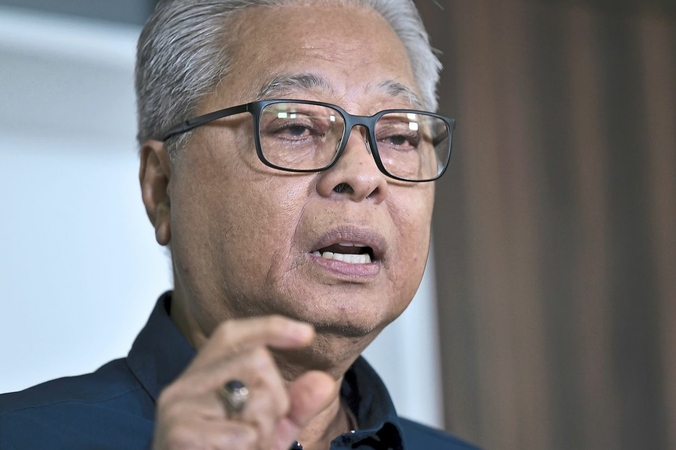
 People are seen dining together at a restaurant in downtown Seoul on Monday. (Yonhap)
 ![A worker sorts boxes of goods at a logistics center in Cixi, Zhejiang province, on Nov 4. Retail sales grew by 4.3 percent in October on a yearly basis as the economy's rebound accelerated. [Photo by Zhang Yongtao/For China Daily]](https://media.nationthailand.com/images/news/2020/11/17/30398073/800_920937e0fddb3ed.jpeg?v=1605580054) A worker sorts boxes of goods at a logistics center in Cixi, Zhejiang province, on Nov 4. Retail sales grew by 4.3 percent in October on a yearly basis as the economy’s rebound accelerated. [Photo by Zhang Yongtao/For China Daily]
A worker sorts boxes of goods at a logistics center in Cixi, Zhejiang province, on Nov 4. Retail sales grew by 4.3 percent in October on a yearly basis as the economy’s rebound accelerated. [Photo by Zhang Yongtao/For China Daily]  EMERGENCY Coast guards transport a dialysis patient from her home in Alcala townto Tuguegarao City, Cagayan province, for her scheduled checkup.—PHOTO COURTESY OF THE PHILIPPINE COAST GUARD
  North Korean leader Kim Jong-un speaks during a politburo meeting of the Workers’ Party in this photo disclosed by the Korean Central News Agency on Monday. (KCNA-Yonhap)
  Prime Minister Yoshihide Suga participates in the ASEAN Plus Three’s online meeting on Saturday. (Courtesy of the Cabinet Public Relations Office)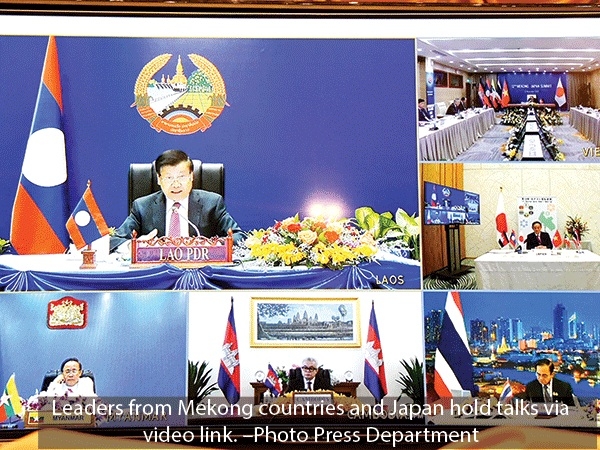
 Prime Minister Nguyễn Xuân Phúc and Trần Tuấn Anh, Minister of Industry and Trade at the signing ceremony of RCEP in Hà Nội. VNA/VNS Photo Thống Nhất
  New Zealand Prime Minister Jacinda Ardern at the ASEAN-New Zealand Commemorative Summit on Saturday. — VNA/VNS Photo Thống Nhất
