‘CIA took North Korea leader’s nephew’ #SootinClaimon.Com

#SootinClaimon.Com : ขอบคุณแหล่งข้อมูล : หนังสือพิมพ์ The Nation.

‘CIA took North Korea leader’s nephew’

Nov 19. 2020Kim Han-sol, a man believed to be Kim Jong-nam's son, appears on YouTube (Screenshot captured from YouTube)Kim Han-sol, a man believed to be Kim Jong-nam’s son, appears on YouTube (Screenshot captured from YouTube) 

By Kim So-hyun
The Korea Herald/ANN
The US Central Intelligence Agency took the family of Kim Jong-nam, the half brother of North Korean leader Kim Jong-un, after Kim Jong-nam was murdered in February 2017, although it is unclear where the family resides now, said a Korean American writer.

The activist group that helped the bereaved family get out of Macao shortly after Kim Jong-nam was killed in Kuala Lumpur reportedly lost them to people who identified themselves as CIA officers at the Taipei airport.

In an article in the New Yorker magazine titled “The Underground Movement Trying to Topple the North Korean Government,” Korean American writer Suki Kim detailed the activities of Adrian Hong, the leader of Free Joseon, a group that has helped North Korean defectors reach third countries safely.

According to Free Joseon, Kim Jong-nam’s son Han-sol called Hong for help because the Macao police who had been guarding his house disappeared after his father was killed by a nerve agent that two women smeared on his face at the Kuala Lumpur airport on Feb. 13, 2017.

Three weeks later, on March 8, Kim Han-sol appeared in a short YouTube video saying his family was safe thanks to Cheollima Civil Defense and the governments of the Netherlands, the US, China and another unnamed country. Cheollima Civil Defense has since been renamed Free Joseon.

According to Hong, Kim Han-sol first met with Hong in Paris around 2013 and told Hong he was aware of his work involving North Korea.

Kim Han-sol was wearing Gucci shoes at the time, and Hong said: “Never met a kid with so much money. Kim Jong-nam had stashed away a lot of cash during his life.”

Upon Kim Han-sol’s request for help, Hong called Christopher Ahn, a former US marine and member of Free Joseon, and asked him to meet Kim Han-sol, his mother and sister at the Taipei airport and “make sure no one is following them.”

Ahn, who was in Manila at the time, flew to Taipei, met with Kim Han-sol’s family and escorted them to an airport lounge with private rooms.

After some 18 hours at the airport, Hong called Ahn and said a country had agreed to take in Kim Han-sol’s family and that Hong had bought three plane tickets to Schiphol Airport in Amsterdam.

When the family proceeded to the gate to board the plane, however, the gate agent, upon checking their passports, said they couldn’t get on the plane.

Hours after Ahn and the family went back to the lounge, two men — a Korean American named Wes and an older white man — showed up, identifying themselves as CIA officers, according to Ahn.

Ahn told Kim Han-sol, “I don’t think you should talk to anybody until we understand what is going on.”

The CIA declined to comment, Suki Kim wrote.

The next morning, airport agents came and helped Ahn book new tickets to Amsterdam. Wes had told Ahn that he would be accompanying the family on the flight.

Before they parted Ahn used his phone to film Kim Han-sol thanking him and Hong for ensuring his safety. They took a selfie together as an “insurance policy” to prove that Free Joseon was not kidnapping the North Korean leader’s nephew.

A team sent by Free Joseon, assisted by a Dutch human rights lawyer, was waiting at the gate at Schiphol, but the family never came through the gate.

According to Hong, Kim Han-sol called him to say that he’d tried to exit through the gate but had been taken through a side door to a hotel in the airport.

Hong asked Kim Han-sol if he wanted to seek asylum in the Netherlands and he said yes, so Hong told his team and the lawyer to go to the lobby of the hotel and wait for Kim Han-sol to come downstairs. But the North Korean leader’s nephew never showed up.

Suki Kim wrote that multiple sources told her the CIA had taken Kim Han-sol and his family elsewhere, although it is unclear whether they were taken to the Netherlands or another country.

She described her encounters with a number of Free Joseon members, including Hong and his associates, starting with the story of how Hong started LINK, a group to help North Koreans, in 2003 while he was a student at Yale.

Born in Tijuana in 1984, Hong grew up helping his father, a taekwondo master and missionary who founded an orphanage in Mexico.

Suki Kim profiles Hong and his co-workers based on her interviews and describes their activities until their “heist” at the North Korean Embassy in February 2019.

According to Hong, they entered the embassy upon request from a North Korean in the embassy who had asked for their help to defect, and they took some computers from the embassy. The FBI later took the computers for analysis and never returned them.

Hong, on the wanted list of the US Justice Department, has been in hiding since.

Suki Kim is the well-known author of the novel “Interpreter” and the memoir “Without You, There Is No Us: My Time With the Sons of North Korea’s Elite” about her time as an undercover journalist in Pyongyang.

China expands its arsenal in COVID battle #SootinClaimon.Com

#SootinClaimon.Com : ขอบคุณแหล่งข้อมูล : หนังสือพิมพ์ The Nation.

China expands its arsenal in COVID battle

Nov 19. 2020Disease control and prevention workers collect samples from frozen products in Tianjin's Nankai district on Nov 9. [Photo/China Daily]Disease control and prevention workers collect samples from frozen products in Tianjin’s Nankai district on Nov 9. [Photo/China Daily] 

By WANG XIAOYU
CHINA DAILY/ANN

Nation’s lockdown, testing measures become more targeted after fine-tuning

Stringent monitoring of cold-chain food imports and the fine-tuning of lockdown and testing strategies are China’s latest weapons in the battle against COVID-19 as the country braces for possible outbreaks this winter.

While local transmission of the novel coronavirus has been under control for months, public health experts in China have highlighted the risk of new outbreaks linked to the virus hitching a ride on imports of frozen foods.

As domestic life and production return to normal, experts have hailed local governments’ efforts to replace blanket lockdowns and citywide tests with more targeted and economical measures to reduce disruption to socioeconomic development.

“A growing body of evidence shows that frozen seafood or meat products are likely to bring the virus from severely affected countries into China,” said Wu Zunyou, chief epidemiologist at the Chinese Center for Disease Control and Prevention. Wu made the comment last week in an article posted on the website of the Communist Party of China Central Commission for Discipline Inspection.

“The discovery has prompted customs officials to step up testing on imports, and prompted local market regulators and health authorities to tighten supervision over the cold-chain sector.”

In an interview with China Newsweek last month, Wu said virus transmission risks from contaminated seafood imports are likely to be greater than those from incoming passengers.

Since June, at least three major outbreaks have been linked to frozen imports, said Feng Zijian, deputy director of the China CDC, during a recent interview.

That includes the Beijing outbreak in June with 335 confirmed cases, the outbreak in Dalian, Liaoning province, in late July with 92 confirmed cases and the outbreak in Qingdao, Shandong province, in October that resulted in 14 confirmed cases.

Excluding a major outbreak in Urumqi, Xinjiang Uygur autonomous region, that saw over 800 confirmed cases, the three outbreaks account for nearly 85 percent of domestic cases since June, according to the National Health Commission. The source of infections in Urumqi is still under investigation.

Concerns linked to cold-chain food imports are bound to rise as cargo shipments into China increase, according to Zhang Wenhong, head of the infectious disease department at Fudan University’s Huashan Hospital in Shanghai.

“Land ports and international airports in China will need to cope with the risk,” he said.

Wu said virus control in the cold-chain sector entails three layers of testing-samples of imported goods and their outer packaging, samples taken from vehicles and cold-storage facilities and testing of workers involved in handling such products.

The tests are being implemented regularly nationwide and have begun to pay off through timely alerts.

CDC officials in Nanjing, Jiangsu province, said on Nov 10 that they managed to block and seal some cold-chain imports from entering the market after shipments from Argentina tested positive for the virus during a routine test.

Then, from Friday to Monday, local governments in nine regions said they had detected the virus on cold-chain food imports or their packaging, resulting in the immediate shutdown of affected facilities and the sealing of contaminated products.

He Peng, a spokesman for the Tianjin Health Commission, said at a recent news conference that a local dockworker was confirmed to have contracted the virus after a routine test of frozen pork from Germany tested positive.

“We must adhere to the principle of fending off risks carried by both products and people, especially workers coming into contact with cold-chain food,” he said. “Their health is the basis for blocking contaminated food products.”

On Nov 9, the State Council released a guideline requiring thorough disinfection of cold-chain imports after collecting samples for testing and urging the establishment of tracking systems.

On Monday, the Ministry of Transport published another guideline urging all companies, docks and freight terminals involved in cold-chain logistics to protect their front-line employees by enforcing safety protocols, monitoring their temperatures and conducting nucleic acid testing. It also stressed the importance of the strict and regular disinfection of transportation equipment and vehicles.

Wu, from the CDC, said, “Instead of imposing a reckless and simple ban on all imported food, China has decided to integrate management of cold-chain products into regular disease control work and mitigate risks to the lowest possible level.”

He said the State Council guideline is aimed at ensuring the safety of cold-chain food and safeguarding people’s health while increasing the efficiency of customs clearance and securing the stability of the industry chain.

Similar efforts aimed at striking a balance between curbing the virus and continuing the pace of economic recovery are part of adjustments to the scope and duration of long-standing epidemic control measures.

A medical worker in protective suit collects a throat swab from a woman at a nucleic acid testing site in Qingdao, Shandong province, on Oct 13, 2020. [Photo/China Daily]

Different lockdowns

Feng, the CDC deputy director, said community lockdowns imposed nowadays are “distinctly different “from those in Wuhan early this year.

“Lockdowns are more precise now, affecting smaller areas and having less impact on society, though the goal remains the same: to reduce population-mixing,” he said.

When Tianjin detected three local infections among cold-chain workers this month, the city upgraded virus risk levels from low only to medium in three areas where the confirmed patients and several asymptomatic individuals worked and lived. Mass testing covered only residents in medium-risk areas and all cold-chain workers in the city.

Zhang Diyuan, a program developer in Tianjin’s Xiqing district, about 100 kilometers from the affected cold-chain facilities, said the new cases did not affect his life at all.

“I’m in favor of such an accurate designation of risks,” he said. “As a Tianjin resident, I see no need to expand lockdown areas.”

When the Beijing government was dealing with the outbreak in June, the launch of a citywide testing campaign covering all 20 million residents of the capital was initially proposed, Wu said.

“The campaign was called off after screening 10 million because an additional 10 million tests would not detect any more cases and would pile on unnecessary costs,” Wu told China Newsweek.

“Other cities should use the science-based and refined method. Large-scale tests should revolve around the origin of confirmed infections and be called off when no new cases can be found.”

Zhang, from Shanghai, said during a forum last week that even though the virus continues its rampage worldwide and China has largely stamped out local transmission, there is no need to sever communication with the outside world.

“We should maintain a certain degree of international cargo and personnel exchange while properly managing risks stemming from imported cases,” he said.

To reach the goal, Zhang underscored the importance of fever clinics being able to detect suspected cases and send alerts swiftly, as well as the ability of public health workers to track down close contacts.

Malaysia and China sign pact over Covid-19 vaccine #SootinClaimon.Com

#SootinClaimon.Com : ขอบคุณแหล่งข้อมูล : หนังสือพิมพ์ The Nation.

Malaysia and China sign pact over Covid-19 vaccine

Nov 19. 2020

By The Star/ANN

PETALING JAYA: Malaysia and China have signed an agreement to deepen cooperation over the development of and accessibility to a Covid-19 vaccine.

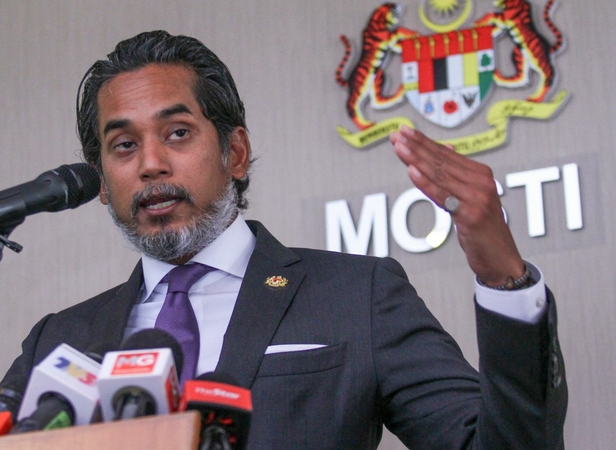
The agreement, which was signed virtually by Science, Technology and Innovation Minister Khairy Jamaluddin and his Chinese counterpart Wang Zhigang on Wednesday (Nov 18), aims to forge greater collaboration between both countries to combat the pandemic.

The agreement will be operationalised under the supervision of a high-level committee that will be chaired by Foreign Minister Datuk Seri Hishammuddin Hussein and his Chinese counterpart Wang Yi as agreed upon on Oct 13 this year.

The Foreign Affairs Ministry and the Science Technology and Innovation Ministry said Khairy and Wang had agreed to increase collaboration in addressing the Covid-19 pandemic through science diplomacy.

“The agreement provides for Malaysia to be given priority access to Covid-19 vaccines developed by China, knowledge sharing and expertise as well as facilitate scientific and technological capabilities to advance vaccine development in both countries.

“Both countries will also support the participation of their public and private sectors including universities, institutions, societies, and organisations in joint collaborative projects,” they said in a joint statement on Wednesday.

They added that both governments agreed to support and encourage their enterprises to establish all-round cooperation in vaccine research and development, as well as supply.

The agreement was to remain in force for an initial five-year period and would be automatically extended for another one year each at a time upon mutual agreement by both parties.

“Great step forward for Malaysia-China relations in the post-pandemic era. Vaccine priority, along with other bilateral economic, social and cultural matters is part of a wider overarching framework under the high level committee co-chaired by Foreign Minister Wang Yi and me,” Hishammuddin said in a tweet.

Khairy, who tweeted about the signing of the bilateral agreement, also said that he had discussed a mutually accepted blockchain-enabled digital health passport to facilitate a travel corridor for vaccinated citizens from both countries.

COVID-19 vaccine ’95 per cent effective’ in final testing, claims Pfizer #SootinClaimon.Com

#SootinClaimon.Com : ขอบคุณแหล่งข้อมูล : หนังสือพิมพ์ The Nation.

COVID-19 vaccine ’95 per cent effective’ in final testing, claims Pfizer

Nov 19. 2020Representational ImageRepresentational Image 

By The Statesman/ANN

Pfizer, the American multinational pharmaceutical corporation, and German biotechnology company BioNTech, Pfizer’s partner, on Wednesday, announced the second batch of the temporary results, in which they claimed that their COVID-19 vaccine prototype was found to be “95 per cent effective” in the final analysis of the Phase 3 trial and also protects the most vulnerable people in older age groups from the risk of falling prey to the virus.

Pfizer and BioNTech also said that they have the required two-months of safety data and would apply for emergency US authorization within days.

In a statement, Pfizer said, “Primary efficacy analysis demonstrates BNT162b2 to be 95 per cent effective against Covid-19 beginning 28 days after the first dose; 170 confirmed cases of Covid-19 were evaluated, with 162 observed in the placebo group versus 8 in the vaccine group.”

The Wednesday’s announcement comes after Pfizer’s had, on November 9, announced that its vaccine was 90 per cent effective based on the first results on less than 100 infections drawn from a pool of more than 43,000 volunteers.

As of the latest developments, Pfizer now has 170 infections on which its data is based. Only eight infections were recorded among volunteers who got the vaccine, while only one got a severe disease.

The company said that no serious side effects were reported and the most common complaint was of fatigue after the second vaccine dose, affecting about 4 per cent of the participants who got the shot.

The partners, Pfizer-BioNTech, use the ‘mRNA’ technology which means the vaccine is not embedded with the virus itself. It means there is no risk of catching Covid-19 from the shot. The vaccine is infused with a piece of genetic code that trains our immune system to recognise the spike protein on the surface of the virus – a lethal signature of coronavirus.

It has been reported that Pfizer-BioNTech plans to apply within days to US regulators for emergency use approval. They expect to produce a total of 50 million vaccine doses in 2020 and up to 1.3 billion doses in 2021.

On 27 October, the Pfizer executives had expressed calculated optimism over the prospect of providing a coronavirus vaccine in 2020.

Albert Bourla, the Pfizer Chief Executive had said that the company could supply about 40 million doses in the United States in 2020 if clinical testing proceeds as expected and regulators approve a vaccine.

“If all goes well, we will be ready to distribute an initial number of doses,” Bourla had said.

He had also pointed to a US government contract for Pfizer to supply 40 million doses by the year-end and 100 million doses by March 2021.

(With agency inputs)

[Singapore] DBS Bank to roll out voluntary job-sharing scheme where 2 employees share one full-time role #SootinClaimon.Com

#SootinClaimon.Com : ขอบคุณแหล่งข้อมูล : หนังสือพิมพ์ The Nation.

[Singapore] DBS Bank to roll out voluntary job-sharing scheme where 2 employees share one full-time role

Nov 18. 2020The job-sharing scheme is on a voluntary basis and is not a result of cost-cutting measures. ST PHOTO: KELVIN CHNGThe job-sharing scheme is on a voluntary basis and is not a result of cost-cutting measures. ST PHOTO: KELVIN CHNG 

By Prisca Ang
The Straits Times/ANN

SINGAPORE – South-east Asia’s largest bank, DBS, will introduce a formal job-sharing scheme to support employees who need more flexible work arrangements, among other initiatives aimed at transforming the way its staff work in a post-pandemic world.

Two employees will share the responsibilities of one full-time role under the scheme, which builds on the bank’s ability to operate successfully in split teams over the past few months, said DBS on Tuesday (Nov 17).

Staff under the scheme will retain all existing medical benefits in full and continue to be covered under the bank’s insurance plans.

At the same time, the bank will also introduce more part-time work arrangements.

The Straits Times understands that the job-sharing scheme is voluntary and not a result of cost-cutting measures.

Job sharing is a flexible work arrangement where two or more people share the responsibilities of one full-time job, according to an implementation guide about the scheme by the Ministry of Manpower and Singapore National Employers Federation.

The job may be divided by function, geography, time or workload, and the arrangement requires a proper handover of duties.

Job sharing differs from part-time jobs, which are self-contained jobs with fewer than 35 hours of work per week.

Only 1.3 per cent of companies in Singapore offered job-sharing opportunities as at June last year. The salaries of employees under job-sharing schemes are adjusted based on their new work arrangements.

Singapore Human Resources Institute president Low Peck Kem said job sharing is not very common among Singapore companies as it requires firms to manage multiple employees for one full-time job and not many companies have reaped cost savings as a result of it.

However, she added that the scheme can help companies to retain talent and enhance productivity, if used properly.

“The benefits for employees are clearly the choice to have flexible work arrangements, suited to different stages of an employee’s life. Employees can meaningfully contribute to the economy as well as balance other life interests,” she said. 

Besides the scheme, DBS Bank will give all employees flexibility to work remotely up to 40 per cent of their time at work. The bank will also create more “project-specific, data-driven squads”, compared with the usual functional departments. These squads will be formed with members from various functions and areas of expertise.

DBS has a 12,000-strong workforce in Singapore.

More than 7,200 employees across the bank – 4,300 of whom are in Singapore – will also be upskilled or reskilled in emerging areas such as design thinking, data and analytics, artificial intelligence and machine learning.

To facilitate greater collaboration, it will launch a 5,000 sq ft Living Lab work space that aims to blend physical and virtual work configurations.

DBS’ new Living Lab work space aims to blend physical and virtual work configurations. PHOTO: DBS

DBS chief Piyush Gupta said: “As the way we live, bank and work continues to change dramatically, we must address the magnitude of the disruptions before us. We are prepared to radically transform the way we work by introducing a comprehensive range of measures which include (these initiatives).”

Likewise, United Overseas Bank announced last Friday that it is giving the majority of its workforce the choice to work remotely two days a week once Covid-19 restrictions are lifted. The bank, which operates in 19 markets, has a workforce of more than 26,000 employees across the group.

In a six-month review of work arrangements and tools, the bank found that about 65 per cent of its roles, all of which are non-customer-facing, were suited to remote working.

UOB head of group human resources Dean Tong said: “We believe that the future of the workplace is a hybrid one where employees choose how to manage their work commitments based on the space and place they can be most effective. Working from home during Covid-19 has been instructive due to the speed and intensity of the change but we must look beyond the present and define a future of work that is more sustainable.”

For example, once safe distancing restrictions are eased, people will want to come together in the workplace for close collaboration and in-person discussions, but they will prefer to connect online for routine tasks that can be performed from any location, he said.

Meanwhile, OCBC Bank head of group human resources Jason Ho said: “Since the beginning of the pandemic, we have been agile in the way we introduced new initiatives, practices and measures to adapt and transform the way we work.”

He added that the bank will continue to do so as the situation progresses, taking into account factors such as employees’ preferences and well-being.

AirAsia optimistic of returning to pre-Covid level by mid-2021 #SootinClaimon.Com

#SootinClaimon.Com : ขอบคุณแหล่งข้อมูล : หนังสือพิมพ์ The Nation.

AirAsia optimistic of returning to pre-Covid level by mid-2021

Nov 18. 2020President (airlines) Bo Lingam (pic) said positive developments on travel bubbles already being formed in Asia and numerous COVID-19 vaccines in near final stages of testing were certainly great news for the airline industry.President (airlines) Bo Lingam (pic) said positive developments on travel bubbles already being formed in Asia and numerous COVID-19 vaccines in near final stages of testing were certainly great news for the airline industry. 

By The Star/ANN

KUALA LUMPUR: AirAsia Group Bhd expects its business to return to pre-pandemic level on many routes by mid-2021, if not earlier, given the general outlook that air travel will be bouncing back real soon.

President (airlines) Bo Lingam said positive developments on travel bubbles already being formed in Asia and numerous COVID-19 vaccines in near final stages of testing were certainly great news for the airline industry.

“Air travel is essential for the world’s economy and AirAsia is already seeing strong signs of recovery in our key domestic markets where there is much pent-up demand.

“AirAsia’s domestic services in Thailand, for example, are already at close to 100 per cent of pre-COVID capacity levels and there are similar strong positive signs from across the AirAsia group including in Malaysia, Indonesia and the Philippines, indicating that forward bookings for future travel are already on the rebound in our major markets, ” he said in a statement.

Lingam said that with a network of over 160 destinations across Asia-Pacific, AirAsia is well positioned in the aviation travel market to recover faster than many other airlines.

“A real bonus point is that the majority of our major international markets that are also tourism hotspots like Thailand, Singapore, Australia, South Korea, Indochina and Taiwan are coping extremely well with the pandemic and they are very likely to reopen borders first. We continue to work closely with tourism and airport partners to stimulate domestic air travel, ” he added. — Bernama

Covid infections increase in both Yangon and other regions, states #SootinClaimon.Com

#SootinClaimon.Com : ขอบคุณแหล่งข้อมูล : หนังสือพิมพ์ The Nation.

Covid infections increase in both Yangon and other regions, states

Nov 18. 2020Heath workers taking Covid-19 patients to hospital in Mandalay RegionHeath workers taking Covid-19 patients to hospital in Mandalay Region 

By ZAW MIN NAING
Eleven Media/ANN

Covid-19 cases in Myanmar have increased not only in Yangon Region but also in other regions and states, said Dr Than Naing Soe, spokesperson of the Ministry of Health and Sports. 

According to the data from the ministry, Yangon Region is hit hardest and since early November, Mandalay, Ayeyawady, Sagaing and Bago regions have been seeing more cases. 

“Yangon is still seeing many cases. We considered which regions would come after Yangon. Places having links with Yangon are Nay Pyi Taw, Bago, Mandalay, Ayeyawady and Mawlamyine. We have calculated these areas might see Covid cases. We imposed stay-home rules. Experienced professors from Yangon disseminated knowledge to other regions and states. Just recently, Dr Zaw Wai Soe and Dr Zaw Lin Aung held a video conference with about 400 or 500 people. Their experiences were shared. We have expected more cases. We have prepared a lot for treatment and care. We hope we will be able to control in time,” said Dr Than Naing Soe.  

He said Yangon State was the epicenter from which a lot of infections spread to other regions.

“Simulation exercise was made before Case No.375 in Rakhine State. We thought that the Covid-19 could start from Rakhine State. The infections spread to Yangon and then to other regions and states.  We raised alarm and conducted monitoring tasks in Rakhine State. We speeded up our tasks when Case No.375 emerged in Rakhine State. Then more cases popped up after having contact with the patient. But 90 percent of the patients were asymptomatic,” he said.  

He added that Case No.375 was found in about August. About a week before, over 5,000 people from Rakhine State had already arrived in Yangon by air alone.

Now, Mandalay Region has seen Covid-19 cases significantly with over 630 in a week after the election. Likewise, Sagaing Region saw 512 cases from September 10 to November 16 with 149 still receiving treatment.

According to Bago Township Health Department, Bago Region has seen 727 cases and three deaths.

[Olympic] Bach, Suga emphasize ‘safe Games’ #SootinClaimon.Com

#SootinClaimon.Com : ขอบคุณแหล่งข้อมูล : หนังสือพิมพ์ The Nation.

[Olympic] Bach, Suga emphasize ‘safe Games’

Nov 18. 2020International Olympic Committee President Thomas Bach, left, and Prime Minister Yoshihide Suga put their fists together at the Prime Minister’s Office on Monday. (The Yomiuri Shimbun)International Olympic Committee President Thomas Bach, left, and Prime Minister Yoshihide Suga put their fists together at the Prime Minister’s Office on Monday. (The Yomiuri Shimbun) 

By The Japan News/ANN

The recent visit to Japan by International Olympic Committee President Thomas Bach, his first since the postponement of the 2020 Tokyo Olympics and Paralympics, was aimed at demonstrating to the international community Bach’s continued determination to hold the events amid the global spread of the novel coronavirus.

Given that Prime Minister Yoshihide Suga also prioritizes the Games as a symbol of economic reconstruction, Japan and the IOC share a mutual interest in this regard.

Confident of success

After meeting with Suga on Monday, Bach expressed confidence in the success of next summer’s Olympics and Paralympics, telling reporters at the Prime Minister’s Office that they would ensure a safe environment for all participants.

The IOC president reportedly suggested to Suga that if vaccines for the coronavirus are developed, the IOC would help foreign athletes get innoculated before they come to Japan.

Suga explained Japan’s attempt to ease the cap on attendees by introducing new infection prevention technology used at professional baseball games at Tokyo Dome and Yokohama Stadium. Bach responded that it was very encouraging.

With the coronavirus spreading in the United States and European countries, there is growing concern about the Games among athletes, sporting organizations and sponsor companies. Amid these circumstances, Bach’s visit to Japan is widely believed to be aimed at emphasizing to the rest of the world an unwavering determination to realize the Games, according to a source close to the Japanese government.

The world wrestling championships that were scheduled to take place in Serbia in December have been canceled because not enough athletes were entered to compete.

Bach also apparently hopes to strengthen his leadership before the IOC presidential election slated for March next year, where he is aiming for a third term in office.

Just like Bach, Suga is also determined for the Olympics and Paralympics to take place. Suga has led the economic revival efforts in response to the coronavirus outbreak, and he sees holding the Games as the compilation of these measures. He wants to allow foreign spectators to enter Japan and show people both in Japan and abroad how successfully this nation has handled the virus.

The Olympics and Paralympics are also closely related to Suga’s strategy for dissolving the House of Representatives. If the timing of the election is delayed to the greatest extent possible, it will be a powerful option for Suga to dissolve the lower house after the Games conclude and thereby take advantage of the excitement they brought about.

Focus on next spring

Since September, the government has been holding meetings of a panel tasked with discussing measures against infectious disease, chaired by Deputy Chief Cabinet Secretary Kazuhiro Sugita. Their discussions are in the final stage of compiling an interim report before the end of this year.

So far, the panel has created a system under which foreign athletes participating in international competitions and other events are exempt from the 14-day self-quarantine rule after they enter Japan. It has also set up a fever outpatient clinic in the Olympic Village.

Among the spectator-related measures that are currently being discussed are allowing only foreign tourists with Olympic tickets to enter Japan and deciding upper limits on the number of spectators in accordance with regulations on large-scale events taking place in Japan.

However, as the number of people infected with the coronavirus keeps rising both domestically and internationally, discussions on spectators have stagnated, and a final policy decision is likely to be delayed until next spring. Spring is also the season when Olympic qualifying events and athletes’ preparations for the Games fully begin.

Bach told reporters Monday evening that attendance might be 100% or it might be low, that it was still too early to reach a conclusion. Adding that safety should be the top priority, Bach suggested they would make a decision based on the infection situation and other factors.

Seoul in final stage of vaccine deals #SootinClaimon.Com

#SootinClaimon.Com : ขอบคุณแหล่งข้อมูล : หนังสือพิมพ์ The Nation.

Seoul in final stage of vaccine deals

Nov 18. 2020Coronavirus testing station. (Yonhap)Coronavirus testing station. (Yonhap) 

By Ock Hyun-ju
The Korea Herald/ANN

Social distancing rules to be raised to Level 1.5 in Seoul, Gyeonggi Province

The government said Tuesday it is in the last stage of negotiations to purchase COVID-19 vaccines, including those being developed by Pfizer and Moderna.

“There are about 10 vaccine candidates in Phase 3 trials. Excluding those lacking data or information about the clinical trials, there are about five vaccines we can purchase,” Kwon Jun-wook, deputy director of the Korea Disease Control Agency CA’s deputy director, refusing to elaborate on details of the deals.

He said the government is seeking to secure the vaccines through the World Health Organization-led global vaccine alliance, COVAX Facility, as well as through independent deals with five global pharmaceutical companies.

His comments came after the US biotech firm Moderna reported a 94.5 percent efficacy of its coronavirus vaccine currently under Phase 3 clinical trial. Last week, global pharmaceutical giant Pfizer and its German partner BioNTech also said the vaccine they are jointly developing is 90 percent effective.

South Korean authorities are racing to secure vaccines as coronavirus cases continue to spike ahead of winter. The country reported 230 new coronavirus cases — 202 locally transmitted and 28 imported from overseas — in the 24 hours ending Monday at midnight, according to the KCDA.

An overview of the government’s vaccine contracts and volume of the vaccines secured could be made public in late November or early December, he said.

The government is currently pursuing a two-track approach to secure vaccines – about 10 million doses through the COVAX Facility and about 20 million doses through independent deals with global vaccine manufacturers.

Kwon said the government aims to complete vaccinating members of the general public before the flu season in late fall next year.

The country is grappling with clusters of infections continue to be reported in connection with everyday spaces such as cafes, restaurants, workplaces and indoor sports facilities, as well as hospitals and nursing homes.

Tougher social distancing rules – Level 1.5 — are to be in place, effective Thursday, in the Seoul metropolitan area, home to half of the country’s population. The upgrade is to go into effect Monday in Incheon, with some counties to remain under the Level 1 distancing.

“It is important to reverse the upward trend before we have to raise the distancing level to Level 2, which could have a big impact on people’s lives,” Health and Welfare Minister Park Neung-hoo said at a briefing Tuesday. “It also aims to create a safe environment for students taking the national college entrance exam in two weeks.”

About 493,000 students are expected to sit the annual exam scheduled to take place on Dec. 3.

Under Level 1.5 rules in the country’s five-tier social distancing system, gatherings of more than 100 people are banned at rallies, festivals and academic events. Only one person is allowed per 4 square meters at indoor facilities such as nightclubs, bars, public saunas and private cram schools. In restaurants and cafes, people should keep a distance of 1 meter from each other, every other table or seat should remain empty or dividers should be installed. Only two-thirds of students are allowed in classrooms and no more than 30 percent of the seats can be filled during religious services.

In Gangwon Province, the municipality is to adjust distancing rules at individual city and district levels depending on circumstances there.

Of Tuesday’s locally transmitted cases, the majority were in Greater Seoul — 87 in Seoul, 38 in Gyeonggi Province, which surrounds the capital, and 12 in Incheon. Eighteen cases were reported in Gwangju, 16 in South Jeolla Province and 13 in Gangwon Province.

The proportion of cases with unknown transmission routes has increased to 13.8 percent for the past two weeks, according to the KDCA.

The steady influx of imported cases also remains a concern.

Out of the 28 imported cases, eight cases were detected at the border, while the other 20 cases were identified while the individuals were under mandatory self-quarantine in Korea. Fourteen cases were from elsewhere in Asia, 11 came from the United States, one was from Mexico, one was from Ukraine and one came from Sweden. Twenty of those cases involved foreign nationals.

The number of COVID-19 patients in serious or critical condition here was 60.

The death toll stayed unchanged at 494, with the overall fatality rate at 1.7 percent.

So far, of the 28,998 people confirmed to have contracted the new coronavirus here, 25,860 have been released from quarantine upon making full recoveries, up 101 from a day earlier. Some 2,644 people are receiving medical treatment under quarantine.

The country carried out 18,064 tests in the past day. A total of 41,202 people were awaiting results.

Walmart sells 65% of Seiyu to new owner KKR, 20% to Rakuten #SootinClaimon.Com

#SootinClaimon.Com : ขอบคุณแหล่งข้อมูล : หนังสือพิมพ์ The Nation.

Walmart sells 65% of Seiyu to new owner KKR, 20% to Rakuten

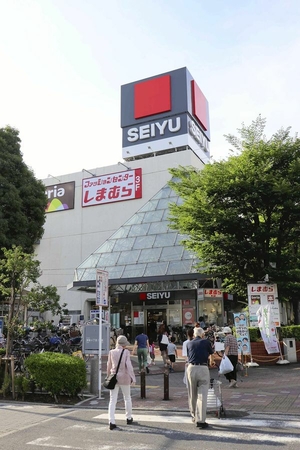
Nov 17. 2020A Seiyu outlet is seen in Koto Ward, Tokyo, in June 2019. (Yomiuri Shimbun file photo)

A Seiyu outlet is seen in Koto Ward, Tokyo, in June 2019. (Yomiuri Shimbun file photo) 

By The Japan News/The Yomiuri Shimbun
Asia News Network

U.S. retail giant Walmart Inc. is selling 85% of its stake in wholly owned subsidiary Seiyu G.K., the major Japanese supermarket chain.

Walmart, KKR & Co. and Rakuten, Inc. announced Monday that the U.S. investment fund will take 65% of Seiyu’s shares while Rakuten will acquire 20% of the shares through a new subsidiary. Walmart will keep the remaining 15% stake.

The price of the sale was not disclosed, but the share sale values Seiyu, which operates more than 300 outlets in Japan, at ¥172.5 billion.

The companies said they hope to strengthen Seiyu’s digital strategy through the alliance.

While keeping Seiyu’s focus on its strength in selling goods at low prices, the companies are expected to improve the chain’s e-commerce amid growing demand for online grocery shopping during the novel coronavirus pandemic. They also want to facilitate the introduction of cashless payment systems.

Rakuten and Walmart currently jointly operate the online grocery delivery service Rakuten Seiyu Netsuper in Japan.

KKR is expected to bring to Seiyu its accumulated expertise on investing in and reviving retailers around the world.

Seiyu’s new board members will be selected by the three companies to speed up decision-making in Japan.

Seiyu’s stock was delisted in 2008 when it became Walmart’s wholly owned subsidiary.

Walmart had once considered selling Seiyu because of its slack business performance, but then said in 2019 it hoped to relist Seiyu, adopting a policy to maintain the Japan business for the time being.