
Vietnam’s digital economy to reach $14 billion in 2020 #SootinClaimon.Com

#SootinClaimon.Com : ขอบคุณแหล่งข้อมูล : หนังสือพิมพ์ The Nation.

Vietnam’s digital economy to reach $14 billion in 2020 (nationthailand.com)

Vietnam’s digital economy to reach $14 billion in 2020

Nov 21. 2020E-commerce is expected to grow by 63 per cent to $62 billion in 2020 and is poised to hit $172 billion in 2025.— Photo doanhnhansaigon.vnE-commerce is expected to grow by 63 per cent to $62 billion in 2020 and is poised to hit $172 billion in 2025.— Photo doanhnhansaigon.vn 

HCM CITY — Southeast Asia’s digital economy remains resilient at $100 billion in gross merchandise value (GMV) despite headwinds and is on track to cross $300 billion in GMV by 2025, according to a report from Google, Temasek and Bain & Company.

Indonesia and Việt Nam continued to grow at double-digit rates, and Singapore remains a regional enabler for growth, despite short term GMV decline due to the online travel sector.

The report, which covered Indonesia, Malaysia, Việt Nam, Singapore, Thailand and the Philippines, showed that Internet usage in the region continues to multiply, with 40 million new users this year alone. That pushed the total number of internet users in these Southeast Asian countries to 400 million or nearly 70 per cent of the population.

The coronavirus brought about a permanent and massive digital adoption spurt, with more than one in three digital service consumers (36 per cent of total) new to the service. Of the number, 90 per cent intend to continue their newfound habits post-pandemic, it said.

Many of the new users came from non-metropolitan areas in Malaysia, Indonesia and the Philippines.

The report looked at seven internet economy sectors in Southeast Asia, including e-commerce, transport and food delivery, online travel, online media, financial services, health technology and education technology, with health and education technology added to the 2020 version.

E-commerce is expected to grow by 63 per cent to $62 billion in 2020 and is poised to hit $172 billion in 2025.

Digital financial services are also gaining momentum as more small-and-medium-sized businesses have become receptive to accepting online payments. Digital payments are set to grow from $600 billion in 2019 to $620 billion in 2020 and could reach $1.2 trillion by 2025.

The health technology and education technology sectors received a boost from the pandemic as many people turned to online health consultations while schools shifted to remote learning. Investments in those sectors are growing.
undefined

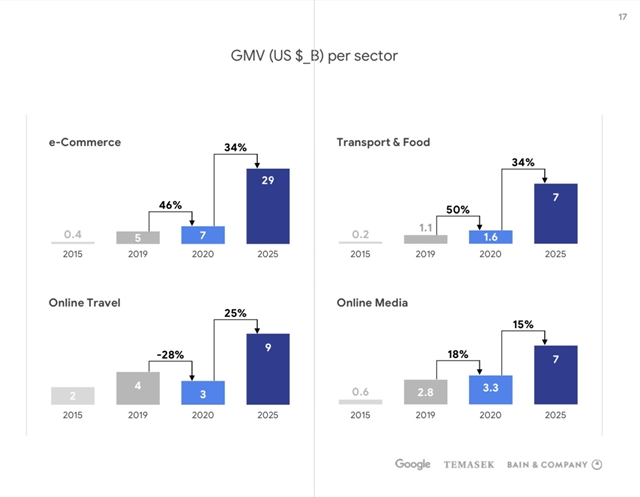
Gross merchandise value per internet economy sectors in Việt Nam. The country’s digital economy is expected to reach US$14 billion in 2020 and $52 billion in 2025. — Source from Google, Temasek and Bain & Company report.

Online travel and transport sectors were hit the hardest as the pandemic ground international travel to a halt while many people began to work from home or became concerned about sharing transport. Still, the report predicted online travel to rebound to $60 billion by 2025.

In Việt Nam, with its various stages of lockdowns, users turned to the internet for solutions to their sudden challenges. A significant number tried new digital services: 41 per cent of all digital service consumers were new (higher than the SEA average), with 94 per cent of these new consumers intending to continue their behaviour post-pandemic.

The report said e-commerce has driven significant growth in Việt Nam, at 46 per cent, alongside strong growth across most sectors, except for travel.

Overall, Việt Nam’s digital economy is expected to reach $14 billion in 2020, a year-on-year increase of 16 per cent, and will likely reach $52 billion in 2025, re-accelerating to nearly 29 per cent in compound annual growth rate.

This year’s seismic consumer and ecosystem shifts have advanced the internet sector in unimaginable ways, putting it in a stronger position than ever.

“In our 2019 report, we identified six key barriers to growth – internet access, funding, consumer trust, payments, logistics and talent – and this year has seen significant progress on most (payments and consumer trust, especially). Talent, however, remains a key blocker that all parties will need to keep working on to ensure that the momentum gained this year is sustained.”

The report also pointed out that new frontiers’ dealmaking activity across the region continued to grow unabated in the first half of 2020.

Investors are remaining cautiously optimistic and are doing fewer deals at more attractive valuations, in hope for higher returns in the long run. Whereas the goal of years prior has been “blitzscaling”, investors are now looking for sustainable, profitable growth. — VNS
Suga calls cross-border travel ‘indispensable’ in APEC video message #SootinClaimon.Com

#SootinClaimon.Com : ขอบคุณแหล่งข้อมูล : หนังสือพิมพ์ The Nation.

Suga calls cross-border travel ‘indispensable’ in APEC video message (nationthailand.com)

Suga calls cross-border travel ‘indispensable’ in APEC video message

Nov 21. 2020

Prime Minister Yoshihide Suga

Prime Minister Yoshihide Suga

By The Japan News/ANN

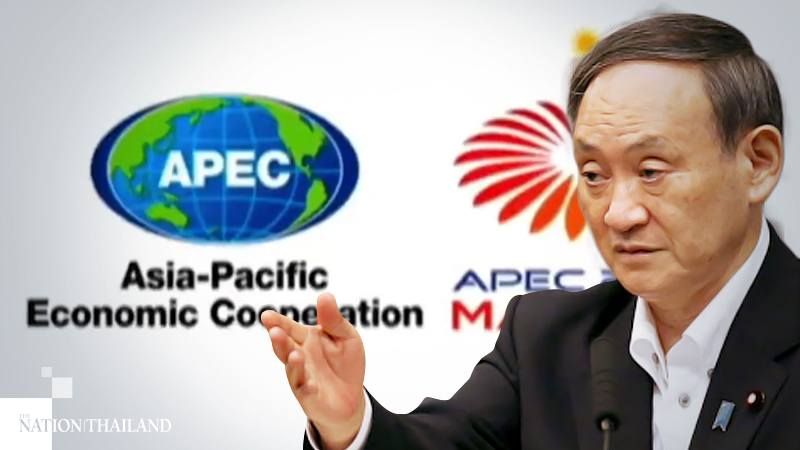
Prime Minister Yoshihide Suga vowed to make efforts to resume full-scale economic activities in a video message for an Asia-Pacific Economic Cooperation (APEC) event on Friday, calling the resumption of cross-border travel “indispensable” for economic recovery.

Leaders and representatives of 21 countries and regions including Japan, the United States and China were to participate in an APEC summit on Friday night.

Ahead of the summit, Suga’s video message was played to an event featuring business leaders, among others.

“Japan will resume global economic activities while thoroughly implementing preventive measures against infection,” he said, stressing the need for resuming international cross-border travel.

The prime minister also said that Japan intends to take the lead in establishing international rules on digital trade, while aiming to become a “global financial center” by welcoming more foreign financial experts.

Economic recovery from the novel coronavirus pandemic is expected to be a major issue in discussions at this year’s APEC summit.

Suga also called for World Trade Organization reform in the video message. Amid an increased risk of inward-looking tendencies during the global economic downturn, “creating rules for a free and fair global economy is critically important,” he said.

Suga expressed his desire to realize a free trade zone in the Asia-Pacific region through the early conclusion of the Regional Comprehensive Economic Partnership (RCEP) agreement, which 15 countries including Japan, China and South Korea signed on Sunday, and the expansion of the Trans-Pacific Partnership (TPP) trade pact.

He also pledged to exercise leadership for the realization of a “free and open Indo-Pacific,” a vision initiated by Japan and the United States, and expressed his determination to promote digitization and realize a decarbonized society, his administration’s key policies.

“I will thoroughly review regulations hindering digital transformation and swiftly undertake relevant reforms,” he said.

He also vowed to “create a virtuous cycle of the economy and the environment,” referring to his government’s goal of reducing greenhouse gas emissions to net zero by 2050.

Xi: China positive to joining trans-Pacific trade pact #SootinClaimon.Com

#SootinClaimon.Com : ขอบคุณแหล่งข้อมูล : หนังสือพิมพ์ The Nation.

Xi: China positive to joining trans-Pacific trade pact (nationthailand.com)

Xi: China positive to joining trans-Pacific trade pact

Nov 21. 2020President Xi Jinping addresses the virtual 12th BRICS Summit via video link in Beijing on Nov 17, 2020. (LI XUEREN AND DING LIN / XINHUA)President Xi Jinping addresses the virtual 12th BRICS Summit via video link in Beijing on Nov 17, 2020. (LI XUEREN AND DING LIN / XINHUA) 

By China Daily/ANN

BEIJING- Chinese President Xi Jinping on Friday said the country welcomes the signing of the Regional Comprehensive Economic Partnership (RCEP) agreement and will give positive consideration to the idea of joining the Comprehensive and Progressive Agreement for Trans-Pacific Partnership (CPTPP).  

Xi made the remarks while delivering a speech at the 27th Asia-Pacific Economic Cooperation Economic Leaders’ Meeting via video link in Beijing on Friday.

China highly values the role of the Asia-Pacific Economic Cooperation (APEC) and will continue to support the development of the organization, Xi said.

China is willing to work with other Asia-Pacific economies to create and share the region’s peaceful, prosperous and bright future, and march toward the target of building a community with a shared future for mankind, Xi said.

He said APEC cooperation has advanced continuously over the past three decades, and the Asia-Pacific has the most robust and dynamic economy among all regions of the world.

The Asia-Pacific economic cooperation has never been zero-sum or you-lose-I-win political games, but a development platform for mutual support, mutual benefits and win-win results, he said.

The Asia-Pacific region should take the lead and help make economic globalization more open, inclusive and balanced so that its benefits are shared by all, Xi said.

China supports APEC in strengthening policy exchange and capacity building in areas including public health and medium, small and micro-sized enterprises so as to facilitate joint fight against COVID-19 and economic recovery.

Xi urged efforts to make COVID-19 vaccines a global public good, and promote the vaccines’ accessibility and affordability for developing countries.

China will also host a seminar on poverty reduction through digital technologies in 2021 to facilitate poverty eradication in the Asia-Pacific region.

Xi called for unleashing the potential of digital economy to inject new impetus into economic recovery in the Asia-Pacific region. He called for efforts to fully implement the APEC internet and digital economy roadmap, promote the dissemination and application of new technologies, improve the digital infrastructure, and bridge digital divide.  

A major task for the APEC this year is launching the post-2020 vision for future cooperation, and the region should move toward closer regional economic integration and build a free trade area of the Asia-Pacific at an early date, Xi said.

Xi called for efforts to continue implementing the APEC’s strategy for high-quality development and its Action Agenda on Inclusion, accommodate concerns of developing members and promote inclusive and sustainable growth.

APEC economies should build an open, fair, just, and non-discriminatory business environment, he added.

Meanwhile, he said China is ready to work with all sides to advance high-quality Belt and Road cooperation.

On Chinese economy, Xi said the nation’s GDP grew by 0.7 percent in the first three quarters of this year, on course to register positive growth for the whole year.

Third wave of COVID-19 infections arrived in Greater Seoul: authorities #SootinClaimon.Com

#SootinClaimon.Com : ขอบคุณแหล่งข้อมูล : หนังสือพิมพ์ The Nation.

Third wave of COVID-19 infections arrived in Greater Seoul: authorities (nationthailand.com)

Third wave of COVID-19 infections arrived in Greater Seoul: authorities

Nov 21. 2020Health workers clad in protective gear prepare to work at a makeshift virus test clinic in Seogwipo, Jeju Island, on Friday. (Yonhap)Health workers clad in protective gear prepare to work at a makeshift virus test clinic in Seogwipo, Jeju Island, on Friday. (Yonhap) 

By Ock Hyun-ju
The Korea Herald/ANN

The Greater Seoul area, home to half of South Korea’s population, is considered to have entered a third wave of COVID-19 infections, health authorities said Friday, as the country’s new daily coronavirus cases topped 300 for the third consecutive day.

The country reported 363 new coronavirus cases — 320 locally transmitted and 43 imported from overseas — in the 24 hours ending Thursday at midnight, according to the Korea Disease Control and Prevention Agency.

“We see that the third wave of infections is underway, following (the first wave) in February and March and (the second wave) in August in the Greater Seoul area,” said a senior health official Yoon Tae-ho at a briefing, urging people to refrain from gatherings and outdoor activities.

To prevent another wave of virus infections, the country already raised the social distancing level in Greater Seoul by one notch to Level 1.5 under the country’s five-tier system, starting Thursday.

Yoon said the government would consider elevating the level of antivirus restrictions in Greater Seoul — Seoul, Incheon and Gyeonggi Province — to Level 2 before two weeks pass, if the seven-day daily average number of cases in the region exceeds 200 for a weeklong period. The number of daily average virus cases in the capital region was 153 in the past seven days.

Unlike in the first wave and second wave of infections earlier this year, most of which had been traced to a few clusters, the third wave is driven by multiple, sporadic clusters of infections, which complicates health authorities’ tracing and testing efforts.

“Infections have been (spreading) in our daily lives in August and September and they were slowly piling up without completely being contained, which led to clusters of infections in the current situation,” Yoon said.

Of Friday’s locally transmitted cases, the majority were in Greater Seoul — 127 in Seoul, 62 in Gyeonggi Province, which surrounds the capital, and 29 in Incheon. Outside the Seoul metropolitan area, 24 cases were reported in Gangwon Province, 18 in South Gyeongsang Province and 15 in South Chungcheong Province, as virus cases were registered in all parts of the country except for Daejeon, Ulsan and Sejong.

Korea’s daily case count exceeded 300 for the first time in 81 days on Wednesday with 313 cases, after reporting daily case numbers in the 200-range for four days straight. The daily case numbers has been in the triple digits since Nov. 8.

Out of the 43 imported cases reported Friday, 23 were detected at the border, while the other 20 were identified as the individuals were under mandatory self-quarantine in Korea. Twenty-two cases were from elsewhere in Asia, 16 from the Americas, four from Europe and one from Africa. 

Thirty-one of those cases involved foreign nationals.

The number of COVID-19 patients in serious or critical condition here stood at 84, up from 79 a day earlier.

Three more people died from the virus, bringing the death toll to 501, with the overall fatality rate at 1.67 percent.

So far, of the 30,017 people confirmed to have contracted the new coronavirus here, 26,263 have been released from quarantine upon making full recoveries, up 165 from a day earlier. Some 3,253 people are receiving medical treatment under quarantine.

The country carried out 19,600 tests in the past day. A total of 48,143 people were awaiting results.

Vietnam selected as only Asian pilot country in new global healthcare partnership #SootinClaimon.Com

#SootinClaimon.Com : ขอบคุณแหล่งข้อมูล : หนังสือพิมพ์ The Nation.

Vietnam selected as only Asian pilot country in new global healthcare partnership (nationthailand.com)

Vietnam selected as only Asian pilot country in new global healthcare partnership

Nov 20. 2020British Ambassador Gareth Ward introduces the project at the launch ceremony held on Wednesday. —  Photo thoibaotaichinh.vnBritish Ambassador Gareth Ward introduces the project at the launch ceremony held on Wednesday. — Photo thoibaotaichinh.vn 

By Viet Nam News/ANNHÀ NỘI — Việt Nam has been selected as the only Asian pilot country in a new global healthcare partnership because of its unique health system experiences and expertise, including its effective COVID-19 response.

The Partnership for Global Health System Sustainability and Resilience (PHSSR), founded by the World Economic Forum, the UK-based London School of Economics (LSE) and British pharmaceutical giant AstraZeneca, was launched in Việt Nam on Wednesday.

It aims to initiate a multi-sector approach to help health systems foresee, prevent, and adapt to the diverse challenges the world faces.

In the pilot phase, running until January 2021, the project will be implemented in eight countries including the UK, Germany, France, Italy, Spain, Russia, Poland, and Việt Nam.

PHSSR’s Việt Nam team will apply a new framework developed by the LSE to conduct a rapid review of the country’s health system’s sustainability and resilience, and identify and strengthen  practical solutions for the benefit of Vietnamese people.

Policy recommendations from the pilot phase will inform The Great Reset – an initiative by the World Economic Forum – and be announced at its virtual event in January 2021.

British Ambassador Gareth Ward expressed his delight that the UK and Việt Nam are both part of the Partnership’s pilot phase, exchanging knowledge and experience to enhance both countries’ health systems and be better prepared for future health crises. He looked forward to further advancing UK-Việt Nam health cooperation and bilateral relations.

While the COVID-19 pandemic has been catastrophic, it also presents a brief window of opportunity to act, said AstraZeneca Vietnam Chairman & General Director Nitin Kapoor. The pandemic has generated unprecedented public awareness, and the political will to address global health issues, he said.

Việt Nam’s decisive leadership and swift action in its pandemic response have been inspirational to the world, he noted, adding that his company expects to work closely with the Vietnamese Government and the Ministry of Health, among others, to maximise the project’s impact and increase local patients’ access to quality healthcare. — VNS

Bank of Korea expected to freeze key rate at record low next week: poll #SootinClaimon.Com

#SootinClaimon.Com : ขอบคุณแหล่งข้อมูล : หนังสือพิมพ์ The Nation.

Bank of Korea expected to freeze key rate at record low next week: poll (nationthailand.com)

Bank of Korea expected to freeze key rate at record low next week: poll

Nov 20. 2020This file photo, taken June 4, shows stacks of import-export cargo containers at South Korea's largest seaport in Busan, 450 kilometers southeast of Seoul. (Yonhap)This file photo, taken June 4, shows stacks of import-export cargo containers at South Korea’s largest seaport in Busan, 450 kilometers southeast of Seoul. (Yonhap) 
By The Korea Herald/ANN

The Bank of Korea (BOK) is expected to freeze its policy rate at a record low of 0.5 percent next week, as it will likely gauge the impact of the protracted pandemic on the economy, a poll showed Friday.

In a survey by Yonhap Infomax, the financial news arm of Yonhap News Agency, all 14 analysts polled predicted the BOK will freeze the base rate at its rate-setting meeting next Thursday.

They also forecast the BOK to stand pat on the rate during the remainder of the year and even throughout next year.

The BOK froze the benchmark rate for the second straight occasion in August as economic uncertainty heightened amid a flare-up in new coronavirus cases.

To boost the pandemic-hit economy, the BOK cut the key rate to the all-time low in May after delivering an emergency rate cut of half a percentage point in March.

Experts said the rate freeze is anticipated next week, as economic uncertainty lingers amid a fresh surge of virus cases, while booms in asset markets, including the housing and stock markets, have warranted close watch.

The Korean economy is “expected to face potential challenges next year over the COVID-19 pandemic and an adjustment of the local economy,” said Kim Sun-tae, an economist at KB Kookmin Bank.

Fears of a winter wave of the coronavirus infections have grown as the country’s new virus cases have been in the triple digits in recent days, marking the biggest surge since August.

In August, the BOK revised down its 2020 growth outlook to a sharper-than-expected contraction of 1.3 percent, citing the impact of a resurgence in virus cases.

South Korea’s economy contracted 3.2 percent in the second quarter from three months earlier after shrinking 1.3 percent on-quarter in the January-March period.

The nation’s overseas shipments were battered by the fallout of the COVID-19 pandemic this year. But the pace of the slump has eased since June, as major economies slowly began resuming business activities following lockdowns.

Yoon Yeo-sam, a fixed-income analyst at Meritz Securities Co., said the BOK is likely to take a “cautious monetary policy” next year. (Yonhap)

Leaders of 21 Apec economies to discuss trade at meeting #SootinClaimon.Com

#SootinClaimon.Com : ขอบคุณแหล่งข้อมูล : หนังสือพิมพ์ The Nation.

Leaders of 21 Apec economies to discuss trade at meeting (nationthailand.com)

Leaders of 21 Apec economies to discuss trade at meeting

Nov 20. 2020

By Grace Ho
The Straits Times/ANN

Leaders from 21 Asia-Pacific economies, including Singapore Prime Minister Lee Hsien Loong, will meet virtually tomorrow to discuss ways to keep trade and investments flowing amid the Covid-19 pandemic.

Chaired by Malaysian Prime Minister Muhyiddin Yassin, the 27th Asia-Pacific Economic Cooperation (Apec) Economic Leaders’ Meeting comes after last year’s chair, Chile, cancelled it amid widespread protests and riots in the country.

Last year’s meeting was to have been the occasion when now-outgoing US President Donald Trump and his Chinese counterpart Xi Jinping would sign an interim agreement to end the United States-China trade war.

But that was not to be.

The unrest in Chile eventually led to about 7,000 arrests and losses of about US$1.4 billion (S$1.88 billion) for the country’s businesses. A major United Nations COP25 climate summit Chile was to have hosted was also called off.

The pandemic saw almost all Apec meetings held virtually this year under Malaysia’s chairmanship of the grouping, its second since 1998.

The theme of the meetings is Optimising Human Potential Towards a Future of Shared Prosperity: Pivot. Prioritise. Progress.

The three priority areas are: improving the narrative of trade and investment; inclusive economic participation through digital economy and technology; and driving innovative sustainability.

Apec economies are working closely with Malaysia to finalise two outcome documents for the Economic Leaders’ Meeting: the Leaders’ Declaration and the Post-2020 Vision which will guide Apec’s work in the next 20 years.

Separately, the Apec CEO Dialogues held today and tomorrow will discuss priorities in the aftermath of the pandemic.

The dialogues involve political leaders and business executives who form the Apec Business Advisory Council, a private sector body formed in 1995.

They meet four times a year to advise Apec leaders on the priorities and concerns of companies in the region.

Each of the 21 Apec leaders can nominate up to three senior business executives to take part.

The trio from Singapore are Singapore Business Federation chief executive Ho Meng Kit, Accenture Singapore senior managing director Teo Lay Lim and Standard Chartered Singapore head of commercial banking Goh Beng Kim.

Speakers at the dialogues include PM Lee, Chinese President Xi Jinping, Canadian Prime Minister Justin Trudeau and Facebook chief operating officer Sheryl Sandberg.

The Apec economies represent 60 per cent of the world’s gross domestic product and 48 per cent of global trade.

They account for a significant proportion – more than three-quarters – of Singapore’s global trade in goods and services last year.

The grouping works on the basis of consensus, and its targets and goals are voluntary and non-binding.

It seeks to promote deeper regional economic integration, and greater trade and investment facilitation and liberalisation. It is also looking into new areas, like the digital economy, and has evolved to address other concerns such as health, agriculture and energy.

PM Lee will be joined at the meetings this week by officials from the Ministry of Foreign Affairs and Ministry of Trade and Industry.

The United States has yet to announce who will represent it at this year’s event. It is understood that Mr Trump, who is disputing his election loss to Mr Joe Biden, will not be attending.

Japan’s daily infections hit record, Suga calls for caution #SootinClaimon.Com

#SootinClaimon.Com : ขอบคุณแหล่งข้อมูล : หนังสือพิมพ์ The Nation.

Japan’s daily infections hit record, Suga calls for caution (nationthailand.com)

Japan’s daily infections hit record, Suga calls for caution

Nov 20. 2020Prime Minister Yoshihide Suga takes off his mask to answer questions from reporters at his office on Thursday. (The Yomiuri Shimbun)Prime Minister Yoshihide Suga takes off his mask to answer questions from reporters at his office on Thursday. (The Yomiuri Shimbun) 
By The Japan News/ANN

Regarding the government’s Go To Eat campaign to help the food-service industry amid the economic impact of the coronavirus pandemic, Prime Minister Yoshihide Suga told reporters at the Prime Minister’s Office on Thursday morning that he has asked prefectural governors to consider limiting the campaign coverage to groups of four or fewer people dining together in principle.

“The [infection] situation has come to require maximum caution,” said Suga after the daily nationwide number of new cases hit a record of 2,201 on Wednesday.

“Experts point out the risk of infection [when people gather] at the table,” Suga said, indicating his intention to do his utmost to prevent the spread of the infectious disease through meetings that involve eating and drinking.

“I ask [the public] to wear masks during conversations, even when eating or drinking. I will surely do so myself from today,” Suga said.

In the Go To Eat campaign, reward points acquired through dining-related websites are approaching the government’s budget limits and many of the major sites have stopped offering points, but organizations established in each prefecture continue to issue coupons valued at a 25% premium over the purchase price.

The central government plans to leave it up to governors to take specific measures, such as limiting the number of people in groups eligible for the campaign. Some government officials say criteria such as not counting children toward the limit for group sizes and allowing more than five people if the group eats at separate tables should be considered.

The prime minister said he has also instructed relevant ministries and agencies to carry out intensive inspections at facilities for the elderly in areas where COVID-19 is spreading. He also urged them to take more effective measures based on the conclusions of a meeting of the government’s subcommittee on measures to deal with the novel corona virus scheduled on Friday.

The prime minister also said that the government will provide financial support to local governments in areas where the disease is spreading if they ask restaurants and other businesses to shorten their operating hours. To this end, the government plans to earmark ¥50 billion for subsidies for measures against the virus.

Wednesday’s 2,201 new infections were confirmed in 42 of the 47 prefectures and at airports. It was the first time that the number of infections exceeded 2,000 per day. The previous record was set on Nov. 14 at 1,737.

Five prefectures also hit their own record highs on Wednesday. The number was 226 in Kanagawa, 126 in Saitama, 87 in Shizuoka, 30 in Nagano and 493 in Tokyo. The number was 273 in Osaka and 103 in Hyogo, both the second highest on record.

After the declaration of a state of emergency was lifted on May 25, the number of infections per day in Japan hovered in the range of 10 to 99, but it exceeded 100 again in late June and topped 1,000 for the first time on July 29. The number peaked on Aug. 7 at 1,605, but since November, the number of infections has increased again.

China’s non-financial ODI down 3.2% in Jan-Oct #SootinClaimon.Com

#SootinClaimon.Com : ขอบคุณแหล่งข้อมูล : หนังสือพิมพ์ The Nation.

China’s non-financial ODI down 3.2% in Jan-Oct (nationthailand.com)

China’s non-financial ODI down 3.2% in Jan-Oct

Nov 20. 2020

By China Daily/ANN

BEIJING – China’s non-financial outbound direct investment (ODI) declined 3.2 percent year on year in the first 10 months of 2020, official data showed on Thursday.

ODI amounted to 602 billion yuan (about US$86.38 billion) over the period, according to the Ministry of Commerce.

China added a total of US$14.1 billion in non-financial ODI in countries participating in the Belt and Road Initiative, up 23.1 percent year on year. The figure accounts for 16.3 percent of all ODI during the period, up 3.6 percentage points from the same period last year.

Major overseas engineering projects increased in the first 10 months. The total contract value of newly signed overseas projects came in at 1.16 trillion yuan for the January-October period, down 4.4 percent year on year.  

The number of newly signed overseas projects with contract values exceeding US$50 million was at 590, among which 331 have contract values above US$100 million, four more than the same period last year.

Outbound investment from local enterprises has risen. From January to October, ODI from local enterprises hit 62.75 billion dollars, up 11.7 percent year on year.

Some sectors have seen robust growth in terms of the contract value of their overseas projects. The total value of newly signed contracts for general construction projects stood at US$40.48 billion, surging 36.8 percent year on year, while the value of new contracts for electric power projects rose 10.8 percent to US$39.24 billion. 

Japanese firms looking to invest in more sectors, localities in Vietnam: JETRO #SootinClaimon.Com

#SootinClaimon.Com : ขอบคุณแหล่งข้อมูล : หนังสือพิมพ์ The Nation.

Japanese firms looking to invest in more sectors, localities in Vietnam: JETRO

Nov 19. 2020Hirai Shinji, chief representative of the Japan Trade Promotion Organisation (JETRO) in HCM CityHirai Shinji, chief representative of the Japan Trade Promotion Organisation (JETRO) in HCM City 

By Viet Nam News/ANN

Economic and market growth potential, competitive human resources, an increase in consumption, and successful control of the COVID-19 epidemic are the factors that continue to make Việt Nam an attractive investment destination for Japanese firms.

Hirai Shinji, chief representative of the Japan Trade Promotion Organisation (JETRO) in HCM City, said there would be a fresh new wave of Japanese investment in Việt Nam, with companies investing in more sectors than in the past and no longer focusing on Hà Nội and HCM City but also investing in other places around the country.

How do you evaluate the attractiveness of the Vietnamese market for Japanese firms?

Many Japanese companies were attracted to Việt Nam before the COVID-19 epidemic.

The Vietnamese Government has achieved the twin goals of controlling the epidemic while maintaining economic growth, which has created special interest among Japanese firms in the market.

I think many Japanese companies will come to Việt Nam to seek business opportunities in future. They will study information like how the market is and whether they can get sufficient supply of locally sourced components for their needs.

Vietnamese businesses need to invest to promote themselves so that customers know what their strengths are, what technologies they can manage and how they can co-operate with partners.

How do you see the trends in investment by Japanese companies in Việt Nam in the near future?

After the visit of Japanese Prime Minister Suga Yoshihide, Japanese investment will surely continue to flow into Việt Nam. There will be two trends: firms that have been doing business in Việt Nam will invest more to expand their operation, while businesses in Japan will wait until the Covid-19 epidemic stabilises, and business-matching activities between the two countries becoming more convenient, and will come to explore investment opportunities in Việt Nam.

There are three points to be noticed in the new investment trends by Japanese enterprises.

Firstly, there will be a change in investment location. Japanese investors have so far mainly concentrated their investment in big cities like Hà Nội and HCM City and industrial parks surrounding these two cities.

However, in the new trend, besides these areas, HCM City’s neighbouring localities and Cửu Long (Mekong) Delta provinces will be new destinations for Japanese investors in the near future.

Secondly, in addition to the manufacturing sector that has so far attracted strong investment from Japanese firms who have invested to make products for re-export or sell in Vietnamese market, Japanese firms in non-manufacturing sectors such as trading and services will also increase investment in Việt Nam post-COVID.

Third is developing a win-win partnership between Japanese and Vietnamese enterprises.

Over the past 25 years Japanese enterprises mainly invested in the export processing sector, importing raw materials into Việt Nam to make products for export to Japan or to a third country.

But this is gradually changing, and the priority of Japanese businesses now is to build partnerships with Vietnamese firms to develop together in line with market trends.

So I think building a sustainable partnership between the two sides in the fashion and services fields will become a trend in the coming time. By then Vietnamese enterprises will help their Japanese partners learn about the Vietnamese market, and they can also benefit from this partnership because Japanese firms have technology and distribution channels available.

With the use of digital technologies, both sides will surely have a chance to develop in these fields.

Can you elaborate on the likely investments by Japanese firms in the trading and services sectors in Việt Nam, particularly HCM City?

According to JETRO’S surveys, Japanese firms have shown great interest in the Vietnamese market, considering it a market with huge economic growth prospects.

Japanese enterprises have started to pay more attention to non-manufacturing sectors in Việt Nam, started to care what Vietnamese people like to eat and what their tastes and fashion styles are.

The HCM City market is very attractive to Japanese investors.

Uniqlo, a famous Japanese fashion retailer, opened its first store in Việt Nam last December in HCM City and continued to open its second and third stores also in the city in May and June amid the pandemic.

Matsumoto Kiyoshi Holding Company, Japan’s leading retail drug chain, also entered Việt Nam with its first store also opening in HCM City last month.

Japanese retail and services enterprises appreciate the purchasing power of residents in HCM City and think there are opportunities in the growing market.

What are the advantages and difficulties for Japanese enterprises in Việt Nam and what should the country do to attract investors?

The Japanese Business Association in HCM City annually holds dialogues with the HCM City People’s Committee during which it, on behalf of Japanese businesses, raises problems they face while doing their business in the city so that the city People’s Committee can take measures to tackle them.

This dialogue is held many times a year. At the central level, Japanese enterprises in Hà Nội have a dialogue with the Vietnamese Government in Hà Nội called the Japan-Vietnam Joint Initiative.

Infrastructure is among the things that Việt Nam needs to improve.

Cát Lái Port is considered the largest cargo port in Việt Nam in terms of the volume of goods flowing through the port. If enterprises in the southern provinces want to export, they must ship their products through the port, but with the current road network, firms encounter difficulties in transporting goods to it.

Việt Nam needs to enhance infrastructure, especially its road network, to facilitate cargo transportation to boost the economic development of HCM City and the south in general. — VNS