
Not to be left behind, China also sending top official to Nepal after visits from India #SootinClaimon.Com

#SootinClaimon.Com : ขอบคุณแหล่งข้อมูล : หนังสือพิมพ์ The Nation.

Not to be left behind, China also sending top official to Nepal after visits from India (nationthailand.com)

Not to be left behind, China also sending top official to Nepal after visits from India

Nov 22. 2020
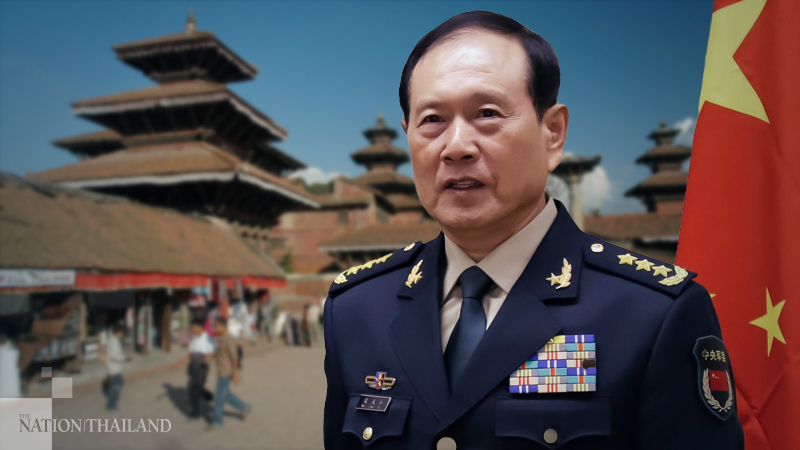
China’s State Councilor and Defence Minister Wei Fenghe

China’s State Councilor and Defence Minister Wei Fenghe

By Kathmandu Post

According to experts, the visit of a senior member of the Chinese Cabinet will send a strong message of the diplomatic and strategic importance Nepal has for the rising global power.

Two days after India’s top diplomat completes his visit to Nepal, China’s defence minister is scheduled to come calling.

Although, officially, the Ministry of Foreign Affairs is tight-lipped, two senior officials at the Prime Minister’s Office and the Ministry of Foreign Affairs told the Post that China’s State Councilor and Defence Minister Wei Fenghe is scheduled to arrive in Kathmandu on November 29 for a day-long visit.

Wei’s arrival will follow three back to back high-level visits from India within the last one and a half months and at a time when the power struggle within the ruling Nepal Communist Party (NCP) is reaching its peak.

Immediately after Indian Foreign Secretary Harsha Vardhan Shringla returns to New Delhi after completing the two-day Nepal visit on November 27, the senior-most minister of Li Keqiang Cabinet in China, Wei will land in Kathmandu, two senior officials at the Prime Minister’s Office and the Ministry of Foreign Affairs told the Post.

However, Foreign Ministry spokesperson Sewa Lamsal said: “No concrete information to share now”.

A Chinese Embassy spokesperson also told the Post that he does not have information related to the visit.

“During the recent meeting between Prime Minister KP Sharma Oli and Chinese Ambassador to Nepal Hou Yanqui on Tuesday evening, the visit of the senior most Chinese minister was fixed,” said a source at the Prime Minister’s office.

Diplomats and experts view the increasing high-level exchanges from the south and the north as evidence of the increasing strategic rivalry between them inside Nepal.

The emerging global power China, which has a serious border dispute with Nepal’s southern neighbour India, is keeping a very close eye on Nepal’s unfolding political, diplomatic and military development, according to Geja Sharma Wagle, a security analyst and columnist for Kantipur, the Post’s sister publication.

“Of late, the Chinese have been very proactive politically and diplomatically, and militarily assertive in Nepal,” said Wagle. “The visit right after Indian foreign secretary’s visit to Kathmandu is diplomatically meaningful and highly important militarily.”

Leaders of the ruling party also attach great importance to Wei’s visit at the end of the month.

At a time when a series of high-level visits from India particularly by heads of two security agencies took place within one month, a worried Beijing is sending its senior-most military official to Kathmandu to balance the visit of Manoj Mukund Naravane, the army chief of India, and Samant Goel, head of India’s external spy agency, a central committee member of the ruling party leader told the Post.

Wei will be the senior most Chinese official to visit Nepal after the visit of Chinese President Xi Jinping in October last year.

During Xi’s visit, Nepal and China had decided to elevate their traditional “comprehensive partnership” to “strategic partnership” and the Chinese president had also proposed close defence cooperation between Nepal and China during his visit.

“This may be the high-level follow-up visit to expedite the defence cooperation agreed last year during the visit of President Xi,” said an official from Nepal’s Defence Ministry on condition of anonymity.

According to former Nepali ambassador to China Mahesh Maskey, Beijing is particularly worried about the ongoing dispute inside the ruling party and also wants to know Nepal’s position vis-a-vis the recent strategic alliance between India and the United States.

In the last week of October, during the visit of US Secretary of State Mike Pompeo to New Delhi, India and the US clinched strategic pacts and reached some important understanding on security matters.

According to the ruling party leader, the reason behind Wei’s visit is that China is not happy with the present Oli administration for failing to identify projects under the Belt and Road Initiative, a multi-billion dollar infrastructure project led by China in its vicinity.

Nepal signed a framework agreement of Belt and Road Initiative in 2017 but both sides have failed to identify and negotiate a single project in the last three and a half years.

With no movement on a single project to the funding stage, the framework agreement was automatically renewed for another three years in May, according to the Ministry of Foreign Affairs.

Wei, a close confidant of Chinese President Xi, will, ostensibly, attend a programme in Kathmandu to mark the 65th anniversary of the establishment of diplomatic ties between Nepal and China.

“This is a kind of stop-over visit,” said a Foreign Ministry official. “After completing the Nepal visit, Wei will go on to visit some other Asian countries.”

As of now, it is tentatively agreed that Wei will pay a courtesy call on President Bidya Devi Bhandari and separately hold talks with Prime Minister Oli, who is in charge of the Defence Ministry, and Chief of Army Staff General Purna Chandra Thapa during his short stay in Nepal.

According to the China’s Ministry of Defense, Wei is currently a member of the 19th CPC Central Committee, a member of the CPC Central Military Committee, a member of the Central Military Committee of the People’s Republic of China (PRC), State Councilor, a member of the Leading Party Members’ Group of the State Council, and defence minister. He holds the rank of general.

As such, he will come with an authority to make Beijing’s position clear on a number of issues it attaches importance to.

“Beijing is also not happy with the status of other bilateral projects including those agreed and signed during the visit of President Xi to Nepal last year,” the ruling party leader said.

At the same time, the dispute inside the party is escalating and that worries the Chinese more, the leader added.

Time and again, when internal wranglings in the Nepal Communist Party reach a peak, Chinese ambassador to Nepal Hou Yanqui has been meeting with top ruling party leaders as Beijing favours political stability in Nepal, observers say.

“The ideological proximity has brought two countries together since the formation of the Oli government and the Chinese are worried due to the prolonged dispute and discord inside the ruling communist party,” said former ambassador Maskey.

Another worry for them is the need for clarity regarding Nepal’s position following India’s entry into the Indo-Pacific orbit led by the US including the quadrilateral security dialogue, also known as the Quad, according to Maskey.

This is a view that is widely shared.

“Both India and China have a kind of strategic rivalry to expand their influence in Nepal as per their own national interests,” said Wagle. “Therefore, they are visiting Kathmandu and conveying their strategic messages to the high political, diplomatic, and military levels of Nepal.”
HK, S’pore to decide in December on new date for travel bubble flights postponed over HK Covid-19 cases #SootinClaimon.Com

#SootinClaimon.Com : ขอบคุณแหล่งข้อมูล : หนังสือพิมพ์ The Nation.

HK, S’pore to decide in December on new date for travel bubble flights postponed over HK Covid-19 cases (nationthailand.com)

HK, S’pore to decide in December on new date for travel bubble flights postponed over HK Covid-19 cases

Nov 22. 2020

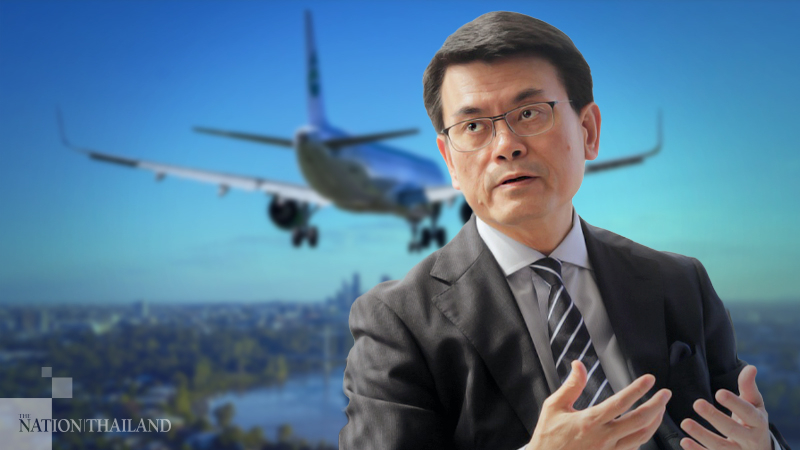
Secretary for Commerce and Economic Development Edward Yau

Secretary for Commerce and Economic Development Edward Yau

HONG KONG – Travel bubble flights under the Singapore-Hong Kong arrangement have been postponed, Secretary for Commerce and Economic Development Edward Yau said on Saturday (Nov 21), adding that the two governments will announce in early December as to when the flights will restart.

Flights were originally scheduled to start from Sunday, but has been suspended as the pandemic in Hong Kong escalates.

Under the original deal which was announced in mid-October, the bubble flights will be suspended for two weeks if the seven-day moving average of the daily number of unlinked local Covid-19 cases is more than five for either Singapore or Hong Kong.

The moving average for the territory on Friday was 2.14 but the number of new infections on Saturday – crucial in determining if the threshold of five is crossed – shot up to 43, of which 36 are local and 13 are untraceable. This brings the total tally to 5,560 and 108 deaths.

Mr Yau said it was a mutual agreement to delay plans by two weeks “for the Hong Kong (Covid-19) wave to settle a bit”, which is the responsible thing to do and also to adhere to the conditions set out under the deal.

As to the passengers affected, there are the usual arrangements for refund by the travel agents or airlines, he said. Cathay Pacific was reported by local media to say that passengers can opt for a refund or reschedule their flights at no cost.

Singapore Transport Minister Ong Ye Kung said in a Facebook post on Saturday that airlines will be contacting the affected passengers.

“I can fully understand the disappointment and frustration of travellers who have planned their trips. But we think it is better to defer from a public health standpoint,” Mr Ong wrote.

“This is a sober reminder that the Covid-19 virus is still with us, and even as we fight to regain our normal lives, the journey will be full of ups and downs. But we will press on and look forward to when we can safely launch the (air travel bubble),” he said.

This morning, Civil Aviation Authority of Singapore announced that the Singapore-Hong Kong Air Travel Bubble (ATB) will…Posted by Ong Ye Kung on Saturday, November 21, 2020

Ms Tan Lay Hoon, 53, whose husband is based in Hong Kong so she travels to the territory every month, was meant to take the first bubble flight from Singapore. 

Her last visit to Hong Kong was in February before the circuit breaker and implementation of quarantine in Singapore. 

“The frustration at the moment is the lack of information… Singapore Airlines is only able to tell me that they are able to change my ticket at no charge but there are no seats available on the travel bubble flight up till Jan 31, 2021,” said the retired banking professional.

“If I proceed to take SQ 890 tomorrow, I need to be quarantined in a hotel in Hong Kong for two weeks but the blow-up is in Hong Kong not Singapore,” she added.

Another passenger, content marketing executive Fairoza Mansor, 35, was to fly back to Hong Kong from Singapore on Monday (Nov 16). 

But with the announcement of the travel bubble details, she changed it to Nov 25, only to have the bubble flight suspended.

“Being in this limbo has made travel plans challenging especially since travel rules in Hong Kong and Singapore are constantly changing. Inevitable given the pandemic, of course, but still frustrating,” Ms Mansor said.

She had decided to go ahead with the Nov 25 flight as she had to be back in Hong Kong for work.

“So I’ve resigned myself to the two-weeks hotel quarantine that Hong Kong has in place. I do wish the authorities would allow travellers from Singapore to do their quarantine at home. I think it’s the least they could do.”

The Hong Kong Tourism Commission, in a response to The Straits Times, on Friday said that the travel bubble can be adjusted any time by either increasing or reducing designated flights, or suspending them altogether.

If the threshold of five is breached, the travel bubble “will be suspended in two days’ time (including the day on which the figure was announced) for two weeks”.

“The two governments will notify the airlines and make the relevant announcement,” it said, adding that if the figure stayed under five for both cities on the last day of the suspension, the travel bubble can resume the next day.

The tourism commission added that in the event of a suspension of the travel bubble, Singapore citizens, permanent residents or long-term pass holders can return to Singapore from Hong Kong by non-bubble flights but they will be subject to Singapore quarantine arrangements such as the seven-day stay-home notice.

Meanwhile, the Hong Kong government has moved to tighten social distancing measures, including a ban on dancing in bars and pubs.

In a release issued on Saturday (Nov 21) morning, the government said live performances and dancing in bars and pubs will be banned, while premises like party rooms meant for holding social gatherings will be forced to shut from Sunday for five days till Nov 26.

Business owners who breach these new rules can be fined up to HK$50,000 (S$8,665) and jailed for six months.

Chief Executive Carrie Lam early on Saturday echoed the words of health authorities in a Facebook post, saying the pandemic in the city has hit a “severe” stage.

A meeting was called on Friday night and the government has come up with more anti-coronavirus measures that will be announced on Saturday, she said.

“Our priority now is to quickly cut off transmission through testing,” she said, adding that she has requested testing of those deemed high risk to be beefed up and for her team to find more ways to encourage voluntary testing.

The development follows a spike in the new Covid-19 infections on Friday which prompted Health Secretary Sophia Chan to warn that Hong Kong has “probably entered into a new wave of cases”.

Health officials and the city’s infectious diseases experts have for weeks warned about the impending fourth wave of the pandemic, with the latter on Friday saying they believe the new wave has arrived.

In Hong Kong, high-risk groups such as taxi drivers and nursing home staff are required to undergo mandatory testing for the virus, while patients who exhibit symptoms when they visit doctors have to do so too.

On Nov 14, the Hong Kong government had moved to tighten social distancing rules after detecting clusters among taxi drivers and at a Lantau resort.

Since Monday, dine-in services have ended two hours earlier at midnight while the cap on patrons per table was lowered to four from six. In bars and pubs, the number is halved to two. The measures are to last until Nov 26.

Given the popularity of staycations with borders shut, officials are looking to impose at resorts, hotels and guesthouses in each room a four pax max rule – the same limit as public gatherings in Hong Kong.

The government has tightened visiting arrangements for those serving mandatory 14-day quarantine periods after returning from overseas.

It is now considering giving a one-off subsidy to grassroots workers if they are confirmed to be infected.

Separately, the government is dealing with an upper respiratory tract infection outbreak in schools.

Eight cases have been reported in eight primary schools and Prof Chan said that from Nov 23, in-person classes for lower primary school levels (Standards 1 to 3) would be suspended for two weeks. She said classes at all schools may be cancelled if the situation worsened.

This decision on Friday came just over a week after kindergartens were ordered to close for two weeks due to the same nature of infections.

Mr Alvin Liu, 41, is based in Hong Kong but flew back to Singapore in late September because his mother was hospitalised.

He was due to return to Hong Kong where his family is, on Nov 30 via Singapore Airlines but may now change it to two weeks later, something he believes would be hard to do as other passengers move to do the same.

“A suggestion to consider, during this transition period and since Singapore has far less cases than Hong Kong, shouldn’t Hong Kong allow Singapore passengers to go in? If not, Hong Kong should at least reciprocate the seven-day quarantine that Singapore did for Hong Kong inbound passengers,” said Mr Liu who works in a bank.

COVID vaccine trials in PH: What to expect #SootinClaimon.Com

#SootinClaimon.Com : ขอบคุณแหล่งข้อมูล : หนังสือพิมพ์ The Nation.

COVID vaccine trials in PH: What to expect (nationthailand.com)

COVID vaccine trials in PH: What to expect

Nov 22. 2020

By Inquirer

MANILA, Philippines — In about a month’s time, Filipinos may start taking part in the biggest global effort to find a vaccine to end “one of the most devastating epidemics” humanity has had to face.

The clinical trials for a COVID-19 vaccine in the Philippines are going to be different from those it had hosted in the past, given the high stakes after the new coronavirus had already killed more than 1.3 million people in 191 countries nearly a year since the outbreak in China.

More than a hundred vaccines against SARS-CoV-2, the virus that causes the severe respiratory disease, are being developed worldwide and undergoing various stages of clinical trials. Such trials ensure that a vaccine is both safe and effective for people.

A candidate vaccine first undergoes a preclinical trial in which it is tested on mice and monkeys to see if it produces the desired immune response.

After that stage, the vaccine goes on to three phases of human trials.

Phase 1 involves a small number of people, typically between 10 to 100 to test the vaccine’s safety.

A much larger group of at least 100 to 1,000 people are enrolled in Phase 2 to determine its effectiveness and the right dosage.

For Phase 3, at least 1,000 are enrolled to confirm the vaccine’s safety and efficacy.

Leading candidates

Barely 11 months since the virus emerged from a wet market in Wuhan, China, two candidate vaccines have been found to be 95-percent effective.

These vaccines were developed by Pfizer/BioNTech and Moderna and the US National Institutes of Health, which did not hold clinical trials in the Philippines.

The country, however, will take part in an international Solidarity Trial on Vaccines led by the World Health Organization (WHO).

Separately, at least five other pharmaceutical groups have either expressed their intention or are trying to secure clearance to hold their Phase 3 trials in the country. These independent trials are for vaccines developed by China’s Sinovac and Clover Biopharmaceuticals, Russia’s Gamaleya Research Institute, Johnson&Johnson of the United States and the United Kingdom’s AstraZeneca.

Sinovac is ahead of the others as it now awaits approval to begin its Phase 3 trial from the ethics board of the Department of Health. It would need at least 1,000 volunteers or participants.

Participant pool

Science Secretary Fortunato dela Peña said the WHO Solidarity Trial, which could involve four candidate vaccines, may begin in December, with its pilot in the Americas expected to start this month.

The WHO had asked the Philippine government to increase its participant pool from 2,000 to 4,000.

To determine a vaccine’s effectiveness, a trial participant is given the vaccine or a placebo. According to Dr. Lulu Bravo, executive director of the Philippine Foundation for Vaccination, neither the participant nor the health worker knows what the volunteer was injected with.

Only the members of the data safety and monitoring board overseeing the trials know, said Bravo, a pediatric infectious disease expert who has participated in various clinical trials over the last three decades.

Once inoculated, trial participants can go about their usual activities. They will be constantly checked by researchers and must report to trial investigators if anything feels amiss.

Don’t be complacent

The participants must not be complacent and should continue to observe the minimum health measures to avoid contracting the virus like everyone else, Bravo said.

If an “adverse health event” is recorded in any of the trial participants, the data and safety and monitoring board has the power to halt the study or the trial sponsor can implement a pause.

Volunteers, who are asked to sign an informed consent form, are not paid and may even receive a small “allowance.” The company concerned must cover the medical expenses incurred by the volunteer in case of an adverse event related to the candidate vaccine. 

According to Sanofi Pasteur Philippines general manager Dr. Jean-Antoine Zinsou, a temporary pause on a candidate’s vaccine trial should not cause alarm as this only shows that the trial monitoring is working.

“This is a very good signal when you have companies interrupting a study, it means people are not rushing, they are doing things properly,” he said.

“We need to admit the fact that whatever the quality of a Phase 3 study, it will never ever cover all the specificity in the world and therefore there will be some adjustment of the indication along the way,” he said. “What’s important is whenever you have an adverse event, it is properly managed.”

Criteria for choosing

One of the criteria for choosing the community where the trial may be conducted is its high rate of virus transmission.

Dr. Beaver Tamesis, head of the Pharmaceutical and Healthcare Association of the Philippines, said this will help “demonstrate quickly that your vaccine actually works.”

“If there’s no actual community transmission or spread of the virus in a rapid manner, in all likelihood you have to wait weeks, months, forever to get an actual statistical result,” said Tamesis, who also heads the American pharmaceutical company Merck.

While vaccine development advances, scientists continue their studies on the origins of the virus.

“We are trying our best to ensure the best science in the face of one of the most devastating epidemics we’ve had to face together as a planet,” Mike Ryan, executive director of the WHO’s health emergencies program, said last month.

“We want to get the best, the right answers so we can take the best possible risk management measures into the future,” he said.

Health officials said they were constantly monitoring the situation in various localities where the trials may be held, especially the country’s major population hubs—Metro Manila, Cebu and Davao.

The country had 415,852 infections with the addition of 1,791 cases on Saturday.

Tarlac reported the most number of new cases, 211, followed by Davao City (115), Laguna (74), Cavite (69) and Negros Occidental (65).

Another 328 patients have recovered from COVID-19, bringing the total number of COVID-19 survivors to 375,548. The death toll, however, rose to 8,080 after 55 patients died.

The recoveries and deaths left the country with 33,224 active cases, of which 84.5 percent are mild, 8.7 percent asymptomatic, 0.2 percent moderate, 2.3 percent severe and 4.3 percent critical.

Bravo is urging health authorities to carefully screen volunteers to prevent antivaccine groups from undermining or casting doubts on the clinical trials by spreading unfounded allegations against any of the candidate vaccines.

Zinsou said that education and information campaigns about vaccines and the trials should be ramped up as soon as possible to prevent misinformation and disinformation, as well as hesitancy to get vaccinated.

“It’s very important that we do not stand still waiting for the vaccine to arrive. We have a lot of work to do to get prepared,” he said.

G-20 summit: PM Lee Hsien Loong calls for fair access to Covid-19 vaccine, stronger disease surveillance #SootinClaimon.Com

#SootinClaimon.Com : ขอบคุณแหล่งข้อมูล : หนังสือพิมพ์ The Nation.

G-20 summit: PM Lee Hsien Loong calls for fair access to Covid-19 vaccine, stronger disease surveillance (nationthailand.com)

G-20 summit: PM Lee Hsien Loong calls for fair access to Covid-19 vaccine, stronger disease surveillance

Nov 22. 2020Prime Minister Lee Hsien Loong speaking at the virtual G-20 Riyadh Summit on Nov 21, 2020. PHOTO: SINGAPORE MINISTRY OF COMMUNICATIONS AND INFORMATIONPrime Minister Lee Hsien Loong speaking at the virtual G-20 Riyadh Summit on Nov 21, 2020. PHOTO: SINGAPORE MINISTRY OF COMMUNICATIONS AND INFORMATION 

By Straits Times

SINGAPORE – With the Covid-19 pandemic dominating the agenda on the first day of the Riyadh Group of 20 (G-20) summit on Saturday (Nov 21), Prime Minister Lee Hsien Loong called on world leaders to work together to ensure the equitable distribution of vaccines, and to boost surveillance networks for diseases.

Speaking at the first session of the two-day meeting, held virtually owing to travel restrictions, PM Lee told G-20 leaders that the group is well-placed to coordinate and drive the global response required to tackle the crisis.

He noted that the Saudi presidency had galvanised international action by coordinating fiscal resources, priorities and policies on a global level, by supporting the most vulnerable countries, and by completing a G-20 Action Plan for a strong and sustainable economic recovery.

Singapore fully supports these efforts, said Mr Lee, who put forward two suggestions on what more G-20 countries could do together.

The first is to ensure affordable and equitable access to vaccines – a point also made by other leaders, including Saudi Arabia’s King Salman Bin Abdulaziz Al Saud, who chaired the meeting.

The scale of the pandemic led to a scramble for medical supplies earlier this year with some countries limiting exports, and the World Health Organisation (WHO) has warned about a similar situation with “vaccine nationalism”.

Mr Lee said he was glad the G-20 had advanced vaccine multilateralism by backing global initiatives such as the Access to Covid-19 Tools Accelerator and the Covid-19 Vaccine Global Access (Covax) Facility, which were set up to ensure that the distribution of any new vaccines will be shared equally.

Singapore is a co-chair of the Friends of Covax Facility, and will do its part in contributing to the Covax Advance Market Commitment – which helps fund vaccines for lower-income countries – he added. It will also continue to work closely with the WHO and Coalition for Epidemic Preparedness Innovations to accelerate vaccine development and enhance long-term pandemic preparedness, he said.

The second suggestion Mr Lee made was to strengthen global disease surveillance networks so that the world will be better prepared for the next pandemic. “Covid-19 has wreaked havoc on the whole world. But the next pandemic – Disease X – may be more contagious and far deadlier,” he said.

MORE ON THIS TOPIC

G-20 Summit can help boost support for effective vaccine and rules-based multilateral trading system: Lawrence Wong

Opportunities and challenges in a transforming Saudi Arabia

He added that the effectiveness of such networks depends on countries investing in their domestic surveillance and response capabilities as well as on their willingness to share information with one another.

Mr Lee also hoped that all countries would embrace multilateral cooperation under the leadership of the WHO, saying: “Covid-19 has reinforced the need for countries to work together. Ultimately, no country is safe until every country is safe.”

“Singapore stands ready to support the G-20 in its endeavours to reinvigorate multilateralism – and to create a fair, predictable and stable international order, which will allow every country, big and small, to grow and prosper,” he added.

The G-20 comprises 19 large advanced and emerging economies and the European Union, and was convened by the United States to coordinate a global response to the 2008 global financial crisis.

Singapore has been invited to this year’s G-20 meetings as a guest. It is also convener of the Global Governance Group (3G) – an informal coalition of 30 countries that seeks to influence the G-20 to take into account the interests of smaller countries affected by its decisions.

Duterte asks Apec: Ensure universal access to vaccine #SootinClaimon.Com

#SootinClaimon.Com : ขอบคุณแหล่งข้อมูล : หนังสือพิมพ์ The Nation.

Duterte asks Apec: Ensure universal access to vaccine (nationthailand.com)

Duterte asks Apec: Ensure universal access to vaccine

Nov 22. 2020‘A DIFFICULT BALANCE TO STRIKE’ President Duterte goes online in Malacañang to participate in the 27th Asia-Pacific Economic Cooperation’s Leaders’ Meeting on Friday. —MALACAÑANG PHOTO‘A DIFFICULT BALANCE TO STRIKE’ President Duterte goes online in Malacañang to participate in the 27th Asia-Pacific Economic Cooperation’s Leaders’ Meeting on Friday. —MALACAÑANG PHOTO 

By Inquirer

MANILA, Philippines — President Rodrigo Duterte stressed the need for countries to ensure universal access to a COVID-19 vaccine and to keep trade free, open and fair in order to achieve comprehensive and inclusive economic recovery in the face of the pandemic.

Duterte made the call on Friday when he spoke at the 27th Asia-Pacific Economic Cooperation (Apec) Leaders’ Meeting, which was held online and hosted by Malaysia.

The 21-member Apec endorsed the Apec Putrajaya Vision 2040 that commits the member economies to deepen regional economic integration, address income inequality within and between countries, and enhance economic cooperation to face the new globalization, driven by digitalization and innovation.

Saving lives

In his address to fellow state leaders, Mr. Duterte described COVID-19 as the defining challenge of the generation, with unprecedented reach and ramifications.

He noted that most countries immediately focused on saving lives even if it meant bringing economies to a halt.

This was the right thing to do at the onset as it saved lives and contained the virus, he said.

But this was not sustainable and economies have to be reopened while protecting people and helping them adjust to the “new normal,” Duterte said.

“This is a difficult balance to strike. Here lies the complexity and enormity of the recovery process,” he said.

World leaders must work even more closely together so that their recovery from the pandemic would be complete, Duterte said.

“We aim for a comprehensive recovery with no one left behind. This can only be done through deeper engagement with the international community, especially with close partners in the Pacific Rim region,” he said.

‘Unimpeded flow’

One of the areas [we] can work together is in ensuring the unimpeded flow of medical supplies and technologies, especially COVID-19 vaccines to which all must have access, Duterte said.

This could be achieved through bilateral and multilateral cooperation and tripartite arrangements between the government, private sector and multilateral financial institutions, he said.

“There is no other way. Let us resolve to act decisively on universal vaccine access and maximize these mechanisms,” he said.

Duterte added “It is folly to assume that there can be pockets of safe havens in the face of a global pandemic.”

“We have to defeat the virus everywhere, or no one is safe. To do this, we need to strengthen partnerships to make vaccines a global public good,” he said.

Duterte also said countries must share best practices as he welcomed Malaysia’s initiative to establish the COVID-Live online portal.

Apec must also see to it that trade would be free, open and fair, Duterte said.

“This is key to achieving sustained and inclusive economic recovery,” he said.

‘Collective efforts’

The new reality is “sobering,” Duterte said, but added, “If anything, we must recommit ourselves to bolder, more concrete ways to ensure our region’s economic well-being and vitality.”

He said the Apec Putrajaya Vision 2040 recognizes the pressing challenges of today and foresees those of the future.

“Through this Vision, we reaffirm our support for a free and rules-based multilateral trading system, with the World Trade Organization as its vanguard,” he said. 

“Indeed, the Apec Putrajaya Vision 2040 gives us renewed confidence in our collective efforts and ability to build back better, healthier and more prosperous societies,” Duterte said.

Carrie Lam calls for regional cooperation in pandemic fight #SootinClaimon.Com

#SootinClaimon.Com : ขอบคุณแหล่งข้อมูล : หนังสือพิมพ์ The Nation.

Carrie Lam calls for regional cooperation in pandemic fight (nationthailand.com)

Carrie Lam calls for regional cooperation in pandemic fight

Nov 22. 2020Hong Kong Chief Executive Carrie Lam attends the Asia-Pacific Economic Cooperation 2020 Economic Leaders' Meeting via video conference on Nov 20, 2020. (PHOTO/HKSAR GOVERNMENT)Hong Kong Chief Executive Carrie Lam attends the Asia-Pacific Economic Cooperation 2020 Economic Leaders’ Meeting via video conference on Nov 20, 2020. (PHOTO/HKSAR GOVERNMENT) 

By China Daily
Wang Zhan

HONG KONG – Hong Kong Chief Executive Carrie Lam Cheng Yuet-ngor called for cooperation among economies in reviving the economy and said they must stand firm against unilateralism and protectionism.

READ MORE: Xi: China positive to joining trans-Pacific trade pact

Lam made the remarks as she exchanged views with participants at the Asia-Pacific Economic Cooperation 2020 Economic Leaders’ Meeting on fighting against COVID-19, boosting economic recovery and promoting sustainable and inclusive development on late Friday.

Lam expressed the hope that Hong Kong can join the Regional Comprehensive Economic Partnership Agreement early and appealed for the support of member economies

The Economic Leaders’ Meeting was held online for the first time due to the epidemic.

Noting COVID-19 has brought about unprecedented challenges to the world, Lam said it is the duty of various economies to resolutely direct the fight against the virus, adding decisions must be based on science and people’s interests rather than political considerations.

She said the disadvantaged are the ones who often suffer most in difficult times and governments should pay special attention to their needs.

Hong Kong has operated in an open and transparent manner throughout the pandemic with the extensive use of innovative technology and continuous enhancement of virus testing. While the results have been largely successful to date, Lam said the city has to stay vigilant given the epidemic’s volatile development.

Lam also congratulated the 15 member economies on signing the Regional Comprehensive Economic Partnership Agreement, which is a testament to free trade and regional cooperation.

ALSO READ: Xi vows support for Asia-Pacific

She said the Hong Kong Special Administrative Region, as a separate customs territory and a member of the World Trade Organization, supports the principles of the agreement. She expressed the hope that Hong Kong can join the agreement early and appealed for the support of member economies.

Lam and leaders of the other economies also launched the Putrajaya Vision 2040.

Noting APEC’s long-standing commitment to a rule-based, multilateral trading system fully reflects Hong Kong’s belief in strong, sustainable and inclusive growth, she said she hopes various economies would work collectively to embrace the vision on the path to recovery.

Moon to join virtual G-20 summit, focused on pandemic response #SootinClaimon.Com

#SootinClaimon.Com : ขอบคุณแหล่งข้อมูล : หนังสือพิมพ์ The Nation.

Moon to join virtual G-20 summit, focused on pandemic response (nationthailand.com)

Moon to join virtual G-20 summit, focused on pandemic response

Nov 22. 2020“Family Photo” for annual G20 Summit World Leaders is projected onto Salwa Palace in At-Turaif, one of Saudi Arabia?s UNESCO World Heritage sites, in Diriyah, Saudi Arabia, on Friday. (Yonhap) 
By Korea Herald
Yonhap

South Korean President Moon Jae-in will participate in a virtual conference along with the leaders of 19 other major economies Saturday, Cheong Wa Dae said.

The two-day Group of 20 (G-20) summit, chaired by Saudi Arabia, is scheduled to open at night (Seoul time) for discussions on pending global issues — from climate change to growing inequality.

This year’s event comes as the world is gripped by the COVID-19 pandemic and its crippling economic impact.

With the theme of “Realizing the Opportunities of the 21st Century for All,” the leaders are expected to seek closer cooperation to protect livelihoods and ensure an inclusive, sustainable and resilient recovery.

For his part, Moon plans to deliver a speech on South Korea’s antivirus efforts and its ambitious push for fostering green and digital economies under the Korean-version New Deal, according to Cheong Wa Dae.

He will also call for “international cooperation to advance the recovery of the global economy and sustainable development,” a Cheong Wa Dae official told reporters.

The summit will serve as an important chance for the G-20 members, including the United States and China, to strengthen coordination to overcome the pandemic and restore the global economy, the official added.

Their economies together account for 85 percent of the world’s total gross domestic product and two-thirds of its population. The G-20 was launched in 1999.

On Friday, Moon joined an Asia-Pacific Economic Cooperation

(APEC) summit, held via video links, and stressed the need to facilitate cross-border movement of essential personnel despite border controls aimed at curbing the coronavirus spread.

The participating leaders of 21 APEC members adopted a joint statement at the end of the session hosted by Malaysia.

“We will cooperate to facilitate the movement of essential goods and services, as well as the essential movement of people in a safe manner, identifying and resolving unnecessary barriers to trade and strengthening the resilience of our supply chains,” the

2020 Kuala Lumpur Declaration read.

It added, “We recognize the importance of working together to ensure trade and investment can continue to flow in these trying times.”

Xi: Make COVID vaccines public good #SootinClaimon.Com

#SootinClaimon.Com : ขอบคุณแหล่งข้อมูล : หนังสือพิมพ์ The Nation.

Xi: Make COVID vaccines public good (nationthailand.com)

Xi: Make COVID vaccines public good

Nov 22. 2020

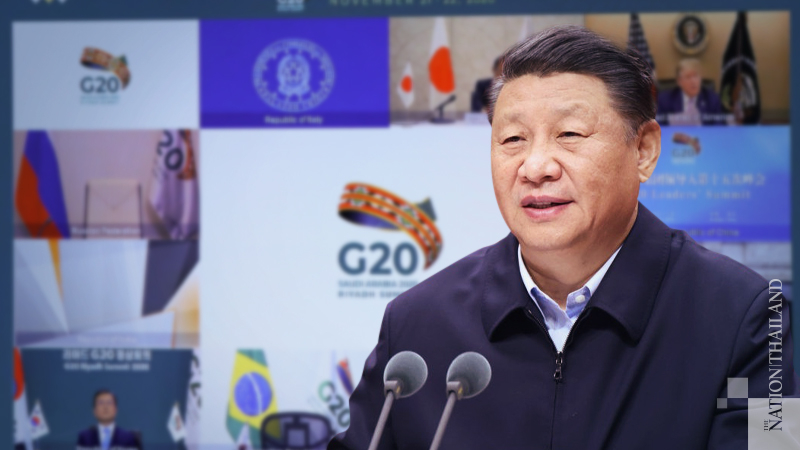
President Xi Jinping

President Xi Jinping

By China Daily

BEIJING – President Xi Jinping on Saturday attended the G20 Riyadh Summit and delivered a speech at the summit via video link in Beijing. Here are some highlights:

Fighting pandemic

– The G20 should make concerted efforts in fighting the most serious pandemic in a century.

– The G20 should support the WHO in coordinating resource allocation to ensure equitable and efficient distribution of COVID-19 vaccines worldwide.

– China will honor its commitment of giving assistance and support to other developing countries, and work to make vaccines a global public good accessible and affordable to people around the world.

– Strengthening the global public health system as well as preventing and controlling the COVID-19 pandemic and other infectious diseases are the most urgent tasks at present.

Free trade

– The G20 should ensure the smooth functioning of the global economy and restore the secure and smooth operation of global industrial and supply chains, reduce tariffs and barriers.

– The G20 should firmly safeguard the rules-based multilateral trading system that is transparent, nondiscriminatory, open and inclusive.

– The G20 should promote free trade, oppose unilateralism and protectionism, and safeguard developing countries’ right to and space of development.

– China’s new development paradigm is by no means to close its doors but to build a new system of open economy of higher standards.

Digital economy

– The G20 should advance its efforts in harnessing the role of the digital economy as the pandemic has fueled the boom of new technologies, new business forms and new platforms.

– The G20 should enhance data security cooperation, strengthen the digital infrastructure, and level the playing field for high-tech companies from all countries.

– The G20 should address the challenges posed by the digital economy to employment, taxation and vulnerable groups, and seek to bridge the digital divide.

– The G20 should promote the sound growth of digital economy and jointly nurture a digital development environment that is open, fair, equitable and nondiscriminatory.

– China is ready to work with all parties to explore and formulate digital governance rules on the basis of the China-proposed Global Initiative on Data Security.

– China supports strengthening dialogues on artificial intelligence and proposes holding a conference in this field at an appropriate time.

– The G20 should explore the formulation of standards and principles on the legitimate digital currencies in an open and inclusive manner.

Inclusive development

– China has fully implemented the G20 Debt Service Suspension Initiative while overcoming its own difficulties, with the total amount exceeding $1.3 billion.

– China will strengthen measures on debt suspension and relief for countries with particular difficulties.

– China proposes convening a global conference on reducing food losses when appropriate.

– China has proposed convening Global Summit of Women again in 2025 to contribute to women’s development during the post-pandemic era.

Global governance

– The pandemic is a grave challenge which has exposed the deficiencies of global governance.

– The G20 should strengthen UN-centered international system and improve the governance architecture for economic globalization, as well as support to the reform of the WTO.

– Efforts should be taken to strengthen the role of the WHO and advance the prevention of and response to pandemics to build a community of health for all.

– The G20 should further curtail the production and use of non-essential, disposable plastic goods.

– A complete ban should be taken on illegal wildlife trade.

India has set target of cutting carbon footprint by 30-35%: PM Modi #SootinClaimon.Com

#SootinClaimon.Com : ขอบคุณแหล่งข้อมูล : หนังสือพิมพ์ The Nation.

India has set target of cutting carbon footprint by 30-35%: PM Modi (nationthailand.com)

India has set target of cutting carbon footprint by 30-35%: PM Modi

Nov 22. 2020

Prime Minister Narendra Modi

Prime Minister Narendra Modi

By The Statesman

‘Efforts are on to increase the use of natural gas capacity four times during this decade, and work is also on to nearly double the oil refining capacity in the next five years.’

Prime Minister Narendra Modi today said that India has set a target of reducing the carbon footprint by 30 to 35 per cent.

He made the statement while addressing the convocation ceremony of Pandit Deendayal Petroleum University (PDPU) in Gujarat’s Gandhinagar through video conference.

“Today, our country is moving ahead with the target of reducing the carbon footprint by 30 to 35 per cent. When I told this to the world, it expressed surprise and wondered if India can achieve it,” he said.

“Efforts are on to increase the use of natural gas capacity four times during this decade, and work is also on to nearly double the oil refining capacity in the next five years,” he said.

PM Modi also said that work is constantly going on to strengthen the start-ups in the energy sector, and a special fund has been allocated for the purpose.

“If you have any idea, product or a concept that you want to incubate, then this fund will be a good opportunity for you, and a gift from the government,” he said.

“In the oil and gas sector alone, crores of rupees are going to be invested during this decade, so you have a lot of opportunities in this field,” he added.

S’pore, Hong Kong in contact on whether air travel bubble will proceed amid Covid-19 cases spike there #SootinClaimon.Com

#SootinClaimon.Com : ขอบคุณแหล่งข้อมูล : หนังสือพิมพ์ The Nation.

S’pore, Hong Kong in contact on whether air travel bubble will proceed amid Covid-19 cases spike there (nationthailand.com)

S’pore, Hong Kong in contact on whether air travel bubble will proceed amid Covid-19 cases spike there

Nov 21. 2020Flights from Singapore to Hong Kong under the Air Travel Bubble had been scheduled to begin on Nov 22, 2020. PHOTO: ST FILEFlights from Singapore to Hong Kong under the Air Travel Bubble had been scheduled to begin on Nov 22, 2020. PHOTO: ST FILE 

By Choo Yun Ting
The Straits Times/ANN

SINGAPORE – The Singapore and Hong Kong governments are in close contact on whether the Singapore-Hong Kong air travel bubble will proceed as planned, the Civil Aviation Authority of Singapore said in a statement on Friday (Nov 20).

Some members of the public have asked if the inaugural air bubble flights on Sunday would proceed, given that Hong Kong recorded 26 cases on Friday and Hong Kong Health Secretary Sophia Chan described the situation as “severe”, the CAAS said.

In response to media queries, the authority said that it is working closely with the Ministry of Health (MOH) to gather the facts and will update the public shortly on whether the inaugural flights under the air travel bubble will proceed on Sunday.

Earlier on Friday, Professor Chan said that Hong Kong has “probably entered into a new wave of cases” following a spike in reported cases. 

Hong Kong reported 26 confirmed cases on Friday, of which 21 were local and the rest imported. Details of untraceable cases were not revealed. Hong Kong has so far recorded 5,517 Covid-19 cases and 108 deaths.

The Singapore-Hong Kong air travel bubble arrangement, which is the Republic’s first since border restrictions were imposed amid the Covid-19 pandemic, were slated to start on Sunday with one flight a day into each city and a quota of 200 travellers per flight.

CAAS said previously that the arrangement will be suspended for two weeks if the seven-day moving average of the daily number of unlinked Covid-19 cases is more than five in either Singapore or Hong Kong.

As part of the air travel bubble, travellers between Singapore and Hong Kong will have to take Covid-19 tests, in lieu of serving quarantine or stay-home notices.

There will be no restrictions on the purpose of travel, and no need for a controlled itinerary, but travellers are required to meet eligibility criteria and adhere to the prevailing border control measures and public health requirements of both cities.