Japan to re-open borders for Brunei, Singapore expatriates
Sep 27. 2020Japan’s Foreign Ministry
By Borneo Bulletin
Japan said on Friday it agreed with Brunei Darussalam and Singapore to re-open their borders for newly arriving expatriates and other long-term residents from October 8 and September 30.
Those eligible to travel will be allowed on condition they self-isolate for 14 days after entering the country to prevent the spread of the coronavirus, according to Japan’s Foreign Ministry.
The two Southeast Asian countries will join Vietnam, Malaysia, Cambodia, Laos, Thailand, Myanmar and Taiwan, with which Tokyo established a travel corridor for long-term residents.
Japan currently bans in principle the entry of foreigners from 159 countries and regions.
“We see the resumption of new entries (of foreigners) to Japan as an extremely important issue,” Foreign Minister Toshimitsu Motegi said at a press conference.
“The government as a whole is seriously considering how to restart travel while taking measures to prevent the spread of the coronavirus.”
Japan has seen over 80,000 coronavirus infections with over 1,500 deaths, significantly less than hard-hit countries such as the United States (US) which is nearing seven million infections.
Find moral courage, political will to do what’s right, Muhyiddin tells UN
Sep 27. 2020Tan Sri Muhyiddin Yassin.
By The Star
KUALA LUMPUR (Bernama): The credibility of the United Nations (UN) can and must be restored in order to build the future, says Tan Sri Muhyiddin Yassin.
The Prime Minister said that this can be done if UN members find the moral courage and political will to do what is right.
Addressing the General Debate of the 75th Session of the United Nations General Assembly in New York virtually on Saturday (Sept 26), Muhyiddin cited issues concerning Palestine and Rohingya as two glaring examples on why a stronger and better UN was necessary.
He said for there to be lasting peace in the Middle East, the prescribed international consensus in conjunction with international law – UN resolutions, the UN Charter and Israel – must do several things.
“First, it must cease all of its illegal settlement activities. Second, it must withdraw its troops from the Occupied Palestinian Territory and surrounding Arab states. Third, it must allow Palestinian refugees their right to return to their land and property.
“Fourth, it must restore the original status of Jerusalem and last but certainly not least, it must restore its credibility and revert to the negotiating table with Palestine,” he said.
Muhyiddin said Israel continues to threaten Palestinian statehood with further annexation of Palestinian land, further denying Palestine any semblance of human security or peace.
He said Malaysia’s position remained clear and consistent that annexation was unlawful and it violated the Charter of the UN, Geneva Conventions and relevant resolutions of the General Assembly as well as the Security Council.
The Prime Minister said Malaysia supported the call of the international community including by the UN secretary-general, for the Middle East Quartet (United States, Russia, the European Union and the UN) to find a mutually agreeable path for the parties to reengage towards a negotiated peaceful settlement.
“We continue to call upon the international community to uphold Palestine’s legitimate right to self-determination, which constitutes one of the very core principles of the UN when it was created 75 years ago,” he said.
Meanwhile, Muhyiddin said the spill-over effects of the crisis in the Rakhine state, which includes the mass migration of people from Myanmar, had significantly impacted not only Malaysia but also other neighbouring countries.
He said Malaysia currently hosts the largest number of Rohingya refugees in Southeast Asia.
“As a developing nation coping with the cost of managing and providing protection to nearly 180,000 registered refugees and asylum seekers in the country, with 86 per cent of them from Myanmar, our resources are stretched thin.
“Yet, Malaysia is expected to do more to accommodate these incoming refugees. Is that fair?”
Although Malaysia is not a party to the 1951 Refugee Convention and its 1967 Protocol, Muhyiddin said the country had taken up the social and financial responsibility in providing humanitarian assistance and protection to Rohingya refugees on humanitarian grounds.
As such, he said the time has come for state parties to the Convention to shoulder a proportionate burden and responsibility in addressing the problem by opening their doors for more refugees for resettlement and relocation.
Marking the 75th anniversary of the UN this year, Muhyiddin said it was difficult to deny that the UN had managed to allow human society to progress in so many aspects — from education to the environment, to the health and social security of millions.
“Unfortunately, in recent times multilateral commitments are becoming less persuasive because states are less willing to uphold shared values and solve challenges together.
“Governments are turning inwards, pushing a national perspective that wins more immediate public support,” he added.
Muhyiddin said Malaysia had long held the belief that the world demands collaborative engagement by all in preserving stability, tranquillity and peace, and that the international community must work together to uphold a system based on the shared universal values through dialogues and cooperation.- Bernama
Xi stresses building Xinjiang featuring socialism with Chinese characteristics in new era
Sep 27. 2020
By China Daily
BEIJING — President Xi Jinping has called for efforts to build Xinjiang featuring socialism with Chinese characteristics in the new era.
Xi, also general secretary of the Communist Party of China (CPC) Central Committee and chairman of the Central Military Commission, made the remarks at the third central symposium on work related to Xinjiang, which was held on Friday and Saturday in Beijing.
Xi underlined the need to fully and faithfully implement the CPC’s policies on governing Xinjiang for the new era.
Xi demanded law-based governance and long-term efforts to develop Xinjiang into a region that is united, harmonious, prosperous, and culturally advanced, with healthy ecosystems and people living and working in contentment.
Thanks to strenuous efforts from all sides since the second symposium in 2014, major progress has been achieved in the work related to Xinjiang, Xi said, citing a series of markedly improving key indicators from 2014 to 2019, such as a sound economic momentum with an average annual GDP growth rate of 7.2 percent, people’s living standards being significantly improved with an average annual 9.1 percent growth in residential per capita disposable income, and more than 2.92 million out of 3.09 million people being lifted out of poverty.
Such a sound situation where people live and work in contentment has laid a solid foundation for long-term peace and stability in Xinjiang, Xi said.
“Facts have fully proved that China’s work on ethnic affairs has been successful,” he said, noting the achievements are the result of the strong leadership of the CPC Central Committee, along with the concerted efforts of the whole Party and all the Chinese people including more than 25 million people from different ethnic groups in Xinjiang.
Facts prove that the Party’s policies on Xinjiang in the new era, which were developed by the CPC Central Committee since the 18th CPC National Congress, are perfectly right and must be adhered to on a long-term basis, Xi stressed.
He demanded the entire Party make implementing the Party’s Xinjiang policies in the new era a political task, always maintaining the correct political orientation of the work related to Xinjiang.
Xi noted that the banner of socialist rule of law must be held high to maintain lasting social stability in Xinjiang, ensuring that the requirement for fully advancing China’s law-based governance covers all areas of the work related to Xinjiang.
Xi stressed efforts to focus on heightening a sense of identity of the Chinese nation to constantly strengthen ethnic unity.
The education on the sense of Chinese identity should be incorporated into the education of officials and the younger generation in Xinjiang as well as its social education, helping the officials and the general public of all ethnic groups develop an accurate understanding of country, history, ethnicity, culture and religion, to let the sense of Chinese identity take root in people, he said.
Noting that development is an important foundation for lasting peace and stability in Xinjiang, Xi stressed leveraging the region’s geographical advantages to develop Xinjiang as a core area of the Silk Road Economic Belt and a hub of opening-up in the inland and border areas.
Xi urged efforts to consolidate the foundation and increase the efficiency of the industrial sector in Xinjiang, advance industrial transformation and upgrading, and boost urbanization in an all-round way while protecting the environment.
Stressing the need to coordinate epidemic containment with economic and social development, Xi called for ensuring stability on six fronts — employment, the financial sector, foreign trade, foreign investment, domestic investment, and expectations — while maintaining security in six areas: job security, basic living needs, operations of market entities, food and energy, stable industrial and supply chains, and the normal functioning of primary-level governments.
He also called for unremitting efforts to eradicate poverty and promote employment in Xinjiang.
Xi pointed out that the original aspiration and mission of the Party is to seek happiness for the Chinese people, including people of all ethnic groups in Xinjiang, and the rejuvenation of the Chinese nation, including various ethnic groups in Xinjiang.
He urged continuous efforts to foster a contingent of high-caliber officials from ethnic-minority groups in Xinjiang who are loyal to the Party and have both integrity and ability, saying that the officials in Xinjiang are trustworthy and capable.
Underscoring the great significance of Xinjiang-related work to the whole Party and the entire country, Xi asked for improvement in working mechanism in which the CPC Central Committee exerts the unified leadership, the central departments offer guidance and support, other provincial-level regions render support and cooperation, and Xinjiang plays its principal role.
Other senior Chinese leaders also attended the symposium, which was presided over by Li Keqiang. Li Zhanshu, Wang Huning, Zhao Leji and Han Zheng were in attendance, while Wang Yang spoke to sum up the event.
On the basis of results achieved in the process of building an e-Government, Viet Nam is preparing to move to a digital Government according to the policy set out in Resolution 52- NQ/TW of the Politburo.
The information was given at the 15th national conference on e-Government (eGov) held in HCM City on Thursday.
The conference was co-organised by IDG Viet Nam, Viet Nam Digital Communications Association, and the Department of Information and Communications of HCM City.
Speaking at the seminar, Ngo Hai Phan, director of the Administrative Procedures Control Agency (APCA) under the Government Office, said the Government Office had co-ordinated with ministries, branches, localities, IT corporations, domestic and foreign experts to focus on building and implementing many important information systems as the foundation for the e-Government development of the country in the 2018-20 period.
These information systems had been put into operation, creating a big shift in settling relations between the Government and agencies in administration.
This also provided impetus for the implementation of an e-Government and contributing to the realisation of the dual goals of economic development while minimising the negative effects of the COVID-19 pandemic on people and businesses, he said.
It was reported at the conference that the National Public Service Portal had provided 1,039 public services and 6,842 administrative procedures online at four levels by the end of last month.
The portal had also reached over 60 million visits, over 235,000 registered accounts, more than 15 million synchronised records, and over 295,000 online records. The online payment system on the portal was also deployed from March, performing over 9,000 transactions.
Currently, according to the e-Government development ranking of the United Nations, Viet Nam has increased two places, ranked 86th out of 193 countries, 24th out of 47 in Asia and 6th in Southeast Asia.
However, in order to reach the target to be in the top four countries in ASEAN by 2025 and among the top 70 countries in e-Government, there were still many things to be done, said the director, including listening to domestic and international experts and organisations in order to perfect the roadmap and choose suitable solutions for the country.
Pham Anh Tuan, Deputy Minister of Information and Communications, said that the policy on building a digital Government was outlined in Resolution 52-NQ/TW of the Politburo. Accordingly, it targeted to basically complete the digital transformation for the Party and State agencies by 2025 and complete the building of digital government by 2030.
To implement this policy, the Ministry of Information and Communications is currently preparing to submit to the Prime Minister to issue a national strategy on digital government for the 2021-2025 period.
Businesses slow in digital transformation
Many Vietnamese enterprises, especially small and medium enterprises, are still not fully aware of the role of digital transformation in the fourth industrial revolution.
Many reports from the Viet Nam Chamber of Commerce and Industry (VCCI) have shown that Vietnamese small and medium enterprises currently account for about 97 per cent of the total number of enterprises, but the level of science, technology and innovation is low.
Up to 80-90 per cent of machinery used in Vietnamese enterprises is imported; of which, nearly 80 per cent is old technology from the 1980s to 1990s.
Cisco Systems, a provider of information technology products and services for businesses, conducted research on the digital growth index of small and medium-sized enterprises in Asia-Pacific.
The study was conducted on more than 1,340 businesses in the region, including 50 businesses in Viet Nam.
Vietnamese SMEs are facing barriers in digital transformation, such as a lack of digital skills and human resources (17 per cent) or a strong information technology foundation to enable digital transformation (16.7 per cent).
However, 18 per cent of Vietnamese SMEs have invested in cloud technology, 12.7 per cent invested in cybersecurity and 10.7 per cent invested in software and hardware upgrades.
The Tin Tuc (News) newspaper quoted Vu Tien Loc, VCCI chairman, as saying that State agencies needed to continue to institutionalise and actively implement local technology innovation guidelines and policies.
He recommended co-ordination among departments, agencies, branches and localities in promoting and implementing guidelines and policies on technology innovation.
The State’s policies in this area were not attractive enough, while procedures were still cumbersome and time-consuming, he said.
It was also difficult for businesses to access preferential capital and other support sources, said the chairman.
On the business side, Loc said that it was necessary to have the right view and a clear sense of responsibility to innovate the business model, technology in production and management models based on digital technology.
That was the key factor for businesses to move towards creative, sustainable and inclusive development goals, said the chairman. — VNS
Sep 21. 2020The Chinese-owned UDG is currently developing the sprawling $3.8 billion Dara Sakor Seashore Resort in Koh Kong province. Photo credit: Phnom Penh Post
By Niem Chheng Phnom Penh Post
The Council for the Development of Cambodia, the Ministry of Foreign Affairs and International Cooperation, and Tianjin Union Investment Development Group Co Ltd (Tianjin) have responded to US sanctions on Union Development Group Co Ltd (UDG), a Chinese-owned company currently developing the sprawling $3.8 billion Dara Sakor Seashore Resort in Koh Kong province.
The response came after the US Department of the Treasury’s Office of Foreign Assets Control on September 15 officially sanctioned UDG for seizing and demolishing locals’ land for the project among other allegations.
US Secretary of the Treasury Steven Mnuchin alleged that after falsely registering as a Cambodian-owned entity to receive land for the Dara Sakor development project, UDG reverted to its true ownership and continued to operate without repercussions.
He alleged that UDG is a Chinese State-owned entity acting on behalf of a Chinese government official that was granted a 99-year lease by the government for 36,000ha in the south-western province in 2008.
The Council for the Development of Cambodia, which is in charge of promoting foreign and domestic investments, on Sunday expressed its disappointment over the US sanctions and provided the related facts.
It affirmed that UDG is a foreign company registered at the Ministry of Commerce of Cambodia, with 100 per cent of its shares held by the Tianjin group, which is registered in China as a private-owned enterprise in 1995. The group specialises in real estate development.
Before its investment in Cambodia, the Tianjin group had been successfully operating its real estate development business in Hainan province.
UDG filed an application with the Council for the Development of Cambodia to invest in a coastal resort development project in January 2008 which included heavy infrastructure like roads, airport and port.
After a thorough examination, inspection, and discussions, the CDC finished its due diligence and requested that the Cambodian government grant the company permission to invest.
On US allegations that Cambodia violated its law on land concessions, which limits concessions to no more than 10,000ha, the CDC stressed that UDG project did not fall under the economic land concession scheme which is why, and therefore the limit did not apply.
In general, economic land concessions are granted to companies desiring to invest in agriculture, which is why they are limited to 10000ha.
On US allegation of forced eviction, the Council for the Development of Cambodia’s statement explained that: “The lease of the development site to the UDG respects all Cambodian laws and regulations. The government followed a rigorous due process regarding the leasing of the site.”
It said the development project covers a portion of Botum Sakor National Park, which is a State public property and according to Cambodian law, that land cannot be owned by anyone. But there were several people who illegally settled in the area granted to UDG.
In consideration of those illegal settlers, the land lease agreement was reviewed to include an appropriate mechanism to resettle them and avoid forced evictions. After the lease agreement was signed, an inter-ministerial working group was set up to serve as a coordination mechanism.
“This working group collected data and examined all implications before submitting a report requesting the government’s consideration and final decision. The settlement was carried out on a voluntary basis and in accordance with all terms of the lease agreement,” the Council for the Development of Cambodia said.
On allegations that UDG destroyed the environment, it said on the contrary, it implemented a master plan which was duly reviewed, discussed and approved by inter-ministerial meetings attended by representatives of all relevant ministries and institutions after rigorous analysis and evaluation.
An inter-ministerial committee also set up a programme to conduct site inspections to monitor the implementation of the project every six months.
In the process of implementing the investment project, UDG must comply with the Master Plan, the Development Schedule and the report on Environmental Impact Assessment (EIA) approved by the Ministry of Environment.
UDG continues to be required to provide detailed development activity reports on its investment project in accordance with the Master Plan to the CDC for ongoing review, monitoring and evaluation to ensure that the project implementation is in compliance with applicable laws and regulations.
In addition, the Inter-Ministerial Committee has set up a programme to conduct site inspections to monitor the implementation of the project every six months.
On allegations that the UDG’s investment project could be used as a military base, the CDC said the Cambodian Constitution forbids all foreign military bases in its territory.
It said the government has repeatedly rejected reports that Cambodia could accept any foreign military to be stationed on its territory.
On February 12 and April 3 last year, representatives of several embassies, including military attachés, visited the Dara Sakor development site.
The Tianjin group released a statement identifying themselves as a private real estate company without shareholders from the Chinese government. The group mentioned an award it won in Tianjin, China, and maintained that it manages UDG, not the Chinese government.
In the leased land in Kiri Sakor and Botum Sakor districts in Koh Kong province, UDG had followed their contracts strictly by building roads, bridges, ports, parks and buildings. In 2009, the government formed a committee to relocate local people and deal with compensation.
The company strictly followed the terms set in the contract, the Tianjin group stressed. It had built more than 1,000 houses, seven school buildings, many commune halls, police stations, markets, pagodas, and health centres.
It also built 120 wells, two canals, nine water reservoirs and donated motorbikes, ambulances, computers, and stationary for schools.
The Chinese Embassy also issued a press release saying: “The Chinese Embassy in Cambodia opposes and emphatically condemns this act. We insist that the US side revise this method immediately and lift its sanctions totally.”
Sep 21. 2020Prime Minister Hun Sen said major powers are acting hypocritically and cooperating to put pressure on Cambodia to conform to their political beliefs. Photo supplied
By Orm Bunthoeurn Phnom Penh Post
Prime Minister Hun Sen released a message celebrating the International Day of Peace on Monday, saying that some major powers and western countries had been systemically cooperating to put political pressure on Cambodia as they did in the 1970s and 1980s.
Hun Sen said pressuring Cambodia to conform to different political beliefs is a violation of the principle of equality and sovereignty between States and the principle of non-interference in internal affairs of other countries as stipulated in the UN Charter and international law.
The message read: “The great achievements that Cambodia has completed for more than 40 years have never drawn applause or admiration from some major powers and western countries.
“[These countries] have only political agendas to draw Cambodia into serving as a stepping stone towards their political ambitions.
“Additionally, they don’t hesitate to implement a double standard in assessing human rights exercises in Cambodia.
“They also use this human rights issue as a political tool or a pretext for interfering in internal affairs, violating sovereignty and independence of Cambodia and other weak countries.”
The Royal Academy of Cambodia’s International Relations Institute director Kin Phea told The Post on Sunday that foreign policies are crafted by each country to serve themselves.
Phea said Cambodia is a small country which relies on the economies of foreign countries so it must think of formulating a special foreign policy for itself.
“Since it is like this, we cannot copy the model of any country for implementation. The policy to pressure Cambodia to do this or that according to a country is a dated policy,” he said.
He said countries could not follow in the footsteps of other countries.
“If a country is forced or pressured to follow in the footsteps of another country or competition between two major powerful countries, first, it means that it is a violation of the internal sovereignty of a country.
“Second, it might make a pressured country encounter many problems and controversies. It can be plunged into war. Sometimes, civil war happens in countries caught in a cold war or when major countries interfere in internal affairs,” he said.
Cambodian Institute for Democracy president Pa Chanroeun told The Post on Sunday that in general, a small country or a developing one had always received influence from a major country or superpower.
“The important point is that the leader in countries must be wise in receiving and using that influence to transform it into national interests.
“[Leaders] put the nation first and use their Constitution as a base to guarantee the sovereignty, territorial integrity and serve citizens,” he said.
Chanroeun said Cambodia has historically been victimised by foreign influence before mentioning the Sangkum Reastr Niyum era and the period after the Khmer Rouge fell.
“Especially, the controversies between liberal and communist blocks make us lose self-reliance and we especially lose our stance on neutrality.
“We turn to a major country of the communist block, thereby making us lose balance in foreign relations with superpower countries. It makes our country plunge into internal disputes and leads to a chronic civil war.”
HLH, Skiold reach MoU on $1B SEZ to boost food security
Sep 10. 2020Skiold regional director Dr Sussie Ketit (left) and HLH general manager Ong Jia Jing sign a non-binding Memorandum of Understanding (MoU)on a proposed SEZ project. Photo supplied
By The Phnom Penh Post Thou Vireak
Singapore-listed property development and agricultural investment firm Hong Lai Huat Group Ltd (HLH) on Monday reached a non-binding Memorandum of Understanding (MoU) with Denmark-based farm equipment supplier Skiold A/S.
The two parties intend to collaborate on a proposed “Cambodia-Singapore Agriculture Special Economic Zone” with a $1 billion estimated investment value, HLH said in a filing to the Singapore Exchange (SGX) on Monday evening.
The MoU aims to lay the foundation for a mutual platform to enhance trade and economic cooperation and technical exchanges within the field of poultry and cattle farming as well as seed processing for Cambodia, it said.
It listed three primary objectives to be completed within the next six months before the two parties sign a binding agreement.
First, they will initiate the necessary procedures towards setting up livestock and seed production in the special economic zone (SEZ).
Second, they will perform a feasibility study on the project to produce poultry, cattle and seed production in Cambodia as well as Singapore, to supply and enhance the city-state’s food security.
Third, they will create more job opportunities for countries in connection with the partnership and any resulting spin-offs.
HLH general manager and executive director Ong Jia Jing said: “We are very pleased to have entered into this MoU with Skiold A/S on the potential collaboration of the Cambodia-Singapore Agriculture Special Economic Zone.
“Particularly in a world that has been greatly affected by Covid-19, food security is a highly significant matter that all countries are looking into resolving.
“We believe that this collaboration will be meaningful and a success for both of our companies and will allow us to contribute to Cambodia as well as Singapore,” he said.
Skiold regional director Dr Sussie Ketit said that with more than 140 years of developing, projecting and producing advance machinery for agro-industry, the company is one of the most preferred and experienced companies in the field, and has delivered successful projects all over the world.
She said: “Being a company that has broad range of expertise in the livestock industry, we see this collaboration as an excellent connection and hope to see positive-result spin-offs [born] from the initiative not only in Cambodia but also in Singapore.
“We hope that through the initiative . . . [we can] help Singapore reach [its] ‘30 by 30’ vision [by] adopting Danish technologies to raise productivity, apply R&D [research and development], strengthen food resilience and sustainability,” Ketit said, referring to Singapore’s “30 by 30” goal of producing 30 per cent of its nutritional needs domestically by 2030.
HLH has said it grows cassava on a 9,000ha plantation in Kampong Speu province’s northwest Oral district and manufactures starch at its processing plant for food industry clients from Europe and Southeast Asia.
Its food-grade tapioca-starch production capacity is around 36,000 tonnes per annum, or 100,000 tonnes with the inclusion of its associate factories, it said.
Kampong Speu provincial governor Vei Samnang said the cooperation will help develop the province, create more jobs and new markets for provincial farmers’ agricultural products.
“I welcome and support them. I want them to invest in the province to help increase the value of the production chain, and especially find markets for our farmers,” Samnang said.
He neither confirmed nor denied knowledge of the anticipated SEZ project’s proposed location.
Laos reaffirms commitment to LDC graduation despite challenges
Sep 10. 2020Phot Credit to Vientiane Times
By Vientiane Times
Laos remains firmly committed to graduating from the United Nations (UN) Least Developed Country (LDC) list, despite the numerous challenges that lie ahead.
Deputy Minister of Foreign Affairs Thongphane Savanphet reiterated Laos’ commitment on Tuesday when speaking during a videoconference with the United Nations Office of the High Representative for Least Developed Countries, the foreign ministry said in a press statement.
The meeting aimed to prepare for the upcoming review of Laos’ graduation from LDC status.
The review – the second of its kind – is scheduled to take place early next year. If Laos is deemed to have met the targets set by the UN, the country is expected to officially leave the LDC list in 2024.
In 2001, the government set a target date for graduation from LDC status by 2020 but this target could not be met.
To be considered for LDC graduation, countries must meet two of three criteria when assessed at two consecutive triennial reviews, according to the UN.
LDCs are assessed using three criteria: the human asset index (HAI) which assesses health and education targets, economic vulnerability (EVI), and gross national income (GNI) per capita.
Laos was judged as meeting two of the three criteria in the first review, which took place in 2018. Only the economic vulnerability criterion remains to be fulfilled.
The 2018 review found that Laos’ gross national income per capita of US$1,996 exceeded the lowest graduation threshold of US$1,230. The human asset index stood at 77.2 compared to the lowest threshold of 66.
The EVI was 33.7, close to the threshold of 32 or below.
“Economic vulnerability is the only criterion we have not yet met,” the foreign ministry said.
“However, if Laos is still able to meet two of the three criteria or meet all the criteria in the second review by the UN in 2021, it will be proposed that Laos leave the LDC list by 2024.”
Laos is one of 47 nations categorised by the United Nations as a Least Developed Country.
The Party and government of Laos attach great importance to LDC graduation.
This is reflected by the fact that policies and guidance in this regard were integrated into the 8th five-year national socio-economic development plan for 2016-2020.
This enabled Laos to enjoy high-level economic growth of 6-7 percent annually, according to the ministry. In addition, the poverty rate fell from 46 percent in 1992 to just 18 percent today.
Along with the progress made, there are challenges ahead, notably those caused by the Covid-19 pandemic, which has severely impacted the economy and slashed growth.
Tuesday’s meeting also discussed the Laos-UN cooperation plan, including the joint development of strategies for the graduation transition period and post-graduation to address potential post-graduation challenges.
There are concerns that once Laos is no longer classified as a Least Developed Country the change could affect trading privileges and the foreign aid that development partners and foreign countries extend to LDC countries.
The garment sector will be hardest hit by trade losses when Laos no longer qualifies for special tariff allowances upon expected 2024 LDC graduation.
In the European Union alone, the garment sector can expect trade losses amounting to US$56 million, according to the latest research paper conducted in the context of the International Trade Centre project and funded by the EU.
However, Deputy Minister of Planning and Investment Dr Kikeo Chanthabouly eased concerns by saying that cooperation strategies and plans with development partners including the UN would be developed for further cooperation during the transition and post-graduation period to ensure Laos’ smooth graduation and its sustainability.
“This will ensure that Laos will not fall back into the LDC category in the future,” he told Vientiane Times.
Although grants for development are expected to decline after graduation, the number of low interest loans is expected to increase because Lao will be eligible for more credit.
“Grants represent a small component of financial assistance,” Dr Kikeo said, referring to Official Development Assistance.
Tuesday’s videoconference was attended by senior representatives from various ministries.
StanChart rolls out first blockchain remittance service
Sep 10. 2020Photo Credit: The Daily Star
By The Daily Star, Md Fazlur Rahman
Standard Chartered Bangladesh yesterday rolled out a blockchain-powered remittance service for Bangladeshis working in Malaysia to allow them to send money home on a real-time basis, without any hassle and at lower costs.
The bank has teamed up with Ant Group, one of the world’s leading digital financial services providers based in Hangzhou, China; bKash, the top mobile financial service in Bangladesh, and Valyou, a financial technology company in Malaysia, to provide the service. The service is in the final stages of commercial testing and will be available to customers in Bangladesh and Malaysia soon, said the multinational lender in a press release.
The bank is the fund settlement bank and regulatory approval-holder for the service. Ant Group’s applied blockchain technology helps streamline the remittance process, radically improving the speed of delivery and information security and enhancing the transparency of the process.
“With our partners bKash, Valyou and Ant Group, we are delighted to be able to introduce a new-generation technological solution that will make the remittance experience simple and faster, by presenting the service available 24/7, including from the convenience of the remitters’ mobile phones,” said Naser Ezaz Bijoy, chief executive officer of Standard Chartered Bangladesh.
“We hope this new service will benefit the end-users and contribute to the growing utilisation of formal remittance channels.”
Kamal Quadir, CEO of bKash said: “This partnership will give seamless remittance-sending experience to the Bangladeshi expatriates there who can now send money from their digital wallets in Malaysia to a bKash account in Bangladesh through Standard Chartered Bank.”
“This technological integration will bring great convenience to both the recipients and the senders and will contribute further to our foreign remittance earnings.”
Prasanna Rao, CEO of Valyou, said: “We continue to offer ease and convenience to our customers especially during these challenging times and Bangladeshis in Malaysia can use the Valyou Mobile Wallet to send money directly into the bKash wallet.”
“We believe that this blockchain technology integration will save cost and time without compromising safety and security of the remittance transaction sent from Valyou to bKash,” he said in the press release.
With this, Standard Chartered became the first bank in Bangladesh to have initiated the blockchain-based remittance service.
The bank has been working on the issue for six to seven months. It had to secure several approvals from the central bank to introduce the service. The last approval came on Thursday.
“I would like to express my gratitude to officials of the Bangladesh Bank for their extraordinary support in acceding approvals,” said Bijoy.
The blockchain is a distributed ledger of data records that is jointly maintained by multiple parties and continuously stored in a blockchain structure.
When a remittance is sent from a remitter’s wallet, all participants receive the information simultaneously and collaborate to complete the remittance transaction simultaneously.
Malaysia is home to about a million Bangladeshi migrant workers, sending home $1.23 billion in remittance in the last fiscal year, Bangladesh Bank data showed.
The southeast Asian country is the seventh highest source of remittance for Bangladesh. Migrant workers sent $235.57 million in July and $196.31 million in August.
Similar service has been launched on two corridors involving four countries, one is between Hong Kong and the Philippines and the second one is between Malaysia and Pakistan.
In June 2018, Standard Chartered was appointed by Ant Group as the core partner bank for its new blockchain cross-border remittance solution.
The Ant Group’s cross-border remittance service supports the real-time transfer, which saves money, simplifies procedures, and ensures security and transparency, according to a blog on Alibaba Cloud, a subsidiary of Alibaba Group.
Standard Chartered Bangladesh is keen to work with Ant Group to introduce similar services in other countries where Bangladeshi migrant workers reside in large numbers, said Bijoy.
Saudi Arabia, the United Arab Emirates, Oman, Qatar, Bahrain, Malaysia and Singapore are the top destinations of Bangladeshi migrant workers.
Remittance hit an all-time high of $18.2 billion in the just-concluded fiscal year.
South Korea’s antitrust watchdog has set out to determine whether Google’s monopoly on mobile operating systems and app markets blocks the emergence of rival OSs and app markets.
“Currently, the regulator is focusing its investigation on whether operators who dominate the mobile OS market obstructed the production of devices equipped with rival OS, or by forcing app developers to exclusively launch their apps on its app markets,” Fair Trade Commission Chairperson Joh Sung-wook said during an online press conference held Tuesday to mark the first anniversary of her inauguration.
“If illegal acts are found during the investigation, we will take stern action in order to restore the competitive order,” she added.
Although the FTC head did not mention the company by name, her remarks appear to target Google, which is by far the most popular smartphone OS in the world.
Since 2017, the authorities have been investigating allegations that Google interfered with the development of Samsung Electronics’ own mobile operating system such as by disallowing the use of its Android algorithm.
Google is also alleged to have forced Korean game companies to release apps only on its application platform, Google Play, in an attempt to exclude local app markets such as One Store.
“In this sector, the market share of the first movers is very high. This issue can be problematic if market-dominating companies exclude new businesses by using their monopoly. It can affect app developers and ultimately harm consumers,” Joh said.
Google’s mobile operating system has a market share of more than 70 percent in Korea.
Its share in the app market here reached 63.4 percent as of the end of last year. Apple followed with 24.4 percent. One Store, a Korean app market made by Naver and three domestic mobile carriers, holds a 11.2 percent share.
Recently, in July, the European Union imposed a fine of around $5 billion on Google for abusing the dominance of its Android OS. The regulator said the US tech giant forced handset makers to preinstall Google’s Chrome browser and prevented them from selling phones that run other rivals’ modified versions of Android.
The chairperson also mentioned the recent controversies surrounding Google’s move to adopt an in-app purchasing system for its Google Play Store.
“We are also keeping a close eye on whether (Google’s move to) change the fee system in the app market will affect competition and consumer welfare. We will collect opinions from experts through various academic conferences and symposiums and work closely with the Korea Communications Commission and the Ministry of Science and Technology,” Joh said.
Google is moving to make it mandatory for companies that make non-game apps — such as webtoons, web novels, and music-streaming and online video services — to use the Google in-app purchasing system.
In-app purchasing refers to the buying of goods and services from inside apps. When payments are made within the app, some portion of the total sales go to the platform operator, Google, as a commission. Currently, local game app developers give Google 30 percent of their sales in return for using Google’s in-app purchasing system.
But is difficult for the government to intervene in such practices as doing so can distort the market, which depends on supply and demand, industry watchers said.
Joh said the FTC will announce legislation tentatively called the Online Platform Fairness Act within this month to prevent unfair trade by large online platform companies, which have become intermediary dealers that link sellers and consumers.
On Wednesday, Rep. Cho Seung-rae of the ruling Democratic Party of Korea proposed changes to the Telecommunications Business Act that would prevent app market operators from forcing in-app purchasing.

 Japan’s Foreign Ministry
  Tan Sri Muhyiddin Yassin.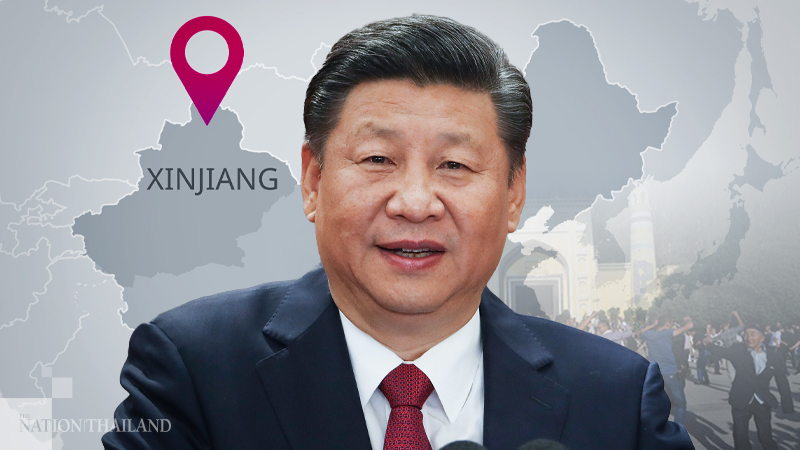
 The Vietnam E-Government conference. — VNA/VNS Photo
  The Chinese-owned UDG is currently developing the sprawling $3.8 billion Dara Sakor Seashore Resort in Koh Kong province. Photo credit: Phnom Penh Post
  Prime Minister Hun Sen said major powers are acting hypocritically and cooperating to put pressure on Cambodia to conform to their political beliefs. Photo supplied
  Skiold regional director Dr Sussie Ketit (left) and HLH general manager Ong Jia Jing sign a non-binding Memorandum of Understanding (MoU)on a proposed SEZ project. Photo supplied
  Phot Credit to Vientiane Times
  Photo Credit: The Daily Star
  FTC Chairperson Joh Sung-wook (FTC)
