Stronger measures needed to combat IUU fishing: Vietnam Deputy PM
Sep 10. 2020Offshore fishing vessels docked at Ninh Chữ port, Ninh Thuận Province. — VNA/VNS Photo Nguyễn Thành
By Vietnam News
HÀ NỘI — Deputy Prime Minister Trịnh Đình Dũng urged stronger and more drastic and appropriate measures to early complete all recommendations by the European Commission (EC) so as to remove its yellow card warning over illegal, unreported, and unregulated fishing (IUU).
Addressing the fourth session of the National Steering Committee for IUU Prevention on Tuesday, Dũng said that Việt Nam has coordinated closely with the EC in fighting IUU fishing and achieved many progresses in enforcing EC recommendations.
However, the improvements are not enough, Dũng stressed, pointing to the slow implementation in several localities.
He assigned the Ministry of National Defence to continue stepping up patrols at overlapping and undefined waters between Việt Nam and other countries.
The Ministry of Public Security was requested to strictly investigate cases related to bringing Vietnamese fishing vessels to operate illegally in other countries’ waters, and strengthen international cooperation in this field.
Meanwhile, the Foreign Ministry was asked to speed up negotiations towards the signing of agreements on delimitation of special economic zones between Vietnam and other countries, and exert efforts to ensure legitimate interests of Vietnamese fishermen when they are arrested illegally by foreign authorised forces.
For the long-term solution, the Deputy PM stressed the need of reducing exploitation and increasing aquaculture.
Speaking at the event, Minister of Agriculture and Rural Development Nguyễn Xuân Cường said that after nearly three years receiving the yellow card warning, Việt Nam has finished a large volume of works recommended by the EC, with the national steering committee set up and a number of related decrees, circulars and legal documents issued.
The number of Vietnamese fishing boats seized by foreign forces in the first eight months of 2020 decreased, and 80.61 per cent of vessels with a length of 15m or more had been equipped with the vessel monitoring systems as of August 31.
According to the minister, the EC has made acknowledgements of Việt Nam’s efforts, but noted that Vietnamese fishermen violating foreign fishing zones remains a problem.
If transgressions continue, the commission will not withdraw its yellow card, he added. — VNS
Vietnam News Agency’s anti-fake news project wins international press award
Sep 10. 2020Students in Ngô Quyền Secondary School in Hải Phòng City learn about anti-fake news skills under a training campaign launched by Vietnam News Agency. VNA/VNS Photo
By Vietnam News
HÀ NỘI – A project on fighting fake news by Vietnam News Agency has won top prize in the category “Best Project for News Literacy” – one of ten categories within the framework of the Asian Digital Media 2020 Awards presented by WAN-IFRA, the World Association of News Publishers.
The awards are expected to be officially announced at e-Digital Media Asia 2020, taking place on October 15 this year.
VNA’s fake news project, named “The fight against fake news – Creative ideas and Effective solutions”, consists of three components – an anti-fake news song in 15 languages, a TikTok account Factcheckvn to reach young people and a training campaign that equips students with skills to spot fake news.
Nowadays, particularly during the COVID-19 pandemic, as fake news is spreading all around the world, Việt Nam is not an exception. Vietnam News Agency (VNA), known as one of the leading media agencies in Việt Nam, has been pioneering in the fight against fake news with thousands of in-depth publications under various forms of media. The publications not only alert viewers and readers about the threats of fake news but also actively reveal incorrect information in the press.
Since 2019, VNA has implemented a series of creative initiatives. For example, an anti-fake-news rap song – a combination of rap and news information – was launched in April 2020. The song was first performed in Vietnamese and then translated into 14 other languages including English, Spanish, Russian, Italian, German, Mandarin, Japanese, Thai, Indonesian, Khmer, Lao and Arabic.
The song “Say No to Fake News” was publicised on all websites and platforms of VNA as well as other major channels in Việt Nam like VTV, VOV and VTC.
The song also marked the launch of VNA’s official account factcheckvn on TikTok in April 2020.
This is the first time in Việt Nam a media agency has opened its own channel for fact checking on TikTok.
The clips include information on issues in Việt Nam and around the world, revealing fake news and attracting hundreds of thousands of views. One of the clips topped 1.4 million views.
VNA’s Young Union helped organise a training campaign that provided skills for students to recognise and respond to fake news. The campaign was first carried out in December 2019, reaching about 100 students in Đà Nẵng City and then in HCM City, Hà Nội, Hải Phòng, Cần Thơ and Đồng Tháp.
The network of VNA’s correspondents based in all 63 cities and provinces in Việt Nam helped the campaign reach tens of thousands of students who are expected to share the anti-fake news skills with their friends and family members.
The Asian Digital Media Awards presented by WAN-IFRA, the World Association of News Publishers, recognise Asian publishers who have delivered unique and original digital media projects in the last 12 months. From new approaches to digital subscriptions, to impactful native advertising campaigns – projects that inspire us all.
Entries to the awards compete in ten categories including Best News Website or Mobile Service, Best Paid Content Strategy, Best in Audience Engagement, Best Data Visualisation and Best Digital Marketing Campaign for News Brand.
In the category which VNA’s project won – Best Project for News Literacy, entries must comprise projects aimed at enhancing news literacy skills, promote critical thinking and further the smart consumption of news. Projects that demonstrate strong evidence of success in engaging a specific audience or age group will be granted extra credit.
Also winning in this category is a project by Singapore Press Holdings. VNS
Sep 10. 2020Photo taken by the rover Yutu 2 (Jade Rabbit-2) on Jan 11, 2019 shows the lander of the Chang’e 4 probe. [Photo/Xinhua/China National Space Administration]
By China Daily ZHAO LEI
China plans to establish a scientific station on the moon and has started preparatory research, according to a key figure in the country’s lunar exploration program.
“The next steps in our lunar exploration endeavor will be challenging and demanding as we aim to set up a scientific outpost on the moon’s south pole. In the near future, we will also send our astronauts to land on the moon,” said Wu Weiren, chief designer of China’s lunar exploration program and an academician of the Chinese Academy of Engineering.
He is now working on the planning and feasibility research on the proposed station and the lunar program’s fourth step.
The scientist made the remarks at a ceremony on Tuesday at the China National Space Administration that announced the naming of an asteroid after him.
The asteroid was discovered in August 2007 by researchers at the Xuyi Station in Jiangsu province’s Xuyi county, which belongs to the Chinese Academy of Sciences’ Purple Mountain Observatory in Nanjing.
The move was approved by the International Astronomical Union in June to honor his significant contribution to China’s lunar and deep-space exploration programs.
In China’s most recent lunar mission, the Chang’e 4 robotic probe, which consists of an unmovable lander and a rover named Yutu 2, was lifted atop a Long March 3B carrier rocket in December 2018 at the Xichang Satellite Launch Center in Sichuan province, marking the country’s fourth lunar exploration and the world’s first expedition to the far side of the moon, which never faces Earth.
The probe made a soft landing on the far side on Jan 3, 2019, and then released Yutu 2 to roam and survey the landing site in the South Pole-Aitken basin, the largest and deepest known basin in the solar system.
So far, the lander and rover have operated for more than 610 days. As the world’s longest operational lunar rover, Yutu 2 has traveled about 520 meters on the lunar soil, according to the space administration.
The Chang’e 4 mission has produced a great deal of scientific results that have helped scientists around the globe deepen their knowledge and understanding about the silver sphere.
It has revealed the history of impact incidents on the moon’s far side, especially the South Pole-Aitken basin, and found crucial evidence to support the formation and evolution models of the lunar soil, said Wang Chi, director of the National Space Science Center under the Chinese Academy of Sciences.
Sep 10. 2020There are 54 flu clinics in the country today. Photo Credit: Kuensel
By Kuensel, Tshering Palden
Bhutanese were startled out of sleep in the early hours of March 6, when the Prime minister’s Office announced on social media the first novel coronavirus case in the country.
Prime Minister Dr Lotay Tshering announced the details over live television from the courtyard of the Parliament building, which was to host the conclusion of the third session of the third Parliament. Members of Parliament, senior government officials and media attended the briefing as the Lyonchhen and the health minister took turns to disclose every detail of what transpired the previous night.
A 76-year-old American tourist tested positive. The ministry traced all those who have come in contact with him and they all tested negative to the virus. 34 health personnel including two specialists and 16 clinical nurses looked after the patient. The country is marked an orange zone.
The government immediately banned tourists, closed schools and institutes in Thimphu, Paro and Punakha, where the tourist visited, for two weeks. On March 18, all schools closed indefinitely. The government reopened classes X and XII on July 1. Lessons were broadcast on television and self-learning materials distributed to rural schools and those who don’t have access to online learning.
Medical shops ran out of hand sanitisers. The health ministry improvised and distributed free sanitiser, made of spirit and glycerin for the first few days.
Hundreds queued to collect free sanitisers. De-Suups drove around the town distributing sanitisers from large barrels. It was also distributed in Paro, Punakha, and Wangdue.
More than 56 flu clinics were set up across the country to step up surveillance.
Meanwhile, the country’s index case left for home on March 13. A few days later, his 59-year-old partner tested positive. The government announced a mandatory 14-day quarantine for all entering the country at the points of entry and closed the gates on March 23. The quarantine period was later extended to 21 days.
The first Bhutanese to test positive for the virus was a female student who returned from Europe. She tested positive while in the quarantine centre on March 25. So far, 233 Bhutanese tested positive to Covid-19.
The preparations the country made with guidance from His Majesty The King, received much international acclaim for handling the threat and cases of Covid-19.
Gups of Paro handover the goods and money contributed by villagers to an official from the Gyalpoi Zimpon’s Office in the presence of Paro Dzongdag. Photo Credit: Kuensel
Before Covid-19 hit Bhutan
On January 15, a day after the WHO announced the first confirmed case in Thailand, the health ministry issued the first public cautionary notice regarding the outbreak of pneumonia caused by the new coronavirus in Wuhan, Hubei Province in China. As a precaution, the ministry stationed thermal scanners and began surveillance of respiratory symptoms at the Paro International Airport. There was no travel or import ban from the affected places yet.
In coordination with the immigration department, collection of local contact addresses and health screening of passengers arriving from China at the Paro airport began January 22. Travellers were educated on the infection with the in-flight announcement in both the national airlines from January 17.
On January 21, health officials held an internal coordination meeting to discuss preparedness and way forward. All health centres including the national referral hospital in Thimphu were notified to strengthen and step-up surveillance and report to the Royal Centre for Disease Control (RCDC). An interim guideline and case investigation forms were also circulated to all health facilities.
By the end of January, the WHO declared coronavirus as a global emergency as it infected 7,816 and claimed 170 lives. WHO reported that as of January 7,818 total confirmed cases worldwide, with the majority of these in China, and 82 cases reported in 18 countries outside China. WHO gave a risk assessment of very high for China, and high at the global level.
By then the health ministry instituted measures at various entry points, identified health facilities and response teams in case of an outbreak in the country. A system was in place and the ministry equipped itself to deal with an outbreak. It issued cautionary notification and travel advisories to the public and health centres.
JDWNRH was identified as patient isolation rooms and critical units. The old Mother and Child Health unit with the hospital was converted into the isolation unit. Teams consisting of management staff, and health personnel were formed to ensure quick response in case of an outbreak. Paro, JDWNRH and Phuentsholing hospitals were prioritised given the risks to infection.
With numerous claims of a cure going viral on social media, the health minister had to denounce them publicly.
“We are worried because in the social media people are claiming that herbal bills (ribs) and talisman (sungkey) could prevent one from the infection and advertising them for sale. That could be well and good but to us, that is the wrong information that is going to the public,” Lyonpo said.
As a precautionary measure, numerous international and regional meetings to be hosted in the country were cancelled.
Between January 1 and February 7, of the 2,890 tourists who visited Bhutan 629 were Chinese. Of the 358 cancellations till February 7, 197 gave coronavirus as the reason for cancellation and of that 52 were Chinese. The royalty that the government collected were refunded. Airlines were refunding airfare.
By the first week of February, posters on prevention of the virus went in the capital and mainly the southern border areas. Health ministry officials toured the entry points to inspect screening measures.
The country was preparing for the worst situation of the Covid-19 outbreak as WHO placed the region at a high risk of getting infected while China was at very high risk.
The monastic community spearheaded by the Central Monastic Body began prayers and rituals to abate the risks of the disease. His Holiness the Je Khenpo administered the Sangay Menlha initiation and blessing virtually and urged all Bhutanese to obey health advice.
The country had its first suspected case, a Chinese tourist in Bumthang. She was suspected of the infection and was immediately airlifted to Thimphu where it turned out negative.
A German couple suspected of contracting the virus tested negative in Phuentsholing on March 5, a day before the country report the first case. The country’s major industries, mainly those in the tourism sector, suffered adverse impacts.
April was all about kidu and helping those affected by the pandemic.
Druk Gyalpo’s Relief Kidu came to the rescue of those who lost their livelihoods and jobs. Kidu recipients received their first monthly allowance on April 30. The government announced relief measures amounting to Nu 3.37 billion. It also altered the 2020-21 fiscal budget and saved about Nu 3B to meet the cost of Covid-19.
The government also announced a tourism stimulus package to benefit 2,436 people. The Royal Monetary Authority announced more than Nu 500 million in short term loans to import raw materials.
Photo Credit: Kuensel
Coming together
Farmers sent free vegetables, rice, and dairy products to the quarantine centres and house owners waived rents. Banks deferred loans installments for three months and interest was waived as a kidu from His Majesty. In a show of gratitude and solidarity, companies and individuals contributed to the Covid-19 relief funds set up with His Majesty’s secretariat and the finance ministry. Some travel companies and hotels continued to pay their employees for the initial few months.
International donor agencies deposited their bit and committed more.
Tour guides out of work took to growing vegetables, some joined the thromde’s workforce and a few others returned to their villages. Some drayang dancers became parking fee collectors.
While the first three Bhutanese Covid-19 patients recovered on April 10, more Bhutanese continued to return from abroad which needed more quarantine centres.
To prevent further risks, all shops and business centres were closed by 7pm from April 14. In May, more than 5,000 families living in Jaigaon moved into free kidu shelters along the Toorsa bank in Phuentsholing.
Digitisation took a major leap in various fields such as agriculture and education. Students were provided cheap data packages and farmers were encouraged to auction their farm produce through the online platforms. Online banking increased and shopping sites cashed in – RMA declared that more than Nu 1 billion were transacted online until August.
May ended with a first Covid-19 positive case in Phuentsholing, an imported in a woman who returned from India. There were 31 positive cases – all imported.
By the end of June, the government had declared that local transmission was imminent and that it was only a matter of time. All efforts were made towards enhancing testing, tracing and treatment.
On the command of His Majesty The King, the second phase of relief measures, including loan interest waivers, benefiting more than 112,024 across the country was announced on June 27.
The health ministry was giving the final touches to the lockdown protocol and Jaigaon was under lockdown at the beginning of August. The country had recorded 110 Covid-19 positive cases. The capital’s lockdown protocol was put to test when a rumour of three Covid-19 positive individuals went viral.
Lockdown
On August 11, a woman in Gelephu tested positive for Covid-19 following which the government declared the 21-day nationwide lockdown. Two days later, 12 positive cases were reported from the mini-dry port in Phuentsholing.
Bhutan learnt many lessons from the first-ever lockdown. Communication lines were critical in times of such emergencies. The authorities gave private mobile numbers. Some officials were not even at their workplace.
There was an increasing number of complaints about the numbers either not responding or remaining engaged all the time. The other issue was that the numbers kept revising and finally a large number of toll-free numbers were opened.
The health ministry was extremely cautious in releasing details of the patients citing privacy and ethical concerns. But at the end of the lockdown came out with a host of details on the cases.
The new zoning system exposed the terrible state of the country’s address system. Surveillance teams had to seek help from taxi drivers to get to the homes of those who had come in contact with the index cases.
The country had the best of SoPs on paper but experienced teething problems in implementing on numerous accounts. “With no proper system or data in place coordination became a nightmare,” an official said.
The agencies today have improved on all these fronts to help authorities take strategic and timely decisions.
All these lessons would be critical for future lockdowns, as the Health Minister Dechen Wangmo said, “There is no end to coronavirus, we should live with it.”
Wah Taj! Agra’s petha and tourism industry can’t keep calm
Sep 10. 2020The Taj Mahal will reopen after six long months on September 21 with full COVID-19 protocols. (Image: iStock)
By The Statesman
As the world prepares to say “Wah Taj” after a gap of nearly half a year, Agra’s famous petha sweet industry as well as tourist guides, who went into near closure, are ecstatic.
“As the Taj Mahal reopens, the petha industry will greatly benefit. Sales will jump by 50% because it’s the tourists who buy most of the pethas,” Sanjeev Singhal, who is the general Secretary of Shaheed Bhagat Singh Kutir Petha Udyog, told IANS. He added that at least 25,000 to 30,000 people are linked to the petha sweet industry.
The Taj Mahal will reopen after six long months on September 21 with full COVID-19 protocols. Initially only 5,000 tourists a day, in two slots, will be allowed to enter the Mughal era architectural marvel, keeping social distancing norms in mind. It was shut down on March 17, days ahead of the nationwide lockdown due to the pandemic.
Vasant Swarnkar, Superintending Archaeologist of the ASI (Agra Circle) told IANS, “Before the pandemic, Taj Mahal was shut for 2 days during the Second World War. It was also shut during the 1971 war and the 1978 flood in Agra.” He added that the Taj Mahal along with the Agra Fort, which too will open its doors, is being sanitised. While the Taj Mahal will remain shut on Fridays and Sundays, Agra Fort will remain closed on Sundays.
Online tickets, compulsory masks, temperature checks at entry, ban on taking food items along — elaborate measures are being put in place to ensure that life and livelihood are not in confrontation.
However, the guides, most of whom have been out of business, aren’t complaining about all these curbs. “Reopening of the Taj Mahal is a big positive message, worldwide. There is a global community who are waiting for the reopening so that they can travel down here. According to me, all monuments should be reopened,” Ajay Singh, who is the National President of the Tourist Guide Federation Of India told IANS. He also batted for proper sanitisation and strict following of government protocols.
He added that many tourist guides have taken up other jobs. This reopening will send the right message. “In Jodhpur, a German speaking guide has been found selling fodder. In Udaipur, guides have taken to agriculture by using tractors,” Singh added while highlighting why this move is so significant for the tourist guides.
He claimed there are 3227 active guides registered with the Tourism Ministry, around 22,000 registered with the states while there are around 20,000 spot guides all across India. This reopening of the iconic Taj Mahal, which has come to be a representative picture of India, globally, will enthuse them.
Agra’s economy runs on the Taj Mahal and Agra Fort. Shutting them means shutting the tour operator industry, petha industry, hotel industry as well as the guides. With India and the world readying to say, “Wah Taj” once again, all of them can’t keep calm anymore.
Indonesia, China leaders agree to resolve South China Sea issues through dialogue
Sep 10. 2020Mr Prabowo Subianto (left) and Mr Wei Fenghe also discussed the possibility of holding joint military drills and personnel training, and investments in Indonesia’s food estate projects. PHOTOS: PRABOWO SUBIANTO/FACEBOOK, REUTERS
By The Straits Times Wahyudi Soeriaatmadja
JAKARTA – Indonesian Defence Minister Prabowo Subianto and his Chinese counterpart, Mr Wei Fenghe, have agreed in a meeting to resolve any issues arising from South China Sea through dialogue, a senior Indonesian government official said on Wednesday (Sept 9).
The two ministers in their Jakarta meeting on Tuesday (Sept 8) also discussed the possibility of holding joint military drills and personnel training, and investments in Indonesia’s food estate projects, the official told The Straits Times on condition of anonymity.
Mr Prabowo and the visiting Chinese State Councillor and Defence Minister Wei discussed bilateral issues, including the joint effort to fight the coronavirus, and cooperation on defence industry, said a press statement issued by Mr Prabowo’s office late on Tuesday. The statement did not elaborate.
Mr Wei in the meeting said China is willing to strengthen dialogue and consultation with Indonesia to jointly maintain peace and stability in the South China Sea, Xinhua news agency reported.
Mr Wei visited Indonesia after landing in Kuala Lumpur on Monday, where he held separate meetings with Malaysia’s Prime Minister Muhyiddin Yassin and Defence Minister Ismail Sabri Yaacob.
The visits came as foreign ministers of the 10-member Asean bloc that includes Indonesia and Malaysia began their annual regional consultations on Wednesday, with US-China friction, including in the South China Sea, is expected to be on the agenda.
The Asean meeting is being held by video link with Vietnam as chair.
Meanwhile, China’s senior diplomat, State Councillor Wang Yi, said on Wednesday that the United States is directly intervening in territorial and maritime disputes in the South China Sea due to its own political needs, Reuters reported.
The US is becoming the biggest driver of militarisation in the region, Mr Wang said in a video conference with foreign ministers at the Asean summit.
“Peace and stability is China’s greatest strategic interest in the South China Sea. It is also the common strategic aspiration of China and Asean countries,” Mr Wang said in a statement posted on the foreign ministry’s website, as quoted by Reuters.
On Indonesia-China ties, Jakarta officials say that bilateral relations have been marked by mutually beneficial projects, such as the joint-venture nickel industrial project in Indonesia’s Central Sulawesi province.
But there have also been several tense maritime border incidents between the two countries, which Jakarta and Beijing have managed.
Indonesia has repeatedly stressed its sovereignty over an area north of the Natuna Islands, where it says it has seen encroachments by Chinese and Vietnamese vessels over the years.
Three years ago, a senior Indonesian government official unveiled a map which identified the section of the South China Sea north of the Natuna Islands as the North Natuna Sea. Although the area lies in Indonesia’s exclusive economic zone, it was previously left unnamed and was taken to be part of the South China Sea.
China claims most of the South China Sea as sovereign territory, but Brunei, Malaysia, the Philippines and Vietnam also lay claim to parts of the area through which about US$3 trillion (S$4.1 trillion) of trade passes each year.
Indonesia has maintained that it is not a party to the South China Sea dispute, and does not want to be entangled in the US-China rivalry for regional influence.
“Asean, Indonesia, wants to show to all that we are ready to be a partner,” Indonesian Foreign Minister Retno Marsudi said told Reuters on Tuesday. “We don’t want to get trapped by this rivalry.”
Indonesia has seen a raft of Chinese investments and business cooperation in the country in recent years, including state-owned pharmaceutical company Bio Farma working with Chinese firm Sinovac on a Covid-19 vaccine since April.
South-east Asia’s biggest economy is currently seeking investors as it pushes ahead in developing two national food estates in Central Kalimantan and North Sumatra as part of an effort to preempt any adverse effects from a global food crisis due to the Covid-19 pandemic.
Hong Kong tourism practitioners said they have seen “a ray of hope” with the Hong Kong Special Administrative Region government’s initiative to set up travel bubbles with 11 countries. They added that the resilient sector is well-prepared to embrace the new normal brought about by the arrangement.
Secretary for Commerce and Economic Development Edward Yau Tang-wah revealed on Tuesday that some of the 11 countries the government has approached since June have given positive feedback, and the city is in “in-depth” discussions with Thailand and Japan.
Other travel bubble candidates are Australia, New Zealand, Malaysia, Singapore, South Korea, Vietnam, France, Germany and Switzerland. With such agreements, residents of two places will be exempt from the mandatory 14-day quarantine if they meet certain conditions.
Key factors in reaching an agreement include the establishment of mutually recognized virus test standards, the implementation of additional travel restrictions for arrivals, and the control of the pandemic, Yau noted.
ALSO READ: Travel in the future — it wouldn’t be on the fly
Lawmaker Yiu Si-wing, who is also the chairman of China Travel Services (Hong Kong) Ltd, said the government initiative is a “glimmer of hope” for the pandemic-stricken tourism sector, adding that his travel agency is “more than ready” to launch new vacation tour groups after the arrangement is confirmed.
Drawing from the past anti-epidemic experience like working under SARS in 2003, Yiu said that his travel agency has already arranged COVID-19 safety and hygiene measures, which will help ensure customers’ health and safety during trips.
Leung Fong-yuen, the chairwoman of Hong Kong Tourism Industry Employees General Union, said that the travel bubbles, which will enable a certain level of cross-border mobility for travelers, could serve as a lifeline for desperate tourism practitioners.
“As long as there are foreign visitors in our city, there could be business opportunities, and this is how our workers can keep their jobs,” she said.
According to Hong Kong Tourism Board, overseas visitor arrivals in Hong Kong from January to July 2020 plummeted by 91.2 percent year-on-year.
A 23-year-old local flight attendant Bonnie Lee hopes the government move can revive the flight industry. Lee has had to take unpaid leave since the company suspended all flights in March. Although flights resumed in early August, she hasn’t been asked to report for duty yet due to low passenger numbers.
Tiffany Wong, a 26-year-old assistant bank manager, is happy that “travel bubble” discussions are underway. The travel enthusiast said she used to travel at least five or six times a year, but has gone on only one trip this year.
The HKSAR government’s initiative was also welcomed by the Australian consul general in Hong Kong. On Wednesday, a spokesperson responded to a media inquiry that the Australian government is also considering whether to restart wider travel with low-risk countries or territories.
In May, Lithuania, Latvia and Estonia opened their borders to each other, creating the first “travel bubble” within the European Union.
Migrant workers face joblessness, poverty on return to India, Bangladesh from Singapore
Sep 07. 2020Many migrant workers are stranded overseas due to the coronavirus lockdown. PHOTO: ST FILE
By The Straits Times Debarshi Dasgupta & Rohini Mohan
BANGALORE AND NEW DELHI – When Mr Krishnan Hariharasudhan’s employer in Singapore lost its 40-year-long contract with an engine oil manufacturer in April this year, 110 employees, including him, were laid off.
Unlike his colleagues, Mr Hari was lucky to receive a new job offer while in Singapore, but he said his old company refused to transfer his work permit.
On Aug 11, the firm put him on a repatriation flight back home to Chennai in Tamil Nadu, India.
“I didn’t want to go home because the salaries here are a third of what I used to get.
“I would have preferred to stay in Singapore, look for a job, and directly transfer my work permit to a new employer,” said 29-year-old Mr Hari, who had worked as a supervising manager earning about $1,200 a month.
Migrant workers like Mr Hari who have lost jobs are torn between staying back to look for work, or returning to their home country.
Initially fearing deaths and illness under the Covid-19 pandemic, thousands of migrants flew back home.
The High Commission of India in Singapore said “17,000 Indians have been evacuated in 115 flights”, most of them travelling to the cities of Tiruchirappalli, Coimbatore, Madurai and Chennai in Tamil Nadu in the past five months.
The High Commission said 15,000 now await travel and new registrations are taking place every day.
But as India and Bangladesh struggle with crashing economies and unprecedented unemployment, most expat workers are reluctant to leave, and those already home are eager to go back abroad.
About 300,000 of 2.5 million Tamils working in different countries have come back to Tamil Nadu in five months.
In Kerala, another major sender of migrants, only 254,000 expats have returned, out of about 500,000 who had originally registered for repatriation.
Mr S. Irudaya Rajan, a migration expert at the Centre for Development Studies and a member of the Kerala task force for expats, said: “We expect more to come home until December, but many who returned in panic of Covid-19 are already regretting it.
“With no great livelihood in their hometowns, returnees are spending their savings. There is a great clamour to go back abroad.”
Jobs are scarce in India; the gross domestic product contracted a record 23.9 per cent between April and June, and at least 19 million have lost salaried formal economy jobs after the lockdown.
Mr Raj S, a 45-year-old construction machine operator who worked in Singapore for 14 years and returned to Tirupattur in Tamil Nadu in July, now says his farm income at home is poor, and debts are mounting.
“I left because I was very afraid I’ll get Covid in the dormitories, but I have to go back somehow,” he said.
He had spent 15 days in quarantine in Singapore before leaving, and seven days after landing in India.
Returning abroad is complicated and expensive. Few workers can afford to pay recruitment fees to agencies again.
Even with a job, Mr Hari said he will have to pay $150 for a flight, about $300 for paperwork, and at least $200 for Covid-19 swab tests and quarantine when he gets to Singapore.
Returning travellers have to pay for their tests. However, the borders in Singapore remain closed to travellers except for safe travel pass holders from South Korea, Brunei, China, Malaysia and New Zealand.
Many migrants laid off because of the pandemic-associated downturn, and now back home, experience shame and impoverishment.
Some even face discrimination from locals because of the fear that they could be carrying the virus.
Shipyard mechanic Anisur Rahman, who worked in Singapore for eight years, went home to Bangladesh’s Tangail district on Feb 26 on what was meant to be a month-long holiday.
But the pandemic struck and the 42-year-old was not able to fly back.
He waited to rejoin work at his employer’s request, but did not hear from them.
Last month, he found out from the Ministry of Manpower’s website – his employer did not inform him – that his work permit had been cancelled, leaving him without a job.
“I had hoped to return but now I will have to find some work here in my country,” a dejected Mr Rahman said. “I even used up whatever I had saved.”
More than 95,000 Bangladeshi workers have returned home from different countries since April this year after losing their jobs.
One of them is 42-year-old Iqbal Hossain, who worked as a tailor in Kuwait.
His residency permit expired in January but his employer did not apply to renew it.
Mr Hossain then spent several weeks under a strict lockdown and 20 days in a government camp for those without residency permits.
He eventually returned to Bangladesh in May under an amnesty scheme.
“I have been struggling since, surviving on money borrowed from others,” he said, adding that accessing a government financial support scheme aimed at migrants like him has been difficult because of extensive paperwork.
He added that he plans to open a small grocery store.
Many laid-off blue-collar workers say their dues are unpaid.
Ms Marina Sultana, director of programmes at the Dhaka-based Refugee and Migratory Movements Research Unit, asked: “Don’t employers have a responsibility for their employees when a crisis erupts? Or do they dump their helpless workers in an even more helpless situation?”
Major migrant-source countries like India and Bangladesh should collectively advocate to better protect their workers’ rights, and also identify potential job markets abroad to train returned migrants accordingly, Ms Sultana said. “An unemployed migrant will not feel secure until he or she has a steady job.”
“A cleaner in Singapore or Dubai will not work as a cleaner in India, that’s a reality,” said Mr Rajan.
He suggested that before returnees who are staying home “burn through their savings and fall in deep financial crisis”, states must encourage them to invest in small businesses that also create employment.
Việt Nam, Thailand to expand cooperation, mull resuming flights
Sep 04. 2020Deputy Prime Minister and Foreign Minister Phạm Bình Minh, left, and Thai Foreign Minister Don Pramudwinai during a virtual talk on Thursday. — VNA/VNS Photo
By Viet Nam News
HÀ NỘI — Deputy Prime Minister and Foreign Minister Phạm Bình Minh and his Thai counterpart Don Pramudwinai exchanged views on cooperation between Việt Nam and Thailand during a virtual talk on Thursday.
Don extended congratulations from the Thai government to Việt Nam on the occasion of the 75th anniversary of National Day of Việt Nam (September 2), saying Thailand attaches importance to continuously consolidating and developing the bilateral friendship.
Hailing Việt Nam’s great efforts in the fight against COVID-19, the Thai Deputy PM expressed his belief that the country will continue to keep the pandemic under control while successfully performing its socio-economic development tasks.
He stressed that Việt Nam, as Chair of ASEAN in 2020, has successfully organised ASEAN meetings, and maintained and promoted cooperation within the grouping, as well as collaboration between ASEAN and partners.
Minh, in reply, thanked Thailand for its support and coordination, and pledged to facilitate the entry of foreign investors, experts, managers and skilled labourers, including those from Thailand, and consider resuming flights between the two countries.
The two sides agreed to increase all-level meetings and visits when possible, and work together in organising activities marking the 45th anniversary of bilateral diplomatic ties in 2021.
They will also maintain and make full use of existing bilateral cooperation mechanisms, including the organisation of the fourth joint cabinet meeting at a suitable time, and the signing of an action plan to implement the enhanced strategic partnership between the two countries during the 2021-25 period.
The two sides will work to raise bilateral trade to US$20 million per year as targeted, and soon sign a new labour agreement.
Việt Nam would create favourable conditions for Thailand to invest in the areas of its strength like maritime tourism, garment-textile, footwear, high-tech agriculture, and support industry, and consider the possibility of resuming flights between the two countries, Minh said.
Don expressed his hope for more Vietnamese investments in Thailand, saying Thailand will continue to encourage and make it easier for Thai investors to invest in Việt Nam.
The two sides consented to expand cooperation in other areas such as education, tourism, culture and people-to-people exchange. — VNS
Price increase driving up pig production in Cambodia
Aug 30. 2020The daily local demand for pork is currently between 8,000 and 9,000 pigs. The Kingdom must import 2,000-3,000 pigs daily to keep up. Photo Credit to Heng Chivoan.
By Hin Pisei The Phnom Penh Post
Improvement in the price of live pigs has steadily pushed up domestic pig production, Cambodia Livestock Raisers Association (CLRA) president Srun Pov said on Thursday.
This comes amid government efforts to encourage investors and breeders to ramp up capacity to keep up with local demand and enable the Kingdom to export in the future, he said.
Early last month, the Ministry of Agriculture, Forestry and Fisheries issued a directive on stepping up agricultural production promotion campaigns in a bid to increase food production and animal husbandry to meet domestic and international demand.
To solve the Kingdom’s food security issues in a timely manner, the order highlighted the need for initiatives centred on inspiring small-scale and family-run farms that raise short production-cycle species with a high turnover of animals.
The CLRA’s Pov told The Post that last year’s outbreak of African swine fever decimated pig farming in the Kingdom, especially among family-raised livestock without the proper biosafety procedures in place.
Many pigs perished while the remainder fetched the disappointing prices of the time, he said.
But the price of live pigs in the Kingdom has rallied since the beginning of this year, he said, with the price currently at 13,000-13,500 riel ($3.18-$3.30) per kg, up from just 8,000 riel in the same time last year.
“The price of live pigs has been stable for about a month. This is a very good price that is sure to profit farmers,” Pov said, adding that large-scale and family-run farms have enjoyed productivity growth.
He said the daily local demand for pork is currently between 8,000 and 9,000 pigs. The Kingdom must import 2,000-3,000 pigs daily to keep up.
He stressed how vital biosafety and sanitation measures are to sustainable animal breeding.
Nhim Savath, a former pig farm owner in Kandal province who now supplies local farmers with weaner piglets and pig feed, said pig production is making a strong comeback from the days of ASF as prices continue to rise and concerns over the lack of a market dissipate.
“I chose to stop raising pigs as there weren’t enough workers, but I stayed in the business because of the good market,” he said.
The ministry’s game plan to curb pig imports will unquestionably shore up domestic farming, as long as an epidemic doesn’t strike like ASF did last year, he said.
Soth Chantha, from a family-run farm in Battambang province’s Banan district just southwest of the provincial capital, said she was raising 30 pigs when ASF hit, forcing her to sell them at sharply lower prices.
The outbreak compelled her to quit and take up chicken-raising instead, she added. “I transformed the pigsty into a chicken coop. Raising chickens is easy and it doesn’t cost as much to buy chicks as it does piglets.”
Early in February, Srun Sokhom, deputy director-general of the ministry’s General Directorate of Agriculture, said the Kingdom consumed 290,000 tonnes of meat last year while only 240,000 tonnes was produced locally.
“We plan to produce 335,000 tonnes of meat by 2030 to fill the shortage and curb imports,” he said.
UN Food and Agriculture Organisation data shows that the average Cambodian eats 17.6kg of meat per year – including 5kg of beef, 9.29kg of pork, 3.3kg of poultry and 0.01kg miscellaneous meats.
 Offshore fishing vessels docked at Ninh Chữ port, Ninh Thuận Province. — VNA/VNS Photo Nguyễn Thành
  Students in Ngô Quyền Secondary School in Hải Phòng City learn about anti-fake news skills under a training campaign launched by Vietnam News Agency. VNA/VNS Photo
 ![Photo taken by the rover Yutu 2 (Jade Rabbit-2) on Jan 11, 2019 shows the lander of the Chang'e 4 probe. [Photo/Xinhua/China National Space Administration]](https://media.nationthailand.com/images/news/2020/09/10/30394294/800_fda455ab159369f.jpg?v=1599732950) Photo taken by the rover Yutu 2 (Jade Rabbit-2) on Jan 11, 2019 shows the lander of the Chang’e 4 probe. [Photo/Xinhua/China National Space Administration]
Photo taken by the rover Yutu 2 (Jade Rabbit-2) on Jan 11, 2019 shows the lander of the Chang’e 4 probe. [Photo/Xinhua/China National Space Administration]  There are 54 flu clinics in the country today. Photo Credit: Kuensel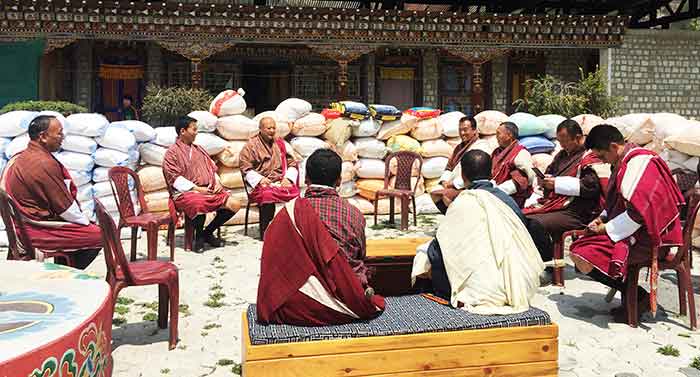
 The Taj Mahal will reopen after six long months on September 21 with full COVID-19 protocols. (Image: iStock)
  Mr Prabowo Subianto (left) and Mr Wei Fenghe also discussed the possibility of holding joint military drills and personnel training, and investments in Indonesia’s food estate projects. PHOTOS: PRABOWO SUBIANTO/FACEBOOK, REUTERS
 Many migrant workers are stranded overseas due to the coronavirus lockdown. PHOTO: ST FILE
  Deputy Prime Minister and Foreign Minister Phạm Bình Minh, left, and Thai Foreign Minister Don Pramudwinai during a virtual talk on Thursday. — VNA/VNS Photo
  The daily local demand for pork is currently between 8,000 and 9,000 pigs. The Kingdom must import 2,000-3,000 pigs daily to keep up. Photo Credit to Heng Chivoan.
