11 years on, Montara oil spill victims still fight for compensation #ศาสตร์เกษตรดินปุ๋ย

#ศาสตร์เกษตรดินปุ๋ย : ขอบคุณแหล่งข้อมูล : หนังสือพิมพ์ The Nation.

11 years on, Montara oil spill victims still fight for compensation

Aug 23. 2020Residents of East Nusa Tenggara affected by the 2009 Montara Oil Spill demand that the Thai-based oil company PTTEP Australasia and the Australian government pay compensation for damages caused by the incident. (Shutterstock/Korelidou Mila)Residents of East Nusa Tenggara affected by the 2009 Montara Oil Spill demand that the Thai-based oil company PTTEP Australasia and the Australian government pay compensation for damages caused by the incident. (Shutterstock/Korelidou Mila)

By Djemi Amnifu and Moch. Fiqih Prawira Adjie
The Jakarta Post

Friday marks the 11th anniversary of the Montara oil spill, in which hundreds and thousands of barrels of oil spilled into the Timor Sea following an explosion at an offshore rig.

Despite more than a decade of suffering the impacts, the affected residents of Timor Island in East Nusa Tenggara (NTT) are still fighting for justice and demanding compensation from rig operator PTT Exploration and Production (PTTEP) Australasia and the Australian government.

“NTT residents, especially the ones living in West Timor, are demanding that the Australian government immediately compensate more than 200,000 residents that have suffered [from the oil spill]. Some have even passed away,” Montara victim advocacy team head, Ferdi Tanoni, said on Friday in Kupang.

He added that his team demanded that President Joko “Jokowi” Widodo to write a letter to Australian Prime Minister Scott Morrison regarding the issue.

The oil spill occurred on Aug. 21, 2009, following an explosion at the Montara oil rig. For 74 days, gas and oil from the rig gushed in the Timor Sea, approximately 690 kilometers west of Darwin and 250 kilometers southeast of Rote Island, East Nusa Tenggara.

Ferdi alleged that then-Australian minister for natural resources and energy, Martin Ferguson, had downplayed the environmental impacts of the oil spill. He claimed a report issued by the Australian Government’s Montara Commission of Inquiry stated that it found “3,000 to 4,000 barrels of oil were spilled a day”.

“However, [the Australian government] quoted a baseless statement from the rig operator that between 300 and 400 barrels of oil were spilled every day,” Ferdi said.

“It is estimated that the total area affected by the spill was around 90,000 square km,” he went on to say.

The Australian Conservation Foundation and other environmental groups, Ferdi said, discovered that the oil spill had destroyed the ecosystem in the surrounding area, home to many marine animals and birds.

Local organization West Timor Care Foundation has published its documentation on the incident, which had affected the livelihood and health of 300,000 coastal residents in NTT. The spill was also estimated to cause long-term damages to uncharted tropical habitats as well as local tourism and the fishing and pearl farming industries.

PTTEP Indonesia general affairs manager Afiat Djajanegara said the company would abide by the laws of the country in which it was operating.

The oil company is currently facing a class-action lawsuit in Australia, filed by more than 13,000 seaweed farmers in NTT affected by the oil spill. The farmers demanded that the company compensate them Rp 2.7 trillion (US$182 million) for losses incurred after the incident.

“We’re still waiting for the court’s ruling on the lawsuit,” Afiat told The Jakarta Post on Friday.

The Australian Embassy in Jakarta was not immediately available for comment.

PTTEP previously proposed to the Indonesian government to initiate a $5 million out-of-court settlement through its corporate social responsibility scheme. The government, however, demanded the appointment of an independent assessor to survey the damage caused by the spill in order to get “a fair value of the damage”.

The Coordinating Maritime Affairs and Investment Ministry said the oil company had not agreed to the provision, though PTTEP had stated it would still wait for the ministry to approve such a plan for the settlement.

Coordinating Maritime and Investment Minister spokesperson Jodi Mahardi was not immediately available for comment on the matter.

S. Korea expands social distancing nationwide amid ‘grave situation’ #ศาสตร์เกษตรดินปุ๋ย

#ศาสตร์เกษตรดินปุ๋ย : ขอบคุณแหล่งข้อมูล : หนังสือพิมพ์ The Nation.

S. Korea expands social distancing nationwide amid ‘grave situation’

Aug 22. 2020Health Minister Park Neung-hoo calls the ongoing coronavirus spread Health Minister Park Neung-hoo calls the ongoing coronavirus spread “grave” at a briefing, Aug. 22, 2020. (Yonhap)
By Choi Si-young
The Korea Herald

South Korean health authorities said Saturday that they will expand nationwide heightened social distancing rules currently in place for Seoul and the surrounding areas only.

“We’re at a crossroads, in a very grave situation, for a nationwide coronavirus transmission. We’ll have to see to it if we fail to curb the spread now,” Health Minister Park Neung-hoo told a briefing, adding the expansion would take effect Sunday.

But the health minister said some municipalities with relatively few infections could opt to ease up the rules in their jurisdictions. Gangwon and North Gyeongsang Provinces are examples of those exceptions, according to the minister.

Under the heightened social distancing rules, any indoor meetings of 50 people or more and outdoor gatherings of 100 or more are banned, while high-risk facilities ranging from nightclubs, karaoke bars, buffets, gyms and private cram schools are shut down.

In-person church services would also be prohibited. Sports events would go on but without spectators on the side.

Starting Wednesday, elementary and middle schools, along with kindergartens, will have to reduce student attendance to one-third of the total, with high schools lowering them to two-thirds.

Schools are ordered to move classes online if they see cluster infections nearby.

The minister said the authorities would move to secure additional hospital beds to prepare for a growing number of infected patients.

Business plans in Vietnam thrown into turmoil amid COVID-19 spike #ศาสตร์เกษตรดินปุ๋ย

#ศาสตร์เกษตรดินปุ๋ย : ขอบคุณแหล่งข้อมูล : หนังสือพิมพ์ The Nation.

Business plans in Vietnam thrown into turmoil amid COVID-19 spike

Aug 02. 2020

By Vietnam News

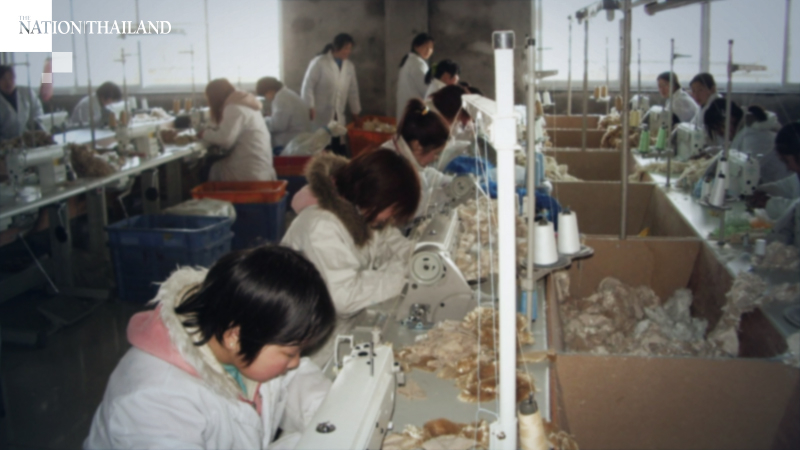
HÀ NỘI — Đặng Thanh Nga, 40, in Hà Nội called 10 sewers back to work for her garment factory just a few days ago as orders increased last week. Now she has no work to give them as all the orders have been cancelled.

The new wave of the COVID-19 pandemic came suddenly in Việt Nam last weekend and has continued to spread. The country recorded its first death related to COVID-19 on Friday.

Nga’s business, like many others, had just started recovering after more than four months since the first outbreak, but now it’s all change again.

In early July Nga’s factory had so many orders that she didn’t have enough workers, now after a series of new cases of the virus, customers kept calling to cancel orders.

Nga told Việt Nam News: “I am trying to get rid of the losses during the beginning of the year but now everything is worse again,” adding that the worse thing was she paid for all the cloth and materials and employees she called back.

She said she was considering shifting to sewing cloth masks.

Speaking to local media, Tiến Nam, deputy director of a construction enterprise in Hà Nội, said: “We have agreed to postpone the construction date scheduled to begin in early August. This is a difficult decision for both sides but there is no other way.”

According to the deputy director, it was the second time Nam’s construction project in Đà Nẵng has been delayed due to the pandemic. It should have broken ground in March, but that date was missed due to the pandemic.

“It is cancelled again now and I don’t know when to start the project,” said Nam who added, “Machinery has been fully transported to Đà Nẵng since a week ago, engineers and workers have mobilised for the construction work.”

At the beginning of the year, the company was forced to cut its workforce by half and slash the salaries of officials and leaders by 30-50 per cent. The enterprise had begun to recover, but the second wave of infections has left him uncertain about the future.

The new wave of COVID-19 has also affected event organisers.

A representative in a Hà Nội-based media company told Việt Nam News his customers had cancelled five events and he estimated more cancellations were on the way.

He said the latest cancelled event was a customer conference specialising in electrical equipment held in Đà Nẵng. The company has paid for all the air tickets, guest expenses, singers and hosts as well as half of the conventional costs.

In the retail industry, the same things have happened. According to local media, a Japanese retailer in HCM City has paid more than VNĐ500 million (US$21,800) for a competition to improve the skills of its employees operating the supermarket system. They have also been forced to delay the event.

It has been estimated that by the end of June, nearly 31 million workers were negatively affected by the pandemic. The General Statistics Office also reported an additional 5 million people will lose their jobs by the end of this year, while the pandemic caused more than 145,000 businesses to stop operations, dissolve or go bankrupt in the first half of the year.

Amidst the pandemic, there was still an opportunity for other sectors, especially in the field of anti-pandemic products.

Thân Đức Việt, General Director of May 10 Corporation said May 10 produced 5 million cloth masks, gaining revenue of about VNĐ35 billion, adding: “Thanks to the production, May 10 still maintains jobs for employees in the whole system.”

Phạm Thị Phương Hoa, general director of Hưng Yên Garment Corporation said the corporation had enough orders for the third quarter and was looking for new applications for the fourth quarter.

But success stories in the garment industry are not the majority.

Professor Đinh Trọng Thịnh from the Financial Academy said: “The number of businesses that are dissolved or shut down may increase if the pandemic is complicated and unrestrained.”

“If the second wave develops complicatedly, the economy may be in a state of turmoil and then businesses, especially small and medium-sized ones, will struggle to resist,” he added.

According to him, what producers need is orders to maintain trading activities, not only financial support from the Government. VNS

Myanmar aims to build special economic zones connecting greater Mekong sub region East-West economic corridor #ศาสตร์เกษตรดินปุ๋ย

#ศาสตร์เกษตรดินปุ๋ย : ขอบคุณแหล่งข้อมูล : หนังสือพิมพ์ The Nation.

Myanmar aims to build special economic zones connecting greater Mekong sub region East-West economic corridor

Aug 02. 2020Mawlamyine Industrial Zone in Mon State seen in 2019. (Photo-Maung Maung Shwe Myaing)Mawlamyine Industrial Zone in Mon State seen in 2019. (Photo-Maung Maung Shwe Myaing)
By Eleven Media

Myanmar will implement a Special Economic Zone project in Mon State and West Yangon Industrial Park project, said Union Minister for Investment and Foreign Economic Relations Thaung Tun during a Myanmar-Japan Investment Dialogue held via video conference on July 29.

The special economic zone in Mon State, the largest in Myanmar, will connect both the Indian and Pacific Oceans, and the Thilawa SEZ to Da Nang in Vietnam via the Greater Mekong Sub-Region East-West Economic Corridor, he said, according to the Facebook page of the Ministry of Investment and Foreign Economic Relations.  

Regarding the location of the new SEZ, Deputy Minister Set Aung explained how the new SEZ will be located in an area that can be easily connected to the Greater Mekong Sub-Region East-West Economic Corridor, in an area that would permit the construction of a deep-sea port and that could be easily connected to the Thilawa SEZ through the local transport networks.

The new SEZ and Thilawa SEZ could be connected as a single SEZ, he added.

To assist with location selection, an international advisory firm will also help prepare a feasibility study and master plan in a transparent manner. 

State Counsellor Aung San Suu Kyi in her keynote address via a video clip highlighted the role of Japanese investment in enabling the creation of thousands of well-paid quality jobs, and that quality job creation would remain at the heart of the Myanmar Sustainable Development Plan.

Najib found guilty on all 7 seven counts in 1MDB subsidiary case #ศาสตร์เกษตรดินปุ๋ย

#ศาสตร์เกษตรดินปุ๋ย : ขอบคุณแหล่งข้อมูล : หนังสือพิมพ์ The Nation.

Najib found guilty on all 7 seven counts in 1MDB subsidiary case

Jul 28. 2020

By The Star
KUALA LUMPUR

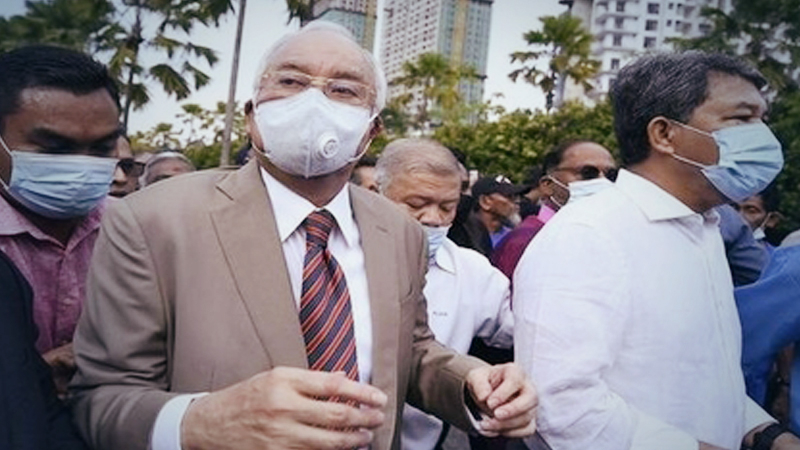
The Malaysian High Court has found former prime minister Najib Razak guilty on all seven counts in the first in a series of cases involving the 1Malaysia Development Bhd (1MDB) scandal.

Najib was charged with one count of abuse of power, three counts of criminal breach of trust and three counts of money laundering, all involving 42 million ringgit (Bt311.76 million) that had been misappropriated from 1MDB subsidiary, SRC International.

The former premier faces up to 20 years in jail and a fine for the abuse of power charge, up to 20 years in prison, whipping and a fine for the three criminal charges, and up to 15 years in jail and fine for the money-laundering charges.

Follow here for updates.

Read full story: https://www.thestar.com.my/news/nation/2020/07/28/najibs-src-trial-live-updates

Floods have left farmers with nothing #ศาสตร์เกษตรดินปุ๋ย

#ศาสตร์เกษตรดินปุ๋ย : ขอบคุณแหล่งข้อมูล : หนังสือพิมพ์ The Nation.

Floods have left farmers with nothing

Jul 28. 2020armers bring boatloads of paddy after harvesting from a flooded field in Chatmohar upazila of Pabna. Photo: Star

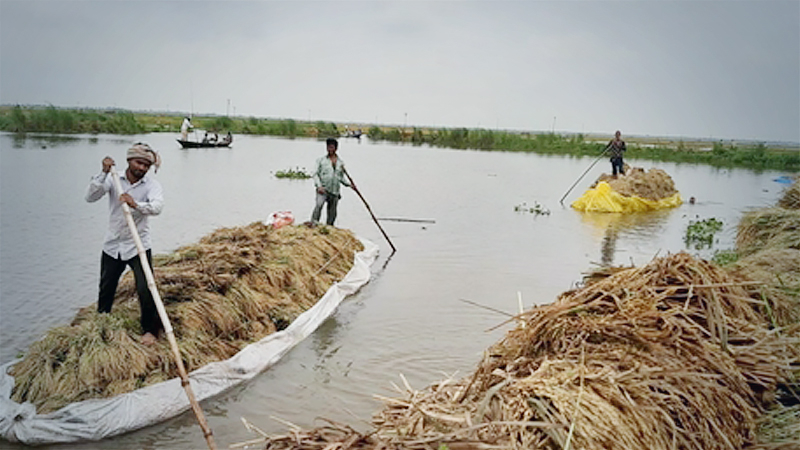
Farmers bring boatloads of paddy after harvesting from a flooded field in Chatmohar upazila of Pabna. Photo: Star

By The Daily Star/ ANN Editorial

The continuous floods this year have been particularly devastating to farmers who were already facing hardships in growing crops because of the pandemic, which left them with an acute shortage of farm hands and difficulties in selling their crops.

Now, thousands of hectares have been destroyed in northern Bangladesh as the water continued to rise, drowning the paddy fields, vegetable farms as well as seedbeds. It is estimated that 40 lakh people in 147 upazilas in 30 districts have been affected by the floods. Thousands of farmers have had their dreams shattered and all their hard labour has been washed away with the floods.

Our correspondents from various districts have reported a colossal loss of arable land and crops in Lalmonirhat, Kurigram, Tangail, Thakurgaon, Gaibandha, Nilphamari, Sirajganj, Bogura, Manikganj, Sunamganj and Sylhet, among others. It is not just paddy that has been destroyed but also huge amounts of maize, green chillies and other vegetables. In some areas, farmers were preparing to harvest jute, but those crops have become submerged as well. Seedbeds for Aman cultivation, which usually takes place in the monsoon season, have also been destroyed.

The hardships and utter despair that thousands of farmers are going through are not hard to imagine. It is reassuring that the government’s department of agriculture has said that they will help the farmers by providing them with seeds and fertilizer free of cost, and that farmers will be rehabilitated. But we cannot help but wonder whether this will be enough to make up for the losses, especially in the income they would have generated had their crops not been lost.

The government is therefore faced with a huge challenge in addition to the task of trying to keep farmers afloat during the pandemic. Now, the government should provide financial assistance to the farmers and their families, who have no crops or money to survive.

There are other concerns that will arise from the loss of so many crops. It will definitely adversely impact food security, which must be addressed immediately. With the scarcity that will inevitably follow the shortage of rice and vegetables, prices may spiral upwards, placing a greater burden on people already facing economic hardship. The possibilities of growing hunger, malnutrition and disease are quite high and the government must urgently strategise to address this new crisis. This includes making sure we have food security, not only for now, but also the near future. But first, the farmers must be rescued.  

Japan sets policy promoting digitization of society, remote work #ศาสตร์เกษตรดินปุ๋ย

#ศาสตร์เกษตรดินปุ๋ย : ขอบคุณแหล่งข้อมูล : หนังสือพิมพ์ The Nation.

Japan sets policy promoting digitization of society, remote work

Jul 19. 2020

By The Japan News

The Cabinet approved Friday four comprehensive plans on measures tackling the novel coronavirus, digitization, decentralization and reforming ways to live and work. The plans promote digitization of the public and private sectors, among other measures, against the backdrop of coronavirus infections.

The government also plans to strengthen disaster prevention and mitigation measures in response to severe torrential rains in Kyushu and other areas.

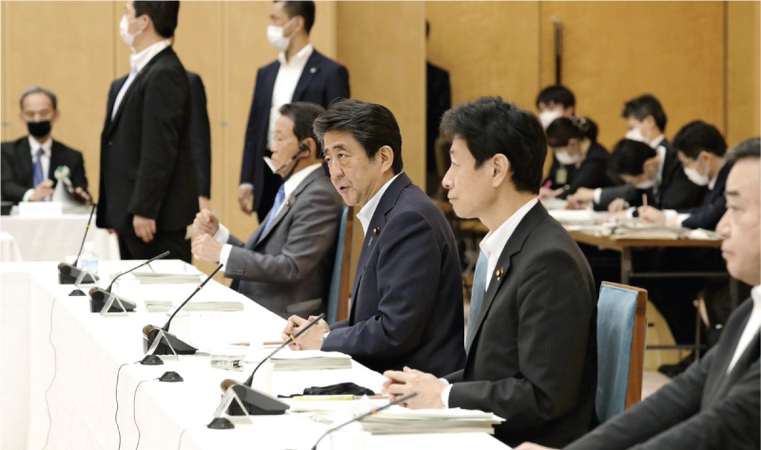
“We will boldly carry out drastic social change and pave the way for the future in the face of a historic crisis,” Prime Minister Shinzo Abe said at a joint meeting of the Council on Economic and Fiscal Policy and the Council on Investments for the Future on Friday.

The government aims to prevent the spread of infections and promote economic activities at the same time, returning the economy to a growth path led by domestic demand. It plans to compile an action plan to realize a “new normal” amid the pandemic by the end of the year.

Regarding digitization of the public and private sectors, the coming year will be defined as an “intensive reform period.” As for digitization of public administration, the Cabinet Secretariat will be given authority to manage experts and related ministries and agencies. On digital currency managed by central banks, the government will consider using it by cooperating with other countries, while the Bank of Japan will conduct verification tests.

Meanwhile, the government plans to improve its system for assessing coronavirus infections, as concerns about the risk of infections can cause economic stagnation. It will strengthen the testing of people with symptoms, as well as those who are not exhibiting symptoms but have had close contact with infected people, medical workers and hospitalized patients. The government also plans to establish a domestic production system for vaccines and drugs as soon as possible.

Measures to reduce the risks involved in disasters are more thorough in the final plans than in an earlier draft.

“It is an important responsibility of the state to protect the lives and livelihoods of the people,” the comprehensive plans stipulate. “The government will secure necessary and sufficient budget to implement numerical targets systematically from a medium- to long-term perspective.”

The growth strategy action plan calls for the spread of part-time jobs and side jobs as an increasing number of people have become used to working remotely. The government plans to introduce a system under which companies manage the working hours of their employees by, for example, having employees report their hours themselves.

The regulatory reform implementation plan calls for a “radical overhaul” of practices such as preparing and submitting documents and affixing seals, which are currently necessary for administrative procedures. It also called on ministries and agencies to set targets to move administrative procedures online.

To rectify the concentration of workers in Tokyo, the government will promote the use of IT in urban areas, mainly in other major cities and ordinance-designated cities. The basic policy on towns, people and the creation of work calls for the government “to provide strong support to municipalities seeking to lure satellite offices” of companies looking to move or set up their offices in remote areas.

Speech

Online teaching and learning system under way at universities, colleges #ศาสตร์เกษตรดินปุ๋ย

#ศาสตร์เกษตรดินปุ๋ย : ขอบคุณแหล่งข้อมูล : หนังสือพิมพ์ The Nation.

Online teaching and learning system under way at universities, colleges

Jul 19. 2020

By Eleven Media

An online teaching and learning system will be implemented in order that the university students may not loss their learning opportunities during the COVID-19 era, according to the directive letter issued by the Rectors’ Committee.

This directive came after the tele-meeting of the central executives by the Rectors’ Committee, on 13 July.

The committee has urged universities, degree colleges and colleges to prepare for online teaching and learning system.

The committee also directed them to compile the list of emails for having easy links between teachers and students, the subject-wise facebook grouping and setting up the networks between the management board, course affairs department and teaching departments. The universities are to prepare for online teaching, learning curriculum contents and blended programs.

Dr. Aung Aung Min, Rector of Yadanabon University said: “This system is not the online teaching alone. Due to COVID-19, the teaching pattern will not return to normal. We will have to change all teaching system. The university is trying to set up the inter-department networks.

The universities, degree colleges and colleges have had to suspend the first-semester exams since the first case of COVID-19 was reported in March.

Likewise, the processes in the universities of distance education have stopped.

On 27 June, the Higher Education Department directed the relevant officials to submit the enrollment plan for the distance education students and the current plan.

The universities, degree colleges and colleges are not allowed to resume the exams for the remaining two subjects. There are more than 300,000 day university students and around 600,000 distance students.

LegCo president: Foul acts by rowdy lawmakers at record high #ศาสตร์เกษตรดินปุ๋ย

#ศาสตร์เกษตรดินปุ๋ย : ขอบคุณแหล่งข้อมูล : หนังสือพิมพ์ The Nation.

LegCo president: Foul acts by rowdy lawmakers at record high

Jul 19. 2020

By Chen Zimo in Hong Kong
China Daily

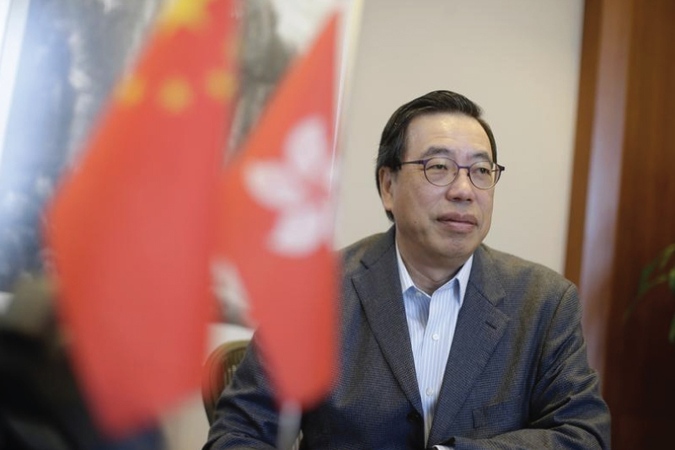
Legislative Council President Andrew Leung Kwan-yuen took a swipe at unruly opposition lawmakers on Friday as the legislature wrapped up its four-year term, pointing to the record number of foul acts that had disrupted and even paralyzed the council’s operations.

He said it was like a roller-coaster ride for the chamber with worsening order at meetings, and warned that future executive-legislative relations may be dictated by the overall political environment.  

Twenty-five legislators had to be evicted, some forcibly, from meetings 97 times for unruly behavior – 30 percent more that in the previous legislative term. 

Leung blamed the city’s general political climate for the discord in the legislature, and urged future LegCo members to understand that serving the people of Hong Kong remains their primary objective. He said they should learn to cooperate with and respect others with different views.

Nomination of candidates for the upcoming legislative election will begin on Saturday. Candidates will compete for 70 seats – 35 each from the geographical and functional constituencies – on Sept 6.

Leung recalled that one of the most appalling incidents was when three opposition lawmakers hurled rotten plants and foul-smelling liquids during two council meetings on May 28 and June 4 in an attempt to disrupt the proceedings. The three were later ordered to pay a total of more than HK$252,000 for disinfection and cleaning work.

According to Leung, the legislative session had lost more than 200 hours of meeting time due to the extensive damage caused to the LegCo building and its facilities by radical protesters on July 1 last year, repeated filibustering by the opposition during bill-vetting House Committee meetings from October to May, and the coronavirus pandemic.

As a result, the sixth-term LegCo session saw fewer meeting hours than the previous two terms, with only 141 meetings held, taking up 1,711 hours.

Leung said the government had introduced 90 bills in the past four years, 73 of which had been passed as of Friday afternoon. Notable high-profile bills included the Guangzhou-Shenzhen-Hong Kong Express Rail Link (Co-location) Bill passed on June 14, 2018, and the National Anthem Bill, which was passed on June 4.

Metro Manila still has more than 75% of virus cases in PH #ศาสตร์เกษตรดินปุ๋ย

#ศาสตร์เกษตรดินปุ๋ย : ขอบคุณแหล่งข้อมูล : หนังสือพิมพ์ The Nation.

Metro Manila still has more than 75% of virus cases in PH

Jul 19. 2020

By Inquirer

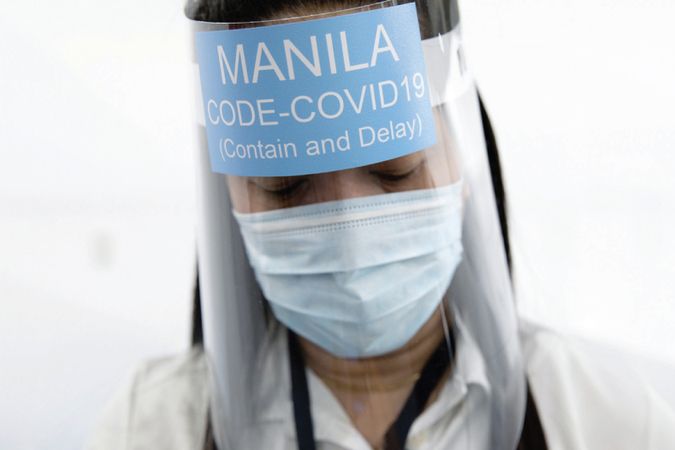
MANILA, Philippines — Metro Manila still accounts for nearly half of all the active COVID-19 cases in the country with health officials reporting a national caseload of 65,304 from the 2,357 new cases tallied on Saturday.

Of the new cases, Metro Manila accounted for more than three-quarters with 1,824 cases. Laguna was a far second with 105 cases, followed by Cavite with 62, Cebu with 49, and Rizal with 39.

Data from the Department of Health (DOH) show that of the 38,183 active cases as of Thursday, 17,841 are from Metro Manila. The number of active cases in the capital region grew by 4,144 from Thursday last week.

There were also 113 patients who succumbed due to severe respiratory disease, bringing the toll to 1,773 since the country’s first death in March.

FEATURED STORIES

NEWSINFO

Gov’t nurses get pay hike 18 years overdue

NEWSINFO

Big names among first to go in ABS-CBN ‘bloodbath’

NEWSINFO

Deputy speaker echoes Duterte: Just sell ABS-CBN

Light at end of tunnel

Central Visayas accounted for 87 of the new fatalities, followed by Metro Manila with 23. Calabarzon, Bicol and Western Visayas each had one fatality.

But there’s a very small light at end of the country’s COVID-19 tunnel, Health Undersecretary Maria Rosario Vergeire said on Saturday, as the case and mortality doubling time appear to be lengthening.

As of Friday, the national case doubling time was at 8.47 days, longer than the 6.27 days recorded on June 1 while the mortality doubling time was at 11.97 days, an improvement from 8.28 days on June 1.

“[But] the value of ‘case doubling time’ is not used to predict or estimate how many cases there will be in the future. Other methodologies, such as disease modeling or projections, are done to compute future case numbers. Instead, case doubling time was generated by analyzing how many days it took for the new number of cases to double,” she said.

Mathematicians from the University of the Philippines, however, paint a grimmer model and have urged the government to reimpose a stricter quarantine given the rise in new infections and hospitalizations in the capital region.

President Duterte initially agreed to the suggestion from UP but later upheld the recommendation of Interior Secretary Eduardo Año and COVID-19 chief implementer Carlito Galvez to allow local governments to step up their quarantine measures.

There are now a total of 22,067 patients who have gotten well from COVID-19 with the recovery of 321 more patients but the metropolis would have to do more over the next two weeks, especially since 74 percent of the 5,987 hospital beds dedicated to COVID-19 patients are already occupied.

Based on DOH data as of Friday, there are only 188 intensive care beds, 177 ward beds and 645 isolation beds left available for the entire capital region.

Nearly half of all mechanical ventilators are also in use, with 419 still vacant.