Vietnamese food strives to appeal to Thai palate

ศาสตร์เกษตรดินปุ๋ย : ขอบคุณแหล่งข้อมูล : หนังสือพิมพ์ The Nation

https://www.nationthailand.com/ann/30377256

Vietnamese food strives to appeal to Thai palate

Oct 10. 2019
Visitors at the “Vietnamese Week in Thailand 2019”, held by Vietnam’s Ministry of Industry and Trade and Central Group, in Bangkok in the middle of September. Photo: Viet Nam News/ANN

Visitors at the “Vietnamese Week in Thailand 2019”, held by Vietnam’s Ministry of Industry and Trade and Central Group, in Bangkok in the middle of September. Photo: Viet Nam News/ANN
By Viet Nam News
Asia News Network
Hanoi

258 Viewed

After a long day attending the National Assembly session, Thai Deputy Prime Minister Jurin Laksanavisit must have worked up an appetite.

A friend led him for a low-key meal at a humble booth in the CentralWorld Mall, in the heart of Bangkok.

Jurin and his pal, Vietnam’s Deputy Minister of Industry and Trade Do Thang Hai, found themselves eating a traditional Vietnamese street dish – Pho (noodles) – on a homely wooden table, served by a Vietnamese chef.

The two officials were enjoying themselves after attending the “Vietnamese Week in Thailand 2019”, held by Vietnam’s Ministry of Industry and Trade and the Central Group in Bangkok last month. The aim of the event was to promote Vietnamese goods and further the image of Vietnam.

They were served by 30-year-old Vietnamese chef Vu Ngoc Duc, who is one of 45 Vietnamese businesspeople travelling to Bangkok to bring their products to the food-focused event and hoping to fill up the shelves of Thai supermarkets.

Spanning a small patch of the fair’s 1,000-square-metre exhibition area, Duc’s booth buzzed with hundreds of visitors every day. After just two out of a total of five days, Duc and his team sold a total of more than 500 bowls of Pho, a really high number.

Do Thang Hai told Viet Nam News that Vietnamese agricultural products and foodstuffs, which were thought to face fierce competition when coming to Thailand, have witnessed positive growth over the years.

However, the popularity of Vietnamese food is still modest in Thailand, where there is a rich culinary history and consumers are rather picky when it comes to foreign food.

Last year, bilateral trade between Vietnam and Thailand reached US$17.5 billion (Bt530 billion). However, Vietnam’s exports to Thailand were only one-third of its imports from Thailand.

In the first eight months of 2019, trade between the two countries reached $11.9 billion, of which, Vietnam’s exports to Thailand were only half of Vietnam’s imports from Thailand.

Thanks to increasing collaboration with Thai distributors and retailers, more and more Vietnamese businesses are exporting to the neighbouring country.

The “Vietnamese Week in Thailand 2019” showed the vision and determination of Vietnam’s Ministry of Industry and Trade and the Central Group in strengthening economic relations, connecting investment and businesses by exchanging products and services, Jurin said.

Tops Market, the supermarket chain under the Central Group, has imported and distributed Vietnamese food commodities on shelves across Bangkok for years.

Pimjai Navanukroh, Tops Market General Manager, told Viet Nam News their system had imported about 500 food products of all kinds from Vietnam. The bestsellers were instant Pho (noodle) and coffee.

“Our imports of Vietnamese food products increase 10 per cent every year. Thai consumers like Vietnamese Pho, as it has a similar taste to Thai traditional noodles. Spring rolls also taste good but need changing a little bit to match Thai tastes. Vietnamese dragon fruit is also favoured by Thai consumers as they are sweeter than local dragon fruits,” Pimjai said.

At a Tops supermarket in Huai Khwang district, a pack of Vietnamese Vifon branded Pho costs Bt17 (13,000 Vietnamese dong), a kilogram of Vietnamese dragon fruit goes for Bt75. Each day, this supermarket sells about 100-200 packs of Vifon Pho and 50 kilograms of dragon fruit.

“To penetrate the Thai market, last year we participated in the Vietnamese Week to introduce our products and survey consumers. Attending this event enabled us to approach premium supermarket chains’ consumers in Thailand,” said Bui Phuong Mai, chairwoman of Vifon.

Chomphunut Engkarawa, a Thai IT technician, told Viet Nam News that he liked Vietnamese coffee and cashew nuts. “Vietnamese coffee has a strong flavour and competitive prices, cashew nuts are sweet and crunchy, I often buy Vietnamese coffee and cashew nuts as gifts for my colleagues,” he said.

Returning from Vietnamese Week, Nguyen Huynh Phu Lam, general director of Hai Binh Cashew Joint Stock Company, said his company had its first consignment of cashew nuts to Thailand.

Thanks to its tie-up with giant Thai distributor Central Group, he said exporting was now easier for his company.

Initially, Hai Binh sold its products at Big C and Go! retail chains in Vietnam through a small and medium-sized enterprises (SME) support programme launched by Central Group in Vietnam, he said.

“SME is a meaningful programme to support small and medium-sized enterprises in Vietnam and to draw Thailand and Vietnam closer in terms of diplomacy and trade.”

“When Hai Binh cashew products were introduced to Big C and GO! supermarkets in Vietnam, they were well received for their high quality and eco-friendly design.”

Then Hai Binh was selected to participate in the “Vietnamese Week” event for the first time last year. The company signed a deal with Central Group to execute its first export order this year.

Besides Hai Binh, there were also Ba Tu cashew, Thanh Quoc fish sauce, Tinh Nguyen salt, Dat butter, and Dakmark coffee.

Nick Reitmeier, executive vice president, Food Halls, International Food and Alcohol Buying, Central Group, told Viet Nam News that branding and design are key factors, besides quality, that Vietnamese companies need to focus on when exporting to Thailand.

“Some brands are well-known in Vietnam, but here you are not recognised, so you must be outstanding to attract customers. You are selling goods to customers that know nothing about your brands,” Reitmeier said.

Some packaging designs would work effectively in Vietnam but they may not work in the international market because of the differences in language, hobbies and styles, Reitmeier added.

“Sometimes, we run into some cases where the products do not have usages on their labels. For example, I bought a pack that looks like rice crackers or corn crackers, but when I opened it, they were uncooked. They need to be fried, but there is no instruction guiding the time or temperature,” Reitmeier said.

HONG KONG LEADER WON’T RULE OUT SEEKING CHINA’S ASSISTANCE TO TACKLE ‘LAWLESS RIOTERS’

ศาสตร์เกษตรดินปุ๋ย : ขอบคุณแหล่งข้อมูล : หนังสือพิมพ์ The Nation

https://www.nationthailand.com/ann/30377255

HONG KONG LEADER WON’T RULE OUT SEEKING CHINA’S ASSISTANCE TO TACKLE ‘LAWLESS RIOTERS’

Oct 09. 2019
Hong Kong Chief Executive Carrie Lam speaks during a press conference at the Central Government Complex on October 4 in Hong Kong. Getty Images

Hong Kong Chief Executive Carrie Lam speaks during a press conference at the Central Government Complex on October 4 in Hong Kong. Getty Images
By Elizabeth Law
The Straits Times
Asia News Network
Hong Kong

215 Viewed

The violence in Hong Kong has reached a state of lawlessness and the “rioters” are destroying the city, leader Carrie Lam said yesterday, adding that she will not rule out accepting help from mainland China in tackling the increasingly violent pro-democracy protests.

Still, she insisted that Hong Kong is equipped to handle the current situation on its own as the city braces itself for further demonstrations throughout the week.

Since a ban on the wearing of masks was announced last Friday, thousands have taken to the streets in protest, sometimes with acts of violence targeting metro stations, Chinese banks and Chinese-linked businesses.

“When rioters destroy malls and MTR stations, they call them dead things. But what they are doing is destroying Hong Kong,” said the chief executive at a press conference ahead of the Executive Council meeting.

“These are all illegal acts that have sent Hong Kong into a very dangerous state. [The rioters] have no bottom line and are completely lawless.”

But the events of the past few days are not a sign the ban is unsuccessful, she said, asking for time for the law to take effect.

Other than helping with law enforcement, she said the ban is meant to deter those who may feel emboldened by anonymity to break the law.

Lam had invoked an emergency legislation to order the mask ban.

But she denied any plans to use the emergency ordinance any further at this point.

On Monday evening, protesters took to the streets across the city for the fourth consecutive night in areas such as Mong Kok, Yuen Long, Tseung Kwan O and Sha Tin, where they marched for the right to wear a mask in public.

Groups of protesters trashed closed MTR stations around Sha Tin and targeted Chinese-owned businesses in a nearby shopping mall, while others started fires and surrounded police stations.

Since Saturday, 77 people have been arrested for violating the mask ban, police said yesterday.

Separately, Legislative Council president Andrew Leung said it cost HK$40 million (Bt153 million) to fix the damage to the LegCo building after protesters stormed and trashed it on July 1, vandalising the legislative chamber.

The LegCo will reconvene on October 16, when Lam is also set to deliver a policy address.

Yesterday, as schools and offices reopened after a public holiday weekend, rail operator MTR Corporation restarted operations at most of its 93-station network, but said it would shut earlier at 8pm to facilitate repair works.

Thirteen metro and light rail stations remained shut.

Most of these are in the New Territories and had been targeted on Monday night, when protesters prised open shutters, then took metal bars and hammers to ticketing machines, turnstiles and even closed-circuit television cameras.

Long queues could be seen at bus stations early yesterday morning for the MTR’s free connecting buses, with many among them students in uniform and office workers, local TV footage showed.

Hong Kong has been rocked by nearly four months of unrest, with close to a million protesters earlier taking to the streets against a contentious extradition Bill.

While the bill has been withdrawn, the protests have morphed into an anti-government movement calling for more democracy.

Beijing has repeatedly accused “foreign forces” of driving the protests, which it calls a “colour revolution”, warning the unrest could not go on indefinitely.

An item in Hong Kong’s mini Constitution, the Basic Law, allows it to seek Beijing’s intervention if the local government deems itself unable to manage the city any longer.

The People’s Liberation Army maintains a garrison in the city but generally keeps a low profile.

Asean headquarters ‘will remain in Jakarta’

ศาสตร์เกษตรดินปุ๋ย : ขอบคุณแหล่งข้อมูล : หนังสือพิมพ์ The Nation

https://www.nationthailand.com/ann/30377254

Asean headquarters ‘will remain in Jakarta’

Oct 09. 2019
File photo/credit: Asean.org

File photo/credit: Asean.org
By The Jakarta Post
Asia News Network
Jakarta

206 Viewed

Asean’s headquarters would remain in Jakarta even if Indonesia moves its capital to Kalimantan, Asean Secretary-General Lim Jock Hoi said.

He likened the present Indonesian capital to New York where the United Nations is located.

“This is news for all of us that [Indonesia] will be moving the capital to Kalimantan, but as far as Asean is concerned the Asean Secretariat will not move to Kalimantan because we just got a new building,” he said at the Economic Research Institute for Asean and East Asia’s (ERIA) editors’ roundtable in Bangkok on Sunday.

“And we believe that Jakarta will be the capital of Asean.”

The plan to move the capital city off Java was first revealed by Indonesia’s National Development Planning Agency chief, Bambang Brodjonegoro, in April. The new capital will serve as the centre of government, while Jakarta would remain the country’s business and economic centre.

In late August, President Joko “Jokowi” Widodo officially announced that two regencies in East Kalimantan ‒ North Penajam Paser and Kutai Kertanegara ‒ are to be the site of the country’s new capital. The relocation is intended to help ensure the equal spread of development across the country and to take some of the burden off Jakarta.

The announcement came about two weeks after Jokowi inaugurated the new building for the Asean Secretariat in Jakarta. The event was held on Asean Day, which falls every August 8 to commemorate the establishment of Asean by its five founding members in 1967.

Funded by Indonesia, the new Asean Secretariat building is located next to its previous building in South Jakarta and has two 16-floor towers. It cost about 500 billion rupiah (Bt1.1 billion) to build. Construction started in 2018, a year after the Jakarta administration granted the Foreign Ministry the 1.3-hectare plot of land on JI Trunojoyo in South Jakarta, right next to the old building. The new building is equipped with 30 meeting rooms and each Asean member country has its own room.

“We would like to see this like what we have in New York where the United Nations [is seated] and the Asean Secretariat will be the anchor for the Asean capital in Jakarta,” Lim said.

With 93 ambassadors accredited to Asean, 74 of them based in Jakarta, Lim said Asean was adamant that its headquarters would remain in Jakarta, which since 2012 has been affirmed as the diplomatic capital of Asean.

“It is possible because we will strengthen our presence in Jakarta and there’s no way that we can move to Kalimantan,” Lim said.

China dubs HK protests ‘colour revolution’, hints it is losing patience

ศาสตร์เกษตรดินปุ๋ย : ขอบคุณแหล่งข้อมูล : หนังสือพิมพ์ The Nation

https://www.nationthailand.com/ann/30377132

China dubs HK protests ‘colour revolution’, hints it is losing patience

Oct 06. 2019
Riot police secure an area during a demonstration in Yuen Long district on Saturday (October 5) in Hong Kong. Hong Kong’s government invoked emergency powers on Friday to introduce an anti-mask law which bans people from wearing masks at public assemblies as the city remains on edge with the anti-government movement entering its fourth month. Photo: Getty Images

Riot police secure an area during a demonstration in Yuen Long district on Saturday (October 5) in Hong Kong. Hong Kong’s government invoked emergency powers on Friday to introduce an anti-mask law which bans people from wearing masks at public assemblies as the city remains on edge with the anti-government movement entering its fourth month. Photo: Getty Images
By The Straits Times
Danson Cheong

531 Viewed

The protests in Hong Kong are a “Hong Kong-version of a colour revolution” and cannot be allowed to continue indefinitely, China has said in its harshest comments yet on the violence in the city.

The comments from the central government’s Hong Kong and Macau Affairs Office (HKMAO) signal a turning point and show that Beijing’s patience is wearing thin, said experts who believe they could herald increasingly hardline actions from the mainland in the days ahead.

On Friday (October 4), Hong Kong’s embattled Chief Executive Carrie Lam invoked emergency powers to ban face masks at public protests, effective from Saturday.

Many protesters have donned face masks at demonstrations over the last four months both to hide their identities and also to protect themselves from tear-gas fired by police.

The mask ban was welcomed by officials on the mainland, with HKMAO spokesman Yang Guang saying in a lengthy statement on Friday evening that the “current chaos in Hong Kong cannot continue indefinitely”.

“Now it has reached an important moment to take a clearer attitude, and more effective measures to stop the violence and chaos,” said Mr Yang.

The Chinese Communist Party’s official People’s Daily also echoed its support in a rare front-page editorial on Saturday.

“It should be clear that for the chaos in Hong Kong to persist until today, one important reason is that violent protesters mask themselves to conceal their identities, so they can openly challenge the law, recklessly use violence, and destroy society’s peace,” it said.

The HKMAO statement went on to say that the situation in Hong Kong – triggered initially by an extradition Bill that has since been suspended and is due to be withdrawn soon – has “completely changed”.

“Under the intervention of external forces it is evolving into a ‘Hong Kong version of a colour revolution’,” said the HKMAO’s Yang, using the same term that Beijing used to describe the 2014 Occupy Central protests.

Previously, Beijing had only gone so far as to say that the current wave of unrest showed signs of a colour revolution, referring to the uprisings that broke out in the former states of the Soviet Union in the noughties.

Professor Lau Siu Kai, vice-president of the Chinese Association of Hong Kong and Macau Studies, a semi-official advisory body set up by Beijing, said the comments were significant as the central government saw the situation as deteriorating with the level of violence escalating.

“From Beijing’s point of view the situation is very serious, that’s why both the Hong Kong and central government cannot avoid to wait to crush the violence in Hong Kong,” Prof Lau told The Straits Times, adding that this was why Lam’s administration had moved to introduce the anti-mask laws on Friday, after China’s national day on Tuesday.

The laws sparked a wave of protests, leading to a city-wide closure of the MTR system on Friday and Saturday.

Associate Professor Alfred Wu of the Lee Kuan Yew School of Public Policy also said that with Beijing clearly defining the unrest in Hong Kong, its approach will get more hardline.

Police actions, which have resulted in two protesters shot by live ammunition so far, will get more violent, he said, adding that a “worst-case scenario” will involve intervention by the mainland’s paramilitary force, the People’s Armed Police.

“By invoking emergency powers, it’s a sign that the Hong Kong government actions will continually escalate, there is no going back now,” said Prof Wu.

Beijing’s statements could also be a response to the Hong Kong Human Rights and Democracy Act being proposed in the US, he said.

US House of Representatives Speaker Nancy Pelosi tweeted on Friday evening that the anti-mask law “does not answer the people’s grievances, and only intensifies concerns about freedom of expression”.

It prompted a response from the editor of nationalist tabloid Global Times, Hu Xijin, who tweeted: “So quick to instigate, showing once again what you want to see in Hong Kong most is turmoil, not democracy. Canada, the US ally, bans mask at protest. The US can stage the beautiful sight of masked protest.”

Vietnam’s employee turnover rate alarming: report

ศาสตร์เกษตรดินปุ๋ย : ขอบคุณแหล่งข้อมูล : หนังสือพิมพ์ The Nation

https://www.nationthailand.com/ann/30377130

Vietnam’s employee turnover rate alarming: report

Oct 06. 2019
Workers assemble electronic parts at the Khai Quang industrial park in Vietnam's Vinh Phuc province. Photo: Viet Nam News/ANN

Workers assemble electronic parts at the Khai Quang industrial park in Vietnam’s Vinh Phuc province. Photo: Viet Nam News/ANN
By Viet Nam News

425 Viewed

The employee turnover rate in Vietnam has been on the rise in the last three years, reaching an alarming rate of 24 per cent this year, according to a report by human resource consultancy Anphabe.

The report, titled “The Leavers”, polled 674 enterprises in 24 industries that employ more than 75,400 experienced employees.

At the staff level, those who earn a salary of below 10 million dong (Bt13,000) have the highest rate of leavers of 29 per cent, the report showed.

But at higher levels such as team leader, manager and director, the higher the salary, the greater the rate of quitting, especially in four fields: marketing, sales, IT and finance.

The ratio of people quitting is much higher in the 9X generation than other age groups.

More than 17 per cent plan to leave within the next one year despite being happy with the current workplace.

People working for less than two years at their job are the most likely to quit their job, especially at the management and director level.

Looking across salary ranks, among those with salaries of over 80 million dong, every other employee is thinking of leaving.

The most attractive industries for employees besides their current one are banking, real estate, financial services, wholesale, retail, commerce, food and hotels and hospitality.

The number of new businesses is increasing rapidly, leading to a situation where they would have to hunt for talent from existing companies.

Around 32 per cent of people working in large enterprises have the desire to start a business in future.

Vietnam is among the top 10 countries in the Asia Pacific from where people emigrate and faces a brain drain.

Nearly 65 per cent of employees with a salary of 80 million dong or more were contacted three times on average by headhunters in the past year.

“Higher salaries or promotion should not be the only solution as they only provide a temporary effect; the goal should be to increase engagement, effort and loyalty,” Thanh Nguyen, CEO of Anphabe, said.

“If 10 per cent is the ideal turnover rate, which allows an organisation to remain stable and transformable with new people every 10 years, then obviously we can’t be at ease with the current 24 per cent.”

On the same day, Anphabe and market research firm Intage Vietnam kicked off the Vietnam Best Places to Work Survey, an annual study of workforce and workplace trends.

This year the survey, supported by the Vietnam Chamber of Commerce and Industry, will expand its research to Generation Z (born from 1997 onwards).

Anphabe will coordinate with the HCM City Student Support Centre to poll more than 25,000 students at more than 50 universities around the country.

The survey results will be announced next March.

A tranquil temple retreat in Japan

ศาสตร์เกษตรดินปุ๋ย : ขอบคุณแหล่งข้อมูล : หนังสือพิมพ์ The Nation

https://www.nationthailand.com/ann/30377129

A tranquil temple retreat in Japan

Oct 06. 2019
Typical wooden sliding doors are seen in room with a garden view at Kakurinbo, a Buddhist temple in Japan's Yamagata prefecture. Photo: Natalie Compton/Washington Post.

Typical wooden sliding doors are seen in room with a garden view at Kakurinbo, a Buddhist temple in Japan’s Yamagata prefecture. Photo: Natalie Compton/Washington Post.
By The Washington Post
Natalie B Compton

369 Viewed

A typical visit to Japan for many tourists consists of a few days in Tokyo, a train over to Kyoto, maybe Osaka. You stay in a hotel full of amenities, or, if you’re on a budget, you might be staying in a capsule hotel or hostel.

That trip would be incredible. You’d learn about the country’s most prominent cities, eat and drink amazing things, and inevitably start planning your next trip back in your head on the way home.

But for an off-the-beaten-path travel experience in Japan, consider the shukubo.

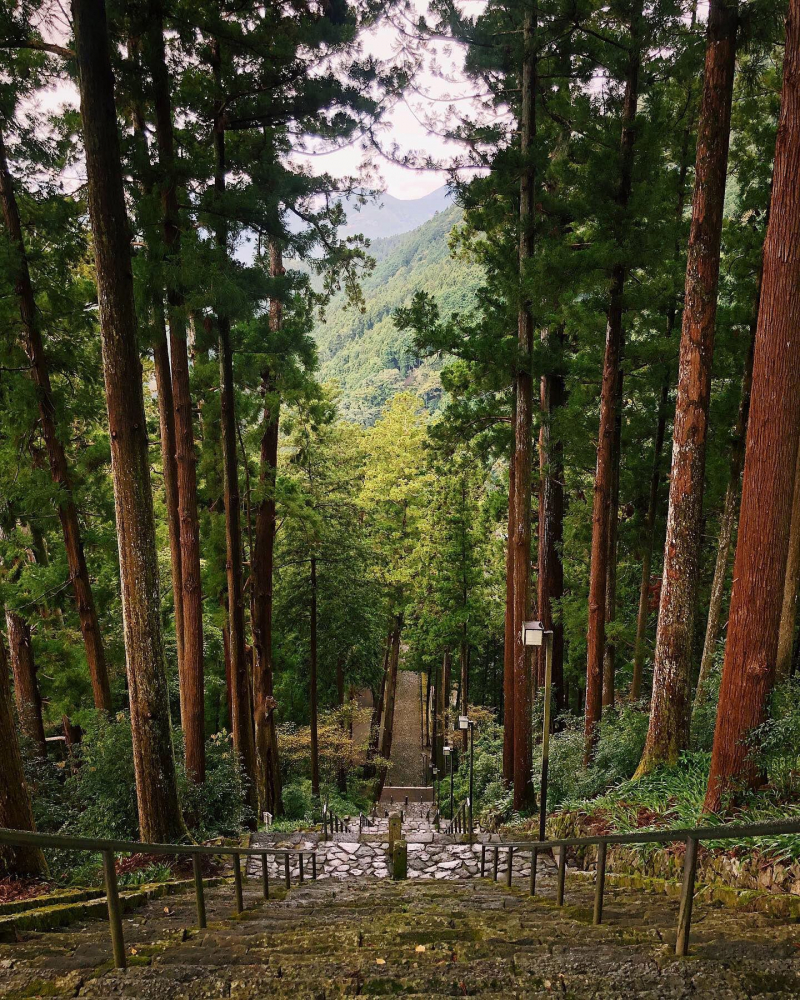
The "Steps to Enlightenment" at Kakurinbo, a Buddhist temple in Japan's Yamagata prefecture. Photo: Natalie Compton/Washington Post.

The “Steps to Enlightenment” at Kakurinbo, a Buddhist temple in Japan’s Yamagata prefecture. Photo: Natalie Compton/Washington Post.

A shukubo is a Buddhist temple in Japan that hosts travellers overnight. Traditionally, temples in Japan have welcomed travellers visiting for religious reasons. Pilgrims have long enjoyed retreating to temple stays for days or more, spending time praying, copying religious scripture, hiking and meditating.

Today, the temple stay is appealing to a new demographic of travellers. Regardless of religious or cultural background, the experience can be transformative.

It begins when you take your shoes off at the entrance. Your focus shifts from the chaos of your own life to the beauty and calm of the temple. A sense of peace falls over you and lingers throughout your stay.

When you stay in a hotel or Airbnb, the attraction is the city around you. At a temple, the accommodation is the attraction. There’s joy in wandering the halls, walking around the property and taking part in routines normally reserved for monks and priests, like copying sutras (Buddhist scripture) as a mindfulness activity and eating shojin ryori vegetarian cuisine.

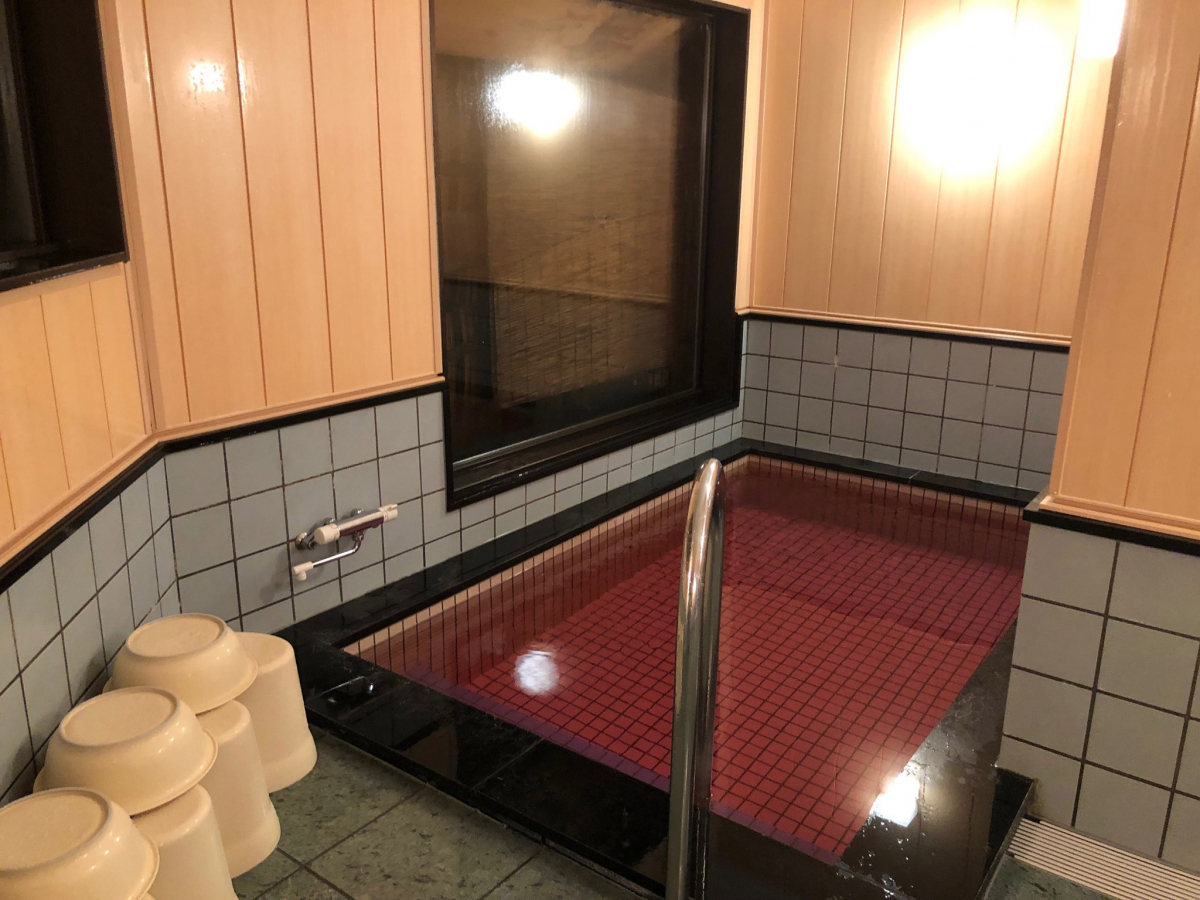
Then there’s the serenity of a traditional Japanese environment. The sound of sliding back the wooden door to your tatami mat room becomes an autonomous sensory meridian response. Soaking in the large, often communal baths makes luxury out of something normally routine.

A bathing house at Kakurinbo. Photo: Natalie Compton/Washington Post.

A bathing house at Kakurinbo. Photo: Natalie Compton/Washington Post.

The Internet has helped the shukubo renaissance. Last year, a website was launched for the Terahaku (or temple stay) project, an effort to make this form of lodging more accessible by putting them online. The project started with 100 options, like the 1,300-year-old Mii-dera shukubo in Shiga prefecture, but the goal is to list 1,000 over the course of three years.

There are ways to book a temple stay outside of the Terahaku project, too. The Koyasan Shukubo Association built a website to promote its temple stays in the Koya region of Wakayama Prefecture. Some shukubo take marketing into their own hands by creating English-language websites and putting their accommodations on Booking.com, Airbnb and Japanican.com. Located in Minobusan ‒ a mountain village in Yamanashi prefecture ‒ Kakurinbo has been around for 550 years, making it one of the oldest in the region. If you’re coming from Tokyo, there’s a bus that takes you right up to the village. From the last Minobusan bus stop, it’s a 10-minute walk to this shukubo. You can also take the train from Tokyo to Minobu Station, where you’d get a taxi cab to take you into the mountains and directly to the temple.

Kakurinbo is run by husband-and-wife-owners Zeryo (the temple’s priest) and Junko Higuchi. Since moving into Kakurinbo in the 1990s after marrying Zeryo, Junko has mostly welcomed Japanese guests. Five years ago, a couple of Swedish cyclists stumbled on their shukubo by mistake, inspiring Junko to seek more foreign guests. She put Kakurinbo online, hired students to make a foreigner-friendly brochure and map of the area, and created Airbnb Experiences to attract day-trip customers in addition to overnight ones.

Junko is trying to revitalise Minobusan. The town’s population has dwindled in the past few decades, and despite being one of Japan’s most important religious areas, Minobusan gets left out of most guidebooks. Junko hopes tourism will help breathe new life into the village.

And for a town snubbed by guidebooks, there’s a lot going on in Minobusan for travellers.

Up the road from Kakurinbo is Minobusan Kuonji Temple, the most important pilgrimage site for devotees of Nichiren Buddhism. Visitors can walk the 287 stone “steps to enlightenment”, ending up at the stunning structures that make up this temple, more than 700 years old. There are two prayer ceremonies open to visitors daily ‒ one at dawn and one in the late afternoon. The chants of the monks and the deafening beating of drums are thundering contrasts to the tranquil setting. From the temple, you can take a ropeway up the sacred Mount Minobu to Okuno-in Station, a viewing point where you can see Mount Fuji, depending on the time of year.

Since Minobusan is in the prefecture known for its wine and fruit, the rest of your time at Kakurinbo is best spent eating and drinking. Junko travels to Tokyo each month to learn cooking techniques from a master chef, taking the skills back to the Kakurinbo kitchen, where she plans ornate meals of vegetarian fine-dining.

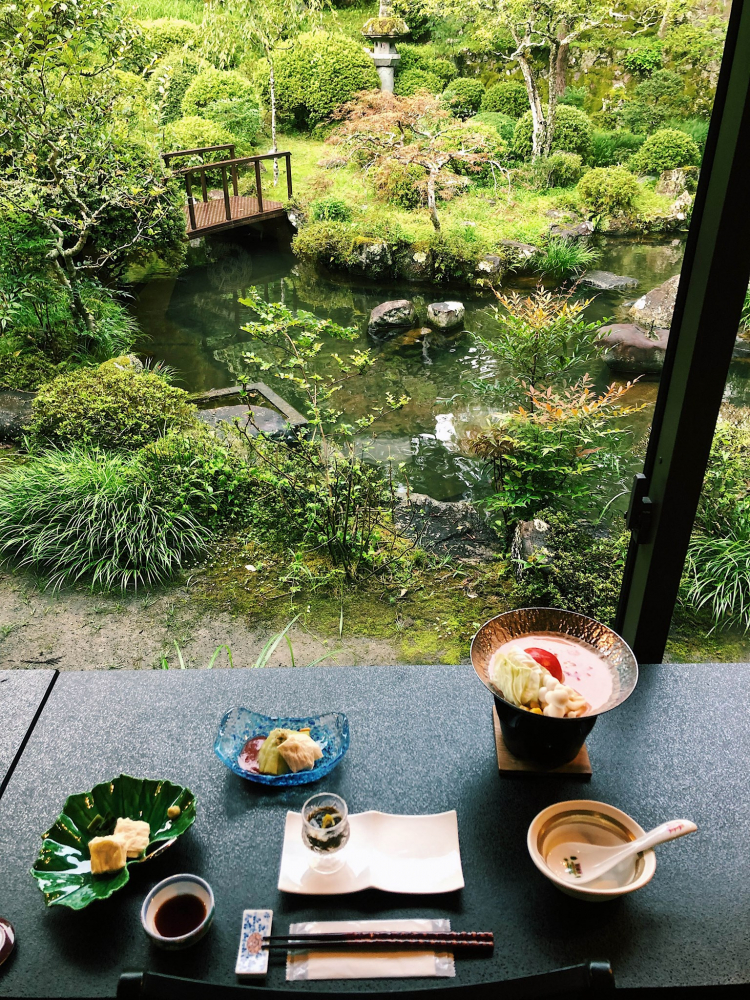
A food spread is prepared by Junko Higuchi at Kakurinbo. Photo: Natalie Compton/Washington Post.

A food spread is prepared by Junko Higuchi at Kakurinbo. Photo: Natalie Compton/Washington Post.

And eating is perhaps one of the most memorable aspects of the shukubo stay for Kakurinbo guests. Reviewers gush over Junko’s artful kaiseki lunches and dinners. Junko’s food changes seasonally and highlights the bounty of Yamagata’s local ingredients, like a frozen plum orb balanced in a bowl of yogurt ‒ a dish made to look like the Japanese flag ‒ or dinner’s preparation of yuba tofu four different ways.

Leaving behind the interlude of stillness to ricochet back into the real world can be difficult. You’ll regret not staying at the temple longer and wonder why this kind of experience isn’t more popular among travellers. But if you’re lucky, that sense of calm you acquired can stay with you on your way out.

Philippine firms urged to adopt telecommuting to beat traffic nightmare

ศาสตร์เกษตรดินปุ๋ย : ขอบคุณแหล่งข้อมูล : หนังสือพิมพ์ The Nation

https://www.nationthailand.com/ann/30377128

Philippine firms urged to adopt telecommuting to beat traffic nightmare

Oct 06. 2019
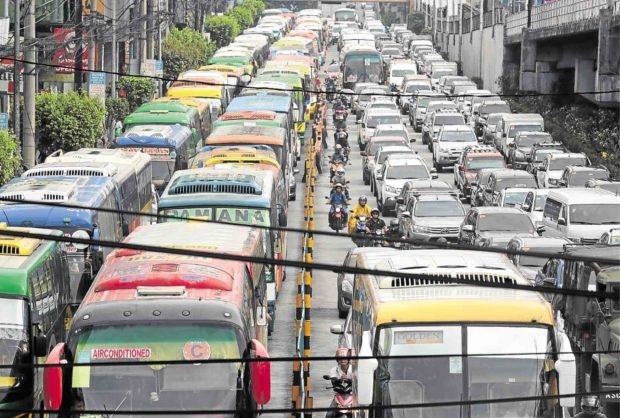
Photo: Philippine Daily Inquirer/ANN

Photo: Philippine Daily Inquirer/ANN
By Philippines Daily Inquirer

467 Viewed

Companies in the Philippines are being urged to adopt telecommuting practices to improve employee productivity and save costs amid the daily vehicular traffic gridlock experienced in major cities, especially Metro Manila.

In a study, consultancy firm P&A Grant Thornton said recently enacted laws that allowed and promoted working from alternative venues through the use of telecommunications or computer technology should be embraced by local businesses, in addition to multinationals which had already been adopting it for some time now.

“Many workers welcome this development as it eliminates travel time and costs, which has significantly increased due to the worsening traffic conditions in major cities in the country,” the firm’s chair and CEO Maria Victoria Espano said in a statement.

She noted the law made telecommuting subject to the discretion of the employer, who could offer such a programme to employees “on a voluntary basis and upon such terms and conditions as they may mutually agree upon”.

The P&A Grant Thornton chief cited some reasons that could have a positive impact on Philippine businesses and the Filipino workforce.

In particular, telecommuting arrangements would allow employers to attract and retain premier talent, reduce overhead expenses and increase productivity.

“For many individuals, the travel time between the workplace and home is becoming a major consideration whether to apply for employment with a company,” she said. “I have increasingly heard comments from some executives that they have actually crossed out job opportunities that will require more than an hour’s commute.”

Espano said that by offering a work from home arrangement, employers could entice good potential candidates to join them. On the other hand, for existing employees, eliminating the daily commute would keep them happy enough to stay with an employer for the long term. Workers would also have greater control over their work hours and work location.

“Working from home can also be more productive, as employees do not have the distractions or hectic pace of an office environment,” she said.

At the same time, telecommuting saves employers money in office expenses, such as office supplies, furniture, equipment, coffee and janitorial services. For employees, telecommuting allows people to save on expenses such as fuel, parking fees, vehicle maintenance, public transport fare, dining out and clothing purchases.

Before adopting this business model, however, an employer must first assess whether a telecommuting arrangement is suitable for its operations.

“If the company deals with numerous customers who require face-to-face interaction, telecommuting may not work, unless it has a good number of client-facing employees which will allow rotation of assignments,” Espano said.

“The work performed by employees and current manpower resources should also be reviewed,” she added. “A company that only has a single employee acting as cashier or receptionist would have difficulty allowing said employee the chance to work from home. Likewise, workers in the factory or other employee activities that require physical supervision will definitely not be able to apply for telecommuting arrangements.”

He has a dream for Thailand

ศาสตร์เกษตรดินปุ๋ย : ขอบคุณแหล่งข้อมูล : หนังสือพิมพ์ The Nation

https://www.nationthailand.com/ann/30377127

He has a dream for Thailand

Oct 06. 2019
The future is forward: Thanathorn frankly says he needs to become Thailand’s Prime Minister to make his Future Forward party’s vision of a democratised country come true. — PHILIP GOLINGAI/The Star

The future is forward: Thanathorn frankly says he needs to become Thailand’s Prime Minister to make his Future Forward party’s vision of a democratised country come true. — PHILIP GOLINGAI/The Star
By The Star Online
Philip Golingai

429 Viewed

He’s young, rich, handsome and called ‘Daddy’ by young fans. Yet, he’s also down-to-earth and talks frankly of dispossessing the elite. Meet Thanathorn Juangroongruangkit, the man who would be Prime Minister.

“DO you need to be young and a billionaire to start a successful third force movement in Thailand?” I asked Thanathorn Juangroongruangkit in an interview at his residence in a Bangkok suburb.

“I disagree with that. If you look at the money spent in the past election, we spend much, much less than established parties, ” said the 41-year-old billionaire politician.

Thanathorn is the wealthiest Thai MP, with 5.63 billion baht (RM760mil) in assets and 683 million baht (RM93mil) in debts. The Thai media describe him as the “billionaire commoner” because of his fight to change the social class system in Thailand.

His one-year-old party, Future Forward, won the third highest number of seats in Thailand’s elections in March this year. It is seen as a “third force” party for voters fed up with the pro-junta Palang Pracharat party and pro-Thaksin Shinawatra Pheu Thai party.

“Being a billionaire has nothing to do with the success. The factor is that the people see us as the younger generation who got successful in business. But it’s not the money that helps us to get votes, ” said Thanathorn, whose family owns Thai Summit Group, an auto parts manufacturer.

“What’s more important is the domination of ideas. Many politicians promise too many things. But for us, we are clear: We give the people what should be the destination of our country in the next 10 years and 20 years.

“We said, ‘Look, if we want our country to go beyond the political polarisation of the past decade, this is what we need to do. We need to democratise; we need to demilitarise; we need to decentralise our country’.”

Thanathorn stressed that the success of Future Forward is dominating the public’s agenda.

“It’s about the message we send to the people. For us, it is not the seats in Parliament that are the priority. That is secondary.

“The priority for us is to win the war of ideas. If you win the war of ideas, you win votes and seats. Not the other way round, ” said the politician who wore his daily “uniform” – a generic white shirt and brown pants – at the interview.

In the March 24 Thai polls, the Future Forward party won 30 constituency MPs and 50 party-list MPs out of the 500 up for grabs. This is sizeable support for a newly-formed party comprising “non-politician” leaders who are academics, entrepreneurs and social activists to win.

I asked how the party achieved this feat and if the down-to-earth billionaire had any advice for Malaysians who might be interested in starting a third force movement.

The Future Forward Party gave the voters a vision of the future, replied Thanathorn.

“We said, ‘Look, there’s already too much political polarisation and political conflict in the last decade that has cost many lives. We need change’.”

In pre-election campaigning, the party pointed to the inequality in Thailand, where the gap between the rich and poor is widening. It also pointed out that economic development in neighbours such as Indonesia, Malaysia, the Philippines and Vietnam has been growing at 5% to 6% a year compared with Thailand’s 3% in the last 10 years.

Thailand, Thanathorn noted, needs to democratise.

“Even if we successfully democratise our country, the military will step in because the elite don’t want to lose their economic interests if power is shared with the people. So they will strike back by staging another coup d’etat.

“So once you democratise the country, you have to demilitarise the country as well to get the military out of politics, making coups a thing of history, ” he said.

“Our message is simple, and people got it. That is why we won votes. We didn’t promise anything much. It was taking Thailand back to normal, which is democratising our country.”

The telegenic Thanathorn has captured the imagination of the millennials. He is popularly known as “Daddy” by his young female fans.

Did it take more than looks to win over the young voters, though?

“Just say you are 20 at this moment. That means you were born in 1999. By the time you were seven years old, there was already the 2006 coup d’état (the military ousted Prime Minister Thaksin). Four years later, when you were 12, people were killing each other on the streets, people were shot dead on the streets by the military over their political demonstrations, ” he said.

“A few years later when you were 15, you saw another coup d’ état (the military ousted Prime Minister Yingluck Shinawatra, the younger sister of Thaksin). So by the time you graduate from university, General Prayut Chan-o-cha (the coup leader) is into his second term as Prime Minister.”

Thanathorn continued: “They have seen all of this since they were born. How long has it been since there was a prime minister of Thailand elected by the people? Not many.

“The young question what happened to their country. So when they Google the answer, they understand the root of the political conflict is between the elite establishment and the people.

That’s why when somebody is speaking the truth about our society, he gets their votes, ” he said.

I brought up that “Daddy” moniker, and asked how it came about.

Thanathorn laughed and said: “Actually, it comes from a TV show – which I haven’t watched – and people say the character is just like me.

“You’ve got to understand that things move fast for the younger generation. They don’t want to see politics as dark and dirty. They want to see politics as colourful.

“You can make politics fun, constructive and creative. That is why you see all these different things coming up. So politics for them is not like the way we see it, ” he said.

But did being “Daddy” help the party get votes?

“No. It helps in the sense that it is a trend, ” he replied.

When he was running a business, Thanathorn visited Malaysia more than 50 times. He is familiar with what’s going on in Malaysian politics.

He observed that the one-million-dollar question in Malaysia is when the transfer of power from Prime Minister Tun Dr Mahathir Mohamad to PKR president Datuk Seri Anwar Ibrahim is going to happen.

“The international community is watching if and when it will happen, ” he said.

But that is one part of the Malaysian political equation, he noted. The other part – which he said is more significant – was whether the bumiputra policy would continue.

“Unless these two questions are solved, I don’t think you can get normalisation in Malaysia. In Thailand, the elite establishment wants to use religion and race as a basis to oppress others and retain power. How Malaysia is going to break this is important for the future of democracy, not only in Malaysia but in South-East Asia, ” he said.

When I asked who he thinks will be the eighth Prime Minister of Malaysia, he replied that he’s in no position to say.

When I persisted and asked if he doesn’t think it would be Anwar, he laughed and said: “To predict the future, I dare not.”

Well, then, what advice does he have for a potential “third force” political movement in Malaysia? Do we need a young, handsome billionaire?

“People need a vision of the future. They need to be clear what is the destination. Where are you going to lead this country? What Malaysia are you going to build? And you start with that, ” he said.

The world is excited by young gun leaders such as New Zealand Prime Minister Jacinda Ardern, 39, Canadian Prime Minister Justin Trudeau, 47, and French President Emmanuel Macron, 41. I asked Thanathorn whether he sees himself like an Ardern, Trudeau or Macron of Thailand.

“Yesterday, it was Austria, ” he said on Tuesday, referring to Sebastian Kurz who became the Austrian Chancellor at 33 after elections last Sunday.

“I don’t see myself that way. I mean it’s an arrogant way to look at yourself in that way.

“But I have to be very frank with this. I have to be the Prime Minister to bring about change. There’s no one else.

“If you look at the Prime Ministerial candidates out there, I don’t think anyone really wants to push for a fundamental structural change the way we do, ” he said.

“So on my shoulders, I carry the dreams of millions of people who want to see change. So regardless of age – it is not about age or gender, it is about the dream, the Thailand we want to see.”

This week, Thanathorn is in Hong Kong to share the stage with a young Malaysian politician and talk about what’s inside the minds of Asia’s “next-gen” politicians. Some see this MP as the Ardern, Trudeau and Macron of Malaysia. Some hope this politician will lead a “third force” movement here.

Try traditional travel this Navratri season

ศาสตร์เกษตรดินปุ๋ย : ขอบคุณแหล่งข้อมูล : หนังสือพิมพ์ The Nation

https://www.nationthailand.com/ann/30377125

Try traditional travel this Navratri season

Oct 06. 2019
By The Statesman
Diksha Yadav

18 Viewed

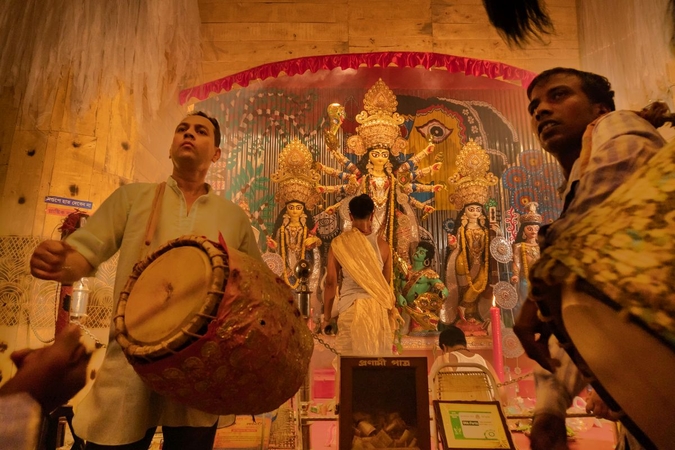
Navratri (the nine nights of Goddess Durga) is a time when India is drenched with the celebration of the feminine divine. It is dedicated to the nine forms of the Goddess. The festival is celebrated with a fervour which is rarely seen on any other festival of the country as during these nine holy days, people observe fasting in a celebratory mood. Each day during this nine-day festival is special and stands for a particular incarnation of Goddess Durga and the diverse festivities are unique to e

Here are some of the must-visit destinations one can go during the festival season and enjoy the celebratory season.

Kolkata

Kolkata is famous for its Navratri or Durga Puja celebrations. The whole city observes a large gathering full of Pandals, food and colour. The festivities begin a week ahead of the festival, with all the Bengalis gearing up to welcome their supreme Goddess. The fun part begins from the fifth day of Navratri. People visit different pandals to embrace decoration and events. The best part of Durga puja is the relishing bhogs.

Ahmedabad

Navratri in Ahmedabad is celebrated with gaiety and fervor. The main highlight of the festivity of nine nights is the folk songs and beats of dhol and garba sticks, supported by buffets of lavish vegetarian fare. Each day of the fiesta begins with the performance of aarti. Stadiums, parks and all open spaces during these days are turned into massive dance grounds where youth dressed in vibrant chaniya cholis, kediyus and kafni pajamas converge in hordes to match steps with spirited singers belting out traditional numbers.

Varanasi

The land of temples, Varanasi gains a special cultural relevance during Navratri season as it is also the time for the staging of ‘Ramnagar Ram leela’, the oldest in the world. Started in the 1800s, the theatrical storytelling of Ramayana was initiated by the Maharaja of Varanasi. It is the traditional form of presenting Ramleela and continues to this day in its traditional format. Celebrated for 31 days, Ramnagar turns into Ayodhya and episodes from the epics are performed.

Bastar

Bastar in Chhattisgarh is very famous for its special and fascinating Dusshera. It is all about tribes, their Maharaja and their Gods and Goddesses. Celebrated for 75 days, it is the longest festival in the world. The place will show you tribal customs that did not change, like their devotion to music, dance, song, magic and use of sacred instruments. These rituals are known to be followed from the last 400 years.

Hong Kong in near shutdown as city reels from violence

ศาสตร์เกษตรดินปุ๋ย : ขอบคุณแหล่งข้อมูล : หนังสือพิมพ์ The Nation

https://www.nationthailand.com/ann/30377124

Hong Kong in near shutdown as city reels from violence

Oct 06. 2019
Glass panels and a ticket gate are damaged by protesters at Po Lam MTR station, Hong Kong, Oct 4, 2019. (PHOTO / CHINA DAILY)

Glass panels and a ticket gate are damaged by protesters at Po Lam MTR station, Hong Kong, Oct 4, 2019. (PHOTO / CHINA DAILY)
By The China Daily

26 Viewed

HONG KONG – Hong Kong went into near shutdown as businesses closed and rail services were suspended after another night of violence and vandalism by riotous mobs.

Violent protests erupted across the special administrative region hours after the city’s Chief Executive Carrie Lam Cheng Yuet-ngor invoked Emergency Regulations Ordinance to implement the anti-mask law to curb violence on Friday.

The city’s sole rail operator said on Saturday that the entire metro system except for the Airport Express Line would be suspended for the day after a night of vandalism and arson at various stations.

The government said bus services might be diverted due to road conditions after more than 100 sets of traffic lights were damaged or tampered with on Friday night

Most travelers had to make their way to the airport by car or taxi on Saturday morning when all rail services were suspended, causing traffic congestion in the final mile of the journey. The airport rail services resumed at 2:30 pm.

In a statement issued early Saturday morning, the MTR said safety came first for its maintenance staff when they travel to various stations to carry out repair works.

It also denounced the irrepressible and illegal acts of radical protesters who attacked its staff.

Meanwhile, the government said bus services might be diverted due to road conditions after more than 100 sets of traffic lights were damaged or tampered with on Friday night.

Anti-government demonstrations began since June when protesters staged rallies to voice opposition to the now-withdrawn extradition bill. The protests have turned violent and at times descended into chaos even after the formal withdrawal of the bill by Lam in September.

Court denies interim injunction 

On Friday, the government announced the introduction of the anti-mask law in a bid to quell violence.

The law bans the wearing of facial coverings during a public meeting, public procession or illegal assembly. Offenders shall be liable to a maximum of one year’s imprisonment and a fine of HK$25,000.

Late Friday, after listening to arguments for two hours, the High Court decided against granting a temporary suspension of the anti-mask law after protesters brought an injunction application. The ban came into effect at midnight.


Gasoline bombs thrown at police officer

A plainclothes police officer fired one shot in self-defense in Yuen Long Friday night after he was attacked by a large group of masked radicals. Two gasoline bombs were thrown at him during the attack and he was briefly on fire.

The Hong Kong government severely condemned these violent acts, saying the rioters had completely disregard human life, according to a statement issued early Saturday morning.

A total of 31 people were sent to the hospital Friday night, the Hospital Authority said, adding that two are in serious condition

The 2020 Hong Kong Formula E-Prix has been cancelled amid continuing street protests in the city

The city’s largest labor union on Friday also issued a statement to condemn violence and vandalism across the territory.

The Hong Kong Federation of Trade Unions said its facilities in To Kwa Wan, Sha Tin, Tai Po, Shau Kei Wan were extensively vandalized by radicals. Five offices of its lawmakers and district councilors were also sabotaged.

The union said the riotous mobs aimed to “drive a wedge between the SAR and the nation with extreme violence and terrorist attacks.”

Formula E-Prix canceled

Meanwhile, the 2020 Hong Kong Formula E-Prix has been canceled amid continuing street protests in the city. The round originally scheduled for Hong Kong will be replaced by Marrakesh, Morocco, according to the organizer.

Apart from public transport services, many public facilities, banks, shopping malls and chain stores were also shut on Saturday.

The Leisure and Cultural Services Department closed its facilities and suspended its services from 1 pm to ensure the safety of venue users.


HKMA dismisses speculation

The Hong Kong Monetary Authority said some banks have to suspend services at certain branches due to damaged facilities and traffic disruptions.

In a statement, the HKMA severely condemned vandalism and violence, which it said have seriously affected the use of banking services by the public.

“We hope that social order will be restored soon, allowing banks to resume normal operations and serve businesses and members of the public,” according to the statement.

It also dismissed speculation which it described as a “malicious attempt to cause panic among the public.”

The city has a “robust and sound” banking system with ample liquidity, the HKMA said. It is well-positioned to withstand any market volatilities and has sufficient supply of banknotes to meet the needs of the public, it said.

Bank customers were advised to use online banking or ATM services as far as possible, and check bank branches service status before visiting.

This photo dated Oct 5, 2019 shows a vandalized snacks store at Hang Hau MTR station, Hong Kong. (PHOTO / CHINA DAILY)

This photo dated Oct 5, 2019 shows a vandalized snacks store at Hang Hau MTR station, Hong Kong. (PHOTO / CHINA DAILY)

All branches of Bank of China Hong Kong was closed on Saturday except the Bank of China Tower in Central district.

Hong Kong and Shanghai Banking Corporation, Standard Chartered Bank and China Construction Bank also closed some or all of their branches Saturday.

The Labour Department on Saturday urged employers to make flexible work arrangements for staff due to the suspension of some public transports.

The Customs and Excise Department announced that due to public activities, the written examination (Part II) of Customs Inspector Recruitment scheduled on Saturday will be postponed.

Supermarket chain Parknshop shut all stores across Hong Kong on Saturday due to safety and logistic concerns. Health care and beauty care chain store Watsons also closed all shops, except the airport branch, for the day. Supermarket chain Wellcome and convenience stores 7-Eleven said shops would be closed from 5 pm.

Hong Kong Disneyland delayed its opening time to 1 pm.