Asians strive for a zero-waste lifestyle

ศาสตร์เกษตรดินปุ๋ย : ขอบคุณแหล่งข้อมูล : หนังสือพิมพ์ The Nation

https://www.nationthailand.com/ann/30377123

Asians strive for a zero-waste lifestyle

Oct 06. 2019
By The China Daily
Prime Sarmiento in Hong Kong

31 Viewed

Policy support from governments can encourage more people to take on the challenge, advocates say

Daisy Tam Dic-sze, an academic in Hong Kong, decided to develop a crowdsourcing application last year to help solve one of the city’s biggest problems – food waste. The Breadline app connects bakeries with volunteers to collect leftover bread for charity groups.

Tam, an assistant professor at Hong Kong Baptist University, said 200 users have signed up with the app so far. She believes the number will continue to grow as Hong Kong residents become more aware of the increasing waste problem.

“The global waste problem is a big issue. This is a local response to large questions,” she told China Daily.

Tam said Hong Kong dumps more than 3,000 metric tons of food waste each day. Most of that food, however, could still be consumed.

By using the Breadline app, Tam said people in Hong Kong are doing their part to reduce waste and move toward a zero-waste lifestyle.

Environmentalists said it is not only Hong Kong residents who are drawn to such a lifestyle. Across Asia, people are becoming more aware of what they consume and are spurning single-use plastic bags, straws and disposables.

Zero-waste stores have sprung up in a number of Asian cities, including Manila, Chennai and Jakarta. They cater to consumers willing to bring their own containers to buy food and toiletries in bulk, eliminating the need for packaging.

“Being zero-waste is not the same as being litter-free,” Dharmesh Shah, policy consultant for the Global Alliance for Incinerator Alternatives (GAIA), said.

Shah said that like most of his fellow advocates, he grew up mindlessly using plastic bags and other disposables.

“The problem of waste worsened after plastic was invented. Using plastic products was convenient,” he said.

But his research into India’s waste problem spurred him to adopt a zero-waste lifestyle – because, he said, “it was the right thing to do”.

Shah said he has stopped using plastic bags, straws and disposable cutlery. He believes he can still do more, however. “For instance, when it comes to plastic packaging, I am still dependent on supermarkets. So I have no choice but to buy packaged products,” he said.

For Tiza Mafira, a lawyer in Jakarta, it is not enough that she is using reusable bags and avoiding disposables to reduce the plastic garbage that is choking the waterways in Indonesia’s key cities.

Mafira said that supportive government policies can encourage more people to adopt a zero-waste lifestyle.

This is why she co-founded the Indonesia Plastic Bag Diet Movement in 2013. The group is campaigning against single-use plastic bags and has proposed a levy on plastic bags.

The “zero-waste” movement was founded in the early 2000s when a group of environmental advocates convened in the United Kingdom and Malaysia to address the world’s growing waste problem. The participants agreed that having more incinerators and landfills is not enough to solve the problem. It has to be addressed at source and requires a system that will reduce and eliminate waste production.

Environmentalists said the move toward zero waste is now more relevant for Asia as the region has to cope with a mounting trash problem that harms human health and the environment.

According to the United Nations Environment Programme, Southeast Asia produces 1.14 kilograms of municipal waste per capita every day.

In India, a Central Pollution Control Board study across 60 major cities showed that they generate over 4,000 tons of such waste per day. The country generates nearly 26,000 tons of plastic waste daily.

In China, the National Bureau of Statistics said the country produced 215 million tons of domestic waste in 2017, up by nearly 60 percent from 2001.

Compounding the problem in Asia are waste exports from industrialized countries in the West, which have treated the region as their dumping ground.

This has drawn widespread condemnation in recent months, with the Philippines, Indonesia, Cambodia and Malaysia demanding that the waste exporters take back their trash.

“I would argue that waste generation and prosperity are correlated. The richer we get, the more we pollute,” GAIA’s Shah said.

Shah said the rise of Asian economies has boosted consumerism and produced more trash. The biggest policy challenge, he said, is “to decouple economic growth from waste generation”.

The power to effect lasting change lies with corporations and governments, Shah said.

Asian policymakers are now incorporating zero-waste concepts in their strategies.

In South Korea, the government charges a flat fee for each bag of food waste thrown in a recycling bin. The food waste is then collected and turned into compost or animal feed. The policy has also encouraged home composting and urban gardening.

Asian countries such as China, Bangladesh, Sri Lanka and Brunei have banned single-use plastic bags. Shoppers either bring reusable bags or pay for a plastic bag.

While Indonesia is yet to impose a nationwide ban on plastic bags, local governments on the island of Bali, the cities of Banjarmasin in South Kalimantan, Balikpapan in Borneo, and Bogor in Java have banned single-use plastic bags.

Other countries are mulling similar policies. India and Thailand are planning to ban disposable plastic bags, cups and straws.

Indonesia is considering imposing a levy on plastic bags, while Japan requires retailers to charge for them.

In Singapore, the government is drafting a Zero Waste Master Plan that aims to reduce food, packaging and electronic waste.

In China, the Ministry of Ecology and Environment said 11 cities were chosen to pilot the country’s “no-waste city” plan, which aims to reduce the production of solid waste and maximize recycling.

Businesses are also playing their part to reduce waste by dissuading consumers from using disposables.

In the Philippines, consumer goods manufacturers Unilever and Human Heart Nature have set up a refilling station for shampoo and liquid detergent.

In Singapore, supermarket chain NTUC FairPrice has started charging a fee for plastic bags, while fastfood operator McDonald’s said it has stopped serving straws and disposable cups to diners.

In Brunei in May, over 50 entrepreneurs launched the Zero Waste Brunei campaign. They pledged to gradually reduce the use of disposables such as straws, plastic bags, plastic packaging and plastic cutlery, with the goal of completely eliminating them from their stores.

Members of the Indonesian Retailers Association (Aprindo) started charging for plastic bags in March. Aprindo is composed of around 40,000 convenience stores.

Meenakshi Bharath, co-founder of the civic group Solid Waste Management Round Table (SWMRT) in Bengaluru, believes that government and businesses should take the lead in reducing and eliminating waste. But this does not mean that the public cannot do anything to make an impact.

Bengaluru, formerly Bangalore, is the capital of the South Indian state of Karnataka. Bharath said residents organized themselves to set up SWMRT in 2009, doing their part to reduce garbage in the city. “We visited a landfill, and this made us all determined to be more eco-friendly,” she said.

Bharath said SWMRT held workshops where participants learned how to segregate waste, and make compost to use as fertilizer for their gardens at home.

She said the group’s members also decided to bring their own cutlery and water bottles after learning that disposables account for most of the dry waste they collected.

“Garbage is a big issue. The government, businesses and citizens all need to do their part. We all need to participate,” Bharath said.

Quanta plans production sites in Taiwan, Thailand

ศาสตร์เกษตรดินปุ๋ย : ขอบคุณแหล่งข้อมูล : หนังสือพิมพ์ The Nation

https://www.nationthailand.com/ann/30377122

Quanta plans production sites in Taiwan, Thailand

Oct 06. 2019
Quanta said it will spend up to NT$950 million (US$30.65 million) to build a third production complex in a location close to its headquarters in Taoyuan, northern Taiwan. (NOWnews)

Quanta said it will spend up to NT$950 million (US$30.65 million) to build a third production complex in a location close to its headquarters in Taoyuan, northern Taiwan. (NOWnews)
By The China Post

88 Viewed

TAIPEI (CNA) — Quanta Computer Inc., one of the largest notebook computer ODM services providers in the world, is planning to build new production facilities in both Taiwan and Thailand to avoid the impact from the continued trade frictions between the United States and China.

Quanta said it will spend up to NT$950 million (US$30.65 million) to build a third production complex in a location close to its headquarters in Taoyuan, northern Taiwan.

The company said it decided to expand its facilities in Taiwan because its research and production facility inside its headquarters complex needed more space to grow and meet the rising demand from its clients.

Currently, the R&D center has a workforce of more than 7,000 employees, Quanta said.

Last year, the company acquired a factory as its second production facility from photoelectric and peripheral product maker CMC Magnetics Co. for NT$4.28 billion to roll out high-end servers.

As for the planned third production site, Quanta did not disclose what products it will make, but said it will follow the orders from its clients.

In addition to production, the local media reported the company will use the new building as a base for the development of artificial intelligence.

As for its planned production in Thailand, Quanta said it will set up a 100 percent owned subsidiary there to pave the way for its investment in the Southeast Asian country.

Quanta plans to invest up to 1 billion Thai Baht (US$32.26 million) for production expansion in Thailand and the investment will be carried out in phases based on a decision made by its board of directors.

Regarding its presence in Thailand, Quanta said the company is planning to buy a factory from a Thai company. The local media reported that the factory Quanta is eyeing is located close to Bangkok and is owned by World Electric, a veteran electronics assembler in Thailand.

Quanta said the investments in Taiwan and Thailand are expected to provide alternative production options to its clients at a time when the global trade disputes have boosted operating costs due to higher tariffs imposed by Washington on Chinese goods.

In an investor conference held in August, Quanta Chairman Barry Lam (林百里) said since his company’s notebook computer sales to the U.S. market accounted for about one-third of its total sales, it was necessary for the manufacturer to move part of its production out of China to Southeast Asian countries.

In a recent research paper of market information advisory firm International Data Inc. (IDC), Quanta ranked as the second largest notebook computer assembler in the world, taking a 21 percent share, up from a 20.3 percent share in the first quarter.

Compal Electronics Inc., another Taiwanese contract electronics maker, took the top spot after grasping 30.5 percent of the global notebook computer assembly market during the April-June period, up from 26.0 percent in the previous quarter, according to IDC.

Hong Kong adopts anti-mask law to quell violence

ศาสตร์เกษตรดินปุ๋ย : ขอบคุณแหล่งข้อมูล : หนังสือพิมพ์ The Nation

https://www.nationthailand.com/ann/30377107

Hong Kong adopts anti-mask law to quell violence

Oct 05. 2019
A rioter throws a gasoline bomb at police in Wan Chai. [PHOTO/CHINA DAILY]

A rioter throws a gasoline bomb at police in Wan Chai. [PHOTO/CHINA DAILY]
By China Daily
Asia News Network

409 Viewed

Hong Kong has banned the wearing of facial masks in public with violators facing imprisonment of up to one year and a fine of HK$25,000, according to Secretary for Security John Lee Ka-Chiu.

Anyone who wears a facial covering to hide their identity during a public meeting, public procession or illegal assembly will be held accountable for violating the ban, according to the new law.

Wearing a mask for medical and religious reasons will be exempted, Lee said.

The anti-mask law also empowers police officers to stop a person wearing a mask in a public place and require the removal of the facial covering; non-compliance is an offence subject to a maximum jail term of six months and a fine of HK$10,000.

In announcing the legislation, Hong Kong Special Administrative Region Chief Executive Carrie Lam Cheng Yuet-ngor said the decision to adopt a ban is a hard but a necessary one in public interest.

But she stressed that although the ordinance carries the title “emergency”, Hong Kong is not in a state of emergency. “We are not proclaiming that Hong Kong is entering a state of emergency,” Lam said.

Lam said protester violence has been escalating and has reached a very alarming level in the past few days, causing numerous injuries and leading Hong Kong into a chaotic and panic situation.

“We are particularly concerned that many students are participating in these violent protests, or even riots, jeopardising their safety and even their future,” she added.

As a responsible government, Lam said it is a duty to use all available means to stop the escalating violence and restore calmness in society.

“We believe the new law will create a deterrent effect against masked violent protesters and rioters and will assist the police in law enforcement,” Lam said.

Ride-hailing app to represent Laos at Mekong tourism startup meet in Bangkok

ศาสตร์เกษตรดินปุ๋ย : ขอบคุณแหล่งข้อมูล : หนังสือพิมพ์ The Nation

https://www.nationthailand.com/ann/30377062

Ride-hailing app to represent Laos at Mekong tourism startup meet in Bangkok

Oct 04. 2019
By Vientiane Times
Asia News Network

305 Viewed

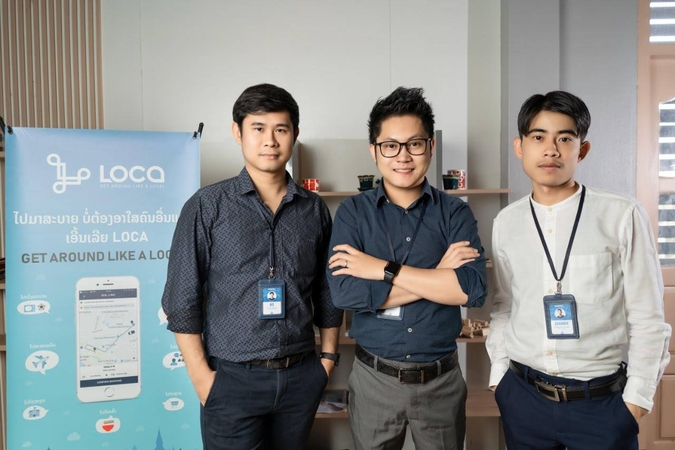
A ride-hailing service operating in Laos will represent the country at the Mekong Innovation Startup in Tourism (MIST) meeting in Bangkok next week.

LOCA, a Lao startup and a major player in the ride hailing business in Laos, has been selected for the final pitching competition at MIST on October 8-9 in Bangkok.

The co-founder and chief technology officer of LOCA, Souliyo Vongdala, said on Wednesday that tourism is a major contributor to the country’s gross domestic product and that innovative startups will help attract more tourists to Laos thanks to the convenient services they provide.

“For example, LOCA has helped many tourists to get around Vientiane easily and safely. During the day and night, tourists are confident about using LOCA as a means of transport,” he explained.

There are two ride-hailing services in Laos — LOCA and the Cambodia-based Driveup. These were recently launched and it is expected there would be more in the future.

LOCA is the major ride-hailing service application in Laos and has been operating since early 2018. It has the largest network of more than 300 cars in Vientiane and plans to expand.

The business has grown by 10-30 per cent month-on-month since the service began in 2018. The app is a new tool that tourists can rely on.

Ride-hailing services use online-enabled platforms to connect between passengers and local drivers using their personal vehicles. In most cases, they are a comfortable method for door-to-door transport.

In its third year and with hundreds of alumni, Mekong Innovative Startups in Tourism is jointly managed by the Mekong Tourism Coordinating Office and the Mekong Business Initiative.

The initiative is supported by the Australian government and the Asian Development Bank, and organised by UNWTO [World Tourism Organisation] affiliate member Chameleon Strategies.

The MIST meeting will be held in Bangkok alongside a new event — Travel Startups Asia Forum.

MIST finalists represent two categories: travel tech ventures and social impact enterprises.

The LOCA app will be in the travel tech ventures category along with four similar services — Ticket 2 Asia from Cambodia, Get Ride from Myanmar, Golf Digg from Thailand, and Go Eat Me from Vietnam.

Trump publicly calls on China to investigate Bidens

ศาสตร์เกษตรดินปุ๋ย : ขอบคุณแหล่งข้อมูล : หนังสือพิมพ์ The Nation

https://www.nationthailand.com/ann/30377059

Trump publicly calls on China to investigate Bidens

Oct 04. 2019
By The Washington Post

418 Viewed

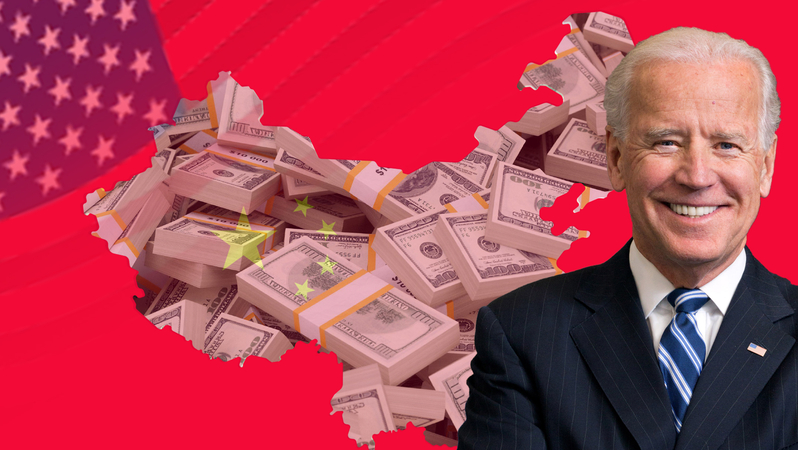
US President Donald Trump on Thursday publicly urged China to investigate Democratic challenger Joe Biden, a new request that a foreign government assist his re-election campaign, adding to the extraordinary pattern of conduct at the centre of a fast-accelerating impeachment inquiry.

With his brazen and direct appeal to the Chinese, delivered before journalists assembled on the South Lawn of the White House, Trump seemed to make a mockery of the charge that he abused the power of his office by pressing his Ukrainian counterpart to examine unfounded allegations of corruption by Biden and his son Hunter.

Trump’s plea to China for an investigation into the Bidens came almost immediately after he addressed his acrimonious trade war with China. “I have a lot of options on China,” Trump warned, ‘but if they don’t do what we want, we have tremendous power.”

When a reporter then asked what he had hoped Ukrainian President Volodymyr Zelensky would do following their July 25 phone call, Trump replied, “If they were honest about it, they’d start a major investigation into the Bidens. It’s a very simple answer. They should investigate the Bidens.”

Trump went on to say, “China should start an investigation into the Bidens, because what happened to China is just about as bad as what happened with Ukraine.”

Trump’s remarks underscored his claim that he did nothing improper by calling on a foreign power to investigate a domestic political opponent, a move his critics consider an egregious violation of his constitutional oath.

Trump’s statement about China effectively globalises the argument he has been making domestically, calling on other countries to stand with the United States under his rule or against it. It could signal to other countries that one way to curry favour with the United States is by digging up damaging information about Democrats.

Thursday also marked the latest instance of Trump saying aloud something that almost certainly would be a major scandal if revealed from a private conversation. Trump’s request to China echoed his “Russia, if you’re listening …” appeal during the 2016 campaign for the Russian government to steal Hillary Clinton’s missing emails and release them.

“Someone should inform the president that impeachable offences committed on national television still count,” Clinton tweeted on Thursday.

Trump and his allies have provided no evidence to back up their claims of wrongdoing. Hunter Biden joined the board of an investment advisory firm whose partners included Chinese entities shortly after visiting China in 2013 with his father while he was vice president. George Mesires, an attorney representing Hunter Biden, has said that his client acquired a 10 per cent equity stake in the firm in October 2017, and as of this summer that stake was worth about US$430,000.

On Capitol Hill, meanwhile, Democratic leaders denounced Trump’s China comments and appeared dumbfounded that the president had given them live ammunition to use against him in their impeachment proceedings.

“The president of the United States encouraging a foreign nation to interfere again to help his campaign by investigating a rival is a fundamental breach of the president’s oath of office,” House Intelligence Committee Chairman Adam Schiff told reporters. “It endangers our elections, it endangers our national security, it ought to be condemned by every member of this body, Democrats and Republicans alike.”

House investigators deposed the first major witness in the Ukraine matter, Kurt Volker, who resigned last week as US special envoy for Ukraine after being named in the whistleblower complaint that sparked the impeachment inquiry. Volker testified on Thursday that he warned Trump attorney Rudy Giuliani that his information about the Bidens was untrustworthy and that his Ukrainian sources were unreliable, according to two people familiar with his testimony.

Also on Thursday came the revelation that Trump had ordered the swift removal of the US ambassador to Ukraine, Marie Yovanovitch, earlier this year after hearing concerns from Giuliani, as well as former Texas congressman Pete Sessions, among others, outside of the administration, a senior administration official confirmed. Trump’s role in the ambassador’s ouster was first reported by the Wall Street Journal.

Giuliani complained in a recent interview with The Washington Post that Yovanovitch obstructed efforts to persuade the Ukrainians to investigate the Bidens. “She is running around the streets of Ukraine going against the elected president of the United States,” Giuliani said.

Congressional Republicans, who rarely speak a cross word about the president, barely blinked at his China remark. The muted response from GOP lawmakers about Trump’s call for China to investigate Biden presented a stark contrast to earlier this week, when many spoke out after the president tweeted congratulations to Chinese President Xi Jinping in celebration of the 70th anniversary of communist rule in Beijing.

By Thursday, however, most of those voices fell silent on Trump’s latest Chinese assertion. Minutes after Trump called on China to investigate Biden, House Minority Leader Republican Kevin McCarthy tweeted a link to a letter he sent House Speaker Democrat Nancy Pelosi that morning asking her to suspend the impeachment inquiry until she answers questions about the process.

Rather than condemning Trump’s appeal to the Chinese, McCarthy prodded the speaker for clarity on whether the House would vote on an official impeachment inquiry, or whether Republicans would get subpoena power to call their own witnesses.

“As you know, there have been only three prior instances in our nation’s history when the full House has moved to formally investigate whether sufficient grounds exist for the impeachment of a sitting President,” McCarthy wrote. “I should hope that if such an extraordinary step were to be contemplated a fourth time it would be conducted with an eye toward fairness, objectivity and impartiality.”

Pelosi responded to McCarthy’s missive by noting that his request came “shortly after the world witnessed President Trump on national television asking yet another foreign power to interfere in the upcoming 2020 elections”.

“As you know, our founders were specifically intent on ensuring that foreign entities did not undermine the integrity of our elections,” Pelosi wrote.

Democrat Representative Daniel Kildee, a deputy whip on Pelosi’s leadership team, said Trump’s comment “certainly strengthens our case that this president is abusing his power in a way that is really dangerous for America”. He speculated that Trump intentionally was “trying to say openly and publicly the things he knows he’s going to get caught having said privately in order to normalise and soften the reaction”.

Kildee recalled that during the special counsel’s Russia investigation Trump insisted that “he would never enlist foreign interference… ‘No collusion! No collusion!’ Then he gets caught colluding with Ukraine. I think he’s now decided that the only way he can survive this is to do what he has been doing in secret in a very public way in order to normalise it”.

Republican Senator Lindsey Graham, usually one of the president’s loyal defenders, said in an interview on Thursday that he did not agree with the call for China to investigate the Biden family.

“I don’t want to go down that road,” Graham said. He tried to explain Trump’s request by adding, “It’s the president pushing back. He feels like everyone is coming after him all the time and he hasn’t done anything wrong.”

Vice President Mike Pence, traveling in Arizona, was a voice of support. Asked about Trump’s call for China to investigate the Bidens, the vice president told reporters, “I think the American people have a right to know if the vice president of the United States or his family profited from his position as vice president in the last administration.”

Trump mocked Biden’s standing in the Democratic nominating contest and said Senator Elizabeth was his likeliest opponent because “she came up from the ashes”. He called the Democrats “maniacs” and suggested that if they take back the White House “the country’s going to go to hell”.

Trump also went on an extended rant about CNN’s coverage of him and then proposed creating a state-run television news network to compete with the independent media.

“We ought to start our own network and put some real news out there because they are so bad,” Trump said. He added, “We are looking at that. We should do something about it, to put some really talented people and get a real voice out there, not a voice that’s fake.”

Trump also bizarrely accused pharmaceutical companies of being behind the House Democrats’ push for impeachment because of his administration’s work to lower drug prices.

“I wouldn’t be surprised if the hoax didn’t come a little bit from some of the people that we’re taking on,” Trump said, later singling out the pharmaceutical industry. The president provided no evidence for his claim.

Asked to respond, Holly Campbell, a spokeswoman for the industry group PhRMA, said, “Not to be so frank, but it is ridiculous you are asking me about it. Of course we are not.”

Three or more hours a day of social media use hurts mental health of youths: study

ศาสตร์เกษตรดินปุ๋ย : ขอบคุณแหล่งข้อมูล : หนังสือพิมพ์ The Nation

https://www.nationthailand.com/ann/30377038

Three or more hours a day of social media use hurts mental health of youths: study

Oct 04. 2019
By Linda Searing
Special to The Washington Post

1,198 Viewed

Can time spent on social media — YouTube, Facebook, Instagram, Twitter and the like — affect young people’s mental health? Yes, says a report by Johns Hopkins and other researchers, published in JAMA Psychiatry.

For instance, they found that 12- to 15-year-olds who typically spent three or more hours a day on social media were about twice as likely to experience depression, anxiety, loneliness, aggression or antisocial behaviour as were adolescents who did not use social media. As the youths’ social media time increased, so did their risk, making them four times more likely than non-users to have these problems if they spent more than six hours a day on social media.

Of the group participating in the research — a nationally representative sample of 6,595 adolescents living in the United States in 2013 to 2014 — just 17 per cent said they did not use social media. Among those who did use social media, 32 per cent reported using it for 30 minutes or less every day, 31 per cent said roughly 30 minutes to three hours, and 12 per cent said three to six hours. Another 8 per cent said they spent more than six hours a day on social media.

The study did not determine why social media was linked to mental health issues. But the researchers suspect that heavy use may lead to sleep problems that can contribute to such issues, increase the risk for cyberbullying, which has been tied to symptoms of depression, and result in unrealistic comparisons of yourself and your life to those of others seen on social media. They also noted that their analysis adjusted for any previous mental health issues, saying this “mitigates the possibility that reverse causality explains these findings”.

The American Academy of Pediatrics encourages parents to develop a family media use plan and includes information on its website on how to do this.

British PM Johnson offers a new Brexit plan, new suspension of Parliament

ศาสตร์เกษตรดินปุ๋ย : ขอบคุณแหล่งข้อมูล : หนังสือพิมพ์ The Nation

https://www.nationthailand.com/ann/30377027

British PM Johnson offers a new Brexit plan, new suspension of Parliament

Oct 03. 2019
British Prime Minister Boris Johnson. Photo: Geert Vanden Wijngaert/Bloomberg/Washington Post Syndication

British Prime Minister Boris Johnson. Photo: Geert Vanden Wijngaert/Bloomberg/Washington Post Syndication
By The Washington Post

388 Viewed

British Prime Minister Boris Johnson bounced onto the stage at the annual Conservative Party conference in Manchester on Wednesday and announced what he said were “constructive and reasonable proposals” for getting a Brexit deal done by the end of October.

He was cheered in the conference hall. But his long-awaited written plan was met with raised eyebrows in Europe and roundly dismissed by opposition lawmakers in Britain.

Johnson did not win any additional support when, hours later, his spokesman announced that the government would seek to suspend — or “prorogue” — parliament from October 8 through October 14, when Queen Elizabeth II would come to the chamber to deliver the “Queen’s Speech” and set the stage for a new agenda.

Last month, the Supreme Court ruled that the five-week suspension Johnson had requested was “unlawful”. This break would be far shorter. But it would happen just a few days before Johnson must try to seal a deal with European leaders at an October 17 summit. Lawmakers have been livid about being sidelined by the government while Brexit deadlines loom.

In a letter to European President Jean-Claude Juncker detailing his new proposals on Wednesday, Johnson reiterated his opposition to the Irish “backstop” — negotiated by his predecessor Theresa May to guarantee an open border on the island of Ireland. Johnson said his government was seeking a more decisive split from the European Union.

“In these circumstances, the proposed ‘backstop’ is a bridge to nowhere, and a new way forward must be found,” he wrote.

In stark contrast to earlier Brexit deals, Johnson’s plan would recreate two borders where there are now none. There would be an EU-UK customs border on the island of Ireland, between the north and south, and a new regulatory border between Northern Ireland and the rest of the United Kingdom.

Previously, such ideas had been anathema to Northern Ireland unionists, who resent any suggestion that their region is distinct.

Johnson’s ideas were not immediately rejected in Brussels or other European capitals, as has at times been the case following British negotiation gambits. Several analysts, though, said the prospect of a breakthrough didn’t look good. Johnson’s plan appears to cross red lines drawn years ago by European negotiators.

Juncker cited “positive advances”, especially the proposal to keep many Northern Ireland regulations aligned with EU standards. But he said that there were “problematic points” related to Britain’s apparent unwillingness to commit to keeping the Irish border fully and permanently open.

“The EU wants a deal,” Juncker said. “We remain united and ready to work 24/7 to make this happen.”

Irish leader Leo Varadkar — a key voice because of how much his country would be affected — was sceptical. “The proposals do not fully meet the agreed objectives of the backstop,” he said in a statement after speaking with Johnson.

Raoul Ruparel, who left his post as a UK government adviser last week, tweeted that the offer would require “big concessions” from the EU and Ireland, which he said were unlikely. “I suspect they would rather gamble on an extension and election,” he said.

Even if a version of this plan were accepted by EU leaders, it would be difficult for Johnson to win passage of the deal in a bitterly divided British Parliament.

Jeremy Corbyn, the leader of the opposition Labour Party, called Johnson’s plan “worse than Theresa May’s deal — I can’t see it getting the support that he thinks that it will get”. Corbyn said he was especially concerned about the potential to “undermine the Good Friday agreement”.

Johnson’s proposal envisions major changes to how life is lived on the island of Ireland, where an invisible border and frictionless trade would give way to a complicated and potentially cumbersome effort to track the flow of goods across a newly relevant border.

Johnson is insisting that Northern Ireland should leave the EU customs union along with the rest of the UK, meaning there would need to be some sort of customs checks.

The EU has resisted such checks on the grounds that they could jeopardise the delicate peace established by the 1998 Good Friday agreement and become a target for renewed sectarian violence.

And if the UK diverged from the EU on taxes and tariffs, as it almost certainly would, it could open a door to smuggling across the border — a major fear of EU governments and businesses.

Johnson told the Conservative Party faithful that “under no circumstances” would there be “checks at or near the border in Northern Ireland”.

But his written plan was vague on how and where checks would happen, saying they “should take place on a decentralised basis, with paperwork conducted electronically as goods move between the two countries, and with the very small number of physical checks needed conducted at traders’ premises or other points on the supply chain”.

Johnson further proposed that the Northern Ireland assembly be able to vote every four years on whether to continue the arrangement. Northern Ireland has been without a government for years, though. And Johnson’s plan does not say what happens to that border if Northern Ireland opts out.

In his speech to his fellow Tories, Johnson said the protracted Brexit debate was foiling the country’s ambition. He compared Britain to “a world-class athlete with a pebble in his shoe”.

He blamed fractious lawmakers. “If Parliament were a computer, the screen would be stuck on the pizza wheel of doom,” Johnson said. “If Parliament were a reality TV show the whole lot of us, I’m afraid, would have been voted out of the jungle by now. But at least we could have watched the Speaker being forced to eat a kangaroo testicle.”

“That is why we are coming out of the EU on October 31 come what may,” Johnson said, warning his European counterparts that Britain “was ready” to leave without a deal.

And yet, a bill passed by Parliament last month requires Johnson to seek a three-month delay of Brexit unless a deal is struck by October 19. Johnson has said that Britain will leave the bloc by the Halloween deadline and that he will obey the law, prompting many to wonder whether he is seeking a loophole.

North Korea confirms test of new type of submarine-launched ballistic missile

ศาสตร์เกษตรดินปุ๋ย : ขอบคุณแหล่งข้อมูล : หนังสือพิมพ์ The Nation

https://www.nationthailand.com/ann/30377023

North Korea confirms test of new type of submarine-launched ballistic missile

Oct 03. 2019
By The Washington Post

397 Viewed

North Korea announced on Thursday it had successfully tested a new type of ballistic missile the previous day that is designed to be fired from a submarine, in a violation of UN Security Council resolutions just ahead of a resumption of negotiations with the United States over its nuclear weapons program.

The state-run Korean Central News Agency (KCNA) said the missile was launched from the waters off Wonsan Bay on North Korea’s east coast, a development that underlined the country’s continued progress in missile development and its ever-growing military threat.

The successful test-firing of the new type of submarine-launched ballistic missile (SLBM) “comes to be great significance as it ushered in a new phase in containing the outside forces’ threat to the DPRK and further bolstering its military muscle for self-defence”, KCNA said, using the initials of the country’s official name, the Democratic People’s Republic of Korea.

The US State Department called on North Korea to “refrain from provocations and abide by its obligations under UN Security Council Resolutions”.

It also encouraged Pyongyang to “remain engaged in substantive and sustained negotiations to do their part to ensure peace and stability on the Korean Peninsula and achieve denuclearisation”.

A spokesman for UN Secretary General António Guterres called the test “very concerning” and urged Washington and Pyongyang to make progress toward denuclearisation in their talks.

“The launch of a ballistic missile is yet another violation of Security Council resolutions,” spokesman Stephane Dujarric said at a regular news conference in New York.

A day earlier, North Korea announced that negotiations between the two sides would formally begin on Saturday, marking the first official talks since President Donald Trump met Kim Jong-un in June.

South Korea’s presidential Blue House said it “placed weight on the possibility” that the missile was launched from a submarine. But a US defence official, speaking on the condition of anonymity to describe an assessment not yet made public, said the missile appeared to have been fired from a barge that North Korean forces had towed out to sea.

South Korea’s Joint Chiefs of Staff said the missile flew 450 kilometres and reached an altitude of about 917km. Japan said the missile may have split in two, with one part landing in the waters of its exclusive economic zone, around 354km north of its Oki Islands. Prime Minister Shinzo Abe condemned and protested the test.

KCNA said the missile had been launched vertically and claimed it “had no adverse impact on the security of neighbouring countries”.

David Wright, co-director of the global security programme at the Union of Concerned Scientists, also noted that the missile was fired with a lofted trajectory.

“If flown on a standard trajectory with the same payload, that missile would have a maximum range of about 1,900 km [1,200 miles],” he wrote in a blog post. “This would classify the missile as medium range [1,000 to 3,500km].”

The missile test was a reminder of North Korea’s military capabilities and an indication that it intends to drive a hard bargain in the talks, experts said. The launch can also be seen as an implicit threat — that if Pyongyang does not get what it wants in the negotiations, it could ratchet up tensions.

KCNA said the missile was the third model in the Pukkuksong (or Pukguksong) family.

The Pukkuksong-1 is currently North Korea’s only SLBM, while the second model in the line is a land-based missile using a similar design.

Ankit Panda, a nuclear expert at the Federation of American Scientists, said the Pukkuksong-3 had been under development for a while. In July, Kim was seen inspecting a new submarine thought to be capable of firing ballistic missiles.

Firing such a missile would show that “Kim Jong-un is making progress on developing the sea leg of his nuclear forces”, Panda said. “It’s clear the sea leg isn’t just a vanity project or a prestige project, but they see it as something worth spending resources on, to improve their deterrence in a crisis.”

Lee Ho-ryung, a researcher at the Korea Institute for Defense Analyses in Seoul, said North Korea has been developing its submarine capacity for a while, so such a launch would not be a surprise.

A “submarine-launched ballistic missile poses a bigger threat than other short-range missiles North Korea displayed over the past year”, she said. “By displaying this a day after announcing plans for working-level talks, North Korea is implying that its weapons capacity will continue to be improved while negotiations are stalled.”

Panda said the timing of the launch was probably intended to increase North Korea’s bargaining power in the talks, as well as to protest South Korea’s display this week of new F-35 stealth fighters obtained from the United States and Japan’s plans to deploy the Aegis Ashore missile defense system.

Negotiations between US and North Korean diplomats have been frozen since the breakdown of a summit between Trump and Kim in Hanoi in February. Another meeting between the two leaders at the demilitarised zone between the two Koreas in June was supposed to lead to a resumption of negotiations, but the stalemate has persisted until now.

Meanwhile, North Korea has conducted short-range ballistic missile tests, while complaining bitterly about joint military exercises carried out by the United States and South Korea.

Cambodia’s fintech adoption soars, digital payments rise

ศาสตร์เกษตรดินปุ๋ย : ขอบคุณแหล่งข้อมูล : หนังสือพิมพ์ The Nation

https://www.nationthailand.com/ann/30377022

Cambodia’s fintech adoption soars, digital payments rise

Oct 03. 2019
National Bank of Cambodia (NBC) Director-General Chea Serey (left), NBC Deputy Governor Neav Chanthana (centre) and Australian Embassy in Cambodia Second Secretary Anthony Samson at Cambodia Fintech Day 2019 on Wednesday. CAMBODIA FINTECH DAY VIA FACEBOOK

National Bank of Cambodia (NBC) Director-General Chea Serey (left), NBC Deputy Governor Neav Chanthana (centre) and Australian Embassy in Cambodia Second Secretary Anthony Samson at Cambodia Fintech Day 2019 on Wednesday. CAMBODIA FINTECH DAY VIA FACEBOOK
By The Phnom Penh Post

611 Viewed

Cambodia’s adoption of financial technology (fintech) has been showing rapid growth recently, despite the current low rate, Mekong Strategic Partners Co Ltd (MSP) said on Wednesday.

MSP estimates that the Kingdom’s digital payment market is set to be worth $2.215 billion this year – a 37 per cent increase on last year – and will be worth $3.469 billion next year.

Speaking at Cambodia Fintech Day 2019 on Wednesday, MSP partner Kem Bora said: “Currently, payments through agents such as Wing . . . and TrueMoney are all the rage in Cambodia, but digital payments through mobile apps account for less than 10 per cent.”

Technological knowledge and awareness among the public is limited, Bora said, and adoption of fintech is currently mostly confined to Phnom Penh.

“However, I think that the use of fintech in Cambodia will show high growth in the future,” he added.

National Bank of Cambodia (NBC) deputy governor Neav Chanthana, who attended the event, said fintech has contributed significantly to the development of the financial and economic sectors in Cambodia, has made payments faster and has also reduced fees.

“Fintech plays an important role as an innovation driver that contributes to enhancing the efficiency of the payment system in Cambodia,” she said.

She credited the Asian Development Bank with providing significant assistance to the NBC in promoting fintech in the Kingdom.

Kim Tol Am, CEO of Milvik (Cambodia) Micro Insurance Plc, a mobile-based firm which offers health and insurance products to customers in Cambodia, said fintech has contributed a great deal to her company’s performance.

Payments to the firm – which operates under the brand name Bima – are all made via digital platforms, including Pi Pay, TrueMoney, DaraPay and Wing, she said.

With its five year presence in the Kingdom, she said, Bima currently has about 500,000 customers who use its services.

https://www.phnompenhpost.com/business/kingdoms-fintech-adoption-soars-digital-payments-rise

Why the rape charges against Nepal’s former House Speaker is a litmus test for police, the ruling pa

ศาสตร์เกษตรดินปุ๋ย : ขอบคุณแหล่งข้อมูล : หนังสือพิมพ์ The Nation

https://www.nationthailand.com/ann/30377013

Why the rape charges against Nepal’s former House Speaker is a litmus test for police, the ruling pa

Oct 03. 2019
By The Kathmandu Post/ANN

198 Viewed

Although Krishna Bahadur Mahara has tendered his resignation, the government and ruling party have yet to take a concrete position while the police still haven’t pursued a criminal case.

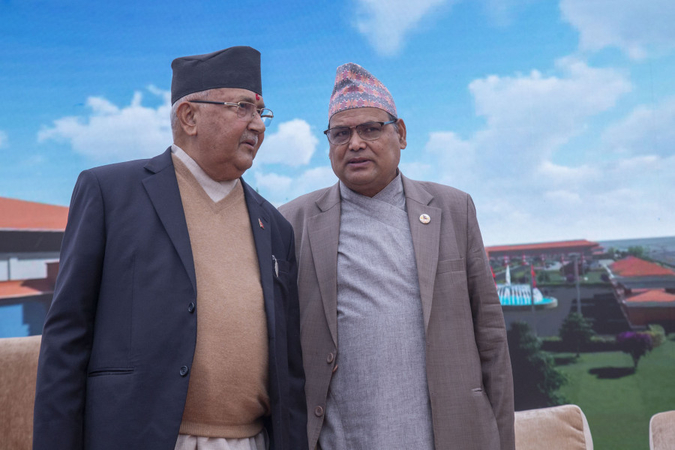
The rape allegation against House Speaker Krishna Bahadur Mahara by a woman who works at the Parliament Secretariat has become a litmus test for the state, the ruling Nepal Communist Party and the Nepal Police, with the public increasingly scrutinising all developments in relation to the case.

The government and ruling party have both yet to issue a clear statement on Mahara’s case, which has already sent shockwaves through political circles and the public. Mahara himself has resigned as Speaker until the “investigation is complete”.

But members of the primary opposition Nepali Congress and constitutional analysts say that Mahara cannot “suspend” himself and any resignation tendered is final.

“How can a resignation be conditional?” said senior advocate Bipin Adhikari. “Second, how can he suspend himself? There are a lot of legal loopholes in his resignation.”

A meeting of the party secretariat on Tuesday instructed Mahara to resign as Speaker and Member of Parliament, but so far, he has only resigned from the post of Speaker.

Two senior ruling party leaders told the Post that pressure is now mounting on the victim to not lodge a police complaint against Mahara.

The woman who accused Mahara on Monday evening via HamraKura.com has not yet filed a formal complaint and is already saying that after speaking with her relatives, she made a mistake accusing Mahara, according to ruling party leaders.

Questions have also been raised over the role of the Nepal Police, which failed to take Mahara into custody despite visiting the crime scene on Sunday evening and not ask the victim to lodge a formal complaint.

According to legal experts, until the plaintiff lodges a formal complaint, the police cannot arrest or take statements from the accused.

“This is a criminal case,” said Adhikari. “Until someone comes with a written complaint, the police cannot move ahead with the case.”

However, Adhikari said that the police should’ve encouraged the woman to file a case.

“Police can support the victim by writing the case on their behalf. But in this case, the police did not provide legal support to the victim, probably because the case was associated with a high-profile personality,” said Adhikari.

A senior Nepal Police officer reiterated Adhikari, saying that the woman dialed 100 and called the police to her room.

“Apart from that, we have not received any written complaints and until she files a case with the police in writing, it will be difficult for us to expedite the investigation,” he said.

A Nepal Police team has already collected prima facie evidence from the woman’s rented room in Kathmandu on Tuesday. The evidence includes an alcohol bottle and a glass that Mahara had allegedly drunk out of and Mahara’s glasses.

On Tuesday, police officials had asked the woman whether she would file a case against Mahara but she reportedly told the police that she would first discuss with her husband, who is currently out of town, and then make a decision, according to ruling party leaders.

Immediately after visiting the crime scene on Sunday evening, Nepal Police had informed Home Minister Ram Bahadur Thapa, Home Secretary Prem Kumar Rai and Inspector General Sarbendra Khanal about the case, according to the senior police officer. Thapa had then called on Khanal and instructed him to conduct a fair investigation into the case.

Police should be mindful that innocent people are not framed but those who have made mistakes should be brought under legal provisions, Thapa told Khanal, according to the police officer. Thapa further told Khanal not to tolerate any kind of political pressure from anyone in this case, the officer said.

The opposition Nepali Congress, meanwhile, is adamant that legal provisions should take the due course. Relations between the ruling and opposition parties have recently soured due to a recent attack against Nepali Congress leaders by cadres of the Nepal Communist Party.

“The law applies to all,” said Nepali Congress spokesperson Bishwo Prakash Sharma. “Ordinary citizens and Mahara must be treated equally. The onus lies on the ruling party, the government and the investigating agency to seriously pursue Mahara’s case. Otherwise, it will only lead to impunity.”