Spread of fake news not just a threat to media, but hurts society and business too: Media leaders

ศาสตร์เกษตรดินปุ๋ย : ขอบคุณแหล่งข้อมูล : หนังสือพิมพ์ The Nation

https://www.nationthailand.com/ann/30376459

Spread of fake news not just a threat to media, but hurts society and business too: Media leaders

Sep 20. 2019
(From left) Mr Jonathan McClory, moderator of the panel discussion on the fight against fake news at the Milken Institute Asia Summit 2019, with Warren Fernandez, editor of The Straits Times; Ellana Lee, senior vice-president at CNN International; Gary Liu, CEO of South China Morning Post; and Maria Ressa, executive editor of Rappler.ST PHOTO: DESMOND FOO

(From left) Mr Jonathan McClory, moderator of the panel discussion on the fight against fake news at the Milken Institute Asia Summit 2019, with Warren Fernandez, editor of The Straits Times; Ellana Lee, senior vice-president at CNN International; Gary Liu, CEO of South China Morning Post; and Maria Ressa, executive editor of Rappler.ST PHOTO: DESMOND FOO
By Fabian Koh
The Straits Times/ANN

90 Viewed

SINGAPORE – The rise of fake news is an existential moment for journalism, and there needs to be a combined global effort to combat it.

Such a move is crucial, especially with the rise of tech platforms which have accelerated the spread of falsehoods online, media leaders said on Thursday (Sept 19).

They were speaking during a panel discussion on fighting fake news at the annual Milken Institute Asia Summit held at the Four Seasons Hotel and attended by global leaders in government, business and media.

Ms Maria Ressa, chief executive officer and executive editor of Philippine news portal Rappler and a journalist of over 30 years, said: “At no other point in time have we faced a crisis like this. This is an existential moment.”

She noted how big-data firm Cambridge Analytica had experimented with peddling disinformation on Facebook in the Philippines during its 2016 election and affected the integrity of the poll.

“Journalists are at the front lines, and we have to fight. But businesses are also at the front lines, and you need to make choices that enable truth-telling,” said Ms Ressa, adding that the world needed a global compact to deal with the fake news crisis, like how it has a United Nations convention for human rights.

The four-member panel explained how fake news targets opinions at the extremes to garner higher viewership.

Ms Ressa said this is the same in “every part of the world”, where facts are replaced with disinformation and alternate realities, which people tend to believe.

“If you say something a million times, it can replace a fact,” she said.

“If you have no facts, then you can’t have truth. And if you don’t have truth, you can’t have trust. And If you don’t have trust, you have no democracy,” she added.

Ms Ellana Lee, senior vice-president and managing editor for Asia Pacific at CNN International, said there had to be a clear definition on what constitutes fake news.

“When it comes to the President of the United States, he uses ‘fake news’ as any news or information he does not agree with,” she said.

“With so much fake news out there, our audience is saying to us ‘we need help to figure this out’,” he said.

He shared how on Thursday morning, a video allegedly showing birds falling out of the sky in Indonesia due to the haze went viral, and readers wondered if it was real. He said the paper is trying to verify it.

“It is both a boon and a bane in the sense that because there is so much fake news, there is a shift towards more credible voices, and that’s where professional media groups have a role to play,” said Mr Fernandez, who is also editor-in-chief of Singapore Press Holdings’ English/Malay/Tamil Media Group.

He added that it is down to news outlets to get the truth out in a “credible and responsible way” so as to address the concerns that members of the public have.

“If we don’t, we will undermine trust in public institutions. And you will undermine the ability to have an agreement on the basic facts upon which we then have a discussion about what to do about the situation out there, or how to deal with it. In the absence of accurate facts, you can’t have discussion and you can’t have a democratic debate.”

Mr Fernandez added that with new technology that can produce say, deep fake videos, it will become very difficult to figure out the fake from the real.

He, however, is optimistic the younger generation is “a lot more sceptical”, having grown up in an environment of fake news. He noted those with the greatest propensity to share fake news tend to be those who are older. They grew up in an era when there was greater trust, he noted, saying: “When they see something coming to them on their phone or WhatsApp, they think ‘I better alert my friend’ and they share it.”

He added: “The opportunity for us in the media, is to really step up. We can’t do all this on our own. Businesses and governments and society will have to do their part. But what we can do is to go out and make a case to audiences about the role that professional newsrooms play.”

Mr Fernandez also shared how Singapore recently introduced a law to fight fake news.

Ms Ressa said Singapore’s approach may not work in other countries.

She noted how platforms like Facebook operate across jurisdictions, each with its own belief on topics like democracy and freedom. This is a challenge when trying to find one standard solution in managing that platform.

Responding to a question from the audience, CNN’s Ms Lee said that presenting balanced news is as important as addressing fake news.

She cited the ongoing protests in Hong Kong, which are entering their 16th week under the constant scrutiny of an international audience.

“For us it’s really important that we don’t only say ‘Police have fired tear gas’. We have to be responsible and say ‘Police have fired tear gas, protestors have thrown petrol bombs’. Without one admission, it completely changes the context of what’s happening,” she said.

Will there be a turning point in the battle against fake news?

Mr Gary Liu, chief executive officer of South China Morning Post, was doubtful there would be change, unless economies and markets are directly affected.

He said society has not suffered enough economically to understand the harm from fake news.

“The markets have not been hurt by it. The reality is that the capitalists in this room have access to direct and honest information, 99 per cent of the time. You guys are trading off of real information,” he said.

“You’re lucky enough to have the systems of access, and the intelligence to know truth from falsehood. The vast majority of the world population does not have that level of understanding and education.”

He suggested to the business leaders in the audience: “You should start pricing the social impact of fake news into what you do.”
Haze: Ministry urges bosses to allow workers to work from home

ศาสตร์เกษตรดินปุ๋ย : ขอบคุณแหล่งข้อมูล : หนังสือพิมพ์ The Nation

https://www.nationthailand.com/ann/30376458

Haze: Ministry urges bosses to allow workers to work from home

Sep 20. 2019
By The Star/ANN

66 Viewed

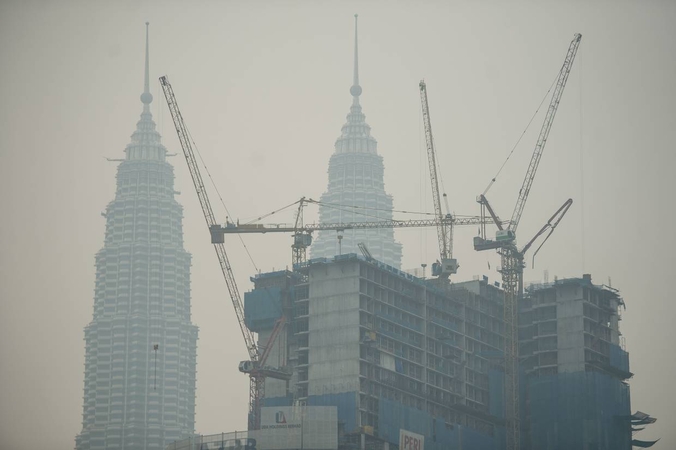
PUTRAJAYA (Bernama): The Human Resources Ministry has recommended employers to implement flexible work policies during the ongoing haze period and allow workers to work from home.

The ministry said the matter was raised at a Cabinet meeting Wednesday (Sept 18), where it is the responsibility of employers to ensure the safety and health of workers.

“It is important for employers to carry out risk assessments, take appropriate measures and to determine the need to come to work to ensure risks can be minimised,” the ministry said in a statement Thursday (Sept 19).

“Labour laws in Malaysia do not prohibit employers from specifying a place of employment other than those specified in a contract.

“Depending on circumstances such as haze or flood, workers can work from home as a temporary measure until conditions are restored,” it said.

Under the Occupational Health and Safety Act 1994 (OSHA), the Department of Occupational Safety and Health (DOSH) may order that any occupation affected by the haze be stopped in a situation that poses a danger to the safety and health of the worker.

Any employer found not complying with the Stop Work Order under OSHA could be fined up to RM50,000 or imprisoned for not more than five years or both and a further fine of RM500 for each day the offence continues, it said.

The ministry said employers should begin preparations to protect workers’ safety and health against the effects of haze, including identifying workers at risk such as those with heart or respiratory problems, and setting criteria for stopping work outside.

It said employers should ensure workers with medical symptoms such as sore throat and cough, red and watery eyes, sneezing, itching and breathing difficulty get medical attention immediately.

It also said they should identify the types of outdoor work that could be minimised, conduct proper respiratory device tests for workers who need to work outside, ensure the N95 breathing apparatus is used, improve efficiency of air purification devices for work and implement haze communication systems between employers and employees. – Bernama

Polio epidemic: DOH confirms resurgence in Philippines

ศาสตร์เกษตรดินปุ๋ย : ขอบคุณแหล่งข้อมูล : หนังสือพิมพ์ The Nation

https://www.nationthailand.com/ann/30376457

Polio epidemic: DOH confirms resurgence in Philippines

Sep 20. 2019
A baby gets oral polio vaccine.

A baby gets oral polio vaccine.
By Krissy Aguilar
Inquirer

81 Viewed

MANILA, Philippines — Nearly two decades after the Philippines was declared polio-free, the Department of Health (DOH) confirmed Thursday the resurgence of polio in the country as it recently recorded its first case of the potentially deadly infectious disease in Lanao del Sur.

“One polio case was confirmed in a 3-year-old girl from Lanao del Sur,” DOH said in a statement.

“In addition, the poliovirus has been detected in samples taken from sewage in Manila and waterways in Davao as part of the regular environmental surveillance,” it added.

In 2000, the World Health Organization (WHO) declared the Philippines polio-free, according to DOH.

“A single confirmed polio case of vaccine-derived polio virus type 2 (VDPV2) or two positive environmental samples that are genetically linked isolated in two different locations is considered an epidemic in a polio-free country,” DOH noted.

Health Secretary Francisco Duque III encouraged parents to participate in the polio vaccination, saying it is the only way to protect their children.

“We strongly urge parents, health workers and local governments to fully participate in the synchronized polio vaccination. It is the only way to stop the polio outbreak and to protect your child against this paralyzing disease,” Duque said, as quoted in the same statement.

DOH explained polio as an “infectious disease which spreads rapidly” and “can cause paralysis and, on rare occasions, can be fatal.”

“There is no cure for polio – it can only be prevented with multiple doses of polio vaccines that have long been proven safe and effective,” the agency added. /kga

HCM City seeks to become large, low cost logistics hub

ศาสตร์เกษตรดินปุ๋ย : ขอบคุณแหล่งข้อมูล : หนังสือพิมพ์ The Nation

https://www.nationthailand.com/ann/30376456

HCM City seeks to become large, low cost logistics hub

Sep 20. 2019
HCM City is developing a strategy to become a logistics hub, focusing on connections to other provinces in southern Viet Nam. - VNA Photo The Anh

HCM City is developing a strategy to become a logistics hub, focusing on connections to other provinces in southern Viet Nam. – VNA Photo The Anh
By VIET NAM NEWS
ASIA NEWS NETWORK

93 Viewed

HCM City is working on a logistics development strategy that would make the city a major logistics hub and reduce logistic costs to 16 per cent of Vietnam’s GDP in 2025.

During a conference held early this week in HCM City, Nguyen Ngoc Hoa, deputy director of the city’s Department of Industry and Trade, said the department and the Viet Nam Logistics Research and Development Institute (VLI) had been told by the city to work on a logistics development project to 2030.

The project will focus on building three logistic centres through technical infrastructure, and will aim to increase the number of businesses hiring specialised logistic services, with the goal of reducing costs.

In addition, the project will consider locations and the scales of logistic centres, as well as improve logistic service quality.

To continue as the economic leader of the country, HCM City should have a well-developed logistics industry connected to other provinces, particularly since many of the city’s major exporting industries are moving away from HCM to other provinces, experts said.

To Thi Hang of the VLI said that southern Vietnam has 12 inland container depots, with newer and bigger ones offering more comprehensive logistic service packages. Such depots are also linked to domestic waterways and located near seaports.

HCM City has six depots, but five of them, which have been operating over the intended capacity, are planning to relocate.

In addition, many of Vietnam’s logistic businesses rely on contracts from foreign companies, as well as from big businesses.

A survey done by the institute showed that most of the city’s port clusters were facing difficulties such as congestion, unhealthy competition, poor connection between small ports, and the inability to expand due to locations in urban areas.

About 41 per cent of the surveyed businesses said that Thu Duc District and District 9 are the best places for a logistic centre, due to convenient traffic and future airport and port development.

During the conference, several businesses said that a comprehensive logistic development project was crucial for ensuring sustainable growth and avoiding a situation where developments occur independently of each other.

Inland container depots, along with good storage spaces and clearance systems, are important for a logistics centre, they said, adding that current depots in the city lack traffic connections within the city and to other provinces.

HCM City is the biggest consumer market in the country, and the largest distribution and supply centre in the country’s south. Most of the imports and exports from southern provinces and trade between provinces go through HCM City.

The city, which is also located near major South China Sea (called the East Sea in Vietnam) shipping routes, can use multiple methods of goods delivery due to a favourable landscape, according to the department.

HCM City plans to have eight depots by the end of 2030, with a total size of around 102 to 137 hectares.

The logistics project will be submitted to the city government for approval in December.

VN growth strategy to focus on market economy, technology

ศาสตร์เกษตรดินปุ๋ย : ขอบคุณแหล่งข้อมูล : หนังสือพิมพ์ The Nation

https://www.nationthailand.com/ann/30376455

VN growth strategy to focus on market economy, technology

Sep 20. 2019
Electric wire production at Tien Thinh Co in HCM City. The country has set a 10-year strategy to make the transition to a modern market economy. — VNA/VNS Photo An Hieu

Electric wire production at Tien Thinh Co in HCM City. The country has set a 10-year strategy to make the transition to a modern market economy. — VNA/VNS Photo An Hieu
By VIET NAM NEWS
ASIA NEWS NETWORK

105 Viewed

Vietnam’s development strategy for 2021-30 places a large emphasis on maintaining peace, social and political stability.

The country is set to make the transition to a modern market economy, to spur the development of science and technology, to unleash its private sector’s potential and to invest in education for younger generations, said Prime Minister Nguyen Xuan Phuc at the second Vietnam Reform and Development Forum (VRDF) held on September 19 in Hanoi.

Vietnam’s Development Strategy draft for 2021-30 was formed against the backdrop of an increasingly unpredictable world with rising tensions over geopolitical issues, trade wars, protectionism, economic decline and climate change.

The prime minister stressed the importance of improving the economy’s ability to withstand and adapt to changes. He pledged that the country will speed up the process of integration into the global economy and continue to implement free trade agreements that Vietnam has signed.

PM Phuc said there is much to do before the country becomes a part of the global value chain.

“The localisation rate in Vietnam remains low at just 33 per cent, resulting in low participation in the global value chain,” he said.

The leader called for the business sector to further improve human resource quality and to implement scientific and technological advances to become a larger part of the global value chain. It will play a crucial role in helping Vietnam  escape the middle-income trap, a major hurdle for the country’s socio-economic development effort, he said.

Market economy

The draft listed the country’s top objectives as to fully embrace a market economy model that adheres to global norms and standards, to establish legal frameworks for new business models, the digital economy as well as protecting the environment, said the planning and investment minister, Nguyen Chi Dung.

The country is also set to make significant investments in the development of technologies in the fields of digitalisation, artificial intelligence, automation, energy and environment among others.

Since becoming a middle-income country in 2010, Vietnam has been able to maintain steady growth with an average GDP growth of 6.2 per cent for the 2011-18 period. By the end of 2018, Vietnam’s GDP had reached US$250 billion (Bt7.627 trillion) with GDP per capita at $2,600 (Bt79,326) or $720 billion (Bt21,967 trillion) and $7,600 (Bt231,876) respectively in purchasing power parity terms, said the minister.

The country has also become an attractive destination for international companies and investors. Foreign investment in Vietnam in 2011-18 totalled $200 billion (Bt6.1 trillion) with trade openness, a figure calculated by exports plus imports as per cent of GDP, twice the size of GDP in 2018.

As the global economy is increasingly fuelled by technological breakthroughs, the minister said Vietnam places great importance on streamlining its legal framework and development policies to build an economy that nurtures startups, innovation and digitalisation. As a result, the country has moved up to rank 42 of 129 in the Global Innovation Index, leading the lower-middle-income nations and third among Asean countries behind Singapore and Malaysia.

Tech-based growth

In spite of recent gains, Vietnam faces increasingly complex issues in its socio-economic development efforts. The country’s productivity and product competitiveness are low, while the country’s market economy model still shows too many shortcomings and limitations, he said.

“Technological advances, the likes of which we have never seen before, are having a great impact on the economy, on how business is conducted and companies operated. Developing countries, including Vietnam, must take the initiative to grasp opportunities and overcome challenges or fall behind the curve in the development course,” said the minister.

He said Vietnam’s economy and policies must continue to change and adapt in order to break through the middle-income trap and achieve sustainable development.

Ousmane Dione, the World Bank Country Director for Vietnam, said while the country has every potential to sustain its development success, bold reforms are required so that the country will be able to seize future opportunities and manage risks.

Dione discussed critical reforms to address a fundamental weakness of the country’s growth model, such as identifying policy options to promote innovation-based growth and taking advantage of the Fourth Industrial Revolution. He called for the modernisation of the country’s market institutions and national governance to enable an environment where private sector firms, including domestic ones, can flourish and become the engine of growth.

“A well-designed SEDS (socio-economic development strategy) is critical for Vietnam, but successful implementation will probably be more important. For this reason, priorities and actions need not only to be clearly identified but also practical to implement bearing in mind the local context and players,” he said.

VRDF, formerly known as the Vietnam Consultative Group (CG), which served as a platform for discussion between the government and donors on development policies, has evolved into a forum to discuss the country’s strategy and important development issues.

The first Vietnamese CG meeting was held in Paris in 1993, with meetings since 1999 held in Vietnam, co-chaired by the Ministry of Planning and Investment and the World Bank in Vietnam.

China demands US drop bill on HK

ศาสตร์เกษตรดินปุ๋ย : ขอบคุณแหล่งข้อมูล : หนังสือพิมพ์ The Nation

https://www.nationthailand.com/ann/30376450

China demands US drop bill on HK

Sep 20. 2019
Photo by China Daily

Photo by China Daily
By China Daily
Asia News Network

145 Viewed

China on Thursday demanded the United States to stop advancing a Hong Kong-related bill and its interference in Hong Kong affairs on Thursday, after US lawmakers held a news conference to back the bill.


US House of Representatives Speaker Nancy Pelosi and a bipartisan group of members of Congress held the media event on the “Hong Kong Human Rights and Democracy Act of 2019”. Hong Kong separatists, including Joshua Wong Chi-fung and Denise Ho Wan-see, attended the event.

We strongly urge the US to… stop its interference of any kind in Hong Kong affairs, stop advancing the bill, stop endorsing Hong Kong’s violent and radical forces and separatists, and stop abetting words and deeds that harm the prosperity of the special administrative region.

Geng Shuang, Spokesman, Chinese Foreign Ministry

China is strongly dissatisfied and firmly opposed to the move, Foreign Ministry spokesman Geng Shuang said on Thursday.

Pelosi and other US politicians “failed to distinguish right from wrong” despite China repeatedly expressing its solemn stance over US meddling in Hong Kong affairs, Geng said.

They were “brutally interfering in China’s internal affairs” by threatening to advance the bill, contacting Hong Kong separatists and making irresponsible remarks over Hong Kong affairs, Geng added. He reiterated that no foreign forces are allowed to interfere in Hong Kong affairs, which belong purely to China’s internal affairs.

“We strongly urge the US to… stop its interference of any kind in Hong Kong affairs, stop advancing the bill, stop endorsing Hong Kong’s violent and radical forces and separatists, and stop abetting words and deeds that harm the prosperity of the special administrative region,” Geng said.

The Office of the Commissioner of the Foreign Ministry in Hong Kong also slammed the US politicians’ move, which is at odds with their “claimed support for ‘one country, two systems'” and has “fully exposed their hidden political agenda”.

The office said in a statement that anyone without bias will acknowledge that the people of Hong Kong are enjoying unprecedented democracy, rights and freedom under the law.

It was also emphasized in the statement that no one has the right or freedom to carry out separatist activities or a “color revolution” in Hong Kong, nor are they allowed to act above the law or disrupt the rule of law and public order.

“Stopping violence, ending the chaos and restoring order represent the freedom and justice that the overwhelming majority of people in Hong Kong truly aspire to,” the statement reads, urging the US politicians to “follow the mainstream public opinion in Hong Kong”.

Reintroduced in the US House of Representatives in June, the act calls for an annual assessment of Hong Kong’s autonomy before extending the US’ special treatment to the city, among other measures.

China enriches with outbound FDI

ศาสตร์เกษตรดินปุ๋ย : ขอบคุณแหล่งข้อมูล : หนังสือพิมพ์ The Nation

https://www.nationthailand.com/ann/30376397

China enriches with outbound FDI

Sep 19. 2019
By China Daily
Asia News Network

320 Viewed

China’s outbound direct investment in 159 countries and regions stood at 493.09 billion yuan (US$70 billion) for the first eight months of 2019, up 2.7 percent year on year according to the Ministry of Commerce.


Chinese companies added a total of US$8.97 billion in investment to 53 economies participating in the Belt and Road Initiative

In the meantime, Chinese companies added a total of US$8.97 billion in investment to 53 economies participating in the Belt and Road Initiative, accounting for 12.4 percent of the total.

The ministry said the structure of outbound investment continued to improve, with investment mainly going into sectors including leasing and business services, manufacturing, wholesale and retail.

Big-ticket projects took the majority share of the value of new deals. The number of newly signed overseas projects with contract value exceeding US$50 million came in at 468 between January and August, up six from same period a year earlier.

The value of infrastructure projects amounted to US$110 billion, accounting for 85.1 percent of newly signed contracts.

Major overseas projects bring mutual benefits. By the end of last month, Chinese companies had created 813,000 jobs for host countries and regions, the ministry added.


Bill Gates: Trade war may swell misery of neediest

ศาสตร์เกษตรดินปุ๋ย : ขอบคุณแหล่งข้อมูล : หนังสือพิมพ์ The Nation

https://www.nationthailand.com/ann/30376394

Bill Gates: Trade war may swell misery of neediest

Sep 19. 2019
Photo by China Daily

Photo by China Daily
By China Daily
Asia News Network

158 Viewed

Bill Gates, co-chair of the Bill & Melinda Gates Foundation, has warned that trade tensions between China and the United States are likely to affect global initiatives aimed at conquering poverty, contagious diseases and other global woes.

Gates, who started the foundation in 2000 to help people around the world lead healthy, productive lives, told reporters recently that a healthy and constructive relationship between China and the US not only benefits the two countries, but also bolsters progress toward addressing major global issues.

“I see anything that cuts down global cooperation as a potential step backward, where the people who would get hurt the most by it are the poorest in the world,” he said ahead of the release of the foundation’s Goalkeepers Data Report on Tuesday. The annual report gauges efforts to improve living conditions, especially in poor areas.

As concerns run high that the China-US trade war might trigger a global economic downturn, Gates said foreign aid donations determined by government budgets might take a hit. He said the idea of caring for others, like African children dying of malaria, might be dismissed or downgraded. “People tend to turn inward when government budgets get tight,” Gates said.

Mortality rates of infectious diseases could rise in the worst case as critical medicines that treat malaria, tuberculosis and some HIV drugs risk losing efficacy due to potential resistance, he said.

“If we don’t get generous contributions to those organizations (that deliver vaccines and other medications), it results in literally millions of deaths,” he said. “If you don’t keep infectious diseases in check, they just keep expanding and expanding.”

A self-proclaimed “impatient optimist”, Gates said he feels upbeat about future trade talks between the two countries.

“I’m a huge believer that China and the US getting along is the most important bilateral relationship in the world,” he said.

“I’m hopeful that the trade problems will be put behind us and that we can go on to work constructively together.”

Gates said the partnership between the foundation and China was progressing at full speed and had deepened over the years.

Last year, China unveiled its International Development Cooperation Agency, responsible for overseeing and coordinating the country’s expanding foreign assistance programs.

The foundation has been working with the agency, Gates said.

“It has helped us understand China’s priorities and to coordinate our work with China in an even better way,” he said.

The foundation’s annual report began in 2017 to spur action and chart progress toward the Sustainable Development Goals adopted by the United Nations in 2015.


Haze in Singapore: Air quality remains moderate as schools reopen on Monday

ศาสตร์เกษตรดินปุ๋ย : ขอบคุณแหล่งข้อมูล : หนังสือพิมพ์ The Nation

https://www.nationthailand.com/ann/30376246

Haze in Singapore: Air quality remains moderate as schools reopen on Monday

Sep 16. 2019
Clearer skies in Bukit Panjang at 7.35am on Sept 16, 2019, when the PSI reading was 87. (ST/ANN/Ng Sor Luan)

Clearer skies in Bukit Panjang at 7.35am on Sept 16, 2019, when the PSI reading was 87. (ST/ANN/Ng Sor Luan)
By The Straits Times
Asia News Network

261 Viewed

The air quality in Singapore remains in the moderate range on Monday (Sept 16) as schools reopen after the one-week school holiday.


The 24-hour Pollutant Standards Index (PSI) dipped to 78 in the north and in the east at 8am on Monday, while other parts of Singapore recorded readings of 80 to 88.

The Ministry of Education said on Sunday that it was ready to take appropriate haze management measures.

It added that the well-being of students remains a priority, and that all classrooms of primary and secondary schools, MOE kindergartens and special education schools have been equipped with air purifiers. The schools have had these on hand for such situations since the last bad haze in 2015.

Teachers will also be on the lookout for students who are unwell or have pre-existing lung or heart conditions.

The ministry said it will consider closing schools when the air quality forecast for the next day is “hazardous” – when the 24-hour PSI rises above 300.

A PSI reading of zero to 50 indicates that the air quality is good, while a reading of 51 to 100 is in the “moderate” range. The air quality is considered to be “very unhealthy” when the PSI ranges from 201 to 300, and it is “hazardous” when the reading goes above 300.

The MOE said it has other management measures in place should the PSI level fall in the “unhealthy” and “very unhealthy” ranges of 101 to 300. Should school closures coincide with national examinations, the affected exam papers will be rescheduled and the exam period extended.

Other public agencies also intend to continue with business as usual, but have plans in place in case of worsening conditions.

The People’s Association said that its activities would carry on as long as the air quality remained within the healthy range, and that it had prepared air-conditioned rooms in its residents’ committees centres and community clubs for members of the public seeking respite from the haze, should the hourly PM2.5 index cross into the unhealthy range.

A Ministry of Defence spokesman said that the Singapore Armed Forces (SAF) has a set of guidelines in place, and that the SAF’s training will “proceed as much as possible, to ensure (soldiers) are well-trained and ready for any eventuality”.

The spokesman added that SAF units will adjust their outdoor and training activities accordingly if the 24-hour PSI readings go above 100.

He said: “Regardless of the haze conditions, the SAF stands ready to safeguard Singapore’s peace and security.”

Does the advent of 5G technology signal the next big retail evolution?

ศาสตร์เกษตรดินปุ๋ย : ขอบคุณแหล่งข้อมูล : หนังสือพิมพ์ The Nation

https://www.nationthailand.com/ann/30376240

Does the advent of 5G technology signal the next big retail evolution?

Sep 16. 2019
Consumers try out 5G smartphones at a shop in Shanghai. (Photo: China Daily)

Consumers try out 5G smartphones at a shop in Shanghai. (Photo: China Daily)
By PHIL POMFORD
Special to the CHINA DAILY
ASIA NEWS NETWORK

130 Viewed

5G is poised to power the next generation of internet connectivity and e-commerce. Faster and more reliable than anything that has come before, 5G networks will enable people to communicate, consume entertainment and shop at unprecedented speeds.

5G could prove pivotal for Asia-Pacific economies. Leading data analysts predict that it will contribute US$900 billion to Asia’s economy over the next 15 years, with 24 Asia-Pacific markets expected to launch 5G services by 2025.

Markets like South Korea and Japan are leading the way in 5G adoption: indeed, tech journalists from around the globe excitedly reported on the world’s first nationwide 5G network which went live in South Korea earlier this year.

China is another market leading the charge toward 5G adoption, and is set to become the world’s largest 5G market by 2025 with 460 million 5G users. On June 6, the Ministry of Industry and Information Technology issued commercial licenses for 5G. Four major telecom carriers – China Telecom, China Mobile, China Unicom and China Broadcasting Network – received the first batch of four 5G commercial licenses.

Businesses in the e-commerce space, and indeed any retailer today, should be paying close attention to the arrival of 5G. The high-speed connectivity of 5G will transform the way people shop, signalling the arrival of the next big retail evolution and presenting new challenges and opportunities for brands.

5G is set to power significant growth in mobile commerce, with some researchers estimating that it will produce an additional $12 billion in mobile commerce revenue for retailers in just three years, according to “A Mobile-First World”, a new report from Adobe Digital Insights.

That growth will be in part due to simple economics of speed – faster, cheaper internet on your mobile phone means more opportunities to shop. This is especially true for emerging digital customers in developing countries.

But there are other factors of innovation driving new revenue possibilities for retailers, too. 5G networks will enable a new level of access and ubiquity for groundbreaking retail technologies that leverage augmented reality (AR), virtual reality (VR) and the internet of things (IoT).

Imagine getting the best parts of the brick-and-mortar shopping experience without ever setting foot in a store. You’re not simply scrolling through a website: you’re actually looking at the shelves of a fashion retailer or supermarket via AR through your mobile phone, as well as exploring new offerings, hunting for discounts and deals, and even using a virtual fitting room to try on outfits – all from the comfort of your couch.

This futuristic consumer experience could be closer than we think, thanks to 5G and its unprecedented capability to handle huge amounts of data at high speeds. 5G will unlock a new wave of consumer preferences, and if e-commerce businesses want to win amongst Asia Pacific’s fierce digital competition, they must harness the power of 5G. Then, they can truly transform the customer experience, through innovative technologies like AR and VR.

Of course, the possibilities of 5G are not limited to the digital retail space. 5G is also set to rapidly accelerate omnichannel commerce, bringing the digital and physical worlds together in a completely new way.

Brick-and-mortar stores can connect to shoppers via their mobile devices – you might walk into a shop and receive a personalised SMS communication with a special deal just for you, based on your browsing history. Or, through facial recognition tools, retailers could soon be able to track the in-store products you spend the longest time looking at, then send you a digital offer to encourage online purchase after you leave the shop.

As retailers consider how to innovate in the era of 5G, it will be paramount to provide the right payment experience, one that feels fast and frictionless, to match the overall 5G shopping journey.

For online merchants, this means investigating the possibilities of innovative new payment systems – think facial recognition authentication, social payments and invisible payments. But it also means simply taking the first step toward understanding consumers’ preferred payment methods in any given market and catering to these.

Asia, for example, is home to eight of the world’s top 10 markets for mobile payments, so offering Alipay, WeChat Pay or other popular options can be key to driving conversion, especially as the decreased network latency of the 5G era makes these seamless one-click payments even easier to use.

E-commerce in Asia is evolving at speed, and the arrival of 5G is set to turbocharge this innovative landscape. Retailers can prepare for the future today by doing a deep investigation into what opportunities 5G can unlock for their business – whether that’s new VR and AR shopping experiences, tailored omnichannel offerings, or enabling the quick and seamless payment choices that might make all the difference.

Phil Pomford is general manager for Asia-Pacific, Global Enterprise e-commerce, Merchant Solutions at FIS.