Hong Kong airport on alert ahead of fresh wave of protests

ศาสตร์เกษตรดินปุ๋ย : ขอบคุณแหล่งข้อมูล : หนังสือพิมพ์ The Nation

https://www.nationthailand.com/ann/30374526

Hong Kong airport on alert ahead of fresh wave of protests

Aug 09. 2019
Black-clad protesters against the extradition bill hand out leaflets to arrival passengers at Hong Kong International Airport on July 26, 2019. (PHOTO / CHINA DAILY)

Black-clad protesters against the extradition bill hand out leaflets to arrival passengers at Hong Kong International Airport on July 26, 2019. (PHOTO / CHINA DAILY)
By China Daily Hong Kong
Asia News Network

51 Viewed

HONG KONG — Hong Kong’s Airport Authority said on Friday only departing passengers with travel documents will be allowed to enter the terminal as anti-government activists gear up for a three-day rally to raise awareness among tourists entering the city.

The move comes as officials confirmed on Friday that a police commander who oversaw operations during the illegal “Occupy Central” protests in 2014 and the Mong Kok riot in 2016 that roiled the Special Administrative Region (SAR) has been recalled to help deal with protests that have plunged the financial hub into crisis.

Former deputy police commissioner Alan Lau Yip-shing has been appointed to help handle large-scale public order events and steer operations, including activities to mark the 70th anniversary of the founding of the People’s Republic of China on Oct 1, the HKSAR government said in a statement.

Lau joined the police as inspector in 1984 and was promoted to senior assistant commissioner in 2013. Between 2000 and 2003, he was seconded to the Airport Authority to oversee aviation security services.

Hong Kong, which returned to the motherland in 1997, is embroiled in its worst political crisis for decades after two months of increasingly violent protests.

The escalating cycle of violence has prompted travel warnings from countries including the United States and Australia.

Activists plan to converge on the airport on Friday afternoon, with more protests planned across the city at the weekend.

“To maintain the smooth process of the departure procedures of passengers and the terminal operation, only departure passengers with an air ticket or boarding pass for the next 24 hours and a valid travel document, or airport staff with identity proofs will be allowed to enter to the check-in aisles at Terminal 1,” the Airport Authority said in a statement.

Vietnam seeks to boost agriculture and fishery exports

ศาสตร์เกษตรดินปุ๋ย : ขอบคุณแหล่งข้อมูล : หนังสือพิมพ์ The Nation

https://www.nationthailand.com/ann/30374523

Vietnam seeks to boost agriculture and fishery exports

Aug 09. 2019
Visitors at the VietFood, Beverage and Professional Packing Machines international exhibition that opened in HCM City on August 7. (Photo: VNS/Thu Hang)

Visitors at the VietFood, Beverage and Professional Packing Machines international exhibition that opened in HCM City on August 7. (Photo: VNS/Thu Hang)
By VIET NAM NEWS
ASIA NEWS NETWORK

70 Viewed

Vietnam will attract more foreign direct investment and boost its agricultural and fisheries exports through free trade agreements, experts say.

The recently signed Comprehensive and Progressive Agreement for the Trans-Pacific Partnership (CPTPP) and the EU-Vietnam Free Trade Agreement (EVFTA) would help the country increase its agricultural and fisheries output, Phạm Tuan Long, deputy director of the division of agriculture, forestry and fishery at the Ministry of Industry and Trade’s export-import department, said.

“With commitments under FTAs, import tariffs will be reduced or eliminated in various markets, creating favorable conditions for Vietnam’s exports,” he told a workshop held in HCM City on Wednesday.

Vietnam is a leading producer and exporter of a variety of agricultural products, including rice, coffee, pepper, cashew and fish, he said.

Last year exports of the country’s main agricultural products were worth US$27 billion, or nearly 11 per cent of total exports.

Vietnam exports goods to more than 200 markets.

In the first half of this year, agricultural exports were worth $12.3 billion, with fisheries, fruits and vegetables, coffee, cashew, rice, and pepper exports each fetching more than $1 billion.

However, with technical barriers and strict requirements with regard to food safety and hygiene standards, Vietnam’s agricultural products face many challenges since agriculture is mostly done on a small scale.

The trade ministry has coordinated with the Ministry of Agriculture and Rural Development to update local businesses on technical barriers and trade protection measures in import countries, he said.

Phạm Thiet Hoa, director of the Investment and Trade Promotion Centre of HCM City, said it is vital that local firms invest heavily in modern facilities and technology and carefully manage quality and food safety in both the farming and processing stages to fulfil the export potential.

But they need to be offered incentives to enhance capacity, develop brands and update themselves on export markets and market surveys, he said.

The workshop titled “Opportunities to access potential export markets for food and foodstuff sector” was held on the sidelines of the VietFood, Beverage and Professional Packing Machines international exhibition held in HCM City runs through August 10.

Labelling China ‘currency manipulator’ unreasonable

ศาสตร์เกษตรดินปุ๋ย : ขอบคุณแหล่งข้อมูล : หนังสือพิมพ์ The Nation

https://www.nationthailand.com/ann/30374518

Labelling China ‘currency manipulator’ unreasonable

Aug 09. 2019
(Photo/VCG)

(Photo/VCG)
By CHINA DAILY
ASIA NEWS NETWORK

374 Viewed

China will not revise its foreign exchange policies, as the United States labelling it “a currency manipulator” is unreasonable and unlikely to get support from multilateral mechanisms, according to Chinese officials and analysts.

Based on available facts and evidence, it is unlikely that the International Monetary Fund – the most authoritative organisation to arbitrate currency manipulation – will stand by the US in accusing China of being a currency manipulator, they said. Without such support from the multilateral organisation, the US accusation will not hold up, they added.

An IMF spokesperson told China Daily on Thursday that “discussions with the US Treasury Department are ongoing on a range of issues”. The “range of issues” is not confined to the currency manipulation accusation, the spokesperson added.

The IMF had not yet sent a message requiring Beijing to start related negotiations regarding the accusation, two Chinese officials familiar with the matter told China Daily. The Chinese government maintains routine coordination and communication with the IMF, said the officials, on condition of anonymity.

The US Treasury Department wrote in a statement on Monday that it will engage with the IMF “to eliminate the unfair competitive advantage created by China’s latest actions”. Hours before the US announcement, the renminbi weakened beyond 7 per dollar for the first time since May 2008. Washington threatened earlier to slap 10 percent tariffs on an additional $300 billion worth of Chinese goods beginning on Sept 1.

Li Chao, vice-chairman of the China Securities Regulatory Commission, said it is “irresponsible” for the US administration to label China as “a currency manipulator”, as it not only violates rules and common sense, but also causes damage to the US itself and stock markets of other economies.

“(The US labeling) triggered drastic fluctuations across global financial markets,” Li said in an interview with Xinhua News Agency.

Mark Sobe, a former senior IMF official, told Reuters on Tuesday, “It’s ridiculous that they’ve declared China a currency manipulator. They don’t have any meaningful tools to do anything about it, unless they just want to pile more tariffs on.”

The recent performance of the Chinese currency is evidence that the exchange rate is floating more flexibly, said Guan Tao, a former director at the State Administration of Foreign Exchange, the country’s foreign exchange regulator.

“Even if the IMF received the US complaints on the exchange rate, I believe the fund will make a just decision. And it is unlikely to overturn the previous conclusion,” he said. “For the long term, the RMB value will depend on economic fundamentals.”

IMF First Deputy Managing Director David Lipton said after his visit to China in June that the country will be able to stabilize growth above 6 percent in 2019 and 2020, supported by appropriate policies, despite US tariffs.

“China has made welcome progress in reducing external imbalances over several years, and the external position in 2018 was broadly in line with medium-term fundamentals and desirable policies,” Lipton said.

“Exchange rate flexibility should facilitate adjustment to the new external environment,” he added. “Greater exchange rate flexibility and better-functioning foreign exchange markets will help the financial system prepare for more volatile capital flows.”

China’s current account surplus continued to decline in 2018, reaching 0.4 percent of GDP, according to the IMF’s recent annual External Sector Report.

China will maintain stability and continuity of its foreign exchange policies and continually promote the opening-up of the financial market, SAFE spokeswoman Wang Chunying said on Wednesday.

“China remains committed to the managed floating exchange rate regime based on market supply and demand, and with reference to a basket of currencies,” said a statement from the People’s Bank of China, the central bank.

The US Treasury Department labeled China a currency manipulator, but the reality is very different, as the renminbi dropped beyond 7 per US$ only due to an overly bearish market, said Lynda Zhou, equity portfolio manager at Fidelity International.

Magnitude 6.0 earthquake leaves one dead

ศาสตร์เกษตรดินปุ๋ย : ขอบคุณแหล่งข้อมูล : หนังสือพิมพ์ The Nation

https://www.nationthailand.com/ann/30374513

Magnitude 6.0 earthquake leaves one dead

Aug 08. 2019
By The China Post/ANN

215 Viewed

TAIPEI (CNA) — An elderly woman in New Taipei apparently died after a magnitude 6.0 earthquake struck northeastern Taiwan at 5:28 a.m. Thursday, according to the city’s fire department.


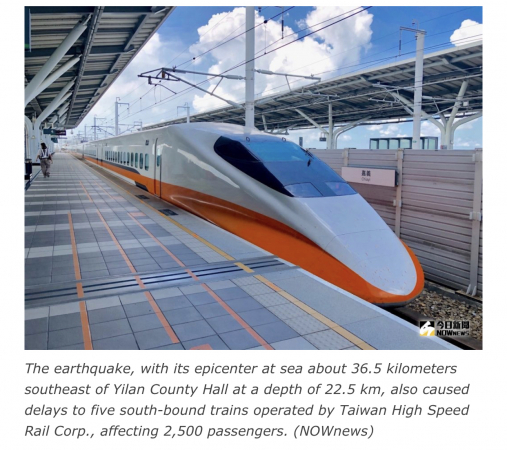
The earthquake, with its epicenter at sea about 36.5 kilometers southeast of Yilan County Hall at a depth of 22.5 km, also caused delays to five south-bound trains operated by Taiwan High Speed Rail Corp., affecting 2,500 passengers.

Shortly after the temblor, President Tsai Ing-wen (蔡英文) activated the emergency response mechanism set up after she took office in 2016.

After receiving briefings from the National Security Council, Tsai posted a message on her Facebook and other social media platforms reassuring the public that no major damage or casualties had been reported as a result of the earthquake.

However, a 60 year-old-woman in New Taipei was apparently crushed by a closet that toppled over during the quake and later declared dead by hospital authorities, the fire department reported later in the day.

Due to the earthquake, the departure of the first Taiwan Taoyuan International Airport MRT train to Taipei was delayed from 5:57 a.m. until 6:20 a.m.

Meanwhile, Taipei City Fire Department reported several cases of people trapped in elevators and damage to buildings, while Taichung City reported leaks of ruptured water and natural gas pipelines.

In addition, thousands of households suffered power outages in the wake of the earthquake, with power restored to most affected households as of 10 a.m.

Experts said Yilan, which lies near the junction of two tectonic plates and is prone to earthquakes, is likely to suffer from more powerful earthquakes in the future.

Singapore ranks 32 out of 40 in new index on work-life balance

ศาสตร์เกษตรดินปุ๋ย : ขอบคุณแหล่งข้อมูล : หนังสือพิมพ์ The Nation

https://www.nationthailand.com/ann/30374480

Singapore ranks 32 out of 40 in new index on work-life balance

Aug 08. 2019
Singapore was ranked second for work intensity, which considers factors such as vacation days taken, paid maternal and parental leave, and the share of full-time employees working more than 48 hours per working week. (Photo: ST FILE)

Singapore was ranked second for work intensity, which considers factors such as vacation days taken, paid maternal and parental leave, and the share of full-time employees working more than 48 hours per working week. (Photo: ST FILE)
By THE STRAITS TIMES
ASIA NEWS NETWORK

236 Viewed

Singapore is in the bottom quarter of 40 cities when it comes to work-life balance, according to a new study released yesterday (August 7).

It comes in 32nd place, though it is ranked higher than the other three Asian cities considered – Hong Kong, Tokyo and Kuala Lumpur.

This is in part due to the large amount of time that the Singaporeans dedicate to their jobs.

Singapore was ranked second highest for work intensity, which considers factors such as vacation days taken, paid maternal and parental leave, and the share of full-time employees working more than 48 hours per working week.

Top of the list for overall work-life balance were Helsinki, Munich and Oslo, while the bottom three were Kuala Lumpur, Tokyo and Buenos Aires.

The 40 cities were selected to include those known for attracting professionals and families for their work opportunities and diverse lifestyle offerings, said keyless access technology company Kisi, which published the study.

Cities were then given a score based on 20 factors. Besides work intensity factors, these included factors related to society and institutions, such as gender equality and access to mental healthcare; and city livability factors such as safety, outdoor spaces and air pollutants.

Data was taken from various sources including government and international organisation databases, other published indexes and companies like Expedia and UBS.

Kisi chief executive Bernhard Mehl said that he hopes the study highlights the need for more research into optimising the well-being of citizens in order to counter the psychological and economic costs of workplace stress.

“Despite living in an era where unprecedented advancements have been made in technology and connectivity, we have failed to address the most everyday aspect of enhancing our everyday lives – finding the balance between work and leisure,” he said.

Although it was ranked near the bottom in terms of work intensity and how society and institutions support individual wellness, Singapore ranked 11th in terms of city liveability, as the study found that it has high levels of safety, low levels of air pollution and good general wellness and fitness.

Other findings covered include arrival times at work, with workers in Washington DC and Hong Kong starting at the latest time of 10.30am and those in San Diego starting earliest at 8.09am. Singapore workers start at 9.34am on average, according to the study.

The average full-time employee worked just 38.9 hours a week in Oslo, compared with 46 hours in Kuala Lumpur and 44.6 hours in Singapore.

Kisi stressed that this index does not mean to be a city liveability index or highlight the best cities to work in. Rather, it aims to be a guideline “for cities to benchmark their ability to support the fulfilment of residents’ lives by improving the aspects of life that help relieve work-related stress and intensity”.

‘China must convert crises to advantages’: state experts

ศาสตร์เกษตรดินปุ๋ย : ขอบคุณแหล่งข้อมูล : หนังสือพิมพ์ The Nation

https://www.nationthailand.com/ann/30374479

‘China must convert crises to advantages’: state experts

Aug 08. 2019
Chinese-made textile products on display during an industrial exposition in New York last month. (Photo: Xinhua)

Chinese-made textile products on display during an industrial exposition in New York last month. (Photo: Xinhua)
By CHINA DAILY
ASIA NEWS NETWORK

136 Viewed

Attempts to disrupt development in nation will not succeed, say experts in mainland China.

The country needs to continue on its set course, run its own affairs well and maintain economic resilience to respond to pressure from the United States, experts said on Wednesday.

Their words came as the year-long China-US trade tension was further escalated. Last week, Washington said it will impose an additional 10 per cent tariff on $300 billion worth of Chinese goods starting September 1. The plan will put additional tariffs on essentially all Chinese goods coming into the US, but medicines will not be affected.

Wang Yiming, vice-president of the State Council’s Development Research Centre, said China needs to make full preparations to deal with an uneasy relationship with the US in the long term.

“The country should continuously deepen market-oriented reforms and promote opening-up, and take a steady stance while responding to the constant changes from the US,” he said at a seminar in Beijing.

“Future Sino-US economic and trade consultations will be a complicated process. We must have patience and strategic strength,” Wang said.

He said that an economic growth downturn is possible, but the long-term positive development will not change because fiscal and monetary policies still have enough space.

Yang Yiyong, director of the Institute of Sociology, at the Academy of Macroeconomic Research under the National Development and Reform Commission, said a key measure for the Chinese government to address future uncertainties is to further expand the overseas markets, and continuously develop economic and trade ties with other countries besides the US.

At the same time, the country should also tap the potential in the domestic market and boost consumption, Yang said.

Lin Zhaomu, also associated with the Academy of Macroeconomic Research, said, “Today’s China is more qualified and capable to turn crises into opportunities, and transform the external pressures into a momentum to comprehensively deepen reform and promote high-quality development.

China’s huge and fast-growing domestic market is a great advantage, while multinational companies won’t be able to neglect the China market, Lin said.

“Some people in the US are attempting to disrupt China’s development through trade friction, which is impossible,” said the former executive vice-president of the academy.

Citing figures from the International Monetary Fund, Lin said in 2008 China’s imports took up 6.7 per cent of that globally, much lower than the US share of 13.2 per cent. In 2018, China accounted for 11 per cent of global imports, while the US share dropped to 13 per cent, he said.

Besides, China has many other favourable conditions to support the long-term sustainable development of the economy, Lin said. For example, he cited, China’s savings rate is more than twice that of the US, and has become a net capital exporter with abundant capital for development.

China’s per capita income is much lower than that of developed countries, and is still undergoing industrialisation, information expansion, urbanisation and agricultural modernisation, during which its economic growth can more than double the speed of developed countries, he said.

Jakarta governor sued over air pollution. He forces motorists to leave cars at home

ศาสตร์เกษตรดินปุ๋ย : ขอบคุณแหล่งข้อมูล : หนังสือพิมพ์ The Nation

https://www.nationthailand.com/ann/30374463

Jakarta governor sued over air pollution. He forces motorists to leave cars at home

Aug 08. 2019
Waiver: A Jakarta Transportation Agency official affixes a disability sticker to a car parked at the agency’s office in Central Jakarta on Tuesday that exempts the driver from the odd-even license plate traffic restriction. (The Jakarta Post/Umair Rizaludin )

Waiver: A Jakarta Transportation Agency official affixes a disability sticker to a car parked at the agency’s office in Central Jakarta on Tuesday that exempts the driver from the odd-even license plate traffic restriction. (The Jakarta Post/Umair Rizaludin )
By The Jakarta Post
Asia News Network

133 Viewed

The Jakarta administration is pressing ahead with its plan to expand the controversial odd-even license plate traffic policy, despite howls of protests from some motorists who still have no faith in the city’s public transport system.


The city administration ended speculation about the policy at a press conference Wednesday, saying the decision was final and that the expanded odd-even policy — aimed at reducing air pollution — would begin a trial on Monday and come into full effect on Sept. 9.

“The number of roads affected by the odd-even policy will increase from nine to 25,” Jakarta Transportation Agency head Syafrin Liputo told reporters.

The policy will also have a longer duration. It will now be enforced from 6 a.m. to 10 a.m. and 4 p.m. to 9 p.m, an hour longer than the current duration.

Syafrin said he was convinced the city’s public transportation system was ready to support the policy. The Jak Lingko system, which comprises bus, public minivan and MRT services, already covers the affected thoroughfares, the official argued. The Jak Lingko system is managed by city-owned transportation company PT Transjakarta

“We choose these roads for the expanded [odd-even policy] because there is sufficient public transportation.”

However, the policy, included on a list of measures Jakarta Governor Anies Baswedan plans to implement to improve the city’s air quality, has caught motorists by surprise.

The governor has come under fire for what critics have described as his lethargic response to Jakarta’s worsening air quality. He has claimed to have introduced several policies to tackle air pollution, but critics say it is not enough.

On Thursday, just hours after the court opened a civil lawsuit against Anies over his failure to address pollution, the governor dropped the bombshell: The city would ban cars aged over 10 years in 2025 and expand the existing odd-even policy.

The policy applies to combustion-engine cars only. It excludes electric vehicles as they are considered environmentally friendly.

Devi Lim, 22, who lives in Matraman in East Jakarta, said the policy would affect her commute to her campus in Palmerah, West Jakarta. “I have to walk about 400 meters to reach the closest Transjakarta stop. That’s why I prefer to use a private vehicle. This policy will make my trip to campus more difficult,” she said.

Silvia Livi, 24, a start-up company employee who commutes from Rawamangun in East Jakarta to Blok M in South Jakarta, said she was prepared to switch to public transportation once the policy was in place, but added that, “it really depends on how easy [public transportation] is to access from my house.”

While some motorists expressed doubt about the readiness of the city’s transportation system, experts have said otherwise.

Tory Damantoro, the head of the Indonesian Transportation Society’s (MTI) Jakarta chapter, said the current public transportation system was sufficient to accommodate those affected by the policy.

“It will be sufficient if the public understands that public transportation services do not run door-to-door, so commuters must plan their trips,” he said.

Deddy Herlambang from the Institute for Transportation Studies argued that the odd-even policy would reduce congestion.

“This traffic engineering policy should be implemented to increase the number of public transportation passengers,” he said. “[Public transportation] on the affected thoroughfares is sufficient.”

Currently, 3,305 buses and public minivans operate under the Jak Lingko system, which served 212 routes as of July.

Transjakarta aims to have a fleet of 10,047 buses and minivans and serve 348 routes throughout the capital by the end of 2020. This mass expansion of the public transportation system is expected to cut the 141 congestion points identified in 2018 to zero by 2022.

The first phase of the MRT, which runs from Lebak Bulus in South Jakarta to Hotel Indonesia traffic circle in Central Jakarta, recorded an average of 94,000 passengers per day in July. The second phase from Hotel Indonesia to Kota in West Jakarta is expected to commence operation in 2024. Meanwhile, the commuter line already consists of 400 kilometers of track.

A number of MRT and commuter line stations have also been integrated into the Jak Lingko system.

It is a matter of habit, Deddy said, adding that people needed to become more accustomed to using public transportation.

Indonesia’s forex reserves reach 16-month high

ศาสตร์เกษตรดินปุ๋ย : ขอบคุณแหล่งข้อมูล : หนังสือพิมพ์ The Nation

https://www.nationthailand.com/ann/30374462

Indonesia’s forex reserves reach 16-month high

Aug 08. 2019

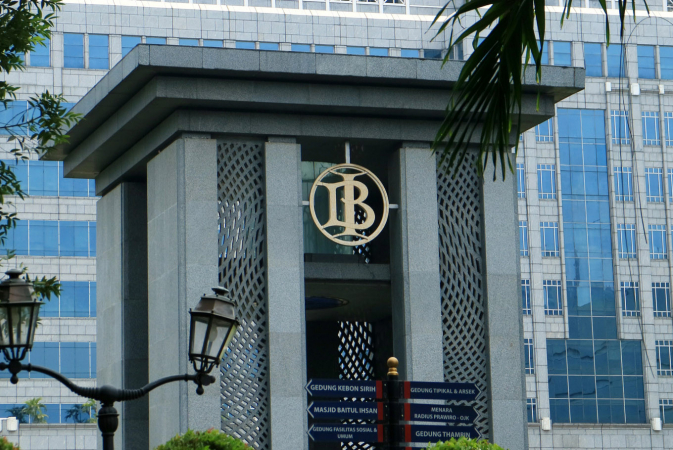
The Bank Indonesia building on Jl. MH Thamrin in Central Jakarta. (Shutterstock.com/Harismoyo )

The Bank Indonesia building on Jl. MH Thamrin in Central Jakarta. (Shutterstock.com/Harismoyo )
By The Jakarta Post
Asia News Network
179 Viewed
Indonesia’s foreign exchange (forex) reserves were recorded at US$125.9 billion in July, the highest level since March last year, creating ample room for the central bank to stabilize the rupiah as market risks heighten in the light of an ongoing trade war.

The latest reserves level, an increase from $123.8 billion in the previous month, was attributable to an increase in earnings from the oil and gas sector, as well as the government’s forex debt, Bank Indonesia (BI) announced on Wednesday.

At $125.9 billion, the July forex reserves stood above international adequacy standards of three months of imports. They were enough to cover seven months of imports and government short-term external debt payments.

“The foreign exchange reserves are sufficient to support the resiliency of [Indonesia’s] external sector, as well as maintain the stability of macroeconomic and financial systems,” BI spokesman Onny Widjanarko said in a statement on Wednesday.

The central bank believes the current forex reserves level is adequate to withstand any potential external shock as current economic conditions, including the export performance, are deemed conducive, added Onny.

Bahana Sekuritas economist Satria Sambijantoro said in a research note that the central bank had ample room to stabilize the rupiah amid recent volatility in the currency market and shore up the yields on government bonds to prevent sharp spikes in the secondary market.

Satria added that the stronger rupiah in July was among the driving forces of the central bank’s forex reserves spike. In July, Indonesia recorded a $1.7 billion net foreign inflow, mostly in the bond market, Bahana data shows.

Rights group condemns legislative steps taken by India in Kashmir, says ‘all eyes on Indian SC’

ศาสตร์เกษตรดินปุ๋ย : ขอบคุณแหล่งข้อมูล : หนังสือพิมพ์ The Nation

https://www.nationthailand.com/ann/30374395

Rights group condemns legislative steps taken by India in Kashmir, says ‘all eyes on Indian SC’

Aug 07. 2019
Debate on Jammu and Kashmir Reorganisation Bill 2019 underway in Lok Sabha/ IANS/LSTV photo

Debate on Jammu and Kashmir Reorganisation Bill 2019 underway in Lok Sabha/ IANS/LSTV photo
By Dawn.com/Asia News Network

293 Viewed

The Indian government’s revocation of the autonomy and special status of Jammu and Kashmir “violates the rights of representation and participation guaranteed to the people” under the Indian constitution and in international law, and “is a blow to the rule of law and human rights in the state and in India”, the International Commission of Jurists (ICJ) said in a statement.

Indian parliament this week approved a proposal by the Hindu nationalist-led government that strips statehood from Jammu and Kashmir, splitting the region into two union territories.

The legislation was introduced alongside a presidential order that takes from the region and its people some political autonomy and hereditary rights by revoking Article 370 of India’s Constitution.

The changes will also lift a ban on property purchases by nonresidents of Kashmir, opening the way for Indians outside the territory to invest and settle there. The local Muslim population has long feared such measures would change Kashmir’s demography, culture and way of life.

An indefinite security lockdown has kept most of the region’s 7 million people in their homes and in the dark about the changes. Critics have already likened Kashmir’s proposed new arrangement to the West Bank or Tibet, with settlers — armed or civilian — living in guarded compounds among disenfranchised locals.

“The Indian government has pushed through these changes in contravention of domestic and international standards […] accompanied by draconian new restrictions on freedoms of expression, assembly, and travel, and with an influx of thousands of unaccountable security personnel,” said ICJ Secretary General Sam Zarifi in the statement.

“The legality of the Indian government’s measures to eviscerate Article 370 will certainly be tested before the Indian judiciary, which should look closely at the serious violations of proper legislative and constitutional processes,” Zarifi said. “All eyes are now on the Indian Supreme Court to fulfill its functions in defense of the rights of people of Jammu and Kashmir and the Indian constitution.”

The procedure adopted to revoke the special status and autonomy of Jammu and Kashmir appears to be incompatible with judgments and observations of high courts and the Indian Supreme Court, who have clarified that the President of India would need the agreement of the government of Jammu and Kashmir to change its status, read the statement by the international human rights non-governmental organisation.

Zarifi noted that the Indian government rushed through the amendments at a time when Jammu and Kashmir was under the direct rule of the Central Government, and the state legislature was dissolved.

The statement also refers to the reports by the United Nations High Commissioner for Human Rights on Kashmir that speak about the grave human rights violations — including unlawful killings, enforced disappearances and torture — committed with impunity by Indian security forces.

The UN High Commissioner for Human Rights in both reports recommended to the Indian government to “fully respect the right of self-determination of the people of Kashmir as protected under international law”, noted the statement.

“The ICJ condemns the legislative steps taken with respect to Jammu and Kashmir, and calls on the Indian government to implement in full the UN High Commissioner’s recommendations,” read the statement.

Lao barber wages marketing fight against foreign-owned shops

ศาสตร์เกษตรดินปุ๋ย : ขอบคุณแหล่งข้อมูล : หนังสือพิมพ์ The Nation

https://www.nationthailand.com/ann/30374388

Lao barber wages marketing fight against foreign-owned shops

Aug 07. 2019
By Vientiane Times
Asia News Network
54 Viewed

The owner of a barber shop in Vientiane could be the first Lao woman to publicly declare competition with the growing number of foreign-owned hair stylists.

Saphavanh Chanthalack, who owns the Phontong barber shop in Chanthabouly district, displays a colourful banner at the front of her shop, giving an eye-catching message that her business is owned by a Lao national. She put up the sign at the start of the year.

“I want Lao people to know that my shop is Lao, not foreign-owned. I hope this message appeals to the hearts of Lao customers who want to support Lao business,” she told Vientiane Times last weekend.

Ms Saphavanh has been operating the barber shop for more than 15 years. But she has never before faced such strong competition, as more and more foreigners have opened up similar businesses.

“Looking around this area, there are plenty of foreign-owned barber shops. If I don’t do anything new, I may not be able to survive because the foreign-owned shops offer cheaper services,” she said.

Based on her assessment of business in recent months, Saphavanh said more and more Lao people have been coming in for a haircut, adding that this is strong evidence that her marketing strategy is effective.

She said that although her business sees little negative impact from the growing number of a foreign-owned barber shops, she urged the authorities to investigate whether her foreign competitors have business licences and pay their taxes.

She wondered how foreign-owned businesses were able to operate given that their charges were lower while still having to pay high rental fees, adding that it was unfair to Lao businesses if foreign-owned shops did not pay the full amount of taxes.

Under Lao law, all businesses must obtain a business licence and use this as ID to pay tax to Lao authorities. But these laws do not authorise foreigners to operate a barber shop as this line of work is reserved for Lao nationals. In theory, this means that foreign nationals cannot get a business licence and therefore cannot pay taxes.

Last month, the Ministry of Industry and Commerce issued an administrative order urging trade officials to impose fines on the owners of businesses that did not have a licence to operate.

After receiving two warnings, businesses that infringe this rule will be ordered to close under this ministerial decision.