The baht opened at 36.22 to the US dollar on Tuesday, weakening from Monday’s close of 36.18.
The currency is expected to move between 36.15 and 36.35 during the day, predicted Krungthai Bank market strategist Poon Panichpibool.
Poon said the baht is likely to fluctuate and weaken as the dollar is strengthening and investors are concerned that the Chinese government may enforce more lockdown measures.
He expects the baht’s support level in the short term to be 35.90 to 36, and the resistance level to be at 36.5.
Poon said the dollar might “invert” if the US Federal Reserve does not signal it would go in for a heavy rate increase in July.
He also urged investors to beware of the currency market’s volatility before and after information on US inflation has been revealed.
If the US inflation is higher than expected, the Federal Reserve may signal an interest rate increase this year, which will strengthen the dollar.
The market may also fluctuate as investors are waiting for the latest ZEW Economic Sentiment indicator. If it shows that the European economy is worse than expected, then it may pressure the euro and help the dollar strengthen.
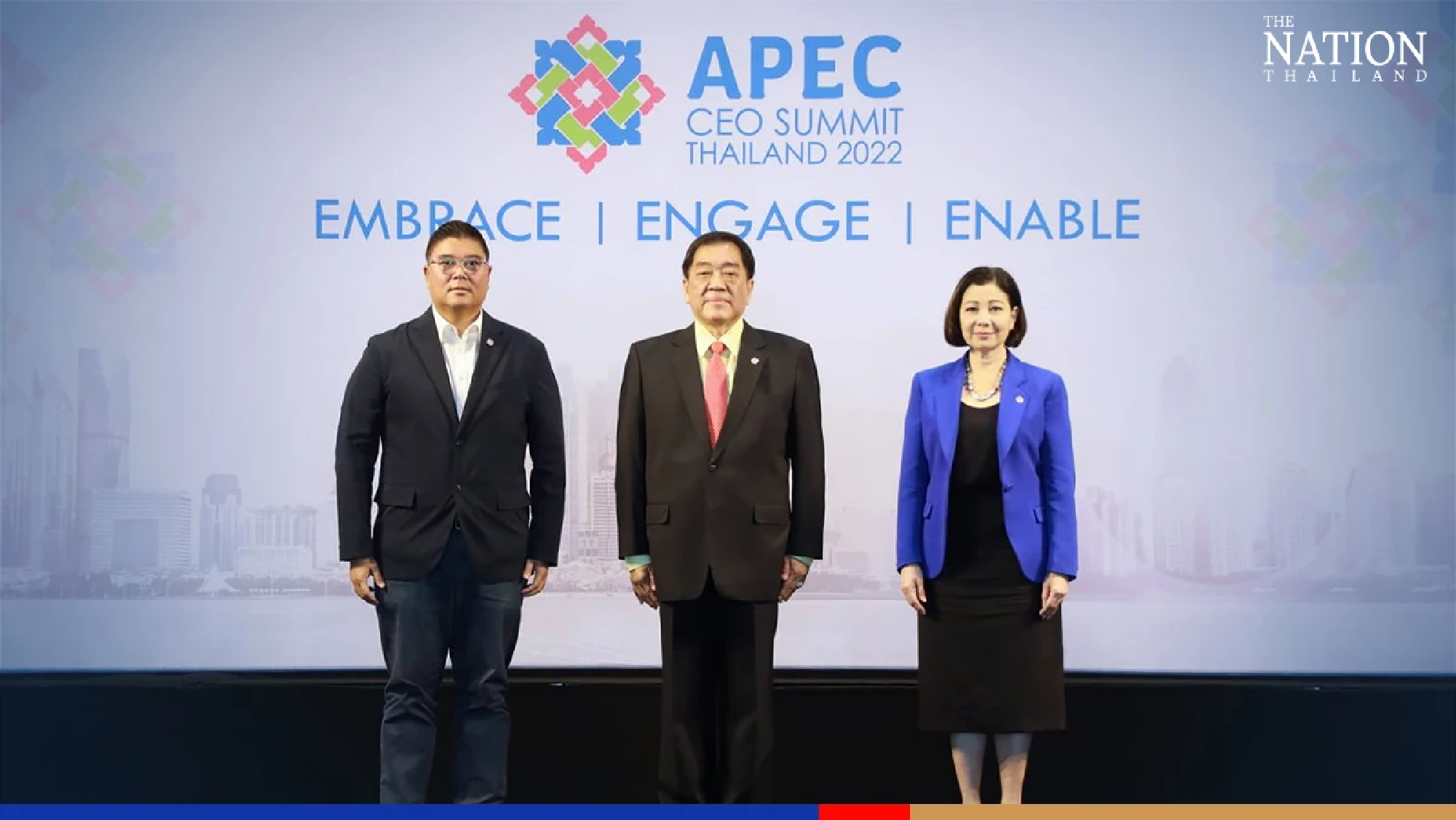
There are no political conflicts coming in the way of Thailand successfully hosting the Apec CEO Summit 2022 in November in Bangkok and that business leaders from 21 member countries will achieve fruitful solutions for the global economy, the private sector said.
Poj Aramwattananont, member of Apec Business Advisory Council (ABAC) Thailand and Apec CEO Summit 2022 chairman, stated that current geopolitical conflicts may put some pressure on the Apec Summit of leaders. but not on the CEO summit.
“As business people, we care more about benefits than conflict. We prioritise better solutions for all parties,” Poj said.
His comments came as the Russia-Ukraine war has gradually intensified, leading to worries that the gathering would not achieve its goal.
Thailand, which chairs Apec 2022, is all set to also host the Apec CEO Summit 2022 under the theme “Embrace, Engage, Enable”. So far, the host country has received positive feedback from all members regarding participation in the event.
The event is rich in trade and investment opportunities, both for Thailand and the economies across the region, Poj added.
He anticipated that the country’s second hosting of the Apec CEO Summit after 2003 would help Thailand’s economy and tourism recover as it did the first time.
“Being the second-largest economy in Southeast Asia with half a trillion GDP — over 70 per cent from exports, 40 per cent from industry sector, and 50 per cent from service sector — this is a proud moment for Thailand to showcase our strengths, particularly our tourism and financial service industries, as well as our food industry, which contributes greatly to the world’s food security,” added Poj.
The CEO Summit is a premier gathering of chairpersons, CEOs and top business executives from the 21 economies comprising Asia Pacific, where they engage in dialogues with Apec leaders and discuss some of the most pressing issues crucial to sustainable prosperity of the region.
The purpose of this summit is to agree on identifying practical solutions to some of the biggest challenges the world is facing today and will probably be facing in the future.
Key topics to be discussed during the three-day summit include: innovation, the global economy and the future of Apec, trade and investment, circular economy in practice, digital economy, future of work, inclusive growth, and healthcare after the pandemic.
Some of the world’s top-notch leaders from both the business and government sectors, as well as those from Apec economies, are expected to speak.
Kasemsit Pathomsak, ABAC alternate member and executive director of the Apec CEO Summit 2022, said that Thailand looks forward to welcoming notable chairpersons, top business executives, thought leaders, prime ministers and presidents from across the region to attend and speak at the summit.
“More than being a journey towards achieving a better trade and investment environment, we see a game-changing partnership between the business communities and the people of Thailand,” said Kassemsit.
The Apec CEO Summit 2022 will be held from November 16-18 at True Icon hall, Iconsiam. The three-day event includes 15 sessions on interesting current issues.
SCBX, the ‘mothership’ company of the SCB Group, is currently considering options, including a sale of its subsidiary SCB Asset Management (SCB), according to the company’s letter to the Stock Exchange of Thailand on Monday.
The move came after a Bloomberg report revealed that SCBX has been in talks with financial advisers to explore a potential transaction for SCBAM.
Bloomberg added that a potential deal could value the business at US$1 billion to $1.5 billion (36 billion to 54 billion baht).
SCBX said that SCBAM is an important business for the company’s strategy, adding the company will continue evaluating strategic options, offers and opportunities, including advice from external consultants.
“The discussion on options is currently at the beginning, and the company would like to confirm that there is no certainty that any action will be taken,” SCBX said.
“If there is a transaction, the company will disclose information in line with SET criteria,” it added.
SCBAM was set up on March 18, 1992, to manage mutual funds, provident funds and private funds. According to the company’s website, Its net asset value under management as of May 31 was 1.6 trillion baht.
SCBX Group is embarking on an important mission to join the world’s leading companies in becoming a Net Zero financial technology group by 2050, positioning itself as a pioneer in driving and inspiring society to develop sustainable businesses and help the environment for the next generation.
The Paris Agreement to limit global warming to well below 2, preferably to 1.5 degrees Celsius is a monumental collaboration by the international community to reduce greenhouse gas emissions in order to avert imminent environmental catastrophe. Governments and businesses worldwide are collaborating to expedite policies and coordinate efforts to prevent catastrophic environmental disasters by 2050.
SCBX Group, as a key regional enterprise, recognizes its critical role and responsibility to society and the younger generation, who are heading toward a future that may confront substantially worsened environmental conditions. The Group undertakes to halt all forms of greenhouse gas emissions by establishing an environmental commitment in support of the global agreement that will enable businesses supervised by SCBX Group to achieve a net zero commitment of greenhouse gas emissions from its own operations by 2030 and from lending and investment by 2050, as agreed by the international community in the Paris Agreement through four strategic thrusts.
First, SCBX Group will prioritize the transformation of internal energy operations and management processes and invest in clean energy with the lowest carbon emissions through the adoption of smart building management systems, the modification of equipment and infrastructure, and the replacement of all current vehicles with electric vehicles.
Second, SCBX Group has set aside a credit line of 200 billion baht by 2030 for lending to businesses or projects seeking to focus on reducing greenhouse gas emissions, as well as raising awareness and providing advisory aligning with recommendations by world class consultant.
Third, SCBX Group will invest an initial amount of 200 million USD in global funds and companies focusing on the development of technologies for carbon capture and storage, utilization, reduction and removal, and in the development of platforms necessary to drive a broader carbon footprint reduction, such as an electric vehicle (EV) rental platform.
Fourth, SCBX Group will embrace the global climate change management standard by adopting the Partnership for Carbon Accounting Financials (PCAF) for assessing its greenhouse gas emissions and determine its target in accordance with the Paris Agreement based on the Science Based Targets Initiative (SBTi). SCBX Group is the first Thai financial institution to join the PCAF and SBTi, including the Task Force on Climate-related Financial Disclosures (TCFD) to increase sector-wide transparency.
SCBX Group shares a global concern about the global impact of environmental issues and greenhouse gas emissions during and for the coming decade. The Group has therefore pledged the solid commitment to play a vital role in changing and resolving global warming in every way possible in order to create a habitable planet and a viable business for future generations.
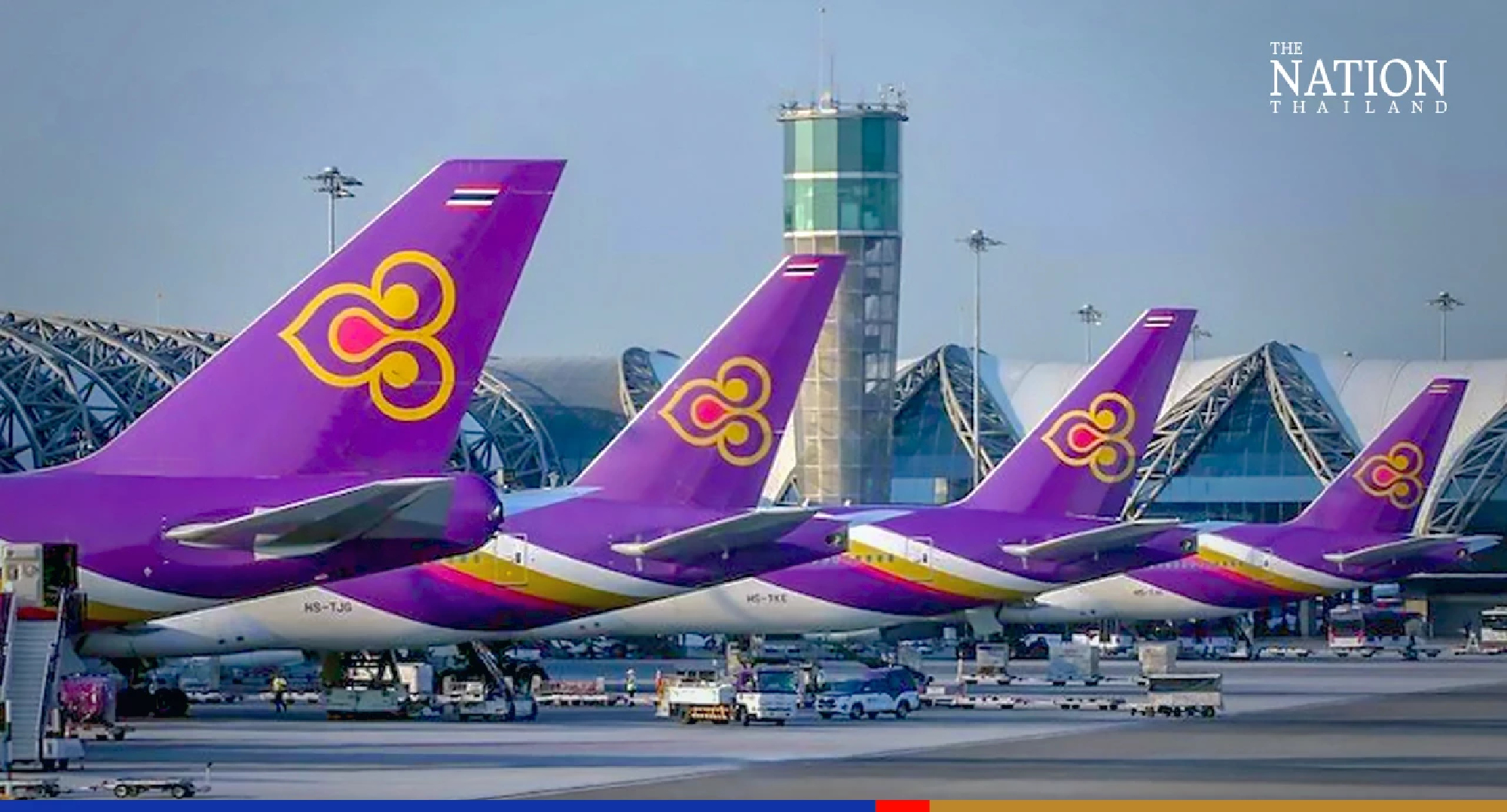
National carrier Thai Airways International (THAI) is refurbishing five planes slated for decommissioning in a bid to expand its fleet ahead of the high season this year.
THAI also believes it will generate up to 80 billion baht in revenue now that foreigners have started returning to Thailand.
The planes set to undergo an overhaul include three Airbus A330s and two Boeing 777-200s, Nond Kalinta, THAI’s executive vice president for commercial, said on Sunday. He added that these planes will be used for routes with high demand like South Korea, Singapore and Japan.
“We believe this year’s high season will see the highest number of passengers in the last two years. The airline expects 4.48 million passengers for the whole year and a total income of 80 billion baht thanks to the lifting of travel restrictions for foreigners since July 1,” he said. “Next year, we expect the number of passengers to rise to 9.18 million and total income to 129 billion baht.”
Nond added that the airline industry is recovering very fast after being hit the hardest by the Covid-19 pandemic for two years.
“For THAI, the average cabin factor is now at 70-80 per cent, with European markets having the highest cabin factor at 90 per cent. The advance booking rate in July is now at 60 per cent and is rising continually,” he said. “Average passengers of THAI and Thai Smile in June this year jumped to 12,568 and 12,257 persons per day, respectively, compared to an average of 269 and 4,929 persons per day recorded between April and October 2021.”
Nond said THAI will increase flight frequency and destinations in the first and second quarters of 2023, introducing more flights to Delhi, Mumbai, Chennai, Bengaluru, Lahore, Karachi, Islamabad, Hanoi, Ho Chi Minh City, Phnom Penh, Melbourne, London, Jakarta, Dhaka, Frankfurt, Taipei, Singapore, Copenhagen, Munich and Zurich.
In the third quarter, the airline will add more flights to Jakarta, Taipei, Singapore, Copenhagen, Munich, Zurich and Seoul.
THAI also recorded 2.1 billion baht income from cargo transport in May, jumping 41 per cent compared to the same period of 2019.
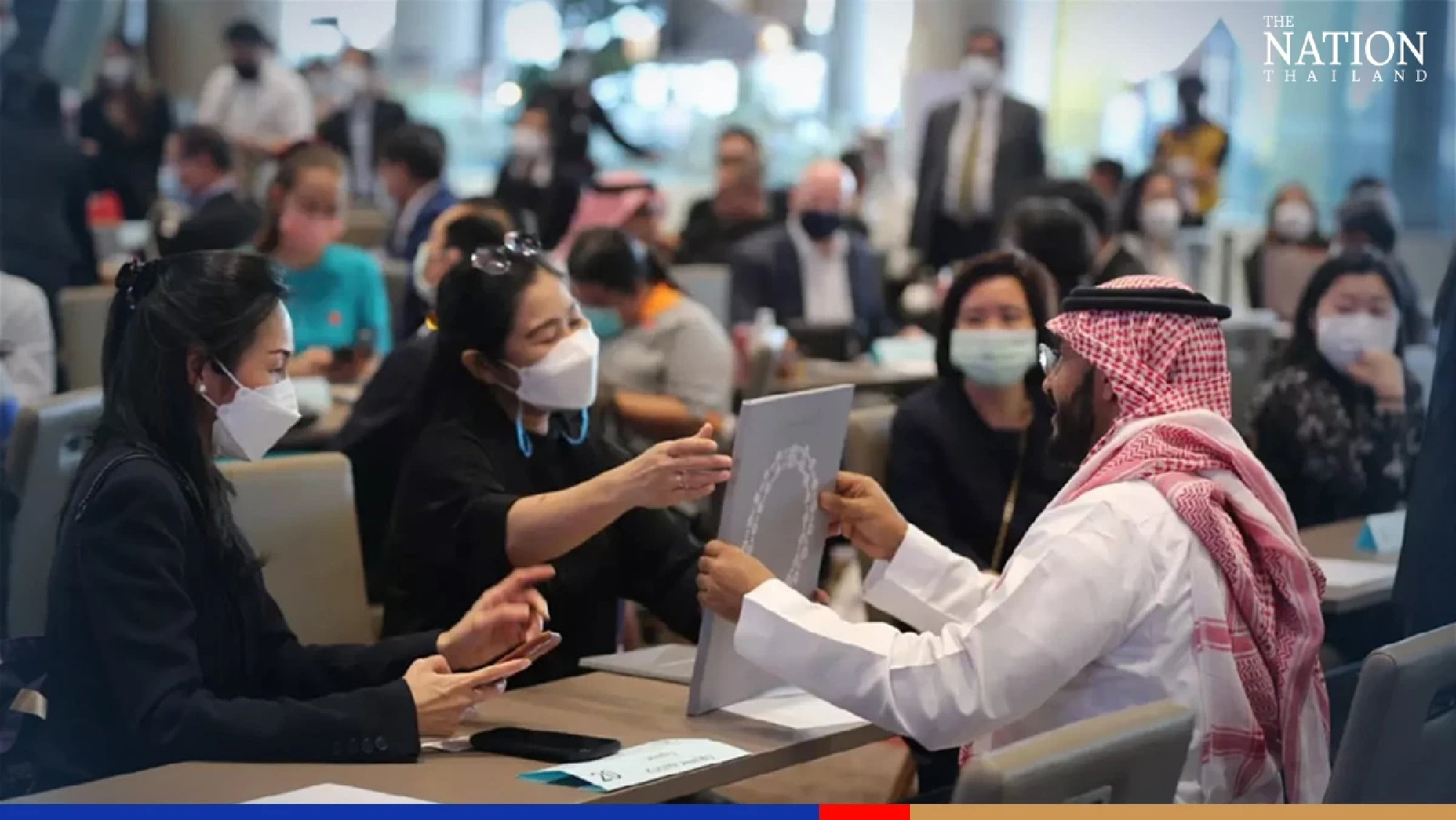
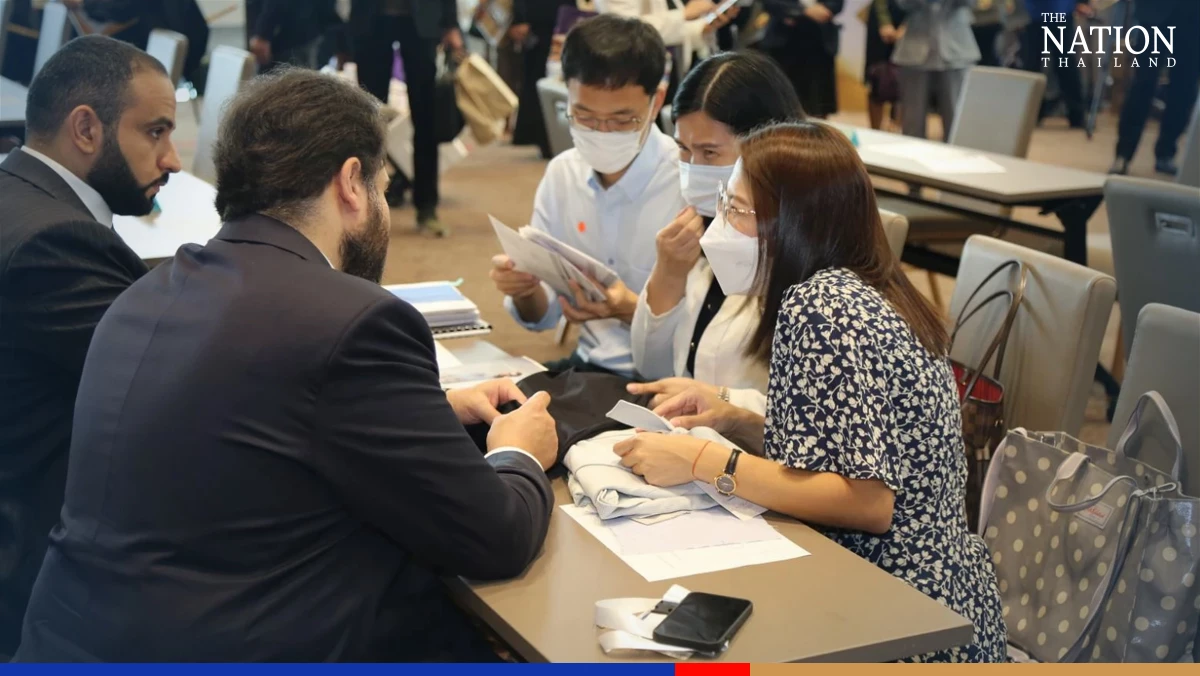
Thai companies clinched 352 business deals worth an estimated 11.6 billion baht with Saudi counterparts at a Bangkok business-matching event, the Commerce Ministry said on Monday.
The July 6 event generated instant trade of 130 million baht, with another 11.5 billion baht expected during the rest of this year, according to Department of International Trade Promotion (DITP) director-general Phusit Ratanakul Sereeroengrit.
Hosted by the DITP and Board of Trade, the event drew representatives from 70 Saudi companies under the Riyadh Chamber of Commerce, most of whom are in the food-and-beverage, construction, healthcare, retail, transport, gem and jewellery industries. “Saudi businesspeople expressed strong interest in ordering more products from Thailand, saying that Thai products are of high quality, meet international standards, and suit the needs of Saudi consumers,” said Phusit.
He added that the Commerce Ministry is expanding the Saudi market for Thai products including rice, halal foods, and fruit by launching promotions in Saudi supermarket chains Manuel and LULU. These events will be held alongside social media campaigns to boost Saudi consumers’ awareness of Thai products, especially food, cosmetics, and industrial products.
The DIPT will also invite Saudi importers and businesses to international trade fairs in Thailand throughout the rest of the year, including the TILOG VE/TILOG-LOGISTIX fair on August 24-26, the Bangkok RHVAC 2022 fair on September 7-10, and Bangkok Gems & Jewelry Fair on September 7-11.
Saudi Arabia is Thailand’s 17th largest trade partner and ranks second among Middle Eastern nations. In the first five months of 2022, two-way trade between Thailand and Saudi Arabia totalled 122.23 billion baht, up 45.56 per cent from the same period last year. Thai exports contributed 25.69 billion baht, up 23.3 per cent, while imports were at 96.53 billion, up 54.31 per cent from the same period last year.
Key Thai exports included automobiles and auto parts, wood and wooden products, rubber products, canned and processed seafood, and machinery and parts. Saudi exports to Thailand comprised crude oil, chemicals, fertiliser, pesticide, finished oil and scrap metal.
The burst of trade comes after the two countries normalised ties in January following three decades of soured relations.
The baht opened at 35.82 to the US dollar on Monday, strengthening from Friday’s close of 36.01.
The Thai currency is expected to move between 35.75 and 35.90 against the greenback during the day and between 35.70 and 36.30 during the week, Krungthai market strategist Poon Panichpibool predicted.
Poon said the baht is likely to weaken and test its resistance level from 36.20 to 36.30 if the dollar strengthens. He suggested investors beware of the baht’s volatility before the US inflation report has been revealed.
However, the baht’s weakening might be limited as exporters are waiting to offload their dollars. Moreover, foreign investors are waiting to buy Thai stocks on the dip and the sale of gold will also help slow down the baht’s weakening.
Poon speculated the dollar might strengthen if the US inflation is higher than expected and the US Federal Reserve sends a signal to increase the interest rate at a high rate. The dollar might also strengthen if the Chinese or European economic reports are worse than expected.
The strategist advises investors to use hedging tools like options to manage their risks in the highly volatile currency market.
Average monthly household expenses rose to 18,088 baht in June – two times higher than the minimum wage, according to a survey by the Commerce Ministry’s Trade Policy and Strategy Office (TPSO).
The TPSO said rising living costs driven by the energy crisis caused headline inflation in June to rise to 7.66 per cent from the same month last year.
The TPSO divides household expenses into 14 categories, with transportation costs, rent and utilities sucking up 8,432 baht or 46.62 per cent of total average expenses.
The TPSO calculates average monthly household spending on each category in June as follows:
– Transportation costs, vehicle instalments, fuel, and mobile phone: 4,477 baht (24.75%)
– Rent, home construction materials, electricity bill, cooking gas and household appliances: 3,955 baht (21.87%)
– Meat, chicken and fish: 1,752 baht (9.68%)
– Food ordered by delivery services: 1,585 baht (8.76%)
– Eating-out cost: 1,214 baht (6.71%)
– Medical expenses and personal services (barber fee, for example): 967 baht (5.35%)
– Fruit and vegetables: 918 baht (5.08%)
– Books, study, recreation, social contributions: 758 baht (4.19%)
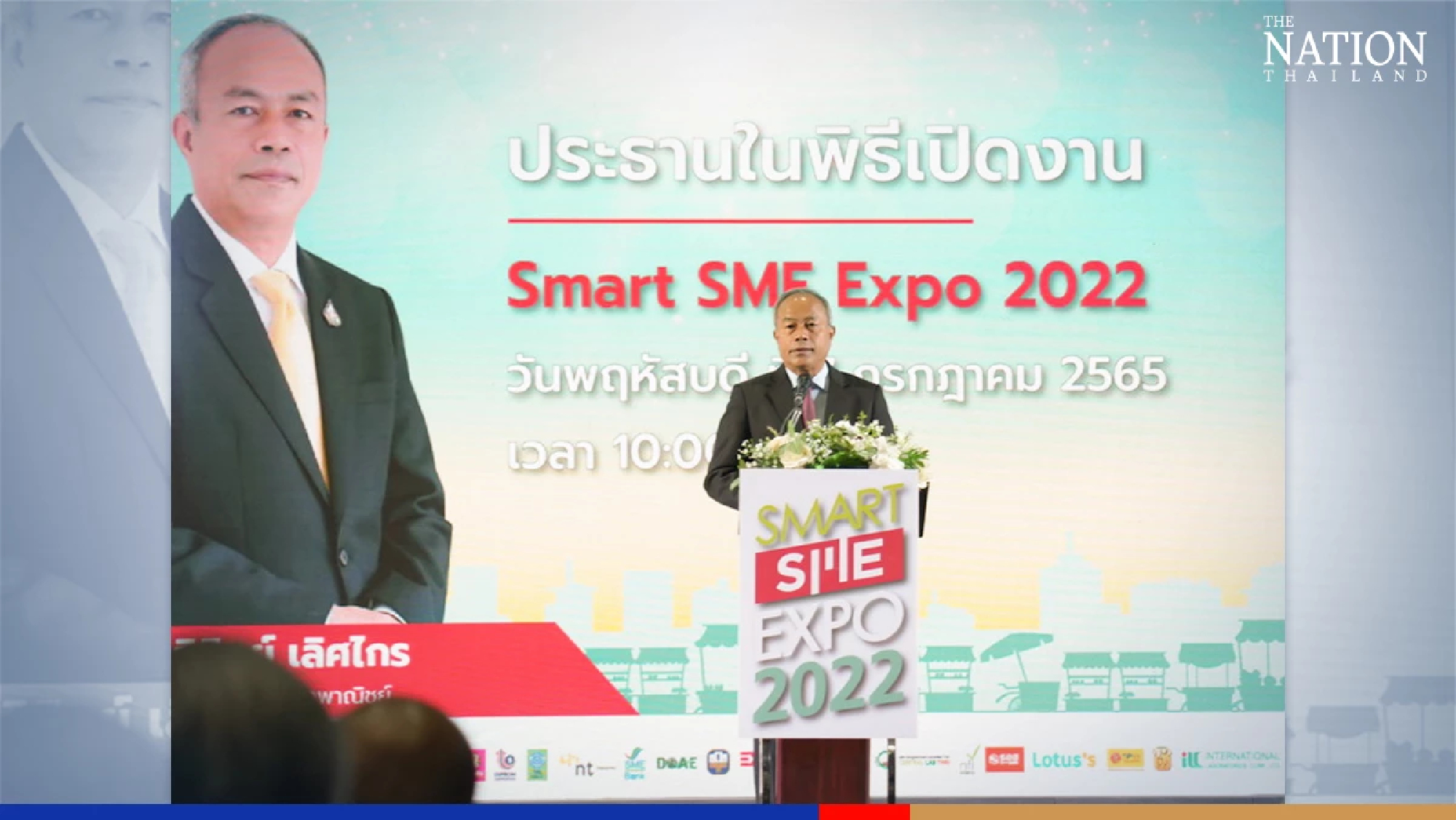
PMG Corporation, in collaboration with governmental sector, private sector and financial institutions, organized the special event with over 200 booths of best business franchises to provide smart solutions for SME, loans for business expansion, and seminar forums on occupational knowledge, know-how and training.
The ‘Smart SME EXPO 2022’ event was held with purpose to turn crisis to be the good chance for careers, entrepreneurs, new business set-up and update of business trend for more success. It is a HYBRID EXPO offering the full options both on-site and on-line, organized during July 7-10, 2022 at Hall 7-8 of Impact Muang Thong Thani. The exhibition is expected to drive occupational inspiration for general public and strengthen the SME business sector. Cash flow over 400 million baht and loans from financial institutions not less than 2,000 million baht are expected to be generated in this event.
Mr Sinit Lertkrai, Deputy Minister of Commerce and chairman for Smart SME EXPO 2022, stated “Covid-19 epidemic and the downturn of trading sector are bringing severe effect to the economic situation in Thailand. Organization of finance and business events in this year is a great chance and hope that Thailand economics will get better gradually. It’s very appreciative for the organizers presenting altogether the best SME and various corporations in approach to current situation. This year, the Ministry of Commerce, by the Department of Business Development, also proposed the well-trained and smart SME businesses, with objective to bring the challenging opportunity for entrepreneurs and enforce Thailand economic growth and sustainability onwards.”
Mr Vichate Tantiwanich, President of PMG Corporation, organizer of Smart SME EXPO 2022, stated “This exhibition is held once a year and this time is the 8th event. This year is also the 20th anniversary of PMG Corporation. With a vision for Thailand SME, the company established the fund ‘Chee Chong Ruay’ for occupation opportunities, in collaboration with ‘Chee Chong Ruay’ media channels, successful entrepreneurs and the Right-Livelihood Foundation, sharing partial profit to set-up the fund for occupations for unemployed people, such as single mothers and underprivileged people. The career skills and equipment are provided for them to increase earnings.”
In the event ‘Smart SME EXPO 2022’, you will experience distinguished and impressive 5 business zones: interesting franchise businesses zone, food & beverage zone, financial institutions and sponsors zone, beauty & health zone, and innovation & technology zone. Over 200 booths of the business franchises are presented for the investment options ranging from thousand to million baht. Participating businesses include Mr.Tempu, KangFu Shabu, SomTam Nua Nua, ChaNom Am Tea, Look Chin Yuen Kin Jae Pong, KraPrao KhaoTa, Yumyua by pukeeprick, Sushi Champion, HANA lifestyle franchise, Jae Nui MhooKrob, M&G stationery shop, DUCK GROUP vending machine, SABUY TECH, Dada RuamSaap, 24hrs Coffee, MaeNate KhanomKrok Singapore, Pang Kon Thong, LE MONG Ramen, SWEET SECRET, KAIKAO, etc.
Moreover, 40 franchise businesses under support of the Department of Business Development, Ministry of Commerce, also participated in this EXPO, such as Pang-ai-ya, See U Waffle, Olino Crepe & Tea, Sainom’s, Papa pizza, Egg All Day, SriFah bakery, Toro fries, TiewRua yutya noodle, Nigiwai Sushi, HongTeh Pedyang Hiso, Indy noodle, Korean-Japanese food, Big Tokyo crepe, Rosboran Station, Chalawan milk tea, Mhee Puan Nom Pun, Shibachan Pang Twist, Rrabica Ezan coffee, Chob Cha, Wonder Wash, SHIPPOP, BEST Express. Famous street food vendors are also present, such as Minimelts (Thailand) ice creme, Farang PadThai, Meeyang Gaoloo, YangHom Mai La Saen, Coffman Coffee, Cake Jew, Ka La Luem Phua, Cocoa I Ton, and over 2,000 vending locations in Tesco Lotus Department Store in all regions are the options for you to set-up the business branches.
The low-interest loans from banks are also offered for entrepreneurs and vendors, including loans from the Government Saving Bank (GSB), SME D Bank, EXIM Bank, Bank for Agriculture and Agricultural Cooperatives (BAAC) and Government Housing Bank (GHB). Business can also meet with financial counsellor team from Thai Credit Guarantee Corporation for loan consulting.
“Although Covid-19 situation is still ongoing, business development and life must go on. We hope this event would help promote career opportunities and new business entrepreneurs with over 400 million baht cash flow and not less than 2,000 baht loans,” Mr Vichate concluded.
If you are seeking new franchises, careers and challenging opportunities, do not miss this specular event “Smart SME EXPO 2022” at Hall 7-8, Impact Muang Thong Thani, during July 7-10, 2022.
Despite mobile broadband coverage in 96% of the region, it has the largest regional usage gap worldwide
Thailand (July 8, 2022) – The GSMA has published its latest Mobile Economy Asia Pacific 2022 report, which delivers a detailed picture of the region’s adoption of mobile internet. At present, mobile broadband networks cover around 96% of the population, a testament to operators’ investment in 3G, 4G and, increasingly, 5G infrastructure. However, just 44% of the population (1.23 billion users) are using mobile internet services.
The reasons for this discrepancy include lack of digital skills, affordability and online safety concerns. This year’s report outlines how countries are addressing this usage gap.
“Addressing the usage gap and extending the benefits of the internet to more people in society is critical,” said GSMA’s Head of Asia Pacific, Julian Gorman. “However, it will require a concerted effort by a broad range of stakeholders, working together with mobile operators and other ecosystem players such as device manufacturers and digital content creators, to drive adoption and overcome the barriers we see today.”
Mobile delivers economic and societal benefits
Mobile technologies and services continue to make a significant contribution to Asia Pacific’s economy, generating 5% of GDP in the region in 2021, which equates to around $770 billion of economic value. This ecosystem supported approximately 8.8 million jobs in 2021 and made a substantial contribution to the funding of the public sector, with around $80 billion raised through taxation.
400 million 5G connections by 2025
5G adoption is set to accelerate across the Asia Pacific region as the technology’s footprint expands. Today, it is commercially available in 14 markets, with others, including India and Vietnam, going live in the coming months.
According to the report, by 2025, there will be more than 400 million 5G connections, equivalent to just over 14% of total mobile connections. Progress is more advanced in countries like Australia, Japan and South Korea and in Singapore 5G is expected to account for 55% of the country’s connections by 2025.
Metaverse momentum in Asia Pacific
The report also explores the advent of the metaverse and highlights various 5G use cases and other related activities in the region.
Notably, government bodies in the region have started outlining plans to harness the potential of the platform to increase the efficiency and quality of public services. South Korea has plans to spend $186.7 million to create its metaverse ecosystem, and Thailand’s Tourism Authority leveraged the technology to boost tourism in the country.
Policies for digital innovation
Policymakers and regulators can fuel growth and innovation by establishing a flexible forward-looking regulatory regime to support mobile network deployment and operations. The report provides insights on focus areas where regulatory reforms would yield maximum rewards for the region.
Mobile 360 Asia Pacific in Singapore
APAC’s adoption of 5G will be centre stage at the GSMA’s Mobile 360 Asia Pacific conference on 2-3 August 2022 at the JW Marriott South Beach Hotel in Singapore. The two-day agenda will include thought-provoking keynotes and discussions on how a digital nation strategy is essential in the post-pandemic global economy.