Malaysia is allowing Thailand to export rice flour to the western part of the country after shipments were halted for almost 20 years, Commerce Minister Jurin Laksanawisit said on Sunday.
The move came after a long-standing ban on issuing licences for Malaysian importers to import rice flour to the west was lifted, he said.
“We found that Malaysian agencies responsible for issuing licences to import products to the western and eastern parts of the country were different,” Jurin explained.
In response, Thailand’s trade envoy in Malaysia had asked importers to send evidence to the Department of Trade Negotiations (DTN) for negotiations between the countries, he added.
Recently, Malaysian importers had informed the DTN and Thai trade envoy that they had received the licences.
“Thailand can now export rice flour to the western part of Malaysia after exports were suspended for almost 20 years,” Jurin said.
He added that that Malaysia’s move should boost the value of Thailand’s exports and trade with its southern neighbour.
Thailand exported goods worth 75.34 billion baht via Malaysia’s border in the first five months of this year. Exports of rice products via the channel in the first five months of this year rose 12.5 per cent.
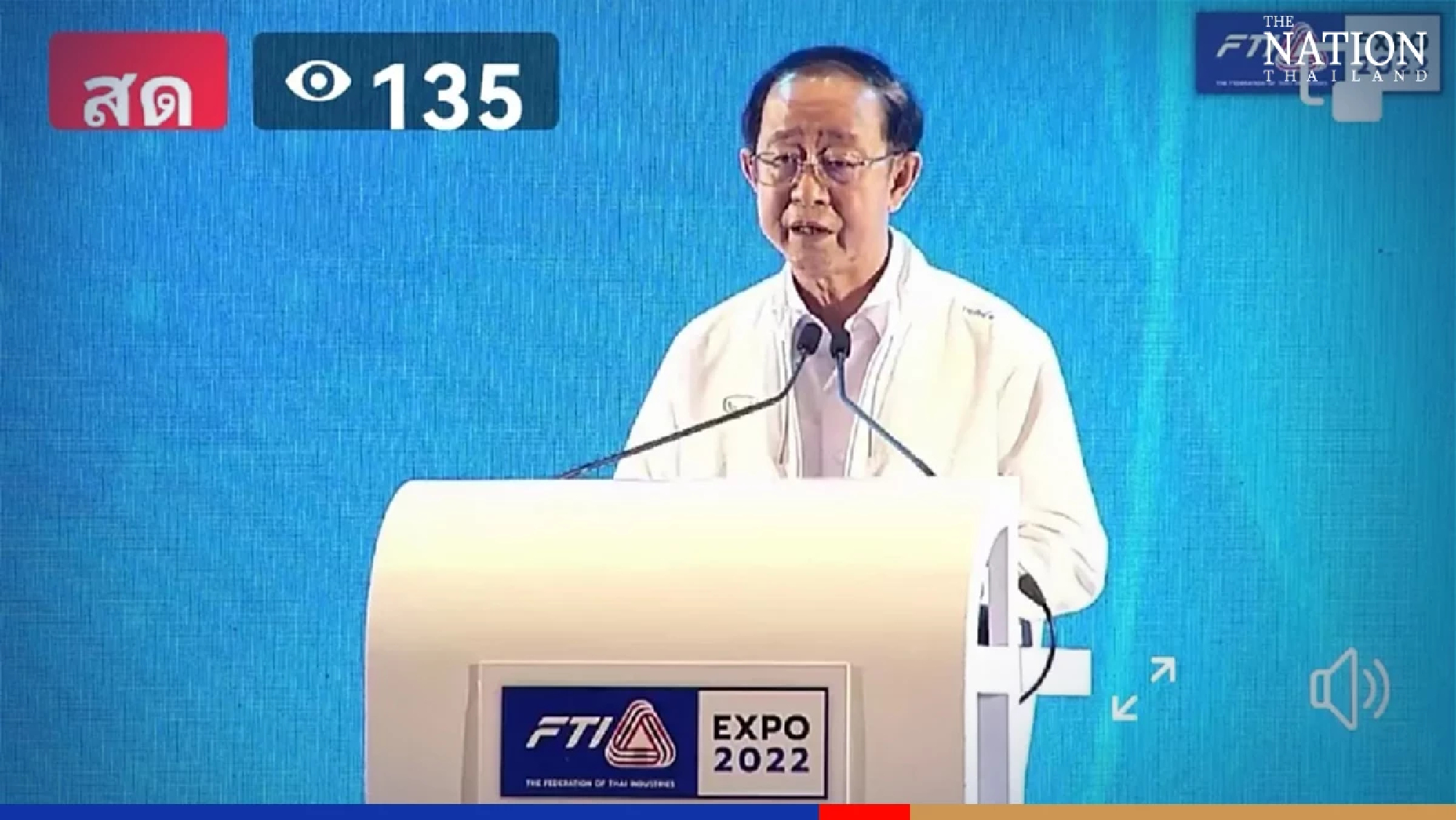
The government will seek wage increases for private-sector employees to help them cope with rising costs due to higher inflation, Finance Minister Arkhom Termpittayapaisith said on Saturday.
Authorities would discuss the matter with employees towards the end of this year, he said.
Arkhom said Thailand’s inflation would remain high for the rest of this year, eventually forcing the Bank of Thailand to raise its policy interest rate, which has remained unchanged at 0.50 per cent.
“The Thai economy is suffering impacts not only from Covid-19 but also high inflation resulting from the Ukraine war. Inflation this year is unlikely to go down to levels seen many years ago,” said the finance minister.
However, Thailand’s inflation rate is still considered low when compared to other countries, he added.
Inflation in Thailand has ranged between 6 and 7 per cent in recent months.
The finance minister was speaking during an address to the FTI Expo 2022 on the government’s monetary and financial policies for this year.
The event is being held by the Federation of Thai Industries in Chiang Mai province until Sunday.
Arkhom also defended the government’s monetary and financial policies to aid the economy over the past two years during the pandemic. He said government borrowing was necessary to help stimulate the economy as people’s incomes fell.
“Other countries, as well as Thailand, did the same thing,” he said, referring to government borrowing.
The finance minister also said that the World Bank and International Monetary Fund had encouraged countries to issue relief measures for their citizens despite incurring rising public debt.
Arkhom said that what counts was a country’s ability to repay its public debts, noting that some countries have debt exceeding 100 per cent of their gross domestic product (GDP).
Serenade, the customer loyalty programme of mobile operator Advanced Info Service (AIS), has launched a promotion handing users privileges in every aspect of their modern lifestyles.
Bussaya Satirapipatkul, AIS head of Customer & Service Management, said the programme is forging a new standard of customer care with its “Beyond Expectation” strategy to meet needs in the “new normal”. It has achieved this through collaborations in the dining, travel, shopping, and health sectors.
Along with the development of its smart 5G network to meet the needs of Thai digital lifestyles, AIS Serenade has transitioned from a discount programme to providing tangible “exclusivity” to the customer, Bussaya boasted.
Since lockdown measures were relaxed last year, AIS Serenade members have begun spending more points on travel and transport (up 53 per cent), beverages and desserts (up 78 per cent), and department store shopping (up 136 per cent ), according to a recent survey.
Bussaya said this high-value customer segment is seeking not just discounts, but also a more exclusive experience that cannot be found elsewhere. They anticipate excellent service.
“We are required to understand our customers even more deeply. Our work today is not only about following the latest trends. We need a method of thinking that delivers ‘Beyond Expectation’. We must predict what design privileges customers can really use in the future,” she said.
Responding to the increased use of Serenade points across all categories, particularly drinks and desserts, AIS came up with the “Upsize” concept to meet changing demand.
The campaign includes dining, travel, shopping, and health, as well as ongoing collaborations with every AIS partner to redeem AIS points for a variety of exclusive benefits. These can be cash discounts or free products and services, such as those available through the Point Pay programme.
Also, Thung Ngern (Silver Bag) stores are now being expanded from food and beverage outlets to grocery stores, including those in the Blue Flag scheme, and by the end of the year, customers will have over 850,000 stores to choose from.
“Aside from our basic commitment to customer service, it also helps to restore cash circulation to local economies by increasing spending power in small merchant stores. This also shows why AIS Serenade has consistently ranked first in customer loyalty programmes for the past 18 years,” Bussaya said.
With a budget of around 2 billion baht and a focus on customer-centric needs, she is confident that Serenade customers will be more engaged and satisfied, as well as build “brand love” through services and exclusive privileges.
Honda has taken the first step towards blockchain integration by sharing its own platform, “CANDEE”, with Mahidol University, supported by Bitkub, so that employees from both organisations can record good deeds and healthy living and turn them into a token as a reward.
Pitak Pruittisarikorn, chairman of the board of Honda Automobile (Thailand), stated that the concept of the CANDEE application stems from the time banking method, in which people record their time spent doing good deeds for others and society before exchanging for rewards. The more time they spend doing good, the more rewards they may receive, which may include not only money but also a voucher, bonus, or discount coupon.
Since Honda recognises that blockchain technology will become mainstream technology in the digital era because it can respond to a variety of lifestyle needs, the company is interested in using blockchain technology to familiarise their employees with the system, preparing them for the digital economy.
With the aim of assisting people in doing good and encouraging the use of blockchain technology within the company, the CANDEE application was developed and implemented over three years ago after Honda had discussed it with young associates from various departments.
The “CAN” stands for “ability”, and the “DEE” stands for “doing good”, reflecting how the application encourages people to do good and live healthily, and in turn receive digital tokens for participating in CSR and health-related activities within an organisation, Pitak said.
As a Honda young-generation project, this movement is part of Blockchain Innovative Technology (BIT). The application was created in collaboration with Bitkub, a blockchain expert, to provide the advice and technology services needed to develop CANDEE’s functionality to make it user-friendly, as well as cater to changes in lifestyles in the Covid-19 era.
Due to its great success and good response, Pitak considered expanding the use of the application to a larger community to create positive changes and to encourage users to spend their spare time productively while becoming acquainted with blockchain technology.
This concept prompted Honda and Bitkup to sign a MoU for the CANDEE application with the Faculty of Medical Technology, Mahidol University, on Thursday at Bitkub M social, The EmQuartier.
Dr Chartchalerm Isarankura na Ayudhya, dean of the Faculty of Medical Technology, Mahidol University, said the institution has been developing the idea of applying technology to health-led awareness since 2016, which corresponds to the guidelines of the CANDEE application. After talking with Honda, the faculty decided to play a part in expanding the community of people doing good and living healthily.
“The cooperation with Honda and Bitkub is a good opportunity for our three organisations to leverage knowledge, expertise and experience to build an ecosystem that contributes to Thai people’s well-being by linking and expanding development that results in the application to promote good health,” said Chartchalerm.
He added that they can take advantage of Candee application features like using blockchain technology to handle various transactions through tokens to collect points and redeem them for rewards to increase active participation within an organisation, It also helps expand the scope of work on Bitkub’s network of advanced platforms.
Passakorn Pannok, chief executive officer of Bitkub Blockchain Technology, which is one of Thailand’s leading blockchain companies, stated that collaborating with Honda is another milestone in finding business partners. The CANDEE application is intended to provide useful functionality. Initially, Honda associates were encouraged to participate by making social contributions in exchange for digital tokens.
“I personally believe that we can drive the application’s widespread availability. By creating new roles, the advanced technology supported by the Bitkub chain will assist us in promoting the seamless use of CANDEE. This results in increased CANDEE efficiency, whether through the use of blockchain technology to collect and save data or by broadening the use of Candee tokens and developing new use cases, all of which will benefit the Bitkub chain ecosystem,” Passakorn said.
The collaboration of partners from various sectors, such as Honda, Bitkub, and the Faculty of Medical Technology at Mahidol University, will mark a watershed moment in the success of the CANDEE application. It will strengthen the CANDEE ecosystem and support its goal of widely encouraging society to do good and live healthily in a limitless yet non-profit form to effect positive change, Pitak said.
Thai Airways International (THAI) on Friday submitted a request to revise its rehabilitation plan, which includes recapitalisation that would increase the company’s registered capital to 80 billion baht.
The Cabinet gave the green light for THAI to undergo rehabilitation under the Bankruptcy Act in May 2020, while the airline’s protection filing was granted by a court in June last year.
The Finance Ministry and state enterprises will still have 40 per cent shareholding in the company under the revised plan.
Details of the revised rehabilitation plan are as follows:
1. Procuring loans and/or bonds with a period of no more than six years, totalling no more than 12.50 billion baht. THAI has also prepared a revolving credit facility for the same amount as a backup plan.
2. Increasing registered capital to approximately 31.50 billion shares to boost THAI’s financial structure and enable its shares to be traded on the Stock Exchange of Thailand (SET) again:
Allowing new loan subscribers to purchase newly issued ordinary shares equal to the company’s drawdown amount of 12.50 billion baht.
Allocating newly issued ordinary shares for repaying debt. All debt the company owes the Finance Ministry, which is the company’s creditor and main shareholder, will be converted into equity. Meanwhile, 24.5 per cent of the company’s debt with creditors who hold the company’s debentures will be converted into equity, while the remaining 75.5 per cent of debt will be repaid using the company’s cash flow in line with the original plan. This plan to change debt into equity will enable THAI to reduce debt by approximately 37.80 billion baht.
Allocating newly issued ordinary shares to support the conversion of debt from interest into equity at 2.5452 baht per share. This will enable THAI to reduce debt from interest by approximately 4.84 billion baht.
Offering newly issued ordinary shares at a price that the rehabilitation plan administrator deems appropriate and not less than 2.5452 baht per share to existing shareholders based on their shareholdings. In case the newly issued ordinary shares are not fully subscribed, the remaining shares will be offered in private placement. This move is expected to enable the company to raise funds of approximately 25 billion baht.
The revision of THAI’s rehabilitation plan is expected to be completed within 2024. If the plan succeeds, THAI’s equity will be on positive trajectory in 2024, while the company’s shares could be traded on the SET in 2025.
“This move aims to boost confidence among creditors in line with aviation business recovery and boost THAI’s growth in revenue,” the company said.
THAI has witnessed exponential growth in revenue since November 2021. The average number of passengers using THAI and its subsidiary airline, Thai Smile Airways, from June 1-27 this year has increased to 12,568 and 12,257, respectively, compared to 269 and 4,929 between April and October last year.
THAI’s cabin factor from June 1-27 this year has risen to 75 per cent, while its booking rate in the third quarter this year has risen significantly after the country’s reopening.
The Bank of Thailand (BOT) reported that household debt in the first quarter of 2022 rose to 14.64 trillion baht, up by 80.076 billion baht from the fourth quarter of 2021.
However, the percentage of household debt to gross domestic product decreased from 90 per cent in the fourth quarter of 2021 to 89.2 per cent in the first quarter of 2022.
Of the total debt 12.56 trillion baht were from deposit-taking corporations, up by 57.929 billion baht from the previous quarter.
6.28 trillion baht were from commercial banks
4.11 trillion baht were from depository specialised financial institutions
2.17 trillion baht were from savings cooperatives
5.111 billion baht were from other institutions
Meanwhile, 2.08 trillion baht were from other financial corporations, increasing by 22.149 billion baht from the previous quarter
1.57 trillion baht were owed to credit card, leasing and personal loan companies
177.836 billion baht were from insurance companies
116.778 billion baht were from securities companies
99.455 billion baht were from asset management corporations
77.319 billion baht were from pawnshops, and,
40.465 billion baht were from other financial institutions.
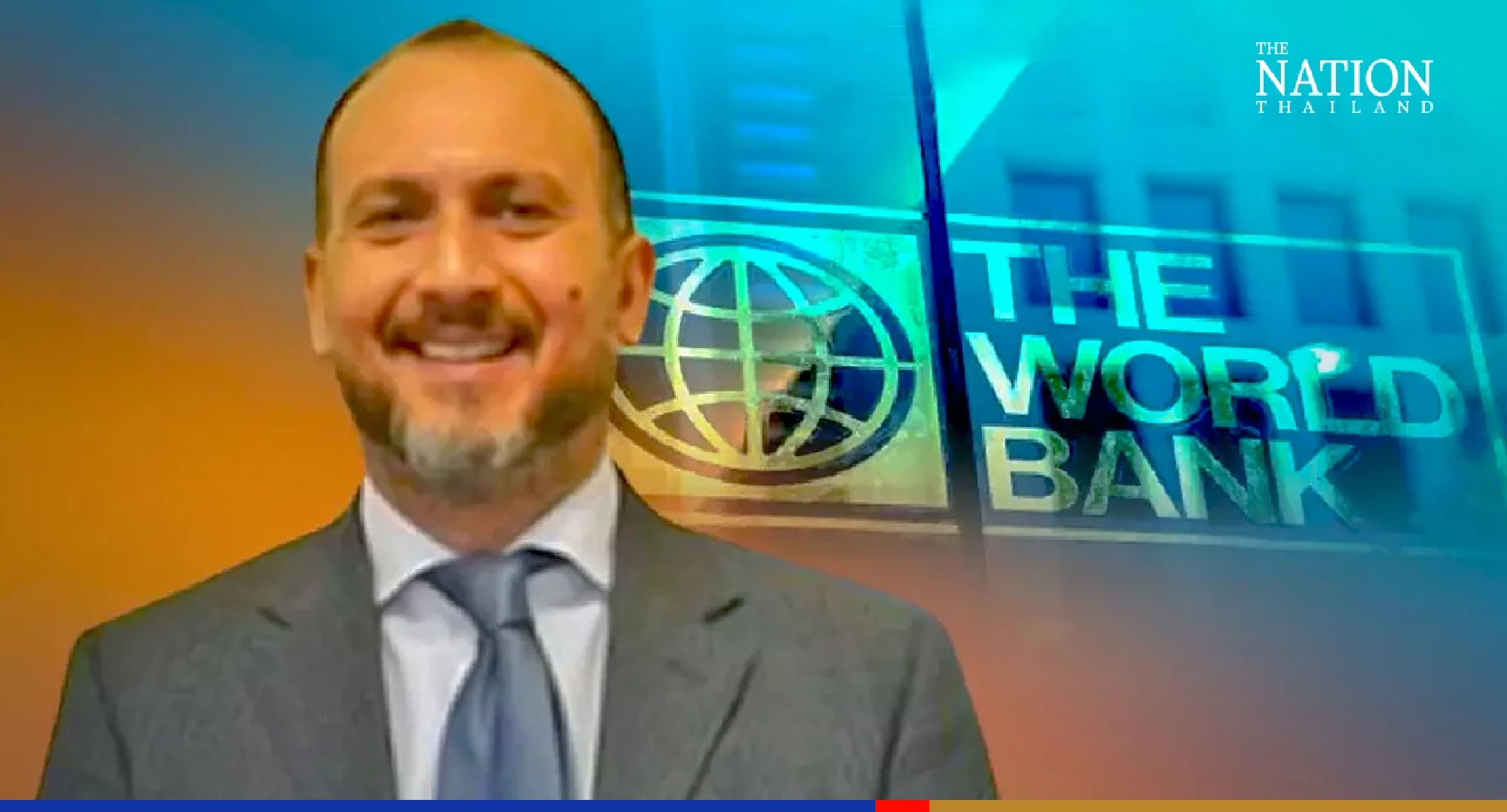
The World Bank has appointed Fabrizio Zarcone as country manager of Thailand with effect from July 1 to help Thailand tackle poverty and boost prosperity.
Italian Zarcone succeeds Birgit Hansl, who served in the position for four years.
Zarcone will implement the World Bank Group-Thailand Country Partnership Framework (CPF), which is focused on key structural economic and social reforms to end poverty and boost prosperity.
He also will be the lead negotiator between the World Bank and the government sector, civil society sector, private sector, and other partners.
The CPF for 2019-22 supports Thailand’s transformation towards greater inclusion, resilience and competitiveness. It is focusing on supporting Thailand integrate with every group of society, promoting competition and innovation by helping improve the business environment, economic institutions, and infrastructure.
The bank also will address climate change and support quality education and targeted programmes for disadvantaged and vulnerable groups.
It also will address issues in the fragile and conflict-affected areas of southern Thailand.
Zarcone said: “It is with great pleasure that I take up this new position in Thailand just as the country emerges from the economic and social challenges posed by the Covid-19 pandemic.
“The tragedy of the pandemic must be turned into an opportunity to build back better and position the economy for sustained productivity-led growth and recovery over the medium and long term. I look forward to supporting Thailand in the achievement of these critical goals,” he added.
Before this appointment, Zarcone was the country manager in Bulgaria, Czech Republic, and Slovakia where he supervised a large and complex portfolio of technical assistance projects. He also was the country manager of Costa Rica and El Salvador, in charge of both lending and advisory services.
He spent time in the Middle East as senior operations officer for the West Bank and Gaza, managing important budgetary support projects for the Palestinian National Authority.
He also has extensive experience working in Sub-Saharan Africa where he supervised several projects in Kenya, Rwanda and the Comoros Islands.
Zarcone holds a PhD in Management Sciences from Escuela Superior de Administración y Dirección de Empresas, and a Masters in European Economics and Law.
As Earth’s climate warms considerably, extreme heat is becoming more common, posing severe health risks to humans and leaving many regions concerned about the personal effects of global climate change. To combat these dreaded effects, most citizens are willing to change at least some aspects of their lives and work.
Magnolia Quality Development Corporation Limited (MQDC), a leading real estate developer that is expanding globally under a unique business approach,recently held a private meeting with the media to discuss an innovative strategy for developing property projects linked to the metaverse to connect the real and virtual worlds.
The company aims to achieve its mission by untiringly tackling climate change and welcoming all communities to participate in their well-being and provide an overall sustainable society.
“MQDC has always prioritized innovation, investing hundreds of millions of baht in world-class research and development facilities such as our Research &Innovation for Sustainability Center and FutureTales Lab,” company CEO Visit Malaisirirat pointed out.
“They operate according to future trends under the concept of ‘Well-being’ for all. As you can see, our projects, such as ICON Siam, have become an open space for people living around to use. It’s what we call ‘inclusiveness’ which is one of our purpose for project development. Their work and discoveries contribute to our project’s vision and mission in delivering happiness and well-being through a future ‘sustainnovation’ lifestyle, which we are determined to achieve,” he saidVisit Malaisirirat, CEO, Magnolia Quality Development Corporation Limited (MQDC)
“MQDC’s The Forestias at Bang Na-Trat Km7, valued at more than 125 billion baht, witnessed residential sales totaling 17.2 billion baht by the end of January 2022. Meanwhile, Six Sense Residence, the brand’s first homes in Thailand, are now nearly 80 percent sold, with sales of more than 4.7 billion baht,” Visit said.
“In addition, Aspen Tree, a community for 50+ residents with holistic lifetime care, and Mulberry Grove, a community for multigenerational families, have achieved sales of more than 50 percent even during the Covid crisis,”according to Visit.
MQDC Business Unit president Keerin Chutumstid said that developing theme projects consisting of high technology and innovation from the company-owned labs require scale.
“So, it is necessary to consider the future direction and how it will benefit the community, the public, and society,” he said.
“We have gone in for research with our foreign partners to develop the project to build big green forests in cities and to identify pain points, whether they are global warming issues or problems occurring in the community, to usher in a better quality of life by focusing on developing happy and sustainable communities,” Keerin said.
“We have created more than just a place to live in: indeed, we want to foster positive relationships among families, residents, local communities, and ecosystems across all dimensions, along with a positive impact from innovation, to make the city livable and for the well-being of residents.
“We have joined hands with people in the surrounding community so they can use many of the facilities in The Forestias to make it a center of well-being and quality life not only for our residents but also to share benefits to people in the country.
“Also, we use technology digital data platforms to help society advance, and have developed products to fit their lifestyles,” Keerin explained.
According to him, MQDC develops The Forestias as its prototype for ‘theme project’. The Forestias resembles a “smart city” by allowing technology and innovation to lead to greater efficiency in terms of facilitation and quality of life.
The strength of the theme and mixed-use project, which is differentiated from others in the same real estate industry, are:
> A Central Utilities Plant System, which controls thermal energy storage and cold/hot water supply.
> A Water Management System to recycle wastewater before it is released into the Forest Lagoon.
> Innovative biodiversity, air quality, and eco-materials.
All projects focus on reducing energy use and efficiently tackling global warming.
Aside from the company’s theme and mixed-use projects, which are all set to debut in the second half of 2022, the property developer has its sights on new technological advancements.
The first concrete realizations of MQDC’s metaverse project, which envisions a new realm that connects the real and virtual worlds, are also set to take place.
MQDC has been working with metaverse development specialist Accenture since March to create a unique experience for MQDC residents and the public, in line with the company’s core mission of providing happiness and well-being in both the real and virtual worlds, according to Mr Visit.
Leading animated series producer T&B Media Global (Thailand) is another MQDC partner. The firm is developing its Translucia metaverse, which will incorporate MQDC’s metaverse.
“We don’t just build properties in the virtual world,” Visit made clear. “What we do must be unique. We want to provide an experience beyond reality,giving people what they can’t get anywhere else. It has become a reality in our metaverse world. We will continuously disclose development progress beginning in the middle of the year,” he added.
As the meeting drew close, CEO Visit said the company would focus on expanding its theme and mixed-use projects. Every 2-3 years, a significant development with multiple sub-projects will be launched as a theme project. In addition, MQDC plans to develop more projects as it expands outside Bangkok in a typical move to create a sustainable society and well-being for residents.
(PR News) Bangkok, June 30, 2022 – Berli Jucker Public Company Limited or BJC introduced ‘Tasto’ potato chips with unique flavors and new packaging with top-hit “Salt & Sour” for customers, especially the new generation presented by V- Violette and Off-Jumpol.
Dr Tul Wongsuphasawat, President of Consumer Products Business of Berli Jucker Public Company Limited or BJC revealed that “Tasto officially launched new packaging by inviting “V- Violette” and “Off-Jumpol” to introduce these 2 popular top-selling flavors of “Tasto Salt and Sour Flavour” and “Tasto Potato Chips Crab Curry Flavour” to convey the image of the brand Tasto. At the same time, we also released new advertisement on June 23, 2022. Tasto is also conducting promotional activities that include give-away free tasting and continuous online activities throughout the year.”
This year, Tasto is emphasizing the innovation through 3 main strategies: ‘Exciting Packaging’, to draw more attention, and to please the taste of customers. Potato chips snack is a product that has received a high response from consumers of all ages, especially among teenagers.
Tasto in its new packaging are available in all 8 flavors at convenience stores and department stores nationwide, consisting of 4 sizes: 5 baht, 20 baht, 30 baht, and 49 baht. Please follow the latest news from Tasto via Facebook Tasto Club or https://www.facebook.com/tastopotatoclub
Employee benefits are one of the deciding factors people use to choose a company they want to work with. These benefits may include bonuses, health insurance, incentives, and a provident fund, which is like saving for the pension fund of salary people.
Aprovident fund gains its capital from ‘contributions’ made by both employers and employees, which are tax also deductible. A provident fund can essentially strengthen employees’ sense of mental and financial stability while working for a company.
From the employer’s point of view, providing a provident fund for your staffers can benefit your company in many aspects, including:
Reduce quitting rate, as employees are feeling more secure and bonded with the company through provided benefits.
Employer’s contribution to the fund is tax-deductible.
Help attract new talents to join the organization by promoting the corporate image as a stable and caring employer.
Reduce disagreement in labour- and benefit-related issues, as employees will feel that they are treated fairly and not being taken advantage of.
Reduce the company’s burden on fund management, accounting, and financial reports, as the fund manager will be responsible for these tasks.









 Visit Malaisirirat, CEO, Magnolia Quality Development Corporation Limited (MQDC)