The baht opened at 33.00 to the US dollar on Thursday, strengthening from Wednesday’s close of 33.06.
Krungthai Bank market strategist Poon Panichpibool predicted the Thai currency would move between 32.85 and 33.10 during the day.
Poon said the baht might begin to strengthen as the market was open to more risks.
Foreign investors are waiting for the baht to strengthen in an attempt to make a profit.
Investors should speculate on transactions of short-term bonds to see if these increase in value or not, he recommended.
Moreover, the baht might gain support from gold sales, he said.
If the market is not in a risk-off state, the baht might slow its trend of weakening and swing sideways, Poon felt.
The support level for the Thai currency will be from 32.80 to 33.00, a level importers are waiting for so they can purchase dollars, while the resistance level will be 33.30, a level eyed by exporters so they can offload their dollars, he said.
The Russia-Ukraine war has forced markets into a risk-off state, which means they will remain volatile. Poon said business operators should use hedging tools such as options to manage risks.
He explained that the market was open to more risks as negotiations between Ukraine and Russia saw some progress.
However, with the discussions as well as the war still continuing, the currency market could remain volatile in the short term, he added.
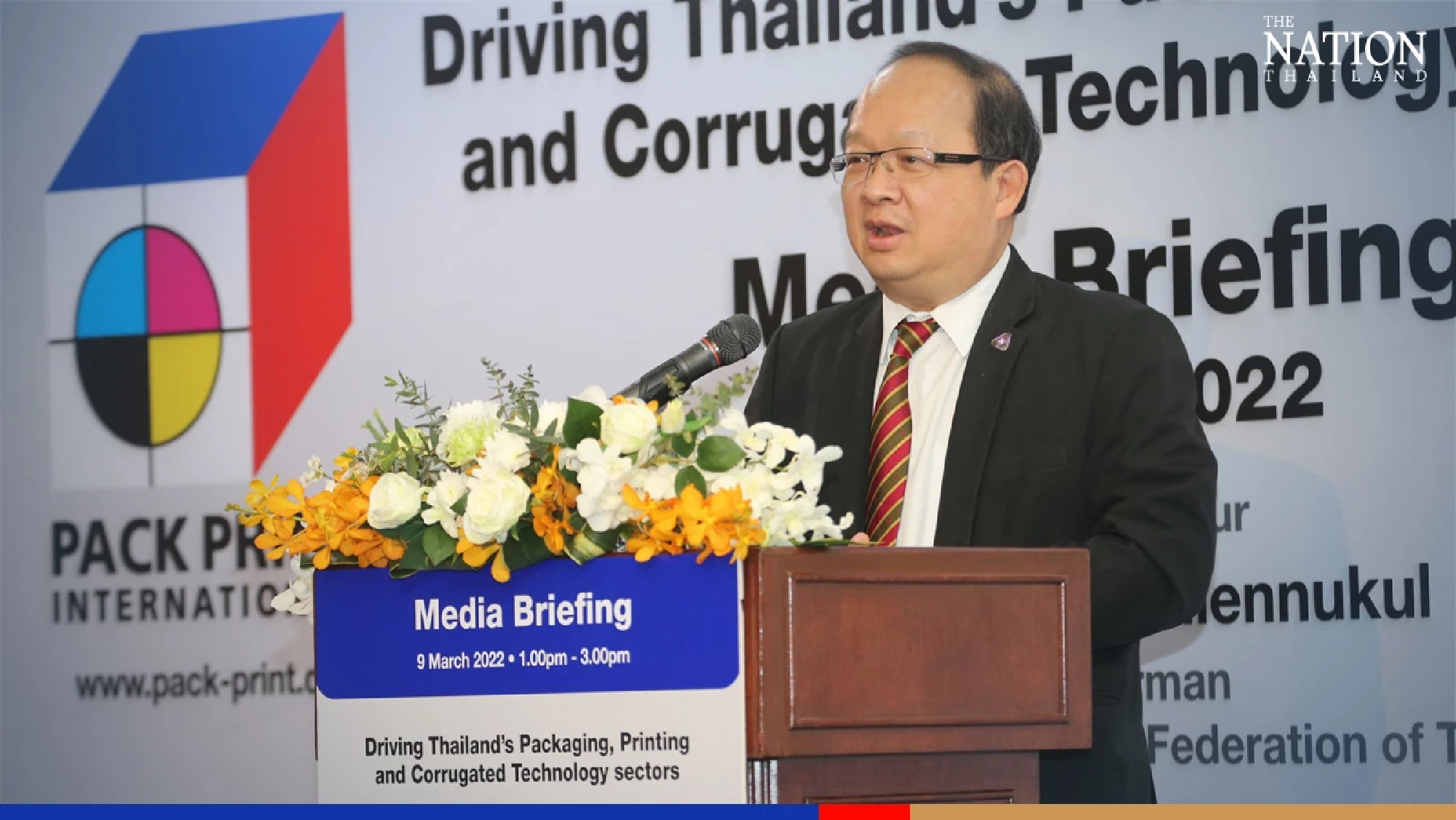
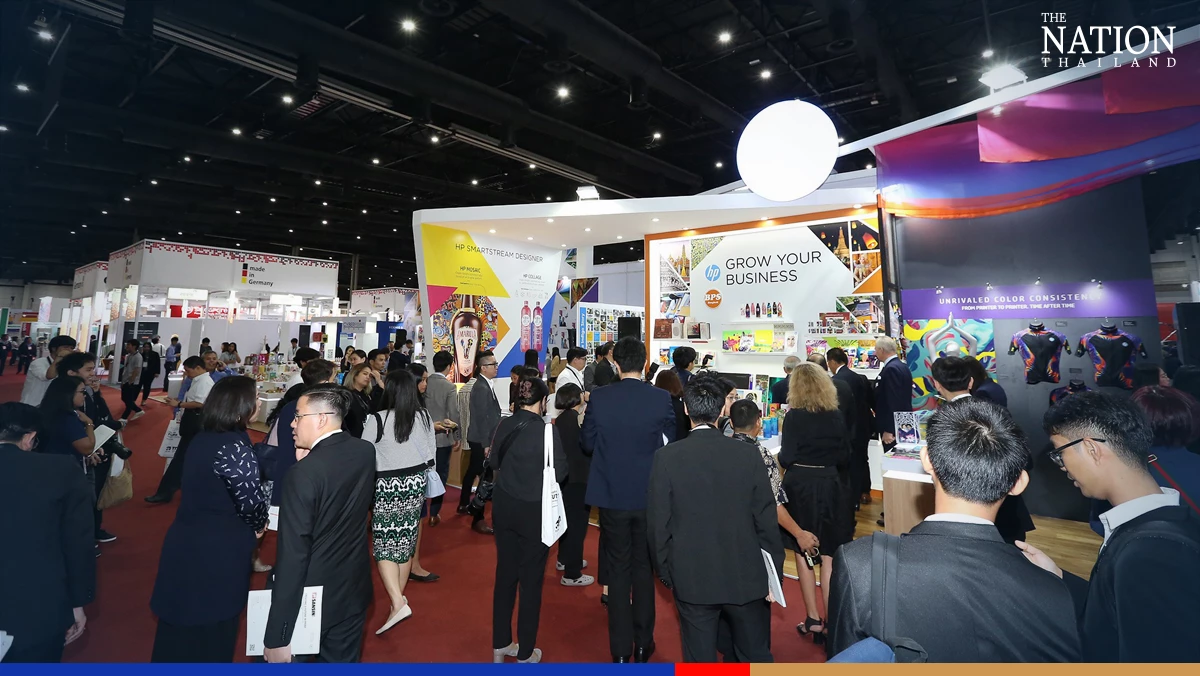
The “Pack Print International 2022 and Corrutec Asia 2022”, will be held from October 19-22 at the Bangkok International Trade & Exhibition Centre.
Messe Düsseldorf Asia has teamed up with the Thai Printing Association, the Thai Packaging Association and the Thai Corrugated Packaging Association to host the event.
This will be a space for cutting edge innovation from three industries in the production of printing and packaging. It will underline Thailand’s potential as a hub for regional trade exhibitions, connecting manufacturers with innovators in printing, packaging and corrugated cardboard to move ahead with their operations after the country has reopened, the organisers said.
Messe Düsseldorf Asia’s managing director, Gernot Ringling, said that the event will showcase innovation and technology to address future manufacturing trends from over 250 leading companies from all over the world.
Each company is ready to show off the latest cutting-edge innovations and technology for the production of printing and packaging. This includes 3D printing technology, a cost-effective innovation for small, medium or large enterprises. There is the technology that is responsible for the environment, in line with government policy to drive the economy under the BCG model. This also covers packaging, which is an industry currently growing strongly, with packaging for the environment, meeting the needs of e-commerce channels, and responsive to healthcare needs during the Covid-19 pandemic, he said.
The event will include space to conduct business negotiations. Experts will also be on hand to provide knowledge about the industry and its innovations and will consult on implementing technology and being prepared for changes. Business operators, designers and manufacturers can try out business operations for themselves with MICE technology, with support from TCEB, the Thailand Convention and Exhibition Bureau (Public Organisation).
Kriengkrai Thiennukul, vice chairman of Industrial Promotion Support, the Federation of Thai Industries, noted that there were currently huge challenges for Thailand and the world economy, with the current pandemic and the conflict between Russia and Ukraine. Despite all these problems, projections for the Thai economy in 2022 showed a recovery trend with an average growth rate of 3.5 to 4.5 per cent. If Thai industry can boost its capabilities with the application of science, technology, innovation and digital systems, while improving productivity and focusing on developing management skills as well as knowledge about tech and innovation, this can upgrade the Thai industrial sector.
Thai Packaging Association president Manit Kamolsuwan said that designing packaging under policies to control and prevent the spread of infection from Covid-19 could be called “The New Normal for Packaging Design”, which had many components.
The association wanted to introduce new alternatives for sustainability by encouraging packaging for food products made from paper and cards to manage business continuity in the packaging industry and reduce risk from natural threats.
Thai Corrugated Packaging Association president Chusak Deetrakunwattanapoen mentioned that the current rapid growth of the e-commerce sector was going to continue. This year, it was forecast to grow by at least 30 per cent.
Thai Printing Association president Pongthira Pathanapiradej said there were growth opportunities for printing in Thailand. The printing and packaging businesses, in particular, had a total market value in 2021 of between 140 and 150 billion baht, growing 5 per cent in 2020.
Continuous growth had been enabled by growing e-commerce, as consumers have increasingly turned to online channels. Over the last few years, printing volumes for both labels and packaging have clearly increased. Modern printing technology has improved in quality, making many businesses look at printing labels they had designed themselves, and having adaptable labels while including QR codes on corrugated boards and other packaging. He said the Thai commercial printing industry should look at investment in new machinery and digital printers to meet the rapidly increasing needs of the e-commerce market.
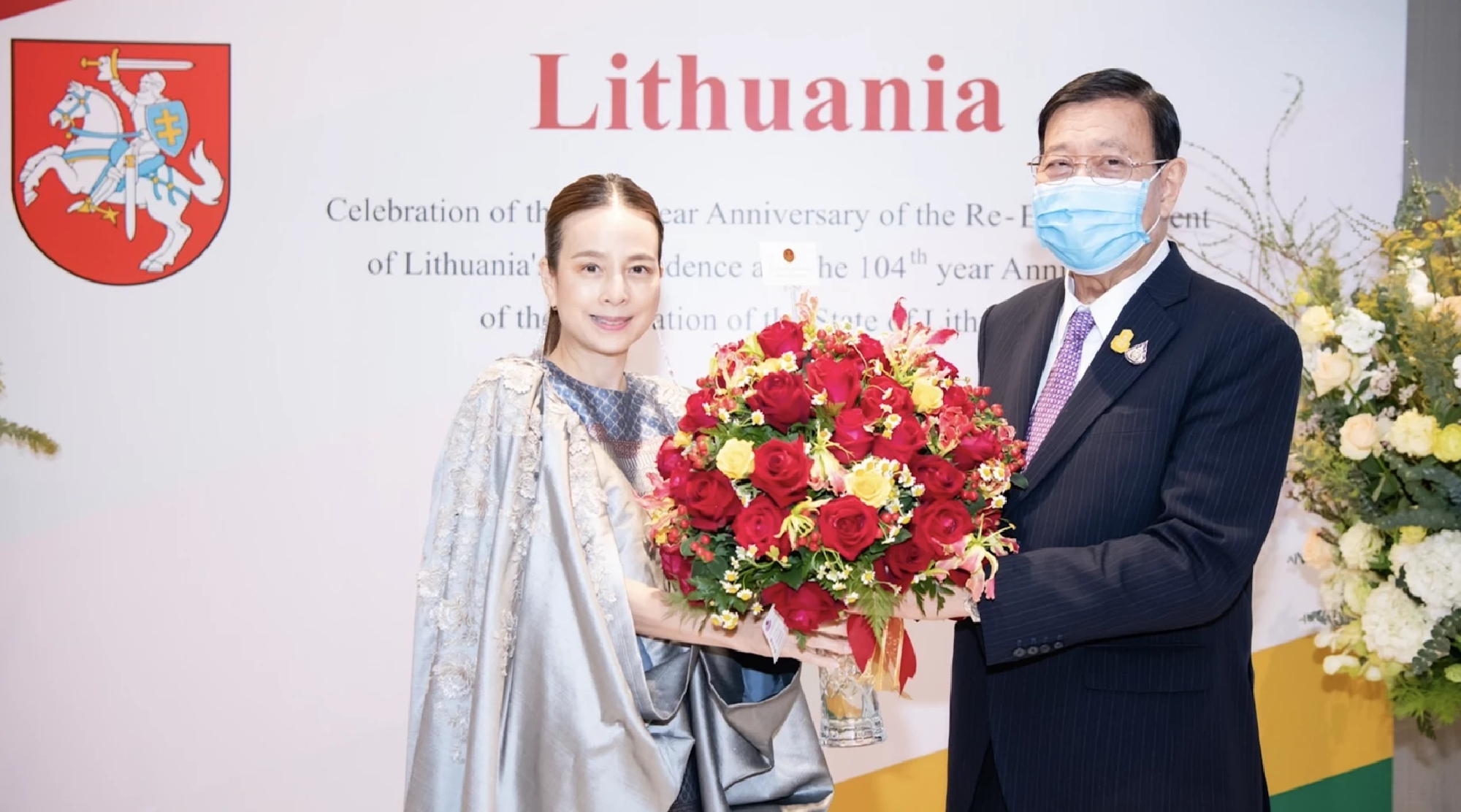
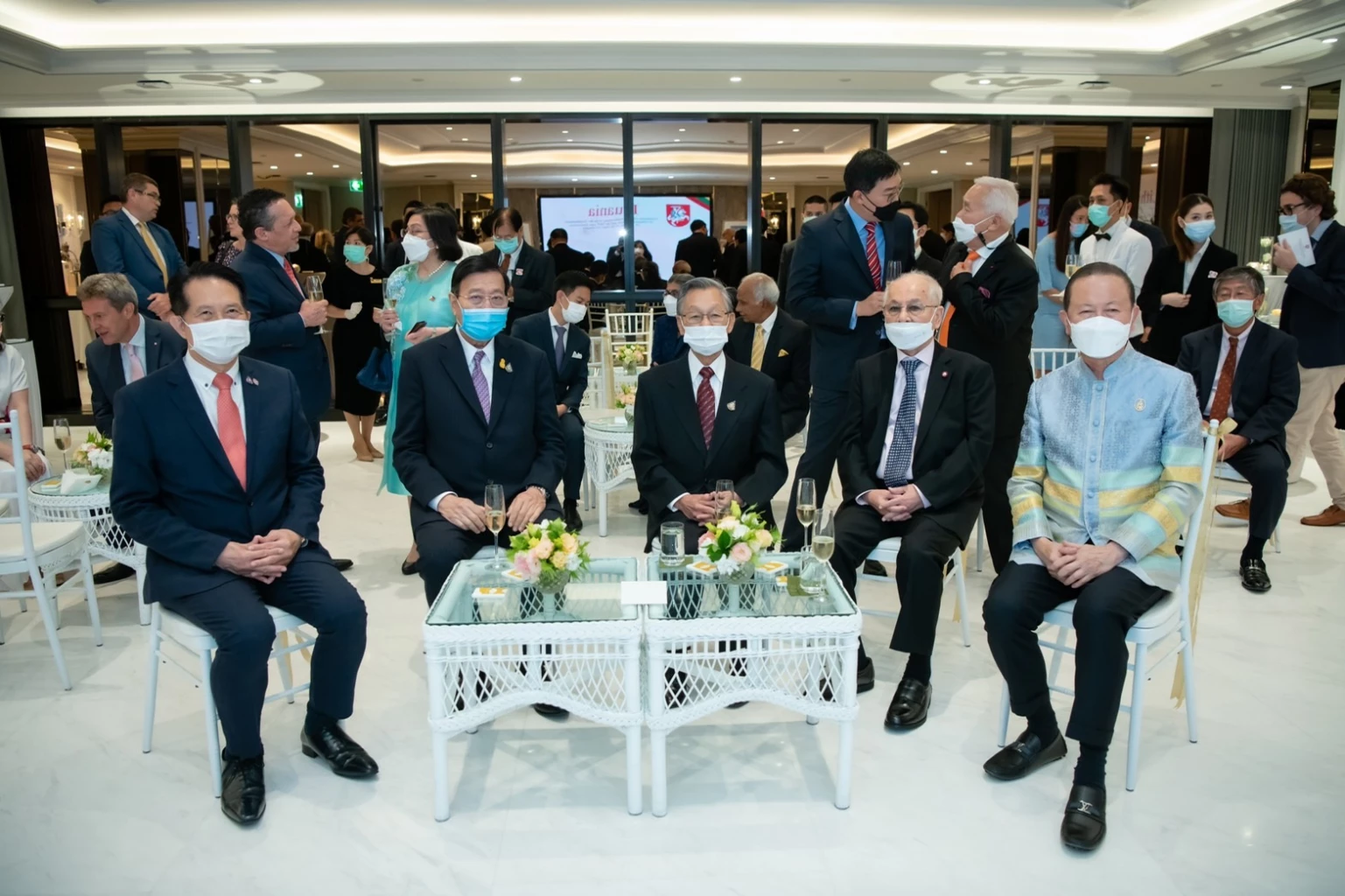
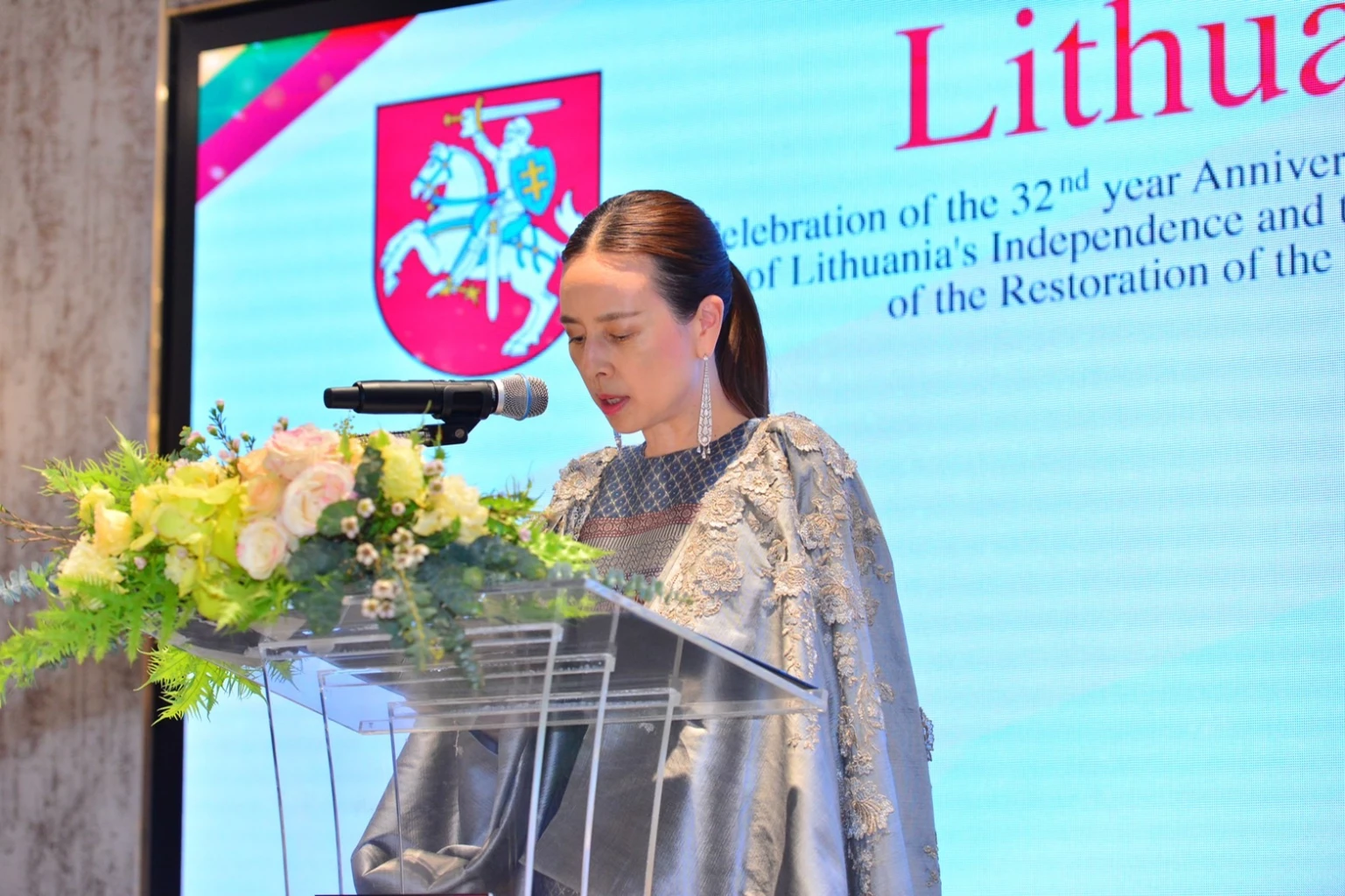
The Republic of Lithuania celebrated the 32nd anniversary of its independence (February 16) and the 104th anniversary of the Restoration of the State of Lithuania at an event on February 22.
The Republic of Lithuania celebrated the 32nd anniversary of its independence (February 16) and the 104th anniversary of the Restoration of the State of Lithuania at an event on February 22.
The event held at Muang Thai Insurance building in Bangkok’s Huai Khwang district also commemorated the 29th anniversary of the establishment of diplomatic relations between Thailand and Lithuania.
The event was attended was attended by Foreign Ministry officials and Lithuanians residing in Thailand.
In her speech to the gathering, Nualphan Lamsam, Honorary Consul of the Republic of Lithuania in Bangkok, outlined the history of the relationship between Lithuania and Thailand.
She said both countries had developed their ties through mutual trust to build a sustainable relationship in business, economy, investment, and trade.
Despite the great challenges during the Covid-19 pandemic,there were policy linkages and exchange of visits between Lithuanians and Thai people, she said.
She added that it is a great pleasure to visit Kaunas, one of the cities in Lithuania which is being named one of the top three cities of the European Capital of Culture 2022.
This is another great opportunity to enhance its image and be pinned on the world map for promoting sustainable tourism by organising various cultural development activities, she added.
The “Marriott Bonvoy Travel Show” will be held from March 14 to 20 at EmQuartier in Bangkok, allowing local residents to book attractive stays at hotels across the Kingdom.
The “Marriott Bonvoy Travel Show” will be held from March 14 to 20 at EmQuartier in Bangkok, allowing local residents to book attractive stays at hotels across the Kingdom.
The “Marriott Bonvoy Travel Show” will see more than 40 Marriott Bonvoy portfolio of hotels and resorts, covering 14 distinct brands, to showcase their world-class accommodation, services and guest experiences.
The aim is to stimulate domestic travel demand and give local residents the opportunity to stay in style at desirable destinations.
Thai nationals and local expats will be able to learn all about Marriott’s properties and discover a series of attractive packages and promotions for their next vacation. Additional promotions and privileges await Krungsri credit card and KTC cardholders.
Marriott Bonvoy has an important role to play in stimulating the recovery of Thailand’s tourism industry. Thai nationals and expats can enjoy staycations in desirable destinations nationwide, including urban sojourns in Bangkok, island escapes in Phuket and Koh Samui, blissful beachfront breaks in Krabi or Khao Lak, weekend retreats in Hua Hin, Pattaya and Rayong, or captivating cultural experiences in Chiang Mai or Chiang Rai.
With 14 distinct brands ranging from modern midscale hotels to ultra-luxury resorts, every guest can find their ultimate vacation.
The fair will be hosted at the Quartier Gallery on the M Floor of EmQuartier.
The spike in crude oil prices driven by the Russia-Ukraine war will boost earnings for PTT Plc this year, though this uplift may be offset by squeezed margins in PTT’s downstream subsidiaries, a ratings company said on Tuesday.
“In our view, PTT’s earnings boost may not be proportionate to the increase in crude oil prices and natural gas prices. This is because a high oil price environment will likely erode margins in refining, petrochemical and power businesses,” S&P Global Ratings said.
“Plus, petrochemical capacity additions, particularly in olefins and polyolefins chains, should result in an unwinding of petrochemical spreads over the next one to three years. About 30 per cent of PTT’s earnings before interest, tax, depreciation, and amortisation [EBITDA] comes from downstream operations.”
S&P Global Ratings expects PTT to remain comfortably within the rating tolerance of “BBB” stand-alone credit profile.
Under revised oil price assumptions of US$85 per barrel in 2022, PTT is likely to maintain an ample cash balance and debt-to-EBITDA ratio at 2 to 2.2 times in 2022-2023, it added.
“Our projections include annual EBITDA of between 389 billion and 410 billion baht in 2022 and 2023, largely backed by earnings from its upstream subsidiary, PTT Exploration and Production [PTTEP],” the ratings firm said, that PTT recorded S&P-adjusted EBITDA of 397.8 billion baht as of December 31, 2021.
Despite robust earnings forecast on PTT, S&P Global Ratings expects the group leverage to remain largely unchanged from the 2021 level. This reflects the group’s recent increased investment profile, which had included PTTEP’s acquisition of Block 61 and PTT Global Chemical (GC)’s acquisition of Allnex Holding GmbH in 2021.
“At the same time, capital expenditure remains sizable in the group’s refining subsidiary, Thai Oil, because of a greenfield development in its Clean Fuel Project,” S&P Global Ratings said.
“Amid a period of elevated crude prices, we expect PTT to extend more support to its downstream subsidiaries, Thai Oil and GC, in addition to the support already granted to unrated IRPC. The support will be provided in the form of an extension of payment terms for crude oil supplied by PTT to its downstream subsidiaries.”
Concurrently, PTT plans to securitise related accounts receivable to facilitate early cash receipt and offset the cash flow impact of the extended payment terms.
S&P Global Ratings believes the Thai national oil company can absorb some inventory losses at its downstream subsidiaries if crude oil prices correct sharply. PTT reported 361.6 billion baht in cash and cash equivalents as of December 31 last year.
The Finance Ministry owns 51.1 per cent of PTT, and S&P Global Ratings views it as having a critical role in maintaining the country’s energy supplies and a strong link with the government
“We do not expect any negative government intervention, such as imposing additional cash call from the group beyond its dividend payout ratio, which has historically been 45-50 per cent,” it said.
The Stock Exchange of Thailand (SET) Index is expected to rise to between 1,655 and 1,660 points on Thursday on hopes of negotiations between Russia and Ukraine, which could lead to an end of the war, Krungsri Securities said.
However, it predicted the falling oil price and mass share sell-offs to cope with the US Consumer Price Index (CPI) results would pressure the index.
It added that the results, to be announced today, are expected to rise by 7.9 per cent year on year.
Krungsri Securities recommends purchase of the following as an investment strategy:
• SCC, GPSC, BGrim, SCGP, EPG and Tasco, which would benefit from falling stocks and oil prices.
• KBank, BBL, TTB and KTB, which would gain from the rising US bond yield and news of a US interest rate hike.
• PSL and TTA, which would benefit from an increase in the freight rate.
The SET Index closed at 1,643.64 on Wednesday, up 24.54 points or 1.52 per cent. Transactions totalled 115.03 billion baht with an index high of 1,643.87 and a low of 1,610.34.
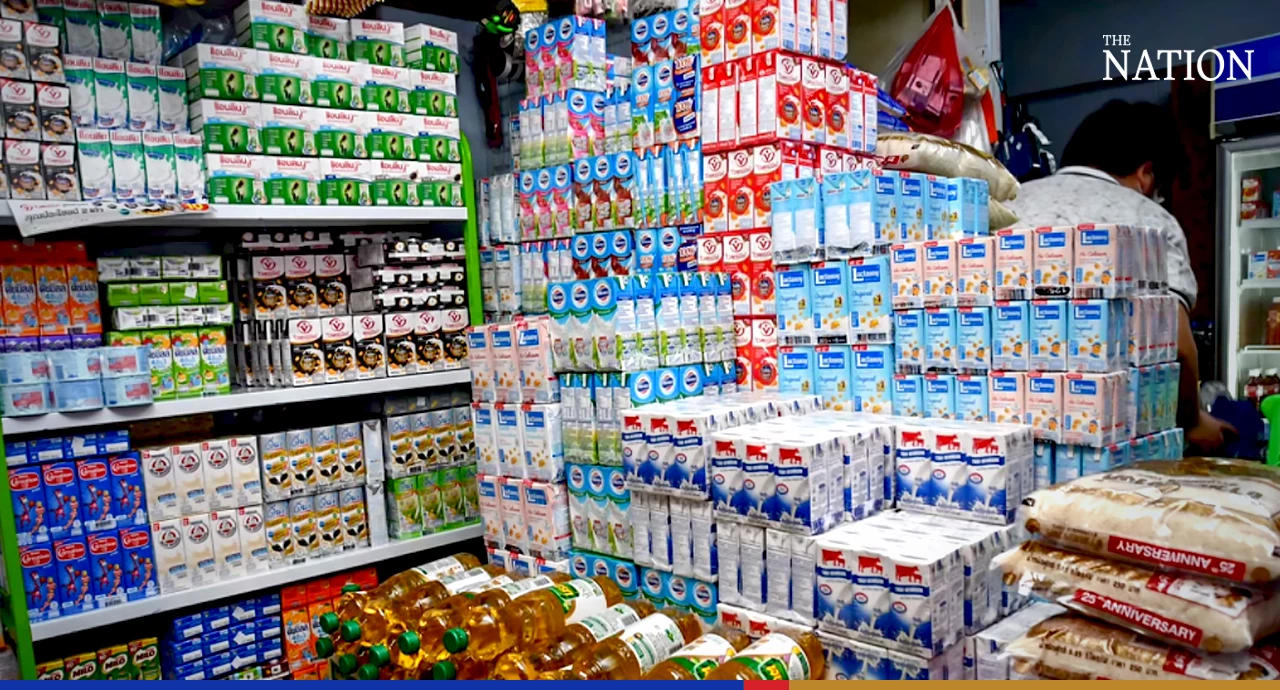
Manufacturers of consumer goods, including instant noodles, will not be allowed to increase their prices in the near future, the chief of the Department of Internal Trade said on Wednesday.
The department’s director-general, Watanasak Sua-iam, said cooperation was still being sought from manufacturers to maintain the current prices so as to mitigate the impact on consumers from the fallout of the Russia-Ukraine war.
Watanasak said the department had held talks with two manufacturers of two popular instant noodle brands after it was reported that they planned to raise their prices due to rising costs.
He clarified that the manufacturers had only raised their wholesale prices without affecting the retail prices. Watanasak quoted the instant noodle manufactures as explaining that they had simply reduced the margin they offered to retailers earlier and the move would not affect the retail prices.
Watanasak said the instant noodle manufacturers promised to continue to cooperate with the department to maintain the current prices until the economic crisis caused by the war eases.
Commenting on reports that the makers of canned pasteurised and condensed milk would raise their prices because of rising cost of tin plates, Watanasak said his department had yet to consider the issue.
Watanasak said the department had yet to consider the structure of cost of the milk to see whether the cost had really risen and by how much to approve the price hike.
“We must consider the request to increase prices with fairness to allow all sides to survive,” Watanasak said.
“Other goods will be treated in the same manner. If manufacturers want to raise prices because of rising cost, they must submit their request to the department to be considered on a case-by-case basis.
“We still seek cooperation from the manufacturers to maintain the current prices and the Commerce Ministry has no policy to allow increases in prices yet.”
Watanasak said his department had not yet allowed the prices of fertilizers to be increased as sought by the Thai Fertilizer and Agricultural Marketing Association.
He said the department is still monitoring the impact from the war in Ukraine but it still wants fertilizer traders to maintain the prices.
Regarding complaints of rising prices of raw materials for making animal feed, Watanasak said the department had yet to consider the pros and cons of the proposals for the government to lower import tariffs of soy meal and to expand the period for importing maize to avoid negative impact on local farmers.
Jakkara Yodmanee, deputy director-general of the department, confirmed that several manufacturers had submitted requests for price increases but none has been approved so far.
Jakkara said officials from his department have been monitoring the prices of consumers’ goods every day by checking the prices both in Bangkok and the provinces.
He said although consumers complained that current prices of limes had risen to about Bt5 to Bt7 per piece, the prices were still lower than during the peak period last year.
Meanwhile, Narongsak Putthapornmongkol, chairman of the Thai-Chinese Chamber of Commerce, said the chamber had surveyed opinions of its members and found that their costs had increased by over 10 per cent because of the increase in oil prices.
Narongsak said the manufacturers complained that they needed to raise prices within one to three months to survive.
The energy and foreign affairs ministries are negotiating with oil producing countries, including Saudi Arabia, the purchase of crude oil at lower than the global market price, Deputy Finance Minister Santi Promphat said on Tuesday.
“We are lucky the government has successfully revived diplomatic ties with Saudi Arabia for the first time in over 30 years,” he said. “We hope Saudi Arabia agrees to sell us oil at a friendly price, at least until the Russia-Ukraine conflict is over.”
Finance Minister Arkhom Termpittayapaisith meanwhile warned a rise in global energy prices “could cause domestic consumption to slow down”.
Arkhom said the war could produce a global economic impact that causes Thailand’s gross domestic product this year to miss the lower end of the estimation at 3.5 per cent expansion.
The National Economic and Social Development Council (NESDC) last month estimated that Thai GDP for 2022 would rise by 3.5 to 4.5 per cent thanks to increasing domestic demand, exports and an accelerating recovery in tourism after Covid-19 restrictions were lifted. The council reported a 1.9 per cent GDP expansion in the last quarter of 2021, and 1.6 per cent expansion for the whole year.
“The ministry wanted to see the economy in 2022 expand at 4 per cent, which is a median of the estimation made by the NESDC,” Arkhom said.
“However, the current global situation is volatile and requires reevaluation periodically. We estimate that in a worst case scenario, the 2022 GDP could be slightly below the 3.5 per cent expansion, as the value of exports to the Russian market is only 32 billion baht, or less than one per cent of our overall exports,” he pointed out.
“Meanwhile, the tourism sector, which had set a target of 7 million foreign tourists this year, may have to adjust down its goal to reflect the current situation.”
Arkhom said his ministry would continue to monitor the situation closely to accurately evaluate the extent of the impact on different sectors of the Thai economy, while using inputs from relevant agencies.
The finance minister also said the Oil Fund may have to borrow up to 40 billion baht from the original 20 billion baht limit allowed by the Cabinet to subsidise the cap on the diesel price at not over 30 baht per litre, while keeping the prices of benzene and cooking gas from rising too high.
“If the cabinet allows an increase in the borrowing limit to 40 billion baht, we believe we can continue our subsidies until the end of May this year, provided the price of oil on the global market does not exceed $130 dollar per barrel,” he said.
The Revenue Department collected 700 billion baht in tax, 85 billion baht more than the estimated 615 billion, in the first five months of fiscal year 2022 (October 2021 to February 2021), it reported on Tuesday.
“The higher-than-estimated collection is mainly due to an accelerating economic recovery from the impact of Covid-19 in late 2021 and early 2022,” said director-general Ekniti Nitithanprapas.
He said the department expected tax collection for fiscal 2022 to meet the target of 1.87 trillion baht.
“Businesses such as wholesale, retail, logistics and medical equipment have seen a steady growth amid the Covid-19 situation,” Ekniti said.
“Furthermore, we have started collecting a new e-service tax, which is responsible for about 3 billion baht of revenue. So far, 123 foreign companies have registered with the department to pay the tax. We expect more to sign up this year,” he added.
The baht opened at 33.22 to the US dollar on Wednesday, weakening from Tuesday’s close of 33.19, the weakest in a month.
Krungthai Bank market strategist Poon Panichpibool predicted the Thai currency would move between 33.10 and 33.30 during the day.
Poon said the baht was weakening due to foreign investors selling their short-term bonds.
He expected they would offload fewer Thai assets amid a price increase in gold, which would influence investors to sell the precious metal.
If the market is not in a risk-off state, the baht might slow its trend of weakening and swing sideways.
He said the resistance level would be from 33.30 to 33.40, the level exporters are waiting for to sell the dollar.
The currency market is fluctuating as investors are in a risk-off state after US President Joe Biden announced a ban on import of Russian energy. Investors are worried that Western countries might intensify sanctions against Russia.








 Watanasak said his department had not yet allowed the prices of fertilizers to be increased as sought by the Thai Fertilizer and Agricultural Marketing Association.