In a bid to make the most of improving bilateral ties, the Thai National Shippers’ Council (TNSC) is planning to devise an action plan to penetrate the Saudi Arabia market.
“The key points in the action plan are ensuring that Saudi Arabia grants visas to Thai nationals and agrees to reduce the visa application fee, which is currently 20,000 baht per person,” TNSC chairman Chaichan Charoensuk said on Thursday. “Other proposals include adjusting conditions to ensure more companies have access to Thai government subsidies and having Thai businesses added to key trade exhibitions in Saudi Arabia well ahead of time to ensure we do not miss any major events.
“On March 3, the TNSC will also hold a seminar for Thai businesses that are interested in exporting to Saudi Arabia,” Chaichan added. “After the seminar, TNSC will send trade representatives to three major Saudi cities namely Riyadh, Jeddah and Dammam to attend trade fairs and meet with Saudi businesspeople/importers to discuss trade deals with Thai businesses.”
TNSC is confident the action plan will help expand exports to Saudi Arabia from $1.63 billion currently to $2 billion or 66 billion baht this year.
The Finance Ministry will at the Tuesday Cabinet meeting propose the option of reducing excise tax for diesel to less than 3 baht per litre, a source was quoted as saying by Thansettakij.
The source said a new draft decree on the Revenue Code is being prepared in response to the continued rise of crude oil prices.
Prime Minister Prayut Chan-o-cha has reportedly called on Energy Minister Supattanapong Punmeechaow, Finance Minister Arkhom Termpittayapaisith and related organisations to find ways of resolving the oil-price situation.
The first step will be to use the mechanics of the Oil Fund and excise tax on diesel to solve the issue.
Meanwhile, the Office of the Auditor-General and related agencies are still considering the Oil Fund’s plans to take loans.
The source added that the authorities have not decided to lower the tax on benzene fuel but will come up with specific measures like reducing public transport fares via state welfare cards.
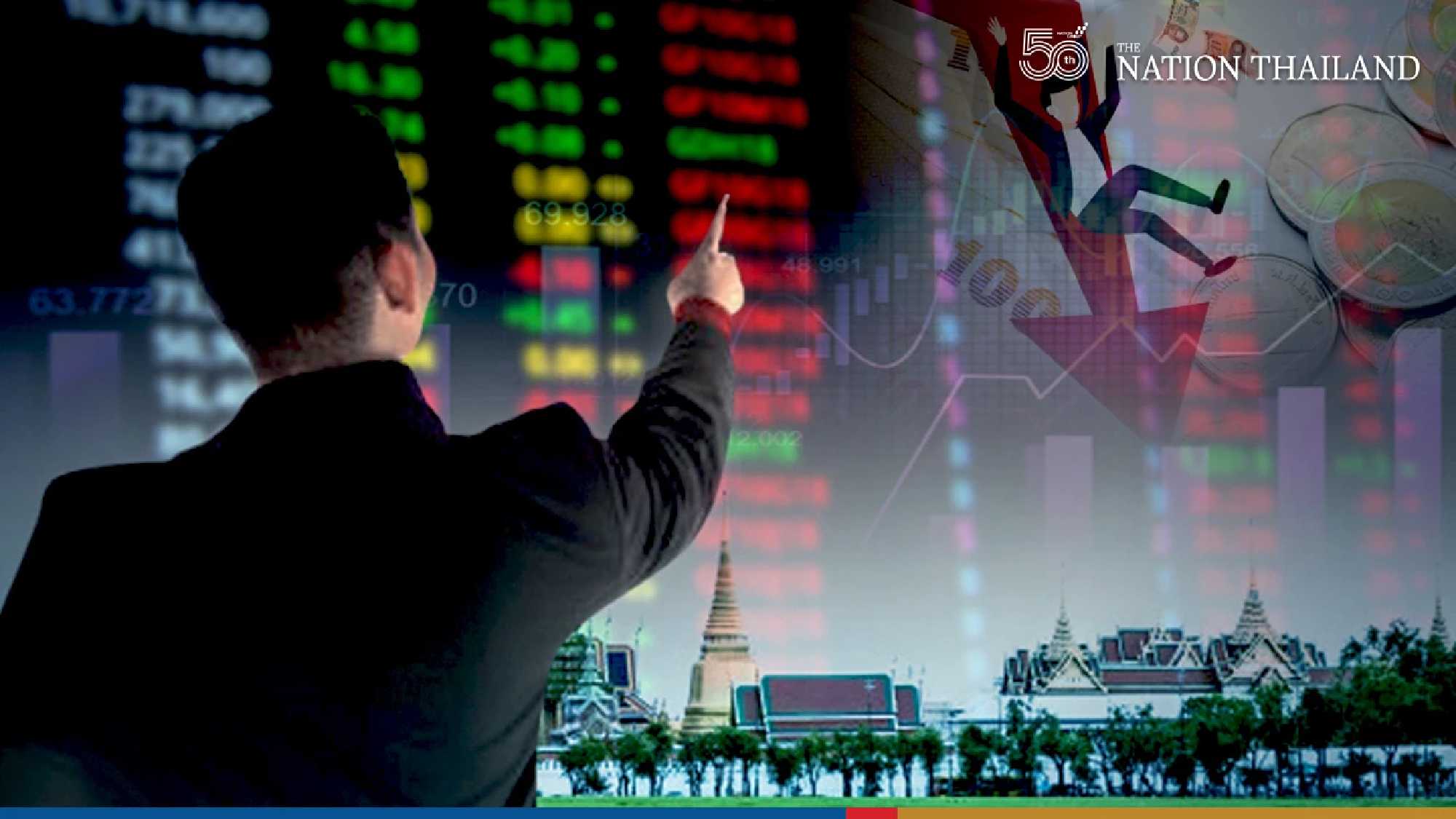
The baht opened at 32.76 to the US dollar on Friday, weakening from Thursday’s close of 32.63.
The Thai currency is likely to move between 32.65 and 32.85 during the day, Krungthai Bank market strategist Poon Panichpibool predicted.
He said the baht weakened less than expected as foreign investors bought Thai stocks and short-term bonds worth more than 33 billion baht.
The dollar, however, strengthened after US inflation figures were higher than expected, sparking speculation that the Federal Reserve will increase the interest rate to a level higher than investors expect.
Poon said these factors will slow down the strengthening of the baht in the short term.
He said foreign speculators should buy Thai assets so the baht does not weaken much.
Poon believes importers are waiting to buy the dollar at 32.60, while exporters will sell the currency if it hits between 32.80 and 33.
The currency market has been volatile after the US inflation rate climbed to 7.5 per cent, which is more than the market expected and the highest since 1982.
The Stock Exchange of Thailand (SET) Index is expected to move between 1,690 and 1,695 points on Friday amid worries about inflation in the US since its Consumer Price Index (CPI) in January rose by 7.5 per cent year on year, Krungsri Securities said.
It said the CPI rise in January caused the US 10-year bond yield to jump over 2 per cent and would trigger the Federal Reserve to raise the interest rate to tackle inflation.
“However, mass buy-ups of company shares that are expected to grow based on their business turnover last year and the Centre for Covid-19 Situation Administration [CCSA]’s move to ease disease prevention measures today would help boost the index,” Krungsri Securities said.
It recommends the purchase of the following:
• BBL, KBANK, KTB, BLA and THREL will benefit from news of the US interest rate hike.
• PSL and TTA will benefit from the rising freight rate.
• AOT, MINT, CENTEL, ERW, AAV, HMPRO, CPALL, CPN and CRC will benefit from CCSA’s move to ease Covid-19 prevention measures.
• IVL, TOP, SPRC, GULF, BANPU, TU, CPF, SPALI, ORI, WHA, AMATA, HMPRO, CPN, CRC, BLA, NER, ITEL, XO, ASK, UBE, FORTH, TH and SNNP are expected to grow based on their business turnover last year.
The SET Index closed at 1,703 on Thursday, down 0.16 points or 0.01 per cent. Transactions totalled 112.33 billion baht with an index high of 1,707.44 and a low of 1,696.73.
The management of the Queen Sirikit National Convention Center (QSNCC) on Thursday vowed to make Thailand proud as the host venue of the Asia-Pacific Economic Cooperation (Apec) Summit in November.
The QSNCC was on Wednesday selected as the summit venue by a committee making preparations for the summit. The QSNCC is operated by the NCC Management & Development Co Ltd (NCC).
NCC president Sakchai Pattarapreechakul said the firm felt honoured after its convention centre was picked as the venue for the Apec Summit.
“We are delighted and honoured to have been entrusted by the Apec organising team of the Thai government that has chosen our full range of meetings and events solutions,” he said.
The old QSNCC was closed four years ago with the old building demolished and a new one built to be more luxurious and advanced.
The new QSNCC is scheduled to reopen in September.
Sakchai expressed confidence that the new QSNCC is ready to welcome delegates from all the 21 economies and beyond to Thailand, and will support Apec to host the meetings under the Apec 2022 theme of “Open. Connect. Balance”.
He said the centre has cutting-edge technology and complete facilities in line with standards of global top event venues in other countries, so it will be able to accommodate all types of events, whether they are online conferences or hybrid meetings.
He added that the new QSNCC has a unique identity, along with the architecture and landscape architecture that is beautiful, outstanding and harmonised with the surrounding areas to exhibit a perfect combination of Thai and international characteristics.
“With the knowledge, expertise, and experience in the business of our professional team, we are certain that the upgraded QSNCC will provide excellent services to the conference organisers and participants of Apec 2022,” Sakchai added.
He said the new QSNCC will be the first convention centre in Thailand that can break through the limitations in the event organising activities. With flexible space design and modern construction techniques, the long-span truss structure or the absence of columns helps create greater space within the building.
This allows the centre to have a large hall of 22,500 square metres on the ground floor and the second floor to accommodate all types of events. With a total event space of 78,500 square metres, the centre provides two large conference halls with nearly 10,000 square metres and additional 50 flexible meeting rooms apart from the two large exhibition halls with over 45,000 square metres.
It also provides 2,700 indoor parking spaces. To make it convenient for participants of events at the centre, the QSNCC also has direct access to the subway.
To facilitate online conferences smoothly, the QSNCC was built with infrastructure to accommodate the use of high-speed internet in Thailand. Currently the max broadband speed in Thailand is 2 Gbps but the centre has prepared infrastructure to use 6 Gbps max speed in the future, Sakchai added.
The building is also equipped with touchless access system and the centre uses an intelligence event platform management system for controlling the use of space. It is also equipped with top-level security technology.
He said the new QSNCC will definitely live up to its theme of “the ultimate inspiring world-class event platform for all” and it will become a new event destination contributing to Thailand’s economic growth.
He added that the QSNCC is the first and only convention centre that has received Leadership in Energy and Environmental Design Silver certification. The use of environmentally friendly construction materials by adopting 25 per cent of recycled products and 75 per cent of recyclable products, solar cells, and energy-saving devices constitute sustainable management.
Suphan Mongkolsuthi, chairman of the Federation of Thai Industries (FTI), expressed concern about the case that transport operators will start to increase delivery costs by 15-20 per cent, seeing that it will affect overall cost production for sure since it shared approximately 10 per cent of the product cost.
As long as there is a demand to buy, it can continue to produce products. But if consumers can’t buy it, the effect will return to the manufacturer and transport operators in long term.
The products that will be most affected are the consumer goods that are necessary for daily life.
SMEs will be more affected by freight hikes than large firms, which have contracts for one to three months, based on individual market oil prices. But SME operators cannot make contracts with transport companies or can do it for only a short time, so they have to bear the burden in this part if there is an increase in the actual transportation cost.
Governments have to study the structure of transport prices and find solutions, such as reducing taxes or adding subsidies. Also, the government has to stimulate the economy so that everyone can earn money as quickly as possible so that they can spend money on higher product prices, said Suphan.
It is therefore important to open up the country and normalize economic activities.
The Index of Industrial Confidence in January 2022 was at 88.0, an increase from 86.8 in December 2021. The Index rose for the fifth straight month and returned to a level close to before the Covid crisis in early 2020.
Energy Minister Supattanapong Punmeechaow warned that the current situation was a precarious, almost critical, as demand for oil has grown rapidly due to the global economic recovery, tensions in international politics, the cold weather, and Opec Plus’ refusal to hike output.
He was responding during a meeting of the House of Representatives on Thursday to a question by Kittikorn Lohsunthorn, Lampang MP from Pheu Thai Party, about the high price of oil and possible solutions.
Meanwhile, there are transport groups that are demanding diesel price be reduced from 30 baht to 25 baht.
US President Joe Biden has called up Opec leaders to consider an increase in production.
Since December 2021, crude oil price has gone up by 4 baht per litre, diesel by almost 6 baht per litre, and petrol by 5 baht.
Supattanapong explained that the ministry has frozen the price of diesel fuel at not over 30 baht per litre, which is supported by 3.79 baht per litre from the Oil Fund, totalling 7 billion baht per month.
After spending 20 billion baht to control oil price, the Oil Fund is already 15 billion baht in debt and is preparing to borrow another 20-30 billion baht to continue to freeze the price, he said.
Regarding reduction of bio-oil, he said the government is considering new measures to take care of the people step by step. If the price drops suddenly, it will affect the oil palm farmers. When the formula was changed to B5, the price of palm oil would be about 11 baht, which was at a level that didn’t affect farmers too much.
He added that there was also a reduction in the energy conservation fund that used to collect 25 satang per litre. Today, it’s almost gone down to zero, he said.
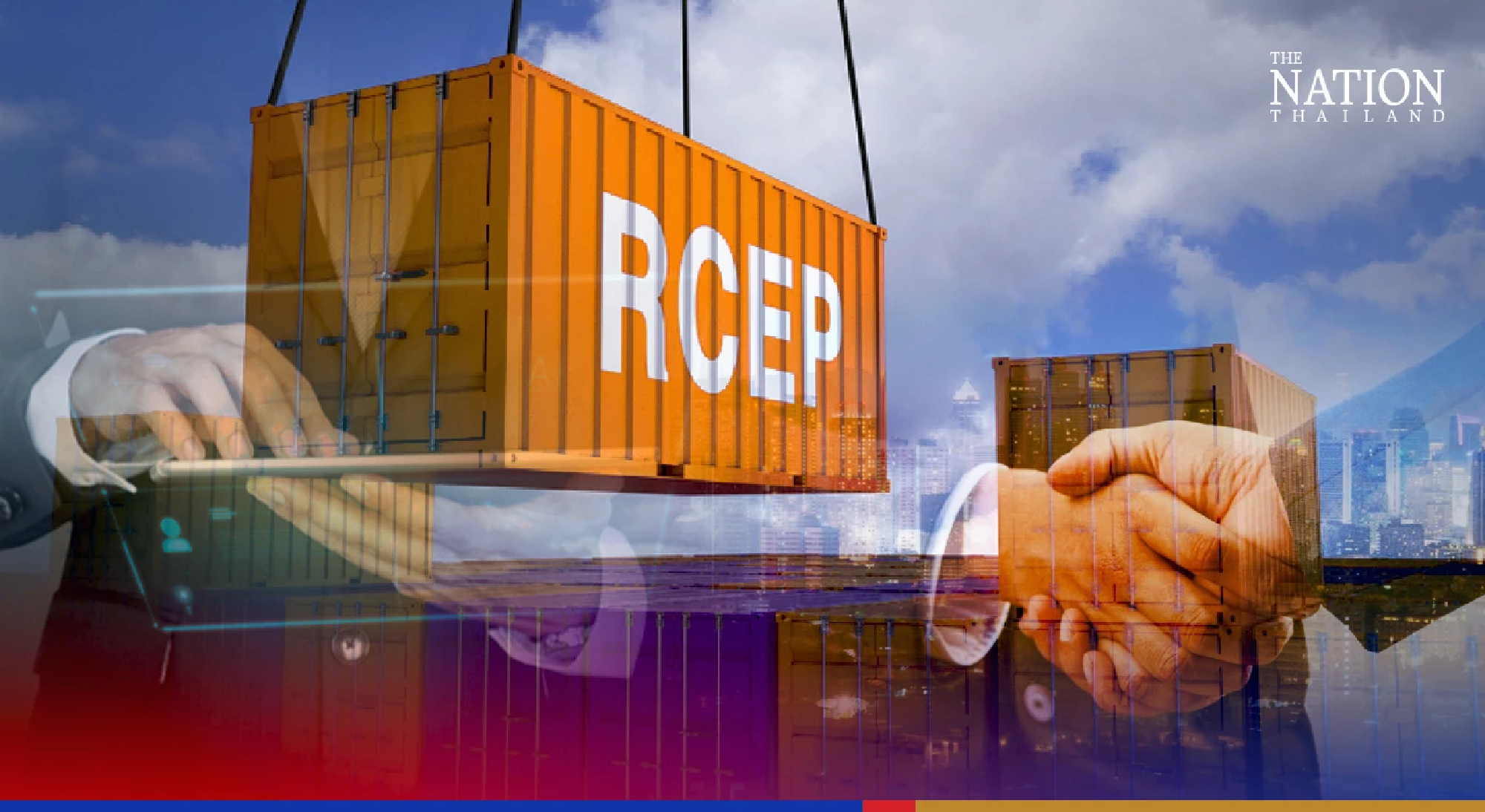
Thailand’s Commerce Ministry is matchmaking the Exim Bank with business entrepreneurs to help fund their foray into the RCEP markets after the world’s largest free-trade agreement came into force on January 1, Commerce Minister Jurin Laksanawisit said on Thursday.
The ministry’s project, called “Loan Matchmaking for Inroads into RCEP Markets”, aims to seek funding for small and medium-sized enterprises (SMEs), community ventures, and startup businesses so that they can export their products to 14 other member countries of the Regional Comprehensive Economic Partnership, which also includes Thailand.
Under the project, the Export-Import Bank of Thailand (Exim Bank) offers cheap loans with an annual interest rate of 2.75 per cent in the first year to SMEs seeking funds for their businesses.
Each eligible SME is allowed to borrow as much as Bt50 million as more than Bt3 billion have been allocated for this project, according to Jurin, who doubles as deputy prime minister.
The project is a collaboration between the ministry, businesses and financial institutions.
Thailand’s trade with the RCEP nations accounts for half of the total value. According to the FTA, 39,366 items of Thai-made products can be exported to other member countries with zero tariff, with immediate effect for 29,891 of those items since the agreement went into force on the New Year’s Day.
In addition to the function to launch the project in Bangkok on Thursday, the Commerce Ministry will also hold similar events in all four regions of the country, the commerce minister said.
RCEP is the world’s largest free-trade agreement, covering a third of the global population and accounting for about a third of the world’s total gross domestic products (GDP).
Its members are 15 Asia-Pacific nations — Australia, Brunei, Cambodia, China, Indonesia, Japan, South Korea, Laos, Malaysia, Myanmar, New Zealand, the Philippines, Singapore, Thailand, and Vietnam.
As Valentine’s Day approaches with love and infatuation filling the air, Mikimoto – the number one pearl jewellery brand from Japan.
As Valentine’s Day approaches with love and infatuation filling the air, Mikimoto – the number one pearl jewellery brand from Japan – is celebrating the day of love with a special “Valentine 2022” collection featuring impressive precious gifts that represent pure love.
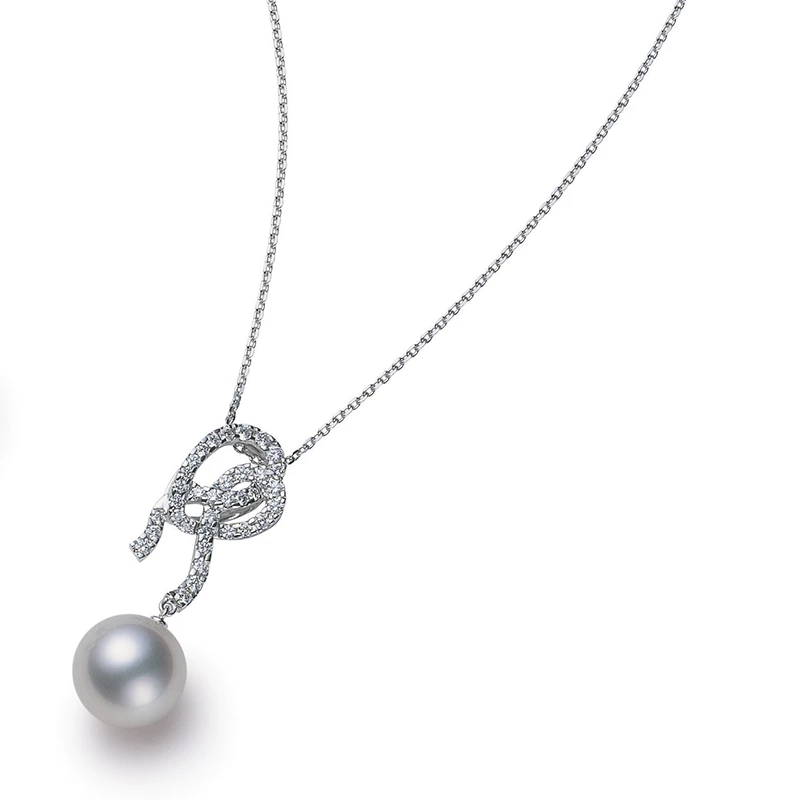
Blending the purity and beauty of round, lustrous, high-quality Akoya pearl with Mikimoto’s famed design and haute craftsmanship, the collection comprises various accessories that include earrings, a pendant, ring and necklace deftly constructed with Akoya pearls and diamonds.
Eye-catching and impressive, the setting of either white or yellow gold is inspired by delicate ribbon tied into a bow, accented with shimmering diamonds that forever represent the sparkle of love.
This timeless collection also includes an Akoya pearl necklace with lustrous, round 7.00-7.50mm pearls with a ribbon-shaped clasp in white or yellow gold, which allows the necklace to be adjusted to desirable length or to be used as a bracelet.
Mikimoto also presents a meticulously designed set inspired by two hearts “that beat as one”. The set comprises Akoya pearl earrings and an Akoya pearl pendant with diamonds that symbolise luxury and stability. The brand also offers a bracelet with a “LOVE” pendant adorned with perfectly round Akoya pearls as a heartfelt gift for Valentine’s.
Experience these special festive gift collections throughout the month of love this February at Boutique Mikimoto, Level M, Siam Paragon, or call 0-2129-4444 for more details.
Country Group Holdings Plc (CGH) and its early-stage investment arm, Pi Ventures, have agreed to take a 16.6 per cent effective interest in digital wealth management platform Coinbag to update the market on a new initiative and partnership in financial technology space.
Country Group Holdings Plc (CGH) and its early-stage investment arm, Pi Ventures, have agreed to take a 16.6 per cent effective interest in digital wealth management platform Coinbag to update the market on a new initiative and partnership in financial technology space.
Coinbag was founded with a mission of making digital asset investing simple and stress-free. The platform uses algorithms to create personalised digital asset portfolios that match clients’ individual financial objectives and generate passive income by connecting with a range of decentralised finance (DeFi) applications.
The seed-stage fintech company from Europe is in the process of securing regulatory approval to open up access to major markets and launching automated digital asset staking at the next update.
CGH chief executive officer Tommy Taechaubol said Pi Ventures had identified Coinbag as a stand-out opportunity and ecosystem partner based on the quality of the end-to-end user experience the team has developed. Clients are on-boarded via a fully-online process which establishes their wealth-building goals and risk tolerance, and thereafter the platform’s technology stack handles the rest, he said.
All of the complexity and pain points typically involved in constructing and managing diversified digital asset portfolios (from a universe of potentially thousands of unique instruments), maintaining security and transacting with DeFi smart contracts are abstracted from the client, resulting in a customer journey which requires zero technical knowledge of cryptocurrencies and blockchain applications.
Clients can be comfortable that their allocation to digital assets is appropriately secured, appropriately diversified and most importantly appropriate for them, the company said.
Coinbag is part of a new generation of fintech developers operating at the intersection of digital assets and automated wealth management. These platforms, also known as ‘robo-advisers’, use algorithms to create personalised recommendations and portfolios at massive scale, a disruptive technological development affecting both the securities and wealth management industries and trending both globally and in Thailand.
CGH has been following this technology for many years and sees it playing a major role in the future of the Pi platform, consistent with Pi’s vision of being a true personal trading and investment companion for the fast-moving modern lifestyle.
Pi Ventures continues to seek investment opportunities globally in companies and projects that can add value to the Pi ecosystem, with notable additional transactions in the pipeline, the company said. The early-stage investment company is backed by a 500-million-baht capital commitment from CGH.




 It also provides 2,700 indoor parking spaces. To make it convenient for participants of events at the centre, the QSNCC also has direct access to the subway.




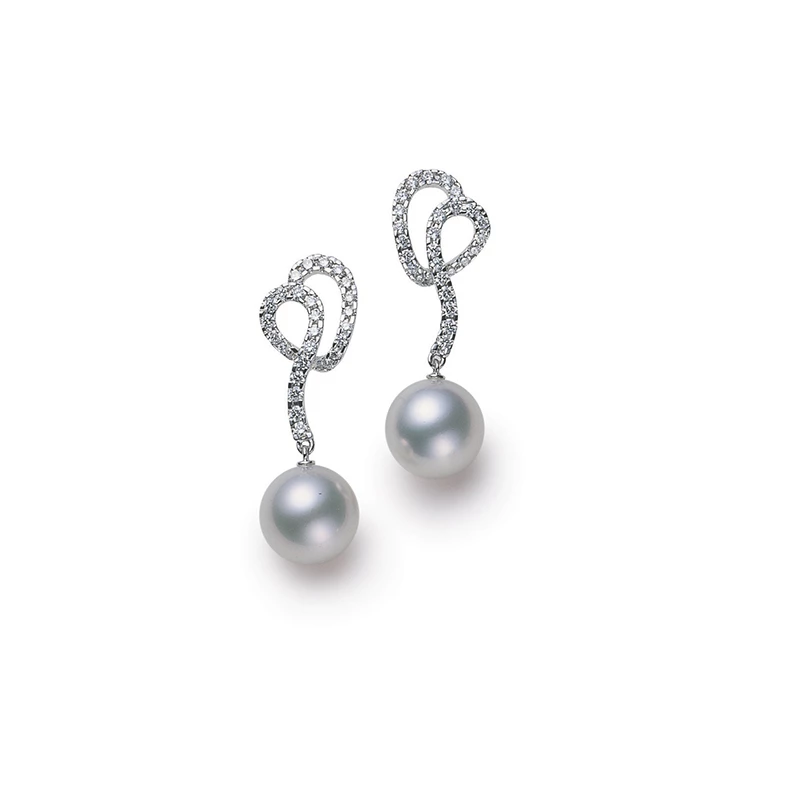 Mikimoto also presents a meticulously designed set inspired by two hearts “that beat as one”. The set comprises Akoya pearl earrings and an Akoya pearl pendant with diamonds that symbolise luxury and stability. The brand also offers a bracelet with a “LOVE” pendant adorned with perfectly round Akoya pearls as a heartfelt gift for Valentine’s.
 Experience these special festive gift collections throughout the month of love this February at Boutique Mikimoto, Level M, Siam Paragon, or call 0-2129-4444 for more details.
 Clients can be comfortable that their allocation to digital assets is appropriately secured, appropriately diversified and most importantly appropriate for them, the company said.
