Semiconductor shortage that has hobbled manufacturing worldwide is getting worse #SootinClaimon.Com

#SootinClaimon.Com : ขอบคุณแหล่งข้อมูล : หนังสือพิมพ์ The Nation.

https://www.nationthailand.com/business/40006580


The global semiconductor shortage that has paralyzed automakers for nearly a year shows signs of worsening, as new coronavirus infections halt chip assembly lines in Southeast Asia, forcing more car companies and electronics manufacturers to suspend production.

Awave of delta-variant cases in Malaysia, Vietnam and the Philippines is causing production delays at factories that cut and package semiconductors, creating new bottlenecks on top of those caused by soaring demand for chips.

Underscoring that the problem has defied easy solutions, the White House on Thursday held its second summit in five months with semiconductor manufacturers and buyers, in part to gain more clarity on the scope of the crisis, senior administration officials said.

Attendees included senior executives from Intel, General Motors, Ford, Apple, Microsoft, Samsung and two dozen other companies, as well as Commerce Secretary Gina Raimondo and National Economic Council Director Brian Deese.

Frustration has mounted on all sides. Automakers want semiconductor companies to crank out more chips for cars. Smartphone companies do not want their semiconductors diverted to automakers. Chip manufacturers say the auto industry shot itself in the foot by canceling semiconductor orders after the covid crisis hit. They are also impatient for Congress to approve $52 billion in federal subsidies to boost domestic semiconductor manufacturing. That measure, supported by the White House, has cleared the Senate but not the House.

The Biden administration, meanwhile, says that while it can play a supporting role, it expects the private sector to take the lead in sorting out the crisis.

ADVERTISEMENT

“It’s on industry to come up with the solutions here and to identify some of the path forward,” one of the administration officials said Wednesday, speaking on the condition of anonymity to preview Thursday’s meeting.

At the meeting, Raimondo asked companies to fill out questionnaires to clarify how much supply and demand there really is in the market, and said the administration would consider invoking the Defense Production Act to compel them to provide the information if they don’t comply, a Commerce Department spokeswoman said, confirming a Bloomberg News report.

The administration wants the information in part to address a big problem: Manufacturers are placing chip orders larger than what they actually need because they’re concerned suppliers won’t fill the entire order, industry executives say. That makes it hard for semiconductor factories to know what they need to supply to meet real, short-term needs – and how much they should invest in new production lines. The administration also wants the information to determine whether some chip buyers are hoarding supplies.

Also known as computer chips, semiconductors are the brains behind modern electronics. Demand for the components is soaring as more consumer goods become computerized, but supply is scarce because semiconductor factories are extremely expensive and time-consuming to build.

Pat Gelsinger, the chief executive of Intel, the U.S.’s largest chip maker, has said he expects shortages to last into 2023. Others say it could last through the end of that year.

“The chip shortage continues to get worse and at this point we’re going to go through 2023,” said Ambrose Conroy, founder of Seraph Consulting, which is advising car companies on the crisis.

Automakers, which rely on dozens of chips to build a single vehicle, have been particularly hard hit, forced to halt production lines globally as they await chip supplies. The debacle is likely to cost the auto industry $450 billion in global sales from the start of the crisis through the end of 2022, according to Seraph Consulting.

Martin Daum, chief executive of the Daimler AG division that makes trucks and buses, described the problem as intensifying.

“Until the second quarter we were able to manage the situation quite well at Daimler Truck,” Daum said Wednesday. “But since summer the semiconductor situation has worsened for us. Our production in Germany and the U.S. was affected, which led to a situation in which we could deliver fewer vehicles to our customers.”

Even automakers such as Toyota and Hyundai, which planned for potential shortages and initially managed to avoid crippling shutdowns, are starting to encounter problems.

Toyota this month was forced to slash production at 14 factories in Japan over a lack of semiconductors. Some of the cuts will continue into October due to a lack of components from Southeast Asia, Toyota has said.

Ford and General Motors in recent months have been suspending production for weeks at a time at more than a dozen North American factories. As a result, Ford this month said its U.S. sales declined by 33 percent in August compared with a year ago.

The list of attendees at the White House meeting – including the medical device maker Medtronic and the appliance manufacturer Siemens – shows how the problem is hurting industries beyond autos.

“This is having an impact all across the economy, with automobiles, yes, but even beyond that, into medical devices, networking equipment – we’re hearing regularly from companies that cannot get the supply they need,” one of the Biden administration officials said.

Administration officials said the United States is asking its embassies around the world to help monitor production problems at chip factories and to provide any technical assistance needed to keep them running.

“I applaud Secretary Raimondo for her leadership today in recognizing the current chip shortage requires both short and long-term solutions,” Tom Caulfield, chief executive of the U.S.-based chip manufacturer GlobalFoundries, said in an emailed statement after the meeting.

Some chipmakers have taken steps to help auto manufacturers. Taiwan’s TSMC, which produces a type of chip called a microcontroller that is widely used by automakers, said it is increasing output of the components by 60 percent this year compared with 2020.

GlobalFoundries is adding manufacturing equipment to a factory near Albany, N.Y., to increase output for all types of chips, and recently broke ground on a $4 billion expansion of its factory in Singapore, with financial support from the Singaporean government.

Globally, chip factories have increased their production capacity by 8 percent since early 2020 and plan to boost it by over 16 percent by the end of 2022, according to the U.S.-based Semiconductor Industry Association.

Global spending on semiconductor manufacturing equipment is likely to grow by more than 30 percent this year to $85 billion, showing that chipmakers are expanding production, according to C.J. Muse, a semiconductor analyst at Evercore ISI.

But that comes after chip companies had “underinvested over the last five years,” he said. Industry executives say investment has been particularly low in production lines for automotive chips because they are older-tech components that offer lower profits.

Some semiconductor companies are holding back on big domestic investments until the subsidy plan is signed into law. GlobalFoundries has said it will double output at its New York site by building a new facility there if the subsidies come through.

Published : September 24, 2021
Thailand seeks FTA with Eurasian Union #SootinClaimon.Com

#SootinClaimon.Com : ขอบคุณแหล่งข้อมูล : หนังสือพิมพ์ The Nation.

https://www.nationthailand.com/blogs/business/40006577


Thailand will seek a free-trade agreement (FTA) with Russia and four of its neighbours during a meeting with the Eurasian Economic Commission later this month.

Commerce Minister Jurin Laksanawisit will chair the second round of trade talks with the commission by video link on Monday (September 27).

The Eurasian Economic Union (EAEU) covers Russia, Kazakhstan, Belarus, Armenia and Kyrgyzstan – an economy of more than 180 million people and a GDP of over US$1.9 trillion.

It also boasts rich natural energy sources of oil, gas, coal and other minerals.

The EAEU already has an FTA with two Asean member countries, Vietnam and Singapore.

Trade between Thailand and the EAEU in the first seven months of 2012 (January-July) totalled $1,831.31 million, up 25 per cent from the same period last year.

Published : September 23, 2021

SET Index rises for 3rd day in a row #SootinClaimon.Com

#SootinClaimon.Com : ขอบคุณแหล่งข้อมูล : หนังสือพิมพ์ The Nation.

https://www.nationthailand.com/business/40006573


The Stock Exchange of Thailand (SET) Index closed at 1,631.15 on Thursday, up 11.56 points or 0.71 per cent. Transactions totalled 140.53 billion baht with an index high of 1,637.65 and a low of 1,623.00.

The index rose for the third successive day after gaining 0.74 per cent on Tuesday and 0.29 per cent on Wednesday.

In the morning session, Krungsri Securities expected Thursday’s index to rise to between 1,625 and 1,630 points as regional stock markets responded to hints that the US Federal Reserve will taper its quantitative easing programme soon and raise the interest rate next year.

It added that the index also gained positive sentiment from Siam Commercial Bank’s move to restructure and establish a fin-tech arm, SCB X.

“However, investors should beware of foreign fund outflows in response to the weakening baht,” Krungsri Securities said.

The 10 stocks with the highest trade value today were SCB, KBANK, TRUE, BBL, TIDLOR, DTAC, PTT, ADVANC, SAWAD and AOT.

ADVERTISEMENT

Related stories:

Other Asian indices were up with one exception:

China’s Shanghai SE Composite Index closed at 3,642.22, up 13.73 points or 0.38 per cent, while the Shenzhen SE Component Index closed at 14,387.36, up 110.28 points or 0.77 per cent.

Hong Kong’s Hang Seng Index closed at 24,510.98, up 289.44 points or 1.19 per cent.

South Korea’s KOSPI closed at 3,127.58, down 12.93 points or 0.41 per cent.

Taiwan’s TAIEX closed at 17,078.22, up 152.40 points or 0.90 per cent.

Japan’s Nikkei Index was closed for Health and Sports Day.

Published : September 23, 2021

Huawei and Department of Medical Services Sign MoU to Develop 5G Empowered Healthcare in the Digital Era #SootinClaimon.Com

#SootinClaimon.Com : ขอบคุณแหล่งข้อมูล : หนังสือพิมพ์ The Nation.

https://www.nationthailand.com/pr-news/business/40006562


Huawei remains committed to introducing digital technologies to create a strong, connected healthcare ecosystem that can make the experience better for patients, customers and medical staff, while improving efficiency and reducing costs.

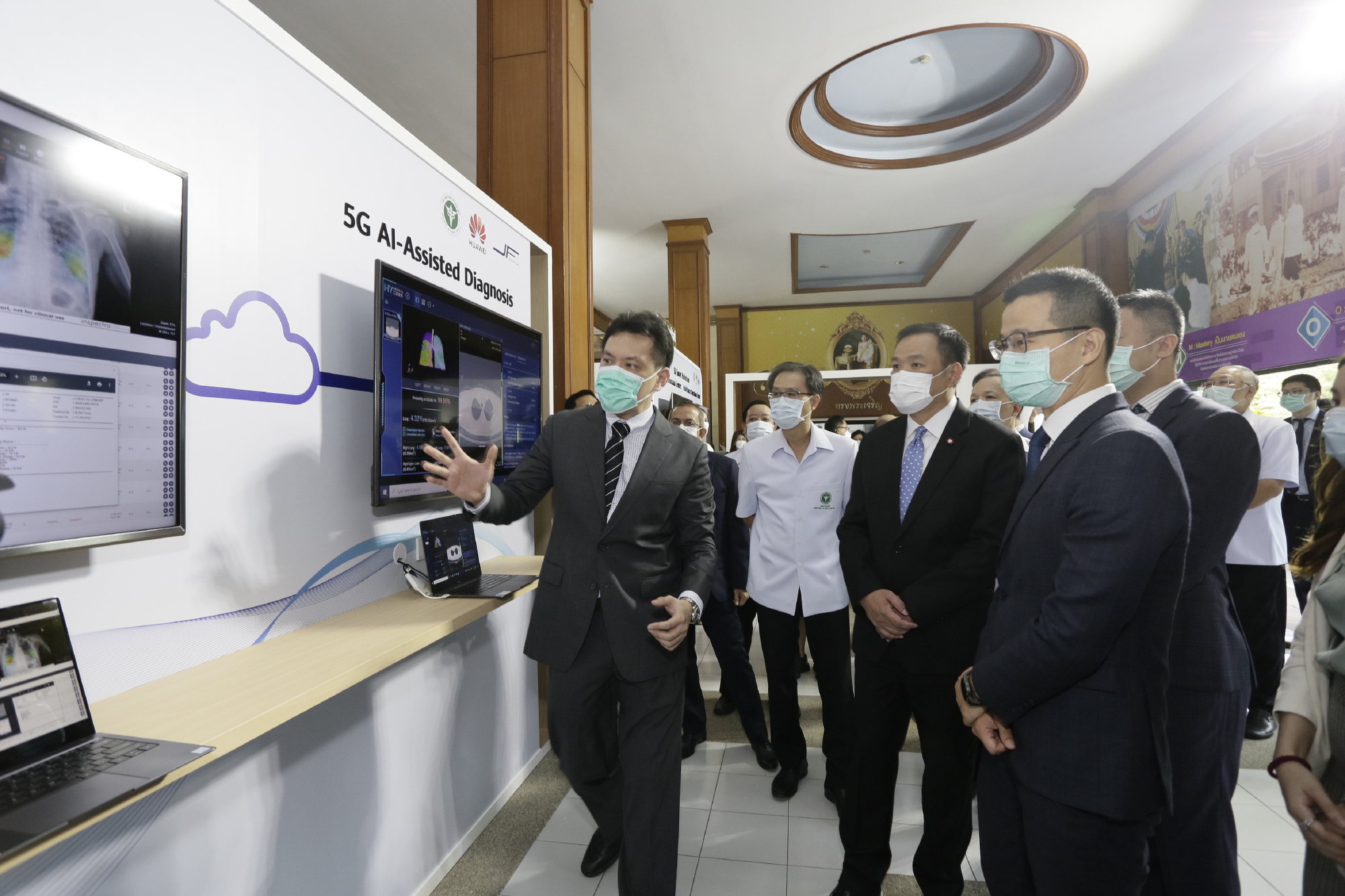
Huawei Technologies (Thailand) Co. Ltd. today signed the 5G Empowered Healthcare Towards a Digital Thailand Memorandum of Understanding (MoU) with the Department of Medical Services (DMS) under the Ministry of Public Health (MoPH), to establish a smart platform that will facilitate advanced medical treatment using state-of-the-art digital technology. The MoU signing ceremony was held at the DMS Office, presided by H.E. Mr Anutin Charnvirakul, Deputy Prime Minister and Minister of Public Health and Mr Abel Deng, CEO of Huawei Thailand.

In cooperation with the National Cancer Institute and Rajavithi Hospital, both under the DMS, this initiative aims to increase the efficiency of medical services and operations to improve the quality of healthcare services. During the event, a live demonstration was held to present 5G smart ambulance, 5G Telemedicine and Home Isolation solutions for remote diagnosis and treatment of patients.

Huawei and Department of Medical Services Sign MoU to Develop 5G Empowered Healthcare in the Digital EraHuawei and Department of Medical Services Sign MoU to Develop 5G Empowered Healthcare in the Digital Era

ADVERTISEMENT

During his honorable speech, H.E. Mr. Anutin Charnvirakul stressed on the Ministry’s mission to enhance Thailand’s healthcare system. Through the implementation of ICT technologies, many new services, including Telemedicine, patient queue management, patient information collection using Big Data, were made possible. He commented “We believe that, with advanced ICT equipment, our expertise, and the adoption of 5G technology, we can create equal access to quality and timely healthcare. During the ongoing pandemic where social distancing measures are adopted, the Department of Medical Services and Huawei will jointly explore the benefits of 5G in the healthcare field under this MoU. The joint projects will ensure better health services for Thai people. On this special occasion, I would like to thank Huawei for their support in providing the state-of-the-art equipment and their extensive industry knowledge. My gratitude also goes to the Department of Medical Services for their contribution that led to knowledge transfer in healthcare.”

Huawei and Department of Medical Services Sign MoU to Develop 5G Empowered Healthcare in the Digital EraHuawei and Department of Medical Services Sign MoU to Develop 5G Empowered Healthcare in the Digital Era

“This MoU is a milestone that will bring rapid advances to medical care in the country,” declared Dr. Somsak Akksilp, Director General of Department of Medical Services. “It is an honor for the DMS and our carefully selected hospitals to partner with Huawei for a cutting-edge initiative that will raise the level and standards of our hospital services and improve operational efficiency.”

Mr. Abel Deng emphasized that “Huawei is proud to team up with the DMS, the National Cancer Institute and Rajavithi Hospital for this pioneer program that will help empower Thailand’s healthcare system. This MoU will contribute to the MoPH’s vision to transform more smart hospitals in the near future.” He further added that “During this era of digitalization in the medical field, it is an honor to accompany Thailand as its healthcare sector connects the value of medical care with the patients’ needs. Introducing smart innovations and infrastructure will improve the work of healthcare and medical professionals and the quality of life of the people in urban and rural areas. Huawei continues to push forward digital transformation in Thailand, and bring digital technology to every person, home, and organization for a fully connected, intelligent Thailand.”

This MoU comes in response to the DMS’ mission to continuously improve its services and, with the support of Huawei, to introduce enhanced smart services that will apply integrated digital technologies using 5G infrastructure, artificial intelligence (AI), big data and cloud edge computing.

Huawei and Department of Medical Services Sign MoU to Develop 5G Empowered Healthcare in the Digital EraHuawei and Department of Medical Services Sign MoU to Develop 5G Empowered Healthcare in the Digital Era

Under this two-year agreement, Huawei will provide 5G technology to the two partner hospitals, enabling the immediate upgrade of their existing infrastructure. It will also provide digital knowledge transfer, training and project supervision to hospital staff to enable them to operate efficiently and sustainably, for the benefit of both medical staff and patients. These technologies will initially be used for telemedicine solutions such as remote monitoring and diagnosis that will help reduce the risk of transmitting infections between doctors and patients significantly. In addition, they will be used for emergency care services such as ambulance transportation, where useful information, such as real-time location, patients’ vital signs and video images are transmitted instantly, enabling rescue doctors to receive guidance for the best emergency care and the hospital team to prepare for treatment or surgery upon arrival.

Huawei remains committed to introducing digital technologies to create a strong, connected healthcare ecosystem that can make the experience better for patients, customers and medical staff, while improving efficiency and reducing costs.

Published : September 23, 2021

SCB Group to set up SCBX as “Mothership” to increase flexibility and competitiveness as it aims to become a regional financial technology group #SootinClaimon.Com

#SootinClaimon.Com : ขอบคุณแหล่งข้อมูล : หนังสือพิมพ์ The Nation.

https://www.nationthailand.com/business/40006548


The move will ready the Group for entry into the emerging competitive arena and propel the firm as a regional financial technology conglomerate by 2025, with the goal of building a 200 million strong customer-base with a mission of connecting to the ecosystem both at home and abroad. SCBX will remain under the supervision of the Bank of Thailand.

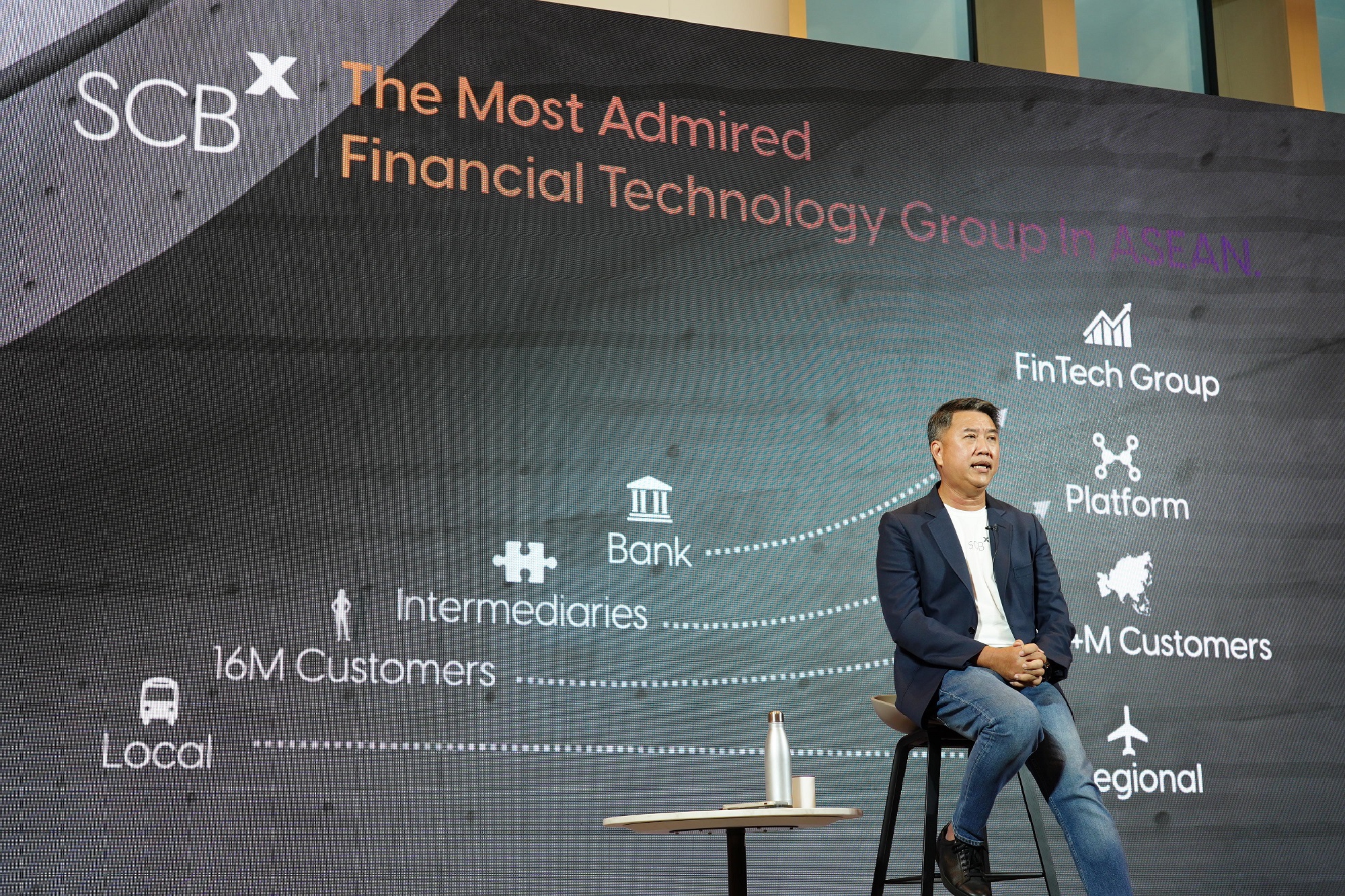
The SCB Group has announced its corporate vision for tackling the rapidly evolving global context by establishing SCBX as a mothership company to accelerate proactive expansion into financial business to the fullest extent. The move will ready the Group for entry into the emerging competitive arena and propel the firm as a regional financial technology conglomerate by 2025, with the goal of building a 200 million strong customer-base with a mission of connecting to the ecosystem both at home and abroad. SCBX will remain under the supervision of the Bank of Thailand.

In announcing the latest move, Siam Commercial Bank CEO and Chairman of the Executive Committee Arthid Nanthawithaya said, “In 2025, the arrival of decentralized finance technology, the expansion and penetration of global platforms into financial business, post-Covid 19 consumer behavior, and dramatic changes to regulations will reshape business models, forcing banks into playing roles as intermediaries and making traditional banking fees less and less important. Such conventional roles will no longer satisfy the emerging needs and expectations of consumers. Consumer reliance on banks will wane, which will unavoidably have a negative impact on the future value proposition for traditional banking investors.”

SCB Group to set up SCBX as "Mothership" to increase flexibility and competitiveness as it aims to become a regional financial technology groupSCB Group to set up SCBX as “Mothership” to increase flexibility and competitiveness as it aims to become a regional financial technology group


ADVERTISEMENT

“This disruption trend began six years ago and will become very apparent over the next three years, so SCB has rekindled its ambition and will continue to work hard to maximize its potential. Now is the most important time to ask the difficult questions of the future, to discover how SCB will transform itself in three years to create new value for its shareholders and consumers and grow further in the new world. SCB must no longer limit itself to traditional banking business, but rather take advantage of its financial strength to accelerate its aggressive expansion into other types of financial businesses that the market demands, build technological capabilities, and manage a large technology platform to keep pace with global players. It is crucial to quickly enter this new arena of competition in order to survive in the next 3-5 years,” added Arthid.

The strategy to strengthen the bank along with creating new business for the future will focus on embracing technology in conjunction with simplifying processes to meet the changing needs of customers as much as possible through every channel. The Bank’s focus is on creating maximum customer satisfaction.

SCB Group to set up SCBX as "Mothership" to increase flexibility and competitiveness as it aims to become a regional financial technology groupSCB Group to set up SCBX as “Mothership” to increase flexibility and competitiveness as it aims to become a regional financial technology group

SCB will therefore no longer be a bank in the original sense of the word, instead transforming into a financial technology group with a stronger banking business as part of the group. The group will expand into high-growth personal finance businesses where the Bank has yet to fill the gap. For each business, SCB will also partner with leading local and regional players in businesses that will be launched in the near future.

Apart from expanding into the personal finance business, SCB will need to leverage the group’s capabilities in building and managing large technology platforms, following its pilot Robinhood food delivery platform. The move aims to create competitiveness on par with global platforms and to upskill technology personnel, starting with the establishment of “SCB Tech X” and “Data X” with global partners to create in-house technology-based capabilities and platform scalability within a short time span.

In addition, SCB will expand into the digital asset business on a global scale via SCB 10X and SCB Securities (SCBS) to tackle the challenges of the financial world of the future by entering into venture capital arrangements and partnerships with global funds and developing digital asset businesses using new business models to create added value for the group in the long run.

“By 2025, SCB hopes to be able to create significant corporate value from new businesses beyond the fundamental profit and stability of its core banking business. This includes building a customer base reaching 200 million, expanding new businesses in foreign countries, and owning a large technology platform with a large number of users. After these three years, SCB will no longer be a bank. Instead, it will be a conglomerate with various financial businesses and technology platforms capable of meeting new consumer demands and able to compete with global competitors to create new value for shareholders, replacing banking businesses that may be impacted by change in a timely manner,” concluded Arthid.

Published : September 23, 2021

Gold price drops in opening trade #SootinClaimon.Com

#SootinClaimon.Com : ขอบคุณแหล่งข้อมูล : หนังสือพิมพ์ The Nation.

https://www.nationthailand.com/business/40006558


The price of gold dropped by THB50 in morning trade on Thursday.

AGold Traders Association report at 9.21am said the buying price of a gold bar was THB27,950 per baht weight and selling price THB28,050, while gold ornaments cost THB27,439.60 and THB28,550, respectively.

At close on Wednesday, the buying price of a gold bar was THB28,000 per baht weight and selling price THB28,100, while gold ornaments cost THB27,500 and THB28,600, respectively.

The spot gold price on Thursday morning was moving around US$1,763 (THB59,166) per ounce after Comex gold at close on Wednesday rose slightly by 60 cents to $1,778.80 per ounce ahead of results from a key Federal Reserve meeting. The New York gold market was closed for trading before the Fed committee announced it would taper its quantitative easing programme soon and raise the interest rate next year.

Related news:

ADVERTISEMENT

The Hong Kong gold price, meanwhile, rose by HK$80 to $16,400 (THB70,688) per tael, the Chinese Gold and Silver Exchange Society reported.

Published : September 23, 2021

Baht weakens in opening trade #SootinClaimon.Com

#SootinClaimon.Com : ขอบคุณแหล่งข้อมูล : หนังสือพิมพ์ The Nation.

https://www.nationthailand.com/business/40006550


The baht opened at 33.46 to the US dollar on Thursday, weakening from Wednesday’s closing rate of 33.44.

The Thai currency is likely to move between 33.40 and 33.55 during the day, Krungthai Bank market strategist Poon Panichpibool predicted.

Poon said the baht was testing the key resistance level of 33.50 to the dollar due to China’s Evergrande crisis, which caused the dollar to strengthen and the yuan to weaken.

Meanwhile, foreign investors are offloading their Thai assets, but Poon expected the sales to be limited unless an Evergrande default hammers the Chinese economy, which might cause foreign investors to sell their emerging market assets again.

Poon said the baht could weaken from 33.80 to 33.85 to the dollar if it dropped past the resistance level. However, the Thai currency might strengthen from 32.70 to 32.80 if it does not weaken past the resistance level.

Related News

ADVERTISEMENT

Baht might weaken by risk-off market pressure: market strategist

Weakening trend continues for baht

Baht level linked to signal from Fed, gold trend

Investors are ready to take more risks despite uncertainties after a key US Federal Reserve meeting produced the expected results. The Fed stuck with its policy interest rate of 0.00 to 0.25 per cent until an economic recovery.

The Fed also signalled that its quantitative easing (QE) programme may decrease soon and it might stop buying assets in the middle of next year.

Chairman Jerome Powell said the QE programme might even decrease in November, but pointed to an interest rate increase after a QE decrease.

The Fed’s dot plot revealed that some central bank officials support an increase in the interest rate in 2022, while most officials back a rise in 2023 and 2024, which is more than the market expected.

Poon added that investors are not fully open to taking risks because they are awaiting a solution to Evergrande’s massive default.

Published : September 23, 2021

SET expected to advance today on Fed QE, rate decisions #SootinClaimon.Com

#SootinClaimon.Com : ขอบคุณแหล่งข้อมูล : หนังสือพิมพ์ The Nation.

https://www.nationthailand.com/business/40006549


The Stock Exchange of Thailand (SET) Index rose by 10.59 points or 0.65 per cent to 1,630.18 on Thursday morning, witnessing a high of 1,637.65 and a low of 1,628.81 in opening trade.

Krungsri Securities expected the day’s index to rise to between 1,625 and 1,630 points as neighbouring stock markets moved up in response to the US Federal Reserve’s move to taper its quantitative easing programme soon and raise the interest rate next year.

It added that the index also gained positive sentiment from Siam Commercial Bank’s move to restructure its business and establish SCB X Pcl in order to make a foray into the financial technology business.

“However, investors should beware of foreign fund outflows in response to the weakening baht,” Krungsri Securities said.

It recommended purchasing the following companies’ shares as an investment strategy:

ADVERTISEMENT

▪︎ SCB, Advanc and True, which gained specific positive sentiment.

▪︎ PTT, PTTEP, Top, PTTGC, SPRC and Banpu, which benefit from rising oil and coal prices.

▪︎ Hana, KCE, TU, CPF, GFPT, Asian, EPG, NER, Sun and APure, which benefit from a weakening baht.

Related stories:

The SET Index closed at 1,619.59 on Wednesday, up 4.73 points or 0.29 per cent. Transactions totalled THB79.02 billion with an index high of 1,623.86 and a low of 1,611.76.

Published : September 23, 2021

ADB trims Thailand’s 2021 GDP estimation to 0.8 from 3% amid Covid-19 concerns #SootinClaimon.Com

#SootinClaimon.Com : ขอบคุณแหล่งข้อมูล : หนังสือพิมพ์ The Nation.

https://www.nationthailand.com/business/40006547


The Asian Development Bank (ADB) has lowered Thailand’s 2021 GDP estimation to 0.8 per cent from its previous estimation of 3 per cent in April amid continuing concern over the Covid-19 pandemic across Asia.

Thailand’s growth outlook for 2022 was also lowered from 4.5 to 3.9 per cent, according to the ADB’s updated Asian Development Outlook 2021, released on Wednesday.

The ADB has lowered its 2021 economic growth outlook for all of developing Asia.

ADB forecast growth of 7.1 per cent among Asia’s developing nations this year. That compares with a projection of 7.3 per cent in April.

The growth outlook for 2022 is however raised to 5.4 from 5.3 per cent.

New Covid-19 variants, renewed local outbreaks, the reinstatement of various levels of restrictions and lockdowns, and slow and uneven vaccine rollouts are weighing down the region’s prospects, it said.

Related Stories

Thai economy to grow 4% next year, 1 point lower than Asean average: ADB

Thailand seeks help from UN, ADB to fight drug problem

China’s GDP forecast to hover above 8 percent

The report also said Thailand’s inflation rate would stay at 1.1 per cent this year and 1 per cent next year due to overall sluggish demand.

ADVERTISEMENT

The ADB said the latest Covid-19 wave threatens to undermine Thailand’s economic recovery this year and the next.

However, strong growth in merchandise exports and an enabling policy environment could partly offset the large negative impact of Covid-19 on Thai growth.

“Even so, the risks to economic outlook are tilted downward on the current wave of the outbreak adding to concerns over the efficacy of vaccines and delays in the country’s vaccination programme,” the ADB report added.

Published : September 23, 2021

U.S. Fed signals tapering could start soon despite Delta variant uncertainty #SootinClaimon.Com

#SootinClaimon.Com : ขอบคุณแหล่งข้อมูล : หนังสือพิมพ์ The Nation.

https://www.nationthailand.com/business/40006534


“The Committee would be prepared to adjust the stance of monetary policy as appropriate if risks emerge that could impede the attainment of the Committees goals,” the Fed said in a statement.

The U.S. Federal Reserve on Wednesday kept its benchmark interest rate unchanged at the record-low level of near zero, while signaling that the central bank may begin tapering asset purchases soon despite the Delta variant increasing economic uncertainty.

The Fed has pledged to continue its asset purchase program at least at the current pace of 120 billion U.S. dollars per month until “substantial further progress” has been made on employment and inflation since last December.

“Since then, the economy has made progress toward these goals. If progress continues broadly as expected, the Committee judges that a moderation in the pace of asset purchases may soon be warranted,” the Federal Open Market Committee (FOMC), the Fed’s policy-making committee, said in a statement after a two-day meeting.

ADVERTISEMENT

“The Committee would be prepared to adjust the stance of monetary policy as appropriate if risks emerge that could impede the attainment of the Committee’s goals,” the statement said.

At a virtual press conference Wednesday afternoon, Fed Chair Jerome Powell said that the sectors most adversely affected by the pandemic improved in recent months, but the rise in COVID-19 cases slowed recovery.

Related Stories

“The Delta variant led to significant increases in COVID-19 cases resulting in significant hardship and loss and slowing the economic recovery. Continued progress on vaccinations would help contain the virus and support a return to more normal economic conditions,” he said.

U.S. Federal Reserve Chairman Jerome Powell testifies at a hearing before the House Select Subcommittee on the Coronavirus Crisis on the Federal ReserveU.S. Federal Reserve Chairman Jerome Powell testifies at a hearing before the House Select Subcommittee on the Coronavirus Crisis on the Federal Reserve

Powell also said that Fed officials downgraded their forecasts for U.S. economic growth this year compared with three months ago, “partly reflecting the effect of the virus”.

The U.S. economy is expected to expand at 5.9 percent this year, lower than 7 percent estimated in June, according to the median forecast of the Fed’s latest summary of economic projections released Wednesday.

The median estimate of inflation at the end of this year, measured by annual growth in the personal consumption expenditures (PCE) index, rose to 4.2 percent from 3.4 percent in June, well above the central bank’s target of 2 percent.

“For inflation, we appear to have achieved more than significant progress, substantial further progress,” Powell said, adding the substantial further progress test for employment is “all but met”.

“Once we met those two tests … that could come as soon as the next meeting, the Committee will consider that test and look at the broader environment at that time and make a decision whether to taper,” he said.

“This sets the stage for the Fed to formally announce tapering plans in November and the first reduction to occur in December, which is our baseline forecast assumption,” Ryan Sweet, a senior director at Moody’s Analytics, said Wednesday in an analysis.

Jay H. Bryson, chief economist at Wells Fargo Securities, believed that the September labor market report, which is scheduled for release on Oct. 8, will be crucial in determining whether the FOMC will announce a tapering decision at its next meeting in November.

“If payrolls disappoint again, then the FOMC may decide to take a pass at the November meeting and wait until its last meeting of the year on December 15 to see if the data improve by then,” Bryson said.

“While no decisions made, participants generally view that so long as the recovery remains on track, a gradual tapering process that concludes around the middle of next year is likely to be appropriate,” Powell added.

Published : September 23, 2021