Stocks set another record as trading range narrows
U.S. stocks set another record high even as the S&P 500 Index settles into the narrowest trading range since before the Covid pandemic roiled global financial markets. The dollar strengthened and Treasury yields were mostly higher.
Health care and technology shares helped push the S&P to a closing high for a third consecutive session and for the 47th time this year. The benchmark has almost doubled in value from the pandemic lows reached in March last year, though the rate of change is slowing. It has swung an average 0.5% each day in August, and is poised for the calmest month since November 2019. Micron Technology led chipmakers lower amid concern over the market for memory chips.
“Equities become the proverbial term — there is no alternative — and that’s ultimately a money-flow story,” David Kostin, chief equity strategist at Goldman Sachs, said during a Bloomberg TV interview. “From a valuation perspective, equities are reasonably valued in the context of interest rates.”
Treasuries were mostly lower. An earlier report showed applications for U.S. state unemployment benefits dropped for the third week in a row.
“This is yet another data point indicating continued labor market recovery,” Anu Gaggar, global investment strategist at Commonwealth Financial Network, said of Thursday’s jobless claim data.
Investors are continuing to evaluate the implications of a likely Federal Reserve tapering announcement in the months ahead, the spread of the delta virus variant and China’s clampdown. Global stocks are up about 90% since the pandemic nadir in March 2020, spurring questions about how much further they can climb.
ADVERTISEMENTx
These are the main moves in markets:
Stocks
–The S&P 500 rose 0.3% as of 4 p.m. New York time
–The Nasdaq 100 rose 0.4%
–The Dow Jones Industrial Average was little changed
ADVERTISEMENT
–The MSCI World index was little changed
Currencies
–The Bloomberg Dollar Spot Index rose 0.1%
–The euro was little changed at $1.1734
–The British pound fell 0.5% to $1.3805
ADVERTISEMENT
–The Japanese yen was little changed at 110.42 per dollar
Bonds
–The yield on 10-year Treasuries advanced three basis points to 1.36%
–Germany’s 10-year yield was little changed at -0.46%
–Britain’s 10-year yield advanced three basis points to 0.60%
Commodities
–West Texas Intermediate crude fell 0.5% to $68.91 a barrel
–Gold futures were little changed
Published : August 13, 2021
By : Syndication Washington Post, Bloomberg · Lu Wang, Vildana Hajric
Markets wrap: Stocks, bonds rise as taper debate take spotlight
U.S. stocks rose to record highs and bonds rallied after a report showing inflation moderated reduced concern about the urgency for the easing of the stimulus that helped the economy recover from the Covid pandemic.
The S&P 500 and Dow Jones Industrial Average indexes climbed to fresh records after data showed CPI rose 0.5% in July after rising 0.9% in June. The S&P has almost doubled from its low reached in March last year. The tech-heavy Nasdaq 100 declined as investors rotated to cyclical shares from traditional growth favorites such as Amazon.com. Treasuries extended gains after the government’s auction of 10-year notes was met with strong demand.
Investor had focused on U.S. price data as Federal Reserve Chair Jerome Powell and other officials discuss the prospects of unwinding stimulus. Kansas City Fed President Esther George said the central bank needs to move ahead with reducing monetary stimulus, citing expectations for continued labor-market gains.
“The Fed should find comfort in this report, but the Fed’s taper announcement in September is not a done deal,” said Anastasia Amoroso, iCapital Network’s chief investment strategist. “Policy makers should be focused on how the delta variant is impacting leisure and hospitality sector. Possibly we’ll see lower activity in August due Covid-19.”
While the CPI figures were in line with estimates, it could take several more months of data to settle the debate over whether inflation proves transitory or not. Year-over-year CPI rose 5.4%, compared with an estimate of 5.3%.
“Today’s softer-than-expected readings in the CPI core seem to validate the views of Powell, Williams and some of the other more moderate Fed members who are focusing on a slower path to normalization,” said Giorgio Caputo, senior portfolio manager at J O Hambro Capital Management.
Elsewhere, crude oil rose as the dollar weakened after earlier falling in the wake of a report that the U.S. will urge OPEC to revive production more quickly.
The Stoxx Europe 600 Index edged higher amid strong earnings from the likes of ABN Amro Bank NV and Stop & Shop owner Royal Ahold Delhaize NV.
Bitcoin rose back above $46,000 even as the Senate passed an infrastructure bill containing broad oversight of virtual currencies. Palm oil posted its biggest daily advance since 2009 after a report showed stockpiles contracting.
Here are some key events to watch out for this week:
– OPEC Monthly Oil Market Report due Thursday
ADVERTISEMENTx
These are the main moves in markets:
– – –
– The S&P 500 rose 0.2% as of 4:01 p.m. New York time
– The Nasdaq 100 fell 0.2%
– The Dow Jones Industrial Average rose 0.6%
ADVERTISEMENT
– The MSCI World index rose 0.3%
– – –
– The Bloomberg Dollar Spot Index fell 0.2%
– The euro rose 0.2% to $1.1742
– The British pound rose 0.2% to $1.3870
ADVERTISEMENT
– The Japanese yen rose 0.1% to 110.41 per dollar
– – –
– The yield on 10-year Treasuries declined two basis points to 1.33%
– Germany’s 10-year yield was little changed at -0.46%
– Britain’s 10-year yield declined two basis points to 0.57%
– – –
– West Texas Intermediate crude rose 1.5% to $69.33 a barrel
– Gold futures rose 1.3% to $1,754.20 an ounce
Published : August 12, 2021
By : Syndication Washington Post, Bloomberg · Elaine Chen, Natalia Kniazhevich
Prices rise 5.4% in July over last year as the economy claws back from pandemic depths
WASHINGTON – Prices rose 5.4% in July compared with a year ago, as policymakers at the Federal Reserve and the Biden administration grapple with how long – and how high – inflation could climb as the economy rebounds.
Data released by the Bureau of Labor Statistics on Wednesday showed prices rose 0.5% in July compared with June, a slight easing of the monthly pace of inflation.
For months, the Fed and White House have said inflation will keep climbing as consumer demand surges while supply chains struggle to catch up. Their expectation is that as supply backlogs have time to clear, inflation will settle back down closer to the Fed’s 2% annual target.
But that message is increasingly difficult to grasp for households facing rising grocery bills, rent or expensive airline tickets. The longer it takes for supply chains to clear up or for pandemic-battered sectors to reboot, the tougher it may be for consumers to swallow higher prices.
As more people hit the road during summertime, gas prices are on an upward climb, the inflation report showed. On Wednesday, the White House called on global oil producers to boost production.
The cost of many grocery items – including meats, poultry, eggs and dairy – also ticked higher again in July, according to the report. Groceries have been trending higher for well over a year, with the Bureau of Labor Statistics showing a 2.6% rise in the “food at home” category compared with last year.
For the Fed and White House, price challenges are compounded by the fact that inflation can be driven by what people expect it will be in the future. For example, if businesses shift their plans for investment or consumers change their spending habits because they think prices for construction materials or hotel rooms will continue to soar, that behavior could drive prices up, too.
Michael Strain, director of economic policy studies at the right-leaning American Enterprise Institute, said it matters to households that “we’re on month five of this, and we might be in for another year of it.”
“I think the Fed could be less dismissive of the concern,” Strain said. “The Fed may be absolutely right to keep its zero interest rate policy. But I think the Fed has been too blasé, too serene, too dismissive of this potential risk.”
ADVERTISEMENTx
Meanwhile, Republicans have long argued that inflation is an urgent concern and that the Fed will be too late once it decides prices have reached dangerous levels. Conservatives were also quick to chastise Senate Democrats for adopting a $3.5 trillion budget early Wednesday morning, saying such massive spending will heat up the economy even more.
For now, survey data isn’t suggesting baked-in expectations for widespread, sustained inflation over the long term. But the Fed is on alert for any signs suggesting otherwise.
“All the evidence is that it’s not happening,” Fed Chair Jerome Powell said last month. “But, nonetheless, we have to watch this very carefully. . . . Price stability for us means inflation averaging 2% over time. And so we’ve got to be very careful about that.”
July’s top-line inflation figure of 5.4% was the same as the June reading. Economists and policymakers have been looking for any clues that suggest the breakneck pace of price growth is beginning to cool down. But they are also hesitant to jump to conclusions too quickly, especially since there’s no playbook for this recovery.
“One month does not make a trend . . . and we know supply constraints persist in various sectors,” the White House’s Council of Economic Advisers tweeted Wednesday.
ADVERTISEMENT
A look at used cars illustrates some inflation dynamics at play. Demand for cars is high, but supply has been hampered by ongoing chip shortages. The consequence of that mismatch is hard to miss: Compared with last year, prices for used cars and trucks have soared 41.7%.
But a look at the month-to-month data suggests prices are not climbing as fast as they had been for much of this year. For example, used car prices jumped 10.5% in June compared with May. But in July, they grew only 0.2%, compared with June.
Similarly, the cost of hotels and motels are still high as travelers rebook vacations. But the rate of price growth eased a bit in July compared with June. In June, prices rose 7.9% compared with the month before. In July, they rose 6.8% over the same period.
Still, economists and policymakers are staying alert for any signs of sustained price increases that pulse through the entire economy. For example, rising rents and soaring home prices have concerned some economists who are unsure whether the cost of shelter will fall back down. (Rent rose 0.2% in July, mirroring figures from the month before.)
“We’re in a very turbulent space in terms of pricing,” Atlanta Federal Reserve President Raphael Bostic told reporters Monday. “There are lots of moving parts, and I’m monitoring that closely.”
ADVERTISEMENT
As Americans hit the road despite the delta variant’s looming threat, the increased demand for gasoline has driven gas prices higher. The national average for a gallon of gas was $3.19 on Wednesday, according to AAA, a new high for 2021. That is up more than a dollar from this time in 2020 and up four cents from last month.
“We continue to see very robust gasoline demand for the peak summer driving season,” Jeanette McGee, a AAA spokeswoman, said in a statement Wednesday. “The latest demand rate was 2% higher than the same time period in 2019, while gasoline stocks are about 1% below.”
Rising gas prices spurred the White House to call on global oil producers to boost production. The Organization of the Petroleum Exporting Countries (OPEC) and its allies have been navigating production cuts since the early days of the pandemic flatted oil demand.
Tyson Foods, one of the nation’s largest meat producers, has hiked prices for its restaurant customers amid strong demand, as rising grain, freight, packaging and labor prices dragged on its bottom line, chief executive Donnie King told reporters Monday on the company’s earnings call.
Tyson’s retail orders have risen 30% compared with pre-covid levels, King said, but the company has dealt with turnover and struggled to fill open positions. Meanwhile, “we have seen accelerating and unprecedented inflation,” King said. “So what do you do about that?”
Last quarter, Tyson increased its average price for pork nearly 40%. It raised chicken prices more than 15% and beef prices nearly 12%. This week, it lifted its full-year revenue forecast due to the strong demand for its products. “Costs are hitting us faster than we can get pricing at this point,” he told reporters.
Customers will start seeing the difference at supermarkets Sept. 5, when retail price hikes kick in. And more price increases are planned, King said.
When it comes to thinking about prices, leaders at the Fed are tasked with keeping prices stable while also keeping employment high. In the past, the Fed would rush to clamp down on inflation, including by raising interest rates.
But now, even though inflation is climbing faster than expected, the Fed says there is still a long way to go in the labor market, which remains about 5.7 million jobs short of where it was before the pandemic hit in March 2020.
The Fed needs to see significant progress in the labor market before it starts scaling back its support for the markets, including $120 billion a month in bond purchases.
Fed leaders have made clear that they will not rush to “taper” asset purchases, or eventually raise interest rates, until the economy has made significant progress. When it comes to the labor market, economists celebrated the 943,000 jobs added in July as hiring gained speed and employers raised wages to bring people back on the payrolls.
If the economy keeps gaining momentum, economists think the Fed could announce a plan to begin peeling back asset purchases later this year or in early 2022. The Fed has also made clear it will give plenty of warning before it starts to “taper,” suggesting an announcement, let alone action, is at least a few weeks or months away.
Published : August 12, 2021
By : The Washington Post · Rachel Siegel, Taylor Telford
Malaysia may import more Thai rice this year now that it is cheaper
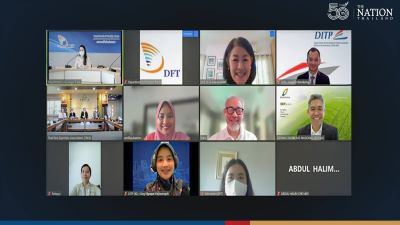
A drop in prices and a bigger, better harvest is expected to boost the export of Thai rice to Malaysia, the Department of Foreign Trade said this week.
Keerati Rushchano, the department’s director-general, said his agency along with the Thai Rice Exporters Association and Office of Overseas Trade Promotion in Kuala Lumpur held a virtual meeting with Malaysia’s rice import regulator, Bernas (Padiberas Nasional Berhad), on Monday.
The agencies told Bernas that Thailand’s rice harvest this year is expected to be bountiful thanks to good rainfall as well as an increase in the workforce because more people have returned to their villages due to the outbreak.
This boost in production, coupled with an expected depreciation in the baht, should bring the price of Thai rice close to that of competitors like India and Vietnam.
Meanwhile, Bernas conceded that Malaysia does not produce enough rice for local consumption and normally must import about 900,000 tonnes every year. This year, Malaysia is expected to import 1.08 million tonnes of rice due to a poor local harvest.
Thai rice has always been popular with Malaysian consumers, but the price increase pushed Bernas to opt for cheaper but inferior versions from India, Pakistan and Vietnam.
Bernas, however, believes that in the second half of this year, demand for Thai rice will rise because it has become more affordable. Apart from it becoming cheaper, Malaysian consumers also prefer Thai rice over other strains as indicated by the increase in orders over the past couple of months.
From January 1 to July 29, Thailand has exported 2.74 million tonnes of rice worth US$1.67 billion, though the volume and value of the shipment have dropped 17.07 per cent and 24.84 per cent respectively compared to last year.
Reserve your spot at the Dot Property 48 Hour Mega Sale, Thailand’s biggest online property sales event
The Dot Property 48 Hour Mega Sale sees discounts of up to 40 percent placed on condominium units, villas, houses and other real estate in Bangkok, Phuket, Samui, Hua Hin and Pattaya.
Thailand’s biggest online property sales event returns in 2021 with more properties and bigger discounts. Registration is now open for the Dot Property 48 Hour Mega Sale and property seekers can secure their spot at the two-day event scheduled for August 27th and 28th.
The Dot Property 48 Hour Mega Sale sees discounts of up to 40 percent placed on condominium units, villas, houses and other real estate in Bangkok, Phuket, Samui, Hua Hin and Pattaya. These never-before-seen prices are only made available during Thailand’s biggest online property sales event.
Registering in advance for the Dot Property 48 Hour Mega Sale comes with several benefits. For starters, those who sign up today are eligible to participate in an exclusive sneak peek where you can view select discounts before the start of the event.
ADVERTISEMENTx
Reserve your spot at the Dot Property 48 Hour Mega Sale, Thailand’s biggest online property sales event
Secondly, advance registrants can enter the Dot Property 48 Hour Mega Sale directly on August 27. That means you can be among the first to explore deals and message developers. This is the best way to secure the property you want during the sale because once a unit has been sold, it’s gone for good.
Whether you are searching for a place to call home, after a vacation property or want a strong investment, it will be available at Thailand’s biggest online property sales event. The Dot Property 48 Hour Mega Sale features an exclusive collection of the Kingdom’s best real estate at the lowest prices ever seen.
“Last year’s event saw buyers from Thailand and overseas secure their dream home and helped set a Dot Property Group single-day record for website visitors. The sale promises to be even bigger in 2021 with greater synergy between Dot Property Group’s five leading property portals, including Thailand-Property, Dot Property and Hipflat, ensuring increased visibility and attracting even more property buyers” said Mr.James Claassen, General Manager of Dot Property Group
Due to the heavy traffic expected during the Dot Property 48 Hour Mega Sale, we’re encouraging everyone to register ahead of time. Not only will this provide you with direct access to the best deals as soon as the event begins, but you’ll also be able to take part in an exclusive preview where you can see some of the discounts on offer. Don’t wait, register today!
If you’re a developer interested in joining the Dot Property 48 Hour Mega Sale, contact us at: event@dotpropertygroup.com
Carabao Group donates Woody C+ Lock to officials in Bang Pakong District during height of COVID-19 pandemic
Carabao Group PCL wishes to be part of the support for the officials who are at the frontline of this trying crisis, offering heartfelt thanks and goodwill through the donation of Woody C+ Lock drinks to help boost the immune system of the officials and the medical personnel.
Mr.Kamoldist Smuthkochorn, Chief Operations Officer at Carabao Group PLC and Ms. Kanokkorn Jaichuen, Public Relations Manager of Carabao Tawandang, donated Woody C+ Lock Lemon, Woody C+ Lock Orange and Woody C+ Lock Mixed Berry – beverages that contain 200% vitamin C – to healthcare officials and personnel in Bang Pakong District. The recipients of Woody C+ Lock products included Bang Pakong Hospital (received by Dr. Suthon Khoonraksa, Director), Phimpha Tambon Health Promotion Hospital (received by Ms. Porntip Mingcharoen, Director) and Chachoengsao Provincial Social Security Office (received by Mr. Hattaripim Namongkolboonwong, General Administration Officer) to show gratitude and support, as well as boost the immune system of the officials during the pandemic.
ADVERTISEMENTx
Carabao Group donates Woody C+ Lock to officials in Bang Pakong District during height of COVID-19 pandemic
As COVID-19 positive cases continue to rise, the situation continues to have devasting effects all over Thailand, prompting related organizations and officials to sacrifice their personal safety and work tirelessly to help relieve the overwhelming suffering of many of those affected by the novel virus. Carabao Group PCL wishes to be part of the support for the officials who are at the frontline of this trying crisis, offering heartfelt thanks and goodwill through the donation of Woody C+ Lock drinks to help boost the immune system of the officials and the medical personnel.
We truly hope that the willpower of all Thai citizens will get us through this difficult time together.
dtac partners with EEF to connect 2,000 disadvantaged schoolchildren
dtac announced it is providing SIMs with unlimited internet connectivity to 2,000 children in Bangkok
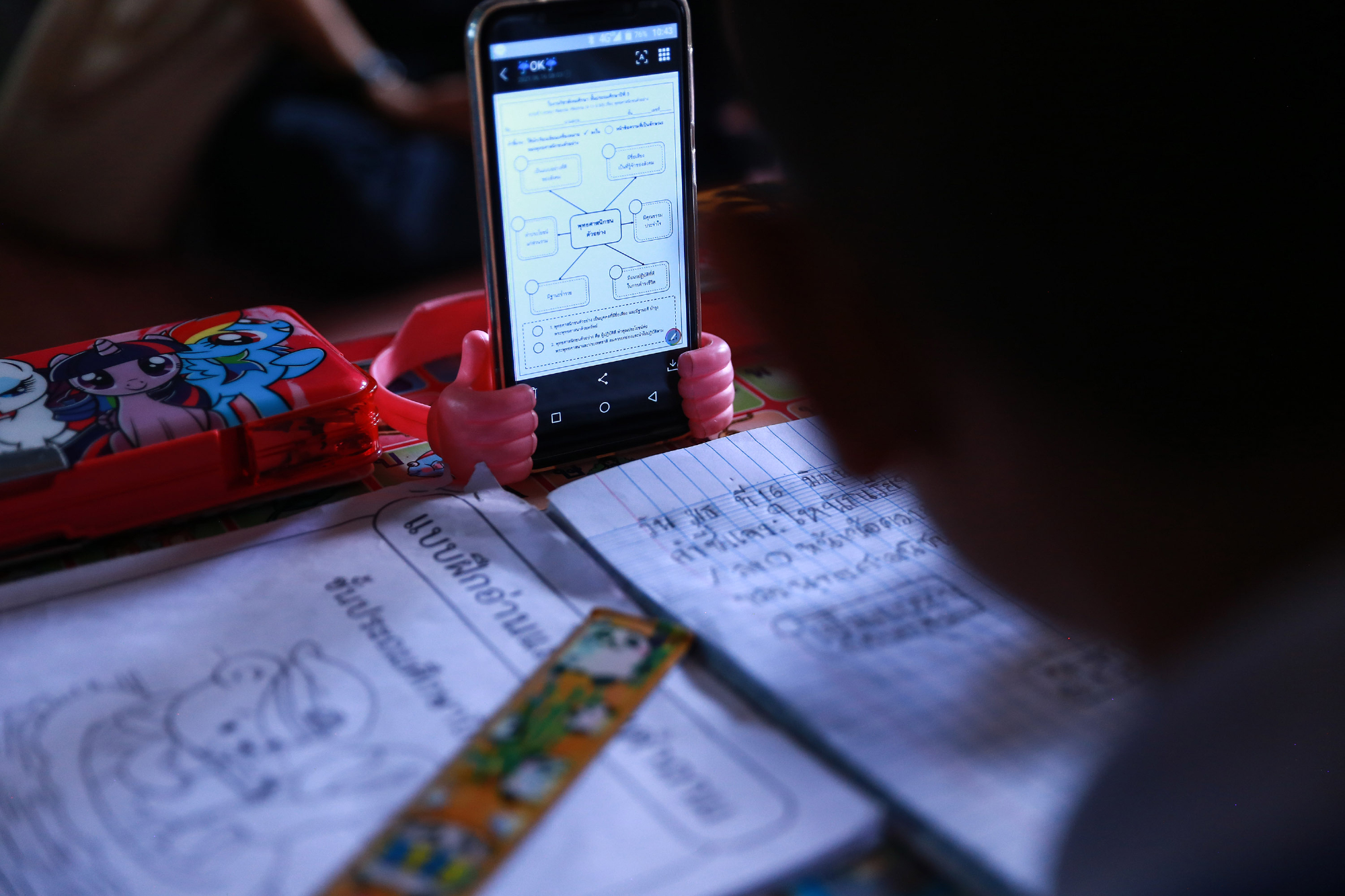
Today, dtac announced it is providing SIMs with unlimited internet connectivity to 2,000 children in Bangkok under the supervision of Thailand’s Equitable Education Fund (EEF). This will allow these schoolchildren to continue studying despite the Covid-19 lockdown.
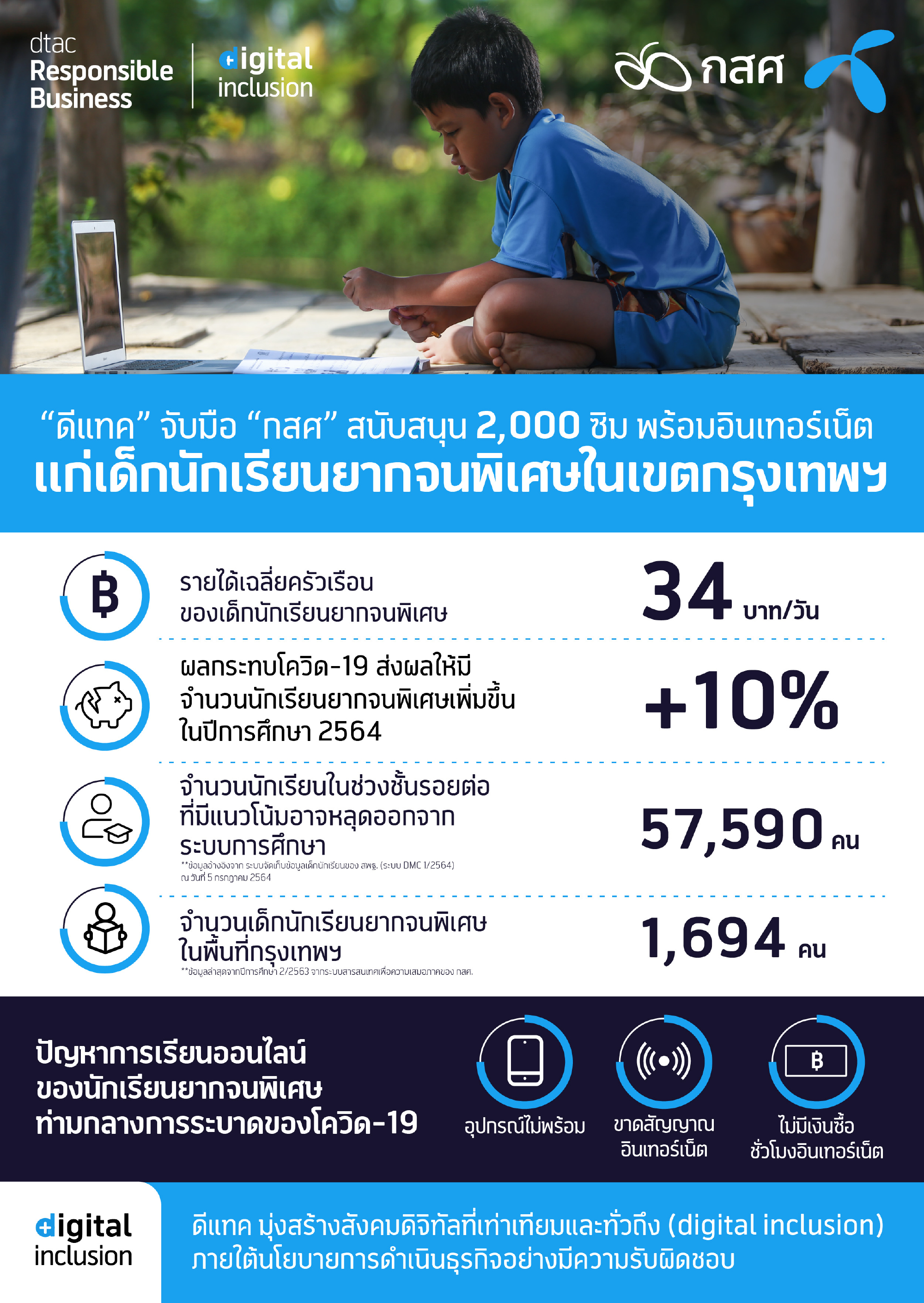
Dr. Kraiyos Patrawart, Deputy Managing Director of the Equitable Education Fund (EEF), said, “The COVID-19 pandemic has impacted both public health and the economy. Many families found themselves with more dependents and many adults have become jobless. EEF found that the average household income of children under EEF supervision dropped by 11 percent in the academic year 2019-2020, down to 1,021 baht per month or only 34 baht a day. The fresh wave of Covid-19 has led to an increase of 10 percent in acute poverty.”
Mr. Sharad Mehrotra, Chief Executive Officer at Total Access Communications Plc or dtac, said, “With Thailand now under another lockdown and all schools closed, we must find ways for children to study remotely. Unfortunately, online learning can be a struggle for children who cannot afford a fast and reliable connection. Thus, dtac has several initiatives to support uninterrupted connectivity for students. And the 2,000 SIMs dtac distributed to disadvantaged schoolchildren are one more way to ensure unlimited connectivity for those who need it most.”
ADVERTISEMENTx
dtac partners with EEF to connect 2,000 disadvantaged schoolchildren
The SIMs distributed by dtac come with unlimited internet at 4 Mbps, which is sufficient for videoconferencing and any other educational needs the children may have.
“dtac is committed to creating a digitally inclusive society under the responsible business strategy. We’re delighted to partner with EEF to narrow the gap of educational inequality. And we look forward to seeing disadvantaged children connected once more with their teachers and with online learning tools,” Mr. Mehrotra added.
According to its survey, EEF categorizes 151,000 children as the poorest students in Thailand. The average monthly income of their family members is between 40-300 US dollars (about 1,300 to 9,900 baht). Bangkok is one out of 10 provinces with the highest number of poor children.
EEF also found that over 270,000 children face learning difficulties without access to the internet in the provinces most affected by Covid-19. Thus, dtac and EEF announced they would work together towards a long-term online learning solution to further these children’s digital inclusion.
Mr. Kraiyos said, “Connectivity plays a critical role in keeping schoolchildren connected to their educators, reducing inequality and enabling distance learning. Access to the internet neutralizes the impact of lockdowns and increases access to inclusive education for children. Therefore, internet connectivity is essential social welfare on top of food and health security. As the government cannot do this alone, the private sector can help bridge this gap and reduce disparities among children. We are also supporting these 2,000 children with the StartDee application that will help them gain access to online learning under the project ‘Free School-in-a-Box.'”
dtac partners with EEF to connect 2,000 disadvantaged schoolchildren
Previously, dtac launched a number of initiatives to support distance learning, supporting connectivity for schoolchildren and youth to alleviate the additional costs caused by Covid-19. For example, the Happy Work & Learn package offers unlimited data allowance with a maximum speed of 10 Mbps for productivity apps, such as Microsoft 365, Zoom and WebEx.
In addition, dtac is working with the office of the National Broadcasting and Telecommunications Commission (NBTC) to provide a free-of-charge package of online learning, allowing schoolchildren unlimited use of productivity apps – MS Teams, Zoom, Google Meet, Web-Ex, and Line Chat – with a maximum speed of 2 GB monthly for two months. Schoolchildren can apply to join the program through their school. The program will commence from August 15 onwards.
B.Grimm Power – Energy China Consortium completes work at world’s largest hydro-floating solar hybrid project at Sirindhorn Dam
EGAT ready to commence commercial operation this October
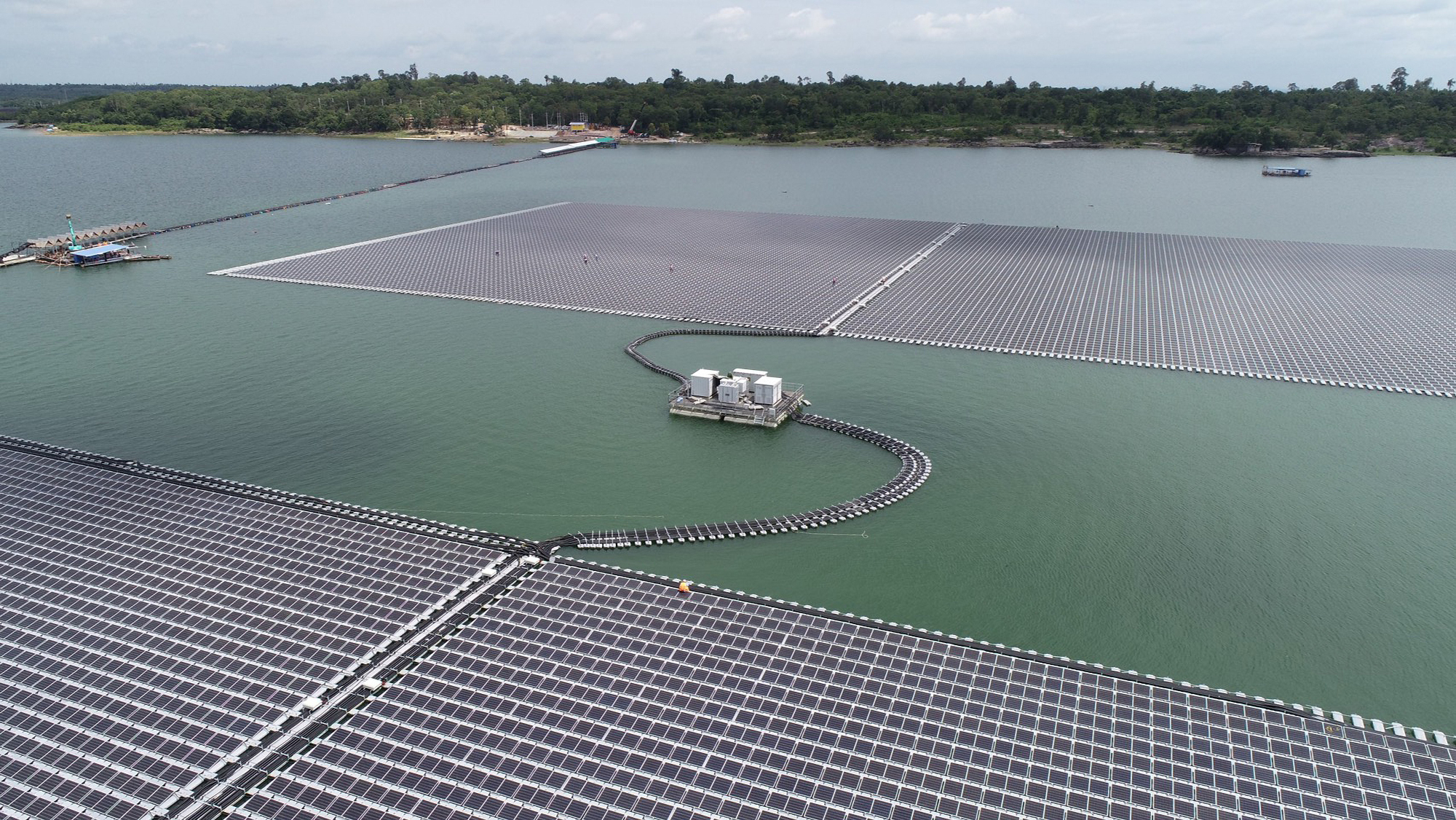
The B.Grimm Power-Energy China Consortium has successfully completed works at the world’s largest hydro-floating solar hybrid project at Sirindhorn Dam for the Electricity Generating Authority of Thailand (EGAT).
The completion has allowed the first synchronisation of the 45-megawatt floating solar farm, which operates in tandem with the 45-MW hydro powerhouse at Sirindhorn Dam, with EGAT’s grids on 30 July 2021. That kicked off the trial process that is paving the way for commercial operation in October this year as scheduled by the state power utility.
As the contractor of EGAT, the consortium of B.Grimm Power Public Company Limited (BGRIM) and China Energy Group Shanxi Electric Power Engineering Co Ltd (Energy China), has accomplished its tasks for the Sirindhorn Hydro-Floating Solar Hybrid Project (SHFSHP) as per the 842-million-baht contract signed on 20 January 2020.
ADVERTISEMENTx
B.Grimm Power – Energy China Consortium completes work at world’s largest hydro-floating solar hybrid project at Sirindhorn Dam
Those works include the installation of seven sets of solar cell panels, buoys, concrete underwater anchor system and a switchgear building at the site in the northeastern province of Ubon Ratchathani.
“We are pleased and proud to be a part of the endeavour that brings a new era for renewable energy development in Thailand by integrating solar and hydroelectric power in a hybrid system,” said Dr Harald Link, Chairman and President of BGRIM.
The successful synchronisation of SHFSHP means the realisation of a landmark eco-friendly energy scheme that helps to strengthen the country’s security of power supply, he added.
The solar farm covers the surface area of over 450 rai of the dam’s reservoir. The solar panels and related equipment are mounted on buoys made from High Density Polyethylene (HDPE) that is not harmful to aquatic animals and the environment. The solar panels used for the scheme are of double glass type and the system is moisture resistant, being able to withstand water movement of the reservoir and a constant wind force.
The system shares various existing resources at the dam including transformers, transmission lines and high voltage stations, thus making the operation cost effective translating into lower tariff. It also helps reducing greenhouse gas (CO2) emissions by about 47,000 tonnes per year.
B.Grimm Power – Energy China Consortium completes work at world’s largest hydro-floating solar hybrid project at Sirindhorn DamDr Link said the SHFSHP shows the way for similar concept development at other dam sites in the future. Thanks to BGRIM’s capability readiness and cooperation with Energy China, one of the largest state-owned energy enterprises in the People’s Republic of China, the consortium is well positioned to undertake projects of the kind, he noted.
Energy China has the advantages in cost management, procurement of materials and equipment, development of quality engineering techniques, efficiency to support the development and construction of internationally recognised power plant projects.
BGRIM, Thailand-based global energy producer, is committed to environmental stewardship through the development of clean energy and responding to changing energy demand patterns of various organisations especially those on international level that have a long-term policy to curb carbon dioxide emission.
The company is ready to support their drive to increase the proportion of clean energy use, reducing global warming and taking care of the environment together in a sustainable way, Dr Link concluded.
Huawei Empowers Thailand with Digital Technology to Become ASEAN’s Next Digital Hub and Carbon Neutral Leader
Huawei Empowers Thailand with Digital Technology to Become ASEAN’s Next Digital Hub and Carbon Neutral Leader, expanding Digital Power business to Strengthen its Commitment
Huawei continues its strong support for promoting Thailand’s digital transformation through business expansion with its first Digital Power business in Thailand, continued investment in 5G, cloud and local digital talent development. Huawei will reinforce its commitment to empowering the country, a key strategic market, to become ASEAN’s digital hub and carbon neutrality leader, to fulfill the mission of ‘Grow in Thailand, Contribute to Thailand’.
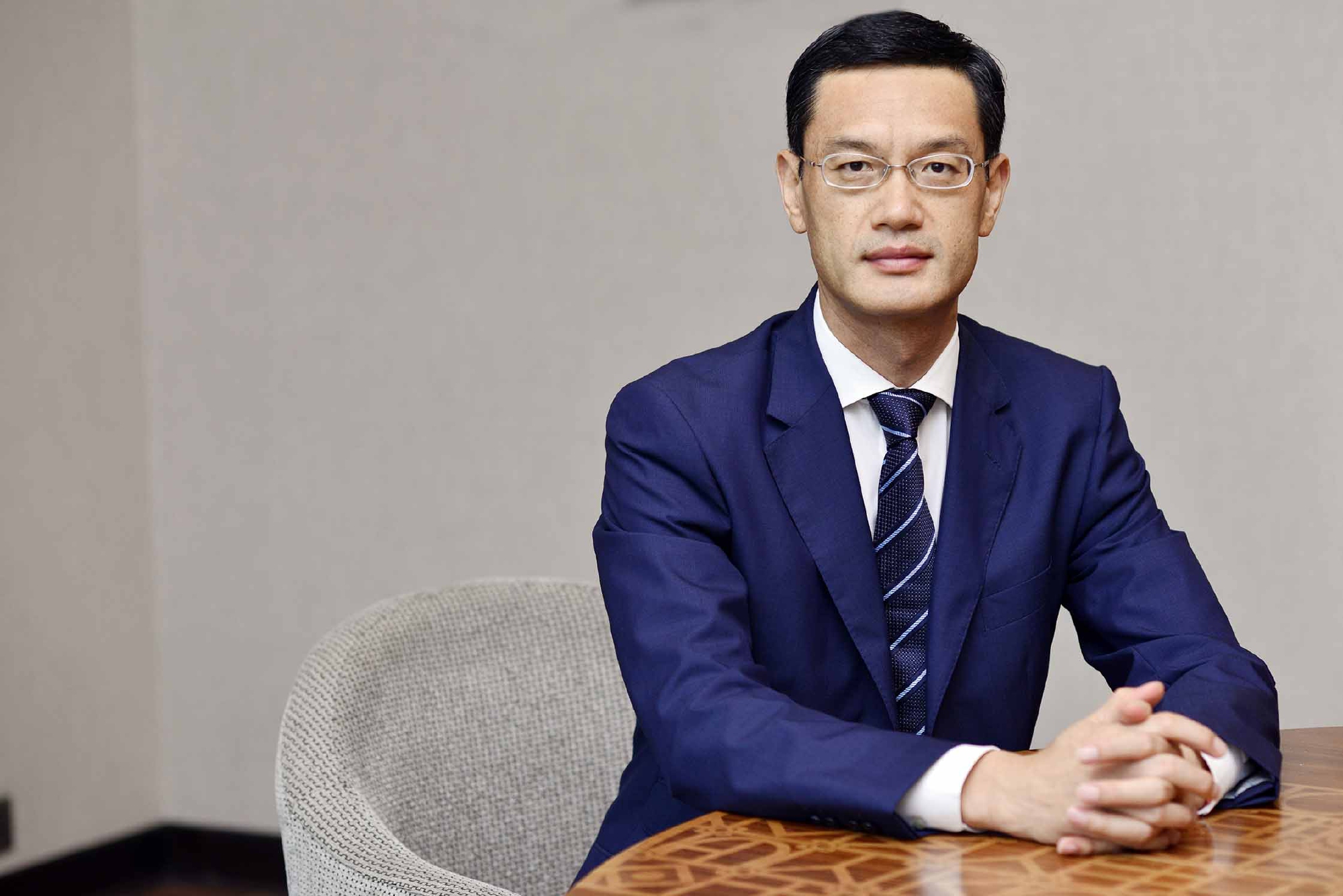
In the ‘HUAWEI – Meet the Press’ virtual press event, Mr. Jay Chen, Vice President of Huawei Asia Pacific talked about global technological trends for the age of the ‘new normal’: “The last couple of years have been challenging for all of us. But in our combat with the pandemic, all countries begin to see the growing dependence on digital technologies. According to the latest Global Connectivity Index, countries better positioned with ICT will suffer less social and economic impact from the pandemic and will achieve faster recovery. Take Thailand for example, the pandemic has shown that its previous strong investment in ICT infrastructure and digital technologies play a critical role in restoring resilience during crisis.”
He reiterated Huawei’s commitment to supporting Asia Pacific countries’ digital transformation, and further emphasized that in the region, Thailand has gradually emerged as the digital hub for ASEAN from several aspects. Firstly, at the national level, Thailand has developed the Digital Economy and Society Development Plan, aiming to develop digital economy growth and achieve the visionary Thailand 4.0. Secondly, based on the Speedtest Global Index 2020, Thailand ranked first among 176 countries in terms of fixed broadband Internet speeds. It has now become the forerunner in 5G infrastructure construction. Thirdly, Thailand is one of the ASEAN leading countries to integrate 5G technologies in agriculture, healthcare, manufacturing and build digital ecosystem. Furthermore, Thailand has shown rapid progress in cultivating digital talents. In this process, Huawei has contributed through programs such as Huawei ASEAN Academy. In the next five years, Huawei ASEAN Academy aim to train more than 300 thousand local talents in total, with nearly one third of contributions coming from Thailand.
ADVERTISEMENTx
Mr. Abel Deng, CEO, of Huawei Technologies (Thailand) Co., Ltd revealed the support for Thai market saying that “Huawei Technologies (Thailand) has a long-term mission in social value contributions for Thailand and the company is committed to continuously contribute to the country, as well as to supporting Thai people and businesses. The contributions span over three areas, namely, Huawei’s support to fight against COVID-19, digital talents ecosystem cultivation and SMEs and Startups ecosystem support.
Since the early COVID-19 outbreak in Thailand, Huawei has been closely working with Thai hospitals and partners to present AI-Assisted services to Ramathibodi and Siriraj Hospitals which helped speed up COVID-19 diagnosis results, to as quick as 25 seconds per case. Also, collaborating with the National Broadcasting and Telecommunications Commission (NBTC) to pioneer the use of unmanned vehicle in Siriraj Hospital to bring about contactless delivery solution of medical supplies. After the third pandemic wave in May 2021, Huawei delivered 5G telemedicine, InPatient area Intelligent Management, and eLTE broadband trunking, worth more than 6 million THB, to the Bang Khun Thien field hospital. The company also worked with the Digital Council of Thailand (DCT) to provide Cloud solution to Thammasat Field Hospital.
Huawei Empowers Thailand with Digital Technology to Become ASEAN’s Next Digital Hub and Carbon Neutral LeaderAs Huawei believes the key to drive digital development lies in an upskilled talent foundation, we have been proactively enabling Thailand 4.0 through digital talent cultivation. Since 2019, we have invested approximately 180M THB, to launch Huawei ASEAN Academy to empower Thailand’s digital talent development. Within 2 years, we have trained around 16,500 people through this program. For SMEs and Startups support, we have been collaborating with industry key stakeholders, such as the New Economy Academy under the Ministry of Commerce, the Digital Economy Promotion Agency (DEPA), the National Innovation Agency (NIA), local customers and partners to provide new technology, global knowledge and training programs from Huawei ASEAN Academy (Thailand). The collaboration aimed at increasing understanding of the technology and helping them adapt new technology into their business plan.
“Thailand is a strategic market for Huawei. In order to empower Thailand to become the ASEAN Digital Hub and achieve the country’s goal of leading ASEAN in carbon neutrality, we will continuously invest in four domains: 5G, data center & cloud, digital power, and talent development.” he added.
Mr. Deng also stated that as a Leading-Technology and Global Practice on Digital Power, the Huawei technology has been utilized in 170+ countries and regions. Since becoming a separate business unit within Huawei, the digital power business has expanded rapidly, yet steadily, with industry-leading output and market share. In Prefabricated Modular Data Center, Smart PV and Site Power Facility business, Huawei has gained a leadership position within the sector with the largest global market share. For mPower business, Huawei was the world’s first company to innovate new technology called X-in-1 ePowertrain, to raise the energy efficiency of electric vehicles. Moreover, for Modular Power, Huawei has supplied over 300 million high-efficiency Modular Power units globally. In 2020, Huawei’s sale revenue from the digital power business globally reached 5.5 billion USD and served one third of the world’s population.
ADVERTISEMENT
This year, Huawei has established its Digital Power business in Thailand. There are now more than 1,000 enterprise customers in the Thai market, 35 of 50 selected Huawei as their digital power partner. The company is now continuously serving more than 50 local partners with services, integration, and solutions. With this establishment, we create more than 1,000 local indirect job opportunities in the country. With highly efficient local team and partners, Huawei expects that leading-technology and global practice adoption will be able to support Thailand toward becoming the ASEAN carbon neutral leader.
“In terms of 5G, with the great support and motivation of Thailand’s operators, we have witnessed that Thailand is the leader in term of 5G network rollout progress compared to the other countries in the region. However, by the end of this year, most of the countries will be catching up. That is why the country needs to have the fastest 5G adoption rate as 5G will help create new economy value including new job opportunities as well as increase the digital economy’ share of GDP. Huawei continues supporting Thailand through ongoing investment in 5G innovation and local ecosystem.
Huawei Thailand has invested 475 million THB for 5G EIC in order to help develop and innovate 5G use case for various industries, create new business models, and upskill for startups and SMEs. The company is also working together with partners to arrange the first 5G Summit in Thailand this year to support the 5G industry and ecosystem in the country. The event will help accelerate digital transformation with 5G in many verticals. With support of DEPA, we will work with ecosystem partners in leading industry sector to initiate 5G alliance in order to build a healthy 5G industry application & innovation ecosystem in Thailand.
Importantly, Huawei will continue to boost the ecosystem to build leading 5G City with high standard 5G network infrastructure to strengthen 5G applications and innovation that will bring new business services and value. This will also push Thailand to become an ASEAN 5G country, also aligning with Thailand’s role as a host for the APEC 2022 Summit, to be held in Bangkok, Pattaya and Chiang Mai.” Mr. Deng added.
“For cloud, Huawei has given priority to our cloud development, we are confident regarding our investment of 700 million THB for the third local data center in Thailand this year. And that makes HUAWEI CLOUD the first and currently the only global cloud service provider with three data centers in Thailand, also creating more than 200 direct job opportunities with 200 local partners. Thailand has great potential to become a preferred destination for international corporations looking to establish their data centers in this region,” Mr. Deng said.
ADVERTISEMENT
Huawei’s strong belief is that the key to driving digital development is an upskilled talent foundation. The company has been proactively enabling Thailand 4.0 through digital talent cultivation and will continue to align the workforce gaps and enrich digital talents in Thailand. This is the reason why the company has set up human capital development programs through the Huawei ASEAN Academy (Thailand), with the aim to train a total of 100,000 digital talented people within five years.
“Positively, technology will play a crucial role in connecting everyone together and providing new opportunities. As a leading ICT partner for digital transformation, as well as continuous social value contributor in Thailand for more than 22 years, we will continuously push forward digital transformation in Thailand, and bring digital technology to every person, home, and organization for a fully connected, intelligent Thailand so that the country can recover quickly. With the mission of ‘Grow in Thailand, Contribute to Thailand’, Huawei will reinforce its commitment to helping the country move toward becoming ASEAN’s digital hub and a carbon neutral leader.” Mr. Abel added.
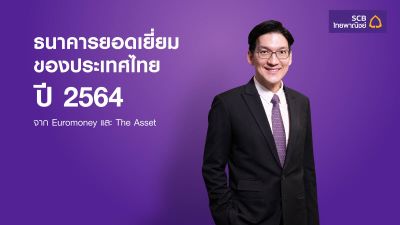
Siam Commercial Bank (SCB) has garnered global gongs yet again, winning an award for Best Bank in Thailand from UK’s Euromoney magazine and a Best Domestic Bank award from Hong Kong’s The Asset magazine.
Siam Commercial Bank Senior Executive Vice President and Chief Financial Officer Manop Sangiambut said, “Having triumphed with these two awards for the thirteenth consecutive year reflects SCB’s strength and discipline in financial management. This firm commitment has led the Bank to excellent operating performance and a stable financial position, while allowing it to implement strategies for dealing with the crises it is facing despite the hardship of current circumstances. SCB continues to focus on providing financial assistance to its customers while committed to developing a new experience in digital services, enabling customers to access solutions to their financial needs more conveniently. These awards have brought great pride to the Bank’s employees, and we believe that it will raise the confidence of our customers and investors as well.”
Euromoney and The Asset magazines are recognized as trusted and influential publications among financial and banking professionals around the globe. Initiated in 1992, the Euromoney Awards for Excellence are presented to banks from some 100 countries for demonstrating excellent performance in banking and finance. The Asset is one of Asia’s trusted publications for the financial and capital markets. Awards are screened and judged by a panel of experts in finance and banking.




 Reserve your spot at the Dot Property 48 Hour Mega Sale, Thailand’s biggest online property sales event
 Carabao Group donates Woody C+ Lock to officials in Bang Pakong District during height of COVID-19 pandemic
 dtac partners with EEF to connect 2,000 disadvantaged schoolchildren
 dtac partners with EEF to connect 2,000 disadvantaged schoolchildren
 B.Grimm Power – Energy China Consortium completes work at world’s largest hydro-floating solar hybrid project at Sirindhorn Dam
 B.Grimm Power – Energy China Consortium completes work at world’s largest hydro-floating solar hybrid project at Sirindhorn DamDr Link said the SHFSHP shows the way for similar concept development at other dam sites in the future. Thanks to BGRIM’s capability readiness and cooperation with Energy China, one of the largest state-owned energy enterprises in the People’s Republic of China, the consortium is well positioned to undertake projects of the kind, he noted.
 Huawei Empowers Thailand with Digital Technology to Become ASEAN’s Next Digital Hub and Carbon Neutral LeaderAs Huawei believes the key to drive digital development lies in an upskilled talent foundation, we have been proactively enabling Thailand 4.0 through digital talent cultivation. Since 2019, we have invested approximately 180M THB, to launch Huawei ASEAN Academy to empower Thailand’s digital talent development. Within 2 years, we have trained around 16,500 people through this program. For SMEs and Startups support, we have been collaborating with industry key stakeholders, such as the New Economy Academy under the Ministry of Commerce, the Digital Economy Promotion Agency (DEPA), the National Innovation Agency (NIA), local customers and partners to provide new technology, global knowledge and training programs from Huawei ASEAN Academy (Thailand). The collaboration aimed at increasing understanding of the technology and helping them adapt new technology into their business plan.