The Stock Exchange of Thailand (SET) Index closed at 1,540.19 on Monday, up 18.47 points or 1.21 per cent. Transactions totalled THB69.89 billion with an index high of 1,543.71 and a low of 1,525.29.
In the morning session, Krungsri Securities forecast that Monday’s index would fall to between 1,510 and 1,515 points despite strong US non-farm payroll data.
It predicted the index would be pressured by the impact on the Thai economy of lockdown measures, anti-government protests, the weakening baht and outflow of foreign funds.
ADVERTISEMENTx
The 10 stocks with the highest trade value today were GULF, DELTA, KBANK, 7UP, BANPU, GPSC, PTT, AOT, RCL and SCB.
Other Asian indices were mixed:
China’s Shanghai SE Composite Index closed at 3,494.63, up 36.41 points or 1.05 per cent, while the Shenzhen SE Component Index closed at 14,941.44, up 114.03 points or 0.77 per cent.
Hong Kong’s Hang Seng Index closed at 26,283.40, up 104.00 points or 0.40 per cent.
South Korea’s KOSPI closed at 3,260.42, down 9.94 points or 0.30 per cent.
Taiwan’s TAIEX closed at 17,485.15, down 41.13 points or 0.23 per cent.
Limited upside for SET amid slew of negative factors
The Stock Exchange of Thailand (SET) Index rose by 5.70 points, or 0.37 per cent, to 1,527.42 on Monday morning.
The SET Index closed at 1,521.72 on Friday, down 5.94 points or 0.39 per cent. Transactions totalled THB82.72 billion with an index high of 1,537.27 and a low of 1,514.67.
Krungsri Securities forecast that the index on Monday will fall to between 1,510 and 1,515 points despite strong US non-farm payroll data.
It predicted that the impact on the economy from Covid-19 lockdown measures, anti-government protests, the weakening baht and outflow of foreign funds would pressure the index.
ADVERTISEMENT
It recommended selective buying as an investment strategy:
▪︎ HANA, KCE, TU, CPF, GFPT, ASIAN, EPG and SUN, which will benefit from the weakening baht.
▪︎ BCH, CHG, BDMS, DOHOME, CKP, CBG, OSP, ICHI, BEC, GUNKUL, JWD, WICE, SONIC, NER, TTA, RCL, SINGER, JMT and JMART, whose second-quarter turnover is expected to improve.
Price plummets as high sales rob gold of its glitter
The price of gold in Thailand dropped by THB450 per baht weight on Monday morning.
The Gold Traders Association report at 9.29am showed the buying price of a gold bar at THB27,450 per baht weight and selling price at THB27,550, while gold ornaments were priced at THB26,954.48 and THB28,050, respectively.
At close on Saturday, the buying price of a gold bar was THB27,900 per baht weight and selling price THB28,000, while gold ornaments were priced at THB27,394.12 and THB28,500, respectively.
Spot gold on Monday morning dropped to US$1,738 (THB58,119) per ounce after Comex gold price at close on Friday dropped heavily by $45.8 to $1,763.1 per ounce, due to pressure from the selling of gold as safe-haven assets, after US non-farm payroll in July surged beyond expectation.
ADVERTISEMENT
Hong Kong gold price meanwhile crashed by HK$680 to $16,030 (THB68,887) per tael, the Chinese Gold and Silver Exchange Society reported.
As baht slumps to three-year low, expert predicts further slide
The baht opened at 33.42 to the US dollar on Monday, weakening from last week’s closing rate of 33.38.
It was the lowest the baht had slid to in almost three years.
The Thai currency was likely to move between 33.40 and 33.55 during the day and between 33.20 and 33.70 this week, Krungthai Bank market strategist Poon Panichpibool said.
The baht’s trend would depend on the dollar’s movement and the Covid-19 situation worldwide, especially in Thailand, he explained.
Poon said that the dollar would gain momentum if the US Federal Reserve reduced quantitative easing this year. However, the dollar’s gains might be restricted by Europe’s economy in case the latter continued recovering and performing better than expection.
ADVERTISEMENTx
Meanwhile, the resistance of the baht was nearly at 33.80 per US dollar. Poon pointed out that the currency would weaken to the level, as the Covid-19 situation in Thailand had not improved and foreign investors are selling their assets in the Thai market.
He said the baht would strengthen if the government could distribute 500,000 doses of efficient vaccine per day to solve the Covid problem.
Last week, the US labour market recovered better than expected, which supported the idea that the Fed might decrease quantitative easing this year, causing the US dollar to continuously strengthen.
Navy plans to develop 500 rai area to support U-Tapao aviation hub
The Royal Thai Navy has said that the development of Eastern Economic Corridor (EEC) continued to move forward despite the Covid-19 situation.
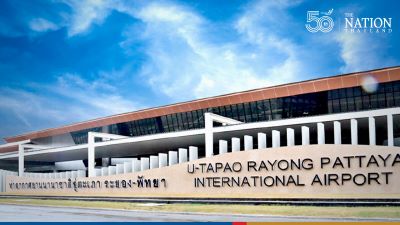
Private concessionaire projects such as U-Tapao Airport and Eastern Aviation City continue to proceed on the parts that can be done, such as surveying and project design.
Meanwhile, the Navy and the Eastern Economic Corridor Policy Office (EECO) are also discussing the development of other projects to support investment after the Covid-19 pandemic. As part of the development plan, the EECO aims to implement projects related to the aviation industry zone (ATZ) development over a 500-rai (80 hectares) area to support investment in the aviation industry.
The ATZ project will support private investments related to the targeted industries, such as the Maintenance, Repair and Overhaul Centre (MRO), which will help support U-Tapao Airport and the EEC’s Eastern Aviation City as a hub for the aerospace industry development.
In the process of planning, it is expected to begin test investor interest and invite investors by September.
The private sector has expressed interest in investing in the aircraft repair centres in the ATZ area as they expect a boom in the aviation industry, especially in Asia. This will enable the aviation industry to recover by leaps and bounds and lead to investment in aircraft repair centres.
The Navy expects the aviation industry will return to pre-Covid-19 activity levels in 2023-24.
How cryptocurrency became a powerful force in Washington
WASHINGTON – At 2:36 p.m. Wednesday, the message went out on Twitter: “Crypto Red Alert!”
The message, from a left-leaning tech advocacy group called “Fight for the Future,” urged people to call U.S. senators to object to one provision of new rules for cryptocurrencies in the massive federal infrastructure bill. Senate offices were swamped with phone calls. Support came in from the likes of Jack Dorsey, the head of Twitter and Square, and Brian Brooks, a top banking regulator during the Trump administration who had become a key crypto executive.
And after years of debate over how to improve America’s infrastructure, and months of sensitive negotiations between the White House and lawmakers, the $1 trillion bipartisan infrastructure proposal suddenly stalled in part because of concerns about how government would regulate an industry best known for wild financial speculation, memes – and its role in ransomware attacks.
On Saturday, the Senate took a procedural step toward passing the infrastructure bill – expected to occur over the next few days – but remain divided over how heavy a hand government should take in overseeing the industry.
Sen. Rob Portman, R-Ohio, and the Biden administration agreed on a proposal that would give federal regulators authority to impose new tax reporting obligations on cryptocurrency brokers, which enable traders to buy and sell cryptocurrency. The crypto provisions emerged as lawmakers struggled to find ways to pay for the bill, with nonpartisan estimates suggesting the tax changes – which would codify work the Internal Revenue Service was beginning to undertake – would increase federal revenue by about $28 billion over 10 years.
But an odd-couple coalition of liberals concerned about government overreach into tech and conservatives skeptical of financial regulation have pushed back strongly against the plan, who argue it would harm innovation.
The disagreement has led to a days-long stalemate – continuing Saturday – in which negotiators fiercely contested details over which parts of the complicated cryptocurrency sector would be subject to the new requirements.
Regardless of the measure’s ultimate fate, the fact that crypto regulation has become one of the biggest stumbling blocks to passage of the bill underscored how the industry has become a political force in Washington – and previewed a series of looming battles over a financial technology attracting billions of dollars of interest from Wall Street, Silicon Valley and financial players around the world, but that few still understand.
“What I think you’re seeing is the maturing of the industry – you see the crypto folks now understanding how Washington can influence their world and Washington learning a little bit about the technology,” said Mick Mulvaney, former chief of staff under President Donald Trump, one of many former officials to be recruited to the crypto industry in recent years.
“One of the challenges that legislators face is they are still learning the language of crypto,” said Mulvaney, who joined the advisory board at the blockchain trade group Chamber of Digital Commerce in September.
Cryptocurrency is a medium of exchange that allows people to transfer value to others without needing a government overseeing it or a financial institution acting as a middleman. Cryptocurrencies have ballooned into a $1.7 trillion industry from nothing in a little over a decade. There are bitcoin, Ethereum, XRP and many others. All are digital currencies with transactions recorded in a decentralized system.
Once an obscure fascination of the tech set, cryptocurrencies today are close to mainstream acceptance, with growing interest from institutional investors – as well as lawmakers and financial regulators who see the potential for misconduct.
The companies also have beefed up lobbying efforts, attracting a bipartisan set of former officials.
Max Baucus, D, the former Montana senator, landed a job earlier this year advising cryptocurrency exchange Binance. In May, Rosa Rios, U.S. treasurer during President Obama’s administration, joined the board of blockchain start-up Ripple.
Cryptocurrency firms today have nearly 60 registered lobbyists. Five years ago, they had one, according to the Center for Responsive Politics. They are also on track to spend more than $5 million on lobbying this year, twice the total from just last year.
“They see the writing on the wall and they want to get ahead of regulations,” said Casey Burgat, director of George Washington University’s legislative affairs program. “I’m just surprised it took them this long to ‘lobby up.'”
But suspicion of this new kind of money runs high. Cryptocurrency – celebrated for being largely untraceable – faces criticism for its potential role in drug-dealing, money laundering and online ransomware attacks. Some enthusiastic supporters also draw quizzical looks for claims that the technology has the potential to create beneficial societal changes and total freedom from central banking powers. The technology has also generated concerns about its potential to worsen climate change by demanding huge amounts of energy to produce the coins.
Attempts to craft regulations are unusually difficult because cryptocurrency and its digital recording system known as blockchain are notoriously complex topics. That leaves plenty of room for lobbying members of Congress who are unlikely to have a deep understanding, some officials say.
ADVERTISEMENTx
Senators on Saturday were searching for a path of compromise between two different approaches. One, favored by the crypto industry and advanced by Sens. Pat Toomey, R-Pa., Ron Wyden, D-Ore., and Cynthia Lummis, R-Wyo., would specifically exempt cryptocurrency miners and software developers from new tax reporting obligations that they say would prove impossible technically to meet. Cryptocurrencies depend on “miners,” individuals and firms who through complex computing processes produce digital coins, such as bitcoin.
The Biden administration has maintained it has no intention to impose the reporting requirements on miners, but expressed concern that including broad exemptions could provide a loophole exploited by the industry to avoid tax compliance.
In an effort to find a middle ground, the administration and Sens. Portman and Mark Warner, D-Va., proposed exempting only one category of cryptocurrency miners, but under intense industry blowback agreed on Saturday to broaden their proposal to include another substantial category of mining. But those concessions did not, as of Saturday afternoon, appear likely to satisfy Wyden, Lummis, and Toomey, who want much broader exemptions.
The various political coalitions that have emerged around the issue do not fall neatly along partisan lines. Toomey, an advocate of laissez faire economic policies, has praised the innovative technology. He’s one of the few lawmakers on Capitol Hill who has in recent months, as the top Republican on the Senate Banking Committee, made it his mission to understand and embrace blockchain technology, hiring a crypto expert for his staff and becoming a go-to for the industry.
Wyden has been drawn to the issue as one of the Senate’s biggest privacy hawks. Lummis, meanwhile, has billed herself as the first bitcoin owner to be elected to the Senate and represents a state that has become a hub for cryptocurrency innovation.
Portman and Warner, who have been working closely with Treasury officials to craft legislative text that provides regulators more power, have close ties to Wall Street and the banking industry – the systems some say cryptocurrency has the potential to upend.
Meanwhile, liberals like Sens. Elizabeth Warren, D-Mass., and Sherrod Brown, D-Ohio, who have pressed regulators to ramp up oversight of what they’ve described as an unstable and volatile market that poses a risk to consumers, could ultimately align with conservative national security hawks who view crypto as a growing opportunity for terrorists, money launderers, and other criminals.
After years of hoping to avoid government oversight, many in the cryptocurrency world have shifted gears. They see regulation as inevitable. In their eyes, it is better to try to have a role in writing the new rules.
It’s a realization familiar to other industries, such as gambling or marijuana, which once sought to avoid the glare of the federal government. But they all want the blessing to operate nationwide, said George Washington’s Burgat. He pointed to the decision by former House Speaker John Boehner, R-Ohio, to join the board of the public cannabis company Acreage Holdings in 2018.
“We do need a legal framework that supports this ecosystem,” said Perianne Boring, head of the Chamber of Digital Commerce. “That does require engagement with regulators and policymakers.”
After the initial bipartisan infrastructure legislation containing cryptocurrency provisions was unveiled, the sector’s nascent lobbying force sprung into action. The Blockchain Association, a Washington-based trade group whose membership has more than quadrupled since 2018, immediately began to team up with other advocacy groups, such as Coin Center and Digital Currency Group.
They coordinated lobbying efforts over Google Meet video calls and encrypted messages on Signal. They used Google Sheets to track congressional office contacts.
“This is a whole new level of coordination and effectiveness that the cryptocurrency industry has been able to have in Washington,” said Kristin Smith, executive director of the Blockchain Association.
“This week has to me felt like a completely different experience than anything else we have taken on as a group before,” Smith said.
Cryptocurrency’s cause has drawn support from Silicon Valley figures including venture capitalists Marc Andreessen and Ben Horowitz as well as big-name investors including Dallas Mavericks owner Mark Cuban.
Crypto’s most vocal proponents believe the hostility toward the industry stems from a failure to look past all the speculation over tokens and ignoring the business opportunities that blockchain technology can generate. Cuban, who’s backing a host of crypto-related businesses, likened the potential of the budding technology to the rise of the Internet.
“Shutting off this growth engine would be the equivalent of stopping e-commerce in 1995 because people were afraid of credit card fraud. Or regulating the creation of websites because some people initially thought they were complicated and didn’t understand what they would ever amount to,” he said in an email to The Post.
The parallels between cryptocurrency’s current battle and how “big tech” once approached regulation are notable.
Just as leaders of San Francisco’s tech scene once swore off the “dirty business” of advocacy but later engaged in politics, the cryptocurrency industry increasingly realizes the influence game can work to its advantage, especially as suspicion and scrutiny mount in Washington.
Even as cryptocurrency was fighting to change language in the infrastructure bill, a new potential battle emerged.
It started when SEC Chairman Gary Gensler said in a speech at the Aspen Security Forum Tuesday that he believes most cryptocurrencies should be regulated as securities.
“I believe we have a crypto market now where many tokens may be unregistered securities, without required disclosures or market oversight,” Gensler said. “This leaves prices open to manipulation. This leaves investors vulnerable.”
A day later, Brian Quintenz, a Republican on the Commodity Futures Trading Commission, argued that cryptocurrencies were, in fact, commodities rather than securities.
“Just so we’re all clear here,” Quintenz said in a tweet, “the SEC has no authority over pure commodities or their trading venues, whether those commodities are wheat, gold, oil . . . or #crypto assets.”
The ongoing disputes over what cryptocurrencies even are signal the depths of the potential problems faced by the industry.
“Any industry wants to be involved in regulation discussions,” said Reid Yager, a former lobbyist and current director of communications at Blockhaus, a blockchain marketing firm. “But explaining all this to a septuagenarian lawmaker is a huge challenge.
Published : August 08, 2021
By : The Washington Post · Todd C. Frankel, Jeff Stein, Jacqueline Alemany, Hamza Shaban
Strengthening Workplace Diversity, Equity and Inclusion at Marriott International Asia Pacific
Marriott International Asia Pacific signs Racial Diversity and Inclusion Charter for Employers by the Equal Opportunities Commission Hong Kong
Diversity, equity, and inclusion have always been at the heart of Marriott International’s core value to put people first and create a welcoming environment for all. Marriott International signed the Racial Diversity and Inclusion Charter for Employers, highlighting its continuous efforts to champion diversity, equity and inclusion.
Led by the Equal Opportunities Commission Hong Kong, the Racial Diversity and Inclusion Charter for Employers (Charter) provides employers with guidelines and best practices through a checklist of policies and practices they can implement to further their diversity, equity and inclusion objectives, including racial diversity and inclusion in the workplace.
“We are proud to sign the Racial Diversity and Inclusion Charter for Employers with the Equal Opportunities Commission Hong Kong to reinforce our continuous efforts in fostering an inclusive workplace,” said Regan Taikitsadaporn, Chief Human Resources Officer of Marriott International for Asia Pacific. “At Marriott, we believe in the fundamental need to create a culture of belonging where all associates are treated with dignity and respect. From empowering and developing women leaders as we work towards gender representation parity for global company leadership to hiring associates with disabilities and supporting LGBTQ+ in the workplace, we hope to inspire other companies to join us in our continual efforts to improve our inclusion practices and truly welcome all.”
ADVERTISEMENTx
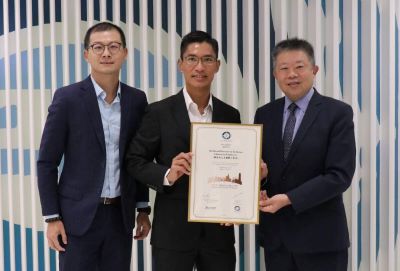
Photo shows Regan Taikitsadaporn, Chief Human Resources Officer (Center) represented Marriott International Asia Pacific to sign the Racial Diversity and Inclusion Charter for Employers with the Equal Opportunities Commission Hong Kong.
Milestones: Marriott’s Efforts to Support Diversity, Equity and Inclusion across Asia Pacific
For more than 90 years, Marriott International has been committed to providing a world of opportunities to everyone and Putting People First. Here are a few examples of recent milestones marking Marriott’s commitment to create a diverse, equitable and inclusive workplace in the region:
ADVERTISEMENT
• Building a gender-inclusive environment
o In 2021, Marriott announced to accelerate efforts to achieve global gender parity for all executive positions by 2023 – two years earlier than when it first established this goal a few years ago.
o In 2017, Marriott partnered with the Asian University for Women (AUW) in Bangladesh to support young women in APAC through mentorship, internship and scholarship. Through the partnership, 50 women leaders in APAC served as mentors for professional and career development, while AUW students came to the Marriott continent office in Hong Kong for short-term internships. In 2019, Marriott successfully placed students in its hotels in India and Dhaka as interns.
o Marriott has also set up the Women Ambassador Network to help develop female associates through mentorship, networking, training programs and speaking opportunities; and introduced flexible working policies and industry leading benefits to support working mothers.
• Supporting LGBTQ+ inclusion
ADVERTISEMENT
o In 2021, Marriott Bonvoy announced its first ever sponsoring partnership for the Gay Games 11 in Hong Kong in 2022.
o In 2020, Marriott was awarded the Bronze Standard in the LGBT+ Inclusion Index by Community Business, the first benchmark on LGBTQ+ workplace inclusion practices and initiatives in Asia. The company first partnered with Community Business to participate and promote the LGBT+ Inclusion Index in 2018.
o In 2020 and 2019, W Hotels partnered with the Sydney Gay & Lesbian Mardi Gras to celebrate equality and inspire travelers to love out loud. For the first time in Asia Pacific, W Hotels showcased its first-ever float in the 2020 Parade.
o Since 2019, Marriott started offering same-sex domestic partner benefits to associates at its continent office in Hong Kong.
• Empowering people with disabilities
o In 2021, Marriott attended a job fair in Shanghai to support the recruitment of graduates with disabilities. The company currently hires more than 1,000 people with disabilities in mainland China.
JAMPA: Woodfire Zero-Waste Cuisine by Award-Winning Montara Hospitality Group
JAMPA: Woodfire Zero-Waste Cuisine by Award-Winning Montara Hospitality Group to Open in July 2021at Phuket’s visionary wellness community, Tri Vananda
Montara is excited to unveil its new innovative F&B concept, “JAMPA”. The award-winning hospitality group, following recent success of other brands such as “PRU”, who is the only MICHELIN Starred restaurant outside of Bangkok, as well as first and only MICHELIN Green Star in Thailand, “Seafood at Trisara” and “Praya Dining” who also won the coveted Michelin Plate accolade, has decided to launch this new project within the group’s upcoming visionary wellness community, Tri Vananda
“JAMPA is an extremely exciting project, which will focus on Local Ingredients, Live Fire, Zero Waste Cuisine and it will have a key role at Tri Vananda’s Community House” says Quentin Fougeroux, Group Director of Food and Beverage. “Being the center of the community, it is a space for sharing, learning and focusing on the good life, as well as being based on the principle of Self-reliant “Living”. It is a gathering place, where food and craft are of the utmost importance”.
ADVERTISEMENTx
JAMPA: Woodfire Zero-Waste Cuisine by Award-Winning Montara Hospitality Group
The name JAMPA comes from the Magniolia Champaka, an indigenous, fragrant flower found around Phuket, but is also coming from the name of the small village where the group farm is located, Pru Jampa. The first half of the village name was given to Montara’s award-winning restaurant, PRU, and it came naturally to use the second half for this new concept.
JAMPA’s culinary team aspire to position the restaurant at the forefront of culinary innovation in Phuket by only using live fire to transform local ingredients into amazing culinary creations with an emphasis on healthy, balanced food that is good for the soul.
JAMPA: Woodfire Zero-Waste Cuisine by Award-Winning Montara Hospitality Group
The JAMPA team will be helmed by Chef Rick Dingen, formerly of Madison in Bangkok, as well as having worked with Michelin starred restaurant in Thailand and in his native Netherlands, including 3 MICHELIN Stars Inter Scaldes and renown farm to table Restaurant De Kas, is dedicated to showcase the ingredients harvested on the day using open fire cooking to showcase the natural benefits of each ingredient.
“For us, it was important to showcase the locally sourced, seasonal ingredients in the best way possible” says Chef Rick. “Cooking is a craft, and service and setting the scene are amongst the most beautiful arts that exist. We want guests to connect with the Chefs emotion, to share with them why we have selected these ingredients, why we cook them the way we do and our guest are welcome to come and learn from us. We often do outdoor open fire cooking at our weekly pop up, Hideaway by JAMPA, where we experience new ingredients and we get creative ideas. We try things, we laugh, and it is something that our guests can experience as well”.
JAMPA: Woodfire Zero-Waste Cuisine by Award-Winning Montara Hospitality Group
The restaurant will be located in Tri Vananda’s Community House, a stunning building designed by award winning Habita Architect and Arsom Silp Institute of the Arts, with the interior design by AvroKo, who has earned a reputation as one of the most innovative design firms in the field. Surrounded by sand dunes and beautiful landscape, the Community House will serve as the center of Tri Vananda wellness community, a place where residents can meet and share. Residents and guests alike will able be able to focus their energy on taking parts of community projects around sustainability, gastronomy and well-being, which will be organized regularly by the Tri Vananda team.
JAMPA: Woodfire Zero-Waste Cuisine by Award-Winning Montara Hospitality Group
The restaurant, which was mentioned in the “Newest Opening” section of Phuket 25 Top Restaurants by Amazing Thailand, will also feature a state of art bar, where beverages are beneficial for health, body and mind and served in a form familiar to bar lovers, as well as an exciting zero waste grocery offering the day harvest, freshly baked breads and other fine food to residents and visitors alike.
The zero waste, no plastic grocery will also be a focal point of the Community life. Here, residents and guests can discover homemade products, fruits, vegetables and herbs harvested on the day, freshly baked breads still hot from the fire oven, local cheeses and vegan cheeses as well as many other products available via refill stations. Additionally, the chefs will always be available to give some advices or tips on how to best use each of these products.
Also, the restaurant aims to become the first in Phuket to achieve zero waste to landfill cuisine. “We want to exert the absolute minimal impact upon earth and we break down all our kitchen waste to ensure nothing goes to landfill” says Quentin. “Our waste are separated, and food remnants are turned into animal feed or composted at our farm. Manure and compost are used are fertilizer to grow our vegetables, thus completing the cycle of life”
For additional information, please contact +66 76 310 100 or visit jamparestaurant.com
BGRIM’s ESG global rating lifted from BBB to A New rating shows deepening of best environment
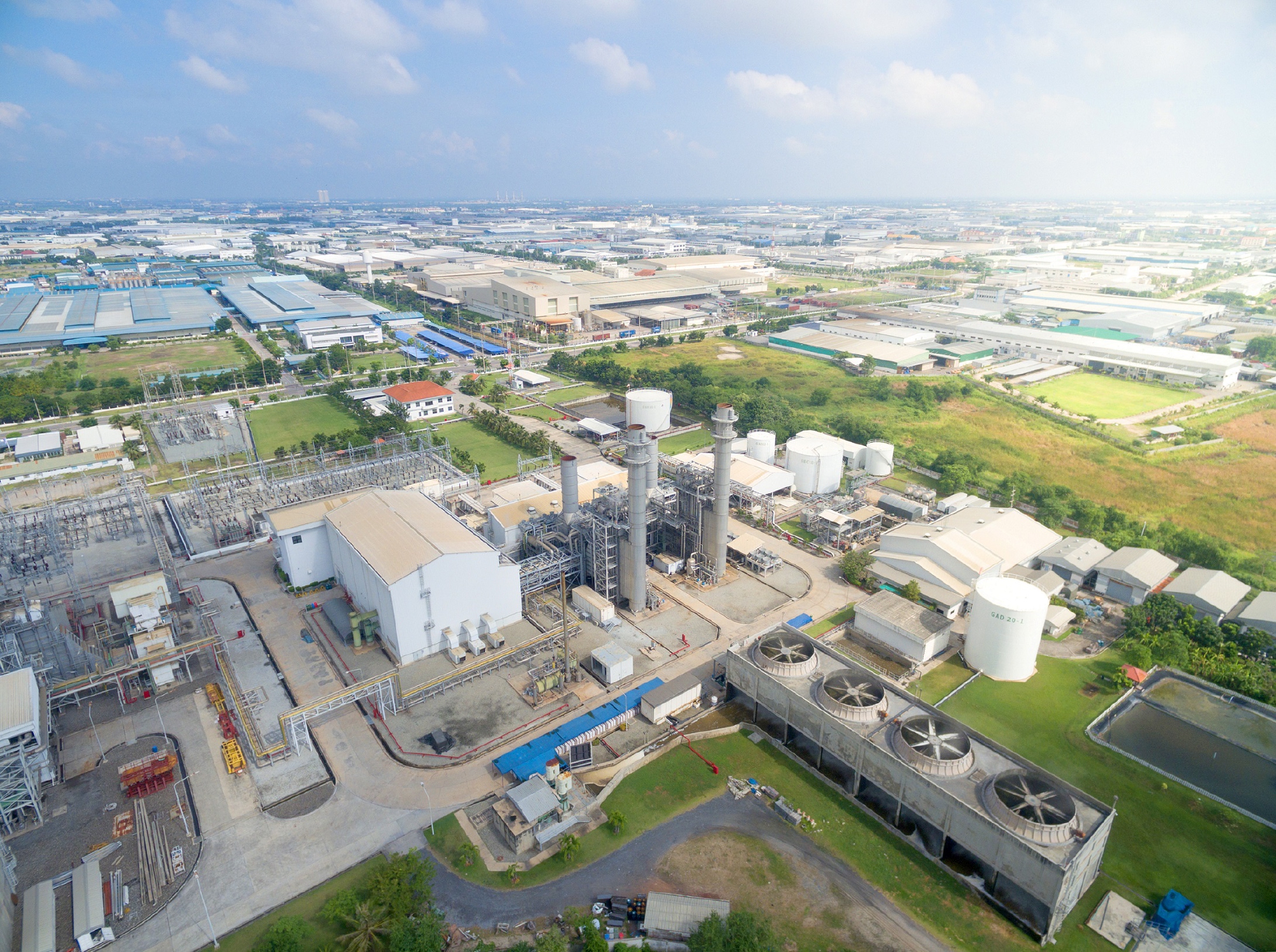
BGRIM has moved its international rating in the field of Environment, Social and Governance (ESG) up a notch.
B.Grimm Power Public Company Limited (BGRIM), has moved its international rating in the field of Environment, Social and Governance (ESG) up a notch.
The MSCI ESG Ratings, the global authority on ESG, has now upgraded the Thailand-based global energy producer’s status to ‘A’ from ‘BBB’ to underscore BGRIM’s stride to deepen its ESG commitments.
Moreover, BGRIM has been included in the “FTSE4 Good Index Series” for the second year in a row while being endorsed by Thaipat Institute to be part of the ESG 100 Group of Securities for the fourth consecutive year.
ADVERTISEMENTx
BGRIM’s ESG global rating lifted from BBB to A New rating shows deepening of best environment
The inclusions enhance stakeholders’ confidence in BGRIM and its sustainable business practices and investment policies, according to Harald Link, Chairman and President of BGRIM.
He said the company is striving to conduct its businesses in a sustainable manner with best ESG practices.
“The MSCI ESG Ratings upgrade from ‘BBB’ to ‘A’ speaks volumes of our intention to promote sustainable business growth under the principles of good governance and responsible value chain management by taking into account the economic, social and environmental impacts,” he noted.
“This is in line with BGRIM’s vision that adheres to the principle of doing business with compassion, creating values for society in the name of a Sustainable Utility Solution Provider.”
By that means BGRIM seeks to be a producer of high-quality energy, a provider of full range of services to meet the changing needs of customers and being a business partner both at home and abroad, he added.
AIA Investment Management (Thailand) received Best New Asset Management Company Thailand 2021
AIA Investment Management (Thailand) received Best New Asset Management Company Thailand 2021 from Global Banking and Finance Review
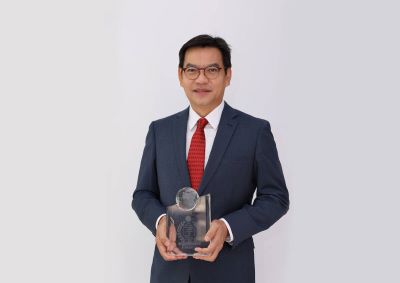
AIA Investment Management (Thailand) Company Limited (“AIAIMT”) led by Mr. Sukkawat Prasurtying, Chief Executive Officer received the Best New Asset Management Company Thailand 2021 Award in Fund & Asset Management Newcomer Awards category from Global Banking and Finance Review. This award was recognized for the company’s competence on establishing new investment management with leadership and excellence in asset and fund management. AIAIMT is one of investment management arm of the world’s largest life insurer[1], AIA Group, with a long-term investment experiences in 18 markets in Asia Pacific with worldwide networking and global reach by accessing to the finest asset managers globally.
AIA Investment Management (Thailand) Limited (“AIAIMT”) was incorporated in August 2020 to further enhance the management of AIA Group’s insurance assets. The company’s vision is to be a trusted partner for our clients with global investment experiences and prudent risk management practices. AIAIMT is renowned for consistently providing long-term and sustainable return for our clients’ investments to enable them to enjoy Living Healthier, Longer, Better Lives. AIAIMT manages private funds and mutual funds with total asset under management (AUM) of more than THB 800,000 million, ranking as one of the Top-5 in the investment management industry[2] (as of May 2021)
Sources:
[1] As of 30 June 2020
[2] Total AUM of Mutual Fund, Private Fund, and PVD from AIMC Information as of 31 May 2021
Disclaimer:
– Past performance of AIA Investment Management (Thailand) Co., Ltd. or a fund is not necessarily indicative of its future performance.
– Investors must understand fund information, return characteristics, and fund’s risk before making investment decision.
– Investors should study the prospectus before making a decision to invest.





 JAMPA: Woodfire Zero-Waste Cuisine by Award-Winning Montara Hospitality Group
 JAMPA: Woodfire Zero-Waste Cuisine by Award-Winning Montara Hospitality Group
 JAMPA: Woodfire Zero-Waste Cuisine by Award-Winning Montara Hospitality Group
 JAMPA: Woodfire Zero-Waste Cuisine by Award-Winning Montara Hospitality Group
 BGRIM’s ESG global rating lifted from BBB to A New rating shows deepening of best environment