Commodity run dwarfs oil spat as emerging markets set to win
For some of the worlds biggest money managers, the OPEC+ oil-price feud is little more than a sideshow when it comes to emerging markets.
Investors and strategists at JPMorgan Chase and Goldman Sachs say the post-pandemic economic recovery will stoke demand for raw materials across the board, buoying commodity-sensitive assets regardless of whether a crude accord is reached. Russia and Colombia are among the countries that stand to benefit in particular, according to Whitney Baker, the New York-based founder of Totem Macro, which advises funds overseeing more than $3 trillion.
“A generational opportunity exists today in many of the deepest-value emerging markets,” said Baker, the former head of emerging-market research at Bridgewater Associates. “Whether you export goods or whether you export commodities, you’re getting an external demand boom right now for pretty much whatever it is that you sell.”
Investors are looking beyond the spat between Saudi Arabia and the United Arab Emirates and the danger that 2020’s oil production free-for-all will be replayed. The global surge in demand for everything from copper to clothes as economies pick up steam amid the vaccine rollout will provide a backstop for many developing nations, they say.
Cheap valuations and hawkish central banks will support currencies with the closest ties to oil’s moves should a slump in crude materialize. Front-loaded tightening cycles in Russia and Mexico make those countries’ currencies especially appealing, Chris Turner, the head of currency strategy at ING Groep in London, said on Bloomberg TV.
That sentiment was echoed by Goldman strategists including Zach Pandl and Kamakshya Trivedi, who flagged value in Russia’s ruble, Mexico’s peso and Brazil’s real, despite the past week’s volatility.
While assets from Colombia, Mexico and Russia are historically among the most sensitive to swings in crude oil prices, the Colombian peso is down 11%, while the Mexican peso and Russian ruble are little changed this year, according to data compiled by Bloomberg. Brent prices have climbed almost 50% year-to-date, despite the OPEC+ spat.
Pierre-Yves Bareau, the London-based head of emerging-market debt at JPMorgan Asset Management, highlighted the lag. The demand recovery will support commodities — currently trading near a six-year high — providing a positive backdrop for many assets in Latin America and the Gulf, he said.
But with the delta variant of Covid-19 spreading, others are less sanguine.
“The market thinks of emerging markets as the next vaccine trade — I don’t agree with that,” said Bhanu Baweja, the London-based chief strategist at UBS Group, who is bearish on commodities.
A scenario where oil drops further could boost a net importer like Turkey, where the impact of commodity prices on inflation is particularly acute. The lira has slid 14% this year, the most in the world, as the country’s central bank juggles soaring prices and rate-cut demands from President Recep Tayyip Erdogan.
Should the outlook for oil darken, it could still favor Russia and Qatar over other exporters, given their valuations and sovereign fiscal resilience, said Hasnain Malik, Dubai-based head of research at Tellimer.
But for the next few months, sentiment on oil-sensitive emerging markets could be shored up by supportive factors for crude.
Jeff Currie, Goldman’s global head of commodities, said it’s “extremely unlikely” oil will unravel on the scale of last year’s collapse. A surge in demand during the northern hemisphere’s summer travel season and delays reaching an Iranian nuclear accord will keep crude around $80 per barrel in the third quarter, he said.
“The market environment we see today is probably one of the best in decades,” he said on Bloomberg TV.
Published : July 13, 2021
By : Syndication Washington Post, Bloomberg · Ben Bartenstein
Wall Streets $6 Billion Bonanza Chilled by China IPO Curbs
Just months after bankers celebrated a record haul from taking Chinese companies public in New York and Hong Kong, theyve had a rude awakening. Deals are being shelved and investors are nursing heavy losses.
Achill has settled over global finance after a fortnight in which China first cracked down on its Uber-like Didi Global within days of a U.S. trading debut, followed swiftly by the State Council announcing closer scrutiny of all offshore listings. On Saturday, a cybersecurity review was proposed for companies with data on more than 1 million users before they seek to list in foreign countries.
The warning signs had been flashing for a while. As underwriters totted up a record $1.5 billion in fees last year from helping Chinese firms with initial public offerings offshore, relations between China and the U.S. were at a low ebb. In December, President Donald Trump signed a bill that could delist Chinese companies that don’t meet audit inspection rules. Simultaneously, President Xi Jinping stepped up oversight of big technology firms, partly to secure the treasure trove of data they control.
The moves imperil the frenetic dealmaking seen during the pandemic, and the lucrative business of offshore listings that’s pulled in some $6.4 billion in fees since 2014, when Alibaba Group Holding began trading in New York. Morgan Stanley, Goldman Sachs and China International Capital Corp. topped the league tables over that stretch, when nearly 40% of fees came from U.S. deals.
Bankers now say they expect the majority of Chinese IPOs aimed for American exchanges to be suspended or diverted to other venues, eating into projected revenue for the year given the significantly lower fees in Hong Kong. Listing requirements in the financial hub and mainland China are also more stringent, making deals there far from certain.
“There are some uncertainties that might take one or two months to work its course,” David Chin, head of investment banking in Asia Pacific at UBS Group AG said of China’s changing rules at a briefing last week. “Ultimately, China will find a solution because the U.S. has been very supportive of Chinese internet companies, the development of them, and the subsequent financing.”In the meantime, what had been a healthy IPO pipeline is weakening. One immediate victim was LinkDoc Technology Ltd., a Beijing-based medical data company, which halted preparations for a U.S. IPO on Thursday. Fitness app Keep has also opted not to go ahead with a planned U.S. public filing, the Financial Times reported. Podcast app Ximalaya’s U.S. IPO is in limbo too, according to people with knowledge of the matter.
For some, the pullback came earlier. TikTok owner ByteDance Ltd.’s considerations about going public — which included a potential offshore float — have been in flux since earlier this year as it works to ensure compliance with China’s data security requirements, according to a person familiar with the matter.
In all, China’s crackdown on overseas listing threatens about 70 other private firms based in Hong Kong and China that are set to go public in New York, according to data compiled by Bloomberg.
Valuations for China’s technology firms, which were already falling before the recent onslaught, now look shakier as investors signal they will demand steeper discounts to buy shares, said one banker, asking not the named discussing internal business. So far this month, the Nasdaq Golden Dragon Index — which tracks some of the biggest Chinese firms listed in the U.S. — has shed some $145 billion in value.
At the heart of the recent crackdown is how far regulators will go to check foreign investment in sensitive industries, particularly those controlling vast amounts of data. For two decades China’s technology giants have sidestepped restrictions, using the so-called Variable Interest Entity model to attract foreign capital and IPO offshore.
The China Securities Regulatory Commission is now leading efforts to revise overseas listings rules that would require VIE firms, which do business in China but are registered in places like the Cayman Islands, to seek approval before selling shares overseas, Bloomberg has reported. The Cyberspace Administration of China said Saturday that its proposed review would address risks for data to be “affected, controlled, and maliciously exploited by foreign governments.”
Hong Kong looks well placed to benefit from the geopolitical and regulatory frictions though dealmaking in the financial hub may also become entangled in the regulatory push. If IPOs of Chinese unicorns grind to a halt, the Hong Kong exchange should still be boosted by secondary listings and the conversion of American depository receipts, according to Bloomberg Intelligence analyst Sharnie Wong.
“Some Chinese companies that operate in sensitive sectors might be thinking of listing in Hong Kong instead of the U.S.,” said Kenneth Ho, managing director of equity capital markets at Haitong International. “Currently the H.K. IPO pipeline is ridiculously vibrant.”
The rerouting will undercut fees banks can earn after a decade in which Chinese firms raised about $76 billion through first-time share sales in the U.S.
Banks typically charge about 1.5% to 2% for billion-dollar offerings in Hong Kong, compared with 3% to 5% in the U.S. as fees vary with sectors and underwriters. That increases by about two percentage points or more for deals below $500 million, bankers familiar with the matter said.
In mainland China, fees for listing on Shanghai’s tech-heavy STAR board are about equal to the U.S. but sponsors are required to co-invest in between 2% and 5% of the shares issued by their clients, an unusual arrangement that may limit interest in leading deals due to the need for a capital base onshore.
The tighter regulatory regime comes against a backdrop of China opening its financial market to allow foreign banks and asset managers to set up wholly owned firms. Powerhouses such as Goldman Sachs have been ramping up their staffing, seeking to double or triple their headcounts in mainland China, as they expand to capture billions in potential profits in the world’s second-largest economy.
China’s Nasdaq-like STAR market has made it easier for technology firms to access funding at home, though it places an emphasis on companies focused on hardcore technology and innovation.
China’s dependence of foreign capital to fuel its businesses has decreased from where it was less than a decade ago, said Martin Chorzempa, senior fellow at the Peterson Institute for International Economics. “We’re in a world where it’s not really that hard for Chinese firms to raise a large quantity of capital without listing their shares aboard.”
Even so, UBS’s Chin said it’s doubtful that many Chinese companies can meet domestic listing requirements, which have become more stringent this year.
“Ultimately they’ll have to list somewhere else,” he said. “We are very used to this type of regulatory development and uncertainties, and ultimately the commercial logic will prevail and the financing and IPOs will continue.”
Published : July 13, 2021
By : Syndication Washington Post, Bloomberg · Cathy Chan
Stocks hit records ahead of earnings; oil falls: Markets Wrap
U.S. stocks climbed to another all-time high as investors await second-quarter earnings starting this week to gauge whether corporate profits can support equity valuations. Treasury yields fluctuated as the U.S. sold debt.
Financials and real estate shares led the S&P 500 to a record, while the tech-heavy Nasdaq 100 was mostly little changed. Both indexes set their previous closing marks on Friday. The Stoxx Europe 600 gained for a second day and Asian equity indexes closed in the green.
The U.S. Treasury sold $58 billion of three-year notes at yields slightly higher than before the auction. A sale of $38 billion of 10-year notes was greeted by stronger demand. The dollar pared earlier gains against major peers.
“The biggest things on people’s minds right now are the start of earnings season and the economic releases on the inflation front,” said Eric Freedman, chief investment officer at U.S. Bank Asset Management Group.
Equities and bonds have rallied amid a decline in long-term interest rates and inflation expectations as central banks hold off on unwinding the support driving the recovery from the pandemic. Still, investors remain concerned about the spread of the delta variant and a slowdown in vaccination rates, while pondering when the Federal Reserve will start tapering stimulus.
“The question at the core of the movements in the 10-year Treasury’s yield for most of this year has been whether economic re-openings stateside and around the globe will generate levels of longer lasting inflation for economies, central banks and markets to contend with or will the near-term inflation consumers and businesses are experiencing be transitory as economies transition to a post-Covid environment,” John Stoltzfus, chief investment strategist at Oppenheimer & Co., wrote to clients.
Elsewhere, Asian stocks rose at the start of the week after China’s central bank moved to boost liquidity by cutting the amount of cash most banks must hold in reserve to buttress economic growth.
The euro weakened and yields on core European bonds fell after European Central Bank President Christine Lagarde told investors to prepare for new guidance on monetary stimulus in 10 days. Oil was lower after its first weekly loss in seven amid an OPEC+ dispute over a production increase.
These are some of the main moves in financial markets:
Stocks:
– The S&P 500 rose 0.2% as of 1:29 p.m. New York time.
– The Nasdaq 100 rose 0.1%.
– The Dow Jones Industrial Average rose 0.4%.
ADVERTISEMENT
– The MSCI World index rose 0.4%.
Currencies:
– The Bloomberg Dollar Spot Index rose 0.1%.
– The euro fell 0.2% to $1.1856.
– The British pound fell 0.1% to $1.3881.
ADVERTISEMENT
– The Japanese yen fell 0.2% to 110.35 per dollar.
Bonds:
– The yield on 10-year Treasuries was little changed at 1.36%.
– Germany’s 10-year yield was little changed at -0.29%.
– Britain’s 10-year yield was little changed at 0.65%.
Commodities:
– West Texas Intermediate crude fell 1.1% to $73.74 a barrel.
– Gold futures fell 0.2% to $1,806.10 an ounce.
Published : July 13, 2021
By : Syndication Washington Post, Bloomberg · Vildana Hajric, Claire Ballentine
The Stock Exchange of Thailand (SET) Index closed at 1,549.84 on Monday, down 2.25 points or 0.14 per cent. Transactions totalled THB75.44 billion with an index high of 1,561.72 and a low of 1,544.71.
In the morning session, Krungsri Securities expected the index on Monday to rebound to between 1,560 and 1,565 points on the rising oil price and Thailand’s move to impose a partial rather than a national lockdown.
However, it forecast the rise in domestic Covid-19 cases and volatility in foreign fund flows would pressure the index.
The 10 stocks with the highest trade value today were PTTGC, CHG, BCH, KCE, PTT, BDMS, HANA, KBANK, CPF and ACE.
Other Asian indices were up:
Japan’s Nikkei Index closed at 28,569.02, up 628.60 points or 2.25 per cent.
China’s Shanghai SE Composite Index closed at 3,547.84, up 23.75 points or 0.67 per cent, while the Shenzhen SE Component Index closed at 15,161.52, up 317.17 points or 2.14 per cent.
Hong Kong’s Hang Seng Index closed at 27,515.24, up 170.70 points or 0.62 per cent.
South Korea’s KOSPI closed at 3,246.47, up 28.52 points or 0.89 per cent.
Taiwan’s TAIEX closed at 17,814.33, up 152.85 points or 0.87 per cent.
Ajinomoto establishes the “Open-Link Innovation Space by Ajinomoto” at Food Innopolis
Those kinds of innovation are conforming to Ajinomoto’s contributions to focus on nutrition and health of Thai consumers by adhering “The Ajinomoto Group Creating Shared Value (ASV)” policy as the global food company to create “Healthy Living Society”.
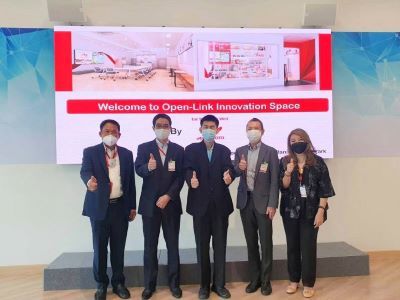
Recently, Mr.Ichiro Sakakura (2nd from right), President, together with Mr.Takumi Kazarimoto (2nd from left), Vice President of Ajinomoto Co., (Thailand) Ltd., visited the “Open-Link Innovation Space by Ajinomoto” at Food Innopolis, Thailand Science Park, welcomed by Dr.Sanat Wongthawethong (middle), Deputy Director of Thailand Science Park.
Thailand Science Park is the global food innovation hub that fully integrated infrastructure for science & technology that equipped with integrative food scientist, advanced research institutes with more than 100 networks, technologies and facilities, which available for anyone who interested in research or feasibility study to initial evaluation before starting the new business. In this regard, there was a small discussion regarding the idea exchanging for the future cooperation by using AJINOMOTO’s specialty as Amino acid technology for the new value creation together. Besides, the officer also guided for each organization’s location and showed the surrounding tour inside Thailand Science Park as well.
The “Open-Link Innovation Space by Ajinomoto” was established as the company information sharing center to the externals as well as to be a linkage space of internal and external companies to create the opportunity towards businesses matching for the new value of product and service as of business ecosystem platform. Further, to be a facilitator to AJT co-project for data or collaboration required. Those kinds of innovation are conforming to Ajinomoto’s contributions to focus on nutrition and health of Thai consumers by adhering “The Ajinomoto Group Creating Shared Value (ASV)” policy as the global food company to create “Healthy Living Society”.
If any organization is interested in creating Shared Value alongside Ajinomoto, the Open-Link Innovation Space at Food Innopolis is available since July 2021 onwards at Food Innopolis, Thailand Science Park.
Fairfield by Marriott Celebrates Its Brand Debut In Vietnam
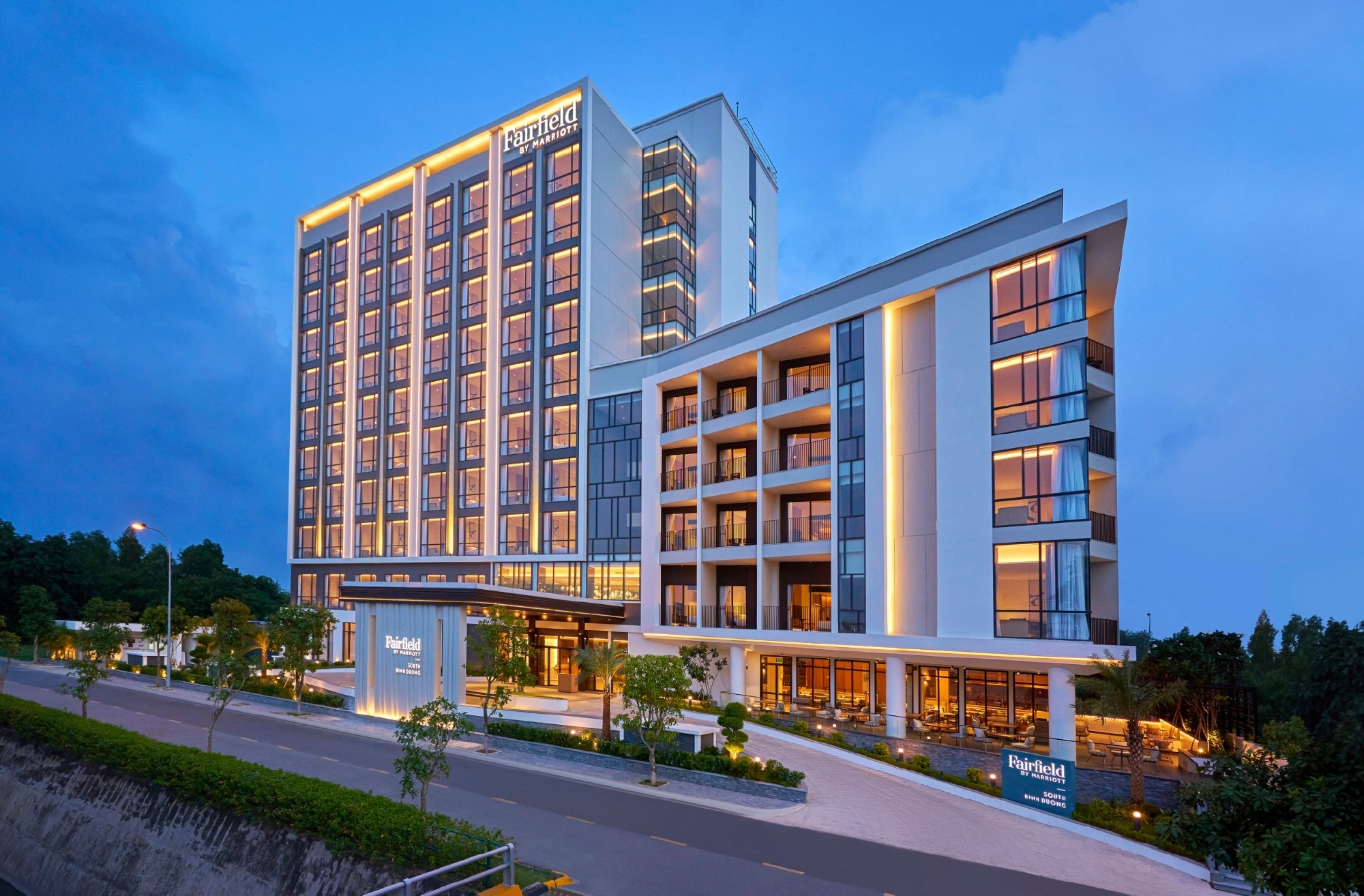
Fairfield by Marriott, part of Marriott Bonvoy, today announced the opening of Fairfield by Marriott South Binh Duong.
Fairfield by Marriott, part of Marriott Bonvoy’s portfolio of 30 extraordinary brands, today announced the opening of Fairfield by Marriott South Binh Duong, celebrating the brand’s debut in Vietnam. Located in the Binh Duong province and inspired by the beauty of simplicity and warm hospitality, the 181-room hotel delivers an inviting and seamless experience, poised to become the destination-of-choice for travellers in southern Vietnam.
“We are thrilled to introduce the Fairfield by Marriott to Vietnam with the opening of Fairfield by Marriott South Binh Duong,” said Rajeev Menon, President, Asia Pacific (excluding China), Marriott International. “The opening marks the fifth brand entry within Marriott Bonvoy’s portfolio into the fast-growing country of Vietnam – a testament to our focus on bringing a diversified portfolio for different types of travelers. We look forward to expanding our portfolio further across Vietnam to offer new accommodations in attractive destinations.”
Fairfield by Marriott Celebrates Its Brand Debut In Vietnam
Located in the one of the largest business parks in the province and home to almost 70 international manufacturing companies, Fairfield by Marriott South Binh Duong is an ideal base for local entrepreneurs and international business travellers. Guests who are looking to explore the destination can easily access popular tourist hotspots including Song Be Golf Resort, Dai Nam Tourist Complex and Hoi Khanh Pagoda. The hotel is within a 45-minute drive from the country’s commercial capital, Ho Chi Minh City and 20-minute drive from the Tan Son Nhat International Airport.
“Fairfield by Marriott ensures that guests can count on The Fairfield Promise – from the hotel’s level of service to accommodations, if a guest is ever not satisfied with their stay, Fairfield will make it right,” said Diane Mayer, Vice President & Global Brand Manager for Classic Select Brands, Marriott International. “With the opening of Fairfield by Marriott South Binh Duong, we are very excited to introduce the warm hospitality of Fairfield to travelers in Vietnam.”
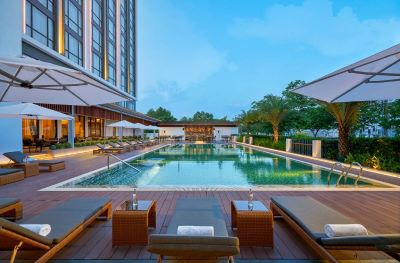
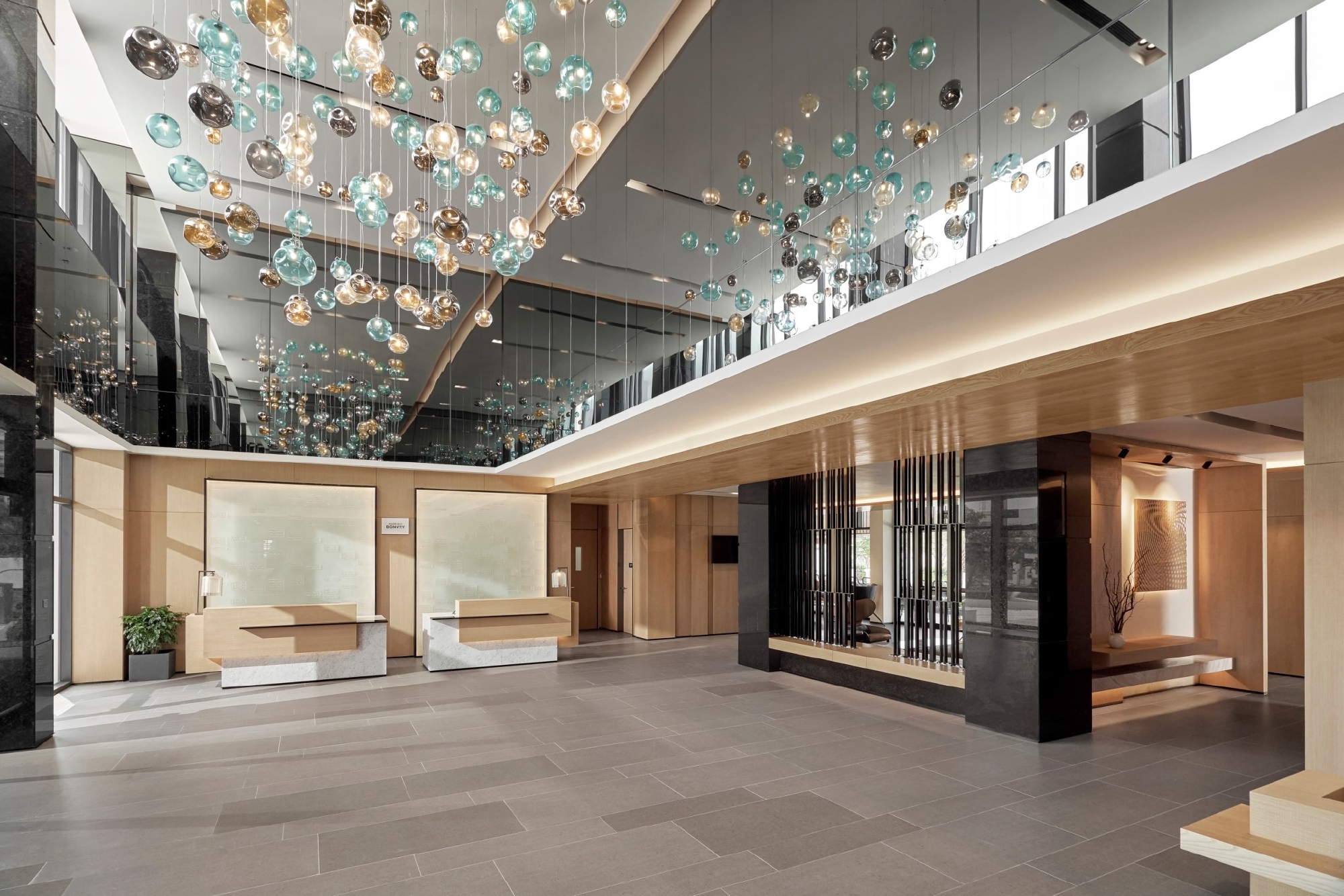
Fairfield by Marriott South Binh Duong features 181 spacious, modern and well-equipped rooms with separate work and rest areas. The property’s public spaces feature the “modern calm” aesthetic of the Fairfield by Marriott brand, which encompasses open layouts, multifunctional spaces and natural light. The hotel features two signature restaurants and bar. ORYZAA, the all-day dining restaurant, presents a fresh take on local Vietnamese delicacies and Western classics, featuring the first international breakfast buffet in the area and an à la carte menu of Asian cuisine for lunch and dinner. Guests who are looking to relax after a long day can enjoy cocktails by the poolside at The Pool Bar.
Fairfield by Marriott Celebrates Its Brand Debut In VietnamThe hotel also features 120 square meters of function space, suitable for meetings, conferences and social events. Guests staying at Fairfield by Marriott South Binh Duong will have access to an array of amenities including an outdoor swimming pool and open-air pool bar. Guests can maintain their daily routines at the 24/7 fitness center and shop for daily essentials at The Market, a 24-hour convenience store in the hotel.
“Fairfield by Marriott is a trusted choice for guests seeking a peaceful sleep, nutritious meals and warm service with a friendly smile. Not only is it an excellent option for business travelers, but Fairfield by Marriott South Binh Duong will also build a bridge between visitors and local residents, by encouraging the exploration of southern Vietnam’s authentic culture, cuisine and natural scenery,” said Sherman Almeida, Hotel Manager of Fairfield by Marriott South Binh Duong. “We look forward to welcoming business and leisure travelers to experience our warm hospitality and uplifting spaces.”
Richard Branson reaches space, as Virgin Galactic gets closer to flying paying customers
SPACEPORT AMERICA, New Mexico – Richard Branson completed a daring, barnstorming flight to edge of space Sunday, rocketing through the atmosphere in the spaceplane hed been yearning to ride for nearly 20 years.
The suborbital trip gave the British billionaire, his three crewmates and two pilots a glimpse of the Earth from more than 50 miles up and a few minutes of weightlessness before the vehicle they were traveling in, SpaceShipTwo Unity, glided back to Earth and a landing on the runway at Virgin Galactic’s facility here in the New Mexico desert.
It was SpaceShipTwo’s fourth trip to the edge of space since 2018, and Virgin Galactic, the company Branson founded in 2004, says it will soon start flying paying customers regularly on similar jaunts, opening a new era in human space exploration.
Several companies in the growing commercial space industry, including Jeff Bezos’ Blue Origin and Elon Musk’s SpaceX, have developed spacecraft designed to allow private citizens, and not just NASA trained military fighter pilots and scientists, to earn the title of “astronaut.” (Bezos owns The Washington Post.)
Virgin Galactic seemed intent on making it clear that this was not a traditional NASA launch. Instead of a stoic countdown, there was a party-like atmosphere along the tarmac, a scene as much a spectacle as a space launch that even included a musical guest, Khalid, who debuted a new song during a performance here. The company’s live broadcast of the flight was hosted by comedian and late-night host Stephen Colbert, and Musk was on hand to watch Branson and the crew take off.
Unlike traditional rockets that launch vertically, Virgin’s SpaceShipTwo Unity takes off tethered to the belly of a mother ship. On Sunday, the mother ship, known as WhiteKnightTwo, lifted off from the tarmac here shortly after 10:30 a.m. Eastern time, delayed by about 90 minutes because high winds overnight had kept the ground crew from rolling it out of the hangar. The spaceship was released at about 11:25 a.m. Eastern, the pilots ignited the engine and the spacecraft shot almost straight up as it thundered toward space.
The flight reached its apogee at 282,000 feet – 53.41 miles – where the passengers were able to unstrap and experience weightlessness. The spacecraft then fell back to earth and a landing at 11:39 Eastern time.
On board were pilots Dave Mackay and Michael Masucci, both of whom had flown to space on previous flights. Joining Branson in the crew compartment were Sirisha Bandla, Virgin Galactic’s vice president of government affairs, Colin Bennett, the company’s lead operations engineer, and Beth Moses, its chief astronaut instructor. Moses, who is married to Mike Moses, the company’s president, flew on Virgin Galactic’s second spaceflight mission, in 2019.
Branson had originally been scheduled to fly aboard a flight scheduled for later this summer or early fall. But after the company successfully made it to space in May, he grew impatient.
“I’ve been itching to go, and they said they wanted somebody to properly test the astronaut experience,” Branson said in a recent interview with The Post. “And I was damned if I was going to let anyone take that seat.”
In a news conference after the flight, he said he wasn’t nervous about the trip. “We have nearly 1,000 of the best engineers in the world” who pored over every inch of the spacecraft, he said. His only concern, he said, was the possibility of a delay. “The only thing I was worried about was some tiny little something that would get in the way, something that would stop us from getting into space.”
He called the experience “just magical. … I’m just taking it all in.” And added that, “having flown to space, I can see more clearly how Virgin Galactic is the spaceline for Earth.”
By moving up his flight, he was able to beat Bezos to space by nine days. Bezos, who recently stepped down as Amazon’s CEO, is scheduled to fly a on his company’s suborbital New Shepard capsule on July 20.
Branson has repeatedly denied that he was in a race with Bezos and said in the interview that it was just “an incredible, wonderful coincidence that we’re going up in the same month.”
But when asked about a rivalry with Bezos on CNBC, he couldn’t help himself, saying “Jeff who?”
Richard Branson reaches space, as Virgin Galactic gets closer to flying paying customersBranson’s antics elicited a strong response from Bezos’ Blue Origin. Bob Smith, Blue Origin’s CEO, issued a statement last week wishing Branson well but also pointing out that Virgin Galactic is “not flying above the Kármán line, and it’s a very different experience.” The Kármán line, at 100 km or 62 miles, is an internationally recognized threshold for where space begins. Virgin Galactic flies to just over 50 miles, the altitude at which the Federal Aviation Administration will award crew members astronaut wings.
On Saturday, however, Bezos wished Branson luck in a post on Instagram. “Wishing you and the whole team a successful and safe flight tomorrow,” Bezos wrote. “Best of luck!”
Branson would now be eligible for his wings, fulfilling a dream he has had since he founded Virgin Galactic, lured by the romance of space travel and the possibility of commercializing an endeavor that had been monopolized by governments.
One of the first major steps on that path was the 2004 Ansari X Prize, a $10 million competition to put a commercial vehicle into space for the first time. Paul Allen, the co-founder of Microsoft had funded an effort, led by Burt Rutan, the legendary aircraft designer, to build what was called SpaceShipOne. Branson fell in love with the ship, purchased the rights to the technology and was able to slap a Virgin logo on the spacecraft as it won the prize.
Watching the spacecraft take off, Branson turned to Allen and said, according to Allen’s memoir, “Paul, isn’t this better than the best sex you ever had?”
Branson then turned his attention to creating the “world’s first commercial spaceline” and vowed that within a matter of years passengers would soon be flying to space on a regular basis.
Virgin Galactic set off to build SpaceShipTwo, which would be far larger and more powerful vehicle than its predecessor. But the program quickly ran into technical problems. And in 2014, it suffered an accident midflight that killed one of the pilots, Michael Alsbury, and severely injured the other, Peter Siebold, who parachuted to the ground. Branson considered giving up on his quest, but ultimately decided that the risk was worth it and carried on, vowing to learn from the accident and build a safer and more robust spaceship.
The company finally made it to space in December 2018, and again a few weeks later, in early 2019. It then moved its operations from Mojave, Calif., to New Mexico’s Spaceport America, the gleaming $220 million facility funded by taxpayers. In 2019, the company announced it would go public through a merger with a New York investment firm and hired a new CEO and leadership team.
Then, in May, it reached space for the third time in a flight with two pilots, and, after consulting with the company’s engineers, Branson decided that he would be on the next flight.
The flight comes amid a flurry of spaceflight activity that taken together amounts to a renaissance for human exploration.
Just over a year ago, no one had flown to space from U.S. soil since the space shuttle was retired in 2011, a long, ignominious drought that ended when Elon Musk’s SpaceX flew a pair of NASA astronauts, Bob Behnken and Doug Hurley, in a test flight to the International Space Station.
Since then, SpaceX has flown two more human spaceflight missions. Boeing, which is also under contract from NASA to transport the agency’s astronauts to and from the station, hopes to fly people in the months to come.
SpaceX plans to fly a mission dubbed Inspiration4 in September. Financed by billionaire entrepreneur Jared Isaacman, a group of four civilians would spend three days or so orbiting the Earth in SpaceX’s Dragon capsule. Axiom Space, a firm based in Houston, is arranging trips for very wealthy groups of people to spend a week on the space station. A voyage that costs some $55 million.
In addition to the flight on July 20, Bezos’ Blue Origin has two more flights planned for this year and more than half a dozen next year.
In all, that would culminate to an era of spaceflight like the barnstormers in the early days of aviation. But whether it is successful depends on whether the industry can continue to fly people reliably and safely.
After the flight, Branson was greeted by his 3-year-old granddaughter, who said, “Papa gone to the moon. Papa gone to the moon.”
Branson let it slide. “I’m not going to disillusion her,” he said.
Volatile foreign funds flow expected to pressure SET
The Stock Exchange of Thailand (SET) Index rose by 7.23 points, or 0.47 per cent, to 1,559.32 on Monday morning.
The SET Index closed at 1,552.09 on Friday, up 8.42 points or 0.55 per cent. Transactions totalled THB85.26 billion with an index high of 1,554.60 and a low of 1,535.69.
Krungsri Securities expected the index on Monday to rebound to between 1,560 and 1,565 points on rising oil price and the Centre for Covid-19 Situation Administration’s move to impose partial lockdown instead of a national lockdown.
However, it predicted that the rise in the country’s Covid-19 cases and volatility in foreign funds flow would pressure the index.
It recommended that investors buy:
▪︎ PTT, PTTEP, BANPU and TOP, which benefit from rising oil price.
▪︎ HANA, KCE, TU, CPF, ASIAN and EPG, which benefit from the weakening baht.
▪︎ BCH, CHG, BDMS, HMPRO, GLOBAL, DOHOME, BEM, CKP, CBG, ICHI and GPSC, whose second-quarter business turnover is expected to improve.
Baht stares at 33 to the dollar as foreign investors leave due to Covid crisis
The baht opened at 32.50 to the US dollar on Monday, strengthening from Friday’s closing rate of 32.60.
The Thai currency is likely to move between 32.45 and 32.60 during the day and between 32.40 and 32.90 this week, Krungthai Bank market strategist Poon Panichpibool said.
Poon said that the baht would weaken, as foreign investors had decided to sell their assets in Thailand due to uncertainty caused by Covid-19 in the country. This situation will improve if 500,000 doses of Covid-19 vaccine are distributed every day.
Poon predicted that the baht could fall to 33 to the US dollar if it passes a resistance between 32.70 and 32.80.
Last week, Covid-19 outbreaks in several countries had pressured emerging markets. Numerous central banks have already run more relaxation measures.
Gold continues upward trend as demand for safe-haven investments grows
The price of gold in Thailand rose by THB100 per baht weight on Monday morning on mass buy-ups of safe-haven assets amid uncertainty over the impact of Covid-19 on the economy.
The Gold Traders Association report at 9.25am showed buying price of a gold bar at THB27,800 per baht weight and selling price at THB27,900, while gold ornaments were priced at THB27,303.16 and THB28,400, respectively.
At close on Saturday, buying price of a gold bar was THB27,700 per baht weight and selling price THB27,800, while gold ornaments were priced at THB27,197.04 and THB28,300, respectively.
The price had risen by THB650 per baht weight last week.
Spot gold price on Monday was US$1,806 (THB58,895) per ounce after Comex gold on Friday rose by $10.4 to $1,810.6 per ounce.
Hong Kong gold price, meanwhile, rose by HK$40 to $16,750 (THB70,324) per tael, the Chinese Gold and Silver Exchange Society reported.


 Fairfield by Marriott Celebrates Its Brand Debut In Vietnam
 Fairfield by Marriott Celebrates Its Brand Debut In VietnamThe hotel also features 120 square meters of function space, suitable for meetings, conferences and social events. Guests staying at Fairfield by Marriott South Binh Duong will have access to an array of amenities including an outdoor swimming pool and open-air pool bar. Guests can maintain their daily routines at the 24/7 fitness center and shop for daily essentials at The Market, a 24-hour convenience store in the hotel.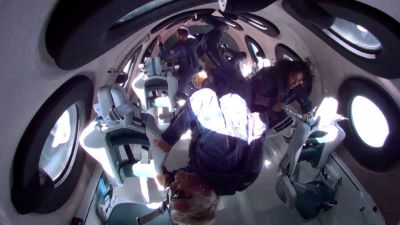
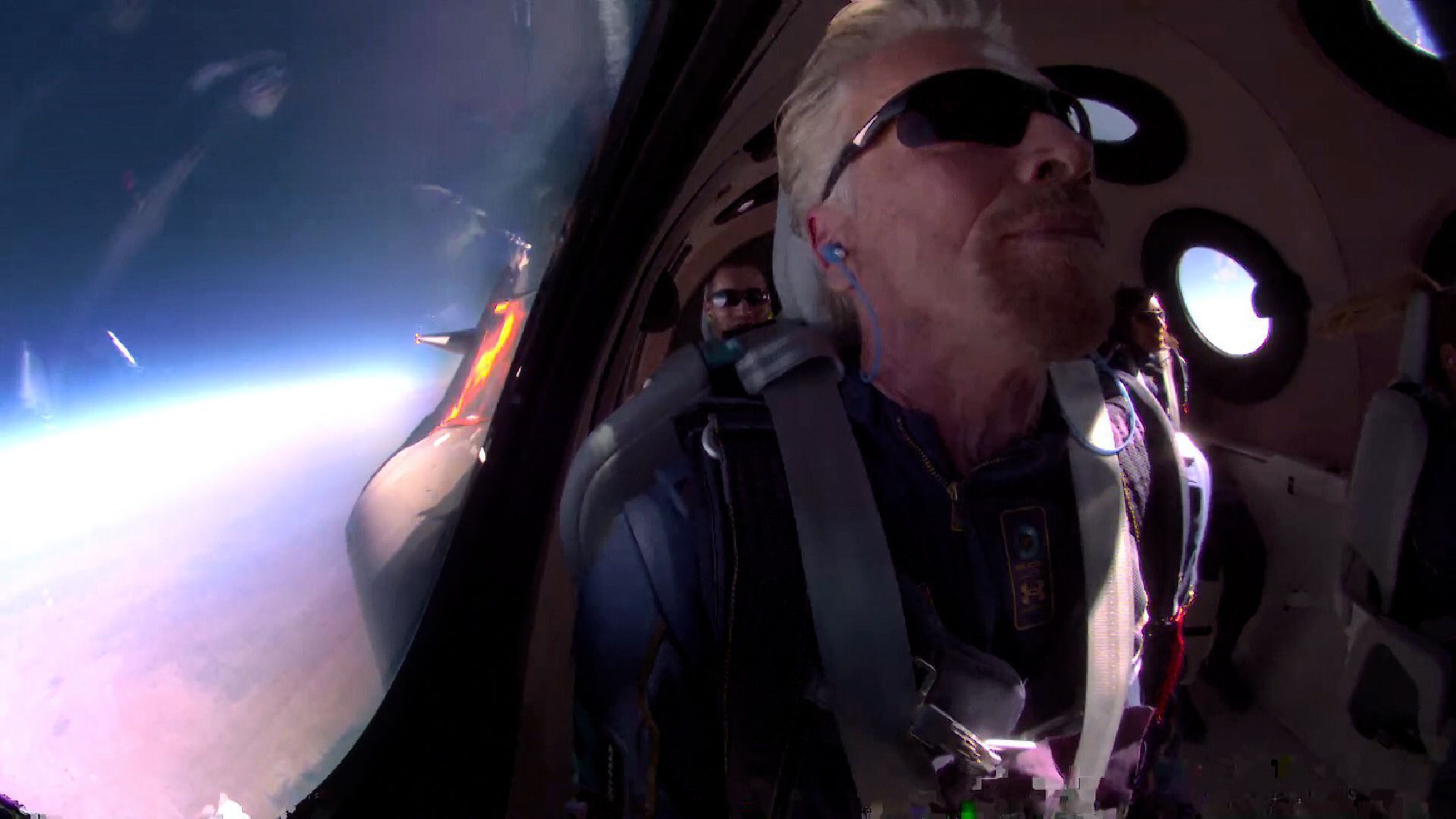 Richard Branson reaches space, as Virgin Galactic gets closer to flying paying customersBranson’s antics elicited a strong response from Bezos’ Blue Origin. Bob Smith, Blue Origin’s CEO, issued a statement last week wishing Branson well but also pointing out that Virgin Galactic is “not flying above the Kármán line, and it’s a very different experience.” The Kármán line, at 100 km or 62 miles, is an internationally recognized threshold for where space begins. Virgin Galactic flies to just over 50 miles, the altitude at which the Federal Aviation Administration will award crew members astronaut wings.


