Golden Age for China brands bolstered by tech crackdown #SootinClaimon.Com

#SootinClaimon.Com : ขอบคุณแหล่งข้อมูล : หนังสือพิมพ์ The Nation.

https://www.nationthailand.com/business/40003110

Golden Age for China brands bolstered by tech crackdown


Chinas intensifying crackdown on technology companies is proving to be a cautionary tale for investors in the nations startups, with one notable exception: consumer brands.

From cosmetics to bubble tea, Chinese ventures making waves among a new generation of shoppers are becoming a magnet for funds hunting for their next big hit. Investors may see such companies as a viable alternative to tech startups because the government, rather than clamping down, is pushing to foster domestic champions that can fuel spending and compete with the likes of Coca-Cola and Nike.

Beijing’s tightening regulation is increasing barriers to invest in traditionally popular areas such as tech, said Mark Tanner, managing director of Shanghai-based marketing and branding firm China Skinny. “In contrast, consumer sectors from food, fashion to fitness and leisure are seeing increased interest from investors with more policy support,” he said.

Chinese brands are grabbing market share from global rivals in the world’s largest consumer market. Even before the tech crackdown, consumer-sector startups including healthy beverage maker Genki Forest and KKR & Co.-backed dairy producer Adopt A Cow were drawing more funding — about $62 billion since 2018, according to data provider Preqin Ltd. While that’s dwarfed by the $112 billion put into tech, the number is expected to increase in coming years.

“The next decade will be the golden age for the rise of Chinese brands,” said Frank Wei, co-head of Warburg Pincus China, which invested in Genki Forest, valued at $6 billion. “The rise of Generation Z reshapes the industry.”

China’s decision to curb business of ride-hailing giant Didi Global Inc. days after its U.S. listing is the latest bombshell for tech investors, who have seen a months-long clampdown hurt shares of companies from Alibaba Group Holding to Tencent Holdings.

That’s denting fundraising plans of tech startups. LinkDoc Technology Ltd., which provides healthcare services using artificial intelligence, halted its plans for a U.S. initial public offering, Bloomberg reported on Thursday.

Authorities in Beijing are worried that tech firms listing in the U.S. pose a security risk because of the vast troves of data they hold. So far they are focusing on internet companies — which are most adept at harnessing and employing user information — rather than those that provide everyday products.

The consumer sector is a good option for capital to shift to because it faces much lower policy risks than tech and education — which has also faced a crackdown — a person from a Shanghai-based private equity firm said, asking not to be identified because of the sensitivity of the matter. On the downside, consumer companies face fierce competition and uncertain growth prospects, the person said.

One Chinese venture capital business is considering shifting its focus to categories that are most likely to get government support and favorable policies, including local consumer brands and environment-friendly enterprises, a person at the company said.

Once regarded as cheap and inferior, Chinese brands saw transactions grow 6% more than that of foreign counterparts in 2020, according to a research report by e-commerce platform JD.com Inc. Investors have backed more than 3,500 deals in the nation’s consumer discretionary sector since 2018, Preqin figures show.

Yatsen Holding Ltd., owner of cosmetics house Perfect Diary, has become a growing threat to the likes of L’Oréal and Estée Lauder and stands as the second-largest brand, with 6.7% of the crowded market for color make-up such as lipstick and mascara, Euromonitor estimates. It attracted investors including Warburg Pincus and Hillhouse before listing in the U.S. last November.

Pop Mart International Group Ltd., a Chinese toy maker, attracted more than $100 million from firms including Sequoia China before garnering HK$5 billion ($644 million) in its Hong Kong IPO last December.

Heytea, a Shenzhen-based teahouse chain, is favored by the likes of IDG, Sequoia China and Hillhouse and is now valued at more than 60 billion yuan ($9.2 billion) after its latest round of fundraising, according to a person familiar with the matter. The company declined to comment.

ADVERTISEMENT

Local rival Nayuki Holdings Ltd. raised $656 million in a Hong Kong IPO last month.

One reason for the rapid rise of local brands is their ability to reach customers through social media and livestreaming shopping platforms. Online goods sold via livestreaming could grow 25% to 1.2 trillion yuan this year, according to consultant iiMedia Research.

“Social media enables new brands to be recognized much faster than via traditional marketing channels,” said Helen Wong of Qiming Venture Partners. “Therefore, the consumer startups are more attractive to us than before as our investment is expected to pay back sooner.”

Companies like Hangzhou-based Adopt A Cow devote most of their marketing budgets to livestreaming. The direct-to-consumer firm allows people to track a cow online and works with influencers including Qianxun (Hangzhou) Co., co-founded by China’s millionaire livestreaming queen Viya.

Livestreaming platforms “are giving birth to a plethora of new Chinese brands,” said Zhao Ran, president of Qianxun (Hangzhou), which works with more than 20,000 of them. They are devoting more of their budgets to such marketing than their foreign counterparts, which are trying to catch up on the trend.

ADVERTISEMENT

“New brands always emerge with the advent of new media platforms,” said Zhao. “Livestreaming is now the most important new media marketing channel.”

Nationalism has also played a role in the shift toward domestic names. Global titans including Nike and Adidas are facing pressure in China after shoppers boycotted them for taking a stand against the treatment of Muslim Uyghurs in the Xinjiang region.

Still, valuations are reaching frothy territory, with multiple funds chasing the same companies to convince founders that they can bring in resources beyond cash.

“Normally, a decision process to invest in a startup may take two months but now, anxious investors can shorten the process to just two weeks, skipping some steps such as issuing term sheets or just doing very simple due diligence,” said Loreal Chen, a Shanghai-based financial adviser who helps link founders with venture capital and private equity firms.

The investments can be risky. A slew of Chinese brands have gone under just as fast as they emerged. Eye-shadow seller Apinkbaby, which had more than 180,000 online followers, went bankrupt earlier this year.

For now, Genki Forest’s President Zhang Guizhou is banking on the billions that come with the rising interest in home-grown champions.

“International brands are no longer the top choice for Chinese consumers,” said Zhang. The younger generation “aren’t overly obsessive and idolizing foreign products and brands anymore.”

Published : July 12, 2021

By : Syndication Washington Post, Bloomberg

Bangkok Airways announces the temporarily cancellation of some flights as well as announces its continued measures to facilitate passengers affected by the COVID-19 situation #SootinClaimon.Com

#SootinClaimon.Com : ขอบคุณแหล่งข้อมูล : หนังสือพิมพ์ The Nation.

https://www.nationthailand.com/business/40003094

Bangkok Airways announces the temporarily cancellation of some flights as well as announces its continued measures to facilitate passengers affected by the COVID-19 situation


Bangkok Airways Public Company Limited would like to announce the temporarily cancellation of some of its domestic flights during the period 13 – 31 July 2021.

Due to recent announcements from the Centre for COVID-19 Situation Administration (CCSA) in regards to travel restrictions in Thailand, Bangkok Airways Public Company Limited would like to announce the temporarily cancellation of some of its domestic flights during the period 13 – 31 July 2021. The cancelled flights are as follows:

1. Bangkok – Chiang Mai (roundtrip)

2. Bangkok – Phuket (roundtrip)

3. Bangkok – Sukhothai (roundtrip)

4. Bangkok – Lampang (roundtrip)

5. Bangkok – Trat (roundtrip)

However, the following routes are still being operated normally with the highest hygienic measures and procedures;

• Bangkok – Samui (roundtrip) 2 flights per day

• Sealed routes flights between Bangkok and Samui, that will accommodate international transit passengers (3 flights per day)

• Samui – Phuket (roundtrip) 4 flights per week (Monday, Wednesday, Friday and Sunday), these flights will be available from 16 July 2021 onwards

• Samui – Singapore (roundtrip) 3 flights per week (Monday, Thursday and Sunday), these flights will be available from 1 August 2021 onwards

Passengers who are scheduled to travel before 31 July 2021 can have fees waived for rebooking or alternatively may request a refund in the form of a travel voucher to be used for future ticketing. Passengers can make any necessary changes up to 24 hours prior to their flight. More information can be seen at www.bangkokair.com/travel-voucher (terms and conditions apply).

Passengers who wish to amend their travels with no new specified travel date (open ticket) can submit their request via https://forms.office.com/r/WjcEEfQX2L within 24 hours prior to the proposed departure date. The airline will use information provided via such form in order to further accommodate passengers. 

Passengers can contact the airline via the following channels;

• Call Center: Tel. 1771 and 02-270-6699 (during 8 a.m. – 8 p.m.)

• PG Live Chat: https://bit.ly/PGLiveChatEN

ADVERTISEMENT

• Email: Reservation@bangkokair.com

Passengers who booked their tickets through travel agencies are advised to directly contact their agents for further arrangements.

Moreover, the airline encourages passengers to check announcements, orders, and travel procedures, for each destination prior to travel from the related authorities such as:

• The Centre for COVID-19 Situation Administration (CCSA)

http://www.moicovid.com/ข้อมูลสำคัญ-จังหวัด/

ADVERTISEMENT

• Airports of Thailand www.airportthai.co.th/en/

• Department of Airports www.facebook.com/DepartmentOfAirports/

Bangkok Airways apologizes for the inconvenience caused and the airline remains committed to the safety and hygiene of our passengers and employees as the highest priority. The airlines strictly implement surveillance measures to prevent the spread of COVID-19

Published : July 11, 2021

Innovations speed race to put more wind turbines on sea floor #SootinClaimon.Com

#SootinClaimon.Com : ขอบคุณแหล่งข้อมูล : หนังสือพิมพ์ The Nation.

https://www.nationthailand.com/business/40003074

Innovations speed race to put more wind turbines on sea floor


Its getting faster and cheaper to embed a wind tower the size of the Washington Monument into the sea floor.

South Korea is cutting the time it takes to construct and install an offshore turbine, from as long as three months to just a matter of days, thanks to a large flat-bottomed ship for hauling the structure and a “bucket suction” method for affixing it. The innovations could chop an estimated $3 million from the process.

State-owned utility Korea Electric Power Corp. on Wednesday showcased what it says is the first vessel that can haul a fully constructed wind plant. A crane on the 1,500-ton ship, known as a multipurpose mobile base, or MMB, lifted a 140-meter-high (459 feet) wind tower built in the water near the western port of Gunsan.

“Through using the MMB technology, we should be able to tackle our 2050 carbon neutrality goal and make a huge contribution to wind power, which is the core element in the nation’s transition,” Kepco Chief Executive Officer Cheong Seung-il said at the event.

Innovations to cut costs and installation times promise to help spur a global expansion of offshore wind power that’s already forecast to deliver an 11-fold increase in capacity through 2035, according to BloombergNEF. Annual installations are expected to rise to a record 11 gigawatts this year and hit 32.5 gigawatts by the end of the decade, as nations add more renewable energy to phase out fossil fuels and curb carbon emissions.

China, which will account for almost three-quarters of installations this year, and nascent markets across Asia like Japan, Taiwan and Vietnam, will support that growth outlook, BNEF said in a report last month.

The sea offers one of the best prospects for green energy in South Korea, where the climate and topography are ill-suited for large solar and onshore wind plants, and conventional hydropower resources are almost fully utilized. The country is seeking to add 12 gigawatts of offshore wind by 2030, compared with less than 0.2 gigawatts now.

South Korea already has the world’s biggest tidal power plant at Sihwa Lake, and is adding the world’s largest offshore wind farm near Shinan.

Kepco is crunching down the 90-day period it can take in some circumstances to build and place an offshore wind turbine. The company can put together a plant onshore in seven days, and the MMB will then ship it to the offshore location. Hauling the entire plant significantly reduces the time and cost of having to make several trips to deliver parts.

The new process would lower the cost of installing a 5-megawatt turbine by 43%, or 3.7 billion won ($3.3 million), according to a statement from Kepco.

The company is looking to increase the size of MMBs to carry up to 14-megawatt turbines that are being rolled out in Europe, according to Ryu Moo Sung, principal researcher at Kepco Research Institute. He said Germany’s RWE and Spain’s Ocean Winds have shown an interest in Kepco’s vessels.

Once the MMB is at the offshore site, it takes up to 12 hours to fix the tower to the ocean floor using a “suction bucket” technique. The method pumps water out of the buckets, creating pressure to force them into the floor. The southwest coast of South Korea is ideal for this technique because of the soft seabed.

The new process is an improvement over traditional methods, which can create environmental problems as cement is injected into the sea floor to build a foundation, Kepco said. In addition, offshore construction is vulnerable to delays caused by inclement weather, which can further raise costs.

The time it takes to install an offshore turbine has been steadily decreasing, with the pace twice as fast as 10 years ago, according to a BNEF report in 2019. In the U.S., the Department of Energy and partners including the University of Delaware have also worked on accelerating the construction of offshore wind farms using suction bucket technology.

Published : July 11, 2021

By : Syndication Washington Post, Bloomberg · Heesu Lee
Rehabilitation loans have reached 21,929 SMEs. #SootinClaimon.Com

#SootinClaimon.Com : ขอบคุณแหล่งข้อมูล : หนังสือพิมพ์ The Nation.

https://www.nationthailand.com/business/40003096

Rehabilitation loans have reached 21,929 SMEs.


The Bank of Thailand said THB66.898 billion had been disbursed under the latest loan rehabilitation project, as of July 5, with approvals given to 21,929 people who received assistance, with a limit of THB3.1 million per person.

The BOT had opened for financial institutions to seek loan rehabilitation on April 26, consisting of measures to support loan rehabilitation of THB250 billion and the Asset Warehousing project with a budget of THB100 billion.

Loans approved to SMEs amounted to THB31.629 billion, or 47.3 per cent. It said 9,674 people received credit lines accounting for 44.1 per cent, followed by THB27.464 billion to large businesses, accounting for 41.1 per cent, and debtors about 7 per cent.

Published : July 11, 2021

By : The Nation

Fear on top of fear: Why anti-gun Americans joined the wave of new gun owners #SootinClaimon.Com

#SootinClaimon.Com : ขอบคุณแหล่งข้อมูล : หนังสือพิมพ์ The Nation.

https://www.nationthailand.com/business/40003075

Fear on top of fear: Why anti-gun Americans joined the wave of new gun owners


All his life, Jabril Battle was anti-gun. Then came the pandemic, the lockdown, the shortages and a feeling that at any moment, things could blow. Battle bought a Beretta.

Drawn to last summer’s protests against police violence, Savannah Grace found herself face-to-face with a camo-clad officer’s long gun. She’d always hated guns, but went out and got a Glock 45.

In blue cities and red suburbs alike, firearms purchases soared last year – to the highest level in half a century, based on federal background checks. A striking portion of those sales went to first-time gun buyers – 40%, according to the firearms industry’s trade association. Other studies show first-timers accounting for more like a fifth of sales in 2020, but that’s still unusually high, retailers said.

Overall gun ownership nationwide jumped from 32% of Americans to 39% last year, according to University of Chicago survey data – well under the 50% level of half a century ago, but the biggest jump in recent decades.

From the downtown streets left empty by the pandemic’s shutdowns to the sharp spike in homicides and the nationwide conflict over the role and behavior of police officers, a disorienting and often frightening year drove many decisions to buy guns, according to dealers and buyers alike.

“It really was a perfect storm of concerns” that drove sales, said Mark Oliva, spokesman for the National Shooting Sports Foundation, which tracks the numbers.

Shakima Thomas, a social worker in Newark, had always thought of guns as loud and dangerous – nothing she wanted anything to do with.

She grew up around firearms; her grandmother carried a handgun in her purse, and several close relatives had served in the military and owned guns. But Thomas, 39, never considered buying one for herself until Donald Trump’s presidency. Trump’s boast that he could shoot someone on Fifth Avenue and not lose any of his support made Thomas fear that some Americans might be emboldened to express their rage violently.

A lifelong Democrat, she got a gun permit early in the Trump administration but didn’t buy her first gun until last summer, when the killing of Floyd and the protests that spread across the nation made Thomas feel like the country was spiraling out of control, “like the world was in an apocalypse.”

She walked into RTSP – a gun store whose name stands for Right to Self Protect – and bought an AR-15 assault rifle. Months later, she added a handgun.

“I never felt like I would want to own a gun because of the damage I thought they do to people,” she said. “But when I started feeling unsafe, all of that changed.”

Sales to women and people of color rose in 2020. Firearms industry data shows sales jumping 50% among Black customers, 47% among Hispanics and 43% among Asian Americans, though gun ownership remains proportionately lower among those groups compared with Whites.

“Typically, my customers were always White men and White women concerned about who was president and what restrictions were coming,” said Michael Cargill, owner of Central Texas Gun Works in Austin. “Then last summer, you had the protests and downtown was basically boarded up. Law enforcement all went downtown. Right away, we had lines out the door every day.”

“It didn’t matter if you were Democrat or Republican, White or Black,” said Cargill, who is Black. “One side said, ‘Trump’s going to be reelected and it’s going to get violent,’ and the other said, ‘Biden’s going to win and he’s going to come after the guns.’ My instructors and I became like gun therapists for people who never had guns before or really didn’t like guns. One lady came in here in tears, with her teenagers, and she said, ‘This goes against everything I believe in, but I need my family to learn how to protect themselves.'”

The new gun buyers included many women who felt vulnerable to a wave of violent crime. Some were Black city dwellers such as Karen Williams-Adir, a former Los Angeles bus driver who now writes fiction, and some were White conservatives living in the heartland.

Williams-Adir, 49, feels safe at home in Ladera Heights, an affluent enclave on Los Angeles’ west side, but over the past few years, she’s been unnerved by news of mass shootings, police brutality and Trump’s “America First” rhetoric.

“Certain people, certain colors were being targeted,” she said. “I started getting angry because I don’t understand why people just don’t respect people’s space.”

But it wasn’t until the Floyd killing and the explosion of anguish that followed that Williams-Adir decided to buy a gun.

“What happened to George Floyd just flipped my wig,” she said. “It was just too hysterical. People were on edge. Enough was enough. I figured, if you want to come to my home and do harm to me for any reason, you might not ever go home again to yours.”

ADVERTISEMENT

She worried about being stopped – particularly by police – as she moved about the city. “If I do everything you tell me to do and don’t resist and I’m not armed, will I walk out of here alive?” she wondered.

Despite her concern about police violence, she’d still call them to her home if she needed help. But having a gun at home means she no longer feels the need to rely on them.

First, Williams-Adir bought a .32 Beretta, a gun petite enough to fit comfortably in her hands. Since then, she’s added two other handguns and a shotgun. The weapons, she said, give her peace of mind.

“It just felt like we needed to be able to defend ourselves,” Williams-Adir said, speaking especially of Black women. “And I’m not bringing a knife to a gunfight.”

Schuyler Brubaker, a 21-year-old senior at Oklahoma State University, also perceived growing danger in her college town of Stillwater. Her perception of risk stemmed not from racial tensions, political protests or police behavior but from news headlines about sex trafficking and attacks on young women who were exercising alone or using ride-hailing services.

ADVERTISEMENT

In her conservative community, she sensed a lot of fear that a Democratic administration would impose strict gun controls. At a sporting goods store one day, she heard a woman “talking about how she thought ‘I’d better go get [a gun] before Biden'” won the election.

“I’m a Republican, and I don’t care for Biden,” Brubaker said, “but I didn’t think he was going to come and steal anyone’s guns.”

Rather, what drove her to the gun shop was her sense that violent crime was coming too close for comfort. “I’ve had friends who have almost been abducted,” she said. “Stillwater is not a safe place, but there are some sketchy people here.”

Murders and other types of violent crime are rare in Stillwater, though homicide numbers soared last year in many U.S. cities.

Last summer, soon after she turned 21, Brubaker and four friends signed up for a concealed-carry training course. Then she bought herself the same kind of compact 9mm Smith & Wesson pistol that her godmother, a certified instructor, taught her to shoot when she was 13.

Brubaker, a fashion merchandising major, said she inherited her acute concern for personal safety from her mother, whose career as a paramedic and then a nurse exposed her to plenty of trauma.

Her mother doesn’t own a gun, but she “made me watch the news” and kept Brubaker aware of Amber Alerts, leaving her daughter “overly cautious,” Brubaker said. “Besides, I have no upper-body strength whatsoever, so me trying to fight my way out of a bad situation isn’t a good option.”

Now, Brubaker said, her gun lends her a sense of security: “If I want to go for a walk around the lake or if I want to go hiking by myself, I carry it with me.”

Politics – along with mass shootings and natural disasters such as 2005′s Hurricane Katrina – have long driven gun sales. For decades, whenever a Democrat has been elected president, several months of surging sales have ensued, as customers concerned about the prospect of tighter restrictions on guns hurried in to stock up.

“The more an administration talks about gun control, the more you’re going to hear cash registers ring,” Oliva said.

But Thomas, the Newark social worker who bought a rifle and pistol last year after protests against police violence made her feel unsafe, said she remains a committed Democrat. She agrees with the cause that peaceful protesters promoted last summer, yet the chaos and destruction she saw in her city and around the country pushed her to take action to defend herself. In the end, she said, her attitude toward guns does not define her political identity.

For many new gun owners, though, the decision to arm themselves is a political pivot – an accumulation of anxieties that led them to discard long-held beliefs. It’s a decision that is particularly difficult for people who belong to groups at higher risk of being on the wrong end of gun violence.

Jabril Battle, a 28-year-old account representative at a financial services company in Los Angeles, had always believed that “anyone who had a gun was a gun nut,” he said. “I really bought into the whole idea that the more people have guns . . . the more likely it is for people to start killing each other.”

But as the pandemic paralyzed the nation, Battle said, “I just saw how crazy people got.” He found himself conjuring the worst scenarios: “I was like, if my block has 10 houses, how many people in these houses have guns? If the food and water gets cut off, [if] supplies run out . . . what does that look like? Is this going to be a ‘Mad Max’ situation? Like ‘The Walking Dead,’ but not with the zombies?

“I was just, like, ‘Do I want to be the person who has a gun or doesn’t have a gun?”

Battle bought a Beretta 92FS, then added a Glock 34 pistol.

Still, he had reservations: “Being Black with a gun is a very high risk, a way higher risk than other races,” he said. “You are seen as a threat without a gun, and with a gun you are seen as a super threat.”

He kept imagining the scene if he were stopped by a White police officer.

“It’s still in my head, honestly, when I go to the gun range and I have my gun in my car,” he said. “If I get pulled over, and they ask, ‘Are there any weapons in the car?’ [and] I say there’s a gun, and then I hand in my registration, will they shoot me?”

But he’s enjoying the new world that guns opened to him – classes, an organization of Black gun owners, shooting competitions.

“Once I started being around guns more, and I kind of saw the culture and the environment, I’m falling in love,” he said.

In Battle’s family, guns were “not a good thing,” he said. “It kind of represented crime, especially for Black people. It’s just different for African Americans.”

But his family has accepted his decision, he said. His grandmother and two aunts came to the range with him and are considering returning to take lessons.

The powerful emotions that drive both sides of the gun debate cause many gun dealers to try to keep politics out of their shops – a stance that became even more important over the past year, as demand surged.

“We don’t take any positions and we don’t make any judgments,” said Charrie Wexler, a firearms instructor who works with her husband, Brandon, at Wex Gunworks in Delray Beach, Fla.

Starting with the coronavirus shutdowns in March 2020, “we got a massive increase in women, Blacks, Asians, transgender people,” she said. “They started coming in when there was all that talk of defunding the police and when people didn’t know what covid would mean and worried that people might come to their homes trying to get their supplies.”

“It was like watching one of those end-of-the-world movies,” Brandon said. “You saw fear.”

“Fear on top of fear on top of fear,” Charrie said. “Women, especially, would say, ‘I don’t believe in guns, I don’t like them, but the world has gone crazy.'”

In a scary time, Savannah Grace wanted not just protection, but a sense of belonging and community. A transgender woman who took part in protests in Richmond last summer, Grace, 31, grew up in a home where guns were culturally alien. But the combination of being confronted by law enforcement officers at protests and feeling endangered because of her gender identity prompted her about-face.

“I’ve been threatened just for being who I am,” she said. Being armed was a way to assert control and gain political power: “As soon as any marginalized group starts arming themselves, that’s when policy gets pushed through a little bit more,” she said.

She started going to a gun range with a friend who was a veteran enthusiast. She liked how shooting made her feel. And she liked the array of people at the range – “people of color were there,” said Grace, who is White, “and other queer couples were there, so that was kind of fun to see. ‘We’re here!'”

She signed up for a concealed-carry course through an organization called Armed Trans Women “and then one day, I was just like, I’m going to do this,” she said.

She bought a Glock 9mm handgun, which she keeps loaded in her dresser. She makes sure to handle it almost every day, “just to make sure I’m comfortable with it.” She feels safer now, especially since she lives “in a household that could be targeted by people. We fly a rainbow flag and people in my house are known activists.”

She doesn’t expect to use the weapon. She’d be unlikely “to shoot a burglar or something like that,” she said. “Like, if they’re stealing my TV, they probably need it more than I do.”

But when she’s going to a protest where she expects to be near “right-wing gun owners,” she carries openly, “just to be, like, ‘Hey, we both have these, let’s keep our distance.'”

Other than her attitude toward guns, Grace’s politics haven’t changed, but she’s had to alter the way she thinks of herself: She now defines herself as a gun person “who hates gun people.”

Published : July 11, 2021

By : The Washington Post · Marc Fisher, Miranda Green, Kelly Glass, Andrea Eger

Thai Vietjet continues Convenient Flight to serve Domestic Travelers #SootinClaimon.Com

#SootinClaimon.Com : ขอบคุณแหล่งข้อมูล : หนังสือพิมพ์ The Nation.

https://www.nationthailand.com/business/40003061

Thai Vietjet continues Convenient Flight to serve Domestic Travelers


Thai Vietjet places an emphasis on the health and safety of all passengers and employees.

Thai Vietjet continues providing its service to passengers who need to travel throughout the current COVID-19 escalation and recently announced intensified COVID-19 restrictions, underlining its fundamental purpose of offering more flying opportunities to Thai people under any circumstances, with the highest level of safety and hygiene standard.

“Although we are facing a tough situation, we will continue to provide our best service to passengers and businesses who still need to fly during the pandemic situation, as we have always done. Regardless of the fact that we have to reduce some flight operation in the coming weeks, we will still maintain flight operations on the entire flight network, to meet our passengers needs and support them during this difficult time.”, Said Mr. Woranate Laprabang, Chief Executive Officer of Thai Vietjet.

Thai Vietjet continues Convenient Flight to serve Domestic TravelersThai Vietjet continues Convenient Flight to serve Domestic Travelers

Due to more intense restriction policy under the escalating COVID-19 situation, the airline may reduce flight frequency on its flight network. However, the airline all remain its flight operation on every route on its entire flight network to provide convenience choice of travel to the passengers, including flights from Bangkok (Suvarnabhumi) to Chiang Mai, Chiang Rai, Phuket, Hat Yai, Krabi Nakhon Si Thammarat, Surat Thani, Khon Kaen, Ubon Ratchathani, and Udon Thani.

Thai Vietjet continues Convenient Flight to serve Domestic TravelersThai Vietjet continues Convenient Flight to serve Domestic TravelersThai Vietjet places an emphasis on the health and safety of all passengers and employees. So far, all of the airline’s employees have been fully vaccinated. Furthermore, in accordance with the Thai Ministry of Public Health, the airline has been completing daily aircraft disinfection throughout its fleet.


Since the beginning of the third wave of COVID-19 escalation in Thailand, the airline has announced the support policy to affected passengers who desire to postpone their travel. Earlier this month, the airline has announced further policy for passengers holding the tickets on the airline’s domestic flight network who booked tickets and made payment by May 31, 2021, with travel date between July 1 – 31, 2021, by offering support as follows:

1. Free change of flight date for one time (new travel date must be by October 31, 2021 and subject to flight availability, rerouting is not applicable).

ADVERTISEMENT

2. Keeping the value of the ticket as Credit Shell, which is valid for 3 months from the original travel date.

*Passengers who have travel dates fall into the above-mentioned period and wish to contact the airline (at least 72 hours before the original departure time) for support, please select 1 of the communication options below:

1. Self-manage booking by passengers on skyfun.vietjetair.com/searchreservation

2. By E-Form: https://bit.ly/2L6Yv4z

3. By Line Official: @Thaivietjet

ADVERTISEMENT

4. By email: vz.support@vietjetair.com

5. By Live Chat at https://skyfun.vietjetair.com/

Furthermore, the airline has improved its call center to better support its passengers in a variety of situations. Passengers can now contact the airline more easily and conveniently at 02-089-1909. Passengers can also contact the airline by chatting with ‘Amy,’ the AI chatbot function on the airline website (www.vietjetair.com), which is designed to help passengers and enhance their experience. Additionally, the airline has implemented the ‘Manage Booking’ feather on its website, allowing passengers who book tickets directly through the website to conveniently manage their bookings themselves.

“Thai Vietjet wishes to express our moral support to the Thai people during this difficult time. We believe that the situation will gradually improve very soon, and we will be able to fully serve our passengers with our best service possible again”, Mr. Woranate Laprabang added.

Published : July 10, 2021

AIA Group Named #1 MDRT Company In The World For The Seventh Year Running #SootinClaimon.Com

#SootinClaimon.Com : ขอบคุณแหล่งข้อมูล : หนังสือพิมพ์ The Nation.

https://www.nationthailand.com/business/40003034

AIA Group Named #1 MDRT Company In The World For The Seventh Year Running


A record total of 16,017 AIA agents and agency leaders were registered as MDRT members as of 1 July 2021, representing an increase of 25 per cent from 2020 and impressive growth of 783 per cent since the company’s IPO in 2010.

AIA Group Limited (“AIA”; or the “Company”; stock code: 1299), the largest independent publicly listed pan-Asian life insurance group, announced today the extraordinary achievement of becoming the only multinational firm in history to have achieved the largest number of Million Dollar Round Table (MDRT) members for seven consecutive years.

A record total of 16,017 AIA agents and agency leaders were registered as MDRT members

as of 1 July 2021, representing an increase of 25 per cent from 2020 and impressive growth of 783 per cent since the company’s IPO in 2010.

MDRT is a global and independent association that is internationally recognised as the standard of excellence in life insurance and financial services. Its members are required to generate

a certain level of premium, commission, and income, and demonstrate professional knowledge, strict ethical conduct, and outstanding client service.

Lee Yuan Siong - AIA Group Chief Executive and PresidentLee Yuan Siong – AIA Group Chief Executive and PresidentLee Yuan Siong, Group Chief Executive and President of AIA, said, “I am very proud of our agents for successfully leading AIA into the number one MDRT position for 2021. Their dedication to helping our customers better prepare for their financial future and lead Healthier, Longer, Better Lives is an inspiration to us all. AIA’s achievement is a testament to how our agents have responded to the ongoing pandemic – adapting to new working practices and providing uninterrupted service and support to our communities in Asia.”

Bill Lisle - Regional Chief Executive and Chief Distribution Officer of AIABill Lisle – Regional Chief Executive and Chief Distribution Officer of AIABill Lisle, Regional Chief Executive and Chief Distribution Officer of AIA, said, “Being named the number one MDRT company in the world for seven consecutive years is another indication to the strength of our agency force, and shows the benefits of our extensive investments in our people, providing them with the best training and career progression opportunities in the industry.”

Published : July 09, 2021

B.GRIMM Power Unveils 7 Strategies To Become a World-Class Energy Producer, Digital Business Model, Clean Energy and 10,000-MW Capacity Highlighted #SootinClaimon.Com

#SootinClaimon.Com : ขอบคุณแหล่งข้อมูล : หนังสือพิมพ์ The Nation.

https://www.nationthailand.com/business/40003001

B.GRIMM Power Unveils 7 Strategies To Become a World-Class Energy Producer, Digital Business Model, Clean Energy and 10,000-MW Capacity Highlighted


BGRIM is operating 48 power plants and has set its sights on raising its Power Purchasing Agreements capacity from 3,682 MW in 2020 to 7,200 MW in 2025 and further to 10,000 MW in 2030. The company also aims an annual revenue target of more than 100 billion baht with a strong financial structure.

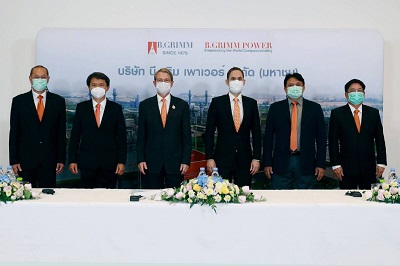
B.Grimm Power Public Company Limited (BGRIM) unveiled its seven strategies based on the company’s vision to “Empower the World Compassionately” with BGRIM’s core values of Professionalism, Positivity, Partnership and Pioneering Spirit.

Dr Harald Link, Chairman and President of BGRIM, made the official announcement of the company’s regenerated approach to business and growth plan with a ramped-up target to achieve Power Purchase Agreements (PPA) of 10,000-megawatt capacity by 2030.

BGRIM, known as Thailand’s leading industrial power producer, will seek to accomplish the strategies by continuing to embrace its traditional principles of conducting businesses with compassion.

BGRIM is evolving to be a “Sustainable Utility Solution Provider” powered by reliable and clean energy, providing integrated services to meet changing customer needs, Dr Link explained.

BGRIM will also continue to gear up business cooperation with congenial partners both at home and abroad.

B.GRIMM Power Unveils 7 Strategies To Become a World-Class Energy Producer, Digital Business Model, Clean Energy and 10,000-MW Capacity HighlightedB.GRIMM Power Unveils 7 Strategies To Become a World-Class Energy Producer, Digital Business Model, Clean Energy and 10,000-MW Capacity HighlightedThe seven strategies to drive BGRIM onto being a global energy producer consisting of:

Strategy 1: Significantly expanding natural gas and renewable energy generating capacity in the region with Power Purchase Agreements with various government units, to provide highly-efficient and stable supplies of electricity and utilities which are the cornerstones to support economic growth of various countries. This strategy will be pursued by means of greenfield project development and acquisition in Thailand and abroad. BGRIM is already present in Thailand, Lao PDR, Vietnam, South Korea, Cambodia, the Philippines and Oman.

Strategy 2: Playing a major role in the liquefied natural gas (LNG) business and clean fuel supply chains. BGRIM has already secured the rights to import 1.2 million tonnes of LNG a year to Thailand. The LNG procurement rights will lead to opportunities for better cost management and business expansion both in the power sector and the distribution of LNG. Furthermore, the engagement of LNG business and clean fuel supply chains could pave the way for development of alternative fuels which lead to the reduction of greenhouse gas emissions in the future.

Strategy 3: Grow B2B (business-to-business) solution offerings to industrial customers. BGRIM is supplying high-quality electricity and steam to more than 300 factories in Thailand and Vietnam. The company will broaden the scope of services to include comprehensive utility and expanding service areas beyond the industrial estates to support the trend of decentralisation and raising production efficiency of the industrial sector which is vital for the growth of the country’s economy.

Strategy 4: Based on the ability to import gas to gaining a foothold in commercial and building segments by means of providing comprehensive utility services for commercial building segments. This strategy will be realised through the synergy of companies under the B.Grimm group’s umbrella.

Strategy 5: Becoming a significant regional player in the private transmission and distribution segment to support efficient transmission and distribution of electrical power. BGRIM will seek to achieve this goal by leveraging on its 25-year experience and expertise in building and overseeing power transmission and distribution systems in nine industrial estates in Thailand, Vietnam and Cambodia. The works represent part of the development of infrastructure that is essential to building Smart Cities of the future and transnational electricity supplies.

Strategy 6: Providing quality and stable energy supplies directly to buyers through a trading platform.

“The direction of the energy business from now is for powerhouses getting smaller and smaller. In the future, people will have their own power generators at homes with solar panels installed on the roofs to generate electricity for direct peer-to-peer exchange,” noted Dr Link.

Strategy 7: Champion global best practices in digital transformation. This calls for developing various business models to support “digital transformation” through cooperation with leading local and international partners in the hands of new generation teams.

B.GRIMM Power Unveils 7 Strategies To Become a World-Class Energy Producer, Digital Business Model, Clean Energy and 10,000-MW Capacity HighlightedB.GRIMM Power Unveils 7 Strategies To Become a World-Class Energy Producer, Digital Business Model, Clean Energy and 10,000-MW Capacity HighlightedDr Link said the seven strategies will be implemented based on BGRIM’s five key success factors which encompass: 1) Capability to find attractive opportunities; 2) Capability to be an attractive partner of choice to others; 3) Capability to build, operate and maintain power plants starting from greenfield; 4) Capability to finance our growth at attractive rates; 5) Capability to embrace “digital transformation” to create a long-term growth with the goal of becoming a leading global energy producer and a net-zero carbon emissions organisation by 2050

BGRIM is operating 48 power plants and has set its sights on raising its Power Purchasing Agreements capacity from 3,682 MW in 2020 to 7,200 MW in 2025 and further to 10,000 MW in 2030. The company also aims an annual revenue target of more than 100 billion baht with a strong financial structure.

Dr Link said that BGRIM’s growth is tied to the principles of good governance, sustainability and responsible value chain management by taking into account the economic, social and environmental impacts.

Published : July 08, 2021

Stay in a Fully Furnished Apartment in Sathorn #SootinClaimon.Com

#SootinClaimon.Com : ขอบคุณแหล่งข้อมูล : หนังสือพิมพ์ The Nation.

https://www.nationthailand.com/business/40002997

Stay in a Fully Furnished Apartment in Sathorn


Fully furnished apartments in Sathorn are a fantastic option for business travelers or short-stay business travelers because they provide the benefits of a hotel while also giving the feel of a home

Prior to the COVID-19 pandemic, Bangkok was one of the most visited cities in the world for business travelers and for short-stay expats. As a regional hub for the Association of Southeast Asian Nations (ASEAN), many businesses have their regional headquarters in Thailand and need to send their international staff to the Thai capital for work trips. Many hotel chains and condominium associations have recognized this trend and the demand for fully furnished apartments in Sathorn and built multiple great options in the area.

Fully furnished apartments in Sathorn are a fantastic option for business travelers or short-stay business travelers because they provide the benefits of a hotel while also giving the feel of a home. Weary business travelers like to have comfort when they finish a long day of work at someone else’s office and prefer to stay at a fully furnished apartment in Sathorn because it is close to offices and in a great area for social life.

Once business travel or short stay business trips resume to their normal schedule, you may find yourself needing to go to Bangkok for work. If that is the case, consider renting a fully furnished apartment in Sathorn instead of a standard hotel.

Why Stay in a Fully furnished Apartment?

Staying at a hotel after COVID-19 is a peculiar experience. Even though you know and trust that the hotel has taken proper health and safety measures to clean the room, you still get this unsettling feeling of being unclean. When you are working a high-stress job and want to relax after a hard day at work, the last thing you want is to return to a hotel room and feel unclean lying in bed or sitting on the couch.

Instead, when you rent or buy a fully furnished apartment in Sathorn, the space is yours and yours alone. You can easily kick back and relax in the comfort of your own home. You can use the kitchen for cooking some of your favorite foods from home or invite some friends over for a few drinks before heading out.

What’s more, when you stay in an apartment that is in a condominium, you have access to all of the amenities the condo has to offer. Most condos in Bangkok have a swimming pool and fitness center, though others may have additional amenities like a sauna, game room, rooftop area, and more.

Why Sathorn?

Sathorn is a growing and popular area of Bangkok noted for its great neighborhoods and location to the financial district of the city. When many business travelers arrive in Bangkok, there is a high chance that their partner’s office is in Sathorn on neighboring Silom.

Aside from housing the financial district, Sathorn is also home to a vibrant and colorful social scene. Artisan cafes and restaurants are flanked by art houses and community malls. There’s always a new eating experience to try or some nighttime activity to take part in.

Published : July 08, 2021

SET rises despite partial lockdown in Thailand #SootinClaimon.Com

#SootinClaimon.Com : ขอบคุณแหล่งข้อมูล : หนังสือพิมพ์ The Nation.

https://www.nationthailand.com/business/40003042

SET rises despite partial lockdown in Thailand


The Stock Exchange of Thailand (SET) Index closed at 1,552.09 on Friday, up 8.42 points or 0.55 per cent. Transactions totalled THB85.26 billion with an index high of 1,554.60 and a low of 1,535.69.

In the morning session, Krungsri Securities forecast the SET Index on Friday would fall to between 1,530 and 1,535 points amid surging Covid-19 caseloads in many countries that are slowing global economic recovery.

It said the index would also be pressured by Thailand’s move to impose a partial lockdown in Greater Bangkok to deal with rising Covid-19 cases.

The 10 stocks with the highest trade value today were KBANK, GUNKUL, PTT, SCB, BBL, TU, CPF, CPALL, AOT and BDMS.

Other Asian indices were mixed:

Japan’s Nikkei Index closed at 27,940.42, down 177.61 points or 0.63 per cent.

China’s Shanghai SE Composite Index closed at 3,524.09, down 1.42 points or 0.040 per cent, while the Shenzhen SE Component Index closed at 14,844.36, down 38.55 points or 0.26 per cent.

Hong Kong’s Hang Seng Index closed at 27,344.54, up 191.41 points or 0.70 per cent.

South Korea’s KOSPI closed at 27,344.54, up 191.41 points or 0.70 per cent.

Taiwan’s TAIEX closed at 17,661.48, down 204.61 points or 1.15 per cent.

Published : July 09, 2021

By : The Nation