Yellen says inflation could reach 3% this year as recovery continues
WASHINGTON – Treasury Secretary Janet Yellen said Saturday that inflation could climb as high as 3% this year as the economy recovers from the depths of the covid recession.
For months, the White House and Federal Reserve have expected prices to rise as consumer demand rebounds, supply chains struggle to catch up and Biden’s $1.9 trillion stimulus package infuses through the economy.
Yellen, Fed Chair Jerome Powell and other top policymakers insist the price pops are temporary and that the current uptick doesn’t reflect a dangerously persistent new trend.
Still, Saturday appeared to be the first time the Biden administration projected what inflation could be through 2021.
“We have in recent months seen some inflation, and we — at least on a year-over-year basis — will continue, I believe through the rest of the year, to see higher inflation rates, maybe around 3 percent,” Yellen said following a meeting of G-7 finance ministers in London. “But I personally believe that this represents transitory factors.”
The Fed, which is charged with keeping prices stable and employment low, strives for a 2% annual inflation target. But the central bank has sent a clear message that it will not rush to combat inflation and raise interest rates until there has been substantial progress in the labor market. The economy is still down 7.5 million jobs since the pandemic took hold.
The Fed’s commitment will be tested depending on how long prices continue to climb – and how high they go. Prices were up by 3.6% in April compared with a year ago.
Powell and others give a few reasons for why inflation is on the upswing, and why the Fed isn’t worried about bringing it down too soon. Consumer demand for goods and services – from airline tickets to restaurant reservations – is rebounding as people unleash pent-up savings. Meanwhile, the supply side of the equation is taking longer to pick up. Those bottlenecks are expected to ease as factories ramp back up to full capacity and workers come back on the payrolls. But it won’t happen right away.
Economists also expect inflation figures to taper off in the year to come, as the super-low readings from the pandemic’s early days shift out of the calculation.
Meanwhile, many Republican lawmakers and some prominent economists warn that steadily rising inflation is cause for alarm. Among the most vocal Democrats on the issue is Lawrence H. Summers, a treasury secretary under President Bill Clinton and top economic adviser to President Barack Obama. Late last month, Biden privately called Summers to talk about Summers’ concerns around overheating the economy.
Interest rate policy falls squarely to the Fed, and the central bank’s independence is supposed to cushion it from political influence in Washington. For now, though, the administration and Fed are aligned on letting the economy run hot and emphasizing that the recovery still has a long way to go.
“We will watch this very carefully,” Yellen said. “I don’t want to say this is ‘mind absolutely made up and closed.’ We’ll watch this very carefully, keep an eye on it and try to address issues that arise if it turns out to be necessary.”
G-7 countries reach agreement on 15% minimum global tax rate
The G-7 group of advanced economies announced an historic accord to set a minimum global corporate tax rate on Saturday, taking a first step to reverse a four-decade decline in the taxes paid by multinational corporations.
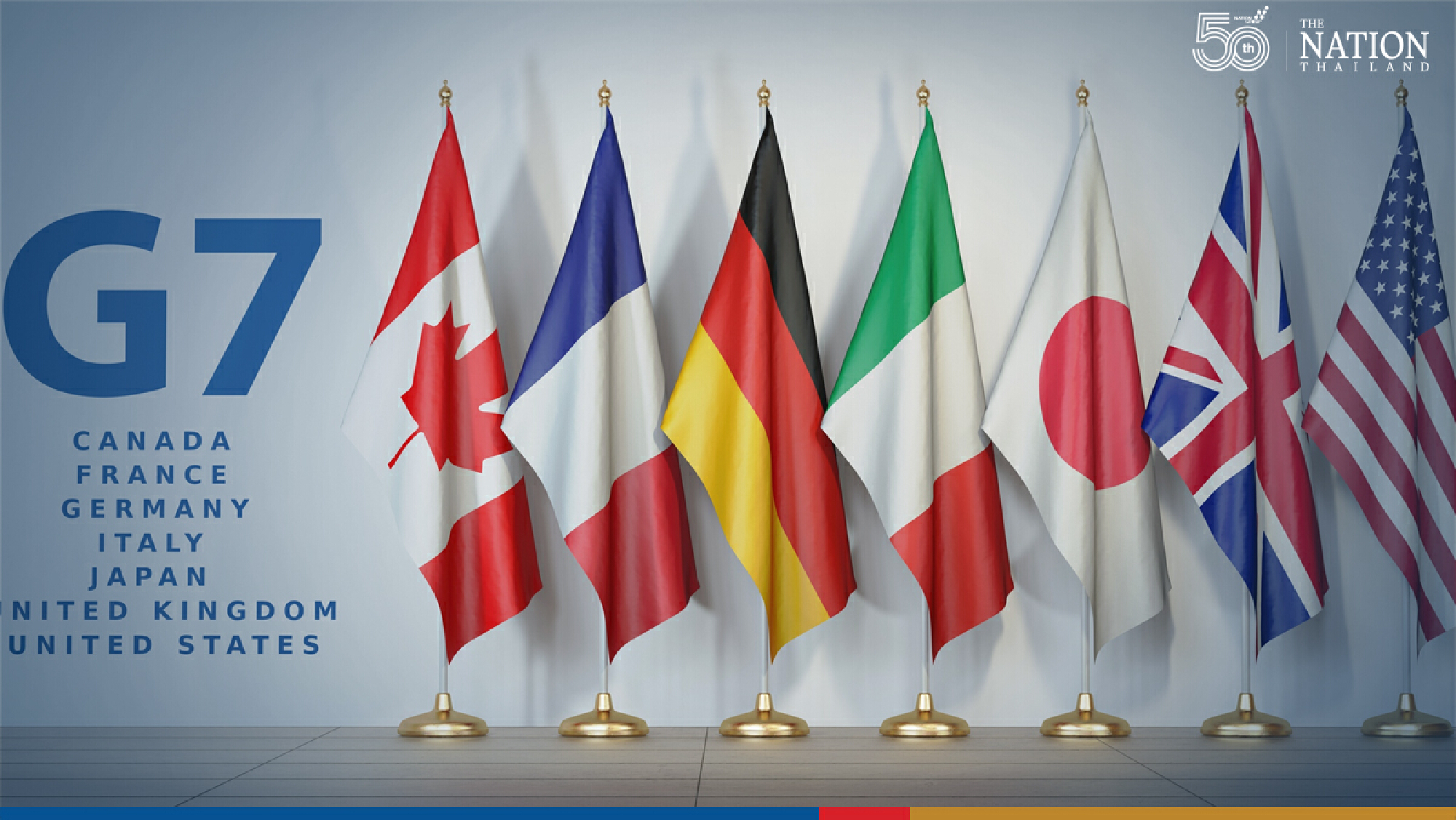
The deal reached at the G-7 meeting in London by Canada, France, Germany, Italy, Japan, the United Kingdom, and the U.S. is a major breakthrough for the Biden administration’s efforts to enact a floor on the taxes paid by corporations worldwide.
Treasury Secretary Janet Yellen has been adamant that the U.S. needs to work with other countries to prevent firms seeking lower tax obligations from simply moving elsewhere. Corporate tax rates across the globe have fallen dramatically over the last four decades.
“The G-7 Finance Ministers have made a significant, unprecedented commitment today that provides tremendous momentum toward achieving a robust global minimum tax at a rate of at least 15 percent,” Yellen said in a statement.
“That global minimum tax would end the race-to-the-bottom in corporate taxation, and ensure fairness for the middle class and working people in the U.S. and around the world.”
In remarks at the close of the meeting, Yellen told reporters that the agreement represented the revival of multilateral cooperation after years of strain under former president Donald Trump.
Under the deal, the U.S. is expected to give up some taxing rights on overseas profits of U.S.-based tech giants.
The deal enables countries to tax 20% of the profits of “the largest and most profitable multinational enterprises” that have profit margins of at least 10%.
While the agreement does not explicitly name tech companies, the line is a nod to the push by European countries to levy taxes on the operations in their countries of firms such as Apple and Amazon, which are headquartered in the U.S. but reap significant revenue abroad. The Europeans insist that it is unfair for the Internet behemoths to collect revenue in their countries without paying more in taxes.
The U.S. objected to singling out tech companies in the deal. Yellen said that as a compromise the G-7 finance ministers agreed to apply the change to a broader set of multinational firms that the tech firms “would qualify by [under] any definition.” The deal does not define which firms would be affected. That pact will move in tandem with the deal for a global minimum tax.
“The timing remains to be worked out, exactly, but there is broad agreement that these two things go hand in hand,” Yellen told reporters.
The Biden administration is seeking to raise the domestic corporate tax rate from 21% to 28% to pay for its spending priorities, such as infrastructure and education.
Republican critics have charged that the move would lead American firms to relocate abroad, hurting domestic jobs and investment. The international tax agreement helps the White House argue that it can lift domestic tax rates without pushing multinationals abroad, because under the agreement they would still face a minimum level of taxation.
Republican lawmakers have been skeptical about granting European countries additional taxing rights over the tech giants. The debate between Europe and the U.S. over taxing digital firms led to several major trade clashes under the Trump administration, with America threatening retaliatory tariffs over European attempts to tax the tech firms.
But the U.S. changed course after last year’s presidential election, with Yellen telling the Group of 20 nations in February that the U.S. has dropped demands to allow firms to opt out of new global digital taxes. That helped pave the way toward Saturday’s deal.
The deal starts what is expected to be a long and arduous process toward changing international tax laws. Negotiators hope to advance progress toward a binding agreement at a meeting of leaders of the Group of 20 in Italy in July.
Yellen told reporters that negotiators then hope to move toward a final deal this fall. But there are a number of sticking points. The deal faces opposition from countries, including Ireland, which rely on revenue by acting as tax havens, and the new U.S. tax rules have to be approved by Congress.
International treaties require passage by a two-thirds majority in the Senate, meaning GOP votes will be necessary to ratify changes pushed by the Biden administration. Republicans have criticized the effort, with Sen. Mike Crapo, R-Idaho, the top Republican on the Senate Finance Committee, warning that the U.S. “should not be willing to accept an agreement that continues to target American companies.”
“Republicans are unlikely to go along with this – you’re ceding tax authority and doing so in a way that disproportionately hurts U.S. companies,” said Donald Schneider, who served as chief economist to Republicans on the House Ways and Means Committee.
It is unclear how much support the new tax floor has in parts of the European Union and other low tax countries. Irish finance minister Paschal Donohoe has said he has “significant reservations” about the U.S. plan and said the country will maintain its 12.5% corporate tax rates for years to come.
Donohoe said Saturday that Ireland expects to lose up to a fifth of its corporate tax revenue under the plan – amounting to roughly 2 billion euros a year. The country’s relatively low tax rate is credited with helping to attract major corporations like Apple, Facebook and Google to Ireland in recent years, and Donohoe told the Irish Times that he plans to continue to “make the case for legitimate tax competition within certain boundaries.”
Any agreement that is approved by the Organization for Economic Cooperation and Development will have to take the needs of smaller countries into account, he said.
But French Finance Minister Bruno Le Maire hailed the agreement as a “historic step” in a video posted to Twitter on Saturday and has made clear in previous statements that he sees a 15% rate as the bare minimum. Other wealthy European nations celebrated the deal, saying that it would ensure that corporations fulfill their obligations and that governments receive adequate funding. Olaf Scholz, Germany’s finance minister, said that the agreement was “very good news for tax justice and solidarity and bad news for tax havens around the world.”
Spain, which is not part of the G-7, endorsed the plan on Friday by signing onto a letter in The Guardian along with the finance ministers of Italy, Germany and France. The show of support from the European Union’s fourth-largest economy was viewed as a sign that the agreement could draw wider support across the bloc. Spanish newspaper El Pais has estimated that a 15% tax rate would almost double the revenue that the country receives from corporations each year.
Some major tech companies welcomed the news. Many firms are willing to pay slightly more in taxes in exchange for more certainty, particularly given the lack of clarity in international tax regimes in recent years, according to Daniel Bunn, an international tax expert at the Tax Foundation, a right-leaning think-tank.
“Facebook has long called for reform of the global tax rules and we welcome the important progress made at the G-7,” said Nick Clegg, a Facebook spokesman, on Twitter. “Today’s agreement is a significant first step toward certainty for businesses and strengthening public confidence in the global tax system.”
José Castañeda, a Google spokesman, added: “We strongly support the work being done to update international tax rules. We hope countries continue to work together to ensure a balanced and durable agreement will be finalized soon.”
The Biden administration earlier floated a 21% global tax on U.S. firms. The 15% rate will make it easier for countries to join the accord but may reduce its effectiveness. If the U.S. domestic rate is raised to 28% but the global minimum tax is 15%, firms may still have strong incentives to move overseas. Yellen stressed that the world needs more tax revenue from the wealthiest corporations.
“G-7 economies came together to agree The Post-pandemic world must be fairer, especially with regard to international taxation,” Yellen said. “We need to have stable tax systems that raise sufficient revenue to invest in essential public goods and respond to crises and ensure that all citizens and corporations fairly share the burden of financing government.”
Others downplayed the significance of the accord. G-7 countries all already have corporate tax rates above 15%, said Kyle Pomerleau, a tax expert at the American Enterprise Institute, a conservative-leaning think-tank.
“It’s rather simple that countries that have statutory tax rates of 15 percent agree that other countries should also have that,” Pomerleau said. “This is step one, and from Yellen’s perspective that’s good, but it’s step one of 1,000.”
Yellen said in remarks to reporters that the agreement does not depend on voluntarily compliance by tax havens. Instead, she said it will enable countries to levy taxes on the overseas earnings of firms headquartered in those havens, putting pressure on them to raise their domestic tax rates.
“I think this is an agreement that when you understand all the details you see it does not require absolute agreement across the board,” Yellen said. “It has a way of bringing holdouts into it.”
Global tax negotiations have been ongoing at the G-7 and the OECD for the better part of a decade. But some experts said the speed with which the U.S. made major progress Saturday was striking nonetheless.
Alarm has grown among international tax experts about declining taxation. The average corporate tax rate globally was about 40% in 1980, falling to about 23% in 2020, according to the Tax Foundation, a conservative-leaning think-tank. As much as $700 billion in taxes from the world’s largest multinational firms was stashed in tax havens in 2017, research by a team of economists found.
“It’s an early and quick win for Yellen and Treasury, and it’s sort of remarkable,” said Steve Rosenthal, a tax expert at the nonpartisan Tax Policy Center, a think-tank. “This has been lingering for years and years – though of course Trump did not believe in multinationalism – and to start these negotiations in January and have a tentative agreement in June is pretty impressive.”
Others stressed the obstacles that loomed ahead. Douglas Holtz-Eakin, a Republican former director of the Congressional Budget Office, has raised concerns about whether the U.S. will give up too much of its tax base in search of a deal with Europeans. He also stressed how many questions were left unresolved by Saturday’s statement, including the structure of the 15% minimum tax and how it would function or be approved.
“It’s easy to set at a table and agree, ‘Yes we should have a 15 percent minimum tax.’ It’s another thing to pass through the U.S. Congress, and the U.K. parliament, and everyone else,” Holtz-Eakin said. “We can agree on the concepts – I’m sure – but will we actually have a law enforced in every country?
Published : June 06, 2021
By : The Washington Post · Jeff Stein, Antonia Noori Farzan
Le Méridien Hotels & Resorts Entices Travellers to Take Flight Into a Summer
Le Méridien created a contemporary yet playfully illustrated ‘in-flight’ short film called “Now Departing for Golden Hour” Global Programme “Au Soleil by Le Méridien” Encourages Guests to Channel the Spirit of a Chic European Summer All Year Round
Le Méridien Hotels & Resorts, part of Marriott Bonvoy’s portfolio of 30 extraordinary brands, is helping sun-seekers savour the simple joys of the season this summer and beyond with Au Soleil by Le Méridien. Following a year of missed moments, milestones and the summer that never was, Le Méridien welcomes travelers and locals alike to take back the season and chase endless summers with outdoor activations, food & beverage programming and limited-edition packages that evoke the glamour of a summer spent on the French Riviera — wherever you are in the world.
To kick off the programme, Le Méridien created a contemporary yet playfully illustrated ‘in-flight’ short film called “Now Departing for Golden Hour”, which acts as a ‘How-to-Summer Guide’ and will be featured in hotels, on the brand’s website, social media and more. The animated film is a nod to the brand’s founding during the golden era of travel and the influence this has on the Le Méridien experience. At hotels around the world, the timeless chic of mid-century modern design takes travelers back to the glamorous halcyon days of air travel and invites them to savour the good life. Embodying the idea that the sun never sets on the jet set, the film celebrates the effervescence of warm weather days in Le Méridien style.
Le Méridien Hotels & Resorts Entices Travellers to Take Flight Into a Summer
The Glamour of Golden Hour
Personifying the laid-back elegance of European summers and the allure of the Côte d’Azur, this season’s global series of events revolve around ‘Golden Hour,’ the magical hour at the end of the day under the sun – a sacred moment in time to slow down and indulge in simple pleasures through all the senses. Guests will be able to soak up this perfect moment in time and take in the views from one of Le Méridien’s unrivalled rooftops, courtyards and terraces in key destinations around the world.
Launching in June and continuing throughout the year, participating Le Méridien hotels will put their own spin on this moment in time through programming that takes guests from the last rays of afternoon sunshine all the way through to dinner time. Sun-seekers are encouraged to ease themselves into Golden Hour by indulging in the brand’s Le Scoop by Le Méridien programme, which offers a decadent afternoon treat of refreshing gelato and sorbet, designed to be enjoyed while taking part in the European summer tradition of a “passeggiata” to unlock the destination’s locale. “Passeggiata” is an Italian term referring to a traditional evening stroll in the town’s piazza. At select properties, guests will be able to book an “Au Soleil” room package, which includes breakfast and a complimentary Le Scoop by Le Méridien gelato or sorbet.
Passeggiata complete, next up are Petit Plates of light and local seasonal bites paired with rosé spritzers and aperitifs, with guests encouraged to enjoy this warm weather drink as the French do, “Piscine” (on ice). As the last rays of the day start to fade, vintage games and the classic seaside pastime of backgammon will be accompanied by a soundtrack of sun-soaked beats, encouraging guests to revel in French nostalgia and linger a little longer.
For those who prefer to take summer on-the-go with them to discover the city or sunbathe at the beach, pas de problème – there is the Au-Soleil-To-Go kit, inspired by an idyllic summer day on the Côte d’Azur, available at participating properties.
Across the Street, and Around the World
Global jetsetters and locals alike can indulge in chic soirées and glamorous activations throughout the year in locations around the world . Whether relaxing against the backdrop of the majestic mountain in Sichuan or laying poolside in Maldives, there’s something for everyone to add a touch of Au Soleil glamour to the rest of their year. Locations featuring Au Soleil activations this year include (among others):
The Glamour of Golden Hour
Personifying the laid-back elegance of European summers and the allure of the Côte d’Azur, this season’s global series of events revolve around ‘Golden Hour,’ the magical hour at the end of the day under the sun – a sacred moment in time to slow down and indulge in simple pleasures through all the senses. Guests will be able to soak up this perfect moment in time and take in the views from one of Le Méridien’s unrivalled rooftops, courtyards and terraces in key destinations around the world.
Launching in June and continuing throughout the year, participating Le Méridien hotels will put their own spin on this moment in time through programming that takes guests from the last rays of afternoon sunshine all the way through to dinner time. Sun-seekers are encouraged to ease themselves into Golden Hour by indulging in the brand’s Le Scoop by Le Méridien programme, which offers a decadent afternoon treat of refreshing gelato and sorbet, designed to be enjoyed while taking part in the European summer tradition of a “passeggiata” to unlock the destination’s locale. “Passeggiata” is an Italian term referring to a traditional evening stroll in the town’s piazza. At select properties, guests will be able to book an “Au Soleil” room package, which includes breakfast and a complimentary Le Scoop by Le Méridien gelato or sorbet.
Passeggiata complete, next up are Petit Plates of light and local seasonal bites paired with rosé spritzers and aperitifs, with guests encouraged to enjoy this warm weather drink as the French do, “Piscine” (on ice). As the last rays of the day start to fade, vintage games and the classic seaside pastime of backgammon will be accompanied by a soundtrack of sun-soaked beats, encouraging guests to revel in French nostalgia and linger a little longer.
For those who prefer to take summer on-the-go with them to discover the city or sunbathe at the beach, pas de problème – there is the Au-Soleil-To-Go kit, inspired by an idyllic summer day on the Côte d’Azur, available at participating properties.
Across the Street, and Around the World
Global jetsetters and locals alike can indulge in chic soirées and glamorous activations throughout the year in locations around the world . Whether relaxing against the backdrop of the majestic mountain in Sichuan or laying poolside in Maldives, there’s something for everyone to add a touch of Au Soleil glamour to the rest of their year. Locations featuring Au Soleil activations this year include (among others):
Le Méridien Hotels & Resorts Entices Travellers to Take Flight Into a Summer
Asia Pacific
• Le Méridien Maldives Resort & Spa – opening in August
• Le Méridien Khao Lak Resort & Spa
• Le Méridien Phuket
• Le Méridien Bangkok
• Le Méridien Chongqing, Na’an
• Le Méridien Zhengzhou
• Le Méridien Xiaojing Bay
• Le Méridien Emei Mountain Resort
• Le Méridien Putrajaya
• Le Méridien Nagpur
“Au Soleil is more than an activity, it’s a state of mind,” said Jason Nuell, Senior Vice President, Premium Brands, Marriott International. “After a year like no other, this year’s Au Soleil Golden Hour programming allows people who are ready to come back together at the perfect time of day, whether across the street or around the world, to reconnect over a glass of rosé, a scoop of gelato or a classic summer game. To celebrate the essence and lifestyle of our signature summer soirée programme, modish activations and chic touchpoints will inspire guests to savour the moment and linger longer at our urban and resort destinations across the globe.”
For more information about Au Soleil by Le Méridien, please visit http://www.lemeridien.com/ausoleil and follow along on social media with #LMAuSoleil. To get into the spirit of endless summer, follow the Le Méridien Au Soleil playlist on Spotify.
Le Méridien Hotels & Resorts Entices Travellers to Take Flight Into a Summer
Google to let Android users opt out of tracking, following Apple
Google will let Android mobile software users opt out of being tracked by advertisers on their smartphone applications, following an earlier move by rival Apple Inc. to bolster privacy on iPhones.
The option will become available in late 2021, with a Google Play services update, the Alphabet Inc. unit said on a support website. Developers will no longer be able to see a user’s unique advertising ID if that person has declined to receive personalized ads. Unlike Apple’s feature, users won’t be opted out of ad tracking by default.
For months, Google has been mulling a way to give Android users more control over ad tracking with a less stringent approach than Apple’s, Bloomberg reported. In May, Google said it would create a safety section in its Play Store in 2022 so Android users can see what data developers collect about them and share, plus give access to additional privacy and security information.
Apple roiled the mobile advertising industry in April when it debuted its App Tracking Transparency feature, which requires users to opt in to being tracked by apps for personalized advertising. Developers expect to lose revenue from the change because most consumers likely won’t agree to have their data collected.
Google said the Play services rollout will affect apps running on Android 12 devices starting in late 2021 and migrate to other devices with Google Play in early 2022.
Published : June 04, 2021
By : Syndication Washington Post, Bloomberg · Nico Grant
SET loses ground amid fear of inflation, overbought stocks
The Stock Exchange of Thailand (SET) Index closed at 1,611.53 on Friday, down 6.02 points or 0.37 per cent. Transactions totalled THB106.35 billion with an index high of 1,622.89 and a low of 1,611.34.
In the morning session, Krungsri Securities forecast Friday’s SET Index would fluctuate between 1,605 and 1,625 points amid hopes of economic recovery as mass Covid-19 vaccinations gather strength worldwide and the price of oil continues to rise.
The index would be under pressure due to uncertainty over rising inflation and signs of overbought stocks, Krungsri Securities added.
The 10 stocks with the highest trade value today were KBANK, PTT, RCL, BANPU, STGT, SCC, ROJNA, CPN, CPALL and BBL.
Other Asian indices were on the fall, except in mainland China:
Japan’s Nikkei Index closed at 28,941.52, down 116.59 points or 0.40 per cent.
China’s Shanghai SE Composite Index closed at 3,591.84, up 7.63 points or 0.21 per cent, while the Shenzhen SE Component Index closed at 14,870.91, up 109.78 points or 0.74 per cent.
Hong Kong’s Hang Seng Index closed at 28,918.10, down 47.93 points or 0.17 per cent.
South Korea’s KOSPI closed at 3,240.08, down 7.35 points or 0.23 per cent.
Taiwan’s TAIEX closed at 17,147.41, down 98.75 points or 0.57 per cent.
Rising inflation, overbought stocks could rein in SET
The Stock Exchange of Thailand (SET) Index dropped by 0.07 points, or 0.36 per cent, to 1,616.36 at 10am on Friday. The volume of total transactions amounted to THB9.52 billion with an index high of 1,616.91 and a low of 1,613.13.
Krungsri Securities forecast that the SET Index would fluctuate between 1,605 and 1,625 points despite hopes of an economic recovery as mass Covid-19 vaccinations gather strength worldwide, and the price of oil continues to rise.
The index would be under pressure due to uncertainty over rising inflation and signs of overbought stocks, Krungsri Securities said.
It recommended that investors buy:
▪︎ PTT, PTTEP, PTTGC, TOP, IVL and BANPU, which benefit from the global economic recovery.
▪︎ BCH, CHG, BDMS, MINT, CENTEL, AOT, CPALL, HMPRO, CPN and CRC, which will benefit from the country’s reopening.
▪︎ KCE, IRPC, STA and STGT, expected to be listed on the SET50 Index in mid-June.
▪︎ AAV, BLA, ICHI, PSL, PTL, SINGER, STARK, STGT and SYNEX, expected to be listed on the SET100 Index in mid-June.
The SET Index closed at 1,617.55 on Wednesday, down 1.04 points or 0.06 per cent. Transactions totalled THB101.45 billion with an index high of 1,627.67 and a low of 1,612.94.
The market was closed on Thursday to mark HM the Queen’s birthday.
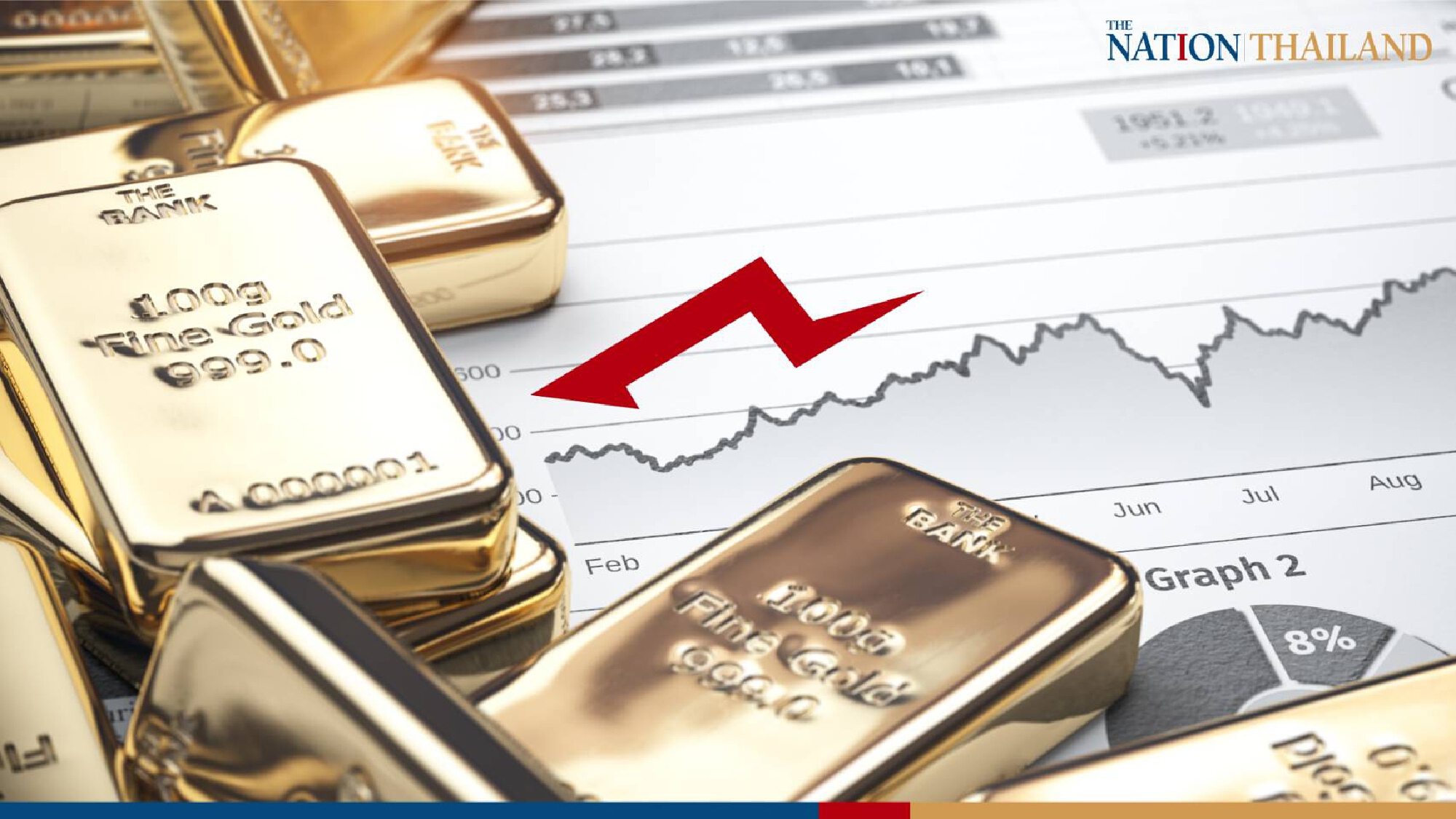
Gold price slides in Thailand as dollar gains on strong US economic show
The price of gold in Thailand slumped by THB350 per baht weight in morning trade on Friday due to the strengthening dollar and strong US economic data, triggering mass sell-offs of the precious metal.
The Gold Traders Association report at 9.25am showed buying price of a gold bar at THB27,500 per baht weight and selling price at THB27,600, while gold ornaments were priced at THB26,999.96 and THB28,100, respectively.
At close on Thursday, the buying price of a gold bar was THB27,850 per baht weight and selling price at THB27,950, while gold ornaments were priced at THB27,348.64 and THB28,450, respectively.
Spot gold on Friday was US$1,863 (THB58,197) per ounce compared to Thursday when it dropped by $36.6 to $1,873.3 per ounce.
Hong Kong gold price on Friday dropped by HK$230 to $17,300 (THB69,661) per tael, the Chinese Gold and Silver Exchange Society reported.
U.S. equities fell Thursday as investors digested a raft of economic data and a report President Joe Biden may be open to a lower corporate tax rate than 28%.
The S&P 500 rose from session lows after Biden was said to have pitched a 15% minimum tax on U.S. corporations as a way to fund a bipartisan infrastructure package. However, the bounce wasn’t enough to erase earlier declines on concerns the Federal Reserve may withdraw its support sooner than expected. An ADP report showed payrolls at U.S. firms gained by the most in nearly a year, while additional figures on the economic health of the services sector rose to the highest on record.
The dollar was stronger. Commodities, including gold and copper, were lower. And Treasuries fell. Meanwhile, the rally in so-called meme stocks including AMC Entertainment Holdings Inc. began to fade.
With U.S. equities locked in a tight range for the past month, investors are on the lookout for any signs that the Fed might start to taper its asset purchases. St. Louis Fed President James Bullard said Thursday the U.S. labor market might be tighter than suggested by the current unemployment rate. Up next, all eyes will be on Friday’s jobs report after separate data Thursday indicated strength was afoot. U.S. jobless claims dipped below 400,000 for the first time during the pandemic last week.
“With seemingly all systems go on the jobs front, the economy is flashing some very real signs that this isn’t just a comeback — expansion mode could be on the horizon,” said Mike Loewengart, managing director of investment strategy at E*Trade Financial. “So what does that translate to? Likely more pressure on the Fed to make a move — perhaps sooner than many thought from the outset.”
The weakness in U.S. trading followed declines in Europe and Asia on the back of mounting geopolitical tensions. Russia said it would eliminate the dollar from its National Wellbeing Fund to reduce exposure to U.S. assets. Meanwhile, the U.S. is set to amend an investment ban on companies linked to the Chinese military.
“The summer of uncertainty is on full display,” Dennis DeBusschere, head of portfolio strategy at Evercore ISI, wrote in a note. “10-year yields remain anchored and there is pressure on the USD, but leading indicators are strong, credit conditions are easy and market volatility remains low. That backdrop favors risk assets.”
These are some of the main moves in markets:
Stocks
– The S&P 500 fell 0.4% at 4 p.m. New York time, the most since May 19 as of 4 p.m. EDT
– The Nasdaq 100 fell 1.1%, more than any closing loss since May 12
– The Dow Jones industrial average fell 0.1%, more than any closing loss since May 25
– The MSCI World index fell 0.5%, more than any closing loss since May 19
Currencies
– The Bloomberg Dollar Spot Index rose 0.7%, more than any closing gain since May 12
– The euro slipped 0.7%, more than any closing loss since April 30
– The British pound slipped 0.5%, more than any closing loss since May 19
– The Japanese yen slipped 0.7%, more than any closing loss since May 12
Bonds
– The yield on 10-year Treasurys advanced four basis points, more than any closing gain since May 12
– Germany’s 10-year yield advanced two basis points to -0.18%
– Britain’s 10-year yield advanced four basis points to 0.84%
Commodities
– West Texas Intermediate crude was little changed
– Gold futures fell 1.9%, the most since March 31
Published : June 04, 2021
By : Syndication Washington Post, Bloomberg · Jennifer Bissell-Linsk
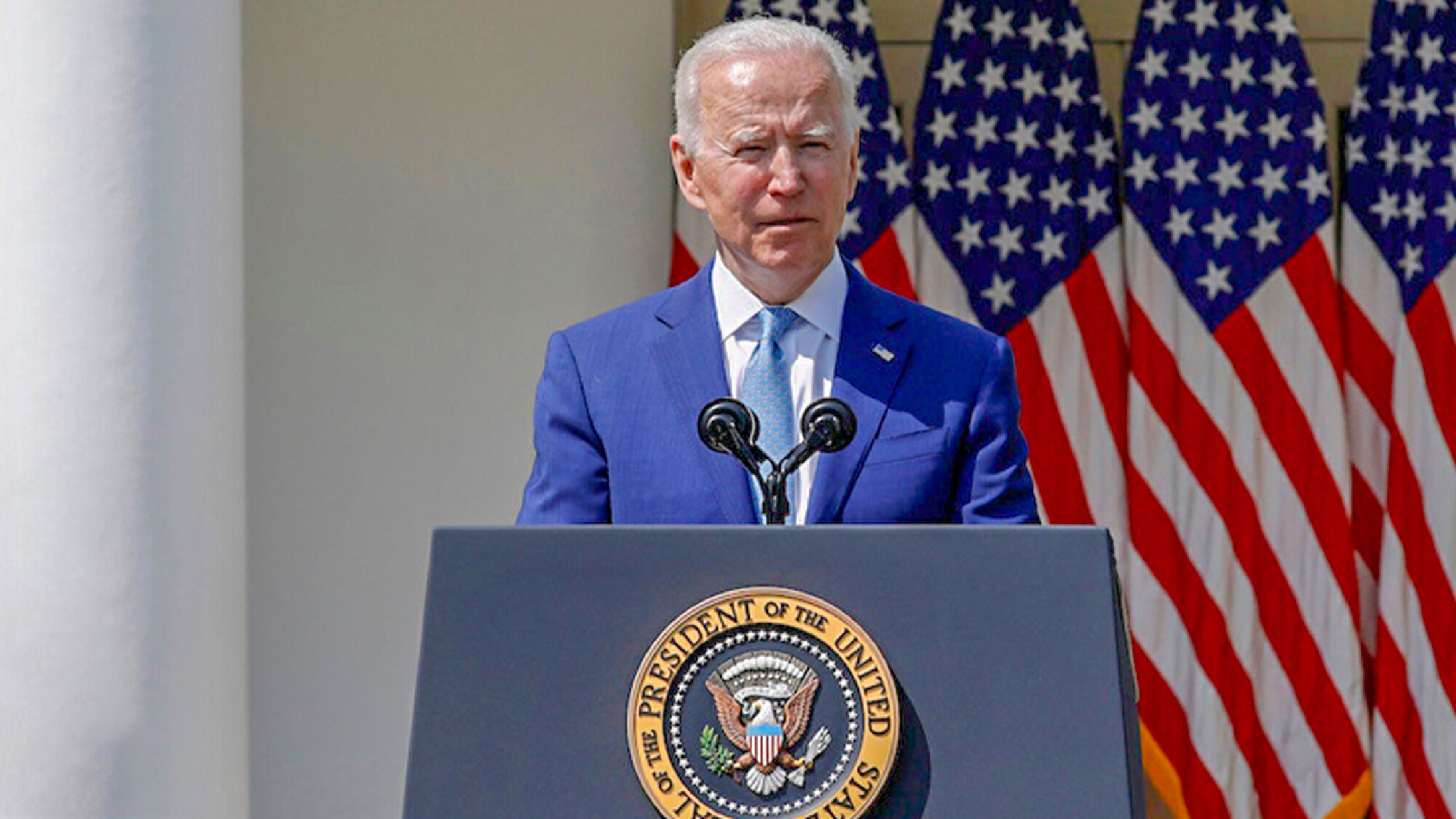
Biden expands Trump order by banning U.S. investment in Chinese companies linked to the military or surveillance technology
WASHINGTON – The Biden administration is expanding a Trump-era order that banned U.S. investment in Chinese companies that support Chinas military to include those selling surveillance technology, calling the entities a threat to U.S. interests and values.
Anew executive order released Thursday broadens prohibitions that Donald Trump’s administration enacted and moves authority for the ban to the Treasury Department from the Defense Department, to give it stronger legal grounding, senior administration officials said. They spoke on the condition of anonymity to preview the order before its release.
The new order “prevents U.S. investment from supporting the Chinese defense sector, while also expanding the U.S. government’s ability to address the threat of Chinese surveillance technology firms that contribute – both inside and outside China – to the surveillance of religious or ethnic minorities or otherwise facilitate repression and serious human rights abuses,” the administration said in a fact-sheet describing the ban, which takes effect on Aug. 2.
The executive order does not provide detail on how the surveillance technology has been used, but U.S. officials have frequently expressed alarm over facial recognition and other surveillance tools that China has employed against its Uyghur minority population, and against pro-democracy protesters in Hong Kong.
Chinese companies also export a range of technology that can be used for surveillance, a development that Secretary of State Antony Blinken has said is contributing to a global competition between “techno-democracies and techno-autocracies.”
The preservation of the Trump ban is another sign that President Joe Biden is continuing his predecessor’s tough approach toward China. Biden has also maintained import tariffs that Trump levied on many Chinese goods, and in March implemented a separate Trump executive order by sending subpoenas to several Chinese companies to seek information on possible national security risks.
“This looks to be another example of the Biden administration taking a Trump policy and improving and expanding it,” said Eric Sayers, a visiting fellow at the American Enterprise Institute.
But some lawmakers were skeptical that the order will be an improvement.
“We know for a fact that Wall Street is helping to finance the Chinese Communist Party’s effort to weaken and ultimately replace American leadership,” Sen. Marco Rubio, R-Fla., said in a statement. “The story of the past two decades has been America’s unwillingness to confront Beijing’s exploitation of our legal, political, and financial systems. While the administration updated the Trump-era policy in important ways, I am very concerned that President Biden’s Treasury Department is too closely aligned with Wall Street to take the actions necessary to prevent American savings from being used to fund the Chinese Communist Party.”
Senior administration officials said it was important to move the program to the Treasury Department because companies included on the Trump administration’s Defense Department list, including smartphone manufacturer Xiaomi, had successfully challenged their inclusion in court.
Treasury has more experience drafting sanctions programs “in a way that meets all the U.S. judicial and legal standards,” said one Biden official.
“Treasury has a regulatory structure to list names and enforce prohibitions. Defense doesn’t,” said Kevin Wolf, a former senior Commerce official who is now a partner at Akin Gump Strauss Hauer & Feld.
The Biden administration did not include Xiaomi on the list of 59 prohibited companies it released Thursday.
David Feith, who was a senior Trump administration official, called the Biden administration’s maintaining and broadening of the order “a welcome thing.”
Former deputy assistant secretary of state for East Asian and Pacific Affairs, Feith said “it reflects the strong degree of bipartisan concern in Washington about U.S. capital flows and U.S. economic ties with China’s military and its sprawling security and surveillance state.” But he also said the shift of enforcement from the Pentagon to Treasury might complicate implementation because “the Department of Defense takes a fundamentally national security-focused perspective on things and Treasury traditionally does not.”
Many of the military-linked companies banned by Biden also appeared on Trump’s list, including the defense contractor China Electronics Technology Group Corp. and the telecom companies China Mobile Communications Group and China Telecommunications Corp.
Biden’s order also bans investment in two companies – Hangzhou Hikvision Digital Technology and Huawei Technologies – on the grounds that they sell surveillance technology and support China’s military. The Trump order banned investment in those firms only on the grounds that they supported China’s military.
A number of the companies on the list are either state-owned or privately held, meaning that they don’t sell stock to outside investors. Yet some of these entities have issued or guaranteed bonds on international markets.
Huawei Investment & Holding Co., Ltd., for instance, acted as guarantor of a $5 billion bond issued in Hong Kong in 2017, according to the company’s website.
Like the Trump order, the Biden ban prohibits investment in Semiconductor Manufacturing International Corp., or SMIC, China’s largest manufacturer of computer chips. The company’s stock trades on the Hong Kong exchange.
The Trump administration last year banned U.S. technology exports to SMIC, saying they could benefit the People’s Liberation Army. Most modern weapons systems are powered by computer chips. SMIC at the time said it has “no relationship with the Chinese military and does not manufacture for any military end-users or end-uses.”
But the administration also failed to include some companies that were on the Defense Department list, notably Sugon, which the Commerce Department in mid-2019 subjected to export controls for “activities determined to be contrary to the national security and foreign policy interests of the United States.” Several lawmakers last year said that Sugon was a “key enabler” of China’s hypersonic glide vehicle testing program to aid Chinese nuclear weapons simulation testing. The New York Times last year reported that Sugon’s supercomputers help power the Urumqi Cloud Computing Center in Xinjiang, where Chinese authorities monitor massive amounts of surveillance footage.
Several other companies that appeared on the Pentagon list are absent from Treasury’s. They include Commercial Aircraft Corporation of China, Advanced Micro-Fabrication Equipment Inc., and China National Chemical Engineering Group Co.
The listed companies either didn’t immediately respond to requests for comment or couldn’t be reached for comment after hours in China.
Asked about the Biden order, details of which were reported earlier by Bloomberg, Chinese Foreign Ministry Spokesman Wang Wenbin told reporters on Thursday: “The U.S. should respect rule of law and the market, correct its mistakes, and stop actions that undermine the global financial market order and investors’ lawful rights and interests. China will take necessary measures to firmly safeguard Chinese enterprises’ legitimate and lawful rights.”
Biden administration officials said any U.S. investment in funds that contain the banned securities also will be prohibited.
The officials said they expect to place additional companies on the list, a move U.S. Sen. Tom Cotton endorsed in a statement to The Post. “The U.S. government must continue to expand this list of CCP-controlled companies, as well as harmonize the various restriction lists maintained by the Pentagon, Commerce, and Treasury departments,” Cotton said. “It’s imperative that the United States stop arming and funding the genocidal regime in Beijing.”
Published : June 04, 2021
By : The Washington Post · Jeanne Whalen, Ellen Nakashima
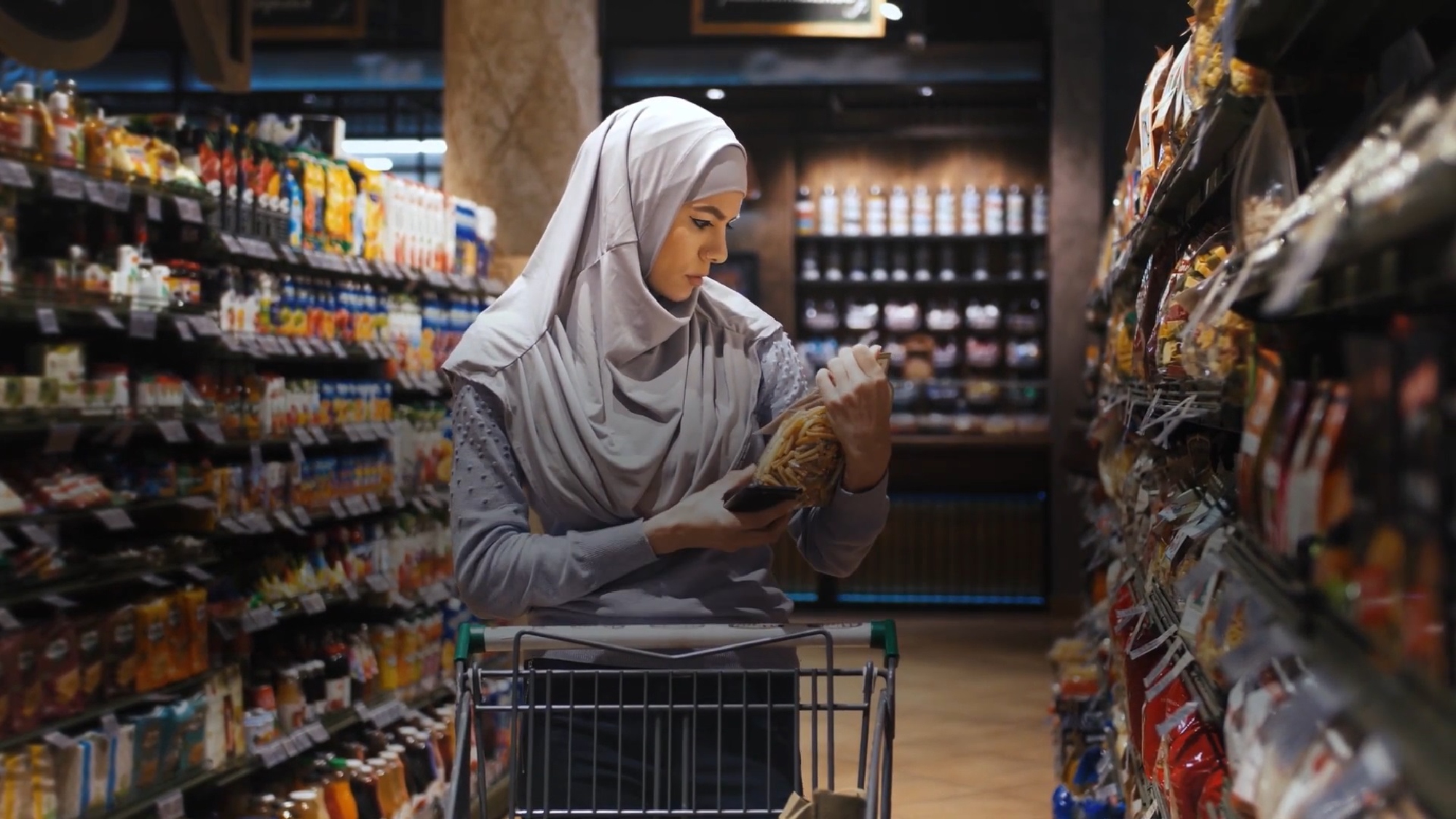
Thai halal food thriving in global market thanks to higher Covid-protection standards
The Department of International Trade Promotion (DITP) has said that halal food from Thailand continues gaining trust worldwide thanks to elevated Covid-safety production standards.
DITP is also launching the “Thailand Delivers with Safety” campaign with a revenue target of 122.09 billion baht this year.
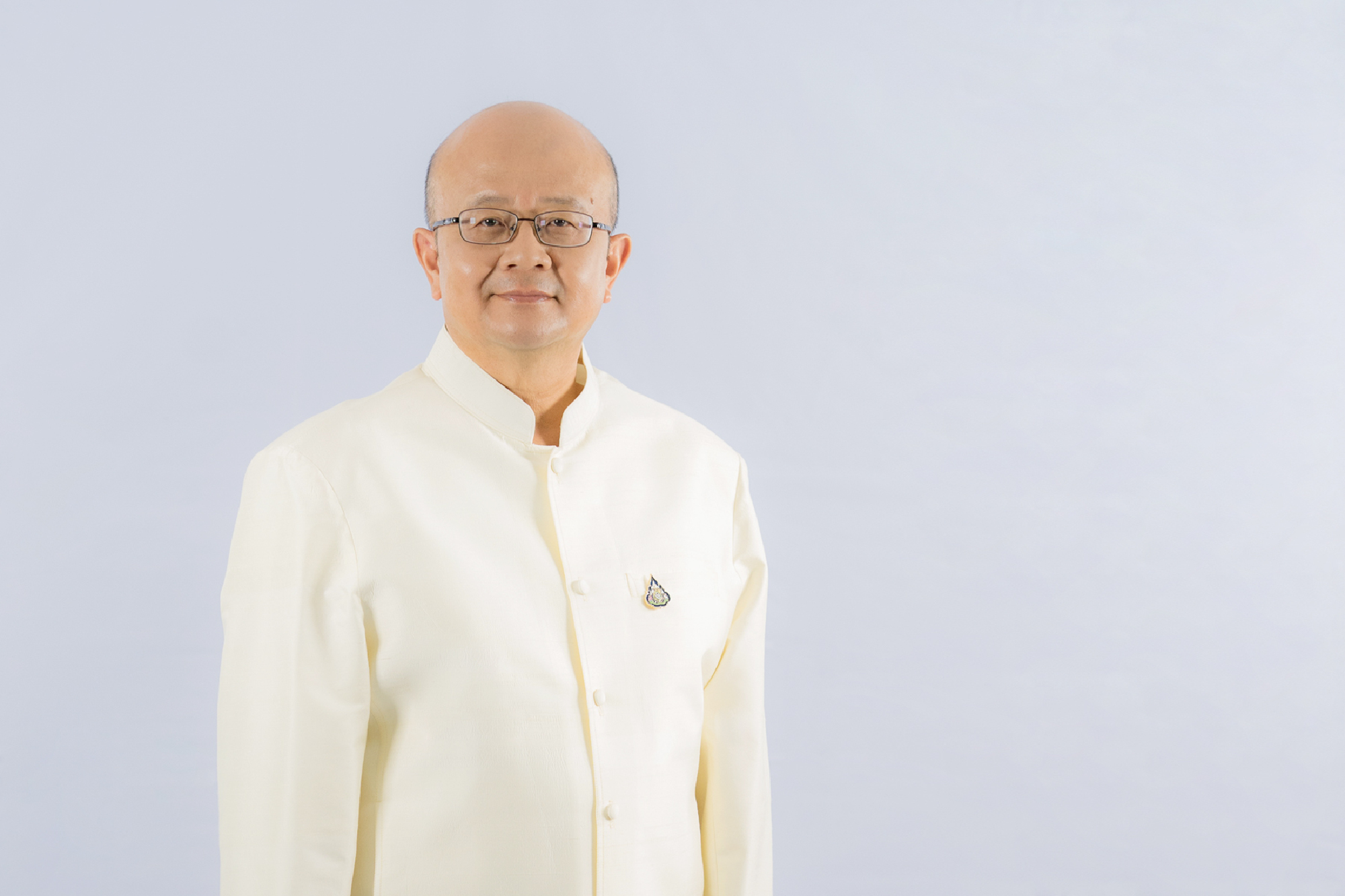
Somdet Susomboon, DITP director-general, said the Covid-19 pandemic has consumers across the world worried about their health and well-being.
In line with this, DITP has launched many campaigns to boost the export potential of halal food produced in Thailand, including improving the brand image of halal products and holding promotional activities in targeted countries.
Thai halal food thriving in global market thanks to higher Covid-protection standards
The production of halal food in Thailand is done in strict adherence to the Islamic principles on ingredients, production, cultivation and employee practices to meet the halal criteria.
The products are monitored and certified by the Central Islamic Committee of Thailand (CICOT).
Apart from reassuring consumers and building trust among trade partners, DITP is also fortifying safety measures in food manufacturing by launching Covid-19 prevention measures for manufacturers, exports, businesses, raw-material suppliers as well as logistics operators to strictly comply with. Under these measures,
business operators and suppliers shipping ingredients must intensify efforts to reduce the risk of contamination.
Manufacturers must implement strict quality and safety controls through the production line, from receiving shipments of ingredients to storing, processing, packing as well as maintaining preventive measures for transporting goods by cleaning and disinfecting the interior of containers.
Manufacturers will be required to prioritise sanitation and strictly clean and disinfect machinery, manufacturing buildings, floors, walls as well as common areas prone to contact. Workers, meanwhile, will be trained to protect themselves from Covid-19 and maintain safety practices during operation.
Thai halal food thriving in global market thanks to higher Covid-protection standards
Along with these measures, DITP continues working on boosting confidence among its trade partners through the “Thailand Delivers with Safety Campaign”.
“The objective is to retain trust among buyers and trade partners worldwide, reinforcing Thailand’s potential as a major food manufacturer with advanced manufacturing technology that meets international standards from sourcing ingredients, harvesting, transporting, packaging to delivering at the consumers’ doorstep,” affirmed Somdet.
Meanwhile, Thailand’s export of halal food to Islamic countries this year is expected to reach approximately 122.09 billion baht, up 3 per cent from 118.53 billion baht in 2020.
Thailand is a major exporter of high-quality halal food products including chicken, shrimp, canned tuna, rice, fresh and dried fruits fresh, chilled and frozen vegetables, snacks, instant food, frozen food, ready-to-eat food, cosmetics, fashion, etc.
The top product exports to Organisation of Islamic Cooperation (OIC) countries are rice, sugar, canned and processed seafood, cassava products, canned and processed fruits, respectively.
Thai halal food thriving in global market thanks to higher Covid-protection standards
The halal food market is worth approximately US$1.2 trillion and Thailand is a champion with a competitive advantage in logistics and a vast variety of products.
There are currently about 5,000 halal-certified firms in Thailand, producing more than 160,000 halal-certified products.
Thailand has the opportunity to become the 13th largest exporter of halal food to OIC countries. The other top exporters are China, the United States, Germany, the Netherlands, France, Italy, Spain, India, Belgium, Brazil, United Kingdom, Canada and Indonesia.



 Le Méridien Hotels & Resorts Entices Travellers to Take Flight Into a Summer
 Le Méridien Hotels & Resorts Entices Travellers to Take Flight Into a Summer
 Le Méridien Hotels & Resorts Entices Travellers to Take Flight Into a Summer

 Thai halal food thriving in global market thanks to higher Covid-protection standards
 Thai halal food thriving in global market thanks to higher Covid-protection standards
 Thai halal food thriving in global market thanks to higher Covid-protection standards
