Baht opens firm, but Asian currencies unable to gain from weakening dollar due to Covid
The baht opened at 31.37 to the US dollar on Monday, unchanged from Fridays close.
The Thai currency is likely to move between 31.30 and 31.45 during the day and between 31.20 and 31.50 this week, Krungthai Bank market strategist Poon Panichpibool said.
He suggested that investors monitor the dollar’s direction and the sales of assets in Asia.
The market strategist added that the US currency could weaken or be stable if the market is in a risk-on state.
He said that the Covid-19 crisis had pressured Asian currencies, so they fluctuated and did not strengthen despite the dollar weakening.
Poon predicted that the baht’s resistance would be at around 31.50 to 31.60 per US dollar, as it was the point where exporters aimed to sell the dollars they were holding.
Gold continues last weeks upward trend despite sell-offs
The price of gold in Thailand rose by THB100 per baht weight in morning trade on Monday despite mass sell-offs of the precious metal after its price had risen for six consecutive days.
The Gold Traders Association report at 9.30am showed buying price of a gold bar at THB27,900 per baht weight and selling price at THB28,000, while gold ornaments were priced at THB27,394.12 and THB28,500, respectively.
At close on Saturday, the buying price of a gold bar was THB27,800 per baht weight and selling price THB27,900, while gold ornaments were priced at THB27,303.16 and THB28,400, respectively.
The price had risen by THB600 per baht weight last week.
Spot gold price on Monday was US$1,886 (THB59,217) per ounce compared to Friday when it dropped by $5.2 to $1,876.7 per ounce.
Hong Kong gold price on Monday rose by HK$50 to $17,430 (THB70,488) per tael, the Chinese Gold and Silver Exchange Society reported.
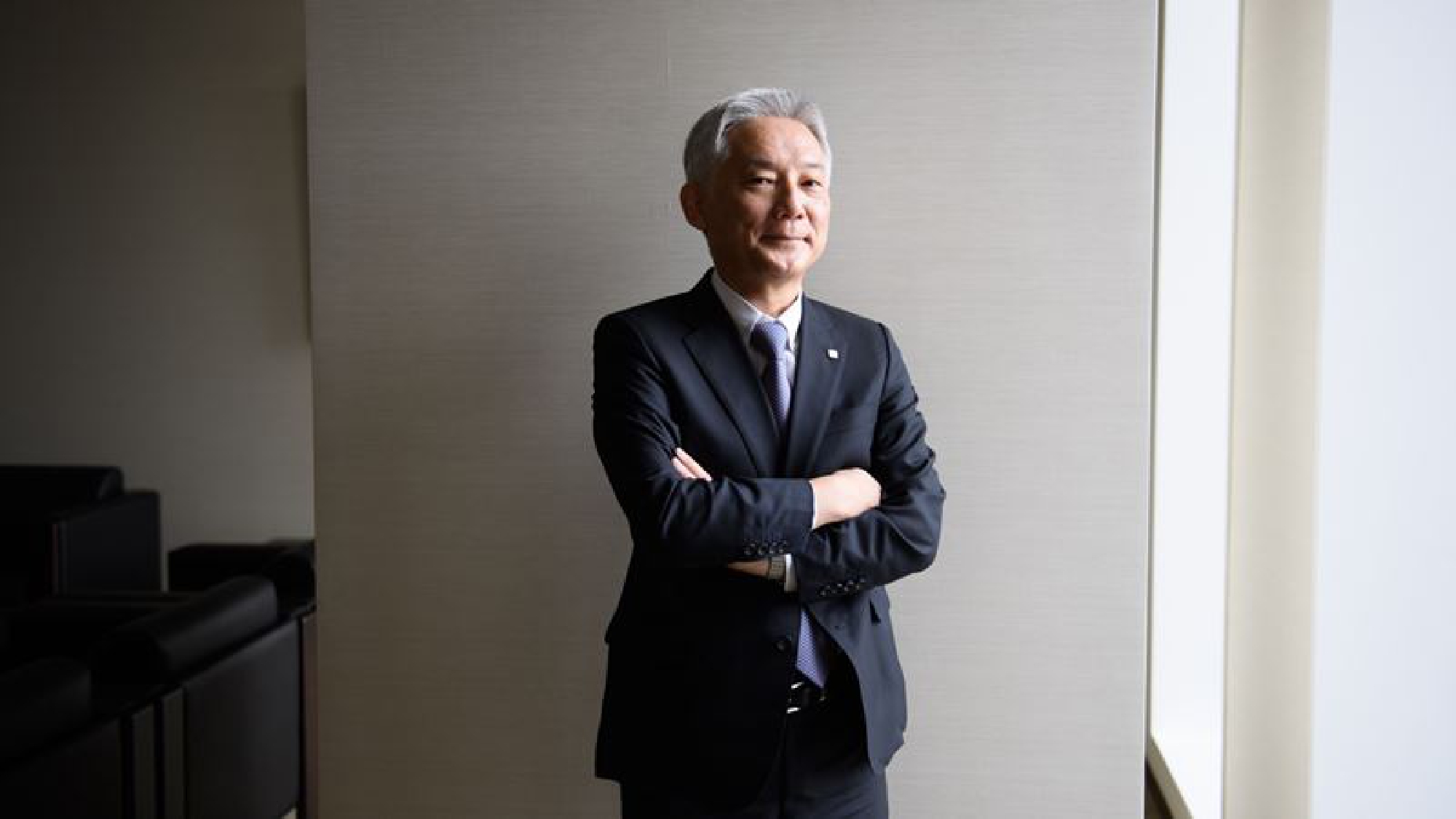
A Japanese paper company wants to make a wooden rival to car batteries
Its a potential leap in technology that most scientists remain skeptical about, but which a Japanese paper producer is determined to pursue: using trees to develop a successor to lithium-ion batteries for electric cars.
Nippon Paper Industries Co. is targeting new breakthroughs in the use of cellulose nanofibers – materials produced by refining wood pulp to the size of hundredths of a micron or smaller, and currently used in products like diapers or food additives – with the aim of creating supercapacitors that could store and release energy with vastly improved performance, and less environmental impact, than existing batteries.
“We must move faster in working with other companies to find practical uses,” Toru Nozawa, Nippon Paper’s chief executive officer, said in an interview. Cellulose nanofiber, or CNF, based-supercapacitors could “be applied for areas where lithium-ion batteries are used, such as cars and smartphones.” The firm aims to have a pilot energy storage system ready for demonstration at the World Expo in Osaka in 2025, and to fully commercialize the technology by a decade later.
Supercapacitors hold massless electrons in an electric field, while batteries store energy in chemical form. The differences mean that the former are ideal for delivering short and intense bursts of power – like the pop of a camera flash – but have only a fraction of the storage capacity of a lithium-ion battery.
For decades that’s meant supercapacitors have taken a role in niche applications, used in memory back-up systems for laptops, pitch control for wind turbine motors, or in regenerative-braking for some hybrid and plug-in vehicles. They’ve also held out the long unrealized promise of an energy storage system with dramatically shorter recharging times, fewer safety risks and zero reliance on pricey metals like cobalt or nickel.
“There are lots of opportunities for supercapacitors to continue to grow as a technology, but they are in a completely different technology segment versus batteries,” said Sam Jaffe, managing director at Boulder, Colorado-based Cairn Energy Research Advisors, an industry consultant. “Supercapacitors are not and never will be a competitor to lithium-ion batteries.”
There’s also a challenge from enhancements to existing lithium-ion batteries, which have routinely provided good energy storage capacity, but have previously found slow recharging a limitation. Now, some battery technologies offers 30 minute charging times, and companies including Volkswagen are aiming to cut that duration to about 12 minutes, said BloombergNEF analyst James Frith.
Proponents of supercapacitors insist there’s value in persevering. Energy density is already improving, and the components can take another major step forward by using CNFs, said Mikio Fukuhara, a research fellow at Tohoku University who has collaborated with Nippon Paper.
In a paper published in March in the journal Nature, a team of scientists including Fukuhara offered evidence that supercapacitors using CNFs could be used to store large amounts of electricity and have potential suitability for handheld electronics, transportation and for the storage of renewable energy.
Early use cases would be devices using low voltages, such as smartphones or smartwatches, Fukuhara said by phone. Deploying the supercapacitors in electric vehicles would be the “ultimate application,” and requires another set of advances, in part because the cars use higher voltages. “I am confident it will replace lithium-ion batteries in future, and become a deciding factor in the effort to save the environment,” he said. “It will be another industrial revolution.”
Competitors working on other projects to develop better supercapacitors are also confident. “Once the development is complete, the technology will be used in enhancing the capacity and lifespan of electric vehicles and energy storage systems,” said Yoo Seung Joon, a professor at South Korea’s Gwangju Institute of Science and Technology’s Organic Electrochemistry and Energy Materials Laboratory.
Nippon Paper is also seeking opportunities to lift supply of materials to existing battery manufacturers, while it continues to develop the rival technology. The company has added at least one leading producer as a customer and is also considering plans to establish supply hubs in growing markets like Europe, Nozawa said in the Monday interview.
“There’s no doubt that the shift to electric vehicles will accelerate,” he said. “We have to tap into the flow.”
Published : May 23, 2021
By : Syndication Washington Post, Bloomberg · Shiho Takezawa, Grace Huang
Alcohol industry feels the pinch as pandemic hits sales
The revenue of the alcohol industry might drop to its lowest in 10 years.
Thanakorn Kuptajit, secretary-general of the Thai Alcohol Business Association, said the third outbreak had a serious impact on the overall business sector including the alcohol industry because many clusters were difficult to control and occurred in large cities, urban, metropolitan areas, and major tourist cities, which are areas that generate the most income.
“The first and second outbreaks were still limited to a few clusters, making it easier to control them. However, the third wave has spread rapidly and occurs in many clusters, making it difficult to control.
“The vaccine is still at the heart of containing the pandemic. The government has to accelerate vaccination to build immunities in as many groups as possible,” said Thanakorn.
The alcohol industry has been affected since the pandemic began.
In 2019, the alcohol industry had a total market value of about THB370 billion, close to the year 2018, which was a period of slight growth. However, since the Covid-19 outbreak in 2020, sales have dropped to just THB300 billion due to various factors, especially the lockdown measures, the nationwide ban on selling alcoholic beverages, tourist attractions being shut down due to lack of foreign tourists and the sluggish economy.
In April 2021, sales in restaurants and beverage shops, pubs and bars were severely affected. As a result, some operators had to close their business immediately and that indirectly affect others involved, such as suppliers, employees, singers, musicians, cooks, etc.
If the outbreak and the severity are controlled within the third quarter, the business sector will start to return to normal from October onwards. The fourth quarter is considered a high season for many businesses. The government should have a policy to stimulate purchasing power and the economy, Thanakorn said.
The Alcohol industry is expected to have a total revenue of about THB240-250 billion.
By the end of this year, it is expected that the market value of the entire industry will drop to only THB200 billion since the fourth quarter of the year is the peak period. If business does not return to normal, revenue will be down by THB40-50 billion, making it the lowest in more than 10 years of the alcohol industry, Thanakorn said.
“The most heavily affected alcohol at the moment is the premium group whose sales lost 70-80 per cent as consumers turned to other illegal channels for cheaper alcohol. For example, instead of brands priced at THB1,000-2,000 per bottle, they turned to drinks that were THB700-800 per bottle,” said Thanakorn.
Prospects for biodiesel upbeat in the short term: Krungsri report
Over the next three years, the biodiesel industry will enjoy improved business conditions thanks to an average annual increase of 3-4 per cent in domestic demand, which will then bring consumption to 5.3-5.7 million litres per day, according Krungsri Researchs outlook.
The study said there would be stronger demand for diesel from the transport sector, which will be driven by:
▪︎a rebound in economic activity, ever-greater e-commerce sales and a steady rise in the number of diesel-powered vehicles on Thai roads.
▪︎Government efforts to rebalance the palm oil market, together with the increase in the total area of oil palm under cultivation and the resulting growth in supply;
▪︎The move by auto manufacturers to put greater efforts into developing diesel engines that can run on fuels that have a high biodiesel content.
Despite the generally positive outlook, challenges will remain for the industry, including uncertainty over security of supply of inputs (of palm oil), the possibility that government intervention in the market to help palm growers may affect the price of inputs, and the government support for electrical vehicles production, the study said. Because of this, future profits may come under threat.
Krungsri Research sees demand for biodiesel rising by an average of 3-4 per cent per year over 2021-23 to 5.3 million to 5.7 million litres per day. Demand for diesel in the transport sector will tend to strengthen on:
▪︎recovery in the Thai economy and forecast annual growth of 3 per cent;
▪︎expansion in Thai e-commerce that e-Conomy SEA 2020 predicts will lift the value of the market from US$9 billion in 2020 to US$24 billion in 2025 (average growth of 21 per cent per year) and that will drive stronger demand for commercial delivery services, and especially for the use of pickup trucks; and
▪︎an average annual 3-4 per cent expansion in the number of diesel vehicles registered in Thailand.
The government’s efforts to balance the market for palm oil are also feeding stronger demand for biodiesel, most notably with the 2020 switch from B7 to B10 as the standard diesel mix, though this will likely rise again in the future in line with an anticipated expansion in the domestic supply of palm oil, the study said. The latter will be driven by the government’s efforts to increase the total area of oil palm plantations from 5.9 million rai (944,000 hectares) in 2020 to 10 million rai by 2029 and to lift daily CPO production to around 3 million to 3.2 million litres, which should then help to keep the cost of inputs relatively flat for biodiesel producers.
These moves to increase domestic consumption of biodiesel are also in step with those of other regional governments: in Malaysia, B20 should replace B10 as the standard diesel mix in December this year, while in Indonesia, B40 should replace B30 as the standard mix in 2022.
Auto manufacturers are developing new engines that are capable of running on diesel mixes with a higher biodiesel content, and these will be available for large vehicles, pickups, SUVs and trucks. At present, Isuzu and Toyota control 80 per cent of the market for pickups that can run on B20.
Krungsri Research forecasts domestic demand for high-speed diesel rising by an average of 2-3 per cent per year over 2021-23.
Over the next three years, demand for B7 will drop to 28 million to 30 million litres per day from 2020’s daily demand of 43.8 million litres, while B10 consumption will rise from 16.2 million to 32-38 million litres per day. However, demand for B20 will remain relatively weak since its price is similar to that of B7 and B10, a result of the government’s decision to relieve pressure on the Oil Fund by cutting price support for B20, and consumer fears that using B20 may have long-term effects on their vehicles and/or require them being retuned or fitted with additional equipment. Nevertheless, the government still plans to raise the standard mix above B10 when the conditions are right, and officials have a long-term plan to increase the diesel mix to 23 per cent biodiesel by 2037.
Krungsri Research expects demand for biodiesel will continue to rise, and in response, manufacturers will expand their production capacity.
Overall, capacity utilisation is therefore forecast to rise only slightly, edging up to around 60-62 per cent from its 2020 level of 59 per cent.
Despite the generally positive outlook for the next few years, challenges remain for the industry. Players will need to manage their production costs carefully since there is a possibility of periodic shortages of CPO, which would then tend to push up operating costs, the study said.
Over the long term, the increasing interest in electric vehicles also poses a threat to the industry.
At present, the Department of Energy aims to have electric vehicles make up 30 per cent of auto output by 2030. As of 2020, electric vehicles accounted for only 3.5 per cent of all new vehicle registrations.
It is expected that as soon as 2025, the purchase price of new electric cars would be equivalent to that of traditional internal combustion engine-powered autos.
Given this outlook, demand for oil, including biodiesel, is likely to come under threat in the future.
The Stock Exchange of Thailand (SET) Index closed at 1,552.44 on Friday, down 2.10 points or 0.14 per cent. Total transactions amounted to THB80.93 billion with an index high of 1,560.51 and a low of 1,546.55, as the index fell for a third straight day.
In the morning session, Krungsri Securities forecast the SET Index on Friday would fluctuate between 1,545 and 1,565 points despite positive sentiment following a decline in US jobless claims.
It said the index would be under pressure due to uncertainty after the US Federal Reserve said it would be open “at some point” to discussing a scaling back of its massive bond purchases, or quantitative easing (QE).
“Also, the falling oil price will pressure energy shares,” Krungsri Securities added.
The 10 stocks with the highest trade value today were SIRI, PTT, KBANK, IRPC, KTC, CPALL, SCC, SCGP, PTTEP and TTA.
Other Asian indices were mixed:
Japan’s Nikkei Index closed at 28,317.83, up 219.58 points or 0.78 per cent.
China’s Shanghai SE Composite Index closed at 3,486.56, down 20.39 points or 0.58 per cent, while the Shenzhen SE Component Index closed at 14,417.46, down 117.64 points or 0.81 per cent.
Hong Kong’s Hang Seng Index closed at 28,458.44, up 8.15 points or 0.029 per cent.
South Korea’s KOSPI closed at 3,156.42, down 5.86 points or 0.19 per cent.
Taiwan’s TAIEX Index closed at 16,302.06, up 259.70 points or 1.62 per cent.
Thailand and Germany join hands to provide alcohol gel to healthcare workers during the COVID-19 crisis
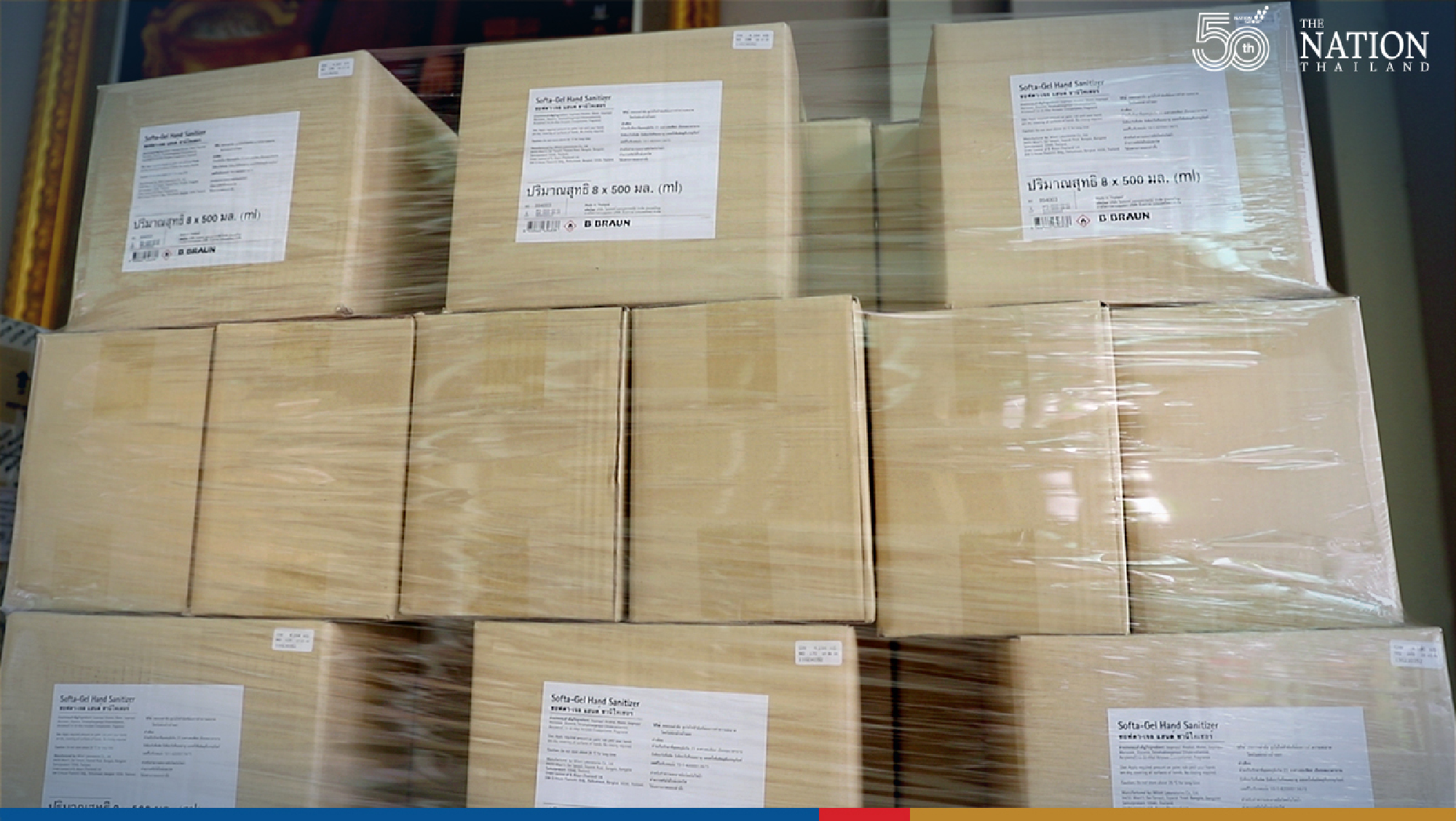
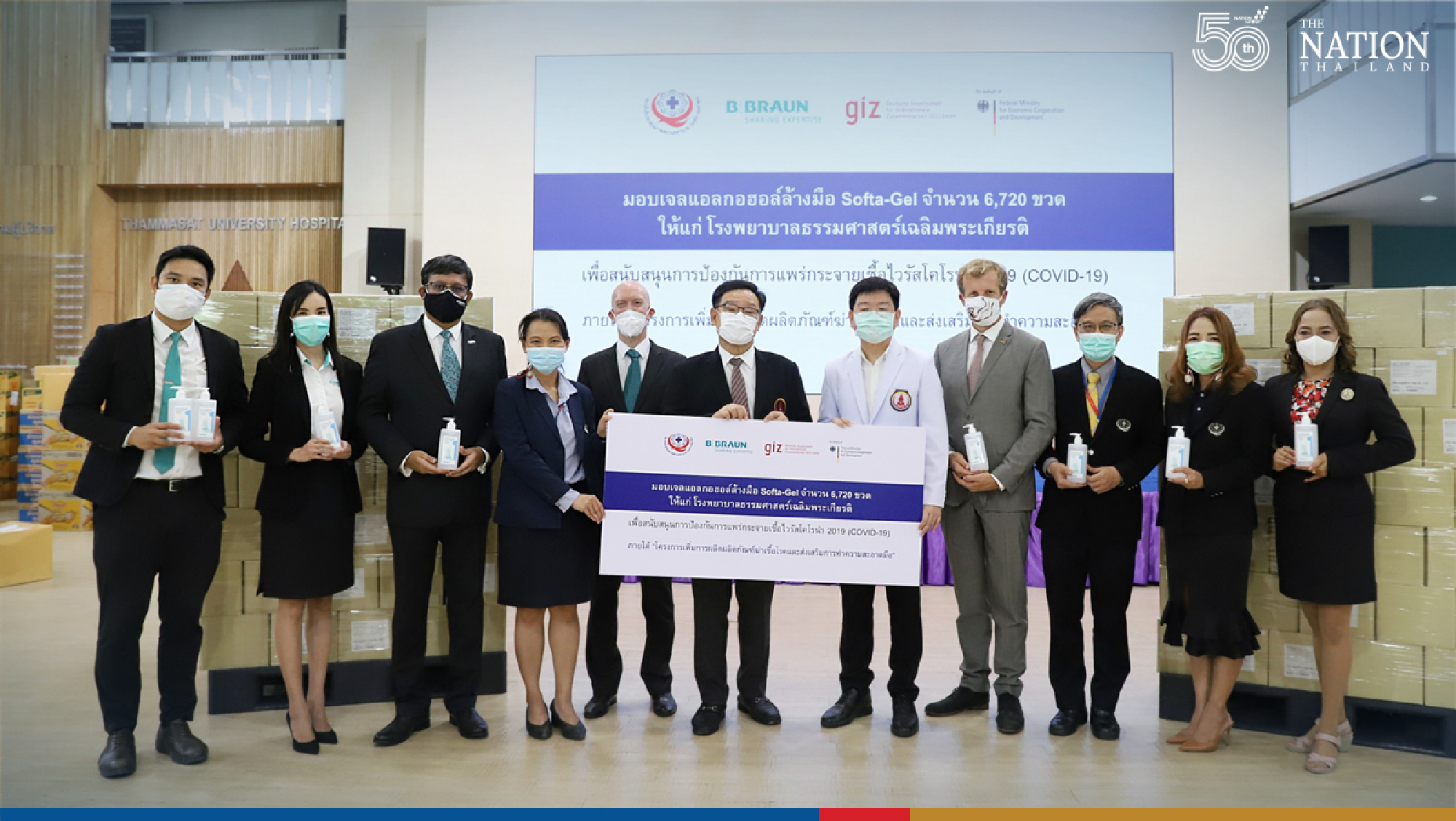
20 May 2021 / Bangkok – Dr. Kittinan Anakamanee MD., CEO of the Healthcare Accreditation Institute of Thailand (Public Organization) – HAI, together with Mr. Sayan Roy, Managing Director of B. Braun (Thailand) Co., Ltd. and Mr. Reinhold Elges, Country Director of GIZ Thailand and Malaysia recently handed over 6,720 bottles of alcohol-based hand sanitizer to healthcare workers at the Thammasat University Hospital.
This activity is implemented as part of the COVID-19 DPP Measure: Upscaling Sanitizing Production in Thailand and Promoting Hand Hygiene project. Thammasat University Hospital director Paruhas Tor-Udom was on hand to receive the hand sanitizers.
The donation of hand sanitizer aims to support the work of the healthcare and public health personnel in dealing with the COVID-19 pandemic and to reduce the risk of spreading the virus in hospitals. It is also meant to show moral support and gratitude to the healthcare and public health personnel as well as all relevant departments for their dedication in working for the people to get Thailand through this crisis as quickly as possible.
“The new wave of COVID-19 is hitting us harder than the first wave. The number of COVID-19 infections has risen significantly. Healthcare workers have been working hard combatting the coronavirus outbreak on the frontline and that puts them at the highest risk. We are therefore delighted to join forces with GIZ and B. Braun (Thailand) Co., Ltd to provide high-quality alcohol-based hand sanitizer to 62 hospitals and healthcare facilities in COVID-19 red zones across Thailand. In addition, HAI has jointly designed e-leaning on proper hand cleaning and the use of personal protective equipment, or PPE, to prevent the spread of COVID-19 and ensure the safety of patients and healthcare workers including village health volunteers,” said Dr. Kittinan Anakamanee MD., CEO of the Healthcare Accreditation Institute of Thailand (Public Organization) – HAI.
Thailand and Germany join hands to provide alcohol gel to healthcare workers during the COVID-19 crisis
Mr. Sayan Roy, Managing Director of B. Braun (Thailand) Co., Ltd. said: “With the pandemic continuing, we at B Braun (Thailand) Co., Ltd. are supporting the communities and the healthcare workers by providing them with our quality product, SOFTA-GEL alcohol hand rub, which has been tested according to global testing standards, namely EN14476 efficacy against developed viruses, which include Coronavirus, EN1500 recommended by World Health Organization (WHO) and EN1276 in line with the recommendation of the Department of Medical Sciences, Ministry of Public Health. With support from the German Federal Ministry of Economic Cooperation and Development (BMZ), B. Braun (Thailand) Co., Ltd has been able to increase production capacity of alcohol hand sanitizer so as to have enough to meet the needs of the Thai people”.
Dr. Paruhas Tor-Udom, Director of the Thammasat University Hospital said, “Today, I would like to thank HAI, B. Braun and GIZ for donating SOFTA-GEL hand sanitizer to the Thammasat University Hospital. In the midst of the COVID-19 pandemic, good hygiene is essential. Knowledge about health care and proper use of alcohol gel is also important for healthcare workers, patients and everyone in general. This donation will help increase the amount of alcohol gel for hospital use since we have more than 4,000 healthcare workers and patients per day. This will help reduce the spread of COVID-19 in the hospital.”
The project, which is being implemented through the cooperation between HAI, B Braun (Thailand) Co., Ltd., and GIZ also supports the fight against COVID-19 among Thais by encouraging them to regularly wash their hands properly, avoid crowded places and gathering, and wear a mask every time they leave the house. This is because hygiene care is very important and can help reduce the spread of the virus and infection.
Thailand and Germany join hands to provide alcohol gel to healthcare workers during the COVID-19 crisis
Thailand and Germany join hands to provide alcohol gel to healthcare workers during the COVID-19 crisis
Fed signal on QE, oil price expected to cast shadow over SET
The Stock Exchange of Thailand (SET) Index rose by 2.59 points, or 0.17 per cent, to 1,557.13 at 10am on Friday. The volume of total transactions was worth THB4.82 billion with an index high of 1,560.51 and a low of 1,556.97.
Krungsri Securities forecast that the SET Index would fluctuate between 1,545 and 1,565 points despite positive sentiment of a decline in US jobless claims.
It said the index would be under pressure due to uncertainty over the US Federal Reserve’s signal it would be open “at some point” to discussing a scaling back of its massive bond purchases, or quantitative easing (QE).
“Besides, the falling oil price would pressure energy shares,” Krungsri Securities added.
It recommended that investors buy:
▪︎ BDMS, BCH and CHG, which have gained positive sentiment from the mass vaccination.
▪︎ HANA, KCE, TU, CPF and EPG, which benefit from the weakening baht.
▪︎ CK, STEC, ITD, NWR, UNIQ, which benefit from the e-bidding of Den Chai-Chiang Khong double-track railway project.
The SET Index closed at 1,554.54 on Thursday, down 7.70 points or 0.49 per cent. Total transactions amounted to THB90 billion with an index high of 1,568.72 and a low of 1,554.54.
Baht opens stronger but could weaken in the short term, says analyst
The baht opened at 31.37 to the US dollar on Friday, strengthening slightly from Thursday’s closing rate of 31.45. The Thai currency is likely to move between 31.35 and 31.45 during the day, Krungthai Bank market strategist Poon Panichpibool said.
He predicted that the baht would weaken in the short term due to the market situation and the Covid-19 crisis in Thailand. However, the weakening of the dollar will prevent the baht from sliding further.
Poon said the baht’s resistance would be around 31.50 to 31.60 to the dollar, as exporters were expected to offload their dollars at that rate.
Also, the support point would be when the baht moves closer to 31.30, when importers would want to purchase the dollar.
Poon, however, believed the baht would strengthen in the near future because of a weakening dollar as well as Covid-19 vaccinations for the general Thai public, which would draw investors back to the country.
Gold up slightly on weaker dollar, lower US bond yield
The price of gold rose by THB50 per baht weight in morning trade on Friday, due to the weakening dollar and decline in US bond yield.
The Gold Traders Association report at 9.24am showed buying price of a gold bar at THB27,700 per baht weight and selling price at THB27,800, while gold ornaments were priced at THB27,197.04 and THB28,300, respectively.
The buying price of a gold bar at close on Thursday was THB27,650 per baht weight and selling price THB27,750, while gold ornaments were priced at THB27,151.56 and THB28,250, respectively.
Spot gold price on Friday was US$1,871 (THB58,712) per ounce compared to Thursday when it rose by 40 cents to $1,881.9 per ounce.
Hong Kong gold price on Friday dropped by HK$10 to $17,350 (THB70,135) per tael, the Chinese Gold and Silver Exchange Society reported.







 Thailand and Germany join hands to provide alcohol gel to healthcare workers during the COVID-19 crisis
 Thailand and Germany join hands to provide alcohol gel to healthcare workers during the COVID-19 crisis
 Thailand and Germany join hands to provide alcohol gel to healthcare workers during the COVID-19 crisis