“Masita” Unveils The New Product “Cold Ramen Hachiban Flavour” #SootinClaimon.Com

#SootinClaimon.Com : ขอบคุณแหล่งข้อมูล : หนังสือพิมพ์ The Nation.

https://www.nationthailand.com/business/40001022

“Masita” Unveils The New Product “Cold Ramen Hachiban Flavour”


Masita continues its collaboration strategy with the latest partnership with Hachiban Ramen, Thailands most famous Japanese ramen chain, creating “Cold Ramen Flavor,” which is Hachibans signature dish.

"Masita" Unveils The New Product "Cold Ramen Hachiban Flavour"

“Masita” continues its collaboration strategy with the latest invention, “Cold Ramen Flavour” in partnership with “Hachiban Ramen,” one of Thailand’s most renowned ramen chains. The new addition is aimed to excite the seaweed snack market, which the brand currently reign with a 39% market share, and give more options to consumers with premium seaweed 100%-sourced from South Korea and no MSG.

Mr. Titiporn Thammapimookkul, Chief Marketing Officer of Boonrawd Trading Co., Ltd., reveals that one of Masita’s marketing strategy for the past couple of years, which were wildly successful, was to form a partnership marketing or collaboration with famous restaurant chains such as Bar B Q Plaza, BonChon Chicken, Sukishi and Tudari. The partnerships had helped the brand differentiate itself from competitors, put the brand in a strong position, and significantly boost sales and revenue.

Past successes had led to Masita’s latest partnership with Hachiban Ramen, Thailand’s most famous Japanese ramen chain, creating “Cold Ramen Flavor,” which is Hachiban’s signature dish. Consumers will be able to taste the flavor and aroma which replicates the experience of dining in Hachiban’s no.1 dish, dipping ramen noodles in the cold Saru sauce served with Wasabi, onion, radish, spring onion, with Masita’s sesame oil and crispy seaweed served cold just like old times.

Masita is the first brand to differentiate itself from competitors with partnership marketing. Every past brand that has collaborated with Masita is renowned food chains that consumers know and love. The strength of Masita and its partners has brought new and quality products to all consumers, being the only brand in the seaweed snack market that all SKUs have 0% MSG but packed with tasty flavor in seaweed 100% sourced from Korea. The commitment has made Masita , No.1 brand of roasted seaweed product in their portfolio with constant growth and relevance to health-conscious consumers.

The company is dedicating its marketing communication efforts on all platforms, especially online, to increase awareness and build product relevance among the young generation to first jobber consumers. The collaboration with Hachiban will introduce Masita to Hachiban fans and will lead to new product trials and long-term consumption in the long run.

The “Cold Ramen” Masita seaweed snack weighs 15 grams per pack and is priced at 39 Baht. The product is available in every 7-Eleven branch, Hachiban Ramen restaurants in Bangkok, Nonthaburi, Samut Prakan, and Pathum Thani from today until August 2021 or until sold out.

The seaweed snack market currently values 2.1 billion Baht. Although the overall market value has shrunken due to COVID-19, Masita is still growing with an 18.3% market share in 2020. While the more specific baked seaweed snack market value decreased by 19.2% but Masita still sees a 6% growth with over 31.5% market share.

Published : May 18, 2021
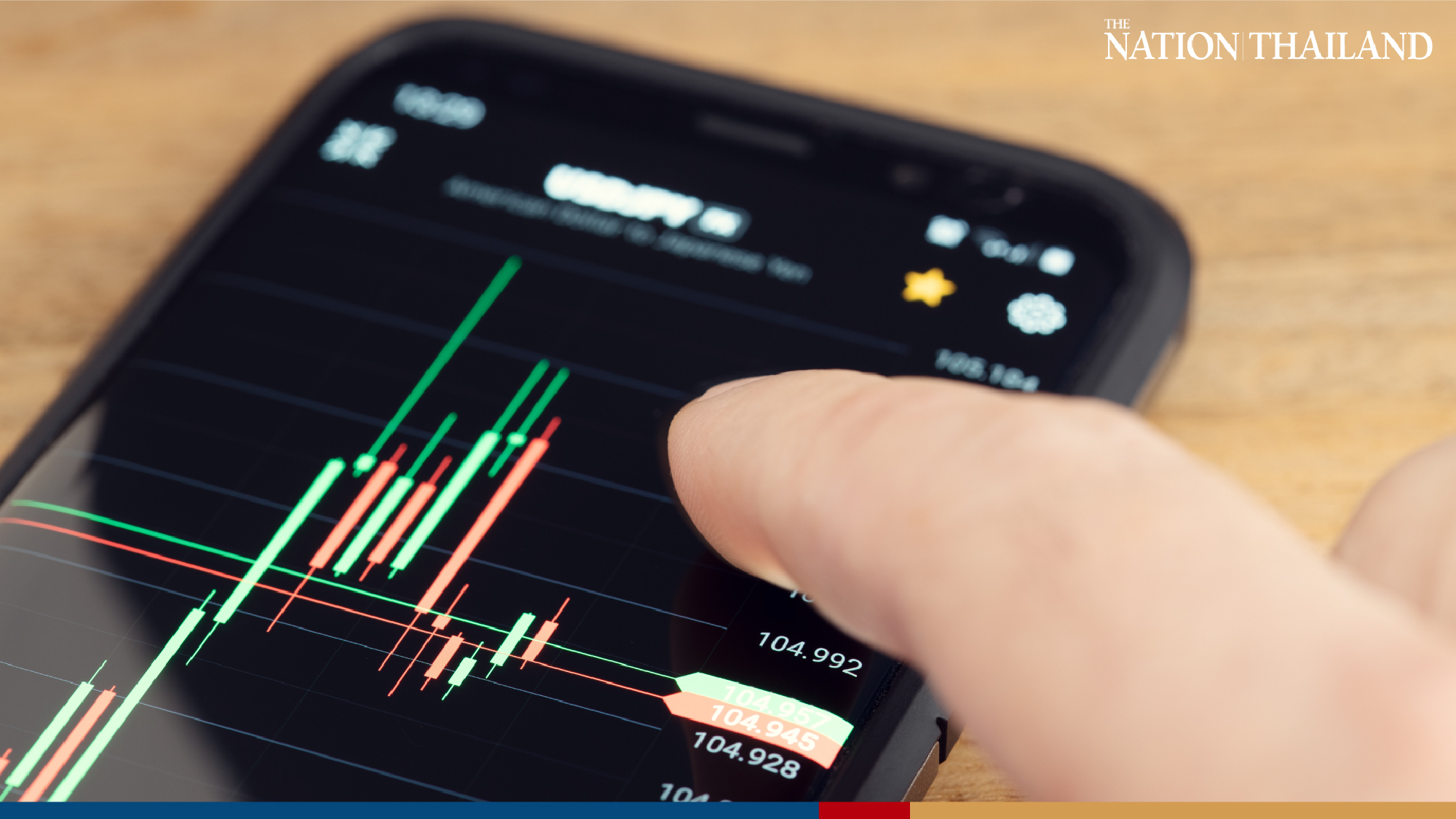
Thai stocks gain ground despite worry over inflation, virus #SootinClaimon.Com

#SootinClaimon.Com : ขอบคุณแหล่งข้อมูล : หนังสือพิมพ์ The Nation.

https://www.nationthailand.com/business/40001026

Thai stocks gain ground despite worry over inflation, virus


The Stock Exchange of Thailand (SET) Index closed at 1,566.80 on Tuesday, up 17.64 points or 1.14 per cent. The volume of total transactions was THB98.21 billion with an index high of 1,570.37 and a low of 1,558.85.

Thai stocks gain ground despite worry over inflation, virus

In the morning session, Krungsri Securities expected the SET Index to rise to 1,560 on hopes of economic recovery after easing of lockdown restrictions in European led to a rise in the price of oil.

However, it warned investors to beware of mass sell-offs to prevent risks from uncertainty over inflation, outflow of foreign funds, and Thailand’s rising Covid-19 caseload.

The 10 stocks with the highest trade value today were SIRI, ITD, TIDLOR, RCL, PTT, CBG, STGT, KBANK, KCE and SAWAD.

Other Asian indices were on the rise with one exception:

Japan’s Nikkei Index closed at 28,406.84, up 582.01 points or 2.09 per cent.

China’s Shanghai SE Composite Index closed at 3,529.01, up 11.40 points or 0.32 per cent, while the Shenzhen SE Component Index closed at 14,450.60, down 5.94 points or 0.041 per cent.

Hong Kong’s Hang Seng Index closed at 28,593.81, up 399.72 points or 1.42 per cent.

South Korea’s KOSPI closed at 3,173.05, up 38.53 points or 1.23 per cent.

Taiwan’s TAIEX Index closed at 16,145.98, up 792.09 points or 5.16 per cent.

Published : May 18, 2021

By : The Nation

Thailand’s GDP growth relies on vaccine rollout, NESDC says #SootinClaimon.Com

#SootinClaimon.Com : ขอบคุณแหล่งข้อมูล : หนังสือพิมพ์ The Nation.

https://www.nationthailand.com/business/40001012

Thailand’s GDP growth relies on vaccine rollout, NESDC says


Thailand’s gross domestic product (GDP) in the first quarter of this year contracted by 2.6 per cent because the third wave of Covid-19 infections has hurt the economy and tourism industry, the National Economic and Social Development Council (NESDC) said on Monday.

Thailand’s GDP growth relies on vaccine rollout, NESDC says

However, it was a marked improvement from the 4.2 per cent contraction in the fourth quarter last year, NESDC secretary-general Danucha Pichayanan said.

He added that the NESDC had adjusted down the country’s GDP expansion forecast for this year to 1.5 to 2.5 per cent from 2.5 to 3.5 per cent.

He said the two factors that are important for boosting Thailand’s economy this year are global trade and progress in the Covid-19 vaccine rollout.

“Government spending is also key to boosting the economy this year,” he said.

He added that GDP expansion has been forecast on the assumption that the government can contain the spread of Covid-19 from June onwards.

“Hence we want people to keep up with information from experts on Covid-19 vaccines, so the mass rollout is effective,” he added.

Published : May 18, 2021

By : The Nation

SET gets temporary lift from signs of economic recovery in Europe #SootinClaimon.Com

#SootinClaimon.Com : ขอบคุณแหล่งข้อมูล : หนังสือพิมพ์ The Nation.

https://www.nationthailand.com/business/40001008

SET gets temporary lift from signs of economic recovery in Europe


The Stock Exchange of Thailand (SET) Index rose by 12.26 points, or 0.79 per cent, to 1,561.42 at 10.03am on Tuesday. The volume of total transactions was THB6.82 billion with an index high of 1,562.86 and a low of 1,558.92.

SET gets temporary lift from signs of economic recovery in Europe

Krungsri Securities expected the SET Index to rise to 1,560 on hopes of an economic recovery after many European countries eased lockdown measures, resulting in oil price going up.

However, it warned investors to beware of mass sell-offs of shares to prevent risks from uncertainty over inflation, the outflow of foreign funds and Thailand’s rising Covid-19 cases.

It recommended that investors buy:

▪︎ PTT, PTTEP, PTTGC and IVL, which benefit from the rising oil price.

▪︎ HANA, KCE, TU, CPF and EPG, which benefit from the weakening baht.

▪︎ BDMS, BCH and CHG, which gained positive sentiment from the import of Covid-19 vaccine.

The SET Index closed at 1,549.16 on Monday, down 0.32 points or 0.02 per cent. The volume of total transactions was THB98.56 billion with an index high of 1,554.08 and a low of 1,529.69.

Published : May 18, 2021

By : The Nation

Weakening dollar pushes up demand for gold and price #SootinClaimon.Com

#SootinClaimon.Com : ขอบคุณแหล่งข้อมูล : หนังสือพิมพ์ The Nation.

https://www.nationthailand.com/business/40001005

Weakening dollar pushes up demand for gold and price


The price of gold rose by THB250 per baht weight in morning trade on Tuesday, thanks to mass buy-ups of the precious metal as a safe-haven asset amid the weakening dollar.

Weakening dollar pushes up demand for gold and price

The Gold Traders Association report at 9.28am showed buying price of a gold bar at THB27,700 per baht weight and selling price at THB27,800, while gold ornaments were priced at THB27,197.04 and THB28,300, respectively.

At close on Monday, the buying price of a gold bar was THB27,450 per baht weight and selling price THB27,550, while gold ornaments were priced at THB26,954.48 and THB28,050, respectively.

Spot gold price on Tuesday was US$1,870 (THB58,917) per ounce compared to Monday when it rose by $29.5 to $1,867.6 per ounce.

Hong Kong gold price on Tuesday rose by HK$140 to $17,310 (THB70,229) per tael, the Chinese Gold and Silver Exchange Society reported.

Published : May 18, 2021

By : The Nation

Thai banking system robust despite Covid crisis: central bank #SootinClaimon.Com

#SootinClaimon.Com : ขอบคุณแหล่งข้อมูล : หนังสือพิมพ์ The Nation.

https://www.nationthailand.com/business/40000984

Thai banking system robust despite Covid crisis: central bank


The Bank of Thailand has earmarked more than 8.23 billion baht for the rehabilitation of 4,254 loans, that have suffered due to rising economic uncertainties from the latest wave of Covid-19 infections.

Thai banking system robust despite Covid crisis: central bank

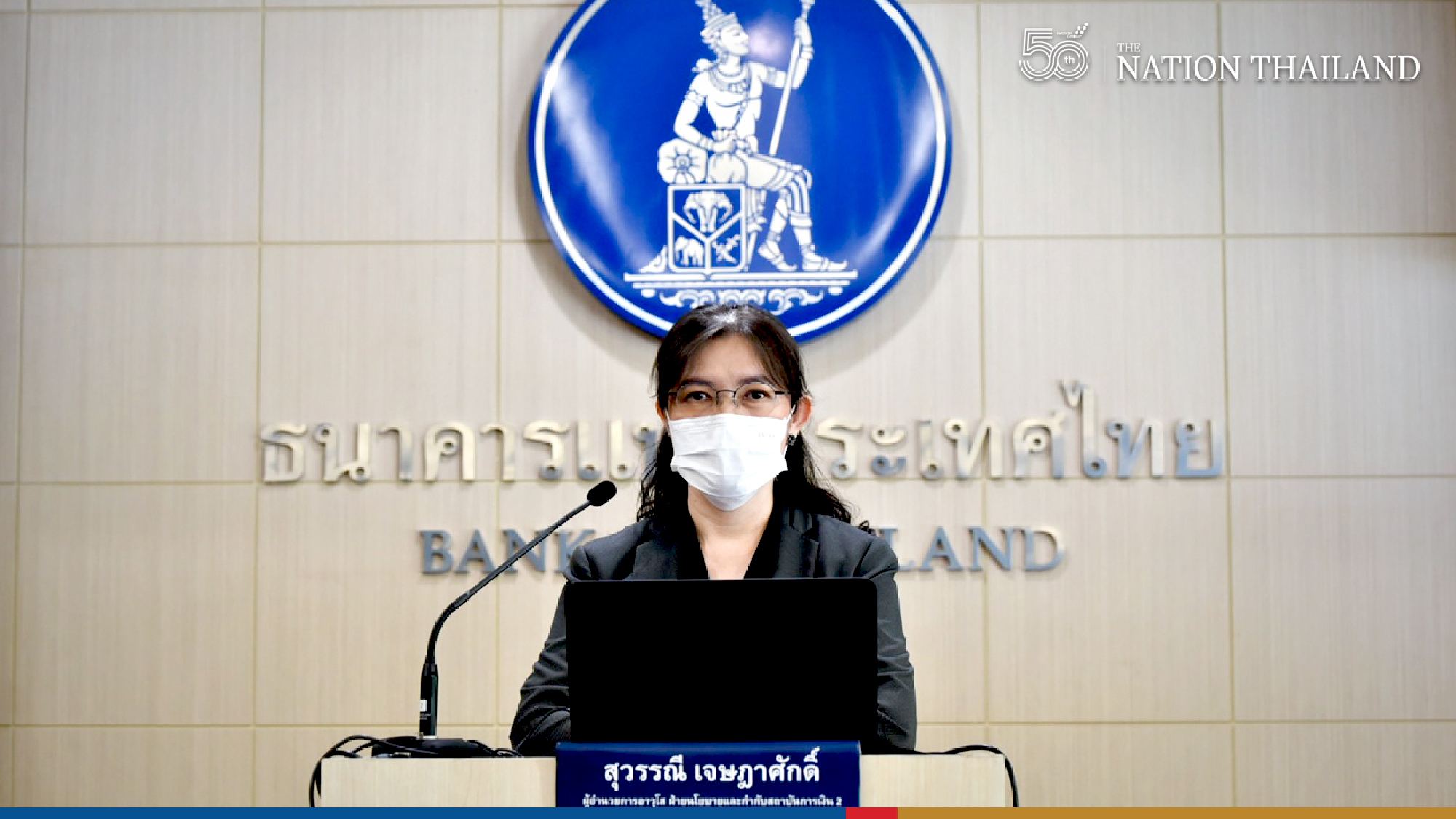
Suwannee Jatsadasak, senior director of the central bank, said the Thai banking system’s performance in the first quarter shows that the banking system is resilient with high levels of capital fund, loan loss provision and liquidity to accommodate loan demands and weather rising economic concerns.

Credit assistance measures, coupled with revisions to rules on loan classification and provisioning helped stop the quality of bank loans from deteriorating.

The Thai banking system’s capital fund stood at 3.02 trillion baht – equivalent to a capital adequacy ratio of 20 per cent. Loan-loss provisions remained high at 823.4 billion baht, with NPL coverage ratio of 149.7 per cent. The liquidity coverage ratio came in at 186.5 per cent.

In the first quarter of 2021, banks’ overall loan growth was 3.8 per cent year-on-year, down from 5.1 per cent in the previous quarter.

Corporate loan (64.3 per cent of total loan) expanded at 3 per cent year-on-year. Large corporate loan growth was moderate following an acceleration in loan usage last year due to needed liquidity and funding switch from corporate bonds. SME loans expanded quarter-on-quarter, resulting in a smaller year-on-year contraction – even when excluding contributions from the soft loan scheme.

Consumer loans (35.7 per cent of total loans) grew 5.3 per cent year-on-year, higher than the 4.4 per cent expansion in the previous quarter. This was mainly driven by mortgage lending, consistent with increasing demand especially for low-rise residential properties, together with promotional campaigns from developers and a reduction in government fees. Meanwhile, auto loans grew marginally in line with a contraction in domestic car sales from the previous year. Credit-card loans expanded compared to the first quarter of last year when consumer spending was affected by the early stage of the Covid-19 outbreak. Personal loans rose at a higher rate due to households’ need for liquidity, partly reflected in an increase in unsecured loans through online platforms and cash cards.

Bank loan quality in the first quarter of 2021 continued to be supported by financial assistance as well as revisions to rules on loan classification. As a result, gross non-performing loans (NPL)s rose slightly to 537.1 billion baht, equivalent to an NPL ratio of 3.10 per cent. Meanwhile, the ratio of loans with a significant increase in credit risk (SICR) to total loans stood at 6.41 per cent, down from 6.62 per cent in the previous quarter.

The banking system recorded net profit of 43.8 billion baht in the first quarter of 2021, down from the same quarter last year by 12 per cent. This was mainly due to a drop in interest income from loans. However, net profit rose from the previous quarter due to a drop in operating cost and provisioning expenses as banks had already set aside higher provisions in 2020. Consequently, the ratio of return on asset went up to 0.8 per cent from 0.32 per cent in the previous quarter. Meanwhile, the ratio of net interest income to average interest-earning assets decreased from 2.52 per cent to 2.43 per cent.

Published : May 17, 2021

By : The Nation

Thai stocks level out amid record virus surge #SootinClaimon.Com

#SootinClaimon.Com : ขอบคุณแหล่งข้อมูล : หนังสือพิมพ์ The Nation.

https://www.nationthailand.com/business/40000983

Thai stocks level out amid record virus surge


The Stock Exchange of Thailand (SET) Index closed at 1,549.16 on Monday, down 0.32 points or 0.02 per cent. The volume of total transactions was THB98.56 billion with an index high of 1,554.08 and a low of 1,529.69.

Thai stocks level out amid record virus surge

In the morning session, Krungsri Securities forecast that the SET Index on Monday would fluctuate between 1,540 and 1,560 points despite hopes of global economic recovery after strong economic data from the US.

“The index will be under pressure due to uncertainty over rising inflation, outflow of foreign funds and Thailand’s higher Covid-19 rate,” Krungsri Securities said.

Monday saw Thailand log a record 9,635 new Covid-19 cases over the previous 24 hours.

The 10 stocks with the highest trade value today were SIRI, CBG, KBANK, TIDLOR, PTT, SCGP, SCC, STGT, CPF and CPALL.

Other Asian indices were mixed:

Japan’s Nikkei Index closed at 27,824.83, down 259.64 points or 0.92 per cent.

China’s Shanghai SE Composite Index closed at 3,517.62, up 27.24 points or 0.78 per cent, while the Shenzhen SE Component Index closed at 14,456.54, up 247.76 points or 1.74 per cent.

Hong Kong’s Hang Seng Index closed at 28,194.09, up 166.52 points or 0.59 per cent.

South Korea’s KOSPI Index closed at 3,134.52, down 18.80 points or 0.60 per cent.

Taiwan’s TAIEX Index closed at 15,353.89, down 473.20 points or 2.99 per cent.

Published : May 17, 2021

By : The Nation

Thailand to Co-Host OECD Southeast Asia Regional Forum 2021 for Regional Cooperation to ‘Build Back Better’ After COVID-19 #SootinClaimon.Com

#SootinClaimon.Com : ขอบคุณแหล่งข้อมูล : หนังสือพิมพ์ The Nation.

https://www.nationthailand.com/perspective/40001013

Thailand to Co-Host OECD Southeast Asia Regional Forum 2021 for Regional Cooperation to ‘Build Back Better’ After COVID-19


The Ministry of Foreign Affairs of Thailand and the Organisation for Economic Co-operation and Development (OECD), will co – host the OECD Southeast Asia Regional Forum 2021 under the theme “Human Capital Development in Southeast Asia: Fostering Competitiveness to Build Back Better” in virtual format on Thursday, 20 May 2021 at 14.00-18.00 hrs. (GMT +7).

Thailand to Co-Host OECD Southeast Asia Regional Forum 2021 for Regional Cooperation to ‘Build Back Better’ After COVID-19

This year, the Forum will discuss policy enablers and responses to human capital challenges in the region. The Forum will emphasise the transformative impact of digitalisation on education and skills, as well as how to reshape the current education and skills strategies to enhance resilience and competitiveness of Southeast Asia’s human resources in a fast-changing world of work. H.E. Mr. Don Pramudwinai, Deputy Prime Minister and Minister of Foreign Affairs of the Kingdom of Thailand, will deliver opening remarks in the Forum, along with H.E. Mr. Angel Gurría, Secretary-General of the OECD, and H.E. Mr. Choi Joong-Moon, 2nd Vice Minister of Foreign Affairs of the Republic of Korea.

The OECD initiated the annual Southeast Asia Regional Forum in 2015 as a platform for OECD and ASEAN members to discuss cooperation and share experiences and best practices. Participants in the Forum include high-level representatives from the public sector, business community, academia as well as civil society of the OECD and ASEAN.

The Forum will be live streamed on http://www.facebook.com/thaiMFA

Published : May 18, 2021

By : THE NATION

0.2% real GDP expansion proves Thai economy still robust: HSBC #SootinClaimon.Com

#SootinClaimon.Com : ขอบคุณแหล่งข้อมูล : หนังสือพิมพ์ The Nation.

https://www.nationthailand.com/business/40000976

0.2% real GDP expansion proves Thai economy still robust: HSBC


Thailand’s economy has displayed remarkable resilience despite experiencing its largest wave of Covid-19 cases, HSBC Global Research said. It said Thailand’s real GDP still expanded by 0.2 per cent quarter on quarter (QoQ) in the first quarter of 2021.

0.2% real GDP expansion proves Thai economy still robust: HSBC

Government spending did much of the heavy lifting to boost the economy, with public investment rising nearly 19 per cent QoQ (21 per cent year-on-year).

However, HSBC said challenges still loom for the Thai economy for the rest of the year. Covid-19 cases have risen more substantially in the second quarter, with a record number seen just today. Statistics also indicated that private consumption contracted in the first quarter as mobility declined. People’s mobility has not seen much improvement in Q2, which may indicate that private consumption will likely remain depressed in the coming quarter. Consumer confidence in April fell to a 22-year low as a result of the ongoing wave of cases. The government’s aggressive spending thus far could also mean that public expenditure may slow in the coming quarters unless the government embarks on additional borrowing.

Rising Covid-19 cases and reduced mobility will also affect private investment, albeit not nearly to the same extent as private consumption. Details show that private investment grew just 0.1 per cent QoQ. The same is likely to be expected in Q2, as mobility restrictions are likely to delay private investments to the second half of 2021 at the earliest.

HSBC estimates that Thailand’s real GDP growth for 2021 could fall to between 1.7 and 2.2 per cent if there is not much improvement in Q2 from Q1. This expectation is also reflected in the National Economic and Social Development Council (NESDC)’s updated economic forecast.

As a result of the weak economy, targeted monetary measures may be in store to supplement the government’s stimulus efforts. The Bank of Thailand (BOT) noted at its most recent meeting that fragile SMEs are a key risk factor to the recovery, in addition to a slow vaccine rollout. This suggests that targeted financial and credit measures may be to distribute ample liquidity in the market to affected businesses. BOT is expected to maintain its policy rate at 0.5 per cent.

Here are some figures at a glance:

• Thailand’s real GDP fell by 2.6 per cent YoY in Q1 2021, better than market expectations (HSBC: -3.3 per cent).

• Government spending helped boost growth, but private consumption contracted and is likely to remain weak in Q2.

• BOT may maintain its policy rate at 0.5 per cent, though targeted monetary support may be in store given weak economy.

Facts

• Thailand’s economy contracted by 2.6 per cent YoY in Q1 2021, but real GDP rose 0.2 per cent QoQ seasonally adjusted.

• Spending: Private consumption dropped 0.5 per cent YoY(previously +0.9 per cent); gross fixed capital formation rose 7.3 per cent YoY (previously -2.5 per cent) and government expenditure rose 2.1 per cent YoY (previously 2.2 per cent).

• Production: Agriculture up 1.9 per cent YoY (previously 0.4 per cent); manufacturing rose 0.7 per cent YoY (previously -0.7 per cent); and services dropped 4.2 per cent YoY (previously -5.9 per cent).

• NESDC revises down growth forecast for 2021 to 1.5-2.5 per cent from a previous range of 2.5-3.5 per cent.

Published : May 17, 2021

By : The Nation

Thailand leads in wholesale central bank digital currency development: PwC #SootinClaimon.Com

#SootinClaimon.Com : ขอบคุณแหล่งข้อมูล : หนังสือพิมพ์ The Nation.

https://www.nationthailand.com/business/40000975

Thailand leads in wholesale central bank digital currency development: PwC


The Bank of Thailand (BOT) has one of the most mature interbank/wholesale central bank digital currency (CBDC) projects in the world, a report from PwC said.

Thailand leads in wholesale central bank digital currency development: PwC

The “PwC Global CBDC Index 2021” analyses central banks’ maturity in deploying their own digital currency, including tracking progress and stance on developing CBDC development. The other central bank named in the report was that of Hong Kong SAR.

Vilaiporn Taweelappontong, consulting lead partner and financial services leader for PwC Thailand, said the index ranks the world’s most advanced CBDC projects in terms of retail CBDCs held directly by corporations and citizens, and interbank/wholesale CBDCs restricted to financial institutions for interbank payments and financial settlement processes.

The BOT and the Hong Kong Monetary Authority (HKMA) won a score of 80 thanks to the Project Inthanon-LionRock initiated by them.

“The Project Inthanon-LionRock is by far the most advanced wholesale CBDC project both in terms of the design and overall development,” Vilaiporn said.

“In 2019 the two central banks initiated the project to test the application of CBDC to cross-border payments, leading to the development of a software prototype both for cross-border settlements and a range of other uses,” she said.

Now in phase two, the joint project is evolving from bilateral cross-border uses to functions involving multiple jurisdictions and currencies that are further enhancing the financial infrastructure for cross-border payments.

In February 2021, the Central Bank of the United Arab Emirates (CBUAE) and the Digital Currency Institute of the People’s Bank of China (PBC DCI) joined Project Inthanon-LionRock and renamed the project “Multiple Central Bank Digital Currency Bridge ” or “m-CBDC Bridge”. It will study potential outcomes in a multi-jurisdictional context as it evaluates the feasibility of the project.

“CBDCs can offer less costly transactions and improve the overall efficiency of the country’s entire payment system, especially when using blockchain technology to create a safer, more transparent and modernised monetary ecosystem,” Vilaiporn said.

More than 60 central banks have already entered the digital currency race, the report added.

Retail CBDC initiatives are particularly strong in emerging economies, where financial inclusion and digitisation appear as key drivers. Meanwhile, interbank/wholesale CBDC projects are gaining strength in developed economies where interbank borrowing and capital markets are more prominent, it said.

The retail CBDC ranking placed the Bahamas at the top (with a score of 92) for its Sand Dollar, the world’s first digital currency issued by a central bank. This was followed by Cambodia’s Project Bakong (83). Both projects are now live.

Trends to watch out for

The PwC report also identified three CBDC trends to watch out for this year:

• CBDC projects gaining traction: With more than 60 central banks exploring CBDCs since 2014, some projects are now entering the implementation phase. Institutional involvement in CBDCs will continue to strengthen the ecosystem at large, with public stakeholders such as the Bank for International Settlements (BIS), the World Bank, the International Monetary Fund (IMF) and the World Economic Forum (WEF) all playing an active role.

• CBDCs are now live and transactional volumes can be monitored: While there are two live retail CBDCs in the world, no interbank/wholesale CBDC projects have reached this maturity level yet. Nearly 70 per cent of declared wholesale projects are already running pilots, while only 23 per cent of retail projects have reached the implementation stage.

• Blockchain is the technology of choice: More than 88 per cent of CBDC projects, at the pilot or production phase, use blockchain as the underlying technology. This technology brings several benefits to CBDC developments including:

• Integrated platforms built by design to share value and securely transfer ownership, which is key to supporting digital money;

• Smart contract programmability, supporting CBDC as a new form of programmable monetary instrument that could trigger automatic payments based on pre-programmed conditions;

• Transparent audit trails;

• Configurable confidentiality features;

• Increasing interoperability with other digital assets.

“The next step of CBDC development in Thailand is to accelerate its very advanced pilot wholesale CBDC initiative to a live project. Meanwhile, the central bank is seeking public opinions until the middle of June on developing and issuing a retail digital currency.

“We believe that exploring the potential of retail CBDC will help open doors for more diverse and inclusive financial services for citizens. Introducing CBDC can improve tax collection and better manage money-laundering risks. However, further understanding the implications for monetary policy and the evolving roles of a central bank and financial institutions will all be key factors driving the future success of the country’s digital currency development.” Vilaiporn said.

Published : May 17, 2021

By : The Nation