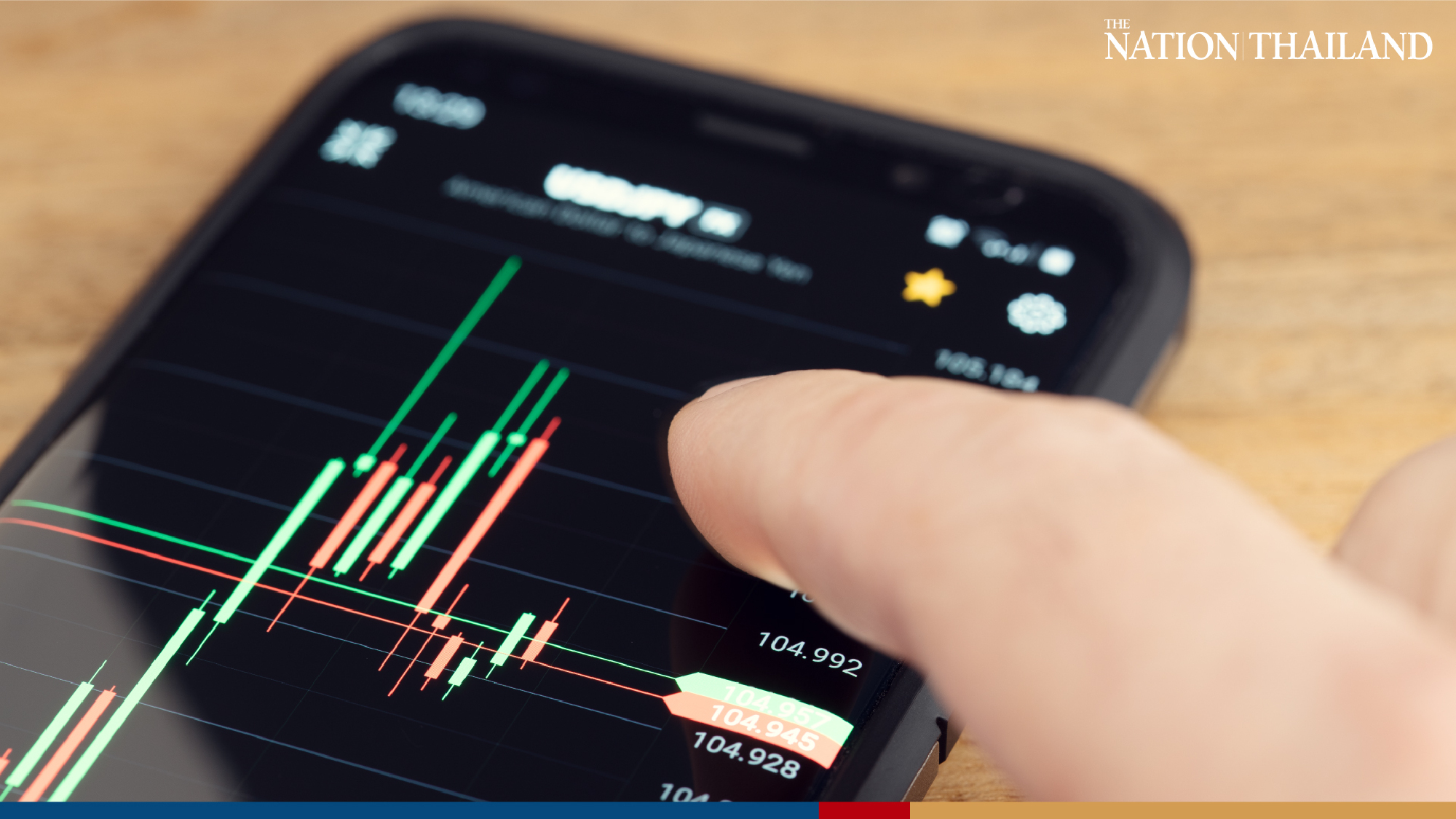
First-quarter earnings still strong for AIS, Dtac, True
Thailand’s three top telecommunication service providers, namely Advanced Info Services (AIS), Total Access Communication (Dtac) and True Corporation (True), have generated a revenue of more than 100 billion baht in the first quarter despite the Covid-19 impact on the economy.
The three firms earned 101.80 billion baht in the first quarter, up 4 per cent versus 97.76 billion baht last year. However, their combined net profit was 6.88 billion baht, down 15 per cent from 8.09 billion baht last year.
Among the three, AIS had the highest first-quarter net profit at 6.64 billion baht, though it had dropped slightly from last year’s 6.75 billion baht. Dtac came in second with 822 million baht, down almost 50 per cent from last year’s 1.5 billion baht.
True, however, was the only company to suffer a loss of 581 million baht, compared to the loss of 161 million baht last year.
The drop in the three companies’ first-quarter net profit has been put down to Thailand’s slightly recovered business outlook, new spectrum licence fees and investment in projects related to the 5G network.
Rising inflation, outflow of foreign funds give limited upward room for SET
The Stock Exchange of Thailand (SET) Index fell by 15.62 points or 1.01 per cent to 1,533.86 at 10.18am on Monday. The volume of total transactions was THB16.56 billion with an index high of 1,544.64 and a low of 1,529.69.
Krungsri Securities forecast that the SET Index on Monday would fluctuate between 1,540 and 1,560 points despite hopes of a global economic recovery after the US showed strong economic data.
“The index would be under pressure due to uncertainty over rising inflation, the outflow of foreign funds and Thailand’s higher Covid-19 cases,” Krungsri Securities said.
It recommended that investors buy:
▪︎ PTT, PTTEP, PTTGC and IVL, which benefit from the rising oil price.
▪︎ HANA, KCE, TU, CPF and EPG, which benefit from the weakening baht.
▪︎ ADVANC, INTUCH and WHAUP, which pay high dividends.
The SET Index closed at 1,549.48 on Friday, up 1.35 points or 0.09 per cent. The volume of total transactions was THB97.35 billion with an index high of 1,558.86 and a low of 1,532.29.
Baht weakens, could face downward pressure this week
The baht opened at 31.35 to the US dollar on Monday, weakening from Friday’s closing rate of 31.39.
The Thai currency is likely to move between 31.30 and 31.45 during the day and between 31.20 and 31.50 this week, Krungthai Bank market strategist Poon Panichpibool said.
He said the dollar would tend to be stable or weaken, depending on the market situation and recovery of the European economy.
Poon said the financial fluctuation in Asia caused by Covid-19 would prompt foreign investors to sell their assets in Asian markets. He suggested that Thai investors monitor trading of foreign currencies as it could weaken the baht.
The market strategist said the baht will not weaken sharply, and the currency’s resistance was between 31.40 and 31.50 per US dollar.
He added that the baht could strengthen from gold trade this time, when the metal’s price tends to increase.
The price of gold in Thailand rose by THB200 per baht weight in morning trade on Monday due to the weakening dollar.
The Gold Traders Association report at 9.27am showed buying price of a gold bar at THB27,400 per baht weight and selling price at THB27,500, while gold ornaments were priced at THB26,909 and THB28,000, respectively.
At close on Saturday, the buying price of a gold bar was THB27,200 per baht weight and selling price THB27,300, while gold ornaments were priced at THB26,711.92 and THB27,800, respectively.
The price had risen bt THB400 per baht weight, the highest in over four months, last week.
Spot gold price on Monday was US$1,851 (THB58,178) per ounce compared to Friday when it rose by $14.1 to $1,838.1 per ounce.
The Hong Kong gold price on Monday rose by HK$90 to $17,090 (THB69,157) per tael, the Chinese Gold and Silver Exchange Society reported.
Foreign automakers in Thailand have been hit severely by the Covid-19 crisis, which has led to changes in automotive technologies and consumer behaviour, semiweekly business publication Thansettakij said on Saturday.
Among the major upheavals in Thailand’s auto industry last year was American automaker General Motors (GM) pulling out of the country and giants Nissan, Mitsubishi and Honda undertaking restructuring of their organisations at the beginning of this year.
GM also sold its factory in Rayong to Great Wall Motors, a Chinese automaker, last year.
Foreign automakers in Thailand sold 790,000 cars last year, down 21 per cent compared to 2019.
Toyota Motor Thailand’s revenue in 2020 was THB368.25 billion, down 13.16 per cent year on year, while the company’s profit after tax slumped 41.82 per cent year on year to THB12.48 billion.
Honda Automobile (Thailand)’s revenue was THB206.70 billion, down 13.57 per cent year on year, while the company’s profit was THB11.64 billion, down 8.89 per cent year on year.
Isuzu Motors (Thailand)’s revenue was THB169.45 billion, down 8.19 per cent year on year, while the company’s profit fell 33.81 per cent year on year to THB10.37 billion.
Nissan Motor (Thailand)’s revenue was THB108.42 billion, down 21.21 per cent year on year, and the company reported a loss of THB7.21 billion compared to THB1 billion loss in the previous year.
The Federation of Thai Industries expected automakers to sell 1.5 million cars this year, of which 750,000 cars would be sold in the country and another 750,000 cars would be exported.
Even though auto sales this year are expected to be better than last year due to more people getting the Covid-19 vaccine, the industry would continue to be under pressure due to the third wave of the pandemic and shortage of materials, Thansettakij said.
AIA DELIVERS VERY STRONG GROWTH VALUE OF NEW BUSINESS UP 19% IN THE FIRST QUARTER
AIA Group Limited (the “Company”; stock code: 1299) announces delivers very strong new business growth value of new business up 19 per cent in the first quarter ended 31 March 2021
AIA Group Limited (the “Company”; stock code: 1299) today announces key new business indicators for the first quarter ended 31 March 2021.
KEY FINANCIAL SUMMARY
Growth rates are shown on a constant exchange rate basis.
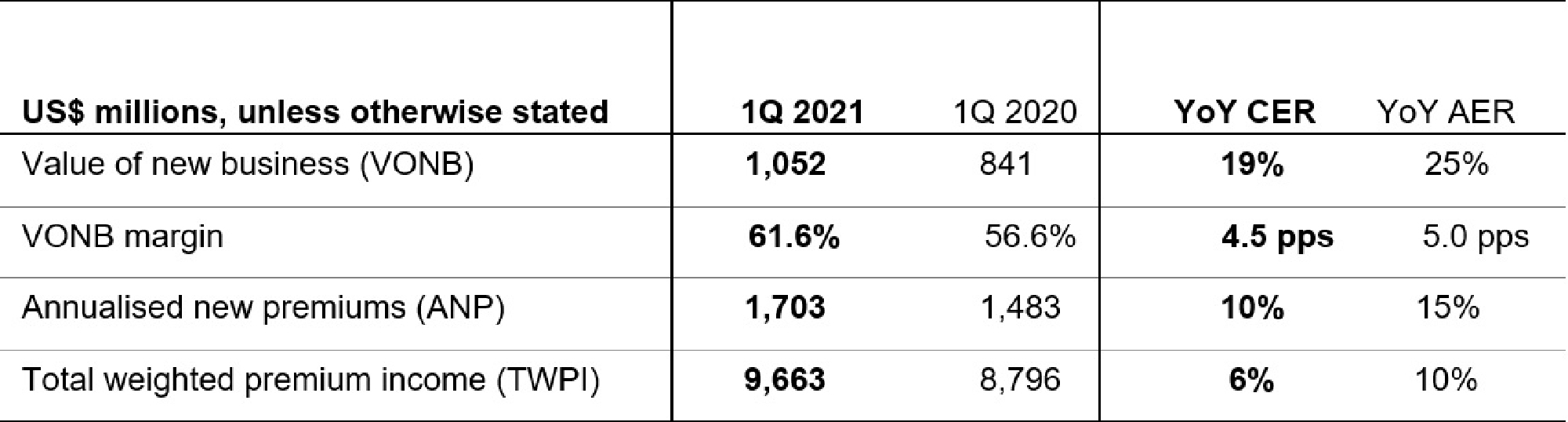
• Value of new business (VONB) of US$1,052 million, up 19 per cent
• Annualised new premiums (ANP) grew 10 per cent to US$1,703 million
• VONB margin up 4.5 pps to 61.6 per cent
• Total weighted premium income (TWPI) up 6 per cent to US$9,663 million
AIA DELIVERS VERY STRONG GROWTH VALUE OF NEW BUSINESS UP 19% IN THE FIRST QUARTER
Lee Yuan Siong, AIA’s Group Chief Executive and President, said:
“AIA has exceeded pre-pandemic levels of new business for each of our segments other than Hong Kong, where travel restrictions continue to affect sales to Mainland Chinese visitors. Outside Hong Kong, VONB for all segments in the first quarter of 2021 was higher than the first quarter of 2019. Compared with the first quarter of 2020, we have delivered 19 per cent overall VONB growth for the Group, including excellent growth in Mainland China, Thailand and Malaysia and double-digit growth from our domestic customer segment in Hong Kong.
“The momentum that returned to our businesses, as movement restrictions eased in 2020, has continued into 2021. VONB growth is broad-based across the Group, and has been driven by excellent performance from our Premier Agency and increased demand for our protection products.
“We are making excellent progress with our strategic priorities, further extending our competitive advantages as we harness the opportunities available to AIA across Asia. In particular, I am delighted that we have launched our new provincial branch in Sichuan as we continue to leverage our unique opportunity in Mainland China.
“The Group’s financial position has remained very strong through the recent exceptional volatility, giving peace of mind to our millions of customers. The pandemic has increased awareness of health and wellness and we have seen very strong growth in protection VONB compared to the first quarter of 2020 as we help more people across Asia live Healthier, Longer, Better Lives.”
SUMMARY FOR THE FIRST QUARTER
AIA’s wholly-owned operation in Mainland China remained the largest contributor to the Group’s
VONB and achieved excellent growth compared with the first quarter of 2020. VONB margin was
consistent with the prior year despite the deduction of 5 per cent withholding tax since July 2020.
Following approval from the China Banking and Insurance Regulatory Commission in March, our
new branch in Sichuan has now successfully launched operations.
AIA Hong Kong achieved double-digit VONB growth from the domestic customer segment, while travel restrictions continue to limit sales from Mainland Chinese visitors. In our Macau branch, Mainland Chinese visitor sales contributed around one-third of ANP in the first quarter, supported by the resumption of the Individual Visit Scheme.
In March, we announced a 15-year exclusive bancassurance partnership with The Bank of East Asia, Limited (BEA) covering Hong Kong and Mainland China. In Hong Kong, this partnership further broadens our extensive distribution capabilities, providing exclusive access to BEA’s 1.2 million predominantly domestic customers. AIA also gains exclusive access to BEA’s fast-growing, affluent customer base in Mainland China where the bank is a top three foreign bank.
AIA Thailand achieved excellent VONB growth, driven by both agency and partnership channels, and was the second-largest contributor to the Group’s VONB in the first quarter of 2021. VONB margin increased significantly resulting from our successful shift in product mix towards protection and unit-linked businesses. This success can be attributed to the leadership of
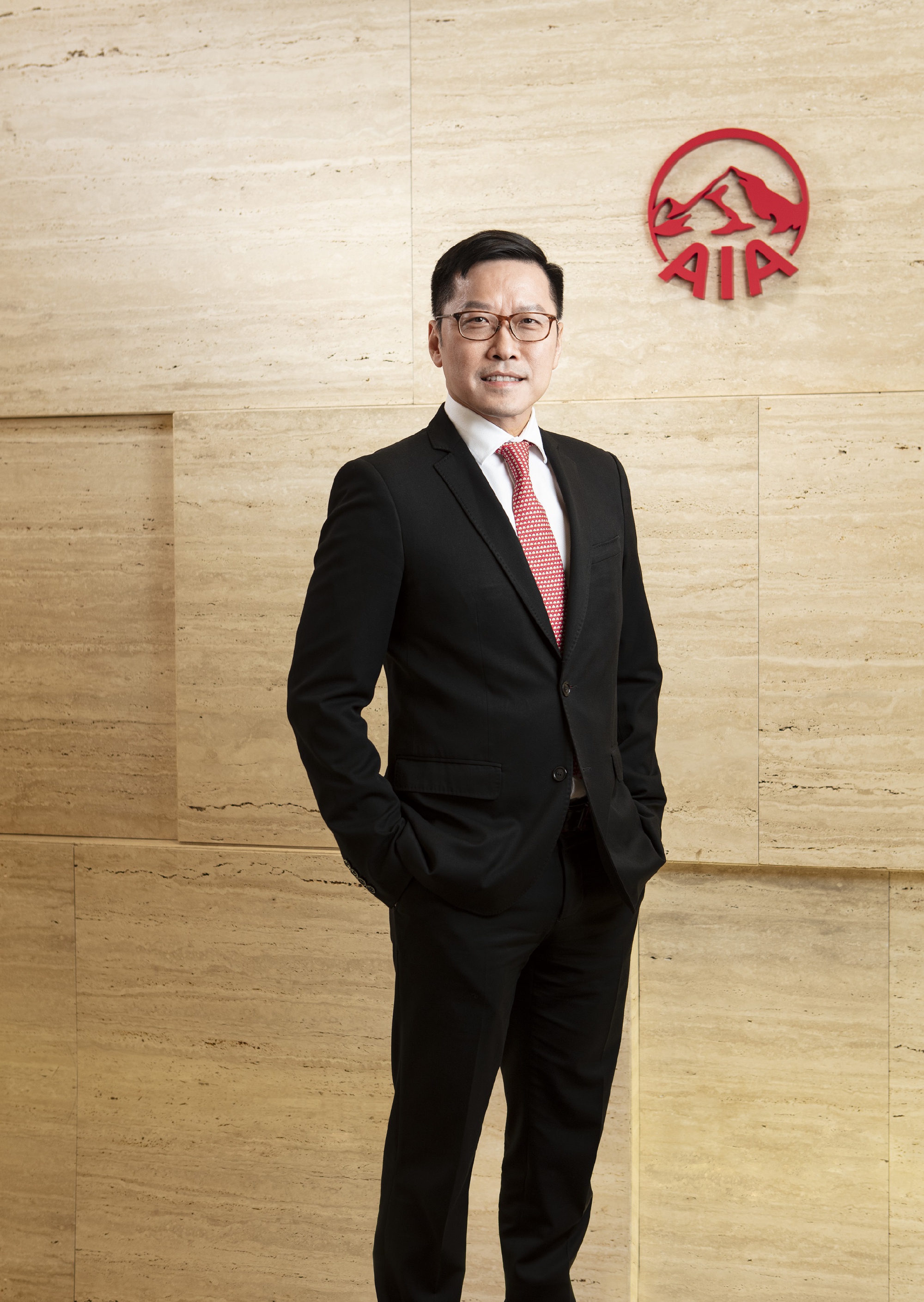
Mr. Kris Chantanotoke, Chief Executive Officer of AIA Thailand, whose goals and objectives are clear in order to achieve success in the first quarter with strong performance growth, which reflects AIA Thailand’s overall unity and emphasizes the company’s position as Thailand’s No. 1 life insurance company.
In Singapore, we delivered positive VONB growth, with double-digit growth from our agency, partially offset by a decline in partnership channels as offshore new business sales remain limited given ongoing border controls.
AIA Malaysia continued its strong momentum from the second half of 2020 and delivered the highest VONB growth among our reportable segments, supported by both our agency and our bancassurance partnership with Public Bank Berhad.
VONB from Other Markets reduced, reflecting the effect of ongoing movement controls in the Philippines and the significant one-off contribution to VONB in Australia in the first quarter of 2020, as previously disclosed. Excluding these two markets, VONB from Other Markets increased compared with the first quarter of 2020.
Overall, VONB margin improved to 61.6 per cent, up from 56.6 per cent in the first quarter of 2020, mainly driven by geographical mix shift and higher government bond yields, partially offset by the deduction of withholding tax for AIA China. The VONB margin is stated net of acquisition expense overruns, and the long-term investment return assumptions remain unchanged from those shown in our Annual Report 2020. Margin reported on a present value of new business premium (PVNBP) basis was stable compared with the first quarter of 2020 at 10 per cent. ANP of US$1,703 million increased by 10 per cent compared with the first quarter of 2020. TWPI increased by 6 per cent to US$9,663 million, reflecting further growth of our in-force portfolio and continued strong persistency.
OUTLOOK
The long-term prospects for AIA’s businesses are exceptional given our substantial competitive advantages and the powerful structural growth drivers for life and health insurance in Asia. Rising incomes, low levels of private insurance penetration and limited social welfare coverage continue to drive demand for AIA’s insurance products across our markets.
Global economic growth gained traction in the first quarter of 2021 as unprecedented fiscal and monetary support helped reduce the burden of the pandemic shock. While the outlook remains dependent on government and central bank policies, effectiveness of containment measures and the acceleration of vaccination programmes, we remain cautiously optimistic as the economic recovery extends from manufacturing-led sectors to consumption and services.
We are confident that the execution of our strategic priorities will build on our strong track record of growth and generate long-term sustainable value for shareholders.
FOREIGN EXCHANGE VOLATILITY
AIA receives the vast majority of its premiums in local currencies and we closely match our local assets and liabilities to minimise the economic effects of foreign exchange movements. When reporting the Group’s consolidated figures, there is a currency translation effect as we report in US dollars. We have provided growth rates and commentaries on CER unless otherwise stated, since this provides a clearer picture of the underlying performance of the businesses.
dtac install Equipment Support for Medical Personnel in the Treatment of COVID19
dtac installs Equipment Support for Medical Personnel in the Treatment of COVID-19 Boosting High-Speed Internet at Thailands Largest Field Hospital with 5,200 Beds at Muang Thong Thani
dtac has joined forces with the Ministry of Public Health and the National Broadcasting Technology Commission (NBTC) to install equipment to monitor and analyze COVID-19 treatments, complete with high-speed internet, in support of public health workers. This set of equipment, together with mobile base stations for network boosts, are deployed at the 5,200-bed Bussarakham 1-5 Field Hospital with over 100,000 sqm. space in the IMPACT Challenger Hall in Muang Thong Thani.
dtac install Equipment Support for Medical Personnel in the Treatment of COVID19The Ministry of Public Health has transformed the Bussarakham 1-5 Halls of the IMPACT Challenger Hall into a field hospital to cater to “yellow group” COVID-19 patients – those with mild symptoms and without shortness of breath. This field hospital is set up to reduce the burden of government and private hospitals in Greater Bangkok, allowing for increased capacity to admit “red group” patients – those with severe conditions. The field hospital also includes a section for “red group” patients requiring special care with negative-pressure tents, respirators, and other equipment.
dtac install Equipment Support for Medical Personnel in the Treatment of COVID19
Mr. Sharad Mehrotra, CEO, Total Access Communication PLC or dtac, said, “At every stage of COVID-19 crisis, we can see that connectivity is essential to help Thai society get through this. A critical mission is to provide digital technology and high-speed internet for the frontline heroes; doctors, nurses, workers, and all the patients in the field hospitals. dtac is committed to supporting this initiative to get everyone through this COVID-19 crisis, collaborating with the government sector and other organizations.”
dtac is supporting in installing a digital infrastructure complete with the necessary hardware to assist the work of medical personnel in record keeping, analysis, follow-up, and monitoring of COVID-19 patients.
Furthermore, dtac is boosting its high-speed internet network in the IMPACT Challenger Hall, Muang Thong Thani, and surrounding areas with mobile base stations, while deploying dtac@Home free WiFi service.
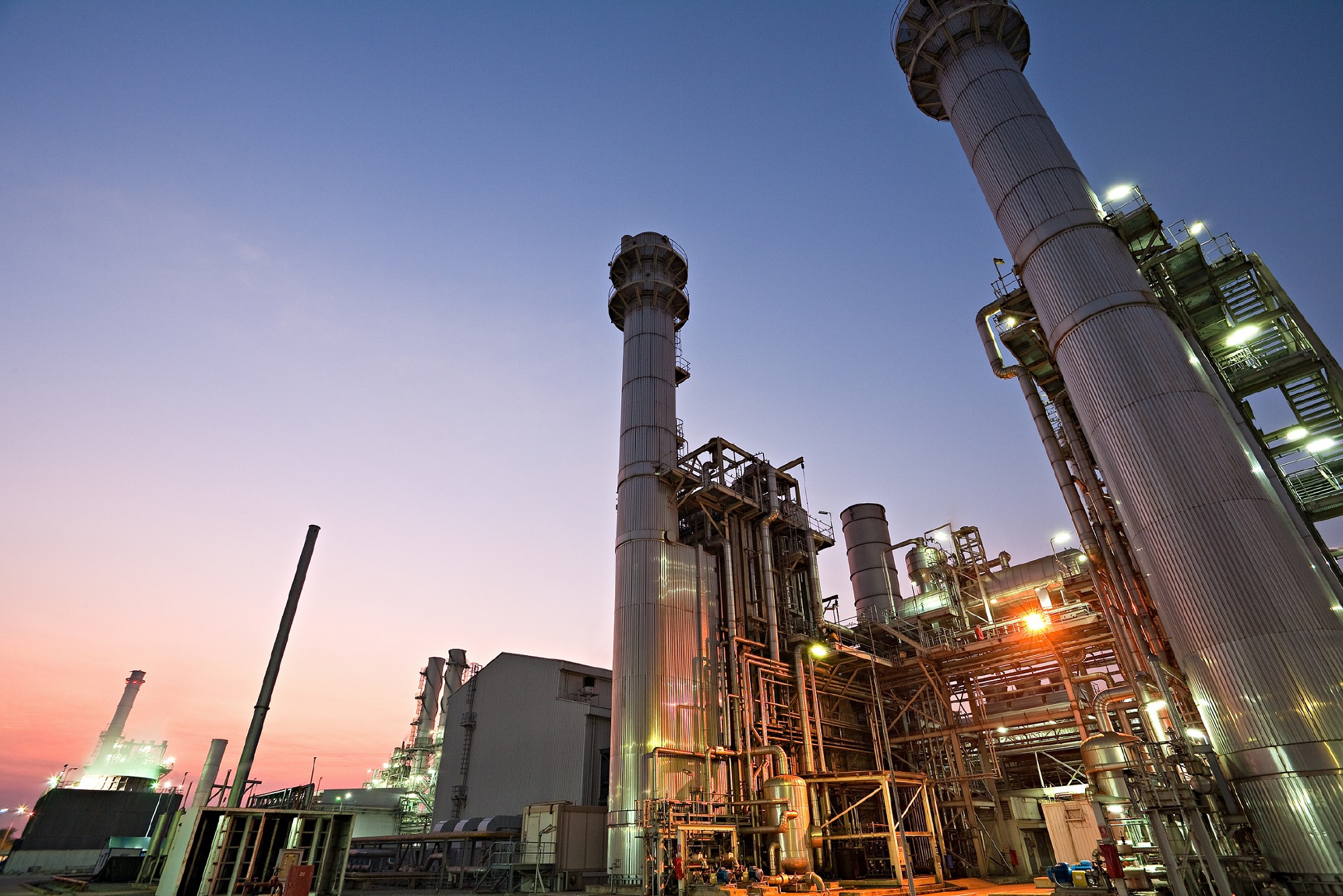
B.Grimm posts q-on-q 25% rise in Q1 normalised profit On course to secure 1,000 MW
B.Grimm Power Public Company Limited (BGRIM),, achieved a 654.3% growth in the net profit attributable to the parent company in the first quarter of this year to 611 million baht.
B.Grimm Power Public Company Limited (BGRIM), Thailand’s leading industrial power producer, achieved a 654.3% growth in the net profit attributable to the parent company in the first quarter of this year to 611 million baht.
In terms of normalised net profit, which excludes unrealised foreign exchange gain (loss), the figures rose by 25.2% over the preceding quarter to 646 million baht, but down by 5.3% compared with the same period last year.
Dr Harald Link, Chairman and President of BGRIM, noted that the company’s industrial power producer (SPP) operations have grown robustly with good profit in the January-March period.
The sound SPP performance has softened interest payment burdens incurred following the end of the credit terms related to the engineering, equipment procurement and construction (EPC) contract involving BGRIM’s solar projects in Vietnam.
There was also a temporary drop in the solar power sales in Vietnam largely due to the COVID-19 effects.
B.Grimm posts q-on-q 25% rise in Q1 normalised profit On course to secure 1,000 MW
Meanwhile, the margins of earnings before Interest, taxes, depreciation and amortisation (EBITDA) rose to a record 31.5% as a result of expanding power sales to industrial clients which raised their purchase volumes from BGRIM by 6.5% over the preceding quarter, or 5.5% more than the level in the same period a year earlier to set a new record of 814 gigawatt-hours.
This is due to the system tie-in of new customers under the 10.3-megawatt power purchase agreements as well as the growth of all major industrial clientele especially those in the automotive parts, industrial gas and home appliances industries.
It is estimated that the electricity purchase volumes of industrial customers would grow by 10-15% this year.
In addition, production efficiency has been increased following the improvement of gas turbines of ABPR 1 and ABPR2 projects during June – October 2020 last year and the price of natural gas fell by 17.4% over the same period last year to contribute to lower production costs.
B.Grimm posts q-on-q 25% rise in Q1 normalised profit On course to secure 1,000 MW
BGRIM’s renewable energy business has realised full quarterly revenue from solar power projects in Cambodia which started commercial operation in December 2020.
However, revenues from BGRIM’s solar farms in Vietnam declined temporarily because of a drop of electricity purchase volumes caused by transmission line problems and lower power demand resulting from coronavirus outbreak.
But these problems were resolved and the purchase volumes have swung back strongly during March and April this year.
BGRIM has proactively laid down contingency plans to deal with various crisis scenarios and the coronavirus pandemic.
BGRIM’s financial position is firm with more than 21 billion baht in cash on hand and a solid cash flow driven by 48 operating power plants and supports from many financial institutions which allow the company’s projects to proceed as planned.
Dr Link said this year BGRIM is also beefing up cooperation with various companies and organisations to expand business opportunities.
In April 2021, BGRIM signed a memorandum of understanding with the Metropolitan Electricity Authority (MEA) to jointly pursue businesses in the fields of renewable energy, energy management systems and other related ventures such as Energy Storage System (ESS), Energy Trading System, Smart Grid and Electricity Distribution System.
Construction of several BGRIM power projects are well underway this year including the Bo Thong Wind Farm 1 & 2 wind farm with an installed capacity of 16 MW located in Mukdahan Province.
The Bo Thong scheme has so far completed by 94% and is due to begin commercial operation in the first half of 2021.
To date, BGRIM has a total of 48 projects in operation with the goal of achieving a combined production capacity of at least 1,000 MW from green field projects and acquisitions by this year.
The company remains committed to the target of securing overall power supply contracts of up to 7,200 MW by 2025.
The Stock Exchange of Thailand (SET) Index closed at 1,549.48 on Friday, up 1.35 points or 0.09 per cent. The volume of total transactions was THB97.35 billion with an index high of 1,558.86 and a low of 1,532.29. The SET rebounded slightly after three consecutive days of losses this week.
In the morning session, Krungsri Securities forecast Friday’s index would fluctuate between 1,535 and 1,560 points amid hopes of economic recovery after the number of US jobless claims fell to the lowest in a year.
“Uncertainty over rising inflation, the falling crude price and outflow of foreign funds would pressure the index,” Krungsri Securities said.
The 10 stocks with the highest trade value today were STGT, PTT, KBANK, SAWAD, CPALL, CPF, TIDLOR, RCL, STA and TTA.
Other Asian indices were on the rise:
Japan’s Nikkei Index closed at 28,084.47, up 636.46 points or 2.32 per cent.
China’s Shanghai SE Composite Index closed at 3,490.38, up 60.84 points or 1.77 per cent, while the Shenzhen SE Component Index closed at 14,208.78, up 291.13 points or 2.09 per cent.
Hong Kong’s Hang Seng Index closed at 28,027.57, up 308.90 points or 1.11 per cent.
South Korea’s KOSPI closed at 3,153.32, up 31.21 points or 1.00 per cent.
Taiwan’s TAIEX Index closed at 15,827.09, up 156.99 points or 1.00 per cent.
The worldwide microchip shortage that is driving up the price of computers and other devices will last through 2021, according to Gartner, Inc.
The research firm expects semiconductors (microchips) to recover to normal levels by the second quarter of 2022.
The Federation of Thai Industries (FTI) has admitted that Thai manufacturers – especially in the automotive industry – face production impacts from the shortage.
“The semiconductor shortage will severely disrupt the supply chain and will constrain the production of many electronic equipment types in 2021. Foundries are increasing wafer prices, and in turn, chip companies are increasing device prices,” said Kanishka Chauhan, principal research analyst at Gartner.
Meanwhile, undersupply of most categories of devices is expected to persist until the second quarter of 2022.
Gartner analysts recommend that manufacturers dependent on microchips take four actions to cut risk and revenue loss during the global chip shortage:
● Extend supply chain visibility beyond the supplier to the silicon level, which will be critical in projecting supply constraints and projecting when the crisis will improve.
● Partner with other manufacturers to approach chip foundries as a combined entity to gain some leverage, or pre-invest in the chip supply chain and/or foundries to guarantee long-term supply.
● Track leading indicators such as capital investments, inventory index and semiconductor industry revenue growth projections as an early indicator of inventory situations.






 AIA DELIVERS VERY STRONG GROWTH VALUE OF NEW BUSINESS UP 19% IN THE FIRST QUARTER
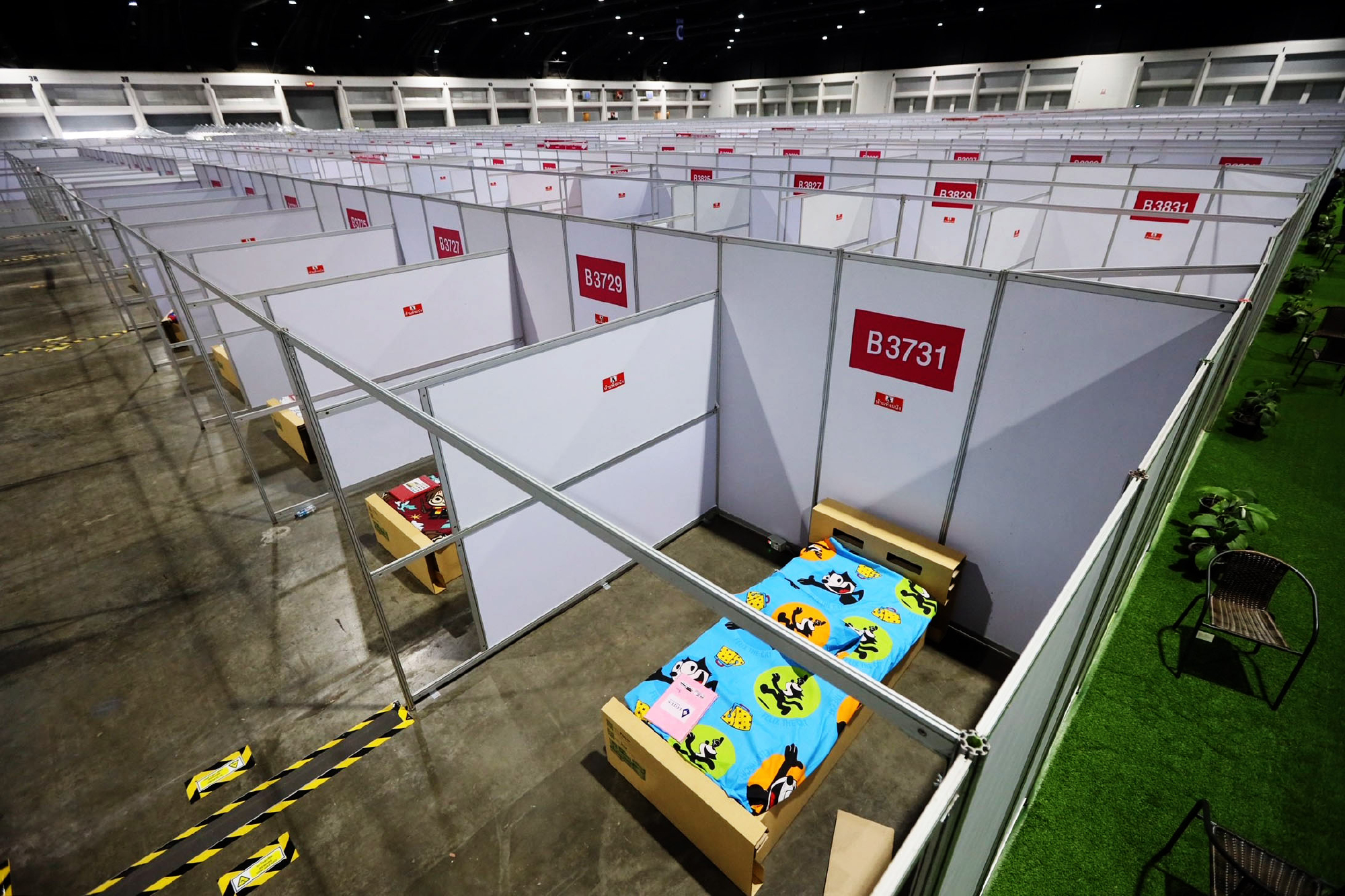 dtac install Equipment Support for Medical Personnel in the Treatment of COVID19The Ministry of Public Health has transformed the Bussarakham 1-5 Halls of the IMPACT Challenger Hall into a field hospital to cater to “yellow group” COVID-19 patients – those with mild symptoms and without shortness of breath. This field hospital is set up to reduce the burden of government and private hospitals in Greater Bangkok, allowing for increased capacity to admit “red group” patients – those with severe conditions. The field hospital also includes a section for “red group” patients requiring special care with negative-pressure tents, respirators, and other equipment.
 dtac install Equipment Support for Medical Personnel in the Treatment of COVID19
 B.Grimm posts q-on-q 25% rise in Q1 normalised profit On course to secure 1,000 MW
 B.Grimm posts q-on-q 25% rise in Q1 normalised profit On course to secure 1,000 MW