Thai stocks up despite local Covid surge, US rate uncertainty
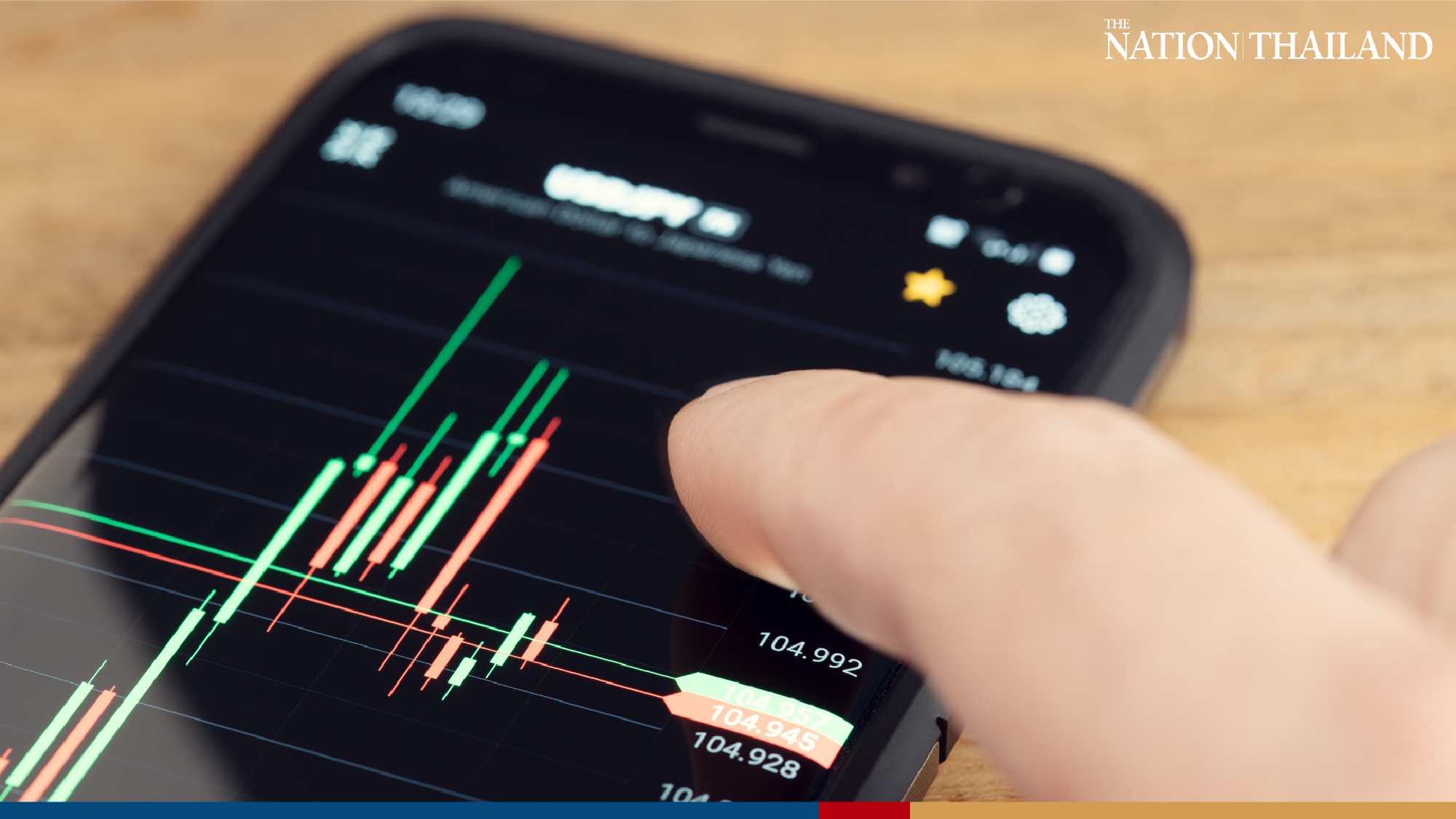
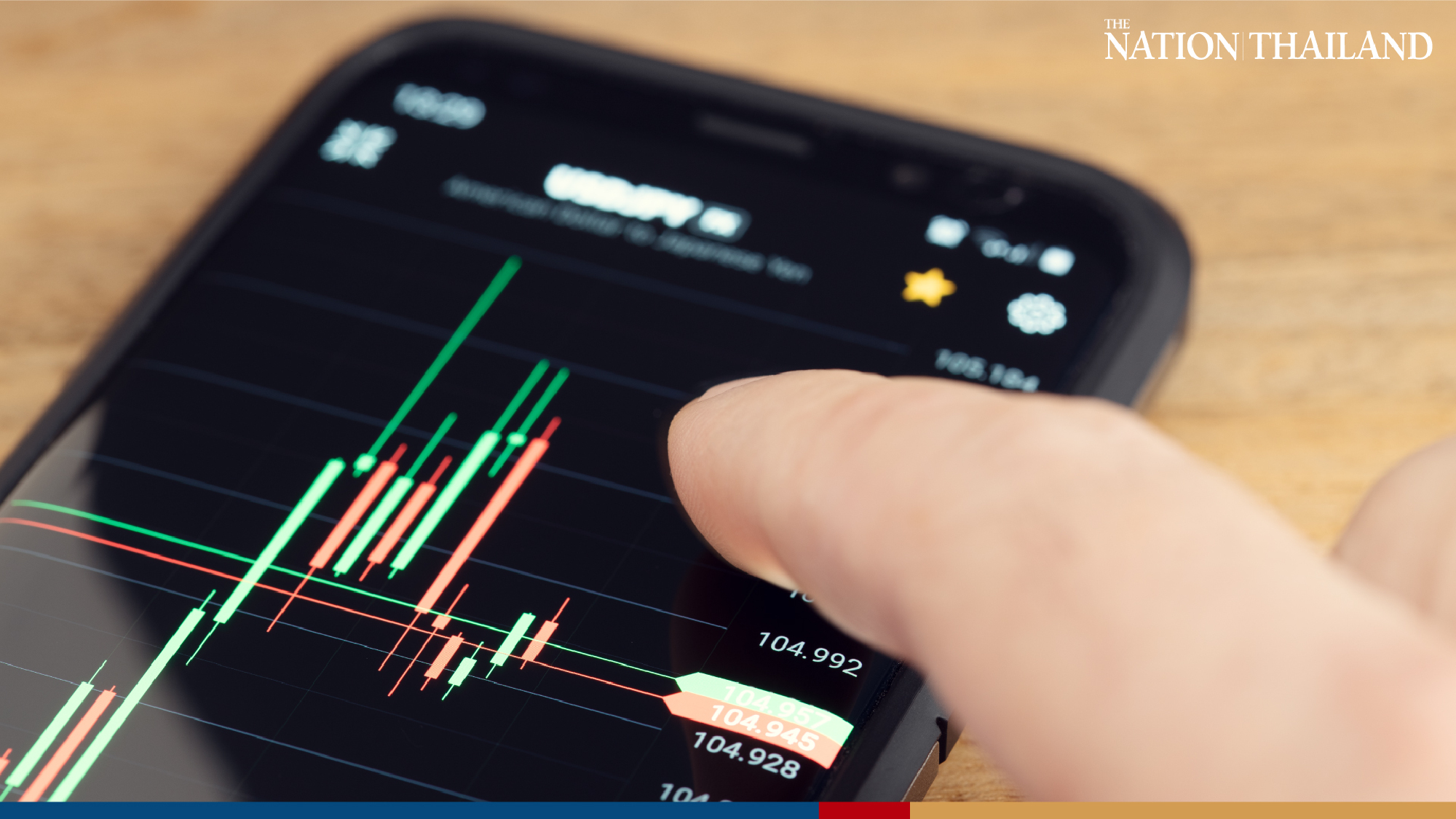
The Stock Exchange of Thailand (SET) Index closed at 1,588.15 on Monday, up 3.12 points or 0.20 per cent. Total transactions amounted to THB111.86 billion with an index high of 1,596.80 and a low of 1,576.79.
In the morning session, Krungsri Securities forecast that the SET Index would fluctuate between 1,590 and 1,600 points amid uncertainty over the US interest rate. The chance of the US Federal Reserve hiking the interest rate was lowered by a smaller-than-expected increase in the US non-farm payroll, while the country’s unemployment rate rose to 6.1 per cent.
Krungsri added that energy and petrochemical stocks gained positive sentiment after the oil price rose to over $65 per barrel.
“However, investors should beware of mass sell-offs due to uncertainty over Thailand’s high number of Covid-19 cases,” Krungsri Securities said.
The 10 stocks with the highest trade value today were TIDLOR, DELTA, KBANK, TU, OR, PTT, SAWAD, TTA, SCGP and SCC.
Other Asian indices were mixed:
Japan’s Nikkei Index closed at 29,518.34, up 160.52 points or 0.55 per cent.
China’s Shanghai SE Composite Index closed at 3,427.99, up 9.12 points or 0.27 per cent, while the Shenzhen SE Component Index closed at 13,917.97, down 15.84 points or 0.11 per cent.
Hong Kong’s Hang Seng Index closed at 28,595.66, down 14.99 points or 0.052 per cent.
South Korea’s KOSPI closed at 3,249.30, up 52.10 points or 1.63 per cent.
Taiwan’s TAIEX Index closed at 17,235.61, down 49.39 points or 0.29 per cent.
Creditors want THAI reinstated as state-owned enterprise
The majority of creditors agree with moves to have Thai Airways International (THAI) reinstated as a state-owned enterprise, an adviser to THAI’s rehabilitation plan said on Monday.
THAI lost its status as a state-owned enterprise last year when the Finance Ministry cut its stake to less than 50 per cent as part of the airline’s debt-rehabilitation plan.
Finance Minister Arkhom Termpittayapaisith is thought to support THAI’s reinstatement as a state enterprise, but the State Enterprise Policy Office has indicated the debt-laden airline will not be recapitalised by the ministry.
Creditors and their official receiver will hold an online meeting to consider THAI’s rehab plan on Wednesday.
The adviser said reinstatement as a state enterprise would mean THAI could boost its liquidity by seeking loans from the Finance Ministry.
“THAI would gain benefits under the Public-Private Partnership Act, such as contracts with Airports of Thailand for public infrastructure,” he said.
However, he cautioned that as a state enterprise, THAI would not know how many times the government was willing to inject cash into the company.
“If Covid-19 does not impact THAI’s rehabilitation plan, we believe that it will be able to recover its business quickly because this is not the first time the company has faced losses,” he said.
He added that the rehab plan had made significant progress, with a plan to reduce expenditure by cutting the number of THAI employees from around 20,000 to 14,000.
Government Savings Bank president Vitai Ratanakorn said the bank is ready to approve THAI’s rehab plan. He added that the airline has a plan to inject funds of THB25 billion each to shareholders and creditors.
“We understand that the company will discuss who will get the funds after the rehabilitation plan is approved,” he said.
Poramate Intarachumnum, chair of the Cooperative League of Thailand, said 84 cooperatives had agreed to allow THAI to continue in business but insisted that it clarify financial support from the government and other matters.
Thai govt has THB300 billion in hand to tackle Covid crisis until Sept 30
The government has THB240 billion left over from the THB1 trillion economic stimulus loan, plus THB60 billion from the 2020 emergency budget to deal with the Covid-19 crisis until September 30.
Last Wednesday (May 5), the Cabinet earmarked THB225.50 billion to tackle the third wave of Covid-19 infections, which has been more severe and more widespread than the previous two waves.
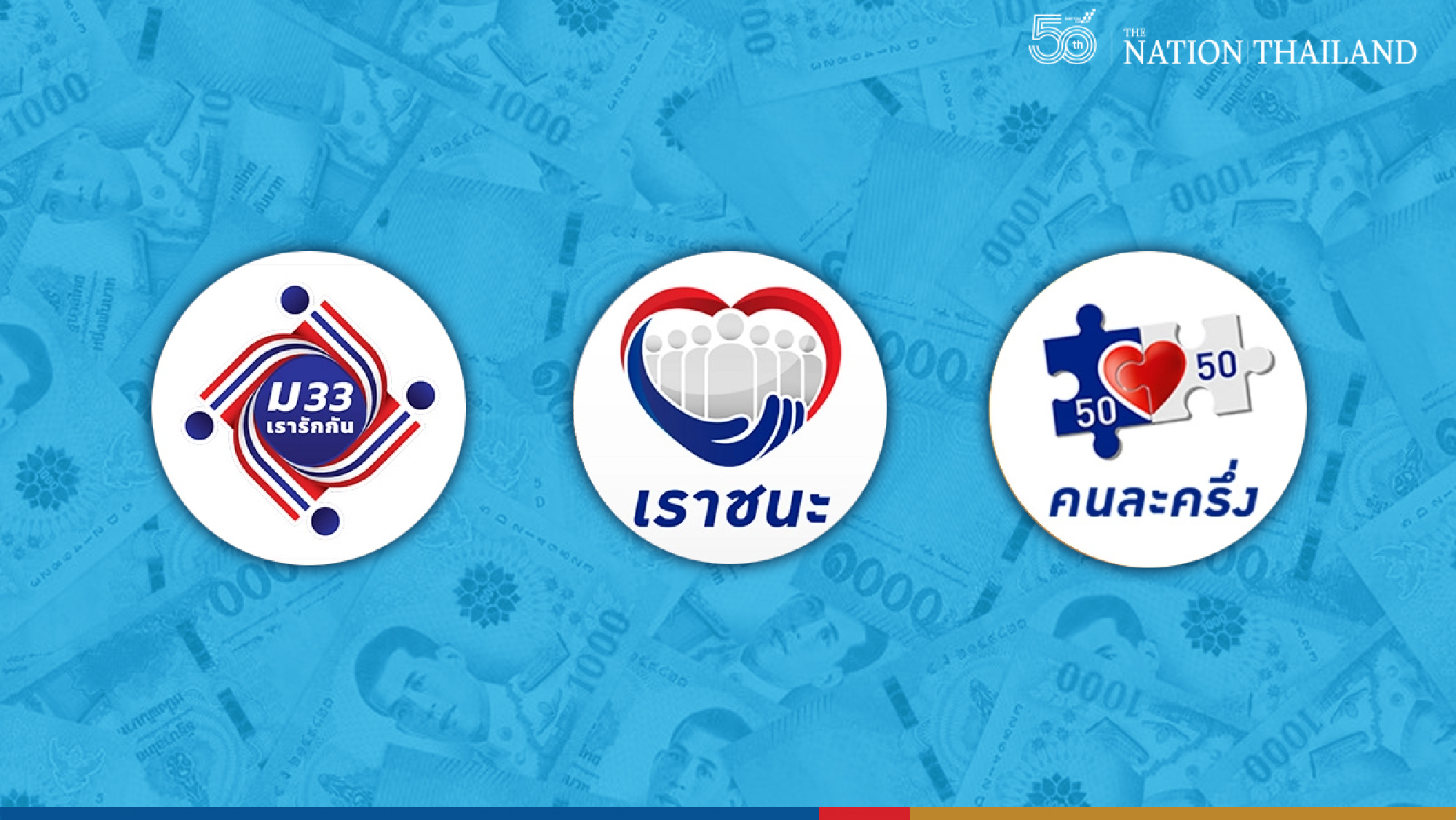
The money will be used to bolster several measures such as Rao Chana (We Win), Mor33 Rao Rak Kan (Section33 We Love Each Other), Khon La Khrueng (Let’s Go Halves) as well deposits in the state welfare card to help ease people’s burden and stimulate the economy.
Budget Bureau director Dechapiwat Na Songkhla said the funds will help the government deal with the crisis until the end of the 2021 fiscal year on September 30.
He added that if the crisis continues into next year, the government can use the THB89 billion earmarked for the 2022 emergency budget as well as the Finance Ministry’s reserve capital of THB50 billion.
“If these funds are not enough, the government can issue a budget transfer act like it did last year,” he said.
He added that the THB3.1 trillion national budget for the 2022 fiscal year does not include funds for tackling the Covid-19 crisis, because the crisis is expected to be resolved by then.
“However, we will propose the budget draft to the Cabinet again on Tuesday,” he said.
He added that the government can also use revenue from its agencies as well as the Public-Private Partnership investment budget to boost capital expenditure, so it is in line with the 2018 State Fiscal and Financial Disciplines Act.
He also pointed out that the prime minister cannot allocate funds from the 2022 integrated budget of THB208 billion for tackling the outbreak because a panel chaired by his deputies is responsible for the usage of this budget.
The Stock Exchange of Thailand (SET) Index rose by 3.29 points, or 0.21 per cent, to 1,588.32 at 10.12am on Monday. The volume of total transactions was THB20.05 billion with an index high of 1,596.80 and a low of 1,588.32.
Krungsri Securities forecast that the SET Index would fluctuate in an upward trajectory between 1,590 and 1,600 points amid uncertainty over US interest rate. The US Federal Reserve’s move to raise the interest rate was set back by US non-farm payroll increasing lesser than expected, while the country’s unemployment rate rose to 6.1 per cent.
Krungsri added that energy and petrochemical stocks gained positive sentiment after oil price rose to over $65 per barrel.
“However, investors should beware of mass sell-offs of shares due to uncertainty over Thailand’s high number of Covid-19 cases,” Krungsri Securities said.
It recommended that investors buy:
▪︎ PTT, PTTEP, PTTGC and IVL, which benefit from the rising oil price.
▪︎ BDMS, BCH and CHG, which gained positive sentiment from the import of Covid-19 vaccine.
▪︎ PTTGC, EPG, CPF, BCH, CHG, STGT, STA, DOHOME, COM7, SYNEX, STARK, TWPC and WICE, whose first-quarter turnover is expected to improve.
The SET Index closed at 1,585.03 on Friday, up 13.12 points or 0.83 per cent. Total transactions amounted to THB93.87 billion with an index high of 1,589.21 and a low of 1,577.19.
The price of gold in Thailand rose by THB50 per baht weight in morning trade on Monday, thanks to mass buy-ups of the precious metal after increase in US non-farm payroll was lower than expected.
The Gold Traders Association report at 9.32am showed buying price of a gold bar at THB26,850 per baht weight and selling price at THB26,950, while gold ornaments were priced at THB26,363.24 and THB27,450, respectively.
At close on Saturday, the buying price of a gold bar was THB26,800 per baht weight and selling price THB26,900, while gold ornaments were THB26,317.76 and THB27,400, respectively.
The price had shot up by THB750 per baht weight last week.
Spot gold price on Monday was US$1,832 (THB57,046) per ounce compared to Friday when it rose by $15.6 to $1,831.30 per ounce, the highest in almost three months.
Hong Kong gold price on Monday rose by HK$90 to $16,970 (THB68,042) per tael, the Chinese Gold and Silver Exchange Society reported.
Baht opens stronger but Covid-19 situation could determine direction
The baht opened at 31.06 to the US dollar on Monday, strengthening from its previous close of 31.17 on Friday. The Thai currency is likely to move between 31 and 31.15 during the day and between 31 and 31.15 this week, Krungthai Bank market strategist Poon Panichpibool said.
He suggested that investors monitor the dollar’s movements, as the US currency could be stable or weak, if the market is ready for risk.
The market strategist said that the baht would not weaken sharply, and predicted resistance for the currency at 31 to the dollar.
However, Poon warned investors to beware of possible fluctuation of the baht caused by the Covid-19 situation in Thailand.
CBRE ties up with Thailand Elite Card to offer one-stop services to foreign property buyers
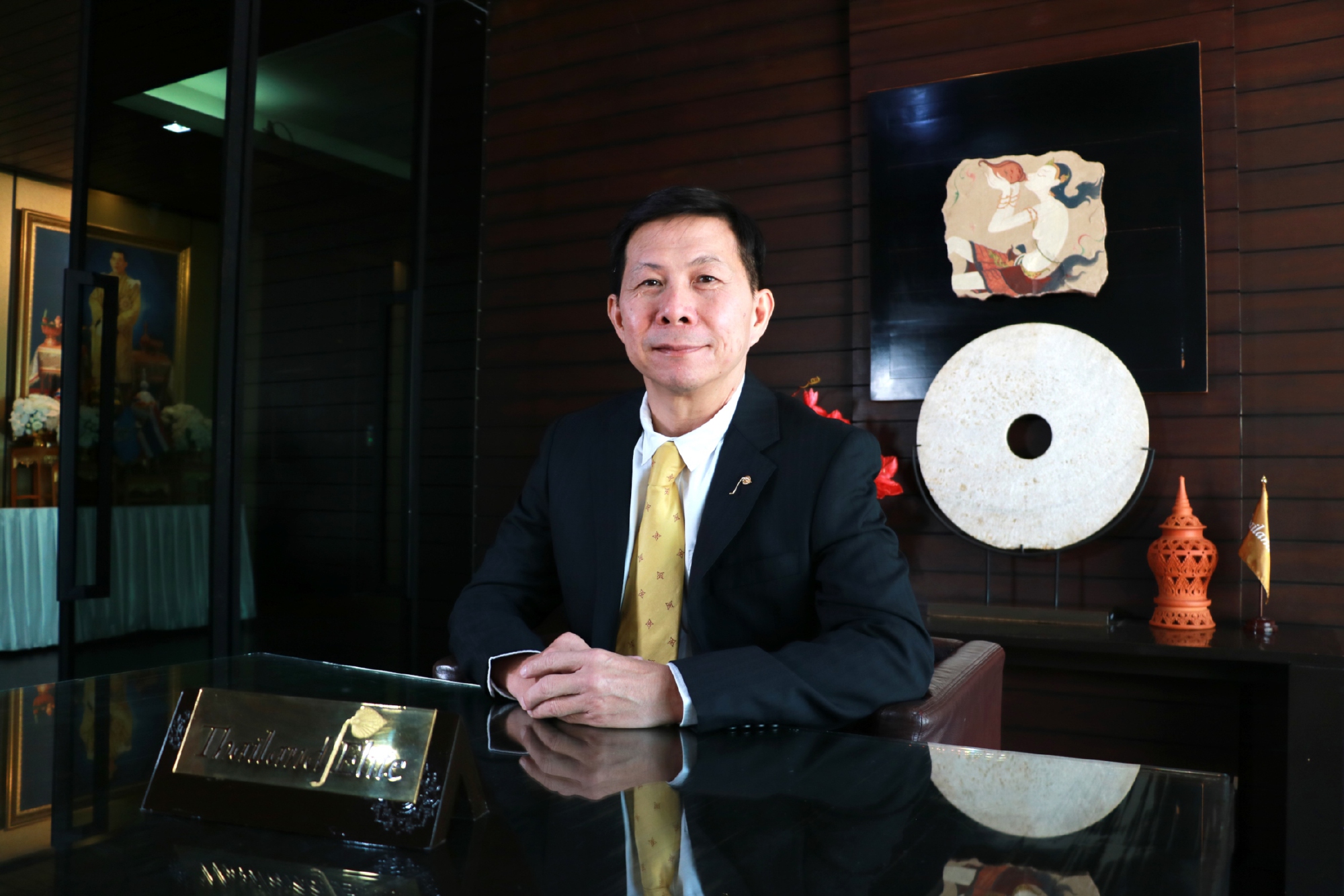
Leading international property consultant, CBRE, which has been operating in Thailand for over 33 years, is joining up with Thailand Elite Card to help stimulate the economy by providing advice on investment opportunities.
It will also provide comprehensive services to foreign investors in the Thai real estate market.
Charinya Youngprapakorn, chief of advisory and transaction services in CBRE Thailand’s Residential Project Marketing Department, said CBRE Thailand has signed a memorandum of understanding with Thailand Privilege Card (TPC) to extend one-stop services to Thailand Elite members and stimulate foreign investment in Thailand’s real estate market.
CBRE ties up with Thailand Elite Card to offer one-stop services to foreign property buyers
Thailand Privilege Card has top-tier clients from China, Japan, the United Kingdom and the United States, some of whom are interested in buying property in Thailand but lack knowledge about the rules and regulations and reliable market information that can help them make the right decision.
CBRE will offer one-stop consulting services to foreign investors including representing them in buying, selling, leasing all types of properties as well as providing investment consultancy, market research, valuation and advisory services. CBRE will also provide guidance on buying and investing in residential projects, resort homes and other types of properties that meet the investment needs of each Thailand Elite member.
“CBRE experts are equipped with extensive knowledge of property investment in Thailand, in-depth market data from CBRE Research, and over 33 years of experience in the market. On top of these, we have a large selection of premium properties in Bangkok and resort destinations which can be matched with client’s needs whether for investment, vacation home or retirement home purposes,” Charinya added.
Somchai Sungsawang, president of Thailand Privilege Card, said: “This partnership is another important step forward for Thailand Privilege Card as it will help expand our range of services for Thailand Elite members which currently number over 13,600 members worldwide, especially in real estate investment. In addition, it will boost the domestic economy and enhance Thailand’s image as one of the most investable and attractive living locations. We have chosen CBRE as our partner in real-estate consultancy for our members because of its rich experience, world-class reputation, and leadership position as a sales representative for numerous residential properties priced at over THB10 million. This could also contribute to the targeted increase in the number of our members for this year.”
CBRE ties up with Thailand Elite Card to offer one-stop services to foreign property buyers
Though the Covid-19 situation in Thailand has not eased, CBRE believes that when the situation returns to a controllable state coupled with an effective vaccination drive and the country’s reopening in the second half of this year, tourists will start returning to Thailand and the real estate market will gain interest from foreign investors again, especially the high-end market which usually bounces back faster than other segments.
CBRE has been preparing a marketing strategy and building an integrated platform to accommodate the return of high-purchasing-power foreign investors.
It said it is confident that, in the long run, Thailand’s potential and effective government measures will help stimulate the economy and bring back more foreign investors within this year.
Nearly half of Thai consumers plan to avoid using cash after pandemic ends: study
A study on consumer payment attitudes by Visa showed nearly half of all Thai consumers (45 per cent) were likely to avoid using cash after the Covid-19 pandemic ends.
The study also delves into which activities Thai consumers are looking forward to spending on when recovery is underway.
The top three activities are: travelling within Thailand (35 per cent), travelling abroad to Covid-safe destinations (29 per cent) and taking small get-away trips in their own city (19 per cent).
Suripong Tantiyanon, country manager, Visa Thailand, said: “The pandemic has had a massive impact on how people live, work and shop both in Thailand and globally.
As we have crossed the one-year mark since the pandemic hit, we are taking a look at how events in the past are shaping our future. We are privileged to be able to conduct this study and share findings that we believe will help everyone prepare for back-to-business scenarios.”
According to the study, other behaviours that are likely to become a new normal post-Covid are wearing a mask (62 per cent) and avoiding crowds (43 per cent).
The situation has also prompted many Thai consumers to explore different shopping channels.
The most popular channels used for the first time during Covid are shopping on apps and websites (65 per cent), using direct delivery at home after ordering by phone from local shops (47 per cent), and shopping on social media channels (44 per cent).
Thai consumers were forced to rethink spending priorities. According to the respondents, spending categories that experienced the largest reduction were international trips (63 per cent), going to cinemas or events (60 per cent), buying luxury items like bags, watches and jewellery (60 per cent), fine-dining (58 per cent), well-being treatment (57 per cent) and buying new clothes (54 per cent).
Looking ahead, in addition to domestic, international and small get-away trips, Thai consumers are preparing to resume spending on gadgets (16 per cent), groceries and personal care items (15 per cent), and going out to enjoy fine-dining and out-of-home entertainment (10 per cent).
Less than 1 in 10 plans to upgrade home appliances (9 per cent) and spend on fashion and clothing (8 per cent).
Oil palm growers in Krabi to protest over falling price
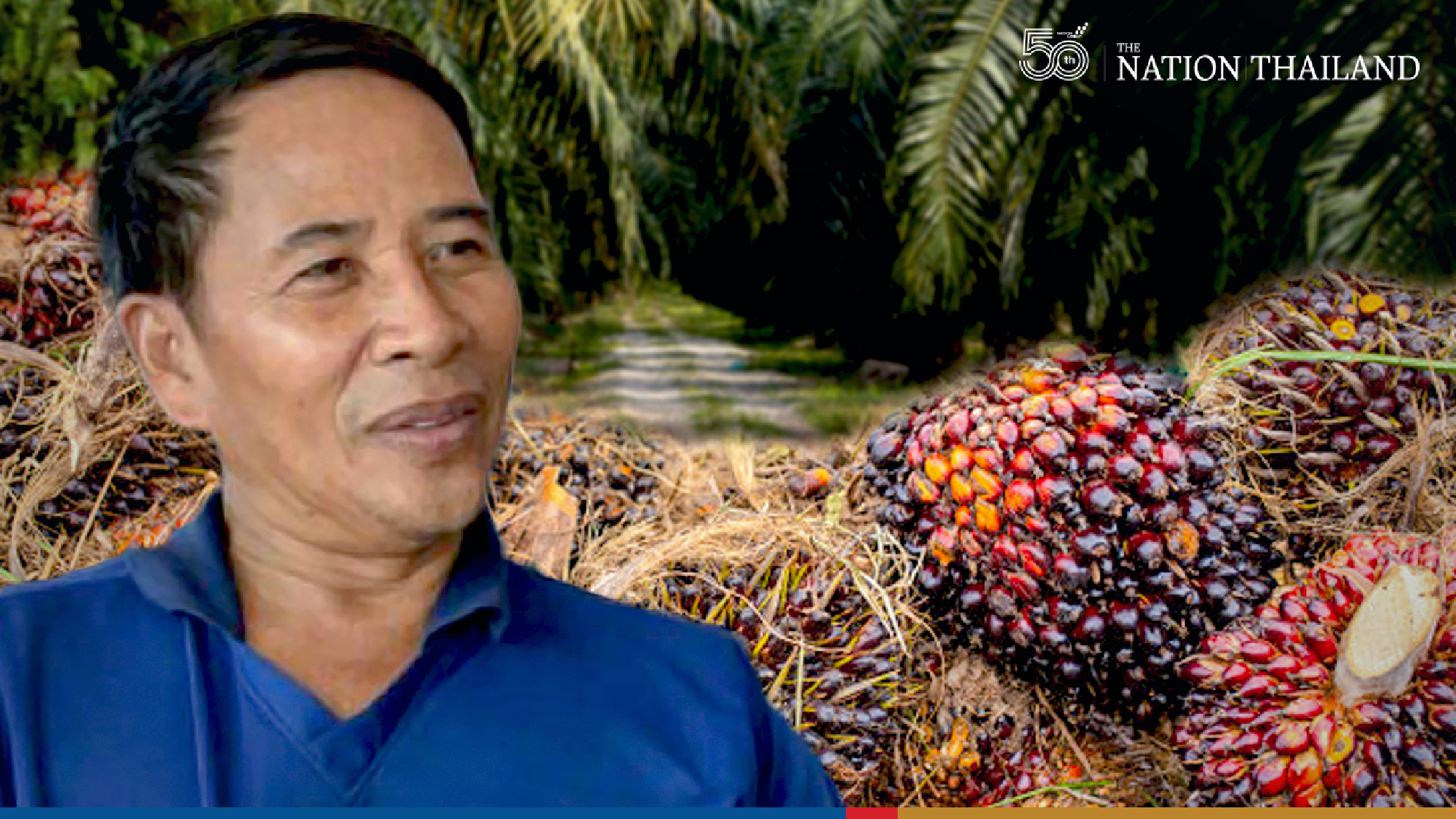
A group of oil palm growers vowed to hold an anti-government protest at Krabi Provincial Hall on Tuesday as the price of oil palm in Thailand is likely to drop further.
Chayodom Suwanwattana, chairman of the oil palm growers of Thailand group, said the price of oil palm was currently at THB4 per kilogram compared to THB7.60-7.80 per kg in Malaysia.
He also said that the price of 46-0-0 fertiliser for oil palm had increased from THB550 on August 28 last year to THB750 on April 15 this year.
“Meanwhile, the price of 18-46-0 fertiliser had increased from THB760 on August 28 last year to THB1,080 on April 15 this year,” he said.
“Therefore, we will gather at Krabi Provincial Hall on Tuesday to pour oil palm fertiliser and submit a letter to the government.”
He added that the rise in fertiliser price had increased farming cost to THB4 per kg.
“It would be better if the oil palm price increases,” he added.
Some e-commerce categories raking it in amid Covid-19 outbreak
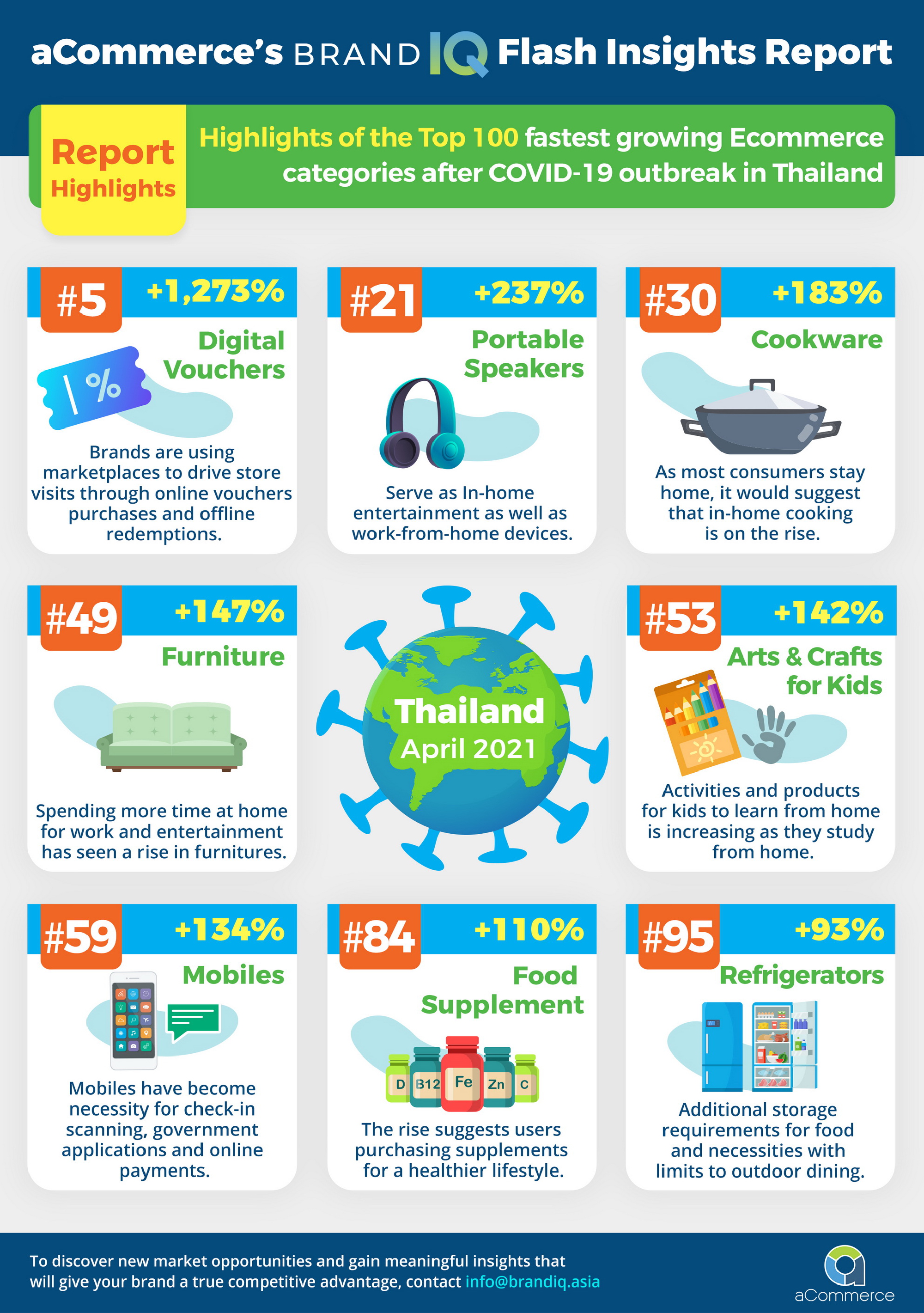
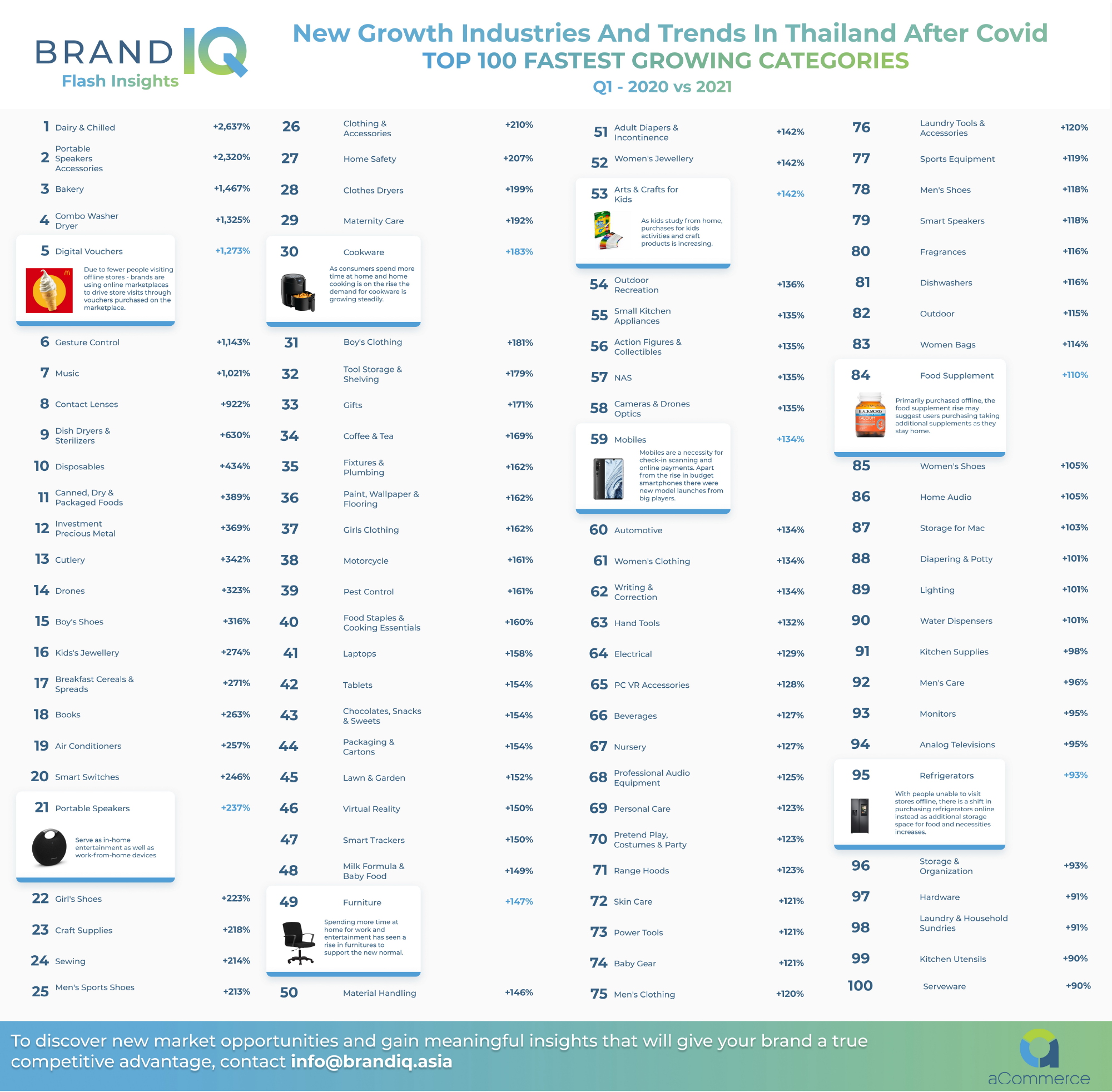
Digital Vouchers saw a whopping 1,237 per cent growth year on year in Thailand amid changing shopping trends in the aftermath of the pandemic, a study by aCommerce highlights.
BrandIQ Flash Insights report by aCommerce, an end-to-end e-commerce platform and solutions provider in Southeast Asia, reveals the 100 fastest-growing e-commerce categories after the Covid-19 outbreak.
The company says it launched BrandIQ in 2018 to help brands understand online shopper trends and apply data analytics to increase e-commerce sales.
BrandIQ is the first software as a solution that assists retailers and brands in consolidating product and channel information and getting granular views on sellers’ activities, brands’ share of shelf, share of categories, and market share comparison, aCommerce said. Flash Insights provides a quick overview of trends that are growing in the Thai e-commerce landscape.
Because of the restrictions and Covid-19 preventive measures, Thai people have been avoiding visiting offline stores. They stay home and order goods from stores and retailers to fulfil their needs. This “new normal” way of living persuaded brands to start investing in online marketplaces to drive store visits.
BrandIQ’s Flash Insights report confirms that in addition to driving sales, voucher programmes present a solution for brands to optimise their inventory amid the Covid-19 crisis, the company said.
Another trend that surged during the pandemic was cooking at home. As the coronavirus pandemic continues to cause disruptions, many Thais have settled into a routine that involves a lot more home cooking, increasing the demand for refrigerators and cookware. Online groceries also surged with dairy and chilled products growing 2,637 per cent, dry and packaged goods by 389 per cent and breakfast cereals and spreads by 271 per cent, the report showed. This shift in behaviour is not only because consumers working from home no longer stop by for breakfast or coffee on their commute, but also because they feel unsafe going to restaurants.
Some e-commerce categories raking it in amid Covid-19 outbreak
Last year’s report revealed a surge in food supplements and furniture categories, and with many people in the country still working from home this year, the trend has continued, the company said.
The pandemic highlighted the need for comfortable and productive spaces during quarantine whilst creating a growing demand for supplements as consumers prioritised wellness and health, the company said.
The report also shows a significant increase in demand for arts and crafts for kids. This category includes activities and products which enable kids to learn while they are at home studying.
BrandIQ explains the overall increase across these categories due to the restrictions on out-of-home activities on the one hand, and retailers’ need to sell their products on the other. As a result, businesses had to adjust their strategies, and the changes in consumer behaviour have accelerated the speed with which companies have to undergo a digital and ecommerce transformation.
“Granular data and analytics of your e-commerce business is important for brands, but getting access to real-time data on your competitors’ sales, promotions, and orders is a game-changer,” said Paul Srivorakul, Group CEO of aCommerce.
“Providing brands with end-to-end data is important in optimising their e-commerce business and automating processes that help save costs and grow sales. For example when a particular brand or product starts selling well, our system immediately alerts marketing to increase advertising spending, then triggers customer service to increase support, then contacts the supplier to place a larger order and alerts logistics to prepare for increase in orders,” he added.
aCommerce has added regional platforms such as Shopee and Lazada, including local marketplaces such as Tokopedia in Indonesia, Qoo10 in Singapore, and soon Sendo and Tiki in Vietnam.





 CBRE ties up with Thailand Elite Card to offer one-stop services to foreign property buyers
 CBRE ties up with Thailand Elite Card to offer one-stop services to foreign property buyers
 Some e-commerce categories raking it in amid Covid-19 outbreak
